In 1956 the Indian Government invited the Ford Foundation to assist with a master plan for the Delhi region. Two years later, the invitation was extended to help with a separate urban community development program. Even though the master plan was a comprehensive project covering transportation, water, sewage, housing, industry, and zoning, the creation of community and communities was one of its main goals. The Draft Master Plan for Delhi (DMPD) declared “in all planning for man's environments,” it was “extremely vital” to “evolve a well integrated new community pattern that would fit the changed living conditions of the new age and promote genuine democratic growth.”Footnote 1 Similarly, the primary objective of the urban community development project, as laid out by the Commissioner of Delhi, was that of “giving form to an urban community, which has been drawn from backgrounds varying from one another and trying to achieve a homogeneity.”Footnote 2
The importance of “community” was nothing new in India. It had long been central to the colonial management of cities. As Gyan Prakash has observed, “From the late nineteenth century onwards … the colonial administration increasingly represented and governed India as a collection of pre-modern castes, tribes, races and religious communities” which were seen as non- or pre-political.Footnote 3 At the level of the city, British administrators in late nineteenth and early twentieth centuries thought of the cities as composed largely of “communities.”Footnote 4 According to Legg, despite the growing colonial deployment of modern techniques of control, “the population was clearly dealt with in terms of communities and groups not individuals.”Footnote 5 The master plan and community development projects are part of a long history of conflicts in India among electoral politics, existing associations, and administrative strategies aimed at building “non-political” forms of civil society organizations in order to insure order and promote urban improvement.
Nevertheless, differences between the colonial and postcolonial administrative practices of community constitute an important change in approach to urban governance in India. The master plan and urban community development programs show how persistent and complex the practices of “community” have been in post-independence India, not only as a political form but as an administrative instrument and a “non-political” moral discourse. These projects enacted a very different community from the community colonial authorities envisioned as a pre-modern form of sociality. Instead, their efforts aimed to create place-based solidarity among a population conceived to be fresh from the village and fractured by a variety of affiliations. The Ford-assisted programs were pitched explicitly against the communities of kin, culture, religion, caste, and partisan political groups as they had been refigured by colonial rule; they aimed to diminish or even eliminate these forms of affiliation in order to generate a place-based, interactional community. This sort of community was consonant with a broader concept of a national community but it was determinedly not “imagined” in Benedict Anderson's sense. First, it was a community that could be planned and created using scientific techniques of physical planning and the organization of interaction. Second, it was to be formed not through the mobilization of symbols of primordial connection, but through small-scale, “face-to-face” relations. This difference between the colonial sense of community and the American interactional model was transposed onto the difference between rural and urban orientations. In the words of Albert Mayer, the head of the Ford urban planning team, the goal was “to convert recent villagers into effective urban citizens.”Footnote 6
The community that the projects aimed to produce merged with a social-psychological concept of democracy as “democratic group life,” emphasizing egalitarian ties of local identification that grew from everyday interaction. These convictions were based on conceptions of the relations among democracy, group solidarity, interaction, and place shared by a wide range of American planners, sociologists, and social workers. Space, as both a medium of identification and a major determinant of patterns of social intercourse, was considered a basic factor in the psychology of democratic citizenship. A political scientist who consulted with the Delhi planners summed up the Ford team's position by declaring, “Insofar as urbanization recapitulates civilization, a stable pluralism will grow with some kind of unity defined in terms of place not kind.”Footnote 7 Leaders of the two projects considered democratic group life, generated by neighborhood layouts and area-based organizations, as key to the reduction of social conflict, the material improvement of the urban environment, and social change more generally.
In Delhi, the decade following independence had been one of chaotic, uncontrolled building and hastily-built refugee colonies. The tremendous population growth of Delhi during the 1940s and early 1950s had overwhelmed city infrastructure and aggravated the already acute housing shortage. The Partition of the subcontinent had driven many Sikhs and Hindus into the city. Migration from rural areas was an even larger concern. Population studies read like flash-flood warnings as they described the “waves,” “flows,” and “flood” of in-migrants “pouring into,” “bloating,” “swamping,” “inundating,” and “drowning” the city. Studies showed that the city population had grown from 696,000 in 1941 to well over two million by the late 1950s.Footnote 8 Planners predicted an annual growth rate of 4–4.5 percent over the twenty years that the plan would cover, for a 1981 population of over five million. Douglas Ensminger, the powerful country representative for Ford in India, summarized the view of the problem shared by Indian officials: “The situation of the majority of the Indian people in cities is shocking from a humanitarian point of view; from a political standpoint it is dynamite. Practically all major political changes in recent times, with the exception of China, have emanated from cities.”Footnote 9
Ford had been invited to consult on the master plan by the minister of health, with Nehru's explicit approval, but the issue of foreigners consulting on programs for the Indian capital remained politically sensitive. Nehru himself became furious at one point when the execution of some of his orders regarding slums was postponed to wait for the input of the Ford team. Similarly, the young Indian-national planners and architects of the Town Planning Organisation, who had drafted an Interim General Plan of 1956, resented the access the Ford team had to high-level Indian officials and even Nehru himself.Footnote 10 Frictions between Indian planners and the Ford team were magnified by the fact that, as Ensminger later admitted, the Ford consultants, with the exception of Mayer, had no experience in India and “could not possibly [have] been more ill prepared for the task before them.”Footnote 11
If personnel were a problem, it was overcome by the good fit between the institutional goals of Ford and the Indian government. In the immediate postwar period, the Ford Foundation had been reorganized, transformed from a wealthy but local philanthropic organization into a foundation with national and international prominence.Footnote 12 Its new purpose was to “advance human welfare,” which as Sutton observes, “was seen as virtually synonymous with democratic ideals.”Footnote 13 The Foundation saw democracy “on challenge in the world today,” and argued, “Man now stands uncertain and confused at a critical point in human history.”Footnote 14 Foundation officials, observing the successes of physical scientists during the war, had great hope that social scientists “might soon enjoy equivalent triumphs in meeting the challenges of human affairs.”Footnote 15 Ford had already been deeply involved in population and rural community development programs, devoting more resources to India than to any other country. Mayer himself had pioneered India's efforts in rural community development, had designed most of Chandigarh before Corbusier joined the project, and had “an easy relationship with Nehru.”Footnote 16 As the world's largest democracy, India was seen by Ford and many other Americans as an important site to demonstrate that democracy can work.Footnote 17 The Ford team was part of a growing number of social scientists that hurried to study non-Western societies as part of modernization projects intended to counter communist expansion.
According to the scholarly and popular discourse on urbanization in Delhi, it was not only the number but also the characteristics of the residents that posed a problem. Both recent in-migrants and descendants of families who had lived in Delhi for generations were described as incompletely “urbanized” in a cultural sense. Their social relations and individual attitudes, values, beliefs, and behaviors were not those normatively associated with the city by Indian and American sociologists. According to the leading sociologist for the Ford team, Bert Hoselitz, “The urban population in India is made up of several layers of differentially ‘urbanized’ persons. In particular, there exist within the confines of large cities considerable sectors of persons who culturally—i.e., in attitudes, values, and behavior—are villagers.”Footnote 18 A major goal of the master plan was to generate a “city-consciousness” or “sense of community” among these urban villagers.
The large-scale proposals of the master plan to control population growth and the physical extension of the city (a “green belt” and “ring towns”) were designed to take the pressure off an overtaxed infrastructure. But they also figured in the effort to build a community at the scale of the city. According to one of the principal American planners, there is a “moral or instinctive obligation to limit city growth.”Footnote 19 Many Anglo-American planners were convinced that development of civic consciousness depends upon the individual citizen's identification with visibly and functionally delimited areas of comprehensible dimensions—the neighborhood and the city as a whole. Lewis Mumford, the leading American city planner of the time argued that “limitations on size, density, and area are absolutely necessary for effective social intercourse.”Footnote 20 In the United States, the infinite, orderly extension of the grid plan and aimless growth of sprawl were both criticized for their lack of limits; they were the spatial forms of an undifferentiated mass society rather than that of an urban community. According to Echevarria, the physical planner of the Ford team, Delhi was already “beyond the best sizes” by “psycho-social” criteria.Footnote 21 The planners of Delhi worried less about mass society than continuing particularisms within the city, but they considered identification with the city no less crucial.
The proposal to “develop” the Jama Masjid (the grand seventeenth-century Mughal mosque in Old Delhi) and its environs into a 1000′ × 1000′ “community square and all that that symbolizes” dramatically illustrates the shift from a colonial vision of community to one based upon the association of citizens.Footnote 22 The need for a radical alteration of the mosque's environment was laid out in a short passage of the DMPD:
Jama Masjid and its environs date back to the 17th century when Shahjehan built the city and made Jama Masjid the congregational centre for the community. It was symbolic of “man's relation to the mystery of his creation and of his role in an unfolding universe”… It was the hub of community life. The paths, with hardly any vehicles to obstruct, facilitated social fraternization.… [Today] the narrow zig-zag streets with their endless confusion and the mushroom growth of shops near its precincts mar its regal splendor and sensual appeal. It has ceased to be the focus of community life and stands out as an isolated structure of historical significance and religious value only to a particular community.Footnote 23
Here the civic community the plan aims to realize is projected back into seventeenth-century Delhi. The original sectarian function of the mosque is elided by the claim that the mosque was “the congregational centre” for this community, “the hub of community life.” The mosque represents religious truth of a conspicuously vague and generic sort, rather than the site of Muslim congregation and worship. The unobstructed lanes in the area of the mosque promoted “social fraternization,” or the non-sectarian association of equals. The significance of the contemporary deterioration, disorganization, and overgrowth of the mosque's surroundings in the plan is, first, that it prevents the viewer's appreciation of the mosque's “regal splendor and sensual appeal” and, second, that it constricts the circulation requisite for easy association. Thus has the mosque “ceased to be the focus of community life.” Now it maintains “historical significance and religious value” only for a “particular community,” that is, Muslims. The square surrounding the mosque was to be “where people can meet, fraternize and enjoy the sensual delights of beholding superb craftsmanship.”Footnote 24
The DMPD also proposed a new civic center, a “new heart of Delhi,” symbolically and functionally to unify Old and New Delhi, separated at the latter's birth.Footnote 25 The new civic center was to be a “place where people from Old and New Delhi will happily meet.”Footnote 26 A Hindustan Times article explained that its purpose “is to a large extent psychological; without it—without these common features which belong to everyone—Delhi could not feel itself as one city, could not be one city.”Footnote 27
Although the green belt, redevelopment of Jama Masjid, and a new civic center were aimed at creating a citywide sense of community, the most intensive efforts at community building were at the level of the neighborhood. The rest of this article will concentrate on planning and community development programs at this scale.
American Places of Democratic Community
At the heart of the community-building project of the master plan were proposals to organize the city on the basis of “neighborhood units.” Mayer wrote, “In the West we have lately rediscovered and are trying to regain the values of the small, face-to-face community which is so strong in the East, in Africa, in South America. In India, Gandhi presciently emphasized the validity of village life and did much to begin the revitalization of the small community which we in the West are trying to create even in our cities through planned ‘neighborhood units.’”Footnote 28 Although Mayer saw the neighborhood unit answering the universal need for the bonds of small-scale sociality, the concept translated the particular thinking and practical efforts of early-twentieth-century American urban reformers and sociologists who tried to come to grips with an increasingly mobile and heterogeneous urban social life. These reformers and sociologists conceptualized democracy in psycho-social terms, arguing that “community” rather than formal representative institutions constitutes the essence of democracy. The word “community” owed some its vitality to its vagueness, its ability to mean different things to different people. Some social scientists distinguished community from society, seeing the former as based on status, culture, history, and so forth, and the latter on contract and law. But proponents of neighborhood building had a different understanding of the term. As one sociologist and ardent proponent of strong communities noted, Toennies's Gemeinschaft/Gesellschaft (community/society) distinction “made no allowance for groups not motivated by explicit purposefulness although self-initiated, and bound by ties of love and enthusiasm although not tradition.”Footnote 29 He and others like him advocated a notion of community emerging from interaction rather than tradition or culture, and virtually identified this community with democracy.
While this concept of community and its connection to democracy have older roots, they were given comprehensive expression by Charles Horton Cooley, the preeminent early-twentieth-century American sociologist. A student of John Dewey, Cooley adapted the pragmatist psychology and philosophy of William James, G. W. Mead, and Dewey to sociological analysis. He wrote, “The aspirations of ideal democracy … are those naturally springing from the playground or the local community.”Footnote 30 Cooley's basic image of community was one of a relatively unstructured aggregate of interactions among individuals and the moral unity that such encounters create. This was community in a very American, quasi-phenomenological sense, founded not upon social structure, tradition, or culture, but upon everyday communication or interaction. Such communities were described as “face-to-face” in a very literal sense. Direct interpersonal encounters were considered the mechanism that generated sympathy or psychological identification with others and triggered imagination of a limited sociological whole. The faces of other individuals were the indexes of an invisible social unity.Footnote 31 Jane Addams credited to her work at Hull House in Chicago the insight that “human experience and resultant sympathy … are the foundation and guarantee of Democracy.”Footnote 32
Social activists and reformers in American cities recognized the practical implications of this conception of community. The need for sympathy and identification of the individual with the group places limits on the size of the group in which democratic values could be fostered. Robert Woods, a leading figure in the American Settlement movement, claimed there is “a certain psychological limit in the matter of our community reach and grasp.”Footnote 33 In large groups, relations between individuals become too narrowly circumscribed, confined to particular kinds of business or activities. The limited scope of individual relations impedes the development of sympathy among individuals and renders it impossible for the individual to comprehend the whole, and therefore to understand anything of which he or she is a member. Thus the psychological limit to the community was closely related to an epistemological limit of the individual's empirical grasp. Social reformers such as Addams and Woods vigorously argued that the humble urban neighborhood should be the focus of efforts to realize their visions of an ethical and democratic American nation. The neighborhood, Woods wrote, “is small enough to be a comprehensible and manageable community unit.… The neighborhood is concretely conceivable; the city is not, and will not be except as it is organically integrated through its neighborhoods.”Footnote 34
In the first half of the twentieth century, American planners, closely tied to social workers, reformers, and pragmatist philosophers, developed the “neighborhood unit” as a physical container of and, more importantly, a template for the imagination of the social interconnectedness made invisible by the ethnic divisions and the complex division of labor of the urbanizing American society. The basic unit was conceptualized as a residential neighborhood exclusively served by its own commercial, educational, recreational, and civic facilities in order to promote small-scale social interaction. Predecessors and contemporaries with similar plans are not hard to find, but Clarence Perry, who coined the term “neighborhood unit,” is widely credited as the first proponent of the concept. His neighborhood unit included all of the welfare facilities typically found in similar European plans, but the welfare function of these facilities was subordinate to their main purpose of generating connections among residents.
Perry developed his neighborhood plans after years of work in the community center movement. Begun at the turn of the century, the movement was a nationwide effort to build new buildings and promote the use of urban school facilities for adult education, meetings, and recreation in the evenings.Footnote 35 Advocates of community centers argued that a lack of common space for social contact was the cause of flagging community life. Perry claimed that the work of Cooley and other social scientists and activists had shown that small-scale, relatively intimate social life was the basis of democracy and morality; democracy was seen to be founded not upon formal political or legal institutions, but upon social-psychological dynamics.Footnote 36
After years of failing to generate interest in community centers, Perry came to think that the problem was not that communities lacked community centers, but that cities lacked communities. After a study of the New York suburb of Forest Hills Gardens, Perry adopted a kind of environmental determinism, concluding that the vibrant community life of the area “grew directly out of the physical plan of the development.”Footnote 37
Perry was little concerned with large-scale planning or geometry for its own sake. The spatial organization of the neighborhood interested him not as an abstract order, but as a physical and symbolic medium that promoted or obstructed unity and association among residents. He recommended a compact shape for the neighborhood and at its center placed churches, an open green, and, most important, a school that doubled as a community center building. This community center area would regularly draw people into contact and be a “visible sign of unity.”Footnote 38 Peripheral roads would serve as visible boundaries of the neighborhood space, iconically representing the limits of the (sociological) community: “Wide and conspicuous boundaries … enable residents and the public in general to see the limits of the community and visualize it as a distinct entity.” According to Perry, such boundaries would also promote residents' identification with the neighborhood and “heighten the motive for local improvement by defining the area of local responsibility.”Footnote 39 With commercial areas on the periphery, these neighborhoods were to be relatively self-contained social-spatial environments.
Although critics like Jane Jacobs would soon condemn neighborhood planning and advocate a cosmopolitan urbanism, through the 1940s and 1950s there was a consensus on the broad significance of the well-planned neighborhood.Footnote 40 James Dahir, an outspoken exponent of neighborhood planning, wrote, “The absence of the sense of neighborhood or community in modern life poses a serious problem for the preservation of our American democracy…. Even more is at stake than huge real estate values and the comfort, health, and optimum development of individual and family life. At issue in this question of defective neighborhoods is the effectiveness of our democracy itself.”Footnote 41
During the postwar period, social scientists concerned with the dynamics of community formation began to investigate the environmental determinism at the base of Perry's plans. The main research issue was the relationship between physical plans and the frequency and intensity of social interaction, considered indexes of community feeling. A number of studies of wartime housing projects and postwar suburban subdivisions concluded that neighborhood site plans played a large role in the formation of friendships and the overall sense of community.Footnote 42 One of the best-known studies by social psychologists concluded, “The architect who builds a house or who designs a site plan, who decides where the roads will and will not go, and who decides which directions the houses will face and how close together they will be, also is, to a large extent, deciding the pattern of social life among the people who will live in those houses.”Footnote 43 Visual contact was a major factor in this analysis. The researchers combined spatial distance with calculations of visual and physical separations created by architecture (such as cul-de-sacs, multiple stories, placement of stairways, and doorways) to arrive at a single measure of “functional distance” between the residences of any two residents. They found that differential functional distance between residents correlated highly with “differential frequency of interaction” and thereby had a strong impact on group formation within the neighborhood.Footnote 44
Neighborhood Communities
While American in origins, the neighborhood unit had already been embraced in Indian planning and sociology circles before its use in the Delhi plan. Most of the Indian town planners working with the Ford team had been trained in United States and United Kingdom planning institutions in which neighborhood planning was firmly established. Otto Koenigsberger, a German planner who had been working in India for decades, argued that despite its origins in the United States neighborhood units had “special appeal to people of undeveloped countries” because they “form the best possible links with the type of community life they know from their villages.”Footnote 45 Bopegamage, an urban sociologist, concluded his 1957 study of Delhi by recommending the reorganization of Delhi on neighborhood lines, citing American social science research on the influence of spatial organization of housing on the formation of relationships. Concerned about centuries of “caste segregation” and more recent income segregation in the city, Bopegamage argued, “The new planning should be so designed as to embody the vital concept of neighborhood by making it possible for face to face contacts.” Neighborhood buildings should be laid out to bring the “maximum contact of people.”Footnote 46 Properly organized, neighborhood space would serve as a neutral basis of identification for socially diverse individuals and groups.
The most intensive social research was conducted in the development of neighborhood plans. In addition to socio-economic and housing surveys, the planners conducted neighborhood studies that documented community facilities (their services and their catchment area), community events, public participation, social life of residents, “extent of integration or knittedness,” among residents, relations with adjoining areas, and willingness to relocate.Footnote 47 A newly trained staff of the Town Planning Organization gathered this information through group discussions, questionnaires, unstructured interviews, and systematic observation. Researchers documented neighborhoods bustling with voluntary organizations of various kinds, mohalla (neighborhood) committees, resident welfare associations, refugee organizations, bazaar committees of merchants, religious organizations, and caste panchayats (councils). But accounts of these organizations were bluntly followed by assessments like this: “There is little social intercourse between people in the area.… In spite of so many organizations functioning in this area, none is actually attempting to draw people together. . . . [A]nonymity persists, and hardly any neighborly feelings exist.”Footnote 48 The idea of neighborhood community made this diversity of organizations look inadequate, even counterproductive.
The architecture and functional organization of localities varied widely in the Delhi of the late 1950s. In the colonial-era areas surrounding the national capital buildings, occupied by senior military officers and government officials, bungalows were set back from wide boulevards on spacious lots. In newly-fashionable south Delhi, government departments and private construction companies were developing new “colonies” of two- to four-story houses and row houses fronting narrow streets laid out in a grid pattern with a central market. As Vidyarthi points out, Indian planners saw the neighborhood unit as suitable for Delhi in part because its setbacks, wide roads, parks and open spaces, and functional organization converged with those of colonies.Footnote 49 In contrast, the narrow branching lanes and linear bazaars of Delhi's older sections were a foil against which they envisioned a modern neighborhood.
The final 1962 master plan for Delhi attempted to indigenize the neighborhood unit by calling it a “mohalla unit,” using the Hindi/Urdu word for an urban neighborhood. But the neighborhood unit conception was merely adapted to the environment of Delhi, rather than fundamentally redesigned in response to it. Although planners demonstrated a thorough knowledge of the macro-structure and functioning of the Delhi region, there is little evidence that they took into account the morphology of urban Indian localities in relation to social life. Planners noted the importance of mohalla layouts in generating close ties among nearby residents of the same cul-de-sac (katra) or narrow lane (gali). But in general they saw Delhi's localities as simply “chaotic” and “disorganized” and criticized their layouts for their “unconnected blind alleys and lanes which hinder face-to-face relationships,” that is, relationships beyond the confines of close affiliation.Footnote 50 The planners' approach was practical: localities were evaluated according to the standards and norms of the neighborhoods to be created (facilities, circulation, open spaces, sanitation, condition of structures, “neighborliness,” “community feeling”) rather than studied in themselves. Another reason for the planners' lack of interest in the organization of urban localities was their conceptualization of the future residents of planned neighborhoods as villagers. Mayer considered the “western concept” of the neighborhood unit suitable for Indian cities because inhabitants “even when not recent migrants have a spiritual connection toward and active connections with the village”Footnote 51; for such inhabitants the new urban environments would be less alien than the existing ones.
The master plan neighborhood plans differed from the typical mohalla in the overall conception and structural articulation of the space of the neighborhood as well the mechanisms through which construction and use would be regulated. Planners worked out standards of area, population, and basic facilities for the neighborhood. The size of the neighborhood was based upon an estimate of the “size of the group within which the sense of neighborhood will develop to the fullest extent,” from one thousand to three thousand families, or five thousand to fifteen thousand people.Footnote 52 Each neighborhood was to have a primary school and kindergarten, and playgrounds and lots for small children. Two neighborhoods would share a commercial center and all basic modern service facilities: a secondary school, a health center, play fields, parks, a community center for social and cultural events. Aligned with the larger project of a modern secular India, the Delhi plans included no provision for religious buildings. The proposal to transform the Jama Masjid area into a place for the whole city community rather than a sectarian one was mirrored on the neighborhood level, where existing Hindu dharmsalas, sometimes called “religious buildings” in planning documents, were expected to handle the secular civic activities of community centers.
As in the U.S. plans, all these facilities, in addition to their health and welfare functions, were meant to intensify social interaction within a defined area and population. Studies of existing neighborhoods criticized the “infiltration of people from other areas” for school.Footnote 53 Integration of facilities within an area was therefore essential. According to the planners, “a unified neighborhood is a strong force for the development of citizenship.”Footnote 54 Despite a tight budget, planners often suggested the replacement of schools and health centers where they were not placed to serve a single area or group. Consider the following recommendation on the “geographical mal distribution” of shopping and educational facilities: “The catchment area of these facilities is not coincident with the study unit boundaries; they are closely related to the adjoining neighborhoods as well. These institutional facilities are not an integral part of the neighborhood. Thus, there is a need to regroup these institutional facilities and make them the focal points of the area to foster social harmonization.”Footnote 55
Unlike earlier British and American planners of the Garden City and City Beautiful movements who valued parks for their salutary effects on the individual psychology, the planners stressed the role of parks as places of common recreation.Footnote 56 In the neighborhood surveys of dozens of areas, the Draft Master Plan formulaically noted that, lacking parks and community buildings, “The adults just sit and gossip during their leisure hours.”Footnote 57
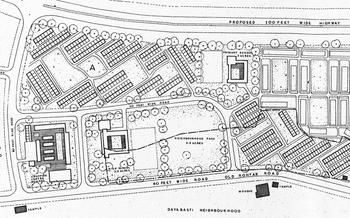
In order for residents to identify with a neighborhood there had to be a clear and direct articulation of the relationship between people and space. The visual and functional delimitation of the space of the neighborhood was to serve this purpose. Planners also advocated such an organization of the city population because it would better serve the rationalization of the administration of city services. The space of mohallas was indexed rather than spatially delimited by its accessibility from a particular entrance or two, a fact reflected in mapping conventions that diffusely depicted mohallas through branching lanes rather than external boundaries.Footnote 58 As planners saw it, the difficulty of visualizing the space of the mohalla made it difficult for residents to identify with its entirety and stymied the use of modern administrative techniques. By contrast, new neighborhoods were given clear boundaries defined by wide, tree-lined roads that routed through traffic around it (Figure 1).
Detail of design for Rohilla Basti neighborhood with the existing refugee colony built in the 1950s (upper right). Delhi Development Authority (DDA), Draft Master Plan for Delhi, vol. 2 (Delhi: DDA, 1960). Reprinted with permission from the Ford Foundation.

This conception of the space of the neighborhood corresponded to the planners' egalitarian vision of the neighborhood as a place strongly differentiated from the space outside, with a minimum of internal social differentiation among residents. Planners fixed the maximum diameter of the neighborhood with the anthropometric standard that no person should have to walk more than twenty minutes to reach any spot in the neighborhood from any other. Schools and community centers were placed as close to the center of the neighborhood as possible to provide a central symbolic and functional focus and make them equally distant from and accessible to all residents. These central areas were to “resemble the village center.”Footnote 59
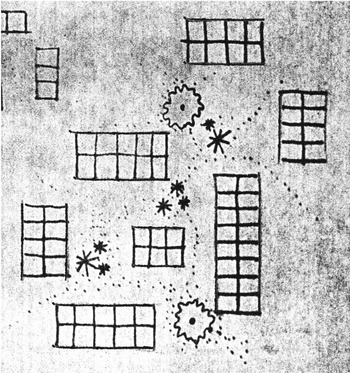
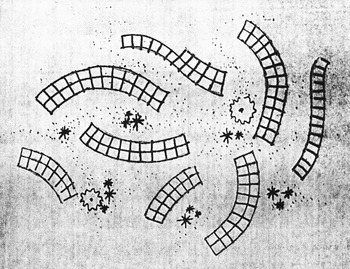
The area of the neighborhood was to be a place of maximum general circulation and interaction for residents. Residents were to be equally accessible to one another, physically and visually. Unlike the houses in mohallas, residential buildings of the planned neighborhoods were accessible by several paths, and open spaces between buildings flowed into one another (see Figure 1). The significance of this feature for the planners is underscored by the analysis of a squatter settlement by Jack Bertoli, a young American architect. Bertoli praised the integrative functions of typical squatter layouts in which the huts are “compact and together” producing “unity” and “community” (Figure 2), but he suggested a reorientation of the rows of huts for more integrated circulation and better social-psychological results (Figure 3). Note how the contrast between the rectilinear order of the refugee colony built by the city in the early 1950s (the upper right area of Figure 1) and the fluid arrangement of the planned ones mirrors that between existing squatter layouts and Bertoli's proposed improvement. The layouts of residential buildings were to promote a maximum of visual contacts and routine “face-to-face” encounters to generate neighborliness and community unity. Planners left in place some of the linear bazaars typically dividing neighborhoods of the Old City, but only because it would be too expensive to replace them. New plans integrated commerce with neighborhoods in square or rectangular plazas that were internally focused (rather than opening toward the roads) and sometimes included the community center. Unlike the socially-neutral existing bazaars that mediated between neighborhoods, these new bazaars were to function as the social center of a single community.
Bertoli's sketch of a typical squatter settlement. Jack Bertoli, Albert Mayer Papers, 20.31. Courtesy of Special Collections Research Center, University of Chicago Library.

Bertoli's design for a squatter settlement layout to improve the circulation pattern and promote social unity. Jack Bertoli, Albert Mayer Papers, 20.31. Courtesy of Special Collections Research Center, University of Chicago Library.

In order to promote neighborhood-wide identifications, space and facilities were not allocated to groups of residential buildings; similarly, within residential buildings individual housing units did not share common space or facilities. The individual family, defined as those who share a single stove, was the largest group allocated socially differentiated space within the neighborhood. Housing units were to be allocated to individual nuclear families by application to the Delhi Development Authority, the agency created to implement the master plan, making it virtually impossible for extended kin, occupational, regional, or religious groups to establish themselves in a single area of the new neighborhoods. Most of the housing was provided in two- to four-story row houses that articulated directly with internal streets and the common spaces of the neighborhood. No units had access to the roof; courtyards, verandahs, and latrines were exclusively allocated to individual units. Courtyard space was limited to small plots in front of ground floor units, for the exclusive use of their inhabitants. Indian members of the planning group advocated common toilets for some types of housing, but Mayer prevailed with the argument that the cost savings was not worth the conflict common use would generate. Shared upper-story corridors were avoided by providing each unit with its own stairway. The only common space within these residential buildings was a narrow corridor shared by four families in the first floor of the one-room, two-story building. The housing and neighborhood unit plans replaced the mohalla's envelopes of “semi-private,” or what we could call a continuum from common to possessed space, with a clear division between public and private space.Footnote 60 “Face-to-face” interaction was strictly related to public space, rather than treated as something to be fostered by shared facilities on a smaller scale. The master plan's application policies, architecture, and neighborhood units embodied a conception of the family as a discrete unit and related each individual family to the residential group of the whole neighborhood.
Planners pointed to the unfortunate history of segregation in Delhi: “This segregation foils the very concept of neighborhood integration. To promote proper community feeling and genuine democratic growth, an integrated community is desirable. The admixture should comprise not only different income groups … irrespective of cultural and social background.”Footnote 61 For Mayer, it was “a truism or a tenet of faith” that a “democratic planning and outlook” called for mixed neighborhoods.Footnote 62 But the planners saw limits to place as medium of integration in the strongly differentiated social life of Delhi. This was brought home by the pre-plan social studies in which the majority of the heads of households surveyed expressed a strong preference to live in “homogeneous neighborhoods,” among others of their own class, education, caste, occupation, religion, or region of origin. The DMPD cautioned that “a wanton mixture of elements having nothing in common” would result “in isolated units without any community sense of fellowship.”Footnote 63 As in the United States, the concern for a unified community took precedence over that of integration.Footnote 64
Thus, while exalting the neighborhood community as a means of integration, planners advocated segregation to insure the neighborhood community. Housing within each neighborhood was generally provided for those within a narrow economic range. Given the significant coincidence of class and caste, this effectively segregated castes or groups of castes too. In some cases segregation was planned directly through the decision to relocate specific caste groups (identified by occupation) or regional groups within one neighborhood. It was, ironically, precisely the objective of place-based community (neutral with respect to social differences) that drove the process by which social differences were re-established on a spatial basis.
For the planners, community feeling or civic spirit was not only a social and political objective, but also a requirement for the basic physical maintenance of neighborhoods. A major problem for them was that experience of the village did not prepare in-migrants for proper city living, did not prepare them “to understand the advantages of rational design and functional organization.”Footnote 65 In-migrants continued a range of what planners considered “village habits,” such as throwing waste outside their houses, defecating in open spaces, and keeping animals in domestic space. Most residents of Old Delhi surveyed expressed satisfaction with mixed uses, which showed, according to the planners, that “people are oblivious to their surroundings, the incompatible uses, and their undesirable influences on the area.”Footnote 66 As Nehru put it, solving the problems of slums “has to face ingrained habits and a lack of desire as well as a lack of training to use better accommodation. Indeed, unless there is that training and co-operation the better accommodation tends to revert to a slum condition.”Footnote 67 Mayer went even further, arguing that what he called “social science operations” were needed to overcome the former villagers' and slum dwellers' “shock or strangeness or misunderstandings” of planned environments.Footnote 68
Mayer backed this view with the example of new housing development in Caracas, which had degenerated into “civil anarchy” for lack of social preparation of the rural in-migrants; he contrasted this with the British New Town of Harlow, whose success he attributed in large part to the involvement of residents in social programs.Footnote 69 Although planners did not ignore poverty as a factor in the problems with the urban environment, they saw the root of these problems in the lack of civic consciousness or community feeling that would lead residents to consider the effects of their actions on their neighbors and neighborhood. The urban community development program that I now turn to was a social science operation to engender this community feeling.
The Organization of Community
If the neighborhood designs aimed to shape people through the mediation of the built environment, the urban community development program worked directly on people. The twin objectives of Delhi's urban community development program, begun in 1959, were to make in-migrants belong to the city and to each other through the “stimulation and development of ‘community feeling’ among people who merely live in an area without feeling any ties or pride in their surroundings.”Footnote 70 Ensminger observed, “Through emphasizing citizen participation, urban community development is a democratic notion.”Footnote 71 He argued that community development methods developed in the United States could be successful in India, despite the great differences between the two countries, because these methods had proven successful in cities large and small in different regions of the United States among different ethnic, religious, and racial groups, and in areas of rich and poor. B. Chatterjee, formerly Executive Secretary of the All-India Social Welfare Association, was appointed director of the newly formed Department of Urban Community Development. To lead the American team, Ford hired Marshall Clinard, a University of Wisconsin sociology professor.
The master plan called for the removal of some of Delhi's incompletely urbanized residents to “urban villages,” but the majority remained, requiring a positive program of cultural urbanization to teach them urban ways of living. Caste, religion, language, and regional affiliations posed complementary problems. Social heterogeneity was considered the social basis of division and conflict in urban areas: new in-migrants eroded established patterns of segregation, bringing increased interaction but little identification between members from different groups. B. S. Guha, an Indian sociologist, called for “a process of Indianization on lines similar to the concept of Americanization,” to be directed by social scientists informed by the sort of research on inter-group relations or conflict conducted in the United States in the postwar period.Footnote 72 The social integration of neighborhoods was seen as the key to self-help initiatives to improve neighborhoods largely untouched by the master plan.
Community development planners identified a range of severe problems among major portions of Delhi's population: poverty, inadequate housing, poor health, deplorable sanitation, illiteracy, and a lack of cultural and recreational activities. They frankly acknowledged that community development could do little about the economic factors contributing to such conditions. Community development was to be no substitute for regional and national development programs that addressed the main economic problems, housing shortages, and unemployment. Still, in their view, the physical and social conditions prevailing in much of the city were due in large part “to a general lack of unity among city dwellers” and its concomitant apathy.Footnote 73
The basic vehicle for the resolution of these problems was the vikas mandal, which planners rendered in English as “citizens' development council,” but would be more literally translated as simply “development council.” Each vikas mandal served 250 to 400 families or 1,250 to 3,000 people. They were to be run by men; “auxiliary” vikas mandals or mahila samitis for women were also organized. (Project planners regarded women as key to the community development process, since they generally spent a greater portion of their time within their neighborhoods than did men.) The main consideration for the population size to be served by a single vikas mandal was similar to that of the planned population for a neighborhood. Planners decided upon a population range of 1,250 to 3,000 people because it approximated that of an Indian village, in which planners romantically thought that the prevalence of “face-to-face relationships” among residents promoted unity.Footnote 74 The areas of the vikas mandals were subdivided into smaller areas, “zones,” of 15 to 100 families served by vikas sabhas. Several contiguous vikas mandal areas made up the area of a vikas parishad of 7,500 to 20,000 people.
Urban community development operations were based upon the master plan preliminary surveys I mentioned above that documented the major problems of each area with respect to the norm of place-based community life: “fights among groups and families,” “a feeling among residents that they are not really part of the city,” “preoccupation with union activities,” “feelings of uncertainty,” “caste and class heterogeneity,” “lack of cultural and recreational activities,” and various caste, regional, and religious “affinities” producing a “lack of unity.”Footnote 75
On the basis of this information, community organizers divided the problem regions of the city into areas that would contain the communities to be created through the activities of the vikas mandals. Considerations in delimiting the vikas mandal areas included social composition, the degree to which residents shared community facilities, and the “possibilities for cultivating relationships.”Footnote 76 The main criteria, however, were the existence of physical boundaries such as thoroughfares, a river, or a railway, and the size and compactness of areas so delimited. There were several reasons for the precedence of physical or geographical over social criteria. First, the planners of the community development program, like those working on the master plan, thought that the spatial organization of social interaction is a major factor in group formation. Second, in the words of Clinard, “conforming to religious, caste, class, or political feelings in the area … militates against” the objective of “over-all community feeling based on territorial lines.”Footnote 77 Organizers feared strengthening such groups by establishing them in an area. Third, areal division was considered to be an operational necessity for efficient administration of the program.Footnote 78 Finally, organizers intended to make the new community divisions into administrative divisions of the city government. Organizers frequently pointed to the “artificiality” of the vikas mandal areal divisions: “Although each area is a geographic whole, it is artificial in the sense that, without exception, there was not initially even a partial semblance of organization of the residence or consciousness of being a community.”Footnote 79 The objective was to bring into harmony “the political, social, and geographical contours [which] generally did not coincide,” that is, to use spatial divisions as a basis to transform social and political ones.Footnote 80
Areas for the zones, too, were shaped to follow the physical structures of an area such as cul-de-sacs (katras) and narrow lanes (galis). Community organizers, like the drafters of the master plan, disliked the layouts of most existing neighborhoods because of their “unconnected blind alleys and lanes which hinder face to face relationships” on a wider scale.Footnote 81 However, they were happy to take advantage of the solidarity of the “primary world” or the “one big family” such physical structures foster.Footnote 82 In contrast to areas of the vikas mandals, at the zone level organizers sought homogeneous populations in order to facilitate the initial effort at getting people involved in the vikas mandal and to insure that the vikas mandal executive council was representative of members of all groups in the area.
Like the physical plans for neighborhood, community development emphasized the delimitation of space as central to formation of place-based sociality. Among the first activities organizers encouraged members of vikas mandals and vikas sabhas to carry out was the demarcation of the boundaries of the areas they served using signs bearing the zone number or the name. Clinard pointed out that, though the boundaries of these areas were generally well known, such visible demarcation “constantly reminds the members of the area of their organization and responsibility to it.”Footnote 83 Offices with the name of the vikas mandal above the door, too small to be of much practical use, served the same purpose.
Natural Leaders and Traditional Groups
Leadership was as important as geography in fostering new communities. Community organizers were trained to minimize—even obscure—their role by “working through” what they called “natural leaders.” The strikingly opposed meanings given to the term natural leader in colonial governance and in community development practice exemplifies the difference between the ways the two governing regimes articulated with defined groups. Haynes describes how the British administrators in late-nineteenth and early-twentieth-century Surat thought of the city as composed largely of “communities” defined by religious belief. “Within these groupings, they believed, were figures who held the unswerving support of their coreligionists as a result of traditional family status or the supposedly hereditary headmanship of important communal bodies. Civil servants regarded these people as having a natural quality of leadership that was local, personal, and usually inherited, men analogous in the British mind to the aristocracy of England.”Footnote 84 Gupta similarly traces the way colonial administrators governed Delhi through natural leader intermediaries, though in addition to religious communities these leaders represented groups including caste panchayats, occupational associations, and even gambling and wrestling fraternities.Footnote 85
There is no evidence that the postcolonial use of this term in community development had any historical relation to its colonial version. Rather, the term came into Delhi urban community development directly from technologies of change developed in the United States.Footnote 86 In order to overcome “forces of resistance,” American change experts called for the identification and cultivation of “natural leaders,” those individuals considered more representative of group or community than “formal leaders.” Such individuals were said to have essential personal qualities such as openness to change and initiative and the respect of other group or community members. In this discourse as applied to the American context, the influence of formal leaders is grounded in sources beyond the group (in wealth, education, or government or business position) and is therefore intrinsically undemocratic. By contrast, the influence of “natural leaders” emerges from interpersonal dynamics within the group itself, not from authority beyond it.
If the political valence of the natural leader of the Delhi urban community development program was American in its origins, its application drew on a colonial sociology of traditional leadership. Reflecting the community organizers' colonial-cum-modernization image of Indian society as status rather than class oriented, “natural” or “indigenous” leaders were contrasted with “formal or traditional leaders, who usually held their positions through appointment, inheritance, or social status or caste.”Footnote 87 Those excluded were precisely those whom the British considered “natural leaders.” Elected political leaders and employees of the municipal government had a more ambiguous place in this “tradition”-based typology, but they too were assimilated to the category of traditional leader on political grounds. All such formal or traditional leaders were not “typical” or “representative of the community” and would “resist change.”Footnote 88 Clinard wrote, “Leadership that must rely for its effectiveness on caste or religious authority, political party, or governmental position is generally not likely to be effective in social change. In fact, such formal leadership may stifle the average person's efforts to participate in changes in the local community.”Footnote 89 Such leaders were also rejected because they did not represent a defined spatial area. However, community organizers also attempted to sideline the leaders of the long-standing mohalla committees and the newer residents associations forming in greater numbers in the 1950s. Although the activities of such “more traditional organizations” were similar to those of the vikas mandals, in the view of community organizers, they “were not truly democratic in nature, with management and control open to the community at large.”Footnote 90
The natural leader was regarded as a definite personality and social type and it was “a major assumption” of the project that “every local community has some natural leaders.”Footnote 91 In practice, there were not always enough. After an initial survey of an area, one community organizer noted glumly, “There are not many natural leaders and those who are present do not enjoy a very sound reputation.”Footnote 92 Male or female natural leaders could be identified through personal qualities such as resourcefulness, tolerance of others' opinions, articulateness, and “a strong sense of belonging” to the area. Another identifier of a natural leader was “pride in house,” manifest by cleanliness, whitewash, and flowers (one organizer excitedly reported, “the worker saw a house of pride today”).Footnote 93 Additionally, natural leaders refrained from speaking in an authoritative manner or explicitly claiming leadership. In identifying a natural leader, one organizer wrote, “He is a modest, unassuming person, who does not claim to be a leader of the katra [cul-de-sac].”Footnote 94 Another exemplar of the natural leader was described as follows: “He has a complete hold on the community not like a dictator, but like a democratic leader. When he speaks, he does not speak as an individual, but always speaks in terms of the community. In fact, he does not assume leadership, but guides the community from behind.”Footnote 95 Reports of community organizers regularly referred to specific individuals they designated as natural leaders as if the natural leader were a determinate social identity, even a titled role: for example, “The male community organizer discussed the whole idea of developing the lane with the natural leader Mr. A. A. again.”Footnote 96
Typically the organizational structure of American community development programs was quite informal. The comparatively more “formal organization pattern” of vikas mandal was a means by which traditional leaders “were bypassed for new, more representative leaders.”Footnote 97 A residence requirement, division of the vikas mandal areas into small zones, and what organizers themselves referred to as “gerrymandering” insured that representatives to the executive council would be local “natural leaders” rather than traditional leaders with broader support.Footnote 98
On the other hand, organizers tried to blunt the potentially divisive effects of formal democratic procedures by encouraging consensus on the choice of candidates, usually the individuals cultivated by the community organizers, often within the election meetings themselves. Organizers were instructed, “While others will participate, the emphasis placed on the opinions of certain persons by the organizer may mean that they will be elected to the Executive Committee.” This practice, however, was circumscribed by the more fundamental commitment to democratic leadership. The manual declared, “Under no circumstances should he try to dictate such selection, however.”Footnote 99 Nevertheless, elections were usually little more than formal endorsements. An organizer described an election as follows: “A number of proposals were received for Presidentship, but ultimately only two contestants remained in the field though the rest of them withdrew. One of the persons was a new member. Against expectations as none would withdraw, there was left no option except to hold elections.”Footnote 100 When elections were contested, the organizers suggested, “the person with the highest number of votes be made unanimous.”Footnote 101 The combination of organizer-led consensus and the “formal organization pattern” of vikas mandal was a means by which traditional leaders “were bypassed for new, more representative leaders” in order to create a “new social structure within the vikas mandal area.”Footnote 102
Even as they tried to exclude them from the leadership of vikas mandals, organizers often sought the blessings of “traditional” leaders of mohalla committees and residents welfare associations (RWAs) for the new organizations. One organizer wrote, “Care should be taken not to offend any organization already working in the area otherwise its leaders can be a potential source of trouble.”Footnote 103 Residents often demanded that the “sanction of important people be obtained.”Footnote 104 A community organizer running a project in Shora Kothi reported that some residents told him, “The proposed Vikas Mandal should be ready to bear a stiff challenge from the Residents' Welfare Association (in case the latter body's office allowed the Vikas Mandal to come up at all).”Footnote 105 The organizers pursued the support of the president of the Residents' Welfare Association for over eight dispiriting months as the president canceled meetings, insisted on consulting fellow officers who were “out of station,” and made ambiguous or contradictory statements. As residents of the area began to see a conflict, the organizer reported that he explained to them, “There was no point of clash between the Residents' Welfare Association and the Vikas Mandal. If the former was of the opinion that the V.M. opposed it, then it was merely a matter of explanation of the people themselves to the office bearers of the Residents' Welfare Association (It was the worker's intention to prepare ground whereby the inborn opposition of the people could be won over).”Footnote 106
Shortly afterward the organizer tried to get the president to agree “to change the name of the organization and accept formation of V.M.”Footnote 107 However, in a stormy meeting, the president “forcefully stated his case regarding the Dept. helping the Residents' Welfare Association in place of asking it to change its name and then follow a different pattern than what it had been doing earlier.”Footnote 108 After another few months of equivocation, the president flatly refused to allow the Association to be reorganized into a vikas mandal, but declared he had “no objection” to the formation of an independent one.Footnote 109
Another project in Shora Kothi ran into similar problems with the local Mohalla Sudhar Samiti (literally, Neighborhood Improvement Committee). The organizer reported the “spreading of false rumours by some of the members of the Mohalla Sudhar Samiti against the Vikas Mandal and its office bearers simply because the former feel that they are loosing [sic] their hold on the people.”Footnote 110 The organizer feared that the Samiti leaders were using the local Hindi association as “a cloak for anti-Vikas Mandal propaganda” and pledged to investigate this “alleged underhand activity” by “unresponsible and frustrated elements.”Footnote 111 But the situation kept deteriorating and the frustrated organizer wrote, “The month of July marked a period of hectic activity by a local organization—the Mohulla Sudhar Samiti—the office bearers of which used everything in their power to launch propaganda against the Vikas Mandal.”Footnote 112Mohalla committee leaders attempted to demonstrate the impotence of the vikas mandal by refusing to perform their customary arbitration in landlord-tenant disputes, saying it was now the vikas mandal's job, confident that it would be ineffective. Even vikas mandal officers in this area seemed to agree: when a tenant came to him to resolve a potentially violent dispute with his landlord, the officer referred him to the Mohalla Sudhar Samiti, because its testimony “carried weight with the police whereas the Vikas Mandal had no locus standi in this regard.”Footnote 113 At one especially convivial vikas mandal meeting, some members asked others who were also members of a mohalla committee as to why they should not just merge the two organizations. According to the organizer, “The replies were mostly given in monosyllables and one of the respondents even ventured to say that time alone would show whether the Samiti outsmarted the Vikas Mandal or it would be the other way around.”Footnote 114
Another reason that organizers disliked mohalla committees and residents associations was that they often pressured the Delhi Municipal Corporation, the city government, to make improvements in areas. One organizer criticized a tenant organization for its practice of writing and taking deputations to the Corporation because it “inculcated a tendency into the people of dependency i.e. of getting things done by the Corporation or other outside agencies”Footnote 115 Many residents seem to have envisioned this role for the vikas mandals. When a letter of one vikas mandal to the Corporation went unanswered, the officers “argued that if this was the consideration that the V.M. was getting in the corporation this clearly reflected its strength and utility.”Footnote 116 The goal of community organizing was not to create new sources of collective pressure on the Corporation but to foster community initiative for self-help.
In the views of organizers, seeking help from the Corporation also inevitably politicized area problems, drawing them into the conflict of party politics and fracturing community unity. Training sessions for vikas mandal leaders emphasized “non-partisan roles” and one organizer urged that vikas mandal leaders “should be briefed more often so that he (or she) does not say anything which might have a political implication.”Footnote 117 Organizers sometimes found that an elected leader was “too politically motivated.… In such cases it was the community organizer's responsibility to change his attitude to his new duties and the objectives of the organization.”Footnote 118 Residents could not be prevented from inviting Corporation councilors, that is, their elected representatives, to vikas mandal functions, but they rarely attended and the reports of community organizers document persistent tensions between the organizers and councilors.
While organizers attempted to steer vikas mandals clear of “politics,” they trained leaders to emphasize “changes in attitudes toward outside authorities.” What they meant by “authorities” was not politicians, but bureaucratic officials of the Corporation.Footnote 119 When one water bill collector told residents that their letter demanding greater supply had been tossed directly into the waste paper basket, the organizer took him aside to “remind” him “about his responsibility” and enjoined him “not to make wrong statements embittering the residents against his bosses.”Footnote 120 Political quietude was thus a component of self-help.
Communities of Activity
There was a strong governmental purpose to the organization of space-based communities. Such communities could be enlisted to further public health initiatives to fight communicable diseases and allow administration of these programs to be organized by area. Vikas mandals recruited residents for DDT spraying campaigns and vaccinations. Following the inoculation of nearly two hundred individuals in a single day, one organizer enthusiastically reported, “The doctor giving inoculations was so much impressed by the Corporation [i.e., the Department of Urban Community Development] that he spontaneously remarked, ‘This achievement was all attributable to the efforts of the workers and the response they had inspired.’ He frankly confessed that without the co-operation of the workers they could hardly cover only 10% of the cases now done.”Footnote 121Vikas mandals were also used to organize numerous programs for women and children on nutrition, health, and family planning conducted by “lady health workers.” On occasion, the vikas mandals were even asked by Corporation sanitation inspectors to help monitor Corporation sweepers by “taking their attendance informally.”Footnote 122
But the main reason to foster communities was that the administrators of Delhi's community development program thought that “social change can best be achieved by working with groups of people rather than with individuals … any change must come from the group.”Footnote 123 This view had become a commonplace in American change practices. Values are based in and on the group and change can be brought about only through the group, “The individual accepts the new system of values and beliefs by accepting belongingness to a group.”Footnote 124 For organizers, this emphasis on the group was consistent with their effort to create the forward-looking, achievement-oriented individual, or what one Indian sociologist later termed the “development conscience.”Footnote 125 Studies of leadership in the United States had concluded that in democratically functioning groups, individual initiative grows along with strong collective sentiment.Footnote 126
Group interaction was also considered important because it provides the contexts for open, collective declarations of commitment to standards and actions, which makes their acceptance more likely. Like what were called “change agents” in the United States, community organizers in Delhi were told that “where needs are not recognized, they may have to be ‘induced,’”Footnote 127 but they had to be embraced by the community as their own in order to perdure. This process is illustrated in the effort of one vikas mandal to get people to stop urinating in the drains. The organizer promoted public declarations by everyone at a meeting to refrain from the practice and to stop others. The idea of posting on notice boards was suggested and several groups of members even volunteered to pay for them. But these offers were withdrawn when the organizer suggested every family contribute one “pice” (or paisa, one one-hundredth of a rupee) and explained the “spirit” of what he called the “One Pice Project.”Footnote 128
Firstly all the katra residents will be associated or involved in the joint venture. Secondly one pice contribution was not much and no body would grudge contributing it, and when contributing everybody will be conscious of the cause, “We have not to urinate in the street drains” for which the contribution was being raised. Every body will be made conscious about it for a second time when the boards appear. Further more this will give them the impression “We have done it.” Such a feeling will accelerate their changing of habits. A sort of “we feeling” will develop and besides they will share the pride of putting notice boards together.Footnote 129
As the organizer later put it, the One Pice Project “became a means to weave the residents together in common bonds of brotherhood and good neighbours.”Footnote 130
Program administrators considered the intensification of group life in an area and the growth of “community feeling” (encompassing a fellow-feeling with others and an identification with a geographic area) a major part of cultural urbanization. These were the social-psychological preconditions for reform of rural domestic habits and improvement in the material environments of vikas mandal areas. This is perhaps most amusingly captured in an exemplary poem attributed to the residents of a vikas mandal area:
The drains are no longer choked,
the lanes are not dirty,
the people no longer remain isolated
and do not have any fear complex.
The community is full of group activities.Footnote 131
Despite his recognition of the continuing significance of caste, religious, and regional solidarities in Indian urban social life, Clinard saw “the decline in effective intimate communication” and “the effect of this decline on social control of behavior” as basic to the problem of urbanism and urbanization in India as elsewhere.Footnote 132 Intimate communication and social control were to be increased through the group activities sponsored by the vikas mandals, for a “better and organized way of life.”Footnote 133 Residents were to identify with their neighborhood not for its particular history, unique architecture, or functional features, but through identification with other residents. And the key to identification with other residents was group activities.
Vikas mandals ran a wide range of activities including screenings of educational movies in lanes, sewing and cooking classes, children's play groups, baby shows (with prizes), distribution of powdered milk, whitewashing of neighborhoods, reading the Ramayana, devotional singing, Independence day and Holi celebrations, and “citizen discussion groups” to bring residents together to discuss affairs of the area. At the early stages of the project Clinard wrote that the “incipient community feeling” fostered by activities was evidenced when, “One vikas mandal, the most artificially created of them all, even refused to allow a woman from an adjoining project to participate in the joint purchase of a sewing machine, as she was not ‘in our group.’”Footnote 134 But meetings of the vikas mandal were often judged to be the most significant community building events.
Further more, the people have been helped to visualize the significance of such meetings for the fact that in many cases members formed as heterogeneous groups as the professions & vocations they followed. From Washerman to college professors all were sitting together. During the self-introductions it came to light in certain cases that the persons had been residing in quite close [sic] to one another for almost two decades and yet they did not know one another. Invariably such revelations induced keenness amongst the members to get together.Footnote 135
The monthly reports of organizers began with detailed accounts of the meetings that took place, including figures on the number of residents who attended, the percentage of families in the area they represented, and their “atmosphere.”
Program evaluations are the most graphic evidence of the program planners' concern for “group life.” Using the statistical methods of measuring group processes pioneered by American social psychologists, evaluators judged the success of community development projects in terms of “the intensification of group life.”Footnote 136 Group life was narrowly construed: a statistical measure of it was the number of activities of locality-based groups—that is, to the exclusion of the activities of all other sorts of groups. Evaluators reviewed reports of community organizers and “each time the organizer recorded that the people were in the process of acting directly on some problem or meeting their own desires through common effort an activity was coded with one check.” “The total volume of activities was considered the most effective measure” of the success of the projects in generating community unity and identification with the area.Footnote 137 Regression analysis was used to correlate this statistical measure of group life, “total activity level,” with various aspects of the preexisting social life of the area (such as apathy and homogeneity) and the organizational process to determine the most effective change techniques.Footnote 138
Conclusion
The Delhi projects illustrate what Dipesh Chakrabarty has described as the “processes by which societies and nations make their journey beyond colonial rule.”Footnote 139 No simple replacement of colonial with postcolonial Indian or American social thought and practices, they were rather a complex engagement of American, Indian, and colonial social science in the postcolonial urban projects of a modernizing and nationalist Indian government. Although the projects drew on colonial discourses of traditional sociality and village life, these discourses were refigured by modernizing and democratizing 1950s social science. Communities as conceptualized in colonial sociology were revalued as legacies of a traditional past, to be transformed rather than used as a basis of urban governance. The natural leaders of the colonial city became the paternalist traditional obstructions to making a democratic urban community founded on a modern attachment to place and its residents. The Delhi projects also show the capacity of social technologies such as neighborhood planning and urban community development to take on new purposes. These technologies had been developed in the United States to be constructive, to knit together urban populations conceptualized as atomized and unconnected. In Delhi they encountered populations already connected by myriad forms of affiliation and became instruments to undermine these affiliations.
By the 1973 publication of the comprehensive Review of the Master Plan, the Delhi Development Authority had built 14,377 dwellings in neighborhoods across the city.Footnote 140 The review characterized the new neighborhoods as “functionally efficient” and “pleasant places for living,” but concluded that “the concept of neighborhood has failed to materialize as envisaged” because it “does not take into account other factors, such as social, economic, and cultural composition of the people.”Footnote 141 The review observed that schools in particular had failed to integrate neighborhoods: middle and higher income groups sent their children out of the neighborhood to better schools or one that met “their cultural aspirations.”Footnote 142 Nevertheless, the master plan for Delhi became a prototype and young planners who gained experience in the project adopted its neighborhood concept in master plans for cities throughout India. However, the neighborhood unit was stripped of its overt social objectives and American origins as it was translated into a table of technical specifications for percentages of land to be devoted to different uses in a residential area.Footnote 143
Sanjeev Vidyarthi's study of neighborhood units in Jaipur shows how norms of sociality in urban India have deflected the universalist concept of neighborhood.Footnote 144 Neighborhood parks, for example, have not proven to be interactional mixing grounds, but they do contribute to neighborhood sociality when they are appropriated for shrines that are gradually expanded into multi-use community complexes. Reversing the Delhi planners' hoped-for transformation of dharmshalas into community centers, these temple-complexes have replaced the school and secular community center as the social center of neighborhoods.Footnote 145 But the politics of appropriating public space, requiring broad support among residents, makes such temple-complexes relatively inclusive. They are not secular but ecumenical in orientation, serving a range of Hindu sects, generating a more inclusive form of sociality than a British colonial city government would have recognized as a community.
Urban community development also spread beyond Delhi as the Government of India was convinced by the evidence regarding the intensification of group life. In 1965, against the determined opposition of councilors of the Corporation, the techniques to engender neighborhood community were institutionalized when the Department of Urban Community Development was made a permanent agency within the Department of Community Services of the Corporation. The Government of India subsequently rolled out a national program modeled on Delhi. Some Delhi vikas mandals persisted into the mid-1970s, though it appears they became much less active as the novelty of the organizations wore off and the UCD program cut its staff of organizers, assigning each to as many as ten different areas. Vikas mandals also seem to have foundered on the limits of self-help as organizers persistently deflected initiatives of vikas mandal members to use the organization to pressure city politicians and the bureaucracy. The reports of organizers show that, even early on, residents were coming to see vikas mandals as cultural or recreational organizations that were unable to grapple with the most pressing problems of housing, electricity, drainage, sewage, and water. Despite the differences between colonial and American neighborhood concepts of community, in the vision of administrators both types of community were outside of politics. If, as Prakash observes, communities of colonial sociology were figured as pre-modern and pre-political, neighborhood communities were to be modern yet non-political.
The dramatic rise of activist resident welfare associations (RWAs) in Delhi over the last two decades highlights the limits of the master plan and community development approach to community.Footnote 146 From one perspective, RWAs can be seen as a partial realization of the community vision of the architects of the master plan and community development programs. They are self-governing, largely democratic organizations that “build a sense of community” in a locality through common efforts to improve infrastructure and neighborhood picnics and festival celebrations.Footnote 147 They collect annual contributions from residents and sometimes undertake neighborhood improvements themselves. Like vikas mandals that were asked to monitor sweepers, some RWAs collect water bills, read electric meters, supervise sanitation services, and maintain community parks and halls. Vikas mandals can be seen as a depoliticizing effort to get residents to do for themselves what the government could not do for them. Similarly, some see the Government of Delhi Bhagidari (“collaborative partnership”) program initiated in 2000 to facilitate citizen-government cooperation as simply “a means for the government to disown its responsibilities” and to “blunt the RWAs and keep them from criticising the government.”Footnote 148 Leaders of RWAs even sound like frustrated community organizers when they complain of the apathy and lack of awareness of their fellow residents.Footnote 149
However, there are a couple important differences. Rather than unifying everyone in a particular locality, RWAs of middle- and upper-class areas often work to expel poorer residents living in unauthorized housing. More important, RWAs have become institutions for pressuring the government to deliver resources: RWAs of poor neighborhoods work through politicians, while the middle and upper class works through the bureaucracy and judiciary. RWAs of all classes organize dharnas (fasting sit-downs) and street protests. Two umbrella organizations of RWAs have formed and now have a major influence over how the city is governed.
The dynamics of community-based administrative governance and community claims to self-government are comparable in the colonial and postcolonial periods. The colonial exercise of governance on the basis of community constituted them as empirical facts, eventually allowing native subjects to insist on self-government. The extent to which the community building of master plan and community development projects contributed to the constitution of area-based communities and the organization of RWAs is unclear. However, through the community discourses of the master plan and community development programs, and the more recent opening of city governance to RWA representation, at least middle-class neighborhood communities have been constituted as forms of sociality with legitimate claims to govern themselves.