Introduction
For terrestrial plants, the size of seeds is a key fitness-related trait that links germination to seedling establishment and later life stages (Adler et al. Reference Adler, Salguero-Gómez, Compagnoni, Hsu, Ray-Mukherjee, Mbeau-Ache and Franco2014, Poorter & Rose Reference Poorter and Rose2005, Verdú & Traveset Reference Verdú and Traveset2005). In many cases, the larger the seed, the greater its propensity for germination as well as for its eventual reproductive success (Leishman et al. Reference Leishman, Masters, Clarke and Brown2000). Three hypotheses have been proposed to explain the relationship between seed size and seedling performance: (i) The seedling-size effect hypothesis states that larger seeds produce larger seedlings, which are more vigorous and more likely to survive and establish (Gómez Reference Gómez2004, Moles & Westoby Reference Moles and Westoby2004, Susko & Cavers Reference Susko and Cavers2008, Westoby & Leishman Reference Westoby and Leishman1996). (ii) The reserve-effect hypothesis predicts that larger seeds are more successful because they retain comparatively higher contents of reserves, which can be employed for seedling growth, maintenance and repair and would increase seedling survival particularly during stress episodes (Saverimuttu & Westoby Reference Saverimuttu and Westoby1996, Wright & Westoby Reference Wright and Westoby1999). (iii) Finally, the metabolic effect hypothesis predicts a trade-off between seed size and relative growth rates (RGR) during early seedling development. Although a lower metabolic rate in larger seedlings would imply relatively slower nutrient consumption (Cornelissen et al. Reference Cornelissen, Castro Diez and Hunt1996, Green & Juniper Reference Green and Juniper2004), seedlings derived from smaller seeds could compensate for their lower seed reserves by increasing their RGR (Castro et al. Reference Castro, Reich, Sánchez-Miranda and Guerrero2008). Together these hypotheses suggest that seed size is correlated to individual quality and is a strong predictor of early fitness (Westoby & Leishman Reference Westoby and Leishman1996).
Studies on the implications of the variation in seed size have been conducted mostly by comparing different species (Ellison Reference Ellison2001, Theimer Reference Theimer2003). Nevertheless, studies at the species level are also of significance because they help to understand better the role of seed size variation on seedling establishment and demography (Gómez Reference Gómez2004). Differences in mean seed size at the intra-specific level have been associated with a diversity of adaptations to a broad range of ecological niches and conditions (Quero et al. Reference Quero, Villar, Marañón, Zamora and Poorter2007, Tripathi & Khan Reference Tripathi and Khan1990). Although some studies have shown a direct link between seed size and seedling performance (Leger et al. Reference Leger, Atwater and James2019), other studies have found to be environmentally dependent or associated with habitat degradation (Ma et al. Reference Ma, Willis, Zhang, Zhou, Zhao, Dong, Yao, Huang, Zhao, Yin and Du2019, Renison et al. Reference Renison, Hensen and Cingolani2004, Seltmann et al. Reference Seltmann, Leyer, Renison and Hensen2007a, Tadey & Souto Reference Tadey and Souto2016). In semiarid environments, plants are limited by xeric conditions which impose severe constraints to seedling recruitment. Experimental evidence suggests that larger seeds provide an advantage for seedling establishment but this relationship is species-specific or could be manifested under specific conditions (Hendrix et al. Reference Hendrix, Nielsen, Nielsen and Schutt1991, Leishman & Westoby Reference Leishman and Westoby1994). For example, seedlings from larger Desmodium paniculatum seeds survived more than seedlings from smaller seeds (Wulff Reference Wulff1986). In contrast, larger Pastinaca sativa seeds exhibited greater seedling emergence but small-seeded seedlings survived drought conditions better (Hendrix & Trapp Reference Hendrix and Trapp1992).
Seed quality can also be influenced by maternal plant size (Kozłowski Reference Kozłowski1992, Renison et al. Reference Renison, Hensen and Cingolani2004, Roach & Wulff Reference Roach and Wulff1987). Many studies have shown maternal influence on seed size and quality but the strength of this relationship differs among species and populations (Guo et al. Reference Guo, Weiner, Mazer, Zhao, Du and Li2012, Hirayama et al. Reference Hirayama, Itoh and Yamakura2004, Renison et al. Reference Renison, Hensen and Cingolani2004, Samson & Werk Reference Samson and Werk1986, Westerband & Horvitz Reference Westerband and Horvitz2015). For instance, if larger plants can access more resources than smaller ones, they could produce more and better offspring, regardless of other attributes such as age. Consequently, resource acquisition by a larger mother plant could result in better-provided seeds with a higher probability of germination and thus, production of seedlings with better performance.
In this study, we conducted greenhouse experiments to evaluate the functional influence of seed size on germination and offspring performance in the wind-dispersed highland tropical tree Polylepis tomentella Weddell (Rosaceae). We selected P. tomentella because this species is adapted to semiarid high-altitude conditions and is known to experience low rates of seedling recruitment, partially associated with low production of viable seeds (Arrazóla et al. Reference Arrazóla, Coronado, Navarro, Meneses, Torrico and Ferreira2012, Domic et al. Reference Domic, Camilo and Capriles2014, Reference Domic, Bernhardt, Edens-Meier, Camilo and Capriles2017). It is unclear how these effects are a consequence of evolutionary tradeoffs related to high-elevation adaptation or to increasing population decline (Cierjacks et al. Reference Cierjacks, Iglesias, Wesche and Hensen2007, Renison et al. Reference Renison, Hensen and Cingolani2004, Reference Renison, Bergero, Soteras, Herrero, Rodríguez, Torres, Cingolani and Hensen2019; Velez et al. Reference Velez, Cavelier and Devia1998). The objective of this study is to assess the relationship between seed size and maternal tree size on germination and seedling fitness. The specific research questions addressed are: (1) Do heavier seeds exhibit higher germination rates? (2) Do heavier seeds produce larger seedlings or seedlings with higher survival rates? (3) Does early offspring performance (measured as germination percentage, seedling growth, survival and size) increase proportionally with the size of the maternal plant?
Methods
Study species and study area
Polylepis tomentella Weddell (Rosaceae) includes small evergreen trees and shrubs with a mean height of 2.5 m (up to 9 m) and 1.5 m (up to 3 m), respectively. The species is distributed in the Eastern Andean highlands with a precipitation range between 300 and 900 mm of Peru, Bolivia, Argentina and Chile (Kessler Reference Kessler1995, Macek et al. Reference Macek, Macková and de Bello2009). In Bolivia, P. tomentella is found in the Altiplano and inter-Andean valleys across the central and southern Eastern Andes, forming monodominant woodlands at elevations between 3100 and 4900 m above sea level (Macek et al. Reference Macek, Macková and de Bello2009, Navarro et al. Reference Navarro, Molina and de la Barra2005, Reference Navarro, Arrazóla, Balderrama, Ferreira, De la Barra, Antezana, Gómez and Mercado2010).
Polylepis tomentella propagates almost exclusively through sexual reproduction, but it can reproduce sporadically through rhizomes. Plants produce bisexual anemophilous flowers that bear one ovule that produces one fruit with a single seed (Kessler Reference Kessler1995, Simpson Reference Simpson1979). The species flowers annually during the dry season (May–October) and produces fruits from late August to December (Domic et al. Reference Domic, Mamani and Camilo2013). The species possess a prezygotic self-compatible system and flowers produce a single winged achene, dispersed by wind on maturation (Domic et al. Reference Domic, Bernhardt, Edens-Meier, Camilo and Capriles2017).
The studied woodlands of P. tomentella are distributed in the valleys of the south-central Andes of Bolivia. The area is characterized by a semiarid climate, with a mean annual temperature of 15.8°C (maximum annual temperature 20°C and minimum annual temperature 0°C) and an annual total precipitation of 445 mm (http://www.senamhi.gob.bo/). Studied P. tomentella woodlands were found on rocky hills with relatively steep slopes, at a similar elevational range (3100–3400 m asl). Local people actively use forest stands for collecting firewood, small-scale farming and grazing areas for domestic livestock (sheep, goats and cattle) (Domic et al. Reference Domic, Camilo and Capriles2014).
Seed collection
Seeds of P. tomentella were collected from two forest stands located 32 km apart. We randomly selected a total of 38 seed-bearing trees, 20 trees from population A and 18 trees from population B. For each maternal tree, we recorded total height and measured stem diameter at 0.5 m above the ground. We collected and stored seeds in paper bags. In the lab, seeds were air-dried and stored for 2 months. We did not apply any treatment to separate the seeds from the fruits because the species produces small achenes with thin-pericarp walls.
Seed size effect
To test if heavy seeds were more likely to germinate, we subdivided seeds into three categories based on weight: light (0.05 ± 0.003 g; range: 0.03–0.06), intermediate (0.09 ± 0.002 g; range: 0.07–0.1), and heavy (0.14 ± 0.002 g; range: 0.11–0.18). Seed mass was significantly different among these three categories (F = 307.32, df = 2, P < 0.0001). Seeds were divided in groups of 20 and placed in Petri dishes with filter paper (n = 159). Small and intermediate seeds were less common which produced an unbalance experimental design (700 light seeds, 1140 intermediate seeds and 1340 heavy seeds). Seeds were placed in a germination chamber at a constant temperature of 24°C for 30 days at the Herbario Nacional de Bolivia in La Paz, which is situated at 3415 m above sea level. We considered seeds as germinated once the radicle was visible. We weighed seedlings as soon as they completely emerged from the seed coat as an indirect measure of seedling fitness (Tripathi & Khan Reference Tripathi and Khan1990). At the end of the experiment, we cross-sectioned un-germinated seeds to determine the presence of the embryo and endosperm.
Maternal size effect
To test the effects of maternal plant size on seed germination, we selected 60 seeds from each tree and subdivided them in three groups of 20 seeds each (n = 2160). Each seed was measured using a digital calliper to the nearest 0.01 mm. We measured length, width and thickness, and estimated seed mass by weighing all the seeds together. We then placed seeds on a moist filter paper in Petri dishes and incubated them in a germination chamber with a daily temperature oscillation of 26–15°C and a light cycle of 10–14 hours. We monitored seed germination for 30 days.
Greenhouse experiments
To evaluate the effects of seed mass on seedling performance, we used the seedlings obtained from the seed weight experiment and grew them in a greenhouse for 3 months. Seedlings were maintained under polycarbonate-covered glasshouse conditions, equipped with automatic environmental control. A total of 38 seedlings from intermediate seeds and 81 seedlings from heavy seeds were transplanted to propagation plastic trays containing standard potting soil mixture. We were unable to include seedlings from small seeds due to a small sample size. No fertilizer was added and water was supplied twice a week. After 30–40 days, seedlings were transported to individual plastic pots with a 5-litre capacity and filled with horticultural substrate. Plants were irrigated every 2 days with tap water. We measured several traits that translate different components of overall seedling performance. Every week, we recorded survival and measure total height using a digital calliper. Relative growth rate (RGR) was calculated as total height at date n minus height at date n−1 divided by time.
We additionally tested the effects of maternal tree size on seedling performance under the same greenhouse conditions. We sowed 15 seeds from 30 trees (450 seeds total) in multi-plot plates with potting soil mixture. Seedlings were transplanted to 5-litre pots after 30 days of emergence. Weekly, we recorded day of emergence, survival, total height and relative growth rate (RGR) for 90 days.
Statistical analysis
We used multiple generalized linear models (GLMs) to describe the relationships among seed germination, seed size and maternal tree size. We selected the best models by performing a backward model selection according to the Akaike’s Information Criterion (AICc) (Venables & Ripley Reference Venables and Ripley1998). The most parsimonious models had the smallest AIC weights and ΔAIC values smaller than two. We used one-way ANOVAS and post hoc Tukey tests to compare the differences among germination percentage, seedling weight, survival, RGR and final total height between seed-weight categories. We performed GLMs to test the effects of maternal tree size on seedling performance (survival, RGR and final height). We additionally performed a GLM ANOVA (nested ANOVA) to test if the interaction between tree size (total height) and seed size are associated with seed germination, where maternal tree was nested as a random factor within forest stand. Seed germination percentage was arcsine transformed and seed and plant allometric characters were log transformed to normalize the data (Quinn & Keough Reference Quinn and Keough2002).
Results
Seed size effect
We observed significant differences in seed germination percentages of Polylepis tomentella between seed-weight categories (F = 19.55, df = 2, P < 0.0001). Heavy seeds were almost two times more likely to germinate (9.2 ± 1.6%) than medium seeds (5.2 ± 0.7%) and nine times more likely than small seeds (0.6 ± 0.3%). Seedlings from heavier seeds were also significantly heavier (0.13 ± 0.002 mg) than seedlings from medium (0.09 ± 0.001 mg) and small seeds (0.04 ± 0.002 mg; F = 273.6, df = 2, P < 0.0001). Cross sections of non-germinating seeds showed that most of the seeds (98%) contained an aborted embryo and lacked endosperm.
Seedling performance vs. seed weight
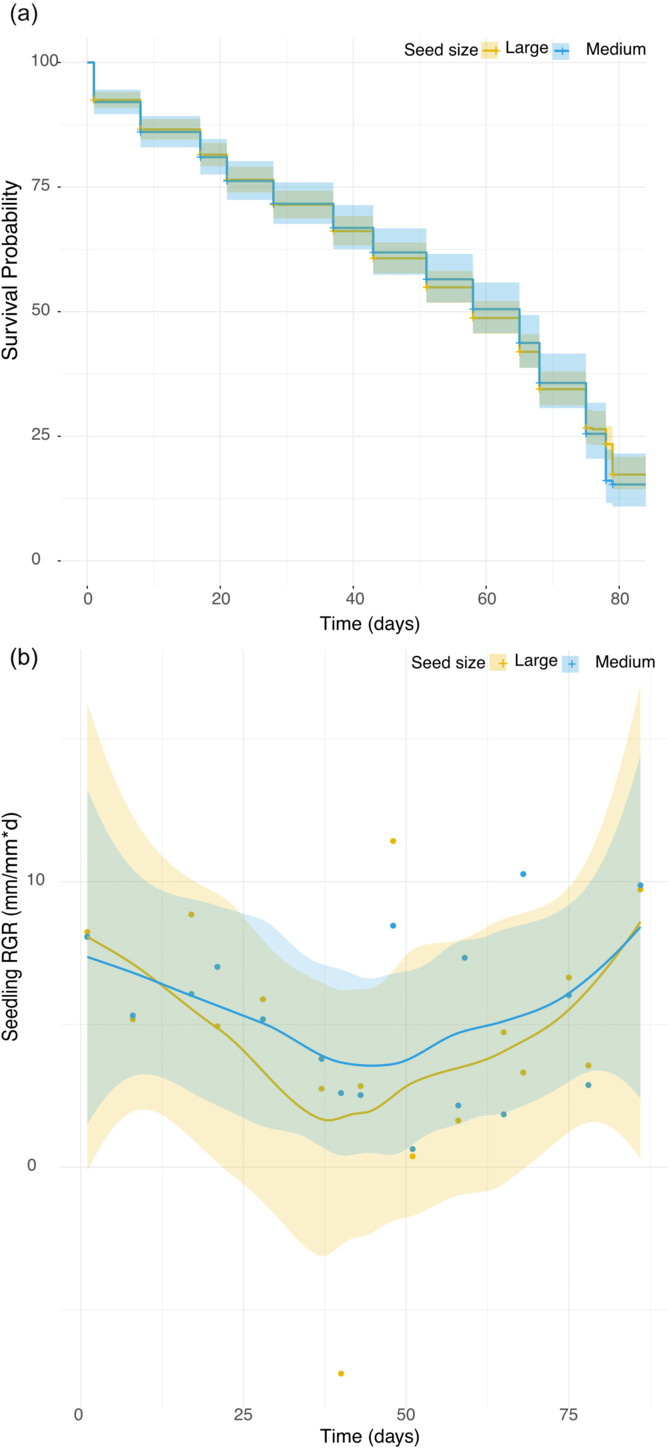
Seedling performance was similar between medium and heavy seeds in P. tomentella. Seedlings from heavy seeds (66.7 ± 16.7%) survived at a similar percentage as seedlings from medium seeds (63.2 ± 10.1%) (F = 0.17, df = 2, P = 0.84). Seedlings from large and medium seeds exhibited a similar survival probability, which tended to decrease over time (Figure 1a). Similarly, seedlings from heavy (4.5 ± 1.1 mm/week) and medium (5.3 ± 0.7 mm/week) seeds grew at a similar rate (F = 2.43, df = 2, P = 0.78). In both cases, mean RGR decreased from day 25 to 50, followed by an increase towards the end of the experiment (Figure 1b). Final total height of seedlings from heavy seeds (63.17 ± 8.8 mm) was also very similar to seedling height from medium seeds (53.45 ± 3.9 mm; F = 0.62, df = 2, P = 0.53).
(A) Seedling survival probability and (B) seedling relative growth rate (RGR) of large and medium-size seeds of Polylepis tomentella over time from south-central Bolivia.

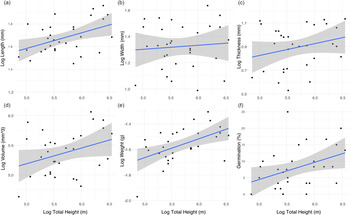
Relationship between seed size (a–e) and seed germination (f) and maternal tree size of Polylepis tomentella from south-central Bolivia.

Maternal tree size effect
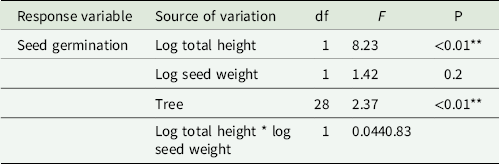
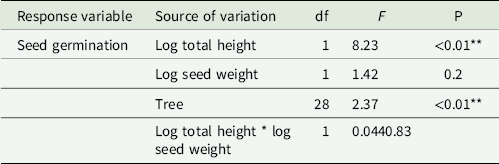
All of the seed size traits were predicted by total height of the maternal tree. We found a linear increase in seed length, width, thickness, volume and weight with increasing maternal total height (Figure 2a–e). We also found that seed germination percentage increased positively with total height (Figure 2f), even though the seed germination percentage was overall low (7.4 ± 7.9%). We also found that seed germination was significantly associated with tree total height, regardless of seed weight (Table 1).
Results of a nested ANOVA between seed germination, maternal tree size and seed weight in Polylepis tomentella. Maternal tree was nested within forest stand
Maternal seed size vs. seedling performance
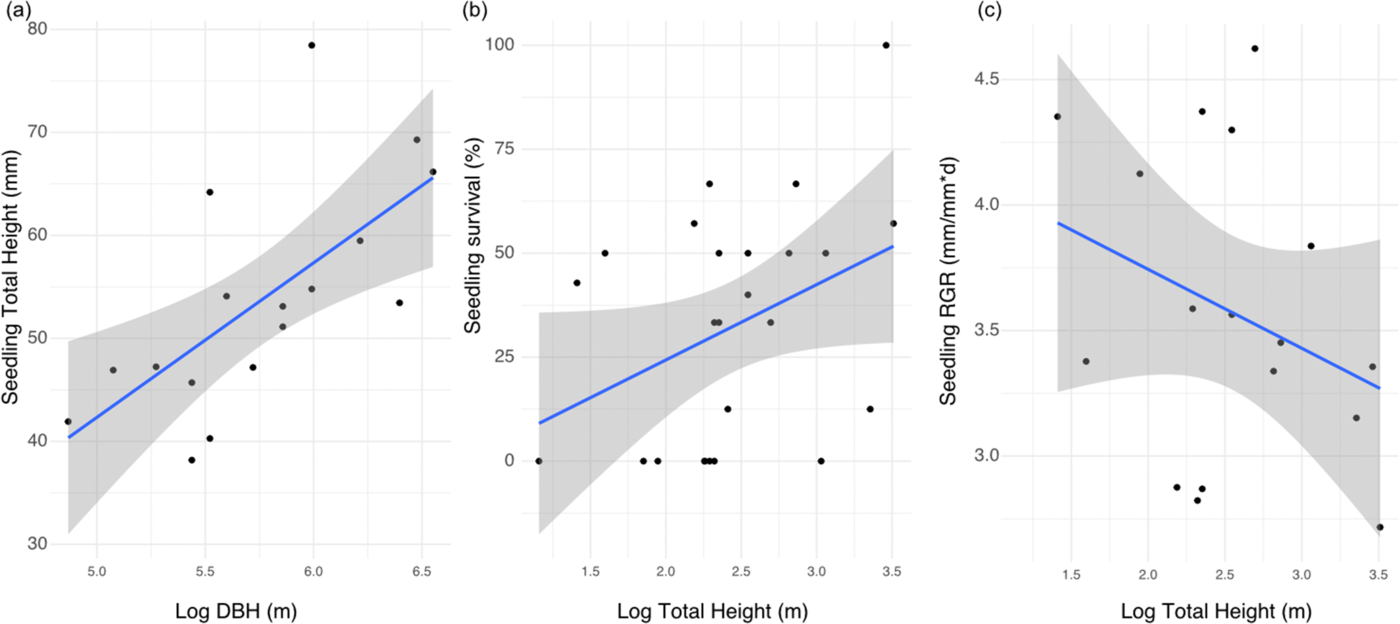
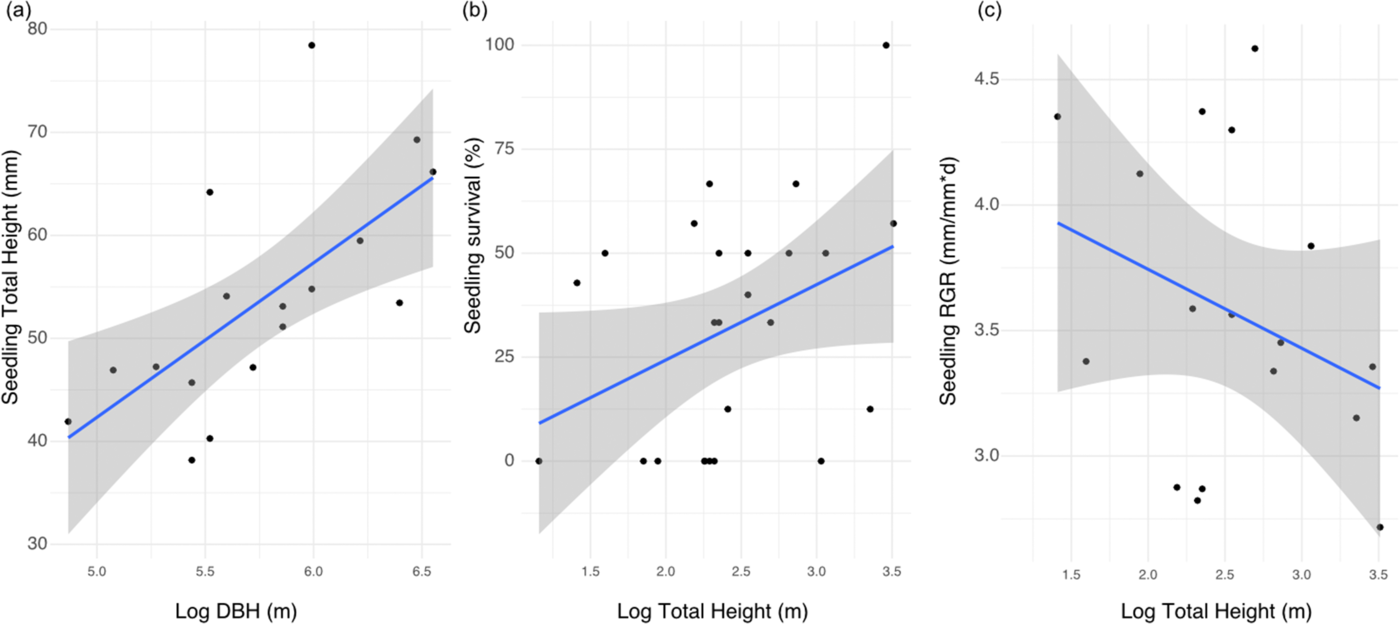
Under greenhouse conditions, seedling performance increased positively with increasing maternal tree size. Seedling total height showed a positive linear increase with the DBH of the maternal tree (Figure 3a), whereas seedling survival increased positively with the height of the maternal tree (Figure 3b). In contrast, RGR decreased linearly with increasing height of the maternal tree (Figure 3c).
Relationship between seedling (A) total height, (B) survival and (C) RGR and maternal tree size of Polylepis tomentella from south-central Bolivia.
Discussion
Our results suggest that P. tomentella seed germination percentage is very low (<10%). These results are consistent with the notoriously low germination percentages reported in other Polylepis species, including P. australis (20.3%, Seltmann et al. Reference Seltmann, Leyer, Renison and Hensen2007a) and P. incana and P. pauta (2–6%, Wesche et al. Reference Wesche, Cierjacks, Assefa, Wagner, Fetene and Hensen2008). Low seed germination percentages were associated with high percentages of non-viable seeds, in particular empty seeds with aborted embryos. The large production of non-viable seeds by Polylepis has been attributed mainly to parthenocarpy and resource limitation (Renison et al. Reference Renison, Hensen and Cingolani2004, Seltmann et al. Reference Seltmann, Renison, Cocucci, Hensen and Jung2007b). However, patterns of seed development have not been systematically described and it is unknown if seed maturation is attained regardless of embryo development. Thus, in order to fully understand the ontogeny of viable seeds of Polylepis, a detailed histological study of seed and fruit maturation is required.
More importantly, this study demonstrated that heavy Polylepis tomentella seeds had higher germination percentages than lighter ones. Indeed, more than size, seed mass conferred a significant advantage on likelihood of germination in these Andean trees. It seems plausible that heavier seeds achieved a greater germination percentage compared with medium and lighter seeds because they were more likely to contain a viable embryo and possibly higher contents of carbohydrates and proteins (Aziz & Shaukat Reference Aziz and Shaukat2010, González-Rodríguez et al. Reference González-Rodríguez, Villar and Navarro-Cerrillo2011). A positive increase in seed germination associated with increasing seed mass has also been reported in Polylepis australis (Seltmann et al. Reference Seltmann, Leyer, Renison and Hensen2007a) and Quercus dealbata and Q. griffithii (Dunlap & Barnett Reference Dunlap and Barnett1983).
Although heavier seeds did indeed germinate in higher frequencies, the results of the greenhouse experiment suggest a wide range of variation in seedling survival within seed-weight categories, likely rejecting the reserve-effect hypothesis. It is possible that the reserve-effect was not expressed under greenhouse conditions as it is usually observed under particularly unfavourable conditions, such as manipulated herbivory (Bonfil Reference Bonfil1998, Green & Juniper Reference Green and Juniper2004) and low light levels (Ganade & Westoby Reference Ganade and Westoby1999). The conditions throughout the greenhouse experiment were favourable for seedling growth, including a stable microclimate, permanent humid soils, weeding to remove competition and reduction of herbivory by exclusion of insects from the growing environment.
The greenhouse experiment results also failed to verify the seedling-size hypothesis because the final total height of seedlings from both medium and heavy seeds were similar after the 90 days of the experiment (recall that only a few small seeds germinated to make broader comparisons with this weight class impossible). The seedling-size effect has been observed in various tree species (Dunlap & Barnett Reference Dunlap and Barnett1983, González-Rodríguez et al. Reference González-Rodríguez, Villar and Navarro-Cerrillo2011, Lehtilä & Ehrlén Reference Lehtilä and Ehrlén2005, Quero et al. Reference Quero, Villar, Marañón, Zamora and Poorter2007) but it also has been demonstrated in spurious relationships among other species (Green Reference Green1999; Parker et al. Reference Parker, Noland and Morneault2006, St. Clair & Adams Reference St. Clair and Adams1991) or to be dependent on environmental conditions (e.g. light conditions, nutrient availability and herbivory) (Baraloto et al. Reference Baraloto, Forget and Goldberg2005, Poorter & Rose Reference Poorter and Rose2005, Saverimuttu & Westoby Reference Saverimuttu and Westoby1996). Nevertheless, it is possible that the seedling-size hypothesis could manifest under stressful conditions, such as limited water availability as it has been reported in several species from semiarid environments, such as in Acacia, Brassica, Enneapogon and Nicotiana (Leishman & Westoby Reference Leishman and Westoby1994) or even after initial seedling establishment (i.e. >90 days). At the end of the experiment, all seedlings exhibited similar sizes regardless of whether they came from medium or heavy seeds. The results suggest that seedlings derived from a variety of seed sizes should be able to achieve similar sizes under non-competitive situations. Thus, seedlings from smaller seeds surviving to maturity should potentially achieve similar sizes as those derived from larger seeds with no apparent selective disadvantage for mature plants originating from smaller seeds.
Seedling survival was low, regardless of seed weight categories at the end of the 90-day experiment. Mean seedling survival was 18%, a much lower value than those reported for P. australis (40–100%) under greenhouse conditions (Marcora et al. Reference Marcora, Hensen, Renison, Seltmann and Wesche2008). Nevertheless, survival rates were within the range of those reported for other plant species, including the high-altitude Gynoxis acostae (Cierjacks et al. Reference Cierjacks, Salgado, Wesche and Hensen2008), North American perennial species (e.g. Primula vulgaris, Silene acaulis and Allium tricoccum; Forbis Reference Forbis2003) and tropical lowland tree species (e.g. Carapa procera, Recordoxylon speciosum and Jacaranda copaia; Baraloto et al. Reference Baraloto, Forget and Goldberg2005). A high mortality rate during the first year of life has been observed in P. australis, with mortality rates decreasing in the following years (Renison et al. Reference Renison, Cingolani, Suarez, Menoyo, Coutsiers, Sobral and Hensen2005). The evidence so far suggests that mortality could be concentrated in the seedling state and that the first year of life could be a common limiting life stage in Polylepis.
The results from the greenhouse experiment did not provided support the metabolic-effect hypothesis as seedlings from heavier seeds experienced similar RGR as seedlings from medium seeds after 90 days. The results could suggest that seedlings from large and medium seeds possess similar inherent carbon metabolic rates as well as seed resource consumption rates (González-Rodríguez et al. Reference González-Rodríguez, Villar and Navarro-Cerrillo2011, Green & Juniper Reference Green and Juniper2004, Quero et al. Reference Quero, Villar, Marañón, Zamora and Poorter2007).
An important result of the study was that early offspring performance increased proportionally with the size of maternal plants in P. tomentella. Seed size, weight and germination percentage increased positively with height of maternal tree. A proportional increase in reproductive output with increasing plant size was also found in P. tomentella and P. australis (Domic Reference Domic2012, Pollice et al. Reference Pollice, Marcora and Renison2013). These results suggest that taller trees probably mobilize higher concentrations of water and nutrients to guarantee seed development and thus increased seed germination success (Dudash Reference Dudash1991, Gillaspy et al. Reference Gillaspy, Ben-David and Gruissem1993, Lehtilä & Ehrlén Reference Lehtilä and Ehrlén2005).
Under greenhouse conditions, we also found that early offspring performance increases proportionally with the size of the maternal plants. Seed germination, seedling total height and survival increased positively with increasing size of maternal trees. These results could imply that larger trees invest comparatively a higher proportion of plant resources and reserves on the production of seeds in comparison to smaller trees. Consequently, early seedling performance is dependent on maternal size, regardless of seed mass. The relative reproductive advantage of increasing maternal size could be mediated, additionally, by a higher capacity to capture resources more efficiently, including water and soil nutrients, particularly during the fruiting season (Pollice et al. Reference Pollice, Marcora and Renison2013, Snook et al. Reference Snook, Cámara-Cabrales and Kelty2005). For instance, Macek et al. (Reference Macek, Macková and de Bello2009) found evidence of nutrient uptake deficiency, particularly nitrogen, and also water limitation in P. tomentella, suggesting that environmental stress plays an important role in tree growth and could potentially affect sexual reproduction.
We also found that RGR decreased with increasing size of maternal trees, in other words seedlings experienced lower growth rates with increasing height of the maternal tree. In order to understand the intrinsic process that could lead to these patterns, it is important to conduct experiments designed to identify morphological and physiological processes associated with allocation patterns of seed reserves during seedling growth.
Polylepis tomentella is a species that shows adaptations to ensure seed germination in favourable soil moisture conditions as seeds are ready to be dispersed by the beginning of the rainy season (Domic et al. Reference Domic, Mamani and Camilo2013) and seeds germinate easily when in contact with water. Because large seeds produce large seedlings, it is possible that they might initially be able to avoid water stress by developing long-roots reaching higher depths and thus outcompeting seedlings emerging from smaller seeds (Leishman & Westoby Reference Leishman and Westoby1994). However, our experiments under greenhouse conditions show that seedlings exhibit similar growth rates and survival rates regardless of the size of the seed from where they emerged. This could suggest that the advantage of larger seeds disappear under non-stressful environmental conditions.
Conclusions
Under controlled conditions, seed germination is positively influenced by seed mass and maternal tree size in the Andean tree P. tomentella. The effect of higher seed mass was manifested during seed germination but this advantage disappeared rapidly as high growth rates of seedlings from light seeds were able to fully compensate for the initial size differences. In contrast, seed mass was not correlated to final seedling survival and total size at the end of the 90-day period of study. Seedling survival and final size also increased proportionally with maternal tree size. This positive trend seems to be mediated by a higher efficiency of maternal plants to acquire resources for the production of high-quality offspring. Although xeric conditions place severe constraints on the demography, seedling establishment and growth of Polylepis, seedling performance is directly related to seed quality and maternal effects.
These are important results in terms of designing conservation and reforestation programmes for this and other Polylepis threatened tree species. Specifically, we recommend emphasizing protection of mature trees as they produce propagules every year and provide microhabitats for seedling establishment. Although large mother trees could be preferred for seed collection, we recommend collecting seeds from a diversity of individuals to maintain genetic diversity. Due to high mortality rates of seedlings, we also recommend extending the time seedlings develop in greenhouses before their eventual replanting to maximize their later establishment and improve restoration success. Taking into consideration ongoing climate change, we consider the retention of high phenotypic and genetic diversity as vital for Polylepis survival in increasingly unpredictable and heterogeneous conditions.
Acknowledgements
We thank A. Palabral, C. Campos, H. Nenzén, I. Gómez, C. Capriles, K. Nguyen and E. Flores Bedregal for assistance with field evaluations and experiments. We also thank S. Beck, R.I. Meneses, M. Serrano, A. Maldonado, Herbario Nacional de Bolivia and Herbario del Sur for the logistic support.
Financial support
This work was supported by the International Foundation for Science (I-1-D-4839 and I-1-D-4839-2), IdeaWild, a Saint Louis University Brennan Summer Fellowship and Beaumont Faculty Award. Permission to work in Bolivia was granted by the Ministerio de Medio Ambiente y Agua.