School of the Art Institute of Chicago - challenges and opportunities
The John M. Flaxman Library supports the academic needs of the School of the Art Institute of Chicago (SAIC), one of the largest accredited independent schools of art and design in the country. As of autumn 2017, SAIC has 3,650 degree-seeking students, 760 of whom are graduate students. Its MFA programs are interdisciplinary and have a strong emphasis on working in the studio. SAIC is also a city campus that creates unique challenges when it comes to student navigation and awareness of resources.
Two main challenges the Flaxman Librarians face are students knowing the location of the library, and students understanding how library materials and research can help their practice. All SAIC undergraduates are required to visit the library in their first year during a required course called Research Studio. For the graduate programs, the only mandatory interaction currently in place is a short research overview during a required art history course, lasting about 30 minutes in total. For many graduate students this is their only introduction to the library, making it difficult for them to see the usefulness of library resources beyond the assignment for that course. While these barriers are not unique to art school, SAIC's creative environment supports alternative modes of thinking and encourages experimentation.
In Spring 2017, the Dean of Graduate Studies, a library advocate, began exploring different orientation models as a way to introduce MFA students to the variety of resources available at SAIC. As a way to support these new orientations, I began to explore the idea of going to students’ studios as a form of outreach and as a way of assessing their current understanding of the library and our role as librarians.
Research
I began by revisiting the ERIAL Project, which was an ethnographic and large-scale study of students’ research habits that showed what many of us know to be true: that students do not typically understand what librarians do or how they might be able to help.Footnote 1 In an art school this lack of understanding expands to our collection as well, as many students aren't aware of the wide variety of exhibition catalogs, artists books, and other visual materials in the library.
This line of inquire lead me to look at what other art librarians before me had done, including Kasia Leousis’ article “Outreach to artists: Supporting the development of a research culture for Master of Fine Arts students.”Footnote 2 This article provided a useful primer and literature review on embedded librarianship as well as a baseline for similar programs that have worked in the past at other types of institutions. Additionally the article “The world of outreach: One art librarian's perspective” by Amanda K. Gluibizzi was useful in looking at scalability of outreach, especially with a small staff and limited funds.Footnote 3
When thinking about assessment, the article by Ellen Petraits, “Assessing the impact of library instruction on studio-based research: Developing a qualitative model,”Footnote 4 helped me to define what information we were seeking to gain and what goals may be achievable. And finally, looking at Jeff Gatten and Mike Bryant's article “Rock the CASBAH: CalArts' student behaviors and habits,”Footnote 5 I was able to craft the questions we might ask students and ourselves during these interactions. Once I had solidified the feasibility of this program, I approached my colleagues about participating in a way that would allow us to reach the most students.
Approach and format
The pilot program began with the incoming low residency MFA graduates in 2017, which consisted of about 30 students. The low residency program is unique in that students are only on campus for 6 weeks over the summer session and then work remotely for the rest of the academic year. Low residency students cover a wide variety of practices, demographics, skills, and experiences. As the cohort consisted of students who did not have year-long studio assignments, we felt it was especially important that we reach them while they are on campus. All three Flaxman teaching librarians were involved in these visits.
Organizing the number of studio visits in a short amount of time was challenging, but also rewarding in unexpected ways. The low residency students are all enrolled by cohort into a single class in our learning management system called Canvas. This allows them to easily collaborate, post, and connect with one another during the entirety of the program from afar. Working with the administrators in the low residency program, we added a Google appointment calendar to this course alongside other events that required a signup. Each visit is scheduled for 30 minutes and, using the capabilities of the Google appointment system, students could enter their studio location, additional information about their work, any topics they were interested in, or questions they might have for us. This extra space for more information proved very valuable for the librarians to enter the studio space with a basic understanding of the students’ interests or needs. Furthermore, this process was simple for librarians to configure and update easily should daily staffing issues occur. Having the studio visits added to their Canvas course, also allowed librarians unique insight into the rest of their program — a sort of stealth embedded librarian.
Goals
As many of us know, studio visits refer to individuals within the art world — gallery dealers, curators, other artists — visiting the studio of a working artist to look at and talk about the work. While traditional visits are about making connections or hashing out new ideas with peers, the librarian studio visit is about three different goals: assessment, research support and relationships. The first goal is to assess students’ current methods/modes of research in addition to their artistic practice. Librarians gather this information by asking targeted questions such as ‘How do you work?’ or ‘What themes are you interested in exploring?’
The second goal is to offer supporting materials and approaches from a research standpoint. As librarians, we have a different perspective and dynamic with students. We are not perceived as teachers or peers like their professors or fellow students. However, we do have backgrounds in the arts and knowledge of resources in this field. Librarians can bring both broad and specific suggestions on materials that might be useful, as well as an outsider's eye all while using the platform of critique. Many times this may be as simple as suggesting an article, artist, or website to broaden the students’ research sphere. Simultaneously we learn directly from students about their passions and interests, which can later help us navigate collection development, instruction sessions, and even reference consultations.
The last goal is to foster relationships between MFA graduate students and librarians. Flaxman librarians want students to understand that we can be a resource for their entire time at SAIC. These sessions serve as an introduction to not only library resources, but also librarians as a resource. Librarians encourage this long-term relationship by either sending an email that recaps what they talked about during the visit, or sending new materials that may be useful. Ultimately, we want the students to feel comfortable connecting with librarians. These kinds of interactions give us a better understanding of our community and what we can do to support them as students.
Alignment
Aligning this program to the school's mission was important for us to garner support, but it also worked as a great way to frame the overall objectives. Two documents guided our structure, the first being the SAIC core values. Of the five listed, we chose to focus on two for this program:
We are explorers. At SAIC, we exceed boundaries. Our commitment to … approaches that promote critical thinking, rigorous investigation, and playful creativity…
Meaning and making are inseparable. At SAIC, we believe that meaning and making are inseparable, existing as a perpetual and productive cycle driven by experience, research, and critique.Footnote 6
By focusing on the language used in these statements, we were able to easily promote this program, offering the community a library service in an unexpected way. The Association of College & Research Libraries (ACRL) Framework is the second lens we used when crafting this program. Of the six frames, the following two were our focus:
Scholarship as conversation. Communities of scholars, researchers, or professionals engage in sustained discourse with new insights and discoveries occurring over time as a result of varied perspectives and interpretations.Footnote 7
Information creation as a process. Information in any format is produced to convey a message and is shared via a selected delivery method. The iterative processes of researching, creating, revising, and disseminating information vary, and the resulting product reflects these differences.Footnote 8
As librarians we value the knowledge practices and dispositions as outlined in the ACRL Framework. Incorporating them into this program gives us another avenue of entry to engage with students about the topics that make up information literacy.
Assessment and outcomes
Overall, this pilot program was seen as effective and successful. Over the course of summer 2017, the librarians conducted about 40 studio visits — more than the number of students in this incoming cohort. Students who had signed up enjoyed the program so much that they shared their experiences with their peers in other cohorts, who ultimately took advantage of the studio visits. Anecdotally, this is the ultimate sign of success. Additionally, one librarian was approached by a student after their studio visit about starting a book club for the low residency students based on common student themes. They organized themselves and were looking for recommendations from the librarian about what to read based on their selected theme. Because this organization took place on Canvas, we have been able to assist and keep tabs on these kinds of collaborations in a “guide on the side” sort of way. Additionally we have been able to offer assistance based on events or discussions that have occurred within the Canvas course — becoming embedded in a new way.
Our intent was to capture both qualitative and quantitative data on these visits for assessment purposes. This took place in two ways: a librarian evaluation after each studio visit and a post-studio visit survey. The former consisted of gathering contact information from each student, general themes of their work, and a note about follow up. Librarians then recorded the students’ current approaches to research. Ranked on a scale of one to five, we evaluated how well the students could articulate their research strategies, and rated their current knowledge of library resources. The latter evaluation was students’ feedback of their experience in a post-studio visit survey. From the fifteen responses we recorded, all considered the experience to be valuable, all respondents had appropriate expectations, and all would recommend this program for future incoming students. We also asked how we might improve the program in the future. One student responded:
“Would it be possible to get a different librarian each summer? I loved my visit with the librarian I had. It would be great to get a fresh perspective each year. My librarian visit was great! When I saw the librarian who visited my studio while researching my art history paper in the library, she remembered my work and was able to make suggestions for my research. That was so helpful.”
Beyond these surveys, many of the librarians have continued to work with students after the initial studio visit. Typically this is in the form of an email reference or research question, especially for the students enrolled in the low residency program. We have also noticed that the students who participated in studio visits are more likely to visit the library or ask for help at the reference desk.
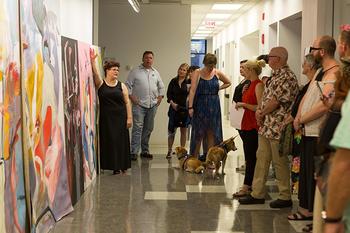
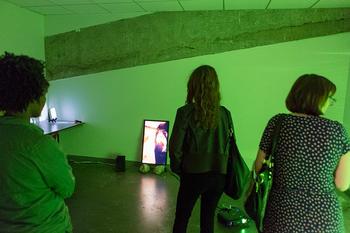
Low Residency Open Studios 2017. Courtesy of the School of the Art Institute

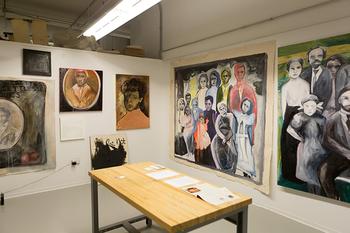
Low Residency Open Studios 2017. Courtesy of the School of the Art Institute
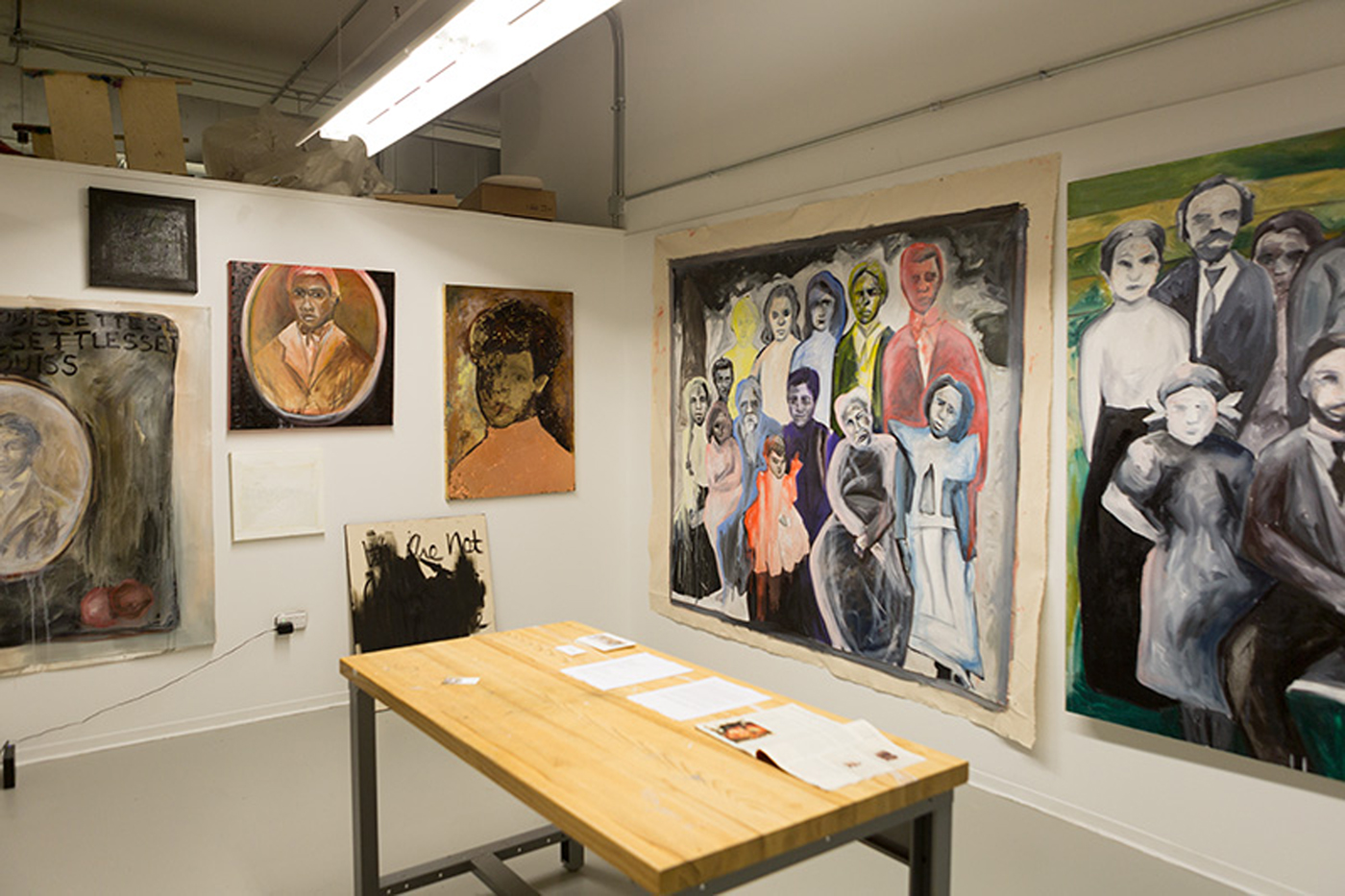
Low Residency Open Studios 2017. Courtesy of the School of the Art Institute

Future of studio visits
This year we have expanded the studio visits program to the autumn 2017 cohort of MFA and Post-Baccalaureate Painting + Drawing students. Painting + Drawing is the largest studio program on campus and typically includes students who are not heavy library users, making them prime participants for this program. In the future, we hope to expand this program to all studio-based departments during the spring semester when instruction demands are more manageable for librarians. While we are not able to provide as many studio visits in the fall, we are planning on attending the Open Studio nights where we can meet students informally to let them know about the program and see a preview of their work.
In terms of assessment, we will continue to use the forms and surveys that were utilized during the pilot. We are actively looking for other ways of assessing these sessions and hope to continue to gather data about these hybrid models of instruction and outreach. If this program does expand to other departments, we are interested in potentially having small group critiques, curated by librarians, where students who may not otherwise interact, talk about one another's work and their own research methods.
Conclusion
Studio visits have functioned as both an outreach tool for a city campus, as well as an assessment tool for discovering students’ information seeking behavior. By meeting with students in their studios we have garnered not only information about their interests and artistic practice, but also relationships that we can build on. Working with students at their point of need strengthens our ability to create meaningful interactions with our community through library services.