INTRODUCTION
Development is based on hope. Every development scheme rests upon a web of aspirations, driving each initiative and mobilising participation in them. As Sachs wrote, ‘development is much more than just a socio-economic endeavour; it is a perception which models reality, a myth which comforts societies, and a fantasy which unleashes passions’ (Sachs Reference Sachs1992: 1). Recognising the central role that dreams and desires play in development, Appadurai argued that the goal of planners and policymakers should be to increase individual and communal ‘capacity to aspire’ (Reference Appadurai, Held, Moore and Young2004). He held this as the key to bottom-up empowerment that is a mainstay of current best-practice models. When providing opportunities for communities and individuals to articulate and mobilise new imaginaries for the future, development reinforces systems of knowledge emerging from complex social and economic realities. Imagined outcomes are a unique expression of participant agency, synthesising local and cosmopolitan worldviews, intra-cultural exchange and global inequalities (Da Costa Reference Da Costa2010). Thus, development schemes are infused with a set of imagined outcomes that often move far beyond the stated goals of the schemes themselves, and these dreams and desires play a significant, but underestimated, role in outcomes. The imaginaries that local actors bring to schemes often shape how they engage with them. Thus, in focusing our attention on the aspirations, dreams and hopes that are embedded and negotiated in each endeavour, we can gain vital insights into how development schemes emerge and operate, and how founders, staff and participants experience them.
Although hopes and aspirations are the vitality behind development planning and participation, they have received relatively little attention in both policymaking and research. Planners and scholars do not often focus on the relationship between imagined outcomes and the ways in which participants experience and evaluate specific schemes. We have much to learn about the ways in which projects and programmes engender a complex set of aspirations that both reflect and challenge broader cultural, social and economic realities. Moreover, the conflicts and negotiations that emerge between competing sets of aspirations can also determine the fate of a scheme and therefore need to be better understood. This article seeks to direct more attention to the role of dreams and aspirations in development from several vantage points. Focusing on ethnographic evidence from three locally established football academies in Ghana, the study posits each academy as a juncture at which a wide array of imaginaries meet, collide and compete for dominance, all with significant implications for the schemes themselves. Following a review of the existing literature, we will examine the role imaginaries played in Kumasi Sports Academy (KUSA), Unistar Soccer Academy and Mandela Soccer Academy (MSA). Each of these football academies – institutions defined as ‘facilities or coaching programs designed to produce football talent’ (Darby et al. Reference Darby, Akindes and Kirwin2007: 148) – was chosen because they represent different approaches to development. In addition, they are located in different geographic regions, and experienced varied levels of success as development endeavours. Despite this diversity, it will be seen that in each of the three academies, the founder used the initiative to give expression to a set of development aspirations that synthesised personal, communal and global visions. The imagined futures of the founders thus played a pivotal role in the establishment of the schemes, but youths and their families, as well as staff and community members, brought their own set of imaginaries to the football academies once they were established. The evolution of each of the schemes reflected the convergence of this broad range of aspirations, many of which were incongruent or even contradictory. Competition and compromises between the various visions for the future ultimately determined the success or failure of the schemes, and the ways in which the various participants evaluated them. By identifying and unpacking the hopes and aspirations at the heart of each of the academies, we can better understand the impact they had on the lives of those who engaged with them.
LOCATING ‘LOCAL’ ASPIRATIONS IN DEVELOPMENT
It is well-established that top-down modernisation approaches that dominated development programmes from the late colonial period and into the 1970s largely failed because they attempted to impose Western economic, ideological and cultural models upon local societies in Africa and Asia. As schemes faltered, critics charged that top-down development actually reinforced economic and cultural hierarchies underlying the global system, leaving the poor in Africa increasingly marginalised within globalised economies (Amin Reference Amin1976; Rodney Reference Rodney1981). From the 1990s, the need for more constructive approaches has given rise to the belief that local cultures must play a role in all stages of planning and implementation in development (Rahnema Reference Rahnema and Sachs2010). Planners emphasise the buzzwords of ‘participation’ and ‘local knowledge’ as ‘declarations of intent’ (Cornwall & Brock Reference Cornwall and Brock2005). Development orthodoxies emerging over the past two decades dictate the need for hearing local voices, understanding local belief systems, and adopting inclusive practices. It is now commonly understood that development cannot be imposed, and it must take into account the cultural values and social structures that define communities (Grillo Reference Grillo, Grillo and Stirrat1997). Among policymakers and researchers, it is acknowledged that local definitions of success, prosperity and progress should be incorporated in planning and implementation (Parpart et al. Reference Parpart, Rai and Staudt2003; Groves & Hinton Reference Groves and Hinton2004).
Practitioners acknowledge the difficulties that emerge when trying to translate these principles into action. Cornwall & Brock argue that the mere use of words like ‘participation’ and ‘empowerment’ does not guarantee that local populations ‘have voice and choice’ (Reference Cornwall and Brock2005: 1055). Moreover, the search to define ‘local knowledge’ within contested cultural and social landscapes inevitably leads us to acknowledge that many ‘local knowledges’ require consideration (Hobart 2002). Particularly in development schemes established by local actors, the complexity of ‘the local’ is highly pronounced. In these cases, ‘local’ aspirations are revealed as anything but monolithic, and variations parallel the number of participants in the schemes themselves. Locally initiated schemes can preserve specific interests, hierarchies of power and even exacerbate inequality within communities (Mosse Reference Mosse2005: 82–3). The advancement of some agendas can lead to the silencing of other viewpoints or priorities.
Proponents of participatory development are sensitised to these complexities, yet their engagement with local knowledges is largely focused on social dynamics and practices that are directly applicable to project design and implementation (Cooke & Kothari Reference Cooke and Kothari2001). Attention is aimed at assessing and pinpointing basic needs and potential resources, social and cultural obstacles to sustainability, relations of power, and the diversity of activities that constitute local ‘livelihood strategies’ (Chambers Reference Chambers1995). The more abstract role that dreams, aspirations and hopes play in driving project implementation and participation is not often a focal point for those seeking practical solutions. Likewise, imagined outcomes are rarely part of evaluation processes. Thus, the focus on material output and measures misses the less tangible forces driving development. As Cross wrote, development schemes are inherently ‘arenas of imagination, hope, aspiration and desire in which people construct and assemble possible future worlds for themselves and others from existing ideas and images’ (Cross Reference Cross2014: 9). We need to understand how varieties of imagined futures come into play in development schemes, how the conflicts and negotiations between divergent imaginaries shape why individuals engage with development, how schemes evolve, and how they leave their mark upon communities.
Although imagined outcomes have not been widely studied in the context of specific development schemes, several important studies have argued that aspirations, expectations and imaginaries provide us with unique insights into how Africans have navigated the crises and failures of the post-colonial era. The monumental work in this regard remains Ferguson's (Reference Ferguson1999) pioneering study exploring the social and cultural responses to the prolonged period of sharp economic decline in Zambia following the mid-1970s crisis. Ferguson argued that independence aroused great anticipation among Zambians for prosperity, but these expectations were shattered in the wake of the sharp economic downturn that began in the 1970s. Ferguson brought to the centre the perceptions, hopes, dreams and illusions of local communities, and his work underscored the relationship between expectations and disappointment. In another important contribution, Piot's work (Reference Piot2010) on Togo revealed that the imagined future has been at the heart of Togolese struggles with economic and political downturns during the post-Cold War era. Faced with ongoing crises and the lack of opportunities, Togolese have mobilised imaginaries for a new and more hopeful future. Piot argues that development is one strategy they have leveraged for overcoming the present, alongside attempts to secure a visa to the USA, and participation in Pentecostal churches, all of which offer a way out or a way forward. Cole's research (Reference Cole2010) has shown how youth in urban Madagascar respond to social and economic upheaval by acting upon their lives as they imagine them in the future. As she wrote, ‘the most effective way to understand a generation and the process of generational change is to focus not only on what young people do in the present, but on how they imagine – and seek to attain –a desired future’ (Cole Reference Cole2010: 5). These studies affirm that aspirations are key to our understanding of how individuals and communities both navigate and try to overcome economic, social and political crises.
While imaginaries inspire, we must acknowledge that they are a tenuous form of agency, as merely hoping and dreaming of liberation does not bring it about. In a critique of Appadurai's ‘capacity to aspire’, Da Costa reminds us that not all aspirations are viable, and, in fact, they can reify and reproduce ‘global inequalities and intra-cultural hierarchies’ (Reference Da Costa2010: 512). Imaginaries can also be hegemonic tools. As Childs & Hearn (Reference Childs and Hearn2017) claimed, states champion development imaginaries to rally support for grandiose projects, but failed outcomes and unfulfilled promises leave citizens disappointed. As a result, Cross (Reference Cross2014: 23) claims, ‘in much of the global South, it is both the anticipation and perpetual postponement of hopes, dreams and expectations’ that define exposure to development. Imagined outcomes, if not a blueprint for the future, are nonetheless an essential part of how development is experienced. The assertion of Bernays et al. (Reference Bernays, Rhodes and Barnett2007: S7) with regard to the role of hope in HIV treatment is applicable to the assessment of development schemes – hope has been under-researched, and we have a practical and ethical responsibility to understand both how hope draws people into participating in schemes, and the fallout that follows ‘the disjuncture of expectation and promise’. In what follows, we highlight the pivotal role that aspirations play in shaping the experiences of those inspired by ‘goal dreams’ of football academies.
GOAL DREAMS: FOOTBALL, DEVELOPMENT AND DISAPPOINTMENT
In recent decades, sport has been increasingly advocated as an effective and powerful tool of development.Footnote 1 From local practitioners and politicians, to international institutions and organisations, sport has been increasingly promoted as a means for tackling issues of health, economic development, gender, peace, trauma and child development. Levermore has cast doubt on the expansive list of benefits that have been attributed to sport as an engine of change, which includes the power to advance conflict resolution, intercultural understanding, infrastructure development, community empowerment, improved physical and psychological health, improved education systems, gender equality, improved general welfare and poverty alleviation (Levermore Reference Levermore2008: 185–6). While critics claim that the power of sport has been overly romanticised as a catalyst of change (Coalter Reference Coalter2010; Darnell Reference Darnell2012), sport undoubtedly has the exceptional power to inspire and mobilise, and this inspirational power has particular implications for development. As Kwauk wrote, sport ‘has captivated the development imaginations of youth and their families because of its professed ability to bring prosperity to those located on the fringes of globality’ (Kwauk Reference Kwauk2014: 317). Likewise, Jarvie argued that sport serves as ‘a resource of hope for both individuals and communities’ (Reference Jarvie2007: 411). Although research has increasingly focused on sport as an engine of development, the nexus between sport, aspirations and development outcomes has been under-examined.Footnote 2
Research into football in Africa is perhaps the exception. Several important studies have looked at the ways in which football ignites the hopes and imaginations of aspiring players, their parents and supporters from around the continent. Vidacs argued that football represents an antidote for the post-colonial condition, enabling Cameroonians to envision how the world should be and to question their world and their place in it. As such, football ‘creates at least the illusion, and sometimes the reality – however momentarily – of transforming the world’ (Vidacs Reference Vidacs2010: 10). Vidacs claimed that through football, Cameroonians aspire to transform their everyday life, envision a better government, and articulate their resistance to the economic and political forces that constrain them. Collison maintained that NGOs promoting sports as a vehicle for development have seduced Liberians into participating in programmes and lure sponsors into financial projects, but they have not delivered on the promise to rebuild the post-conflict society. She argues that Sport for Development and Peace (SDP) interventions remain an ‘aspirational image, rather than a tested method of reintegration and youth development’ (Collison Reference Collison2016: vii).
Specifically, in the Ghanaian context, McGee (Reference McGee2015) argued that football is a venue that enables young Ghanaians access to an alternative form of masculinity, mitigating against the emasculating impact of poverty. Football provides Ghanaian youths with an opportunity to imagine their inclusion in the recent economic growth that has largely left them behind, but McGee is quick to acknowledge that imaginaries often remain unrealised. As he wrote, football is ultimately ‘a “dream” occupation that invigorates both the imagined aspirations and daily regimens of male youth, yet shall remain – for the vast majority – an impossible one’ (McGee Reference McGee2015: 105). Ungruhe & Esson (Reference Ungruhe and Esson2017) also examined the imaginaries of young aspiring Ghanaian footballers, claiming that aspirations regarding transnational football migration were linked to deeper hopes for overcoming social immobility. In an additional study, Ungruhe revealed how cosmopolitan cultural exchanges found expression in the aspirations of young Ghanaian footballers, as he wrote, ‘The imagination of a Euro-American or urban modernity and the aspiration of goods, life styles, educational or jobs opportunities reflect a dream (and the need) of achieving prestige that leads to recognition and social inclusion’ (Ungruhe Reference Ungruhe2016: 1777). According to Van der Meij & Darby, Ghanaian parents gave emotional and practical support to children who aspired to move to football academies, seeing this as a stepping stone to their international migration and subsequent benefits for the entire household livelihood strategy (Reference Van der Meij and Darby2017: 1580). Lastly, Van der Meij et al. (Reference Van der Meij, Darby and Liston2017) examined the impact of unfulfilled dreams among former academy players who failed to translate their academy training into a professional career overseas. They found that those who were unsuccessful in their efforts to establish a football career abroad employed a range of strategies to overcome profound embarrassment and disappointment, with only some finding new channels for their hopes and ambitions (Van der Meij et al. Reference Van der Meij, Darby and Liston2017: 190).
In all of these studies, the imaginaries aroused by football are syncretic embodiments of transnational cultural flows and capital inequalities. ‘Goal dreams’ are sites of inter-cultural exchange, and they can teach us about how local communities process and negotiate their place in an increasingly globalised world. But within the context of development, goal dreams are not solely ambitions, they are also a blueprint for action. By mobilising these imaginaries through participation in football academies, local actors are both acknowledging inequalities and working toward a future that diminishes their disadvantage. Previous studies have explained the lure of football and its imagined power, but insufficient attention has been paid to how goal dreams find tangible expression in specific development schemes. In the three football academies examined here, we will see how imagined futures gave birth to new initiatives, attracted participants, and provided them with the opportunity to articulate their aspirations. Each of the academies evolved at a juncture at which a wide range of ‘goal dreams’ converged. As will be seen, the meeting, dialogue and negotiation between divergent imaginaries is what shaped the outcome and impact of each endeavour.
FOOTBALL ACADEMIES AS DEVELOPMENT SCHEMES
Football academies have mushroomed across the continent over the last two decades. Their massive expansion since the 1990s has roused scholarly interest and growing criticism of what some identify as a new extraction industry. Critics have argued that football academies ‘involve nefarious practices that exploit the poverty and aspirations of young Africans, and impoverish the local African game’ (Darby et al. Reference Darby, Akindes and Kirwin2007: 154). Academies are condemned as neocolonialist institutions which are ‘draining’ Africa of its talent by luring the continent's most talented skilled players to Europe (Darby Reference Darby2007; Rosbrook-Thompson & Armstrong Reference Rosbrook-Thompson and Armstrong2010: 299).
Some researchers adopt a more sympathetic attitude, claiming that football academies can also play a positive role in local societies by offering tangible benefits (McIlroy Reference McIlroy2010; Darby Reference Darby2012; Esson Reference Esson2015, Reference Esson, Ansell, Klocker and Skelton2016) Beyond sourcing players for Europe, academies produce players for domestic teams, provide education to impoverished youth and create new employment opportunities within communities. Academies also can have a trickle-down economic effect, with successful players contributing to their families, or investing part of their income in local businesses or philanthropy back home, thus broadening the circle of beneficiaries. As Darby wrote: ‘the migration of African footballers provides the sort of exposure to elite leagues and salaries that not only contributes to the development of football, but also allows individuals to escape poverty and potentially facilitate development at home’ (Darby Reference Darby2012: 266).
Any assessment of the local impact of football academies must take into consideration the vast variety of academies that currently exist. Darby et al. (Reference Darby, Akindes and Kirwin2007) offered a useful typology of football academies in Africa, claiming that they can be divided into four categories. The first includes African academies, organised and run by African clubs or African national federations. The second are Afro-European academies, formed through a partnership between an existing academy and a European club. Right to Dream has been the pioneering academy in this category, with its educational philosophy that aims at creating graduates that will function ‘as agents of development in Ghana’ (Darby Reference Darby2012: 273). In the third category are private or corporate-sponsored academies, which are operated with the support and sponsorship of private individuals, such as former high-profile African players, national football federations, or the corporate sector. In the final category are the non-affiliated academies, growing in numbers across the continent in recent years. These locally established organisations are described as improvised training institutions that are set up on an ad hoc basis and often lack proper facilities. (Darby et al. Reference Darby, Akindes and Kirwin2007: 144).
The scholarly dispute regarding the impact of football academies is largely focused on Afro-European academies. These joint ventures between European and Ghanaian academies are mainly interested in the transfer of young talents to Europe, and thus generate debates surrounding migration, neocolonialism and child trafficking (Darby et al. Reference Darby, Akindes and Kirwin2007: 145–9). Poli argued that global economic networks intertwine with these football academies, leading to Africa's ‘muscle drain’ (Reference Poli2008). This process weakens the level of local leagues and benefits European leagues and national teams. Recent news reports on Right to Dream's graduates, among them Divine Naah, reveal complaints of players being treated like commodities (Spiegel 2018).
By contrast, locally established academies with no international affiliations embrace a starkly different agenda from those positioned on the Afro-European axis. While Afro-European academies occupy secluded facilities blocked off from local communities and focus their objectives on helping players migrate internationally, the locally established academies are often housed in inferior facilities in the heart of impoverished neighbourhoods. Many of these home-sprung academies embody developmentalist visions and aspirations focused on the local context. They often invest equal or more attention to a social agenda aimed at improving the lives of participants and surrounding communities. While variations are immense, many dedicate themselves to offering educational opportunities, youth empowerment, gender equality and raised awareness regarding health issues. Local academies can have a significant impact on the social and economic lives of entire communities, constituting a source of pride and identification for fans, a source for mutual help, and a free-of-charge gathering and entertainment space. Football academies can thus constitute effective tools of development for individual participants and their families, management and staff, and the communities that host them.
This study is largely based on ethnographic fieldwork conducted by Itamar Dubinsky at the three locally established academies in Ghana over the course of five research trips between 2013–2016. All three academies began with meagre resources and a focus on local outreach. Recruitment began in each community where the academies are located, and later expanded to other regions as activities expanded and the reputation of the academy grew. As will be seen below, each of the academies offered different financial incentives and benefits to players, based on available resources and the player's talent. These three academies were chosen as focal points of the research because they provided a diverse perspective in terms of their geographic locations: MSA is located in Accra, Ghana's capital; KUSA is located in Kumasi, the capital of the Ashanti Kingdom; and Unistar is situated in the Greater Accra Region in the emerging town of Kasoa. The choice of each of the academies was also based on their particular approach to football as a vehicle for development, as will be seen below. In addition, each reflected different degrees of success as development schemes. The fieldwork at each academy consisted of participant observation of the academies’ daily activities (such as training sessions, matches, schooling and recreation time), and semi-structured, non-structured and group interviews with over 100 different people associated with the academies. All interviewees cited provided consent and asked not to be anonymised.Footnote 3
In all three academies to be examined here, founders sought to harness the developmentalist potential of the football academy for their communities. In each case, football became a means for delivering a range of social and economic improvements to underprivileged populations. But their endeavours were not purely altruistic, and founders also invested their academies with personal ambitions, communal agendas and more transcultural aspirations for engaging with global markets, culture and capital. The founders’ aspirations all found expression in the structure, staffing and programming of each of the academies. In addition, the marketing techniques mobilised by academies also conveyed the developmental imaginaries of the founders. Thus, an examination of the structure, day-to-day operations and promotional campaigns of each academy can provide insights into how academies articulate and advance the founders’ visions of development. As will be seen, once the academies were created, participants, staff and local community members approached them with their own set of imagined outcomes, and the dialogue between these multiple visions is what shaped the impact of each as a development scheme.
The big man of football: King James Asuming and the Kumasi Sports Academy
King James Asuming established the Kumasi Sports Academy (KUSA) in 2010 in Kumasi, Ghana's second largest city and the centre of the historical Ashanti Kingdom. The idea to form a football academy first came to King during his studies towards a degree in physical education, and later while working as a teacher in secondary schools. Ghanaian children did not enjoy all the benefits of strong sports programmes that could be found in educational systems abroad, and King believed this put them at a disadvantage. He claimed that football academies could produce Ghanaian athletes on par with international standards:
In the foreign countries you see them [footballers] somebody will be a manager or a doctor at the same time as footballer, but Africa here we have a problem about that, most of the footballers are kubolors [an uneducated person], so I decided to establish this school since 2010. … I found out that in Africa some of the good footballers their education is very low for academic. When they travel, it's a problem for them to speak in English, … so I decided to form education plus sports. (King 2015a, Int.)
King wished for Ghanaian youth to enjoy the best of all worlds: acquiring a high level of education while also having the chance to become a footballer, as he explained: ‘I'm trying to develop these people, it's my vision to help an African player to be in the future a player who's also a doctor, a footballer at the same time, a bank manager. That is my vision to help to promote [them]’ (King 2015b, Int.). In interviews, King emphasised that his academy would enable boys and girls to become ‘big people' in the future. The key, he believed, was to offer a top-notch education delivered by highly qualified professionals: ‘I want the children to study from the best and experienced teachers so they can achieve other things in life … so if they retire they will have something to do’ (King 2015b, Int.). The promotional materials at KUSA, such as the flyer shown in Figure 1, emphasise the formal education offered at the academy, hoping to attract parents and children of the region who also put great stock in education.
KUSA's promotional flyer.

A similar message is conveyed in the academy's TV commercial, which ends with the message: ‘Kumasi Sports Academy – excellence in sports, scholars in knowledge’ (Kumasisportsacademy Ghana 2016). The academy website also promotes this message: ‘You don't have to drop out of school because you want to be a footballer. Kumasi Sports Academy gives you the opportunity to be a professional footballer while in school’ (Kumasisportsacademy n.d.). While marketing a range of benefits to potential players, KUSA only has resources to support the most talented players who emerge from open tryouts. Thus, while a few are offered a place at KUSA with minimal expenses, the less talented players join the academy only if their parents are able to pay the tuition and additional fees.
King's goals in establishing KUSA were not purely altruistic, and he envisioned the football academy as a means for promoting his own wealth and status: ‘Through this I can be popular or a big man, because once most of the players in the national team are from your academy you also become a big person or a popular person’, he explained (King 2015b, Int.). Indeed, the establishment of KUSA helped King to establish connections and to accumulate valuable social capital. As KUSA grew and developed, he received positive feedback from sports directors, community members and relatives in Kumasi and beyond. King's successes, such as securing an affiliation for KUSA with the Ghana Football Association (GFA), boosted his reputation with the locale elite. The critical sign of recognition came from Ashanti King Otumfuo Nana Osei Tutu II, who offered King a large piece of land for the academy. King's ties with Kumasi's most influential figure had direct repercussions for his venture, as the move to the new location enabled him to upgrade and expand KUSA's facilities.
King's dream to turn KUSA into a successful business venture led him to develop a unique programme for girls. Soon after the establishment of the academy, King recognised that Ghanaian girls did not have the same opportunities as boys to play football in the Ashanti region, and he believed that he could pioneer the development of a girls’ team as a way of increasing the revenue of his academy. Currently, over 40 girls and young women play at KUSA, and the programme is the most successful aspect of the academy. Many of the girls have been recruited to play on the youth national teams. King takes pride in having identified this niche: ‘They didn't have any help, they needed support, so I found out that is the way I can help’ he explained, adding that ‘they like to play football but they don't have anywhere to go. So when they hear [that they are accepted to KUSA], they are very happy about that’ (King 2015b, Int.).
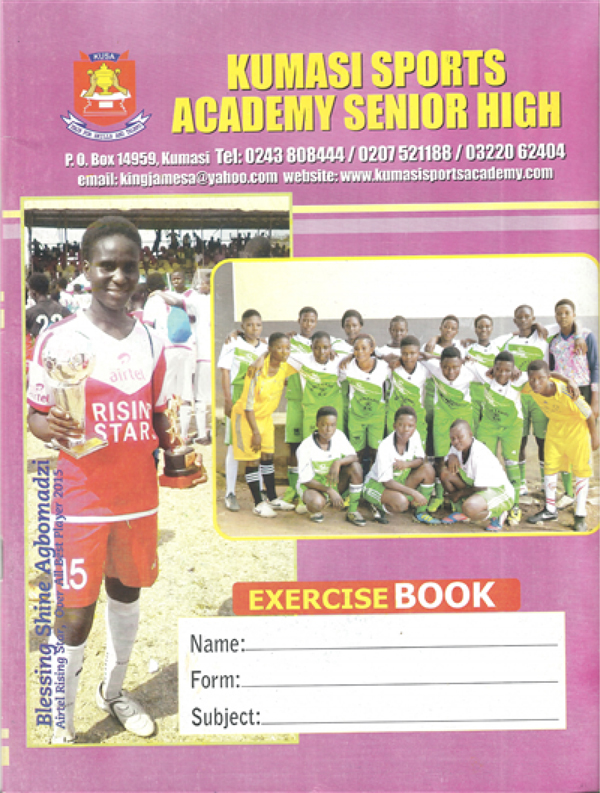
King has capitalised on the girls’ success in order to further promote KUSA. Marketing campaigns and promotional materials highlight the stories of those recruited to national teams, such as Blessing Shine Agbomadzi, the academy's women's captain who won the national MVP award in 2015, and was subsequently called up to the national U17 team. Following Blessing's achievements, KUSA notebooks were redesigned to feature an image of her holding the MVP award (Figure 2).
Blessing Shine Agbomadzi on KUSA's notebook.

King's office was also redecorated with Blessing's posters replacing those of famous Ghanaian men footballers, and meetings with potential recruits and their parents take place in the shadow of images celebrating Blessing's success. Blessing is also featured in the academy's TV commercial wearing her national team jersey. King claimed that these efforts to leverage Blessing's success generated interest in the academy, and his phone was flooded with calls from interested parents and children following the launch of the commercial. King's reputation and revenue all grew along with children's registration to KUSA.
Global players: Ernest Kufuor and the Unistar Academy
The Unistar football academy is also largely shaped by the vision and aspirations of its founder, Ernest Kufuor. Ernest established the academy in 2010 in the town of Kasoa, 40 kilometres west of central Accra. After years of working abroad as an accountant for international firms, Ernest decided to come back to Ghana and invest his resources in establishing his own academy. His primary objective was to establish a highly renowned academy that would succeed in selling players to international clubs. ‘The idea is to send them out, generate some money’, as Ernest explained (2016, Int.).
In addition to this ambitious vision of grooming world-class players, Ernest hoped that the academy would provide a broad range of opportunities for all participants. As Ernest explained, ‘The aim of Unistar is to educate and provide the participants with the tools to make a difference, not only to their own lives but to their community as well’ (Unistar 2016: 3). Interviews with Ernest and staff members continually reflected this dual vision of great success for some players, and broad benefits for all. Ernest summed up his aspirations for the academy: ‘to produce players for the world. Also, to turn the people who don't have the talents into something in the future, give them a good profession’ (Ernest 2013, Int.). Prince Nyarku, the academy's manager, also gave voice to a layered set of aspirations for the academy, spanning grassroots achievements to national and global recognition: ‘Unistar wants to help the community, Ghana as a nation. Unistar wants to produce one of the biggest players in the world to come. Michael Essien, he is known all over the world. That is what Unistar wants to do. We want to produce great players with vision, who can read and write’ (Prince 2013, Int.).
This highly ambitious vision has been translated into the organisation and running of the academy, reflected in the managerial structure, professional staffing, recruitment practices, daily schedules and relations with the local community. In all facets of the academy, there is a strong drive to match international standards, and to foster networks and links to broader national and global markets. As financial success is the primary goal, Ernest has relied both on his background in accounting and a conservative approach to achieve tight oversight of finances. His wife, Emma, who also has a degree in accounting and works as the chief administrator at the academy, closely monitors the academy's resources.
Ernest has assembled a team of dedicated coaches who help him advance his vision for national and international recognition. All the coaches are professionals accredited with Confederation of African Football licensing. Unistar's national and international aspirations are seen in the coaches’ work, as they model training on that adopted at leading clubs in Europe, and they aim to produce footballers with a broad knowledge of the rationale behind the drills and tactics they perform. The staff is dedicated on and off the pitch, and coaches often stress that training continues in the dressing and video rooms. Coach Jojo explained that his routine is inspired by international standards: ‘I take them to my tactical board. I teach them theory. I show them video clips of what I want them to do. We do here things that other academies don't do’ (Jojo 2013, Int.). The academy's professional approach is also reflected in their recruitment policy. While some players are accepted at Unistar because their families are able to pay for their tuition, most of the boys are recruited after having been scouted by the coaches who seek out top players across Ghana. Boys are identified for their potential to develop into top-notch players who can generate revenue by being sold; Unistar does not recruit girls as they have far less earning potential.
Ernest's global aspirations also find expression in the web of relations he has nurtured with foreign agents, sports administrators, team owners and team managers in both Ghana and abroad. These relationships help Ernest and Unistar's coaches bridge the gaps between the academy and the broader world of football. Guests to the academy have included Ramon Lozano, the academy director of the Spanish team Real Zaragoza. Ramon taught Unistar's coaches the training methods and philosophies of the game that were practiced by the Spanish national team that won the 2010 World Cup and the 2012 European championship. During his four months at Unistar, Ramon accompanied the coaches during their training sessions, encouraging them to adopt a more Spanish-oriented style of training focused on technical skills and speed, claiming, ‘That is how Barcelona is playing’ (Ramon 2013, Int.).
Football success is clearly the objective at Unistar, and Ernest's bold aspirations with regard to grooming top-notch football players stand in stark contrast to the relative neglect of formal education at the academy. Despite his idealist vision of providing a range of opportunities to all players, the comparative lack of discipline and oversight in the players’ schooling provides insights into Unistar's priorities. Unistar's players display little regard for regularly attending school, and interviews with the pedagogical staff at the three private schools that Unistar's players are enrolled in revealed significant criticisms of the boys’ scholastic performance. The most common complaint from the teachers concerned the boys’ inconsistent attendance and late arrivals, a pattern of behaviour that has resulted in their poor academic performance. Gladis, a math teacher at Honesty JHS, complained that ‘at the end of the term you can see the wide gap between them and the regular students’ (Gladis 2016, Int.). Bernard, the headmaster at Honesty JHS, bemoaned the neglect of schooling by Unistar's players: They neglect the education. … Because they have in mind that in football there's money, they are following with their heart and their mind. … They come to school without books, but when you go to the pitch, you see them with their jerseys, everything is neat’ (Bernard 2016, Int.). Prince confirmed that the boys did not attend school consistently, claiming that they often needed a day off to relax from their physically demanding schedule. Ernest's objective for producing players for the global market thus translated into a strong emphasis on top-notch football training on the one hand, and a lax approach to schooling on the other.
This skewed emphasis on football rather than school finds expression in Unistar's promotional materials and social media accounts. Unistar's facebook page is dedicated only to the academy's football successes (Unistar n.d.). There are no online references to any educational achievements by Unistar's players, and the academy's social media is solely dedicated to publishing news about matches, games or specific players who were transferred to domestic or foreign teams. Unistar's brochure also overlooks educational successes, and only football-related activities appear under the ‘Our Achievements’ page (Unistar 2016). Likewise, the Instagram account of Unistar features news of players abroad or visits from international guests, such as a recent post regarding a visit from Barila, the former defender from Equatorial Guinea: ‘Barila expressed satisfaction of the materials on display and hopes to give promising stars opportunities abroad’ (Unistar Soccer Academy Instagram 2018).
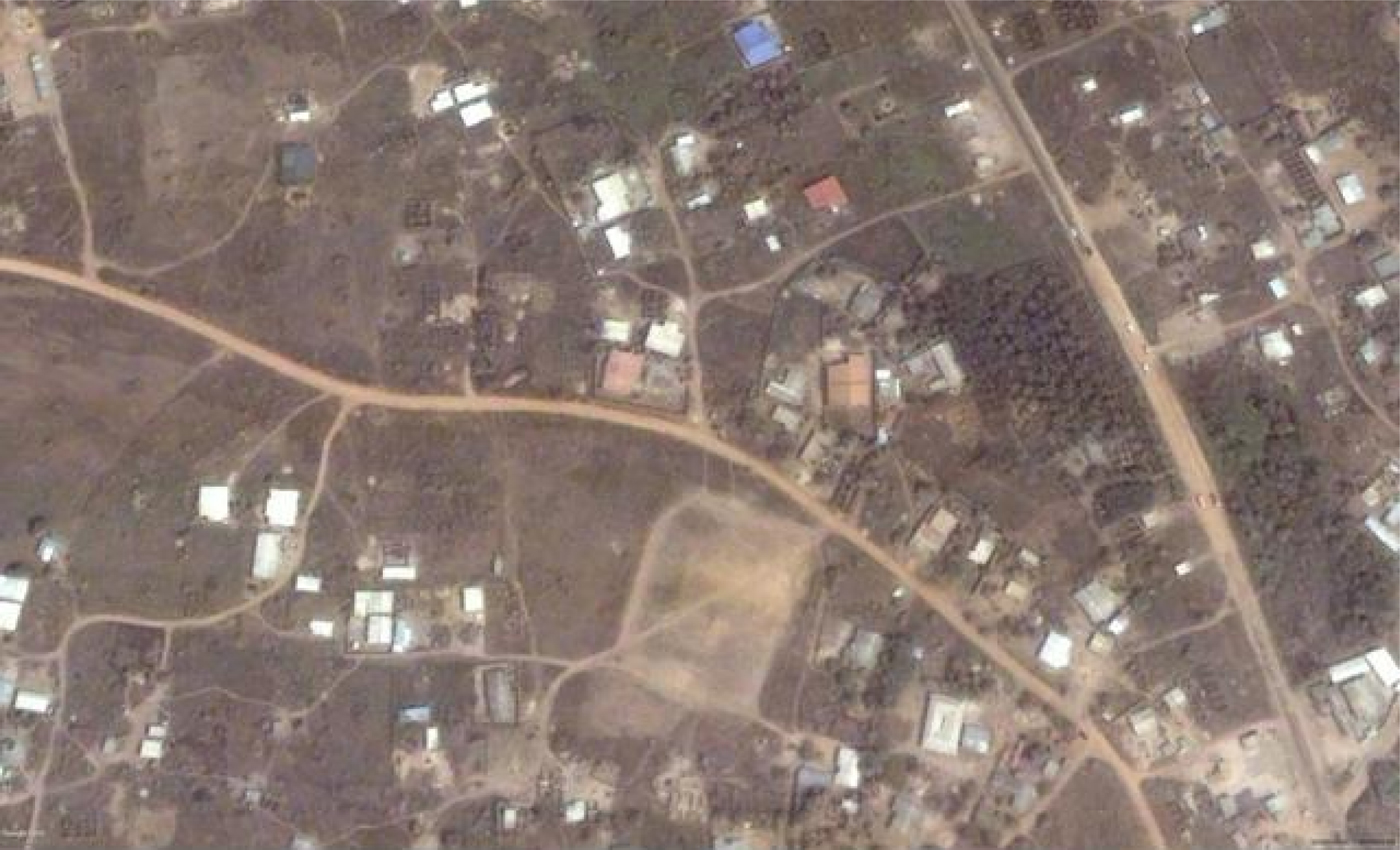
Unistar's relations with the local community are also an expression of Ernest's aspirations for turning Unistar into a high profile academy with a strong following in Ghana. He has nurtured relations with community members and encouraged a culture of fandom that has helped to turn Unistar into a household name far beyond Kasoa. According to the local residents, Ernest's initiative has led to radical changes to the neighbourhood. Unistar brought life to the area by transforming an empty plot into a well-kept football pitch that is open to spectators. The academy welcomes enthusiastic supporters and fans to attend practices and matches, and the pitch is now one of the town's focal points, providing entertainment and a spirit of support for the team. Residents claim that Unistar has attracted new visitors, businesses and residents, improving the town's infrastructures and general wellbeing. The physical change is evident in two aerial photos from before and after the arrival of Unistar to the town (Figures 3–4).
Before Unistar's establishment (2008). Source: Google Earth.

After Unistar's establishment (2017). Source: Google Earth.

Dan, the owner of a local pub described the changes:
Before Unistar there was just bush. There was nothing there … but then Mr Kufuor came and developed the area. The park turned into a tourist attraction. Unistar really helped the community, that is why we should applaud the man [Kufuor]. Now you can see structures all around. (Dan 2016, Int.)
Ernest has had significant success in realising his aspirations for Unistar, and his vision has given birth to a new set of hopes within the local community for additional, broader changes. ‘The area has changed since Unistar began but not enough like we want’ attested Mustapha, the head of the academy's supporters’ union (Mustapha 2016, Int.). Bernard added that: ‘a football academy like them can establish at least a hospital or a clinic, it can expand our roads and facilities like a library to develop the community, or the building of a computer lab that can help the people of this town to learn more’ (Bernard 2016, Int.). These testimonies indicate that Ernest's initiative, driven by his ambitious vision for success, has had a ripple effect in the community, arousing desires for additional signs of progress for all.
A means to an end: Mohammed Issa and the Mandela Soccer Academy
A completely opposite approach to that of Unistar can be found at the Mandela Soccer Academy (MSA), established in 2012 in the Labadi neighbourhood of Accra. At MSA, football is not an end in itself, but rather a means for delivering a range of social benefits to children living in one of Accra's more disadvantaged neighbourhoods. Mohammed Issa, the founder of MSA, established the academy as a way of helping children in the local community. Unlike other football academies in Ghana, the main goal of MSA was not to make a profit out of selling the children's playing rights to a different team. Mohammed did not reject offers to buy his players, but his main objective was to leverage football's universal appeal to advance his broader vision of youth and community empowerment (Dubinsky & Schler Reference Dubinsky and Schler2017). As he said, ‘Football is only a tool to get them together, but the main thing is humanity, helping those kids who don't even have books, don't even have clothes. We're trying to give them more education to make them better people, give tools that they can face in their real life. In this country, they need some tools to survive’ (Mohammed 2015, Int.). MSA's manager, Kuuku Yankah, affirmed that football was primarily a way of helping children: ‘our major objective is to get kids out of poverty, not to necessarily make money or enrich ourselves as an academy. Ours is more or less on the humanitarian agenda [rather] than the commercial purpose’ (Kuuku 2015, Int.). Kuuku later added that ‘Unlike the other academies, the emphasis of this academy would be on vocational training. … We just want to make sure that you can get something that will propel you out of poverty’ (Kuuku 2015, Int.). As will be seen, Mohammed's aspirations for using football as a tool for advancing an agenda for social and economic uplift clashed with MSA players’ dreams for football fame and fortune, and this ultimately scuttled Mohammed's plans.
From the founding of MSA, the vast majority of Mohammed's investment went towards the boys’ schooling. He funded the tuition for the U15 team enrolled in primary and junior high schools, for the U17 team who attended senior high schools, and he also sponsored several university students. In addition, Mohammed provided all the boys with uniforms and books, medical insurance, daily meals and transportation from their homes to school, and on training days to the football pitch. Mohammed claimed that he invested over one million US dollars in MSA in order to enable the academy's children to enrol in Accra's finest schools. The importance of education at MSA was also manifested in the academy's strict rules regarding school absenteeism. U15 team boys that did not go to school were not allowed to train and play in matches. ‘These boys love their football so much, they will want to do anything so that they can play football. So we are using the carrot and stick system: you go to school you get rewarded with football’ explained Kuuku (2015, Int.). Teachers at the schools also conveyed the message that there is more to life than football, and MSA's website published stories on how the children integrate both educational and sportive purposes, reflecting the understanding that schooling is instrumental to the children's progress in life.
Although MSA was an impressive philanthropic endeavour, Mohammed also had a personal agenda that led him to establish the academy. Born in Ghana to parents who were second-generation immigrants from Lebanon, Mohammed emigrated with his parents to the UK when he was 10 years old. After finishing secondary school and graduating from university, he returned to Ghana in the 1990s and set up a small retail shop, KIMO Home, which gradually grew into a multi-million dollar company (AfricaHRLeaders n.d.). This great material success inspired Mohammed to search for ways to give back to society: ‘I got to a stage in my life where I was a bit … like a mid-life crisis. I felt that I need to do something more’ (Mohammed 2015, Int.). The idea of establishing a football academy first occurred to Mohammed after playing football with his son and some children from the local neighbourhood. The connections that emerged between him and these boys led him to realise that football was a way of reaching these children. ‘I said, you know what, I like kids, I like football, I also love Ghana and appreciate what it has given to me, I feel like I want to connect more with the people, and that's how it came about’ explained Mohammed (2015, Int.). Soon over 50 boys were enrolled in the Mandela Soccer Academy, after being recruited by the academy's coaches who recognised their talents. They were not required to pay any fees, as Mohammed covered all of their expenses.
The academy was Mohammed's way of challenging existing stereotypes in Ghanaian society regarding the Lebanese. Mohammed bemoaned the common perception of Lebanese-Ghanaians as a closed community that resisted integration into Ghanaian society: ‘We say we're Ghanaian-Lebanese but the Ghanaians call us Lebanese. It's very hard for them to accept us’ (Mohammed 2015, Int.). MSA provided Mohammed with a way to break out of the insularity of the Lebanese community. He hired a fully Ghanaian staff and focused his efforts on Labadi, hoping this would help to change the Ghanaians’ perception of the Lebanese. He also hoped to attract more Lebanese-Ghanaians to the initiative as a way of expanding its potential for change:
Ghanaians can perceive that the Lebanese are really doing something, we're not just making money as is the perception of it and leaving. A lot of us, we're third generation in Ghana, so we haven't left. We're investing in this country, and when I do this, when they [Ghanaians] see that Lebanese are behind this foundation, they begin to respect. And the same thing on the other side. I go to my Lebanese community and say: ‘Listen, this is what I'm doing for the Ghanaians’, and I can get help from them. They've [Ghanaians] done so much for us in this country. (Mohammed 2015, Int.)
Mohammed's efforts at reconciling his multiple identities through MSA could be seen in all facets of the academy. His vision for Ghanaian society in general, and the Lebanese community in particular, was reflected in the programming and structure of the organisation. Mohammed's personal history, transcultural identity and cosmopolitan persona all found expression in the academy's day-to-day operations. Perhaps no other aspect of the academy more reflected Mohammed's persona than his weekly motivational seminars. In these sessions, Mohammed exposed the children to the values and beliefs that he believed would help them to succeed in life. Many of the lessons took inspirations from success stories of global personalities such as Oprah Winfrey, Nelson Mandela and Bruce Lee. During each session, Mohammed gave a 60-minute lecture on issues such as individual empowerment and self-compassion. The seminars were aimed at broadening the children's knowledge of the world and forcing them to think in concepts that were new to them. These seminars reflected the intersections between Europe, Lebanon and Ghana in Mohammed's life, and his transnationalism and multiculturalism found expression in the lessons he tried to impart to MSA's players.
Despite Mohammed's noble intentions of providing poor children with access to a private school and exposing them to new worlds of knowledge, tensions and problems surfaced when the children's goal dreams collided with Mohammed's educational approach. Children and parents lacked his commitment to education, and increasingly players were expelled from MSA when they consistently missed school. Four years after establishing MSA, Mohammed decided to part company with the academy. This decision stemmed from his feeling that the academy had not achieved its goals and that it did not promote the children in accordance with his vision. MSA drained Mohammad's financial resources without providing him with tangible evidence of the kinds of successes he had envisioned. In his abandonment of MSA, Mohammed ultimately recognised that he was wrong in thinking that he could impose his vision on the children: ‘To set up an academy is a noble cause but it's very naïve’, Mohammed noted (2016, Int.). Mohammed's failure to realise his development goals through MSA demonstrates that the youths who join football academies are not passive receptors of the founder's vision. They come with their own set of goal dreams, and these have a fateful impact on the success or failure of each academy, and the ways in which children and their families experience them.
DREAMS COLLIDE AND MERGE: YOUTH EXPERIENCES IN THE ACADEMIES
The vision of each founder is deeply imprinted in each of the academies, but children and their families invest their participation in academies with their own objectives and aspirations. The ways in which children and their families evaluate and interpret their engagement with academies is generally the result of a negotiation between their dreams and expectations on the one hand, and the actual experiences, resources and opportunities that the academies provide. Thus, while it is essential to understand the motivations and aspirations that led to the establishment of each academy, it is equally important to unpack the objectives and aspirations of children and their families in order to measure and evaluate the impact of each academy upon local lives.
While learning to play football, and the possibility of a career in football, is a strong attraction for most who join the academies, many youths and their families primarily seek out the educational opportunities that the academies offer. Children and parents, affluent and deprived alike, are aware of the range of attitudes that academies display with regard to education, and many chose to enrol in places where education is emphasised. Interviews with youths and families enrolled at KUSA, for example, reveal KUSA's emphasis on educational progress played a vital role in drawing them to the academy. U13 player Cosmos claimed that the serious attitude toward schooling made KUSA stand apart from other academies: ‘We learn and play football here. Other [teams] we don't learn, always play, play, play and not learn. Cannot go far’ (2016, Int.). Regina, the mother of Pearl, noted that she encouraged her daughter to move from Accra to KUSA because of its educational programme. ‘Here they learn too and play football too, but if you compare to other schools some just play only football, they are not learning too’ she explained (Regina 2015, Int.). Many children and their families are aware of the precariousness of football and they want to ensure that they leave the academy with academic credentials. MSA's U17 player Ziblim made a 600-kilometre journey, from Tamale in Northern Ghana to Accra, in order to join MSA and receive an education far better than one he could get in his home region. ‘At Mandela Soccer Academy they will make sure that you'll be playing the football at the same time as going to school, so in case the football doesn't work for you, you can achieve something from the education’, he explained (Ziblim 2015, Int.). His parents supported his move because of the educational opportunities as well: ‘My parents, they don't know what football is, the only thing they want for me is to focus on education’ Ziblim recollected (2015, Int.). Richard, the older brother of MSA's U15 Ernest, attested that ‘in this world, you don't have to put all your eggs in one basket. You have to separate. Put 50% in ball, 50% in education’ (Richard 2016, Int.).
Despite the efforts of many academies to emphasise education and downplay inflated expectations for developing world-famous footballers, many of the youths who enrol in academies are driven by an idealised vision of football fame and fortune. They are drawn to academies with a romanticised ideal of extraordinary success, and hopes for gaining access to resources and networks currently beyond their reach. For many, the ultimate goal is ‘migrating with the ball’. When asked what brought him to MSA, U15 player Emanuel answered ‘My mission is to become a great footballer in the future. In Ghana, if you join an academy team it makes it easy for you to get to the top’ (Emanuel 2015, Int.). The sentiment was echoed over and over by academy players. Prior to coming to the academies, many had already formulated very specific plans for their career, including a vision of which European team best suited them. ‘My goal is to become a good footballer, so I can play the national team, so I can go to Real Madrid’ noted U15 George (2015, Int.).
Parents harbour the same hopes as their children, and mothers and fathers formulate their own imaginaries regarding their children's success. For impoverished families, the opportunity for a child to join a football academy can put in motion the set of hopes that had once seemed impossible. Rukiya, the mother of 20-year-old Samuel, captain of KUSA's senior team, made her bold aspirations for her son very clear: ‘I want Europe. I will be very, very happy not in Ghana here, please. I don't want Ghana here … because in Ghana there is not good payment’ she explained (Rukiya 2016, Int.). Unemployed, she invested her own dreams in Samuel's success at KUSA: ‘we want our son to be a success so we can also be free and solve our problems. … We want to go forward and stop thinking about our son’ (Rukiya 2016, Int.). For Rukiya and many other parents, the academy represented an opportunity to link to a world that extended far beyond their current lives: ‘I would like my son to be a footballer … and I can be watching him on the telly’ she noted (Rukiya 2016, Int.). Gertrud, the single mother of U15 player Solomon Adjey who supported her family by working as a street vendor, claimed that her perspective on life changed when her son was accepted to MSA:
I thanked God when Mandela came to help my son. I am always happy that my son is a footballer so in the future I will see him on the television set playing football. … When Solomon will succeed I know I succeeded. I will get respect and be calm if he will be famous like Asamoah Gyan. People will point at me and say ‘that's Solomon's mother’. (Gertrud 2016, Int.)
Asamoah Gyan, Ghana's highest earning football player (GhanaSoccernet 2016), is a source of inspiration for youth and parents who enjoy few opportunities in their immediate surroundings. They see their own potential in stories like his: ‘Look at Asamoah Gyan – he started small but now look – the highest paid [footballer] in Africa. So we want George to be like that’ claimed Philip, brother of KUSA's player George (Philip 2015, Int.). Every success at each academy, no matter how rare, fuels a new round of expectations among all the players. This was illustrated in the case of Lumor Agbenyenu who was transferred in 2014 from Unistar to Portugal's biggest team, Porto. Hakim, one of his teammates, said that whenever he suffers from doubt and uncertainty regarding his prospects for being recruited abroad, he draws inspiration from Lumor's success: ‘He [Lumor] did not have shoes. But he knew how to sew, so he sewed his own shoes. Now he can buy whatever shoe he wants. When I am confused I think about his story, that one day it will all work out also for me’ noted Hakim (2016, Int.). Three former Unistar players signed international contracts with European teams, and dozens more with Ghanaian teams, and these stories are well-known by new recruits, who bring hope with regard to their own prospects, as U15 player Ebenezer noted: ‘this academy, you get the chance to travel outside, but that team there [his former team] – you just play but you can't get any chance’ (2016, Int.).
For many families, once the door of possibility opens, hopes can quickly teeter towards despair when their expectations are not met. When an interview with Patricia, mother of U15 player Prince Tufor, came to its end, she pleaded: ‘take Prince with you to Israel. I am suffering. All day I walk with this on my head. I don't get a lot of money from it’ (Patricia 2016, Int.). Football had ignited in Patricia a previously out-of-reach opportunity for social mobility and this hope evolved into frustration. The same could be seen with Samuel's family, seven years after he joined KUSA but still had not been invited to a national team. Despite his lack of success, KUSA's captain, Samuel, still held onto some hope regarding his potential. But in the absence of opportunities, he felt mounting pressure from his parents: ‘My father is always worried I had kept long here. He's expecting me to at least move on to a big team. … He's very worried I am here for almost getting to seven years now, but I have not yet to get a chance’ Samuel noted (2016, Int.). Indeed, his mother, Rukiya, echoed these sentiments, and her earlier optimism regarding his promising career gave way to a bitter sense of betrayal by KUSA: ‘This year we are not hearing any good things from Mr King so we are not happy this year. Our son is still in Ghana here. I and my husband are not happy, not happy AT ALL.’ (Rukiya 2016, Int.)
For many children and their families, disappointment is a direct outcome of the heightened expectations they bring with them to the academies, but academies are not solely to blame for fostering these unrealistic expectations. Rather, football arouses a set of aspirations and ‘goal dreams’ among children and their families, and these ultimately collide with the actual opportunities that academies offer. The roots of despair can be found in the gaps between the objectives of the academy founders and staff on the one hand, and those of the children and their families, on the other.
GOAL DREAMS: REALISED, ABANDONED AND ADJUSTED
Jamie Cross has argued that imagining the future is what draws people into zones where development is happening: ‘the lived sensation of future prospects can seize bodies, persons, and selves, gripping them with hope and desire, anxiety and fear’ (Cross Reference Cross2014: 9). Development initiatives evolve as spaces where conflicting and contradictory dreams converge and compete, and they defy a single rationality or coherence. This convergence of dreams can make schemes more effective, but dreams can also collide in ways that can disrupt or destroy the project itself (Cross Reference Cross2014: 188). For founders as well as children and parents, football academies provide an opportunity for pursuing dreams, and the hopes and aspirations that draw them in also shape their experiences there. But academies can quickly evolve into breeding grounds for discontent and disappointment when aspirations are not matched by actual opportunities. At football academies and all development schemes, the incongruence between competing visions can have fateful consequences, and the struggles that arise between the divergent personal, communal and global aspirations can result in clear winners and losers. Academies can become junctures at which goal dreams are realised, but they are commonly sites at which dreams are abandoned or readjusted.
These dynamics were evident at the Mandela Soccer Academy. Mohammed abandoned his commitment to MSA when he recognised the insurmountable divide between his aspirations for the academy and those of the children involved. But MSA continues to function, and Mohammed's departure enabled Kuuku to develop the academy in new directions. The current emphasis is now on football rather than community development, and this realignment is more in line with the goal dreams of the children and parents of MSA. Indeed, in 2018 alone, one player, Terry, signed a contract with Ghanaian premier-division team Karela United, and Patmos Arhin signed with Turkish club Boluspor (GhanaSoccerNet 2018a, 2018b). Patmos had been enrolled in the Austrian Red Bull Academy when it closed down its activity in 2015. Not willing to abandon his dreams of becoming a footballer, he worked as a street vendor in Accra until he won a spot at MSA. Thus, although Mohammed ultimately abandoned MSA when the children and their parents failed to embrace his vision, the academy has evolved without him, and succeeds in enabling some children and their families to realise their aspirations. At MSA, the collision of agendas led to a realignment of priorities, and to the empowerment of participants’ goal dreams over those of the founder.
Cross argued that unrealised futures are also fertile grounds from which new hopes and aspirations spring (Cross Reference Cross2014: 10). Disappointment that follows unfulfilled aspirations does not always lead to withdrawal, and often times participants adjust their dreams and goals in response to obstacles. This could be seen in the case of Francis (‘Doc’) at MSA. From the founding of MSA, Francis was one of the top players and the academy's U15 team captain until he suffered a serious knee injury. Several operations failed to repair the damage, and Francis was told he could no longer play football. This devastating diagnosis ended Francis's football career, but it also opened up new avenues of opportunity. Kuuku offered him the opportunity to return to the academy as a first aider and he soon earned the new nickname of ‘Doc’ after treating players for minor injuries. Recognising the importance of Francis's work, Kuuku sent him on a professional first aid course and a period of specialisation at a sports physicians’ centre. Francis's paramedical skills have thus broadened, and he can now treat a range of injuries. Although he abandoned his goal dreams, he has found new satisfaction in his current role: ‘Right now everything is easy for me to do so I don't fear, even if the person is faint I can make him come back to life’ (2015, Int.). For Francis and many other players at each of the academies, failure to realise goal dreams is not always a dead end. Academies can also play a vital role in fostering alternative aspirations and readjusted hopes.
Ghanaian football academies, like all development schemes, are built upon a broad set of aspirations for realising an imagined future. By mapping out the overlaps, conflicts and convergence between all the dreams and aspirations that come together in the football academies, we can gain important insights into how individuals and communities experience these schemes, and how the schemes themselves evolve. The collisions that occur between various sets of hopes and aspirations can have far-reaching consequences for both development initiatives and individual experiences within them, and for the multitude of imaginaries they continue to foster.