Research approach
This paper is a product of scientific and legal literature review as well as several in-depth interviews with people who provided their recollections of meetings and conversations with others, including descriptions of their own roles in the evolution of this agreement. Some people expressed a preference to retain anonymity, which led to a decision to forego direct quotes. The authors acknowledge that this article is a composite of recollections, and as such may not be a complete record of all relevant events, meetings, or interpretations by other participants. Notwithstanding, we consider including such viewpoints as integral to better understand the extenuating circumstances that facilitated the unprecedented Central Arctic Ocean (CAO) treaty. Throughout this paper, we have cited to these anonymously collected interviews as “Contributing Interview” or “Cont. Int.”
Main text
Under the United Nations Convention on the Law of the Sea, each country has exclusive fisheries jurisdiction within their 200 nautical mile Exclusive Economic Zone (EEZ) (Agreement for the Implementation of the Provisions of the United Nations Convention on the Law of the Sea of 10 December 1982). However, fish beyond these boundaries are in the high seas and may be caught by any country. This makes them an open access resource. Open access resources are difficult to manage because every party has an incentive to capture as much value as possible, which may lead to the collapse of the resource (Calderwood, Reference Calderwood2020). Overcoming this challenge requires international cooperation.
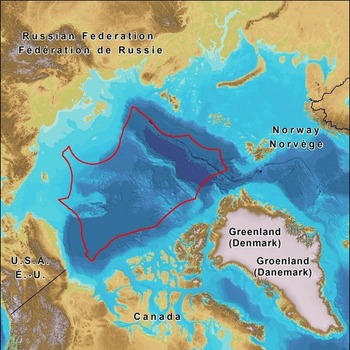
For the purposes of this Article, the CAO is defined as the high seas portion of the Arctic Ocean (Fig. 1). The CAO is approximately 2.8 million km2 and is bordered by water in five different EEZs: the United States, Canada, Denmark, Norway, and Russia.
Central Arctic Ocean area agreed to prevent Unregulated High Sea Fisheries. Permission sought from Fisheries and Oceans Canada (reprinted with permission). https://www.dfo-mpo.gc.ca/international/arctic-arctique-eng.htm. Data modified: 2019-05-15.

Historically, fishing has not been a concern in the CAO because it was covered by ice year-round. However, the Arctic is one of the fastest warming locations on the planet (Stuecker et al., Reference Stuecker, Bitz, Armour, Proistoscu, Kang, Xie and Jin2018). The National Aeronautics and Space Administration has been monitoring Arctic sea ice via remote sensing since 1979 (NASA, 2021). Arctic sea ice minimum coverage has declined by roughly 13% per decade since the 1970s (Popovich, Fountain, & Pearce, Reference Popovich, Fountain and Pearce2017). The ten lowest ice minimums have all occurred since 2007 (Popovich et al., Reference Popovich, Fountain and Pearce2017). Due to these changes, large portions of the CAO have remained ice-free for more months of the year. And ice extent is not the only environmental variable exhibiting changes. As water around the world warms, many fish species are finding their historic habitat too warm and are shifting poleward towards cooler water (Morley et al., Reference Morley, Selden, Latour, Frölicher, Seagraves and Pinsky2018). In recent years, some more temperate species are appearing more frequently in Arctic survey nets. A rarity 20 years ago, salmon are now not uncommon in Alaska North Slope rivers flowing into Arctic waters (Farley et al. Reference Farley, Murphy, Cieciel, Yasumiishi, Dunmall, Sformo and Rand2020).
For most regions in the Arctic, current monitoring is still insufficient to accurately characterise status or trends for many species of marine fauna (CAFF, 2017). Further, for species currently in the Arctic, few population assessments have been completed (Christiansen & Reist, Reference Christiansen and Reist2013). However, despite these gaps in knowledge, it is broadly understood that Arctic species across broad taxa often exhibit narrow thermal temperature tolerances (CAFF, 2017). Without scientific knowledge that enhances predictability of species’ response to climate change, it is difficult to evaluate the resilience of Arctic ecological communities. And the cumulative effects of anthropogenic activities and climate change on resilience of Arctic ecosystems are impossible to predict without a better understanding of baselines and critical ecological thresholds – which when passed predict when ecosystems are unlikely to recover.
Despite the lack of scientific knowledge, as sea ice extent diminishes and fish relocate to cooler waters, the Arctic may become a prime target for commercial fishing fleets (Haug et al., Reference Haug, Bogstad, Chierici, Gjøsæterb, Hallfredsson, Høines and Sunnanå2017). And, absent an international treaty, boats would be able to fish free from any catch-limits. However, on 3 October 2018, nine countries and the European Union signed The Agreement to Prevent Unregulated High Seas Fisheries in the CAO (the “Agreement”).
This Agreement embodies the precautionary principle (Kriebel et al., Reference Kriebel, Tickner, Epstein, Lemons, Levins, Loechler, Quinn, Rudel, Schettler and Stoto2001) as it seeks to limit high seas fishing before it begins. In the past, uncertainty was perceived as “as a reason to forestall implementation of restrictive management measures” (Mace et al., Reference Mace, Bartoo, Hollowed, Kleiber, Methot, Murawski, Powers and Scott2001). However, under the precautionary principle “uncertainty is perceived as a reason to exercise caution by, for example, scaling back the recommended harvest rate” (Mace et al., Reference Mace, Bartoo, Hollowed, Kleiber, Methot, Murawski, Powers and Scott2001). The precautionary principle is becoming more common in US fishery management (Mace et al., Reference Mace, Bartoo, Hollowed, Kleiber, Methot, Murawski, Powers and Scott2001) and has been encouraged in international settings (FAO, 1995).
The Agreement entered into force on 25 June 2021 (U.S. Dept. State, 2021). This paper tells the compelling story of the many factors and people that made this historic Agreement possible.
Part 1: An existing framework: The Arctic Council
The Arctic Council was founded in 1996 to cooperate on efforts to promote environmental protection and sustainable development in the Arctic. It is the “leading intergovernmental forum” in the Arctic (Arctic Council, 2021). The Arctic Council is composed of eight Member States: Canada, Denmark, Finland, Iceland, Norway, Russia, Sweden, and the United States. While the Arctic Council has no binding authority over the CAO, it has provided a regular forum for both scientists and statesmen to regularly confer on Arctic issues for over two decades. The Arctic Council’s “activities are conducted in six Working Groups.” (Arctic Council, 2021). These groups bring together scientists and policy experts from different member countries and observers who produce reports and organise monitoring programmes in the Arctic (Arctic Council, 2021).
The Agreement to Prevent Unregulated High Seas Fisheries in the CAO was negotiated and executed outside the framework of the Arctic Council. However, negotiations heavily relied on work that had been conducted by the Arctic Council. Working groups like the Arctic Monitoring and Assessment Programme (AMAP), the Sustainable Development Working Group (SDWG), Protection of the Arctic Marine Environment (PAME), and the Conservation of Arctic Flora and Fauna (CAFF) expanded international cooperation in scientific research in the Arctic. Without the research collaborations enabled by these working groups, significantly less would be known about the status of Arctic ecosystems and the impacts of climate change. Furthermore, the Arctic Council has established certain norms for international negotiations in the region. For example, the Arctic Council has granted six Indigenous peoples’ organisations permanent participant status in the Arctic Council (Arctic Council, 2021). Negotiations for the Agreement to Prevent Unregulated High Seas Fisheries in the CAO followed this norm and Indigenous peoples were included in the negotiating process (Balton, Reference Balton and Heidar2020).
It is difficult to say for certain whether the Agreement to Prevent Unregulated High Seas Fisheries in the CAO could have been negotiated without the frameworks, relationships, norms, and research provided by the Arctic Council. However, there is no doubt that negotiations were aided by this existing organisation and its contributions to Arctic science. Similarly, it will be interesting to see how the Agreement impacts the Arctic Council as it represents a new development in Arctic governance (Vylegzhanin, Young & Berkman, Reference Vylegzhanin, Young and Berkman2020)
Part 2: The Tumultuous history of Arctic fisheries: Tales of missed opportunities
There is an abundance of fish in the North Pacific and Atlantic Oceans. Indeed, fisheries in these regions account for 40% of global commercial fishery landings (Morley et al., Reference Morley, Selden, Latour, Frölicher, Seagraves and Pinsky2018). So, it is perhaps no surprise that the region has a rich history of fishery conflicts. The CAO Agreement takes place in the context of this history. Two conflicts in particular involved coastal nations struggling to regulate overfishing in the high seas. First, the Donut Hole region between the United States and Russia, and second, the Loophole region between Russia and Norway. As we discussed below, both incidents taught valuable lessons to the countries involved. Lessons that would come back when they began considering the issues presented by unregulated fishing in the CAO.
The Donut Hole
As the Cold War faded in the late 1970s, fisheries conflicts were one of the many contentious topics that the United States and Russia – then the Soviet Union but referred to as Russia throughout this Article – agreed to discuss. Russia and Alaska both border the lucrative Bering Sea, creating common interests and concerns about resource management (Cont. Int.).
Since 1952, fisheries in the North Pacific Ocean had been under the purview of the International North Pacific Fisheries Commission (INPFC), an intergovernmental body run by the United States, Canada, and Japan. Under the INPFC, the United States allowed Japanese fishing boats to fish freely in their portions of the Bering Sea. (NPFMC, 2006). While Russia had a bilateral treaty with Japan, they were excluded from the multilateral INPFC (NPFMC, 2006). As the United States and Russia began sharing fishing data, Alaska fishermen were shocked to learn that Japanese boats were paying their Russian counterparts for the right to fish in Russian waters, while the United States had opened their waters for free (Cont. Int.). The Alaskan fishing community began to see the downsides of excluding Russia from the multilateral negotiating process. Despite pressure to revisit the membership and structure of the INPFC, the State Department was reluctant to do so because the commission had played a major role in improving United States–Japan relations after WWII (Cont. Int.).
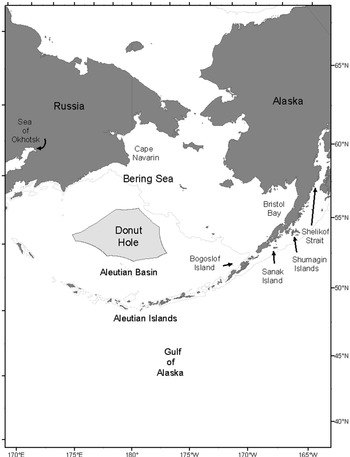
However, the United States and Russia were both facing an urgent problem, one which would require cooperation to solve. When the United Nations Convention on the Law of the Sea was negotiated in 1982, it included the long-awaited language granting each country an EEZ of 200 nautical miles (UNCLOS, 1982). Under the new regime, most of the Bering Sea fell under either United States or Russian jurisdiction, except for a large “Donut Hole” directly in the middle (Fig. 2).
Map of the central arctic Donut Hole (reprinted with permission from Bailey, Reference Bailey2011).

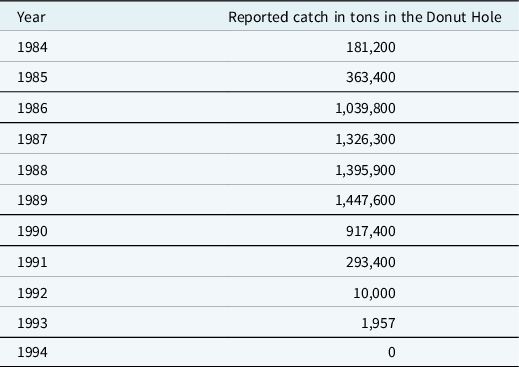
Once Russia and the United States took control of their respective 200 nautical mile EEZs, they restricted foreign fishing in these waters. As these foreign fleets were pushed out of United States and Russian waters, they discovered a large pollock stock in the Donut Hole (Bailey, Reference Bailey2013). Significant commercial trawling began as early as 1981 (Bailey, Reference Bailey2011). Fishing effort increased rapidly, and by 1985, the fleet reported harvesting 360 thousand tons of fish (Bailey, Reference Bailey2011). The following year, the fleet removed more than 1 million tons of pollock from the Donut Hole (Ianelli, Honkalehto, & Williamson, Reference Ianelli, Honkalehto and Williamson2006). International experts reported the stock remained large, while United States experts were more pessimistic of the state of the stock (Bailey, Reference Bailey2013).
While the Donut Hole lay beyond their borders, the intense fishing in the region caused problems for both the United States and Russia. While the U.N. treaty had established a border at 200 nautical miles, the negotiators had neglected to inform the fish. Thus, if a country responsibly managed its domestic fisheries, the increased fish stock might spill across the border into the high seas. Then fishing vessels on the high seas could fill their nets just beyond the border without bearing any of the costs associated with responsible management (Calderwood, Reference Calderwood2020). Meanwhile, coastal nations were learning that overfishing just beyond their borders also harmed their domestic fisheries. So-called “straddling stocks,” which migrate through or occur in more than one EEZ, had remained completely unregulated under the new U.N. treaty. This quickly caused problems around the globe. Indeed, in 1995, Canada patrol boats fired on a Spanish fishing vessel operating just beyond their EEZ. Canadian officers then boarded the boat, arrested the captain, and towed it into a Canadian port (Swardson, Reference Swardson1995).
Unfortunately, the U.N. would not reach a solution to the straddling stocks problem until 1995, when it passed the Fish Stocks Agreement – which empowered intergovernmental organisations known as Regional Fisheries Management Organizations to address the issue (Agreement for the Implementation of the Provisions of the United Nations Convention on the Law of the Sea of 10 December 1982 Relating to the Conservation and Management of Straddling Fish Stocks and Highly Migratory Fish Stocks, 1995). In the meantime, the United States and Russia were on their own to figure out a solution to the Donut Hole problem.
First, they needed to initiate diplomatic relations to discuss fisheries. In 1988, the United States and Russia established a regular intergovernmental consultation process (Agreement, 1988) in the form of an annual fisheries meeting (Cont. Int.). Negotiations on the Russian side were headed by Vyacheslav Zilanov, the head of the International Section of the Soviet Ministry of Fisheries (Cont. Int.). Many years later, Zilanov’s experience in these negotiations would make him a critical player in addressing the issues presented by the CAO.
Meanwhile, Russia was still not a member of the INPFC. To advocate the local perspective, Alaska fishermen turned to their most dependably ally, Senator Theodore “Ted” Stevens (US Senator from 1968 to 2009) (NPFMC, 2006). Sen. Stevens had a special interest in fisheries management. As co-sponsor of Magnuson-Stevens Fishery Conservation and Management Act (MSA), and as a vocal advocate against illegal, unreported, and unregulated (IUU) fisheries (Congressional Record, 2006), Sen. Stevens had established a strong record that made him a rare favourite within both the fishing industry and the conservation community. Sen. Stevens soon convinced the State Department that Russia needed to be included in North Pacific fisheries policy (Cont. Int.). By 1992, the INPFC was replaced with the North Pacific Anadromous Fish Commission, which was composed of Russia, Japan, Canada, and the United States. However, this new organisation focused only on anadromous fish like salmon and trout, so the Donut Hole issue would need to be solved outside the existing management structures.
Federal fisheries managers in the United States predicted the Donut Hole fishery boom, and possible bust, and called for a moratorium in 1988, but it was not adopted (Bailey, Reference Bailey2011). Sen. Stevens introduced a Senate resolution calling for the State Department to begin negotiating an international moratorium (Senate Resolution, 1988). While the resolution was passed, negotiations for the moratorium were slow. The international fishing community was reluctant to listen to the United States and Russia’s pleas for a moratorium in the Donut Hole. Neither country had closed their own pollock fisheries, so the moratorium seemed like a self-serving request (Bailey, Reference Bailey2013). Furthermore, fishing had already begun, and the catch – at least at first – was good (>1.3 million tons yr−1, Table 1) (Ianelli et al., Reference Ianelli, Honkalehto and Williamson2006).
Reported annual Pollock (Gadus chalcogrammus) catches (mt) in the Donut Hole (Bailey, Reference Bailey2011)

By 1992, overfishing had reduced pollock catch to just an estimated 10 thousand tons per year (Table 1). At this point, the United States closed the pollock fishery within the US EEZ and passed the Central Bering Sea Fisheries Enforcement Act, which imposed penalties on the foreign vessels fishing in the Donut Hole (Central Bering Sea Fisheries Enforcement Act, 1992).
With the decline in fish and the increase in pressure from the United States, international negotiations for a moratorium began in earnest. Sen. Stevens aided negotiations from within the US Congress by introducing language before the Appropriations Committee and introducing additional resolutions (Stevens, Reference Stevens1994). Meanwhile negotiators on the Soviet side, including Vyacheslav Zilanov, worked closely with a team from the US State Department. In 1991, a young lawyer named David Balton joined this team (Cont. Int.). Like Zilanov, Balton’s experience would pay off decades later during the CAO negotiations.
Finally, in 1994, six nations signed the Convention on the Conservation and Management of Pollock Resources in the Central Bering Sea, and fishing in the area was halted (Zou & Huntington, Reference Zou and Huntington2018). Unfortunately, the pollock stock in the Donut Hole never recovered, and as recent as 2007, stock biomass was estimated at 12% of the 1988 peak (NOAA, 2007).
By the mid-1990s, the United States and Russia had learned some hard but valuable lessons. While they failed to save the Donut Hole, the two countries had worked together to implement the 1993 closure. They were finally meeting regularly, both in their bilateral consultations and as members of the new North Pacific Anadromous Fish Commission, and the scientific cooperation across borders was benefiting both nations.
The Barents Sea Loophole
The Donut Hole was not the only high seas enclave that Russia was dealing with. On their western flank they were engaged in a hotly contested maritime boundary dispute with Norway. In the middle of this dispute lay an area known as the “Loophole.” Just like the Donut Hole, the Loophole is a pocket of high seas waters that lays between the two countries’ respective EEZs.
Unlike in the Donut Hole, fishing in the Loophole did not rapidly increase immediately following the U.N. Convention on the Law of the Seas. While the creation of 200-mile EEZs and the decline of certain stocks in national waters likely contributed to increased fishing in the Loophole area (Churchill, Reference Churchill1999), fishing in this region was also pushed by environmental changes. Around 1990, changes in temperature and salinity drove new Atlantic cod stocks into the Loophole (Stokke, Reference Stokke2002).
Fishing in the area was dangerous. Ice conditions meant that there was only a short window each year during which fishing vessels could safely fish the Loophole. However, the increasing abundance of cod in the area quickly made it worth the risk. Between 1990 and 1994, fishing in the region increased rapidly. By 1994, “high seas catches [in the Loophole] comprised around seven percent of the total cod harvest in the Barents Sea ecosystem” (Stokke, Reference Stokke2002).
Just like with the Donut Hole, these high seas catches quickly impacted the entire ecosystem, damaging fisheries within Russian and Norwegian waters (Stokke, Reference Stokke2002). However, as Russia discovered with the Donut Hole issue, there was no “effective tool for the coastal states in their efforts to cope with the Loophole challenge.” Thus, “[t]he measures available to Norway and Russia were … largely diplomatic and economic” (Stokke, Reference Stokke2002). Norway tried to blacklist Loophole vessels “from subsequent access to the Norwegian EEZ,” with Russia following suit a few years later (Stokke, Reference Stokke2002). Additionally, the fishing industry of both Russia and Norway implemented a series of “private boycott actions” against the vessels fishing in the Loophole (Stokke, Reference Stokke2002). While these measures did increase the overall cost of fishing in the Loophole, they were not enough to “deter unregulated harvesting activities” (Stokke, Reference Stokke2002).
The Icelandic fleet in particular refused to yield to this political pressure. The Icelandic incentive may have been in part due to a decline in their own resource and exclusion from historic fishing grounds after the implementation of UNCLOS (Churchill, Reference Churchill1999). Additionally, development of the fishing industry was central to Iceland’s 20th century economic transformation (Sigfusson, Arnason, & Morrissey, Reference Sigfusson, Arnason and Morrissey2013). In 1990, Icelandic marine product exports were nearly 3-fold that of agricultural and manufacturing exports combined (Statistics Iceland, 2021). Reconstructed estimates suggest fisheries directly employed 12% of Iceland’s population in 1990, not including the processing and exporting sectors (Agnarsson & Arnason, Reference Agnarsson and Arnason2003). Norway and Russia attempted to argue that Iceland had no historic catch in the region and thus was not entitled to fish in the Loophole. But recent U.N. law – opening the high seas to all nations – undermined these arguments. Further, the European Free Trade Association ruled that Norway’s economic response violated its trade obligation (Hakimi, Reference Hakimi2014).
Like the Donut Hole experience, heavy fishing pressure in the area could not be sustained for long. And, like the Donut Hole, only after the fishery had crashed was an international agreement to regulate fishing implemented. The Loophole Agreement was reached in 1999. “The steep decline of the Loophole fisheries in the years preceding the signing of the Agreement had served to reduce the distance between coastal state quota offers and Icelandic demands” (Stokke, Reference Stokke2002).
The Loophole issue added to the lessons that had been learned in the Donut Hole incident. First, various diplomatic and political pressures had proved ineffective, while a lucrative fishery still existed. Second, changing environmental factors – like temperature – can drive fish into new waters, quickly creating a fishery where no fishery had been before. Third, when another country is deeply invested in a fishery, like Iceland was in the Loophole fishery, it can be difficult to bring them to the negotiating table. Finally, with a short annual gap in sea ice, fishing fleets can harvest massive amounts of fish and the impact can be seen throughout an entire regional ecosystem.
These lessons would linger in the background as countries considered what to do about the massive high sea area in the Arctic Ocean: an area losing its sea ice cover and attracting more international attention every year.
Part 3: Science to policy in US waters
In 2009, the United States was the first country to place a moratorium on fishing in their portion of the Arctic Ocean (Federal Register, 2009). Just like the later international CAO Agreement, the US moratorium on Arctic fishing was an unprecedented step at the time. The path to this moratorium was driven by a series of developments in US law, new scientific findings, and informal collaborations. Because the US moratorium paved the way for the eventual CAO Agreement, the story of this historic domestic action is important to unpacking the success of the international treaty that followed.
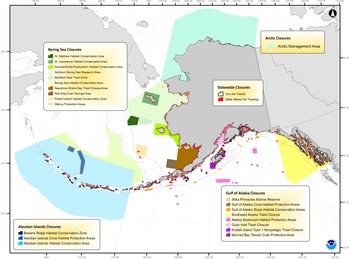
As discussed in the following sections, the moratorium was driven from two sides (Cont. Int.). First, a coalition of Alaskans formed in the early 2000s to address concerns over bottom trawling in the Aleutian Islands and the Bering Sea. This coalition was driven by recent scientific discoveries and regulatory changes within the United States. The coalition would go on to build a cooperative partnership with both the seafood industry and the important North Pacific Fishery Management Council as it worked to stop bottom trawling in Alaska waters (Fig. 3). This coalition, and the collaborations it produced, would slowly work their way up the Alaska coastline, eventually playing an important role in the US Arctic Ocean moratorium. Second, as the Arctic continued to warm, US fishery experts grew concerned about a Donut Hole repeat in the CAO. Sen. Stevens in particular began to consider the potential for international action. These two groups’ shared concerns both led them to the US Arctic waters (Cont. Int.).
Between 2002 and 2009, a broad coalition of fishery management, industry, and environmental organisations drove a series of fishery closures beginning in the Aleutian Islands and moving up into the Arctic Ocean. The status of these various closures can be seen in this figure (reprinted with permission). (NPFMC, 2021).

From the bottom up: A coalition focused on deep-sea coral
The coalition to end bottom trawling in Alaska began in the early 2000s, but its roots were in legal changes passed in the 1990s. In 1996, Sen. Stevens authored the Sustainable Fisheries Act (1996). This Act would overhaul fishery management in the United States, requiring fishery managers to protect “Essential Fish Habitat,” as well as just fish. This concept represented a transition from single species management to ecosystem-based management (Pikitch et al., Reference Pikitch, Santora, Babcock, Bakun, Bonfil, Conover and Sainsbury2004), a more holistic approach that many consider the future of responsible conservation. The new focus on habitat recognised the importance of habitat to longer-term sustainable harvests and the overall health and biodiversity of the ecosystem.
Most US fisheries in federal waters are managed by one of eight Regional Fishery Management Councils (RFMCs), Alaska’s federal fisheries are under the North Pacific Fishery Management Council (the North Pacific Council). These RFMCs are responsible for producing fishery management plans for the fisheries under their jurisdictions. After the 1996 Sustainable Fisheries Act, RFMCs were required to amend their fishery management plans to protect “Essential Fish Habitat.” However, many RFMCs did not immediately implement protection measures. The RFMCs argued at the time that this was reasonable because there was no clear scientific evidence connecting specific fishing activity to destruction of essential habitat (Nat. Res. Def. Council v. Evans).
While this lack of action was met with legal challenges, it was mostly upheld in the courts. The opinion in Natural Resources Defense Council v. Evans stated, “[t]he Court finds that it was reasonable for Defendants not to impose new restrictions on bottom-tending mobile gear given the lack of evidence that the gear had an identifiable adverse effect” (Nat. Res. Def. Council v. Evans p. 167). In short, without more scientific evidence, the new regulations did not have any real teeth (National Research Council, 2002).
2002 brought two major developments. First, the legal requirements for protecting Essential Fish Habitat became clearer. After a long comment period, the final regulations were completed. They clarified that,
Councils must act to prevent, mitigate, or minimise any adverse effects from fishing, to the extent practicable, if there is evidence that a fishing activity adversely affects [Essential Fish Habitat] in a manner that is more than minimal and not temporary in nature (Magnuson-Stevens Act, 2002, p.2354).
Second, there was a series of major scientific breakthroughs. The National Research Council published a groundbreaking study on the impacts of trawling on sea floors. The report showed conclusively that bottom trawling could cause substantial damage to certain ecosystems but advised for site-specific empirical studies (National Research Council, 2002). Meanwhile, two scientists at the National Oceanic and Atmospheric Administration, Bob Stone and Jon Heifetz, conducted several submarine surveys in the Aleutian Islands. They returned with video footage documenting the extraordinary extent of cold-water corals in the region (e.g. Calcigorgia spp.). This footage allowed scientists to document the damage that was being inflicted on deep-sea corals in the Aleutian Islands (Heifetz, Reference Heifetz2002; Carroll, Reference Carroll2004). The survey found that “[d]isturbances to the sea floor from bottom-contact fishing gear was evident on 88% of the transects, and approximately 39% of the total area of the sea floor observed had been disturbed” (Stone, Reference Stone2006). Further, video evidence suggested that the three-dimensional habitat provided by the corals housed myriad species of fish and invertebrates. These findings were supported by federal observers placed on fishing boats by the National Marine Fisheries Service (NMFS). Many of these observers reported chunks of coral turning up in bottom trawl nets (Cont. Int.). Initially, both the submarine footage of coral and the raw data from these observers were confidential; however, the Alaska scientific community is small, and word of the findings quickly spread (Cont. Int.).
These scientific discoveries would be instrumental in developing a new approach to fishery management in Alaska. Environmental organisations already suspected that these deep-sea corals were acting as Essential Fish Habitat, and that they were being irreversibly damaged by trawling vessels. And, just as importantly, they now believed that they could – if necessary – prove it in court (Cont. Int.).
The effort was primarily led by a small team of Alaskans concerned about the long-term health of Alaska marine ecosystems and the people who depend on them for livelihood. They brought together a broad coalition of environmental organisations, including the Ocean Conservancy, Oceana, Pew Charitable Trust, and the Alaska Marine Conservation Council, as well as scientists, tribes, and other local communities. The group first asked the NMFS for raw footage and longitudinal and latitudinal data from their submarine surveys. When their request was denied, the leadership of the coalition took action to request the data under the Freedom of Information Act (popularly referred to as a “FOIA request”). Eventually, the locational data and the precious footage were released to the coalition. These valuable surveys documented the presence and location of deep-sea coral in the Aleutian Islands. The coalition also attempted to use FOIA requests to gather data collected by the federal observers on commercial fishing vessels operating in proximity to this coral (Cont. Int.). However, this data was more difficult to get. Federal law protected observational data on behalf of the fishing industry.
As this coalition pressured the NMFS to release observer data, a small group of leaders within the seafood industry, supported by the North Pacific Council, decided that this effort of precaution and protection was worth pursuing. In a rare move, industry agreed to release some of the protected observer data, giving the coalition invaluable information about where vessels were finding coral in their nets (Cont. Int.). By 2004, the coalition had gathered sufficient documentation to show that 1) deep-sea coral existed in specific locations in the Aleutian Islands, 2) it functioned as important fish habitat, and 3) commercial trawls were fishing in the same area as these reefs and were destroying them.
In 2004, Alaskan constituents expressed concerns about Essential Fish Habitat to Sen. Stevens. He convened several meetings between NMFS, industry advisers, North Pacific Council leaders, and coalition representatives to discuss the evidence of deep-sea corals in the Aleutian Islands. NMFS, the Alaska fishing industry, and Sen. Stevens were especially interested in the legal implications of these findings (Cont. Int.). If the environmentalist coalition was able to show that the North Pacific Council was allowing fishing in Essential Fish Habitat, then they had the law on their side. While the coalition could turn to the courts, it was preferrable for all involved for the coalition, industry, and the North Pacific Council to reach a consensus on the bottom trawling issue.
During a critical presentation to the North Pacific Council in 2005, the coalition demonstrated that a relatively small percentage of fishing took place in most of the areas at issue (Cont. Int.). They urged the North Pacific Council to implement precautionary protections and close the most important areas that were being damaged by trawlers. Ultimately, the North Pacific Council and industry chose to work with the coalition and lead a precautionary effort to close the identified area (Fed. Reg., 2006). In the proposed Federal Rule, NMFS noted that the North Pacific Council had worked with “NMFS, fishing industry representatives, State of Alaska, university representatives, and environmental organizations” in evaluating different options. It states that “[t]he [North Pacific] Council’s identification and description of EFH, selection of HAPCs, and adoption of new management measures, as proposed under this action, resulted from this public process, including consideration of the best available science” (Fed. Reg., 2006). Shortly thereafter, work began on State and Federal regulations to amend the fishery management plan to protect the corals as Essential Fish Habitat.
After achieving success in the Aleutian Islands and the north Bering Sea, the coalition – joined by some North Pacific Council leadership and industry advisers – turned to the “high Arctic.” Over the course of their work in the Aleutian Islands, the group had realised the importance of prohibiting bottom trawling in as many places as possible, or for the industry, practicable. Eventually they discussed the possibility of obtaining a ban on any trawling above 60 degrees north, a line only part way up Alaska’s long coastline. This ban would be a major precautionary move since there was no commercial fishing above 60 degrees north. However, Arctic Sea ice coverage was shrinking every year, people felt it was only a matter of time until the industry would be motivated or pushed into the area. The discussion of a precautionary closure north of 60 degrees was contentious, but industry leaders and advisers were eventually able to join with the coalition and community leaders (Cont. Int.).
Closing wide swaths of Arctic waters to fishing would require an even broader coalition. Most importantly, it needed to include impacted communities. As word spread that the North Pacific Council was considering a new Fisheries Management Plan for Arctic waters, they received letters from numerous Indigenous communities expressing “concern with the Council’s lack of communication with communities living adjacent to the Arctic EEZ about the potential development of an Arctic FMP” (FMP, 2007). These letters triggered discussions with Alaska Native communities about the risks of bottom trawling. Many of these communities benefited from community development quotas (CDQs), which allocated a percentage of catch for certain species to Alaska Native communities (NOAA, 2018). Bottom trawling profits benefitted some, though not all these CDQs. However, if bottom trawling was harming Essential Fish Habitat, this could impact the long-term opportunities of CDQ fisheries and the traditional subsistence way of life. Alaska Native leaders turned to Caleb Pungowiyi to coordinate the native involvement in the new Arctic fisheries negotiations (Cont. Int.).
Pungowiyi was the former president of the Inuit Circumpolar Conference (ICC), an organisation representing around 180,000 Inuit of Alaska, Canada, Greenland, and Russia. Later, the ICC would play an important role in advancing the concept of a moratorium at the international level. The ICC had the status and credibility to influence both domestic and international negotiations. The organisation was one of the six Indigenous people groups that are formally recognised by the Arctic Council and they act as Permanent Participants in Arctic Council meetings. Pungowiyi’s addition to the coalition was a pivotal moment, and he worked closely on the push to end bottom trawling in Alaska’s Arctic waters (Cont. Int.). The newly expanded coalition concluded that precautionary measures for Arctic waters were in order, and they focused their efforts on a common mission: to protect the region from potential unsustainable commercial fishing impacts (Cont. Int.). As the coalition turned its focus to the Arctic, they found new allies waiting.
From top to bottom: International concerns push domestic action
By 2005, Sen. Stevens was seriously considering the problems that might develop with fishing in international waters in the Arctic (Cont. Int.). He encouraged North Pacific Council leaders and fishing industry representatives to evaluate potential conflicts. When the coalition approached him to brainstorm steps for an Arctic closure, he offered various alternatives to accomplish the goal. He counselled that the North Pacific Council should coordinate with the various stakeholders and push for a domestic moratorium. Unlike the Donut Hole situation, foreign fishing fleets would see that the United States was leading the way by implementing precautionary action in US waters before proceeding with a moratorium in the CAO.
North Pacific Council leadership and industry advisers decided the best way to proceed would be to prepare and adopt a completely new fishery management plan for the Arctic, banning commercial fishing and establishing a precautionary process based on science for any future consideration of opening a fishery. The North Pacific Council formally adopted the Arctic Fishery Management Plan in December of 2006, and it was published in the Federal Register in August 2009 (Fisheries of the Arctic Management Area, 2009).
Preventing commercial fishing in Alaska’s portion of the Arctic Ocean was a major conservation accomplishment by the coalition, the North Pacific Council, and industry leaders. However, this domestic measure would not be sufficient to protect ecosystems and fisheries elsewhere in the Arctic. The Arctic Ocean and its adjacent seas are highly interconnected and mutually dependent (Vincent et al., Reference Vincent, Callaghan, Dahl-Jensen, Johansson, Kovacs, Michel and Sharp2012). It was essential to consider other ways to address these challenges in other parts of the region. As work progressed on the domestic fishery management plan, interest was growing in an international agreement to provide similar protections beyond national waters. Many of Alaska’s fishery managers remembered the Donut Hole tragedy and realised that their domestic efforts could be wasted if they were not accompanied by concurrent international action. The next challenge would be to convince the State Department and other key agencies to begin that effort. Once again, Sen. Stevens was asked to make the case to the State Department and his Senate colleagues.
A rare symphony of agreement emerged in the Alaska community. Most stakeholders supported Sen. Stevens in introducing legislation for an Arctic treaty (Cont. Int.). The North Pacific Council and coalition leaders aided Sen. Stevens as he drafted legislation directing the State Department to push for international action. Industry and fishery managers also supported the measure. Alaska environmental organisations and Alaska Native leaders also organised in support of this action (Cont. Int.). In 2007, Sen. Stevens introduced Joint Resolution 17. Like his resolution during the Donut Hole incident, this resolution called for an international treaty and encouraged the State Department to begin negotiations. Joint Resolution 17 was passed by both the Senate and the House and President George W. Bush signed the Resolution in June 2008 (S. J. Res. 17, 2008).
During the same year this US domestic action was being finalised, an important meeting was held in Ilulissat, Greenland by the five coastal Arctic States. The meeting of ministers from United States, Russia, Canada, Norway, and Denmark was organised by Denmark to address the changing conditions in the Arctic Ocean. They co-authored the Ilulissat Declaration, pledging to cooperate for the “protection and preservation of the fragile marine environment of the Arctic Ocean” (The Ilulissat Declaration, 2008).
Part 4: Negotiating the international agreement
Once President Bush signed Sen. Stevens’ resolution into law, the US State Department began to strategise how they might begin the long, tedious, and complex process of negotiating an international treaty for Arctic fisheries. The process would take 11 years, but, eventually, in October 2018 the United States signed the International Agreement to Prevent Unregulated High Seas Fisheries in the CAO (the Agreement) (APUHSFCAO, 2018).
International negotiations for the Agreement occurred in several stages. In Stage 1, the State Department team, led by David Balton, the US Ambassador for the Oceans, set the stage for international cooperation. Next, in Stage 2, the five coastal Arctic States entered formal discussions to develop a common strategy and the basic elements of a possible agreement. The five coastal Arctic States planned to invite additional states to negotiate the Agreement itself. These negotiations eventually resulted in the 2015 non-binding Oslo Declaration (2015). Stage 3, the negotiation of the Agreement, began later that year. There were 10 participants in the negotiation of the Agreement: Canada, the People’s Republic of China, the Kingdom of Denmark (in respect of the Faroe Islands and Greenland), the European Union, Iceland, Japan, the Kingdom of Norway, the Republic of Korea, the Russian Federation, and the United States. Finally, since the Agreement was signed in 2018, signatories have begun Stage 4: preparing for implementation. During each stage, formal international meetings were heavily supplemented by scientific conferences, working groups, and informal meetings. Each stage will be discussed in turn below.
Stage 1
Beginning in 2008, Balton initiated informal conversations with other Arctic Nations about the possibility of an international treaty for the Arctic Ocean. In some instances, he was able to make use of existing frameworks. For example, the United States already had annual bilateral fisheries meetings with both Russia and Canada. In 2008 and 2009, Balton used these opportunities to discuss the possible treaty and gauge interest. Unfortunately, neither country showed much initial interest (Cont. Int.). Unlike fishery managers and industry in the United States, Russian fisheries managers were reluctant to compare the situation to the earlier Donut Hole tragedy. This was largely due to their belief that fish stocks would not move north in great numbers and a commercially viable fishery would never occur in the CAO (Cont. Int.).
To reach a broader audience, Balton had to forge new paths. In March 2009, Balton organised a side event during a meeting at the U.N. Food and Agriculture Organization to bring more attention to the region and potential risks. The presentation gave him a chance to introduce the broader international community to the idea of an Arctic fishery agreement. Meanwhile, a coalition of stakeholders back in Alaska were organising an International Arctic Fisheries Symposium. Many of these stakeholders were also part of the coalition that helped implement Alaska’s new Arctic fishery management plan. The veteran organisers partnered with North Pacific Research Board, the North Pacific Council, Oceana, the US State Department and the Institute of the North, an Alaska-based organisation of policy experts, scientists, business leaders, and conservationists. The Symposium was held at the Institute of the North in Anchorage, Alaska in 2009. The event brought together over 200 participants to discuss science, policy, and fisheries management in the Arctic.
This Symposium proved to be a pivotal early moment for the Agreement. First, it reunited several important figures in United States–Russia fisheries management. Vyacheslav Zilanov, the primary Russian negotiator during the Donut Hole era, attended the conference (Cont. Int.). While he was no longer with the Ministry of Fisheries, he still held sway in the Russian fisheries community. Second, the Symposium clarified the scope for international action. Until this point, it was assumed the treaty would encompass the entire Arctic Ocean. However, the conference quickly highlighted the problems with this approach. Scientists from Norway outlined the unique political and biological problems faced in the North Atlantic, which they viewed as problems which could seriously undermine any effort to implement an international treaty. For Balton, this symposium led to a critical decision: the treaty efforts should be focused solely on the CAO, excluding coastal seas like the Barents, the Kara, the Norwegian Sea, and others.
Ambassador Balton was not alone in working to draw attention to Arctic fisheries. Many of the organisations that had lobbied for the US moratorium continued to advocate for an international moratorium. Meanwhile, new allies were emerging. The Pew Charitable Trust was specifically interested in the issue. Pew used its considerable funding capacity to organise international conferences and meetings on the topic. Scott Highleyman, the then-director of Pew’s Arctic Program stated that,
Pew’s contribution was in recognising that the North Pacific Fisheries Management Council and the Inuit Circumpolar Council were ahead of the curve in figuring out the need for precautionary fisheries measures in the CAO. Pew was able to field test this made-in-Alaska approach with the international science community, in other Arctic countries, and in Asia through academic seminars with Arctic experts. This contributed to the constructive attitude that these nations brought to the table when convened to discuss a possible agreement (S. Highleyman, personal communication, Oct. 26, 2020).
In March 2010, the five coastal Arctic States came together for a second Ministerial Meeting in Chelsea, Canada. According to the Chair’s Summary, the Ministers discussed “the need for further scientific research into the state and nature of fish stocks and their ecosystems in order to assess emerging trends and their implications” (Chair’s Summary, The Arctic Ocean Foreign Ministers’ Meeting, 2010). Just months later, international negotiations towards the Agreement would move into their second stage. With two high-level ministerial meetings and multiple informal meetings to lay the groundwork, parties began formal negotiations in June of 2010.
Stage 2
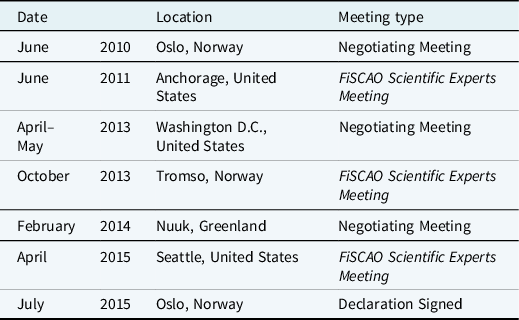
The five coastal Arctic States met in Oslo in June 2010 to discuss the conservation and management of fish stocks in the Arctic Ocean (Chair’s Summary, Oslo 2010). The parties were cautious in this initial meeting. The only real agreement was that they needed more information (Chair’s Summary, Oslo 2010). To this end, they agreed on the need for scientific experts to meet. This led to the first Meeting of Scientific Experts on Fish Stocks in the Arctic Ocean, a group known as FiSCAO, a year later in Anchorage in June, 2011.
For five years, the parties set Negotiation meetings and Scientific Expert meetings in alternating years (Table 2):
Negotiation history for the Oslo Declaration

Over the course of these meetings, parties slogged through myriad challenges that plague any international agreement. Russia remained reluctant to negotiate a binding treaty (Cont. Int.). Russia, Norway, and Iceland were concerned that negotiations could heighten ongoing uncertainty about the scope of their territorial waters (Cont. Int.). All parties were hesitant to decide what kind of obligations the treaty should impose (Cont. Int.).
As negotiations slowly proceeded, significant action continued to take place away from the negotiating table. For example, while no meetings took place in 2012, it was a busy year for the Agreement. In April, two thousand international scientists meeting in Montreal for the International Polar Year conference published an open letter calling for an international agreement (Barber, Belikov, Flint, Grebmeier, & Huntington, Reference Barber, Belikov, Flint, Grebmeier and Huntington2012). Ice loss and Arctic warming were proceeding at a much more accelerated rate than earlier predictions, as documented by the scientific community (Stuecker et al., Reference Stuecker, Bitz, Armour, Proistoscu, Kang, Xie and Jin2018, Jansen et al., Reference Jansen, Christensen, Dokken, Nisancioglu, Vinther, Caprol and Stendel2020). This letter put to rest the issue of whether there was scientific concern regarding emerging fisheries in the CAO. A month later, the US State Department, frustrated by the slow progress in negotiations and hoping to make the 2013 negotiating meeting more productive, circulated a draft Agreement. In September 2012, the Russian International Affairs council held a symposium on the Arctic. One notable attendee, Vyacheslav Zilanov, discussed the importance of proactive international regimes in “high sea enclaves” like the CAO and the Donut Hole in the Bering Sea (RIAC, 2013). This symposium played a critical role in changing Russia’s approach to the Agreement. As new data emerged, Russia began to see the ways that a CAO moratorium could help protect their domestic waters.
The critical breakthrough in negotiations came in 2014 at the Nuuk, Greenland meeting. Realising that a binding treaty was not yet within reach, parties agreed to settle on a non-binding declaration, a soft-law tool common in international law. The parties initially planned on signing the declaration in 2014, but the Russian invasion of Crimea chilled international talks. The Oslo Declaration was eventually signed with little fanfare in 2015.
In the Oslo Declaration, the five coastal Arctic States confirmed their intention to implement “interim measures,” like prohibiting non-regulated fishing and establishing a “Joint Program of Scientific Research” (Oslo Declaration, 2015). The Declaration also “acknowledge[s] the interest of other States in preventing Unregulated High Seas Fisheries in the Central Arctic Ocean.” In its final line, it states that the coastal Arctic states “look forward to working with them in a broader process to develop measures consistent with this Declaration that would include commitments by all interested States” (Oslo Declaration, 2015).
Stage 3
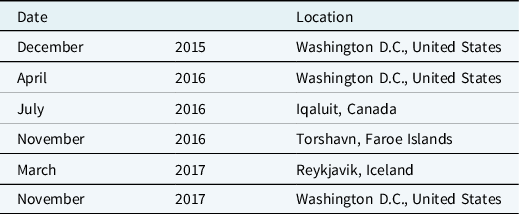
As was foreshadowed by the Oslo Declaration, the five coastal Arctic States are not the only countries with a stake in Arctic fisheries. High Seas fisheries are open in principle to all the nations of the world. For any high seas fishing treaty to be impactful, it must also include the world’s largest distant-water fishing powers. In December 2015, the five coastal Arctic States were joined by China, the EU, Iceland, Japan, and Korea at the first negotiating meeting for a binding CAO Agreement.
The new parties came ready to play. The European Union was prepared to engage with the emerging Arctic framework. Indeed, early in negotiations the EU representatives proposed that the Europe-based International Council of the Exploration of the Sea (ICES) should lead the new scientific initiatives in the Arctic.
Meanwhile, Asian countries were eager for recognition as important Arctic players. Japan, South Korea, and China all hold an observer status at the Arctic Council. This allows them to participate in meetings and provide scientific expertise but does not give them a vote on important decisions. However, all three of these Asian countries have adopted Arctic policy statements and all have engaged in research in the region, both individually and with other nations (KMI, KPRI, & KIGMR, 2017; THOP, 2015; TSCIOPRC, 2018).
China has begun seriously considering Arctic trade routes and is eager to take a more active role in the governance of Arctic resources. The Korean Polar Research Institute has been an influential contributor to Arctic science and policy. China and Korea had both attended the North Pacific Arctic Conference in 2012. Asian representatives had also been invited (at the last minute) to the final Scientific Experts meeting finalising the Oslo Declaration in April of 2015. More recently, Japan co-sponsored the third Arctic Science Ministerial with Iceland in 2021, increasing its efforts to partner with other Arctic counties doing research in the Arctic.
Japan, South Korea, and China were all eager to be included in the new treaty negotiations. Unlike at the Arctic Council, they would be full members of this new treaty, granting them new status in Arctic affairs (Cont. Int.).
Just as the Russian Internal Affairs Council symposium played an integral role within Russia, a series of talks in Asia helped move negotiations forward in Asia. The “CAO Asia Dialogues” were funded by the Pew Charitable Trust and they brought together “a broad group of experts … from a variety of jurisdictions … to outline the issues involved in the CAO” (Pew, 2017). The Dialogues were composed of three meetings, the first of which occurred at Tongji University in January 2015. At this meeting, attendees strongly recommended international negotiations include non-Arctic states, specifically China, Korea, and Japan. This meeting helped lay vital groundwork for the first negotiating meeting later that year.
The ten parties met six times over the course of the next two years (Table 3):
Schedule of Negotiating meetings

Many challenges arose over the course of the six negotiating meetings. They were addressed, as negotiating challenges often are, by a series of give-and-take compromises among the parties. This paper does not outline the full details of these negotiations. We have focused on the conditions that enabled negotiations for this novel Agreement to succeed.
One major factor was the continuing engagement of scientific experts, environmental organisations, industry, and Indigenous community leaders. The parties continued to hold separate meetings of scientific experts. FiSCAO, the scientific working group which met during negotiations for the Oslo Declaration, continued to meet and was expanded to include the five new parties (FiSCAO, 2017; Van Pelt, Huntington, Ramanenko, & Mueter, Reference Van Pelt, Huntington, Ramanenko and Mueter2017). Meanwhile, the Arctic Council and ICES established a working group on “an integrated ecosystem assessment for the CAO region,” known as WGICA.
Two more CAO Asia Dialogue meetings were concluded before the second negotiating meeting in April 2016. At the third meeting, held at Hokkaido University, the attendees outlined their proposal for “a stand-alone science organization specifically focused on research in the Central Arctic Ocean” (Pew, 2017). The proposal would be hotly debated at the following negotiating meetings.
This question – how science would be conducted – presented complex challenges. Japan, Korea, and China wanted to be on equal footing with regard to Arctic research and strongly objected to ICES running the science and technical aspects of the Arctic research. The Alaska seafood industry and the North Pacific Council concurred, all sent messages to the US State Department and the National Oceanic and Atmospheric Administration objecting to ICES leadership (Cont. Int.). After several meetings going back and forth, it was decided that the treaty parties would establish a “Joint Program of Scientific Research and Monitoring with the aim of improving their understanding of the ecosystems of the Agreement Area” (APUHSFCAO, 2018).
The final text of the Agreement reflected the continued presence of Indigenous voices at the negotiations. Three of the national delegations, the United States, Canada, and Denmark, included representatives from Indigenous communities. Tragically, Alaska Indigenous leader Caleb Pungowiyi had passed away in 2011, so the US delegation invited James Stotts, president of the Alaska branch of the Inuit Circumpolar Council, to join them at the negotiations. Stotts participated actively and argued strongly for the inclusion of Indigenous perspectives in the Agreement (Balton, Reference Balton and Heidar2020).
The final text of the Agreement stated that the Joint Program of Scientific Research and Monitoring would be required to take into account “[I]ndigenous and local knowledge.” Furthermore, the Agreement allows parties to form committees to promote the implementation of the Agreement, and it specifically states that “representatives of Arctic communities, including Arctic [I]ndigenous people, may participate [on these committees]” (APUHSFCAO, 2018).
Over the course of these negotiations, significant domestic work was occurring in all of the countries involved. Other Arctic countries followed the US moratorium model. Norway banned fishing in unregulated waters in January 2009 (just seven months after President Bush had signed Joint Resolution 17) (Pan and Huntington, Reference Pan and Huntington2016). Canada prohibited commercial fishing in the Beaufort Sea in 2014 (FOC, 2014). Meanwhile, other countries began focusing on the CAO. The European Union adopted a CAO policy in January 2011, Denmark released one that August (Pan and Huntington, Reference Pan and Huntington2016). In 2014, President Obama released the Implementation Plan for the National Strategy for the Arctic Region. It identified reaching an international treaty on CAO fisheries as a guiding principle.
Stage 4
The Agreement to Prevent Unregulated High Seas Fisheries in the CAO was completed and signed on 3 October 2018 in Greenland (APUHSFCAO, 2018) and went into force on 25 June 2021, during the writing of this paper. China was the final country to ratify the agreement on 9 May 2021, having been postponed by the COVID-19 crisis. In May 2019, the Signatories established “a Provisional Scientific Coordinating Group (PSCG) to further prepare for the implementation of the Agreement.” The group’s first meeting took place in Italy in February 2020 (PSGC, 2020).
Part 6: Lessons learned
Many more people, meetings, scientific studies, and political events than discussed above contributed to the success of this monumental marine conservation achievement. However, the significant events described above provide important lessons for future conservation diplomacy and decision-making. Several enabling conditions provided the building blocks for success:
-
1. Political and constituent support was essential.
-
A broad coalition of relevant parties understood why this action was necessary, given changing conditions and the lack of information about the fish stocks and ecosystem health of the region. International dialogue began with other Arctic coastal states to consider options to protect the area, after the United States closed its national waters to commercial fishing in the Arctic, and Sen. Stevens introduced a resolution instructing the State Department to take action. This would not have been possible without the support from relevant constituencies, particularly Alaska Native leadership, fishing industry representatives, scientists, and many others.
-
-
2. Several Arctic nations adopted bans in their national jurisdiction.
-
The United States took action to close its Arctic waters to commercial fishing in 2009. One country went first and demonstrated it could be done. Scientific discoveries and legal innovations helped fishery managers achieve this result in the United States. The North Pacific Fisheries Management Council had the legal and regulatory regime to enforce the ban and the constituents with direct interest in the issue supported the action, including Alaska Natives, commercial fishermen, fish processors, environmental organisations, and regional leaders. Shortly thereafter, Norway and Canada adopted similar measures in portions of their national waters.
-
-
3. Arctic nations had experienced tragic consequences from an unregulated open access fishery in international waters.
-
Russia, the United States, and Norway had already experienced similar situations previously, when ocean areas beyond national jurisdictions and without regulation (the “Donut Hole” and the “Loophole”) had been dramatically overfished for pollock and cod. The resulting collapse of fish stocks created a shared understanding of the importance of avoiding that elsewhere. Because Arctic nations had similar experiences where their fishing economies were hurt by unregulated overfishing, they could see the benefit in adopting an international Agreement for the CAO.
-
-
4. Science diplomacy and research community relationships provided a critical foundation.
-
The scientists engaged in relevant research (oceanography, marine biology, and fisheries science) and established working relationships in the region through a variety of organisations like ICES, PICES, and other fisheries’ treaty organisations like the North Pacific Anadromous Fish Commission. The experience of sharing data, joint research projects, and international meetings provided opportunities for them to review information and to provide insights to policy-makers that could justify a moratorium and highlight the need for more international scientific cooperation. Thousands of scientists urged policy-makers to take action.
-
-
5. Diplomatic leadership and international relationships were in place, built by many years of Arctic Council cooperation.
-
The Arctic Council, formed in 1996, focused on environmental protection and sustainable development in the Arctic. Although the Arctic Council did not negotiate this Agreement, the regional tone of cooperation facilitated by the Council helped. Discussions by Arctic coastal states were held in a series of country meetings specifically convened to consider this issue. However, the existing relationships between diplomatic, Indigenous, and science leaders made it easier to bring people together and evolve a shared understanding and mutual trust.
-
-
6. Imposing restrictions before a fishery exists is much easier than after one is already in place.
-
If one of the countries had already been fishing in CAO and if it was a productive and prosperous economic engine for that country, there would have been more resistance, as well as more emerging competition for the resource. Conservation restrictions are easier to achieve when fishing fleets are not benefiting from actively fishing in a region. In both the Loophole and the Donut Hole, this occurred after overfishing had decimated the fish stock. The CAO Agreement is unique because it seems to have reached the fish before the fleets.
-
Looking forward
The Arctic Ocean is one of the most vulnerable and least understood ecosystems on the planet. This Agreement is one important step in protecting that ecosystem from damage caused by potential fish harvesting with insufficient understanding of the resource. However, the implementation of this historic Agreement will be challenging, as the parties will have to make many important decisions about how to meet the commitments they have made. The Agreement entered into force on 25 June 2021, giving the parties until June 2023 to establish a Joint Program and adopt a data sharing protocol and until June 2024 to establish conservation and management measures for exploratory fishing in the CAO. Finally, the agreement is renewable in five-year increments – so long as a party does not send or presents a formal objection. Each of these tasks will present new negotiating challenges (Balton, Reference Balton and Heidar2020).
Furthermore, while this Agreement covers the CAO, the entire Arctic region is changing rapidly. Domestic fishery policies are subject to change and international tensions over fish will likely remain high. Fishery conflicts like the “mackerel war” between Iceland and the EU demonstrate the issues that may arise as climate change pushes fish beyond their historic range (Jolly, Reference Jolly2010). Furthermore, while several counties have closed domestic Arctic fisheries, Russia is moving in a different direction. In part to due to Western sectorial sanctions, Russia has shifted towards greater reliance on domestic resources, including fish stocks. According to Russia’s plans for the development of its northern territories, the Arctic is expected to become Russia’s leading strategic resource base, including the harvest of marine living resources (Russian Federation, 2020). As predicted, pollock are migrating north in response to environmental changes. Russian fishery managers are currently preparing to open the “first-ever commercial harvest of pollock north of the Bering Strait – in the Chukchi Sea” (Rosen, Reference Rosen2020). As more countries see fish moving north, it is uncertain how many will continue to impose domestic closures. Hopefully, the factors that enabled this unprecedented Agreement to be adopted will also help it succeed in its implementation: extensive collaboration among conservation groups, the fishing industry, Indigenous groups, and scientists.
Some of the factors that allowed this Agreement to succeed are unique to fishing in the CAO. However, other factors – like relevant scientific research, community and industry support, and uncommon collaborations organised around common ecosystem goals – could prove useful in adopting other international environmental treaties.
Acknowledgements
We would like to thank Jim Ayers, Dave Balton, Dave Benton, Henry P. Huntington, Scott Highleyman, Marilyn Heiman, and Jimmy Stotts for their help as we pieced together this story. We would also like to thank Sarah Dewey, Brittany Janis, and Robert Boenish for their hard work and thoughtful edits.
Financial Support
This work was partially supported by funding from the Belfer Center for Science and International Affairs, Cambridge, MA.
Conflict of Interest
The authors declare none.