
Introduction
The extraction, production, distribution and consumption of metal resources are considered as the primary mechanisms by which emerging European Bronze Age elites within complex regional polities created and maintained new levels of authority (e.g. Earle & Kristiansen Reference Earle and Kristiansen2010). Large-scale exchange networks, through which metal and other goods and resources flowed, crossed the continent at unprecedented scales (Ling et al. Reference Ling, Earle and Kristiansen2018; Melheim et al. Reference Melheim2018; Quinn et al. Reference Quinn, Kuijt, Goodale and Néill2019). Bottlenecks at strategic points in these networks provided opportunities for emerging elites to turn the control of economic resources into political authority (Earle et al. Reference Earle, Ling, Uhnér, Stos-Gale and Melheim2015), transforming previously autonomous communities into complex regional polities (Earle & Kristiansen Reference Earle and Kristiansen2010). At the local scale, however, there was significant diversity in socioeconomic organisation, the degree of social hierarchy and the timing and tempo of these changes between different microregions (Duffy Reference Duffy2014). Resource-procurement zones—landscapes where raw materials are acquired locally and traded widely—are an integral but often under-studied part of long-distance exchange networks (Quinn & Ciugudean Reference Quinn and Ciugudean2018). Communities in these regions supplied the resources, such as metal, that fuelled the development and maintenance of new degrees of authority. To refine our understanding of large-scale models of socioeconomic organisation and change in Bronze Age Europe, it is necessary to understand how communities in resource-procurement zones were organised, how they interacted with surrounding regions and how resource availability influenced diverse trajectories.
South-west Transylvania is an ideal context in which to explore the intersection of Bronze Age procurement, exchange and socioeconomic organisation. The region is rich in metal deposits, particularly gold, copper and tin, as well as other critical economic resources, such as salt, timber and land suitable for agropastoralism (Boroffka Reference Boroffka2006; Papalas Reference Papalas2008; Ciugudean Reference Ciugudean2012; Harding & Kavruk Reference Harding, Kavruk, Harding and Kavruk2013). South-west Transylvania is one of the few regions in Europe where all these necessary economic resources are locally accessible. The natural resources found in Transylvania, particularly metals, helped fuel the development of social complexity across the Carpathian macroregion (comprising the Carpathian Basin, Carpathian Mountains and Transylvanian Plateau) (see Earle & Kristiansen Reference Earle and Kristiansen2010; O'Shea Reference O'Shea2011).
Despite its key role within the European Bronze Age, Transylvania has remained marginal in broader discussions of social, economic and political transformations. The largest impediment to addressing Transylvania's position within broader socioeconomic networks has been the absence of a radiocarbon-based chronology for the region. Several surrounding regions have well-established absolute chronologies (O'Shea Reference O'Shea1991; Jaeger & Kulcsár Reference Jaeger and Kulcsár2013; Duffy Reference Duffy2014; Duffy et al. Reference Duffy, Parditka, Giblin and Paja2019), yet without such a resource, archaeologists working in Transylvania have relied on relative dating approaches, particularly through the study of metallurgical and ceramic typologies (e.g. Boroffka Reference Boroffka1994). It has therefore been challenging to synchronise Transylvanian archaeology with surrounding regions and to reconstruct the organisation and evolution of cultural groups within Transylvania.
Here, we present the first radiocarbon-based absolute chronology for the Wietenberg Culture in Transylvania. The Wietenberg Culture is a Middle Bronze Age cultural group that emerged during a time when metal from Transylvania was increasingly commodified, long-distance trade routes expanded and political hierarchies may have emerged in the Carpathian macroregion. We explore the significance of the synchrony (or asynchrony) of changes between Transylvania and the rest of the Carpathian macroregion for larger-scale social, economic and political dynamics in Bronze Age Europe. This study demonstrates that socioeconomic organisation in resource-procurement zones follows different developmental trajectories than in regions that rely on long-distance exchange to meet their economic needs.
The Transylvanian Bronze Age: situating the Wietenberg Culture
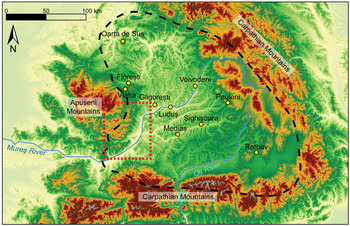
Transylvania is a topographically and geologically diverse region in central Romania that includes the intermontane Transylvanian Plateau, the foothills and ranges of the Apuseni Mountains to the west and the Carpathian Mountains to the east and south (Figure 1). The region had all the resources necessary to support Bronze Age communities: productive soils used for agriculture in the lowlands and for animal pasture in the highlands; forests that provided fuel; substantial salt deposits; the richest gold deposits in Europe; and important outcrops of copper ore and tin that were essential for bronze metallurgy (Boroffka Reference Boroffka2006; Papalas Reference Papalas2008; Ciugudean Reference Ciugudean2012; Harding & Kavruk Reference Harding, Kavruk, Harding and Kavruk2013). South-west Transylvania, encompassing the southern Apuseni Mountains, the south-west corner of the Transylvanian Plateau and the Mureș River, is the only area in the Carpathian macroregion where this full suite of resources can be found locally.
Transylvania and the geographic extent of the Wietenberg Culture (black dashed line), sites with radiocarbon dates outside south-west Transylvania (yellow dots) and the south-west Transylvania study region (red dashed line) (figure by C.P. Quinn).

The Bronze Age in the Carpathian macroregion has been divided into three phases: the Early Bronze Age (2800–2000 BC), the Middle Bronze Age (2000–1500 BC) and the Late Bronze Age (1500–800 BC) (Ciugudean Reference Ciugudean and Marta2010; Earle & Kristiansen Reference Earle and Kristiansen2010; Boroffka Reference Boroffka, Fokkens and Harding2013). The Middle Bronze Age was a period of heightened interregional connectivity; riverine-oriented trade routes carried increasingly commodified metal resources from metal-rich regions, such as south-west Transylvania, into regions that lacked these resources, such as the Carpathian Basin (O'Shea Reference O'Shea2011; Duffy et al. Reference Duffy, Parkinson, Gyucha, Yerkes and Birch2013; Duffy Reference Duffy2014). Within the Carpathian Basin, it has been argued that control over long-distance resource exchange, particularly of metals, was an important mechanism through which emerging elites institutionalised social hierarchies (Earle & Kristiansen Reference Earle and Kristiansen2010; Uhnér Reference Uhnér, Jaeger, Czebreszuk and Fischl2012; Nicodemus Reference Nicodemus2014; Earle et al. Reference Earle, Ling, Uhnér, Stos-Gale and Melheim2015; for an alternative perspective, see Duffy Reference Duffy2014, Reference Duffy2015). The Middle Bronze Age was also a time when regional cultures, such as the Mureș-Maros, Cornești-Crvenka, Otomani-Gyulavarsánd, Vatina, Tei, Monterou, Fuzesabony and Vatya groups, crystallised across the Carpathian macroregion (see O'Shea Reference O'Shea1996; Fischl et al. Reference Fischl, Kiss, Kulcsár, Szeverényi, Meller, Bertemes, Bork and Risch2013; Duffy Reference Duffy2014). These cultures represented contiguous communities with shared mortuary practices and highly distinctive ceramics that were separated from each other through clearly defined border areas (see Boroffka Reference Boroffka1994; Duffy Reference Duffy2014; Nicodemus Reference Nicodemus2014; Nicodemus & O'Shea Reference Nicodemus, O'Shea, Forțiu and Stavilă2015). By 2000 BC, these cultural groups were starting to emerge, and by 1875 BC, potters were producing increasingly complex ‘baroque’ ceramics that emphasised the marked differences between their cultural groups (Nicodemus & O'Shea Reference Nicodemus, O'Shea, Forțiu and Stavilă2015).
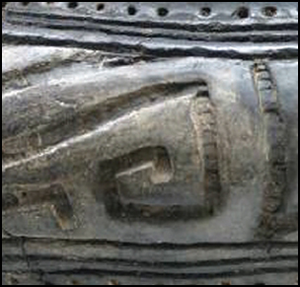
The Middle Bronze Age culture in Transylvania is known as the Wietenberg Culture (Horedt Reference Horedt1960; Chidioșan Reference Chidioșan1980; Andrițoiu Reference Andrițoiu1992; Boroffka Reference Boroffka1994). Wietenberg communities manufactured highly burnished ceramics featuring detailed spiral and zig-zag motifs filled with lime-plaster. They typically cremated and buried their dead in urns in flat cemeteries (Boroffka Reference Boroffka1994). The history and development of the archaeological research of the Wietenberg Culture has recently been synthesised elsewhere (see Ciugudean & Quinn Reference Ciugudean, Quinn, Németh, Rezi and Berecki2015; Bălan et al. Reference Bălan, Quinn and Hodgins2016, Reference Bălan, Quinn, Hodgins, Németh and Rezi2018).
To date, archaeologists have relied on relative chronologies and radiocarbon sequences from neighbouring regions to establish the beginning, end and internal development of the Wietenberg Culture. The radiocarbon-based chronologies of Middle Bronze Age cultural groups in surrounding regions (e.g. O'Shea Reference O'Shea1991; Jaeger Reference Jaeger and Gancarski2010; Fischl et al. Reference Fischl, Kiss, Kulcsár, Szeverényi, Meller, Bertemes, Bork and Risch2013; Jaeger & Kulcsár Reference Jaeger and Kulcsár2013) have led some scholars to adopt the timespan of these cultural groups (between 2000/1900–1500/1400 BC) for the Wietenberg Culture (e.g. Boroffka Reference Boroffka, Fokkens and Harding2013: 884–88). While there is currently broad consensus that the Wietenberg Culture began around 2000 BC, there is significant debate about its end date, and particularly the nature of its relationship with the Late Bronze Age Noua Culture. Noua practices are characterised by inhumation burials, along with vessels made with a new fabric type and featuring simple decoration and distinctive ‘kantharos-type’ handles that originated in the Western Eurasian Steppe and moved into Transylvania around 1500 BC, at the start of the Late Bronze Age (Popa & Boroffka Reference Popa and Boroffka1996; Dietrich Reference Dietrich2014a & Reference Dietrichb; Ciugudean & Quinn Reference Ciugudean, Quinn, Németh, Rezi and Berecki2015). A radiocarbon chronology for the Transylvanian Bronze Age will clarify the start and end dates of the Wietenberg Culture, as well as the nature of its relationship with Late Bronze Age cultural groups.
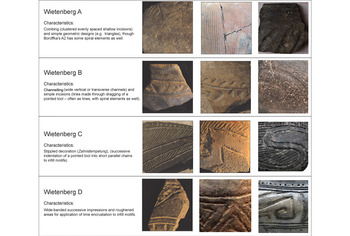
Dating of the internal development of the Wietenberg has relied primarily on a relative seriation of ceramic decoration techniques. Building on previous work by Chidioșan (Reference Chidioșan1980) and Andrițoiu (Reference Andrițoiu1992), Boroffka has conducted the most comprehensive analysis of the Wietenberg Culture to date, arguing for four internal phases of equal duration, which he termed phases A, B, C and D (Boroffka Reference Boroffka1994: 244–57) (Figure 2). The proposed length of these four phases varies between 125 and 200 years, depending on the proposed span of the Wietenberg Culture (see Boroffka Reference Boroffka1994: 244–57, Reference Boroffka, Fokkens and Harding2013). In the last decade, researchers have attempted to refine the internal periodisation of this Middle Bronze Age group as radiocarbon dates for the Wietenberg Culture have become available. Archaeologists, however, have also encountered chronological inconsistencies in the relative chronology, such as an overlap in ‘phases’, or ‘phases’ that are missing (see Bălan & Quinn Reference Bălan and Quinn2014; Dietrich Reference Dietrich2014b; Ciugudean & Quinn Reference Ciugudean, Quinn, Németh, Rezi and Berecki2015; Bălan et al. Reference Bălan, Quinn and Hodgins2016). If the existing relative chronology is correct, we would expect there to be minimal temporal overlap in the distribution of Wietenberg A, B, C and D ceramic styles. Conversely, if there is significant temporal overlap, then a new chronology is needed. The dates and Bayesian models presented in this study demonstrate that the existing internal chronology based exclusively on relative dates requires significant revision.
Ceramic decoration styles of the Wietenberg Culture (figure by C.P. Quinn).

Modelling the chronology of the Wietenberg Culture
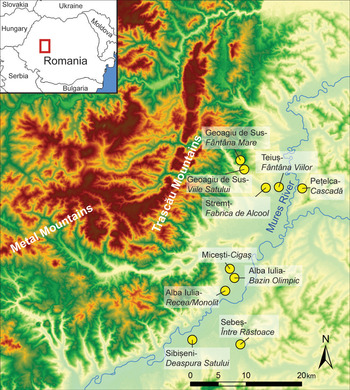
This article combines previously published AMS radiocarbon dates with new samples from the Bronze Age Transylvania Survey (BATS) project, an international collaborative project designed to investigate long-term dynamics in regional community organisation in south-west Transylvania. In total, there are 47 radiocarbon dates exclusively associated with the Wietenberg Culture, seven dates from the Late Bronze Age Noua Culture and three dates associated with both cultures (see Table S1 in the online supplementary material (OSM)). The radiocarbon samples come from a range of sites across Transylvania (see Figure 1), although there are geographic imbalances in the quantity of samples due to varied research histories. South-west Transylvania, for example, is now the most thoroughly dated region within Transylvania because the BATS project focuses on the Bronze Age landscape of Alba County (Figure 3).
Sites with radiocarbon dates in south-west Transylvania (figure by C.P. Quinn).

Fourteen of the 57 dates are from cemetery contexts; the remaining 43 are from settlement features and occupation levels. Samples of different materials have been processed at several laboratories in Europe and the USA, producing a robust dataset. This includes dates from carbonised plant remains (n = 21), animal bone collagen (n = 18), human bone collagen (n = 4) and human bone carbonate from cremated remains (n = 10) (see Table S1 for detailed contextual information and publications, within which potential problems with individual dates are discussed).
The use of Bayesian chronological modelling, which can produce chronologies of higher precision, transparency and reproducibility than those created through informal interpretation, has grown rapidly in archaeological applications worldwide (Bayliss Reference Bayliss2015; Hamilton & Krus Reference Hamilton and Krus2018). All dates were calibrated using the IntCal 13 atmospheric curve (Reimer et al. Reference Reimer2013). Bayesian models were constructed using OxCal v.4.3.2 (Bronk Ramsey Reference Bronk Ramsey2009), and are discussed following best practices outlined by Hamilton and Krus (Reference Hamilton and Krus2018). The models were constructed based on both the conventional phases of the Wietenberg Culture defined as ceramic styles and the new associated radiocarbon dates. The start and end boundaries of the Wietenberg Culture were modelled using ‘trapezium’ priors. These model gradual transitions that are more typical of cultural phases than more narrow boundaries that imply rapid or instantaneous change (Lee & Bronk Ramsey Reference Lee and Ramsey2012).
The temporal span of the Wietenberg Culture
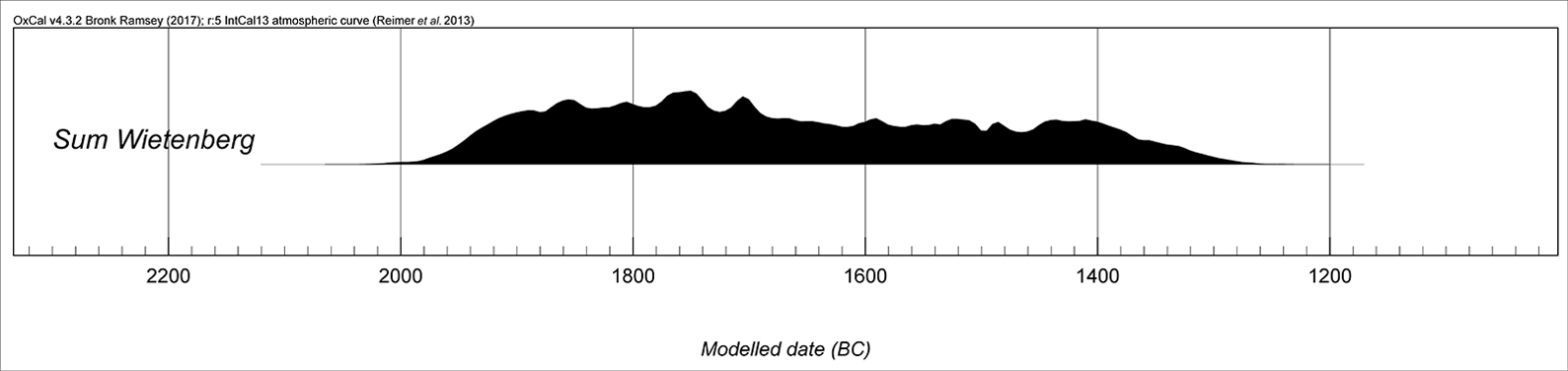
Bayesian modelling has provided an estimate for the temporal span of the Wietenberg Culture (Amodel = 99.7) (Figure 4; OSM 2). The earliest dates associated with the culture suggest that it emerged at the transition between the Early and Middle Bronze Age in the Carpathian macroregion (see Boroffka Reference Boroffka, Fokkens and Harding2013; Duffy Reference Duffy2014) (Figure 5). The modelled start of the Wietenberg is between 2090 and 1910 cal BC (at 95% confidence), most likely between 2020 and 1930 cal BC (at 68% confidence). It is, however, important to note that there are few dates associated with the earliest Wietenberg sites, comprising only three samples from occupational levels containing Wietenberg A ceramics. Thus, the accuracy of the model needs to be confirmed. The paucity of early dates is probably due to sampling bias, as archaeologists have previously prioritised the dating of deposits associated with the ornate Wietenberg C ceramics. The Wietenberg ceramic tradition emerged rapidly and spread across Transylvania, probably within 0–140 years (at 68% confidence), and probably within 0–310 years (at 95% confidence). A simplified version of this model, in which dates are not organised by phase, produces the same results (OSM 3).
Summed probability distribution of radiocarbon dates associated with the Wietenberg Culture (figure by C.P. Quinn).

Bayesian model of dates associated with the four ceramic decoration styles of the Wietenberg Culture (figure by C.P. Quinn).

Our models demonstrate that, unlike other Middle Bronze Age cultural traditions in the Carpathian macroregion, the Wietenberg Culture extended into the Late Bronze Age. The end of the Wietenberg probably occurred between 1380 and 1140 cal BC (at 95% confidence), most probably between 1350 and 1220 cal BC (at 68% confidence) (see Figure 5). The transition at the end of Wietenberg is less clearly defined than its emergence, likely occurring within 0–350 years (at 68% confidence)—probably within 0–610 years (at 95% confidence). This pattern is affected significantly by regional spatial patterns, with the latest Wietenberg dates coming from south-west Transylvania, but nevertheless the persistence of the Wietenberg Culture into the Late Bronze Age is unique among the other Middle Bronze Age cultural groups in the Carpathian macroregion (see Jaeger & Kulcsár Reference Jaeger and Kulcsár2013; Duffy Reference Duffy2014; Nicodemus Reference Nicodemus2014).
There is temporal overlap between the Wietenberg Culture and the Noua Culture in Transylvania during the Late Bronze Age (Figure 6; OSM 4). The Bayesian model suggests that the Noua Culture first appeared in Transylvania between 1710 and 1480 cal BC (at 95% confidence), likely between 1620 and 1520 cal BC (at 68% confidence). The Noua tradition probably ended between 1350 and 1100 cal BC (at 95% confidence), likely between 1270 and 1180 cal BC (at 68% confidence). The early dates for the presence of the Noua Culture in Transylvania are influenced by interpretations of Wietenberg ceramics featuring supposedly Noua elements found at Gligorești-Holoame and Vlaha-Pad (Gogâltan Reference Gogâltan, Németh and Rezi2015). When the model is restricted to sites that contain primarily Noua material culture, the dates for the movement of Noua communities into Transylvania shifts to a later time: probably between 1630 and 1350 cal BC (at 95% confidence), likely between 1520 and 1420 cal BC (at 68% confidence) (OSM 5). This demonstrates that the temporal overlap between the Wietenberg and Noua Cultures exists beyond the sites in which Wietenberg and Noua ceramics have been found in association. In south-west Transylvania, there is evidence that sites with Late Bronze Age Noua ceramics (e.g. Teiuș-Fântâna Viilor and Alba-Iulia-Bazin Olimpic) were occupied at the same time as sites with Wietenberg Culture ceramics (e.g. Pețelca-Cascadă and Geoagiu de Sus-Fântâna Mare).
Bayesian model of dates associated with the Noua Culture (figure by C.P. Quinn).

Internal chronology of the Wietenberg Culture
The extant relative chronology for the internal development of the Wietenberg Culture is inconsistent with the chronological models produced by radiocarbon dating (see Figure 5; OSM 2). Although there is some support for the general order of appearance of each Wietenberg type (i.e. first A, then B, C and D) based on previous stratigraphic and seriation studies (see Chidioșan Reference Chidioșan1980; Boroffka Reference Boroffka1994) (Table 1), rather than sequential replacement, different types overlap significantly. There is only an 18 per cent chance that Wietenberg A ended before the emergence of Wietenberg B, and a 0 per cent chance that Wietenberg B or C ended before the start of Wietenberg C or D, respectively. Based on the Bayesian model, the probable start and end dates of each ceramic decoration technique are as follows:
Wietenberg A: from 1960–1900 cal BC to 1850–1760 cal BC (at 68% confidence).
Wietenberg B: from 1950–1900 cal BC to 1400–1330 cal BC (at 68% confidence).
Wietenberg C: from 1900–1840 cal BC to 1400–1310 cal BC (at 68% confidence).
Wietenberg D: from 1880–1760 cal BC to 1540–1420 cal BC (at 68% confidence) (see Figure 5).
Order analysis for the start and end of each ceramic decoration style. Results present the likelihood that the event described in the row occurred before the event described in the column.

Bayesian modelling was used to evaluate whether the four types of ceramic decoration techniques could be used to define distinct temporal phases. When presented as sequential and non-overlapping (contiguous phases), a statistically robust model could not be constructed (agreement index Amodel = 0.00). When modified to assume that ceramic decoration techniques developed sequentially but with some temporal overlap, the model was also rejected (Amodel = 0.00). Bayesian modelling therefore indicates that Wietenberg ceramic types cannot be resolved into temporally sequential phases.
All the available radiocarbon dates suggest that we should abandon the existing relative chronology for the internal development of the Wietenberg Culture. The ceramic styles upon which the current chronology is constructed are not temporally discrete. The Bayesian model finds support in recent excavations at Geoagiu de Sus-Viile Satului, where diagnostic ceramics associated with Wietenberg C and D were found in the same feature (Ciugudean & Quinn Reference Ciugudean, Quinn, Németh, Rezi and Berecki2015). We expect that this model will continue to be refined as more dates, as well as revised interpretations of existing samples, become available.
Discussion
The new chronology for the Wietenberg Culture illustrates the importance of interregional exchange networks and the unique trajectories of resource-procurement zones. Here, we explore the implications of this new chronology across multiple scales:
1) For better apprehending the local archaeology of Transylvania.
2) For understanding the development and interactions of Bronze Age societies within the Carpathian macroregion.
3) For studying resource-procurement zones, trade and exchange and the development of social complexity more broadly.
There are three primary implications of this new radiocarbon chronology for the archaeology of Transylvania. First, it separates ceramic decoration and decorative techniques from dates. Consequently, archaeologists can now explore the roles that decoration may play in other contexts—most importantly in communicating social information. Contemporaneous variation in decoration techniques may be linked, for example, to status differences within the population, kinship and lineage membership, and craft production traditions; it may also provide evidence for centralised or decentralised ceramic production (e.g. Michelaki Reference Michelaki2006). Further research on radiocarbon-dated ceramic assemblages will illuminate the organisation and evolution of ceramic production systems in Transylvania and farther afield.
Second, the new chronology also requires the reassessment of social, economic and political models for the Wietenberg Culture that have been constructed from sequential phases of ceramic decoration (e.g. Dietrich Reference Dietrich2010; Boroffka Reference Boroffka, Fokkens and Harding2013; Molnár & Nagy Reference Molnár and Nagy2013). Settlements, cemeteries and other sites that were previously assumed contemporaneous due to shared decoration techniques may not have been occupied simultaneously. Moreover, the distributions of ceramic types within different settlements may allow for network analyses and may elucidate links between settlements in different geographical and sociopolitical landscapes within the Carpathian microregion.
Third, the radiocarbon chronology may indicate significant differences in regional trajectories within Transylvania. This new chronology is based primarily on dates from south-west Transylvania: 56 per cent of dates in this study are from Alba County. Consequently, it is unclear whether other regions underwent the same developmental trajectory. Unlike the dates from south-west Transylvania, evidence from Rotbav suggests the rapid replacement of Wietenberg by Noua in south-east Transylvania at the start of the Late Bronze Age (see Dietrich Reference Dietrich2014a). Available evidence suggests that the persistence of the Wietenberg Culture into the Late Bronze Age (the Terminal Wietenberg phase) is a phenomenon specific to south-west Transylvania.
The new Wietenberg chronology also makes it possible to assess the Bronze Age cultural and chronological relationships between south-west Transylvania and the communities across the Carpathian macroregion that relied on the region's natural resources (Figure 7). There is synchrony between Transylvania and surrounding regions across several major shifts:
1) The crystallisation of Middle Bronze Age regional cultural traditions starting after 2000 cal BC (see Boroffka Reference Boroffka, Fokkens and Harding2013).
2) The increased elaboration in the decoration of ‘baroque’ ceramics in approximately 1875 cal BC (see Nicodemus & O'Shea Reference Nicodemus, O'Shea, Forțiu and Stavilă2015).
3) The collapse of Middle Bronze Age cultural groups in the Carpathian Basin around 1500 cal BC (see Fischl et al. Reference Fischl, Kiss, Kulcsár, Szeverényi, Meller, Bertemes, Bork and Risch2013; Duffy et al. Reference Duffy, Parditka, Giblin and Paja2019). This is contemporaneous with replacement by the Noua Culture in south-east Transylvania and changes in Wietenberg settlement and ceramics in the south-west, including the end of Wietenberg D ceramics.
Temporal spans of Bronze Age archaeological cultural groups in the Carpathian macroregion (figure by C.P. Quinn).

We suggest that the contemporaneity of these changes across wide areas of Eastern Europe may largely be owed to the importance of interregional trade networks. Despite the emergence of spatially bounded regional cultural groups in the Middle Bronze Age, the long-distance exchange of key economic resources, including Transylvanian metals and salt, was becoming increasingly important to community organisation (Earle et al. Reference Earle, Ling, Uhnér, Stos-Gale and Melheim2015; Quinn & Ciugudean Reference Quinn and Ciugudean2018). Changes in one region that may have affected exchange systems, such as how emerging elites signalled their status (e.g. in the elaboration of ceramic decoration), would have been communicated quickly across the entire macroregion. The similarities between the development of the Wietenberg Culture and surrounding cultural groups during the Middle Bronze Age revealed by our new radiocarbon chronology suggest that the social, economic and political systems within each region were highly interconnected through a shared reliance on long-distance exchange networks.
The persistence of the Wietenberg Culture into the Late Bronze Age in south-west Transylvania represents a significant break in the otherwise shared developmental trajectories of societies across the Carpathian macroregion. In most other areas, the shift to the Late Bronze Age appears to have significantly disrupted long-distance exchange systems. In the Carpathian Basin, the traditional Middle Bronze Age centres, such as Pecica-Șanțul Mare, were abandoned (Nicodemus & O'Shea Reference Nicodemus, O'Shea, Forțiu and Stavilă2015). As riverine exchange corridors were abandoned, new, large fortified sites away from rivers were established (e.g. Cornești: Szentmiklosi et al. Reference Szentmiklosi, Heeb, Heeb, Harding, Kraus and Becker2011). In south-east Transylvania, which lacks abundant metal resources, there is no evidence that the Wietenberg Culture continued after the movement of Eurasian Steppe Noua communities into the region during the Late Bronze Age (Ciugudean Reference Ciugudean and Marta2010). The new radiocarbon chronology, however, shows that Wietenberg communities persisted alongside, and would have interacted with, the Noua communities in south-west Transylvania for approximately 150 years.
We argue that the unique trajectory of south-west Transylvania is due to its role as a resource-procurement zone that was not reliant on exotic resources to meet subsistence and craft-production needs. As mentioned, the development of increasingly hierarchical societies during the Middle Bronze Age in the Carpathian macroregion (e.g. Earle & Kristiansen Reference Earle and Kristiansen2010; Nicodemus Reference Nicodemus2014) was fuelled by emergent elites exerting control over trade routes (Earle et al. Reference Earle, Ling, Uhnér, Stos-Gale and Melheim2015). The movement of new communities into the Carpathian macroregion probably disrupted the existing long-distance riverine exchange networks that these communities relied upon to acquire raw materials and commodities (see O'Shea Reference O'Shea2011). The breakdown of interregional trade networks, however, would have had less impact on communities in south-west Transylvania, as all necessary resources were available locally. The resilience of Wietenberg communities in resource-procurement zones underscores the increased importance of predictable access to metal throughout the Bronze Age.
Our results have implications for the study of exchange networks, resource procurement and social complexity at a broader level. They suggest that communities in resource-procurement zones can follow trajectories that differ from those of societies in landscapes that rely on long-distance exchange for their socioeconomic needs. This fits with current political economic approaches to social complexity (e.g. Earle et al. Reference Earle, Ling, Uhnér, Stos-Gale and Melheim2015), although we argue that microregional approaches indicate more variability within regions than previously acknowledged. Additionally, increased connectivity through expanding interregional exchange systems makes societies more susceptible to change when the flow of resources is disrupted. In our case, disruption came from the movement of people, but it could also be caused by changes in fashions, technologies and/or the environment. Prehistoric communities in resource-procurement zones, however, may have been insulated, at least to a degree, from the most severe consequences of these changes.
Conclusions
In this article, we have presented the first absolute chronology for the Wietenberg Culture in Bronze Age Transylvania. The persistence of the Wietenberg Culture into the Late Bronze Age in south-west Transylvania is unique within the Carpathian macroregion, as most other regional Middle Bronze Age cultural traditions disappeared with the arrival of new traditions from the Eurasian Steppe, such as the Noua Culture. These new communities may have destabilised the existing culture groups by disrupting the long-distance exchange systems that most communities relied on to acquire key resources such as metal. In south-west Transylvania, the abundant natural resources, which could be procured directly, locally insulated the late Wietenberg communities from the most significant socioeconomic consequences of that disruption. Our study shows that in Transylvania, as elsewhere across the globe, access to core economic resources can affect the long-term trajectories of communities in resource-procurement zones. By incorporating this resource-procurement zone into broader reconstructions of social, economic and political transformations, we gain a more dynamic understanding of the roles of metal, long-distance trade and cultural identity in the organisation of Bronze Age European societies.
Acknowledgements
We would like to thank Casey Barrier, Edward Henry, Derek Hamilton and Tony Krus for their assistance in constructing the chronological models. Special thanks are due to Casey Barrier, Jess Beck, Lacey Carpenter, Cameron Gokee, Nathan Goodale and two anonymous reviewers for comments and feedback on earlier versions of this article. Any remaining errors are our own. Funding for this research was provided by the National Science Foundation (BCS-1341329), the Wenner-Gren Foundation (grant 8655), the American Philosophical Society, the University of Michigan Museum of Anthropological Archaeology, and Hamilton College.
Supplementary material
To view supplementary material for this article, please visit https://doi.org/10.15184/aqy.2019.231