Introduction
In countries with grass-based milk production systems such as Ireland, cubicle housing with continuous access to feed is a popular management system for dairy cows during the winter. Generally the replacement animals in such herds (i.e. the weanlings and in-calf heifers) are also kept in cubicle accommodation (O’Connell et al., Reference O’Connell, Giller and Meaney1993a). In such systems, animals are confined closely together, their movement is restricted and concrete flooring makes underfoot conditions uncomfortable and often slippery. Such characteristics have adverse effects on activity budgets (Kerr and Wood-Gush, Reference Kerr and Wood-Gush1987), the quality of locomotor and play behaviour (Jensen et al., Reference Jensen, Vestergard and Krohn1998) and hoof health (Frankena et al., Reference Frankena, van Keulen, Noordhuizen, Noordhuizen-Stassen, Gundelach, de Jong and Saedt1992) of young dairy animals. These could have adverse effects on longevity and the ability of heifers to adapt and perform well in the milking herd (Lawrence et al., 2004). Considering the importance of the dairy heifer in determining future production levels in the herd, the question arises as to whether there are welfare-friendly housing alternatives for these animals.
An essential feature of alternative housing needs to take into consideration the ability of animals to perform a more natural behavioural repertoire without compromising health and productivity (Redbo et al., Reference Redbo, Mossberg, Ehrlemark and Stahl-Hogberg1996). In the current climate of declining numbers of small to medium-sized dairy farmers, low cost is also an important consideration. Out-wintering systems meet these criteria and are currently attracting interest in several European countries (Redbo et al., Reference Redbo, Ehrlemark and Redbo-Torstensson2001; Hickey et al., Reference Hickey, French and Grant2002). In the future, out-wintering on woodchip pads is likely to form part of a sustainable, high-margin system of spring milk production in countries producing milk from grazed grass. Furthermore, there is evidence that out-wintering cattle on such pads is associated with welfare benefits (Hickey et al., Reference Hickey, French and Grant2002).
Obviously, the main limitation associated with out-wintering is that animals are exposed to inclement weather. In general, growing cattle, including those of dairy breeds, have very low lower critical temperatures (LCT), defined as the temperature above which the animal does not have to increase its heat production to maintain internal body temperature (Christopherson, Reference Christopherson1985). However, the point at which the LCT is reached is variable and does not necessarily occur at a specific temperature. The actual temperature at which the LCT is reached depends on such things as wind speed, length of hair coat, wet or dry hair, animal weight and level of production (i.e. lactation, pregnancy, growth), level of animal activity, dietary heat production or heat increment as influenced by type of diet or level of feed intake. Since one of the important variables determining hardiness against the cold is the level of production, there are doubts as to whether relatively slow-growing animals like dairy heifers can be kept outdoors without negative implications for their welfare and productivity (Redbo et al., Reference Redbo, Ehrlemark and Redbo-Torstensson2001). It may thus be necessary to widen the thermo-neutral zone of such animals by nutritional means.
This experiment studied yearling dairy heifers out-wintered on an all-weather wood-chip pad or housed indoors in cubicles and fed two levels of nutrition. It was hypothesised that the heifers outdoors would show higher levels of behaviour associated with positive welfare (i.e. play and comfort behaviours) and have fewer injuries. Performance was not expected to differ between the indoor and outdoor environments with animals outdoors having higher feed intakes. Heifers on the high-nutrition diet outdoors were expected to have a lower climatic energy demand (CED) than animals on the low-nutrition diet outdoors. The CED is used to define the interactive relationship of meteorological and management/dietary variables on the energy demands of the animal (Higgins and Dodd, Reference Higgins and Dodd1989).
Material and methods
Experimental design, animals and housing
The experiment was conducted in the south of Ireland at Moorepark Research Centre between 8th November 2004 and 13th February 2005. Ninety-six Holstein-Friesian heifers (mean age: 270 ± 19.5 days and mean initial live weight: 227 ± 27.1 kg) were blocked according to date of birth and body weight and assigned to four treatments with three replicate groups of eight animals per treatment. The treatments were arranged in a 2 × 2 factorial arrangement: (1) cubicles on grass silage (i.e. low nutrition); (2) cubicles on grass silage plus 3 kg/heifer of concentrates (i.e. high nutrition); (3) woodchip out-wintering pad (OWP) on grass silage; and (4) woodchip OWP on grass silage plus 3 kg/heifer of concentrates.
For 1 week at the beginning of the experiment, while the animals habituated to their new environments, and from 20th until 27th of December, all the animals outdoors and indoors were housed together in one group. For the other 12 weeks, the animals in each treatment were divided into two groups, one with eight and the other with 16 heifers. One replicate of eight heifers was separated from the group of sixteen in each treatment every 2 weeks. Hence, data were collected on each replicate during two 2-week periods, one prior to 20th December (1st rotation) and one after 27th December (2nd rotation). Groups were established every alternate Friday and data collection commenced the following Monday.
Heifers indoors were on solid concrete floors with individual cubicles (1 : 1 ratio) of a standard crossrail design measuring 1.82 m × 0.91 m (see O’Connell et al. Reference O’Connell, Giller and Meaney1993b for more details). The total space allowance indoors was 5.3 m2/head. Rubber cow mats (Cow Comfort Ltd, Belmullet, Co., Mayo, Ireland) were altered to fit each cubicle and these were dusted daily with sawdust and lime. An automatic scraper cleaned the floor. OWP heifers had approximately 8 m2 each on the woodchip pad and 6 m2 each on the concrete area adjacent to the woodchip pad from which they fed. The pad was constructed with layers of graded stones and a deep layer of wood chip (approximately 100 kg/m2) placed on top as described by Hickey et al. (Reference Hickey, French and Grant2002). Shelter against the prevailing wind was provided by a 2-m-high semi-porous barrier around two sides of the pad (Nicofence®; R.J.M. Mooney, & Son Ltd, Avonbeg Industrial Est., Dublin, Ireland). The dirty layer of woodchip on the surface of the pad was cleaned off and replenished 6 weeks after commencement of the experiment. All animals were treated for ectoparasites prior to the experiment.
Animal feeding
All animals were offered grass silage of 700 g/kg dry matter digestibility (DMD) ad libitum through a standard neck rail feed barrier. In addition, the high-nutrition groups were offered 3 kg fresh weight of a 180 g/kg crude protein (CP) concentrate diet, which was mixed with the grass silage. The concentrate offered was formulated from barley (0.30), beet pulp (0.35), corn gluten (0.20), soya (0.12) and minerals/vitamins (0.03). The target for animals on the low-nutrition diet was to gain 0.5 kg per animal per day while the target for animals on the high-nutrition diet was to gain approximately 1 kg per animal per day. All animals were fed once daily by a diet feeder at approximately 1100 h. Enough of the forage was offered to animals in the groups of eight to ensure greater than proportionately 0.1 refusals so that feed intakes of the group could be recorded. For 3 consecutive days, starting on Monday during the first week of each rotation the amount of food offered was weighed and the amount left over the following morning was also weighed before fresh food was delivered. The food offered and refused by each group was sub-sampled for determination of dry matter (DM) concentration (dried at 40°C for 48 h in an oven with forced air circulation). Chemical analyses were conducted on sub-samples of the silage offered after drying and grinding through a 1 mm screen using a hammer mill. A 100 g sub-sample of the concentrates offered was dried for 16 h at 98°C to estimate DM concentration and a further 100 g sample was dried at 40°C for 48 h for chemical analysis.
Animal production
All animals were weighed un-fasted at the beginning and end of the experiment for 2 consecutive days. The body condition of all the animals was scored from 1 to 5 as described by Wildman et al. (Reference Wildman, Jones, Wagner, Boman, Troutt and Lesch1982) on 1 day at both the beginning and end of the experiment. Live-weight gain and body condition score (BCS) change were calculated from the difference between the means of the initial and final weights and BCS.
Chemical analysis of the feed
Samples of the forage and concentrates were analysed for CP and ash content. Silage and concentrate samples were analysed for metabolisable energy (ME, MJ/kg), silage samples were also analysed for in vitro DMD. These data were used in the calculations of heat production by the animals during the days that feed intakes were recorded.
Energy calculations
Heat energy (HE) was calculated from ME intake and net energy required for gain using the equations based on the model by Higgins and Dodd (Reference Higgins and Dodd1989) and of the National Research Council (NRC, 1996). Heat of evaporation (he) was assumed to be 0.15 of HE. Body surface area was calculated from live weight 0.67 × 0.09 (NRC, 1996). Net energy required for the gain achieved and for maintenance assuming no CED was also calculated using the equations of the NRC (1996).
Climatic energy demand estimation
The CED was estimated for all the animals based on the model by Higgins and Dodd (Reference Higgins and Dodd1989) and adapted from Hickey et al. (Reference Hickey, French and Grant2002).
CED = (T b−T a−(rR nI a)/(I t + I h + I a)), where CED = (mega joule (MJ)/m2), T b = core body temperature (°C), T a = air temperature (°C), r = interception factor associated with radiation exchange (0.62), R n = net radiation (MJ/m2), I a = environmental thermal resistance (km2/MJ), I t = tissue thermal resistance (km2/MJ) and I h = hair coat thermal resistance (km2/MJ).
CED was calculated on a daily basis for 3 consecutive days on the first week of each rotation. Hence, each replicate had 6 days of CED estimations during the experimental period, yielding 18 days of CED estimations in total. The dates on which the CED was estimated were as follows: 15th to 17th Nov.; 30th Nov. and 1st to 2nd Dec.; 13th to 15th Dec.; 4th to 6th Jan.; 17th to 19th Jan.; 31st Jan. and 1st to 2nd Feb.
Meteorological data
For the 3 days on which the CED was being estimated and feed intakes were recorded, etc., ambient air temperature, humidity, wind speed, rainfall and solar radiation were measured continuously at the weather station in Moorepark. Additional meteorological measurements for use in the CED estimation were recorded outdoors and indoors using a hand-held 3-in-1 humidity, temperature and airflow meter (Model 45160; EXTECH Instruments, Waltham, MA, USA). These recordings were taken at approximately 0900 h, 1100 h, 1300 h and 1600 h each day.
Body temperature
On the 3 days on which the CED was estimated, rectal temperatures of the eight animals in each group were recorded twice daily between 0800 and 1000 h in the morning, and between 1500 and 1700 h in the afternoon. A Fortuna digital thermometer (Lennox Laboratory Supplies Ltd, Dublin, Ireland) was used. These data were used in the CED estimation equation.
Hair length
At housing, a sample of hair of about 1 mm in diameter was cut from the left-hand side (LHS) from the dorsal aspect of the transverse processes of the lumber vertebrae (L 4–6) immediately cranial to the coxal tuber in all heifers. The same procedure was carried out at the end of the trial on the right-hand side (RHS). The length of a random sub-sample of three hairs was measured using a callipers and the average of the three hairs was then used in the determination of the CED. CED calculations for the first half of the trail were conducted using the LHS hair lengths and for the second half of the trial the RHS hair lengths were used.
Behaviour
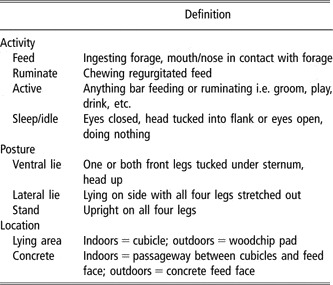
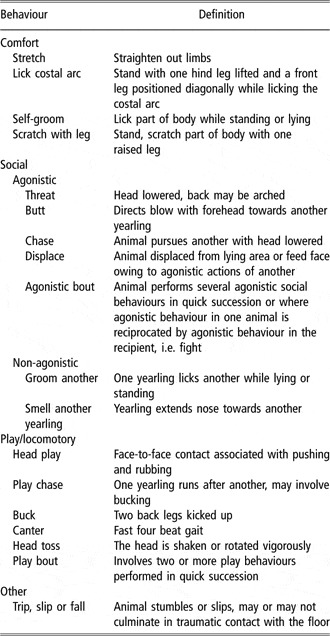
Two trained observers were responsible for collection of all the behaviour data with one working indoors and the other outdoors simultaneously. Observers switched between the indoor and outdoor environments at the start of each observation period. Each observer recorded the behaviour of animals in two groups of eight animals by direct observation. Scan sampling as per Martin and Bateson (Reference Martin and Bateson1993) was used to collect these data during 12 h divided over a 4-day period starting on Monday of the second week of each rotation. The activity, posture and location (Table 1) of each animal in the group were recorded every 15 min. During the first rotation, behaviour recordings were made during the following periods: 0800–1000 h, 1100–1300 h, 1400–1600 h, 1800–2000 h, 2200–0000 h and 0400–0600 h. During the second rotation, observations were made during the following periods: 0600–0800 h, 1000–1200 h, 1300–1500 h, 1500–1700 h, 1900–2100 h and 2200–0000 h. Each scan took approximately 4 min to complete and the order in which the groups were recorded was preserved throughout the 12-h observation period. During the time between each scan sample, each group of eight animals was observed continuously for 5 min and all-occurrence behaviour sampling (Martin and Bateson, Reference Martin and Bateson1993) was employed to record behaviours (Table 2), some of which were adapted from an ethogram developed by Jensen et al. (Reference Jensen, Vestergard and Krohn1998), onto a checksheet.
Definitions of behaviours used to evaluate the effects of out-wintering on a wood chip pad or indoors in cubicles (scan samples of activity, posture and location)

Definitions of behaviours used to evaluate the effects of out-wintering on a wood-chip pad or indoors in cubicles (continuous recording, all-occurrence behaviour sampling)

Limb lesions
The limbs were inspected for lesions at the start and at the end of the experiment while the animals were restrained in a crush for weighing. Lesions were categorised and scored as follows:

Scores were summed to yield a total limb lesion score for each animal.
Dirtiness scores
Five areas (back, belly, legs front and rear and hind quarters) on all of the animals were scored for dirtiness on weeks 4, 8 and 12. The sum of the four scores constituted the total dirtiness score:

Clinical illnesses
All clinical signs of illness/lameness were recorded and appropriate medical treatment provided where necessary, all veterinary treatment received was recorded.
Statistical analysis
All data were analysed using the Statistical Analyses System (SAS, 1989). Data were tested for normality using the univariate procedure. The group mean (n = 3/treatment) was the experimental unit used in the analysis of all variables. There was no effect of period on the behaviour data so they were averaged across observation periods (i.e. across the first and second rotations) for each group. Data collected by scan sampling are expressed as a proportion of the total number of scans, i.e. 48 (12 h × 4 scans/h), and were arcsine transformed prior to analysis of variance (ANOVA) by general linear models (GLM procedure). Least squares means based on analysis of the raw data are reported. All but three (canter, individual play and play chase) of the variables collected by all-occurrence sampling, continuous recording met the criteria for ANOVA (GLM procedure). GLM models for all behavioural data included housing, nutrition and their interaction. The three non-parametric behavioural parameters as well as data on limb lesion scores could not be transformed and hence were analysed by Mann–Whitney tests using the NPAR1WAY procedure. These data are presented as median and inter-quartile ranges. Dirtiness scores were log transformed prior to analysis using repeated measures ANOVA (Proc Mixed). Fixed effects included housing, nutrition, inspection day and all two- and three-way interactions. Inspection was the repeated variable. Group was nested within housing and was considered a random effect. An autoregressive covariance structure provided the best model fit. Least squares means based on analysis of the raw data are reported. Feed intake, live-weight gain, CED and BCS change were also analysed by ANOVA (GLM procedure) with housing, nutrition and their interaction included in the model.
Results
Behaviour
There was no effect of nutrition or housing on postural or activity time budgets (P > 0.05, data not shown). However, OWP heifers spent a higher proportion of time standing in the lying area compared with heifers indoors (0.13 v. 0.03, s.e. 0.011; P < 0.01) and tended to spend less time lying on the concrete (0.03 v. 0.06, s.e. 0.014; P = 0.054).
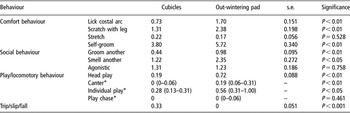
There were no effects of nutrition on the number of occurrences of comfort, social, or play/locomotory behaviours, trips, slips and falls (P > 0.05, data not shown). A higher frequency of most comfort behaviours (P < 0.01), social grooming (P < 0.01) and smelling (P < 0.05) was observed on the OWP (Table 3). Higher frequencies of most categories of play/locomotory behaviour were also observed on the OWP (P < 0.05). Trips, slips and falls were only recorded indoors (P < 0.001).
Effect of housing treatment on the number of occurrences (LSmean) of comfort, social and play/locomotory behaviours

*Median (IQR).
Limb lesions
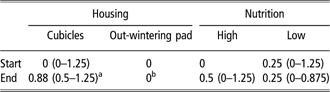
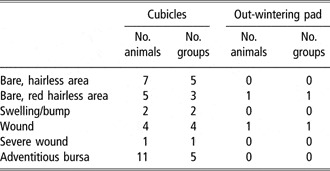
There was no effect of housing or nutrition on limb lesion scores at the start of the experiment (P > 0.05) (Table 4). At the end of the experiment, groups in the cubicle system indoors had significantly higher limb lesion scores than OWP groups (P < 0.05). More groups indoors were affected by all categories of lesions to the limbs (Table 5). During the course of the experiment, one animal from the cubicle system indoors was treated for lameness.
Effect of housing and nutrition on limb lesion scores (median (IQR)) of yearling heifers at the start and end of the experiment

a,bP < 0.05.
Numbers of animals and numbers of groups affected by each category of limb lesion in each housing treatment

Dirtiness scores
There was no effect of nutrition on dirtiness scores (P > 0.05, data not shown). However, OWP heifers were significantly dirtier than heifers indoors (21.4 v. 17.6 s.e. 0.259; P < 0.001). Furthermore, dirtiness scores of all animals decreased significantly at each inspection (week 4: 21.2 v. week 8: 19.3 v. week 12: 17.9, s.e. 0.294; P < 0.001).
Animal production
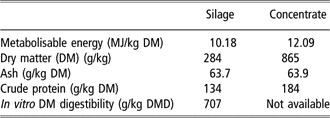
The ME and chemical composition of the forage and concentrate offered are described in Table 6. There were no interactive effects of housing and nutrition on average daily DM intake (kg DM/day), BCS change or daily live-weight gain (g/day) (P > 0.05). Hence, the results for each of the main effects are presented separately (Table 7). There was a significant effect of housing and nutrition on all three variables. OWP heifers had significantly lower intakes than the animals indoors in cubicles (P < 0.01). Heifers on the high-nutrition diet had a significantly higher daily DM intake than those on the low-nutrition diet (P < 0.01). OWP heifers had significantly smaller BCS changes than animals indoors in cubicles (P < 0.05). High-nutrition animals had greater BCS changes than low-nutrition animals (P < 0.01). OWP heifers had a significantly lower daily weight gain compared with animals indoors (P < 0.05). Low-nutrition animals had lower daily weight gains than high-nutrition animals (P < 0.001).
Chemical composition of foods offered

Effect of housing and nutrition on body condition score (BCS) change, weight gain (g/day) and feed intakes (kg DM/day) (mean + s.e.m.)

*P < 0.05; **P < 0.01; ***P < 0.001.
OWP = out-wintering pad.
Energy efficiency
OWP heifers on both the high- and low-nutrition diets and heifers indoors on the low-nutrition diet had lower UFL (feed unit for maintenance and lactation (Irish Republic)) intakes than what would be required to meet the daily live-weight gains they achieved (Table 8). Heifers indoors in cubicles on the high-nutrition diet gained 0.98 kg per day but consumed 0.17 UFL more than what would be recommended to achieve a daily live-weight gain of 1.0 kg.
Weight gain (g/day), required (based on average liveweight of 260 kg, from O’Mara, 1993) and actual energy efficiencies (UFLFootnote § intake) and difference between required and actual UFL intake for heifers in four treatments

§ Feed unit for maintenance and lactation (Irish Republic).
OWPLo = out-wintering pad, low nutrition; OWPHi = OWP, high nutrition; CUBLo = cubicles, low nutrition; CUBHi = cubicles, high nutrition.
Climatic recordings
Generally the winter of 2004–2005 was milder and drier (mean, minimum and maximum temperature: 7.1°C (−3.8 and 13.8°C); rainfall: 2.3 mm (0 to 23.7 mm)) compared with the 30-year average (temperature: 5.8°C (−6.6 to 13.9°C); rainfall: 4.2 mm (0 to 56.4 mm)) for the region during the months of November, December, January and February.
Climatic energy demand
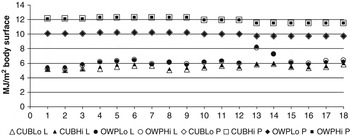
The CED of OWP heifers was higher than that of heifers indoors (6.18 v. 5.47 MJ/day per m2 body surface area; P < 0.001, s.e.d. 0.044). There was no effect of nutritional treatment and no interactive effect of housing and nutrition on the CED (P > 0.05, data not shown). The CED and heat production of the animals measured on 18 days between 15th November 2004 and 2nd February 2005 are shown in Figure 1. Heat production was higher for the high-nutrition animals than for the low-nutrition animals (Figure 1).
The effect of housing and nutrition on heat production (P) and climatic energy demand (i.e. heat loss = L) of heifers in four treatments on 18 days. OWPLo = out-wintering pad, low nutrition; OWPHi = OWP, high nutrition; CUBLo = cubicles, low nutrition; CUBHi = cubicles, high nutrition.

Discussion
Intensive housing systems are associated with a number of behavioural problems for dairy cattle as they restrict locomotion and social activities (Miller and Wood-Gush, Reference Miller and Wood-Gush1991). This was confirmed in the current study where animals on the out-wintering pad performed more cantering, individual and social play compared with animals indoors. Indeed, play behaviour by young animals suggests good health and pleasant feelings and hence it is a positive welfare indicator (Newberry et al., Reference Newberry, Wood-Gush and Hall1988). The frequency of comfort and non-agonistic social behaviours such as self and social grooming was also higher outdoors than in the cubicle system. These behaviours are good indicators of the general health of cattle (Albright and Arave, Reference Albright and Arave1997; Fraser and Broom, Reference Fraser and Broom1997) and of social cohesiveness (Mounier et al., Reference Mounier, Veissier, Andanson, Delval and Boissy2006). According to Sato et al. (Reference Sato, Tarumizu and Hatae1993), social grooming may even reduce tension among con-specifics. It is widely accepted that animal welfare should be considered in terms of the five freedoms, one of which is the freedom to express normal behaviour. In this respect, the out-wintering pad was beneficial from an animal welfare point of view.
The main factors responsible for the higher frequency of behaviours associated with positive welfare recorded on the OWP compared with animals indoors were probably the comfortable underfoot conditions, the generous space allowance and the less-restrictive environment associated with the OWP. A higher space allowance in particular has positive effects on behaviour, especially in relation to locomotory and play behaviours (Jensen et al., Reference Jensen, Vestergard and Krohn1998). Low space allowances have well-documented negative effects on stress (Livesey et al., 1997) often leading to high levels of agonistic behaviour although this was not the case in the current study.
Concrete flooring forms a rough surface when first laid and provides a certain amount of grip. However, due to scrapers and animal traffic they become smooth over time and can result in higher incidences of slips and falls (Mitchell, Reference Mitchell1974). Indeed, these behaviours were only recorded indoors in the current study. Animals indoors were also observed tripping over the automatic scraper. As cattle are in danger of slipping while grooming the costal arc or scratching with a hind leg raised, they are useful behaviours in determining the quality of flooring (Jungbluth et al., 2003). Both of these behaviours were performed at a higher frequency on the OWP, indicating that the footing of the animals on the wood chips was more secure than on the concrete floors indoors.
The higher number of animals in the cubicle system affected by all categories of limb lesion compared with on the OWP is likely a reflection of the higher frequency of traumatic collisions recorded in this treatment. In addition to the unsure footing provided by the concrete flooring, the design and construction of the housing system were also responsible for such collisions (Enevoldsen et al., Reference Enevoldsen, Gohn and Thysen1994). Cubicle systems severely restrict the movement of animals as they have to make tight turns and negotiate around metal bars of the cubicles in a densely stocked environment. Bare, hairless patches and scabs were the most common lesions recorded. Although they are not a serious health issue, they are indicative of traumatic contact with housing fixtures and fittings. Adventitious bursa or fluid-filled sac on the knee was the most severe form of injury recorded indoors. This injury arises in soft tissue areas, particularly over bony prominences such as the hock and knee, as a result of either trauma or repeated subjection to stresses. Given that cubicle mats can be described as ‘hard bedding’ (Clarkson et al., Reference Clarkson, Faull, Hughes, Downham, Manson, Merritt, Murray, Russell, Sutherst and Ward1996), it is likely that they did not afford the knees much protection during the process of lying down. Indeed, Livesey et al. (Reference Livesey, Marsh, Metcalf and Laven2002) reported that heifers housed in cubicles with mats were more likely to develop these swellings than heifers kept on straw or cubicles bedded with mattresses. Such injuries are likely to be painful and are therefore a major welfare concern; they may also have negative implications for cow longevity.
Considering the relative lack of a difference in underfoot comfort between concrete and the mat-bedded cubicles, it is not surprising that the heifers indoors stood less in the lying area than the heifers outdoors. On the other hand, there is likely to be a large difference in terms of underfoot comfort between concrete and a yielding substrate such as wood chips. In the current study, this is confirmed by the findings on spatial behaviour while standing. The OWP heifers were obviously able to perceive the difference in comfort between the concrete and woodchip areas and they chose to stand more in the latter area. This is in accordance with Tucker et al. (Reference Tucker, Weary, de Passille, Campbell and Rushen2006) who found that dairy cows are able to distinguish between underfoot surfaces of differing hardness such as sawdust- or rubber-coated and bare concrete. Nevertheless, it must also be pointed out that in addition to a greater space allowance outdoors compared with indoors, the ratio of lying to concrete area in both housing systems also differed. In stark contrast to the cubicle system, the wood-chip pad corresponded to the largest surface of the outdoor system. Furthermore, while the animals outdoors could use the ‘lying area’ for social interactions and play, the animals indoors could not perform these behaviours in cubicles. This means that comparing the spatial behaviour of the animals while standing in each system is somewhat biased.
Heifers housed indoors also tended to spend more time lying in the concrete areas than heifers outdoors. This could be explained by a reluctance to use the cubicles for some time even after the habituation period. According to O’Connell et al. (Reference O’Connell, Giller and Meaney1993b), cubicle refusal is a relatively common behavioural problem among young cattle introduced to cubicles for the first time. Heifers can be encouraged to use cubicles for lying by manipulating the stall frames and bedding substrates to improve the comfort of the cubicles (O’Connell et al., Reference O’Connell, Giller and Meaney1992). If the cubicles used in the current study had been more comfortable, for example bedded with mattresses and straw instead of mats, there may have been less of a difference between the housing environments in the behaviour and health indices of animal welfare.
In spite of the tendency for more lying on the concrete by heifers indoors, animals on the OWP were consistently dirtier throughout the experiment. This is in agreement with a study comparing dirtiness of pregnant dairy heifers on an OWP or in cubicles (Kiernan et al., 2004). The gradual reduction in dirtiness scores of the animals indoors probably reflects the process of learning to use the cubicles instead of the passageways for lying. The cleanliness of animals depends largely on the amount of space available, how often the area is cleaned and the type of surface on which they are housed (Scott and Kelly, Reference Scott and Kelly1989; Hickey et al., Reference Hickey, French and Grant2002). In the current experiment, the pad was only cleaned once, mid-way through the experiment. More frequent cleaning would probably have resulted in cleaner animals. Nevertheless, in contrast to the study by Hickey et al. (Reference Hickey, French and Grant2002) where dirt scores of steers on a lowly stocked OWP were comparable to that of steers indoors on slats, dirt scores of dairy animals on an OWP are never likely to be as low as those of animals housed in cubicle systems where there are designated lying areas. This could pose a risk of mastitis for older dairy animals (Schreiner and Ruegg, Reference Schreiner and Ruegg2003) although there is no evidence that dirtiness has the same implications for udder health in younger dairy animals. However, dirtiness also has an important influence on the nutrient requirements of animals maintained outdoors (Fox and Tylutki, Reference Fox and Tylutki1998). Using simulation models, these authors described decreasing daily growth rates for heifers with progressively dirty coats particularly under adverse weather conditions.
Indeed, OWP heifers had lower daily weight gains than animals indoors, which is in accordance with the findings of Kiernan et al. (2004) for pregnant heifers. Other studies that used steers of either a dairy (Redbo et al., Reference Redbo, Mossberg, Ehrlemark and Stahl-Hogberg1996) or beef (Hickey et al., Reference Hickey, French and Grant2002) breed found no difference or a beneficial effect, respectively, of out-wintering on growth rates. However, in both of these studies the steers indoors were housed in slatted pens, which are likely to be a much less comfortable, more stressful environment (Hannan and Murphy, Reference Hannan and Murphy1983; Lowe et al., Reference Lowe, Steen and Beattie2001) than the cubicle systems employed in both the current study and that of Kiernan et al. (2004). The OWP heifers experienced a significantly higher CED than animals indoors which is in accordance with Hickey et al. (Reference Hickey, French and Grant2002). The calculations of Higgins and Dodd (Reference Higgins and Dodd1989) that were used in this model only account for sensible and latent heat loss and do not include heat lost to the environment by radiation. This explains the large difference between HE production and HE loss depicted for all treatments. Nevertheless, the large discrepancy between heat energy production and sensible and latent heat loss means that animals were unlikely to have experienced cold stress. Furthermore, the fact that animals gained weight in all treatments means that they did not have to mobilise body reserves for heat production (Hickey et al., Reference Hickey, French and Grant2002). As data on the weather, feed intakes and CED were collected for only 18 days during the trial, the fact that the animals outdoors may have experienced transient, acute environmental stresses during periods of combined wind and rain cannot be ruled out. Nevertheless, the 18 days on which these data were collected were likely to have been representative of the weather during the winter of 2004 to 2005, which was unusually mild and dry (Met Eireann, 2006).
It is more likely that the significantly lower feed intakes by the OWP heifers were responsible for the poorer performance recorded outdoors. Considering that the CED of these animals was higher than that of heifers indoors, they would have been expected to have higher feed intakes (Hickey et al., Reference Hickey, French and Grant2002). One of the reasons for the lower feed intakes could be that the forage palatability and quality was reduced owing to exposure to the rain (Mossberg, 1992). Indeed, Redbo et al. (Reference Redbo, Mossberg, Ehrlemark and Stahl-Hogberg1996) noted much higher levels of forage wastage outdoors compared with indoors. Nevertheless, the dairy breed steers in that study still performed as well as animals indoors on slats in spite of the wastage. It is more likely that a slight difference in design of the feed face, meaning that the OWP heifers were less well able to access their feed than the animals indoors, although animals in all treatments could feed simultaneously, was responsible for the lower feed intakes.
In spite of the differences between treatments in animal performance, the average daily gain of the out-wintered heifers was still above the target of 0.6 to 0.7 kg per day recommended for yearling heifers by the Teagasc advisory service (Fitzgerald, 2002). The high quality of the silage fed (707 g/kg DMD), which was well above the countries average of 670 g/kg DMD (Fitzgerald, 2002), probably contributed to the high levels of performance achieved. Of even greater significance is the fact that in spite of lower feed intakes the heifers in both outdoor treatments used their feed as efficiently as heifers indoors on the low-nutrition diet and more efficiently than heifers indoors on the high-nutrition diet. Heifers outdoors on the low- and high-nutrition diets achieved daily live-weight gains of 0.62 and 0.92 kg, respectively, with intakes of 3.92 and 4.65 UFL, respectively, both of which were just over 0.3 UFL lower than that required to achieve such growth rates (O’Mara, 1993). In contrast, animals indoors on the high-nutrition diet achieved an ADG of 0.98 kg with intakes of 5.44 UFL, which was higher than that recommended in order to gain 1.0 kg per day. Therefore, it can be concluded that although heifers outdoors had a lower energy intake they used their feed more efficiently than the animals indoors. Further research is required to elucidate the reasons for this. However, it is likely that this was mediated somewhat through the improvements arising to animal comfort on the OWP (French and Hickey, 2005).
It must be emphasised that the results from this study cannot be generalised to all wintering systems for replacement dairy heifers. Had conditions indoors involved a larger space allowance, more comfortable cubicles and even rubber-coated passageways (Boyle et al., Reference Boyle, Mee and Kiernan2007), it is likely that few, if any, of the health and behavioural problems recorded in this study would have occurred. Furthermore, the climatic conditions under which this study was conducted were very favourable. In wetter years or indeed in colder climates, young dairy animals kept outdoors over the winter might have difficulty achieving recommended targets for growth. Additionally, management practices such as the frequency of cleaning the wood-chips influences cleanliness of the lying area and thus lying times and dirtiness scores. If the OWP had not been cleaned half-way through the current study, the behavioural indicators might have led us to draw different conclusions.
Conclusions
Under the conditions of this study, the OWP was associated with improvements to animal health and behaviour largely owing to higher space allowances and better underfoot conditions than to the outdoor environment per se. Furthermore, the system did not seriously compromise animal performance and out-wintered animals used their feed efficiently. Therefore, under appropriate climatic and management conditions, out-wintering yearling dairy heifers on a wood-chip pad is a good alternative to wintering indoors in cubicles.
Acknowledgements
We thank Per Jensen, Jordi Altimiras and Per Melberg Linkoping University, Sweden, for their advice and for comments on the manuscript. Further thanks to Irene Daalmans and Linda Bjorklund for their help with data collection and to Keelin O’Driscoll for her help with the CED estimations.