Introduction
Bread wheat is one of the most important staple crops in Ethiopia. It ranks nationally third after Tef [Eragrostis tef (Zucc.) Trotter] and maize (Zea mays L.) in total grain production, and fourth after Tef, maize and sorghum (Sorghum bicolor L.) in area coverage (CSA, 2016). It is largely produced by smallholder farmers in the highlands of the country and its annual cultivation in 2016 reached 1.63 million hectares with a total grain production of 4.2 million tons (CSA, 2016). This makes the country to be the largest bread wheat producer in Sub-Saharan Africa. However, the productivity of bread wheat (1.8 t ha−1) in the country has been by far very low from the world average of 2.5 t ha−1 (FAOSTAT, 2013), and the country has been therefore importing thousand metric tons of bread wheat grain annually to fill its production deficit (MoA, 2019).
Quite a number of production challenges is responsible for low productivity of bread wheat in the country, of which poor agronomic practices, soil fertility depletion, lack of adaptable varieties, and limited disease and weed control measures are the major ones (Tanner and Hulluka, Reference Tanner and Hulluka1991). Among all production challenges, severe soil degradation including depletion of soil fertility has emerged as a critical challenge in wheat grown highlands of Ethiopia (Tanner and Hulluka, Reference Tanner and Hulluka1991; Tamene et al., Reference Tamene, Amede, Kihara, Tibebe and Schulz2017; Shibabaw et al., Reference Shibabaw, Alemayehu, Adigo, Germer, Ash and Freyer2017, Reference Shibabaw, Alemayehu, Adigo, Ash and Freyer2018). Similarly, Taye and Yifru (Reference Taye and Yifru2010) confirmed that crop soils of the highlands of Ethiopia are low in cation exchange capacity (CEC), organic matter, pH, total nitrogen and available phosphorus that require quite reasonable intervention options. Furthermore, Mulualem and Yebo (Reference Mulualem and Yebo2015) indicated that the extent of soil fertility problem of the country, especially in the highlands, is serious enough with low levels of micro and macro nutrients, organic matter, CEC and soil reaction.
Traditional exploitative farming with complete removal of crop residues for different purposes is one of the primary causes for the degradation of crop soils in the highlands of Ethiopia (Taye and Yifru, Reference Taye and Yifru2010; Mulualem and Yebo, Reference Mulualem and Yebo2015; Tamene et al., Reference Tamene, Amede, Kihara, Tibebe and Schulz2017; Shibabaw et al., Reference Shibabaw, Alemayehu, Adigo, Germer, Ash and Freyer2017, Reference Shibabaw, Alemayehu, Adigo, Ash and Freyer2018). Besides, abandoning of crop rotation and organic matter application by farmers has also been another major cause for the degradation of Ethiopian crop soils, especially in the highlands (Shibabaw et al., Reference Shibabaw, Alemayehu, Adigo, Germer, Ash and Freyer2017, Reference Shibabaw, Alemayehu, Adigo, Ash and Freyer2018). Over-popularization of chemical fertilizers for more than four decades in the country has wrongly misled farmers to abandon crop rotation and organic matter application in their crop fields (Shibabaw et al., Reference Shibabaw, Alemayehu, Adigo, Germer, Ash and Freyer2017, Reference Shibabaw, Alemayehu, Adigo, Ash and Freyer2018). Using inorganic fertilizers for crop production would not indeed be considered as malpractice, but rather their exclusive usage for long time without complementary application of organic matter into the crop soils would be the main shortcoming of using inorganic fertilizers by Ethiopian farmers (Habtamu et al., Reference Habtamu, Heluf, Bobe and Enyew2014; Tamene et al., Reference Tamene, Amede, Kihara, Tibebe and Schulz2017). On top of constituting limited number of essential plant nutrients (only N and P in Ethiopian case), chemical/inorganic fertilizers unlike to organic fertilizers do not play a great role in improving the physical, chemical and biological properties of crop soils (Chekolle, Reference Chekolle2017; Admasu and Tadesse, Reference Admasu and Tadesse2018; Goda, Reference Goda2019).
Habtamu et al. (Reference Habtamu, Heluf, Bobe and Enyew2014) reported that over-relying upon chemical fertilizer without the complement of organic input and continuous cereal cropping affected negatively the productivity and physico-chemical properties of cultivated soils in the northwest highlands of Ethiopia. Apart from lacking appropriate soil and water conservation measures, using chemical fertilizers without complementing sound crop rotations and organic matter applications in wheat-growing areas of Ethiopian highlands has been endedup with severe soil erosion and degradation of physical, chemical and biological properties of soils (Habtamu et al., Reference Habtamu, Heluf, Bobe and Enyew2014; Mulualem and Yebo, Reference Mulualem and Yebo2015; Shibabaw et al., Reference Shibabaw, Alemayehu, Adigo, Germer, Ash and Freyer2017, Reference Shibabaw, Alemayehu, Adigo, Ash and Freyer2018), as well as with the reduction of soil crop productivity eventually (FAO, 2015). Using limited number of chemical fertilizers alone for long time caused also for the decline of crop productivity responses to the applied chemical fertilizers (Tamene et al., Reference Tamene, Amede, Kihara, Tibebe and Schulz2017). Besides, prices of chemical fertilizers have been increased ever and their purchasing costs are becoming big burdens to resource-poor smallholder farmers (Ketema and Bauer, Reference Ketema and Bauer2011). According to FAO (2015), soil degradation is one of the main causes of increasing food insecurity in Sub-Saharan Africa including Ethiopia. Yihenew (Reference Yihnew2015) reported low levels of soil pH, CEC, organic matter, nitrogen and available phosporous in most crop fields of northwest Ethiopian highlands. Furthermore, Shibabaw et al. (Reference Shibabaw, Alemayehu, Adigo, Ash and Freyer2018) observed very low potato productivity of 3.64 tons per hectare in the control treatment in Awi highlands of northwest Ethiopia.
Long-term organic soil fertility management and sound crop rotation practices have on the other hand been recommended for many years to resolve the challenges of poor quality soils and their low crop productivity setbacks in various parts of the world. Since time immemorial before the start of using chemical fertilizers, manure applications and sound crop rotation practices were the only means of replenishing soil fertility of cultivated crop fields in Ethiopian highlands (Ketema and Bauer, Reference Ketema and Bauer2011). Karažija et al. (Reference Karažija, Cosic, Lazarevic, Horvat, Petek, Palcic and Jerbic2015) indicated that farmyard manure (FYM) enables to improve the physical, chemical and biological properties of the soil of cultivated lands into the better ones which are more suitable to crop production. According to Moharana et al. (Reference Moharana, Sharma, Biswas, Dwivedi and Singh2012), organic manure unquestionably sustains crop production and maintains soil quality, and it should hence be involved in the nutrient management of intensive cropping system. Many research results showed that long-term organic amendments definitely improve wheat productivity. Zha et al. (Reference Zha, Wu, Gong, Xu, Zhang and Chen2015) reported that long-term organic manure fertilization at the rate of 10 t ha−1 increased wheat grain productivity to 4.58 t ha−1 as compared to 2.02 t ha−1 of grain yield obtained from unfertilized control. Similarly, Öztürk et al. (Reference Öztürk, Bulut, Yildiz and Karaoğlu2012) showed that organic manure increased the grain yield of wheat by 23.2% over that of unfertilized treatment. Muhammad and Anwar (Reference Muhammad and Anwar2008) observed also that the application of organic manure increased the wheat grain productivity by 105% over the control.
In contrast to monocropping, sound crop rotation practices have also been reported to play a great role in amending soil health and crop productivity (Waźniak and Kawecka-Radomka, Reference Woźniak and Kawecka-Radomska2016; Waźniak, Reference Waźniak2019). In his long-term comparative studies between crop rotation and cereal monoculture, Waźniak (Reference Waźniak2019) reported that cereal monoculture for 29 years resulted in a decrease of grain yield productivity of winter wheat by 32% compared to crop rotation. He further observed that compared to crop rotation, cereal monoculture caused for a significant reduction of grain quality, soil C and N contents, and the number of earthworms in the soil. Several other workers reported that the inclusion of legumes in the rotation system would quite improve wheat productivity. Talgre et al. (Reference Talgre, Lauringson, Roostalu and Astover2009) reported that the grain yield of spring wheat in wheat-to-wheat rotation system was only 2.12 t ha−1, but an extra yield of 1.45 t ha−1 was recorded after the preceding crop of Lucerne (Medicago sativa L.). Similarly, Garofalo et al. (Reference Garofalo, Paolo and Rinaldi2009) reported that the yield increment of wheat following faba bean (Vicia faba L.) was above 12% over that of wheat monoculture, but this effect went up to 135% in drier years. Ndayegamiye et al. (Reference Ndayegamiye, Whalen, Tremblay, Nyiraneza, Grenier, Drapeau and Bipfubusa2015) showed also that legumes as preceding crops had significantly increased yields of wheat by 35%. Ali et al. (Reference Ali, Jan and Abbas2015) observed also that legumes as preceding crops had significantly elevated wheat grain yield of 5.1 t ha−1 compared to the grain yield of 3.18 t ha−1 obtained from wheat-to-wheat cropping system. Hayat and Ali (Reference Hayat and Ali2010) demonstrated that legumes as preceding crops certainly increased the biomass and grain yields of the succeeding wheat by 18% over that of non-legume sorghum as preceding crop.
In bread wheat-growing areas of Ethiopian highlands, however, farmers have currently been over-relying only upon chemical inorganic fertilizers and dominantly practicing continuous cereal cropping systems, despite various sources of organic matter including animal and green manures are available widely in the area (Shibabaw et al., Reference Shibabaw, Alemayehu, Adigo, Germer, Ash and Freyer2017, Reference Shibabaw, Alemayehu, Adigo, Ash and Freyer2018). Consequently, crop soils in the highlands of Ethiopia have seriously been degraded with very low crop productivity including bread wheat (Taye and Yifru, Reference Taye and Yifru2010; Habtamu et al., Reference Habtamu, Heluf, Bobe and Enyew2014; Mulualem and Yebo, Reference Mulualem and Yebo2015; Tamene et al., Reference Tamene, Amede, Kihara, Tibebe and Schulz2017; Shibabaw et al., Reference Shibabaw, Alemayehu, Adigo, Germer, Ash and Freyer2017, Reference Shibabaw, Alemayehu, Adigo, Ash and Freyer2018), and they hence urgently need proper reclamation for recovering and enhancing their crop productivity sustainably. Thus, the main objective of the present study was to assess the improvement effect of crop rotation and organic matter application on bread wheat productivity in three rotation phases from 2013 to 2015 in degraded crop fields of northwest Ethiopian highlands.
Materials and methods
Description of the study area
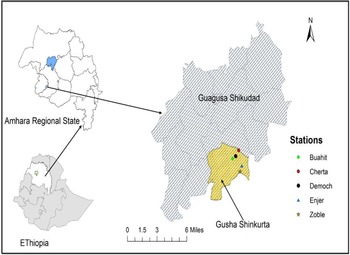
The present study was carried out both at station and on-farm testing sites in three rotation phases from 2013 to 2015 in one of northwest Ethiopian highlands in Gusha Shinkurta rural village of Guagusa Shikudad district, Awi Zone (Fig. 1). Geographically, the experimental sites are located between 11°91′ and 11°92′ N latitude, and 28°61′ and 28°87′ E longitude. The altitude of experimental sites ranges from 2451 to 2537 m above sea level with a slope of 2.6–3.7%.
Location map of the study sites in Gusha Shinkurta rural village, Guagusa Shikudad district, Amhara Region, northwest Ethiopia (Democh was on-station site, while Buahit, Cherta, Enjer and Zoble were on-farm sites).

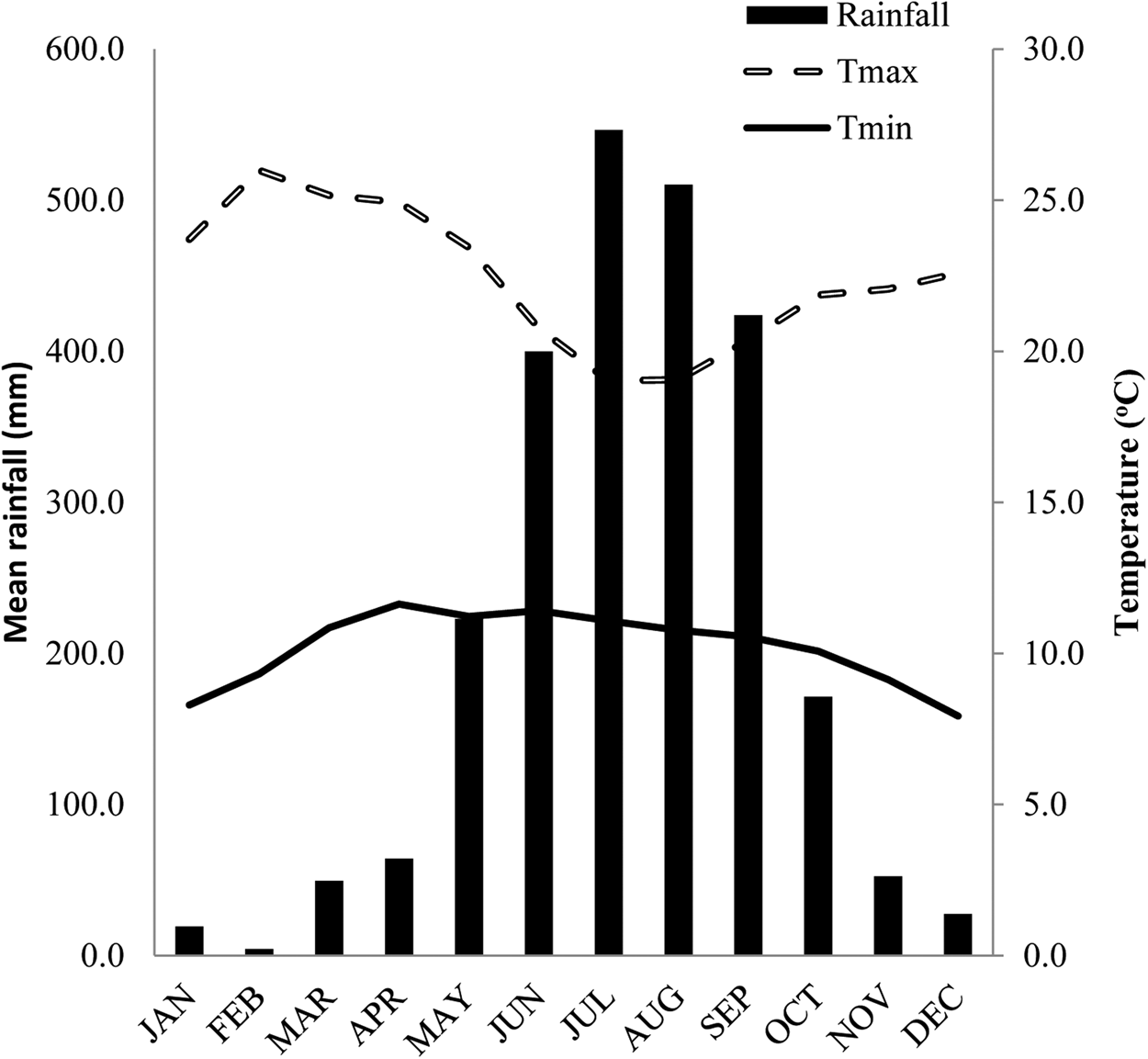
Climate of the study area is cool humid with annual average night and day temperatures of 10.2 and 22.4°C, respectively, and mean total annual rainfall of 2492 mm. Rainfall distribution of the area is mono-modal and the rainy season extends from March to the end of November, but it reaches peak in July and August (Fig. 2).
Average monthly rainfall, and minimum and maximum temperatures of the experimental sites during three years study period from 2013 to 2015 (Tmax = maximum temperature, Tmin = minimum temperature).

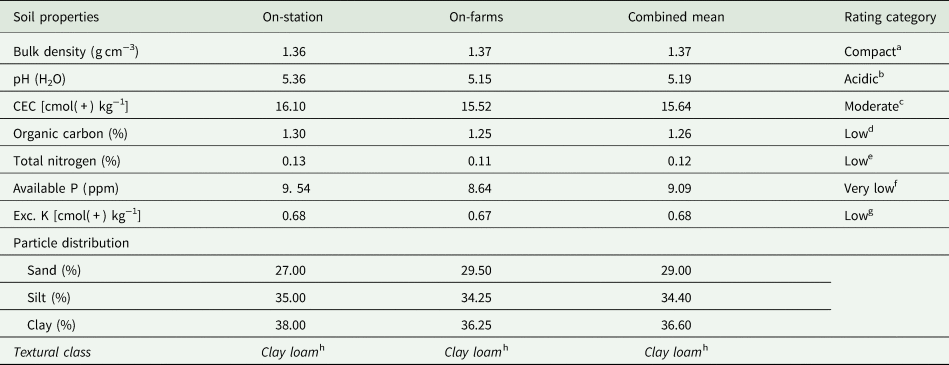
To characterize the experimental soils, composite soil samples were collected just before starting the experiment from both on-station and on-farm sites on the upper top 20 cm depth using auger. The collected composite soil samples were further analyzed in the soil laboratory for important physico-chemical properties including pH, CEC and contents of organic carbon, total nitrogen, available phosphorous and exchangeable potassium following their respective standard methods and procedures. Bulk density of experimental soils was also determined by taking undisturbed core soil samples. The laboratory analysis results of the composite soil samples of on-station, on-farms and combined over sites verified the severity of soil degradation in the crop fields of the study area (Table 1). Soil profile analysis made at station and on-farm testing sites showed that the soils of the experimental sites are Acrisols.
Physico-chemical properties of the experimental soils (one on-station and four on-farms) before starting the experiment in 2013 in northwest Ethiopian highlands

CEC, cation exchange capacity; P, phosphorus; K, potassium; ppm, part per million; pH, potential of hydrogen.
aBlake and Hartge (Reference Blake, Hartge and Klute1986); bPanda (Reference Panda2010); cLandon (Reference Landon1991); dCharman and Roper (Reference Charman, Roper, Charman and Murphy2007); eHavlin et al. (Reference Havlin, Beaton, Tisdale and Nelson1999); fTadesse et al. (Reference Tadesse, Haque and Aduayi1991); gMetson (Reference Metson1961); hBrady and Weil (Reference Brady and Weil2017).
Experimental treatments, design and procedures
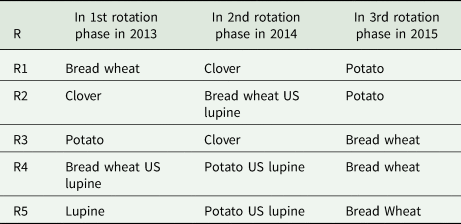
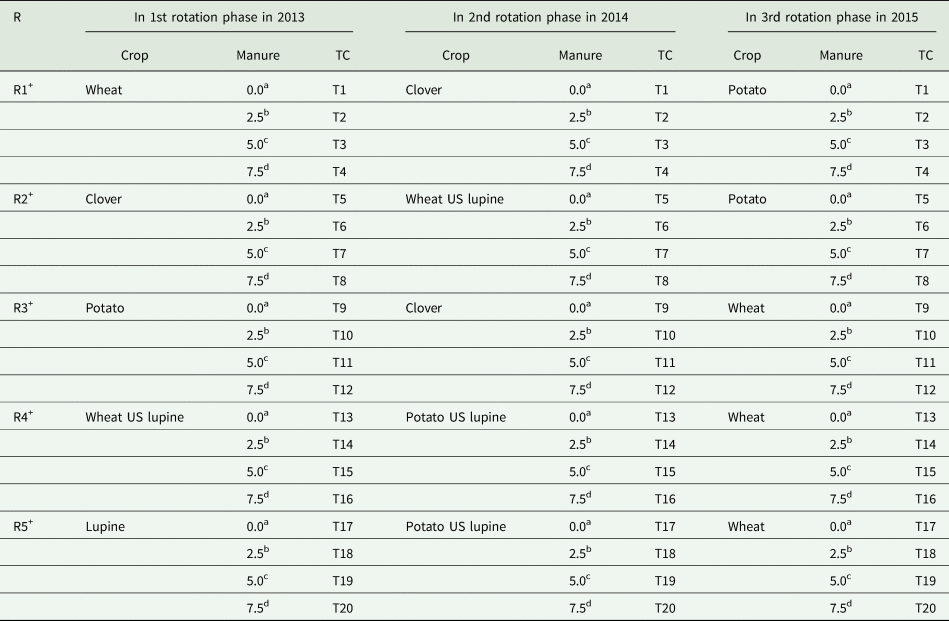
Both at station and on-farm testing sites, factorial combinations of five crop rotation practices (R1+ = bread wheat–clover–potato, R2+ = clover–bread wheat undersowing lupine–potato, R3+ = potato–clover–bread wheat, R4+ = bread wheat undersowing lupine–potato undersowing lupine–bread wheat and R5+ = lupine–potato undersowing lupine–bread wheat) and four manure levels [M1 = control without manure, M2 = 2.5 t ha−1 Sesbania [Sesbania sesban (L.) Merrill] green manure (SGM), M3 = 5 t ha−1 fresh cattle manure (FCM) and M4 = 2.5 t ha−1 SGM + 5 t ha−1 FCM] were laid out in a randomized complete block design with four replications. The on-station experiment at Democh Farmers' Training Center (Fig. 1) was considered as mother trial, where all experimental replications (blocks) were found at the same site, while the on-farm experiment at Buahit, Cherta, Enjer and Zoble (Fig. 1) was carried out with the concept of baby trials whereby the four replications were separately done at four different farmers' crop fields, where each farmer's crop field was considered as a single replication (a block) and a baby trial. Plus sign (+) added with crop rotation treatments showed the incorporation of crop residue and/or green manure of preceding crops into the soil of experimental plots. Five different crop rotations were devised in three rotation phases in 2013, 2014 and 2015 (Table 2). The treatment combinations of crop rotations and manure inputs used for the experiment are presented in Table 3. Sole bread wheat in R1 rotation sequence without manure application (M1) in 2013 was considered as the control of the experiment. Since the main concern of this research was abandoning of crop rotation and organic matter application in the study area, the sole bread wheat without manure application (R1M1) in 2013 was considered as the baseline of the study. Bread wheat appeared twice in R4 in the first and third rotation phases in 2013 and 2015, and hence the treatment combinations of the experiment for bread wheat were 24, rather than 20.
Crop rotation sequences used for the experiment in three rotation phases

R, rotation; US, under sowing; bread wheat appeared six times in five rotation schemes in 3 years period; crop rotation in different years was done on the same fixed plots, for instance, in the first rotation (R1), plots occupied with bread wheat in 2013 were occupied with clover and potato in 2014 and 2015, respectively.
Treatment combinations used for the experiment in three rotation phases

R, rotation; R1+, wheat–clover–potato; R2+, clover–wheat undersowing lupine–potato; R3+, potato–clover–wheat; R4+, wheat undersowing lupine–potato undersowing lupine–wheat; R5+, lupine–potato undersowing lupine–wheat; +, crop residue/green manure of preceeding crops incorporated into the soil; TC, treatment combination; US, under sowing.
aControl without manure; b2.5 t ha−1 Sesbania green manure; c5.0 t ha−1 fresh cattle manure; d2.5 t ha−1 Sesbania green manure + 5.0 t ha−1 fresh cattle manure.
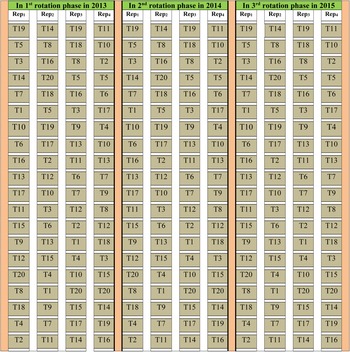
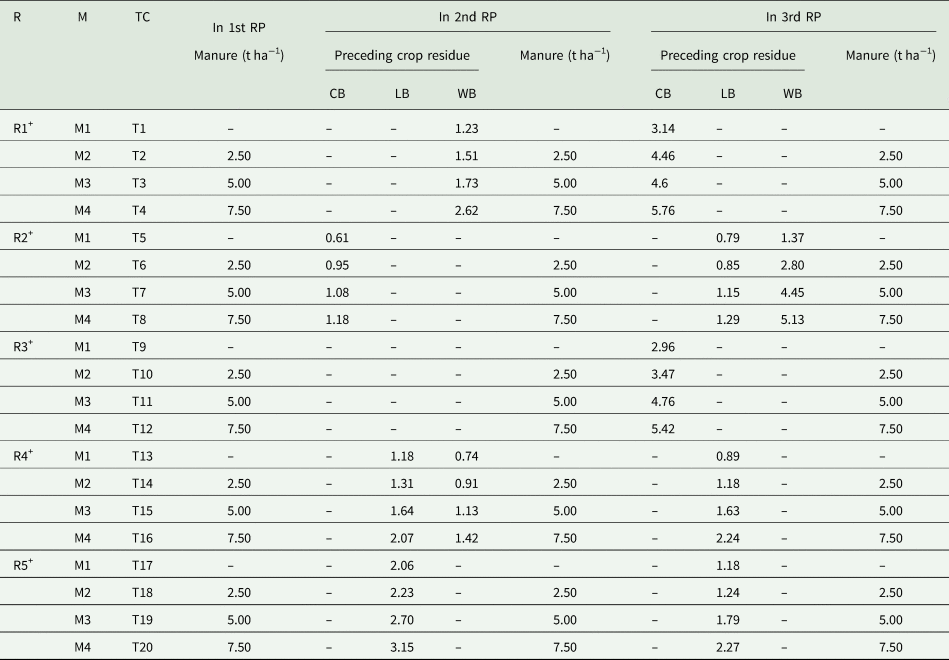
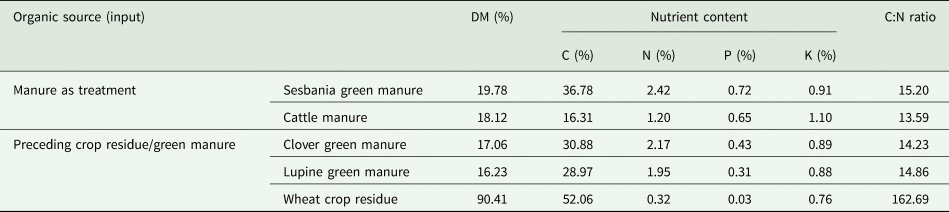
Gross size of experimental plots was 3 m × 3 m (9 m2) with the net plot area of 2.6 m × 2.6 m (6.76 m2). Experimental plots and blocks (replications) were separated with 0.5 and 1.0 m spacing, respectively. Since the same plots were used for three rotation phases in 22013, 014 and 215, randomization of treatments to the plots was done in the first rotation phase in 2013, and the field layout of the experiment is presented in Figure 3. As per treatments and design, fresh manure inputs were uniformly surface broadcasted and incorporated within 20 cm soil depth before 2 weeks of planting to minimize their negative effects on the emergence and seedling growth of newly planted crops. Improved varieties of bread wheat ‘Tay’ and potato ‘Belete’ as well as the most adaptive Ethiopian clover (Trifolium decorum) and local white lupine (Lupinus album) were used as test crops for crop rotation systems. Healthy and viable seeds of bread wheat were drilled in 20 cm spaced rows at the recommended seeding rate of 150 kg ha−1 in the first to the second weeks of July depending on the rainfall conditions. Similarly, seeds of Ethiopian clover were also drilled in 20 cm spaced rows at the seeding rate of 3 kg ha−1. As pure stand, seeds of white lupine were planted in rows at 40 cm inter-row and 10 cm intra-row spacing. In undersowing treatments, lupine seeds were planted between rows of potato at 50% flowering and between every two rows of bread wheat at tillering growth stage with 10 cm spacing between plants. Clover and lupine plants at their 50% flowering were choped and incorporated into the soil of their respective plots. After harvesting and threshing, crop residues of bread wheat were also chopped and incorporated into the soil manually. Above ground biomass of crop residues and green manure of preceding crops incorporated into the soil of experimental plots are presented in Table 4, and their dry matter and macronutrient contents are presented in Table 5. Beyond experimental treatments, all other agronomic practices were applied to experimental plots equally as per their respective recommendations used for experimental crops in the study area.
Field layout of the experiment. Factorial combinations of five crop rotations and four manure application levels laid out in a randomized complete block design with four replications in three rotation phases in 2013–2015 on the same fixed plot. Spacing between plots and replications was 0.5 and 1.0 m, respectively. T1 to T20, treatment combinations randomly allotted to experimental plots. Since the same plots were used for three rotation phases in 2013, 2014 and 215, randomization of treatments to the plots was done in the 1st rotation phase in 2013.

Above ground biomass of crop residue/green manure of preceding crops and manure as treatment incorporated into the soil of experimental plots in three rotation phases

1st RP, first rotation phase in 2013; 2nd RP, second rotation phase; 3rd RP, third rotation phase; R, rotation; R1+, wheat–clover–potato; R2+, clover–wheat undersowing lupine–potato; R3+, potato–clover–wheat; R4+, wheat undersowing lupine–potato undersowing lupine–wheat; R5+, lupine–potato undersowing lupine–wheat; M, manure; M1, control without manure; M2, 2.5 t ha−1 Sesbania green manure (SGM); M3, 5.0 t ha−1 fresh cattl manure (FCM); M4, 2.5 t ha−1 SGM + 5.0 t ha−1 FCM; TC, treatment combination; CB, above ground clover biomass in t ha−1 as green manure; LB, above ground lupine bimass in t ha−1 as green manure; WB, above ground wheat crop residue biomass in t ha−1; as potato approached to maturity, most leaves falldown and degraded quickly as well as naked stems and branches also driedup and colapsed to the ground, and hence potato crop residue was not estimated.
Avergae dry matter and macronutrient contents of manure treatments and above ground biomass of the preceding crop residue/green manure incorporated into the soil of experimental plots

DM, dry matter content; C, carbon; N, nitrogen; P, phosphorous; K, potassium; samples of Sesbania and cattle manure applied in each year were taken for dry matter and macronutrient analysis. Similarily, equal amount of biomass of the preceding crop residue/green manure was taken from similar treatment plots and composited for analysis of dry matter and macronutrient contents following their respective standard methods and procedures.
Crop data collection and analysis
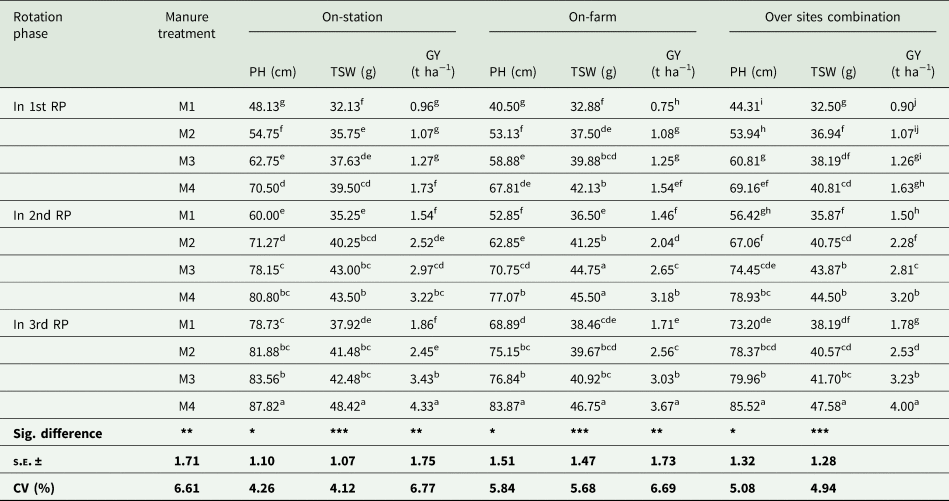
Data of plant height (cm), thousand seeds weight (g) and grain yield (t ha−1) of bread wheat were timely collected following their respective standard methods and procedures. All collected crop data were further subjected to analysis of variance (ANOVA) using fixed general linear model (GLM) procedures of SAS version 9.4 (SAS Institute, 2013). The fixed GLM used for ANOVA analysis is outlined by Gomez and Gomez (Reference Gomez and Gomez1984) as Yijk = μ + ri + αj + βk + (αβ)jk + ɛ; where, Y = a variable, μ = total experimental mean, r = replication effect if the i th replicate, α = effect of the j th level of factor A (rotation), β = effect of the k th level of factor B (manure); αβ = A × B (rotation by manure) interaction effect, ɛ = random error. Replications, rotations and manure rates were fixed sources of variation. Homogeneity test among and between the results of three rotation phases from 2013 to 2015, as well as on-station and on-farm sites for all crop variables were carried out using Bartlett test method and all test results were found insignificant (P ≥ 0.05), which verified the possibility of combined analysis of the results over 3 years as well as on-station and on-farm sites. Whenever the ANOVA result showed significant difference between treatments for a variable, further mean separation was done using the least significant difference test while the coefficients of variation of all studied crop variables were found well below 7% (Tables 6–8).
Manure application main effect on growth and grain yield of bread wheat in three rotation phases at station, on-farm and over sites combination in degraded crop fields of northwest Ethiopian highlands

1st RP, first rotation phase in 2013; 2nd RP, second rotation phase in 2014; 3rd RP, third rotation phase in 2015; M1, control without manure; M2, 2.5 t ha−1 Sesbania green manure (SGM); M3, 5 t ha−1 fresh cattle manure (FCM); M4, 5 t ha−1 FCM + 2.5 t ha−1 SGM; PH, plant height; TSW, thousand seeds weight; GY, grain yield; P, statistical probability; s.e., standard error; CV, coefficient of variation; ***very highly significant at P < 0.001; **highly significant at P < 0.01; *significant at P < 0.05; means followed with the same letters are not significantly different at P ≥ 0.05
Results and discussion
Main and interaction effects of manure application and crop rotation on the productivity improvement of bread wheat in three experimental years (2013–2015) at station, on-farms and over sites combination were significant in degraded crop fields of northwest Ethiopian highlands (Tables 6–8). Their results are separately presented and discussed systematically in detail below.
Manure application main effect on wheat productivity improvement
Grain yield, plant height and thousand seeds weight of bread wheat were significantly improved through manure application in 3 years at all experimental sites in degraded crop fields of northwest Ethiopian highlands (Table 6). Growth and grain yield of bread wheat increased with the increase of manure rates (Table 6). The improvement effect of manure application on all crop variables considered in the study was significantly increased with the progress of the rotation phases from 2013 to 2015 (Table 6). The highest plant height (87.82 cm) of bread wheat was recorded with the highest rate of manure application (M4) in the third cropping year (2015) at station testing site, while the shortest plant height (40.50 cm) was recorded in the control without manure application (M1) in the first cropping year (2013) at on-farm testing sites (Table 6). Similarly, the highest thousand seeds weight (48.42 g) and grain yield (4.33 t ha−1) were recorded with the highest rate of manure application (M4) in the third rotation phase in 2015 at station site. Results of the combined over sites showed that plant height, thousand seeds weight and grain yield of bread wheat were improved on average by 93.00, 46.40 and 344.44%, respectively, with the highest rate of manure application (M4) in the third rotation phase in 2015 as compared to those of the control without manure application (M1) in the first rotation phase in 2013. Even in the control without manure application (R1), plant height, thousand seeds weight and grain yield of bread wheat were improved on average by 65.20, 17.51 and 97.78%, respectively, in the third rotation phase in 2015 compared to those recorded in the first rotation phase in 2013.
In the present study, grain yield of bread wheat was improved at the greatest rate with the increase of manure rates and the progress of rotation phases compared to plant height and thousand seeds weight. A significant increase of growth and grain yield improvement of bread wheat with the increase of manure rates from 0 to 7.5 t ha−1 and with the progress of rotation phases from 2013 to 2014 was associated with the direct, residual and cumulative effects of manure application and crop residue/green manure of preceding crops. This indicates that long-term application of organic manure and incorporation of crop residue/green manure of preceding crops into the soil had direct, residual and cumulative improvement effects on the productivity of bread wheat. Even in the control without manure application, growth and yield of bread wheat increased with the progress of rotation phases from 2013 to 2015. This trend demonstrated the significant importance of long-term incorporation of crop residues and/or green manure of preceding crops into the soil for enhancing the sustainable production of bread wheat. The present results demonstrated that the application of organic inputs with even moderate rates would be more effective as it is practiced regularly and complemented with the incorporation of crop residues and green manure of preceding crops into soil. In agreement with the present results, Ram et al. (Reference Ram, Davari and Sharma2014) reported that organic manures had substantial direct, residual and cumulative effects on improving the productivity of wheat. Moharana et al. (Reference Moharana, Sharma, Biswas, Dwivedi and Singh2012) and Zha et al. (Reference Zha, Wu, Gong, Xu, Zhang and Chen2015) also reported that long-term applications of organic manures rendered to increase the productivity of bread wheat sustainably. In line with the present results, Muhammad and Anwar (Reference Muhammad and Anwar2008) in their early report showed significant increases of plant height, thousand seeds weight and grain yield of bread wheat with the increase of manure levels.
In the present study, a significant increase of bread wheat productivity with long-term application of organic inputs including manures and crop residues/green manure of preceding crops would further be associated with the positive effects of organic inputs on improving the physical, chemical and biological properties of the soil. Karažija et al. (Reference Karažija, Cosic, Lazarevic, Horvat, Petek, Palcic and Jerbic2015) and Moharana et al. (Reference Moharana, Sharma, Biswas, Dwivedi and Singh2012) also indicated the magnificient importance of farm yard manure for improving the physical, chemical and biological properties of the soil of cultivated lands, and thereby for enhancing crop productivity sustainably. Chekolle (Reference Chekolle2017), Admasu and Tadesse (Reference Admasu and Tadesse2018), and Goda (Reference Goda2019) also indicated that the application of organic inputs including manure in complement with inorganic fertilizers significantly increased the productivity response of bread wheat.
Crop rotation main effect on wheat productivity improvement
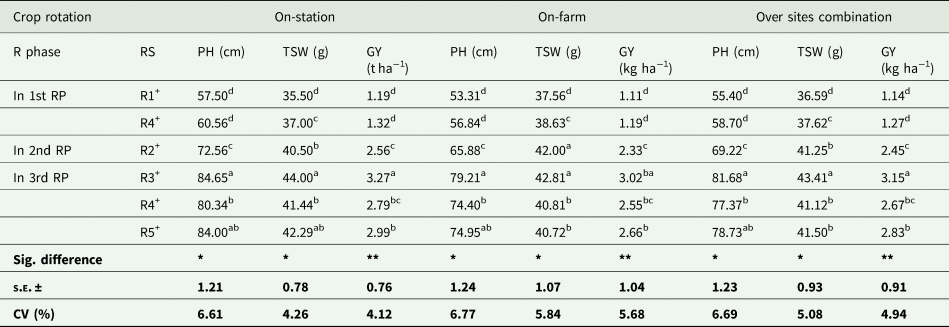
Crop rotation treatments had also a significant improvement effect on plant height, thousand seeds weight and grain yield of bread wheat in degraded crop fields of northwest Ethiopian highlands (Table 7). The improvement effect of crop rotation treatments on all considered crop variables was much pronounced as the progress of rotation phases from 2013 to 2015 (Table 7). The highest improvement of plant height (84.65 cm), thousand seed weight (44.00 g) and grain yield (3.27 t ha−1) of bread wheat was recorded in the third rotation phase in 2015 at station testing site in a potato–clover–bread wheat rotation (R3+), while the lowest improvement of plant height (53.31 cm) and grain yield (1.11 t ha−1) was recorded in the first rotation phase in 2013 at on-farm testing sites in the control where sole bread wheat was considered as a starter in the first rotation phase of bread wheat–clover–potato rotation (R1+). Combined over sites, plant height, thousand seeds weight and grain yield of bread wheat were improved on average by 47.44, 18.64 and 176.32%, respectively, in the third rotation phase in 2015 in a potato–clover–bread wheat rotation (R3+) compared to the control (R1+) in the first rotation phase in 2013. At all testing sites in three rotation phases, grain yield of bread wheat was improved through crop rotation much higher than thousand seeds weight and plant height (Table 7).
Main effect of crop rotation on growth and grain yield of bread wheat in three rotation phases at station, on-farm and over sites combination in degraded crop fields of northwest Ethiopian highlands

R, rotation; RS, rotation sequence; 1st RP, first rotation phase in 2013; 2nd RP, second rotation phase in 2014; 3rd RP, third rotation phase in 2015; R1+, bread wheat–clover–potato; R2+, clover–bread wheat undersowing lupine–potato; R3+, potato–clover–bread wheat; R4+, bread wheat undersowing lupine–potato undersowing lupine–bread wheat; R5+, lupine–potato undersowing lupine–bread wheat; +crop residue and green manure of preceeding crops incorporated into the soil; PH, plant height; TSW, thousand seeds weight; GY, grain yield; s.e., standard error; CV; coefficient of variation; **highly significant at P < 0.01; *significant at P < 0.05; means followed with the same letters are not significantly different at P ≥ 0.05.
In the first rotation phase in 2013 at all testing sites, undersowing of lupine at tillering growth stage of bread wheat (R4+) caused for slight improvement of plant height, thousand seeds weight and grain yield of bread wheat compared to sole bread wheat (R1+). Combined over sites in the second rotation phase in 2014, growing of bread wheat after the preceding of clover and incorporation of its green manure into the soil (R2+) resulted in a significant improvement of plant height, thousand seeds weight and grain yield of bread wheat by 17.92–25.40%, 9.65–12.98% and 92.91–114.91%, respectively, compared to R4+ and R1+ in the first rotation phase in 2013. Across all testing sites in the third rotation phase in 2015, potato–clover–bread wheat (R3+) followed by lupine–potato undersowing lupine–bread wheat (R5+) showed the highest improvement of plant height and grain yield of bread wheat. Improvement differences between crop rotation systems for the productivity of bread wheat would likely be associated with their differences in the quality and quantity of crop residues and green manure of preceding crops that were incorporated into the soil, which would further have cumulative residual effect differences on growth and yield of bread wheat. Clover and its green manure in the preceding season(s) had more improvement effect on all considered variables of the succeeding bread wheat than sole or undersown lupine and its green manure. Clover as a preceding crop (R3+) in the second rotation phase in 2014 had much higher improvement effect on plant height and grain yield of bread wheat than in the first rotation phase in 2013 (R2+), while clover plants in the second rotation phase (R3+) were more vigorous than in the first rotation phase (R2+) due to the positive effect of potato as preceding crop on the growth performance of the succeeding clover in the second rotation phase in 2014.
In harmony to the present results, several workers reported also that rotation of wheat with legumes substantially increased the productivity of wheat compared to its monoculture (Garofalo et al., Reference Garofalo, Paolo and Rinaldi2009; Talgre et al., Reference Talgre, Lauringson, Roostalu and Astover2009; Hayat and Ali, Reference Hayat and Ali2010; Ali et al., Reference Ali, Jan and Abbas2015; Ndayegamiye et al., Reference Ndayegamiye, Whalen, Tremblay, Nyiraneza, Grenier, Drapeau and Bipfubusa2015; Babulicova, Reference Babulicova2016; Waźniak, Reference Waźniak2019). In confirmation of the significant importance of clover as preceding crop for conspicuous increase of wheat productivity, Talgre et al. (Reference Talgre, Lauringson, Roostalu and Astover2009) and Ali et al. (Reference Ali, Jan and Abbas2015) reported that growing of wheat after clover significantly increased the productivity of the succeeding wheat compared to wheat mono-cropping. In the present study indeed, the main improvement effect of crop rotation on the productivity of bread wheat was relatively less than that of manure application, while manure application was an additional organic matter source to crop residues and green manure of the preceding crops that were incorporated into the soil in the crop rotation systems.
Combined crop rotation and manure application effect on wheat productivity improvement
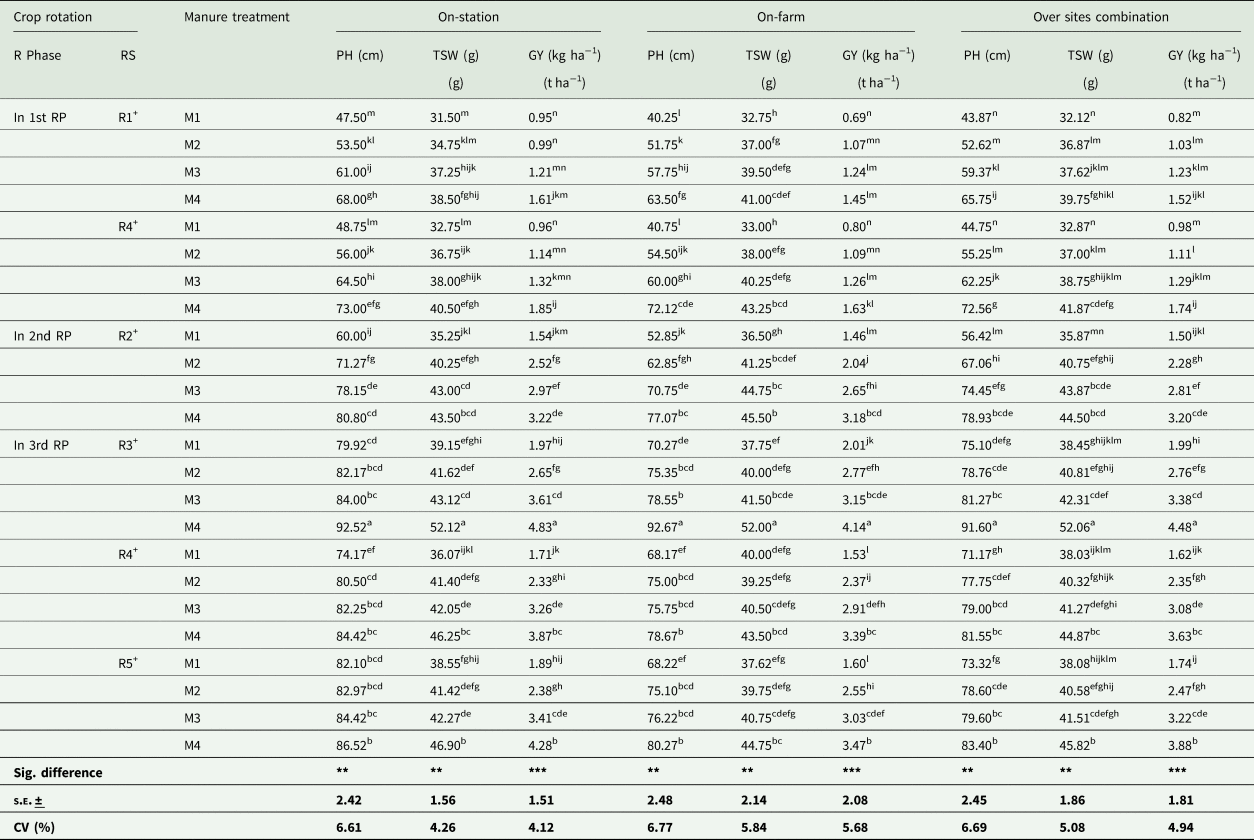
Plant height, thousand seeds weight and grain yield of bread wheat were also significantly (P < 0.001) improved through the interaction of crop rotation and manure application in three rotation phases from 2013 to 2015 at all testing sites in degraded crop fields of northwest Ethiopian highlands (Table 8). The improvement response of grain yield to the interaction of crop rotation and manure application was much higher than thousand seeds weight and plant height. The interaction improvement effect of crop rotation and manure application on all considered variables of bread wheat at all testing sites was increased significantly with the progress of rotation phases from 2013 to 2015 (Table 8). Similar to that of manure application and crop rotation as main effects, the highest improvement of plant height (92.52 cm), thousand seeds weight (52.12 g) and grain yield (4.83 t ha−1) of bread wheat was recorded with the interaction of a potato–clover–bread wheat rotation (R3+) and a manure application of 2.5 t ha−1 SGM + 5 t ha−1 FCM (M4) in the third rotation phase in 2015 at station testing site, while the lowest improvement of plant height (40.25 cm) and grain yield (0.69 t ha−1) of bread wheat was recorded with the interaction of a sole bread wheat as the starter of a rotation (R1+) and the control without manure application (M1) in the first rotation phase in 2013 at on-farm testing sites (Table 8). In combined over sites, plant height, thousand seeds weight and grain yield of bread wheat were improved on average by 108.80, 62.08 and 446.34%, respectively, with the interaction of a potato–clover–bread wheat rotation (R3+) and the highest manure application rate of 7.5 t ha−1 (M4) in the third rotation phase in 2015 compared to the interaction of a sole bread wheat as the starter of a rotation (R1+) and the control without manure application (M1) in the first rotation phase in 2013.
Interaction effect of crop rotation and manure application on growth and grain yield of bread wheat in three rotation phases at station, on-farm and over sites combination in degraded crop fields of northwest Ethiopian highlands

R, rotation; RS, rotation sequence; 1st RP, first rotation phase in 2013; 2nd RP, second rotation phase in 2014; 3rd RP, third rotation phase in 2015; R1+, bread wheat–clover–potato; R2+, clover–bread wheat undersowing lupine–potato; R3+, potato–clover–bread wheat; R4+, bread wheat undersowing lupine–potato undersowing lupine–bread wheat; R5+, lupine–potato undersowing lupine–bread wheat; +crop residue and green manure of preceeding crops incorporated into the soil; M1, control without manure; M2, 2.5 t ha Sesbania green manure (SGM); M3, 5 t ha fresh cattle manure (FCM); M4, 5 t ha FCM + 2.5 t ha SGM; PH, plant height; TSW, thousand seeds weight; GY, grain yield; s.e., standard error; CV, coefficient of variation; ***very highly significant at P < 0.001; **highly significant at P < 0.01; means followed with the same letters are not significantly different at P ≥ 0.05.
In the same third rotation phase in 2015 at all testing sites, the interaction of a potato–clover–bread wheat rotation (R3+) with manure application followed by the interaction of lupine–potato undersowing lupine–bread wheat rotation (R5+) with manure application resulted in the highest plant height, thousand seeds weight and grain yield of bread wheat (Table 8). Whereas, bread wheat undersowing lupine–potato undersowing lupine–bread wheat rotation (R4+) with manure application showed least productivity improvement of bread wheat compared to the interaction of R3+ and R5+ crop rotation systems with manure application. With the progress of rotation phases from 2013 to 2015, a significant increase of productivity improvement of bread wheat through the interaction of crop rotation and manure application was likely associated with the cumulative effect of residual and direct effects of manure application and crop residues/green manure of preceding crops. Without the additive residual effects of manure application and crop residues/green manure of preceding crops, productivity improvement of bread wheat with only the direct effect of manure application would be low as observed in the first rotation phase in 2013. The additive residual effect of manure application and crop residues/green manure of preceding crops was manifested with higher productivity improvement of bread wheat in the second rotation phase in 2014 than in the first rotation phase in 2013. Higher productivity improvement of bread wheat in the third rotation phase in 2015 than in the second rotation phase in 2014 revealed also the accumulation of residual effects of manure application and crop residues/green manure of preceding crops with the progress of rotation phases.
With the same manure levels across different crop rotation systems, productivity improvement differences in the same rotation phases were observed between crop rotation systems and these might be associated with the differences between crop rotation systems in the quality and quantity of crop residues and/or legume green manure of the preceding crops incorporated into the soil of the experimental plots. As superior productivity improvement prevailed in R2+ and R3+ crop rotation systems in the second and the third rotation phases, respectively, inclusion of clover as a preceding crop in bread wheat rotation system and incorporation of its green manure into the soil had better improvement effect on the productivity of bread wheat over that of other testing crops.
The present results revealed that long-term applications of manure even at moderate rates and sound crop rotation practices with the inclusion of legumes like clover, and incorporation of crop resides and/or legume green manure of the preceding crops into the soil have much greater complementary and additive improvement effects on the productivity of bread wheat than applying either one of them separately. Similar crop productivity improvements through organic matter application and/or crop rotation were also reported by several workers (Amber et al., Reference Amber, Olsen and Anna2010; Zaghloul, Reference Zaghloul2010; Amir et al., Reference Amir, Mohammad, Haj, Faezeh, Mohammad and Alireza2012; Eugenija et al., Reference Eugenija, Almantas, Rita, Audrius, Zita, Danuta, Jelena and Liudmila2014; Sayed et al., Reference Sayed, Hassien, Muhamed and Ahimed2014; Ali et al., Reference Ali, Jan and Abbas2015; Karazija et al., Reference Karažija, Cosic, Lazarevic, Horvat, Petek, Palcic and Jerbic2015; Malihe et al., Reference Malihe, Mohammad, Alireza, Mohsen and Mehdi2015; Zha et al., Reference Zha, Wu, Gong, Xu, Zhang and Chen2015; Babulicova, Reference Babulicova2016; Ndayegamiye et al., Reference Ndayegamiye, Whalen, Tremblay, Nyiraneza, Grenier, Drapeau and Bipfubusa2017; Waźniak, Reference Waźniak2019). According to Ram et al. (Reference Ram, Davari and Sharma2014), the highest productivity, grain quality and nutrient uptake of wheat were observed with a combined application of FYM and green manure of clover.
In agreement to Habtamu et al. (Reference Habtamu, Heluf, Bobe and Enyew2014) and Tamene et al. (Reference Tamene, Amede, Kihara, Tibebe and Schulz2017), the lowest growth and grain productivity in the control without organic matter application in the first rotation phase of the present study showed indirectly also the severity of soil degradation and fertility depletion in the cultivated land of the study area. Shibabaw et al. (Reference Shibabaw, Alemayehu, Adigo, Germer, Ash and Freyer2017, Reference Shibabaw, Alemayehu, Adigo, Ash and Freyer2018) claimed that this serious soil degradation and low crop productivity in the cultivated land of Ethiopian highlands has largely been due to continuous cropping with inorganic commercial fertilizers alone for long period without supplementing any organic fertilizers.
Significant growth and productivity improvements of bread wheat through regular crop rotation and manure application recorded in the present study would further be associated to the progressive additive improvements of physical, chemical and biological properties of experimental soils as the result of cumulative direct and residual effects of manure application and incorporation of crop residues and/or green manure of preceding crops (Moharana et al., Reference Moharana, Sharma, Biswas, Dwivedi and Singh2012; Karažija et al., Reference Karažija, Cosic, Lazarevic, Horvat, Petek, Palcic and Jerbic2015; Waźniak and Kawecka-Radomka, Reference Woźniak and Kawecka-Radomska2016). Apart from constituting one or two nutrients (N and P in Ethiopian case), inorganic fertilizers do not have an improving effect on physical, biological and most chemical soil properties directly (Moharana et al., Reference Moharana, Sharma, Biswas, Dwivedi and Singh2012). On the contrary, orginic fertilizers do have a significant improving effect on physical, chemical and biological soil properties, as well as constitute almost all essential plant nutrients, although they release nutrients slowly and contain low nutrients per unit mass unlike that of inorganic fertilizers (Brady and Weil, Reference Brady and Weil2017). Application of inorganic fertilizers alone to crop fields without supplementing orginic fertilizers for a long period like in the present study area may hence be resulted in severe soil organic matter depletion upto the lowest critical level that unables to maintain desirable soil properties and to supply the required amount of other essential nutrients for optimal growth and developmet of crop plants (Shibabaw et al., Reference Shibabaw, Alemayehu, Adigo, Germer, Ash and Freyer2017, Reference Shibabaw, Alemayehu, Adigo, Ash and Freyer2018; Goda, Reference Goda2019). Under this condition, productivity responses of crops to applied inorganic fertilizers would have been declining further and there is therefore an urgent need to supplement inorganic soil fertilizers with organic fertilizers regularly for sustainable improvement of soil health and crop productivity in the cultivated land of Ethiopian highlands. Recommending organic fertilizers solely without supplementing inorganic fertilizers for attaining the maximum productivity potentials of crops could not also be plausible for the study area where organic matter sources are not as such plenty enough for meeting the required optimum rates of sole organic matter fertilization, which are so huge normally above 20 ton ha−1 for most crops. Since organic fertilizers applied at low to moderate rates like in the present study would not be able to supply the required amount of macro nutrients such as NPK per unit time for optimal growth and development of crop plants at least in the early phases of their regular applications, they should hence be supplemented with inorganic fertilizers for getting desirable productivity of crops.
Conclusion
Productivity of bread wheat was significantly improved through long-term sound crop rotation and manure application in degraded crop fields of northwest Ethiopian highlands. Incorporation of crop residues and green manure of legumes into the soil made the improvement effect of crop rotation on the productivity of bread wheat more visible and significant. Improvement effect of manure application on the productivity of bread wheat was significantly higher than that of crop rotation, while manure application was an additional organic matter source to crop residues and green manure of legumes that were incorporated into the soil in the crop rotation systems. Productivity improvement of bread wheat through crop rotation and manure application was significantly increased with the progress of rotation phases due to the cumulative effects of residual effects of previously applied manure, and crop residues and green manure of legumes incorporated into the soil in the preceding rotation phase(s) and direct effect of manure application. The present study showed that long-term applications of manure even at moderate rates and sound crop rotation practices with the inclusion of legumes like clover, and incorporation of crop resides and green manure of legumes into the soil have much greater complementary and additive improvement effects on the productivity of bread wheat than applying either one of them separately. Until soil organic matter accumulated adequately through regular application of organic inputs, however, application of organic input(s) at low to moderate rates alone may not be able to supply the required amount of macro nutrients per unit time for optimal growth and development of crop plants, and it would hence be necessary to complement organic fertilizers with inorganic fertilizers for getting desirable crop productivity in the early crop rotation phases.
Acknowledgements
The authors sincerely acknowledge SMACC (Smallholders Farmer Strategy to Cope with Climate Change in Ethiopia and Kenya) project for partly funding the present study. The authors further acknowledge the European Commission's Seventh Framework Program, Project No.249664 for funding SMACC project via ERA-ARD II ERA-NET project (ERA-Dimension of European Research Area, ARD-the Agricultural Research for Development). Bahir Dar University is also acknowledged by the authors for its vehicle service provision to researchers that were frequently traveling to the experimental sites.
Financial support
The study was financially supported with SMACC project (from 2013 to 2015), which was funded by European Commission's Seventh Framework Program, Project No.249664 via ERA-ARD II ERA-NET project.
Conflict of interest
None.