Anthropological orthodoxy claims that the ethnographically known communities of the Northwest Coast of North America were “complex hunter-fisher-gatherers” who lacked any form of concerted plant food cultivation and production. This view has considerable traction despite many decades of extensive ethnobotanical and paleoethnobotanical study throughout the region demonstrating the contrary, in addition to widespread archaeological evidence that Northwest Coast Indigenous peoples managed the production of fish and shellfish resources (e.g., Deur Reference Deur2000; Deur and Turner Reference Deur and Turner2005; Lepofsky and Armstrong Reference Lepofsky and Armstrong2018; Lepofsky and Lertzman Reference Lepofsky and Lertzman2008; Lepofsky and Lyons Reference Lepofsky and Lyons2013; Lepofsky et al. Reference Lepofsky, Smith, Cardinal, Harper, Morris, Gitla (Elroy White), Kennedy, Salomon, Puckett, Rowell and McLay2016; Thornton and Deur Reference Thornton and Deur2015; Turner et al. Reference Turner, Deur and Lepofsky2013). This “classic anomaly” remains a cornerstone of anthropological and archaeological canons despite the growing reach of this scholarship.
Its persistence relates to long-standing, deeply embedded, and reified constructs of foragers and farmers and their relative places in our world (e.g., Brody Reference Brody2000; Hillman and Harris Reference Hillman and Harris1989; Ingold Reference Ingold and Ingold1986). Anthropological inquiry has proceeded under the firm belief that foragers and farmers are distinct and natural categories—the former representing nature and the latter, culture (de Luna Reference de Luna, Finlayson and Warren2017; Hodder Reference Hodder1990), a binary that has helped justify colonial conquest throughout the world (Trigger Reference Trigger1980). These terms, however, do not hold up under scrutiny because of their failure to successfully accommodate the diversity of human subsistence economies across either space or time (Kelly Reference Kelly2013). For this reason, some scholars in the origins of agriculture and related arenas have focused on how particular suites of practices involved in plant management transform over time (including changes of emphasis and direction, use of multiple cultivation strategies, and continuous use of wild plant foods), rather than on the hypothetical boundaries and purportedly evolutionary relationship between foraging and farming behaviors (Casas et al. Reference Casas, Otero-Arnaiz, Perez-Negron and Valiente-Banuet2007; Denham Reference Denham2009; Killion Reference Killion2013; Wallace et al. Reference Wallace, Jones, Charles, Forster, Stillman, Bonhomme, Livarda, Osborne, Rees, Frenck and Preece2018). These ongoing discussions set the stage for the case study presented here.
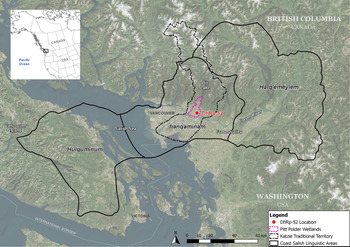
We examine the question of whether the ancient Coast Salish, a linguistic subgroup of Northwest Coast First Nations (Figure 1), practiced farming prior to contact. This inquiry provides a means to examine cultural perceptions of foraging/hunting-gathering and farming societies—including societies that do not comfortably fit these categories—and in turn, to explore the persistence of the categories themselves and evaluate their contemporary utility, resonance, and implications. We define “farming,” in a vernacular sense, to mean the cultivation, production, and (at least) behavioral domestication of plant and animal foods (Zvelebil Reference Zvelebil, Chapman and Dolvkhanov1993). This last category includes taxa with economic importance but lacks markers of morphological change indicating domestication (Smith Reference Smith, Deur and Turner2005:60–61). We use the terms “farming” and (preindustrial) “agriculture” interchangeably in this article, recognizing that both have multiple meanings and usages (Smith Reference Smith, Deur and Turner2005:54–59). The other major term we employ in this article is “Indigenous resource management,” a paradigm that views First Peoples as deeply engaged in shaping and sustainably managing plant and animal communities of various scales and at different stages of their life cycles to enhance their productivity. The accruing body of research in the Pacific Northwest relies heavily on the knowledge, agency, and partnership of First Nations scholars and traditional practitioners.
Coast Salish dialects and Katzie traditional territory.

Although the vast majority of examples of Indigenous resource management principles and practices in this region derive from the historic period, those with precontact antecedents include mariculture (Caldwell et al. Reference Caldwell, Lepofsky, Combes, Washington, Welch and Harper2012; Lepofsky et al. Reference Lepofsky, Smith, Cardinal, Harper, Morris, Gitla (Elroy White), Kennedy, Salomon, Puckett, Rowell and McLay2016), forest gardening (Armstrong Reference Armstrong2017; Armstrong et al. Reference Armstrong, Miller, McAlvay and Lepofsky2021; Turner et al. Reference Turner, Deur and Lepofsky2013), fisheries management (Butler and Campbell Reference Butler and Campbell2004; Lepofsky and Caldwell Reference Lepofsky and Caldwell2013; Suttles Reference Suttles1951a), controlled landscape burning (Boyd Reference Boyd1999; Gottesfeld Reference Gottesfeld1994; Lepofsky et al. Reference Lepofsky, Heyerdahl, Lertzman, Schaepe and Mierdendorf2003), edible geophyte or “root food” production (Deur Reference Deur2000; Lyons and Ritchie Reference Lyons and Ritchie2017; Peacock Reference Peacock1998; Spurgeon Reference Spurgeon2001), and the more general terraforming of anthropogenic landscapes (Deur et al. Reference Deur, Dick, Recalma-Clutesi and Turner2015; Grier and Schwadron Reference Grier and Schwadron2017; Lepofsky et al. Reference Lepofsky, Schaepe, Graesch, Lenert, Ormerod, Carlson, Arnold, Blake, Moore and Clague2009). Ancient plant cultivation practices, in particular, have proven difficult to “find” because of the lack of baseline data, the subtlety of Indigenous resource management techniques, and their lack of historical recognition and documentation (Deur and Turner Reference Deur and Turner2005; Lepofsky Reference Lepofsky and Minnis2004; Lepofsky and Lertzman Reference Lepofsky and Lertzman2008; Suttles Reference Suttles1951b; Turner et al. Reference Turner, Armstrong and Lepofsky2021). Root foods, which supplied vital nutrients and carbohydrates to Northwest Coast communities, were highly sought-after trade commodities and dietary staples—most notably, camas (Camassia spp.) and wapato (Sagittaria latifolia)—throughout the Fraser and Columbia River systems (Darby Reference Darby, Deur and Turner2005; Duff Reference Duff1952; Spurgeon Reference Spurgeon2001; Suttles Reference Suttles, Deur and Turner2005; Turner and Kuhnlein Reference Turner and Kuhnlein1983). In this region, archaeobotanical evidence for root foods from processing contexts in the form of bulbs, tubers, and other storage organs is relatively rare (Lepofsky and Lyons Reference Lepofsky and Lyons2013; Lyons and Ritchie Reference Lyons and Ritchie2017; Lyons, Prentiss, et al. Reference Lyons, Prentiss, Peacock and Angelbeck2018), whereas evidence for ancient growing contexts, such as gardens or fields, is almost nonexistent (but see Deur Reference Deur, Deur and Turner2005; Moss Reference Moss, Deur and Turner2005; Turner Reference Turner2014:2:189).
When considered alongside recent and large-scale archaeological documentation of Indigenous resource management on the Northwest Coast, the discovery of a well-preserved wapato-growing feature in Katzie traditional territory near Vancouver, British Columbia, has the power to recast this picture. Here, we describe this find, situate it within a cultural context, and explore origin stories related to wapato cultivation among ancestral Coast Salish communities as a way to investigate larger cultural constructs around farming, subsistence, and resource management. We look at the foundational narratives by which Coast Salish and settler cultures comprehended the nature of farming within the territory of hən̓q̓əmin̓əm̓ speakers of the lower Fraser Delta of British Columbia (Figure 1). This includes an exploration of Katzie origin stories related to wapato, as well as both settler and archaeological conceptions of the origins of agriculture as applied to this region. We use the term “stories” intentionally to acknowledge that each set of origin stories comes from a distinct cultural vantage point, and accordingly, should be positioned and considered on equal footing (Geia et al. Reference Geia, Hayes and Usher2013). These perspectives have critical bearing on not only the historical appropriation of lands and waterways by settler communities in British Columbia but also contemporary questions of sovereignty and stewardship in this region and well beyond. In the discussion, we ask what implications the stories of agricultural origins have in real-world contexts.
The DhRp-52 Wapato Feature: Site and Cultural Context
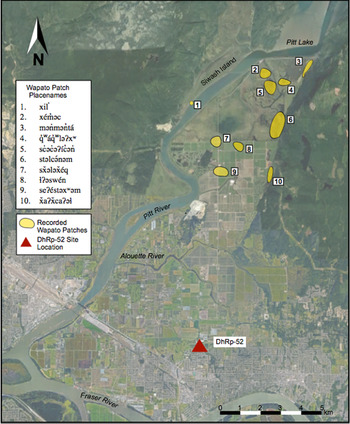
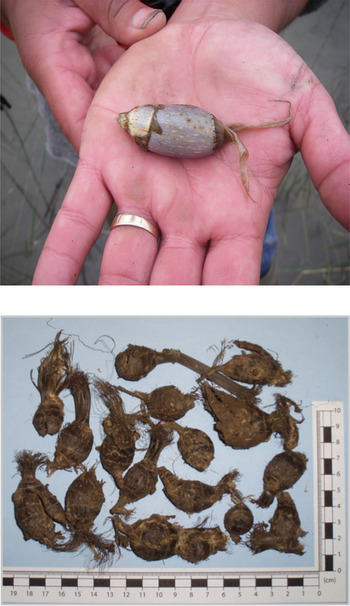
The site of DhRp-52 was discovered in 2006 in contemporary Katzie (q̓íc̓əy̓̓) territory. The Katzie are a Coast Salish community whose territory resides within a rich and storied wetland mosaic encompassing the Pitt Polder wetlands that drain into the Fraser River, 50 km east of Vancouver, British Columbia, Canada (Figures 1 and 2). During the mid-Holocene, this area was part of a large estuary that formed as the Fraser Delta prograded southwestward. Ancestors of the Katzie people maintained a vast system of intertwining sloughs that formed travel corridors linking together a network of resource-rich streams, marshes, bogs, and fens (Copp et al. Reference Copp, Hoffmann, Wilkerson and Bernick2019; Hoffmann et al. Reference Hoffmann, Leon and Bailey2001). They reshaped their landscapes and waterscapes to create terraces for homes and productive wetland niches that both ensured and amplified wapato production (Hoffmann et al. Reference Hoffmann, Lyons, Miller, Diaz, Homan, Huddlestan and Leon2016). This highly fertile and biodiverse setting made Katzie people a critical supplier of wetland flora and fauna—particularly, the highly prized wapato, an herbaceous wetland perennial in the water plantain family (Figure 3)—to neighboring communities during ethnohistoric times (Duff Reference Duff1952:74; Suttles Reference Suttles1955:26). During its habitation, DhRp-52 would have been located a meter above sea level on an uplifted deposit of sand at a slough edge that was subject to flooding during the annual Fraser River spring freshet.
Historically documented wapato gardens and DhRp-52 within contemporary Katzie First Nation territory.

Fresh wapato tubers (upper) and archaeological wapato tubers recovered from DhRp-52 (lower). Photographs courtesy of Katzie First Nation.

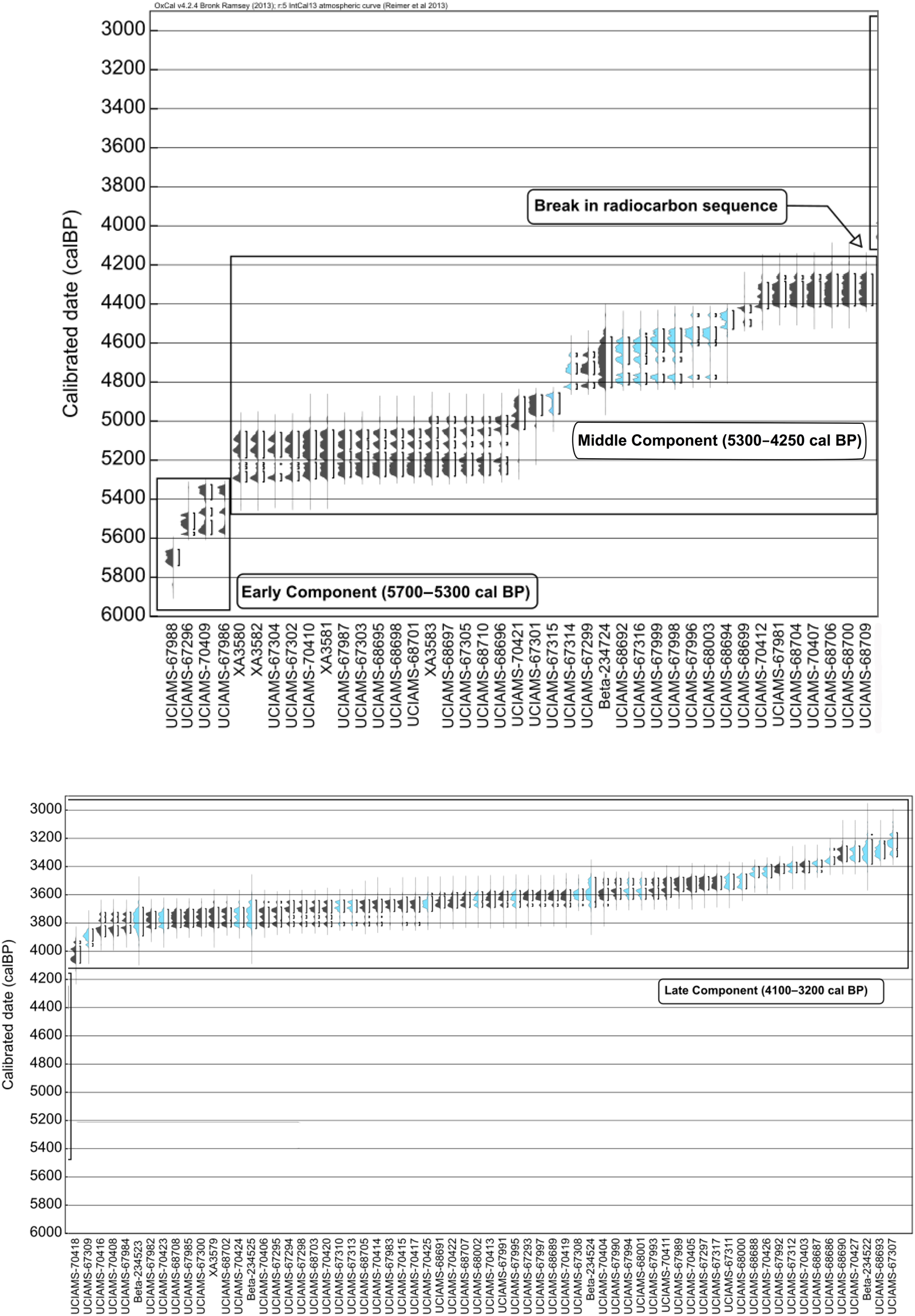
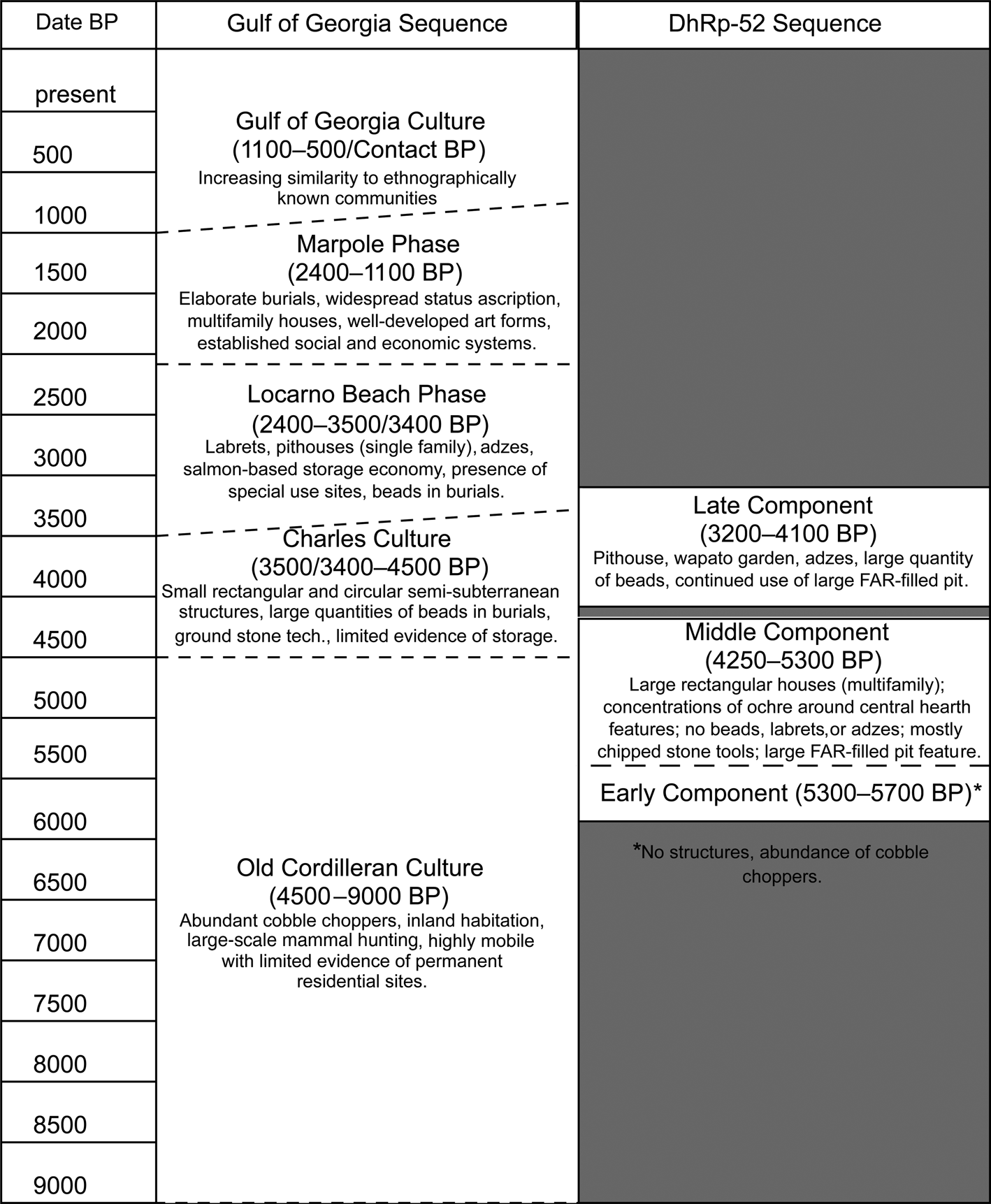
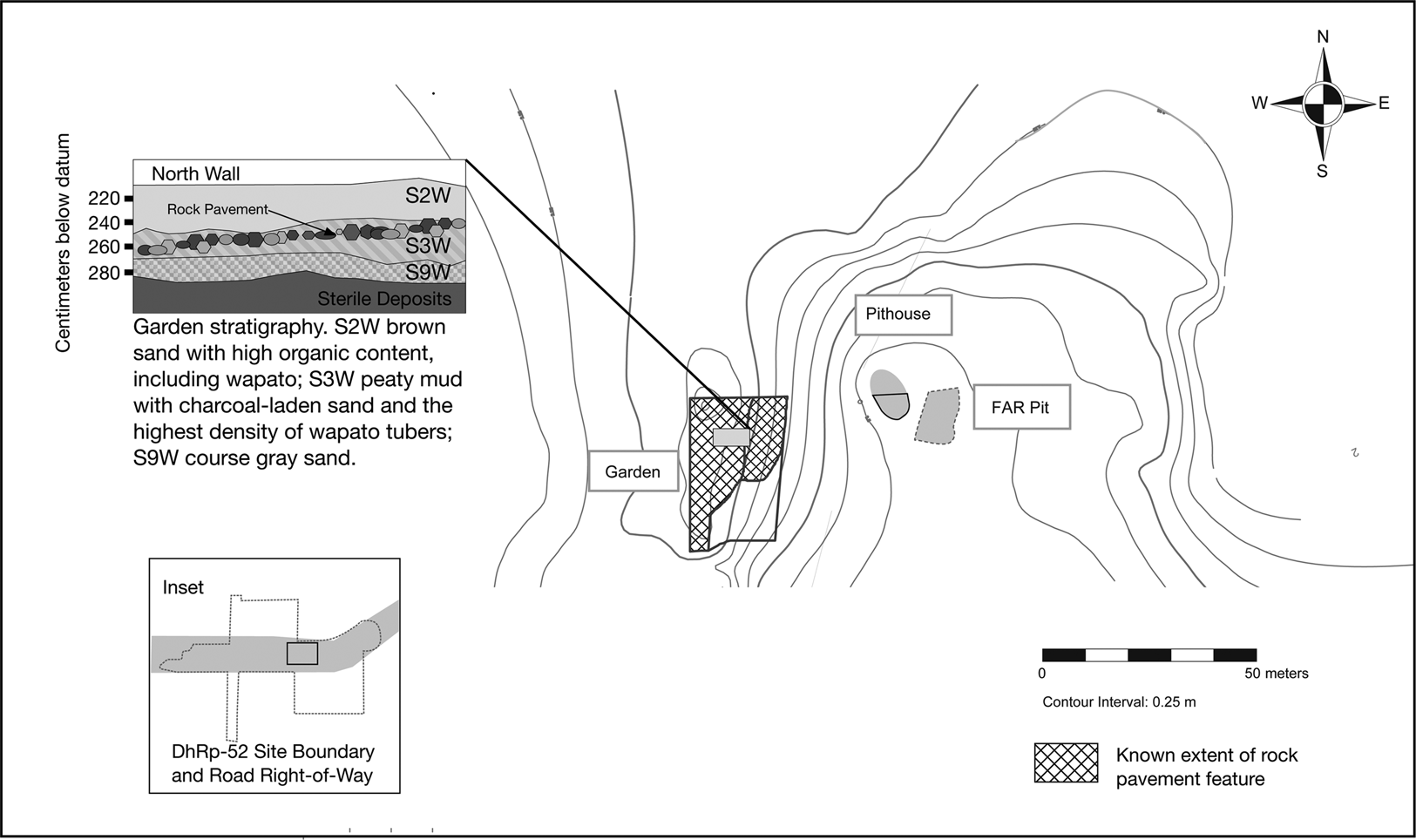
DhRp-52 has both a low-lying wet site, where organic materials and artifacts were preserved in an anaerobic environment, and an upland dry site with deeply stratified, intact cultural deposits. Radiocarbon dates suggest that the site was occupied for a 2,500-year period, from approximately 5700 cal BP to roughly 3200 cal BP (Hoffmann et al. Reference Hoffmann, Lyons, Miller, Diaz, Homan, Huddlestan and Leon2016; Figure 4). The wapato feature was built during the Late Component (4100–3200 cal BP) of occupation, by which time large rectangular houses built and occupied during the Middle Component (5300–4250 cal BP) had been replaced by at least one large circular pithouse with a well-defined central hearth (Figure 5). A massive pit feature (242 m2) filled with tons of fire-altered rock (FAR) occupied the east side of the residential site. Radiocarbon dates indicate that the pit feature was used during all recorded periods of site occupation, but most intensively during the Late Component. Both the periphery of the pit and the interior of the pithouse contain concentrations of stone disc beads (>90,000) that are often interpreted as markers of wealth-based inequality among ancestral peoples of the Pacific Northwest region (Coupland et al. Reference Coupland, Bilton, Clark, Cybulski, Frederick, Holland, Letham and Williams2016; Hoffmann et al. Reference Hoffmann, Lyons, Miller, Diaz, Homan, Huddlestan and Leon2016).
Radiocarbon sequence for DhRp-52. Lighter lines indicate wet site dates. (Color online)

Comparison of the regional culture history model with the DhRp-52 site chronology.

Evidence for hydrological engineering and plant management (Smith Reference Smith2011) derives from the anthropogenically modified deposits within the wet site. The primary feature—and the only one of its kind yet confirmed throughout the Northwest Coast—is a 292 m2 flat, submerged rock pavement consisting primarily of uniform-sized pieces of fire-altered rock interspersed with rounded cobbles laid one course thick (Figure 6). The pavement extends onto higher ground and becomes thicker, to a maximum of two courses, up the adjacent embankment. The rock feature is clearly anthropogenic rather than naturally occurring; approximately two-thirds of the stones excavated from a 42 m2 sample were thermally altered. Analyses of the sediments, pollen profiles, and seed rain (uncharred seeds deposited naturally on a cultural site that reflect the surrounding ecology) confirm that the resident managers altered the hydrological regime to make the feature more aqueous (see Table 1), resulting in the amplification of wapato growth through time (Hoffmann et al. Reference Hoffmann, Lyons, Miller, Diaz, Homan, Huddlestan and Leon2016).
Plan of DhRp-52 wet site garden and adjacent residential dry site.

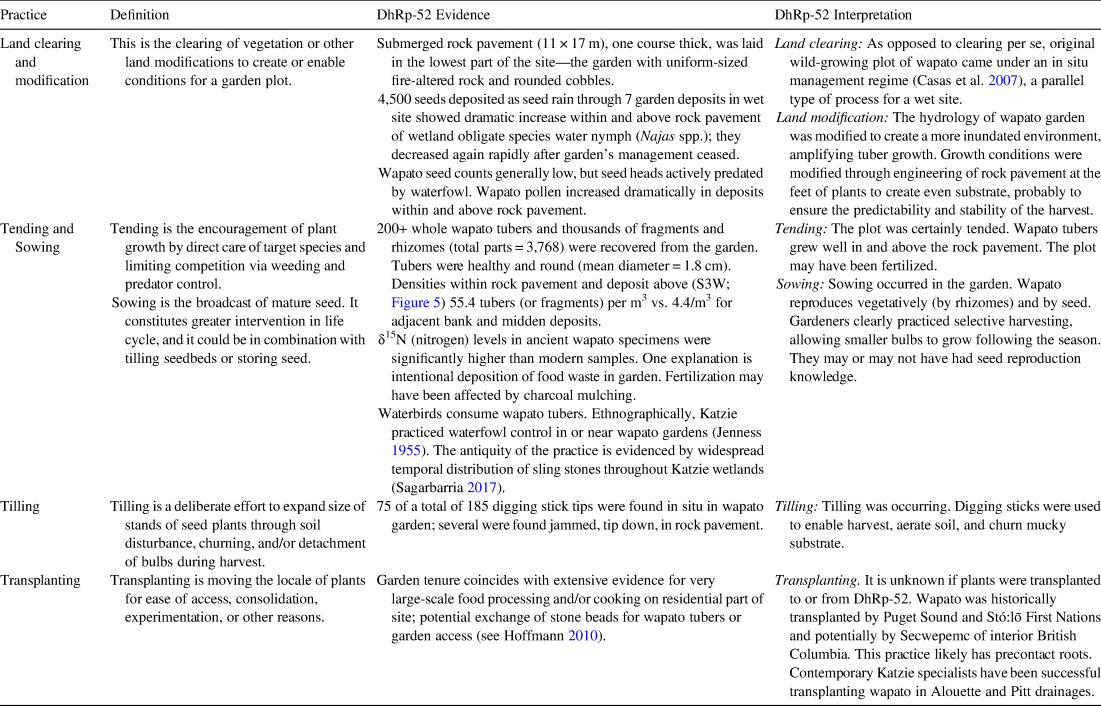
Evidence for Cultivation Practices in the DhRp-52 Wapato Garden.

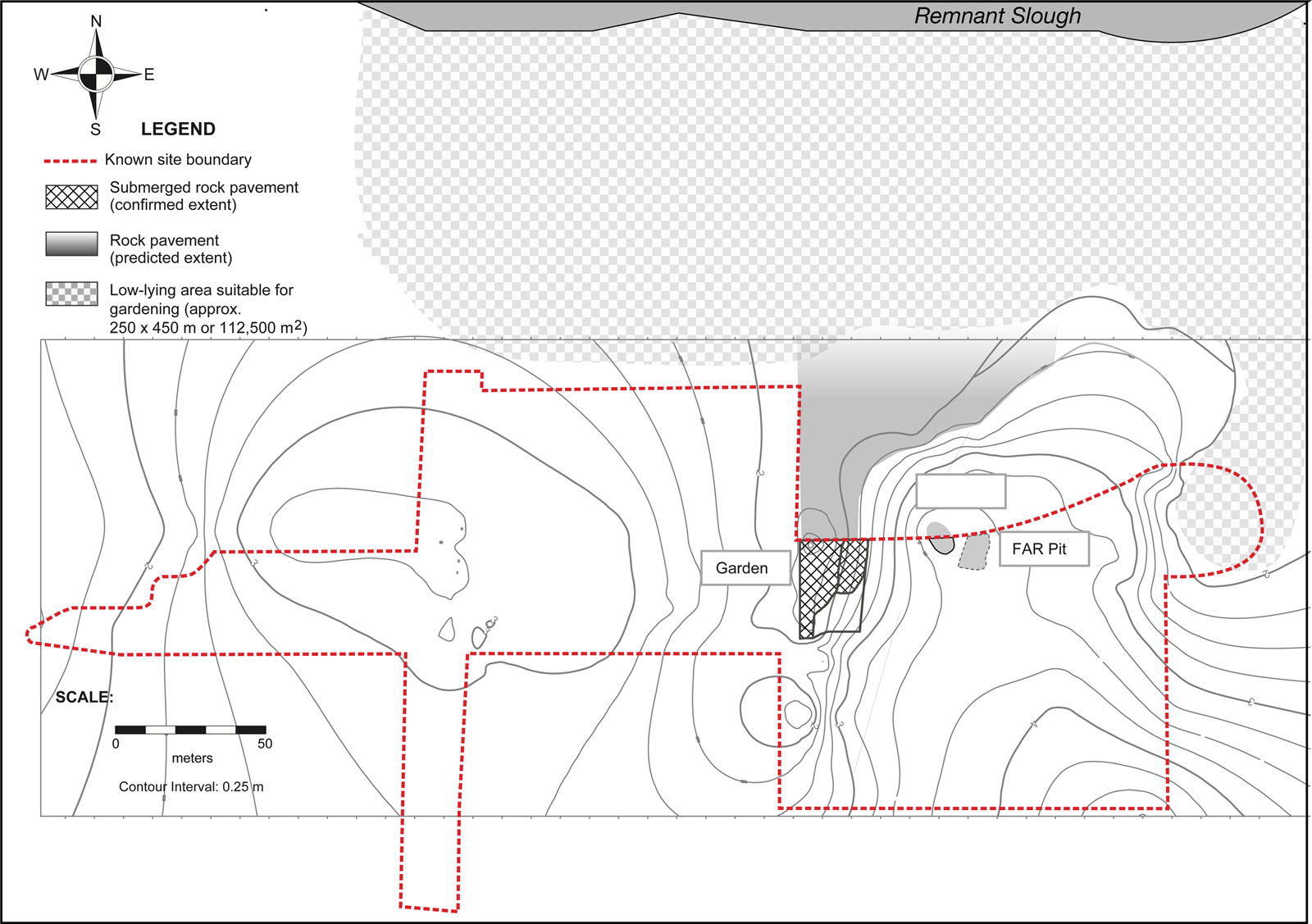
The highest overall counts of wapato tubers in the wet site were found within and above the lowest and largest segment of the rock pavement (71.8% of 3,768 total). Of these, 49.4% (n = 1,337) were recovered from the S3W deposits (Figure 6; Hoffmann et al. Reference Hoffmann, Lyons, Miller, Diaz, Homan, Huddlestan and Leon2016). Wapato tubers were found in growing position, some complete with attached rhizomes, in charcoal-rich substrates. The rock pavement likely functioned as a physical barrier to prevent the penetration of rhizomes deep into the underlying substrate, thereby making the tubers available for harvest at a predictable and accessible depth (Hoffmann et al. Reference Hoffmann, Lyons, Miller, Diaz, Homan, Huddlestan and Leon2016). At DhRp-52, 42 m2 of pavement was excavated from a 1,600 m2 zone within a slough tract suitable for growing wapato and estimated at 112,500 m2 (Figure 7). The latter is on par with Salishan reserve claims for wetlands, explored below. If wapato is cultivated in about 10 cm of sediment at a production rate of 55 tubers/m3 (Spurgeon Reference Spurgeon2001), and growing areas are rotated to allow the biannual fallowing indicated by experimental farming and traditional knowledge (Darby Reference Darby, Deur and Turner2005; Roma Leon, personal communication 2020), then the productivity of this feature could range as high as 4,400–275,000 tubers per year—a significant contribution to the diet of residents and likely neighboring communities.
Estimate of area suitable for growing wapato surrounding DhRp-52.

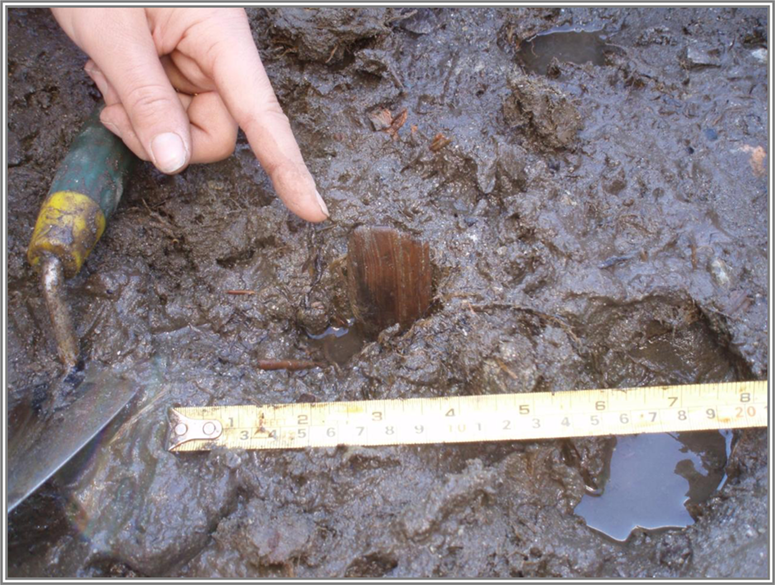
The broken tips of 74 wooden implements and a fragment of a tumpline were found directly beneath, above, or lodged within the rock pavement (Figure 8). A further 45 wooden implement tips were found in a midden area adjacent to the pavement. The majority of the wooden tools are interpreted as digging stick tips. Many are polished smooth and fire hardened, and where in situ orientation was recorded, most were found embedded tip-down in the rock pavement, presumably having broken off during use as harvesting implements.
Digging stick tips found lodged in the rock pavement. Photograph courtesy of Katzie First Nation. (Color online)

The density of wapato and its clearly intensive form of cultivation, combined with the proximity of the rock pavement to at least one large residential structure at DhRp-52, lead us to call the feature a garden (cf. van der Veen Reference van der Veen2005). This wetland garden is a prominent feature of the final occupation phase of this long-lived multicomponent village site. The stratigraphic dates place the use of the garden (3800–3200 BP) in what is known as the Charles Phase within the regional Gulf of Georgia sequence on the Northwest Coast (Figure 5). Charles Phase sites are typically small, some contain small houses, and people of this era are thought to have had highly localized economies and a lack of social complexity or resource intensification (e.g., Mason Reference Mason and Rousseau2017; Pratt Reference Pratt1992; Schaepe Reference Schaepe1998; but see Coupland et al. Reference Coupland, Bilton, Clark, Cybulski, Frederick, Holland, Letham and Williams2016; Prentiss and Walsh Reference Prentiss, Walsh and Sans2018). What little evidence for plant use exists for this time period is generally limited to edible seasonal resources, the use of western red cedar (Thuja plicata) for structural purposes, and a variety of perishable artifacts from wet sites (Bernick Reference Bernick1998, Reference Bernick2019; Lepofsky and Lyons Reference Lepofsky and Lyons2013). In our discussion, we consider how DhRp-52 accords with conventional interpretations of the Charles Phase and our wider conceptions of mid-Holocene socioeconomies on the Northwest Coast. Below, we focus on origin stories that relate to the wetland garden itself and the cultural implications that arise from them.
On the Origins of Wapato: Swaneset and the Sandhill Crane Sisters
One of the several lenses by which we can explore the origins of the wapato garden is through Katzie origin stories. Coast Salish scholar Jo-Ann Archibald (Reference Archibald2008) advises us that Indigenous stories from the oral tradition contain deep, serious life lessons. They instruct about the very nature and meaning of being, and in doing so, require careful and culturally appropriate analysis—what Archibald calls “storywork.” This work relies on ethnographic context, linguistic evidence, and contemporary Katzie knowledge.
In 1936, the ethnographer Diamond Jenness spoke with the Katzie shaman and historian Old Pierre, who was then about 75 years old. The account was published as “The Faith of a Coast Salish Indian” in 1955. In a text titled “The Katzie Book of Genesis,” Old Pierre recounts the creation of his people and lands by Swaneset. According to Old Pierre, Swaneset created the vast slough systems of the Pitt Polder and then returned to his people at Sheridan Hill to announce
that he had reshaped the land so that it would provide them with an abundance of Indian potatoes, cranberries, and other foods. The people scattered to gather these foods while Swaneset spent his days watching them. As he wandered along one day, he observed two very pretty girls, the sandhill crane (sli.’m) sisters, who at that time had the forms of human beings [Jenness Reference Jenness1955:13].
Swaneset proposed marriage to the Sandhill Crane sisters. They celebrated by roasting Indian potatoes (wapato) for him, which he found soft and tasty. He later
accompanied them to the potato-fields, and . . . watched them gather their food. They had no sticks, but dug with their hands and, like sandhill cranes to-day, threw the mud behind them, after which they broke it up and collected their potatoes [Jenness Reference Jenness1955:13].
These passages speak to the socioeconomic significance of wapato to the Katzie in the 1930s based on age-old oral traditions. In the larger text, Swaneset creates the optimum conditions for wetland faunal and floral resources to flourish and then teaches the Katzie how to find, hunt, cultivate, and preserve them; to choose proper sites and build homes; and to follow social mores and behave in the proper manner. Although the spoken form of this narrative surely altered over time and across tellings, the reliance on particular resources likely had very deep roots based in observations of the natural world. Swaneset observes how the sisters harvested wapato by digging up the mud. This may have been the original method by which proto–Coast Salish peoples who first settled the region—those we assume to be ancestors of today's Coast Salish communities—discovered that these tubers were edible. In addition to humans, many wetland creatures—including muskrats, waterfowl, and of course, cranes—actively seek wapato tubers (Garibaldi Reference Garibaldi2003). Turner (Reference Turner2014:2:162) suggests that First Peoples entering the New World may have seen, in similar fashion, that Northern rice root (Fritillaria camschatcensis) was edible by watching grizzlies dig and consume it in tidal marshes. Kelly Squires (personal communication 2017) posits that cranes have likely made gardens throughout Katzie territory one of their long-standing migration stops because they provided such a rich and dependable food source (cf. Darby Reference Darby, Deur and Turner2005). This ecological pattern creates an indelible symbolic association between sandhill cranes, wetlands, and wapato.
Historically, we know that visitors from communities throughout the Salish Sea region streamed into Katzie territory in the late fall, following the salmon fishery, to harvest wapato, bog cranberries, crabapples, sphagnum moss, and other wetland resources owned and managed by the Katzie (Duff Reference Duff1952:74). Wapato was cultivated and traded at a similar scale by Chinook peoples of the Lower Columbia (Darby Reference Darby, Deur and Turner2005), and less intensively by other communities of the Pacific Northwest (Garibaldi Reference Garibaldi2003; Haeberlin and Gunther Reference Haeberlin and Gunther1930). Traditional Katzie knowledge and ethnographic records describe how the Katzie grew wapato in large tracts. Some were common property, and others were seasonally owned by specific families. Large family tracts were annually weeded to allow the plants to flourish, demarcated to show ownership, and individually tended until the fall harvest (Suttles Reference Suttles1955:27). The plants were harvested from fall through late winter when women stepped out of their canoes and “danced” through the frigid water causing the fleshy tubers to break free and float to the surface—a technique much like that demonstrated by the Sandhill Crane Sisters.
Although resource management and procurement most often took place at the family or village level, complex affinal relationships promoted a much broader geographic distribution of and access to carefully managed (and often anthropogenically extended) resource niches well beyond Katzie territory. Status essentially derived from food gifting, sharing, and production; and “the best camas beds, fern beds, wapato ponds, and clam beds were owned by extended families” (Suttles Reference Suttles1960:300). The constant year-round movement of Coast Salish peoples up and down the Fraser River and its tributaries not only fostered but required this expansive network of kin ties that simultaneously allowed access to and control over territories and resources (Ames Reference Ames, Fitzhugh and Habu2002; Carlson Reference Carlson2010:47–48; Ritchie and Hatoum Reference Ritchie and Hatoum2020).
Wapato, as a cultural keystone resource (Garibaldi and Turner Reference Garibaldi and Turner2004), was central to both basic subsistence and the prestige economy—a fact that is revealed by its cosmopolitan linguistic distribution. “Wapato” derives from wáptu in Chinuk Wawa, or Chinook jargon, and it is also known as x̌ʷəq̓ʷə́wl̕s in hən̓q̓əmin̓əm̓, “Indian potato” and “broad-leaved arrowhead” in English, and Sagittaria latifolia in Latin (Le Jeune Reference Le Jeune1924 in Spurgeon Reference Spurgeon2001:38). The hən̓q̓əmin̓əm̓ word for wapato is x̌ʷəq̓ʷə́wl̕s, and a family patch of wapato is q̓ʷéx̌tən. The term for “tuber” used by Coast Salish speakers is skaus (sqéwθ), which would later become the generic word for the European potato (Solanum tuberosum)—a resource with Andean origins (Suttles Reference Suttles1951b, Reference Suttles1955:27; Turner Reference Turner2014:1:511). Skaus has a proto–Coast Salish root, s-qawc, that is thousands of years old, suggesting that the cultural use of valued root resources is of similar antiquity (cf. Galloway Reference Galloway2009; Kuipers Reference Kuipers2002; Turner et al. Reference Turner, Deur and Lepofsky2013:145). Verbs related directly or generally to wapato production—many with proto–Coast Salish linguistic origins—include those for roasting, planting or sowing, pulling up by the roots, clearing land, fencing or fortifying, spreading, raking, and marking, which suggests a linguistic frame for a complex resource management ecology (Galloway Reference Galloway2009; Kuipers Reference Kuipers2002; Suttles Reference Suttles1951a, Reference Suttles, Deur and Turner2005:191–192; Turner Reference Turner2014:Table A3-2).
Through times of economic, social, and cultural upheaval, hən̓q̓əmin̓əm̓ terms for wapato and other culturally significant plants, wapato patches, and resource management practices persisted within Katzie memory (Spurgeon Reference Spurgeon2001:68–75; Suttles Reference Suttles1955). Despite historical Katzie being forcibly removed from their traditional lands and waterways (Hoffmann Reference Hoffmann2017), the storywork of these resources and places endured in Katzie knowledge and discourse and has prompted the contemporary community and leadership to restore the stewardship imperatives that underpin traditional resource management practices (Katzie First Nation 2017; Lyons, Hoffmann, et al. Reference Lyons, Hoffmann, Miller, Huddlestan, Leon and Squires2018).
On the Origins of Agriculture: The Settler View of Coast Salish Territory
Indigenous resource management practices, such as wapato cultivation, have been seen (or rather, not seen) since contact through the lens of Western history and thought. Flowing from Enlightenment ideals, nineteenth- to mid-twentieth-century historical models tended to be generalizing, objectifying, and reductionist, as well as heavily entangled with imperialist economic strategies driven by an agrarian ideal (de Luna Reference de Luna, Finlayson and Warren2017; Harris and Demeritt Reference Harris, Demeritt and Harris1997:249). Western origin stories are founded on the ideal of the Fertile Crescent, where growing wheat, raising cattle, and sedentary living are the epitome of domesticated life, both provided and sanctioned by God (Blake Reference Blake2015:42–44). The agrarian story is a moral tale of progress that rests firmly on the raising of cereal crops for flour and feed.
An example of the origin myth of this agrarian ideal can be derived from the direct statements of English colonizers. In 1898, Canadian Deputy Superintendent General of Indian Affairs James Smart laid out the Department of Indian Affairs’ view on the position of agriculture in the hierarchy of “progress”:
The initial step towards the civilization of our Indians should be the adoption of agricultural pursuits . . . if the red man is to take his place and keep pace with the white in other directions. . . . Cultivation of the soil necessitates remaining in one spot, and then exerts an educational influence of a general character. It keeps prominently before the mind the relation of cause and effect, together with the dependence on a higher power. It teaches moreover the necessity for systematic work at the proper season, for giving attention to detail, and patience in waiting for results [James A. Smart, 1898, Canada, Sessional Papers, Department of Indian Affairs Annual Reports, xxi].
Prior to contact with newcomers, coastal First Nations lived comfortably within their own versions of carefully cultivated environments (Turner Reference Turner2014:1:265; Turner et al. Reference Turner, Deur and Lepofsky2013), and their resource management regimes aligned with Indigenous legal principles of title rights that appear to have great antiquity (Martindale et al. Reference Martindale, Marsden, Patton, Ruggles, Letham, Supernant, Archer, McLaren and Ames2017). Smart's version draws from the English vision of agriculture, the doctrines of a heavily patriarchal version of Christianity, and the perception that lands of British Columbia were terra nullius, and consequently free for the taking. The differences between English common law and Indigenous land practices are well documented (Borrows Reference Borrows2010), and they suggest a self-serving relationship between settler-colonial land encroachment and their ignorance of Indigenous resource management.
The first half of the nineteenth century was a time of intensive interaction, trade, and curiosity between these very different peoples and viewpoints (Fisher Reference Fisher1971–1972). First Nations found great use for incoming technologies and foodstuffs brought by the earliest traders. Potatoes, in particular, rapidly became a staple of the early contact era. They were sought after the length of the coast by First Nations communities, who built and grew gardens for them and other acquired root foods such as carrots, turnips, and onions. Deep knowledge of root food cultivation allowed for the rapid adoption of potato gardening on cultivated prairies: scores of potato gardens were recorded between 1825 and 1857, and First Nations gardeners actively traded potatoes back to Europeans for their sustenance (McDonald Reference McDonald, Deur and Turner2005; Moss Reference Moss, Deur and Turner2005; Suttles Reference Suttles1951b:147). Despite the ubiquity of potato gardens in the mid-nineteenth century, this period of plenty was short lived. When the colony of British Columbia was established in 1858, Governor James Douglas appropriated Indigenous land for settlers by signing a series of treaties with Vancouver Island Salish and creating Indian reserves on unextinguished First Nations’ territory in the remainder of the province. Less than a decade later, Douglas's successor, Land Commissioner Joseph Trutch, would reduce the original reserve sizes by tenfold because, in his estimation, First Nations communities had not adequately conformed to an agrarian lifestyle (Fisher Reference Fisher1971–1972).
Despite Trutch's assessment, many Coast Salish families of this period grew crops in kitchen gardens, planted fields of corn, tended orchards of fruit trees, and kept small-scale dairies (Oliver Reference Oliver2010). First Nations communities, however, were prohibited by federal legislation in 1870 from claiming land via preemption, a process wherein European settlers were allowed up to 320 acres of so-called “unsettled” land (Carlson Reference Carlson2010). In the latter half of the nineteenth century—a time when Katzie people still used and maintained wapato gardens (Figure 2)—extensive programs of diking, dredging, and filling would eradicate the carefully managed slough systems and wetlands throughout the Pitt Polder region to make way for dryland agriculture (Hoffmann Reference Hoffmann2017). Indian Reserve Commission maps and surveyors’ notes for 1879 record Katzie's desire to have a number of their “potato” (wapato) gardens in the Pitt River wetlands set aside, but the commissioners took the flooded areas marked as potato grounds to be in error, and Katzie were denied their traditional wapato tracts (Mohun Reference Mohun1880).
The myth of agrarian society was not borne out in the lands of the Coast Salish. Settler ideologies drove newcomers to both denigrate and eradicate native plant species and their carefully managed landscapes—including wetland habitats, which Westerners viewed as dangerous and disease ridden (O'Sullivan Reference O'Sullivan, Menotti and O'Sullivan2013; Siemens Reference Siemens1998)—and to eschew the knowledge of Coast Salish peoples (Garibaldi and Turner Reference Garibaldi and Turner2004). Nearly all historically existing wapato cropland was destroyed through land alterations related to draining and filling wetlands (Spurgeon Reference Spurgeon2001). The marginal stands of wapato that did continue to exist, over time, became inedible as they absorbed toxic pesticides, heavy metals, and other foreign substances leached into the soil and water system via agricultural and industrial development (Garibaldi Reference Garibaldi2003; Hoffmann Reference Hoffmann2010, Reference Hoffmann2017).
Fortunately, it is not too late to deconstruct the pervasive origin myths that created and perpetuated perceptions of the superiority of modern agriculture and industry. Nor is it too late to document the principles and practices of cultivating the carbohydrate-rich, non-grain resources to the extent that they effectively became “behavioral domesticates” of Northwest Coast communities (Smith Reference Smith, Deur and Turner2005:61; Zvelebil Reference Zvelebil, Chapman and Dolvkhanov1993). Indeed, as we discuss below, the work of relearning and implementing these practices is underway at Katzie and other First Nations communities.
On the Origins of Agriculture: The Archaeological Models
A third set of origin stories derives from archaeological models. These models are built on similar narratives as Western settler history and rely on many of the same assumptions about the agrarian ideal. Here, we seek to unpack these ideas—which continue to inform how archaeologists think about and describe cultural “others”—in order to assess how the wapato garden fits into this disciplinary picture.
V. Gordon Childe (Reference Childe1936) coined the term “Neolithic Revolution” to describe the shift from a foraging existence to settled agricultural communities beginning around 12,000 years ago in the Near Eastern region of Mesopotamia. The major studies of the “Fertile Crescent” in the mid-twentieth century, which charted the spread of the Neolithic Revolution to Europe, were based on the tacit Western assumption that the ideal route to “civilization” follows the path of cereal grain cultivation and animal husbandry to the apex of human subsistence: domestication, agriculture, surplus production, population growth, social complexity, and the many trappings of sedentary society. Societies lacking any form of farming were considered “primitive.” According to Childe,
There in the Ancient East, too, some episodes . . . in the great drama of conquest of civilization are enacted on the open stage. The greatest moments—that revolution where man ceased to be purely parasitic and, with the adoption of agriculture and stock-raising, became a creator emancipated from the whims of his environment [Childe Reference Childe1934:1].
The Near Eastern case study became the origin story about the birth of agriculture for generations of archaeologists and anthropologists, sanctioned (and made unassailable) by scientific ideas of objectivity and an accruing body of empirical evidence derived from dryland archaeological sites in Europe and Mesopotamia (Blake Reference Blake2015:44–45).
In time, archaeologists encountered human societies whose economies blurred these lines and which could not be fit onto a continuum between forager and farmer. As a result, they were forced to consider how these economies might be understood and categorized. The use of terms such as “middle range” for these societies shows the continued conceptual power of the continuum. Midrange societies are those that existed sustainably for long stretches of time without adopting or creating morphological domesticates or developing into “state-level” societies (all embedded expectations of the established agrarian model). Several Indigenous nations of the Americas—such as the Calusa of Florida (Hutchinson et al. Reference Hutchinson, Norr, Schober, Marquardt, Walker, Newsom and Scarry2016) and the Chumash (Arnold Reference Arnold1992) and Kumeyaay (Shipek Reference Shipek, Harris and Hillman1989) of California—and the mosaic of historically documented First Nations peoples of the Pacific Northwest, including the Coast Salish (Ames and Maschner Reference Ames and Maschner1999; Matson and Coupland Reference Matson and Coupland1995; Prentiss and Kuijt Reference Prentiss and Kuijt2012), fit this type. These societies, which have been called “complex hunter-gatherers” and “transegalitarian societies,” have long posed a challenge to conventional anthropological taxonomies (Hayden Reference Hayden, Price and Feinman1995; Sassaman Reference Sassaman2004; Smith Reference Smith, Deur and Turner2005:37–39).
As an exercise that illustrates our larger critique, we ask where the DhRp-52 wapato garden fits within the midrange models (Table 1). Using terms defined in Ford's (Reference Ford1985) and Harris's (Reference Harris, Ellen and Fukui1996) schema, we provide evidence from DhRp-52 for a suite of plant cultivation practices. This analysis of the wapato plot reveals that site residents were likely fertilizing, possibly weeding, tilling with digging sticks, manipulating the garden's hydrology to amplify growth, creating a rock pavement for ease of harvest, and selectively harvesting (site residents were also likely involved in feasting, large-scale processing, status-oriented activities, and exchange; Hoffmann et al. Reference Hoffmann, Lyons, Miller, Diaz, Homan, Huddlestan and Leon2016; Lyons, Hoffmann, et al. Reference Lyons, Hoffmann, Miller, Huddlestan, Leon and Squires2018). The attributes of the wapato plot suggest that these proto–Coast Salish gardeners were practicing what has variously been called “wild plant food production” by Harris (Reference Harris, Ellen and Fukui1996), “behavioral domestication” by Zvelebil (Reference Zvelebil, Chapman and Dolvkhanov1993), “low-level food production without morphological domestication” by Smith (Reference Smith, Deur and Turner2005), and somewhere between “incipient agriculture” and “gardening” by Ford (Reference Ford1985), this former designation first suggested by Suttles in 1951.
So, were the ancient Coast Salish farmers? In the vernacular sense, the answer is yes. Wapato was a behavioral domesticate of proto–Coast Salish people—at least at DhRp-52—and of both ethnographic-era Katzie and Chinook (Darby Reference Darby, Deur and Turner2005; Suttles Reference Suttles1955). This assessment is greatly strengthened, and potentially extended to Northwest Coast Peoples more generally, if we add other perennial root foods such as the late precontact estuarine gardens of springbank clover (Trifolium wormskioldii) and Pacific silverweed (Potentilla anserina) in Nuu'cha’nulth and Kwak'wakw’akw territories (Deur Reference Deur2000, Reference Deur, Deur and Turner2005; Mathews and Turner Reference Mathews, Turner, Levin and Poe2017), evidence for camas production by Coast and Straits Salish communities (Lyons and Ritchie Reference Lyons and Ritchie2017), and native tobacco (Nicotiana quadrivalvis) gardens in Haida, Tlingit, and Tsimshian territories (Moss Reference Moss, Deur and Turner2005; Turner Reference Turner2014:2:189).
Yet, within the disciplinary framework, no answer comes without equivocation. Assigning the characteristics of these gardens and attendant economic practices to particular categories is problematic for a number of reasons. First, terms such as “cultivation,” “gardening,” and “farming” are defined in a wide variety of ways, making their potential applications ambiguous (Smith Reference Smith, Deur and Turner2005:54–59). Second, in trying to pigeonhole complex cultural practices into predefined schema, which are by their nature both relative and reductionist, we undermine our understanding of their specific contexts and uniqueness (Ames Reference Ames, Deur and Turner2005:71; Turner Reference Turner2014:1:265). Third, the midrange models are focused on the reproduction of annuals in dryland contexts by seed rather than on wetland perennials by vegetative means (Deur Reference Deur2000:41–46), an outcome of the hegemony of the agrarian model itself. Blake (Reference Blake2015) has observed that
[we] have generally neglected to theorize about the origins of non-grain crop agriculture. Although we are now accumulating information about the domestication histories of non-grain crops, we still do not have many models or explanations about how root crops, tree fruits, and other non-grain foods and spices came to be domesticated—and this goes for both Old World and New World species [Blake Reference Blake2015:50].
The wetland farming literature from tropical and temperate regions such as Asia and Central and South America offers excellent analogues for mixed subsistence economies that integrated cultivated crops—including small-scale gardens and large cultivated fields—tree crops, and wild resource procurement over long durations (Casas et al. Reference Casas, Otero-Arnaiz, Perez-Negron and Valiente-Banuet2007; Denevan Reference Denevan2001; Killion Reference Killion2013; Siemens Reference Siemens1983; VanDerwarker Reference VanDerwarker2005). Wetland farming can feature raised and drained beds, modifications to water and soil regimes, substantial rock and earthworks, and the expansion of productive niches for wild plant species and their intercropping with cultivars (Ford and Nigh Reference Ford and Nigh2015; Nations and Nigh Reference Nations and Nigh1980). Key root crops originating in the Americas—including manioc (Manihot esculenta), sweet potatoes (Ipomoea batatas), peanuts (Arachis hypogaea), and many others—are essential cultivars in these mixed gardening regimes that often existed in close proximity to rich wetland environments with their abundant fish, waterbird, and aquatic animal populations (e.g., Heckenberger Reference Heckenberger2004). In Mesoamerica, these forms of wetland farming were similarly doubted by proponents of the dryland paradigm, and perhaps for this reason, this literature tends to focus on variation—in shape, structure, and hydrological engineering, in addition to prospects for past and present usage—rather than on origins and the hegemony of a single model (Siemens Reference Siemens1983, Reference Siemens1998; Sluyter Reference Sluyter1999).
The DhRp-52 garden is an excellent archaeological example of a mixed subsistence regime that employed niche construction. Starting at 3800 BP, resident gardeners constructed a rock pavement that effectively altered the hydrological regime to make the garden wetter, in turn dramatically amplifying wapato production, as seen in commensurate rise in tuber densities and wetland obligate plant species through the garden sequence (Table 1). By creating a rich niche for wapato, these gardeners also created bait for predators such as waterbirds, thereby making the garden a seasonal hunting locale (Darby Reference Darby, Deur and Turner2005; Garibaldi Reference Garibaldi2003). This set of anthropogenically enhanced biotic interrelationships invokes Monks's (Reference Monks1987) classic Northwest Coast “prey as bait” model. The wapato garden was managed in this way for some 500 years—at the same time as a vast suite of wild wetland and terrestrial plants was consistently harvested by site residents—and after the garden's abandonment, its deposits dried up and acidified as the wetland moved toward a lower-energy peat bog (Hoffmann et al. Reference Hoffmann, Lyons, Miller, Diaz, Homan, Huddlestan and Leon2016). Clearly, these different facets of knowledge were passed on during the succeeding three millennia, given that historic Katzie continued to cultivate and manage large tracts of wapato and pursue seasonal game at these same locales (Suttles Reference Suttles1955). We are currently pursuing evidence for other ancient wapato gardens—including investigations of a sequence of potential (now disrupted) rock pavements from the Carruthers site, located inland from DhRp-52 (Copp et al. Reference Copp, Hoffmann, Wilkerson and Bernick2019)—and we are confident that others will be found when we develop the correct lenses to find them.
As we expand our frames of analysis for the wapato garden and other archaeological forms of cultivation on the Northwest Coast, we should also be rethinking how we frame our questions. Instead of asking if the ancient Coast Salish were farmers in the vein of Childe's Neolithic Revolution, perhaps we should shift our gaze to more culturally appropriate analogues: Were the ancient Coast Salish resource managers? Yes. Were they ecosystem engineers? Yes. Did they combine cultivation and foraging? Yes. And, were they wetland farmers? Yes, they were. These assessments are echoed in the words of Kwakwaka'wakw elder and scholar Daisy Sewid-Smith, who explained to Nancy Turner and colleagues (Reference Turner, Deur and Lepofsky2013) that her people knew that plants and animals do not just appear in nature with the characteristics that people desire—they require a sustained set of cultural practices and knowledges to produce them. She reasoned that “to get more harvest, and a bigger . . . berry, they did these things. Same thing . . . a farmer does” (Turner et al. Reference Turner, Deur and Lepofsky2013:107).
Discussion: What Do Stories of Agricultural Origins Mean in the Real World?
A game-changing discovery such as the wapato garden at the archaeological site of DhRp-52 offers many communities of knowledge-holders both challenges and opportunities for growth. The finding of evidence for sustained mid-Holocene wetland farming on the Northwest Coast of North America should prompt First Nations, settler, and archaeological communities to reexamine their/our origin stories and to revisit what we think we know. In this discussion, we explore the real-world implications of these stories.
The beliefs that First Nations peoples of the Pacific Northwest once held about their place in the world were buried and undermined by colonial bullying, genocide, marginalization, and assimilationist processes, and for this reason, the excavation of the wapato garden was a landmark of recent Katzie history. Over 70 Katzie members participated in the management, excavation, and analyses of DhRp-52 (Hoffmann Reference Hoffmann2010). The excavation brought a revival of cultural pride, identity, and knowledge. It also reflected the customary laws and scholarship embedded in the stories of Swaneset and his teachings about how to take care of the social and natural worlds around them. Although not a panacea for all challenges to the community, this experience and its outcomes has given many Katzie a sense of knowing who they once were and equally provided a new (old) footing from which to move forward (Lyons, Hoffmann, et al. Reference Lyons, Hoffmann, Miller, Huddlestan, Leon and Squires2018). For other Katzie, the government's unwillingness to preserve the site and the archaeological excavation that paved the way for construction of an arterial roadway serves as yet another example of how government forces continue to impact the trajectory of Katzie lives, and how colonial policy is echoed in the present (e.g., Abbott Reference Abbott2017; Schaepe Reference Schaepe, Labrador and Silberman2018).
Contemporary Katzie leaders are continuing the negotiation work toward a land claims treaty with the province and nation that would give them greater control of their lands and resources. They are using evidence of ancient plant management to counter Western conceptions of “land use” that were—and continue to be—used to justify preemption of Katzie territory (Hoffmann Reference Hoffmann2017). “We were farmers, and now we have proof!” declared one Katzie leader (Peter James, personal communication 2017). Wapato farming is seeing a resurgence through the implementation of the Katzie ecocultural restoration plan, which is fostering experimentation with different forms of cultivation (Katzie First Nation 2017). This work is part of a larger cultural resurgence movement of First Nations and Native American communities throughout the Pacific Northwest to restore culturally important species and the habitats that sustain them (e.g., Reynolds and Dupres Reference Reynolds and Dupres2018; Turner Reference Turner2020; Turner, ed. Reference Turner2020).
The settler community of the Fraser River Delta, in contemporary Coast Salish territory, may similarly be encouraged by the well-publicized find of the wapato garden to examine its own origin stories and relationships to its Katzie neighbors. First Nations assertions of rights and title to territory and resources through treaty will continue to affect settler populations, and these negotiations can be viewed and proceed with either antipathy or goodwill. Historically, Canadian governments, media, and the popular culture that drives them have not been friendly to Indigenous rights or claims (Coulthard Reference Coulthard2014). Katzie are among those First Nations actively challenging respective communities of the Fraser Delta to envision how they might coexist and create a shared sense of belonging to the landscapes, economies, and communities they live in together.
The continuing trope of capitalist progress and its financial and cultural trappings is increasingly coming under sharp scrutiny. People are looking elsewhere for models of wellness and ways to grow and sustain it. In this vein, Turner and colleagues (Reference Turner, Deur and Lepofsky2013:127) suggest, “There is tremendous potential for traditional [Indigenous] management methods to be renewed and applied, probably incorporating some of the more recent tools and techniques to make them practical in a modern context.” A growing number of First Nations and allied practitioners in the Pacific Northwest are hard at work restoring camas prairies, wetland, and intertidal gardens; running native plant nurseries and seed exchanges; and developing strategies for food security, alternative energies, and land-based pedagogies (Turner, ed. Reference Turner2020).
The wapato finding also challenges the origin stories of archaeologists. In terms of nomenclature, the wapato garden requires us to reconsider how we conceive of and categorize both ancient and contemporary Northwest Coast communities. Were the ancient Coast Salish farmers? What does DhRp-52 mean for archaeological origin stories about ancient plant food production on the Northwest Coast? What do we call the practices that created and sustained it? This article intends to provoke some of these discussions rather than provide definitive answers. What does the wapato garden mean for the relationship between Northwest Coast archaeologists and contemporary Coast Salish peoples? Undoubtedly, our First Nations partners and colleagues will continue to bring us new understandings of both themselves and ourselves and prompt us to revise our ideas and our methods of inquiry and analysis.
In terms of the “classic anomaly,” the wapato garden urges us to rethink how mid-Holocene economies were organized and operated in proto–Coast Salish territory and beyond. The story that Charles Phase cultures in the Gulf of Georgia gradually evolved from simple to complex is unsettled by the wapato garden and its implications. What the wapato garden, the large and elaborate processing facilities, and the close to 100,000 beads recovered at DhRp-52 (Hoffmann et al. Reference Hoffmann, Lyons, Miller, Diaz, Homan, Huddlestan and Leon2016) suggest is that proto–Coast Salish cultures developed resource intensification, socially complex relationships, and status-related inequality during the Charles Phase. These circumstances may not have been sustained across time and place—but they are very clearly documented at many locations within the region (Figure 5; Coupland et al. Reference Coupland, Bilton, Clark, Cybulski, Frederick, Holland, Letham and Williams2016; Martindale et al. Reference Martindale, Marsden, Patton, Ruggles, Letham, Supernant, Archer, McLaren and Ames2017; Prentiss and Walsh Reference Prentiss, Walsh and Sans2018). Chances are that gardens of this nature exist elsewhere in Coast Salish territory in different time periods and that other examples of resource management practices and mixed economic practices will increasingly be discovered as we continue to expand the lenses through which we observe and analyze archaeological data.
In the wider anthropological realm, how do contemporary usages of the terms “hunter-fisher-gatherer” and “farmer” hold up under scrutiny? In his inquiry, Robert Kelly (Reference Kelly2013) was unable to find a consistent definition of “hunter-gatherer,” providing but one illustration of the typology's failure to successfully accommodate the diversity and changing trajectories of human subsistence economies across either space or time. Notably, many of the economic practices, effects, and social consequences of agriculture are visible in nonagricultural contexts, suggesting that the taxonomy itself is overly simplistic and that economic models might better be conceived as multibranched and fluid forms than as linear and fixed continua (e.g., Ames Reference Ames1991; Denham Reference Denham2009; Smith Reference Smith, Deur and Turner2005, Reference Smith2011). The variations in material complexity that we are seeing in First Nations histories across space and time in the Pacific Northwest—which do not follow either unilineal or universal trajectories—challenge some of archaeology's foundational beliefs and persistent organizing principles. It is time that we reevaluate our terms, examine their (often colonial) cultural underpinnings, and work to understand both specific logics and local ideas, practices, and experiences on their own terms (de Luna Reference de Luna, Finlayson and Warren2017; Martindale and Nicholas Reference Martindale and Nicholas2014).
This article has examined cultural constructs about farming in relation to the archaeological discovery of a 3,800-year-old wapato garden in contemporary Katzie territory, near Vancouver, British Columbia. Our examination of origin stories suggests that many of our terms carry certain colonial baggage, and furthermore, they have been applied uncritically to both peoples and their lifeways of the past and present. The contention that proto–Coast Salish people were wetland garden farmers in addition to being sophisticated resource managers who practiced a mixed subsistence economy—including hunting, gathering, fishing, and farming—challenges not only anthropological orthodoxy about Northwest Coast societies but asks archaeologists and settlers alike to revisit the terms of our engagement with First Nations of the region. Katzie, like other Indigenous peoples, are well aware of the sovereignty, legal, and stewardship stakes embedded deep in the colonial nomenclature, and they are keen to move forward on an equal footing with the newcomers to their original lands.
Acknowledgments
These ideas have been happily gestating for many years and have vastly benefited from our interactions and discussions with scores of people. We owe our greatest thanks to successive Katzie chiefs and councils as well as the Katzie crew members who led the excavations on this site—practically, spiritually, and emotionally. Thanks to Katzie chiefs and councils past and present, Katzie elders, and community members—especially Cyril Pierre, James Adams, Mike Leon, and Leah Muenier. Many thanks to the wonderful scholars of wapato and Northwest Coast plant life: Old Pierre and his son Simon Pierre, Wayne Suttles, Roma Leon, Nancy Turner, Dana Lepofsky, Terry Spurgeon, Ann Garibaldi, Melissa Darby, Sandra Peacock, Douglas Deur, Linda Storm, Chelsey Armstrong, Chief Adam Smith, and Daisy Sewid-Smith. Special thanks to Amy Homan, Emily Wilkerson, Alejandra Diaz, Stephanie Huddlestan, Teresa Leon, Anna Baran, and Kitty Bernick for their dedicated work related to the DhRp-52 site. We thank several individuals whose knowledge and expertise have been useful and appreciated: our very astute and generous reviewers, including Dave Schaepe and editor Lynn Gamble, as well as Anna Prentiss, Gary Coupland, Strang Burton, Kathryn de Luna, Colton Vogelaar, Ian Cameron, Solène Mallet Gauthier, and Morgan Ritchie. We dedicate this article to Ken Ames, a man of towering intellect and kindness, who is sorely missed by us and many others.
Data Availability Statement
All data is archived at Katzie First Nation. Contact Katzie Chief and Council with data inquiries: 19700 Salish Rd, Pitt Meadows, BC V3Y 2G6, Canada.