Introduction
The genus Megalobatrachonema Yamaguti, 1941 is a rare group of nematode parasites of the Order Ascaridida. According to Baker (Reference Baker1980), this genus allocates two subgenera, Chabaudgolvania Freitas, 1958 and Megalobatrachonema Baker, 1980, based on the presence/absence of valves in the oesophageal bulb. In the subgenus Megalobatrachonema, only three species have been reported from amphibians and reptiles, namely M. nipponicum Yamaguti, 1941 collected from Andrias japonicus (Temminck) (Caudata: Cryptobranchidae) in Japan; M. papuaensis Bursey, Goldberg & Kraus, 2012 collected from Fojia bumui Greer & Simon (Squamata: Scincidae) in Papua New Guinea; and M. giganticum (Olsen, 1938) collected from Rana pretiosa Baird & Girard (Anura: Ranidae), Anaxyrus boreas (Baird & Girard) (Anura: Bufonidae), Lithobates sylvaticus (LeConte) (Anura: Ranidae) and Ambystoma tigrinum Green (Caudata: Ambystomatidae) in the USA (Olsen, Reference Olsen1938; Yamaguti, Reference Yamaguti1941; Richardson and Adamson, Reference Richardson and Adamson1990; Bursey et al., Reference Bursey, Goldberg and Kraus2012).
The systematic status of Megalobatrachonema in the superfamily Cosmocercoidea (Ascaridida) has long been controversial. Yamaguti (Reference Yamaguti1941) established the genus Megalobatrachonema and placed it in the Kathlaniidae. Later, Freitas (Reference Freitas1958) and Skrjabin et al. (Reference Skrjabin, Shikhobalovna and Lagodovskaey1964) proposed that Megalobatrachonema should be placed in the Oxyascarididae, as the separate subfamily Megalotrachonematinae. However, Baker (Reference Baker1980) agreed with Yamaguti (Reference Yamaguti1941) and also considered Megalobatrachonema to be a member of the subfamily Kathlaniinae in the Kathlaniidae.
Moreover, the relationship of the two genera Megalobatrachonema and Chabaudgolvania remains unclear. Freitas (Reference Freitas1958) considered Megalobatrachonema and Chabaudgolvania to be distinct genera belonging to two different families, Oxyascarididae and Subulascarididae, respectively. Subsequently, Hartwich (Reference Hartwich1960) indicated that the genus Chabaudgolvania represented a synonym of Megalobatrachonema. This proposal was accepted by Chabaud (Reference Chabaud1978). Later, Baker (Reference Baker1980) treated Chabaudgolvania as a subgenus of Megalobatrachonema. However, the phylogenetic study based on morphological characters supported the full generic status of Chabaudgolvania (Richardson and Adamson, Reference Richardson and Adamson1990).
In the present study, a new species of Megalobatrachonema was described based on specimens collected in Amolops hainanensis (Boulenger) and Hylarana spinulosa (Smith) (Amphibia: Anura) from Hainan Island, China. The large ribosomal DNA (28S) and internal transcribed spacer (ITS1-5.8S-ITS2) were also sequenced for molecular identification. In addition, in order to clarify the systematic status of Megalobatrachonema in Cosmocercoidea, and the validity of the generic status of Megalobatrachonema and Chabaudgolvania, the phylogenetic analyses were performed using maximum likelihood (ML) and Bayesian inference (BI) based on ITS1 and 28S of nuclear rDNA sequences, respectively.
Materials and methods
Light and scanning electron microscopy
Several nematode specimens were collected in Amolops hainanensis (Boulenger) (Anura: Ranidae) and Hylarana spinulosa (Smith) (Anura: Ranidae) from Diaoluo Mountain, Hainan Island, China and sent to the authors’ laboratory for specific identification. Nematodes were fixed and stored in 80% ethanol prior to study. For light microscopical studies, nematodes were cleared in lactophenol. Drawings were made with the use of a Nikon microscope drawing attachment. For scanning electron microscopy (SEM), specimens were re-fixed in 4% formaldehyde solution, post-fixed in 1% OsO4, dehydrated via an ethanol series and acetone, and then critical point dried. The specimens were coated with gold and examined using a Hitachi S-4800 scanning electron microscope at an accelerating voltage of 20 kV. Measurements (range, followed by the mean in parentheses) are given in micrometers (μm) unless otherwise stated. Type specimens were deposited in the College of Life Sciences, Hebei Normal University, Hebei Province, China.
Molecular procedures
The midbody parts of one male and one female were used for molecular analysis. Genomic DNA from each sample was extracted using a Column Genomic DNA Isolation Kit (Shanghai Sangon, China) according to the manufacturer's instructions. DNA was eluted in elution buffer and kept at −20°C until use. The ITS1 region of nuclear rDNA was amplified by polymerase chain reaction (PCR) using the forward primer SS1 (5′-GTTTCCGTAGGTGAACCTGCG-3′) and the reverse primer SS2R (5′-AGTGCTCAATGTGTCTGCAA-3′). The ITS-2 region of nuclear rDNA was amplified by PCR using the forward primer NC13 (5′-ATCGATGAAGAACGCAGC-3′) and the reverse primer NC2 (reverse: 5′-TTAGTTTCTTTTCCTCCGCT-3′) (Zhu et al., Reference Zhu2000). The partial 28S region of nuclear rDNA was amplified by PCR using the forward primer 28S-F (5′-AGCGGAGGAAAAGAAACTAA-3′) and the reverse primer 28S-R (5′-ATCCGTGTTTCAAGACGGG-3′) (Nadler and Hudspeth, Reference Nadler and Hudspeth1998). The PCR was performed in 50 μl of PCR reaction buffer with 10 mm Tris HCl at pH 8.4, 50 mm KCl, 3.0 mm MgCl2, 250 μm of each dNTP, 50 pmol of each primer and 1.5 U of Taq polymerase (Takara) in a thermocycler (2720, Applied Biosystems) under the following conditions: 94°C, 5 minutes (initial denaturation), followed by 30 cycles of 94°C, 30 s (denaturation), 55°C, 30 s (annealing), 72°C, 30 s for ITS1 and ITS2 regions, but 72°C, 1 minute 10 s for 28S region (extension), and a final extension of 72°C for 7 minutes. PCR products were checked on GoldView-stained 1.5% agarose gels and purified with a Column PCR Product Purification Kit (Shanghai Sangon, China). Sequencing was carried out using a Dye Deoxy Terminator Cycle Sequencing Kit (v.2, Applied Biosystems, California, USA) and an automated sequencer (ABI-PRISM 377). Sequencing for each sample was carried out for both strands. Sequences were aligned using ClustalW2 and adjusted manually. The DNA sequences obtained herein were compared (using the algorithm BLASTn) with those available in the National Center for Biotechnology Information (NCBI) database (http://www.ncbi.nlm.nih.gov).
Phylogenetic analyses
Phylogenetic trees were constructed for the ITS1 and 28S sequence data obtained herein and available in GenBank (the 28S sequence of Oxysomatium brevicaudatum (KT124551) was not included in the phylogeny because we doubted the correctness of this identification) using both maximum likelihood (ML) inference with MEGA 7 and Bayesian inference (BI) with MrBayes 3.2 (Ronquist et al., Reference Ronquist2012; Kumar et al., Reference Kumar, Stecher and Tamura2016). Ascaris lumbricoides Linnaeus, 1758 (Ascaridida: Ascaridoidea) was treated as the outgroup. We used a built-in function in MEGA 6 (Tamura et al., Reference Tamura2013) to select a best-fitting substitution model for the sequences according to the Bayesian information criterion (Posada and Crandall, Reference Posada and Crandall2001). The K2 (Kimura 2-parameter) + I model and the GTR (General Time Reversible) + G model were identified as the optimal nucleotide substitution models for ITS1 and 28S sequence data, respectively. Reliability of the ML tree was tested using 1000 bootstrap replications and the BI tree was tested using 50 million generations, and nodes with bootstrap values exceeding 70% were considered well supported (Hillis and Bull, Reference Hillis and Bull1993).
Results
Megalobatrachonema hainanensis sp. nov.
Taxonomic summary
Type host. Amolops hainanensis (Boulenger) (Anura: Ranidae).
Other host. Fine-spined frog Hylarana spinulosa (Smith) (Anura: Ranidae).
Type locality. Diaoluo Mountain, Hainan Island, China.
Site of infection. Intestine.
Type deposition. Holotype: male collected from A. hainanensis (HBNU–A2018008C); allotype female collected from A. hainanensis (HBNU–A2018009C); paratypes: 1 male, 2 females collected from A. hainanensis (HBNU–A2018010C), 1 male collected from H. spinulosa (HBNU–A2018011C).
Etymology. The species name refers to its type locality, Hainan Island.
Description
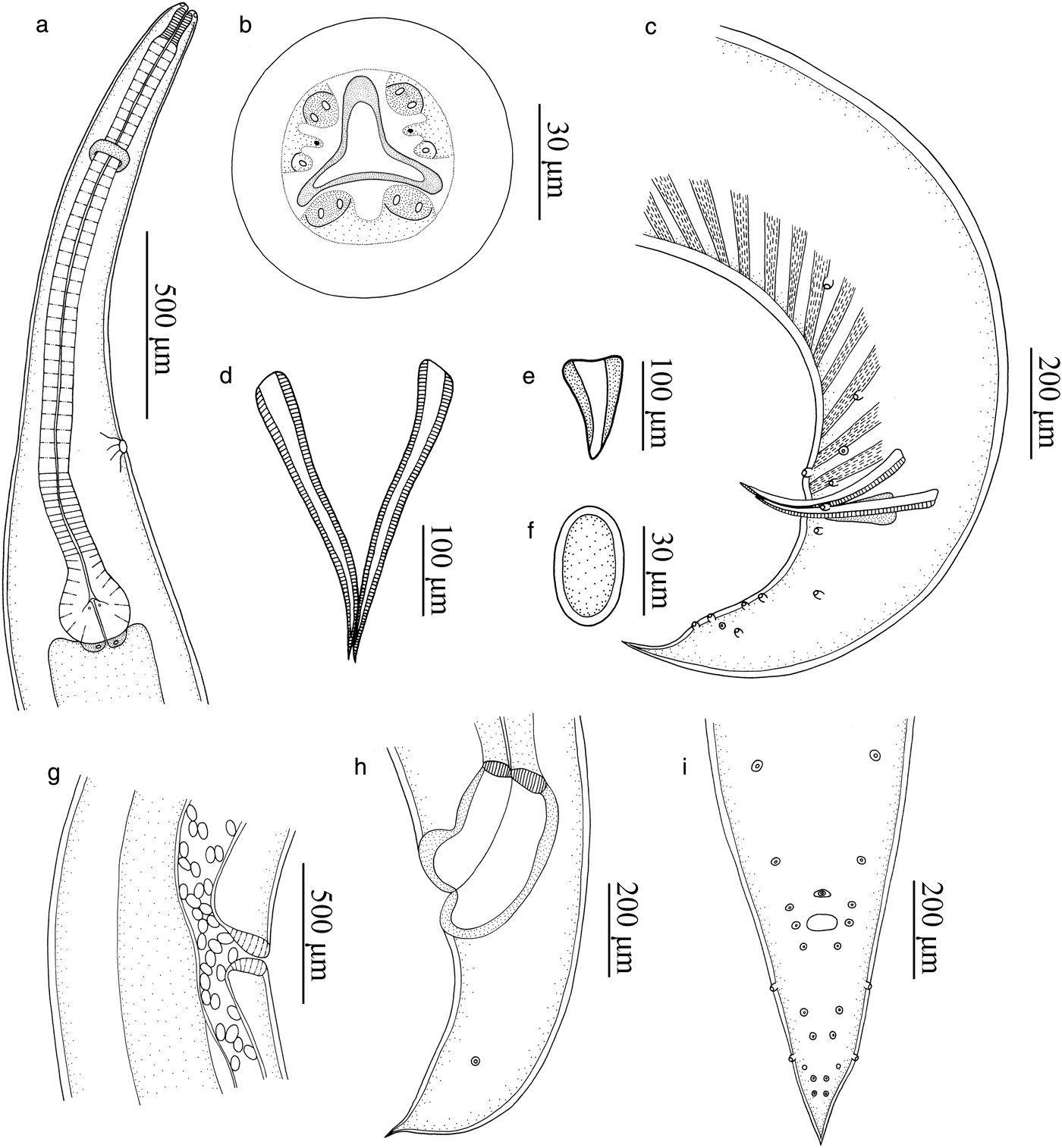
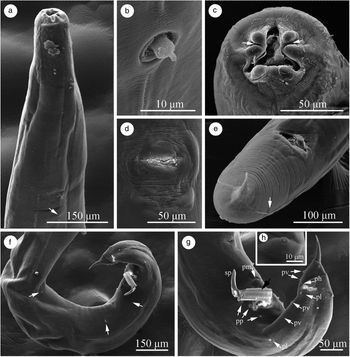
Medium-sized, whitish nematodes. Body elongate, cylindrical, maximum width at about region of middle body. Cuticle with fine transverse striations. Cephalic vesicle and somatic papillae absent. Oral aperture simple, somewhat triradiated, surrounded by three small lips (figs 1B and 2C). Dorsal lip with pair of large double cephalic papillae; subventral lips, each with single large double cephalic papilla, small papilla and amphid (figs 1B and 2C). Oesophagus divided into anterior pharynx, cylindrical corpus, short isthmus and terminating conspicuous valved bulb (fig. 1A). Nerve ring located at about 2/5 of oesophageal length. Excretory pore situated slightly anterior to the junction of corpus and isthmus (fig. 1A). Deirids well developed, finger-like, slightly anterior to excretory pore (fig. 2A, B). Lateral alae present, very narrow, starting from the level of deirids in both sexes and extending to the base of tail tip in females (extending to the last pair of preclocal papillae in males) (fig. 2E–G). Tail of both sexes conical, with pointed tip (figs 1C, H, I and 2E–G).
Megalobatrachonema hainanensis sp. nov. collected from Amolops hainanensis (Boulenger) (Anura: Ranidae) in China. (a) Anterior end of female, lateral view; (b) cephalic end of female, apical view; (c) posterior end of male, lateral view; (d) spicules, ventral view; (e) gubernaculum, ventral view; (f) egg; (g) region of vulva, lateral view; (h) tail of female, lateral view; (i) tail of male, ventral view.

Scanning electron micrographs of Megalobatrachonema hainanensis sp. nov. collected from Amolops hainanensis (Boulenger) (Anura: Ranidae) in China. (a) Anterior end of female (deirid indicated by arrow), lateral view; (b) magnified image of deirid; (c) cephalic end of female (amphids indicated by arrows), apical view; (d) magnified image of vulva; (e) tail of female (phasmid indicated by arrow), ventral view; (f) posterior end of male (precloacal papillae indicated be arrows), lateral view; (g) posterior end of male, ventro-lateral view (ala of spicule indicated by black arrow); (h) magnified image of medio-ventral precloacal papilla. Abbreviations: sp, spicule; pm, medio-ventral precloacal papilla; pp, paracloacal papillae; pl, lateral postcloacal papillae; pv, ventrolateral postcloacal papillae; ph, phasmid.
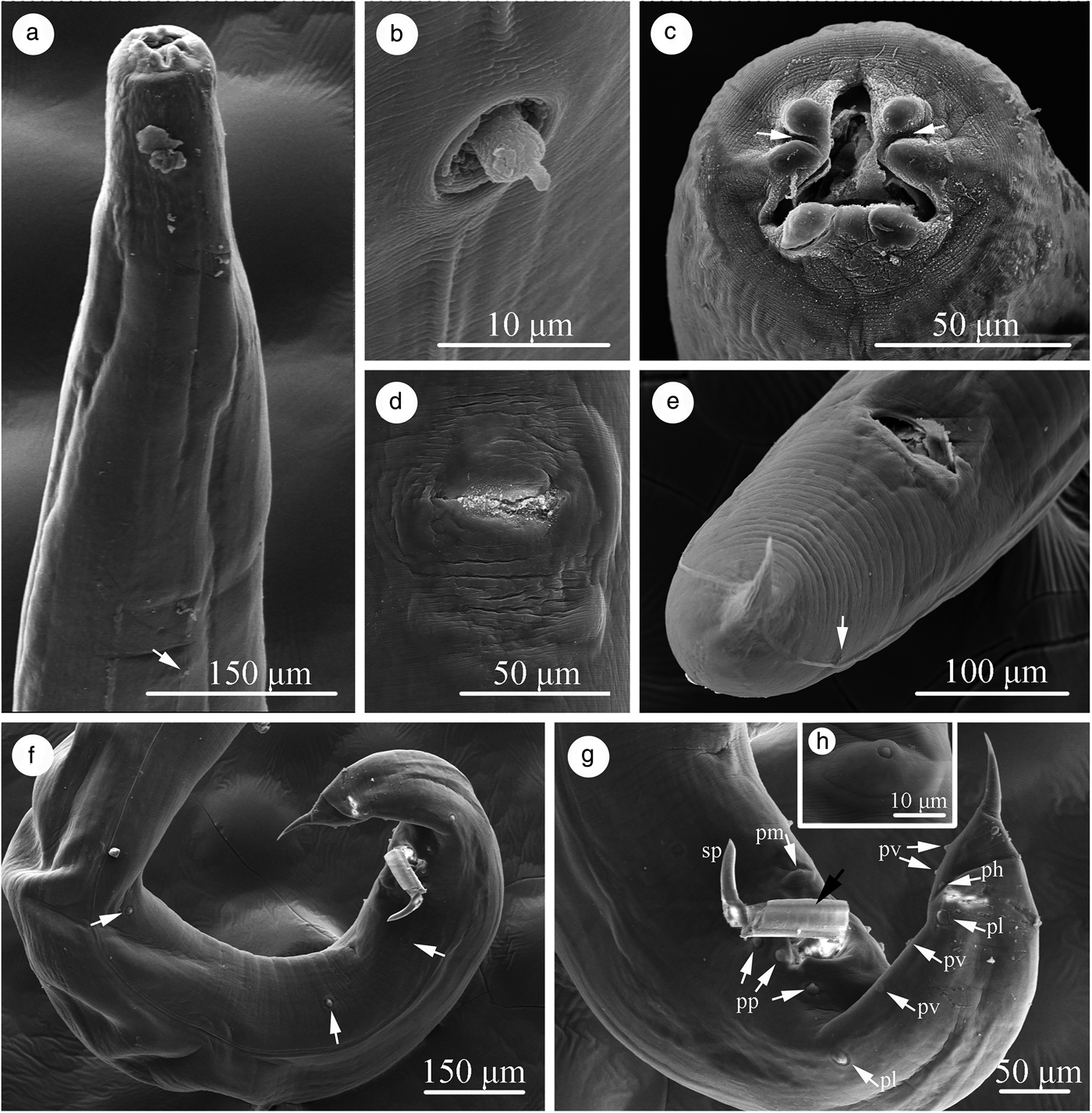
Male (based on three mature specimens). Body 15.0–15.5 (15.3) mm long; maximum width 455–644 (550). Oesophagus 1.49–1.63 (1.56) mm of total length, representing 9.9–10.5 (10.2) % of body length; pharynx 69–99 (84) long, corpus 996–1118 (1057) long, isthmus 212–238 (225) long, size of bulb 218–178 (396) long, 198–178 (188) wide. Nerve ring 386–485 (436), deirids 713–1010 (862) and excretory pore 941–1238 (1090) from anterior extremity. Posterior end of body distinctly curved ventrally (figs 1C and 2F, G). Spicules equal, alate, 337–347 (343) long, distal end pointed (fig. 1C, D), representing 2.24–2.25 (2.24) % of body length. Gubernaculum weakly sclerotized, somewhat conical, 119–149 (135) long (fig. 1C, E). Caudal papillae 12 pairs in total, arranged as follows: precloacal papillae three pairs, paracloacal papillae three pairs, postcloacal papillae six pairs (1st and 4th pairs lateral, the others subventral) (figs 1C, I and 2F, G). Single, ventral precloacal papilla present (figs 1C, I and 2G, H). Tail 446–496 (469) long. Small lateral phasmids located just posterior to second pair of lateral postcloacal papillae (figs 1C, I and 2G).
Female (based on three mature specimens). Body 13.0–22.0 (18.3) mm long; maximum width 396–792 (644). Oesophagus 1.19–1.88 (1.52) mm of total length, representing 5.69–7.46 (6.86) % of body length; pharynx 89–168 (119) long, corpus 800–1348 (1028) long, isthmus 170–288 (218) long, size of bulb 119–178 (152) long, 119–188 (158) wide. Nerve ring 347–446 (396), deirids 752–980 (858) and excretory pore 931–1317 (1125) from anterior extremity. Vulva transverse slit, non-salient, 9.09–14.9 (12.7) mm from anterior extremity, representing 67.9–70.5 (69.4) % of body length (figs 1G and 2D). Vagina muscular, short, joining amphidelphic uterus (fig. 1G). Uteri containing large number of eggs. Eggs oval, thin-walled, with smooth surface, 30–50 (36) × 20–40 (30), at morula stage (fig. 1F). Tail 495–624 (568) long. Small lateral phasmids situated at about half the distance from cloaca to tail tip (figs 1H and 2E).
Molecular characterization
Partial ITS1-5.8S-ITS2 region. The lengths of the two ITS1-5.8S-ITS2 sequences of M. hainanensis sp. nov. obtained were both 774 bp, displaying no intraspecific nucleotide variability. There is only one species of Megalobatrachonema (M. terdentatum belonging to the subgenus Chabaudgolvania) with the ITS1 sequence deposited in GenBank. Pairwise comparison between M. (Megalobatrachonema) hainanensis sp. nov. and M. (Chabaudgolvania) terdentatum with ITS1 sequences (MG594352–MG594364) showed 3.42–3.94% of nucleotide divergence. Pairwise comparison between M. hainanensis sp. nov. and the other species of Cosmocercoidea with ITS1-5.8S-ITS2 sequence data available in GenBank, including Cosmocercoides pulcher (MH178314–MH178318, LC018444), C. tonkinensis (AB908160, AB908161), C. qingtianensis (MH032772–MH032774, MH178311–MH178313), Falcaustra sinensis (MF061681), Cosmocerca japonica (LC052772–LC052782) and C. longicauda (MG594349–MG594351) showed 36.6–46.6% of nucleotide divergence. The ITS sequences of M. hainanensis sp. nov. were deposited in the GenBank database (http://www.ncbi.nlm.nih.gov) (accession numbers MH545567, MH545568).
Partial 28S region. The two 28S sequences of M. hainanensis sp. nov. obtained were both 726 bp in length, displaying no intraspecific nucleotide variability. There is no species of Megalobatrachonema with 28S sequences deposited in GenBank. Pairwise comparison between M. hainanensis sp. nov. and the other species of Cosmocercoidea with 28S sequence data, including Falcaustra sinensis (MF094270), Cruzia americana (U94757), Orientatractis moraveci (KX524514), Rondonia rondoni (KX524512), Cosmocercoides pulcher (LC018444) and C. tonkinensis (AB908160) showed 15.2–34.7% of nucleotide divergence. The 28S sequences of M. hainanensis sp. nov. were deposited in the GenBank database (http://www.ncbi.nlm.nih.gov) (accession numbers MH545569, MH545570).
Phylogenetic analyses
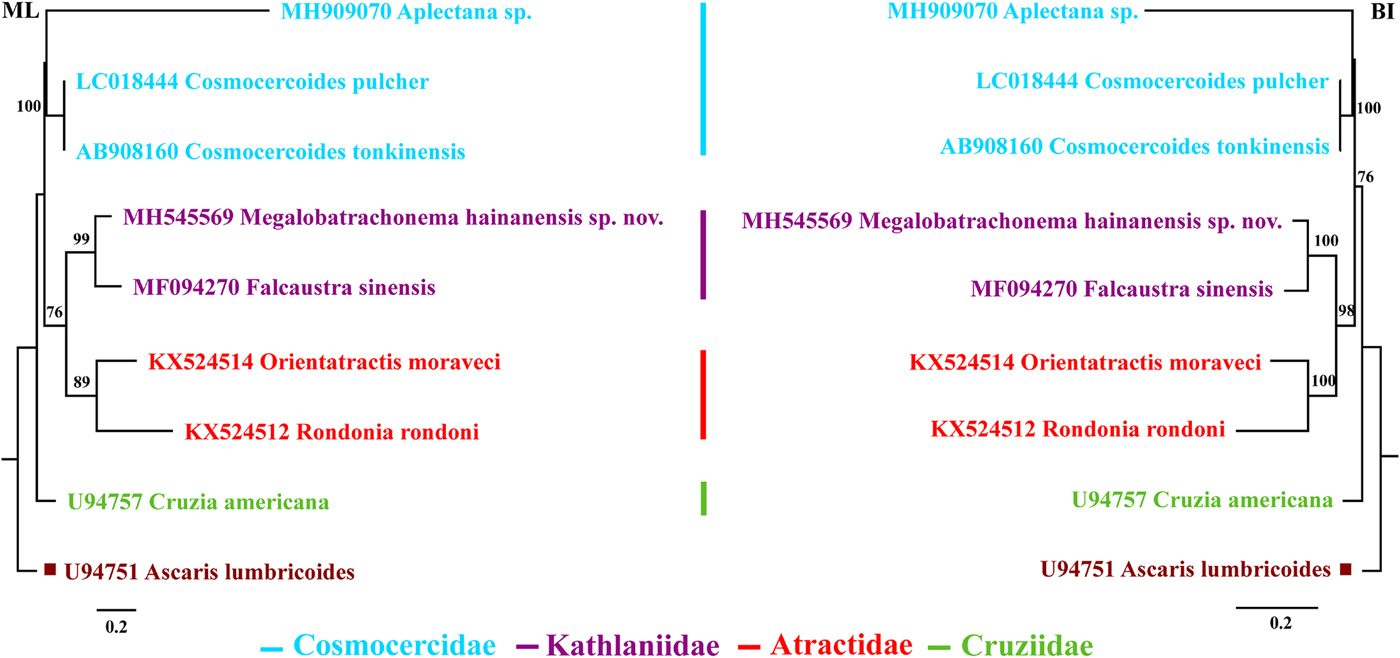
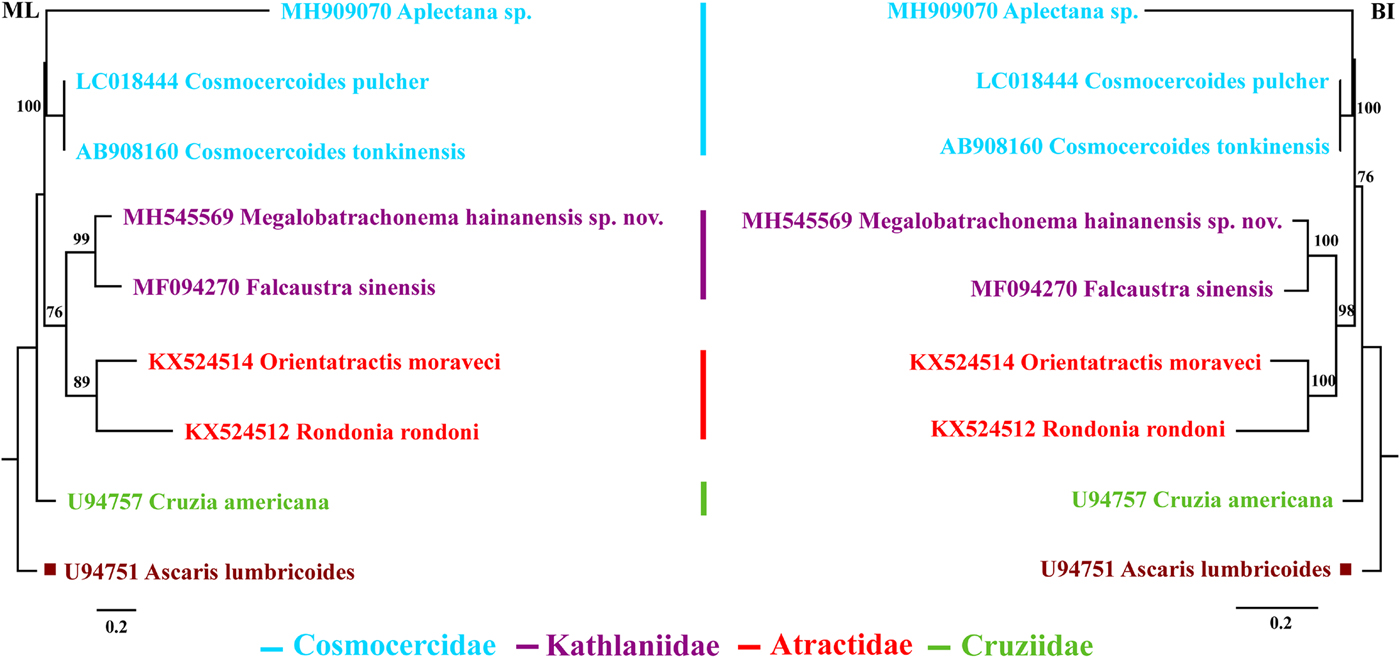
The topologies of ML and BI trees based on 28S sequences were almost identical. The representatives of the Cosmocercoidea were divided in four distinct clades (Atractidae, Cruziidae, Cosmocercidae and Kathlaniidae) (fig. 3). The family Cruziidae included Cruzia americana, which is the basal clade of the phylogenetic trees. The family Cosmocercidae included C. tonkinensis and C. pulcher. The family Atractidae included Orientatractis moraveci and Rondonia rondoni. The family Kathlaniidae included F. sinensis and M. hainanensis sp. nov.
Maximum likelihood (ML) and Bayesian inference (BI) based on the 28S sequences of the rDNA showing the phylogenetic relationships of representatives of the superfamily Cosmocercoidea. Ascaris lumbricoides (Ascaridida: Ascaridoidea) was selected as the outgroup. Bootstrap values exceeding 70% were displayed.
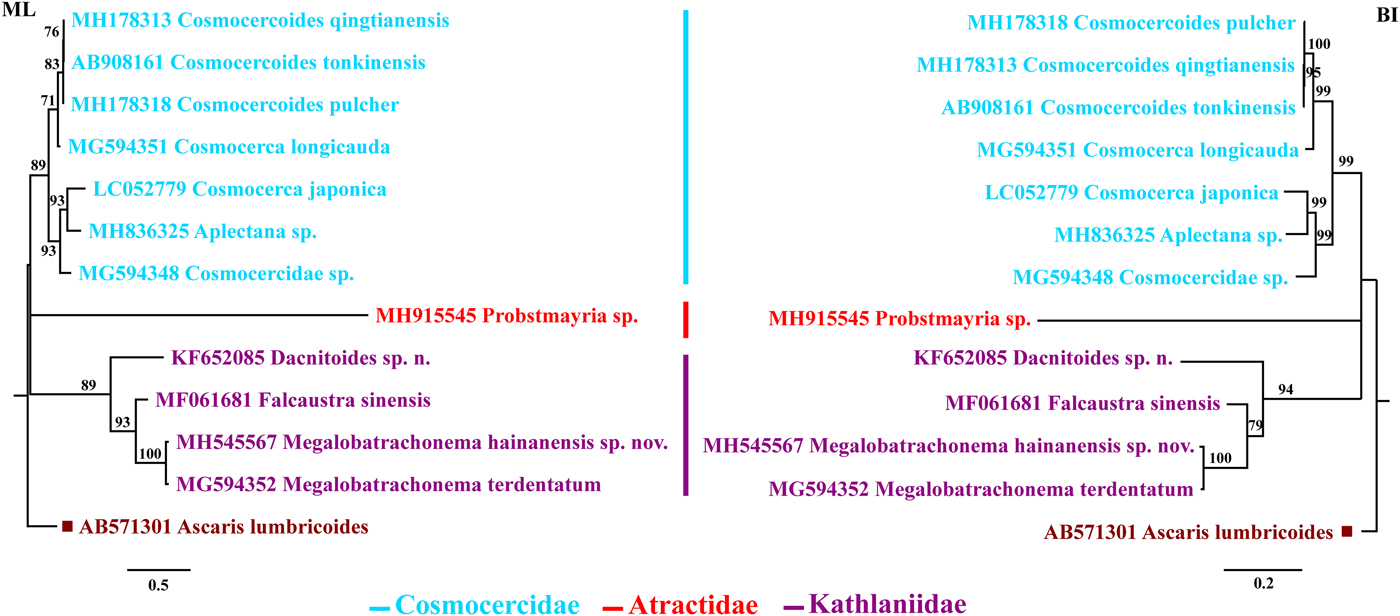
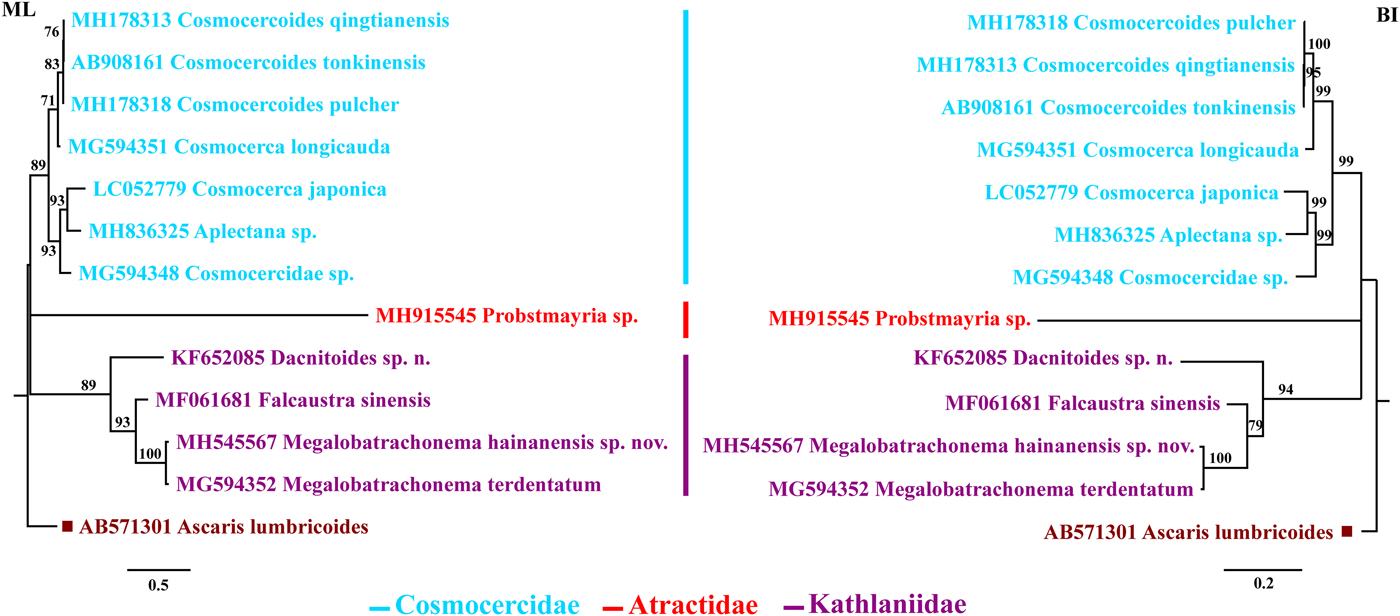
The topologies of ML and BI trees based on ITS1 sequences were nearly identical (fig. 4). The representatives of the Cosmocercoidea were divided into three distinct clades (Cosmocercidae, Atractidae and Kathlaniidae) (fig. 4). The family Cosmocercidae included Cosmocerca japonica, C. longicauda, Aplectana sp., Cosmocercidae sp., Cosmocercoides qingtianensis, C. tonkinensis and C. pulcher. The family Kathlaniidae included Falcaustra sinensis, Dacnitoides sp., M. hainanensis sp. nov. and M. terdentatum. Probstmayria sp. represented the family Atractidae.
Maximum likelihood (ML) and Bayesian inference (BI) based on the ITS1 sequences of the nuclear genomic DNA showing the phylogenetic relationships of representatives of the superfamily Cosmocercoidea. Ascaris lumbricoides (Ascaridida: Ascaridoidea) was selected as the outgroup. Bootstrap values exceeding 70% were displayed.
Discussion
Megalobatrachonema hainanensis sp. nov. has remarkable oesophageal valves in the posterior bulb, thus it belongs to the subgenus Megalobatrachonema of Megalobatrachonema (Baker, Reference Baker1980). In the subgenus Megalobatrachonema, M. nipponicum can be easily distinguished from M. hainanensis sp. nov. by having remarkable pseudosucker (vs absence of pseudosucker in the new species), distinctly shorter oesophagus in the male (0.92–1.15 mm in total length in the former vs 1.49–1.63 mm in total length in the latter) and much longer spicules (0.65–1.00 mm, representing 6.99–8.70% of body length in M. nipponicum vs 0.34–0.35 mm, representing 2.24–2.25% of body length in M. hainanensis sp. nov.) and tail in females (0.92–1.40 mm long in the former vs 0.50–0.62 mm long in the new species) (Yamaguti, Reference Yamaguti1941). The new species differs from M. papuaensis in number and arrangement of caudal papillae (12 pairs in total: three pairs precloacal, three paracloacal and six postcloacal in the former vs nine pairs in total: four pairs precloacal, one paracloacal and four postcloacal in M. papuaensis) and in shape and length of gubernaculum (gubernaculum 0.12–0.15 mm long, distinctly expanded at the proximal end in the new species vs gubernaculum 0.052–0.067 mm long, very narrow at the proximal end) (Bursey et al., Reference Bursey, Goldberg and Kraus2012). Megalobatrachonema hainanensis sp. nov. differs from M. giganticum by having distinctly shorter spicules (0.34–0.35 mm, representing 2.24–2.25% of body length in M. hainanensis sp. nov. vs 0.68–0.90 mm, representing 6.47–8.21% of body length in M. giganticum) and tail of females (0.50–0.62 mm in the new species vs 0.96–1.47 mm in M. giganticum) (Olsen, Reference Olsen1938; Richardson, Reference Richardson1988). In addition, the male body length of M. hainanensis sp. nov. is much longer than that of M. nipponicum, M. giganticum and M. papuaensis (15.0–15.5 mm in M. hainanensis sp. nov. vs only 7.8–13.9 mm in the latter three species) (Olsen, Reference Olsen1938; Yamaguti, Reference Yamaguti1941; Richardson, Reference Richardson1988; Bursey et al., Reference Bursey, Goldberg and Kraus2012).
The subgenus Chabaudgolvania currently includes four species: M. terdentatum (Linstow, 1898), M. elongatum (Baird, 1858), M. waldeni Richardson & Adamson, 1988 and M. moraveci Richardson & Adamson, 1988 (Baker, Reference Baker1980, Reference Baker1986; Richardson and Adamson, Reference Richardson and Adamson1988a, Reference Richardson and Adamsonb). Megalobatrachonema hainanensis sp. nov. differs from M. moraveci by having smaller body size (15.0–15.5 mm in males, 13.0–22.0 mm in females in M. hainanensis vs 21–31 mm in males, 32–37 mm in females of M. moraveci), fewer precloacal papillae (only three pairs in the former vs seven pairs in the latter) and distinctly shorter spicules (0.34–0.35 mm in the new species vs 0.60–0.69 mm in M. moraveci). Megalobatrachonema waldeni has well-developed lateral alae beginning just posterior to lips, and nine pairs of caudal papillae, which are different from that of the new species (lateral alae very narrow beginning from the level of deirids in both sexes and 12 pairs of caudal papillae present in M. hainanensis). Megalobatrachonema elongatum and M. terdentatum can be easily distinguished from M. hainanensis sp. nov. by having remarkable pseudosucker (vs absence of pseudosucker in the new species) and much longer spicules (0.57–0.76 mm in the former two species vs 0.34–0.35 mm in M. hainanensis).
Our phylogenetic analyses using ITS1 and 28S sequences supported the genus Megalobatrachonema as a member of the Kathlaniidae, which is consistent with some hypotheses based on morphological characters (Yamaguti, Reference Yamaguti1941; Baker, Reference Baker1980). The genetic comparison between M. (Megalobatrachonema) hainanensis sp. nov. and M. (Chabaudgolvania) terdentatum showed only 3.42–3.94% of nucleotide divergence in ITS1 region, which is distinctly lower than the level of intergeneric nucleotide divergence in the Cosmocercoidea; for example, there is 33.7% of nucleotide divergence between M. hainanensis sp. nov. and Falcaustra sinensis, 44.2–47.9% of nucleotide divergence between M. hainanensis sp. nov. and Cosmocercoides spp./Cosmocerca spp. and 12.4–34.4% nucleotide divergence between Cosmocercoides spp. and Cosmocerca spp. Consequently, we agree that Chabaudgolvania represents a synonym of Megalobatrachonema, as asserted by Hartwich (Reference Hartwich1960) and Chabaud (Reference Chabaud1978). The phylogenetic analysis based on ITS1 sequences also indicated that the genus Chabaudgolvania formed a sister clade to Megalobatrachonema, both belonging to the Kathlaniinae. Our results are largely in conflict with the proposal of Freitas (Reference Freitas1958) and Richardson and Adamson (Reference Richardson and Adamson1990) (these authors considered that Chabaudgolvania and Megalobatrachonema had no close relatedness and Chabaudgolvania did not belong to the Kathlaniinae).
Author ORCIDs
L. Li 0000-0003-2338-1099.
Acknowledgements
We thank Professor Hui Wang (Hebei Normal University, China) for providing the nematode samples. We are also grateful to Professor Hideo Hasegawa (Oita University, Japan) for providing important literature for the present study.
Financial support
This study was supported by the National Natural Science Foundation of China (NSFC-31572231), Natural Science Foundation of Hebei Province (NSFH-C2016205088) and the Youth Top Talent Support Program of Hebei Province for Dr Liang Li.
Conflict of interest
None.