Significant outcomes
-
∙ 5-hydroxyindoleacetid acid (5-HIAA) levels (the main serotonin metabolite) were higher in infants with poor neonatal adaptation (PNA) compared with infants without PNA on the 1st day postpartum, possibly due to a transient disturbance of the serotonergic system.
-
∙ Other factors, such as maternal psychological distress, also seem to play a role in the development of PNA.
-
∙ PNA seems to have a multifactorial origin.
Limitations
-
∙ Inter-observer differences between paediatricians regarding the diagnosis PNA.
-
∙ Exposure to selective antidepressants (SADs) was solely assessed by diagnostic interview.
-
∙ There is debate whether urinary 5-HIAA levels are a reliable representation of the central serotonin metabolism.
Introduction
PNA is a syndrome caused by exposure to psychotropic medication during pregnancy. It consists of symptoms of restlessness, such as tremors or sleeping difficulties that are mostly mild and self-limiting (Reference Kieviet, Dolman and Honig1–Reference Sie, Wennink and van Driel3). However, symptoms of PNA are non-specific and can also be an expression of other, more severe neonatal pathology, such as perinatal infection (Reference Kieviet, Dolman and Honig1,Reference Sie, Wennink and van Driel3–Reference Ferreira, Carceller and Agogue5). To exclude these other syndromes, invasive tests are frequently performed, which can be harmful and stressful to the infant and parents.
Approximately 2–9% of western pregnant women use SADs during pregnancy (Reference Ray and Stowe6,Reference Ververs, Kaasenbrood, Visser, Schobben, de Jong-van den Berg and Egberts7) and 20–30% of their infants develop PNA (Reference Kieviet, Dolman and Honig1,Reference Levinson-Castiel, Merlob, Linder, Sirota and Klinger2,Reference Oberlander, Misri, Fitzgerald, Kostaras, Rurak and Riggs8). Symptoms mostly develop between 8 and 48 h postpartum and fade within 72 h postpartum (Reference Kieviet, Dolman and Honig1–Reference Sie, Wennink and van Driel3,Reference Oberlander, Misri, Fitzgerald, Kostaras, Rurak and Riggs8).
Knowledge of the pathogenesis and aetiology of PNA is limited, which makes it difficult to diagnose this syndrome or predict which infant will develop symptoms of PNA. Symptoms of PNA are most likely caused by SAD withdrawal. However, the pathogenesis may also be toxicity or an overlap between withdrawal and toxicity (Reference Sie, Wennink and van Driel3,Reference Laine, Heikkinen, Ekblad and Kero9–Reference Davidson, Prokonov and Taler11). Furthermore, other factors might also lead to restlessness in infants, such as maternal psychiatric illness and disturbances in hormone or neurotransmitter levels (Reference Laine, Heikkinen, Ekblad and Kero9,Reference Davidson, Prokonov and Taler11–Reference Oberlander, Warburton, Misri, Aghajanian and Hertzman15). This multifactorial aetiology might explain the variability of PNA (Reference Jansson and Velez12,Reference Byatt, Deligiannidis and Freeman14).
Laine et al. suggested that the serotonergic activity is involved in the aetiology of PNA and that this is reflected by 5-HIAA, the main serotonin metabolite. It is assumed that the level of 5-HIAA reflects the degree of serotonergic activity (Reference Laine, Heikkinen, Ekblad and Kero9,Reference Hilli, Heikkinen and Rontu16). They showed that infants exposed to selective serotonin reuptake inhibitors (SSRIs) had lower 5-HIAA levels in umbilical cord blood compared with non-exposed infants. Infants with a lower 5-HIAA level showed more symptoms of restlessness (Reference Laine, Heikkinen, Ekblad and Kero9). However, umbilical cord blood reflects fetal life, whereas PNA develops postpartum. Therefore, the exact role of serotonin in the aetiology of PNA is not resolved. Knowledge of the course of neonatal 5-HIAA levels during the 1st days postpartum can be of additional value.
In the present non-randomised controlled study, we examined the course of urinary 5-HIAA levels of SAD-exposed infants during the first 3 days of neonatal life. Results were compared with a control group of non-exposed infants, to examine the effect of fetal SAD-exposure on the neonatal serotonergic system. Within the group of SAD-exposed infants, urinary 5-HIAA levels were compared between infants who did and did not develop PNA to examine the role of the serotonergic system in the development of PNA.
Aims of the study
-
∙ Examine if the course of urinary 5-HIAA levels of infants with PNA differs of infants without PNA.
-
∙ Examine if the course of urinary 5-HIAA levels of infants exposed to SADs differs of infants not exposed to SADs.
-
∙ Examine if other factors, such as maternal psychological distress, influence these relationships.
Methods
Setting and standard procedures
We conducted a non-randomised controlled study in a teaching hospital in Amsterdam. The psychiatric, obstetric, paediatric (POP) clinic of this hospital is a centre of expertise for pregnancy and psychiatric disorders and advises women with a psychiatric disorder before, during and after pregnancy. About 50% of all pregnant women who visit the POP clinic live in our catchment area, and therefore deliver in our hospital. Within 8 h postpartum, these women are admitted to the maternity ward together with their infants for an observation period of ≥72 h. Infants who need more surveillance are admitted to the neonatal care unit. Trained nurses observe infants for PNA by means of the Finnegan scoring list. This observational tool was originally designed to assess PNA after exposure to opiates, but has been widely used for observation of PNA after exposure to SADs (Reference Levinson-Castiel, Merlob, Linder, Sirota and Klinger2,Reference Sie, Wennink and van Driel3,Reference Klinger and Merlob10,Reference Finnegan, Kron, Connaughton and Emich17). A validated observational tool does not exist. All infants are examined by a paediatrician on a daily basis. At the end of the observation period, the paediatrician in charge concludes if PNA has been present or absent. This decision is made upon evaluation of all completed Finnegan scoring lists, the moment of onset and course of symptoms and the physical examination. If necessary other neonatal pathology is excluded.
Participants
From February 2012 to August 2013 infants were included. The patient group consisted of infants who were admitted for observation of possible PNA and whose mothers used one or more SAD during at least the last 2 weeks of pregnancy. Two weeks is the maximum time for SADs to reach their effective dosage (18). SADs were defined as SSRIs, serotonin norepinephrine reuptake inhibitors (SNRIs) or noradrenergic and specific serotonergic antidepressants (NaSSAs). If the mother also used another type of psychotropic drug, the infant was excluded because exposure to other psychotropic medication might also cause PNA. Infants were included in the control group if the mother did not use psychotropic medication during pregnancy, and if the mother–infant dyad was admitted for another neonatal or maternal reason with an expected hospital stay of ≥72 h. Most infants who fulfil these criteria are born by caesarean section, whereas the type of birth of infants in the patient group reflects the normal population. Therefore, the control group was constructed of three equal-sized groups of infants born by planned caesarean section, emergency caesarean section and vaginal delivery.
Exclusion criteria for both groups were insufficient knowledge of the Dutch or English language, mental retardation of at least one of the parents, multiple pregnancies, use of illicit drugs (19) or regular alcohol use (>2 units/week) during the last trimester of pregnancy, use of systemic corticosteroids during pregnancy or when counselling or participation in this study would interfere with the clinical course. When possible, parents were informed on the study before delivery. Otherwise, parents were informed within 24 h postpartum. All subsequent eligible patients were included. The study was approved by the Medical Ethics Committees of the OLVG West Hospital and VU Medical Center in Amsterdam, the Netherlands. The authoritative parent(s) of all infants signed an informed consent form.
Determinants and outcome measure
First, we compared urinary 5-HIAA levels between infants exposed and not exposed to SADs. Thereafter, we solely examined the SAD-exposed infants and compared 5-HIAA levels in infants with and without PNA.
Exposure to SADs in utero was determined by medical interview during pregnancy at the POP clinic and verified postpartum. On the 1st day postpartum, the mother completed a questionnaire with respect to demographic characteristics, medication and intoxications during pregnancy. Five paediatricians established PNA in SAD-exposed infants and were blinded for the 5-HIAA levels of infants. The outcome measure was the urinary 5-HIAA level during the first 3 days postpartum.
Urine collection
Urine was collected by means of the ‘Peespot’, a filter containing 2 mM ascorbin acid and 2 mM ethylenediamine tetraacetate to improve preservation of 5-HIAA (Reference Roelofs-Thijssen, Schreuder, Hogeveen and van Herwaarden20,Reference Boix, Wøien and Sagvolden21). The correlation between urine collected with the Peespot and mid-stream urine is 1.0 (data not shown). Two filters were placed in each diaper. Saturated Peespots were sent to the clinical laboratory of our hospital within 30 min after diaper change. Peespots were centrifuged and urine was stored at −20°C. Time points at which filters were removed were categorised as 0–24, >24–48 and >48 h postpartum.
5-HIAA analysis
To determine 5-HIAA, high-performance liquid chromatography (HPLC) (Shimadzu, ’s Hertogenbosch, the Netherlands) with fluorescence detection was used with an excitation of 275 nm and emission of 345 nm. In total, 50 µl of the sample was mixed with 1.0 ml elution buffer (NH4)2 HPO4 (pH 4.5) after which 20 µl was injected into the HPLC system (Lichrocart 25 cm RP C18, Amsterdam, the Netherlands). A gradient of (NH4)2 HPO4 and methanol buffer was used to elute the 5-HIAA component. The amount of 5-HIAA in the sample was quantified by calculation of the area relative to those of the internal standard (Sigma, Zwijndrecht, the Netherlands). Peak areas were compared with the calibrator (Chromsystems, Grafelfing, Duitsland). Creatinine was determined in each sample by dry chemistry (Vitros 5.1FS; Johnson&Johnson, Amersfoort, the Netherlands). 5-HIAA was adjusted for the creatinine level as the 5-HIAA level in a single urine sample depends on the concentration of urine. The Peespot does not influence the creatinine level (Reference Hessels, Cairo, Slettenhaar and Dogger22).
Potential effect modifiers and confounders
Maternal and neonatal stress levels may be associated with exposure to SADs, PNA as well as with the 5-HIAA level (Reference Oberlander, Misri, Fitzgerald, Kostaras, Rurak and Riggs8,Reference Davidson, Prokonov and Taler11–Reference Oberlander, Warburton, Misri, Aghajanian and Hertzman15,Reference van Praag23,Reference Berg, Backström, Winberg, Lindberg and Brandt24). We examined whether maternal, pregnancy and neonatal stressors were effect modifiers or confounders in both comparisons. The presence of maternal psychological distress was measured by means of the Hospital Anxiety and Depression Scale (HADS) on the 1st day postpartum. This validated instrument consists of 14 questions. A total score on the anxiety and/or depression subscale of eight or higher indicates depression and anxiety and is indicative for elevated psychological distress (Reference Zigmond and Snaith25,Reference Herrmann26). Pregnancy stress was defined as complications during pregnancy, such as hypertension. Neonatal stress was defined as small for gestational age (birth weight of <10th percentile according to the Dutch perinatal registration based on ethnicity (27)), prematurity (gestational age <37 weeks) or complications during or after birth, such as infection.
In the relationship between PNA and 5-HIAA, in addition delivery stress, type and dosage of antidepressant and duration of antidepressant usage were examined as potential effect modifiers or confounders. Delivery stress, indicated as type of delivery, was categorised as vaginal delivery, planned- or emergency caesarean section. The duration of antidepressant usage was dichotomised in usage during part of pregnancy or the entire pregnancy. Type of antidepressant was categorised in SSRI, SNRI, NaSSA or a combination of SADs. Dosage was defined as normal in case of the minimal effective dosage and, respectively, low and high when the dosage was lower or higher than the minimal effective dosage (18). In case two types of SADs were used, the highest dose was taken into account.
Sample size calculation
The required sample size was calculated to detect a difference in the course of 5-HIAA over time between infants with and without PNA with a power of 80%, significance level of 5% and standard deviation (SD) of 2 mmol/mol. We assumed a prevalence of PNA of 40%(Reference Kieviet, van Ravenhorst and Dolman28) and a correlation of 0.6 between urine samples of the same infant. Furthermore, we assumed that in 30% of infants it would not be possible to collect any urine. To detect a clinically relevant difference of 1.8 mmol/mol (<1 SD), 63 patients were needed. With a patient : control ratio of 1 : 2 (126 controls), it was possible to detect a clinical relevant difference of 0.9 mmol/mol (<0.5 SD) between SAD-exposed and non-exposed infants.
Statistical analysis
Statistical analyses were performed with SPSS version 21 (IBM, New York, NY, USA). The baseline characteristics of infants exposed and not exposed to SADs were summarised by means of descriptive statistics. Because the group of non-exposed infants was selected to contain an equal number of infants for each of the three types of delivery, whereas the exposed group was a representative sample, no formal statistical comparison of baseline characteristics between groups was performed.
Baseline characteristics of infants with and without PNA were compared. The only continuous (normally distributed) variable was age, which was compared by the independent sample t-test. Categorical variables were analysed by means of the χ 2-test. If >20% of the expected cell counts were less than five, the Fisher exact test was performed.
Generalised estimated equations (GEE) were used to investigate the between-group difference in the course of the 5-HIAA level over the first 3 days postpartum. This type of longitudinal data analysis takes into account that repeated measurements taken from the same person are correlated and uses all available data (including those of infants with only one or two 5-HIAA measurements) (Reference Twisk29). The model included main effects of a categorical factor for time and group, and the interaction between time and group. We first performed an overall test for presence of an interaction between time and group. If the interaction was significant, post hoc tests were performed to investigate the difference in the 5-HIAA level between groups on 3 separate days. When comparing the exposed group with the control group, analyses were adjusted for type of delivery by including this as a factor in the model. For all GEE analyses an exchangeable correlation structure was used. The estimated means obtained from the GEE analyses were plotted.
We assessed several factors as potential effect modifiers or confounders. If the interaction term between a factor, time and group was significant, we considered this factor as an effect modifier. We stratified our results according to the strongest effect modifier based on the p-value of the interaction term. Factors were considered as confounders if they did not fulfil the criteria for effect modification, and if one or both regression coefficients of the interaction between time and group changed with 10% or more. The number of patients restricted the number of confounders. The strongest confounders were added. A p-value of <0.05 was considered significant.
Results
Inclusion of patients
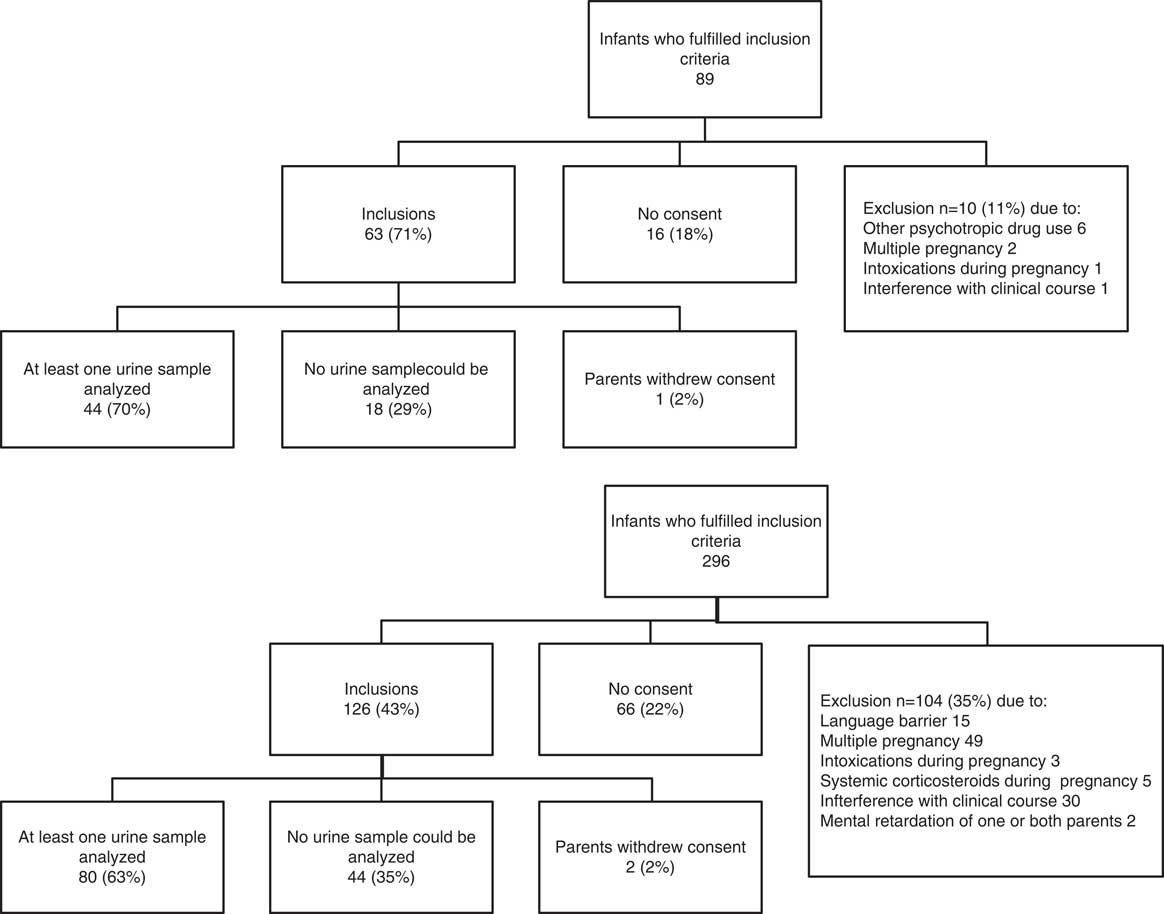
In Fig. 1, inclusion and exclusion of patients is described. Of infants exposed to SADs, 63 infants were included (71%). In 44 infants (70%) at least one urine sample was collected and analysed. Of infants not exposed to SADs, 126 infants were included (43%). In 80 infants (63%) at least one urine sample was collected and analysed.
Inclusion and exclusion of infants. In the upper Figure, inclusion of infants of the patient group is presented. In the bottom Figure, inclusion of infants of the control group is presented.

Baseline characteristics
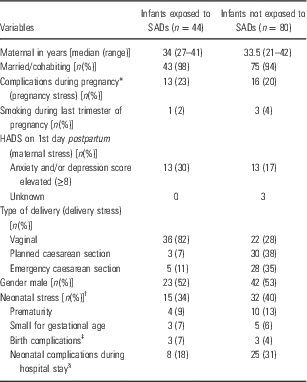
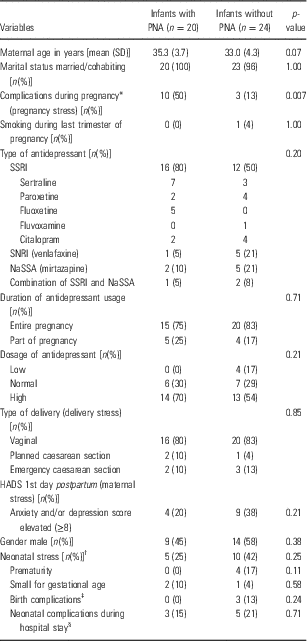
In Table 1, the baseline characteristics of SAD-exposed and non-exposed infants are presented. Of the 44 SAD-exposed infants, 24 (55%) were diagnosed with PNA. None of these infants needed pharmacological treatment. In Table 2, the baseline characteristics of infants exposed to SADs are stratified into infants with and without PNA.
Baseline characteristics of infants who were exposed and not exposed to selective antidepressants in utero and their mothers

HADS, Hospital Anxiety and Depression Scale.
* Complications during pregnancy: hypertension, preeclampsia, cholestasis, hyper- and hypothyroidism, diabetes.
† More than one cause of neonatal stress was possible.
‡ Birth complications: 5 min Apgar score <7, shoulder dystocia.
§ Neonatal complications during hospital stay: infection requiring antibiotics, hyperbilirubinemia, respiratory distress, hypoglycaemia.
Baseline characteristics of infants exposed to selective antidepressants with and without poor neonatal adaptation (PNA) and their mothers

HADS, Hospital Anxiety and Depression Scale; NaSSA, noradrenergic and specific serotonergic antidepressant; SNRI, serotonin and norepinephrin reuptake inhibitor; SSRI, selective serotonin reuptake inhibitor.
* Complications during pregnancy: hypertension, preeclampsia, cholestasis, hyper- and hypothyroidism, diabetes.
† More than one cause of neonatal stress was possible.
‡ Birth complications: 5 min Apgar score <7, shoulder dystocia.
§ Neonatal complications during hospital stay: infection requiring antibiotics, hyperbilirubinemia, hypoglycaemia.
Comparison between SAD-exposed and non-exposed infants
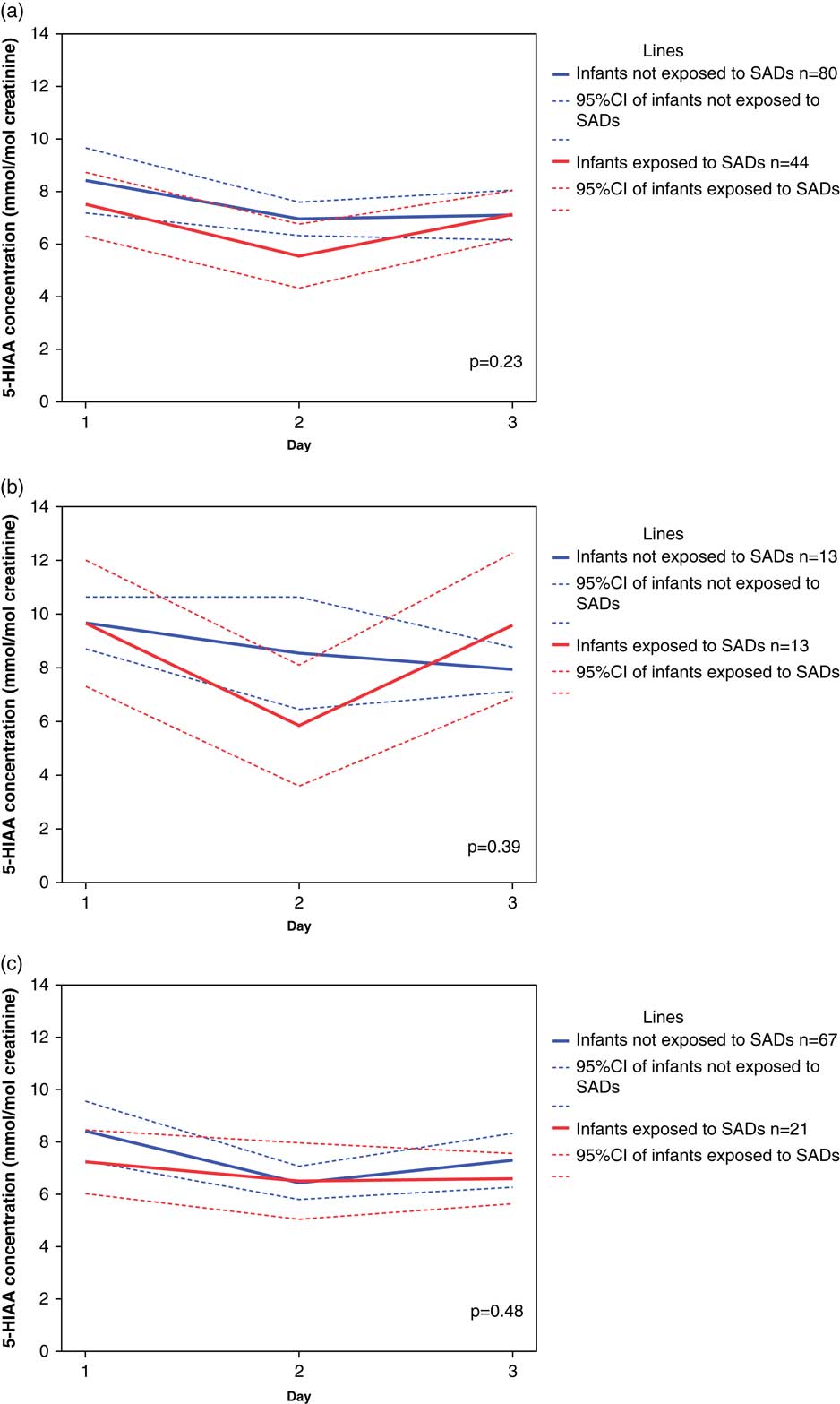
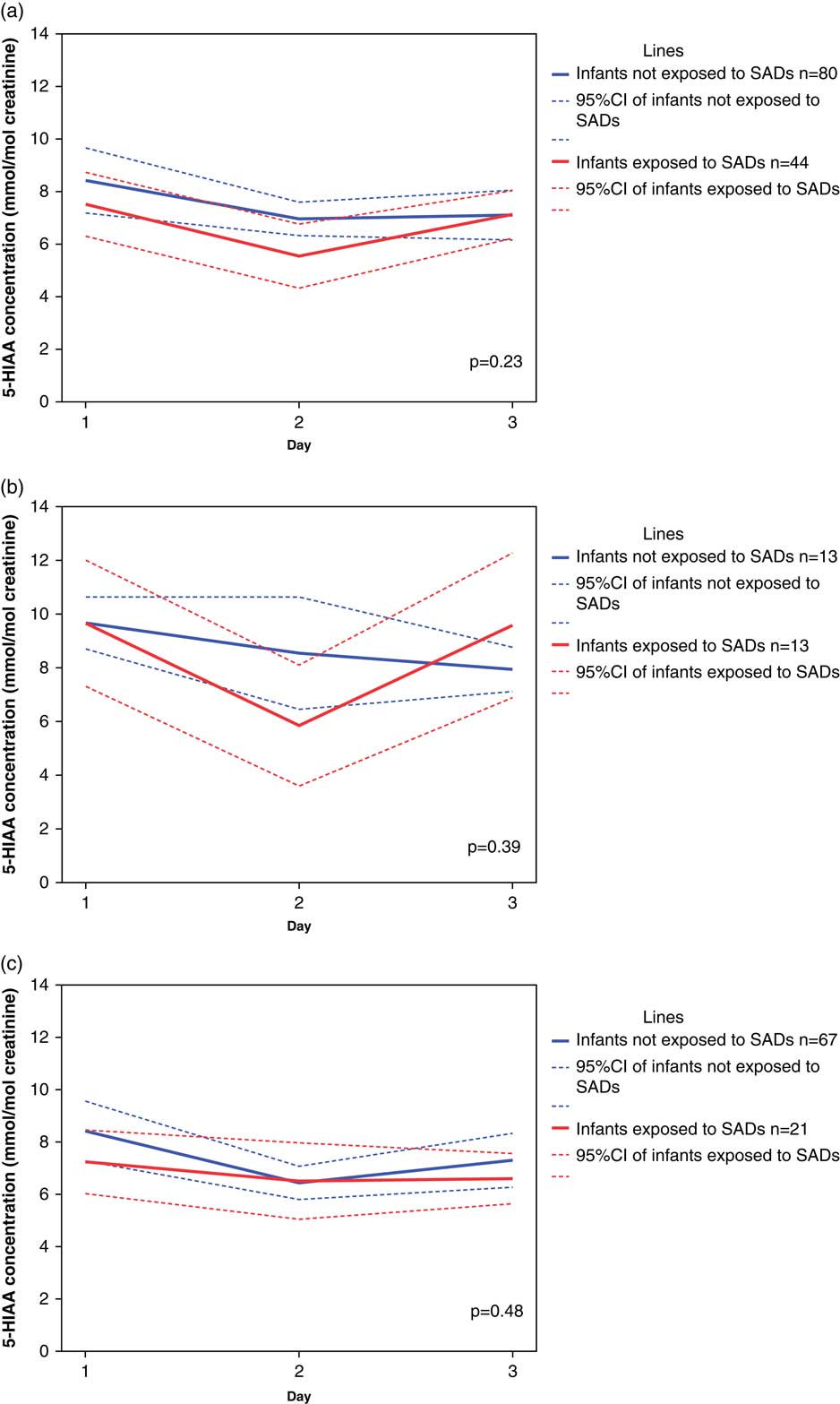
There was no significant difference in the course of the 5-HIAA level over the first 3 days postpartum between SAD-exposed and non-exposed infants (p=0.23, adjusted for type of delivery, neonatal- and pregnancy stress). Presence of maternal psychological distress appeared to be an effect modifier. After stratification, the course of 5-HIAA over time in infants exposed to maternal psychological distress did not differ between groups (p=0.39 adjusted for type of delivery and neonatal stress), similar to the course of 5-HIAA over time in infants not exposed to maternal psychological distress (p=0.48, adjusted for type of delivery, neonatal- and pregnancy stress) (Fig. 2).
Course of the urinary 5-hydroxyindoleacetid acid (5-HIAA) level over time with 95% confidence interval (CI) of infants exposed and not exposed to selective antidepressants (SADs), controlled for confounders. (a) Entire group of infants, corrected for type of delivery, neonatal and pregnancy stress. (b) Infants of mothers with psychological distress, corrected for type of delivery and neonatal stress. (c) Infants of mothers without psychological distress, corrected for type of delivery, neonatal and pregnancy stress.
Comparison between exposed infants who did and did not develop PNA
There was a significant difference in the course of the 5-HIAA level over the first 3 days postpartum between infants with and without PNA (p≤0.001, adjusted for type of delivery, neonatal stress, dosage of antidepressant and duration of antidepressant usage). Presence of maternal psychological distress and type of antidepressant modified this relationship. We stratified our data based on the presence of maternal psychological distress, which showed that the course of 5-HIAA over time in infants exposed to maternal psychological distress differed between groups (p≤0.001, adjusted for dosage of antidepressant). The course of 5-HIAA over time in infants not exposed to maternal psychological distress also differed between groups (p≤0.001, adjusted for neonatal stress, type of delivery and dosage of antidepressant) (Fig. 3).
Course of the urinary 5-hydroxyindoleacetid acid (5-HIAA) level over time with 95% confidence interval (CI) of infants with and without poor neonatal adaptation (PNA), controlled for confounders. (a) entire group of infants, corrected for neonatal stress, type of delivery, dosage of antidepressant and duration of antidepressant use. (b) Infants of mothers with psychological distress, corrected for dosage of selective antidepressant (SAD) (c) Infants of mothers without psychological distress corrected for neonatal stress, type of delivery and dosage of SAD.
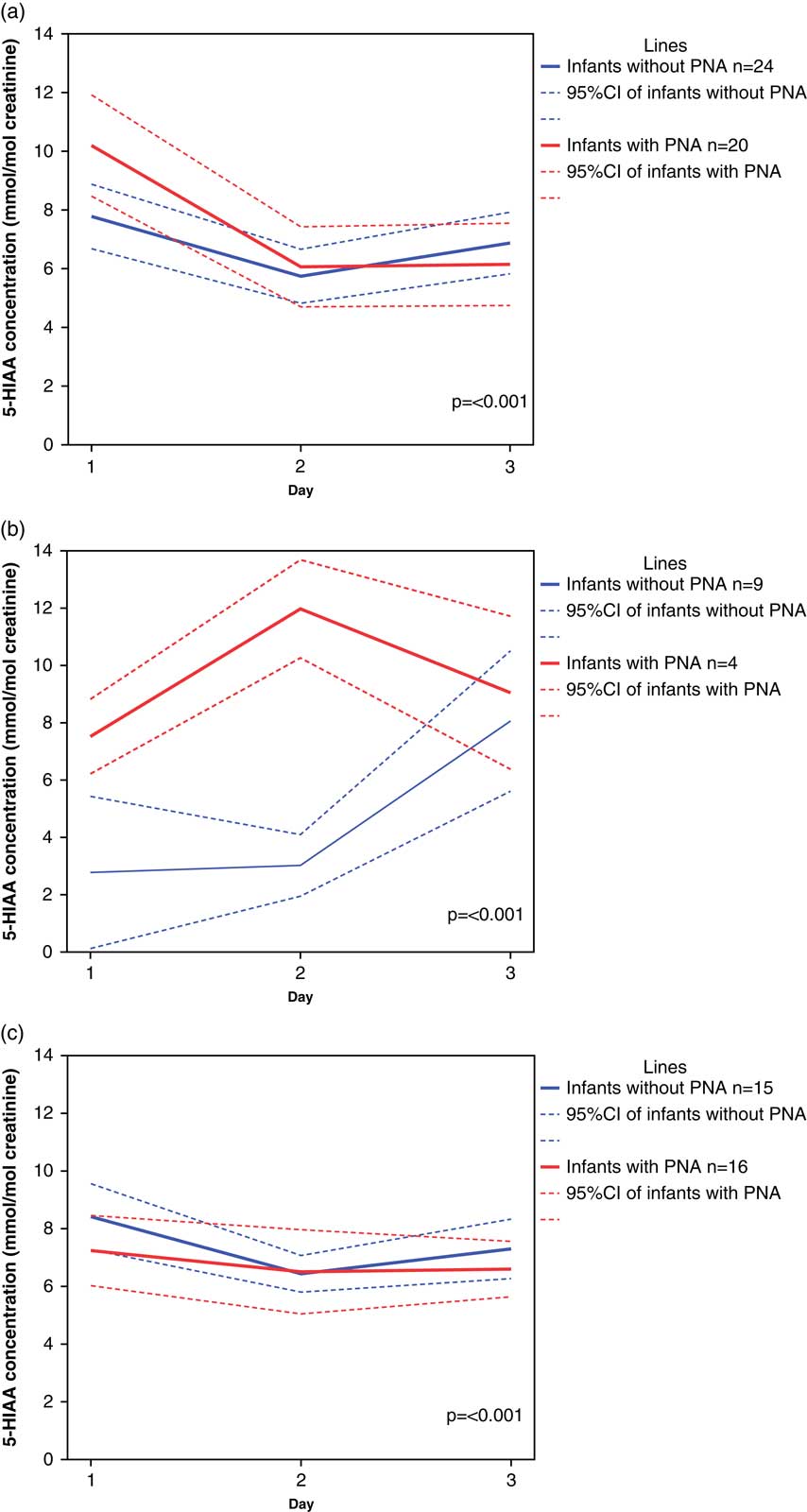
On day 1, the 5-HIAA levels were higher in infants with PNA compared to infants without PNA (2.42 mmol/mol, p=0.001, adjusted for type of delivery, neonatal stress, dosage of antidepressant and duration of antidepressant usage). On days 2 and 3, there was no significant difference between groups (day 2 0.32 mmol/mol, adjusted p-value=0.71, day 3 −0.73 mmol/mol, adjusted p-value=0.36).
Discussion
To the best of our knowledge, this is the first study on neonatal urinary 5-HIAA levels during the first 3 days postpartum in relation to exposure to SADs and the development of PNA. Comparison of SAD-exposed and non-exposed infants showed no difference in the course of 5-HIAA levels. The presence of maternal psychological distress modified this relationship. This supports earlier studies which demonstrated that maternal stress influences the neonatal serotonin metabolism and modifies the effects of SSRIs on the fetus (Reference Peters30,Reference Pawluski, Galea, Brain, Papsdorf and Oberlander31).
Infants with PNA showed a significant different course of 5-HIAA levels compared with infants without PNA, whereby the 5-HIAA levels were higher on day 1, which levelled off on day 2 and remained stable at day 3. There are a few possible explanations for this finding. It is likely that symptoms of PNA are caused by a disorganised central serotonergic system, which has difficulties in adapting to the abrupt decrease of serotonin in the synaptic cleft. The postsynaptic serotonergic receptor down-regulation, caused by high serotonin supply during SAD-exposure in utero, results in decreased serotonin binding leading to a higher level of unbound serotonin. This may lead to increased serotonin breakdown and increased 5-HIAA levels. Another possibility is the terminal auto-receptor feedback mechanism, whereby the sudden decrease of serotonin results in increased serotonin turnover that leads to an increased 5-HIAA levels. Our results are conflicting with the results of Laine et al.(Reference Laine, Heikkinen, Ekblad and Kero9), which showed increased serotonergic symptoms in combination with decreased 5-HIAA levels. A possible explanation for this difference might be the manner of symptom evaluation: Laine et al.(Reference Laine, Heikkinen, Ekblad and Kero9) used a serotonergic symptom score which mainly addresses symptoms to toxicity, whereas we regarded PNA as symptoms of withdrawal as scored with the Finnegan list.
Presence of maternal psychological distress modified the relationship between PNA and 5-HIAA. Maternal stress is known to have influence on both neonatal serotonin metabolism and symptoms of restlessness in infants. As PNA among others includes symptoms of restlessness, this might reflect our findings (Reference Field, Diego and Hernandez-Reif13). Unfortunately, the groups are small after stratification. Therefore, it is difficult to determine the specific effect of maternal stress in this study.
In either the entire group of SAD-exposed infants and after stratification, the course of 5-HIAA over time differed between infants with and without PNA. 5-HIAA levels were higher in infants with PNA on day 1 which equalised on day 3. This indicates a transient relationship between PNA and 5-HIAA.
Main strengths of this study are the non-invasive design, analysis of the course of 5-HIAA over 3 days postpartum, inclusion of a control group and measurement and adjustment for several stressors. However, this study has several limitations. Our aim was to examine the central cerebral serotonin metabolism of infants in a non-invasive manner. Measurement of 5-HIAA in urine is preferred as it is non-invasive and stable compared with measurement of 5-HIAA in liquor and plasma (Reference Marc, Ailts, Campeau, Bull and Olson32). However, there is debate whether urinary 5-HIAA levels are a reliable representation of the central serotonin metabolism as <5–10% of the body’s serotonin is present in the brain (Reference Esler, Lambert and Alvarenga33). Few studies reported significant correlations between plasma and liquor and between plasma and urine 5-HIAA levels (Reference Birkenhäger, van den Broek, Fekkes, Mulder, Moleman and Bruijn34–Reference Tellez, Mamikunian, O’Dorisio, Vinik and Woltering36). The correlation between liquor and urine 5-HIAA levels is unknown. Possibly, urinary 5-HIAA levels mainly represent the peripheral serotonergic system. As PNA is most likely of central origin, our findings of higher 5-HIAA levels in infants with PNA contradicts this. Another limitation is the establishment of PNA. Although PNA was assessed in a systematic way, inter-observer differences might have influenced our results. Also, the diagnose of the paediatrician is not validated for the establishment of PNA. Unfortunately, a validated method is lacking. Some earlier studies use the Finnegan scoring list as outcome measure (Reference Levinson-Castiel, Merlob, Linder, Sirota and Klinger2,Reference Moses-Kolko, Bogen and Perel4). However, As the Finnegan scoring list lacks specificity (Reference Kieviet, van Ravenhorst and Dolman28), we used the conclusion of the trained paediatrician as golden standard in this study. The paediatrician bases his diagnose on all completed Finnegan scoring lists, the moment of onset and course of symptoms and the physical examination. If necessary, other neonatal pathology is excluded. This leads to a more specific diagnose. Because of the difference in outcome measures between studies, we performed an additional analysis using the Finnegan score as outcome measure. Thereby, a Finnegan score of <4 was considered as having no PNA and a Finnegan score of ≥4 as having PNA. No significant difference in the course of the 5-HIAA level was found using this outcome measure. This might be due to the lack of specificity of the Finnegan score, which leads to overestimation of PNA and to a decrease in statistical power (Reference Kieviet, van Ravenhorst and Dolman28).
In conclusion, the 5-HIAA levels were higher in infants with PNA compared with infants without PNA on the 1st day postpartum, possibly due to a transient disturbance of the serotonergic system. Other factors, such as maternal psychological distress, also seem to play a role. Additional studies are needed to further unravel the aetiology of PNA, whereby the role of other monoamines, hormones and genetics can be explored.
Acknowledgements
The authors would like to thank Dr. Berend Olivier, Professor CNS-Pharmacology at the Division of Pharmacology at the Institute for Pharmaceutical Science Utrecht, the Netherlands, for his valuable additions to this manuscript. Professor Olivier reviewed the manuscript, but did not receive any financial compensation. Authors’ Contributions: N.K. conceptualised and designed the study, collected data, carried out analyses, interpret data, drafted the manuscript and approved the final manuscript as submitted. V.v.K. conceptualised and designed the study, collected data, carried out analyses, drafted the initial manuscript and approved the final manuscript as submitted. P.v.d.V. designed the study, carried out analyses, reviewed and revised the manuscript and approved the final manuscript as submitted. K.D. conceptualised and designed the study, coordinated and supervised data collection, interpret data, reviewed and revised the manuscript and approved the final manuscript as submitted. M.D. drafted the manuscript, reviewed and revised the manuscript and approved the final manuscript as submitted. A.H. conceptualised and designed the study, coordinated and supervised data collection, interpret data, reviewed and revised the manuscript and approved the final manuscript as submitted.
Financial Support
This study was financially supported by Nuts Ohra by a non-restricted grant (1205–048). Nuts Ohra was not involved in the design and conduct of the study, collection, management, analysis and interpretation of the data, neither in preparation, review or approval of the manuscript and decision to submit the manuscript for publication. The authors report no financial or other relationship relevant to the subject of this article and no conflicts of interest.
Conflicts of Interest
None.
Ethical Standards
‘The authors assert that all procedures contributing to this work comply with the ethical standards of the relevant national and institutional committees on human experimentation and with the Helsinki Declaration of 1975, as revised in 2008’. And ‘The authors assert that all procedures contributing to this work comply with the ethical standards of the relevant national and institutional guides on the care and use of laboratory animals’.