

The Magus Legend
I shall begin my exploration by searching medieval lore for the source of the Faust legend. Many of the stories told about Faust appear in the accounts of earlier charismatic conjurors such as Simon Magus, St. Cyprian, and Theophilus, all of whom have been cited as possible forerunners of Faust. The stories surrounding these magicians are typical Magus Legends: tales centering on some individual, invariably a male, who has achieved a reputation as a conjuror and whose multiple magical feats are recounted with great zest and wonder. According to King James, the word magus derives from Persia and refers to “a contemplator or Interpreter of Divine and heavenly sciences”1; however, the term soon came to describe any ancient magician, astrologer, or sorcerer.2
Simon Magus, a famous first-century ce sorcerer who bewitched the people of Samaria with his miraculous exploits, first appears in the Acts of the Apostles (8:9–24). After his conversion to Christianity, Simon marveled at the ability of Peter and John to grant the gift of the Holy Spirit by the laying on of hands and offered the two disciples money, beseeching: “Give me this power also, that on whomsoever I lay the hands he may receive the Holy Ghost.” But Peter indignantly rejected this offer, berating him: “Your money perish with you, because you think that the gift of God may be obtained with money” (Acts 8:19–20).3 The New Testament account never answers the question of whether Simon ever received the gift of the Holy Ghost; however, as noted by Philip Mason Palmer and Robert Patterson More, through this act “the unfortunate sorcerer has gained undying notoriety by lending his name to one of the great vices of the Church – simony.”4
In addition to this brief scriptural reference, legendary material accreted around the figure of Simon Magus from the beginning of Christianity into the Middle Ages. According to legend, Simon, a sorcerer living in the first century ce, trained in Greek literature and desirous of glory, boasted that his power exceeded even that of Christ, thus providing an early archetype of the hubristic overreacher. He mimicked the role of Christ, establishing himself as a leader with many disciples, purportedly performing all kinds of miraculous feats, including raising the dead and flying through the air. He chose as his consort a beautiful woman named Luna, whom he later reinvented as an incarnation of Sophia (Wisdom) and Helen of Troy. Many stories circulated around this mysterious figure, stressing either his puissance or his guile, but none so completely captured the medieval imagination as the competition between Simon and Peter in Rome. According to this narrative, a rivalry developed in Rome between the converts of Simon and those of Peter, some proclaiming Simon a true magician and Peter a charlatan and vice versa. Hearing of this controversy, Nero, who had adopted Simon as a protégé, convened a contest between the two rival miracle-workers. The first test required the two competitors to duplicate Christ’s most stunning miracle: the raising of the dead. Both attempted to revive a young man who had recently died, but despite Simon’s incantations the body remained immovable, whereas Peter, praying to the Lord Christ of Nazareth crucified, successfully resurrected the young man. Nero then commanded Simon to fulfill his boast that he could fly to heaven. Mounting the lofty tower constructed in the Campus Martius, his head crowned with laurels, Simon stretched forth his arms and began to fly, amazing Nero and all the assembled dignitaries. Then in the name of his Savior Jesus Christ, Peter commanded the angels of Satan who bore Simon aloft to let him go, and Simon (like Icarus before him) plummeted to earth and perished.5
This virtuoso sorcerer – who blasphemed God and Christ and sought to be their equal in power, who navigated the heavens in a fiery chariot, who commanded devils and through their potency performed spectacular feats before the Pope at Rome or before the Emperor, who conjured phantoms of historical figures during festive meals, who transformed a horse into hay, who selected the fair Helen of Troy to be his consort, who achieved fame for his discussions of demonology and cosmology, who attempted to fly too high and fell to an ignominious death – obviously contributed to the rich matrix of myth that has accreted around the figure of the historical Faust.6
St. Cyprian represents another important predecessor of Faust. St. Cyprian, whose provenance derives not from scripture but from Church tradition, purportedly lived in the second century ce, was consecrated by his parents to the Devil at the age of seven, and became a doyen in the Greek mysteries of Apollo, Mithras, Demeter, and Dionysus. As a young man, he studied in Egypt and later among the Chaldeans before coming to Antioch and through his studies became a master of demonology and performed many supernatural exploits. A rich friend employed Cyprian to use his magical powers to win for him the love of the holy virgin Justina, whom he wished to make his wife. So the magician conjured the Devil and instructed him to seduce the innocent Christian maiden. However, when the conjured demon proved powerless before the holiness of Justina, Cyprian realized the vacuity and impotence of his demonic power and converted to Christianity. Later he became a bishop and established the saintly Justina as an abbess supervising many other holy virgins in a nunnery. According to one of the many stories circulating around these two holy figures, the fame of Cyprian and Justina spread far and wide, and the earl of the country sought to counteract their celebrated faith by forcing them to sacrifice to the Roman gods. When they refused, the two believers were cast into a burning caldron full of wax, pitch, and grease, from which they miraculously emerged unscathed, only to be beheaded and their bodies thrown to the dogs. Later, their bodies were reassembled and they were buried in Rome in the year 280 ce.7
However, the story of Theophilus of Adana, according to The Golden Legend dating from 537 ce, remained the most popular of all of the Magus legends, perhaps because this legend introduced two significant features into the tradition: the diabolical blood pact and the merciful intervention of the Virgin Mary. According to this legend, Theophilus, initially a godly man and vicar of a church in Adana, in his extreme humility refused the offered position of bishop and because of this refusal was removed from his post as vicar. Angered at his unfair treatment by the Church, this formerly humble man became obsessed with jealousy and a desire for worldly glory and in his rage and frustration sought out a Jew, a practitioner of diabolical arts, who conjured the Devil. By command of the Devil, Theophilus then “denied God and his Mother, and renounced his Christian profession, and wrote an obligation with his blood, and sealed it with his ring, and delivered it to the devil …”8 Later the bishop reinstated Theophilus as vicar of the church and, having received much respect and preferment, Theophilus experienced genuine penitence for his apostasy, praying to the Blessed Virgin for forgiveness. Although he had earlier denied both the Virgin Mary and her Son, the blessed Virgin appeared to him in a vision, rebuking him for his heresy and commanding him to forsake the Devil and confess Jesus Christ to be the Son of God, which he did with great fervor. After many days of prayer and supplication, the vicar awoke one morning and discovered the bond of apostasy he had signed miraculously returned to him and lying upon his breast. Theophilus died a few days later, having been redeemed through the intercession of the Virgin Mary.9
Since the blood pact does not appear in some of the earliest accounts of this legend, scholars suspect that this important element of the story became a part of the Theophilus narrative in the thirteenth century10 and may have served as the source for the contract in the German Faustbook. Nevertheless, validating direct influence proves notoriously difficult, and according to John Bakeless, the practice of making a blood compact with the Devil to obtain superhuman power boasts a venerable ancestry, originating in Jewish traditions before the time of Christ. Conversely, Henry Ansgar Kelly locates the prototype of the diabolical pact in Satan’s temptation of Jesus when he promises the Messiah all the kingdoms of the world in return for his worship of the Devil.11 Elizabeth M. Butler speculates that the notion of the formal bond with Satan “crept into legend” with the tale of a certain Proterius, who sold his soul to marry his master’s pious daughter and was “delivered from the consequences of such a pact by St. Basil” in the fourth century.12 Significantly, this may be the first example of a man selling his soul for love and also the first example of a human deus ex machina intervening to save the damned from his fate, a motif that will dominate contemporary cinematic versions of the Faust legend.
According to Beatrice Daw Brown, other elements of the Theophilus story might also have influenced the development of the eclectic Faust legend. These include the scenes of revelry with the Devil in a castle, Faustus’s many disputations with the Evil One, and the pious old neighbor’s exhortations to Faustus to repent.13 Thus, although the denouements of the two legends diverge, Brown speculates that the story of Theophilus “was grafted upon the main stem of the Simon-Faustus narrative theme – the bold magician punished.”14
Although all three of these stories date back to the early Middle Ages, legendary material continued to accrete around these almost mythical figures throughout the centuries, anticipating and perhaps even contributing to the production of the Faust legend. In one aspect, however, the careers of two of these three magicians differ markedly from that of their more famous descendant, Johannes Faustus. Given its multiple versions, the manner of the death of Simon Magus and his possible salvation remain problematic; however, both St. Cyprian and Theophilus ultimately accepted Christ and were redeemed, whereas Faustus, at least in the original story, continued in his reprobate course until his death and presumed damnation.
The Biblical and Morality Plays
If the Magus Legend provided one source for the Faust legend, the medieval drama, particularly the biblical cycle plays and the moralities, furnished another inspiration for this haunting narrative. The biblical cycle plays emerged in fourteenth- and fifteenth-century England as vibrant proletarian theater. Clerics usually authored these short verse plays, always based, however loosely, on scripture or Church tradition. Linked into long cycles that often took three days to perform, usually presented as part of the Feast of Corpus Christi by the medieval trade guilds, these dramas chronicle the Christian history of the world from the Creation to the Last Judgment. Despite the homiletic qualities of these dramas, their primary goal was to celebrate the awesome mysteries of the Christian faith – the incarnation and resurrection – rather than to instruct the audience in the rudimentary ethics of Christian life.
Conversely, the moralities, or “moral plays” as they were called at the time, provide a sermon rather than a celebration. The moralities can be defined as a type of drama,15 flourishing in the fifteenth century, “characterized primarily by the use of allegory to convey a moral lesson about religious or civil conduct, presented through the medium of abstractions or representative social characters.”16 Abstractions like the World, Justice, and Mercy; qualities like Beauty, Strength, and Five Wits; representative social figures like Kindred and Cousin; and sometimes supernatural figures like God and the Devil people these dramas. The protagonists of these moralities – invariably male – bear such names as Mankind, Everyman, or Homo Genus to signify that they represent the entire human race. The typical plot focuses on the allegorical conflict between good and evil for the spiritual allegiance of this mankind figure. Mankind’s chief tempter, commonly called the Vice but often sporting colorful names like Folly, Mischief, Backbiter, or Ambidexter, attempts to lure the hero from the straight and narrow road of virtue to the primrose path of sin and dalliance, while the representatives of virtue, bearing such names as Wisdom, Knowledge of God, Good Counsel, Mercy, or Good Deeds, urge the Everyman hero to adhere faithfully to the dictates of the Bible and the Church. The entire drama occurs within the human psyche, which becomes a battleground on which good and evil battle for ascendancy. According to David Bevington:
This story of spiritual conflict, named the “Psychomachia” after an allegorical work of the fourth century by Prudentius, was the basis of nearly every morality play in the English drama. Its emphasis became increasingly secular in the mid-sixteenth century, preaching lessons of civil rather than religious conduct; in the later moralities, representative social types often outnumbered the more abstract personifications … of the earlier moralities.17
Dorothy Castle adds another level of conflict, suggesting that a number of the moralities, primarily Mankind, are constructed around the element of “game.” Thus for Castle, the “typical struggle between Good and Evil that characterizes morality plays” is “depicted in Mankind as a game between God and the Devil with Mankind’s soul going to the winner.”18 Although this portrayal of the typical morality psychomachia as “a diabolical game to win man’s soul,” to employ Castle’s vivid phrase, does not seem relevant to the Faustbooks and Marlowe’s Doctor Faustus, arguably the wager between God and Mephistopheles in Goethe’s Faust suggests a type of game, and this metaphor of psychomachia as deadly game resonates through a number of cinematic adaptations and appropriations of the Faust legend, particularly Murnau’s Faust, Bedazzled, and Oh, God! You Devil.
A distinctive characteristic of medieval plays, both the biblical cycle plays and the moralities, is the treatment of evil. Whether originally a ruse to introduce comedy into the sublimity of the religious drama or a serious attempt to banish vice by laughing it away, the blending of the humorous with the homiletic in the presentation of evil emerges as a distinguishing feature of the medieval drama. Murray Roston suggests that as the medieval drama developed from the liturgical plays to the biblical cycles, certain groups of characters of lesser sanctity became available for comic elaboration and realism. The first and most obvious group of characters accessible for more lively dramatization were the enemies of Christ, the goats of the New Testament narrative – Herod, Pilate, Judas, and, most significantly, the Devil – since even the most priggish cleric would hardly disapprove of treating these evil characters irreverently. Roston describes how before a performance of the biblical cycle plays, “the unholy trinity” – composed of Herod, Pilate, and the Devil – often “served the useful purpose of quieting the crowd, sometimes by running among the bystanders and striking them over the head with inflated bladders, while the more sacred characters kept their distance from the mob.”19 However, Roston also insists that we should not exaggerate the comedy of evil, agreeing with L. W. Cushman that these plays rarely treated the Devil as a purely comic figure, despite his braggadocio, since “his didactic function and his participation in the central New Testament scenes precluded frivolity.” 20 However, subordinate demons, such as Titivillus in the Townley Last Judgment, were often subjected to boisterous levity, and Naught in Mankind may well have originally worn the costume of the fool to stress his vacuity. 21
Critics have actively debated the purpose of this raucous humor. Although most scholars agree that the Devils and Vices cavorting throughout the medieval drama combine the malignant, the irreverent, and the humorous, the purpose of this singular conflation has aroused considerable controversy. One of the major questions concerning the medieval drama remains: do the Devils function as exuberant subverters of a hegemonic social order or as threats to the community social fabric to be conquered by laughter? On the one hand, E. K. Chambers suggests that the Devil’s or Vice’s heretical parodies might be a subversive device inherited from pagan festivals whereby anti-establishmentarian clerics undermined the repressive authority of the Church. If so, the audience would be expected to secretly cheer for the Devil or Vice in his irreverent tomfoolery. Conversely, O. B. Hardison and John D. Cox insist that the fusion of the comic with the diabolical operated, as in satire, as a means of diminishing the demonic, literally laughing it away. V. A. Kolve supports this reading, insisting that the biblical cycle plays never show a tendency to mock, blaspheme, or ridicule the sacred characters of the story, reserving their laughter – often a vulgar guffaw – for the evil figures, primarily the grotesque, obscene enemy of humankind, the Devil.22 Cox further demonstrates that the medieval drama invariably identifies the Devil and his cohorts with powerful, socially privileged individuals, particularly the courtier, not with the commoners;23 thus it would be unlikely that the proletarian audience would empathize, even unconsciously, with this ally of the oppressor.
Although the solution to this knotty controversy transcends the focus of this book, it is sufficient to note that this melding of the malevolent with the comic so characteristic of the medieval drama remains one of the near constants of the Faust narrative, continuing from the menacing yet sometimes humorous Mephostophiles in the Faustbooks (I have preserved the spelling of Faustus’s demon familiar as it appears in the Faustbooks), through Marlowe’s disjunctive tragic/comic Devil, to Goethe’s urbane but antic demon, to the many baleful yet risible diabolic tempters in nineteenth-, twentieth-, and twenty-first-century dramatic and cinematic recreations of the Faust narrative. Sometimes the comic dominates (The Beauty of the Devil, Damn Yankees, Bedazzled, Oh, God! You Devil), sometimes the terrifying (Murnau’s Faust, Alias Nick Beal, Angel Heart), but the most effective tempters (like Mr. Scratch in The Devil and Daniel Webster) retain this hallmark of the medieval drama, the comically depraved Devil. Moreover, in all the multiple dramatic adaptations of the Faust legend I have explored, I can think of none in which the Devil consistently operates as a subversive mouthpiece for the author.
In addition to the Devil, the biblical cycle plays introduced a fascinating character who serves as a forerunner of both Faustus and his antagonist Mephistopheles. This intriguing figure, the Antichrist, referred to by name only briefly in the scriptures – 1 John 2:18, 22; 2 John 7 – although frequently associated with “the beast” in Revelation 13 and 17, occupies an important position in the theology of the Middle Ages. As his name implies, the Antichrist represents the antagonist of Christ, the false Messiah. Mentioned frequently in sermons of the period, the Antichrist appears in only one of the biblical cycles, the Chester mystery cycle.24 Here, the Antichrist boasts that he is the true Messiah, defaming Jesus as a charlatan who has bamboozled the people with his bogus magic (23:9–16), echoing Simon Magus as he seeks to recruit his own apostles by bragging of his power to perform all the miracles attributed to Jesus, including the raising of the dead (23:77–105). Ultimately, like Simon Magus before him, the Antichrist is unmasked as a mountebank. Indeed, instead of rising from the dead as he earlier has pretended to do, he is slain by the Angel Michael and carried down to hell from whence he came. Although the protagonists of the Faustbooks never presume to godlike power, Christopher Marlowe’s Doctor Faustus, like both the Antichrist and Simon Magus, yearns to perform the miracles of Christ, “to make man to live eternally? / Or, being dead, raise them to life again” (df, 1.1.24–25), indeed, to “gain a deity” (df, 1.1.65). 25
Paradoxically, the Antichrist also foreshadows Mephistopheles as well as Faustus. In seeking to seduce the kings of the world, in the biblical play The Coming of the Antichrist the Antichrist bribes them with “rived riches, land, and fee” (abundant riches, land, and reward; 23:49–54), even as Mephistopheles offers Marlowe’s Faustus gold and rich apparel after he signs the demonic contract. Many subsequent tempters throughout the dramas and films based on the Faust legend will mimic the Antichrist by enticing their victims with gold, lands, and other rewards.
In the moralities, the Vice usually replaces the Devil or Antichrist as the symbol for evil. The Vice differs from the Devil and the Antichrist in significant ways. As Bernard Spivack insists, a medieval audience would view the Devil and the Antichrist as historical figures whereas the Vice is clearly an abstraction.26 Moreover, the Devil in the biblical cycles is a comparatively humorless figure, who provoked laughter from the audience primarily by his fantastic appearance and gross obscenities rather than by his wit.27 Similarly, although the braggadocio of the Antichrist renders him ridiculous, he remains a frightening rather than a comic figure. On the other hand, the morality Vice is a ribald rogue, a “homiletic showman, intriguer extraordinary, and master of dramatic ceremonies.”28 Even more than his diabolical predecessor, he presents a conniving manipulator who delights in chicanery for its own sake, while also frequently masquerading as the virtue antithetical to his particular vice. Displaying a singular intimacy with the audience, the Vice usually introduces and anatomizes himself on his first entrance.29 The Vice frequently acts the role of antic trickster and stand-up comic; people may have applauded him because, although they disapproved of his machinations, he made them laugh, but as with the Devil in the biblical cycles, the audience is probably invited to laugh at the Vice not with him. Lastly, the Devil, the Vice, and the other evil figures often serve as devices through which the unknown authors of the plays satirize the social injustices of the period, but, again, evidence suggests that the Devils and Vices are generally the targets of the satire not the agents of it.
The view of evil as comic may seem somewhat bizarre, even naïve, to the weary veterans of a century and a half marked by genocidal war after genocidal war. Yet this perspective undergirds satiric dramas from the biblical cycle plays and moralities to the modern Theatre of the Absurd. I should add, however, that although often humorous, the Devil or Vice is also horrific, and the levity of his antics in no way diminishes the terror he inspires. As Clifford Davidson stresses when describing the Devil figure in the morality Mankind: Titivillus “has all the exaggerated traits of the devil who is at once the butt of laughter and yet a creature to be feared: he is comic, and yet he is indicative of evil forces which must be respected in spite of his absurdity.”30 The majority of people in the medieval and Renaissance periods believed in the Devil as a real presence – ubiquitous, baleful, wily, lurking behind every wheat field, awaiting the chance to ensnare the unwary and lure them to their doom. Perhaps the comic treatment of humanity’s great adversary provided a way of coping with the anxiety this figure evoked.
Many of the dramatic renderings of the Faust legend, from Marlowe through Goethe to most of the modern plays and films treated in this study, bear the imprint of the medieval drama. The biblical cycle plays, as well as the scriptures on which they are based, bequeathed the theme of Temptation and Fall; the moralities added the centrality of human choice and the psychomachia between dichotomous value systems. But the richest legacy from both dramatic modes remains the diabolical tempter, an ingenious commingling of the comic and the sinister, who continues to dominate contemporary theatrical and cinematic versions of this legend even as he dominated the morality stages 600 years ago.
The Historical Faust
Having canvassed the literary sources of the Faust legend, I will undertake a search for the historical Faust. This brings us to the vexing question: did a historical personage named Johannes Faustus really exist? Like the majority of humanity’s myths, the Faust legend appears to have had some basis in fact although the actual identity of the historical Faust is much disputed. Records suggest that a Georgius of Helmstadt enrolled at the University of Heidelberg in 1483 and on March 1, 1487 graduated as a magister (at this time, a liberal arts equivalent to a doctorate in theology, medicine, or law), and some scholars, including Frank Baron, link this Georgius of Helmstadt to the historical miracle-worker designated as Faustus or Faust. However, this view has been actively contested, particularly by Ian Watt, who identifies Faust with a wandering magician in Germany who went under the name of George and traveled around the country performing magical tricks for financial reward. Watt posits that this itinerant sorcerer may have had “a smattering of learning; he may even have been to university, but there is no extant evidence of his having taken any degree.”31 Provocatively, historical records also show that a Johannes Faust ex Simern matriculated at the University of Heidelberg in 1508; however, since a notorious conjuror called Faustus Junior or the younger Faustus appears in contemporary documents as early as 1507, these matriculation dates seem too late to correlate with the Faust of legend. Most scholars agree that whatever the identity of the historical magus, his name was not originally Faustus; rather, as noted above, “Faustus,” meaning “auspicious,” may have been a Latin cognomen granted the magus in recognition of his magical exploits.32
Apparently between 1507 and 1540, many references to a wonder-worker bearing a number of different names – Faust or Faustus, Georgius Faustus, George Faust, Jorg Faustus, Georgius Sabellicus – appear in contemporaneous letters and diaries. Baron insists that the name John or Johannes does not occur at all in the earliest sources and becomes linked with the famous magician for the first time some twenty-five years after his death, and a canvas of the earlier references to this legendary figure supports this assertion. Johannes Manlius, a pupil of Melanchthon, one of Luther’s most significant followers, compiled many of the diverse episodes surrounding the figure of Faustus into a long series of exempla, and according to Baron, Manlius was the first person to associate the figure of Faustus with the name Johannes in a written document.33 The confusion of names may have resulted from a careless error when Manlius transcribed Melanchthon’s lectures or may have derived from Melanchthon himself. Conversely, some scholars argue for two conjurors bearing the appellation Faustus, identifying Johannes as the older and more respectable and Georgius as the younger and more notorious.34
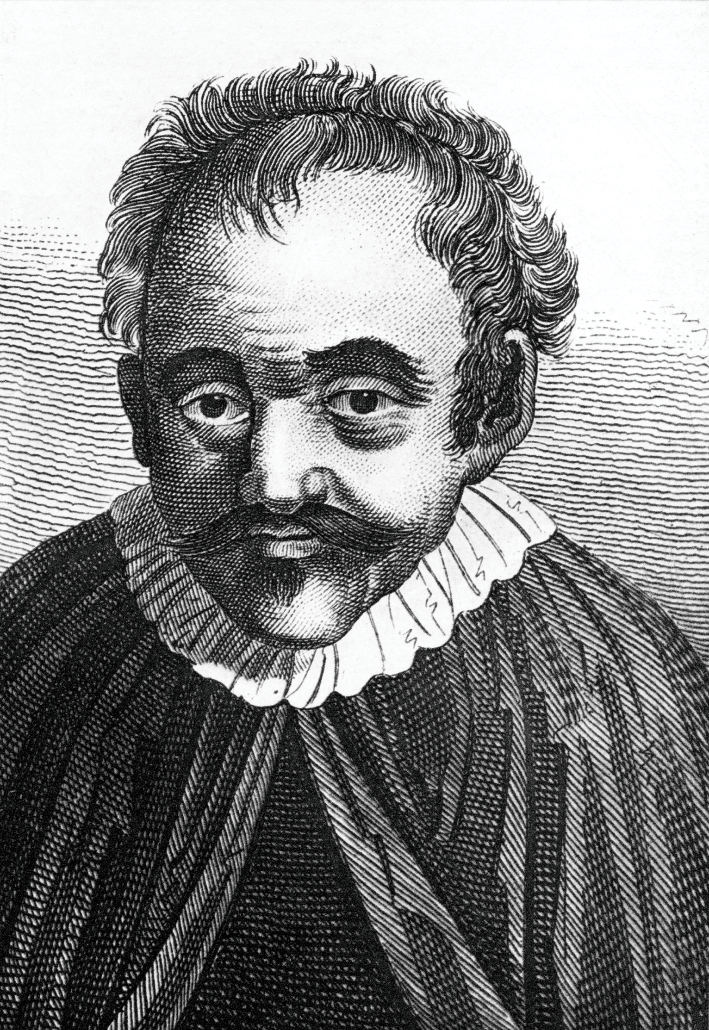
However, despite the multiple names, the original documents appear to limn a single figure: a widely traveled, well-educated, rather shady miracle-worker, journeying with a black dog or a black horse as his familiar, who was also a braggart, a vagabond, and something of a mountebank. Although we have little detailed information concerning the lineaments of the historical Faustus, artists have, throughout the ages, speculated on his appearance. For one such imaginary creation, see Figure 1.1, which appeared in the frontispiece of the 1896 edition of Christopher Marlowe’s The Tragical History of Doctor Faustus. Apparently, this itinerant scholar/magician had already become notorious by 1507, for Abbot Johannes Tritheim of Würzburg, writing to mathematician and Court astrologer Johannes Virdung, censures a Georgius Sabellicus as “a vagabond, a babbler and a rogue,” “not a philosopher but a fool with an overabundance of rashness,” who, like Simon Magus before him, boasted that “the miracles of Christ the Saviour were not so wonderful, that he himself could do all the things which Christ had done, so often and whenever he wished.”35 Moreover, Sabellicus, taking the position of a schoolmaster in Kreuznach, Germany, performed “the most dastardly kind of lewdness with the boys and when discovered, he avoided by flight the punishment that awaited him.”36
Doctor Faustus. Frontispiece to The Tragical History of Doctor Faustus by Christopher Marlowe, published in 1897. This drawing presumably represents a portrait of the historical Johannes Faustus.

In the years 1507 to 1540 accounts of this disreputable figure proliferated throughout Germany. A letter written in 1513, from Conrad Mutianus Rufus to Heinrich Urbanus, dismisses a Georgius Faustus as a mere braggart and fool, although the ignorant marvel at him.37 On the other hand, a comment from the account book of the bishop of Bamberg in 1519–20 dignifies Faustus as a philosopher who made the bishop a horoscope or prognostication. 38 An entry from the records of the city of Ingolstadt in 1528 notes that the city fathers commanded a Dr. George Faust of Heidelberg to leave the city and “spend his penny elsewhere.”39 Another entry, this time from the records of the city council of Nuremberg in 1532, defames a Doctor Faust as “the great sodomite and necromancer.”40 Still another letter, in this case from Joachim Camerarius to Daniel Stibar in 1536, accuses a man named Faustus of puffing up Camerarius’s friend Stibar with “silly superstitions” and “juggler’s tricks.”41 Augustin Lercheimer, a professor of Greek at Heidelberg University, further condemns Faustus as “a parasite, drunkard, and gourmand,” who “supported himself by his quackery.”42 According to other records, a Georgius Faustus of Helmstadt boasted to be the commander of the order of the Knights of St. John at a place called Hallestein in 1528,43 and Dr. Faustus, the famous necromancer, accurately prophesied the bishop of Münster’s investment in that city in 1535.44 The Table Talk of Martin Luther, edited by Johannes Aurifaber in 1566, also makes reference to a Faustus, who purportedly called himself the Devil’s brother-in-law.45 Other documents narrate the exploits of a conjuror named Faustus, ranging from the hubristic – seeking, like Simon Magus, to fly to heaven, and, like Simon Magus, “dashed to the ground and almost killed”46 – to the puerile – playing practical jokes on unfortunate monks who failed to offer him their vintage wine47 – to the grotesque – devouring another magician whole.48 Finally, several accounts describe the death of this sorcerer, with his neck broken or twisted, his face turned completely to his back, the traditional death of a wizard or witch dating back at least to Dante’s Inferno.49
The abundant references to this fascinating figure from multiple sources lead me to the inescapable conclusion that a historical person bearing the title Faustus did actually exist.
Contemporary evidence of the activities of this historical figure ceases about 1540, and the development of the legend probably dates from this time. Significantly, Luther in his Table Talk (written around 1537) is the first person to associate Faustus with the Devil, an idea expanded by his follower Philip Melanchthon (1549–60), although this became a commonplace in the years after Faustus’s demise, thanks to the polemics of fervent Protestants, such as Johannes Wier and Augustin Lercheimer.50 Originally, according to Baron, folkloric sources depict Faustus as primarily an astrologer and thaumaturge. Baron locates the denigration of Faustus and his association with the Devil-pact and witchcraft in the Protestant polemics of Luther and Melanchthon. Ian Watt goes even further, insisting unequivocally that “it was the Luther counter-movement that eventually transformed the historical George Faust into the legendary figure of myth, by inventing his pact with the devil and his terrible end.”51 Conversely, Michael H. Keefer postulates that the Faustus legend arose as a form of “ideological assassination” against the Hermetic-Cabalistic tradition associated with such luminaries as Marsilio Ficino, Giovanni Pico, and Cornelius Agrippa.52 However that may be, as Palmer and More observe, after his death Faustus, presumably one individual despite the variations in nomenclature, became “the lodestone about which gathered in time a mass of superstition which in turn is the deposit of centuries,” including tales associated not only with Simon Magus, St. Cyprian, and Theophilus, but also with the Antichrist, Solomon, Virgil, Merlin, Roger Bacon, Robert the Devil, Zyto, Albertus Magnus, Hermes Trismegistus, and Cornelius Agrippa.53 These many narratives endowed Faustus with a unique mythic allure, through the alchemy of myth-making transforming this distinctly disreputable figure into the archetypal symbol of humanity’s anxieties and aspirations, its follies and its impossible dreams.
The Faustbooks
During the latter decades of the sixteenth century, oral and occasionally written accounts of Faustus’s magical exploits circulated throughout Europe. H. G. Haile maintains that the first collection of Faust tales was probably compiled by a man named Wolf Wambach in the university town of Erfurt. However, as with the elusive Ur-Hamlet, since we have only oral reports of this collage, we can only speculate on its contents. The oldest surviving collection of Faustus anecdotes consists of four tales assembled sometime in the 1570s by a Christoph Rosshirt, a teacher at the Sebaldus school of Nuremberg. This collection features a number of outlandish jests that, slightly modified, found their way into the German and English Faustbooks: Faustus’s leg jerked off by an irate Jewish debt collector who then flees in terror; fat swine, conjured from bundles of straw and sold cheap, which dissolve back into straw when driven over water; boisterous peasants charmed into dumbness by the annoyed magician.54
Of much greater significance is the Wolfenbüttel Manuscript, the oldest extant version of the material that would first be compiled into the German Faustbook and then later into its English translation. Haile maintains that this manuscript derives from a much-expanded version of a still earlier, now lost, Faustbook. According to Haile, the common ancestor of the Wolfenbüttel Manuscript and the German Faustbook appeared sometime before 1580, the work of a forgotten novelist who sought only to produce a piece of light entertainment, “exciting in that it dealt with abominations, sophisticated in that the blasphemous hero was presented not entirely unsympathetically, serious only to the extent that it did justify itself by demonstrating that Faust went to Hell for the same reasons that all good Catholics were going there …”55
Haile and William Rose further posit that this little novel underwent considerable amplification at the hands of prolix scribes, who included the kingdoms of hell copied from an old Latin–German, German–Latin dictionary, as well as geographical descriptions of the arch-conjuror’s travels lifted verbatim from Hartmann Schedel’s Nürnberger Chronik. Similarly, they assert, these scribes mechanically copied from the Latin–German, German–Latin dictionary of the Swiss humanist Dasypodius the list of game, fish, and wine with which Faustus entertains his guests in the enchanted castle of Anholt, even maintaining its alphabetical order.56 Unfortunately, just as we do not have the original lost Faustbook, we do not have the supplemented copy either. However, a very conscientious copy of this copy, transcribed sometime in the mid-1580s, still resides in the Duke August Library in Wolfenbüttel, and Haile has translated a slightly condensed version of this manuscript into English.57
It was not long before an enterprising publisher realized the commercial possibilities of the legend; that man’s name was Johann Spies, and in the year 1587 a press at Frankfurt am Main produced the first coherent printed biography of the life and death of this itinerant magician, titled Historia von D. Johann Fausten. However, although critical consensus agrees on Spies as the publisher of this very popular book, the actual author of the work remains unknown. Haile posits that the unknown author based his Faustbook on the same expanded version employed by the scribe of the Wolfenbüttel Manuscript, deleted a couple of the more salacious chapters and insolent remarks, added a few pious morals and numerous Christian admonitions, and thus sought to impose upon the amorphous form of the original lost manuscript a moral coherence and religious didacticism. The author’s efforts evidently proved enormously successful, for before the end of the year this little volume had appeared in four reprints, a new original edition, and a further edition containing eight new chapters;58 indeed, Spies had produced one of the biggest money-makers of the century. Most commentators agree that Spies’s German Faustbook of 1587 (henceforth referred to as the gfb) and the Wolfenbüttel Manuscript are variants of the same (now lost) expanded text, which is, therefore, the linear ancestor not only of the gfb, but also of both the English Faustbook and Christopher Marlowe’s Doctor Faustus. Some scholars speculate that blatant contradictions appearing in both the gfb and the Wolfenbüttel Manuscript suggest that both works derived from multiple, now lost, manuscripts, but since none of these manuscripts is now extant, this must remain mere speculation.59
What kind of book is this first printed version of the Faust legend? Almost all commentators agree on the pervasive Protestantism of the gfb. Butler finds the inspiration behind the biographical (as distinguished from the anecdotal) portions of the book “so Lutheran that one almost seems to hear the clarion tones of the great Reformer proclaiming his disastrous conviction that the whole of human life is entangled beyond disentangling in the wiles and snares of the devil.”60 Rose also identifies the vivid reality of hell and the Devil and the blatant anti-clericalism animating the gfb as characteristically Lutheran, even designating Faustus as the “great counterpart of Luther.”61
Eugen Wolff adopts a contrary position. While not denying the patent anti-clericalism of certain passages in the gfb, he rejects these passages as interpolations imposed upon the original manuscript by the unknown Protestant author of the gfb. Far from judging the original, now lost Faustbook a Lutheran document, Wolff interprets it as a decidedly Catholic parody of Luther. As Wolff points out, two of the most trenchant anti-clerical taunts in the gfb do not appear in the Wolfenbüttel Manuscript and thus may have been added by the polemical Spies. The first of these occurs during the “marriage proposal” episode, in which Mephostophiles denies Faustus a wife on the grounds that marriage is a sacred institution ordained by God. In the gfb, Faustus scornfully retorts that the clergy do not marry, an obvious taunt at the celibacy of nuns and priests, a passage absent from the Wolfenbüttel Manuscript. The other anti-clerical jibe, present in the gfb and missing from the Wolfenbüttel Manuscript, concerns Faustus’s mocking reference during his tour of Europe to the Devil in the church of St. Ursula with 11,000 virgins; the use of the term Temple (church) in the Wolfenbüttel Manuscript instead of the term Teufel (Devil) in the gfb totally erases any element of anti-clerical satire from this episode.62 However, the appearance in both the Wolfenbüttel Manuscript and the gfb of other anti-clerical slurs undermines Wolff’s argument. These include Faustus’s mocking description of the Pope and his court – “these pigs at Rome are fattened and all ready to roast and cook” – and his parodic ascension at Constantinople in the vestments of a Pope. Wolff rejects both of these satiric episodes as interpolations by some unknown copyist of the manuscript, but as we have no extant version of any pre-Wolfenbüttel document, Wolff’s theory must remain mere conjecture.63 Ultimately, although the anti-clerical bias looms larger in the gfb than in the Wolfenbüttel Manuscript, I conclude that the focus on salvation by faith rather than works, the scornful treatment of the priesthood, and the obsession with a burning hell and the malignant power of the Devil all identify the gfb as a distinctively Protestant document.
Sometime between 1588 and 1592, the gfb was adapted into English by a figure almost as shadowy as the book’s eponymous hero, an author known to posterity only by the cipher P. F. Gent (Gentleman). Although the identity of the mysterious P. F. may never be established beyond the shadow of a doubt, in his Introduction to his edition, John Henry Jones makes an excellent case for a man named Paul Fairfax as the author of the popular jest book/cautionary tale. Whatever the identity of its author, commentators almost universally accept this adaptation, titled The Historie of the Damnable Life and Deserved Death of Doctor John Faustus and popularly known as the English Faustbook (henceforth referred to as the efb), as the source for Christopher Marlowe’s Doctor Faustus.64 P. F., in his free-wheeling, sometimes grossly inaccurate but always sprightly and frequently eloquent rendering into English of Spies’s biography, expanded, condensed, diverged, and interpolated at will, and some of these modifications help to identify the efb rather than the German original as the source for Marlowe’s drama. However, the majority of P. F.’s many modifications are stylistic rather than substantial, and in terms of genre, ideology, structure, and content the two Faustbooks remain very similar. Thus, because of its literary significance, my discussion of the Faustbooks will focus on P. F.’s translation, currently the only comprehensive version available to English-language readers, although a number of contemporary scholars have translated portions of the gfb into English.65
The date of the efb has occasioned considerable controversy, especially because the publication of Marlowe’s accepted source would have relevance to the much-debated composition of the playwright’s monumental tragedy. Since I will treat this issue in greater detail in Chapter 2, at this time, I would simply like to suggest that although scholars have traditionally accepted 1592 as the probable date for the first publication of the efb, there is considerable evidence of an earlier printing, perhaps in 1588, which would correspond with the critically preferred date for the composition of Marlowe’s Doctor Faustus.66
An anomaly in the literary world, the efb, like the gfb on which it is based, reveals a profound ambivalence of tone between the jovial exuberance of the middle episodes and the deep religious fervor of the first and last sections. Despite the author’s emphasis on the heinousness of Faustus’s sin, the magician emerges from his multifarious shenanigans as far more a mischievous prankster than a blasphemous apostate. Although the authors of both Faustbooks undoubtedly condemn their heroes, I agree with Rose that P. F. “frequently tones down the German author’s denunciation of Faust’s wicked ways, and emphasizes the fantasies and cogitations rather than the presumption and arrogance of the sorcerer.” John Henry Jones concurs, observing that “In the German, the accent is upon pride, arrogant presumption and wantonness … Whereas in the efb it is on ‘speculation’ (44f, 74), ‘devilish cogitation’ (169), and a contempt for a pious vocation (46f, 233f, 553f) …”67 Certainly, his buoyant, often racy narrative style and frequent use of the term “merry jest” suggest that P. F., like much of his reading public, probably shared some of the prurient delight that, following the gfb author, he often pontifically condemns. I propose that this marked disjunction of tone, which P. F. adopted from the German original, derives from the multiple lost sources of the gfb or perhaps from the book’s mixed ancestry: part passionate religious tract, part rollicking jest book.
The efb divides into three sections. Part i, composed of sixteen chapters and almost one half of the book, treats Faustus’s early life: his disillusion with the disciplines of theology, medicine, and mathematics; his conjuring of Mephostophiles; the execution of the diabolical pact; and Faustus’s endless musings on occult and para-theological matters, such as the fall of Lucifer, the nature of hell, and the reality of salvation and damnation. Here, as in the gfb, we encounter the insatiable speculator of Faustian lore. Part ii, composed of twelve chapters and approximately one-fourth of the work, relates Faustus’s peregrinations and his meditations on the natural rather than the supernatural, although the inclusion in this section of Faustus’s question, “Tell me how and after what sort God made the world and all the creatures in them, and why man was made in the image of God?” (116), combining as it does ruminations on both first and second causes, partially obscures this pattern. In this section, Faustus is presented as the indefatigable tourist as well as the insatiable speculator. Like his peripatetic counterpart in the gfb, the hero of the efb journeys through the universe in a fiery chariot, makes a mock trip to hell, glimpses Paradise, and visits the two great enemy fortresses of Protestantism – the seat of Catholicism and the seat of Islam – where he makes sport of Protestantism’s two arch-enemies, the Pope and the Sultan. The latter part of this section is devoted to Faustus’s learned discourses on comets, falling stars, thunder, etc. Part iii, consisting of thirty-four chapters (some of these quite short) and a little over one-fourth of the book, follows the pattern of degeneration characteristic of the German original as it shifts from speculation to clowning to tragedy. This section first recounts Faustus’s multifarious “merry conceits” – a gallimaufry of episodes, including Faustus’s entertainments at the courts of potentates and the infantile pranks he plays on sleepy knights, greedy Jews, gullible horse-coursers and swineherds, rowdy students, and misanthropic peasants – before concluding with his “miserable and lamentable end” (176).
The most dramatic section of the book remains the first sixteen chapters, which narrate the story of the insatiable speculator who, “taking to him the wings of an eagle, thought to fly over the whole world and to know the secrets of heaven and earth” (93), an image of presumption recalling both Icarus and Simon Magus. Although well versed in the Holy Scriptures, in his obsession with forbidden knowledge, Faustus rejects divinity, first studying astrology and mathematics, then medicine, and finding all of these disciplines unsatisfying, finally turning to necromancy. Seeking out adepts in the Chaldean, Persian, Hebrew, Arabian, and Greek mysteries, Faustus learns the art of incantation, conjures the Devil, and makes a blood pact with Mephostophiles in return for knowledge of earth, heaven, and hell.
This first section stresses aspiration for illicit knowledge as the summum bonum for which Faustus barters his soul, although this motivation is not immediately apparent in Faustus’s first confrontation with the conjured Spirit, in which he asks only that his “Spirit” will be his servant and will bring him whatsoever he commands and “tell him nothing but that which is true” (95). However, the Spirit declines to make a commitment at this time, seeking permission from a higher power, and thus departs, promising to return on the following day. When the “Spirit” returns on the second day, Faustus designates an entirely new set of demands, stressing his desire to be a “spirit” and have Mephostophiles as his servant, always at his command. Surprisingly, in this second confrontation with his infernal familiar, Faustus makes no reference to knowledge although he insists that Mephostophiles must bring him anything he demands. At any rate, the “Spirit” immediately accepts these articles, which bear little reference to his previous propositions and unaccountably contain no reference to knowledge. As scholars speculate, the contradiction between these two very different specifications probably results from two very different sources for the gfb.68 However, when he finally composes the contract, Faustus clearly delineates his desideratum, this time stressing that he will pledge both his body and soul to the Devil if, in return, Mephostophiles shall “learn me and fulfil my desire in all things” (98). Moreover, the desire to probe, to speculate, to search beyond what can be discovered in the learned disciplines of humanity epitomizes Faustus’s actions throughout much of the efb.
Faustus signs the contract but he has not yet been irrevocably damned; thus the task of preventing his repentance falls to Mephostophiles, who, as Jones points out, adopts a two-pronged strategy. On the one hand, the Spirit inundates Faustus with a generous allowance and all kinds of good things – sumptuous clothing, delectable food, vintage wine, expensive plate (all, of course, stolen from the rich) – so that he “may habituate himself to luxury.” On the other hand, he must be “brought to despair of salvation by the disputations which Mephostophiles cunningly engineers to this purpose.” However, these two strategies seem to work at cross purposes, perhaps again the result of multiple contradictory sources. Drowned in luxury, Faustus “continued thus in his epicurish life day and night, and believed not that there was a God, hell, or devil” (101), although, as Jones remarks, it appears “curious not to believe in a being one has just made a deal with.” 69 If luxury blinds Faustus to metaphysical reality, his disputations with his Spirit achieve the opposite result, vividly clarifying the actuality of God, hell, and the Devil, and would, one might suppose, serve as cautionary narratives encouraging repentance rather than despair.
Before fulfilling his insatiable curiosity, Faustus makes another foray into the hedonist life and learns for the first time the limitations of his contract. Not content with rich delicacies and rare wines, Faustus’s restless libido leads him to desire a wife; reversing St. Paul, since he is already destined to burn, he decides that he should marry in order to have available sex. But he discovers immediately that certain things are forbidden to him, in this case marriage since “wedlock is a chief institution ordained of God” (101). When the rebellious Faustus protests against his demon familiar’s failure to keep his promise, Mephostophiles resorts to the modus operandi he will employ throughout the book to control his luckless victim – the carrot and the stick. Faustus’s insubordination immediately evokes the stick: a circle of fire and a Devil so horrible and malformed that Faustus cannot look upon him. Having totally quelled the mutinous magician, Mephostophiles then proffers him the carrot, not the wife that he has demanded but any woman in the city whom he might lecherously desire to be his bedfellow, and Faustus enthusiastically embraces these surrogates, whether succubae or human females (103).
But before Faustus, disappointed with the limited knowledge granted him by Mephostophiles, surrenders himself to debauchery and practical jokes, his curiosity concerning the infernal arcane must be satisfied. His questions begin simply enough as he inquires about the nature of spirits, with probable reference to devils. In answer to his query, Mephostophiles launches into a long admonitory account of how Lucifer, the most radiant and beloved of God’s angels, rebelled against his Creator, leading to his fall and that of his followers. The Spirit continues with a graphic account of Lucifer’s machinations against humanity, concluding with a ghastly, blood-curdling description of hell – worthy of Dante – as a “filthy, sulphurish [sic], fiery, stinking mist or fog,” a place of inconceivable and endless torment (104, 110), and this lurid depiction of hell considerably dampens Faustus’s enthusiasm for his contract. However, although Mephostophiles insists that the damned can never escape from this perpetual torment and that Faustus ranks among the lost, a couple of verbal slips reveal the Spirit’s belief that not only Faustus, but also the condemned spirits that fell with Lucifer may – perhaps – eventually be saved. In a shockingly unorthodox statement, Mephostophiles longingly declares that “he [Lucifer] and we all have a hope [of salvation],” although he immediately reaffirms his conviction that this yearning is “to small avail” (111). Later, the much subdued magician inquires plaintively: “if thou wert a man in manner and form as I am, what wouldest thou do to please both God and man?” In a moment of rare compassion – the only humanizing instance for Mephostophiles in the entire narrative – the Spirit replies wistfully: “would I humble myself unto his Majesty, endeavouring in all that I could to keep His commandments, praise Him, glorify Him, that I might continue in His favour, so were I sure to enjoy the eternal joy and felicity of His kingdom” (112). Then immediately realizing his slip, Mephostophiles reiterates that this option is no longer available to Faustus, further dashing the sorcerer’s hope of salvation.
The graphic descriptions of hell, the most powerful and vivid in the book, almost succeed in catalyzing Faustus’s repentance, but, as the efb author reiterates, despair overwhelms Faustus (112). Moreover, following the pattern established earlier in the marriage sequence, after applying the stick – the horrendous depiction of hell – Mephostophiles offers the carrot: “or if by chance he had any good motion, straightways the devil would thrust him a fair lady into his chamber, which fell to kissing and dalliance with him, through which means he threw his godly motions to the wind, going forward still in his wicked practices to the utter ruin both of his body and soul” (112). But even as Faustus fails to repent, the efb author frequently reminds the reader that if Faustus had been able to achieve faith, even if he had been compelled by the contract to yield up his body, his soul would nevertheless have been saved (106).
These significant chapters affirm a number of doctrinal issues crucial to both the efb and the gfb. First, salvation continues to be always possible for Faustus, an assurance unwittingly implied by Mephostophiles and explicitly acknowledged in the pious asides of both the efb and gfb authors, thereby refuting the Calvinist doctrine of predestination. Second, the efb makes reference to the theory, endorsed by the influential third-century Church father Origen Adamantius but rejected by Church orthodoxy, that eventually all rational beings – human, angelic, and demonic – would be saved.70 Third, faith remains the most vital ingredient in salvation, thus supporting Luther’s famous assertion that Christians are “justified by faith” (Romans 5:1). According to this doctrine, no matter how nefarious the deeds of the sinner, he or she can always be saved by faith in Christ, a faith that deplorably Faustus can never attain. Lastly, these chapters also identify despair – the conviction that one’s transgressions, like those of Cain and Judas, are too great to be forgiven – as Faustus’s mortal sin (108).
Departing from Faustus’s speculations about salvation and damnation, Part ii demonstrates the magus’s curiosity about all aspects of the natural world as revealed in the numerous discourses between Faustus and Mephostophiles on a myriad of subjects. Of the twelve chapters composing this section, the majority are devoted to Faustus’s pursuit of information about heaven, hell, and earth, as he quizzes his Spirit concerning almanacs and horoscopes, astrology, the stars, comets, thunder, and the nature of the heavens. These chapters depict the insatiable speculator with a vengeance! Some of the Spirit’s answers appear true, given the limited astronomical knowledge of the period; others are confused or patently false. Moreover, Faustus, not content with unsatisfactory explanations, desires to experience heaven, Paradise, and hell first-hand. Mephostophiles does transport Faustus around the heavens, if not on the wings of an eagle at least in a dragon-drawn chariot, although, following a previously established pattern of substitutes and surrogates, Mephostophiles offers the magician a bogus vision rather than the genuine experience of hell (Chapter 20). After journeying around the heavens and taking a mock trip into hell, Faustus visits the two religious capitals of the world, Rome and Constantinople. In Rome, an invisible Faustus indulges in playing vacuous practical jokes on the Pope – while also stealing food, wine, and goblets. In Constantinople, Faustus assumes first the form of Mahomet in order to sexually enjoy the entire harem of the Turkish Emperor and, later, the shape of a Pope in his ersatz ascension to heaven. Both episodes irreverently parody figures most revered by Protestantism’s two bêtes noirs: Catholicism and Islam (Chapter 22). Foreshadowing Part iii, these two (Chapters 21 and 22) focus on licentiousness and hijinks rather than scientific inquiry.
Moving from scientific and pseudo-scientific queries to practical jokes, Part iii narrates the inane antics on which Faustus squanders his dearly purchased magical power. Dissatisfied with the paltry pabulum granted him by Mephostophiles and despairing of salvation, Faustus surrenders to luxuriousness and foolish pranks as a balm to assuage his disappointment and divert him from despair. However, Faustus may also be motivated by more pragmatic concerns as he exploits his magical powers for financial rewards, performing theatrical feats for generous patrons and swindling vulnerable gulls for monetary gain.
Amid this hodgepodge of comic episodes, scholars have discerned a nebulous pattern of degeneration, and, arguably, Faustus does decline socially and ethically as the narrative progresses, although strangely irrelevant episodes sometimes obscure this downward trajectory. Certainly, Faustus does descend hierarchically. He begins his shenanigans at the top, duping first the Pope and then the Turkish Emperor. Faustus then acts as impresario to the Emperor of all Christendom, orchestrating a pageant in which appear the forms of Alexander and his Paramour, thereby winning a princely honorarium from the grateful Emperor. Significantly, Faustus explains to the Emperor that since he cannot resurrect the actual bodies of the Emperor’s famous ancestors, he will raise spirits to assume their forms; thus Faustus here takes the role not of the necromancer but of the theatrical director, although the Emperor seems pleased with the substitution (Chapter 29). During this same encounter with the Emperor, Faustus mischievously puts antlers on the head of a sleeping knight, arousing much mirth at the knight’s expense (Chapter 30) and motivating two unsuccessful attempts at revenge by the ridiculed nobleman (Chapters 31 and 32).The pattern of social demotion continues as Faustus moves from impresario at the Emperor’s court to entertainer at the Duchy of Anhalt, providing diversion and nourishment (grapes, pears, and apples out of season) for the pregnant Duchess, while also erecting a magnificent castle for the Duke and Duchess, thereby exciting wonderment, and, we assume, a generous handout from the Duke (Chapters 39 and 40). Melanchthon recounts how a John Faust of Knutlingen also conjured grapes in winter. Interspersed between the episode at the Emperor’s court and that at the castle of the Duke of Anhalt are a series of absurd escapades derived directly from the tales edited by Christoph Rosshirt, although probably finding their origin in earlier folk tales of magic. These include sequences in which Faustus hoodwinks a credulous Jewish usurer by giving him a mock leg as collateral for a loan (Chapter 33); deceives first a horse-courser and later a swineherd by selling them horses and swine, respectively, that dissolve into straw when driven over water (Chapters 34 and 38); eats a load of hay (Chapter 35); and magically mutes first a group of contentious students and later a crowd of drunken clowns (Chapters 36 and 37). Certainly, these puerile tricks represent both a social and ethical demotion. However, this downward spiral remains somewhat obscured because interwoven with these low-life antics are adventures in which Faustus interacts with upper-class friends to promote positive outcomes, usually receiving a sumptuous gift in return. He helps three friends attend a royal wedding (Chapter 32); he unites two lovers in a happy marriage (Chapter 50); and, amid winter snow, he magically conjures a beautiful garden to charm his friends at Christmas (Chapter 51). Throughout Part iii, Faustus also presides over numerous bacchanals of feasting and drinking with his friends and students (Chapters 41, 42, 43, and 44), climaxing in an episode in which the magician conjures a spirit in the form of Helen of Troy, the most beautiful woman in history, for the gratification of some of his students (Chapter 45).
Faustus continues to decline ethically as the narrative progresses. In the earlier sections of the efb, Faustus’s sins, although frivolous and foolish, remain largely innocuous. However, the later section includes two incidents in which Faustus, for the first time, engages in genuinely wicked behavior: in one, Faustus commits murder; in the second, he seeks to harm a solicitous old neighbor who attempts to lead him to repentance. In the first episode, Faustus becomes inflamed with envy when he encounters a group of Jugglers (sorcerers) performing “miracles” whereby they are first beheaded and then after having their beards washed and chopped by barbers their heads are reconnected to their shoulders. Considering himself the “only Cock in the devil’s basket” (164), Faustus intervenes and arranges so that the head of one magician cannot be reconnected and the sorcerer dies unshriven (Chapter 47). In the later sequence, a devout old neighbor, concerned with the welfare of the students flocking to Faustus’s quarters and also with the magician’s soul, confronts Faustus in his rooms, urging him to repent his nefarious apostasy and turn to God. In opposition to the Spirit who continually insists that Faustus can never be saved, the kindly old neighbor urges the ubiquity of God’s grace and the ever-present opportunity for redemption, a guarantee supported by the author’s many exhortatory asides and by the assurances of Faustus’s students in the final chapter. Much moved by the old man’s appeal, Faustus desires to repent and revoke his promise to the Devil. At that moment, however, Mephostophiles applies the stick, seizing Faustus by his head and threatening to kill him immediately if he considers penitence; moreover, in punishment for his perfidy, Mephostophiles demands that Faustus make a second pact with the Devil. So the terrified Faustus agrees and his chance for redemption slips away. Angry and frustrated at his inability to repent, Faustus projects his rage onto the old man and commands his Spirit to slay the kindly neighbor who sought to redeem him. Yet echoing the demon’s failure to seduce the saintly Justina in the legend of St. Cyprian, Mephostophiles proves powerless against the old man’s faith. This episode in Part iii marks the nadir in Faustus’s descent into depravity, as he seeks to return evil for good (Chapter 48).
Having succumbed to envy and wrath, Faustus returns to lechery. Seeking to alleviate his despair with the pleasures of the flesh, he first enjoys the sexual favors of the seven most beautiful women in the world, probably succubae assuming the shapes of the desired ladies, although the efb remains noncommittal on this issue (Chapter 53). Later he takes Helen of Troy as his concubine (Chapter 55), although, of course, his paramour is no more the spirit of the real Helen than Luna, the consort of Simon Magus, was the spirit of the fabled Grecian queen. Given his explanation to the Emperor, Faustus must be aware of the diabolical nature of Helen; nevertheless, he comes to love her so much that “he could not be one hour from her … she had so stolen away his heart” (Chapter 55). Moreover, the succubus bears him a child called Justus Faustus, who disappears with his mother after Faustus’s demise.
This center section of the efb, following the gfb, presents a potpourri of familiar stories associated with previous magi, both elevated and debased. Faustus’s magical nights with the entire harem of the Turkish Emperor might recall Solomon’s 700 wives and 300 concubines. The conjuring of Alexander and his consort provides an excellent exemplum of legend-grafting since myth associated Simon Magus with raising historical personages at feasts before rulers. 71 A number of zany escapades, such as horning the sleeping knight, selling fat swine and a horse that melt into bundles of straw when driven over water, muting both raucous peasants and unruly students, and allowing an irate creditor to pull off the magician’s leg, might derive from anecdotes associated with the escapades of Zyto, a fourteenth-century Bohemian sorcerer, who, like so many magus figures, was associated with a miscellany of magical feats and antic jests. Also, like Albertus Magnus, Faustus conjures a glorious garden in the dead of winter; like the tenth-century sorcerer and Pope, Gerbert/Pope Sylvester II, Faustus erects a dazzlingly beautiful palace; and the odious piece of Jew-baiting, in which Faust saws off his leg and gives it to a Jewish creditor as collateral for a debt, derives from a story told about a sorcerer in 1274.72 In addition, the trick whereby Faustus “beheads” a rival sorcerer resonates with many ancient myths of decapitation and resurrection, including a sham beheading and regeneration by Simon Magus, with the difference that in the efb episode, there is no rebirth.73 Finally, like Simon Magus, Faustus first raises a spirit in the likeness of Helen of Troy at the request of a group of students and later couples with this spirit. As Erich Kahler points out, the raising of Helen belonged among the commonplaces of magical lore: not only did Simon Magus claim to have resurrected and cohabited with the fair Helen of Greece, but a “sorcerer in the ‘Historia’ of Hans Sachs, the Nuremberg shoemaker, also produced Helen of Troy for the edification and amusement of the Emperor Maximilian.”74
The last chapter of the book (Chapter 63) rehabilitates Faustus somewhat. Faustus throws a farewell party, a parodic Last Supper, inviting many of the beloved brethren and students with whom he has feasted and caroused throughout his twenty-four-year career, and his friends’ obvious respect and fondness for him help to ameliorate his character. At this feast, Faustus confesses his contract with the Devil to the amazement of all his comrades, who “wondered greatly thereat, that he was so blinded, for knavery, conjuration and suchlike foolish things, to give his body and soul unto the devil” (179). His friends chide him for his secrecy, insisting that had they known of his apostasy they might have helped bring him to repentance, suggesting that even now, it might not be too late. However, although his friends and students urge the desperate magician to pray, the efb denies the tormented sorcerer even this last slim hope of salvation, describing how Faustus tried to pray but could not: “but even as Cain he also said his sins were greater than God was able to forgive” (179). Thus, after they have prayed for him, his companions weep and depart, leaving Faustus to face his doom alone. Next day, Faustus’s friends, who had not slept a wink that night, encounter a horrific scene: a parlor splashed with blood, fragments of brain, teeth, and eyes, and dismembered limbs, but the book makes no reference to the fate of Faustus’s immortal soul. The final chapter concludes with a solemn, cautionary coda, warning all readers to heed the frightful and horrible example of Faustus’s contract and death.
To summarize, the efb, following the gfb, creates a multifaceted hero: part insatiable quester after forbidden knowledge, part lecher, part infantile prankster, and part convivial drinking partner, hale-fellow-well-met, and likable joker. Moreover, despite the efb’s consistent refrain of sanctimonious censure, Faustus emerges as a strangely sympathetic hero, primarily because of the vast gap between the relative puerility of his sins and the enormity of his punishment – at least to a contemporary and even, I suspect, to many a sixteenth-century reader. Thus, although the author, through edifying asides, insists throughout that repentance is always possible, the book depicts the portrait of a removed and inscrutable Deity.
The efb follows the gfb so closely that any salient differences between the two texts deserve consideration. Jones concludes that the majority of P. F.’s changes from the German original are stylistic.75 However, Jones also convincingly argues that in two substantive areas the English translation diverges markedly from the German original. First, P. F. depicts Mephostophiles as more dominating and frightening than the gfb Spirit, elevating him to the status of a prince, the ruler of all the circuit from Septentrio to the Meridian. Second, P. F. alters his source to present his Devil as more malicious than his gfb counterpart. The episode in which Faustus questions his Spirit concerning the creation of the world offers an example of the increased malevolence of P. F.’s Mephostophiles. In the gfb, when asked to describe the creation of the world, the imperturbable Spirit blatantly lies, stating that God did not create the world or mankind but that both have existed since eternity. Faustus remembers the story of Genesis and remains unconvinced, but, subdued, he does not cavil. In the following chapter, Faustus receives a state visit from the whole infernal hierarchy in their true bestial shapes, but this visit apparently bears no relationship to Faustus’s earlier inquiry, nor is this diabolical masquerade intended to punish or intimidate. The efb treats the analogous episode (Chapter 19) very differently. Mephostophiles not only refuses to answer Faustus’s query, stating, “I am not bound unto thee in such respects as concerns the hurt of our kingdome” (116), but when the stubborn knowledge-seeker perseveres, the angry Spirit threatens to tear the intransigent necromancer into a thousand pieces. Immediately after, the greatest Devil in hell appears, accompanied by his hideous and diabolical company in various bestial shapes, and this infernal visitation functions as both a warning and a punishment for the insubordination implicit in Faustus’s question.76 I suggest that by stressing Mephostophiles’s role as a bully, P. F. renders his hero more sympathetic.
P. F. makes another significant alteration to his source that expands Faustus’s gratifications from the contract. After refusing to grant Faustus a wife, the Spirit of the gfb promises him “if thou canst not live chastely, then will I lead to thy bed any day or night whatever woman thou seest in the city or elsewhere,” while making it plain to the reader that all of these women are succubae. Conversely, the efb remains silent on the actual nature of these willing sexual partners. William Empson insists that the women Mephostophiles procures for Faustus in recompense for his lack of a wife or to detract him from pious thoughts are all real in the efb, whereas in the German text they are explicitly devils or succubae. Jones agrees and expands this difference in the two texts to include the seven most beautiful women with whom Faustus cohabits.77 However, I have problems with the arguments of both Empson and Jones. I contend that given the emphasis in the jest book on both the ubiquity of free will and the limitations of the Devil’s power, it appears highly unlikely that the Devil could coerce these beautiful women to sexual activities against their wills. Thus although the gfb makes explicit the diabolic identity of these women, the efb remains ambiguous on this issue, thereby creating an atmosphere of uncertainty that will influence subsequent recreations of the Faust legend.
Despite these many changes, the efb maintains the central theology of the German original. In addition, both Faustbooks support the thesis of this study, the conviction that the Faust legend in each of its permutations mirrors the ethos of the period in which it was written. Thus, both the gfb and the efb, in their fascination with the Devil, hell, and witchcraft, their anti-clerical bias, and their elevation of faith over works, reflect the militant Protestantism of the time and place as well as the obsession with witchcraft sweeping Europe and England in the sixteenth century.
When compared to the illustrious magi of mythic lore – Zoroaster, Pythagoras, Apollonius of Tyana, Virgil, Merlin, Roger Bacon – the historical Faust ranks low on the thaumaturgic totem pole.78 However, the legendary Faust has soared above his cohorts in magic to become practically a household word, while many of his fellow magi have receded into obscurity. The fame of Faust, I argue, derives in no small part from the intervention of a brash young sixteenth-century genius, as arrogant and aspiring as Faust himself, whose mighty poetic incantation released the magician from the confines of the antic Faustbooks and set him on his path to immortality. That playwright’s name was Christopher Marlowe.