Implications
This paper reviews potential benefits of condensed tannins (CT), including mitigation of methane emission (a potent greenhouse gas), reduction of ruminal degradation of amino acids and reduction of gastro-intestinal parasitic infestation among many other benefits to cattle, sheep and goats; and proposes a conceptual model to understand the interrelationships of the mechanisms of action of these benefits within the animal. Our conceptual model lays the foundation needed to develop a simulation model to understand the basic dynamics of CT in the ruminant.
Introduction
Condensed tannins (CT) are one of the plant secondary compounds under scrutiny for use within ruminant ecosystems as a feed additive. The presence of CT in plant leaves has been associated with inherent deterrent mechanisms against micro- and macroorganisms (Feeny, Reference Feeny1976; Heil et al., Reference Heil, Baumann, Andary, Linsenmair and McKey2002; Forkner et al., Reference Forkner, Marquis and Lill2004). Interest in the beneficial effects of CT is prominently featured in discussions of plant potential feed additives for methane (CH4) abatement (Tavendale et al., Reference Tavendale, Meagher, Pacheco, Walker, Attwood and Sivakumaran2005; Beauchemin et al., Reference Beauchemin, McGinn, Martinez and McAllister2007; Ramírez-Restrepo et al., Reference Ramírez-Restrepo, Barry, Marriner, López-Villalobos, McWilliam, Lassey and Clark2010a) and anthelmintic (Aerts et al., Reference Aerts, Barry and McNabb1999; Ramírez-Restrepo et al., Reference Ramírez-Restrepo, Barry, López-Villalobos, Kemp and McNabb2004) effects in place of more potent chemical products (i.e. synthetic anthelmintic drenches).
CT, also known as proanthocyanidins, are large complex polyphenolic compounds of flavan-3-ol units (i.e. catechin, epicatechin, gallocatechins and epigallocatechin) that form dimers and higher oligomers, which mainly contain four to eight linkages (Swain, Reference Swain1979; Xie and Dixon, Reference Xie and Dixon2005). CT have the ability to bind proteins, metal ions and polysaccharides to render them unavailable to ruminal microbes (Mueller-Harvey and Mcallan, Reference Mueller-Harvey and Mcallan1992; Hedqvist et al., Reference Hedqvist, Mueller-Harvey, Reed, Krueger and Murphy2000; Tedeschi et al., Reference Tedeschi, Callaway, Muir and Anderson2011b). Methods have been developed that attempted to quantify and fractionate plant CT (Hagerman and Butler, Reference Hagerman and Butler1978; Terrill et al., Reference Terrill, Rowan, Douglas and Barry1992; Giner-Chavez et al., Reference Giner-Chavez, Van Soest, Robertson, Lascano, Reed and Pell1997). However, these purely chemical, quantitative methods have a limited ability to predict the biological activity of specific CT from a given species (Martin and Martin, Reference Martin and Martin1982; Makkar et al., Reference Makkar, Gamble and Becker1999) and biological assays are needed for this purpose (Ammar et al., Reference Ammar, López, González and Ranilla2004; del Pino et al., Reference del Pino, Hervás, Mantecón, Giráldez and Frutos2005).
In their review, Ramírez-Restrepo and Barry (Reference Ramírez-Restrepo and Barry2005) reported that chicory (Chicorium intybus), bird’s foot trefoil − ‘birdsfoot trefoil’ − (Lotus corniculatus L. cultivar Grassland Goldie) and sulla (Hedysarum coronarium) were the most advantageous CT-containing forages in promoting growth and development in lambs. These forage species increase reproductive rates in ewes, increase milk production in ewes (Barry et al., Reference Barry, McNabb, Kemp, Waghorn, Min and Luque1999; Ramírez-Restrepo et al., Reference Ramírez-Restrepo, Barry, López-Villalobos, Kemp and Harvey2005a) and dairy cattle (Woodward et al., Reference Woodward, Chaves, Waghorn, Brookes and Burke2006) and reduce CH4 emissions (Waghorn et al., Reference Waghorn, Tavendale and Woodfield2002; Woodward et al., Reference Woodward, Waghorn and Laboyre2004). However, L. corniculatus stands out after considerable amount of research owing to its high nutritive value, adaptability to contrasting soil types and droughts, relatively high productivity compared with other legumes and sustainable ruminant performance (Wen et al., Reference Wen, Kallenbach, Williams, Roberts, Beuselinck, McGraw and Benedict2002; Barry et al., Reference Barry, Kemp, Ramirez-Restrepo and Lopez-Villalobos2003; Ramírez-Restrepo et al., Reference Ramírez-Restrepo, Barry, López-Villalobos, Kemp and McNabb2004; MacAdam et al., Reference MacAdam, Ward, Griggs, Min and Aiken2011). Nevertheless, despite all this research, the systemic links associated with the metabolic effects of CT in L. corniculatus on animal physiology remain unresolved.
Therefore, the objective of this paper was to review the effects of CT from Lotus spp., primarily L. corniculatus, to characterize and develop a conceptual model of the possible beneficial and detrimental effects of CT on ruminant production biosystems.
Characterization of CT
Lotus spp. are perennial long-day herbaceous plants from the Fabaceae family that are found across all continents (Beuselinck and Grant, Reference Beuselinck and Grant1995) and L. corniculatus is the most variable species in the Lotus genus (Turkington and Franko, Reference Turkington and Franko1980; Jones and Turkington, Reference Jones and Turkington1986). The cross-pollinated perennial legume contains a moderate concentration of CT (1 to 4 g/100 g DM) that does not depress dry matter (DM) intake (DMI) significantly but improves ruminant digestion (Barry et al., Reference Barry, Manley and Duncan1986b). Using 13C nuclear magnetic resonance and acid-catalysed degradation in the presence of excess phloroglucinol, Foo et al. (Reference Foo, Newman, Waghorn, McNabb and Ulyatt1996) reported an average molecular mass of the CT from L. corniculatus in the range 1800 to 2100 Da and a predominance of epicatechin units (67%) in the procyanidin-type polymer. In a subsequent study, Foo et al. (Reference Foo, Lu, McNabb, Waghorn and Ulyatt1997) found that the average molecular mass of the CT from Lotus pedunculatus was 2200 Da, with the polymer being of the prodelphinidin type, with epigallocatechin (64%) as the major extender unit.
This variability in chemical structure led Sivakumaran et al. (Reference Sivakumaran, Rumball, Lane, Fraser, Foo, Yu and Meagher2006) to report that CT in Lotus americanus, rhizomatous L. corniculatus ‘creeping selection’ and L. pedunculatus had predominantly prodelphinidin units, whereas the CT from Lotus angustissimus and non-rhizomatous L. corniculatus consisted primarily of procyanidin units; equal amounts of prodelphinidin and procyanidin units were found in Lotus parviflorus and Lotus suaveolens.
Relationship between CP and CT
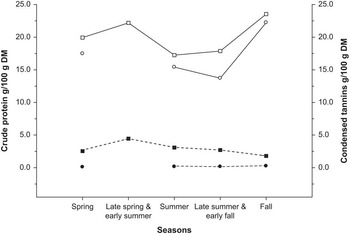
CP and CT averages of Lolium perenne and L. corniculatus from nine studies compiled by Ramírez-Restrepo and Barry (Reference Ramírez-Restrepo and Barry2005) is shown in Figure 1. The trend in this figure indicates that CT does not follow the CP pattern for L. perenne and L. corniculatus. For instance, while the CT concentration in L. corniculatus diminishes from late spring to fall season, the CP concentration decreases up to summer but then increases towards early fall (Ramírez-Restrepo and Barry, Reference Ramírez-Restrepo and Barry2005). On the other hand, Ramírez-Restrepo et al. (Reference Ramírez-Restrepo, Kemp, Barry and López‐Villalobos2006b) used L. corniculatus in an indoor metabolic trial to demonstrate a similar decreasing pattern of CP and CT concentrations across vegetative, flowering and mature stages. The greatest concentration of CT in L. corniculatus was found in late spring and early summer and the CT for grass was <0.5 g/100 g DM (Figure 1). In contrast, Cooper et al. (2014) found that CT concentrations during seed set were stable for Sericea lespedeza but decreased in Desmodium paniculatum, an herbaceous legume dependent on epizoochory. Epizoochory uses the presence of mammalian hair for seed dispersal whereas most legumes, such as S. lespedeza, are more dependent on gravity, wind or water. Deduction indicates that D. paniculatum has evolved to diminish forage CT during seed set in order to attract potential herbivorous seed carriers.
CP (open symbols and solid lines) and condensed tannins (solid symbols and dashed lines) concentrations (g/100 g of Dry matter) of Lolium perenne (circles) and Lotus corniculatus (squares) during three temperate seasons. Missing data for late spring and early summer for L. perenne. Adapted from Ramírez-Restrepo and Barry (Reference Ramírez-Restrepo and Barry2005).

Environmental effects on CT
In addition to the length of time (e.g. grazing period) animals stay on CT-containing forages, some studies reported seasonal animal responses. Seasonal climate variations may in fact alter CT concentrations, composition of CT fractions, chemical structure in the plant (Gebrehiwot et al., Reference Gebrehiwot, Beuselinck and Roberts2002; Ramírez-Restrepo et al., Reference Ramírez-Restrepo, Kemp, Barry and López‐Villalobos2006b) and other secondary constituents (Van Soest, Reference Van Soest1994). The effectiveness of CT may be altered by such effects depending on the forage source. Oscillations in CT concentration are also related to plant stress because of herbivore selection, soil and temperature variability, water and nutrient availability, and competition with other plants, among others (Barry et al., Reference Barry, Manley and Duncan1986b; Muir, Reference Muir2011). In a study evaluating the response of L. corniculatus to environmental change drivers, Carter et al. (Reference Carter, Theodorou and Morris1999) reported an increase in plant CT in response to increased carbon dioxide exchange rate, whereas CT decreased with drought stress and as growth temperatures increased to 25°C.
Feeding value of CT
Lotus spp. studies conducted by Niezen et al. (Reference Niezen, Waghorn, Charleston and Waghorn1995 and Reference Niezen, Robertson, Waghorn and Charleston1998) and Leathwick and Atkinson (Reference Leathwick and Atkinson1995 and Reference Leathwick and Atkinson1998) showed reduced parasite infestation and dagFootnote 1 formation, respectively. Using a dryland farming approach, Ramírez-Restrepo et al. (Reference Ramírez-Restrepo, Barry, López-Villalobos, Kemp and McNabb2004) confirmed in two consecutive spring experiments that weaning BW, average daily gain (ADG) and wool production of lambs grazing birdsfoot trefoil was greater than those grazing a mixture of perennial ryegrass (L. perenne) and white clover (Trifolium repens) pasture. They also reported that, compared to those on pure grass pasture, ewes and their lambs grazing L. corniculatus had reduced dag formation. The reduction in dag formation could also be attributed to a lower content of endophyte toxins ergovaline or lolitrem B in L. corniculatus compared with grass forages (Ramírez-Restrepo et al., Reference Ramírez-Restrepo, Barry, López-Villalobos, Kemp and McNabb2004).
According to Fletcher et al. (Reference Fletcher, Sutherland and Fletcher1999), alkaloids tend to increase faecal moisture, increasing the probability of dag formation in wool sheep. In agreement with other reports (Waghorn et al., Reference Waghorn, Ulyatt, John and Fisher1987; Douglas et al., Reference Douglas, Wang, Waghorn, Barry, Purchas, Foote and Wilson1995; Wang et al., Reference Wang, Douglas, Waghorn, Barry and Foote1996), Ramírez-Restrepo et al. (Reference Ramírez-Restrepo, Barry, López-Villalobos, Kemp and McNabb2004) assigned the increased animal performance to reduced microbial degradation of forage protein in the rumen by CT with a consequent increase in amino acid (AA) availability and absorption in the small intestine. Later, Ramírez-Restrepo and Barry (Reference Ramírez-Restrepo and Barry2005) reinforced the sparing effect of CT on AA proteolysis in the rumen to explain the correlation with increased AA absorption in the small intestine. Furthermore, Ramírez-Restrepo and Barry (Reference Ramírez-Restrepo and Barry2005) also reported a possible benefit (i.e. positive correlation) of dietary CT concentration in L. corniculatus on ewe fertility owing to increased grazing period of L. corniculatus. This increased fertility was caused by a linear increase in ovulation rate as mating ewes were grazing L. corniculatus for longer periods of time during late summer or early fall resulting in a 16% increase in number of lambs born and weaned (Ramírez-Restrepo et al., Reference Ramírez-Restrepo, Barry, López-Villalobos, Kemp and Harvey2005a). These topics are discussed further in the next section.
However, it is not clear if the observed improvements in most of these experiments were solely owing to CT concentration or to increased organic matter (OM) digestibility (i.e. metabolisable energy) of a legume compared with a grass and consequently increased DMI or a combination of both (Ramírez-Restrepo et al., Reference Ramírez-Restrepo, Barry and López-Villalobos2006a). The effect of CT-containing forages on the improved performance of grazing animals is also influenced by other factors such as the proportion and digestibility of fibre and the content of protein, non-structural carbohydrates, and lignin. For example, lambs consuming willow (Salix spp.) fodder blocks (i.e. combined 6000 trees/ha and unimproved herbage grown under tree canopies; silvo-pastoral grazing system) had lower ADG compared with those lambs grazing a mixture of perennial ryegrass/white clover pasture (92 v. 134 g/day, respectively), which was likely owing to lower DMI as reported by Ramírez-Restrepo et al. (Reference Ramírez-Restrepo, Pernthaner, Barry, López-Villalobos, Shaw, Pomroy and Hein2010b). Most legumes also contain other secondary substances (potentially defensive compounds) that can have anti-nutritional characteristics and can reduce voluntary DMI (Van Soest, Reference Van Soest1994). The consideration of all factors that may influence DMI is not only important in illustrating the possible benefits of feeding CT-containing (i.e. and effective) legumes, but also important for building conceptual models of forages characteristics on the metabolism of growing ruminants and their reproductive indices. However, conclusive data, in large part, are still absent or have not been fully elucidated.
Potential benefits of CT
Ruminal CH4 production
The carbon footprint contribution of ruminant production to the environment has received considerable attention by stakeholders and public policy makers around the world. Consequently, it has compelled research organizations and institutes to seek CH4 abatement opportunities to mitigate the environmental impact of livestock production systems. Means of reducing CH4 emissions can be classified into five categories, including feed additives, genetic selection, physiological modifications, rumen manipulation and management practices (Ramírez-Restrepo C. A., personal communication). Genetic selection of ruminants for low emissions of CH4 has concomitantly arisen with the selection for efficiency via residual feed intake (Hegarty et al., Reference Hegarty, Goopy, Herd and McCorkell2007). Although there is little evidence, this reduction in CH4 emission is likely the result of reduced daily DMI instead of efficient animals having a different CH4 emission per DM consumed (g CH4/kg DM per day) (Waghorn and Hegarty, Reference Waghorn and Hegarty2011).
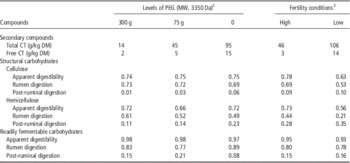
A gamut of factors can influence the production of CH4 in the rumen, including substrate and commercial or natural chemical products that decrease CH4 production, but substrate fermentability is by far the greatest factor that affects the output of CH4. Hence, when evaluating the emissions (or production) of CH4 from different products, CH4 output should be expressed per fermentable OM and fermentable carbohydrate bases rather than DM consumption. Ash, lipids (i.e. fat and fatty acids) and proteins may naturally restrict the production of CH4 in the rumen if their relative proportion is increased and daily DMI is kept the same. Literature review of experimental research (Tedeschi et al., Reference Tedeschi, Fox and Tylutki2003 and Reference Tedeschi, Callaway, Muir and Anderson2011b; Cieslak et al., Reference Cieslak, Szumacher-Strabel, Stochmal and Oleszek2013) has indicated that in current production systems such mitigation might be attained with feed additives and feeding strategies used alone or combined. Regardless of limitations in measuring CT and the generally unknown fate and transformations of the CT molecule through the ruminant digestive system (Terrill et al., Reference Terrill, Waghorn, Woolley, McNabb and Barry1994), CT are thought to reduce CH4 production in two ways. The first way is indirectly by binding to the dietary fibre and/or reducing the rumen digestion and apparent digestibility of the fibre (Barry and Manley, Reference Barry and Manley1984; Barry et al., Reference Barry, Allsop and Redekopp1986a), and the second way is directly by inhibiting the growth of methanogens (Tavendale et al., Reference Tavendale, Meagher, Pacheco, Walker, Attwood and Sivakumaran2005). After chewing unbound CT present in the vacuoles of the plant inactivates both microbial and digestive enzymes in the initial hydrolysis of large molecular weight carbohydrates such as cellulose and hemicelluloses (Benoit and Starkey, Reference Benoit and Starkey1968; Barry and Duncan, Reference Barry and Duncan1984). In this environment, readily fermentable carbohydrates (e.g. water-soluble carbohydrates and pectin) are almost completely digested in the whole digestive tract, while their ruminal digestion is very slightly depressed by CT up to a concentration of 106 g/kg DM, as shown in Table 1 (Barry and Manley, Reference Barry and Manley1984; Barry et al., Reference Barry, Manley and Duncan1986b).
Digestion of structural carbohydrates and readily fermentable carbohydrates (soluble CHO+pectin) in sheep fed Lotus pedunculatus differing in total condensed tannin (CT) and free CT contents due to applications of high, low and zero rates of polyethylene glycol (PEG/L tap water) on the dietFootnote 1

MW=molecular weight, DM=dry matter.
The effects were tested on forages harvested from high and low fertility soils resulting in varying CT concentration.
1 Apparent digestibility, rumen digestion and post-ruminal digestion are expressed as proportion of feed intake.
2 Sprayed at 77 ml/kg fresh forage.
3 Soil pH 5.3 v. 4.7, available P (µg/g soil) 18 v. 6 and S (µg/g soil) 12 v. 4 for high and low levels of soil fertility, respectively.
Adapted from Barry and Duncan (Reference Barry and Duncan1984), Barry and Manley (Reference Barry and Manley1984), Barry et al. (Reference Barry, Manley and Duncan1986b) and Ramírez-Restrepo (Reference Ramírez-Restrepo2004).
The mitigation of CH4 owing to consumption of forage CT and possible mechanisms of action have been addressed in several scientific papers. Waghorn et al. (Reference Waghorn, Tavendale and Woodfield2002) evaluated six commonly grazed forages by sheep in New Zealand and reported that lower levels of CH4 production (g/kg DMI; CH4 yield) were obtained for forages with high ratios of non-fibre carbohydrate to NDF and the presence of CT (sulla and L. pedunculatus). In an elegant factorial design, Woodward et al. (Reference Woodward, Waghorn and Laboyre2004) compared the effectiveness of feeding ryegrass and L. corniculatus, with or without polyethylene glycol (PEG; MW 3350 Da; used to neutralize CT) to grazing dairy cows to reduce CH4 production. Daily CH4 production was similar between ryegrass with or without PEG and L. corniculatus with PEG (24.7, 24.2 and 22.9 g CH4/kg DM per day, respectively). When PEG was not added to L. corniculatus, however, CH4 production was reduced (19.9 g CH4/kg DM per day) by 3 g/kg DM per day (13% reduction). The authors also indicated that the CT in L. corniculatus was responsible for more than 65% of the reduction in CH4 production. The addition of PEG did not affect DMI or milk yield of the cows, but cows fed L. corniculatus produced 32% less CH4/kg of milk solids (i.e. CH4 intensity) compared with those fed ryegrass. These results confirmed that CT from L. corniculatus was in fact responsible for this reduction in CH4 emissions because when the CT binding ability was neutralized, the CH4 emission was similar to that observed for animals consuming only ryegrass.
The data from most studies with feed additives of plant origin (i.e. plant extracts) have shown small inhibitory effects on CH4 production when expressed per unit of intake (Tedeschi et al., Reference Tedeschi, Callaway, Muir and Anderson2011b), but their strategic use (i.e. alone or combined in a simultaneous or consecutive use) may provide significant abatement levels even in grazing conditions. Furthermore, as discussed by many related reviews, the results of in vitro studies need to be confronted with the results of in vivo studies to confirm the long-term efficacy (i.e. more than 3 months of duration) of such feed additives.
AA absorption in the small intestine
Likewise, both the concentration and type of CT in the diet influence rumen protein digestion (McLeod, Reference McLeod1974; Reid et al., Reference Reid, Ulyatt and Wilson1974). The great affinity of CT for leaf proteins is based on two mechanisms, oxidative coupling, which is not reversible, and H bonding, which is reversible (McLeod, Reference McLeod1974; Jones and Mangan, Reference Jones and Mangan1977; Swain, Reference Swain1979). Hydrogen-bonded CT-protein complexes are insoluble in the rumen at pH 6.5 to 7, but may become unstable in the abomasum at pH 2.5 to 3.0, which makes AA available for digestion and absorption in the small intestine at pH 8.0 to 9.0 (Waghorn et al., Reference Waghorn, Ulyatt, John and Fisher1987; Mangan, Reference Mangan1988; Waghorn et al., Reference Waghorn, Shelton, McNabb and McCutcheon1994). In sheep grazing fresh L. pedunculatus, a CT-containing legume, the duodenal non-ammonia N (NAN) flow per unit total N intake was equal to total N intake at a CT concentration of ∼40 g/kg DM, but the flow ratio reached 1.35 as dietary reactive CT increased to 110 g/kg DM (Barry and McNabb, Reference Barry and McNabb1999).
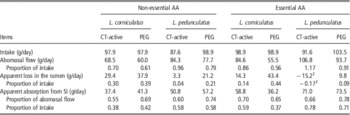
Research with sheep has shown different CT effects upon the digestion and absorption of AA among Lotus spp. (Table 2; Waghorn et al., Reference Waghorn, Ulyatt, John and Fisher1987 and Reference Waghorn, Shelton, McNabb and McCutcheon1994). CT in L. corniculatus increased both the flux of essential AA (EAA; 52%) and non-essential AA (NEAA; 14%) through the abomasum. A similar trend was observed in L. pedunculatus, but the magnitude of the response was lower than in L. corniculatus: 14% and 8% for EAA and NEAA, respectively. Rumen fermentation in sheep fed CT-containing L. corniculatus resulted in a smaller loss of EAA (14% of intake) than in NEAA (30% of intake). However, when PEG (CT binder) was also fed, a net loss of both EAA and NEAA of 44% and 39% of intake, respectively, was shown from the rumen.
The effect of condensed tannins (CT) in sheep fed fresh Lotus corniculatus (22 g/kg DM) and Lotus pedunculatus (55 g/kg DM) with or without polyethylene glycol (PEG) upon digestion of amino acids (AA)Footnote 1

SI=small intestinal.
Non-essential AA are alanine, asparagine, glutamate, glycine, proline and serine; Essential AA are histidine, isoleucine, lysine, phenylalanine, threonine, tyrosine (i.e. phenylalanine as an only source), valine and leucine. Arginine values are excluded from this comparison.
1 Effects of CT were assessed through intra-ruminal infusion of PEG (molecular weight of 3500 Da) into half the sheep fed each legume.
2Negative values denote a net gain of essential AA (0.17 of intake) from rumen fermentation.
Adapted from Barry and Blaney (Reference Barry and Blaney1987), Waghorn et al. (Reference Waghorn, Ulyatt, John and Fisher1987 and Reference Waghorn, Shelton, McNabb and McCutcheon1994), and Ramírez-Restrepo (Reference Ramírez-Restrepo2004).
In contrast, sheep fed CT-containing L. pedunculatus exhibited a net gain of EAA (17% of intake) and a small loss of NEAA (4% of intake) across the rumen, but when PEG was given, there was a lower net loss of both EAA and NEAA than with L. corniculatus. In addition, the apparent absorption (i.e. proportional abomasal flow) of EAA with L. corniculatus was not different between the CT- and CT+PEG-fed sheep, but was affected by NEAA. However, CT depressed the apparent absorption of both EAA and NEAA in sheep fed L. pedunculatus. The effects of CT treatment on increasing the apparent absorption (i.e. proportion of intake) of EAA in the small intestine were greater for sheep fed L. corniculatus (59%) than in L. pedunculatus (10%). In contrast, CT reduced the apparent absorption of NEAA by 10% of intake for sheep fed L. corniculatus, but had no effect for sheep fed L. pedunculatus.
Such relationships have been extensively evaluated for their effect on ruminant productivity in temperate (Barry and McNabb, Reference Barry and McNabb1999; Ramírez-Restrepo and Barry, Reference Ramírez-Restrepo and Barry2005) and tropical (Muir, Reference Muir2011) regions. Not all CT are biologically active or equally reactive because of differences in the degree of biological activity among species (Naumann et al., Reference Naumann, Muir, Lambert, Tedeschi and Kothmann2013a); thus, CT concentration and NAN flow interactions may be forage species specific.
Gastro-intestinal parasite suppression
CT consumption also affects ruminant nutrition indirectly by mitigating the negative effect of blood-consuming gastro-intestinal nematode parasites (GINP). Most anthelmintic effects of CT-containing forages on ruminants have been determined using GINP larval feeding or motility inhibition, larval exsheathment reduction (Novobilský et al., Reference Novobilský, Mueller-Harvey and Thamsborg2011), larval identification from larval cultures, postmortem gastro-intestinal worm counting and faecal egg count (FEC) assays (Ministry of Agriculture, Fisheries and Food, 1986). Underestimation may be a problem with all of these. For example, the most widespread assay, conventional FEC, underestimated the intensity of infection possibly because of CT in the faeces of willow-fed sheep (Mupeyo et al., Reference Mupeyo, Barry, Pomroy, Ramírez-Restrepo, López-Villalobos and Pernthaner2011). Perhaps, a more likely explanation is that in the faeces CT bind indigestible plant matter and protein layers present on the nematode egg shells (Wharton, Reference Wharton1980) affecting their flotation and microscopic examination (Mupeyo et al., Reference Mupeyo, Barry, Pomroy, Ramírez-Restrepo, López-Villalobos and Pernthaner2011).
Reduced parasitic infestations with Haemonchus contortus, Teladorsagia spp., Nematodirus spp., Cooperia spp., Trichostrongylus spp., Chabertia ovina, Oesophagostonum spp. and Trichuris ovis were reported for lambs grazing L. corniculatus without receiving anthelmintic drenches (Ramírez-Restrepo et al., Reference Ramírez-Restrepo, Barry, Pomroy, López-Villalobos, McNabb and Kemp2005b). Similar reduction of GINP infestation was observed in cattle and the most effective forage was L. pedunculatus followed by Onobrychus viciifolia and L. corniculatus (Novobilský et al., Reference Novobilský, Mueller-Harvey and Thamsborg2011). The possible effects of CT present in L. corniculatus, L. pedunculatus, H. coronarium and O. viciifolia against GINP in small ruminants include (1) reduced egg laying and hatching; (2) development of egg to L3 larval stage outside the ruminant; (3) motility of L3 larvae; and (4) an improved host immunological competence (Molan et al., Reference Molan, Waghorn and McNabb1999, Reference Molan, McNabb, Hoskin and Barry2000 and Reference Molan, Duncan, Barry and McNabb2003; Hoste et al., Reference Hoste, Jackson, Athanasiadou, Thamsborg and Hoskin2006).
However, the anthelmintic properties of CT from different legumes is not only parasite specific; it can also be compartment specific because CT varies in effectiveness in different parts of the gastro-intestinal tract (Ramírez-Restrepo et al., Reference Ramírez-Restrepo, Barry, Pomroy, López-Villalobos, McNabb and Kemp2005b). There are some data suggesting a greater deleterious effect of CT on nematode population inhabiting the abomasum compared with the small intestine (Hoste et al., Reference Hoste, Jackson, Athanasiadou, Thamsborg and Hoskin2006; Ramírez-Restrepo et al., Reference Ramírez-Restrepo, Pernthaner, Barry, López-Villalobos, Shaw, Pomroy and Hein2010b). The preceding information suggests that further studies are needed to unveil the underlying mechanisms of CT to restrain nematode proliferation and infestation in ruminants consuming CT-containing forages (Ramírez-Restrepo et al., Reference Ramírez-Restrepo, Barry, Pomroy, López-Villalobos, McNabb and Kemp2005b).
Effects on fertility and foetal development through endocrine regulation
Experimental evidence by Barry et al. (Reference Barry, Allsop and Redekopp1986a) suggested that endocrine concentrations in sheep fed L. pedunculatus have shown that diets with the lowest value of CT have the highest plasma concentration of both 3,5,3'-tri-iodothyronine (T3) and free T3. Barry et al. (Reference Barry, Allsop and Redekopp1986a) also reported that a linear, positive relationship existed between plasma growth hormone (GH) concentration (µg/l) and CT concentration (g/kg DM) in sheep fed L. pedunculatus with no alteration of plasma concentrations of other hormones. Effects of ovine GH concentration may be related to a reaction of free CT in inactivating gut-wall proteins by H bonding. Previous research with sheep (Davis et al., Reference Davis, Garrigus and Hinds1970a and Reference Davis, Garrigus and Hinds1970b; Muir et al., Reference Muir, Wien, Duquette, Rickes and Cordes1983) has shown that GH concentration is related to increased levels of plasma glucose, insulin and N gain. According to Muir et al. (Reference Muir, Wien, Duquette, Rickes and Cordes1983) GH has an immediate, short-term insulin-like effect on adipose tissue yielding adipose tissue refractoriness to the insulin-like growth factor, which is followed by an extended, lipolytic response when GH is chronically increased.
Ramírez-Restrepo et al. (Reference Ramírez-Restrepo, Barry, López-Villalobos, Kemp and Harvey2005a) identified greater prenatal and postnatal lamb survival in ewes that grazed L. corniculatus during their mating and early pregnancy than in ewes that grazed perennial ryegrass/white clover pasture. Differences in ovulation rate, reproductive efficiency, pregnancy rate, fecundity, lambing rate and survival at weaning were not only associated with higher quality of the legume, but also to the forage CT effect upon uterine microenvironment, folliculogenesis, conception, implantation, early foetal growth and lamb viability. Given the association between the environment, nutrition and phenotype, lambs from the L. corniculatus-fed ewes were linked with a functionally modified epigenetic (i.e. heritable modifications in gene expression not associated to altered DNA sequences) mechanism in terms of carbohydrate and protein metabolisms (Barry et al., Reference Barry, Parkinsin, Ramirez-Restrepo, McWilliam and Lopez-Villalobos2004).
In a recent comprehensive review, Walker and Mitchell (Reference Walker and Mitchell2013) indicated that nutrition intervention influences a correlation between DNA methylation (i.e. epigenetic mechanism) and gene expression in the endometrium to promote folliculogenesis, uterine receptivity to embryonic attachment and growth in early stages, and offspring phenotype. It has also been reported that polyphenolic metabolites modulate the expression of genes related to cell adhesion and cytoskeletal organization (Chanet et al., Reference Chanet, Milenkovic, Claude, Maier, Kamran Khan, Rakotomanomana, Shinkaruk, Bérard, Bennetau-Pelissero, Mazur and Morand2013). Furthermore, because pregnancy recognition in ruminants is accomplished by production of large amounts of interferon-tau (IFN-τ) by the mononuclear trophectoderm of the blastocyst (i.e. days 12 to 14 of gestation; Stewart, Reference Stewart1992; Ott et al., Reference Ott, Yin, Wiley, Kim, Gerami-Naini, Spencer, Bartol, Burghardt and Bazer1998), DNA methylation might be associated with transcriptional differences in the mutual response to this pathway (Walker and Mitchell, Reference Walker and Mitchell2013). Although the experimental evidence needs to be tested at physiologically relevant conditions, this provides a potential explanation of the CT and/or their conjugated metabolites in blood circulation to improve reproductive performance and offspring survival through transcriptional regulation of gene expression.
Impacts on the immune system
Ramírez-Restrepo et al. (Reference Ramírez-Restrepo, Pernthaner, Barry, López-Villalobos, Shaw, Pomroy and Hein2010b) demonstrated that lambs consuming willow fodder blocks had a greater systemic antibody response triggered by the CT exemplified by increased clusters of differentiation CD21+ and γδ differentiation TCR+ (TC receptor) lymphocyte subsets. According to Kabelitz and Wesch (Reference Kabelitz and Wesch2003), γδ T-cells are present in all vertebrate species to bind antigens, much as antibodies do, because of their innate immune system function and structural similarities with immunoglobulin. The γδ T-cells populate the blood and usually enrich lymphatic tissues, lungs, skin, reproductive tract and small intestine epithelia. Immune-physiological reproductive evidence suggests that increased numbers of γδ T-cells in endometrial luminal epithelium are not only dependent upon conceptus stimulus (Tekin and Hansen, Reference Tekin and Hansen2004) but also on systemic signals (i.e. maternal blood circulation; Majewski et al., Reference Majewski, Tekin and Hansen2001; Oliveira et al., Reference Oliveira, Barreto, Perecin, Mansouri-Attia, Pereira and Meirelles2012). In immune-modulating in vitro assays (Holderness et al., Reference Holderness, Jackiw, Kimmel, Kerns, Radke, Hedges, Petrie, McCurley, Glee, Palecanda and Jutila2007) with apple CT (i.e. procyanidin-type polymer), bovine CD8+ and γδ T-lymphocytes demonstrated cell proliferation via upregulation of the interleukin (IL)-2Rα chain expression and possibly endogenous concentration of phosphoantigens (Holderness et al., Reference Holderness, Jackiw, Kimmel, Kerns, Radke, Hedges, Petrie, McCurley, Glee, Palecanda and Jutila2007) and IFN-γ secretion (Percival et al., Reference Percival, Bukowski and Milner2008). It is also likely that protein mediators (i.e. limphokines) produced by epithelial uterine lymphocytes induce regulatory dynamics on IFN-τ and IFN-γ (Oliveira et al., Reference Oliveira, Barreto, Perecin, Mansouri-Attia, Pereira and Meirelles2012). However, although the function of γδ T-lymphocyte on early maternal−embryonic and embryonic−foetal interfaces is not clear, Holderness et al. (Reference Holderness, Jackiw, Kimmel, Kerns, Radke, Hedges, Petrie, McCurley, Glee, Palecanda and Jutila2007) and Jutila et al. (Reference Jutila, Holderness, Graff and Hedges2008) suggested that CT (i.e. trimers and complex oligomeric-CT; Holderness et al., Reference Holderness, Jackiw, Kimmel, Kerns, Radke, Hedges, Petrie, McCurley, Glee, Palecanda and Jutila2007) are prominent γδ T-lymphocyte agonists. Therefore, it may be possible that after ruminal fermentation, the CT molecule, the CT-protein bound fractions or CT-like compounds act on lymphocyte T-cell receptors, cytokine and chemokine synthesis and/or secretion to engage signal transduction. This might initiate the adaptive cellular host immune response to GINP and to some extent other immuno-modulatory, stimulatory, suppressive and/or tolerance effects on other systemic epitheliums. However, further studies must be performed to test these hypotheses.
Integration of mechanisms of action of CT
Recently, an in vitro study has suggested the CT concentration by itself may not be a reliable predictor of the CT biological activity relative to the reduction of CH4 production (Naumann et al., Reference Naumann, Tedeschi, Muir, Lambert and Kothmann2013b). Therefore, other aspects of CT need to be considered. The effectiveness of CT-containing forages in promoting the benefits discussed above may depend on CT concentration in the forage consumed, reactivity (i.e. biological activity) of that CT (Barry and McNabb, Reference Barry and McNabb1999) as well as the metabolism of the ruminant animal. The reactivity of the CT may in turn depends on multiple factors, including plant species and elements that are inherent to their molecular structure, size, weight, polymer forming units (i.e. building blocks) and moieties (Mueller-Harvey, Reference Mueller-Harvey2006; Naumann et al., Reference Naumann, Muir, Lambert, Tedeschi and Kothmann2013a). Furthermore, early studies suggested that forage morphology may also impact parasitism levels in the animal independently of factors inherent in the CT (Ramírez-Restrepo and Barry, Reference Ramírez-Restrepo and Barry2005). For instance, short grasses and legumes are more prone to larval infestation and intake by grazing animal than those grasses and legumes that present a high stand (i.e. greater grazing height; Georgi, Reference Georgi1985). Thus, the reasons that some forages perform better than others in decreasing parasitism are type and concentration of CT (and other secondary compounds) as well as pasture architecture (i.e. grazing horizon, proximity to soil, length of regrowth period during grazing rotations).
A conceptual model for the mechanisms of action of CT
Simulation modelling is a potentially valuable approach to assist research in agriculture that has consistently been underutilized (Tedeschi et al., Reference Tedeschi, Nicholson and Rich2011a), most likely owing to lack of awareness of its capabilities and the notion of model development is complex and difficult. We propose the use of system dynamics (SD), a methodological approach that uses minimum mathematical formalism and focuses primarily on the development of intuition and conceptual understanding, without sacrificing the rigour of the scientific method (Sterman, Reference Sterman2000). The SD approach is a computer-aided modelling methodology that can be used to develop models for policy analysis and decision support systems (DSS) applied to problems arising in complex ecological dynamic systems characterized by interdependence, mutual interaction, information feedback and circular causality (Sterman, Reference Sterman2000; Tedeschi et al., Reference Tedeschi, Nicholson and Rich2011a). The trend for increasing livestock production in tropical and subtropical regions and the reliance on these regions to produce high-quality food and energy crops warrants the development of DSS to address issues such as alternative production systems (including those using CT as a feeding strategy). These can assess the negative (if any) impacts livestock can have on greenhouse gas emissions and the environment, as well as the effects of climate change on livestock systems. Sterman (Reference Sterman2001) pointed out that well-intentioned efforts to solve urgent problems very often create unintentional side effects owing to unforeseen outcomes or reactions to decisions. The development and application of models with strong scientific foundation not only allow for minimizing the occurrence of unforeseen pitfalls, but also permits research collaboration among individuals with different technical expertise. The first step in developing SD models is the statement of the problem and the identification of key variables (endogenous or exogenous to the problem) and their interrelationships, including feedback loops. The next step, which is not addressed in this paper, is the parameterization of the conceptual model.
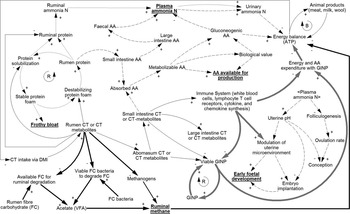
As discussed above, the main problem with CT is that the unpredictability of their effects might be related to different mechanisms and modes of action. Figure 2 has five proposed mechanisms of action of CT for the protein (i.e. AA) ruminal sparing (decreased proteolysis), frothy bloat, ruminal CH4, parasitic infestation and foetal development effects. In addition to what was discussed above, a decrease in ammonia formation was observed when L. corniculatus was fed to sheep (Waghorn et al., Reference Waghorn, Ulyatt, John and Fisher1987). The decrease in AA deamination and fewer short peptides are likely because of a lower proteolysis as CT exerts varying effects upon flows, loss and absorption of AA from the rumen to the small intestine. According to Li et al. (Reference Li, Tanner and Larkin1996), 5 mg of CT/g of DM (i.e. 0.5 g/100 g of DM) is the minimum concentration necessary to prevent bloat (i.e. frothy bloat) in forage legumes. The effect is achieved by (1) destabilizing plant protein foams (Tanner et al., Reference Tanner, Moate, Davis, Laby, Li, Larkin and Li1995); (2) reducing protein solubility (Jones et al., Reference Jones, Anderson and Ross1973); and (3) impairing the formation of stable protein foam and consequently reducing the incidence of bloat.
Five proposed mechanisms of action (bold, underlined variables) of condensed tannins (CT): amino acid (AA) sparing, ammonia production and embryonic development (long dashed arrows, centre and lower right regions), ruminal protein degradation and frothy bloat (short dashed arrows, upper left region), methane production (thick arrows, lower left), resistance to gastro-intestinal nematode parasite (GINP) and anthelmintic effect (thicker grey arrows, right region). R and B within an arrow circle indicate reinforcing and balancing loops, respectively, and the (+) and (-) signs at arrow heads indicate correlation direction between the variables. DMI=dry matter intake; FC=fibre carbohydrate; VFA=volatile fatty acids.

Besides the direct impact of CT on frothy bloat, ruminal CH4, AA sparing, viable GINP and foetal development (Figure 2), these five mechanisms of action of CT were commonly and indirectly related to the ‘energy balance’ of the animal. We believe this critical feedback between ‘energy balance’ and ‘CT intake’ is responsible for creating complex dynamics and non-linear behavioural systems, but it is not clear which feedback loop dominates the system at a given time and at what frequency.
In conclusion, the consumption of CT by ruminants gives rise to complex and long-lasting relationships with various aspects of digestive, toxicological, physiological and morphological processes. The conceptual model structure indicated that, by nature, these relationships are integrative and sometimes complementary. A systematic approach will further our understanding of these relationships in a holistic manner, notably to account for possible benefits and detriments when different types and levels of CT are consumed by ruminants. We have provided a conceptual model delineating these relationships and discussed their strengths and weaknesses. We believe this conceptual model can guide new animal research programmes and assist the development of future mechanistic models that improve the understanding of the interaction between CT and the ruminant. This may also provide insight into prototype models for research initiatives of the impact of polyphenol-rich foods (e.g. green tea, grape and vegetables) on human health.
Acknowledgements
The authors acknowledge the Commonwealth Scientific Industrial Research Organisation (CSIRO) for provision of Sir Frederick McMaster Fellowship support to Associate Professor Luis Orlindo Tedeschi, while in Australia. We would like also to express our appreciation to Emeritus Professor Tom Barry, Massey University; Professor Garry Waghorn, Dairy NZ; Associate Professor Jennifer MacAdam, Utah State University; and Assistant Professor Harley Naumann, University of Missouri for their insightful comments and invaluable criticisms that improved the quality of this manuscript.