Archaeology: excavation machine or ethics of abstinence?
In the 1970s, doubts emerged amongst European archaeologists with regard to the necessity and inherent importance of excavating. These doubts originally existed amongst a very few scholars, and they emerged in some countries (e.g. England) somewhat earlier than they did in others. Nonetheless, they gradually grew into a sort of subdiscipline – archaeological heritage management (AHM) or, more generally, cultural resource management (CRM) – with its own principles, theories and methods (Cleere 1989). The practitioners of this subdiscipline provided a source of reflection for the profession: non-scientific actors and groups are not the only ones to treat archaeological heritage carelessly and wastefully; archaeologists do as well. Through their often undisciplined acquiescence to their desire to excavate, they share the blame for the destruction and endangerment of important cultural resources (Bonnie, this issue). Archaeological heritage management therefore argues for a strict ethic of abstinence, a policy that initially appears impossible to reconcile with the personality structure of the average archaeologist. The word Lustgrabung, the practice of excavation purely in the interest of scientific gain, is now being applied outside Germany to denote a questionable practice.
Although the AHM discourse suggests that the cultural interest of archaeological heritage should play the central role, the quest to preserve archaeological sites became emphatically grounded in an undiluted ideal of scientific progress. The most important goal was the conservation of sites and remains so that future generations of archaeologists would be able to consult an authentic ‘soil archive’ with improved methods, techniques and research questions (Skeates 2000; Bonnie, this issue). Upon closer examination, the ethic of abstinence thus emerged as a technique for delaying the act. Although it is assumed that, in addition to archaeological science, society stands to benefit, AHM has not yielded the desired effects in most European countries. More than a quarter-century after the birth of AHM, archaeologists continue to excavate with abandon almost everywhere. In addition, despite the gradual increase in the number of protected archaeological monuments, this increase has been greatly exceeded (particularly in terms of surface area) by the loss of archaeological heritage, sometimes involving entire landscapes.
Tangentially, this could have something to do with the mentality of the archaeologist, for whom excavation has remained a sort of ‘second nature’. It seems unlikely that a theoretical power shift would have much influence in this regard. In the 1990s, although postprocessual lines of research have gained ground, thereby eroding the promise of scientific progress in archaeology, the influence of these lines on the practice of excavation and heritage management ultimately remained quite limited. The most important cause of the advancing destruction of archaeological heritage and the further increase in excavations should be sought in an irrefutable regularity: the world is stronger than archaeology, instead of excavation being stronger than the archaeologist. In this regard, I am referring particularly to the world of builders, land managers, project developers and real-estate traders.
This natural law was clearly proven after the establishment of the Valletta Treaty in 1992 and the development of ‘Malta archaeology’ in various European countries in the years that followed. Even in a small country like the Netherlands, the Malta regime led to an increase of tens of millions of euros in the total budget for excavations (reaching a total of €70 million), a fourteenfold increase in the number of small-scale excavation projects (trenching) and an increase in the number of large-scale excavations from a few dozen to just under 200, all within the span of 10 years (Bazelmans, in press). The Valletta Treaty still refers to the protection of archaeological heritage in situ, preferably in the form of continuous reserves. Many are afraid, however, that the introduction of ‘Malta’ in various countries will actually result in a destructive and exorbitant excavation machine (cf. Nilsson, this issue), which will prove disappointing in terms of scientific production and social impact. There is a fear that motives related to economics, financing and urban planning will be the most prominent drivers in decisions regarding whether and what to excavate, and that commercial operations and excavations will lead to risk-free reproduction and deficient exchanges (and thus fragmentation) of knowledge (e.g. Sommer 2009). For this reason, the question is being posed once again: why excavate? Are archaeologists excavating too much and too easily? Is it possible to formulate stricter conditions and better research questions that would allow us to curb the excavation frenzy to some extent? We have obviously conceived of answers that are better than simply saying that excavating is ‘our second nature’, that the public likes to see us doing it, or that we simply need excavations to support the discipline (and archaeological community) economically and financially during a time in which marketism has replaced Marxism as a widely accepted ideology, even in intellectual circles (as proposed by one Dutch sociologist).
I obviously do not pretend to provide a clear-cut answer to these questions – or even to make a cautious start – within this short time. To be precise, there are conceivably a million good reasons to excavate, although the validity of these reasons varies for each situation. My contribution therefore does not involve conceiving of possible answers; it is more likely to signal a trend. It expresses the sense that excavation is becoming more important (although not necessarily in terms of total volume), as the discipline currently seems to be rediscovering and revitalizing the values of experience and empiricism. I shall briefly discuss three possible reasons, using examples to illustrate each reason. The new interest in the empirical and the experiential may help us approach the central issue (‘why excavate?’) from a new angle. I would like to state in advance, however, that I do not necessarily identify with the positions and developments described or predicted in my paper.
Example 1: unravelling the enigma of arrival (40,000–30,000 B.P.)
Possibly more than all other ‘branches’ of the discipline, Palaeolithic archaeology has become accustomed to the fact that the archaeological patterns that we excavate do not always match our everyday perceptions and concepts of time. Even the Palaeolithic patterns that have been handed down and excavated under the most favourable of conditions often leave us wondering whether they were formed in a matter of minutes or over thousands of years (Roebroeks et al. 1992). The precise identification of time volumes and the fine-grained reconstruction of temporal rhythms within them usually remain outside the reach of the methodological and interpretive frameworks with which Palaeolithic archaeologists think and work (Verpoorte 2001). Archaeologists who are cognitively opposed to these frameworks run the risk of ‘putting Charlemagne on a motorbike’ – the unjustified coupling of events that seem to be closely related in the archaeological record but in fact were far removed in time (and sometimes also space) in the past (Pettitt 1997).
Despite this risk, Palaeolithic archaeology has the unique potential to follow cultural changes and developments that took place over tens or hundreds of thousands of years and that made us who we are (or have shaped others who are no longer on the scene any more, but who should not be considered any less or less interesting). Particularly in the most recent decade, this has generated creative and innovative insights into the evolution of human societies, as with the changing relationships between identities, forms of material culture and technologies (Gamble 2007), as well as the diverse origins of human burial (Pettitt 2011). In a few cases, however, the excavation and analysis of well-preserved archaeological deposits has shown that Palaeolithic archaeologists can reach an unexpected level of temporal detail. For example, this has been the case at Kebara (Bar-Yosef et al. 1992; but see Bailey and Galanidou 2009 for comparable achievements for other cave sites). These excavations did not deliver any sharp snapshots of past events. In a sense, however, they did offer the opportunity to visualize or conceptualize the layered evidence of sites as a kind of film (albeit yellowed and grainy) of the dynamics and rhythms of human action that took place on that particular spot.
One of the major problems of Palaeolithic archaeology is that we are currently lacking all these opportunities, with regard both to conceptualizing the finer temporal rhythms and to telling reliable stories about far-reaching histories, for particular time periods that are crucial to our understanding of human evolution, at least on the European continent. One of these is the time period roughly between 40,000 and 30,000 B.P., when anatomically modern humans arrived in Europe while the Neanderthals were still there. The manner in which they coexisted and interacted with each other for more than 10,000 years is one of the major enigmas of Palaeolithic archaeology, and it makes this period one of the most intriguing episodes in human history.
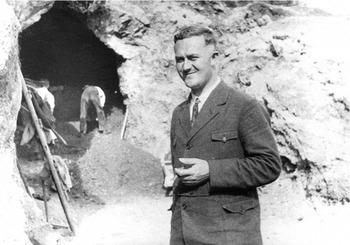
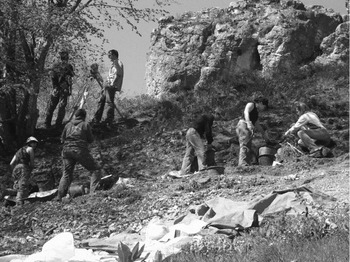
In Europe, a sharp dividing line has traditionally been drawn between an older Middle Palaeolithic, associated with Neanderthals, and a younger Early Upper Palaeolithic with more evolved technologies and material culture, associated with the first anatomically modern humans who spread over the continent. In the last 20 years, however, this picture has become more complicated through the discovery that Neanderthals survived in south-west Europe until around 25,000 years ago (Finlayson et al. 2006). The cultural package of the anatomically modern humans is thought to be best represented by a small number of classic cave sites, notably in the Lonetal in southern Germany (the Vogelherd, Hohlenstein-Stadel, Brillenhöhle, Hohle Fels and Geissenklösterle caves; see figures 1 and 2). In these caves, the relics of campsites from the so-called Aurignacian culture were excavated from the 1930s onwards (Riek 1934; Hahn, Beck and Taute 1985). The sites contained not only the remains of the earliest colonists themselves, but also everything we would like to see in the behavioural repertoire of our earliest ancestors: evolved projectile technologies, fine flint implements and well-made bone tools, body ornaments and even impressive art objects. Together with the evidence from key localities in France (mainly the Périgord), the German sites formed the basis for inferring a rapid cultural revolution, set in motion by anatomically modern humans between 40,000 and 30,000 years ago. Later theories elaborated on this image by defending the idea that anatomically modern humans replaced the Neanderthals because they were smarter, more efficient and better adapted to extreme environments and because they were better social networkers (Mellars and Stringer 1989; Mellars 1990).
Gustav Riek in front of the excavations in the Vogelherd cave (Germany), 1931 (photograph University of Tübingen).

New excavations at the Vogelherd cave by a team from the University of Tübingen (supervised by Nicholas Conard), 2008 (photograph Teresa Verrept, University of Tübingen).

In the 1990s, this ‘replacement theory’ was attacked by Joao Zilhão and Francesco d'Errico. Reanalyses of old excavations in the Grotte du Renne at Arcy in France, and close inspection of a more recently excavated site at Saint Césaire (Charente, France) revealed that another ‘modern-looking’ Upper Palaeolithic culture that is believed to be even older than the Aurignacian (i.e. the Châtelperronian) must have been the work of Neanderthals, and not of anatomically modern humans (Hublin et al. 1996; d'Errico et al. 1998). The two Châtelperronian sites contained evolved bone and stone technologies and body ornaments, and even the supposed outlines of elaborate dwellings and hearths. The conclusion was drawn that the late Neanderthals were no less smart than were their anatomically modern contemporaries. Zilhão and d'Errico therefore proposed replacing the replacement theory with a model of regional continuity. In its turn, however, this new model has been criticized in recent years based on a second re-examination of the Châtelperronian key sites, leading Ofer Bar-Yosef and his team to conclude that the occurrence of Neanderthal remains in the Châtelperronian levels could well be the result of a postdepositional mixing with older Mousterian levels (Bar-Yosef and Bordes 2010). This conclusion is not watertight, as the resolution of data recovery and processing during the old excavations obviously did not meet current standards, thus leaving us with relatively crude excavation plans and stratigraphies.
In the meantime, the reanalysis of human remains from the Aurignacian Vogelherd site (southern Germany) revealed that these remains could not have belonged to the first anatomically modern humans of Europe. Instead, they turned out to be the remains of people who had visited the caves or who were buried there much later, during the Neolithic (Conard, Grootes and Smith 2004). In light of these new findings, Clive Finlayson concluded that all existing theories about human evolution between 40,000 and 30,000 years ago should be completely reconsidered. By now, they all seem to be castles in the air, as we have no reliable evidence whatsoever concerning the relationships between the earliest Upper Palaeolithic cultures and the different kinds of human who were living in Europe at that time (Finlayson 2009, 121–42). Both the Châtelperronian and the Aurignacian cultures could have been made by Neanderthals, by Moderns, by both or even by a yet unknown proto-ancestor. According to Finlayson, this ‘frustrating picture of gloom and doom’ (ibid., 129) should not be cause for despair. It is clear, however, that the debate about cultural evolution in the Early Upper Palaeolithic cannot progress through further theory building and interpretation, as recent theories have considerably overstretched the interpretive potential of old excavations.
To conclude, the archaeology of the first anatomically modern humans in Europe started with a period of intensive digging (between about 1930 and 1970), followed by a period of constant reinterpretation and reanalysis of older excavation plans and finds (1970–2000), ultimately resulting in the constructive debunking of the most important theories (2000–10). This means that we should return to the excavation pits to clear up this enigma. At this stage, the debate about human evolution within this particular timeslot presents an empirical rather than a theoretical challenge. Although the chances of discovering sites from this time period are extremely small, we should use every opportunity to gather new information using the highest standards of modern field research. Although many of the caves have a protected status, we should even reconsider the principles of archaeological heritage management in order to re-create the possibility of field research at the classical sites of Palaeolithic archaeology (cf. Conard and Malina 2007). In this context, the careful re-excavation and re-examination of old profiles and still-existing sediments may develop as a new specialization of field archaeology.
Over the last 20 years or so, the notion of scientific progress has largely disappeared from theoretical discourse in archaeology. Instead, many (but not all) postprocessual archaeologists are defending the idea that the discipline is not progressing but proceeding, albeit in exciting and challenging ways, and that new theories and insights are actually no more reliable or factual than were earlier ones. Although such constructivist notions of science are well argued at times, the Early Upper Palaeolithic ‘enigma of arrival’ reminds us of the fact that empirical observation and early archaeological experiences set clear limits to, and can seriously improve or decrease, our present-day imagination and theory building.
Example 2: the archaeology of terrorscapes
For the second example, we will look more closely at the other end of the archaeological timeline: the archaeology of 20th-century terrorscapes. The term ‘terrorscape’ (or ‘traumascape’) has been introduced recently by historians in order to refer to networks of places of trauma and terror (e.g. concentration camps and mass graves), and their relationships with present-day memory cultures (Tumarkin 2005; Nachama 2008; Logan and Reeves 2008). The archaeology of 20th-century war, terror and conflict is a growing field of research. It largely follows the methodological innovations of battlefield archaeology that developed somewhat earlier as a separate, specialized subdiscipline. The archaeological research of terrorscapes often overlaps with personal and collective memories. It also shows that archaeology is able to contribute to a fuller story about the war-related past by literally presenting a view ‘from the underground’. In methodological terms, the discipline is eminently suited to present micro-histories about the material aspects of everyday life in local settings. Although this potential firmly positions archaeology in relation to other historical disciplines, it has not yet been fully explored, as academic archaeology generally produces ‘grand narratives’ using models from economic, social and political history, as well as anthropological blueprints.
The terrorscapes of the Second World War and the post-war years have understandably attracted the most interest amongst archaeologists to date. In this respect, the research in Germany (Ravensbrück, Kleinmachnow, Rathenow, Buchenwald) and Poland (Katyn, Szczecinek) sets the agenda, although other countries are following rapidly, as shown by recent excavation projects in France (La Glacerie, Normandy), Sweden (Eckersta) and the Netherlands (Amersfoort). Excavations at the Sobibór extermination camp (Poland) conducted by a team from Ben Gurion University uncovered a small informal pathway to the gas chambers, as well as a concentration of scissors and shaving brushes that mark the spot of a ‘hair-cutting section’ (www.yadvashem.org). Neither could ever have been located if only historical archives and personal memories had been used for reconstructing the use of space within the camp. In cases like these, archaeological discoveries tell the story of how oppression, terror and conflict infiltrated into the intimate and private life worlds of camp prisoners.
In some concentration camps (e.g. Rathenow in Germany and the SS Konzentrationslager Herzogenbusch in Vught, the Netherlands), personal possessions were rediscovered that identify individual camp prisoners or were recognized by survivors. The finding of an aluminium key with a Cyrillic text reading ‘Take your own key, not mine, Gypsy’ indicates that the supposed solidarity amongst the camp prisoners of Buchenwald was not always the rule or that interpersonal and intergroup relationships may have been much more problematic than remembered or recounted afterwards (Toebosch 2006). The excavated relics of a small camp near Kleinmachnow, where prisoners were forced to work in a factory producing Bosch machinery, show that the Nazis treated western European and Soviet prisoners quite differently: the barracks of western European prisoners were provided with a sturdy concrete foundation and plumbing facilities, while those of Soviet prisoners were built on wooden posts and lacked good sanitation.
In some cases, excavations at the hotly debated sites of the Second World War may have important political consequences. A well-known example is Father Patrick Desbois's reconstruction of the precise ways and exact locations of the extermination of more than one million Jews in the Ukraine and Belarus by mobile Nazi units between 1941 and 1944 (Desbois 2008). In this case, archaeological excavation was combined with archival research and the recording of witness reports in order to fill in the details of the ‘Holocaust by bullets’. Another example involves the discovery of camp Rathenow by German archaeologists six years ago, despite the fact that the present community was unaware of or denied the existence of the former camp (Toebosch 2006; see also Antkowiak 2002).
It is evident that archaeological research at the terrorscapes of the Second World War, particularly those connected with the Holocaust, is concerned with more than making reconstructions of everyday life in the concentration and internment camps; in a sense, it also involves the process of unearthing truth-values. In this respect, the archaeology of the Second World War contrasts with recent autobiographical literature, in which some camp survivors have expressed the opinion that the time has come to mix fact and fiction in order to represent the war-related past in more imaginable ways for the wider public and younger generations (as in the work of Imre Kertész). In the case of archaeological research on terrorscapes, a postmodern constructivist notion of archaeological interpretation as relative to place, time, culture and political context is problematic. In the light of ongoing and recent Holocaust denials and the contested nature of more recent war events, archaeology faces the burden of proof. One fundamental factor in this burden is the public conviction (at times shared by archaeologists) that archaeological traces do not lie, whereas written and oral accounts of the past may potentially distort or misrepresent the picture of what actually happened (Toebosch 2006; see Wagenaar and Groeneweg 1990 for the distortions of autobiographical war memory). In response to such claims, Philip Grierson remarked long ago that ‘it has been said that the spade cannot lie, but it owes this merit in part to the fact that it cannot speak’ (Grierson 1959, 129). Regardless of what archaeologists may think of the truth-value of archaeological interpretations, however, it is clear that the discipline cannot withdraw entirely from public and political expectations in these matters. Society expects archaeologists to reveal the truth (or most probable scenarios) about the war past in local settings.
We should be aware that such political embedding of archaeological excavation is likely to increase further in years to come, as archaeology may become even more involved in the historical and political evaluation of contested wartime events. This will involve events not only related to the Second World War, but also with regard to the Balkan War and more recent conflicts in the Near East and Africa.
Example 3: geocaching as a model for the public experience of archaeology
In an earlier article for this journal (Kolen 2009), I stated that a considerable impact has traditionally been attributed to archaeological discovery and the unearthing of archaeological traces from the past, by both professional and free-time archaeologists. Experiences reported after excavating or making a discovery are often reminiscent of what historians have termed the ‘historical sensation’ (Huizinga 1936; Ankersmit 2005; see Shanks 1992 for a similar concept). In many cases, this moment of discovery, for which excavation is an important medium, is described as an immediate and pre-reflexive experience of the past. Archaeological perceptions of this kind also evoke a process of ‘singuralization’ – the production of a unique, true and highly personal relationship with a place, object or event. Under the Malta regime and other versions of market archaeology, however, non-professional archaeologists and other (non-archaeological) interest groups are increasingly being restricted from active participation in the process of excavation or from opportunities to make archaeological discoveries. They simply do not fit in with the highly professionalized frameworks and procedures that are employed in commercial archaeology in order to safeguard commissioning bodies from high costs, planning disasters and political mistakes. Paradoxically, even as they are being excluded from the most fascinating parts of the archaeological process, groups within society are developing all kinds of activities and techniques for evoking similar events, experiences and emotions, especially in the context of what has now been called the ‘experience society’.
One of these activities is ‘geocaching’. This new trend offers a preview of how public experiences of archaeology may appear in the near future. Geocaching is an outdoor activity that involves the use of a global positioning system (GPS) to hide and discover small treasures or caches in the landscape (see http//en.wikipedia.org/wiki/Geocaching). These caches need not have monetary value, but some may hold unusual coins or currency, toys and other small objects. In the last few years this activity has become extremely popular worldwide. Geocachers are exchanging information through the Internet, field gatherings and magazines (e.g. the English-language Geocacher Magazine and the German-language Geocaching Magazin). The experience evoked by geocaching mirrors the archaeological experience in several respects. First, it provides the thrill of unearthing a hidden treasure or meaningful trace. Geocaching also offers a lively encounter with the historical layeredness of places, as its goal is to lead the geocacher to remote locations with spectacular views, natural or geological qualities and unexpected archaeological or historical traces.
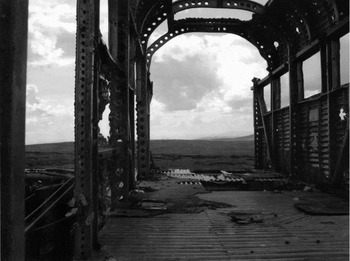
Figure 3 shows the main target of one such journey: the forgotten but well-preserved wreckage of a German Junkers 52, dating from the Second World War, situated in the empty landscape of Ringebu in Norway (Gründel 2010). In some regions, notably in nature reserves in the USA, the possibility of geocaching is considerably restricted, as it is believed to cause damage to archaeological monuments.
This photograph presents a view of the landscape of Ringebu, Norway, through the wreckage of a German Junkers 52 (after Gründel 2010, 72). The well-preserved wreckage, dating from the Second World War, is the destination of a long geocaching travel which – like other geocaching sites – evokes a lively experience of nature, landscape and historical relics.

New phenomena like geocaching indicate that the public can no longer be excluded from archaeological discovery and the practice of excavation, and that we must look for new digital formats for the exchange of experiences, memories and stories about excavation sites between archaeologists, inhabitants and visitors. This third example, therefore, may make us aware that we also excavate – or should excavate – in order to offer the public an opportunity to identify with places in their living environments through the experience of the material past.
From models and meanings to experiences and empiricism
I have presented the foregoing examples somewhat simplistically as having different profiles: scientific, political and public. With the first example, I tried to show that archaeology is likely to be increasingly influenced by its own empirical heritage. Key sites discovered during the early stages of the discipline's history continue to inform archaeological interpretation and theory building, but it is increasingly felt that excavations in question took place in other scientific worlds. The growing need for reanalysis and even re-excavation of sites therefore entails much more than the mere attempt to calibrate them according to modern theories. In a sense, they aim to calibrate old interpretations according to our present-day empirical standards. This inevitably implies a belief that scientific progress in archaeological research is facilitated by universals of some kind. The second example highlighted the urge for the straightforward verification and falsification of stories about the past in relation to the production of truth-values and ethical values in the political arena. While this demands critical reflection on these burdened concepts, we cannot escape the involvement of archaeology with political and ethical concerns of this kind. With the third and final example, I pointed out that we have to look creatively and inventively in order to facilitate public experiences of the past during excavation and field discovery. If we cannot realize this ourselves, we may eventually expect reinforcement from groups within society, as commercial excavations are well embedded in interactive planning procedures and are being commissioned by private or governmental organizations.
Nevertheless, all three examples eventually touch upon the task of archaeology to provide society with ‘richer or fuller stories’ about the past and our living environment (Ingold 2000, 199). In this respect, all of the examples obviously combine scientific, political and public issues and challenges to varying degrees. They also share a third significant trait of the modern archaeological project: the renewed primacy of and interest in experiences and the ‘empirical’. In the past four decades, archaeological theory relied heavily on branches of rationalism and idealism. In the rationalist branch, archaeological phenomena were explained with the help of deductive logic, in which models and law-like generalizations formed the guidelines for making the past understandable in terms of the present and according to modern concepts. In the idealist branch, the emphasis was on meanings and ideas, primarily those of people in the past, but with a rapidly shifting focus towards the production of identities and values by people who have an interest in the past for present-day purposes (including archaeologists).
In recent years, archaeologists have begun exploring alternative routes that may help them escape from these relatively closed realms of models and meanings. We can see the same happening in such neighbouring disciplines as cultural geography, sociology, social anthropology and history. Phenomenology is understandably an important source of inspiration in this respect for some (Weiner 1991; Tilley 1994; Ingold 2000; Thrift 1999), as it is based on a well-developed interest in the ways in which we perceive the world with our senses and body (Merleau-Ponty 1962; Lemaire 2002). Others follow pragmatic routes, focusing on the way the world works and how people (and animals) act, rather than on how the natural and social world is represented and imagined, as is the case with performance theory (Cresswell 2002; Lorimer 2005; 2006). Pleas for a return to empiricism in the natural and life sciences (e.g. genomics) prove that this in no way implies a simplification of scientific understanding. In fact, it reveals how complicated life may appear to us in comparison with what models may tell or make us believe (Hayden 2010).
In a similar way, we are witnessing the emergence of an archaeology that is reappraising and revitalizing experience, sensory perception, empirical observation and discovery. This could help archaeology develop into a discipline that is fascinated not so much with ‘predicting’ what people may have done in the past or could have been capable of doing (e.g. the counterfactual histories explored in the debate on early human cognition and evolution), but with what they actually did and performed under specific circumstances. These developments could also usher in an archaeology that is less interested in symbolic landscapes than it is in taskscapes (a term coined by Ingold, 1993), and less interested in the mirror game of semiotic reflection and discourse analysis than it is in real-world encounters with the (material) past.
Sketching the contours of a renewed empirical archaeology should not be confused with a plea for a positivist archaeology or narrow inductivism. In present-day philosophy and the sciences, ‘new empiricism’ covers a very wide range of perspectives, from the constructive empiricism and empirical logic of Bas van Fraassen (Van Fraassen 1980; Monton 2007) to the postmodern convictions of Gilles Deleuze (2001) and the relatively simple observations of everyday life. In all of these varieties, however, the ways in which we experience, perceive and observe the world are taken seriously as the starting point and basis for knowledge and understanding.
In light of recent developments within the discipline, whether in the context of academics, the market or the community, it seems that the time is ripe for such a broad empirical and experiential attitude, in its various expressions, to return to the archaeological agenda. Excavation should obviously be at the core of this project.
Acknowledgements
I am grateful to the editors of Archaeological dialogues for inviting me to participate in the session on ‘Why Excavate?’, held at the Annual Meeting of the European Association of Archaeologists (EAA) in The Hague, 2 September 2010. I also thank Mauro Smit for bringing to my attention Philip Grierson's 1959 article, Prof. Nicolas Conard and Sibylle Wolf (University of Tübingen) for providing the photographs for figures 1 and 2, Jeremia Pelgrom and Ton Derks for critically scrutinizing earlier versions of my paper, and the language editors of the Taalcentrum-VU for the English translation.