The increasing availability of ultra-processed foods (UPF) in the global market has been identified as one of the main drivers of the rise in obesity worldwide(Reference Baker, Machado and Santos1). In most countries, these foods have rapidly replaced unprocessed or minimally processed options, freshly prepared meals and traditional cuisine, resulting in nutritional, social, economic and environmental disturbances. The demand for UPF is amplified by intensive advertising, promotions and marketing strategies that seek to create product loyalty(Reference Popkin2,Reference Popkin and Ng3) .
The NOVA food classification system defines UPF as industrial formulations made with numerous ingredients and with little to no whole foods in their composition. These foods often contain substances that are rarely used in cooking, such as refined sugars, modified oils and isolated proteins, in addition to cosmetic additives such as colouring and flavouring. Generally, UPF are products with high energy density and are rich in sugars, unhealthy fats and salt but low in fibre and micronutrients. Examples include soft drinks, cookies, chocolates, instant noodles and processed meat(Reference Monteiro, Cannon and Levy4).
In Brazil, between 2017 and 2018, UPF represented approximately 20 % of the total energy consumed by the population, with an absolute increase of 1·02 percentage points (p.p.) compared to that recorded in the same national survey conducted in 2008–2009. This represents a relative increase of 5·5 % over the period(Reference Louzada, Cruz and Silva5). As observed in other countries(Reference Dicken, Qamar and Batterham6), adolescents showed the highest consumption of this type of product (26·5 %), which highlights this group’s vulnerability to the increasing exposure and easy access to these foods(Reference Louzada, Cruz and Silva5). The potential impact of dietary factors on adolescents’ body weight warrants special attention because of the significant association between high consumption of soft drinks and fast food and an elevated risk of overweight and obesity(Reference Mahumud, Sahle and Owusu-Addo7).
Obesity, especially in adolescence, is strongly associated with various negative health outcomes, including metabolic disorders, such as fasting hyperglycaemia, glucose intolerance, type 2 diabetes mellitus, metabolic syndrome and fatty liver disease. Obesity is a well-established risk factor for cardiovascular, respiratory (asthma, obstructive sleep apnoea) and orthopaedic complications and a range of mental health problems(Reference Lister, Baur and Felix8). Despite the well-documented adverse consequences, projections indicate that by 2035 more than 750 million children and adolescents will be living with overweight or obesity, with the majority residing in middle-income countries(9).
Although national studies have identified variations in UPF consumption associated with socio-economic factors(Reference Costa, Duca and Silva10), health-risk behaviours(Reference Rocha, Gratão and Carmo11) and school food environment(Reference Noll, Noll and De Abreu12), these studies predominantly explore isolated risk factors or a limited number of determinants. Consequently, significant knowledge gaps persist regarding the comprehensive multilevel determinants of this eating behaviour among adolescents. Specifically, there is a pronounced absence of studies that employ a hierarchical socio-ecological model to simultaneously examine how factors across the individual, social environment, school physical environment and macrosystem levels may interact to influence high UPF consumption in Brazilian adolescents. This absence of a cohesive, integrated analysis hinders the development of effective multi-component monitoring and intervention strategies. Given this context, the present study aimed to utilise a hierarchical socio-ecological model to investigate the complex interplay of these factors and high UPF consumption among Brazilian adolescents.
Methods
Study design and population
This study analysed data from the fourth edition of the National School Health Survey (PeNSE), a population-based cross-sectional survey conducted in Brazil in 2019 by the Brazilian Institute of Geography and Statistics. The survey directly collected information from schoolchildren on various aspects of their lives, habits, health-related behaviours and care(13).
The 2019 PeNSE sample was used to estimate the population parameters of students aged 13 to 17 years, enrolled in public and private schools, covering the following stratification levels: Brazil, major regions, Federative Units (UF), capitals and the Federal District. The sampling plan was based on a two-stage cluster sample, with schools in the first stage of selection and classes of enrolled students in the second stage. A set of students from selected classes formed the survey sample. Additional details of the sampling process can be found in the official publication of PeNSE(13).
The survey included adolescents enrolled in public and private schools across Brazil who regularly attended the 7th to 9th grades of Elementary School and the 1st to 3rd grades of High School. The inclusion criteria were students’ presence on the day of data collection, agreement to participate in the survey and provision of information regarding sex and age. The data were collected from 4242 schools, resulting in 159 245 valid questionnaires(13). For this study, questionnaires were excluded based on three criteria: participants outside the age range of 13–17 years, those who did not complete the UPF consumption assessment, and those with missing data for any variable included in the hierarchical socio-ecological model. The final analytical sample, comprising 100 028 participants, was utilised for all descriptive and adjusted analyses.
Data collection
PeNSE data collection took place in schools between April and September 2019, using structured and self-administered questionnaires completed via mobile devices/smartphones by students and school principals. The student questionnaire consisted of thematic blocks covering general information, diet, situations at home and at school and body image. The questionnaire on the school environment was completed by the principal or person responsible for the selected school and included topics related to diet and health policies(13).
Assessment of ultra-processed food consumption
The diet-related questionnaire contained twenty-seven questions, thirteen of which were about the consumption of food subgroups classified as UPF according to the NOVA classification system(Reference Monteiro, Cannon and Levy4), on the day prior to the interview. To investigate UPF consumption (the study’s dependent variable), participants were asked to answer yes or no to the following question: ‘Yesterday, did you consume: (1) Soft drink? (2) Canned or boxed fruit juices? (3) Powdered soft drinks? (4) Chocolate milk drinks? (5) Flavoured yogurt? (6) Packaged savoury snacks (chips) or savoury biscuits/crackers? (7) Sweet biscuits or crackers, filled biscuits or packaged cakes? (8) Chocolate, ice cream, gelatin, flan or other industrialised desserts? (9) Sausages, mortadella or ham? (10) Sliced bread, hot dog bun or hamburger bun? (11) Margarine? (12) Mayonnaise, ketchup or other industrialised sauces? and (13) Instant noodles, packaged soup, frozen lasagna or other ready-to-eat frozen meals?’. To characterise UPF consumption, the positive responses for each food item were summed, resulting in scores ranging from 0 to 13 points. Scores greater than or equal to seven were considered as the outcome (high consumption). The cut-off point was defined as the upper fifth of the distribution, consistent with previous epidemiological studies(Reference Costa, Steele and Faria14–Reference Costa, Wendt and Machado16). This specific cut-off was chosen due to its empirical validation,(Reference Costa, Faria and Gabe17,Reference Costa, Santos and Gabe18) which demonstrated that similar UPF consumption scores have good potential to reflect the actual dietary share of UPF, finding substantial agreement in participants’ classification across the fifths of the distribution when compared to quantitative assessment tools.
Individual, social environment, school physical environment and macrosystem factors
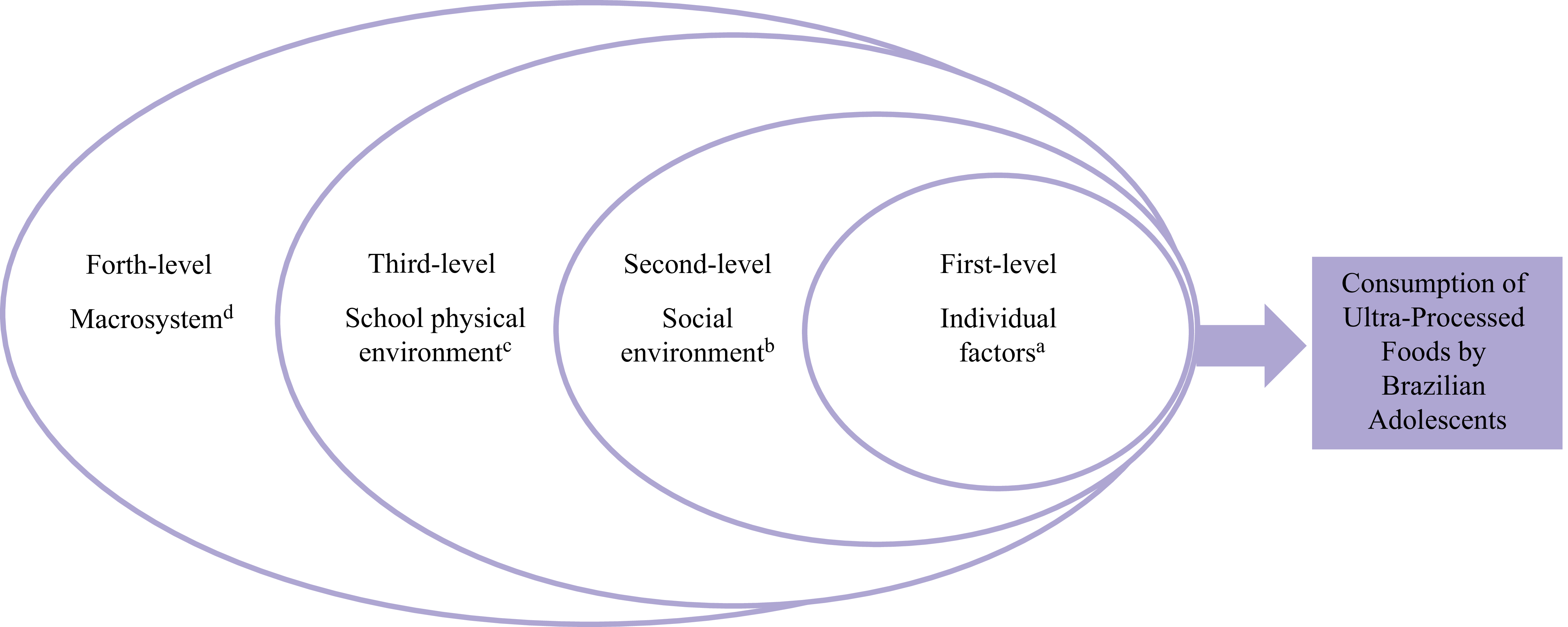
The explanatory variables were organised according to the individual, social environment, school physical environment and macrosystem levels, based on the socio-ecological model developed by Story et al. (Reference Story, Neumark-Sztainer and French19,Reference Story, Kaphingst and Robinson-O’Brien20) to assess the factors influencing adolescents’ eating behaviour and choices (Figure 1).
Levels of influence of the explanatory variables included in this analysis on the consumption of ultra-processed foods by Brazilian adolescent students, adapted from the socioecological model by Story et al. (Reference Story, Neumark-Sztainer and French19,Reference Story, Kaphingst and Robinson-O’Brien20) . aBiological (sex, age group), demographic (race/skin colour) and behavioural and lifestyle factors (breakfast consumption, screen use during meals, consumption of free school meals, purchasing at the school canteen and from street vendors and body satisfaction). bMother’s education level, family arrangement, parental supervision score and number of close friends. cAdministrative dependence, adoption of rules for food commercialization, UPF advertising, participation in the School Health Program and guidance at school on promoting healthy eating and preventing obesity. dRegion of residence and living situation (rural and urban).

As individual factors (psychosocial, biological, demographic, behavioural and lifestyle), nine variables were considered: sex (male and female); age group (13–15 years and 16 and 17 years); self-reported race/skin colour (white, black, mixed race and yellow/indigenous); regular breakfast consumption (yes – ≥ 5 d/week – and no – < 5 d/week); regular screen use during meals (no – < 5 d/week – and yes – ≥ 5 d/week); regular consumption of free school meals (yes – ≥ 3 d/week –, no – < 3 d/week – and no offer/does not know); regular purchasing at the school canteen (no canteen, no – < 3 d/week – and yes – ≥ 3 d/week); regular purchasing from street vendors around the school (none, no – < 3 d/week – and yes – ≥ 3 d/week) and body satisfaction (very satisfied, satisfied, indifferent, dissatisfied and very dissatisfied).
For social environment factors (interactions with family, friends and other people in the community through support and social norms), four variables were included: mother’s education level (higher education, high school, elementary school and no schooling/incomplete elementary school), family arrangement (living with both parents, mother only, father only and none), parental supervision score (0, 1, 2, 3 and 4) and number of close friends (≥ 3 friends and < 3 friends). The parental supervision score, ranging from 0 to 4, was constructed by summing four dichotomous variables: skipping class without permission (no/yes), parents unaware of free-time activities (no/yes), parents do not understand the child’s problems/concerns (no/yes) and parents absent during meals (no/yes). A score of 0 indicated intense supervision (no ‘yes’ responses), while a score of four represents a lack of supervision (all ‘yes’ responses). This proxy measure assesses parental monitoring, in which greater supervision and presence are considered protective factors for health behaviours(Reference Machado, Felisbino-Mendes and Malta21,Reference Reis, Sousa and Andrade22) .
Concerning school physical environment factors (multiple settings where people eat or acquire food, such as schools), information was collected through a questionnaire administered to the school principal or the person responsible for the school. Five variables were considered: administrative dependence (public and private); school with adoption of rules for food commercialisation (rules established at the municipal, state or federal level, the school’s own rule, both and no – absence of rules), school with UPF advertising (no and yes), guidance at school on promoting healthy eating and preventing obesity (yes and no) and school participating in the School Health Program (yes and no/not covered) – an intersectoral policy aimed at the comprehensive development of students through health promotion, disease prevention and care actions implemented in schools(Reference Silva, Gubert and Barbosa Filho23).
For the macrosystem factors, which play a more distal and indirect role in determining eating behaviours (media and advertising, social and cultural norms and food production and distribution systems), only two variables were considered: region of residence (North, Northeast, Southeast, South and Midwest) and living situation (rural and urban).
Data analysis
Statistical analysis was performed using the Stata software version 15, employing the ‘svy’ command to incorporate the complex sampling design of PeNSE and sample weights. Prevalence rates and 95 % confidence intervals (95 % CI) were calculated for the consumption of each UPF subgroup and the total UPF score. Bivariate analyses were conducted to examine the association between each explanatory variable and the outcome (high UPF consumption) using Pearson’s χ 2 test. Adjusted prevalence ratios (PR) with 95 % CI were obtained through Poisson regression with robust variance, appropriate for prevalence data and for handling the complex sampling structure. For the multivariable analysis, the full set of variables was included considering the hierarchical structure based on the socio-ecological model(Reference Story, Neumark-Sztainer and French19,Reference Story, Kaphingst and Robinson-O’Brien20) . This framework organises factors influencing adolescent’s food choices into four levels: first-level (individual), second-level (social environment), third-level (school physical environment) and fourth-level (macrosystem). This hierarchical approach was used to test the influence of distal factors while controlling for proximal and intermediate factors, a methodology applied in epidemiology(Reference Yuhas, Porter and Hedrick24,Reference McCormick, Porter and You25) and that is consistent with the theoretical framework guiding this research.
Four models were progressively adjusted as follows: model 1, adjusted for sex, age group, race/skin colour, breakfast consumption, screen use during meals, consumption of free school meals, purchasing at the school canteen and for street vendors and body satisfaction; model 2, previous model adjusted for mother’s education level, family arrangement, parental supervision score and number of close friends; model 3, previous model adjusted for administrative dependence, adoption of rules for food commercialisation, UPF advertising, participation in the School Health Program and guidance at school on promoting healthy eating and preventing obesity; and model 4, previous model adjusted for region of residence and living situation (rural and urban).
Ethical considerations
This study exclusively used secondary, publicly available and anonymised data from the 2019 National School Health Survey (PeNSE)(13), provided by the Brazilian Institute of Geography and Statistics. Therefore, in accordance with Resolution No. 510/2016 of the National Health Council, the submission of this project to a Research Ethics Committee was not required. The authors reaffirm their commitment to the ethical and responsible use of the analysed data.
Results
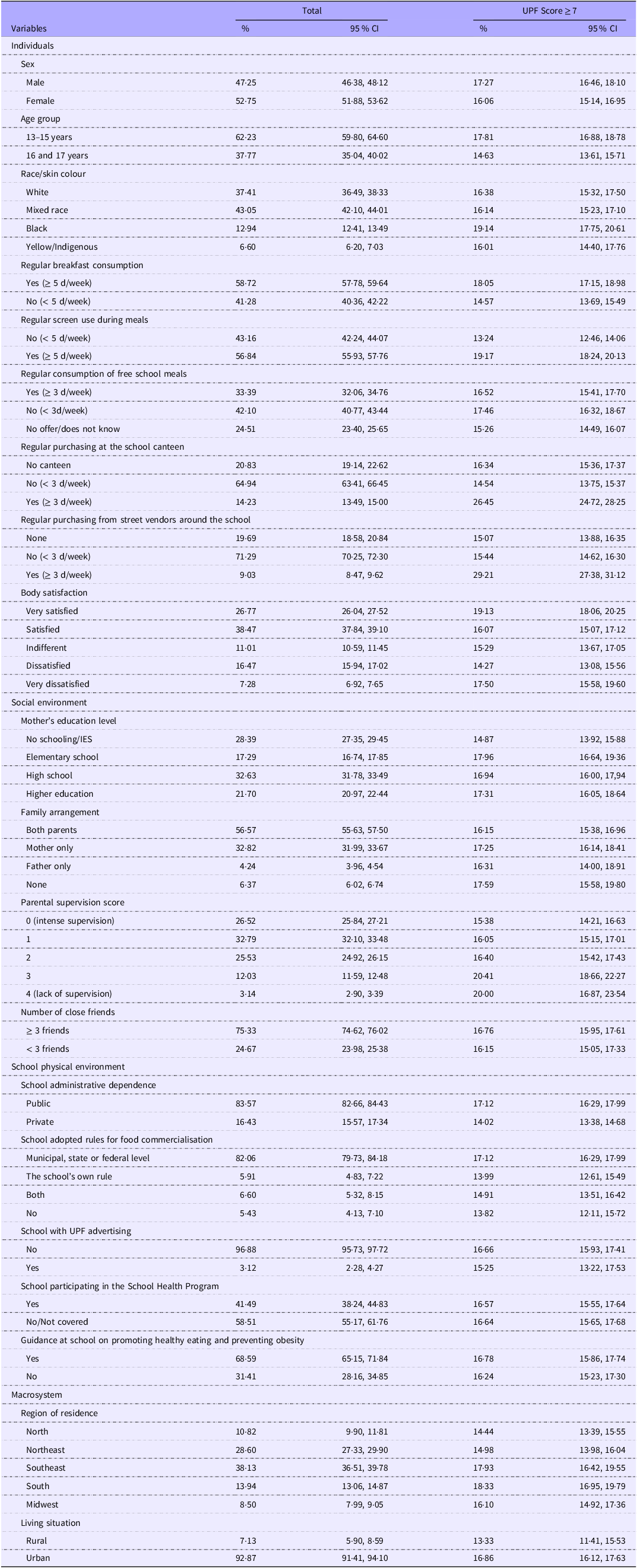
In total, 100 028 students were included in the analysis. Among the adolescents evaluated, the frequency of females was slightly higher than that of males (52·8 % v. 47·2 %), 62·2 % were between 13 and 15 years old, 43·1 % self-identified as having mixed race/skin colour, more than half lived with both parents (56·6 %), the vast majority studied in public schools (83·6 %) and according to regional distributions, 38·1 % resided in the Southeast region of Brazil. Body dissatisfaction was observed in 23·8 % of adolescents. Regarding the physical environment, most schools complied with municipal, state or federal regulations governing food sales on their premises (82·1 %) and implemented educational activities promoting healthy eating and obesity prevention (68·6 %). Only 3·1 % of the schools had advertising for UPF, such as posters, refrigerators, freezers and tables with food and beverage brands (Table 1).
Prevalence (%) and 95 % confidence intervals (95 % CI) of ultra-processed food (UPF) consumption scores equal to or higher than seven on the day prior to the interview, according to adolescent characteristics. National School Health Survey (PeNSE), 2019, Brazil (n 100 028)

IES, Incomplete Elementary School.
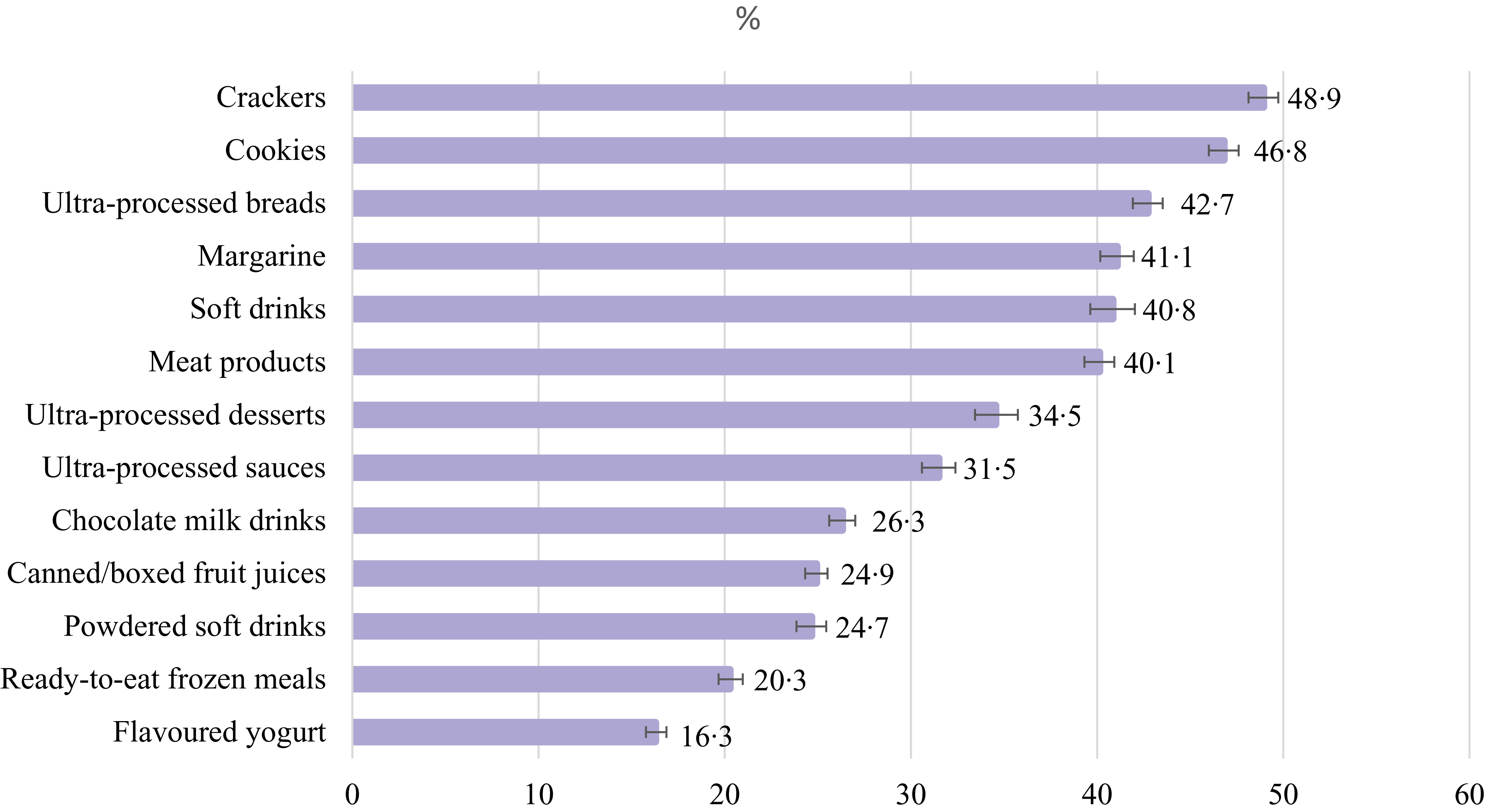
Figure 2 shows the frequency of consumption of each UPF subgroup on the day before the interviews. Crackers (48·9 %) and cookies (46·8 %) were the most consumed, followed by ultra-processed breads (42·7 %), margarine (41·1 %), soft drinks (40·8 %) and meat products (40·1 %). Almost half of the adolescents reported consumption of the first two items and more than a third of the adolescents reported consuming the following items. Approximately one-third opted for ultra-processed desserts (34·5 %) and sauces (31·5 %). Between 20 % and 30 % of the participants reported the consumption of chocolate milk drinks (26·3 %), canned/boxed fruit juice (24·9 %), powdered soft drinks (24·7 %) and ready-to-eat frozen meals (20·3 %). The least consumed subgroup was flavoured yogurt, with 16·3 % of the participants mentioning its consumption.
Consumption frequency (%) of ultra-processed food (UPF) subgroups on the day prior to the interview, with 95 % confidence interval indication, of Brazilian school adolescents. National School Health Survey (PeNSE), 2019, Brazil (n 100 028).

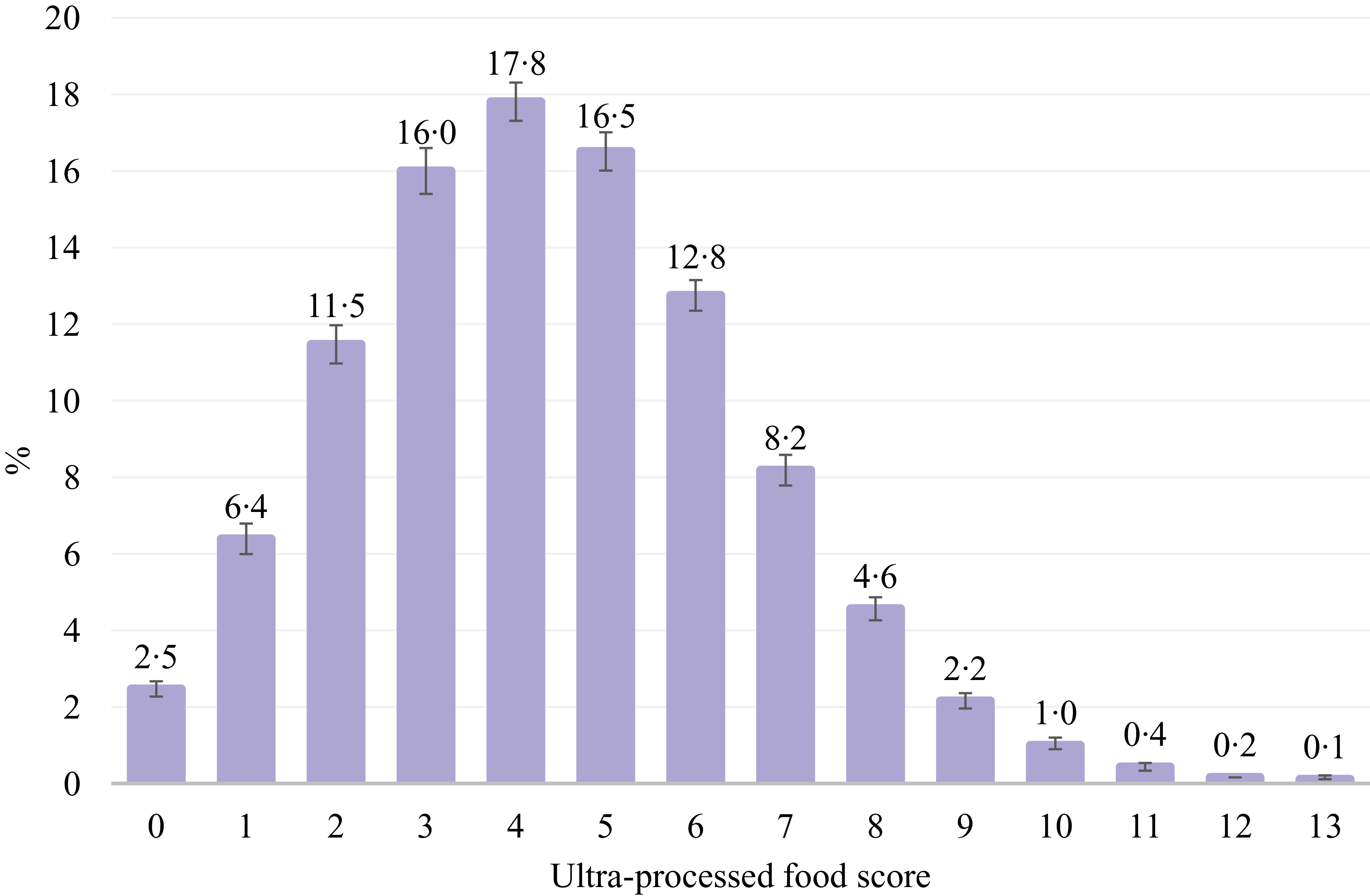
Concerning the distribution of the UPF consumption score, which ranged from 0 to 13 and corresponded to the number of subgroups consumed the day before the interview, it was observed that only 2·5 % of the adolescents did not consume UPF (score 0). The most frequent scores were 3 (16·0 %), 4 (17·8 %), 5 (16·5 %) and 6 (12·8 %), respectively. Furthermore, 16·6 % of adolescents reported consuming seven or more UPF (Figure 3).
Distribution (%) of Brazilian school adolescents according to ultra-processed food consumption scorea. National School Health Survey (PeNSE), 2019, Brazil (n 100 028). aNumber of ultra-processed food subgroups (n 13) consumed on the day prior to the interview.

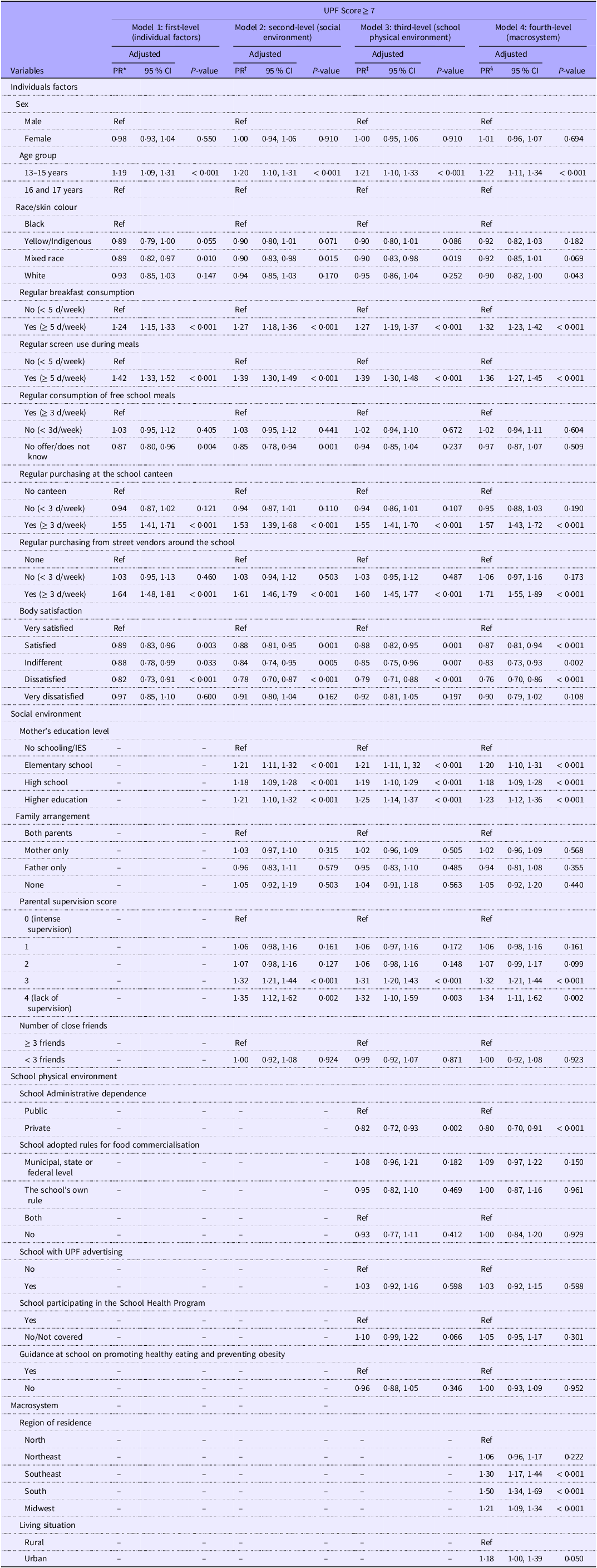
Table 2 presents the crude and adjusted PR of individual factors, social environment, school physical environment and macrosystem associated with the consumption of seven or more subgroups of UPF by Brazilian adolescents. In the final model, the factors associated with a higher prevalence of high UPF consumption (seven or more subgroups) were as follows: younger age (13–15 years old had a PR of 1·22, 95 % CI 1·11, 1·34 compared to 16–17 years), regular breakfast consumption (PR 1·32, 95 % CI 1·23, 1·42 for ≥ 5 d/week), regular screen time during meals (PR 1·36, 95 % CI 1·27, 1·45 for ≥ 5 d/week), frequent purchases at school canteens (PR 1·57, 95 % CI 1·43, 1·72 for ≥ 3 d/week) and frequent purchases from street vendors around the school (PR 1·71, 95 % CI 1·55, 1·89 for ≥ 3 d/week). Furthermore, adolescents whose mothers had higher education showed increased UPF consumption (PR 1·23, 95 % CI 1·12, 1·36, compared with no schooling/incomplete elementary school), as did those with worse parental supervision scores (score 4: lack of supervision: PR 1·34, 95 % CI 1·11, 1·62). A higher prevalence was also observed for living in the Southeast, South and Midwest regions (South region PR 1·50, 95 % CI 1·34, 1·69 compared to North).
Adjusted prevalence ratios (PR) of factors across the socio-ecological model associated with ultra-processed food (UPF) consumption score equal to or higher than seven on the day prior to the interview, by Brazilian school adolescents. National School Health Survey (PeNSE), 2019, Brazil (n 100 028)

UPF, ultra-processed food; IES, Incomplete Elementary School; PR, prevalence ratio. *Adjusted for all first-level variables listed in the table. †Adjusted for all first-level and second-level variables listed in the table. ‡Adjusted for all first-level, second-level and third-level variables listed in the table. §Adjusted for all first-level, second-level, third-level and fourth-level variables listed in the table.
On the other hand, an inverse association with high UPF consumption was observed for lower satisfaction with body image (PR 0·76, 95 % CI 0·70, 0·86 for dissatisfied category) and attending private school (PR 0·80, 95 % CI 0·70, 0·91) (Table 2).
Discussion
This population-based study revealed an alarming scenario: almost all adolescents (97·5 %) had consumed at least one UPF subgroup on the previous day, and 16·6 % exhibited high consumption, defined as seven or more UPF subgroups. The frequency of items such as crackers/cookies, ultra-processed breads and soft drinks underscores that the high intake is driven by convenience foods that have become staples in the modern diet and are heavily promoted socially. Given the robust evidence regarding the negative impacts of UPF on diet quality and adverse health outcomes(Reference Lane, Gamage and Du26), the results of this study pose a significant challenge to the public health and well-being of young Brazilians. The observed scenario reflects adverse food environments that hinder healthy food choices. In many contexts, nutrient-rich foods are insufficiently accessible, whereas UPF, which are poor in nutrients and rich in energy, are excessively available, cheap and socially attractive(Reference Neufeld, Andrade and Ballonoff Suleiman27). This reinforces the urgency to understand the multilevel influence of these dietary choices.
Individual factors
The higher prevalence of high UPF consumption observed in younger adolescents (13–15 years) compared with older adolescents (16–17 years) is a concern given the tendency for persistence of dietary habits acquired in adolescence(Reference Daly, O’Sullivan and Kearney28). This difference may be attributable to developmental stages. Early adolescence is biologically dominated by puberty and a period of intense remodelling of the brain’s reward system, characterised by low levels of future orientation and low risk perception, often leading to increased risk-taking behaviour and poor self-regulation. Conversely, the later phase brings the continued maturation of executive and self-regulatory skills, resulting in increased ability to weigh the implications of decisions(Reference Patton, Sawyer and Santelli29). This cognitive advancement, coupled with greater autonomy over their food choices(Reference Patton, Sawyer and Santelli29) and growing awareness of body image(Reference Neufeld, Andrade and Ballonoff Suleiman27), is the likely explanation for the lower prevalence in UPF consumption among older adolescents. This finding underscores the need for nutritional and health interventions to reduce UPF consumption to be tailored to the distinct developmental stages across age groups.
The positive association between regular breakfast consumption and high UPF intake was a key finding that warrants detailed discussion because of breakfast’s critical role in diet quality, health and academic performance(Reference Giménez-Legarre, Flores-Barrantes and Miguel-Berges30–Reference Martin, Bostwick and Burns32). This relationship is driven not simply by regularity but by the types of foods consumed and the times and social contexts that may favour the consumption of UPF(Reference Kovalskys, Fisberg and Previdelli33). A multicentre cross-sectional study including eight Latin America countries showed that while breakfast is a nutrient-rich eating occasion, contributing important B vitamins, protein and carbohydrates, it is simultaneously a significant source of added sugar, total fat and saturated fat. Consequently, a more detailed evaluation of its nutritional composition is essential to develop data-driven recommendations for this meal in the region(Reference Kovalskys, Fisberg and Previdelli33).
A study carried out with Brazilian adolescents(Reference Neves, Fontes and Nogueira34) found that inappropriate eating contexts at breakfast (such as eating out for this meal, having it in noisy places, standing or walking, in front of screens and without company) were associated with a lower consumption of unprocessed or minimally processed foods and a higher consumption of UPF. This suggests that the higher consumption of UPF among those who frequently eat breakfast is driven by these inappropriate contexts, as time and convenience are key features in adolescents’ food choices(Reference Verstraeten, Van Royen and Ochoa-Avilés35). Indeed, another study with Spanish adolescents(Reference Rodríguez-Barniol, Pujol-Busquets and Bach-Faig36) found the greatest UPF consumption at breakfast and for midafternoon snacks, reinforcing the notion that UPF act as a convenient and quick solution when teenagers must prepare their own meals or snacks. Therefore, it is essential to encourage adolescents not to neglect breakfast but to guide them towards whole food or minimally processed choices, such as the addition of fresh fruits(37).
Regular screen time during meals, reported by over half of the adolescents, was associated with high UPF consumption, corroborating previous findings(Reference Costa, Wendt and Machado16,Reference Rauber, Martins and Azeredo38) . This association is explained by several mechanisms. Screen use during food consumption can increase food intake by three possible ways: first, exposure to advertisements that mostly correspond to unhealthy food marketing; second, the distraction generated by screens that interrupts signal processing (such as perception of gastric distention) that would normally regulate intake and third, emotional changes generated by screen use (like sadness or joy) that could be related to increased consumption(Reference Tabares-Tabares, Moreno Aznar and Aguilera-Cervantes39). This behaviour also reflects a departure from traditional eating habits such as family meals, which need to be encouraged.
UPF themselves exert deleterious effects on eating behaviours, driving a decline in cooking skills, a lower frequency of family meals and a reduction in the time dedicated to meals. These dietary patterns ultimately harm health by limiting opportunities for modelling positive behaviours and weakening social bonds within the family environment(Reference Khandpur, Neri and Monteiro40). A previous study(Reference Martins, Ricardo and Machado41) revealed that eating in the company of parents can improve diet quality; increase the consumption of beans, fruits and vegetables and reduce the consumption of sweets and ultra-processed savoury snacks. Given this complex interaction between screen time, UPF and family habits, the creation of policies that regulate advertising on screens is thus justified and must be accompanied by strategies to monitor compliance. In addition, it is necessary to strengthen educational programmes aimed at schools and families, including guidelines to decrease the habit of consuming food while having screens on(Reference Tabares-Tabares, Moreno Aznar and Aguilera-Cervantes39).
Regular purchasing at school canteens and street vendors around schools, although not the habits of most students, stood out as strong factors associated with higher UPF consumption. This clearly indicates that availability and easy access to these foods in the school environment exert a substantial impact on adolescents’ food choices. For instance, Carmo et al. (Reference Carmo, Assis and Cunha42) identified a high prevalence of the sale of UPF and the presence of street vendors in the surroundings of Brazilian schools and another study(Reference Noll, Noll and De Abreu12) demonstrated that the mere presence of a school canteen has already increased the likelihood of regular UPF consumption among students. Thus, regulatory measures in the school food environment are necessary to restrict the availability of UPF and expand the supply of nutritious foods(Reference Rocha, Cordeiro and Jardim43), facilitating the modification of eating behaviour and the prevention of obesity(Reference Pineda, Bascunan and Sassi44). Supporting this, meta-regression analyses by Pineda et al(Reference Pineda, Bascunan and Sassi44) found that monitored programme-type interventions relying on specific dietary guidelines, such as type of food items that are permitted or banned in the school canteen, were more likely to be effective in reducing body mass index or increasing fruit or vegetable intake than interventions not based on a sustainable programme.
Regarding body satisfaction, adolescents who expressed high satisfaction with their body image had a higher prevalence of high UPF consumption than those who were just satisfied, indifferent or dissatisfied. Dissatisfaction with one’s weight, especially when there is a desire to lose weight, may be linked to lower consumption of unhealthy foods with high energy density(Reference Oellingrath, Hestetun and Svendsen45). However, body dissatisfaction can also predispose individuals to risky behaviours for eating disorders(Reference Fortes, Filgueiras and Oliveira46). The relationship between body dissatisfaction and UPF consumption among adolescents remains poorly understood(Reference Carneiro, Confortin and Viola47) and requires further in-depth studies.
Social environment
Adolescents whose mothers had completed elementary school, high school or higher education showed a higher prevalence of high UPF consumption than those whose mothers had no schooling or incomplete elementary school (28·6 % of the study population). This aligns with a systematic review(Reference Dicken, Qamar and Batterham6) showing an association between higher education/income and increased UPF consumption in upper-middle-income countries such as Brazil. However, another study of Brazilian adults(Reference Louzada, Costa and Costa48) observed a general reduction in socio-economic inequalities in UPF consumption. Consequently, this led to deterioration in the diet quality of the most disadvantaged groups. Our results corroborate this scenario as high UPF consumption was similar across almost all levels of maternal education. The lower prevalence in the group of adolescents with mothers with no schooling or incomplete elementary school may be attributed to limited access to a variety of UPF, especially the more expensive ones, owing to low family income.
Furthermore, lower parental supervision, defined by behaviours such as skipping class without permission and low parental involvement in activities and meals, increased UPF consumption, compared to intense supervision (score 0). This lower parental supervision may reflect limited parental involvement in children’s diet. The way the family is organised around food significantly impacts adolescents’ decisions and consumption, determining the ease or difficulty in adopting a healthy diet according to the definition, preparation and acquisition of food by parents/caregivers(Reference Fleming, De Oliveira and Hockey49). In this context, parental supervision stands out as an educational strategy for limiting UPF consumption. Furthermore, parental engagement in supporting and guiding adolescents in the preparation of their meals is fundamental to empowering them to maintain healthy habits in adulthood(Reference Daly, O’Sullivan and Kearney28).
School physical environment
In Latin America, the widespread availability of UPF in school environments has emerged as a pressing public health concern, jeopardising regional efforts to address malnutrition and childhood obesity. International recommendations, such as those from the FAO of the UN, recognise schools as strategic settings for fostering healthy and sustainable diets.(Reference Neves, Mendes and Rocha50) In Brazil, however, regulatory efforts have been inconsistent(Reference Rocha, Cordeiro and Jardim43). The National School Food Program (PNAE) serves over forty million students in public schools nationwide with free meals and, since 2020, aligns with the Dietary Guidelines for the Brazilian Population(51), restricting the provision of UPF(52). On the other hand, regulations regarding the sale, advertising and marketing of UPF vary significantly across states and municipalities, with no comprehensive national law covering both public and private schools(Reference Rocha, Cordeiro and Jardim43). This creates a serious dual threat: the commercialisation of UPF in canteens and snack bars undermines PNAE guidelines in public schools while simultaneously reinforcing unhealthy habits through the pervasive presence of soft drinks, crisps and sweets in all school settings(Reference Neves, Mendes and Rocha50).
A previous study(Reference Carmo, Assis and Cunha42) showed that private schools generally have a more obesogenic food environment than public schools, characterised by a predominance of sales and advertisements for UPF and beverages. However, this study observed an inverse association between high UPF consumption and attending private school (a minority of 15 % in the study sample). This suggests that private schools may have somehow better controlled students’ access to UPF, which requires further investigation. The sale of UPF in these settings remains a serious concern(Reference Neves, Mendes and Rocha50). Given the PNAE’s recent alignment with updated dietary guidelines, future studies are essential to evaluate the implementation and impact of these new regulations in Brazilian public schools on students’ UPF consumption.
Macrosystem
An important consideration when analysing a country of continental dimensions like Brazil is the differences in dietary habits according to geographic region(Reference Alves, Souza and Barufaldi53). Regional variations in high UPF consumption were observed: adolescents from the South, Southeast and Midwest regions exhibited a higher prevalence compared with the North region. The lower consumption in the North region, which is part of the Amazon biome, may be linked to the area’s rich biodiversity. This region provides an abundant natural supply of highly nutritious resources. Alves et al. (Reference Alves, Souza and Barufaldi53) identified that adolescents in the North still adhere to a distinct dietary pattern characterised by typical regional foods such as roots/tubers, fruits, vegetables and fish/seafood. These adolescents apparently tend to maintain their traditional regional diet. Conversely, the Southern region showed the highest UPF prevalence. This finding supports the hypothesis that greater accessibility to UPF in more developed and urbanised areas(Reference Louzada, Cruz and Silva5) may explain the observed associations. The disparity underscores a fundamental public health challenge: the loss of traditional, protective dietary patterns often occurs alongside economic development and urbanisation, justifying targeted studies into the determinants of consumption in highly urbanised populations.
While our final model did not detect a statistically significant difference in UPF consumption between adolescents residing in rural and urban areas, the literature consistently highlights several protective factors inherent to rural settings(Reference Monteiro and Cannon54,Reference Costa, Lopes and Mendonça55) . These include limited UPF availability, reduced exposure to aggressive advertising, the maintenance of traditional eating habits and greater access to whole foods, factors that act as potential protectors against high UPF consumption in this population. In this regard, it remains fundamental to recognise and leverage rural areas as health-promoting environments. This recognition demands strong public policies that actively value traditional Brazilian food culture, which is based on minimally processed staple foods such as rice, beans and cassava. These comprehensive policies need to consider both rural and urban contexts, incorporating incentives for family farming, affordable prices, a solidarity economy and rural cooperativism to bolster the supply of fresh food, while simultaneously enacting regulatory measures designed to build healthy food environments, such as taxation and the restriction of UPF marketing(Reference Monteiro and Cannon54,Reference Costa, Lopes and Mendonça55) .
This study has some limitations inherent to its cross-sectional design, which prevents causal inferences. While our approach to identifying UPF subgroups utilised established methodologies(Reference Costa, Steele and Faria14–Reference Costa, Faria and Gabe17), the qualitative nature of the instrument and its reliance on self-report are limitations. Specifically, assessing consumption frequency rather than quantity prevents us from accurately estimating the proportional energy intake from UPF, which is the gold standard for correlating diet with health outcomes. Acknowledging this, we refrain from drawing definitive conclusions regarding health outcomes, and we stress that our findings should be interpreted within the context of identifying determinants of exposure. Dietary intake based on a previous-day recall might not fully capture habitual patterns, and some variables, such as parental supervision and body satisfaction, were assessed indirectly. Despite these limitations, our study was strengthened by a large, population-based sample of Brazilian adolescents (13–17 years). Furthermore, a performance study showed that a similar score for UPF consumption has good potential for reflecting the dietary share of UPF when compared with a tool that considers quantities(Reference Costa, Faria and Gabe17). It also benefits from a detailed assessment of UPF subgroups and the innovative application of a socio-ecological model to analyse multi-level influences, an approach still underexplored yet crucial for understanding adolescent food choices.
In conclusion, this population-based study confirmed a high prevalence of UPF consumption among Brazilian adolescents, with common items including crackers and cookies, ultra-processed breads, soft drinks, margarine and processed meats. High UPF intake was intricately linked to a complex interplay of individual factors (e.g. younger age, screen time and frequent purchases at canteens) and environmental factors (e.g. maternal education, parental supervision and urban/regional residence). This multi-level understanding highlights the urgent need for comprehensive, intersectoral public policies that prioritise food environment regulation; promote healthy choices across family, school and community contexts and valorise traditional food culture to effectively reduce UPF consumption and foster adolescent health in Brazil.
Acknowledgements
The authors would like to thank the Coordination for the Improvement of Higher Education Personnel (CAPES) for their technical contributions to this study. A language model (Gemini, developed by Google) was used exclusively to assist in the editing and linguistic refinement of the manuscript text.
This study received no funding.
All the authors contributed substantially to the preparation of the manuscript. Design and planning: M.E.C.A., R.P.T.V., D.V. and P.A.P.; data analysis: M.E.C.A., D.V. and P.A.P.; interpretation of results: M.E.C.A., R.P.T.V. and P.A.P.; article writing: M.E.C.A.; critical review of the article: R.P.T.V., D.V. and P.A.P.; approval of the final version: M.E.C.A., R.P.T.V., D.V. and P.A.P.
There are no conflicts of interest.