Introduction
Hurricane Sandy was the second-costliest hurricane in US history and killed over 200 people in seven countries.Reference Gotanda, Fogel, Husk, Levine, Peterson, Baumlin and Habboushe 1 , 2 Sandy made its landfall in New Jersey (USA) on October 29, 2012 driving a catastrophic storm surge into the New Jersey and New York (USA) coastlines and causing subsequent widespread interruption to electrical services, leading to 159 deaths in the US.Reference Gotanda, Fogel, Husk, Levine, Peterson, Baumlin and Habboushe 1
The elderly are disproportionately vulnerable during disasters due to chronic illnesses, functional limitations, and sensory, physical, and cognitive disabilities. 3 They take more medications and rely more on formal and informal caregivers. 3 They historically are at a higher risk of death; for example, during Hurricane Katrina (2005; Gulf Coast USA), roughly 71% of those who died were over 60 years of age. 3 This also held true for Hurricane Sandy: of 106 deaths in New York, New Jersey, and Connecticut (USA), 46% were over 65 years old. 4 , Reference Daniel 5 Although the need to pay special attention to the elderly post-disaster increasingly has been recognized, 3 , Reference Keller 6 , 7 only a few reports have described the post-disaster emergency department (ED) and hospital utilization by the elderly. 8 , Reference Prezant, Clair and Belyaev 9
After the landfall of Hurricane Sandy, electric power was lost in much of lower Manhattan (New York, USA) until November 3, 2012,Reference Gavagan, Smart and Palacio 10 resulting in a loss of light, heat, refrigeration, and telephone service for many residents. Many pharmacies, dialysis centers, and doctors’ offices were closed. The subway system was disrupted. Some people may not have had access to 911 due to the loss of telephone services. Beth Israel Medical Center (BIMC; New York, New York USA; currently Mount Sinai Beth Israel) in lower Manhattan operated continuously, whereas four nearby hospitals serving lower Manhattan were evacuated and closed. Three of these hospitals remained closed for weeks to months, and BIMC became lower Manhattan’s only fully functioning major hospital. 11 Analysis of its ED charts allows a unique window into the needs of the older population during this time. The main objective of this research was to determine the extent that Hurricane Sandy impacted the elderly population in lower Manhattan by analyzing the volume of, and the reasons for, their ED visits and subsequent hospitalizations. Manhattan has unique demographics with a population density of 71,671 per square mile and a median household income of US $69,659.Reference Jangi 12 The proportion of population aged 65 and over is 14.2%.Reference Jangi 12
Methods
This retrospective observational study was conducted using data from ED and hospital databases. The BIMC Institutional Review Board approved this study. The participant sample consisted of patients over 18 who visited the BIMC ED from May 7, 2012 through April 28, 2013. Beth Israel Medical Center is an 856-bed teaching hospital located in lower Manhattan. The BIMC ED averaged 276 daily adult visits during the six months prior to the storm, including the visits to the psychiatry ED.
The analysis divided patients into three age groups: 18-64, 65-79, and 80+ years old. The mean daily ED visits and hospitalizations from each age group in each week, starting with the landfall day, October 29, 2012, were analyzed. Concurrently, the mean proportion of each age group per week was analyzed. Time periods around Hurricane Sandy were divided into three phases: the pre-Sandy phase (PreS; May 7 through October 28, 2012), the immediate post-Sandy phase (IPS; October 29 through November 4, 2012), correlating with the lower Manhattan blackout, and the extended post-Sandy phase (EPS; November 5, 2012 through February 10, 2013), starting with the week after the end of the blackout and ending with the re-opening of Bellevue Hospital (New York, New York USA), the largest neighboring hospital.
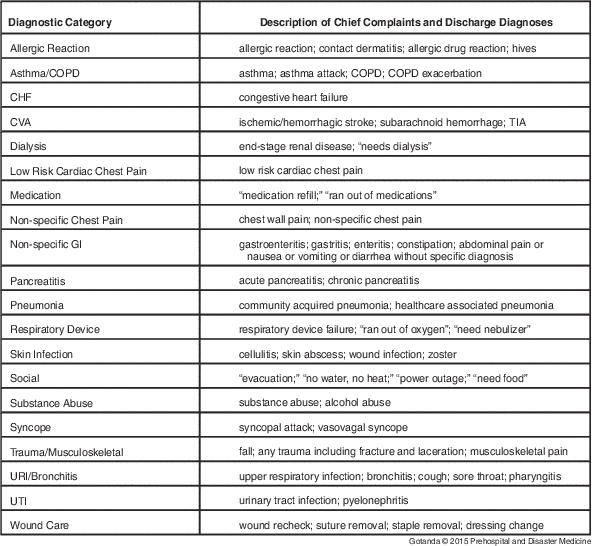
Emergency department records were sampled from the ED’s electronic health record, EM-STAT (Med-Media; Harrisburg, Pennsylvania USA), based on a search of all records during the specified periods. Pre-defined inclusion criteria were all ED patient visits during defined dates; exclusion criteria included patients registered to the psychiatric ED and those without discharge diagnoses. Analysis was extracted and analyzed by one investigator, who was aware of the study objective. The ED records for October 15 through October 22, 2012 (baseline), one of the weeks in the PreS, were also compared with the IPS. Based on the chief complaint and principal ED discharge diagnosis (ICD-9), each patient visit was categorized into a diagnostic group (Table 1). Potential trends across age groups were analyzed. Of note, as the hospital only had access to an inpatient dialysis unit, patients in the IPS period who were dialyzed were processed as admissions, even though some of them were able to go home after dialysis.
Diagnostic Categories and Their Description

Abbreviations: CHF, congestive heart faliure; COPD, chronic obstructive pulmanary disease; CVA, cerebrovascular accident (stroke); GI, gastrointestinal; TIA, transient ischemic attack (mini stroke); URI, upper respiratory infection; UTI, urinary tract infection.
The data were analyzed with Poisson regression analysis for trend, and with chi-square test and Fisher’s exact test for diagnosis categories, using Microsoft Excel version 15.0.4675.1001 (Microsoft Corporation; Redmond, Washington USA) and R statistical software version 3.0.2 (R Foundation for Statistical Computing; Vienna, Austria).
Results
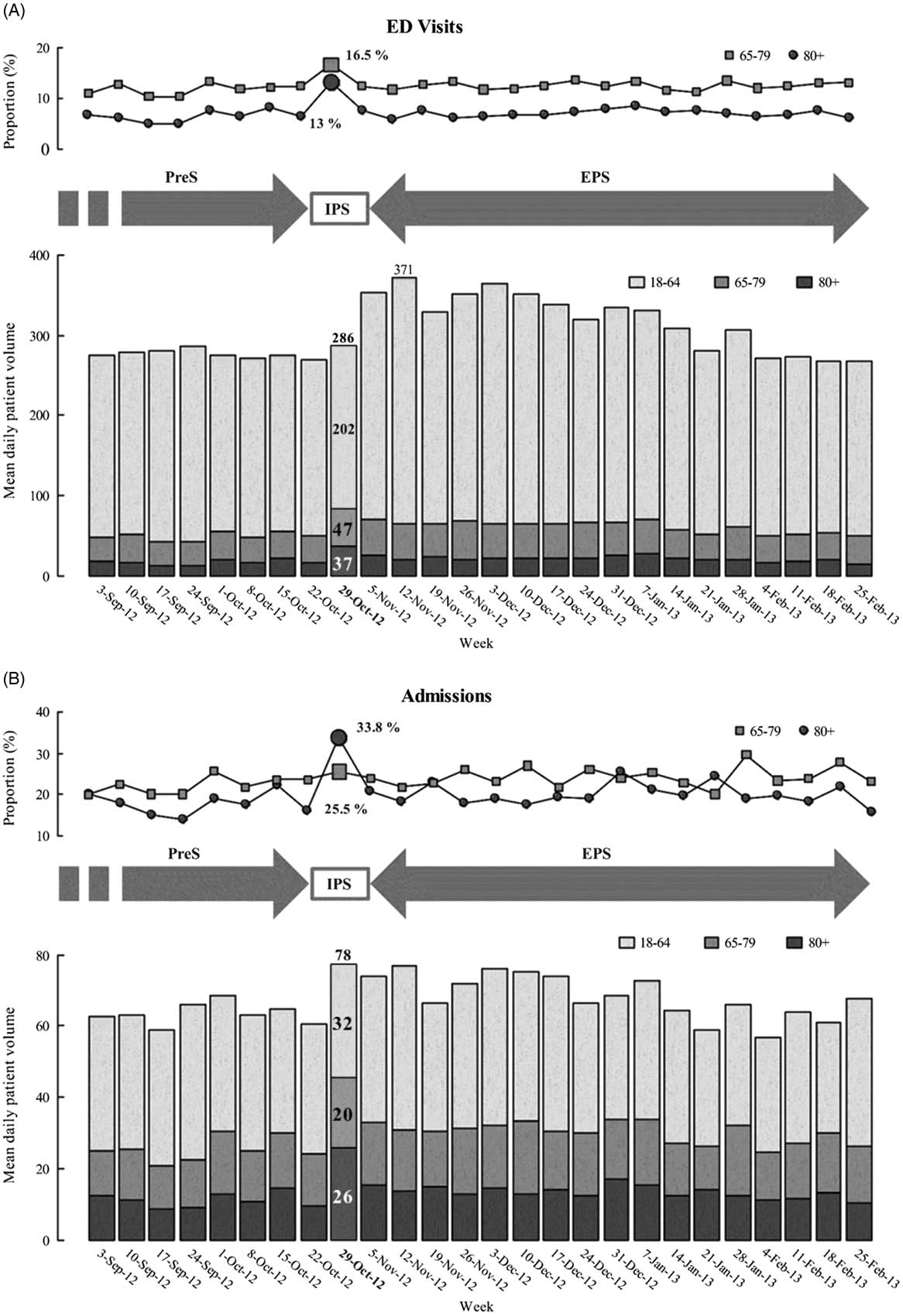
In the IPS, an average of 286 patients were seen daily in the ED, with a statistically significant but small increase of 3.6% (P<.01) compared to the PreS. There was a significant increase of 48% in the 65-79 age group (P<.01) and of 114% in the 80+ age group (P<.01), while the 18-64 age group decreased by 11% (P<.01). This shift correlated with the 65-79 age group representing 16.5% of the total volume during the IPS vs 11.5% during the PreS. Similarly, the 80+ age group represented 13% of the total volume, twice as much as the 6.5% during the PreS (Figure 1A). Total ED visits peaked at 30% over the PreS two weeks after the storm’s landfall, during the EPS. The volume then tapered off over three months. Although absolute ED visits in all age groups during the EPS significantly increased (P<.01), there was only a slight increase in the proportion of ED visits represented by the geriatric groups (the 65-79 and 80+ age groups; Figure 1A).
(A) Trend of Mean All Adult Daily ED Visits and (B) Admissions with the Breakdown of Age Categories and Trend of the Proportions of Groups 65-79 Years and 80+ Years to the Total Daily Volume. Abbreviations: ED, emergency department; EPS, Extended post-Sandy phase (November 5 - February 10, 2013); IPS, Immediate post-Sandy phase (October 29 - November 4, 2012); PreS, Pre-Sandy phase (May 7 - October 28, 2012).

Hospitalizations through the ED significantly increased by 20% during the IPS (P<.01). The 65-79 age group increased by 33.7% (P<.01), and the 80+ age group by 129% (P<.01), with the 18-64 age group having a decrease of 18.1% (P<.01). As a result, the percentage of admissions significantly increased in the 65-79 (from 22.7% to 25.5%; P<.01) and 80+ (from 17.6% to 33.8%; P<.01; Figure 1B) age groups. The total admissions peaked in the IPS and tapered off over the following two months. During the EPS, absolute admissions across all age groups increased (P<.01) with the geriatric patients representing a similar percentage of admissions compared with the PreS (Figure 1B).
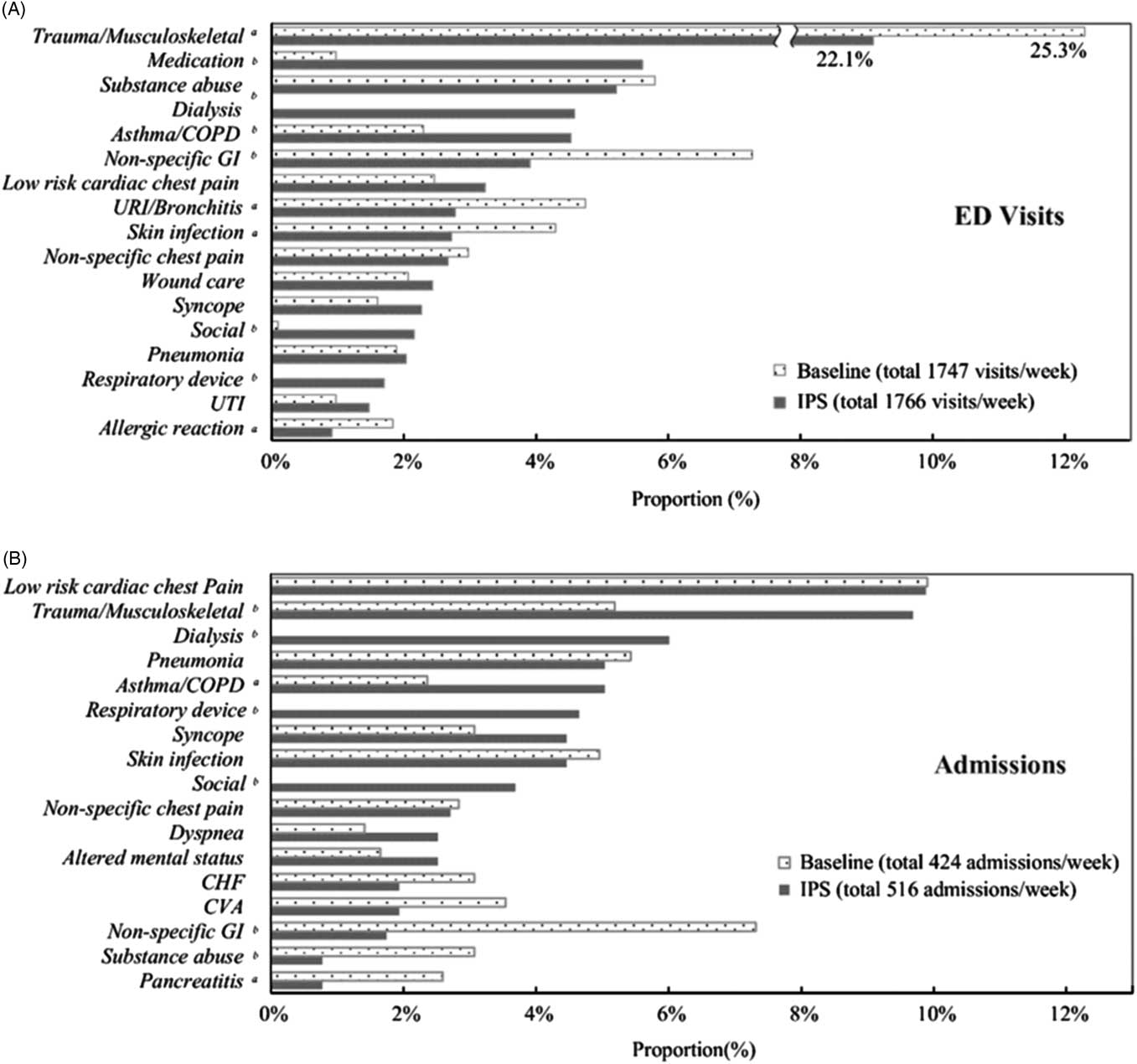
Of the 1,922 ED visits during baseline phase and 2,003 during the IPS, 175 and 237 were excluded, respectively, based on pre-defined exclusion criteria. As a result, 1,747 ED visits during baseline phase and 1,766 during the IPS were analyzed. Likewise, of the 455 admissions during baseline phase and the 542 during the IPS, 31 and 26 were excluded, respectively, resulting in the analysis of 424 and 516 admissions for each phase. The comparisons of the reasons for ED visits and admissions in total population between baseline and the IPS are shown in Figure 2. Although trauma/musculoskeletal showed a significant decrease in total ED visits, this category in total admissions significantly increased. There was a decrease in this category in ED visit by the 80+ age group, but otherwise there was no significant change in each age category.
(A) Proportions of the Major Diagnoses to Total Number of All Adult ED Visits and (B) Admissions at Baseline (October 15 - 22, 2012) and in the IPS (October 29 - November 4, 2012). Data were Analyzed with Chi-square Test. Abbreviations: ED, emergency department; EPS, Extended post-Sandy phase (November 5 - February 10, 2013); IPS, Immediate post-Sandy phase (October 29 - November 4, 2012); PreS, Pre-Sandy phase (May 7 - October 28, 2012).

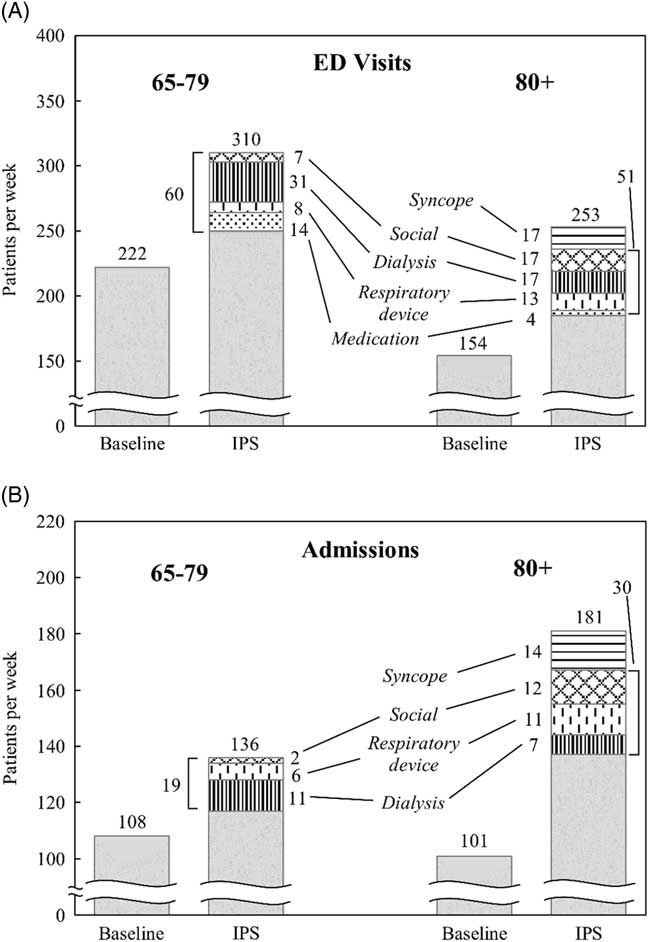
The four complaints “medication,” “dialysis,” “respiratory device,” and “social” in ED visits significantly increased from baseline to the IPS in all three age groups (P<.05), except medication in the 80+ age group (P=.11). In the analysis of admission, the three complaints “dialysis,” “respiratory device,” and “social” significantly increased in all three age groups (P<.05), except “social” in the 65-79 age group (P=.21). The increases of these categories represented one-third of absolute increases in both ED visits and admissions for the 65-79 age group, and one-half of the absolute increases in ED visits for the 80+ age group (Figure 3).
Contribution of the Increases of the Major Diagnoses in the Absolute Increases from Baseline (October 15-22, 2012) to the IPS (October 29- November 4, 2012) in the 65-79 Years and 80+ Years Groups. (A) ED Visit and (B) Admission. Abbreviations: ED, emergency department; EPS, Extended post-Sandy phase (November 5 - February 10, 2013); IPS, Immediate post-Sandy phase (October 29 - November 4, 2012); PreS, Pre-Sandy phase (May 7 - October 28, 2012).

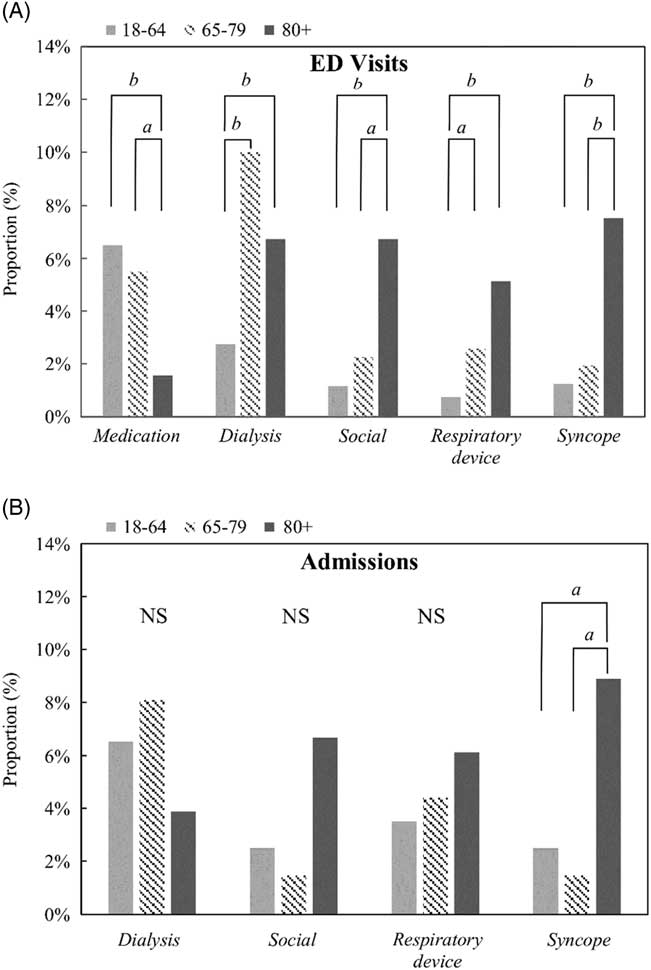
The proportions of “respiratory device,” “social,” and “syncope” in geriatric patients in ED visits were significantly higher than younger patients (Figure 4A). The same analysis in admissions showed that the proportion of “syncope” in the 80+ age group was significantly higher than the rest. Otherwise, there was no statistically significant difference (Figure 4B).
(A) Proportions of Major Diagnoses of ED Visits and (B) Admission in Each Age Category in the IPS (October 29 - November 4, 2012). Data were Analyzed with Fisher’s Exact Test. Abbreviations: ED, emergency department; EPS, Extended post-Sandy phase (November 5 - February 10, 2013); IPS, Immediate post-Sandy phase (October 29 - November 4, 2012); PreS, Pre-Sandy phase (May 7 - October 28, 2012).

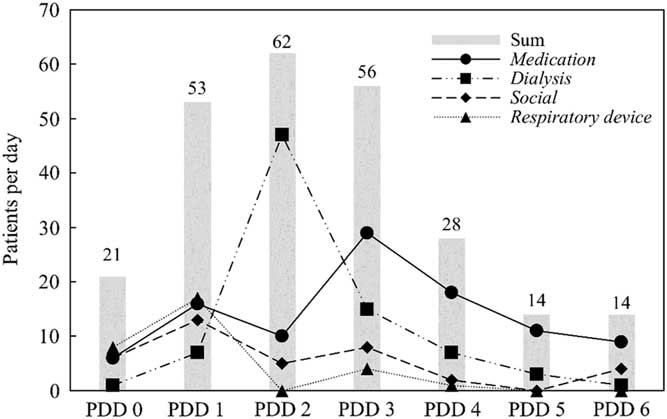
These four chief complaints peaked on different days with “social” and “respiratory device” peaking one day after the disaster, “dialysis” peaking two days after, and “medication” peaking three days after (Figure 5). These trends stayed fairly consistent across each age category.
Day-by-day Trend and Total Volume of the Major Diagnoses in All Adult ED Visits in the IPS (October 29 - November 4, 2012). Abbreviations: ED, emergency department; EPS, Extended post-Sandy phase (November 5 - February 10, 2013); IPS, Immediate post-Sandy phase (October 29 - November 4, 2012); PreS, Pre-Sandy phase (May 7 - October 28, 2012); PDD, Post-disaster Day (eg, PPD 0=October 29, 2012).

Discussion
The objective of this research was to determine the impact of Hurricane Sandy on ED visits and hospitalizations by the elderly population in lower Manhattan. The disproportionate increase in ED visits by the elderly population during the IPS (the week of the blackout) resulted in a significant 20% increase in total hospitalizations, necessitating expanded hospital bed capacity through strategic reorganization plans. The total ED visits peaked at 30% over baseline approximately two weeks after the disaster, during the EPS. This peak tapered off over the following months.
The geriatric population disproportionate increase during the IPS may be caused by two main categories of hurricane effects: direct effects, such as wind- or flood-related forces, and indirect effects, including the effects of the subsequent blackout. Direct effects of the hurricane may have changed the population presenting with the chief complaint trauma/musculoskeletal, which decreased in total, but increased in frequency of, admission. Perhaps there was an increase in ED visits due to relatively severe traumas, necessitating a higher admission rate, while minor trauma visits avoided the ED due to crowding and long waits. There was no disproportionate increase in elderly population in this category. No chief complaints or discharge diagnoses that could be tied to the specific effects of a hurricane (eg, drowning or hypothermia) were identified. However, further investigation could be done through chart review to try to identify such trends.
There were several chief complaints that likely increased during the IPS due to the indirect effect of Hurricane Sandy, mainly from the subsequent power outages, including: “medication,” “dialysis,” “respiratory device,” and “social.” These are consistent with the chart review study at Montefiore Medical Center Hospital (Bronx, New York USA) on the 2003 blackout in New York City, which lasted for less than 24 hours, showing that the common diagnoses related to the blackout were “respiratory device failure,” “trauma,” “heat-related,” “medication-related,” and “dialysis.” 8 As shown in Figure 4, there was a disproportionate impact on ED visits by elderly people in these diagnostic categories, except for “medication.” It is possible that those elderly who needed medications were classified as patients with other diagnostic categories, including “social.” Another unexpected finding was how ED visits and admissions for “syncope” increased significantly in the 80+ age group. One hypothesis is that the diagnosis of “syncope” was used expediently for other diagnoses, such as falls, possibly reflecting an increase of falls in the setting of a blackout that likely occur more in elderly populations.
The patient increase could be split into two broad categories: the usual patients who would visit BIMC as their primary hospital and the new patients who ended up coming to BIMC due to the closure of the nearby hospitals. The higher percentage of the geriatric population at BIMC in the IPS could be reflecting the increase in either one of these broad groups, or both. However, the analysis of chief complaints led to the conclusion that the primary factor of the disproportionate increase in the geriatric population appears to be from indirect effects, as shown in Figure 3, regardless of the proportion of these two groups.
The increased volume finally tapered off as Bellevue (New York, New York USA), the largest neighboring hospital, regained functionality (Figure 1). Bellevue first opened an urgent care center on November 19, 2012, then a free-standing ED on December 10, 2012, then began receiving 911-ambulances on December 24, 2012, and finally re-opened inpatient services on February 7, 2013.
During the EPS, the utilization of ED and hospital resources by the elderly population was less than expected, increasing over baseline at approximately the same rate as the 18-64 age group. This could be explained by the resilient network of medical and social resources in Manhattan, with its very dense infrastructure that potentially could avert many ED visits and hospitalizations, which became available again during the EPS after the energy was restored to lower Manhattan.
Disaster preparedness experts may be able to incorporate these results into future plans. They can expect to treat more geriatric patients for “dialysis,” “respiratory device,” “social,” and “syncope.” Even more specifically, the timeline shown in Figure 5 may help plan disaster preparedness and predict when to expect which type of patients. Approaches to serve dialysis patients have been discussed, such as close communication with local dialysis centers prior to and during a disaster, and deployment of dialysis coordinators in the ED. 13 , Reference Kelman, Finne and Bogdanov 14 The patients with respiratory devices may benefit from home deliveries of portable oxygen tanks, or from the creation of temporary facilities that provide oxygen or electrically powered respiratory devices, treating them better while decompressing the ED.Reference Lin, Pierce, Roblin and Arquilla 15 , Reference Rand, Mener, Lerner and DeRobertis 16 Similarly, a registration system for users of life-sustaining equipment could be established to provide emergency power.Reference Heller and Husk 17 However, no clear addressable need of patients with a chief complaint of “social” was identified, although one may hypothesize providing better assistance at home or assistance in evacuation to an area less-affected by the storm may have helped. It is also unclear why patients with “syncope” increased. Better identification of the needs of “social” and “syncope” patients may be achieved through thorough chart review, further aiding disaster preparedness as some admissions may be avoided through proactive communication and geriatric resources in the ED and the community.
Limitations
The current study has several limitations. First, the categorization of the diagnostic groups used in this study is arbitrary as there is no standard disaster diagnosis categorization system. Therefore, the results may not be reproducible in other hospital systems. Second, the categorization system is based on the chief complaints (free text) and principal ED discharge diagnoses (ICD-9) without further detailed chart review. For that reason, it is possible that true clinical scenarios related to the hurricane were not identified.
Conclusion
After the landfall of Hurricane Sandy, BIMC became lower Manhattan’s only fully functioning major hospital due to the closure of nearby hospitals. Immediately after the landfall, there was a disproportionate increase in ED visits and hospitalizations to BIMC in the elderly population compared to the younger population, but this disproportionate impact did not extend into the post-Sandy phase. The increase in the complaints of “dialysis,” “respiratory device,” and “social,” which can be interpreted as the indirect effects of the hurricane, disproportionately impacted the elderly. Further investigation by chart review may provide more insights to better aid with future disaster preparedness.