Introduction
The association between physical activity and benefits to the cardiovascular system and emotional health is well established. Reference Myers1–Reference Smith and Merwin3 Cardiac fitness programmes are medically supervised interventions designed to increase physical fitness and physical activity and social-emotional health in paediatric patients with congenital or acquired heart disease. These types of interventions, which utilise in person and virtual training, have been shown to be safe and effective at improving exercise capacity, quality of life, and other measurable physical and psychosocial parameters in paediatric patients with CHD, heart failure, and heart transplant. Reference Rhodes, Curran and Camil4–Reference Kroll, Kovach and Ginde12 Despite this evidence, widespread implementation of such programmes is still limited for congenital and acquired heart disease patients. The barriers to broader implementation are multifactorial and have been attributed to a lack of data, safety concerns, uncertainty regarding insurance reimbursement, unknown impact on long-term outcomes, and lack of access to facilities. Reference Rhodes, Curran and Camil4,Reference McRae, Lyman, Staropoli and Huang13 The advent of virtual or telemedicine-based programmes has improved access for many patients, but the number of functioning cardiac fitness programmes in paediatrics remains limited. Reference Ziebell, Stark, Xiang, Mckane and Mao14–Reference Chen, Ramirez and Rosenthal16 The Global Coalition for Fitness and Congenital Heart Disease (GloCo) 17 is an international collaboration of paediatric providers interested in exercise-based interventions for children and young adults with CHD and, at the time of writing, consists of providers from over 60 paediatric cardiac centres in 15 countries. Expert recommendations have been published providing a suggested framework for basic programme structure, training principles, and outcomes; Reference Curran, Gauthier, Duty and Pojednic18,Reference Ubeda Tikkanen, Vova and Holman19 however, no comprehensive study has been published examining the current landscape of existing programmes and what is being done in practice. A cross-sectional, observational survey of members of this organisation was conducted to characterise both established and emerging paediatric cardiac fitness programmes, as well as to gather provider perspectives on the optimal utilisation of such programmes. With this information, a framework can be created to guide centres interested in developing or expanding paediatric cardiac fitness initiatives.
Materials and methods
Survey design and distribution
A cross-sectional, observational, survey-based study was performed utilising questions about programme structure, personnel, funding, clinical assessments, and clinical outcomes utilised by the established or in-development cardiac fitness programme. Questions were based on input from the broader GloCo membership. The survey was reviewed and revised by the GloCo Outcomes Working Group to ensure clarity of language, consistency in how questions could be interpreted by respondents, elimination of questions felt to be unnecessary, confusing, or redundant, and addition of questions to obtain information that was felt to be important before being distributed electronically via email to the full network. Reminders to complete the survey were sent out to GloCo respondents by email and during group meetings. Survey respondents were also encouraged to forward the survey link to colleagues at other institutions to capture as many programmes as possible.
Data collection
Responses were collected via Qualtrics (Qualtrics, Provo, Utah, Copyright 2020) between September 2022 and February 2023. If multiple responses were received from different individuals at the same institution, responses were aggregated to represent a single institutional response. Where there were discrepancies between responses received from individuals at the same institution, the participants were contacted to clarify their responses.
Analysis
The number of observations for each response was tallied and the percentages of the total respondents were reported. Where applicable, averages were reported as median and range as the data were not normally distributed based on the histogram appearance of the applicable data.
Results
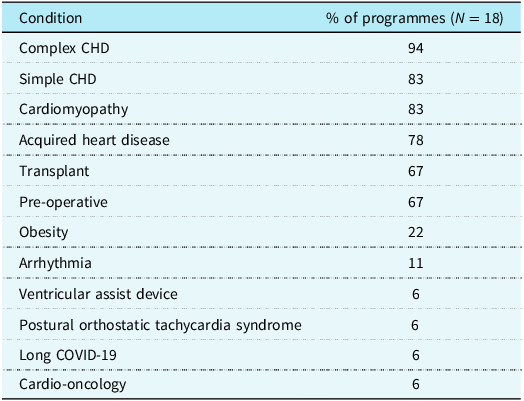
In total, the survey was delivered electronically to 53 recipients and completed by 40 individuals (response rate 75%), including 23 separate institutions from 6 countries. Of those 23 institutions, 16/23 (70%) were US based. Responses were also collected from Canada, the Philippines, the United Kingdom, India, and South Korea. It was not possible to determine exactly how many additional responses were collected via the “snowball sampling” methodology due to the anonymous nature of the survey responses and limitations of the digital survey platform; however, based on the reported institutions, most responses came from GloCo members. At the time of survey completion, 14/23 centres (61%) had programmes with at least 1 patient enrolled. Of those with at least 1 patient enrolled, 11/14 (79%) were based in the United States. The remaining three programmes that had enrolled at least 1 patient were based in Canada, South Korea, and the Philippines. Six of these programmes had enrolled greater than 20 patients, two had enrolled between 10 and 20, 2 had enrolled 6–10, and 4 had enrolled 1–5 patients. An additional 4/23 centres (17%) had programmes “in-development” but had not yet enrolled their first patient, and 5/23 (22%) were interested but had not started to develop a programme yet. Of the 14 programmes that had recruited at least 1 patient, 3 (21%) were accredited by the American Association of Cardiovascular and Pulmonary Rehabilitation. Of the 18 “established” or “in-development” programmes, 10 (56%) were using a “hybrid” model with both in person and virtual training sessions, 5 (27%) were “in person” only, and 3 (17%) reported being completely virtual. Of the 10 cardiac fitness programmes that were identified as hybrid, the percentage of virtual sessions varied among programmes from fewer than 25% of sessions to greater than 75% of sessions. Half (9/18, 50%) of established or in-development programmes described their setting as primarily outpatient, while only 3 (17%) described themselves as inpatient only. The remaining 6/18 programmes (33%) indicated a combined inpatient and outpatient model. Target populations for cardiac fitness programmes included congenital and acquired heart disease, cardiomyopathy, transplant patients, and pre-operative conditioning protocols, with a few including patients with arrhythmias or ventricular assist devices and 1 programme reporting enrolling cardio-oncology patients. Programmes were focused on both pre-operative (“unrepaired”) and post-operative (“repaired”) patients (Table 1).
Patient populations eligible for cardiac fitness programmes

Values are listed as % of total responding programmes that indicated eligibility.
Reported patient age at enrolment in the programmes ranged from 2 to 25 years, with some programmes endorsing no upper age limit. Most programme teams consisted of paediatric cardiologists (16/18, 89%), exercise physiologists (14/18, 78%), and physical therapists (9/18, 50%) in addition to a variety of other providers (Figure 1a).
Structure of cardiopulmonary fitness programmes. Participants were asked to indicate ( a ) types of personnel involved in their programmes; ( b ) what equipment, if any, was provided to programme participants; and ( c ) what devices, if any, were provided to programme participants. % indicates the percentage of programmes that reported utilisation of the listed equipment or device.

Equipment and devices
Among active or in-development programmes, half provided exercise equipment, most commonly resistance bands, and approximately one-third provided monitoring devices such as a wrist-based activity tracker (Figure 1b, 1 c).
Safety assessments
Of the 18 established or “in-development” programmes, 14 (78%) required medical clearance prior to programme enrolment, typically by a cardiologist or physiatrist; 2/18 (11%) did not require clearance, and 2/18 (11%) did not report specific clearance requirements. Of the 18 programmes, 16 (89%) reported performing screening and safety assessments prior to starting training. Of the remaining 2 programmes, 1 reported that they did not perform any assessments prior to beginning training and 1 did not respond to the survey item.
Assessments and outcomes of interest
A composite model of programme structure as determined by survey responses is demonstrated in Figure 2. Exercise training time was different among programmes, ranging from fewer than 6 weeks of exercise intervention to greater than 16 weeks. Of the 18 programmes that provided this information, 8/18 (44%) reported a 9–12-week exercise intervention period. An intervention period of 6 weeks or shorter was reported by 4/18 (22%) programmes, 13–16 weeks was reported by 3/18 (17%), and greater than 16 weeks was reported by the remaining 3/18 (17%) programmes. All programmes reported including a pre-enrolment assessment (100%) prior to the exercise intervention period. Mid-term training period assessment was reported by 7/18 (39%) programmes, post-intervention assessments by 14 (78%) programmes, and post-graduation follow-up was performed by 5 (33%) programmes (Figure 2).
Summary of composite model of cardiopulmonary fitness programmes based on survey responses.

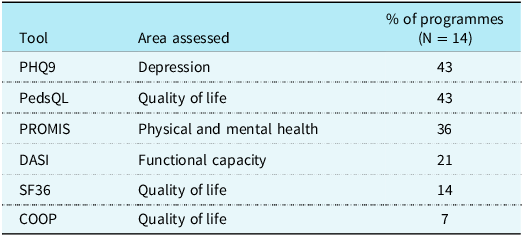
The survey identified 4 categories of primary outcomes evaluated by cardiac fitness programmes. Outcomes of interest included cardiac (18/18,100%), pulmonary (14/18, 82%), muscular (14/18, 82%), and lifestyle/mindset (14/18, 82%). A variety of questionnaires were used to assess different lifestyle/mindset metrics, detailed in Table 2, which address areas such as anxiety, depression, and quality of life.
Lifestyle/mindset assessment tools

% indicates the percentage of programmes utilising each tool out of the total that reported studying lifestyle/mindset outcomes. PHQ9 = Paediatric Health Questionnaire 9; PedsQL= Paediatric Quality of Life Inventory; PROMIS = Patient-Reported Outcomes Measurement Information System; DASI = Duke Activity Status Index; SF36 = 36-Item Short Form Survey; COOP = Dartmouth Cooperative Functional Assessment Charts.
When participants were asked what parameters are most improved by cardiac fitness programmes, the most frequent responses included quality of life/wellness (15, 87%), cardiovascular fitness/performance on cardiopulmonary exercise testing (12, 67%), and muscular strength (8, 47%). When asked to list the most important outcomes, the most common responses were quality of life/wellbeing, formal assessment of aerobic fitness by cardiopulmonary exercise test parameters, and strength/flexibility assessments.
Programme costs
Direct reported cost per participant (including testing and equipment) ranged from under $100 to >$1000, with a median reported cost per participant of $400–600 USD (range $0–100 to >$1000). Sources of funding largely involved insurance (10, 58%) and internal/institutional funders (7, 39%), but funding was also provided by patient co-pays (7, 39%), government funding (3, 17%), and private organisations (1, 6%%). One programme (6%) indicated that they did not receive any funding for the programme. Incentives were only offered by 4/18 (22%) of programmes, of which programmes denied offering incentives, and those that did offer them (22%) all were limited to values of $75 or less.
Discussion
Physical fitness parameters are reduced in several paediatric chronic disease populations including patients with CHD. Reference van Brussel, van der Net, Hulzebos, Helders and Takken20 Exercise training has been proven to be safe and effective at improving outcomes in a number of paediatric chronic disease populations. Reference Lankhorst, Takken and Zwinkels21 A 2023 meta-analysis of 15 studies by Zhou et al. showed improvement of pulmonary function test parameters, immune system markers, exercise capacity, and quality of life following exercise training in patients with asthma. Reference Zhou and Xu22 A similar 2018 meta-analysis of 5 randomised controlled trials by Morales et al. demonstrated improvements in functional mobility with no detrimental effect on mortality or relapse risk in childhood cancer survivors. Reference Morales, Valenzuela and Rincón-Castanedo23 Braam et al. also conducted a meta-analysis of studies looking at improvements in physical fitness parameters such as body composition, flexibility, and cardiorespiratory fitness following exercise training in cancer patients. Reference Braam, van der Torre, Takken, Veening, van Dulmen-den Broeder and Kaspers24 Though the authors found that the available evidence was still too sparse with inadequate sample sizes to definitely make conclusions, they noticed a “trend” towards improved physical fitness. Cardiopulmonary exercise testing has proven to be a valuable tool both for clinical assessment and for guiding these types of interventions as it is uniquely able to provide information regarding electrophysiologic and hemodynamic cardiac response, pulmonary function, and metabolic response to exercise. Reference Balady, Arena and Sietsema25 This trove of information allows for the creation of custom exercise prescriptions tailored to the needs of each patient. Reference Callaghan, Morrison and McKeown26,Reference Hansen, Dendale and Coninx27
Adult cardiac rehabilitation programmes operate under a standardised set of guidelines and practices; Reference Brown, Pack and Aberegg28 however, no such guidelines exist for paediatric cardiac rehabilitation as it remains relatively novel with large gaps in the data. This survey aimed to compile information from the relatively few paediatric cardiac rehabilitation programmes in operation to identify common approaches and characterise the variability that exists among paediatric cardiac fitness programmes. As children with CHD live longer, it is reasonable to expect that interest in these types of rehabilitation programmes will grow as well, and it will be important to establish a model of best practices going forward. Understanding the current landscape of programmes and characterising the areas of convergence and divergence will ultimately help inform the creation of more standardised guidelines for paediatric cardiac rehabilitation.
While previous literature has detailed the structure and clinical practices of paediatric cardiopulmonary exercise labs, Reference Teson, Watson and Mays29 none have previously provided a detailed description of paediatric programmes in different practice settings and locations. In this cross-sectional, observational survey-based assessment of paediatric cardiac fitness programmes conducted through the GloCo network, the authors provide data on the current landscape of cardiac fitness programmes in the United States and several other countries. Generally, cardiac fitness programmes were similar in terms of duration, frequency of sessions, and eligible patient populations, which included most forms of congenital and acquired heart disease. Nearly all programmes performed pre-enrolment medical clearance, risk stratification assessment, and baseline physical and psychosocial evaluation with validated tools to assess areas such as depression, anxiety, and quality of life, followed by an average of 9–12 weeks of active training period, post-intervention re-evaluation, and some form of maintenance phase follow-up. Most programmes utilise a “hybrid” model with a mix of in person and virtual sessions, though the proportions of in-person to virtual sessions vary between programmes. There were many areas where programmes differed substantially, notably with regard to the use of exercise equipment and devices, sources of funding, incentives for participants, and total cost per participant. Many of these differences were related to the geo-location of each programme.
Respondents indicated that quality of life/wellness and improvement in cardiovascular fitness parameters were the most important outcomes to measure and the outcomes most likely to be improved by cardiopulmonary rehabilitation and fitness programmes. These responses are consistent with the limited data that are available. Reference Rhodes, Curran and Camil4,Reference Dulfer, Duppen and Kuipers5,Reference Wittekind, Mays and Gerdes7–Reference Jacobsen, Ginde, Mussatto, Neubauer, Earing and Danduran9
Limitations of this survey included selection bias, which the authors attempted to overcome by applying the process of linear snowball sampling. Even with the use of snowball sampling, we may not have captured all programmes that existed at the time of survey closure; however, the sample was clinically and geographically diverse, including several non-US-based respondents, which increases the likelihood that our sample was an accurate representation of the programmes that existed at the time of the survey. Due to the general paucity of programmes, our response rates were low. This low number can be attributed to the innovative nature of such programmes and also the complexity of establishing such programmes, with many barriers to development including cost (personnel, equipment, incentives, additional resources), logistics (available space), available expertise (trained physicians in paediatric rehabilitation and allied healthcare providers), and lack of standardised protocol as was demonstrated by this study.
Additionally, it is likely that several new programmes were established following the closure of the survey, which would not have been fully captured in our data. Recall bias is also a factor with any survey-based work as each individual respondent may not have full knowledge of their respective programme structures; however, this was accounted for by pooling responses from individuals from the same institution.
Though the issue of financial viability was not addressed in depth in this survey, it is presumably another potential barrier to establishing and maintaining these programmes; however, insurance reimbursement for these types of programmes in children has been shown to be high, with reimbursement rates of 91% reported from Boston Children’s Hospital, one of the largest programmes currently operating. Reference Curran, Flanagan, Goncerz and Gauthier30 The authors recognise that insurance reimbursement in the United States can vary from state to state and that establishing more widespread guidelines can help improve insurance coverage more universally, thereby improving access to these services.
Though this study was primarily observational, based on these findings, the authors suggest consideration of the following framework that can be utilised by centres interested in building or expanding a cardiac fitness programme:
-
1. Identify interested personnel with the necessary expertise. This may include but is not limited to physicians (cardiologists, sports medicine specialists, physiatrists), exercise physiologists, physical therapists, mental health professionals, and dieticians.
-
2. Consider necessary logistics including physical space, mode of intervention delivery (in person, virtual, or hybrid), and cost/payment structure if applicable.
-
3. Develop a protocol that is feasible and sustainable for the specific centre and patient at which it will be based and the patient population served.
-
4. Create a business plan that addresses the above issues and provides a strong justification for your programme that will both benefit patients and be financially sustainable for the centre.
Paediatric cardiac fitness programmes represent a rapidly growing field with a wide range of applications and are currently being explored in many countries throughout the world. This survey-based study highlights the common features and the considerable variability in these programmes. Though the literature is expanding, there are currently relatively few large, prospective studies investigating these types of interventions, all of which reflect single-centre experiences. The lack of multicentre randomised controlled trials has prevented the development of a standard set of guidelines for paediatric cardiac rehabilitation. Increased collaboration is needed to best inform standardised guidelines by determining the full impact of cardiac fitness programmes on paediatric patients and the optimal model for maximum benefit to these patients.
Acknowledgements
Thank you to the GloCo Outcomes Working Group for their assistance with survey development and to all those in the broader GloCo membership and beyond who responded to the survey.
Financial support
This research received no specific grant from any funding agency, commercial, or not-for-profit sectors.
Competing interests
None.