





Introduction
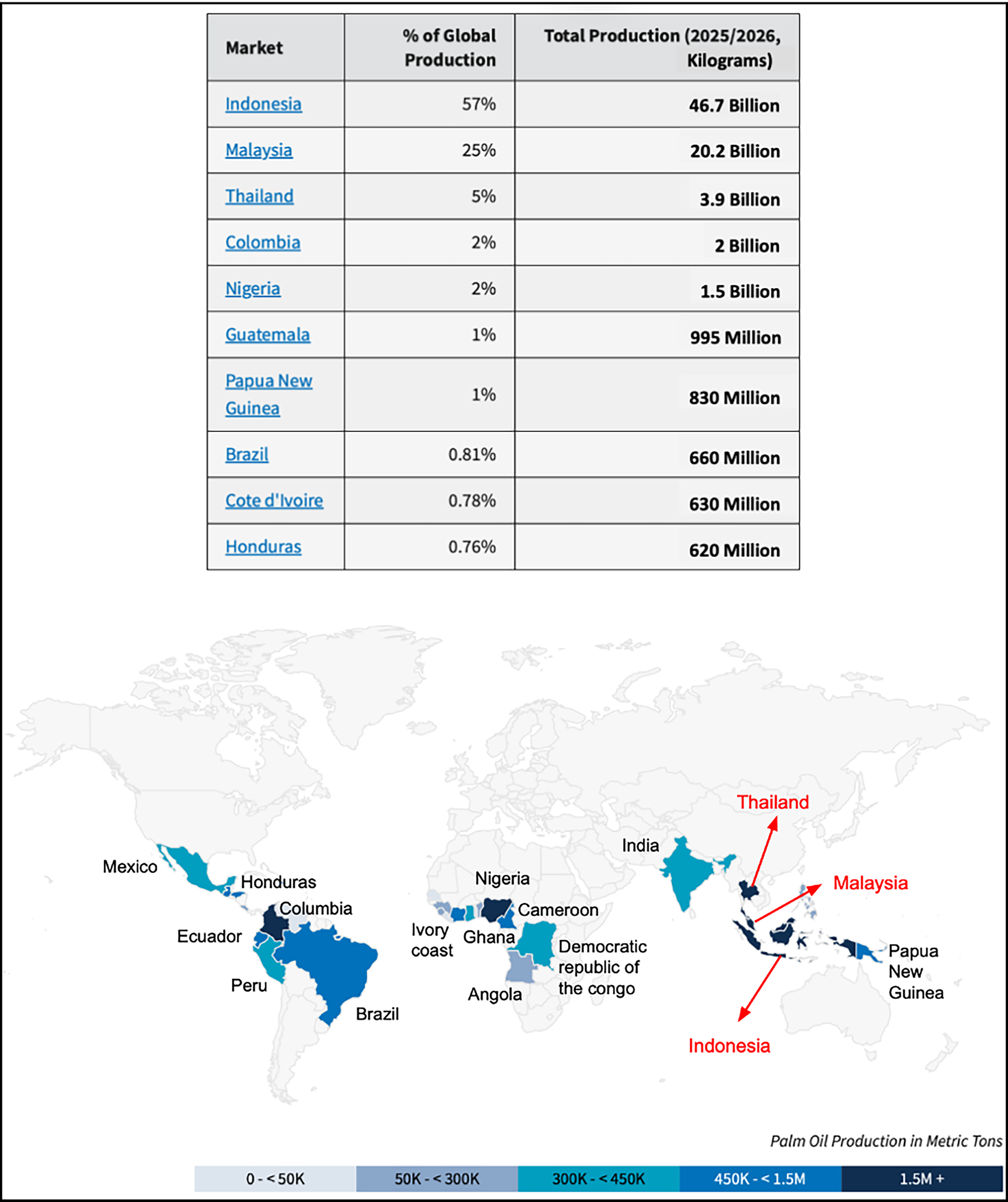
Oil palm is one of the world’s most important commercial crops and widely recognized as the most productive oil-yielding crop, producing substantially higher oil yields than other major oil crops such as soybean [Glycine max (L.) Merr.], sunflower (Helianthus annuus L.), and rapeseed (Brassica napus L.) (John Martin et al. Reference John Martin, Yarra, Wei and Cao2022). Notably, oil palm contributes around 40% of global vegetable oil production while occupying less than 6% of the total oil-crop cultivation area worldwide (Lieke et al. Reference Lieke, Spiller and Busch2023). Beyond edible uses, palm oil extracted from oil palm fresh fruit bunches (FFBs) is used in a broad range of products such as cosmetics, detergents, and soaps. Furthermore, the protein-rich residue derived from palm kernel (i.e., the edible seed of the oil palm fruit) is processed into livestock feed, particularly for ruminants such as cattle (Murphy et al. Reference Murphy, Goggin and Paterson2021). Oil palm can tolerate a wide range of soil conditions and remains economically viable in areas where few other commodity crops can be profitably grown (Meijaard et al. Reference Meijaard, Brooks, Carlson, Slade, Garcia-Ulloa, Gaveau, Lee, Santika, Juffe-Bignoli, Struebig, Wich, Ancrenaz, Koh, Zamira, Abrams, Prins, Sendashonga, Murdiyarso, Furumo, Macfarlane, Hoffmann, Persio, Descals, Szantoi and Sheil2020). Thus, the strong economic returns and favorable agronomic characteristics of oil palm have driven its widespread adoption across many producing countries (Murphy et al. Reference Murphy, Goggin and Paterson2021) (Figure 1).
Geographical distribution of global oil palm production and data for the 2024–2025 marketing year. Indonesia, Malaysia, and Thailand are the three leading palm oil-producing countries in Southeast Asia. Adapted from data published by USDA-FAS (2025).

Most oil palm plantations are concentrated in Southeast Asia. During the 2024–2025 marketing year, Indonesia produced 45.5 billion kilograms of palm oil, followed by Malaysia with 19.4 billion kilograms, and Thailand with 3.3 billion kilograms. Collectively, these three countries accounted for 87% of the global palm oil supply (USDA-FAS 2025). Originating from West and Southwest Africa, oil palm was introduced to Southeast Asia in the 19th century, with Indonesia becoming one of the earliest centers of cultivation in the region. Although the route by which the palms reached Indonesia remains uncertain, some scholars suggest that seedlings were transported from Amsterdam to Java in 1848 (Rutgers et al. Reference Rutgers, Blommendaal, Van Heurn, Heusser, Mass and Tampolsky1922). Subsequently, Southeast Asia—particularly Indonesia and Malaysia—has emerged as the primary center of global palm oil production. Cultivation has also undergone significant spatial expansion into other parts of the region, including Papua New Guinea and the Philippines (Forster et al. Reference Forster, Sitepu, Setiawati, Kelanaputra, Nur, Rusfiandi, Rahmah, Ciomas, Anwar, Bahri and Caligari2017).
In the Americas, oil palm plantations are predominantly found in warm, humid areas of South and Central America that support high productivity. Major producing countries include Brazil, Colombia, Guatemala, and Honduras (Murphy et al. Reference Murphy, Goggin and Paterson2021). Overall, palm oil has become one of the most economically attractive commodities in the global oil-crop market.
Despite its global importance, the palm oil industry has been widely criticized for its negative environmental impacts (Meijaard et al. Reference Meijaard, Brooks, Carlson, Slade, Garcia-Ulloa, Gaveau, Lee, Santika, Juffe-Bignoli, Struebig, Wich, Ancrenaz, Koh, Zamira, Abrams, Prins, Sendashonga, Murdiyarso, Furumo, Macfarlane, Hoffmann, Persio, Descals, Szantoi and Sheil2020). In response, governments have imposed stringent restrictions on further expansion of oil palm plantations into natural forests and peatlands. At the industry level, the Roundtable on Sustainable Palm Oil has also established strict land-use criteria for certification, further constraining the availability of suitable land for oil palm cultivation (Murphy et al. Reference Murphy, Goggin and Paterson2021). Consequently, palm oil producers face growing pressure to close the supply-demand gap within a finite area of cultivable land. As large-scale agricultural land expansion becomes increasingly limited by environmental protection regimes, major producing countries are encouraged to shift their focus toward yield intensification on existing plantations (Monzon et al. Reference Monzon, Slingerland, Rahutomo, Agus, Oberthür, Andrade, Couëdel, Rattalino Edreira, Hekman, Van Den Beuken, Hidayat, Pradiko, Purwantomo, Donough, Sugianto, Lim, Farrell and Grassini2021). In this context, effective weed management is essential for minimizing yield losses and sustaining long-term productivity. In this review, we examine the effects of weed pressure in Indonesia, Malaysia, and Thailand, and explore how various chemical, mechanical, cultural, and biological management practices are used in this cropping system. Ultimately, these methods need to be integrated into an effective strategy to minimize yield losses due to weeds and enhance productivity despite land constraints.
Oil Palm Agronomics
Oil palm is typically cultivated in tropical lowland regions (Verheye Reference Verheye2010), which are characterized by high year-round temperatures, humidity, and precipitation. This is due to the crop’s requirement for annual rainfall of approximately 1,800 to 2,000 mm (Mathur et al. Reference Mathur, Manorama, Mary Rani and Suresh2020) and an optimal growth temperature range of 24 C to 28 C (Corley and Tinker Reference Corley and Tinker2016). Most oil palm plantations are rainfed and rarely irrigated, relying entirely on natural rainfall to meet crop water requirements (Lim et al. Reference Lim, Goh, Kee and Henson2011). The crop performs best on loamy or alluvial well-drained soils that are rich in organic matter and have good moisture-holding capacity (Sergieieva Reference Sergieieva2026). On poorer soils with lower water-holding capacity and when root development is restricted, additional land preparation is required. This may include terracing in hilly terrain to improve water and nutrient retention, and drainage in low-lying areas to prevent waterlogging and soil salinization. Leguminous cover crops grown in the interrows can help reduce soil erosion and suppress weed infestations. Although these are ideally established before oil palm planting, in practice, they are often introduced after planting due to operational constraints (Ng and Tan Reference Ng and Tan2003).
To ensure successful seedling establishment before periods of moisture stress, planting is best carried out during the rainy season, typically from June to September (Sergieieva Reference Sergieieva2026). In addition to moisture availability, annual sunshine hours are positively correlated with FFB yield. Hence, efficient light interception is also an important factor in plantation design. This can be achieved through appropriate planting density to minimize excessive shading from fronds (Lim et al. Reference Lim, Goh, Kee and Henson2011). Generally, oil palm is planted in a triangular spacing system (9 × 9 × 9 m), with planting holes approximately 60 cm deep. This arrangement allows for an estimated planting density of about 145 palms per hectare (Sergieieva Reference Sergieieva2026).
In addition to climatic factors, the nutrient requirements of oil palm vary with growth stage and are supported through fertilization programs. During the first 12 mo in the nursery (seedling stage), management focuses on promoting early growth while minimizing plant stress. Controlled-release fertilizers are commonly applied at that time to provide a prolonged nutrient supply, reducing the need for frequent applications compared with conventional monthly fertilization practices. This approach is beneficial because it reduces labor requirements and lowers the risk of fertilizer burn. From the second year onward, nutrient management focuses on stem elongation, canopy development, and root system expansion. At this stage, macronutrients play a key role: nitrogen promotes leaf expansion and vegetative growth, phosphorus supports root development, and potassium regulates water balance and improves stress tolerance. Moreover, micronutrients such as boron, which is important for growing point development, and magnesium, which is essential for chlorophyll formation, are also required to support overall plant development. After approximately 3 yr, when palms enter the mature and productive phase, nutrient demand peaks due to fruit production. Potassium becomes the most critical nutrient for increasing FFB yield, while magnesium is required to maintain high photosynthetic efficiency, thereby improving oil yield and oil extraction rate. Boron is also essential at this stage to support successful fruit set (Advansia 2025).
Oil palm trees produce fruit bunches continuously throughout their productive lifespan of approximately 20 to 30 yr, beginning about 2 to 3 yr after planting (Chew et al. Reference Chew, Ng, Hong, Wu, Lee, Low, Kong and Chan2021). Each fruit bunch develops over roughly 5 to 6 mo after pollination and consists of numerous fruits, each with an outer exocarp (skin), a fleshy mesocarp, and a hard endocarp (shell) enclosing the kernel (endosperm). The mesocarp is the primary site of oil accumulation and is the source of crude palm oil, while the kernel yields palm kernel oil. Endocarp thickness is genetically regulated by the SHELL gene and strongly influences oil yield. The dura genotype (Sh/Sh) produces fruits with a thick shell and relatively low mesocarp content, whereas the pisifera genotype (sh/sh) is shell-less. In commercial production, the tenera hybrid (Sh/sh) is preferred due to its thinner shell and substantially higher mesocarp proportion, resulting in up to 30% greater oil yield compared with dura palms (Barcelos et al. Reference Barcelos, Rios, Cunha, Lopes, Motoike, Babiychuk, Skirycz and Kushnir2015; Corley and Tinker Reference Corley and Tinker2003).
Ripe fruit detachment is a natural physiological process that plays a key role in determining the optimal harvest timing of FFBs. This ripeness is commonly assessed by counting the number of detached fruitlets in accordance with standardized harvesting guidelines (Chew et al. Reference Chew, Ng, Hong, Wu, Lee, Low, Kong and Chan2021). At the physiological level, ripe fruits contain higher oil content compared with underripe fruitlets, whereas overripe bunches may suffer from excessive fruit loss due to abscission (Osborne et al. Reference Osborne, Henderson and Corley1992). Therefore, harvesting at the appropriate maturity stage is essential to maximize the oil extraction rate.
Weed Populations in Oil Palm Plantations in Southeast Asia
Most farmers in Southeast Asia, particularly those in the oil palm industry, tend to underestimate the importance of weed management, often assuming that weeds can be readily controlled by applying herbicides or via mechanical methods such as slashing and mowing (Dilipkumar et al. Reference Dilipkumar, Chuah, Goh and Sahid2020). This misconception largely stems from the difficulty of quantifying weed effects on oil palm productivity, given the crop’s long economic lifespan of 2 to 3 decades (Kuan et al. Reference Kuan, Ann, Ismail, Leng, Fee and Hashim1991). Additionally, many growers attribute yield limitations to immediately observable abiotic factors such as poor soil fertility and unfavorable weather. These perceptions are reinforced by growing public awareness of climate change and its potential impacts on agricultural productivity. For instance, Paterson et al. (Reference Paterson, Kumar, Taylor and Lima2015) projected a progressive decline in the climatic suitability of Indonesia and Malaysia for oil palm cultivation. Similarly, Kang et al. (Reference Kang, Khan and Ma2009) predicted that rising temperatures and increasingly variable rain patterns will reduce overall crop productivity by exacerbating water stress and limiting the availability of irrigation water. Although crop yields may respond differently across regions, Indonesia, Malaysia, and Thailand share broadly similar tropical climates. Thus, climate variability is expected to exert comparable effects on oil palm productivity in these countries.
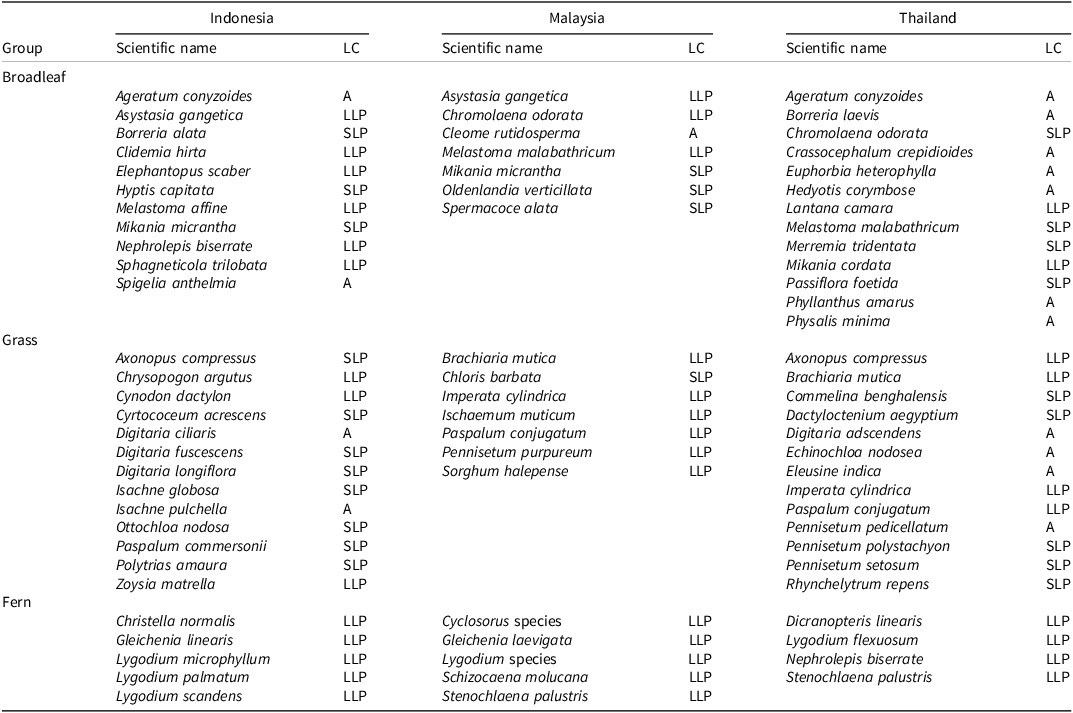
Since climatic factors are perceived as having more direct and tangible constraints to oil palm productivity, the impacts of weed competition are often overlooked in when plantation management decisions are made. Nevertheless, numerous studies have demonstrated that weed infestations can substantially reduce oil palm productivity. In Malaysia, Chung (Reference Chung2013) found that dominant interrow weed species such as seashore centipede grass (Ischaemum muticum L.) and mile-a-minute (Mikania micrantha Kunth), each reduced FFB yield by approximately 20% (equivalent to 23800 kilograms ha−1) over a 4.75-yr monitoring period. Similarly, in a study of 190 small-scale oil palm farmers in Indonesia by Soliman et al. (Reference Soliman, Lim, Lee and Carrasco2016), yields were predicted to increase (upward of 65%) under improved management. Greater palm pruning and weeding rates were identified as key practices that contributed to greater production efficiency. Furthermore, research in Thailand also documented the severe negative effects of weed infestations on early growth stages of oil palm (Krasaesindhu Reference Krasaesindhu1998). This observation is consistent with our knowledge that young palms are especially vulnerable to weeds during the establishment phase when canopy closure is insufficient to suppress weeds through shading (Dilipkumar et al. Reference Dilipkumar, Chuah, Goh and Sahid2020). Consequently, unmanaged weed infestations can result in yield losses of up to 50% to 60% in young plantations (Woittiez et al. Reference Woittiez, Van Wijk, Slingerland, Van Noordwijk and Giller2017). Weed species commonly found in oil palm plantations in Indonesia (Muktamar et al. Reference Muktamar, Setyowati, Utami, Haris, Nurjanah, Sukisno and Hindarto2025), Malaysia (Dilipkumar et al. Reference Dilipkumar, Chuah, Goh and Sahid2020), and Thailand (Krasaesindhu Reference Krasaesindhu1998) are listed in Table 1.

Table 1. Long description
A table comparing common weed species in oil palm plantations across Indonesia, Malaysia, and Thailand. The table is divided into three main groups: Broadleaf, Grass, and Fern. Each group lists the scientific names of weed species found in the three countries, along with their conservation status (LC) indicated as A, SLP, or LLP. The table has three columns for each country: Indonesia, Malaysia, and Thailand, each containing the scientific names and conservation status of the weed species. Row-wise data: Broadleaf: Row 1: Ageratum conyzoides, LC A, Asystasia gangetica, LC LLP, Ageratum conyzoides, LC A. Row 2: Asystasia gangetica, LC LLP, Chromolaena odorata, LC LLP, Borreria laevis, LC A. Row 3: Borreria alata, LC SLP, Cleome rutidosperma, LC A, Chromolaena odorata, LC SLP. Row 4: Clidemia hirta, LC LLP, Melastoma malabathricum, LC LLP, Crassocephalum crepidioides, LC A. Row 5: Elephantopus scaber, LC LLP, Mikania micrantha, LC SLP, Euphorbia heterophylla, LC A. Row 6: Hyptis capitata, LC SLP, Oldenlandia verticillata, LC SLP, Hedyotis corymbosa, LC A. Row 7: Melastoma affine, LC LLP, Spermacoce alata, LC SLP, Lantana camara, LC LLP. Row 8: Mikania micrantha, LC SLP, Merremia tridentata, LC SLP, Melastoma malabathricum, LC SLP. Row 9: Nephrolepis biserrate, LC LLP, Mikania cordata, LC SLP, Mikania cordata, LC SLP. Row 10: Sphagneticola trilobata, LC LLP, Passiflora foetida, LC SLP, Passiflora foetida, LC SLP. Row 11: Spigelia anthelmia, LC A, Phyllanthus amarus, LC A, Phyllanthus amarus, LC A. Row 12: Physalis minima, LC A. Grass: Row 1: Axonopus compressus, LC SLP, Brachiaria mutica, LC LLP, Axonopus compressus, LC LLP. Row 2: Chrysopogon argutus, LC LLP, Chloris barbata, LC SLP, Brachiaria mutica, LC LLP. Row 3: Cynodon dactylon, LC LLP, Imperata cylindrica, LC LLP, Commelina benghalensis, LC SLP. Row 4: Cyrtococum acrescens, LC SLP, Ischaemum muticum, LC LLP, Dactyloctenium aegyptium, LC SLP. Row 5: Digitaria ciliaris, LC A, Paspalum conjugatum, LC LLP, Digitaria ascendens, LC A. Row 6: Digitaria fuscescens, LC SLP, Pennisetum purpureum, LC LLP, Echinochloa nodosea, LC A. Row 7: Digitaria longiflora, LC SLP, Sorghum halepense, LC LLP, Eleusine indica, LC A. Row 8: Ischaemum globosa, LC SLP, Imperata cylindrica, LC LLP, Imperata cylindrica, LC LLP. Row 9: Ischaemum pulchellum, LC A, Paspalum conjugatum, LC LLP, Paspalum conjugatum, LC LLP. Row 10: Ottochloa nodosa, LC SLP, Pennisetum pedicellatum, LC A, Pennisetum pedicellatum, LC A. Row 11: Paspalum commersonii, LC SLP, Pennisetum polystachyon, LC SLP, Pennisetum setosum, LC SLP. Row 12: Polyptrias amaura, LC SLP, Pennisetum setosum, LC SLP, Rhynchelytrum repens, LC SLP. Row 13: Zoysia matrella, LC LLP. Fern: Row 1: Christella normalis, LC LLP, Cyclosorus species, LC LLP, Dicranopteris linearis, LC LLP. Row 2: Gleichenia linearis, LC LLP, Gleichenia laevigata, LC LLP, Lygodium flexuosum, LC LLP. Row 3: Lygodium microphyllum, LC LLP, Lygodium species, LC LLP, Nephrolepis biserrate, LC LLP. Row 4: Lygodium palmatum, LC LLP, Schizocaena molucana, LC LLP, Stenochlaena palustris, LC LLP. Row 5: Lygodium scandens, LC LLP, Stenochlaena palustris, LC LLP.
a Abbreviations: A, annual, LC, life cycle of the weed species; LLP, long-lived perennial; SLP, short-lived perennial.
b Data were compiled using information provided by Muktamar et al. (Reference Muktamar, Setyowati, Utami, Haris, Nurjanah, Sukisno and Hindarto2025), Dilipkumar et al. (Reference Dilipkumar, Chuah, Goh and Sahid2020), and Krasaesindhu (Reference Krasaesindhu1998).
Although the list of weeds is not exhaustive, it illustrates that Indonesia, Malaysia, and Thailand share many tropical weed species across the three major classifications of broadleaves, grasses, and ferns. The high number of shared species across the three countries is consistent with the assumption that oil palm plantations in the region experience similar climatic and ecological conditions. In addition, several studies have observed that broadleaves are the dominant weeds in oil palm plantations. For instance, Muktamar et al. (Reference Muktamar, Setyowati, Utami, Haris, Nurjanah, Sukisno and Hindarto2025) reported that broadleaf weeds accounted for approximately 51% of the summed dominance ratio, followed by grasses at 40%, while ferns contributed only 7%. This dominance of broadleaf weeds is also reflected in Table 1, where broadleaf species comprised a greater number of genera compared with grasses and ferns. Sahari et al. (Reference Sahari, Hendarjanti, Yusran, Ibrahim, Ramadhan and Prabowo2023) observed a similar pattern but noted that the number of broadleaf species decreased as palms matured and established a closed canopy.
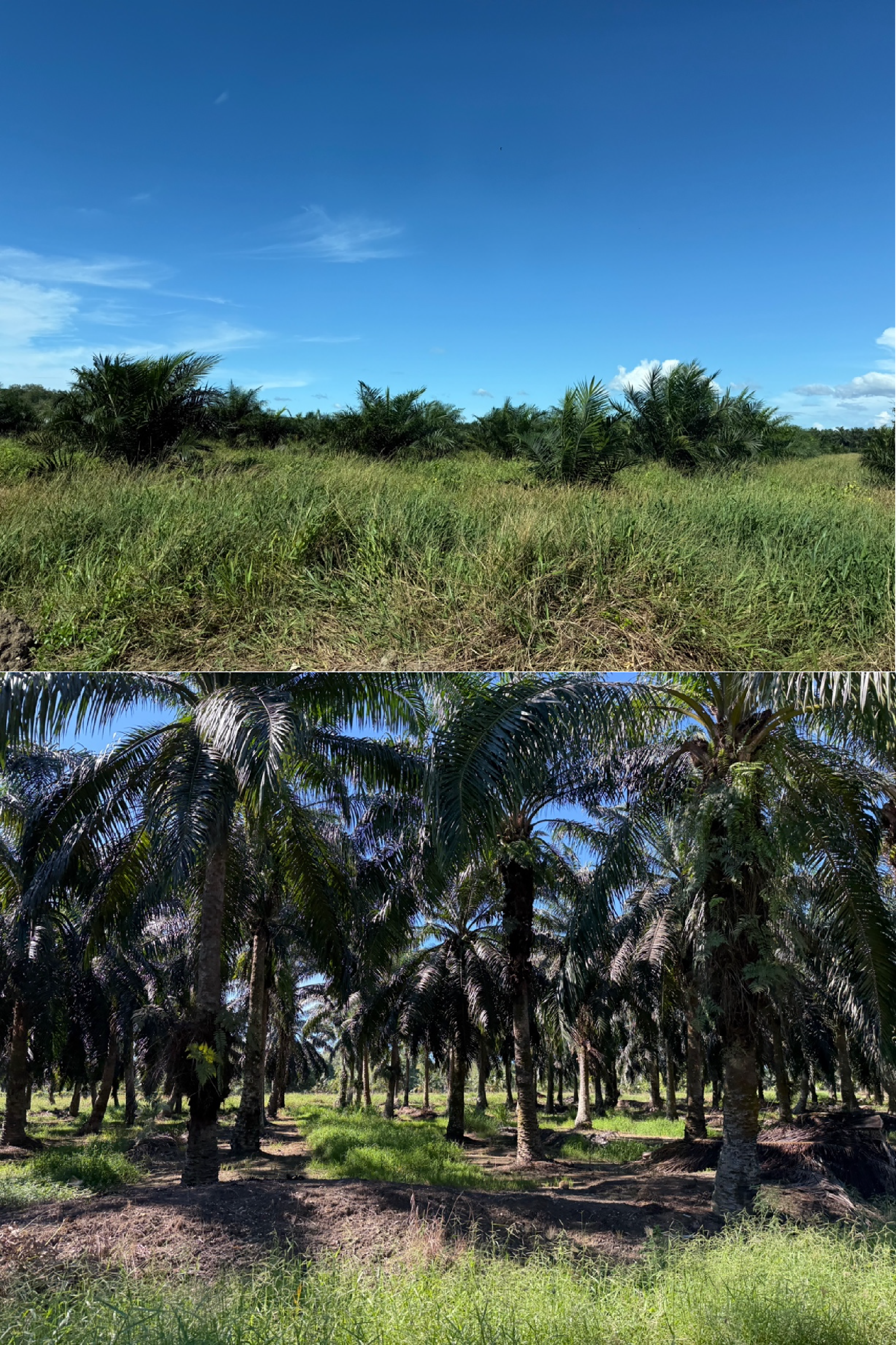
In younger oil palm plantations, where canopy cover is sparse and light intensity is high, flowering broadleaf weeds and grasses are more abundant (Figure 2). As plantations mature, canopy closure reduces ground-level light intensity and the humidity increases. These microclimatic changes suppress many light-demanding flowering weeds, leading to a decline in abundance in older plantations. For example, goosegrass [Eleusine indica (L.) Gaertn.] is a noxious grass weed that competes strongly with oil palm for water and nutrients (Jalaludin et al. Reference Jalaludin, Ngim, Bakar and Alias2010). However, it becomes less abundant in mature plantations because its growth is light-dependent (Ismail et al., Reference Ismail, Chuah, Salmijah and Teng2003). Similarly, wormbush (Spigelia anthelmia L.) also requires high light intensity for optimal growth and declines as the palm canopy closes (Sahari et al. Reference Sahari, Hendarjanti, Yusran, Ibrahim, Ramadhan and Prabowo2023). Both species are annuals that complete their life cycle within a single season and rely on seed production to recolonize newly cleared areas.
Weed infestation patterns in young (top image) versus mature plantations (bottom image). Broadleaf weeds and grasses are more prevalent in young plantations before canopy closure, whereas in mature plantations, these species decline and ferns establish under the shaded conditions.

In contrast, creeping broadleaf species such as creeping foxglove [Asystasia gangetica (L.) T. Anderson] and mile-a-minute tolerate shade. They thrive under low light conditions and function as effective ground cover (Jia et al. Reference Jia, Wang, Liang, Wu, Li and Li2022; Witariadi et al. Reference Witariadi, Kusumawati and Sukmawati2023), maintaining soil moisture and facilitating the establishment of fern species such as giant sword fern [Nephrolepis biserrata (Sw.) Schott]. Ferns generally do not grow optimally in dry, high-light environments and establish substantial populations only in older plantations where the canopy provides sufficient shade and humidity (Sahari et al. Reference Sahari, Hendarjanti, Yusran, Ibrahim, Ramadhan and Prabowo2023). Unlike the annual weed species that are prevalent in early-stage plantations, these shade-tolerant species are perennials that persist over multiple years.
Overall, canopy closure plays a key role in shaping weed community dynamics by influencing light availability and humidity in the understory (Sahari et al. Reference Sahari, Hendarjanti, Yusran, Ibrahim, Ramadhan and Prabowo2023). Early-stage plantations are dominated by light-demanding annuals (both grasses and broadleaf flowering plants), whereas mature plantations support a higher proportion of perennials and shade-tolerant species, including creeping broadleaf weeds and ferns. Understanding this natural succession of weed composition in oil palm plantations has important management implications. Annual weeds can be effectively controlled by preventing seed production, thereby reducing the soil seed bank. Perennials may require systemic herbicides or mechanical control to damage the entire plant (including the root system) to prevent regrowth. This knowledge facilitates the development and implementation of targeted, cost-effective weed management strategies that can be optimized across distinct stages of plantation establishment and growth.
Chemical Weed Management
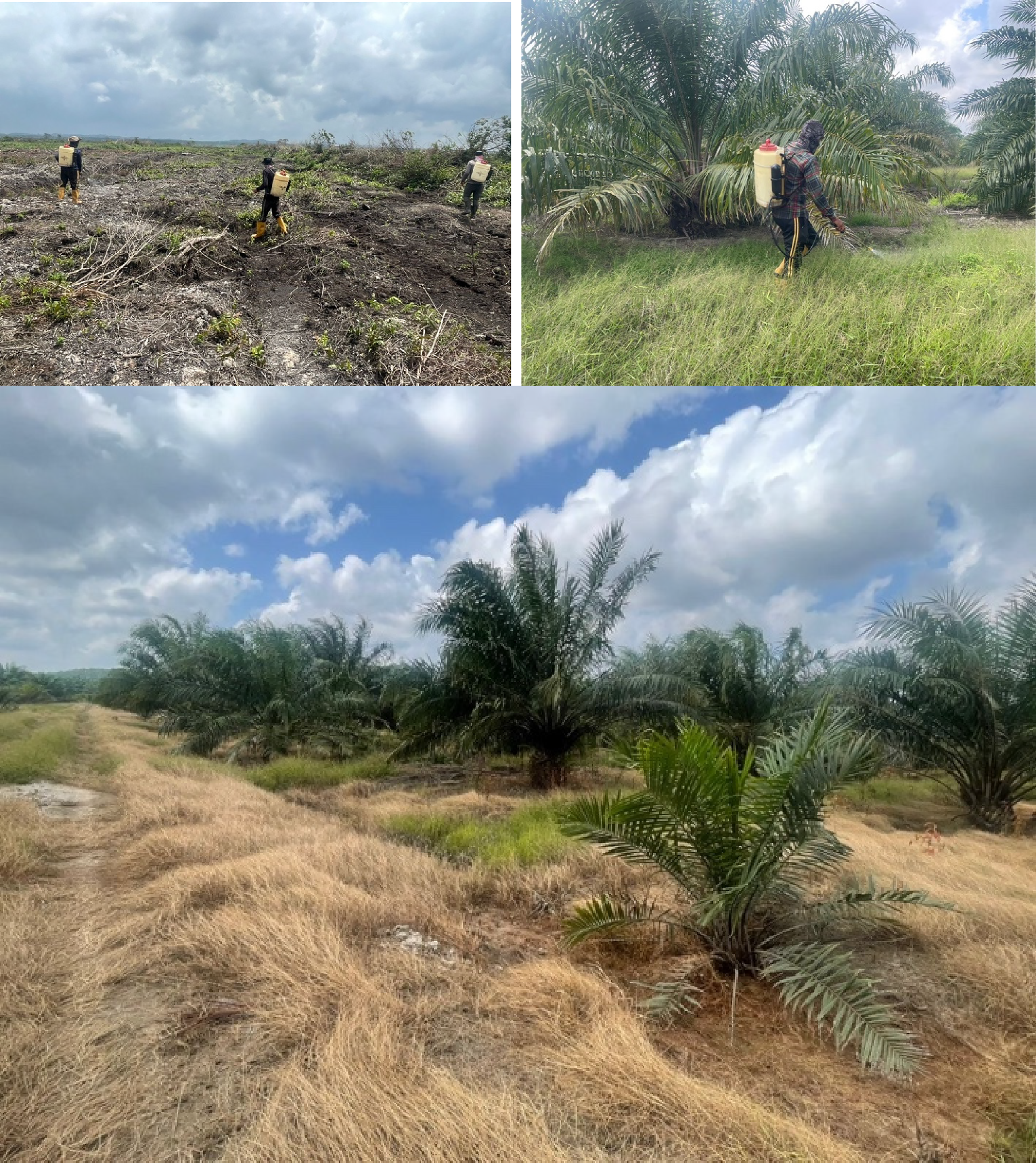
Chemical control is the primary strategy for managing weeds in Malaysian oil palm plantations, given its efficiency in maintaining crop yields (Rutherford et al. Reference Rutherford, Flood and Sastroutomo2011) (Figure 3). Herbicides alone comprise approximately 80% of total pesticide use in Malaysia, making the country the largest user of herbicides in Southeast Asia. As reported by the Food and Agriculture Organization of the United Nations (FAO 2023), herbicide use in Malaysia increased quickly from 34.084 million kilograms in 2006 to 56.43 million kilograms in 2016, corresponding to an average annual growth rate of 6.6%. Commonly applied herbicides in oil palm production include both nonselective (paraquat, glufosinate, and glyphosate) and selective products (fluazifop, metsulfuron, and triclopyr) (Casimero et al. Reference Casimero, Abit, Ramirez, Dimaano and Mendoza2022).
Herbicide application in an oil palm plantation in Malaysia. The top-left image shows pre-plant spraying, while the top-right image depicts postemergence application conducted regularly to maintain weed density at manageable levels. The bottom images illustrate the effects of herbicide treatment on weeds following application.

Thailand is a major exporter of food and agricultural products, and more than 30% of the nation’s labor force works in agriculture. Subsequently, the large-scale production generates substantial demand for imported pesticides to protect crops and enhance yields (Laohaudomchok et al. Reference Laohaudomchok, Nankongnab, Siriruttanapruk, Klaimala, Lianchamroon, Ousap, Jatiket, Kajitvichyanukul, Kitana, Siriwong, Hemachudhah, Satayavivad, Robson, Jaacks, Barr, Kongtip and Woskie2021). Among imported pesticides, herbicides comprise the largest share (80%) of total imports. This includes 2,4-D, glyphosate, and glufosinate, which are commonly used for weed control in oil palm plantations (Casimero et al. Reference Casimero, Abit, Ramirez, Dimaano and Mendoza2022; Rutherford et al. Reference Rutherford, Flood and Sastroutomo2011). Herbicide use in Thailand has also increased significantly over the past decade, doubling from an average of 1.3 kg to 2.9 kg of active ingredient per hectare of cropland.
Despite the integration of mechanical weed control practices with herbicide application, herbicides for agricultural use in Indonesia doubled from 31,634 tons to 65,377 tons between 2000 and 2023 (FAO 2023). Furthermore, nearly two-thirds of the total glyphosate used annually in Indonesia is applied on oil palm plantations (Casimero et al. Reference Casimero, Abit, Ramirez, Dimaano and Mendoza2022). Overall, these three leading palm oil-producing countries show a strong reliance on chemical weed management, possibly because the vast majority of farmers in Southeast Asia grow monocultures of rice, rubber, and oil palm (Casimero et al. Reference Casimero, Abit, Ramirez, Dimaano and Mendoza2022).
Notably, weed management practices in Southeast Asian oil palm production differ substantially between industrial-scale plantations and smallholder production systems because of differences in financial capacity, labor availability, and access to technical expertise. Industrial plantations typically employ herbicide-based weed management as a core component of plantation maintenance because herbicide application is efficient, scalable, and reduces labor demands across extensive monoculture systems (Formaglio et al. Reference Formaglio, Veldkamp, Duan, Tjoa and Corre2020). These plantations are generally characterized by adequate capital investment, enabling the regular implementation of scheduled herbicide applications and the employment of trained plantation managers who systematically monitor weed dynamics and maintain weed populations below economically injurious thresholds. Herbicide application regimes are often spatially selective rather than uniformly applied across the plantation landscape, a strategy that facilitates the retention of beneficial ground vegetation, which can improve soil moisture conservation and erosion mitigation (Corley and Tinker Reference Corley and Tinker2016).
On the other hand, smallholder oil palm producers often integrate manual or mechanical weed control practices alongside limited herbicide use (Nichenametla et al. Reference Nichenametla, Kongplub, Simon, Panklang, Chambon, Nicolaysen, Jittham, Ollivier, Tongkaemkeaw and Thoumazeau2025) because of financial constraints and limited access to technical knowledge and spraying technologies. The relatively high cost of herbicides may prevent small-scale farmers from maintaining consistent application schedules or recommended dosages, thereby reducing the effectiveness of chemical weed control. Inconsistent or improper herbicide application may also contribute to the development of herbicide-resistant weed populations by increasing selection pressure on surviving individuals (Benedetti et al. Reference Benedetti, Rangani, Ebeling Viana, Carvalho-Moore, Rabaioli Camargo, Avila and Roma-Burgos2020).
Herbicide Resistance
Although herbicides provide rapid and effective weed suppression, their intensive use has contributed to the development of herbicide-resistant weed populations. Resistance arises when weeds are repeatedly exposed to the same herbicide or herbicides with similar modes of action, creating strong selection pressure that drives adaptive evolution in weed populations (Babalola et al. Reference Babalola, Ahmad-Hamdani and Zakaria2025). In Malaysia, resistance to metsulfuron-methyl in Koster’s curse [Clidemia hirta (L.) D. Don] was reported after 5 yr of consecutive use (Ramadzan et al. Reference Ramadzan, Sahid and Chuah2012). Likewise, monthly glyphosate applications over 3 yr resulted in glyphosate-resistant goosegrass populations in Sumatra, Indonesia (Purba and Sipayung Reference Purba and Sipayung2022). Goosegrass is particularly problematic because it is among the first weed species confirmed to have evolved resistance to three major nonselective herbicides: glufosinate, glyphosate, and paraquat (Jalaludin et al. Reference Jalaludin, Yu and Powles2015). This weed species is thus of concern because it is commonly found in oil palm crops in Indonesia, Malaysia, and Thailand.
Apart from repeated uses, herbicide resistance is also linked to inadequate knowledge of herbicide classes and improper application techniques (Chuah et al. Reference Chuah, Yusop, Pauzi, Aani, Sahal, Pahang, Purba and Sa’adah2024). Even when application guidelines are followed, the biology, ecology, lifecycle, and genetics of a specific weed can also contribute to the natural development of resistance (Perotti et al. Reference Perotti, Larran, Palmieri, Martinatto and Permingeat2020). To date, eight weed populations in Malaysian oil palm nurseries and plantations, including goosegrass, Koster’s curse and whorled oldenlandia [Oldenlandia verticillata (L.) Lam.], have reportedly become resistant to glyphosate, metsulfuron, and paraquat (Chuah et al. Reference Chuah, Salmijah, Teng and Ismail2004; Chuah and Sahid Reference Chuah and Sahid2010; Ramadzan et al. Reference Ramadzan, Sahid and Chuah2012). Given their aggressive growth and ability to outcompete other crops, these weeds are categorized as noxious (Chuah et al. Reference Chuah, Yusop, Pauzi, Aani, Sahal, Pahang, Purba and Sa’adah2024). (The Weed Science Society of America defines a noxious weed as any plant designated by federal, state, or local government officials as being injurious to public health, agriculture, recreation, wildlife or property. The term is similarly defined in Malaysia government documents.) Resistant biotypes pose a serious threat to productivity by dominating weed communities, reducing yields, and increasing control costs (Babalola et al. Reference Babalola, Ahmad-Hamdani and Zakaria2025). The limited herbicide options and the lack of new modes of action exacerbate this problem (Chuah et al. Reference Chuah, Yusop, Pauzi, Aani, Sahal, Pahang, Purba and Sa’adah2024).
To manage these herbicide-resistant weeds, growers may resort to using more herbicides or increase the amount they use; however, these practices raise significant environmental and human health concerns. Malaysia’s tropical climate is characterized by frequent rain, which facilitates herbicide leaching and runoff. Residues of commonly used herbicides have been detected in soils, sediments, and nearby water bodies, posing potential risks to food and water safety for local communities (Dearlove et al. Reference Dearlove, Harrison, Svendsen and Spurgeon2024). Furthermore, herbicide drift can negatively affect the nontarget understory vegetation, which serves as a biodiversity-rich habitat for arthropods, insects, and small mammals within the oil palm ecosystem. When these plants are unintentionally damaged or killed, established food webs may be disrupted, thereby reducing overall ecological stability. At the same time, the loss of understory vegetation weakens important ecological functions, particularly the soil-microbial interactions that facilitate nutrient cycling and soil stabilization. Over time, this can degrade soil quality and reduce crop productivity.
These negative impacts taken together highlight the need for integrated weed management (IWM) strategies that combine preventive measures with applied controls to reduce weed pressure while minimizing environmental impacts. Examples of mechanical and cultural weed management practices employed include hand weeding, slashing of woody weeds, cover cropping, mulching, and managing planting density.
Mechanical Weed Management
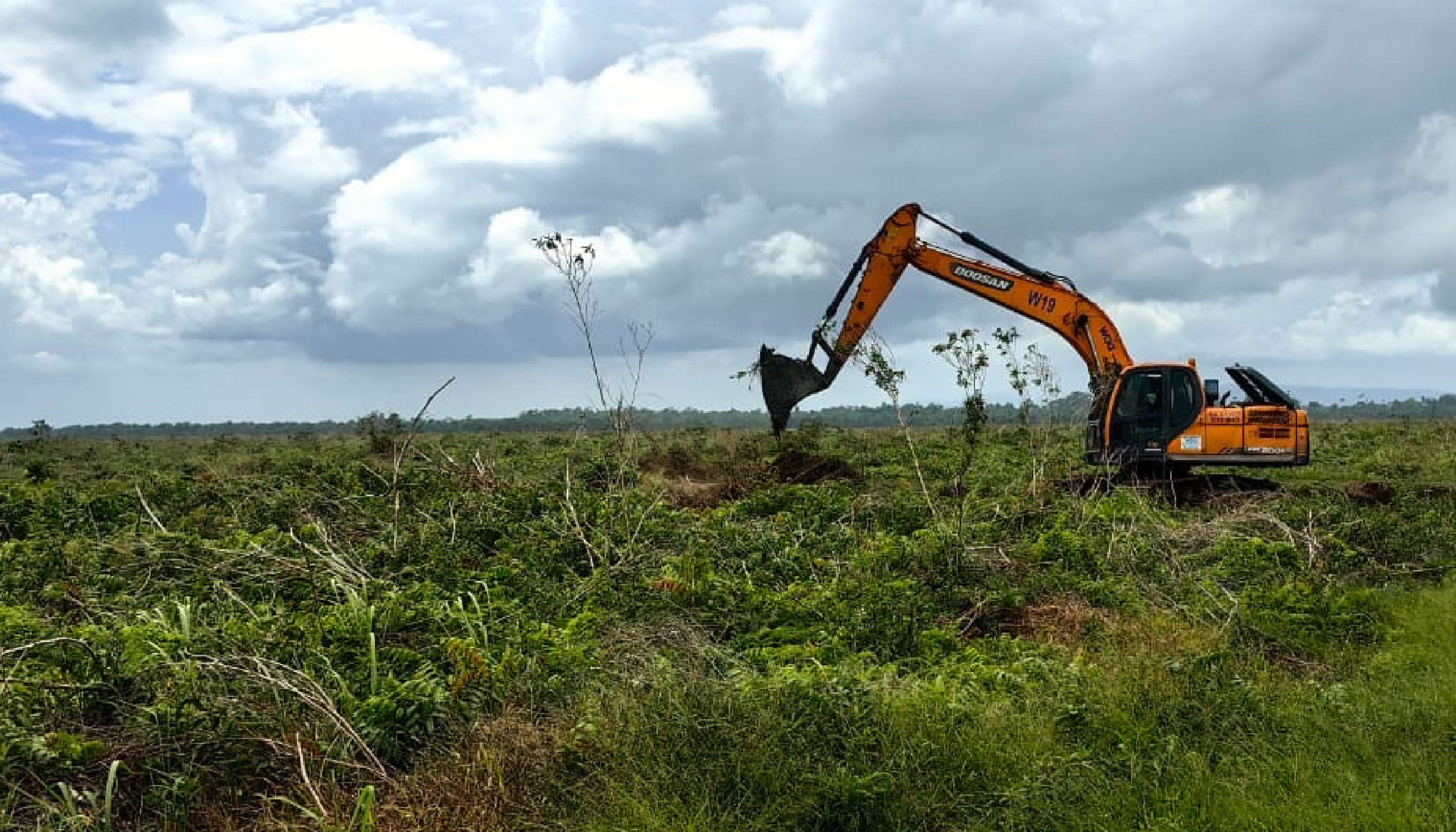
Mechanical weed management in oil palm plantations encompasses both mechanized techniques (i.e., chaining, bulldozing, and ploughing) and manual methods (i.e., slashing woody weeds, hoeing, and hand-pulling) to reduce weed cover and prevent seed production (Figure 4). Plant litter left on site after clearing can decompose, releasing nutrients into the soil, thereby enhancing soil fertility (Babalola et al. Reference Babalola, Ahmad-Hamdani and Zakaria2025). These ecological benefits are further substantiated by the findings of Iddris et al. (Reference Iddris, Formaglio, Paul, Von Groß, Chen, Angulo-Rubiano, Berkelmann, Brambach, Darras, Krashevska, Potapov, Wenzel, Irawan, Damris, Daniel, Grass, Kreft, Scheu, Tscharntke, Tjoa, Veldkamp and Corre2023), who demonstrated that the substitution of conventional high-input management practices—characterized by intensive fertilization and herbicide use—with reduced fertilization and mechanical weed control in an industrial oil palm system resulted in a 33% increase in biodiversity, while maintaining comparable yield levels over 4 yr. From an economic perspective, the same study reported that when fewer chemicals were used, costs fell by 41% and overall profit increased by 12%. Despite a 10% rise in labor costs for weeding, the relative gross margin was 11% higher. Importantly, neither cumulative yields nor yield stability were negatively affected in the experiment, indicating that mechanical approaches can sustain productivity while delivering ecological and financial benefits (Iddris et al. Reference Iddris, Formaglio, Paul, Von Groß, Chen, Angulo-Rubiano, Berkelmann, Brambach, Darras, Krashevska, Potapov, Wenzel, Irawan, Damris, Daniel, Grass, Kreft, Scheu, Tscharntke, Tjoa, Veldkamp and Corre2023).
Mechanical weed management in oil palm plantations by slashing, which can be performed using a tractor or a small excavator. This practice is primarily used to clear the interrow vegetation, such as small shrubs.

Nevertheless, this study draws on data from a state-owned oil palm plantation in Jambi, Indonesia. Approximately 40% of Indonesia’s palm oil supply is produced by smallholders, whose yields are 35% to 40% lower than those of private and government estates. This suggests that a significant proportion of oil palm producers may face resource constraints that limit the efficient adoption of mechanical weeding practices, including restricted access to credit, appropriate machinery, technical expertise, and supporting infrastructure (Lee et al. Reference Lee, Ghazoul, Obidzinski and Koh2014; Reich and Musshoff Reference Reich and Musshoff2025). As a result, their capacity to implement the management practices recommended in the study and achieve comparable productivity outcomes is constrained. A similar structural pattern is observed in other Southeast Asia countries. In Malaysia, smallholders account for approximately 40% of national palm oil output and often face capital constraints that limit their adoption of sustainable agricultural practices (Rahman Reference Rahman2020). In Thailand, these small-scale farmers play an even more dominant role, contributing more than 90% of national oil palm production, yet frequently achieving FFB yields below attainable levels (Nichenametla et al. Reference Nichenametla, Kongplub, Simon, Panklang, Chambon, Nicolaysen, Jittham, Ollivier, Tongkaemkeaw and Thoumazeau2025). Given these financial and technological constraints, findings based on estate-level management systems may not readily translate to smallholder-dominated production contexts. In particular, many small-scale farmers in Thailand are aware of the environmental benefits that mechanical approaches may bring (Nichenametla et al. Reference Nichenametla, Kongplub, Simon, Panklang, Chambon, Nicolaysen, Jittham, Ollivier, Tongkaemkeaw and Thoumazeau2025).
In some cases, smallholders integrate intercrops into their systems, particularly during the early stages of oil palm establishment, to generate interim income and diversify production risk before palms reach fruit-bearing age and begin producing marketable FFB (Nchanji et al. Reference Nchanji, Nkongho, Mala and Levang2016). For example, Kusumawati et al. (Reference Kusumawati, Yahya, Hariyadi, Mulatsih and Istina2019) showed that intercropping can help alleviate this income gap by providing meaningful supplementary income without compromising the vegetative growth of oil palm. Their analysis further identified maize as a particularly suitable intercrop due to its high economic returns and short production cycle (Kusumawati et al. Reference Kusumawati, Yahya, Hariyadi, Mulatsih and Istina2019). More broadly, a wide range of cash crops are commonly used in oil palm intercropping, including peanut (Arachis hypogaea L.), soybean, cassava (Manihot esculenta Crantz), tomato (Solanum lycopersicum L.), and pineapple [Ananas comosus (L.) Merr.] (Sapalina et al. Reference Sapalina, Farrasati, Wiratmoko, Rahutomo, Santoso, Ginting, Pradiko and Hidayat2022). Similarly, these crops deliver relatively high value returns within shorter time frames, thereby supporting smallholder livelihoods while oil palm matures. Consequently, weed management by small-scale farmers becomes more complex, because their decisions must account for both oil palm and intercrop requirements. Although highly competitive species can enhance weed suppression (Bastiaans and Van Der Werf Reference Bastiaans and Van Der Werf2025), differences in crop tolerance to herbicides and spatial planting arrangements can restrict uniform chemical applications. Therefore, more selective and site-specific weed management strategies are often required, which increases labor requirements and overall production costs (Pitsyk et al. Reference Pitsyk, Pfrombeck and Gandorfer2026). In contrast, mechanical weed control methods, such as slashing or manual cutting, means the immediate physical removal of weeds and does not require specialized equipment or chemical inputs. These methods are straightforward to implement, making them appealing to small-scale farmers who have limited technical training or inconsistent access to herbicides. They also minimize risks linked to improper application rates, chemical drift, and potential crop damage.
On the other hand, industrial-scale plantations generally rely less on mechanical weed control because herbicide-based management can be implemented more efficiently across large contiguous areas (Corley and Tinker Reference Corley and Tinker2016). The large-scale implementation of mechanical weed control methods in commercial plantations may be constrained by labor requirements, operational costs, and reduced efficiency relative to chemical control (Formaglio et al. Reference Formaglio, Veldkamp, Duan, Tjoa and Corre2020). In addition, repeated use of machinery may increase soil compaction (Maharani et al. Reference Maharani, Maryanti, Mulyani, Salman, Dewi and Nopsagiarti2026). Overall, the choice and intensity of mechanical weed management differ substantially between industrial and smallholder systems, reflecting differences in scale, labor availability, technical capacity, and economic constraints.
Effective eradication of weed populations relies on the skilled operation of machinery to cut and uproot plants, so they desiccate. If roots are left intact due to inexperienced labor or insufficient training, many weed species can regrow rapidly from underground structures such as rhizomes. Moreover, the effectiveness of mechanical weeding is highly weather-dependent, as tractors function best on dry, firm soil. When the soil is wet or muddy, weeding equipment can become easily stuck, reducing efficiency and incurring additional repair and maintenance costs. High soil moisture also allows uprooted weeds to re-root quickly, further diminishing the effectiveness of mechanical control. While mechanical weeding is considered more environmentally friendly, it requires frequent interventions to maintain effective weed suppression (Babalola et al. Reference Babalola, Ahmad-Hamdani and Zakaria2025). These challenges are particularly relevant in tropical countries such as Indonesia, Malaysia, and Thailand, where excessive precipitation is common. In Malaysia, the situation is further compounded by labor constraints: almost 80% of the palm oil workforce is foreign, and the increasing difficulties in recruiting migrant workers have led to labor shortages that hinder the feasibility of mechanical weeding practices (Babalola et al. Reference Babalola, Ahmad-Hamdani and Zakaria2025; Crowley Reference Crowley2020).
Cultural Weed Management
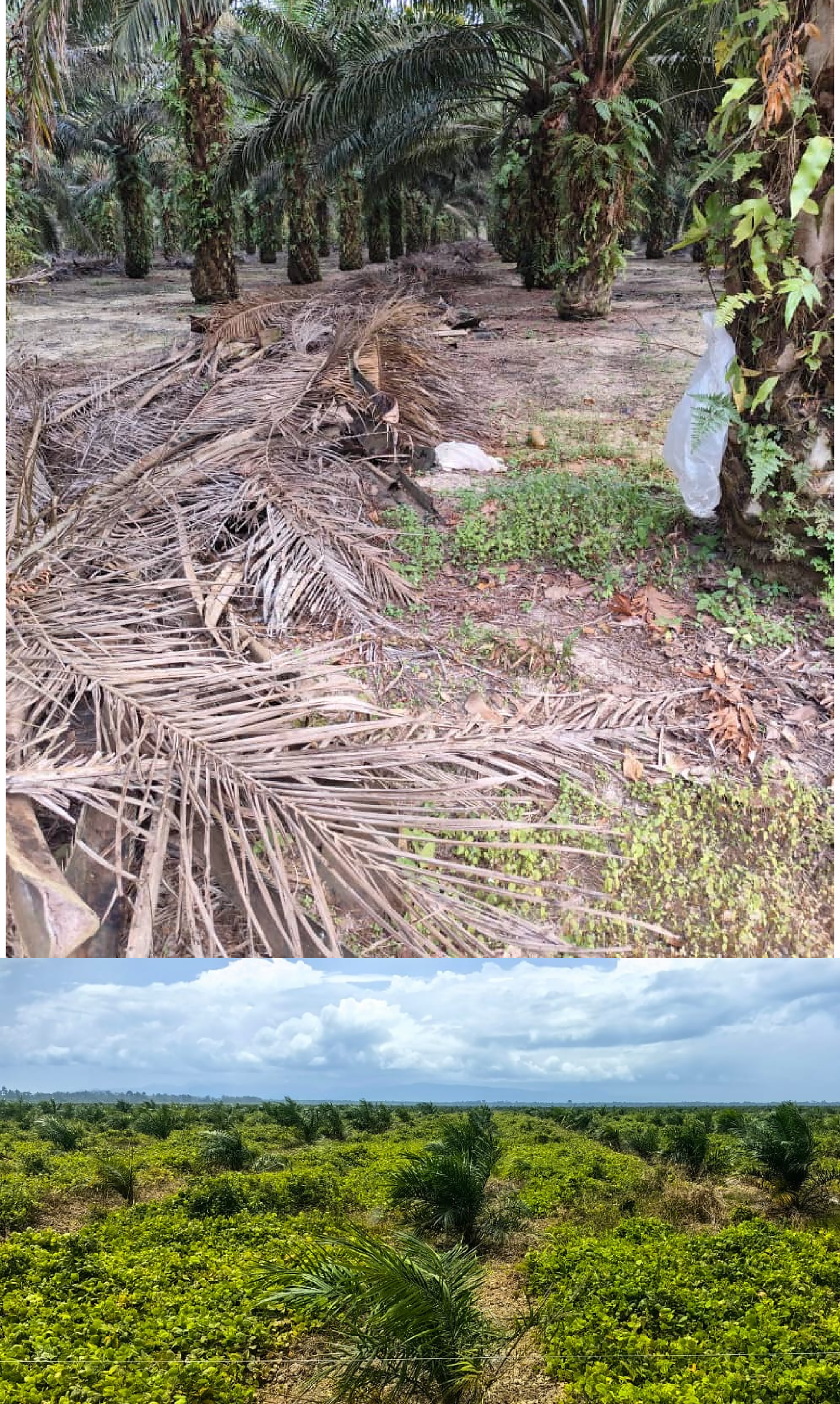
Cultural weed management generally refers to methods that allow long-term weed suppression by limiting their establishment rather than relying on direct removal (Babalola et al. Reference Babalola, Ahmad-Hamdani and Zakaria2025). A widely adopted approach is to grow leguminous cover crops such as tropical kudzu (Neustanthus phaseoloides var. javanicus A.N. Egan & B. Pan), blue calopo [Calopogonium caeruleum (Benth.) C. Wright], calopo (C. mucunoides Desv.), mucuna (Mucuna bracteate DC. ex Kurz), velvet bean [M. pruriens var. utilis (Wall. ex Wright) Baker ex Burck], and butterfly pea (Centrosema pubescens Benth.) (Figure 5). These species compete effectively with weeds for light and space by reducing weed cover while simultaneously improving soil quality through nitrogen fixation and organic matter accumulation (Al Manar et al. Reference Al Manar, Hikmat and Zuhud2023). Another commonly used cultural practice in oil palm plantations is mulching, which means placing pruned fronds and empty fruit bunches (EFBs) on the soil surface (Figure 5). This practice suppresses weed emergence primarily by limiting light penetration to the soil, thereby inhibiting seed germination. In addition, it conserves soil moisture, reduces soil erosion, and minimizes nutrient leaching, thereby improving soil quality and plantation sustainability (Ruzlan and Ahmad-Hamdani Reference Ruzlan and Ahmad-Hamdani2021).
Cultural weed management in oil palm plantations. The top images show mulching, where pruned fronds are left on the ground to reduce light penetration and suppress weed growth. The bottom image depicts interrow leguminous cover cropping, which helps limit weed establishment between individual plants.

Despite these advantages, mulching alone is often insufficient to control highly competitive or aggressive weed species. Similarly, leguminous cover crops require regular de-creeping to prevent them from climbing or smothering young palms, increasing management efforts and labor costs (Dilipkumar et al. Reference Dilipkumar, Chuah, Goh and Sahid2020). As previously discussed, some smallholders may also intercrop oil palm with other crops during the immature phase of plantation development to diversify income sources before palms reach full productivity (Nchanji et al. Reference Nchanji, Nkongho, Mala and Levang2016). Beyond financial benefits, intercropping systems in oil palm plantations may also improve sustainability. For instance, compared with fields with a common legume cover crop (M. bracteata), intercropping systems with sorghum [Sorghum bicolor (L.) Moench] and cassava have been reported to support higher soil bacterial populations. These systems have also been associated with increased soil organic carbon, suggesting enhanced soil biological activity and improved soil health. Although specific functional groups, such as nitrogen-fixing bacteria, have yet to be fully identified within the broader microbial community, the observed increase in microbial diversity is generally considered beneficial for supporting soil ecosystem functioning (Sapalina et al. Reference Sapalina, Farrasati, Wiratmoko, Rahutomo, Santoso, Ginting, Pradiko and Hidayat2022). Despite these potential benefits, the adoption of intercropping systems in oil palm production systems may be constrained by high labor requirements. Harvesting already accounts for the majority of labor inputs (Euler et al. Reference Euler, Hoffmann, Fathoni and Schwarze2016), and the additional operational demands associated with intercrop and cultural weed management may further limit adoption by smallholders (Chuah et al. Reference Chuah, Yusop, Pauzi, Sahal, Che Mohd Ramli, Aani, Pahang and Purba2025).
Conversely, industrial-scale plantations are generally better positioned to implement cultural weed management strategies because they possess greater financial resources, labor capacity, and access to plantation residues. For example, pruned fronds and EFBs generated through plantation and milling operations can be used as mulch to suppress weed emergence, conserve soil moisture, recycle nutrients, and reduce soil erosion. The use of these materials not only contributes to weed management but also supports broader sustainability objectives by promoting nutrient cycling and improving soil health (Rudolf et al. Reference Rudolf, Hennings, Dippold, Edison and Wollni2021). As a result, cultural weed management practices are often more systematically incorporated into IWM programs in industrial plantations than in smallholder production systems. Access to EFBs may also contribute to this difference. Industrial plantations in particular often have direct access to palm oil mills through vertically integrated operations or established supply chains, which facilitates the collection and use of EFBs for mulching (Jelsma et al. Reference Jelsma, Woittiez, Ollivier and Dharmawan2019). In contrast, smallholders, particularly independent smallholders, may face logistical and economic barriers to obtaining EFBs, including transportation costs, limited access to milling facilities, and the relatively small quantities required for individual farms (Jelsma et al. Reference Jelsma, Schoneveld, Zoomers and Van Westen2017). These factors may reduce the feasibility of using EFB-based mulching as a routine weed management strategy in some smallholder production systems (Rudolf et al. Reference Rudolf, Hennings, Dippold, Edison and Wollni2021).
Biological Weed Management
Three insect species have been introduced in Indonesia as a way to control Siam weed, an invasive weed commonly found in oil palm plantations. These include a moth, Siam weed defoliator (Pareuchaetes pseudoinsulata Rego Barros), a fly Stem gall fly (Cecidochares connexa Macquart), and a butterfly, common actinote (Actinote anteas Doubleday), all of which have larvae that feed specifically on Siam weed, causing defoliation and suppressing plant growth (Chenon et al. Reference Chenon, Sipayung and Sudharto2002). To date, only the moth has been reported to have successfully established in Malaysia and Thailand (Cock et al. Reference Cock, Day and Winston2023), and there is no published evidence that the other two species have become established in either country. Nevertheless, all three species represent promising opportunities for biological control in oil palm systems. Additionally, a rust fungus (Puccinia spegazzinii de Toni) can effectively suppress another common oil palm weed, mile-a-minute. Despite its documented success in Papua New Guinea and India (Day et al. Reference Day, Kawi and Ellison2013; Sankaran et al. Reference Sankaran, Puzari, Ellison, Sreerama Kumar and Dev2008), its use has not yet been reported in the three Southeast Asian countries examined in this review. This may be attributable to the continued reluctance of many countries to adopt biological control strategies for weed management, driven by perceptions of elevated ecological risk and uncertainty associated with their implementation. Farmers who may have less access to scientific information can also be influenced by unfounded claims, such as the belief that biological control agents could evolve or mutate to attack nontarget plant species over time. Such misconceptions are often used to justify the reluctance to adopt biological control strategies, thereby limiting opportunities to introduce and use biological control agents that are, in fact, highly host-specific and effective for weed management (Day and Witt Reference Day and Witt2019).
On the other hand, a more common biological weed management tactic in oil palm plantations involves the strategic integration of livestock grazing, most commonly with sheep, goats, and cattle. This practice has gained increasing attention as an alternative to herbicide-dependent weed control, with multiple studies documenting both economic and environmental benefits following its adoption by oil palm farmers in Malaysia (Babalola et al. Reference Babalola, Ahmad-Hamdani and Zakaria2025). For example, targeted goat grazing in mature oil palm plantations in Pahang was shown to effectively suppress noxious weed species, including creeping foxglove and Koster’s curse. Importantly, animal performance was not adversely affected, as goat body weight remained stable before and after grazing, indicating that the available weed biomass provided sufficient forage quality and did not compromise animal welfare (Nobilly et al., Reference Nobilly, Maxwell, Yahya and Azhar2021). Similarly, Álvarez et al. (Reference Álvarez, Castiblanco and Montoya2024) reported that integrating cattle in rotational grazing reduced weed management costs by up to 60% and increased farm income by approximately 15%. Beyond economic benefits, oil palm–livestock integration also supports the 17 Sustainable Development Goals (SDGs), specifically SDG 1 (No Poverty) and SDG 2 (Zero Hunger), by improving land-use efficiency and enabling diversified production within the existing plantation areas (Álvarez et al. Reference Álvarez, Castiblanco and Montoya2024).
However, major palm oil–producing countries, including Indonesia, Malaysia, and Thailand, often regard grazing as an impractical weed management strategy. This is because livestock management requires significant additional labor, and studies have noted social concerns such as livestock theft and animals straying onto private property (Azhar et al. Reference Azhar, Tohiran, Nobilly, Zulkifli, Syakir, Ishak, Razi, Oon, Shahdan and Maxwell2021).
Therefore, additional technical support, such as training programs on livestock management, is needed to encourage the adoption of grazing as a weed management practice. In the absence of such training, grazing in smallholder plantations is often carried out under free-ranging systems, with cattle continuously feeding on the oil palm understory as an easily accessible resource (Bremer et al. Reference Bremer, Lobry De Bruyn, Smith and Cowley2022; Tohiran et al. Reference Tohiran, Raja Zulkifli, Norkaspi, Md Zainal, Noor Khairani and Wahid2014). Despite the dual benefit of lowering both feed and weed management costs, adoption of this strategy remains more common among large estates than smallholders (Bremer et al. Reference Bremer, Lobry De Bruyn, Smith and Cowley2022).
Large estates typically employ more structured grazing management practices (Bremer et al. Reference Bremer, Lobry De Bruyn, Smith and Cowley2022). Cattle are commonly managed through rotational grazing systems with average grazing intervals of approximately 3 mo, while animals remain in a particular area for no more than 2 d at a time. Stocking rates are generally maintained at approximately one head of cattle per 5 ha−1, and local cattle breeds are often preferred because of their superior adaptation to local environmental conditions and greater resistance to diseases, which reduces management costs (Nor et al. Reference Nor, Ponijan and Abdul Kadir2000). Such systematic approaches minimize disruptions to plantation operations and improve grazing efficiency. However, these management systems can be difficult for smallholders to implement because grazing areas are often located far from residences, which increases labor requirements and exposes cattle to theft (Bremer et al. Reference Bremer, Lobry De Bruyn, Smith and Cowley2022). Furthermore, successful livestock integration may require cooperative arrangements between plantation owners and cattle owners (Zali Reference Zali2019), creating additional administrative and financial burdens for smallholders with already limited resources.
Despite its advantages, livestock grazing is not a complete replacement for other weed management strategies. Plantation managers often express concerns about overstocking, which may damage young oil palm trees and contribute to soil compaction, potentially reducing long-term plantation productivity (Devendra Reference Devendra2004). Moreover, woody understory species that are unpalatable to livestock frequently persist after grazing and still require removal through herbicide application (Nor et al. Reference Nor, Ponijan and Abdul Kadir2000; Nambiar Reference Nambiar1991). Consequently, grazing alone is unlikely to provide sustained control of perennial or highly competitive weed species. Instead, livestock integration is most effective when incorporated into an IWM framework that combines biological, cultural, and chemical control methods. Such systems are typically more feasible in large-scale plantations, where economies of scale and greater financial resources support their implementation. Logistical constraints and social challenges linked to livestock management may hinder adoption among smallholders.
Integrated Weed Management—A Potential Way Forward
Although chemical, mechanical, cultural, and biological weed control strategies each offer specific benefits, none is without limitations when used alone. IWM enhances the complementarity of each method, improving weed suppression without over-relying on any single strategy. By reducing dependency on chemical inputs, IWM presents a more ecologically balanced and sustainable weed management approach for oil palm plantations throughout Southeast Asia. Currently, IWM is not widely adopted among oil palm producers in Southeast Asia (Dilipkumar et al. Reference Dilipkumar, Chuah, Goh and Sahid2020), largely due to persistent financial and technical gaps between smallholders and estate-based production systems. However, the issue extends beyond production scale, because differences in management practices also play a critical role in closing yield gaps.
In Malaysia, Chuah et al. (Reference Chuah, Yusop, Pauzi, Sahal, Che Mohd Ramli, Aani, Pahang and Purba2025) documented substantial regional disparities among smallholders driven by sociodemographic factors such as farming experience, education level, and part-time engagement in oil palm cultivation. Although smallholders in both regions faced significant financial barriers to implementing strategic herbicide rotations comparable to those used by large-scale estates, their responses differed. In peninsular Malaysia, smallholders commonly applied herbicides at below the rates recommended on the product labels due to cost constraints, whereas in Sabah and Sarawak, approximately 95% of producers employed a proactive management strategy by using preemergent herbicides. Failure to adhere to recommended herbicide dosages reduces the effectiveness of chemical control and accelerates the development of herbicide-resistant species. Therefore, these findings underscore the importance of designing region-specific programs that provide accessible and context-appropriate support for smallholders from diverse socioeconomic backgrounds. Such targeted interventions are essential to promote sustainable growth in a sector that is predominantly smallholder driven.
A scheme smallholder is one who receives technical and institutional support through formal partnerships with plantation companies, whereas an independent smallholder manages their own plantations without such assistance (Euler et al. Reference Euler, Hoffmann, Fathoni and Schwarze2016). Lee et al. (Reference Lee, Ghazoul, Obidzinski and Koh2014) provided quantitative evidence showing that scheme smallholders in Indonesia consistently outperform independent smallholders, earning higher gross monthly incomes from oil palm cultivation. This underscores the importance of stronger governmental support in improving public infrastructure and institutional organization to reduce yield gaps among oil palm producers. However, such structural improvements lie beyond the direct control of individual farmers and depend largely on policy frameworks that enable the adoption of best agricultural management practices and more efficient land use. Therefore, the implementation of IWM should be prioritized jointly with these institutional reforms to promote sustainable growth in the oil palm industry. Although initial adoption may involve higher upfront costs, smallholders may be better positioned to experiment with new management strategies because the smaller scale of their operations allows for greater flexibility and lower administrative complexity than in large estates. Furthermore, IWM has the promising potential to improve yield stability and field productivity, thereby enhancing producer capacity to generate sufficient returns to offset production costs in the long run.
Encouragingly, recent studies reported that the majority of farmers in Thailand were aware of the negative environmental impacts of herbicides. When given a choice, some farmers preferred mechanical weeding over chemical control. Moreover, those who participated in training programs sponsored by the Roundtable on Sustainable Palm Oil also demonstrated sustainable practices, such as increasing soil cover to suppress weed growth through shading effects (Nichenametla et al. Reference Nichenametla, Kongplub, Simon, Panklang, Chambon, Nicolaysen, Jittham, Ollivier, Tongkaemkeaw and Thoumazeau2025). These findings highlight the effectiveness of educational programs in improving compliance with Roundtable criteria and promoting socially responsible growth in the oil palm industry. Compared with Indonesian farmers, Thai farmers appear to be more knowledgeable about environmentally friendly farming practices. In a comparative analysis between oil palm producers in Indonesia and Thailand, only 20% of Thai respondents reported using herbicides, whereas 70% of Indonesian farmers relied on chemical control (Degli Innocenti and Oosterveer Reference Degli Innocenti and Oosterveer2020). This suggests that Thai smallholders are environmentally conscious and may be receptive to alternative weed management practices, provided they receive adequate institutional support and better access to financial and technical resources.
Overall, the adoption of IWM in the oil palm industry appears promising, particularly in the three leading palm oil–producing countries in Southeast Asia. In addition to the challenges discussed in this paper, many farmers often prefer the convenience of herbicides over the complexity of IWM (Moss Reference Moss2019). Despite the obstacles in its implementation, the rapid evolution of herbicide resistance necessitates a shift away from reliance on a single-control approach for weed management. In addition, ongoing criticism of palm oil due to controversial land-use practices has put pressure on governments to create an enabling environment for both oil palm estates and smallholders to adopt more sustainable agricultural practices. Since 2021, the European Union has announced a phase-out of palm oil as a biodiesel feedstock under the Renewable Energy Directive (RED II) due to its association with deforestation and peatland conversion (Rum et al. Reference Rum, Tukker, De Koning and Yusuf2022). In this context, the impact of IWM extends beyond weed control. By delaying the development of herbicide-resistant weeds, IWM enables growers to maximize yields on existing land. Consequently, higher productivity reduces the need to expand agricultural areas. In international markets where sustainable production is highly valued, this practice may help palm oil–producing countries such as Indonesia, Malaysia, and Thailand strengthen their competitiveness and secure fair and equitable market access.
Future Directions
The yield gap between smallholder and industrial oil palm plantations is largely attributed to differences in management practices (Euler et al. Reference Euler, Hoffmann, Fathoni and Schwarze2016). Consequently, various smallholder support schemes have been developed to improve plantation management and enhance productivity. These programs typically provide technical guidance and access to inputs through diverse delivery platforms, including estate-led training schemes, government extension services (e.g., Malaysian Palm Oil Board), and farmer cooperatives. The implementation of these programs depends heavily on human resources, institutional capacity, and sustained financial investment (Raji et al. Reference Raji, Ijomah and Eyieyien2024). This reflects the inherently gradual nature of agricultural knowledge transfer, via which improvements in management practices accumulate over time and may be further reinforced through intergenerational knowledge transmission within farming households (Seerangan and Venkataravi 2025). In this context, locally based extension personnel and community-level facilitators play a crucial role in improving program effectiveness. With shared sociocultural backgrounds, they not only help reduce language barriers and bridge communication gaps but also strengthen trust between farmers and extension providers (Hada and Das Reference Hada and Das2026).
In addition, more progressive smallholders may pursue certification under schemes such as the Malaysian Sustainable Palm Oil standard, which promotes both awareness and compliance with sustainability requirements in the oil palm sector. Such certification can enhance market access and strengthen long-term farm viability, thereby reinforcing the benefits of training and extension programs (Zainal Abidin et al. Reference Zainal Abidin, Abdul Fatah, Noor and Aris2024). Collectively, these mechanisms support the gradual convergence of smallholder management practices toward those used in large-scale plantations. Evidence suggests that participation in such schemes can substantially improve farm management. For example, supported smallholders have been shown to apply higher fertilizer rates, employ additional labor, and maintain shorter harvesting intervals than independent farmers, resulting in overall more efficient plantation operations (Euler et al. Reference Euler, Hoffmann, Fathoni and Schwarze2016). Access to Extension services and professional supervision also helps farmers address productivity constraints through improved agronomic decision-making and adherence to recommended management practices (Raji et al. Reference Raji, Ijomah and Eyieyien2024). These improvements translate into measurable gains in plantation performance. For instance, supported smallholders typically achieve higher yields and receive better prices for their FFB, with output prices reported to be approximately 21% higher than those obtained by independent farmers (Euler et al. Reference Euler, Hoffmann, Fathoni and Schwarze2016; Lee et al. Reference Lee, Ghazoul, Obidzinski and Koh2014). As a result, supported farmers generate significantly higher revenues and gross margins despite incurring greater expenditures on hired labor and external inputs.
Ultimately, the productivity gap between smallholder and industrial oil palm systems can only be narrowed through sustained efforts to facilitate effective knowledge transfer. While IWM strategies offer considerable potential, their impact remains limited without effective dissemination and adoption. Therefore, the critical role of Extension systems and institutional support in translating technical innovations into improved on-farm practices must be recognized as a priority in future development of the oil palm industry.
Acknowledgments
We extend special thanks to the Malaysian oil palm producer who generously provided images of their weed management practices and requested anonymity.
Funding
This research received no specific grant from any funding agency, commercial or not-for-profit sectors.
Competing Interests
The authors declare they have no competing interests.

 Open access

