Introduction
The aetiology of depression is thought to be multifactorial, with genetic, biological, cognitive and environmental factors interacting across the life course to influence the risk of a depressive episode among individuals of varying disposition. Historically, epidemiological research on depression has tended to focus on individual risk factors. However, to best understand the development of depression, such research must embrace the complex nature among various pathways to risk (Colman & Jones, Reference Colman and Jones2004; Colman & Ataullahjan, Reference Colman and Ataullahjan2010). Seminal work by Kendler et al. (Reference Kendler, Gardner and Prescott2002, Reference Kendler, Gardner and Prescott2006) used twin registry data to study the development of depression in men and women, using structural equation modelling (SEM) of key determinants and their association over time. Eighteen key risk factors were considered, and the results indicated three key pathways that lead to an episode of major depression, with different periods of influence for each dimension: (1) internalizing behaviour and liability that manifests itself early in life, (2) externalizing behaviour from adolescence to adulthood, and (3) variation in adversity across the life course (Kendler et al. Reference Kendler, Gardner and Prescott2002, Reference Kendler, Gardner and Prescott2006).
Prenatal and infant development may be important in determining risk for depression later in life. Low birthweight (LBW) has been linked to depression in adolescence (Gale & Martyn, Reference Gale and Martyn2004; Costello et al. Reference Costello, Worthman, Erkanli and Angold2007; Colman et al. Reference Colman, Ataullahjan, Naicker and Van Lieshout2012) and adulthood (Thompson et al. Reference Thompson, Syddall, Rodin, Osmond and Barker2001; Gale & Martyn, Reference Gale and Martyn2004; Hack et al. Reference Hack, Youngstrom, Cartar, Schluchter, Taylor, Flannery, Klein and Borawski2004; Alati et al. Reference Alati, Lawlor, Mamun, Williams, Najman, O'Callaghan and Bor2007; Colman et al. Reference Colman, Ploubidis, Wadsworth, Jones and Croudace2007a ). This supports a fetal programming hypothesis in which prenatal stress at crucial periods of fetal brain development may elicit a maladaptive hyper-responsiveness to stress that could persist well into the life course (Weinstock, Reference Weinstock2007). However, LBW is also associated with other factors, such as poor cognitive development (Shenkin et al. Reference Shenkin, Starr and Deary2004), which are in turn also risk factors for depression (Colman et al. Reference Colman, Ploubidis, Wadsworth, Jones and Croudace2007a ; Gale et al. Reference Gale, Batty, Cooper and Deary2009; Koenen et al. Reference Koenen, Moffitt, Roberts, Martin, Kubzansky, Harrington, Poulton and Caspi2009). Consequently, the intermediate causes on the pathway from LBW to depression are not clear.
Stress in early childhood is also associated with depression throughout life. Both chronic stress, such as prolonged poverty, and acute stressful events, such as parental divorce or being separated from the family, increase the risk of depression in later adult life (Kessler et al. Reference Kessler, Davis and Kendler1997; Sadowski et al. Reference Sadowski, Ugarte, Kolvin, Kaplan and Barnes1999; Pesonen et al. Reference Pesonen, Raikkonen, Heinonen, Kajantie, Forsen and Eriksson2007; Horesh et al. Reference Horesh, Klomek and Apter2008). It has been suggested that the relationship between stress and depression varies across the life course. Furthermore, there is evidence from both animal (Weinstock, Reference Weinstock2007) and human studies (Kuehner, Reference Kuehner2003; Hammen, Reference Hammen2005; Costello et al. Reference Costello, Worthman, Erkanli and Angold2007) that aetiological mechanisms of depression may be different in men and women. Thus, large longitudinal studies that examine the different pathways from acute or chronic stress to depression are necessary to elucidate the mechanisms responsible (Hammen, Reference Hammen2005).
SEM approaches are increasingly used in psychiatric epidemiology to understand relationships between multiple measures over time, and time-dependent risk factors (Kendler et al. Reference Kendler, Gardner and Prescott2002, Reference Kendler, Gardner and Prescott2006). Such models can highlight temporal relationships between factors and identify key direct and indirect pathways that lead to depression, including moderation and also mediation effects (Colman & Jones, Reference Colman and Jones2004; Colman & Ataullahjan, Reference Colman and Ataullahjan2010). The aim of this study was to use a SEM framework to investigate relationships between LBW, infant neurodevelopment, and acute and chronic stress as components in pathways to depression in members of a national British birth cohort. Given that both animal (Weinstock, Reference Weinstock2007) and human studies (Kuehner, Reference Kuehner2003; Hammen, Reference Hammen2005; Costello et al. Reference Costello, Worthman, Erkanli and Angold2007) have suggested that aetiological mechanisms in depression may differ by sex, structural equation models for males and females were explored/estimated separately.
Method
Subjects
Subjects were members of the Medical Research Council (MRC) National Survey of Health and Development (NSHD). This is an ongoing longitudinal study of 5362 individuals who formed a stratified sample of babies born in England, Scotland and Wales during 3–9 March 1946. The sample has been studied prospectively on 21 occasions up to age 53 years. Comparisons with census data show that those remaining in the cohort (n = 3673 at age 53) are broadly representative of all native-born adults currently resident in England, Scotland and Wales (Wadsworth et al. Reference Wadsworth, Butterworth, Hardy, Kuh, Richards, Langenberg, Hilder and Connor2003).
Neurodevelopment
Information on birthweight was obtained from the medical records or from mothers in 1946. Birthweight was recorded to the nearest quarter of a pound and converted to grams; the log of birthweight was used in the analysis. When the children were aged 2 years, mothers were asked to recall the age, in months, at which the child first sat up, stood unaided, walked, and first spoke words other than any derivation of ‘mother’ or ‘father’. Age of attainment (in months) for each domain was used as a measure of early neurodevelopment.
Acute and chronic stress
Two acute stressful events from childhood were assessed: parents divorcing before the age of 13, and being separated from the mother for more than 28 days before the age of 4. Parental divorce during childhood has been shown to be associated with depression in adulthood (Kessler et al. Reference Kessler, Davis and Kendler1997). Similarly, separation from a parent during childhood for reasons other than divorce has been associated with depressive symptoms in adulthood (Kessler et al. Reference Kessler, Davis and Kendler1997; Pesonen et al. Reference Pesonen, Raikkonen, Heinonen, Kajantie, Forsen and Eriksson2007); presumably because of the importance of parent–child attachment for lifelong mental health (Jakobsen et al. Reference Jakobsen, Horwood and Fergusson2012). In adulthood, numerous acute stressful events were recorded. Survey members were asked at age 36 about the occurrence of eight stressful life events in the previous 12 months, and at ages 43 and 53 the occurrence of 16 stressful life events in the previous 12 months was recorded (van Os et al. Reference van Os, Park and Jones2001). Events reported included being assaulted, death of a loved one and an employment crisis.
Chronic stress was measured using indices of low socio-economic status (SES), as lower SES is linked to numerous ongoing adverse social and environmental conditions (Baum et al. Reference Baum, Garofalo and Yali1999). In childhood, crowding in the home was used as an indication of economic deprivation (Wadsworth et al. Reference Wadsworth, Hardy, Paul, Marshall and Cole2002). Survey members who were born into a home that housed two or more persons per room were considered to be deprived (Wadsworth et al. Reference Wadsworth, Hardy, Paul, Marshall and Cole2002). Social class of the survey members in adulthood was based on the British Registrar General's social class classification according to the current or last occupation of the survey member (Kuh et al. Reference Kuh, Bassey, Butterworth, Hardy and Wadsworth2005); members were grouped into manual versus non-manual social classes. Individuals with a manual job were considered to be of lower SES.
Depression
Symptoms of depression/anxiety were assessed at ages 13 and 15 using multi-item, teacher-rated psychiatric screening questionnaires. These questionnaires have previously been analysed using SEM to provide continuous latent variable measures for ages 13 and 15 from categorical (two- and three-point rating scales) data. Measurement models included the following items: ‘always tired and washed out’, ‘usually gloomy and sad’, ‘avoids attention’, ‘very anxious’, ‘timid child’, ‘rather frightened of rough games’, ‘extremely fearful’, ‘unable to make friends’, ‘diffident about competing’, ‘frequently day dreams in class’ and ‘becomes unduly miserable or worried in response to criticism’ (Colman et al. Reference Colman, Ploubidis, Wadsworth, Jones and Croudace2007a ).
Depressive symptoms at age 36 were recorded using a short version of the Present State Examination (PSE; Wing et al. Reference Wing, Cooper and Sartorius1974), a clinically validated instrument administered here by research nurses trained to assess the frequency and severity of neurotic and affective symptoms in the preceding month. At age 43, the Psychiatric Symptom Frequency (PSF) scale developed for the survey (Lindelow et al. Reference Lindelow, Hardy and Rodgers1997) was administered. This is a 20-item scale where cohort members self-report the frequency and intensity of common symptoms of depression and anxiety experienced in the preceding year. At age 53, the survey members completed the 28-item ‘scaled’ General Health Questionnaire (GHQ; Goldberg & Hillier, Reference Goldberg and Hillier1979), a popular dimensional measure of psychological distress that focuses on the experience and impact of symptoms of anxiety and depression in the preceding 4 weeks. We have previously analysed these questionnaires using latent variable techniques (unidimensional item response theory) to create single measures at each age for depressive and anxious symptomatology (Colman et al. Reference Colman, Ploubidis, Wadsworth, Jones and Croudace2007a ).
Statistical analysis
We used an SEM approach to investigate relationships between the developmental and stress variables and their effect on symptoms of depression in adolescence and adulthood. To reduce the number of variables and pathways in the model, we created four latent variables: (1) neurodevelopment, which loaded all four ages of attainment of developmental milestones; (2) acute stress in adulthood, which loaded the number of stressful events at ages 36, 43 and 53; (3) symptoms of depression in adolescence from the teacher ratings, which loaded the two measures of depressive and anxious symptoms at ages 13 and 15; and (4) symptoms of depression in adulthood, which loaded the three measures of depressive and anxious symptoms at ages 36, 43 and 53. These four latent variables provided dimensional summaries of relevant observed variables for use as continuous measures in the structural equation model, and offer some correction for measurement error in the observed variables themselves. The two acute stressors in childhood, in addition to early childhood deprivation and low SES in adulthood, were included as binary predictors (dummy variables) in the model. Finally, the natural logarithm of birthweight, a more normally distributed measure of development, was also used as a continuous measure.
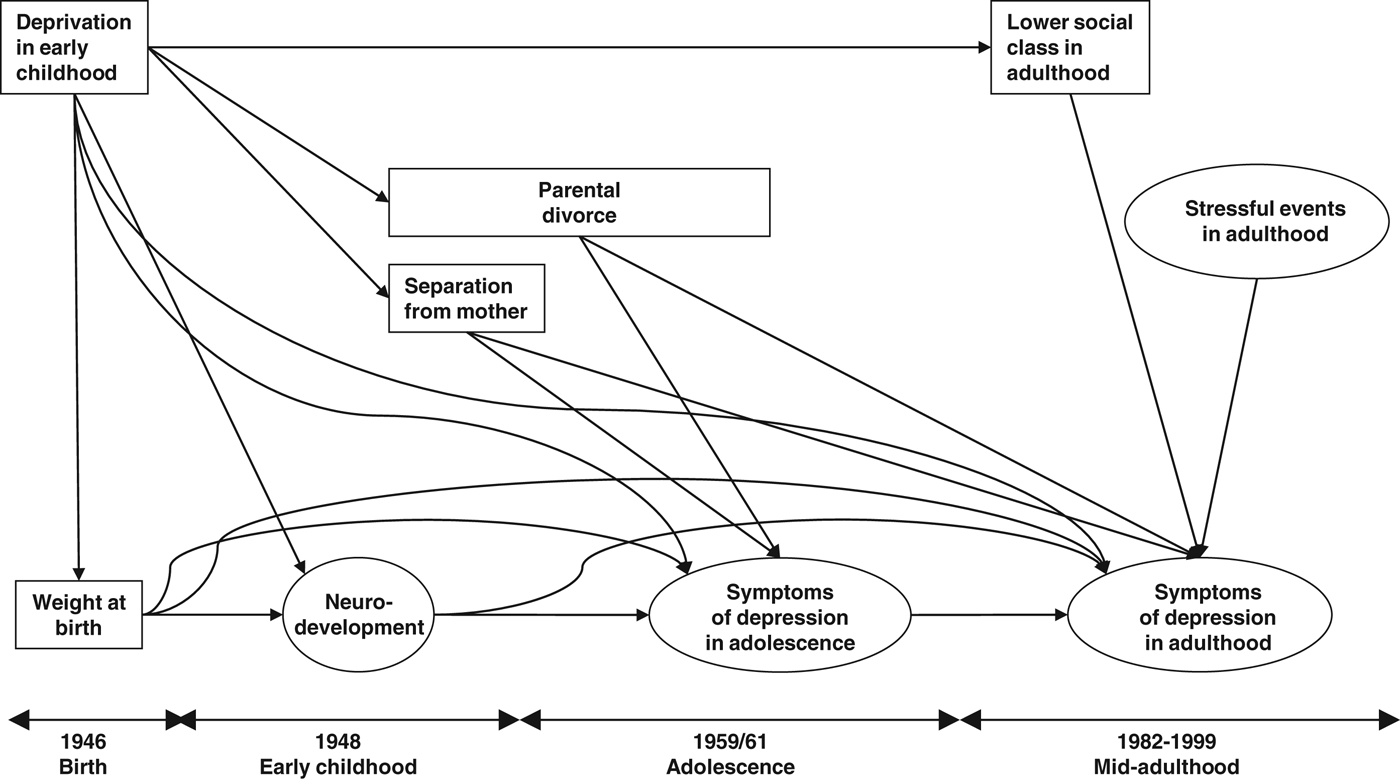
The proposed structural model, outlining the candidate mechanisms linking development to affective risk, included direct pathways from all childhood factors to symptoms of depression in adolescence and adulthood (see Fig. 1). In addition, we included pathways from early childhood deprivation to early development, acute stress in childhood and low SES in adulthood to examine indirect pathways from early deprivation to depressive symptoms in adolescence and adulthood. Similarly, a path from birthweight to neurodevelopment was included. Finally, a path from adolescent depressive symptoms to adult depressive symptoms was included to assess indirect pathways from childhood variables to adult mental health through adolescent mental health.
Proposed developmental model for symptoms of depression and anxiety across the life course.

This latent variable path analysis was implemented as a structural equation model in MPlus version 5.1 (Muthén & Muthén, Reference Muthén and Muthén1998–2007) using robust weighted least squares estimation, under a missing completely at random (MCAR) assumption for missing data. The sample included all individuals who had at least one assessment of symptoms of depression (n = 4627). Separate models were explored for males and females.
Although our focus was on direct and indirect pathways to symptoms of depression, and hence on the magnitude of the residuals that remained after estimation of the model, given the proposed pathways we also report model fit using several popular indices: the Tucker–Lewis index (TLI; Tucker & Lewis, Reference Tucker and Lewis1973) and the Root Mean Square Error of Approximation (RMSEA; Steiger & Lind, Reference Steiger and Lind1980). TLI values >0.96 are indicative of good model fit, as are RMSEA values <0.06. However, it is also important to consider the relative saturation of the model, which was necessary to operationalize and estimate the set of candidate effects within our SEM.
Results
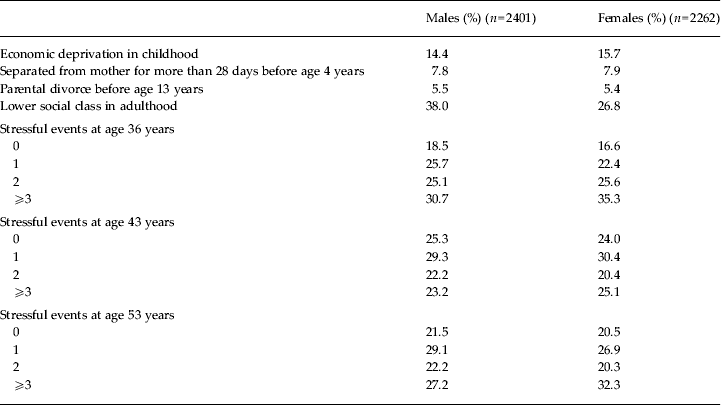
Table 1 shows the prevalence of acute and chronic stressors in childhood and adulthood. Economic deprivation in childhood affected approximately 15% of survey members. In adulthood, men were more likely than women to have lower SES. Acute stressful events were rare in childhood; however, approximately one quarter of survey members reported three or more stressful events in the previous 12 months at age 36, 43 or 53 years.
Prevalence of acute and chronic stressors in childhood and adulthood

Indices of model fit for the proposed structural equation model for females and males were very favourable, both having a TLI of 0.99 and an RMSEA of 0.017. In the remainder of the results we have focused our text to describe the paths in the model that were statistically reliable. Effect sizes can be gauged from the model estimates shown in the figures (standardized coefficients are shown) as these are in the metric of correlation coefficients.
Pathways to adolescent depression in girls
Lower birthweight and delay in reaching neurodevelopmental milestones were both associated (direct effects) with adolescent depression in females (Fig. 2). There was also an indirect pathway from birthweight to adolescent depression through neurodevelopment, whereby lower birthweight girls were more likely to reach milestones later and consequently were more likely to become depressed in adolescence (z = −2.2, p = 0.03). Neither economic deprivation nor acute stressors in childhood were associated with adolescent depression. However, there was an indirect effect of economic deprivation in childhood on adolescent depression whereby children in economically deprived families were more likely to reach developmental milestones earlier, dampening the direct effect of economic deprivation on their mental health in adolescence (z = −03, p = 0.02).
Significant pathways to symptoms of depression anxiety among 2226 females. Values are standardized path coefficients.

Pathways to adolescent depression in boys
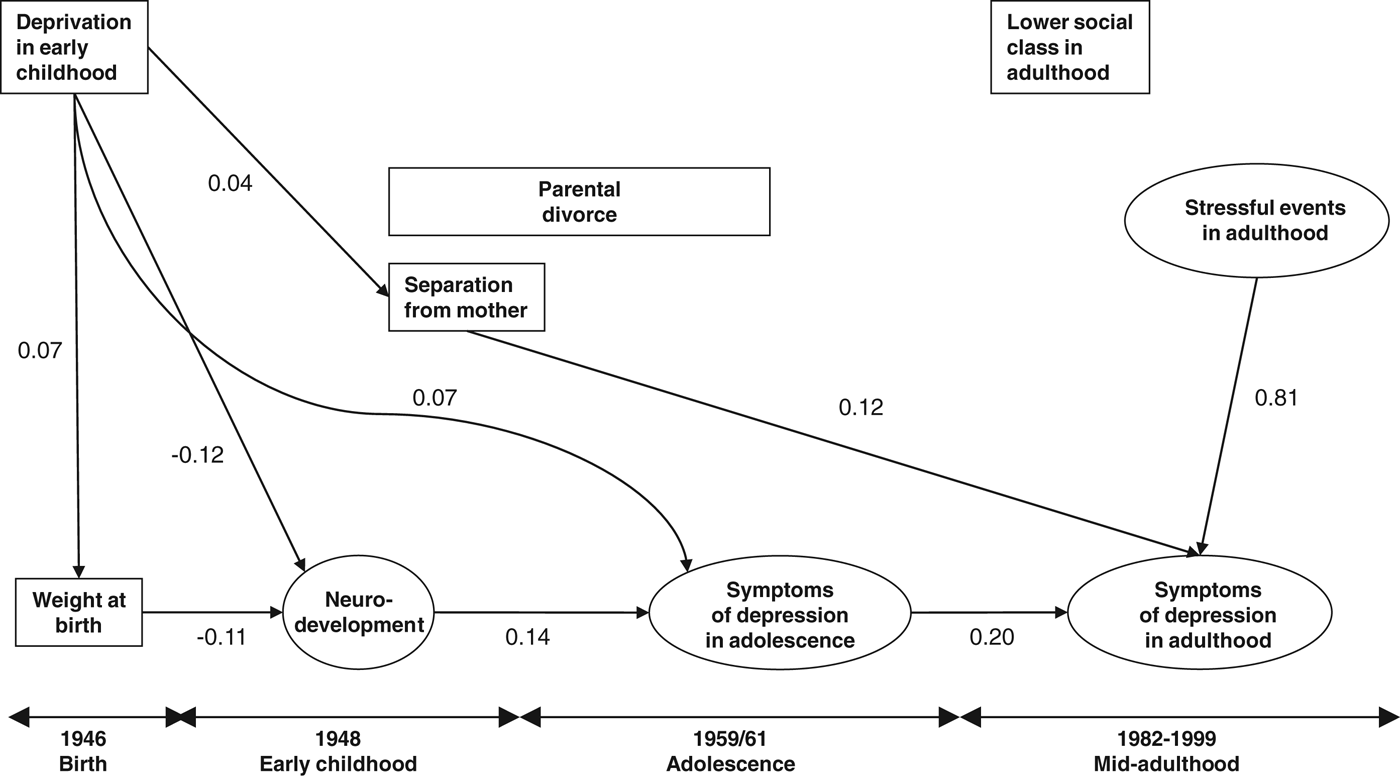
Delay in reaching neurodevelopmental (ND) milestones was directly associated with adolescent depression in males (Fig. 3). Birthweight (BW) was not directly associated with adolescent depression, but there was a significant indirect pathway whereby boys born lighter were more likely to reach milestones later and consequently were more likely to become depressed in adolescence (z = −2.6, p = 0.01). Economic deprivation (ED) in childhood was directly associated with adolescent depression, but acute childhood stressors were not. Similar to females, there were also indirect effects of economic deprivation in childhood on adolescent depression (CD) whereby children in economically deprived families were more likely to be larger at birth and reached developmental milestones earlier, dampening the direct effect of economic deprivation on their mental health in adolescence (z = −2.6, p = 0.008 for ED-ND-CD; z = −2.1, p = 0.04 for ED-BW-ND-CD).
Significant pathways to symptoms of depression anxiety among 2401 males. Values are standardized path coefficients.

Pathways to depression in adult females
Adolescent depression was directly associated with depression in adult females (Fig. 2). Birthweight and neurodevelopment were not directly associated with adult depression but indirect pathways through adolescent depression were identified (z = −2.4, p = 0.01 for BW-CD-AD; z = −2.0, p = 0.04 for BW-ND-CD-AD; z = 2.2, p = 0.03 for ND-CD-AD). Stressors were strongly associated with depression in adult females. Parental divorce in childhood, low SES in adulthood and acute stressful events in adulthood were directly associated with depression in adult females. In addition, economic deprivation had significant indirect effects on depression in adulthood by increasing the likelihood of parental divorce in childhood and lower SES in adulthood.
Pathways to depression in adult males
Adolescent depression was also directly associated with depression in adulthood for males (Fig. 3). Birthweight and neurodevelopment were not directly associated with depression in adult males but the indirect pathway from birthweight to neurodevelopment through adolescent depression was also present, as in females (z = −2.3, p = 0.02), as was the pathway from neurodevelopment to adolescent depression to depression in adulthood (z = 2.5, p = 0.01). Acute stressful events in adulthood were also strongly associated with depression in adult males. Being separated from the mother early in childhood was also directly associated with depression in adult males. Economic deprivation in childhood had an indirect effect on depression in adulthood, which involved dampening the effect of neurodevelopment on adolescent depression and subsequent adult depression (z = −2.3, p = 0.02).
Discussion
The findings and related research
This study used data from 4627 members of a birth cohort to identify several pathways to symptoms of depression in adulthood. Notably, we found that indicators of deprivation early in life, both economic and biological, were not directly associated with depression in adulthood but were associated with intermediate risk factors that subsequently increase the risk of depression later in life. Crowding in the home in the first years of life, a marker of economic deprivation, was associated with both increased risk of acute stressful events in childhood and economic deprivation in adulthood, which were subsequently associated with a greater risk of adult depression. Indeed, others have also observed that the association between low SES in childhood and depression in adulthood may be mediated by SES in adulthood (Stansfeld et al. Reference Stansfeld, Clark, Rodgers, Caldwell and Power2008b ).
Surprisingly, our results suggest that more household crowding is related to faster neurological development (i.e. earlier attainment of developmental milestones). Overcrowding has been linked to lower IQ scores (Wachs, Reference Wachs1978) and less complex verbal communication with parents (Evans et al. Reference Evans, Maxwell and Hart1999), and psychological development, particularly in boys (Wachs, Reference Wachs1979), although other research suggests that physical development is not strongly associated with overcrowding (Booth & Johnson, Reference Booth and Johnson1975; Gulliford et al. Reference Gulliford, Chinn and Rona1991). One possible explanation for our results is that our measure of overcrowding does not reflect the extent to which crowding may interfere with versus enable children's development, particularly with respect to physical development. More crowded homes are often those with more siblings, and young children with more siblings may reach developmental milestones at an earlier age, as these children potentially have more opportunities for imitation of older siblings' behaviours. In accordance with the ideas of certain theorists (Piaget, Reference Piaget1926; Festinger, Reference Festinger1954), toddlers have indeed been shown to preferentially imitate the behaviours of other children over those of parents (Ryalls et al. Reference Ryalls, Gul and Ryalls2000).
LBW, a marker of prenatal adversity, was not directly associated with depression in adulthood. It was, however, associated with development delay in infancy, which was associated with adolescent depression and a subsequent increased risk of depression in adulthood. This suggests that the influence of impaired development on lifelong mental health is apparent by adolescence, as has been observed in other birth cohorts (Jaffee et al. Reference Jaffee, Moffitt, Caspi, Fombonne, Poulton and Martin2002).
Consistent with the majority of other epidemiological studies, we found a direct association between LBW and adolescent depressive symptoms in girls, but not boys (Hack et al. Reference Hack, Youngstrom, Cartar, Schluchter, Taylor, Flannery, Klein and Borawski2004; Alati et al. Reference Alati, Lawlor, Mamun, Williams, Najman, O'Callaghan and Bor2007; Costello et al. Reference Costello, Worthman, Erkanli and Angold2007). These findings are supported by laboratory evidence showing that female offspring of prenatally stressed rats have an increased response to stress compared to male offspring, suggesting that the developing hypothalamic–pituitary–adrenal (HPA) axis of female fetuses may have an increased sensitivity to maternal circulating stress hormones (Weinstock, Reference Weinstock2007). Of note, we found an indirect significant association between LBW and adolescent depressive symptoms among males, whereby males of lower birthweights were at an increased risk of delay in reaching developmental milestones; those with delay in reaching milestones were at an increased risk of adolescent depression. Numerous studies have shown that prenatal maternal stress impairs learning and memory to a greater extent in the male rat brain than the female rat brain (Weinstock, Reference Weinstock2007); epidemiological studies have shown an association between impaired cognitive ability early in life and later symptoms of depression (Colman et al. Reference Colman, Ploubidis, Wadsworth, Jones and Croudace2007a ; Gale et al. Reference Gale, Batty, Cooper and Deary2009; Koenen et al. Reference Koenen, Moffitt, Roberts, Martin, Kubzansky, Harrington, Poulton and Caspi2009). This pathway from prenatal stress to impaired cognitive development to adolescent depression may explain why some studies show a stronger association between LBW and depression among males (Thompson et al. Reference Thompson, Syddall, Rodin, Osmond and Barker2001; Colman et al. Reference Colman, Ataullahjan, Naicker and Van Lieshout2012).
An important finding from this study is the relative influence on adult depression of stressful events in adulthood compared to childhood factors. Although much evidence points to the long-term effect of adolescent mental disorder on adult mental health (Kim-Cohen et al. Reference Kim-Cohen, Caspi, Moffitt, Harrington, Milne and Poulton2003; Rutter et al. Reference Rutter, Kim-Cohen and Maughan2006; Colman et al. Reference Colman, Wadsworth, Croudace and Jones2007b ), our findings suggest that stressful events in adulthood may make a larger contribution towards depression than adolescent mental disorder. This may partially be due to differences in the measurement of stressful events in the current study. Indeed, stressful events in childhood included two specific events (separation from the mother, parent divorce) whereas the measure in adulthood included several stressful events. However, studies of a British cohort followed from birth to age 45 have reported more modest effects of childhood disorders on adult depression (Clark et al. Reference Clark, Rodgers, Caldwell, Power and Stansfeld2007), in addition to a magnitude of effect of childhood disorder comparable to stress in the adult workplace (Stansfeld et al. Reference Stansfeld, Clark, Caldwell, Rodgers and Power2008a ). These findings, along with ours, suggest that the influence of childhood adversity may be strong for a subset of adults with depression and may be more evident early in adulthood; however, as cohorts age and some adults experience a first onset of depression, it is increasingly likely that stress in adult life is a contributing factor and less likely that the depressive episode can be traced to childhood. Nevertheless, even if the effect is smaller than previously reported, it is clear that deprivation, stress and impaired development in early life have important effects on the life course of mental health problems. Moreover, we only examined two acute stressors in childhood, which may have contributed to a potential underestimation of direct or indirect influence of these stressors on adult depression.
Similarly, it is of interest that acute stressful events in childhood (parental divorce or long separation from the mother) were not associated with adolescent depressive symptoms but were instead directly associated with adult symptoms. These findings suggest that the accumulation of stressors across the life course, or their consequences, may have an important influence on depression in adulthood, supporting other research showing that increased numbers of adverse factors in childhood and adolescence increase the risk of depression in adulthood (Sadowski et al. Reference Sadowski, Ugarte, Kolvin, Kaplan and Barnes1999; Clark et al. Reference Clark, Caldwell, Power and Stansfeld2010). However, this finding was only true for males. In support of this finding, some research suggests that stressors such as parental divorce may only increase the risk of depression and suicide attempts for females (Cooney & Smith, Reference Cooney and Smith1996; Lizardi et al. Reference Lizardi, Thompson, Keyes and Hasin2009; Wintre et al. Reference Wintre, Ames, Pancer, Pratt, Polivy, Birnie-Lefcovitch and Adams2011).
Methodological considerations
This study has some limitations that deserve mention. We only focused on a limited number of factors associated with depression; however, the aetiology of depression is multifactorial in nature, including many factors that are present in early life (Colman & Ataullahjan, Reference Colman and Ataullahjan2010), and this may influence the pathways observed in this study. For example, we considered neither personality traits nor child temperament, and there are numerous intermediate health risks that are associated with depression such as poor childhood physical health, substance abuse, lower cognitive ability and childhood abuse, all of which are associated with socio-economic deprivation early in life (Melchior et al. Reference Melchior, Moffitt, Milne, Poulton and Caspi2007). Although our analysis may be improved by adding further factors such as these, we sought to focus on selected key variables to present an initial but comprehensive model of some candidate pathways. Similarly, prospective data are not available in the NSHD on some potentially relevant factors, such as maternal prenatal smoking, maternal depression and family history of depression, that may be associated with both early development and psychopathology.
Our measures were psychometric latent factors/dimensions and we did not use a clinically validated assessment of depression such as a categorical diagnosis. However, elevated symptoms of depression and anxiety have been shown to be associated with previous and future severe disorder (Kessler et al. Reference Kessler, Merikangas, Berglund, Eaton, Koretz and Walters2003; Merikangas et al. Reference Merikangas, Zhang, Avenevoli, Acharyya, Neuenschwander and Angst2003; Fergusson et al. Reference Fergusson, Horwood, Ridder and Beautrais2005). Moreover, questionnaire studies such as ours, which use psychiatric screens or symptom severity measures that are able to capture important variation in illness (or illness risk) on a continuous dimension, have reported associations between LBW and symptoms of depression and anxiety (Cheung, Reference Cheung2002; Cheung et al. Reference Cheung, Khoo, Karlberg and Machin2002) whereas, importantly, studies that have used categorical classifications have not (Osler et al. Reference Osler, Nordentoft and Andersen2005). Consequently, we consider the use of scales that measure a wider range of severity of symptoms on a continuous scale is a strength, as it maximizes power in SEM. Similarly, the only available rating of adolescent depressive symptoms was teacher rated. It is possible that the results could have differed with a self-report measure. However, studies using the Rutter B2 scale (Rutter, Reference Rutter1967), which is similar in method and items to our measure, found that teachers identified mental disorder more accurately than parents or children themselves (Kresanov et al. Reference Kresanov, Tuominen, Piha and Almqvist1998), and also predicted future mental disorder more accurately than parents or children themselves (Sourander et al. Reference Sourander, MultimAki, Santalahti, Parkkola, Haavisto, Helenius, Nikolakaros, Piha, Tamminen, Moilanen, Kumpulainen, Aronen, Linna, Puura and Almqvist2004).
A pathway from depressive symptoms in adolescence to stressful events in adulthood was not included in our proposed model. However, previous episodes of depression have been shown to predict subsequent stressful life events, and also subsequent major depression (Kendler et al. Reference Kendler, Gardner and Prescott2003). Consequently, we conducted a post-hoc analysis that examined a model that included a direct path from adolescent depressive symptoms to adult stressful events. This path was not statistically significant and therefore not retained in the model.
Lastly, our decision to stratify analyses by sex was based on the evidence for sex-specific mechanisms in the development of depression (Kuehner, Reference Kuehner2003; Hammen, Reference Hammen2005; Costello et al. Reference Costello, Worthman, Erkanli and Angold2007; Weinstock, Reference Weinstock2007). However, some of the sex differences across models may be attributable to the reduced sample size (compared to the pooled sample) and a resulting lack of power to detect significant pathways for each sex-specific group.
These limitations, however, are offset by some notable study strengths. We used a large population-based sample and data collections that covered the lifespan well into mid-adulthood on relevant aetiological prognostic factors. We were able to use several indicators of acute and chronic stress, and prenatal and infant development, as predictors or variables on the pathway to symptoms of depression in adolescence and adulthood. These strengths underscore the important findings of our structural model, which suggest that depression in adulthood is influenced by an accumulation of stressors across the life course, including many that originate in the first years of life.
Acknowledgements
This work was supported by the Alberta Heritage Foundation for Medical Research (grant no. 200800315). This research was undertaken, in part, with funding from the Canada Research Chairs programme for Dr Colman. Professor Jones is supported by a National Institute for Health Research (NIHR) programme grant (1335-1616) and by the Wellcome Trust (RZ1008 and RZRY 891076); the work is aligned to the NIHR Collaboration for Leadership in Applied Health Research and Care (CLAHRC) for Cambridge and Peterborough. Professor Croudace was supported in part by the Wellcome Trust (grant no. 074296/Z/04/Z).
Declaration of Interest
None.