Introduction
Poultry nutrition has been facing many challenges, especially precisely matching the feed formulation to most efficiently meet the animal's nutritional requirements. Several balanced diets can be formulated according to the requirements of birds by different researchers (Alagawany et al., Reference ALAGAWANY, EL-HINDAWY and ATTIA2014a; Reda et al., Reference REDA, ASHOUR, ALAGAWANY and ABD EL- HACK2015; Ravindran, Reference RAVINDRAN2016). Several factors, such as feed type, energy requirement, source of nutrients, animal health, age, species, animal type, weather, environment, and feed digestion mechanisms have to be taken into consideration. The accurate measurement of the digestibility of nutrients in feed ingredients and bioavailability in the body is a key issue in feed formulation. Poultry diets have mainly been calculated and formulated on a total amino acid (TAA) basis (Alagawany et al., Reference ALAGAWANY, EL-HINDAWY, ALI and SOLIMAN2011; Alagawany and Mahrose, Reference ALAGAWANY and MAHROSE2014). Recently, it has been reported that formulation of poultry diets on a basis of digestible amino acid (DAA) may be more precise, lowering the diet costs and feed safety margins as well as reducing excreted nitrogen and ammonia emission in poultry houses and improving the public health of both animals and humans (Applegate et al., Reference APPLEGATE, ADEDOKUN, ADEOLA, PARSONS and LILBURN2008; Alagawany et al., Reference ALAGAWANY, ABD EL-HACK, LAUDADIO and TUFARELLI2014b; Rutherfurd et al., Reference RUTHERFURD, CUI, GORONCY and MOUGHAN2015). Numerous reports have revealed the benefits of formulating on DAA basis in comparison with TAA basis. Rostagno et al. (Reference ROSTAGNO, PUPA and PACK1995) suggested that formulating diets on DAA gives a better prediction of protein quality in diets and growth performance of broiler chickens than TAA.
Protein is an important nutrient component of the poultry feed and plays a vital role in bird health and other nutrients digestibility, as well as productive performance (Alagawany et al., Reference ALAGAWANY, ABD EL-HACK, LAUDADIO and TUFARELLI2014b; Reference ALAGAWANY, ABD EL-HACK, ARIF and ASHOUR2016). Many researchers have focused on endogenous amino acid (EAA) secretion and production as well as effects of nutrients digestibility (Stein et al., Reference STEIN, SEVE, FULLER, MOUGHAN and DE LANGE2007a; Adeola et al., Reference ADEOLA, COWIESON and AJUWON2016). Nevertheless, the accurate estimation of EAA is a difficult task, since the endogenous amino acids losses (EAAL) are influenced by both endogenous and exogenous protein sources. Endogenous protein secretion is responsible for animal production and losses (Kong and Adeola, Reference KONG and ADEOLA2013). If amino acids are balanced in the diets, the nutrient digestibility and animal productivity would be increased; if not, bird performance will suffer and the EAAL will increase (Adedokun et al., Reference ADEDOKUN, ADEOLA, PARSONS, LILBURN and APPLEGATE2008; Reference ADEDOKUN, ADEOLA, PARSONS, LILBURN and APPLEGATE2011). The origin of EAA can be from digestive secretion such as saliva, bile, gastric and pancreatic secretions, mucoprotein, sloughed intestinal epithelial cells, serum albumin and amides (Nyachoti et al., Reference NYACHOTI, DE LANGE, MCBRIDE and SCHULZE1997; Ravindran and Bryden, Reference RAVINDRAN and BRYDEN1999). EAAL can be divided into two major fractions, basal and specific (Jansman et al., Reference JANSMAN, SMINK, VAN LEEUWEN and RADEMACHER2002; Stein et al., Reference STEIN, SEVE, FULLER, MOUGHAN and DE LANGE2007a). The basal EAAL is defined as the loss of amino acids in the gastrointestinal tract of birds, which is related to the dry matter intake but unrelated to diet composition (Jansman et al., Reference JANSMAN, SMINK, VAN LEEUWEN and RADEMACHER2002). The diet-dependent or specific EAAL is defined as the part of endogenous amino acids, which is above the basal EAAL that are induced by the ingestion of diets with a specific composition, like protein amount, anti-nutritional factors, or various fibre types (Cowieson and Ravindran, Reference COWIESON and RAVINDRAN2007). The high level of dietary protein can increase the specific EAAL, because secretion of digestive enzymes in gastrointestinal tract will be increased in response to the high protein intake (Adedokun et al., Reference ADEDOKUN, ADEOLA, PARSONS, LILBURN and APPLEGATE2008). Moreover, content and type of dietary fibre can also affect the specific EAAL by altering the rate of passage of digesta and viscosity in the gut (Mosenthin et al., Reference MOSENTHIN, SAUER, LIEN and DE LANGE1993). Likewise, anti-nutritional agents such as phytic acid can also increase specific EAAL (Cowieson and Ravindran, Reference COWIESON and RAVINDRAN2007). The digestion coefficient of ileal amino acids is determined by regression method for both basal and specific EAAL (Souffrant et al., Reference SOUFFRANT, DARCY, VRILLON, CORRING, LAPLACE, KOHLER, GEBHARDT and RERAT1986; Rodehutscord et al., Reference RODEHUTSCORD, KAPOCIUS, TIMMLER and DIECKMANN2004; Adedokun et al., Reference ADEDOKUN, PARSONS, LILBURN, ADEOLA and APPLEGATE2007c; Kluth and Rodehutscord, 2009).
Intestinal mucin can also affect EAAL. Mucin is the main structural component of the mucus layer that functions as a physical barrier to protect the epithelium against toxins, viruses, and pathogenic bacteria (Smirnov et al., 2004). Different diets also affect the amino acid digestibility. Cross-species research (rats, pigs, broiler chickens, laying hens and roosters) has been conducted by various procedures to find out endogenous amino acids in digesta of ileum (Ravindran and Hendriks, Reference RAVINDRAN and HENDRIKS2004; Adedokun et al., Reference ADEDOKUN, LILBURN, PARSONS, ADEOLA and APPLEGATE2007a). The digestibility and bioavailability of AA in various feedstuffs have also been discussed by many researchers (Jansman et al., Reference JANSMAN, SMINK, VAN LEEUWEN and RADEMACHER2002; Stein et al., Reference STEIN, PEDERSEN, WIRT and BOHLKE2005; Alagawany et al., Reference ALAGAWANY, EL-HINDAWY and ATTIA2014a).
The present review introduces the 15N-leucine single injection technique for evaluation of ileal EAAL, digestibility of diets, procedure assessments in poultry, as well as the estimation of endogenous losses which are mainly influenced by dietary protein quality and AA profile, including the status of dietary AA balance. A sound methodology for determining EAAL is necessary for calculating true AA digestibility. However, it is still unknown, due to the limitations of the methods, if the recently developed 15N-Leucine single-injection method can overcome the limitations of EAAL estimation in broilers (Xu et al., Reference XU, YAO, WANG, MENG, LUO, WU and YANG2011).
Leucine importance and health benefits
Leucine is an essential branched-chain amino acids (BCAA) that cannot be synthesized by the body and is required in feed. Because leucine has the ability to protect body from iron shortage, it is called a buffer protein. Leucine is important to produce sterols, substances that are similar to compounds like cholesterol and are found in adipose and muscles tissues and the liver. It could be used as a supplementation in diet for enhancing performance and for muscle building because of its ability to delay the muscle tissues deterioration through significant increasing of muscle protein production (Zelig and Rigassio Radler, Reference ZELIG and RIGASSIO RADLER2012). Leucine is also a ketogenic amino acid and can be a source of energy, particularly during extreme physical activities and other intense performance. It protects the body from easily getting tired during exercise and adjusts the blood glucose level (Wang et al., Reference WANG, KHONDOWE, CHEN, YU, SHU, ZHU, WANG, GAO, XI, ZHANG and JIANG2012).
According to the aforementioned features of leucine, athletes usually use it as dietary supplement for body building to enhance their endurance and stamina. Also, leucine is highly recommended as a dietary supplementation for patients who were subjected to serious trauma or extreme muscle pain or recovering from major surgical procedures (Izumi et al., Reference IZUMI, KAWAMURA, UEDA and BUNGO2004). Receiving an overdose of leucine can be a reason for Maple Syrup Urine Disease (MSUD) which is a disorder described by deficiency in ketohydrogenase complex which can cause the accumulation of valine, isoleucine and leucine in urine and blood resulting in neurologic disorders, delirium and even death.
There is evidence that several non-synthetic additives can enhance optimal nutrition, although the diet could be balanced with high quality and sufficient quantity of nutrients (Denbow, Reference DENBOW1985). There is a lack of articles discussing the topic of nutritional additives and their effect on the immune system. Using amino acids and proteins for supplementation merits special attention because these molecules are essential for participating in the whole-body energy homeostasis, fuel and antioxidant provision, development, growth, immune responses and recovery. The main targets for immuno-nutrition could involve key metabolites for immune cells, the cytokine release and inflammatory response, production chaperone proteins such as redox balance (including glutathione, GSH metabolism), protection of skeletal muscle mass and the heat shock proteins (HSPs) (Cruzat et al., Reference CRUZAT, KRAUSE and NEWSHOLME2014).
Leucine, tryptophan, arginine, and glutamate are considered bioactive amino acids. These amino acids participate in several essential and biochemical reactions in the body (Blouet et al., Reference BLOUET, JO, LI and SCHWARTZ2009). Leucine enters the brain at a higher rate than other amino acids, and it is the preferred activator of the amino-acid-sensitive mTORC1 pathway (Proud, Reference PROUD2004). Intracerebroventricular (ICV) injection of leucine caused a depression in food consumption in mammals, through elevating hypothalamic mTOR signalling (Cota et al., Reference COTA, PROULX, SMITH, KOZMA, THOMAS, WOODS and SEELEY2006). Moreover, it was theorised that enriching a diet deficient in valine with extra leucine could cause a decline in feed consumption (Gloaguen et al., Reference GLOAGUEN, LE FLOC'H, CORRENT, PRIMOT and VAN MILGEN2012). Conversely, leucine central administration statistically activated feed consumption in newly hatched chicks (Izumi et al., Reference IZUMI, KAWAMURA, UEDA and BUNGO2004). However, the impact of ICV injection of leucine on anorexigenic neuropeptide and hypothalamic orexigenic needs to be explained.
The results of the aforementioned study were in line with an investigation performed on leghorn chicks (Izumi et al., Reference IZUMI, KAWAMURA, UEDA and BUNGO2004), in which ICV injection of 200μg leucine activated the behaviour of feeding. Izumi et al. (Reference IZUMI, KAWAMURA, UEDA and BUNGO2004) suggested that leucine metabolite improves chicks feed consumption. This is because leucine was transaminase to giveα-ketoisocaproic acid and glutamate. In this time, α-ketoisocaproic acid was converted to produce acetoacetyl-CoA in the brain (Yudkoff, Reference YUDKOFF1997). On the other hand, ICV injection of α-ketoisocaproate had no impact on food consumption (Izumi et al., Reference IZUMI, KAWAMURA, UEDA and BUNGO2004). So, it was suggested that glutamate derived from the exogenous leucine activated the behaviour of feeding. Results of this study have concluded that glutamate ICV injection inhibited feed consumption in the broilers. Thus, it was still unclear whether a metabolite of leucine improves feed consumption or not, and if not, what about leucine's ability to modulate this feeding impact in broilers chicks. However, it was still probable that leucine or its metabolite influences through the stimulation of AMPK-dependent mechanisms which leads to the inhibition of mTOR activity and consequently an activation of feeding behaviour in broilers.
15N-Leucine single injection method and dilution method
Isotope techniques are used progressively more to distinguish EAAL in monogastric animals. It was first by Souffrant et al. (Reference SOUFFRANT, DARCY, VRILLON, CORRING, LAPLACE, KOHLER, GEBHARDT and RERAT1986) to introduce 15N-dilution techniques for estimating real digestibility of endogenous protein (Souffrant et al., Reference SOUFFRANT, DARCY, VRILLON, CORRING, LAPLACE, KOHLER, GEBHARDT and RERAT1986; De Lange et al., Reference DE LANGE, SOUFFRANT and SAUER1990). 15N-isotopes dilution techniques are the most valid method for determining dietary and endogenous protein in distal ileum of animals. 15N-enrichment excess in endogenous protein labelled by 15N-leucine dilution infusion, endogenous protein and total protein determined in digesta. The 15N-enrichment excess of N in trichloro-acetic acid (TCA) soluble fraction increased in blood serum. 15N-leucine labelled N inside the blood serum, then after transamination spread to other AA, and its increasing representatively of isotopes work as a marker in endogenous amino acid EAA (De Lange et al., Reference DE LANGE, SAUER, SOUFFRANT and LIEN1992). 15N-Leucine considered as a whole EAA pool, and all secretion uniformly labelled, then 15N-enrichments easily match the precursor pool of free AA synthesis in blood serum (Gabert et al., Reference GABERT, CANIBE, JØRGENSEN, EGGUM and SAUER1997; Lien et al., Reference LIEN, SAUER and FENTON1997b). During dilution techniques some scientists including Lien et al. (Reference LIEN, SAUER and DUGAN1997a) and Hess et al. (Reference HESS, THIBAULT and SÈVE1998) suspected that the methodology of dilution techniques influenced ileal endogenous amino acid losses and N estimation.
There is a need to introduce new methods for determining endogenous AA losses. Recently 15N-Leucine single muscular injection has been introduced in broiler chickens as an easy method to overcome the limitation in determining EAAL and true amino acid digestibility, as well as N losses (Xu et al., Reference XU, YAO, WANG, MENG, LUO, WU and YANG2011). 15N-Leucine injection method is novel and entirely effective as isotope dilution and other complicated and time-consuming methods. 15N-infusion method can be widely used for determination of EAAL (Makkar, Reference MAKKAR2008).
Evaluation of ileal endogenous amino acid (IEAA) flow
apparent, true and standardised AA digestibility
Apparent AA digestibility (AID) depends on the differences between amino acid intake and ileal amino acid outflow as the following equation:
AID (%) = [(AA intake-ileal AA outflow)/AA intake] × 100
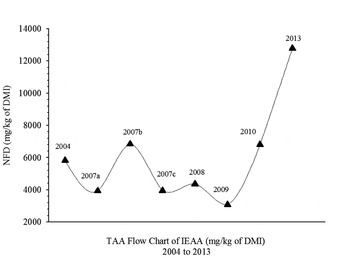
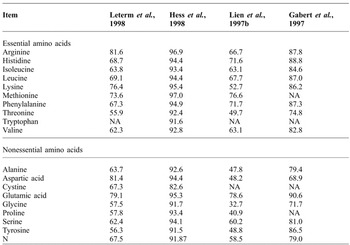
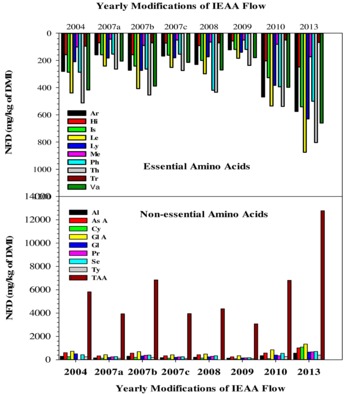
The modification was conducted by several researchers to measure the accurate IEAA flow as shown in Figure 1 . Apparent ileal digestibility of broilers was affected by many factors such as feed additives, health status, growth promoters and supplements (Stein et al., Reference STEIN, PEDERSEN, WIRT and BOHLKE2005; Liu et al., Reference LIU, SHEN, ZHAO, WANG, YAO, GONG and YANG2015). Table 1 shows the apparent and IEAA flow determined by using 15N dilution techniques by different scientists, the obtained results slightly dissimilar, the results of Lien et al. (Reference LIEN, SAUER and DUGAN1997a) and Leterme et al. (Reference LETERME, SEVE and THEWIS1998) are lower than those of Gabert et al. (Reference GABERT, CANIBE, JØRGENSEN, EGGUM and SAUER1997), Hess et al. (Reference HESS, THIBAULT and SÈVE1998) in apparent digestibility. Figure 2 shows the flow of ileal EAA, how it is calculated, and becomes a part of GIT. There is need, however, for method consistency for there to be further improvements.
Total amino acid chart by different scientists yearly of IEAA flows in poultry.
NFD, Nitrogen free diet; DMI, dry matter intake; TAA, Total amino acid; IEAA, Ileal endogenous amino acid.

Apparent (AD) and ileal endogenous amino acid (IEAA) flow (mg/kg of DMI) determined by using 15N dilution techniques by different scientists.
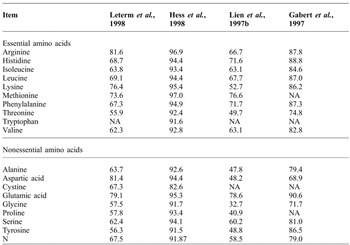
1NA: data not available
Ileal endogenous amino acid (EAA) flow yearly modification by (mg/kg of DMI) in poultry.
NFD, Nitrogen free diet; DMI, dry matter intake; IEAA, Ileal endogenous amino acid, Ar, Arginine; Hi, Histidine; Is, Isoleucine; Le, Leucine; Ly, Lysine; Me, Methionine; Ph, Phenylalanine; Th, Threonine; Tr, Tryptophan; Va, Valine; Al, Alanine; As A, Aspartic acid; Cy, Cystine; Gl A, Glutamic acid; Gl, Glycine; Pr, Proline; Se, serine; Ty, Tyrosine; TAA, Total Amino Acids.

True ileal digestibility represents the quantity of AA that leaves the GIT earlier to the distal part of ileum, and it does not include ileal EAAL, following equation is used to measure (TID):
TID (%) = [(AA intake - (ileal AA outflow – total IAAend) ) /AA intake] × 100
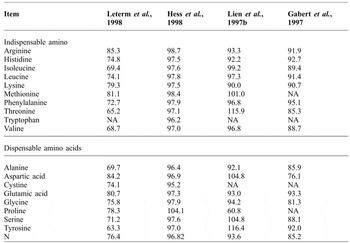
True ileal AA values in feedstuffs are not available frequently, as it is difficult to measure exactly the total ileal EAAL. The total ileal EAAL are subtracting ileal outflow, meaning that true ileal digestibility do not differentiate among specific ileal EAAL and different feed levels. The most results of true ileal digestibility of some amino acids obtained by some researchers (Lien et al., Reference LIEN, SAUER and FENTON1997b; Gabert et al., Reference GABERT, CANIBE, JØRGENSEN, EGGUM and SAUER1997; Hess et al., Reference HESS, THIBAULT and SÈVE1998) are similar ( Table 2 ). The findings obtained by Leterme et al. (Reference LETERME, SEVE and THEWIS1998) are also similar, where it can be seen that the 15N-isotopes dilution method was effective but needs consistency for improvement.
The standardised ileal AA digestibility is calculated by the following equation:
SID (%) = [(AA intake - (ileal AA outflow – basal IAAend)) / AA intake] × 100
The technique of standardised ileal AA digestibility (SIAAD) is widely used to determine AA digestibility. Formulating poultry diets using SIAAD values of different feedstuffs may make poultry production more cost effective and mitigate the environmental emissions by ammonia at the poultry farm (Ullah et al., Reference ULLAH, AHMED, NISA and SARWAR2016).
True ileal digestibility of some amino acids (mg/kg of DMI) determined by 15N dilution techniques.
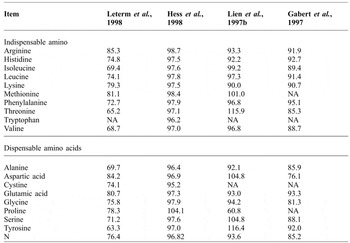
1NA: data not available
basal and specific ileal endogenous amino acid losses
This method is based on the physical characteristics variations of nitrogenous parts of digesta and separation of small peptides and dietary free AA from undigested endogenous proteins which depended on the molecular weights (Moter and stein, Reference MOTER and STEIN2004). Various techniques are used to measure basal ileal EAAL such as NFD and regression method. There are advantages and limitations of all these methods and variable estimate yields of ileal EAAL. Specific ileal EAAL represent the losses above that of the basal ileal EAAL, which can be caused by feed ingredients selections such as type of fibres or any anti-nutritive factors (ANFs). Specific and basal ileal EAAL may be estimated by using the homoarginine, isotope dilution, and isotope single injection techniques. Specific ileal EAAL are calculated by subtracting basal EAAL from total ileal EAAL. In addition, the in vitro techniques also provide results of ileal EAAL for complete diets, specific ingredients, and functions determined by digestibility of DM (Boisen and Fernandez, Reference BOISEN and FERNANDEZ1995; Hermann et al., Reference HERMANN, MØLLER, GAMMELGAARD, HOHLWEG, MATTANOVICH, HANN and KOELLENSPERGER2016).
amino acids sources in ileal digesta
Ileal AA source in the digesta are calculated by subtracting the amount of AA outflow at the ileum by the ingested quantity of feed ingredients (Sauer and Ozimek, Reference SAUER and OZIMEK1986). The unabsorbed exogenous AA of dietary sources and endogenous origin AA contained in ileal digesta were referred ileal EAA. These EAA are represented by endogenously synthesized AA, the other AA containing compounds that are secreted by birds which cannot be digested or absorbed prior to the distal part of the ileum.
The measurement of all undigested AA in ileal digesta is determined by dietary AA supplementation and additional protein mixed in diets. Undigested dietary lysine has been determined in ileal digesta by homoarginine method (Moughan and Rutherfurd, Reference MOUGHAN and RUTHERFURD1990). The isotope dilution technique was introduced by De Lange et al. (Reference DE LANGE, SAUER, SOUFFRANT and LIEN1992), and isotope single injection technique was applied by Xu et al. (Reference XU, YAO, WANG, MENG, LUO, WU and YANG2011) to estimate the total amount of dietary AA in ileal content. Undigested dietary AA was estimated in ileal digesta by previous some in vitro trails (Boisen and Fernandez, Reference BOISEN and FERNANDEZ1995; Moughan and Rutherfurd, Reference MOUGHAN and RUTHERFURD2012).
Digestibility of feed ingredients
feed ingredients and amino acid digestibility
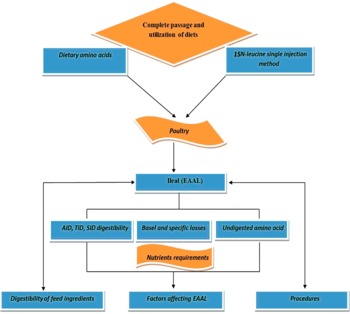
Digestibility assessments are used to measure differences among output and input and serves as a suitable marker for digestibility and bioavailability. Digestion includes the breakdown of large particles of food into the smaller molecules that can be absorbed in the GIT (Dierick et al., Reference DIERICK, VERVAEKE, DECUYPERE and HENDERICKX1986; Stein et al., Reference STEIN, FULLER, MOUGHAN, SÈVE, MOSENTHIN, JANSMAN, FERNÁNDEZ and DE LANGE2007b). The mechanical digestion is a means of physically breaking down large particles of food into smaller particles that are better accessed by digestive enzymes. Then, during chemical digestion, enzyme reactions take place to break down the individual molecules that the body can absorb (Cotten et al., Reference COTTEN, RAGLAND, THOMSON and ADEOLA2016). The Ileal EAA flow diagram and diet utilisation in poultry are shown in Figure 3 .
Anti-nutritive factors, such as lectins and saponins are protease inhibitors and affect the utilisation and digestion of AA (Gurnsey et al., Reference GURNSEY, JAMES and JOHNS1985). Heat processing can inactivating various anti-nutritional factors, and so it can be essential for maintaining the quality of dietary protein sources and increasing AA digestibility. However, the same heat treatment may also negatively affect dietary protein meals such as soybean meal, rape seed meal, and cotton seed meal (Dale, Reference DALE1996). By the measurement of EAA excretion, it has been shown that ANFs decreased endogenous and exogenous digestion of AA and enhanced the secretion of endogenous ones (Angkanaporn et al., Reference ANGKANAPORN, CHOCT, BRYDEN, ANNISON and ANNISON1994). The enzymes have an active role in AA digestibility against ANFs because factor's increased EAAL and decreased AA digestibility (Hess and Sève, Reference HESS and SÈVE1999).
Ileal endogenous amino acid (IEAA) flow diagram and diet utilisation in poultry.

ileal digestibility in poultry
Evaluation of amino acid digestibility in excreta is mostly criticised because intestinal microbiota can have a significant effect on the AA assayed, it was estimated that approximately 25% high protein was excreted (Parsons et al., Reference PARSONS, POTTER, BROWN, WILKINS and BLISS1982). Figures 1 and 2 show the results of IEAA flow and their inconsistency in methods because of variations in essential and non-essential AAs flow determined. In caecectomised birds, true AA digestibility was easily estimated from excreta after secretion of EAA into the gut (Sibbald, Reference SIBBALD1987; Ravindran and Bryden, Reference RAVINDRAN and BRYDEN1999). Absorption of dietary AA in the small intestine depends on the secretions of digestive enzymes, mucin, amides, immunoglobulins, sloughed epithelial cells, and cellular desquamations, which all mix together with the proteins of dietary origin in the intestinal lumen. The dietary protein source all amino acids are not entirely absorbed in animal digestive tract. It can be purely dependent on raw materials, variety, quality, type of dietary protein and the amino acid ratio that has been used.
Determination methods of EAAL
endogenous (EAAL) estimating on conventional method nitrogen free diet (NFD)
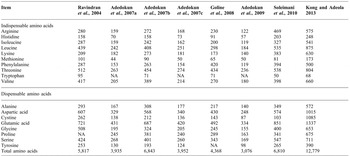
There are various procedures that have been used to measure and calculate the EAA flow and endogenous nitrogen in the distal ileum of the birds. The previous studies used conventional methods. The instability shows partially corrected ileal AA outflow of basal IEAAL, which is stimulated by the NFD components in experimental diets (Montagne et al., Reference MONTAGNE, PLUSKE and HAMPSON2003). The diets including protein-free diets or NFD assumed fully digestible by regression technique, homoarginine technique, and peptide alimentation technique. When birds are fed NFD, all compounds containing nitrogen in ileum content considered as endogenous origin (Donkoh et al., Reference DONKOH, MOUGHAN and MOREL1995). In Table 3 , the results of ileal EAAL flow obtained by Ravindran et al. (Reference RAVINDRAN, HEW, RAVINDRAN and BRYDEN2004), Golian et al. (2008) and Adedokun et al. (Reference ADEDOKUN, PARSONS, LILBURN, ADEOLA and APPLEGATE2007b) differed in all essential and non-essential AA by feeding NFD in poultry. Further, as reported by (Adedokun et al., Reference ADEDOKUN, UTTERBACK, PARSONS, ADEOLA, LILBURN and APPLEGATE2009; Reference ADEDOKUN, LILBURN, PARSONS, ADEOLA and APPLEGATE2007a; Reference ADEDOKUN, PARSONS, LILBURN, ADEOLA and APPLEGATE2007c) the accurate estimation of IEAA flow is similar in the previous research conducted by the same method of NFD. However results of Soleimani et al. (Reference SOLEIMANI, KASIM, ALIMON, MEIMANDIPOUR and ZULKIFLI2010) and Kong and Adeola (Reference KONG and ADEOLA2013) were higher than the range of other estimated quantity of ileal EAA flow in birds.
Ileal Endogenous Amino acid (IEAA) flow in broilers fed (NFD) nitrogen free diets (mg/kg of DMI) by different scientists.
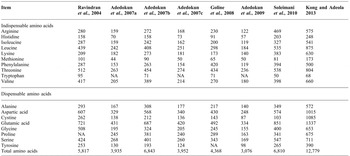
1NA: data not available
endogenous EAAL estimation on isotope dilution techniques
The techniques of isotope dilution 15N using labelled EAA and endogenous N losses have been determined (Huisman et al., Reference HUISMAN, HEINZ, VAN DER POEL, VAN LEEUWEN, SOUFFRANT and VERSTEGEN1992; Schulze et al., Reference SCHULZE, VAN LEEUWEN, VERSTEGEN, HUISMAN, SOUFFRANT and AHRENS1994). Isotope labelling techniques allow for endogenous AA and nitrogen losses to be differentiated from those of endogenous origin and the diet (Roos et al., Reference ROOS, PFEUFFER and HAGEMEISTER1994). 15N isotope dilution technique provides reliable estimates of EAA and nitrogen losses when a variety of dietary AA were supplemented and consistently labelled (De Lange et al., Reference DE LANGE, SAUER, SOUFFRANT and LIEN1992; Moughan et al., Reference MOUGHAN, BUTTERY, ESSEX and SOAR1992). The cost of the 15N isotopes labelling material does put a limit on the utility of this methodology, however. 15N isotope labelled dietary AA are rapidly absorbed and incorporated into the body and then easily differentiated between endogenous and exogenous AA (Roos et al., Reference ROOS, PFEUFFER and HAGEMEISTER1994; Tamminga et al., Reference TAMMINGA, SCHULZE, VAN BRUCHEM and HUISMAN1995). However, besides the dilution method, there are single injection methods used of 15N isotope that may yield better results and have a less time consuming period (Xu et al., Reference XU, YAO, WANG, MENG, LUO, WU and YANG2011).
Factors affecting IEAAF in poultry
anti-nutritive factors (ANFs) and age of birds
The ANFs are chemically substance which are naturally present in feedstuffs, and many can increase the flow of endogenous nitrogen in distal ileum of birds, such as trypsin inhibitors, lectins, and tannins (Schulze et al., Reference SCHULZE, BUTTS, MOUGHAN and VERSTEGEN1995; Jansman et al., Reference JANSMAN, VERSTEGEN, HUISMAN and VAN DEN BERG1995; Stein et al., Reference STEIN, FULLER, MOUGHAN, SÈVE, MOSENTHIN, JANSMAN, FERNÁNDEZ and DE LANGE2007b). Tannins mostly affect dietary and endogenous AA flow and decrease AA digestibility in birds (Smirnov et al., 2004; Jansman Reference JANSMAN1993). The ANFs were increased by increasing the crude fibre in the diet; therefore the impact of crude fibres and the ANFs for digestibility of AA could not be distinguished. Furthermore, the content of cellulose in neutral detergent fibre (NDF) in diets have varied across reports (Moter and Stein, Reference MOTER and STEIN2004; Kong et al., 2013). Figure 3 shows the linkages of factors, how they are linked, and how they effect on ileal EAA flow.
Age is another major factor affects the ileal EAA flow in poultry. (Ravindran and Hendriks, Reference RAVINDRAN and HENDRIKS2004; Adedokun et al., Reference ADEDOKUN, PARSONS, LILBURN, ADEOLA and APPLEGATE2007b). Adedokun et al. (Reference ADEDOKUN, PARSONS, LILBURN, ADEOLA and APPLEGATE2007b) found that IEAA in 5 day old broilers was increased to approximately 46%, then day at day 15, 21 and above. Moreover, in turkeys, the same age showed a higher ileal EAA flow than broilers (Adedokun et al., Reference ADEDOKUN, LILBURN, PARSONS, ADEOLA and APPLEGATE2007a). This clarified that after one week of age, the efficiency of amino acid digestibility was increased in turkey and broiler chickens (Nyachoti et al., Reference NYACHOTI, DE LANGE, LEESON and GABERT2000; Adedokun et al., Reference ADEDOKUN, PARSONS, LILBURN, ADEOLA and APPLEGATE2007c). Age-related factors are highly significant effects on AA digestibility in turkey and broilers in comparative study by Adedokun et al. (Reference ADEDOKUN, LILBURN, PARSONS, ADEOLA and APPLEGATE2007a; Reference ADEDOKUN, PARSONS, LILBURN, ADEOLA and APPLEGATE2007b; Reference ADEDOKUN, PARSONS, LILBURN, ADEOLA and APPLEGATE2007c).
dietary amino acid (AA) and intestinal physiology
The dietary amino acids are the main factors that influence the EAAL by increasing mucin and digestive enzymes secretions in poultry (Montagne et al., Reference MONTAGNE, TOULLEC, FORMAL and LALLES2000). Increasing levels of casein intake resulted in high endogenous EAA flow in poultry (Adedokun et al., Reference ADEDOKUN, PARSONS, LILBURN, ADEOLA and APPLEGATE2007b; Golian et al., Reference GOLIAN, GUENTER, HOEHLER, JAHANIAN and NYACHOTI2008). The enzyme hydrolysed casein (EHC) was also reported to increase EAA flow compared with nitrogen free diets NFD (Hodgkinson et al., Reference HODGKINSON, SOUFFRANT and MOUGHAN2003). Regarding intestinal effects on EAAL, the physiology of the GIT of bird is a main factor which affects the EAAL. Corzo et al. (Reference CORZO, KIDD, DOZIER, PHARR and KOUTSOS2007) speculated that the captive birds have more EAAL than those kept under a free-range system.
mucin secretion and fibre content in diets
Large quantities of mucin are digested and are present in the hind gut. What we call mucin is actually a mucoprotein, which is protected by the coat of oligosaccharides in small intestine for further proteolysis (Smirnov et al., 2004). If feed is absent for long time in the GIT, it decreases the mucin secretion, which accounts for some of the effects of starvation in broiler chicks and the enlargement of the goblet cells in the small intestine. The production of mucin was decreased by 46% after withdrawal feed for 24 h. These studies clarify the importance of DM intake in birds, its increased mucin turnover and effects on intestinal integrity and ileal EAAL flow. Particularly, several physiological factors influence the levels of mucin in GIT (Sakamoto et al., Reference SAKAMOTO, HIROSE, ONIZUKA, HAYASHI, FUTAMURA, KAWAMURA and EZAKI2000; Smirnov et al., 2004).
The dietary fibre and its fractions have some effects on mucin secretion in birds. The mucin in the digesta was significantly increased with increasing fibre inclusion in the diets (Montagne et al., Reference MONTAGNE, PLUSKE and HAMPSON2003). High fibre intake increases EAAL in broilers, but does not affect the composition of EAA fraction (Kluth and Rodehutscord, Reference KLUTH and RODEHUTSCORD2009). Some dietary fibres have been shown to increase the flow of EAAL in monogastric animals (Montagne et al., Reference MONTAGNE, PIEL and LALLES2004). Anti-nutritive factors reduced apparent amino acid digestibility by stimulating GIT enzymes, epithelial cells and mucin production in ileum which cause increase of AA losses (Montagne et al., Reference MONTAGNE, PIEL and LALLES2004). Wang et al. (Reference WANG, ZENG, PIAO, LI, XUE, ZHANG, HAN, ZHANG, DONG and KIM2011) pointed out that ileal amino acid digestibility (IAAD) decreased with increasing crude fibre content in the diet. But, this impact was not clear for the normal range of crude fibre levels in the diets. Liu et al. (Reference LIU, SHEN, ZHAO, WANG, YAO, GONG and YANG2015) showed that the different levels of dietary cellulose had no impact on the estimation of IEL of amino acids. The SID and AID of amino acids in corn-soya diet were decreased with the high content of dietary cellulose.
chromic oxide marker and phytic acid origin from cereal grain
Some studies show the index marker effects on EAAL and AA digestibility. The AA digestibility variation has been influenced by types of index markers used for analyses (Selle et al., Reference SELLE, RAVINDRAN and BRYDEN2006). AA digestibility was increased when measured by titanium dioxide and acid insoluble ash with phytase addition to the diets as compared to chromic oxide as the inert marker. Phytic acid increased EAAL and mucin in GIT of chicken (Selle et al., Reference SELLE, RAVINDRAN, CALDWELL and BRYDEN2000; Onyango et al., Reference ONYANGO, ASEM and ADEOLA2009). Phytate addition in the GIT, increased muco-protein and resulted in an increased EAA flow (Cowieson et al., 2004).
Conclusions
Specific endogenous amino acids and protein losses represent significant roles to maintain energy, protein and amino acid balance in poultry. Reduction of nutrient losses is mainly relevant to enhance the efficiency of nutrient (protein, amino acids, etc.) digestibility and bioavailability, improve overall flock performance, reduce feed cost, mitigate nitrogen excretion, and protect the environment from pollution. Further, studies are needed to improve the estimation of amino acid availability from digestible ingredients, as well as research to be performed on the metabolic costs and ileal AA digestibility and reduced ileal EAAL. Furthermore, based on previous reviews, a proposed new technique of using 15N-leucine single injection administration is very reliable and consistent methodology for the estimation of EAAL in poultry. The downside to this rapid assay is the expense, however. The subject of balance and imbalance of amino acids in poultry diets plays an important role in quantifying the standard poultry requirements and reducing amino acid losses.
Conflict of interest
The authors do not have conflict of interest in this work.