INTRODUCTION
Spina bifida myelomeningocele (SBM) is a congenital central nervous system (CNS) disorder resulting from failed neural tube closure during the first prenatal trimester and represents the most common cause of congenital hydrocephalus (Caldarelli, Di Rocco, & La Marca, Reference Caldarelli, Di Rocco and La Marca1996; Juranek & Salman, Reference Juranek and Salman2010). The neurosurgical goal when treating SBM in early childhood is to maintain stable neurological functioning across the lifespan (Bowman & McLone, Reference Bowman and McLone2010). Stability is achieved in current medical practice through surgical closure of the spinal lesion and, when necessitated by early hydrocephalus, surgical shunt diversion of cerebrospinal fluid (CSF; Jernigan, Berry, Graham, & Goumnerova, Reference Jernigan, Berry, Graham and Goumnerova2014). Despite medical advances that promise reduced need for shunting such as intrauterine repair, shunt diversion remains a frequent surgical treatment in early childhood (Adzick et al., Reference Adzick, Thom, Spong, Brock, Burrows, Johnson, Howell, Farrell, Dabrowiak, Sutton, Gupta, Tulipan, D’Alton and Farmer2011). However, the research literature regarding when and who to shunt routinely at birth is unclear, and there are no standardized protocols for this procedure.
Arrest of CSF leakage from the back is optimally performed within the first 72 hr of birth through surgical closure of the spinal lesion and can minimize the risk of CNS infection and improve neurological outcomes (Bowman & McLone, Reference Bowman and McLone2010). However, perioperative complications such as CSF leakage often necessitate shunt placement (Bowman & McLone, Reference Bowman and McLone2010; Juranek & Salman, Reference Juranek and Salman2010). The decision to complete simultaneous or sequential myelomeningocele repair and shunt placement is often based on clinical judgment, and many neurosurgical centers follow infants until there is a clear need for shunt treatment (Bowman & McLone, Reference Bowman and McLone2010). However, the clinical decision-making of neurosurgeons has not been systematically studied. Retrospective studies have indicated potentially greater risk of complication (i.e., back wound and shunt infection) in simultaneous as opposed to sequential surgery (Bowman & McLone, Reference Bowman and McLone2010; Oktem, Menkü, & Ozdemir, Reference Oktem, Menkü and Ozdemir2008). Conversely, other retrospective results indicated similar risks of CSF infection, shunt malfunction, and symptomatic Chiari-II malformation after simultaneous and sequential spinal lesion surgery and shunt placement (Bowman & McLone, Reference Bowman and McLone2010). It is clear that clinical protocols related to the routine clinical management of SBM could benefit from a quantitative examination of outcomes following history of simultaneous versus sequential surgeries.
The neuropathological consequences of hydrocephalus must also be considered during clinical decision-making. Mechanical stretching and compression of neural tissue, increased intracranial pressure leading to ventriculomegaly in the posterior horns of the lateral ventricles, and altered cerebral blood flow lead to disrupted cell proliferation during early gestation as well as aberrant myelination and cortical thinning in later development (Del Bigio, Reference Del Bigio2010; Juranek & Salman, Reference Juranek and Salman2010; Sellin et al., Reference Sellin, Cherian, Barry, Ryan, Luerssen and Jea2014; Van Roost, Solymosi, & Funke, Reference Van Roost, Solymosi and Funke1995). However, shunt treatment is associated with increased risk of CNS infection and neurological dysfunction across the lifespan in SBM (Bowman & McLone, Reference Bowman and McLone2010). Diminished IQ, though not to the level of frank intellectual disability, persist into adulthood in SBM (Dennis & Barnes, Reference Dennis and Barnes2010; Dennis et al., Reference Dennis, Fitz, Netley, Sugar, Harwood-Nash, Hendrick, Hoffman and Humphreys1981; Fletcher et al., Reference Fletcher, Copeland, Frederick, Blaser, Kramer, Northrup, Hannay, Brandt, Francis, Villarreal, Drake, Laurent, Townsend, Inwood, Boudousquie and Dennis2005; Hampton et al., Reference Hampton, Fletcher, Cirino, Blaser, Kramer and Dennis2013). Additionally, deficits in fine motor dexterity and speed beyond expectations given IQ are apparent as early as preschool in children with hydrocephalus.(Dennis & Barnes, Reference Dennis and Barnes2010; Dennis, Salman, Juranek, & Fletcher, Reference Dennis, Salman, Juranek and Fletcher2010; Thompson et al., Reference Thompson, Chapieski, Miner, Fletcher, Landry and Bixby1991) Shunting has been associated with lower Full Scale IQ (FSIQ; Brookshire et al., Reference Brookshire, Fletcher, Bohan, Landry, Davidson and Francis1995; Tew & Laurence, Reference Tew and Laurence1975) and poorer fine motor dexterity (Dennis & Barnes, Reference Dennis and Barnes2010; Lomax-Bream, Barnes, Copeland, Taylor, & Landry, Reference Lomax-Bream, Barnes, Copeland, Taylor and Landry2007) compared to nonshunted hydrocephalus. However, not all studies have observed these effects (Foltz & Shurtleff, Reference Foltz and Shurtleff1963; Raimondi & Soare, Reference Raimondi and Soare1974), likely reflecting the limited cohorts of nonshunted patients with SBM.
There are also concerns about the rates of shunt revisions performed in later life to address shunt failure and/or CNS infection (Bowman & McLone, Reference Bowman and McLone2010; Jernigan et al., Reference Jernigan, Berry, Graham and Goumnerova2014). Shunt revisions are of particular concern in SBM, which has higher rates of shunt failure than other etiologies of congenital hydrocephalus (Caldarelli et al., Reference Caldarelli, Di Rocco and La Marca1996). Yet, little is known regarding the effects of shunt revisions on neuropathology. Shunt failures likely lead to multiple periods of ventricular enlargement with recurrent effects on neural tissue. However, few studies have examined this (Arrington et al., Reference Arrington, Ware, Ahmed, Kulesz, Dennis and Fletcher2016).
The current study utilized retrospective data from a large cohort of children and adults with SBM to examine three specific aims related to the long-term outcomes following simultaneous as opposed to sequential myelomeningocele repair and shunt placement surgeries and number of shunt revisions on estimates of general neuropsychological functioning, that is, nonverbal IQ (NVIQ), verbal IQ (VIQ), and Full Scale IQ scores and fine motor dexterity.
1 Aim 1 examined whether history of simultaneous versus sequential spinal lesion closure and shunt placement related to greater number of shunt revisions. It was hypothesized that simultaneous surgeries would be associated with greater number of shunt revisions at long-term follow-up compared to sequential surgeries.
2 Aim 2 addressed the relations among history of simultaneous versus sequential surgeries and number of shunt revisions with IQ and fine motor dexterity in SBM across the lifespan. Greater number of shunt revisions was expected to predict poorer outcomes on these neuropsychological domains in later life above and beyond the type of surgery performed (i.e., simultaneous vs. sequential).
3 Aim 3 examined whether later IQ and fine motor dexterity were worsened by additional shunt revisions between two time points. It was expected that individuals who underwent greater number of shunt revisions between the time points would have lower IQ scores, across intellectual domains, and worse fine motor dexterity compared to those with fewer number of additional shunt revisions, regardless of the type of surgery performed.
METHODS
Participants
Children and adults between 7 and 44 years of age (M = 17.24, SD = 7.78) with shunt-treated hydrocephalus were recruited from clinics in Houston, TX, USA, as well as in Toronto and Ontario, Canada, as a part of two larger studies examining neuropsychological outcomes of congenital hydrocephalus and SBM (Fletcher et al., Reference Fletcher, Copeland, Frederick, Blaser, Kramer, Northrup, Hannay, Brandt, Francis, Villarreal, Drake, Laurent, Townsend, Inwood, Boudousquie and Dennis2005; Treble-Barna et al., Reference Treble-Barna, Juranek, Stuebing, Cirino, Dennis and Fletcher2015). The two studies were conducted between 1998 and 2003 (T1 study) and between 2005 and 2010 (T2 study). Overall exclusion criteria included not fluent in English, history of severe psychiatric difficulties (e.g., pervasive developmental disorder, psychosis, and severe conduct problems), any additional neurological disorder (e.g., tumor, traumatic brain injury), and/or any Chiari or shunt malfunction symptoms at the time of the study evaluation. Participants were tested off medication when applicable (e.g., psychostimulants), unless medically contraindicated (e.g., anticonvulsants). Studies were conducted in compliance with IRB approval at the University of Houston, University of Texas Health Science Center at Houston in Houston, TX, USA, and the Hospital for Sick Children in Toronto, Canada.
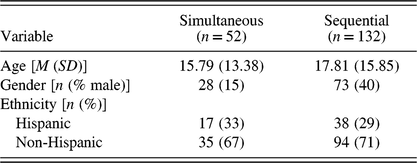
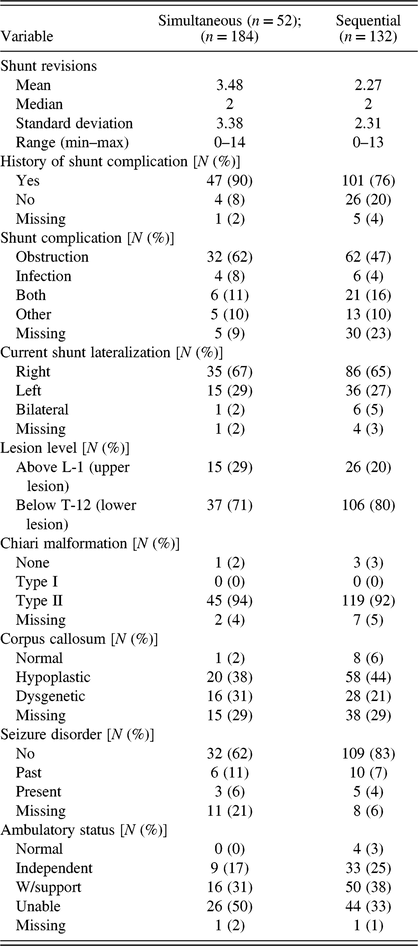
The current sample was comprised of a subset of participants from the overall, T2 study of 474 children and adults with SBM. Out of 474 T2 participants, 290 participants with missing medical history data (i.e., number of shunt revisions, shunt operation, or both) were excluded from the current analyses. Of the remaining participants with complete medical history data, 184 participants had complete neuropsychological data at T2 (T2 cohort) and 85 participants had complete neuropsychological data at T1 and T2 (T1/T2 cohort). For the participants in the T1/T2 cohort (who completed both the T1 and T2 studies), the time interval between studies averaged 6.71 years (SD = 1.43). The three cohorts of participants (i.e., excluded cohort: n = 290, T2 cohort: n = 184, and T1/T2 cohort: n = 85) were compared in terms of demographics and medical characteristics. The cohorts did not differ in terms of sex, χ 2(2) = 4.74, p = .094, lesion level, χ 2(2) = 1.84, p = .398, ambulatory status, χ 2(6) = 4.26, p = .642, Chiari malformation, χ 2(2) = 5.90, p = .052, seizure history, χ 2(4) = 3.80, p = .434, or hypogenesis of corpus callosum χ 2(4) = 1.01, p = .908. The cohorts differed in terms of age, F(2, 238) = 4.42, p = .013, with the excluded cohort (M = 21.04) having significantly older age than T1/T2 cohort (M = 16.16) and ethnicity χ 2(1) = 38.07, p < .001. Demographic and medical characteristics for the 184 participants from the T2 study are, respectively, presented in Tables 1 and 2.
Demographic data for the included sample of participants (n = 184) by operation type

M, mean; SD, standard deviation; N/A, not applicable.
Medical characteristics for the included sample of participants (n = 184) by operation type

Cohorts from each site were compared (N Total = 184; n Houston = 106, n Toronto = 78) on demographic and medical variables. The sites did not differ on number of participants with histories of sequential (standardized M Total = 2.27; standardized M Houston = 2.05, standardized M Toronto = 2.49) or simultaneous surgeries (standardized M Total = 3.48; standardized M Houston = 3.49, standardized M Toronto = 3.45). The sites also did not differ on sex, χ 2(1) = 2.08, p = .149, lesion level, χ 2(1) = .34, p = .562, ambulatory status, χ 2(3) = 1.21, p = .751, Chiari malformation, χ 2(1) = .57, p = .452, and seizure history, χ 2(2) = 1.35, p = .510. However, there was an expected site difference in age, t(182) = −4.98, p < .001. Participants at the Toronto site (M = 20.37) were significantly older than those at the Houston site (M = 14.94), which reflects the planned study design of having greater number of adults recruited for the study in Toronto as compared to Houston. Ethnicity χ 2(1) = 57.73, p < .001 also differed between sites, which is reflective of the generally greater number of Hispanics residing in Houston versus Toronto. Hypogenesis of corpus callosum differed by site, χ 2(2) = 7.96, p = .019, with greater prevalence of hypoplasia of the corpus callosum in the Houston cohort (n = 54) as compared to Toronto (n = 24).
Procedures
Neurosurgical history
Similar neurosurgical approaches were followed internationally at each study site. However, not all of the participants were born in Houston or Toronto. Therefore, some of the participants underwent the surgical interventions at other hospitals. Participants in the current study underwent routine surgical intervention for spinal dysraphism and shunt insertion in the right hemisphere shortly after birth. Determination of whether surgical procedures occurred simultaneously or sequentially was made through a review of medical records. Surgeries were considered to be simultaneous if both surgical procedures took place within the first 72 hr of birth and as sequential if the time interval between the surgical procedures exceeded 72 hr. The total number of shunt revisions at T2 in the current sample ranged from 0 to 14, although the majority had less than 5 shunt revisions (87%). The median and median absolute deviation estimates for the total number of shunt revisions were 2.00 and 1.00, respectively.
Neuropsychological assessment
Participants underwent a standardized neuropsychological assessment as part of the T2 study, which included measures of IQ and fine motor dexterity. FSIQ, NVIQ, and VIQ scores were measured with The Stanford-Binet Intelligence Scale: Fourth Edition (Thorndike, Hagen, Sattler, Reference Thorndike, Hagen and Sattler1986). FSIQ scores were derived from four domain scores: vocabulary, pattern analysis, quantitative reasoning, and nonverbal short-term memory.
Fine motor dexterity was assessed using the Purdue Pegboard task (Tiffin, Reference Tiffin1968), which requires the placement of small pins into a perforated board as quickly as possible in 30 s time intervals. Raw scores (number of pins accurately placed) for the dominant and nondominant hands were averaged to provide an estimate of an overall fine motor dexterity.
Statistical and Analytical Approach
The statistical analyses were performed using the PROC REG procedure in SAS 9.4 software (SAS, Inc., Cary, NC, USA). For aim 1, a simple regression was computed for the T2 participants (n = 184) to determine whether the type of surgery (i.e., simultaneous or sequential) predicted total number of shunt revisions at T2.
For aim 2, a series of multiple regression analyses were computed using the T2 participants (n = 184) to examine the effects of type of surgery and number of shunt revisions at T2 on IQ (i.e., FSIQ, NVIQ, and VIQ) and fine motor dexterity scores at T2. Given the cohort differences, all models included age and ethnicity as covariates.
For aim 3, a series of multiple regression analyses were performed using T1/T2 participants to examine the effects of type of surgery and the difference in number of shunt revisions between T1 and T2 (Δrevisions) on IQ scores and fine motor dexterity at T2, controlling for differences in chronological age between T1 and T2 (Δage) and ethnicity.
Initial analyses corresponding to aims 2 and 3 examined effects of age through two-way interactions between age or Δage (aims 2 and 3, respectively) with number of shunt revisions and surgery type. Initial results did not yield statistically significant interaction effects and interaction terms were trimmed from the final analyses.
RESULTS
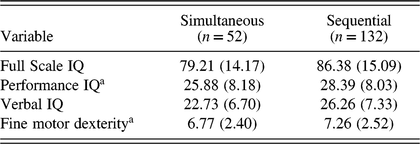
Table 3 presents means and standard deviations for each domain of IQ and fine motor dexterity.
Means (standard deviations) of the intelligence and motor dexterity of 184 T2 participants by operation type

a Performance IQ, Simultaneous n = 51; Fine motor dexterity, Simultaneous n = 48; Sequential n = 125.
Aim 1: Relation between Type of Surgery and Number of Long-Term Shunt Revisions
There was a significant effect of surgery type on number of shunt revisions at T2, β = −.21, t(181) = −2.82, p = .005. Sequential surgeries (M = 2.27) were associated with fewer shunt revisions at T2 compared to simultaneous surgeries (M = 3.48).
Aim 2: Effects of Type of Surgery on Long-Term Outcomes
Each model included type of surgery (simultaneous or sequential) and number of shunt revisions at T2 as primary predictors of IQ scores (i.e., FSIQ, NVIQ, and VIQ) and fine motor dexterity at T2, controlling for age at T2 and ethnicity.
Intelligence
There was a significant effect of surgery type on FSIQ at T2, β = .21, t(179) = 2.85, p = .005, over and above the statistically significant effect of ethnicity, β = −.24, t(179) = −3.31, p = .001, and the nonsignificant effects of number of shunt revisions, β = .02, t(179) = .33, p = .744, and age, β = .01, t(179) = .16, p = .870. Sequential surgeries (M = 86.41) were associated with significantly higher FSIQ scores compared to simultaneous surgeries (M = 79.21). Hispanic participants (M = 77.77) had significantly lower FSIQ scores compared to non-Hispanic participants (M = 86.80).
There was a significant effect of age, β = .39, t(178) = 5.40, p < .001, but not type of surgery, β = .11, t(178) = 1.53, p = .128, number of shunt revisions, β = .06, t(178) = .85, p = .395, or ethnicity, β = .04, t(178) = .55, p = .584, on NVIQ at T2. Older age was significantly associated with higher NVIQ scores.
On VIQ at T2, there was a significant effect of surgery type, β = .15, t(179) = 2.83, p = .005, but not number of shunt revisions, β = .06, t(179) = 1.17, p = .243, controlling for the significant effects of age at T2, β = .62, t(179) = 11.44, p < .001, and ethnicity, β = −.17, t(179) = −3.08, p = .002. Sequential surgeries (M = 26.15) were associated with significantly higher VIQ scores compared to simultaneous surgeries (M = 22.73). Older age was significantly associated with higher VIQ scores. Hispanic participants (M = 21.11) had significantly lower VIQ scores compared to non-Hispanic participants (M = 27.33).
Fine motor dexterity
There was a significant effect of age, β = .32, t(168) = 4.14, p < .001, but not type of surgery, β = .06, t(168) = .74, p = .460, number of shunt revisions, β = −.003, t(168) = −.03, p = .973, or ethnicity, β = .06, t(168) = .76, p = .446, on fine motor dexterity at T2. Older age was significantly associated with better fine motor dexterity scores.
Aim 3: Effects of Changes in Shunt Revision History on Long-Term Outcomes
Surgery type and Δrevisions were included as primary predictors of IQ scores and fine motor dexterity, controlling for Δage and ethnicity.
Intelligence
There was a significant effect of surgery type, β = .24, t(80) = 2.35, p = .021, but not Δrevisions, β = −.003, t(80) = −.03, p = .977, on FSIQ at T2, controlling for Δage, β = .02, t(80) = .15, p = .879, and ethnicity, β = −.36, t(80) = −3.50, p = .001. Sequential surgeries (M = 86.97) resulted in significantly higher FSIQ scores compared to simultaneous surgeries (M = 78.92). Hispanic participants (M = 76.40) had significantly lower FSIQ scores compared to non-Hispanic participants (M = 89.72).
There was a significant effect of Δrevisions, β = .35, t(79) = 3.35, p = .001 on NVIQ at T2 that occurred over and above the nonsignificant effects of surgery type, β = .04, t(79) = .39, p = .694, Δage, β = .16, t(79) = 1.46, p = .148, and ethnicity, β = .07, t(79) = .63, p = .528. Greater number of shunt revisions between the assessments was associated with higher NVIQ scores.
There was a significant effect of Δage, β = .21, t(80) = 2.00, p = .049, on VIQ at T2 that occurred over and above the nonsignificant effects of type of surgery, β = .19, t(80) = 1.80, p = .076, Δrevisions, β = .16, t(80) = 1.58, p = .117, and ethnicity, β = −.20, t(80) = −1.90, p = .061.
Fine motor dexterity
No predictors were statistically significantly predictive of fine motor dexterity (all p > .05).
DISCUSSION
Neurosurgical intervention is commonly performed in early infancy to increase survival in individuals with SBM. However, little quantitative studies of outcomes following these interventions exist. The current study addressed these literature gaps using longitudinal data from a large retrospective study of children and adults with SBM who had histories of simultaneous or sequential myelomeningocele repair and shunt placement. The current study examined three specific aims related to the long-term outcomes following surgery type and number of shunt revisions on estimates of general neuropsychological functioning.
The children and adults with SBM who had histories of simultaneous as opposed to sequential surgeries typically underwent greater number of total shunt revisions. Increased risk for greater shunt complications (as indexed by shunt revisions) with simultaneous surgery relative to sequential surgeries aligns with some previous findings (Oktem et al., Reference Oktem, Menkü and Ozdemir2008). It is noteworthy that causality of this association was not currently examined and cannot be inferred given the current study design. Future research into both the specific causes of shunt failure and rationale for additional shunt revisions following each neurosurgical procedure is needed in order to understand the neurobiological mechanisms that likely mediate this finding.
Contrary to expectations, total number of shunt revisions did not relate to any of the neuropsychological outcomes (in the T2 cohort). The lack of significant association between the number of shunt revisions and FSIQ in this study contradicts some cross-sectional findings in the literature, which did not examine NVIQ or VIQ. Independent studies have reported mixed findings between number of revisions and composite IQ scores using small samples, inconsistent coding revision history, and variable demographic characteristics. Most studies found no association (Dennis et al., Reference Dennis, Fitz, Netley, Sugar, Harwood-Nash, Hendrick, Hoffman and Humphreys1981; Raimondi & Soare, Reference Raimondi and Soare1974; Ralph, Moylan, Canady, & Simmons, Reference Ralph, Moylan, Canady and Simmons2000; Tew & Laurence, Reference Tew and Laurence1975) or even a positive association (Foltz & Shurtleff, Reference Foltz and Shurtleff1963) between these variables. A shunt-revision threshold has also been suggested (Arrington et al., Reference Arrington, Ware, Ahmed, Kulesz, Dennis and Fletcher2016; Bowman & McLone, Reference Bowman and McLone2010). Even after accounting for study heterogeneity, a recent meta-analysis supported an inverse relation whereby history of greater number of shunt revisions generally related to lowered IQ (between 3 and 5 IQ points; Arrington et al., Reference Arrington, Ware, Ahmed, Kulesz, Dennis and Fletcher2016). However, the clinical significance of such a decrease in FSIQ is not likely clinically significant. Inconsistencies in the literature highlight the indirect, multicausal interplay between microstructural changes associated with primary CNS aberrations inherent to both SBM and hydrocephalus and effects of subsequent shunting.
However, there was a significant effect of undergoing a greater number of shunt revisions between time points on NVIQ scores (in the T1/T2 cohort). Individuals who underwent a greater number of shunt revisions across study time points showed increased NVIQ scores at T2 compared to those who underwent fewer revisions between time points. This effect was observed over and above surgery type and supports previous cross-sectional findings (Holler, Fennell, Crosson, Boggs, & Mickle, Reference Holler, Fennell, Crosson, Boggs and Mickle1995). Higher NVIQ scores following greater number of additional shunt revisions may seem paradoxical, but may reflect strong surgical management, especially given that few patients experience more than 5 and no more than 14 revisions. Longitudinal (Air et al., Reference Air, Yuan, Holland, Jones, Bierbrauer, Altaye and Mangano2010) and cross-sectional (Williams et al., Reference Williams, Juranek, Stuebing, Cirino, Dennis, Bowman, Blaser, Kramer and Fletcher2015) findings in children with hydrocephalus support attenuation of regionally specific white matter abnormalities following shunt treatment. This intervention can partially restore altered cortical thickness, cortical–subcortical connectivity, and subcortical neurons resulting from hydrocephalus in animals (Aoyama, Kinoshita, Yokota, & Hamada, Reference Aoyama, Kinoshita, Yokota and Hamada2006; Eskandari et al., Reference Eskandari, Mcallister, Miller, Ding, Ham, Shearer and Way2004). Experimental models also have indicated better functional outcomes with longer shunt duration (Eskandari et al., Reference Eskandari, Mcallister, Miller, Ding, Ham, Shearer and Way2004; Miller & McAllister, Reference Miller and McAllister2007). While neuropathological consequences of (repeated) shunt failure or revisions have not been examined in preclinical models of congenital hydrocephalus, there is support for multiple periods of ventricular expansion with recurrent, deleterious effects on the neural tissue following shunt failure (Del Bigio, Reference Del Bigio2010). Therefore, close monitoring of symptoms of hydrocephalus and of shunt efficiency through ongoing medical management could account for the higher NVIQ scores.
Apparent differences of sequential as opposed to simultaneous surgeries on long-term IQ estimates and fine motor outcomes in SBM were observed and appeared to be domain-specific. The association between sequential surgeries with better VIQ scores than simultaneous surgeries was maintained across total number of shunt revisions (at T2). This relation likely accounts for the similar effect observed for FSIQ scores, across shunt revision history at T2 and change in number of revisions between study assessments. However, no effect of surgery type was observed on NVIQ or fine motor dexterity scores. While this is the first quantitative study of neuropsychological outcomes following sequential or simultaneous shunt and myelomeningocele repair, it is not possible to attribute the apparent domain-specific differences in IQ scores solely to operation type given the current study design. Determination of operation type was based on a review of information retrospectively collected from medical charts at the time of study recruitment. As reviewed elsewhere (e.g., Bowman & McLone, Reference Bowman and McLone2010; Norkett, McLone, & Bowman, Reference Norkett, McLone and Bowman2016), neurosurgical approach is often based on initial severity of hydrocephalus and clinical decision-making has varied over the past several decades. This is an important consideration when interpreting the current findings regarding operation type, as groups were not randomly assigned in the current cohort and indicators of initial hydrocephalus severity were not available for the current sample.
Initial severity of ventriculomegaly not only likely influenced neurosurgical decision-making but also could have attenuated later functional outcomes in the current sample. For example, initial markers of moderate hydrocephalus predict higher initial intelligence scores compared to severe hydrocephalus (Bowman & McLone, Reference Bowman and McLone2010; Williams et al., Reference Williams, Juranek, Stuebing, Cirino, Dennis, Bowman, Blaser, Kramer and Fletcher2015). However, prediction of long-term intellectual outcomes using early indices of ventriculomegaly is more complex with some (Hoppe-Hirsch et al., Reference Hoppe-Hirsch, Laroussinie, Brunet, Sainte-Rose, Renier, Cinalli, Zerah and Pierre-Kahn1998; Hunt & Holmes, Reference Hunt and Holmes1976), but not all studies (Bowman & McLone, Reference Bowman and McLone2010; Raimondi & Soare, Reference Raimondi and Soare1974; Williams et al., Reference Williams, Juranek, Stuebing, Cirino, Dennis, Bowman, Blaser, Kramer and Fletcher2015), supporting an association. Therefore, the currently observed association of operation type with VIQ and FSIQ could reflect a number of factors, including severity of hydrocephalus at birth and successful medical management across development, that could not be accounted for in the current analyses.
LIMITATIONS
It is important to consider that participants were not randomly assigned to the simultaneous or sequential surgery groups. It is possible that hydrocephalus severity at birth was variable, which has implications for the type of neurosurgery performed as no standard protocols were used for shunting, instead reflecting clinical judgment. It is not likely that there are wide variations in protocols given the nature of training and communication among pediatric neurosurgeons, but standard protocols are not identifiable. Hydrocephalus severity could also impact later neuropsychological outcomes. Prospective and longitudinal studies could benefit our understanding of the long-term outcomes of shunt treatment and related complications in this population. This study relied on retrospective coding of shunt revisions and surgery type from medical records. The completeness of medical records was variable. Information on shunt infections, including type and duration of infection, or other causes for shunt failure that would have necessitated additional shunt revisions were not readily available for each study participant, especially if they were recruited in later child- and adulthood. Similarly, shunt placements varied across participants, and it is unknown whether outcomes are influenced by disruption to specific regions. Future research could benefit from a comprehensive evaluation of shunt location in relation to specific neurologic outcomes in SBM. Furthermore, the current study could not account for some medical variables that are related to hydrocephalus treatment. Even with successful control of intracranial pressure through shunting, other factors can contribute to hydrocephalus, including the compression of the dural sinuses due to small posterior fossa and venous hypertension from reduced dural sinus outflow, which can produce negative clinical manifestations in the patient (Cinalli et al., Reference Cinalli, Salazar, Mallucci, Yada, Zerah and Sainte-Rose1998). The limited neuropsychological domains assessed are another study limitation that should be addressed in future research.
CONCLUSIONS
The present study provides new information about the complex relations among variables critical for the clinical management of hydrocephalus and prognostication in individuals with SBM. Principle findings indicated that neuropsychological outcomes related more to simultaneous surgery and ongoing medical management for hydrocephalus (i.e., additional shunt revisions) than total number of shunt revisions in later life. These results emphasize a need for studies of preclinical experimental models and prospective clinical cohorts to determine how surgical repair and repeated shunting affect brain micro and macrostructure in SBM.
ACKNOWLEDGEMENT
Preparation of this paper was supported in part by grant 5 P01 HD35946 awarded from the Eunice Kennedy Shriver National Institute of Child Health and Human Development (NICHD). The content is solely the responsibility of the authors and does not necessarily represent the official views of the NICHD or the National Institutes of Health.
CONFLICT OF INTERESTS
The authors have nothing to disclose.