John Marshall was famously far-seeing, but a prediction he made on a hot June day in 1788 proved more prescient – and more important – than even he could have known. The future Chief Justice of the Supreme Court was a delegate to the Virginia convention debating whether to ratify the new Constitution. His task, appropriately enough, was to defend its creation of a national judiciary. The Constitution’s critics, known as Anti-Federalists, were alarmed. They claimed that Article III’s broad description of “the judicial power” would “annihilate” state autonomy, and they vowed to exert their “whole force” against the institution that would define Marshall’s legacy. If they succeeded, the entire project of creating a more perfect union among the fractious states threatened to collapse.1
Marshall tried to soothe the Anti-Federalist fears by offering now-familiar explanations of how the federal courts would help ensure the survival of the American republican experiment. The judges’ independence, enshrined in the Constitution’s text, would allow them to decide contentious cases with “fairness and impartiality.” Their authoritative interpretations of the Constitution and statutes would ensure the “orderly” enforcement of federal law. And their decisions in cases between citizens of different states would “preserve the peace of the Union.”2
Marshall’s most prophetic claim was almost an afterthought. The new federal courts, he added, would also be “the means of preventing disputes with foreign nations.” He was only half-right. The Constitution assigned contentious lawsuits involving foreign diplomats to the Supreme Court, but such cases proved exceedingly rare, as did potentially explosive controversies between American states and foreign governments. Even the courts’ jurisdiction over suits by foreign subjects against American citizens – a feature of Article III that Anti-Federalists deeply reviled – did not end the diplomatic conflicts it was meant to resolve.3
It was instead by adjudicating cases arising from war at sea that the courts secured the United States’ place in the world. Marshall could not have known it in 1788, but the global conflicts of empire and rebellion triggered by the French Revolution meant that, for over thirty years, international disputes over persons, ships, and goods caught up in maritime war repeatedly washed onto American shores. Federal judges decided the legality of captures made by warring powers, regulated the conduct of merchants and privateers, and criminally tried those who sought to benefit from the chaos of transatlantic warfare. Many of the Age of Revolution’s most consequential battles were fought in the courts.
The courts’ decisions were essential to the United States’ emergence as a sovereign and independent nation. The Constitution’s framers understood that maintaining good relations with empires at war promised peace and prosperity, while failure to do so risked political and economic subjugation and even destruction of the union itself. But the compromises the framers’ made to create a viable national government left the first generation of state-builders with limited means to control the behavior of Americans (and others) who threatened to embroil the nation in international conflict. The legal relief the judiciary offered to injured foreigners remedied these deficiencies. It forestalled reprisals by powerful European nations and demonstrated that the fledgling republic had a government worthy of respect.
The courts did more, however, than simply burnish the United States’ reputation abroad. Their rulings on the fate of the people, ships, and goods circulating in the revolutionary Atlantic set forth an increasingly bold vision of American sovereignty vis-à-vis other nations. This progression was not linear. Judges feared the consequences that might arise from judicial intervention in the affairs of state, and they often hesitated before accepting responsibility for adjudicating disputes stemming from maritime war. Over time, however, the courts’ growing willingness to assert judicial authority over the sea vindicated the Declaration of Independence’s claim to an “equal station” for the United States “among the powers of the earth.”4
This saltwater story of the courts’ role in American state-building has been forgotten. Preoccupation with Marshall’s famous constitutional rulings has obscured the fact that the early judiciary’s most consequential cases arose on the ocean. And while we have grown accustomed to the modern idea that “foreign affairs” are the domain of the legislative and executive branches, the political leaders who first tried to solve the puzzle of constitutional governance did not hew to such rigid notions of institutional responsibility. In fact, Congress and successive presidents repeatedly delegated momentous questions of wartime rights to the courts. By insisting that federal judges alone could resolve legal disputes arising from international conflict, they offered a broad understanding of judicial power that was only implicit in the Constitution’s text. If the foundation of the federal courts’ authority was their power “to say what the law is,” as Marshall explained in Marbury v. Madison, the first place that authority was realized was at sea.5
* * *
When the federal courts came into being, war was a constant threat to the young republic’s hard-won independence. On land, Britain and Spain claimed dominion over vast swaths of North American territory and supported Native people who resisted encroachment by white settlers with force. On the water, armed vessels prowled sea lanes in the Atlantic and the Caribbean in search of merchant ships laden with the mineral and agricultural riches of the Americas. Entanglement in these conflicts would leave the United States vulnerable to invasion, military domination, and economic subservience. As Secretary of State Edmund Randolph put it to James Monroe in 1795, “an infant country” like the United States could have “no greater curse in store for her than war.”6
At the same time, war also offered political and economic opportunities. Farmers from Virginia and Pennsylvania sold wheat to armies on the battlefields at Austerlitz and Waterloo, which was carried across the Atlantic by ships sailing from Baltimore and Philadelphia. Weakened European empires were willing to cede territory in North America (most dramatically in the Louisiana Purchase), and their declining potency left Native people vulnerable to the violence of land-hungry Americans. Plus, the disintegration of imperial authority in the Atlantic world opened new markets free from the mercantilist strictures of European colonialism. “The great harvest” for “profits,” Thomas Jefferson reminded George Washington in 1793, “is when other nations are at war.”7
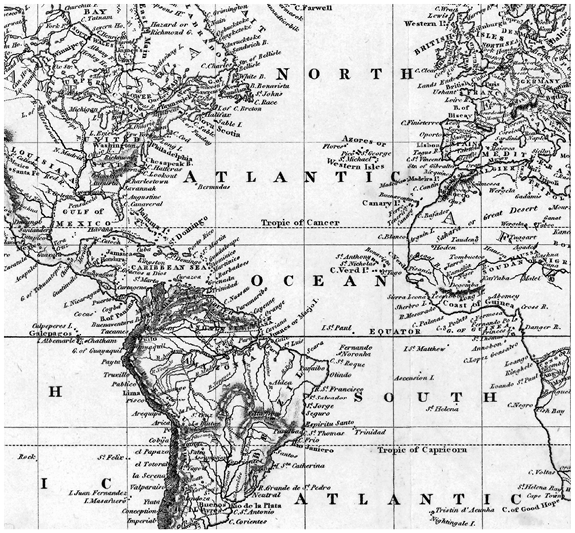
War’s most significant opportunity was that it gave Americans the chance to earn international respect. The early United States was in what Randolph called a “state of probation.” Many foreign observers doubted that the republic would remain intact for long, let alone that it was a legitimate sovereign. Its inability to fulfill its obligations under treaties and international law drove political elites to create a new government in 1787, one that could be trusted to keep its promises. The war-torn Atlantic of the late eighteenth and early nineteenth centuries would be the Constitution’s proving ground (Figure I.1).8
In the late eighteenth and early nineteenth centuries, the federal courts’ orientation was primarily toward the sea.
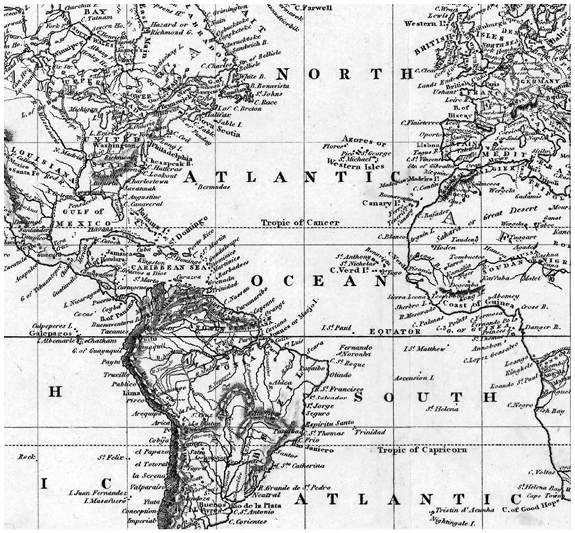
Figure I.1 Long description
Historical map detail of North and South America, Atlantic and Pacific Oceans, and the Caribbean Sea. The map is oriented toward the sea, highlighting coastal regions and major landmarks from the late eighteenth and early nineteenth centuries.
But did the Constitution actually create a government that could meet war’s challenges? The answer was uncertain. Americans of the founding generation had just rebelled against a distant and oppressive authority. Many were unsure whether they wanted to replace it with a central government that had significant coercive power. The subsequent Federalist-Republican divide that emerged in the 1790s ensured that every exercise of federal authority was subject to partisan scrutiny and resistance.9
The result was that, in the early years, there was not much of a federal government at all. Congress could theoretically raise an army and build a navy, but it hardly did so. It had a broad power to tax, but confined itself to charging duties on imported goods. Law enforcement was a particular problem. In the early 1790s, the military was small and widely scattered, the Treasury Department had only 500 officers to police a thousand miles of coastline, and there were fewer than twenty federal legal officers (all part-time employees). Even as the government grew in the nineteenth century, it was still, in one historian’s memorable phrase, “a midget institution in a giant land.”10
The national government did get some things done. It built roads, established banks, delivered mail, and regulated foreign and interstate commerce. It acquired and distributed land, expelled Native people from it, and enabled a system of enslaved labor to exploit it.11 At times federal officers even punished those who broke the law. On the whole, however, the early federal government was better at giving Americans what they wanted – land, subsidies, pensions, mail – than preventing them from doing as they wished.12
Americans’ distrust of national authority put the republic at risk. In the Age of Revolution, the United States was a magnet for entrepreneurs eager to turn the chaos of armed conflict to their personal advantage. Men of commerce looking to increase their profits could rely on high demand for their goods and innumerable opportunities to smuggle them across porous and ill-defined borders. Ex-soldiers found ready employment in the mercenary armies that fought in the period’s sprawling conflicts. And North America was an attractive base of operations for the grandiose visionaries who sought to establish independent fiefdoms amid the collapse of European imperial control.13
The most troublesome of these adventurers were armed seafarers who sailed from American ports to prowl sea lanes in the Atlantic and Caribbean. Privateers – merchants and sailors who received commissions from governments at war authorizing them to seize enemy vessels and goods – had long been a fixture of early modern warfare. But their tendency to push the bounds of legality triggered diplomatic protests and invited retaliation by aggrieved nations. The Age of Revolution’s explosive politics only made their transgressions more perilous. These swashbucklers may have been clever and daring, but they made the world a dangerous place.14
Amid the challenges that war posed, defense of American independence fell to the courts. Article III of the Constitution made a national judiciary a possibility, and the First Congress made it a reality by establishing a system of lower federal courts for the entire country. On land, the courts’ authority was local and limited. But their primacy on the water was unchallenged. The misadventure of having state tribunals decide questions arising from war at sea during the American Revolution persuaded the constitutional framers to give the federal courts “all cases of admiralty and maritime jurisdiction.”15
The court’s admiralty jurisdiction drew them into international conflict almost as soon as they came into existence. Foreign diplomats stationed in the United States filed suits to recover captured ships and cargoes, and demanded that the government criminally prosecute those who engaged in maritime violence. They collected evidence, hired lawyers, and pressured executive branch officials to intervene in important cases. Judicial proceedings were a theater of international contestation, and law was the weapon of choice.
Federal judges exercised their maritime authority the way judges typically do – they resolved discrete legal disputes with material consequences for individual litigants. Judges decided who was entitled to property that had been captured at sea. They distributed the profits derived from its sale among the many claimants who came before the court. And they imposed monetary penalties and criminal sentences on those who violated the rules of maritime warfare.16
Judicial decisions over the fruits of war also enhanced the United States’ sovereign legitimacy. Many Americans – especially the elites who framed the Constitution – believed that securing respect abroad required adherence to the United States’ obligations under treaty and international law. Judgments the courts made about ships and goods taken at sea signaled that the United States would fulfill those duties. With Congress and the executive branch unable, or unwilling, to regulate maritime violence, judicial resolution of wartime disputes demonstrated the young republic’s fitness for admission into the community of “civilized” (that is, European) nations.17
This judicial articulation of American sovereignty grew more assertive over time. Modern conceptions of sovereignty are often framed territorially, with nation-states seeking to establish exclusive claims to authority over the people and resources within their boundaries. But if we understand sovereignty instead as a “continuing manifestation of power” not defined by formal borders, it includes the increasingly broad claims to authority the courts made over people, ships, and goods across the Atlantic world. In the 1790s, the courts contravened treaties and international law to assume jurisdiction over captures made by French privateers. In the War of 1812, judges abandoned the defensive neutrality that had long shaped American statecraft to assert the United States’ prerogative to wage war on equal terms with European empires. And, in the post-war period, the courts’ willingness to punish criminally all those who perpetrated violence in the name of republican liberty foreshadowed the emergence of a new, imperial vision of the United States’ sovereign rights both on land and on the water.18
In the end, the courts’ increasingly confident declarations of maritime authority reflected a profound shift in how Americans understood their place in the world. The founding generation created a federal judiciary to help ensure the vulnerable republic’s survival. But, over the next several decades, the courts crafted a theory and practice of American sovereignty that rivaled the pretensions of the most powerful nations on earth.
* * *
This history of judicial sovereignty-making is largely unknown. Existing accounts of the United States’ transformation from infant republic to nascent empire tell a story of taxation, territorial acquisition, and economic development, all backed by the force of arms wielded primarily against North America’s native inhabitants. On this telling, even when federal officers struggled to assert their authority over the diverse peoples of the Americas, the national government’s domestic resources – fiscal, military, economic, and legal – are what enabled thirteen quarrelsome former British colonies to establish their dominion over the continent. Despite Stephen Skowronek’s famous description of the early American governance as being conducted by “courts and parties,” the federal judiciary barely figures in narratives of early American state-building.19
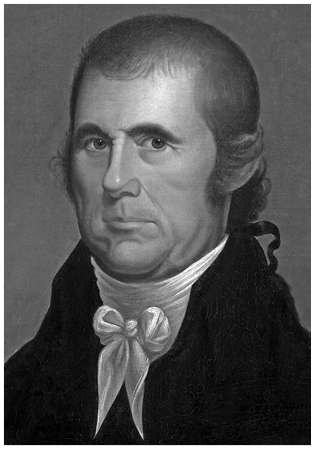
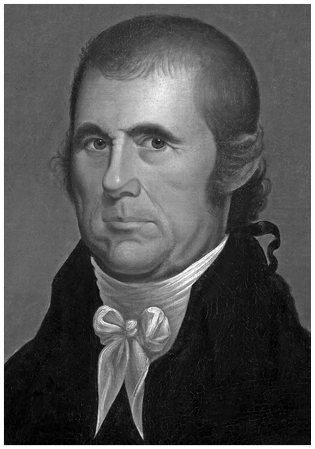
The essential role the courts played in establishing American sovereignty abroad has also been obscured by the stories we tell about the early judiciary at home. One popular tale credits the Supreme Court under John Marshall with laying the constitutional foundation for American nationhood. Marshall, the story goes, first established the courts’ supremacy in matters of constitutional interpretation in Marbury. He then used that power to inculcate a nationalist vision of the Constitution that promoted the federal government’s supremacy over the states. Marshall’s rulings, according to one common plaudit, “knit the American people into an indivisible nation,” and established the “more perfect Union” that the Constitution promised (Figure I.2).20
By the time John Adams appointed John Marshall as Chief Justice of the Supreme Court (at age thirty-five), he had already served as a Revolutionary War officer, delegate to the Virginia ratifying convention, member of Congress, envoy to France, and Secretary of State.
A second account of the early courts is more skeptical of their importance. Compared to the state and local tribunals whose decisions most profoundly shaped Americans’ daily lives, the federal judiciary was small and remote. It was also institutionally weak and politically embattled. Early presidents had difficulty persuading eminent lawyers and politicians to accept judicial office, and some – notably Thomas Jefferson – attacked them when they did. Even the Supreme Court’s supposedly “great” nationalist decisions of the 1820s had little impact in the face of Andrew Jackson’s political ascendancy. Marshall’s talent for rendering decisions that promoted judicial power while avoiding direct clashes with dangerous rivals only demonstrated the courts’ vulnerability. The authority “to say what the law is” meant little if no one was listening.21
Both of these stories miss an important truth: The federal judiciary did profoundly shape the trajectory of early American sovereignty, but through cases that asserted its power – and the nation’s – at sea. Even as political partisans sought to strip the courts of jurisdiction and remove judges from office, litigants from around the world packed the federal dockets with high-stakes disputes arising from maritime commerce and war. By the time the Marshall Court began issuing its famous rulings about the federal government’s domestic power, the courts had spent nearly thirty years deciding crucial cases about the scope of the United States’ international authority.22
The obscurity of the courts’ maritime role in establishing American sovereignty is perhaps understandable. For modern lawyers, admiralty law is a specialized backwater. It addresses disputes over seamen’s wages, shipboard injuries, and marine insurance, questions that sound in the private law of tort and contract, not in public international and constitutional law. But in the early republic, the courts’ most important cases arose from captures made by private armed vessels, an archaic form of warfare whose political significance is largely unintelligible to us now.23
To tell a new and more potent story about the courts, we have to shift our attention away from the familiar narratives of judicial history and the usual methods of writing it. The well-known early controversies over advisory opinions, circuit-riding, judicial review, and impeachment all appear here. But they are in the background, as context and counterpoint. Formerly obscure Supreme Court opinions, written in an unfamiliar legal grammar, take on new importance. So do the overlooked records of early admiralty proceedings and the reams of correspondence between the government officials, foreign diplomats, lawyers, merchants, and privateers who brought their wartime disputes to the federal courts. Taken together, these sources reveal the courts’ essential role in establishing the United States’ place in the world.24
The courts’ international prominence was not preordained. Foreign officials resented having to litigate the status of captures at sea, and they demanded that the executive and legislative branches act to protect their nation’s rights. Private parties also resisted the courts’ authority, and at times defied judicial orders. Even some political leaders had doubts. Alexander Hamilton was a staunch advocate of federal judicial power, but in 1793 he argued that disputes between sovereigns arising at sea had to be settled “by reasons of state, not rules of law.”25
Judges also had misgivings. Histories of the federal judiciary often assume that early jurists (especially John Marshall) were eager to expand their power, even if they had to do so quietly and indirectly. In truth, many federal judges did not want to take on the hundreds of admiralty disputes that the Age of Revolution brought into their courts. They worried that their rulings would provoke diplomatic controversy, rather than resolve it, and it would diminish the courts’ standing in the process. And like any government bureaucrat, many resented the extra work that was involved.26
Surprisingly, the most insistent declarations of judicial authority over international controversies came from the other branches of government. The Constitution gave Congress broad power in war and foreign affairs, but cautious legislators relied on the courts to develop the rules governing maritime conflict. The executive branch had equally strong claims to constitutional authority abroad, but was even more willing to defer to the courts. Cabinet officers rebuffed foreign demands for executive resolution of disputes over ships and goods captured at sea, directing claimants to seek redress in the courts instead. Even Thomas Jefferson, the federal courts’ most virulent nineteenth-century critic, declared that disputes arising from maritime war belonged “to the Judiciary alone.”27
Such statements of judicial supremacy in foreign affairs are almost incomprehensible to modern ears. The conventional wisdom, including among judges themselves, is that their lack of expertise demands submissiveness to Congress and the President. Even commentators who argue that the courts should be more assertive in international matters, especially in remedying human rights abuses, rarely dispute the reality that, in practice, judges are deeply deferential.28
Yet giving judges responsibility for resolving critical questions of international law and politics made perfect sense to early American policymakers. As Jefferson explained in 1793, any decision the executive branch made about the fate of ships, goods, and people claimed by powerful foreign empires was bound to “give dissatisfaction to both parties, and produce complaints from both.” Referring international controversies to the judiciary divided big diplomatic problems into smaller legal disputes, and spared political actors from having to choose sides.29
Elected officials also turned to the courts because they had no other choice. A distracted and divided national legislature had no appetite for establishing rules governing maritime conflict. The executive branch, in turn, lacked the tools it needed to enforce what law there was. By routing maritime disputes to the courts, Congress and successive presidents sought to enlist a coordinate branch of government to resolve controversies they had neither the will nor the means to handle on their own.
Repeated insistence that only the courts could resolve important wartime controversies eventually produced a rough consensus about the legitimacy of judicial intervention in the affairs of state. Foreign officials discovered that filing suit in federal court enabled them to combat their enemies with law rather than arms. Judges, too, ultimately embraced a robust conception of judicial power in foreign affairs. Justice Joseph Story made this clear in one of the Supreme Court’s last privateering cases in 1822. The federal courts’ fitness for resolving international legal disputes had long been contested, Story conceded. But the practice of the previous three decades was for the judiciary to answer such questions, and it was now “too late to disturb it.”30
Thirty-four years earlier, John Marshall had to justify the federal courts’ existence without the benefit of history and hindsight. The young lawyer who defended the idea of a national judiciary to skeptical Virginians in 1788 could not have known that, decades later, he would lead that institution as it confronted the United States’ gravest foreign affairs crises. But Marshall’s mild prediction that the courts would “prevent [] disputes with foreign nations” proved more accurate than he realized. If his legacy is the establishment of both judicial and national authority, this book shows that he and his contemporaries did so, first and foremost, at sea.