Introduction
The efficacy of oral cholera vaccines (OCVs) has been established in laboratory conditions.Reference Verma, Khanna and Chawla 1 , Reference Weinberg and Szilagyi 2 The World Health Organization (WHO; Geneva, Switzerland) has pre-qualified two vaccines, Shanchol (Shantha Biotechnics; India) and Dukoral (VALNEVA Canada Inc.; Quebec, Canada), although a third approved vaccine is being used in the field: ORC-Vax (Vabiotech; Vietnam). Although OCVs have been utilized pre-emptively to prevent cholera outbreaks in high-risk settings such as refugee camps, their reactive use as an additional control measure has not been fully and consistently operationalized due to concerns about potential resource diversion, feasibility, cost, and acceptability.Reference Luquero, Grout and Ciglenecki 3 The WHO has recommended the reactive use of OCVs as an additional measure to control cholera epidemics. 4 , Reference Date, Vicari and Hyde 5 However, a lack of evidence of vaccine effectiveness under real field conditions is regarded as a barrier to operationalizing this WHO recommendation.Reference Deen, Ali and Sack 6
Cholera is a major global health problem that causes significant suffering and death. The number of cholera cases, frequency, and scale of epidemics is increasing.Reference Ciglenecki, Sakoba and Luquero 7 , Reference Clemens, Shin, Sur, Nair and Holmgren 8 It is estimated that annually up to 4.3 million cases and 142,000 deaths occur due to cholera worldwide.Reference Ali, Lopez and You 9 , 10 Actual prevalence is likely to be much higher, as cholera is thought to be under-reported due to weak surveillance and reporting systems, lack of diagnostic facilities, and broad case definitions in developing countries where outbreaks are more likely to occur.Reference Ali, Lopez and You 9 The causative agent continues to thrive wherever crowded housing conditions exist and water and sanitation are sub-optimal and is therefore a major risk in disaster settings. 11 This meta-analysis will focus on epidemic cholera, which is a sudden increase in the number of disease cases above what is expected in a population. 12
The standard cholera response package remains largely unchanged over the past few decades and includes: improving water quality and quantity; health education; community engagement; routine hand washing; general sanitation; and improved food preparation.Reference Calain, Chaine and Johnson 13 - 16 These are seen as primary measures and have been credited for the elimination of cholera from most countries in the global north. The scale and severity of the cholera problem, which is likely to worsen with urbanization, globalization, and climate change, has led to a call for a re-examination of the existing cholera outbreak response strategy. 4 , 11 , Reference Ivers, Hilaire and Teng 17
Due to a worldwide shortage of OCVs and the need to prioritize the basic package of cholera control interventions in resource-poor settings, there is ongoing debate regarding the use of OCVs in epidemics.Reference Luquero, Grout and Ciglenecki 3 In an effort to strengthen the evidence base, this systematic review and meta-analysis aims to synthesize the quantitative evidence on the effectiveness of OCVs as a reactive measure in real field conditions to cholera epidemics worldwide.
Methods
Inclusion Criteria
Studies were selected using the following criteria: primary research, peer-reviewed articles in the English language that investigated OCV effectiveness as a reactive measure in real field conditions. Primary studies measuring vaccine effectiveness were included. Vaccine effectiveness is defined as the extent to which an intervention achieves its intended effect in real-life situations, 12 as opposed to efficacy, which is the ability of an intervention to produce the desired effect in controlled situations. 12 Vaccine effectiveness represents the benefits of the vaccine itself against potential side effects, as well as taking into account the impact of the vaccination program in real-world conditions, including logistical challenges, access to health care, and the immunity of populations.Reference Weinberg and Szilagyi 2 The review included studies from 2006-2016 inclusive because it was around two decades ago that OCVs were first pre-qualified by the WHO.
Search Strategy
EMBASE (Elsevier; Amsterdam, Netherlands), OVID MEDLINE (US National Library of Medicine, National Institutes of Health; Bethesda, Maryland USA), and CINAHL (EBSCO Information Services; Ipswich, Massachusetts USA) were systematically searched using pre-determined criteria. The three-phase Joanna Briggs Institute (JBI; Adelaide, Australia) systematic review and meta-analysis methodology was employed and started with the identification of initial keywords from titles and abstracts on topic, progressed to an analysis of text and index words, and ended with the development of a comprehensive search strategy. The second phase involved implementing database-specific searches, and the third phase required a review of the reference lists of all retrieved studies. A search of the grey literature was also conducted. 18 This systematic review was registered with the international systematic review registry, Prospero (York, United Kingdom). A subject librarian contributed to the development of the search strategy, which included the key terms: “outbreaks,” “epidemics” (population), “oral cholera vaccine,” “vibrio cholera vaccine,” “reactive cholera vaccination” (intervention), and “effectiveness” (outcome) for studies published worldwide in English.
Study Selection and Data Extraction
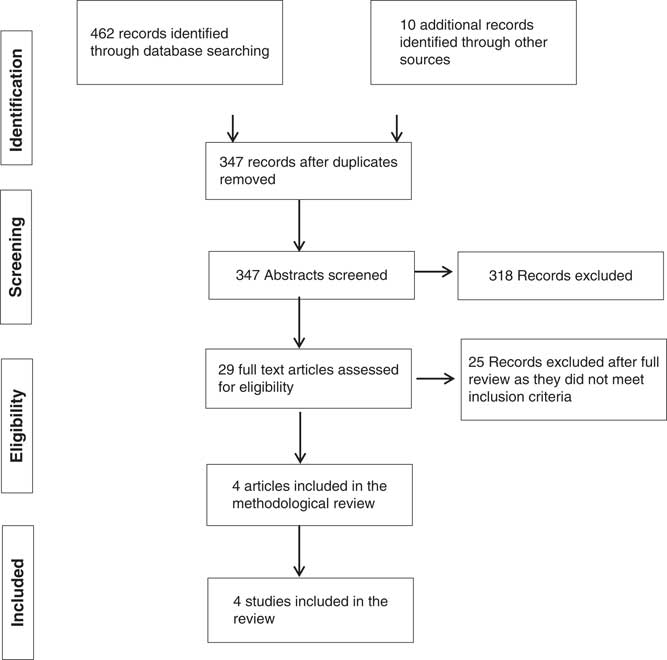
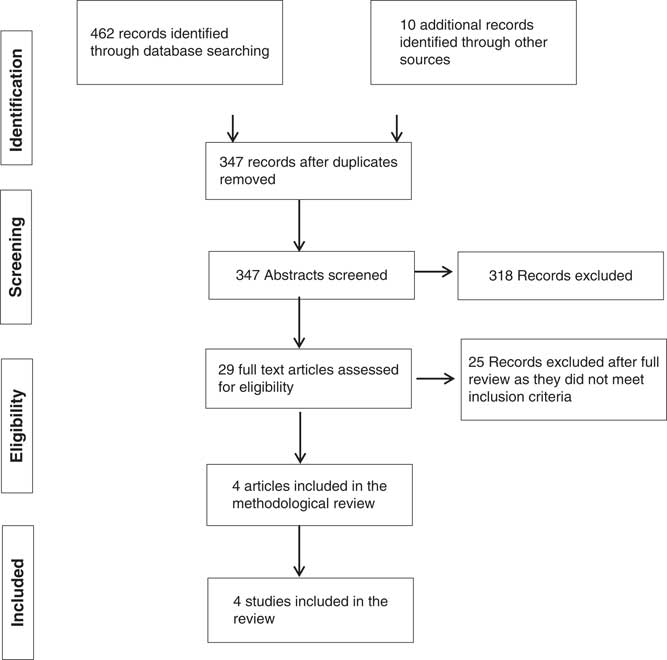
In the first phase, three independent evaluators reviewed title and abstract in order to identify studies that met the selection criteria. In the second phase, three independent evaluators reviewed articles in full-text and evaluated the quality of selected studies using a standardized tool and proceeded to extract data according to a data collection form based on a standardized protocol. Disagreements were resolved within the research team. This process is outlined in Figure 1.
PRISMA Flowchart.
Quality Assessment of the Methodology
Methodological quality was assessed using the JBI Critical Appraisal Checklist for Cohort Studies and the JBI Critical Appraisal Checklist for Case Control Studies (Appendices 1 and 2; available online only). 19 Attention was paid to potential sources of bias, such as method of participant recruitment and confounding factors. Three of the four involved studies included a bias-indicator study as a means to assess the influence of confounding factors and to reduce bias.Reference Buttner and Muller 20 The case-cohort studyReference Azman, Parker and Rumunu 21 was the only study that varied in design; however, it was included because it met the inclusion criteria and was similar to the other studies in terms of aim, direction, and methods. Due to the methodological differences between the three case-control studies and the case-cohort study, a second statistical pooling was conducted to determine the difference on the outcome when the case-cohort study was removed. Since there was an insignificant difference and the case-cohort study officially met the selection criteria and the methodological quality requirements, the fourth study was included in the final analysis.
The pooled odds ratios and the respective 95% confidence intervals were calculated using fixed effect models. The pooled odds ratios were converted into vaccine effectiveness using the following formula:
 $${\rm VE}{\equals}\left( {1-{\rm odds}\,{\rm ratio}} \right){\times}100.$$
Data Extraction and Meta-Analysis
The Cochrane collaborations Review Manager (RevMan; London, United Kingdom) 22 was used for meta-analysis. A chi-square (x2) non-parametric statistical test was used to test heterogeneity and indicated suitability for meta-analysis. Heterogeneity was six percent (P=.36). The final result was a pooled OR of 0.25, which suggests that a cholera case is 75% less likely to be vaccinated in comparison to a control case.
A fixed effect modelReference Borenstein 23 was used to report point estimates representing the mean effect size equating to the magnitude of the intervention (vaccination) effect. Overall effect size was expressed as weighted mean difference, and 95% confidence interval was calculated for each study. The odds ratio was used to assess the strength of association between vaccination and cholera outcomes. A forest plot is used to illustrate the effect size and level of difference among the studies.
Results
Identification and Characteristics of Selected Studies
The search generated a total of 472 studies, and after duplicates were removed, 347 remained. All studies that (i) investigated vaccine effectiveness, (ii) when used as a reactive measure (cases reached epidemic threshold and cholera epidemic was declared), and (iii) in real field conditions were selected. Following independent title and abstract review of the 347 articles, 29 articles remained for full-text review.
Of the 29 studies that underwent full-text review, 25 were excluded: six studies were excluded because OCV was not used reactively, 10 studies were excluded because the outcome was not vaccine effectiveness, seven studies were excluded because they did not use OCVs, and two final studies were excluded because they were mathematical modelling studies and not conducted under real field conditions.
Data Extraction and Meta-Analysis
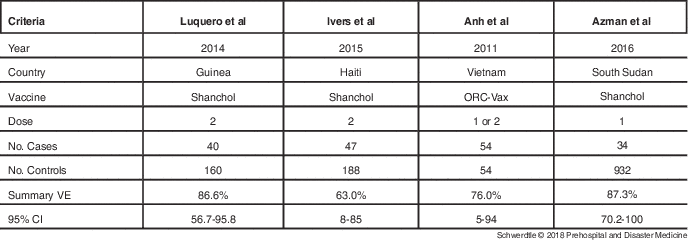
Data extraction is outlined in Table 1 and includes details of the selected studies concerning objectives, interventions, and outcome measures. The forest plot illustrating meta-analysis of odds ratio as a measure of vaccine effectiveness is outlined in Table 2.
Characteristics of Four Case-Control and Case-Cohort Studies Selected for Meta-Analysis

Forest Plot Illustrating Meta-Analysis of Odds Ratio as a Measure of Vaccine EffectivenessHeterogeneity: Chi2=3.20, df=3 (P=.36); 12=6%. Test for overall effect: Z=6.09 (P<.00001).

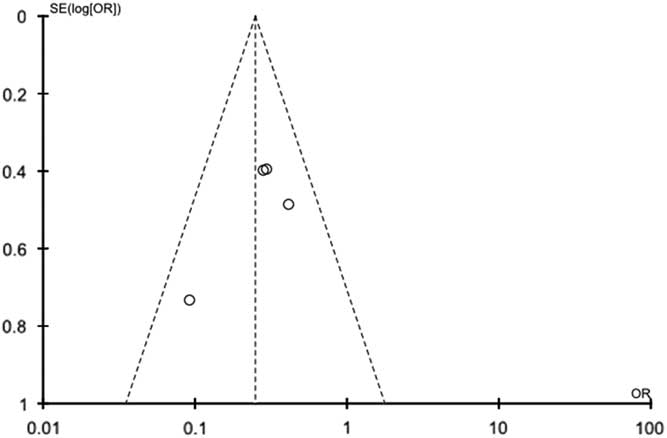
The point estimate of all four included studies fell on the side favoring the use of OCV during cholera epidemics (Figure 2). The result of this meta-analysis, which represented the combined effect, also favored vaccination. The interval estimates were presented as a 95% confidence interval (range around the point estimate) and all fell on the same side favoring vaccination. Pooled vaccine effectiveness and its 95% CI was calculated using the pooled OR 0.25 and 95% CI for OR 0.16 to 0.39, using the formula:
 $${\rm VE}{\equals}\left( {1-{\rm OR}} \right){\times}100{\equals}\left( {1{\minus}0.25} \right){\times}100{\equals}75\,\%\,\left( {95\,\%\,\,CI,\,61\,\%\,{\minus}84\,\%\,} \right).$$
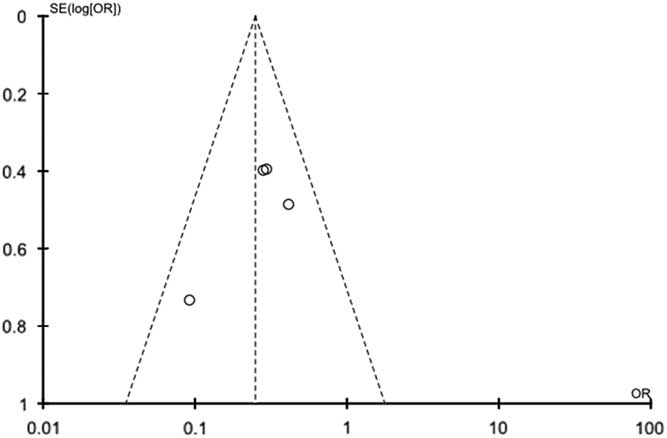
Funnel Plot Depicting Distribution of Log OR as a Measure of Publication Bias.
The positive association between vaccination and protection against cholera persisted in the sensitivity analysis when the case-cohort study was excluded (Table 3). It was excluded to test the effect of its individual effect on the pooled outcome. Despite its exclusion, all point estimates still fell on the side favoring vaccination:
 $${\rm VE}{\equals}\left( {1-{\rm OR}} \right){\times}100{\equals}\left( {1{\minus}0.32} \right){\times}100{\equals}68\,\%\,\left( {95\,\%\,\,{\rm CI},\,48\,\%\,{\minus}80\,\%\,} \right).$$
Discussion
This is the first meta-analysis, to the authors’ knowledge, investigating OCV effectiveness used reactively in real field epidemic conditions worldwide. Overall, the results suggest that both vaccines, using one or two doses, protect against cholera, which implies OCVs may be effective when used as an additional measure to control cholera epidemics.
Vaccine effectiveness measured in real field conditions is estimated to be lower than efficacy measures in controlled laboratory conditions.Reference Oliviera, Fonseca, Cardoso, Farias and Leite 24 The four studies synthesized in this meta-analysis were conducted in very challenging epidemic conditions in developing countries. These results, together with the findings of this meta-analysis, add further weight to the argument for supporting reactive OCV use. There was not a great deal of difference between the pooled estimates of vaccine effectiveness and that of the individual studies, which were conducted in a range of settings under a range of programmatic conditions. Overall, this meta-analysis contributes a higher level of evidence than the individual primary studies, therefore providing support to the WHO recommendation to operationalize reactive use of OCVs.
There was a total of 1,509 participants in this meta-analysis, comprising 175 cases and 1,334 controls. Although different vaccines were used in these studies (three studies used Shanchol and the Vietnamese studyReference Anh, Lopez and Thiem 25 used the vaccine ORC-Vax), they are both killed whole cell vaccines.
The demographic profile of participants as outlined in the primary studies synthesized in this meta-analysis were as follows. The first study set in Guinea involved 200 participants, including 70 females, and the median age of participants was 28 years.Reference Luquero, Grout and Ciglenecki 3 The Haiti study involved 235 participants, including 40 participants under five years and 195 over five, and the gender of participants was not reported in the primary study.Reference Ivers, Hilaire and Teng 17 The third study in Vietnam included 250 participants with an age range from 15-86 years, and participants were recruited into three age groups (10-20 years, 21-40 years, and 40 years and above).Reference Anh, Lopez and Thiem 25 The fourth study set in South Sudan involved 986 participants who were aged one year and above, 473 of which were females and 513 were males, and the mean age of vaccinated participants was 23.8, while the mean age for unvaccinated participants was 19.3.Reference Azman, Parker and Rumunu 21
Three of the four studies were case controls, which is a methodology widely used to assess vaccine effectiveness, and confounding was controlled for with bias indicator studies. The features of the individual studies in terms of participant recruitment, exclusion criteria, and the use of bias indicator studies gives confidence that the studies were both of sufficient quality and homogeneity for meta-synthesis.
The funnel plot depicting distribution of log OR over OR illustrates no obvious publication bias; however, it is problematic to comment on publication bias because of the small sample size (n=4).
In summary, this meta-analysis further supports the WHO’s recommendation to use OCVs reactively in real field epidemic conditions and may be of use to policy makers and cholera response teams when considering the package of interventions to use in response to cholera epidemics worldwide. This evidence needs to be placed in context with other enablers and barriers to OCV use in this setting, including vaccine availability and logistical challenges. A recent systematic review found a gap in evidence regarding the effectiveness of water, sanitation, and hygiene interventions (WASH) to control cholera and called for more robust impact studies evaluating many different WASH interventions needed to establish best use of limited resources.Reference Taylor, Kahawita, Cairncross and Ensink 26 However, WASH interventions remain the core element of effective cholera response efforts and consideration of adding vaccination to this package requires consideration of the risk of resource diversion from core WASH, health promotion, and health education activities.
Limitations
This systematic review and meta-analysis may not have identified all studies in the published and grey literature, despite attempts to be as comprehensive as possible. Studies may be underway that have not yet been published and contribute evidence to the findings. The search strategy included various terms previously used to describe the population, intervention, comparator, and outcome of interest; however, there may be other terms.
The search strategy was limited to studies published in English. The use of different vaccines and dosage schedules was also a limitation of this meta-analysis. For the purposes of this analysis, a vaccinated participant was defined as someone who had received one or two doses of one of two vaccines, which is considered a limitation because number of doses may affect the outcome of vaccine effectiveness.
There was no sub-analysis of different populations within the cohorts, although effectiveness may have been different for different age groups. Another limitation is the wide confidence intervals reported in the source literature. Multiple small sample sizes could have led to confounding of the results in the primary studies and therefore affected this meta-analysis.
Further Studies
This meta-analysis highlights a need for further robust primary research using OCVs reactively as well as single dose interventions in real field conditions. Reference Azman, Parker and Rumunu 21 Once sufficient primary evidence exists on the protection afforded by a single dose regimen, another systematic review may be feasible. Further primary studies investigating the operational barriers of reactive OCV use would also be beneficial.
Conclusion
In 2009, the WHO recommended the reactive use of OCVs as an additional tool to control cholera epidemics. 4 , 11 Bringing together the best available evidence from primary research studies to answer pre-determined criteria, the results of this meta-analysis provide a higher grade of evidence compared to the primary studies of the effectiveness of OCVs as a reactive epidemic control measure in real field conditions.
Forest Plot Illustrating Sensitivity Analysis (Case-Cohort Study Excluded)Heterogeneity: Chi2=0.43, df=2 (P=.81); 12=0%. Test for overall effect: Z=4.66 (P<.00001).
Acknowledgements
The authors acknowledge Rafael Van den Bergh (Medecins Sans Frontieres; Brussels, Belgium); Dr. Baki Billah (Statistician, Monash University; Melbourne, Australia); and Dr. Nazmul Karim (MD, Clinical Epidemiologist, Monash University).
Supplementary Material
To view supplementary material for this article, please visit https://doi.org/10.1017/S1049023X17007166