









1 Introduction
In recent years, logicians have achieved remarkable research outcomes in descriptive set theory, specifically in the investigation of the relative complexity among equivalence relations originating from various branches of mathematics, utilizing Borel reducibility. Polish groups and their actions play a crucial role in this research direction. Concurrently, researchers also aim to employ Borel reducibility among equivalence relations to characterize the properties of Polish groups.
The authors introduced in [Reference Ding and Zheng5] the notion of equivalence relations induced by Polish groups: given a Polish group G, the equivalence relation
 $E(G)$
is defined on
 $G^\omega $
as:
 $$ \begin{align*}xE(G)y \iff \lim_n x(n)y(n)^{-1} \text{ converges in } G,\end{align*} $$
for
 $x,y\in G^\omega $
. These equivalence relations have shown great potential in characterizing properties of Polish groups. In fact, based on the results on Borel reducibility involving the equivalence relation
 $E(G)$
, we can accurately determine the classes to which certain Polish groups G belong. For instance, (1) G is countable discrete iff
 $E(G)\sim _B E_0$
; (2) G is non-archimedean iff
 $E(G)\le _B=^+$
; and (3) if H is CLI but G is not, then
 $E(G)\nleq _BE(H)$
(see [Reference Ding and Zheng5]). Additionally, the authors further established results in [Reference Ding and Zheng6] on Borel reducibility among equivalence relations induced by locally compact abelian Polish groups, including a Rigid Theorem.
Theorem 1.1 (Rigid Theorem, [Reference Ding and Zheng6, Theorem 2.8]).
Let G be a compact connected abelian Polish group and H a locally compact abelian Polish group. Then
 $E(G)\le _BE(H)$
iff there is a continuous homomorphism
 $S:G\to H$
such that
 $\ker (S)$
is non-archimedean.
In this article, we shift our focus to TSI Polish groups, i.e., those that admit compatible complete two-sided invariant metrics. Firstly, the Borel reducibility among equivalence relations induced by Polish groups can accurately distinguish non-TSI and TSI Polish groups. Actually, we have concluded that:
Theorem 1.2. Let
 $G,H$
be two Polish groups. If H is TSI but G is not, then
 $E(G)\not \le _BE(H)$
.
To elucidate the research significance of equivalence relations induced by Polish groups, we compare them with benchmark equivalence relations such as
 $E_0$
,
 $E_0^\omega $
,
 ${\mathbb {R}}^\omega /c_0$
, etc. (definitions of these benchmark equivalence relations can be found in the next section).
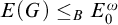
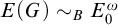
Surprisingly, we prove that there is NO Polish group G such that
 $$ \begin{align*}E_0^\omega<_B E(G)\leq_B {\mathbb{R}}^\omega/ c_0.\end{align*} $$
In stark contrast, Farah proved that the partially ordered set
 $P(\omega )/\mathrm {Fin}$
can be embedded into Borel equivalence relations between
 $E_0^\omega $
and
 ${\mathbb {R}}^\omega /c_0$
(see [Reference Farah7, Theorem 5.4]).
The above results stem from the following more precise theorem.
Theorem 1.3. Let G be a Polish group. Then the following are equivalent:
-
(1) G is TSI non-archimedean;
-
(2)
 $E(G)\leq _B E_0^\omega $
; and
-
(3)
$E(G)\leq _B {\mathbb {R}}^\omega /c_0$
.


In particular,
 $E(G)\sim _B E_0^\omega $
iff G is TSI uncountable non-archimedean.
To generalize the Rigid Theorem for locally compact abelian Polish groups mentioned above, we shall first generalize [Reference Ding and Zheng5, Theorem 6.13] to a highly technical theorem, namely the Pre-rigid Theorem (the statement of this theorem is too lengthy to include in the introduction). The Pre-rigid Theorem and all its applications involve a notion named strongly NSS Polish groups. A Polish group G is called strongly NSS if there exists an open neighborhood V of
 $1_G$
in G such that
 $$ \begin{align*}\forall(g_n)\in G^\omega\,(g_n\nrightarrow 1_G\Rightarrow\exists n_0<\cdots<n_k\,(g_{n_0}\cdots g_{n_k}\notin V)).\end{align*} $$
We employ the Pre-rigid Theorem to prove the following theorem, where
 $G_0$
is the connected component of
 $1_G$
in G.
Theorem 1.4. Let G be a TSI Polish group, and let H be a closed subgroup of the product of a sequence of TSI strongly NSS Polish groups. If
 $E(G)\le _BE(H)$
, then there exists a continuous homomorphism
 $S:W\rightarrow H$
such that
 $\ker (S)$
is non-archimedean, where
 $W\supseteq G_0$
is a countable intersection of clopen subgroups in G.
Moreover, the converse holds if
 $G=W$
,
 $S(G)$
is closed in H, and the interval
 $[0,1]$
can be embedded into H.
Several applications of the Pre-rigid Theorem and the above theorem are listed below.
Theorem 1.5. Let G be a TSI Polish group, and let H be a closed subgroup of the product of a sequence of TSI strongly NSS Polish groups. If H is totally disconnected but G is not, then
 $E(G)\nleq _BE(H)$
.
Recall that a Lie group is a group which is also a smooth manifold such that the group operations are smooth functions. Let G be a Lie group, then
 $G_0$
is an open normal subgroup of G. A completely metrizable topological group G is called a pro-Lie group if every open neighborhood of
 $1_G$
contains a normal subgroup N such that
 $G/N$
is a Lie group (see [Reference Hofmann and Morris9, Definition 1]).
Theorem 1.6. Let
 $G,H$
be two TSI Polish groups such that H is a pro-Lie group. If
 $E(G)\leq _B E(H)$
, then there exists a continuous homomorphism
 $S:G_0\rightarrow H$
such that
 $\ker (S)$
is non-archimedean.
Moreover, the converse holds if G is connected and
 $S(G)$
is closed in H.
The following theorem is a generalization of Theorem 1.1. It should be emphasized that all locally compact TSI groups are pro-Lie groups.
Theorem 1.7 (Rigid Theorem for locally compact TSI groups).
Let G be a locally compact connected TSI Polish group and H a TSI pro-Lie Polish group. Then
 $E(G)\leq _B E(H)$
iff there exists a continuous homomorphism
 $S:G\rightarrow H$
such that
 $\ker (S)$
is non-archimedean.
Note that a topological group G is a Lie group iff it is locally compact and there exists an open neighborhood V of
 $1_G$
in G such that no non-trivial subgroup of G is contained in V. This leads to a positive answer to [Reference Ding and Zheng5, Question 7.4] as follows:
Theorem 1.8 (Rigid Theorem for TSI Lie groups).
Let
 $G,H$
be two separable TSI Lie groups such that G is connected. Then
 $E(G)\leq _B E(H)$
iff there exists a continuous locally injective homomorphism
 $S:G\rightarrow H$
.
All separable Fréchet spaces, i.e., separable completely metrizable topological vector spaces, can be viewed as abelian Polish groups under the addition operation.
Theorem 1.9 (Rigid Theorem for Fréchet spaces).
Let
 $X,Y$
be two separable Fréchet spaces such that Y is a closed subgroup of the product of a sequence of TSI strongly NSS Polish groups. Then
 $E(X)\leq _B E(Y)$
iff X is topologically isomorphic to a closed linear subspace of Y.
All Banach spaces are Fréchet spaces. We point out that a separable Banach space X is not strongly NSS iff it has a closed linear subspace topologically isomorphic to
 $c_0$
. This implies that:
Theorem 1.10 (Rigid Theorem for Banach spaces).
Let
 $X,Y$
be two separable Banach spaces such that Y contains no closed linear subspaces topologically isomorphic to
 $c_0$
. Then
 $E(X)\leq _B E(Y)$
iff X is topologically isomorphic to a closed linear subspace of Y.
In addition, we attempt to study some examples induced by totally disconnected TSI Polish groups. For
 $p\in [1,+\infty )$
and
 $a\in c_0$
, let
 $$ \begin{align*}I_a=\{n\in\omega: a(n)\neq 0\},\quad A_{p,a}=\{v\in l_p:\forall n\,(v(n)\in a(n)\mathbb{Z})\}.\end{align*} $$
If
 $I_a$
is infinite, then
 $A_{p,a}$
is a totally disconnected, strongly NSS abelian Polish group, but is not non-archimedean. In particular, we let
 $d(n)=2^{-n}$
, and define
 $$ \begin{align*}A_p=A_{p,d}=\{v\in l_p:\forall n\,(v(n)\in 2^{-n}\mathbb Z)\}.\end{align*} $$
Theorem 1.11. For
 $p,q\in [1,+\infty )$
and
 $a\in c_0$
, the following hold:
-
(1) if
$I_a$
is a nonempty finite set, then
$E(A_{p,a})\sim _B E_0$
; -
(2) if
$I_a$
is infinite, then
$E(A_{p,a})\sim _B E(A_p)$
; -
(3)
$E(A_p)<_B E(l_p)$
; -
(4)
$E(A_p)\leq _B E(l_q)\iff p=q$
; and -
(5)
$E(A_p)\leq _B E(A_q)\iff p=q$
.


This article is organized as follows. In Section 2, we recall some notions in descriptive set theory and also recall some notions and results originated from [Reference Ding and Zheng5] that will be repeatedly used in this article. In Section 3, we prove Theorem 1.2. It is worth noting that some notation defined in this section will continue to be used in Section 5. In Section 4, we prove Theorem 1.3. In Section 5, we prove the Pre-rigid Theorem, which will serve as the foundation for the subsequent sections. In Section 6, we prove Theorems 1.4–1.10. Finally, in Section 7, we prove Theorem 1.11.
2 Preliminaries
In this article, all groups are assumed to contain at least two elements. Any linear space can be viewed as an abelian group. The addition operation in it, as well as in all its subgroups, is denoted by
 $+$
, and its identity element is denoted by
 $0$
. Unless otherwise specified, for any abstract topological group G, we use multiplicative notation to express the group operation, and
 $1_G$
to express the identity element of G.
Given a topological group G, the connected component of
 $1_G$
is denoted by
 $G_0$
, which is clearly a closed normal subgroup of G. Note that G is totally disconnected iff
 $G_0=\{1_G\}$
. It is worth noting that any open subgroup H of G is also closed, since
 $H=G\setminus \{gH:g\notin H\}$
.
A topological space is Polish if it is separable and completely metrizable. For further details in descriptive set theory, we refer to [Reference Kechris13]. We say a topological group is Polish if its topology is Polish. Consider a Polish group G and a Polish space X. A continuous action of G on X, denoted by
 $G\curvearrowright X$
, is a continuous map
 $a:G\times X\to X$
which satisfies that
 $a(1_G,x)=x$
and
 $a(gh,x)=a(g,a(h,x))$
for
 $g,h\in G$
and
 $x\in X$
. For brevity, we write
 $gx$
in place of
 $a(g,x)$
. The orbit equivalence relation
 $E_G^X$
is defined as
 $$ \begin{align*}xE_G^Xy\iff\exists g\in G\,(gx=y).\end{align*} $$
A Polish group is non-archimedean if it has a neighborhood basis of the identity element consisting of open subgroups. A metric d on a group G is left-invariant if
 $d(gh,gk)=d(h,k)$
for all
 $g,h,k\in G$
; we also define right-invariant metric similarly. We say that d is two-sided invariant if it is both left-invariant and right-invariant. The Birkhoff–Kakutani theorem asserts that every metrizable topological group admits a compatible left-invariant metric (see [Reference Gao8, Theorem 2.1.1]). We say a Polish group G is CLI if it admits a compatible complete left-invariant metric; and say G is TSI if it admits a compatible two-sided invariant metric. A compatible two-sided invariant metric on a Polish group is necessarily complete (see [Reference Gao8, Corollary 2.2.2]). Clearly, every TSI Polish group is also CLI. All compact or abelian Polish groups are TSI, and all locally compact Polish groups are CLI (see [Reference Gao8, Exercises 2.1.8 and 2.2.5]).
Given two equivalence relations E and F on two sets X and Y respectively, we say a map
 $f:X\rightarrow Y$
is an
 $(E,F)$
-homomorphism if
 $$ \begin{align*}xEy\Rightarrow f(x)Ff(y)\end{align*} $$
for any
 $x,y\in X$
. Moreover, f is called a reduction of E to F if
 $$ \begin{align*}xEy\Longleftrightarrow f(x)F f(y)\end{align*} $$
for all
 $x,y\in X$
. In particular, if both
 $X,Y$
are Polish spaces, we say E is Borel reducible to F, denoted by
 $E\leq _B F$
, if there exists a Borel reduction of E to F. We write
 $E\sim _B F$
if both
 $E\leq _B F$
and
 $F\leq _B E$
hold; and write
 $E<_B F$
if
 $E\leq _B F$
and
 $F\nleq _B E$
. We refer to [Reference Gao8] for background on Borel reducibility.
We recall some benchmark equivalence relations in the research of Borel reducibility. The equivalence relation
 $E_0$
on
 $2^\omega $
is defined as
 $$ \begin{align*}xE_0y\iff\exists m\,\forall n>m\,(x(n)=y(n)).\end{align*} $$
If E is an equivalence relation on a Polish space X, we define an equivalence relation
 $E^\omega $
on
 $X^\omega $
as
 $$ \begin{align*}xE^\omega y\iff\forall n\,(x(n)Ey(n)).\end{align*} $$
The equivalence relation
 ${\mathbb {R}}^\omega /c_0$
on
 ${\mathbb {R}}^\omega $
is defined as
 $$ \begin{align*}x{\mathbb{R}}^\omega/c_0 y \iff \lim_nx(n)-y(n)=0.\end{align*} $$
Now we recall the definition of equivalence relations induced by Polish groups as below, and list some relevant notions and results that will be repeatedly used throughout the rest of this article.
Definition 2.1 [Reference Ding and Zheng5, Definition 3.1].
Let G be a Polish group. We define an equivalence relation
 $E(G)$
on
 $G^\omega $
as: for
 $x,y\in G^\omega $
,
 $$ \begin{align*}xE(G)y\iff\lim_nx(n)y(n)^{-1}\text{ converges}.\end{align*} $$
We say
 $E(G)$
is the equivalence relation induced by G. Moreover, we define
 $c(G)=\{x\in G^\omega :\lim _nx(n)\text { converges}\}$
. Then we have
 $$ \begin{align*}xE(G)y\iff xy^{-1}\in c(G)\iff c(G)x=c(G)y.\end{align*} $$
For TSI Polish groups G, it is more convenient to take the following
 $E_*(G)$
as research object than
 $E(G)$
.
Definition 2.2 [Reference Ding and Zheng5, Definition 6.1].
Let G be a Polish group. We define an equivalence relation
 $E_*(G)$
on
 $G^\omega $
as: for
 $x,y \in G^\omega $
,
 $$ \begin{align*}x E_*(G)y\iff\lim_nx(0)x(1)\cdots x(n)y(n)^{-1}\cdots y(1)^{-1}y(0)^{-1}\text{ converges}.\end{align*} $$
It is trivial that
 $E(G)\sim _B E_*(G)$
(see [Reference Ding and Zheng6, Proposition 2.2]). In this article, we will use these two equivalence relations interchangeably without further explanation.
For brevity, we define
 $$ \begin{align*}(x,y)|_m^n=x(m)\cdots x(n)y(n)^{-1}\cdots y(m)^{-1}\end{align*} $$
for
 $x,y\in G^\omega $
and
 $m\leq n$
. It is clear that
 $$ \begin{align*}x E_*(G)y\iff\lim_n(x,y)|_0^n\text{ converges.}\end{align*} $$
Let G be a TSI Polish group and d a compatible complete two-sided invariant metric on G. Define for the sake of brevity
 $$ \begin{align*}d(x,y)|_{[m,n+1)}=d(x,y)|_{[m,n]}=d(x(m)\cdots x(n),y(m)\cdots y(n))\end{align*} $$
for
 $x,y\in G^\omega $
and
 $m\leq n$
. Clearly, we have
 $d(x,y)|_{[m,n]}=d(1_G,(x,y)|_m^n)$
.
Proposition 2.3 [Reference Ding and Zheng5, Proposition 3.4].
Let
 $G,H$
be two Polish groups. If G is topologically isomorphic to a closed subgroup of H, then
 $E(G)\leq _B E(H)$
.
Lemma 2.4 [Reference Ding and Zheng5, Lemma 6.2].
Let G be a TSI Polish group, d a compatible complete two-sided invariant metric on G.
-
(1) For
$g_0,\ldots ,g_n,h_0,\ldots ,h_n\in G$
, we have
$$ \begin{align*}d(g_0\cdots g_n,h_0\cdots h_n)=d(g_0\cdots g_nh_n^{-1}\cdots h_0^{-1},1_G)\le\sum_{k=0}^nd(g_k,h_k).\end{align*} $$
-
(2) For
$x,y\in G^\omega $
, we have
$$ \begin{align*}x E_*(G)y\iff\lim_m\sup_{n>m}{d(x,y)|_{[m,n]}}=0.\end{align*} $$
-
(3) For
$x,y\in G^\omega $
, if
$xE_*(G)y$
, then
$\lim _nd(x(n),y(n))=0$
.


Now we recall the notion of additive reduction and a powerful lemma which converts a Borel reduction to an additive reduction.
Definition 2.5 (Farah [Reference Farah7]).
-
(1) A map
$\psi :\prod _nX_n\to \prod _nX_n'$
is additive if there exist
$0=l_0<l_1<\cdots <l_j<\cdots $
and maps
$T_j:X_j\to \prod _{n\in [l_j,l_{j+1})}X_n'$
such that, for
$x\in \prod _nX_n$
,
$$ \begin{align*}\psi(x)=T_0(x(0))^\smallfrown T_1(x(1))^\smallfrown T_2(x(2))^\smallfrown\cdots.\end{align*} $$
-
(2) Let E and F be two equivalence relations on
$\prod _nX_n$
and
$\prod _nX_n'$
respectively, we say that E is additive reducible to F, denote by
$E\le _AF$
, if there exists an additive reduction of E to F.


Let E be an equivalence relation on
 $\prod _nX_n$
, and let
 $I\subseteq \omega $
be infinite. Fix an element
 $w\in \prod _{n\notin I}X_n$
. For
 $x\in \prod _{n\in I}X_n$
, define
 $x\oplus w\in \prod _nX_n$
as:
 $(x\oplus w)(n)=x(n)$
for
 $n\in I$
and
 $(x\oplus w)(n)=w(n)$
for
 $n\notin I$
. We define
 $E|_I^w$
on
 $\prod _{n\in I}X_n$
as: for
 $x,y\in \prod _{n\in I}X_n$
,
 $$ \begin{align*}xE|_I^wy\iff(x\oplus w)E(y\oplus w).\end{align*} $$
Let
 $(F_n)$
be a sequence of finite sets. A special equivalence relation
 $E_0(\prod _nF_n)$
defined as: for
 $x,y\in \prod _nF_n$
,
 $$ \begin{align*}xE_0\left(\prod_nF_n\right)y\iff\exists m\,\forall n>m\,(x(n)=y(n)).\end{align*} $$
Lemma 2.6 [Reference Ding and Zheng5, Lemma 6.9].
Let E be a Borel equivalence relation on
 $\prod _nF_n$
with
 $E_0(\prod _nF_n)\subseteq E$
, where all
 $F_n$
are finite sets. Let H be a TSI Polish group. If
 $E\le _BE_*(H)$
, then there exist an infinite set
 $I\subseteq \omega $
and a
 $w\in \prod _{n\notin I}F_n$
such that
 $E|_I^w\le _AE_*(H)$
. In other words, there are natural numbers
 $0=n_0<n_1<n_2<\cdots $
with
 $I=\{n_j:j\in \omega \}$
,
 $0=l_0<l_1<l_2<\cdots $
, maps
 $T_{n_j}:F_{n_j}\to H^{l_{j+1}-l_j}$
, and
 $\psi :\prod _{n\in I}F_n\to H^\omega $
with
 $$ \begin{align*}\psi(x)=T_{n_0}(x(n_0))^\smallfrown T_{n_1}(x(n_1))^\smallfrown T_{n_2}(x(n_2))^\smallfrown\cdots,\end{align*} $$
such that
 $\psi $
is an additive reduction of
 $E|_I^w$
to
 $E_*(H)$
.
The following notions and results are not directly presented in [Reference Ding and Zheng5], but ideas of them have already appeared in it.
Definition 2.7. Given two sets
 $X,Y$
and a map
 $S:X\to Y$
, we define two maps
 $S^\omega :X^\omega \to Y^\omega $
and
 $S^\#:X^\omega \to Y^\omega \times X^\omega $
as: for
 $x\in X^\omega $
and
 $n\in \omega $
,
 $$ \begin{align*}S^\omega(x)(n)=S(x(n)),\end{align*} $$
 $$ \begin{align*}S^\#(x)=(S^\omega(x),x).\end{align*} $$
For any metric space
 $(M,d)$
, recall that
 $E(M;0)$
is an equivalence relation on
 $M^\omega $
(see [Reference Ding3, Definition 3.2]) defined as: for
 $x,y\in M^\omega $
,
 $$ \begin{align*}xE(M;0)y\iff\lim_nd(x(n),y(n))=0.\end{align*} $$
Note that, for any Polish group G, the equivalence relation
 $E(G;0)$
is independent of any choice of left-invariant compatible metric d on G, since
 $d(x(n),y(n))\to 0$
iff
 $x(n)^{-1}y(n)\to 1_G$
.
Proposition 2.8. Let
 $G,H$
be two TSI Polish groups, and let
 $S:G\to H$
. Then the following are equivalent:
-
(1) For all
$x,y\in G^\omega $
, if
$\lim _nx(n)^{-1}y(n)=1_G$
, then
$$ \begin{align*}xE_*(G)y\iff S^\omega(x)E_*(H)S^\omega(y).\end{align*} $$
-
(2)
$S^\#$
is a reduction of
$E_*(G)$
to
$E_*(H)\times E(G;0)$
.


Proof. This is an easy corollary of Lemma 2.4(3).
Lemma 2.9. Let
 $G,H$
be two TSI Polish groups such that
 $E_*(G)\le _B E_*(H)\times E(G;0)$
. If the interval
 $[0,1]$
can be embedded into H, or
 $E(G;0)\le _B E(H;0)$
holds, then we have
 $E_*(G)\le _B E_*(H)$
.
Proof. By [Reference Ding3, Theorem 3.4(ii)], we have
 $E(G;0)\le _B E([0,1];0)$
.
Let
 $f:[0,1]\to H$
be an embedding. By the uniformly continuity of f and
 $f^{-1}:f([0,1])\to [0,1]$
, we see that
 $E([0,1];0)\sim _B E(f([0,1]);0)\le _B E(H;0)$
. So
 $E_*(G)\le _B E_*(H)\times E(H;0)$
.
Finally, by [Reference Ding and Zheng5, Lemma 6.3], we obtain
 $E_*(H)\times E(H;0)\le _B E_*(H)$
.
3 Non-TSI vs TSI Polish groups
In this section, we show that we can use Borel reducibility among equivalence relations induced by Polish groups to characterize the class of TSI Polish groups.
Let G be a CLI Polish group, H a TSI Polish group. Suppose that
 $d_G'$
is a compatible complete left-invariant metric on G and
 $d_H$
is a compatible complete two-sided invariant metric on H. Put
 $d_G(g,g')=d_G'(g^{-1},(g')^{-1})$
for
 $g,g'\in G$
. It is trivial to check that
 $d_G$
is a compatible complete right-invariant metric on G.
Assume that
 $E_*(G)\le _BE_*(H)$
. Let
 $(F_n)$
be a sequence of finite subsets of G such that
-
(i)
$1_G\in F_n=F_n^{-1}$
; -
(ii)
$F_{n-1}^{n}\subseteq F_n$
; and -
(iii)
$\bigcup _nF_n$
is dense in G.


Denote by E the restriction of
 $E_*(G)$
on
 $\prod _nF_n$
. By Lemma 2.6, there exist a
 $w\in \prod _{n\notin I}F_n$
and natural numbers
 $0=n_0<n_1<n_2<\cdots $
with
 $I=\{n_j:j\in \omega \}$
,
 $0=l_0<l_1<l_2<\cdots $
, maps
 $T_{n_j}:F_{n_j}\to H^{l_{j+1}-l_j}$
, and
 $\psi :\prod _{n\in I}F_n\to H^\omega $
with
 $$ \begin{align*}\psi(x)=T_{n_0}(x(n_0))^\smallfrown T_{n_1}(x(n_1))^\smallfrown T_{n_2}(x(n_2))^\smallfrown\cdots,\end{align*} $$
such that
 $\psi $
is an additive reduction of
 $E|_I^w$
to
 $E_*(H)$
.
Put
 $u_{n_0}=1_G$
, and for
 $j>0$
, let
 $$ \begin{align*}u_{n_j}=w(n_{j-1}+1)\cdots w(n_j-1).\end{align*} $$
By (i) and (ii),
 $u_{n_j}^{-1}\in F_{n_j}$
for each
 $j\in \omega $
.
Define
 $x_0\in \prod _{n\in I}F_n$
as
 $$ \begin{align*}x_0(n_j)=u_{n_j}^{-1}\quad(\forall j\in\omega).\end{align*} $$
We may assume that
 $\psi (x_ 0)=1_{H^\omega }$
, otherwise we can replace
 $\psi $
with the following
 $\psi '$
: for
 $x\in \prod _{n\in I}F_n$
and
 $k\in \omega $
,
 $$ \begin{align*}\psi'(x)(k)=\psi(x_0)(0)\cdots\psi(x_0)(k-1)\psi(x)(k)\psi(x_0)(k)^{-1}\cdots\psi(x_0)(0)^{-1}.\end{align*} $$
Clearly,
 $(\psi (x),\psi (y))|_0^k=(\psi '(x),\psi '(y))|_0^k$
, so we have
 $$ \begin{align*}\psi(x)E_*(H)\psi(y)\iff\psi'(x)E_*(H)\psi'(y)\end{align*} $$
holds for
 $x,y\in \prod _{n\in I}F_n$
. Hence
 $\psi '$
is an additive reduction of
 $E|_I^w$
to
 $E_*(H)$
with
 $\psi '(x_0)=1_{H^\omega }$
, as desired.
For
 $s=(h_0,\ldots ,h_{l-1})$
and
 $t=(h_0',\ldots ,h_{l-1}')$
in
 $H^l$
, we define
 $$ \begin{align*}d_H^\infty(s,t)=\max_{0\le i\le m<l}d_H(h_i\cdots h_m,h_i'\cdots h_m').\end{align*} $$
For any integer
 $j>0$
and
 $g\in F_{n_j-1}$
, it is worth noting that
 $$ \begin{align*}u_{n_j}^{-1}g=w(n_j-1)^{-1}\cdots w(n_{j-1}+1)^{-1}g\in F_{n_j-1}^{n_j}\subseteq F_{n_j}.\end{align*} $$
Lemma 3.1. For any
 $q\in \omega $
, there exists a
 $\delta _q>0$
such that
 $$ \begin{align*}\forall^\infty n\in I\,\forall g,g'\in F_{n-1}\,(d_G(g,g')<\delta_q\Rightarrow d_H^\infty(T_n(u_n^{-1}g),T_n(u_n^{-1}g'))<2^{-q}).\end{align*} $$
Proof. If not, then there exist an
 $\varepsilon _0>0$
, a strictly increasing sequence
 $(j_k)$
, and
 $g_k,g_k'\in F_{n_{j_k}-1}$
for each k, such that
 $$ \begin{align*}d_G(g_k,g_k')<2^{-(k+1)},\quad d_H^\infty(T_{n_{j_k}}(u_{n_{j_k}}^{-1}g_k),T_{n_{j_k}}(u_{n_{j_k}}^{-1}g_k'))\ge\varepsilon_0.\end{align*} $$
Since
 $d_G$
is right-invariant, we have
 $\lim _kg_k'g_k^{-1}=1_G$
. We shall inductively find a strictly increasing sequence of natural numbers
 $k_0<k_1<\cdots $
so that
 $$ \begin{align*}d_G(g_{k_0}'\cdots g_{k_{p-1}}'g_{k_{p-1}}^{-1}\cdots g_{k_0}^{-1},g_{k_0}'\cdots g_{k_p}'g_{k_p}^{-1}\cdots g_{k_0}^{-1})<2^{-p}\end{align*} $$
for each integer
 $p>0$
. Put
 $k_0=0$
first. Assume that
 $k_0,\ldots ,k_{p-1}$
have been found. By the continuity of group operations, there is some
 $\delta>0$
such that, for
 $g,g'\in G$
with
 $d_G(1_G,g'g^{-1})<\delta $
, we have
 $$ \begin{align*}d_G(g_{k_0}'\cdots g_{k_{p-1}}'1_Gg_{k_{p-1}}^{-1}\cdots g_{k_0}^{-1},g_{k_0}'\cdots g_{k_{p-1}}'g'g^{-1}g_{k_{p-1}}^{-1}\cdots g_{k_0}^{-1})<2^{-p}.\end{align*} $$
Then we can find a
 $k_p>k_{p-1}$
large enough so that
 $d_G(1_G,g_{k_p}'g_{k_p}^{-1})<\delta $
. This completes the induction. It follows that, for
 $m>p$
, we have
 $$ \begin{align*}d_G(g_{k_0}'\cdots g_{k_p}'g_{k_p}^{-1}\cdots g_{k_0}^{-1},g_{k_0}'\cdots g_{k_m}'g_{k_m}^{-1}\cdots g_{k_0}^{-1})<\sum_{i=p+1}^m 2^{-i}<2^{-p}.\end{align*} $$
Since
 $d_G$
is complete, we get that
 $$ \begin{align*}\lim_pg_{k_0}'\cdots g_{k_p}'g_{k_p}^{-1}\cdots g_{k_0}^{-1}\text{ converges.}\end{align*} $$
For each
 $n\in I$
, put
 $$ \begin{align*}x(n)=\left\{\begin{array}{ll}u_n^{-1}g_{k_p}', & n=n_{j_{k_p}}, \\ u_n^{-1}, & \text{otherwise,}\end{array}\right.\quad y(n)=\left\{\begin{array}{ll}u_n^{-1}g_{k_p}, & n=n_{j_{k_p}}, \\ u_n^{-1}, & \text{otherwise.}\end{array}\right.\end{align*} $$
For any
 $n\ge n_{j_{k_0}}$
, let
 $p_n$
be the largest p such that
 $n_{j_{k_p}}\le n$
. Note that
 $$ \begin{align*}(x\oplus w,y\oplus w)|_0^n=g_{k_0}'\cdots g_{k_{p_n}}'g_{k_{p_n}}^{-1}\cdots g_{k_0}^{-1},\end{align*} $$
so
 $(x\oplus w)E_*(G)(y\oplus w)$
. But for each
 $p\in \omega $
, if
 $k=k_p$
, then
 $$ \begin{align*}\max_{l_{j_k}\le i\le m<l_{j_k+1}}d_H(\psi(x),\psi(y))|_{[i,m]}= d_H^\infty(T_{n_{j_k}}(u_{n_{j_k}}^{-1}g_k'),T_{n_{j_k}}(u_{n_{j_k}}^{-1}g_k))\ge\varepsilon_0. \end{align*} $$
So
 $\psi (x)E_*(H)\psi (y)$
fails, contradicting that
 $\psi $
is a reduction.
Definition 3.2. For any
 $g\in \bigcup _nF_n$
, if
 $g\in F_n$
for some
 $n<n_j$
, then
 $u_{n_j}^{-1}g\in F_{n_j}$
, so
 $T_{n_j}(u_{n_j}^{-1}g)\in H^{l_{j+1}-l_j}$
. This allows us to define
 $$ \begin{align*}S_{n_j}(g)=T_{n_j}(u_{n_j}^{-1}g)(0)\cdots T_{n_j}(u_{n_j}^{-1}g)(l_{j+1}-l_j-1)\in H.\end{align*} $$
Recall that
 $\psi (x_ 0)=1_{H^\omega }$
, this implies that
 $$ \begin{align*}S_{n_j}(1_G)=T_{n_j}(u_{n_j}^{-1})(0)\cdots T_{n_j}(u_{n_j}^{-1})(l_{j+1}-l_j-1)=1_H\end{align*} $$
for all
 $j\in \omega $
. It is clear that, for
 $g,g'\in F_n$
with
 $n<n_j$
,
 $$ \begin{align*}d_H(S_{n_j}(g),S_{n_j}(g'))\le d_H^\infty(T_{n_j}(u_{n_j}^{-1}g),T_{n_j}(u_{n_j}^{-1}g')).\end{align*} $$
Lemma 3.3. Let
 $x,y\in \prod _{n\in I}F_n$
such that
 $\lim _j d_G(x(n_j),y(n_j))=0$
and
 $x(n_j),y(n_j)\in F_{n_j-1}$
for all
 $j>0$
. Then
 $$ \begin{align*}\psi(x') E_*(H)\psi(y')\iff\lim_j(\psi(x'),\psi(y'))|_0^{l_j-1}\text{ converges},\end{align*} $$
where
 $x'(n)=u_{n}^{-1}x(n),y'(n)=u_{n}^{-1}y(n)$
for all
 $n\in I$
.
Proof. If
 $\psi (x') E_*(H)\psi (y')$
, then
 $\lim _p(\psi (x'),\psi (y'))|_0^{p}\text { converges}.$
In particular,
 $\lim _j(\psi ( x'),\psi (y'))|_0^{l_j-1}\text {converges}.$
Conversely, suppose
 $\lim _j(\psi (x'),\psi (y'))|_0^{l_j-1}$
converges. For any
 $q\in \omega $
, by Lemma 3.1, there is a
 $\delta _q\in \omega $
such that
 $$ \begin{align*}\forall^\infty n\in I\,\forall g,g'\in F_{n-1}\,(d_G(g,g')<\delta_q\Rightarrow d_H^\infty(T_n(u_n^{-1}g),T_n(u_n^{-1}g'))<2^{-q}).\end{align*} $$
Since
 $\lim _j d_G(x(n_j),y(n_j))=0$
and
 $x(n_j),y(n_j)\in F_{n_j-1}$
for any integer
 $j>0$
, there exists a
 $j_0\in \omega $
such that
 $$ \begin{align*}\forall j>j_0\, (d_H^\infty(T_{n_j}(u_{n_j}^{-1}x(n_j)),T_{n_j}(u_{n_j}^{-1}y(n_j)))<2^{-q}).\end{align*} $$
Then for any
 $j,k\in \omega $
with
 $j>j_0$
and
 $l_j\leq k<l_{j+1}$
, since
 $d_H$
is two-sided invariant, we have
 $$ \begin{align*}\begin{array}{r@{\;}l} d_H((\psi(x'),\psi(y'))|_0^{l_j-1},(\psi(x'),\psi(y'))|_0^{k})&=d_H(\psi(x'),\psi(y'))|_{[l_j,k]} \\ &\leq d_H^\infty(T_{n_j}(x'(n_j)),T_{n_j}(y'(n_j))) \\ &<2^{-q}.\end{array}\end{align*} $$
So by the convergency of
 $\lim _j(\psi (x'),\psi (y'))|_0^{l_j-1}$
, we obtain that
 $$ \begin{align*}\lim_k(\psi(x'),\psi(y'))|_0^{k}\text{ converges},\end{align*} $$
and hence
 $\psi (x') E_*(H)\psi (y')$
.
The following proposition may be well known. We provide a proof here for the convenience of readers.
Proposition 3.4 (folklore).
Let G be a Polish group. Then G is TSI iff for all sequences
 $(g_p)$
and
 $(g_p')$
in G, we have
 $$ \begin{align*}\lim_pg_pg_p'=1_G\iff\lim_pg_p'g_p=1_G.\end{align*} $$
Proof. Suppose G is TSI, and let
 $d_G$
be a compatible complete two-sided invariant metric on G. Then we have
 $d_G(1_G,g_pg_p')=d_G(g_p^{-1},g_p')=d_G(1_G,g_p'g_p)$
, so
 $\lim _pg_pg_p'=1_G\iff \lim _pg_p'g_p=1_G$
.
On the other hand, fix an open neighborhood basis
 $(V_n)$
of
 $1_G$
. We claim that
 $$ \begin{align*}\forall n\,\exists m_n\,\forall g\in G\,(gV_{m_n}g^{-1}\subseteq V_n).\end{align*} $$
If not, there exist an
 $n_0$
and two sequences
 $(g_p),(h_p)$
in G such that
 $\lim _ph_p=1_G$
, but
 $g_ph_pg_p^{-1}\notin V_{n_0}$
for each
 $p\in \omega $
. Put
 $g_p'=h_pg_p^{-1}$
. It is clear that
 $\lim _pg_p'g_p=1_G$
, but
 $g_pg_p'\nrightarrow 1_G$
, which is a contradiction.
Now we put
 $U_n=\bigcup _{g\in G}gV_{m_n}g^{-1}$
. Note that
 $U_n\subseteq V_n$
for each
 $n\in \omega $
. Therefore,
 $(U_n)$
is also an open neighborhood basis of
 $1_G$
with
 $gU_ng^{-1}=U_n$
for all
 $g\in G$
and
 $n\in \omega $
. By [Reference Gao8, Exercise 2.1.4], G admits a compatible two-sided invariant metric. Hence G is TSI (see [Reference Becker and Kechris2, Corollary 1.2.2]).
Theorem 3.5. Let
 $G,H$
be two Polish groups. If H is TSI but G is not, then
 $E(G)\not \le _BE(H)$
.
Proof. Assume toward a contradiction that
 $E(G)\leq _B E(H)$
. By [Reference Ding and Zheng5, Theorem 4.3], it suffices to consider the case that G is CLI. Let
 $d_G$
be a compatible complete right-invariant metric on G and
 $d_H$
a compatible complete two-sided invariant metric on H.
We use the notation defined earlier in this section.
Since G is not TSI, by Proposition 3.4, there are two sequences
 $(g_p),(g_p')$
of elements of G such that
 $\lim _pg^{\prime }_pg_p=1_G$
, but
 $g_pg_p'\nrightarrow 1_G$
. Since
 $d_G$
is right-invariant,
 $\lim _p d_G(g^{\prime }_p,g_p^{-1})=0$
. By transferring to a subsequence, we may assume that, there is a
 $\delta>0$
such that
 $\inf _p d_G(1_G,g_pg^{\prime }_p)>\delta $
.
Since
 $\bigcup _n F_n$
is dense, by perturbation, we may assume that
 $\{g_p,g_p':p\in \omega \}\subseteq \bigcup _n F_n$
. By Lemma 3.1 and Definition 3.2, we can find two sequence
 $(p(i))$
and
 $(q(i))$
of natural numbers so that
-
(i)
$g_{p(i)},g_{p(i)}'\in F_{n_{q(i)}-1}$
; -
(ii)
$d_H(S_{n_{q(i)+1}}(g^{\prime }_{p(i)}),S_{n_{q(i)+1}}(g_{p(i)}^{-1}))<2^{-i}$
; and -
(iii) for each
$i\in \omega $
,
$0<p(i)<q(i)<q(i)+1<p(i+1)$
.


For each
 $n\in I$
, define
 $$ \begin{align*}x(n)=\left\{\begin{array}{ll} u_n^{-1} g_{p(i)}, & n=n_{q(i)}, \\ u_n^{-1}g^{\prime}_{p(i)}, & n=n_{q(i)+1}, \\ u_n^{-1},& \text{otherwise}, \end{array}\right. \quad y(n)=\left\{\begin{array}{ll} u_n^{-1}g_{p(i)}, & n=n_{q(i)}, \\ u_n^{-1}g_{p(i)}^{-1}, & n=n_{q(i)+1}, \\ u_n^{-1},& \text{otherwise}. \end{array}\right. \end{align*} $$
For
 $j\in \omega $
, by letting
 $h^{\prime }_j=S_{n_j}(u_{n_j}x(n_j))$
and
 $h_j=S_{n_j}(u_{n_j}y(n_j))$
, we have
 $$ \begin{align*}(\psi(x),\psi(y))|_0^{l_{j+1}-1}=h^{\prime}_0\cdots h^{\prime}_jh_j^{-1}\cdots h_0^{-1}.\end{align*} $$
For
 $i\in \omega $
and
 $m>j>q(i)+1$
, it follows from (ii) and Lemma 2.4(1) that
 $$ \begin{align*}d_H(h^{\prime}_j\cdots h^{\prime}_m,h_j\cdots h_m)<\sum_{k>i} 2^{-k}<2^{-i}.\end{align*} $$
Now by Lemma 2.4(2),
 $$ \begin{align*}\lim_j(\psi(x),\psi(y))|_0^{l_{j+1}-1}=\lim_jh^{\prime}_0\cdots h^{\prime}_jh_j^{-1}\cdots h_0^{-1}\text{ converges}.\end{align*} $$
Note that
 $\lim _i d_G(g^{\prime }_{p(i)},g_{p(i)}^{-1})=0$
. So by Lemma 3.3, we have
 $$ \begin{align*}\psi(x) E_*(H)\psi(y),\end{align*} $$
and hence
 $(x\oplus w) E_*(G)(y\oplus w)$
. In particular,
 $$ \begin{align*}\lim_i(x\oplus w,y\oplus w)|_0^{n_{q(i)+1}}=\lim_i g_{p(0)}g^{\prime}_{p(0)}\cdots g_{p(i)}g^{\prime}_{p(i)}\text{ converges}.\end{align*} $$
Therefore, it follows that
 $$ \begin{align*}\lim_i g_{p(i)}g^{\prime}_{p(i)}=\lim_i(g_{p(0)}g^{\prime}_{p(0)}\cdots g_{p(i-1)}g^{\prime}_{p(i-1)})^{-1}g_{p(0)}g^{\prime}_{p(0)}\cdots g_{p(i)}g^{\prime}_{p(i)}=1_G.\end{align*} $$
We obtain a contradiction.
4 A gap between
$E_0^\omega $
and
${\mathbb {R}}^\omega /c_0$


In this section, we prove that there is NO Polish group G satisfying that
 $$ \begin{align*}E_0^\omega<_B E(G)\leq_B {\mathbb{R}}^\omega/c_0.\end{align*} $$
To do so, we need the following notions. The author [Reference Ding4] defined equivalence relations
 $E(X,(x_n))$
and
 ${\mathbb {R}}^\omega /\mathrm {cs}$
. Let
 $(x_n)$
be a sequence in a Banach space X. We define an equivalence relation
 $E(X,(x_n ))$
on
 ${\mathbb {R}}^\omega $
as: for any
 $a,b\in {\mathbb {R}}^\omega $
,
 $$ \begin{align*}(a,b)\in E(X,(x_n ))\iff\sum_{n}(a(n)-b(n))x_n \text{ converges in } X.\end{align*} $$
The equivalence relation
 ${\mathbb {R}}^\omega /\mathrm {cs}$
is defined as: for any
 $a,b\in {\mathbb {R}}^\omega $
,
 $$ \begin{align*}(a,b)\in{\mathbb{R}}^\omega/\mathrm{cs}\iff\sum_{n}(a(n)-b(n)) \text{ converges in }{\mathbb{R}} .\end{align*} $$
The following lemma is an easy corollary of [Reference Ding4, Lemma 4.2].
Lemma 4.1. Let E be a Borel equivalence relation on
 $\prod _nF_n$
with
 $E_0(\prod _nF_n)\subseteq E$
, where all
 $(F_n)$
are finite sets. If
 $E\le _B {\mathbb {R}}^\omega /c_0$
, then there exist an infinite set
 $I\subseteq \omega $
and a
 $w\in \prod _{n\notin I}F_n$
such that
 $E|_I^w\le _A{\mathbb {R}}^\omega /c_0$
.
Proof. Let
 $e_n=(0,\ldots ,0,\overset {n}1,0,\ldots )$
for each integer
 $n>0$
. Then
 $(e_n)$
is the canonical Schauder basis of
 $c_0$
. Note that
 $E(c_0,(e_n))={\mathbb {R}}^\omega /c_0$
. By applying [Reference Ding4, Lemma 4.2] to
 $E(c_0,(e_n))$
, we conclude the proof.
Theorem 4.2. Let G be a Polish group. If
 $E(G)\leq _B {\mathbb {R}}^\omega /c_0$
, then G is TSI non-archimedean.
Proof. Suppose
 $E(G)\leq _B {\mathbb {R}}^\omega /c_0$
. Note that
 ${\mathbb {R}}^\omega /c_0<_B{\mathbb {R}}^\omega /\mathrm {cs}=E_*({\mathbb {R}})$
(see [Reference Ding4, Theorem 5.9(i)]). By Theorem 3.5, G is also TSI. Let
 $d_G$
be a compatible complete two-sided invariant metric on G. Put
 $V_k=\{g\in G:d_G(1_G,g)<2^{-k}\}$
.
Assume for contradiction that G is not non-archimedean. Then there is a
 $K\in \omega $
such that
 $V_K$
contains no open subgroups of G. It is clear that
 $V_k=V_k^{-1}$
and
 $\bigcup _mV_k^m$
is an open subgroup which is not contained in
 $V_K$
. So there exists
 $m_k>0$
with
 $V_k^{m_k}\not \subseteq V_K$
for each k. We can find
 $g_{k,0},\ldots ,g_{k,m_k-1}\in V_k$
such that
 $g_{k,0}\cdots g_{k,m_k-1}\notin V_K$
. Put
 $h_j=g_{k,i}$
for
 $j=\sum _{l<k}m_l+i$
with
 $i<m_k$
. Then we have
 $\lim _j h_j=1_G$
. By Cauchy Criterion,
 $$ \begin{align*}\lim_jh_0\cdots h_j\text{ diverges}.\end{align*} $$
Assume that
 $E_*(G)\le _B{\mathbb {R}}^\omega /c_0$
. Let
 $(F_n)$
be a sequence of finite subsets of G such that
-
(i)
$1_G,h_0\in F_n=F_n^{-1}$
; -
(ii)
$F_{n-1}^{n}\subseteq F_n$
; and -
(iii) for
$n>0,h_n\in F_{n-1}$
.


Denote by E the restriction of
 $E_*(G)$
on
 $\prod _nF_n$
. By Lemma 4.1, there exist an infinite set
 $I\subseteq \omega $
and a
 $w\in \prod _{n\notin I}F_n$
such that
 $E|_I^w\le _A{\mathbb {R}}^\omega /c_0$
. So there are natural numbers
 $0=n_0<n_1<n_2<\cdots $
with
 $I=\{n_j:j\in \omega \}$
,
 $0=l_0<l_1<l_2<\cdots $
, maps
 $T_{n_j}:F_{n_j}\to {\mathbb {R}}^{l_{j+1}-l_j}$
, and
 $\psi :\prod _{n\in I}F_n\to {\mathbb {R}}^\omega $
with
 $$ \begin{align*}\psi(x)=T_{n_0}(x(n_0))^\smallfrown T_{n_1}(x(n_1))^\smallfrown T_{n_2}(x(n_2))^\smallfrown\cdots,\end{align*} $$
such that
 $\psi $
is an additive reduction of
 $E|_I^w$
to
 ${\mathbb {R}}^\omega /c_0$
.
Put
 $u_{n_0}=1_G$
, and for
 $j>0$
, let
 $$ \begin{align*}u_{n_j}=w(n_{j-1}+1)\cdots w(n_j-1).\end{align*} $$
Assume again for contradiction that there are
 $\varepsilon _0>0$
and natural numbers
 $0<j(0)<j(1)<\cdots <j(p)<\cdots $
such that
 $$ \begin{align*}\max_{0\leq k <l_{j(p)+1}-l_{j(p)}}|T_{n_{j(p)}}(u^{-1}_{n_{j(p)}}h_{j(p)})(k)-T_{n_{j(p)}}(u^{-1}_{n_{j(p)}})(k)|\geq\varepsilon_0.\end{align*} $$
By
 $\lim _p h_{j(p)}=1_G$
, we can find natural numbers
 $p_0<p_1<\cdots <p_i<\cdots $
so that
 $d_G(1_G,h_{j(p_i)})<2^{-i}$
for each
 $i\in \omega $
. Thus
 $(h_{j(p_0)}\cdots h_{j(p_i)})$
is
 $d_G$
-Cauchy, so
 $\lim _ih_{j(p_0)}\cdots h_{j(p_i)}$
converges. For each
 $n\in I$
, put
 $x_0(n)=u^{-1}_{n}$
and
 $$ \begin{align*}y_0'(n)=\left\{\begin{array}{ll} u^{-1}_{n}h_{j(p_i)}, & n=n_{j(p_i)}, \\ u^{-1}_n, & \text{otherwise.}\end{array}\right.\end{align*} $$
For any
 $n> n_{j(p_0)}$
, let
 $i_n$
be the largest i with
 $n_{j(p_{i})}\leq n$
. Then
 $$ \begin{align*}(y_0'\oplus w,x_0\oplus w)|_0^n=h_{j(p_0)}\cdots h_{j(p_{i_n})},\end{align*} $$
and thus
 $(y_0'\oplus w) E_*(G)(x_0\oplus w)$
. Note that for all
 $i\in \omega $
,
 $$ \begin{align*}\max_{l_{j(p_i)}\leq k<l_{j(p_i)+1}}|\psi(y_0')(k)-\psi(x_0)(k)|\geq\varepsilon_0.\end{align*} $$
So
 $\psi (y_0'){\mathbb {R}}^\omega /c_0 \psi (x_0)$
fails, which is a contradiction.
Therefore, for all
 $\varepsilon>0$
, we have
 $$ \begin{align*}\forall^\infty j\,\forall k\in[0,l_{j+1}-l_j)\,(|T_{n_j}(u^{-1}_{n_j}h_j)(k)-T_{n_j}(u^{-1}_{n_j})(k)|<\varepsilon).\end{align*} $$
For each
 $n\in I$
, put
 $y_0(n)=u^{-1}_nh_j$
, where
 $n=n_j$
. Then we have
 $$ \begin{align*}\psi(y_0){\mathbb{R}}^\omega/c_0\psi(x_0),\end{align*} $$
and hence
 $(y_0\oplus w) E_*(G)(x_0\oplus w)$
. In particular,
 $$ \begin{align*}\lim_j(y_0\oplus w,x_0\oplus w)|_0^{n_j}=\lim_jh_0\cdots h_j\text{ converges}.\end{align*} $$
This leads to a contradiction.
Building upon previous results, we establish the following theorem.
Theorem 4.3. Let G be a Polish group. Then the following are equivalent:
-
(1) G is TSI non-archimedean;
-
(2)
$E(G)\leq _B E_0^\omega $
; and -
(3)
$E(G)\leq _B {\mathbb {R}}^\omega /c_0$
.


In particular,
 $E(G)\sim _B E_0^\omega $
iff G is TSI uncountable non-archimedean.
Proof.
 $(1)\Rightarrow (2)$
follows from [Reference Ding and Zheng5, Theorem 3.5].
 $(2)\Rightarrow (3)$
follows from [Reference Gao8, Lemma 8.5.3].
 $(3)\Rightarrow (1)$
follows from Theorem 4.2.
Again by [Reference Ding and Zheng5, Theorem 3.5], we see that
 $E(G)\sim _B E_0^\omega $
iff G is TSI uncountable non-archimedean.
The equivalence relation
 ${\mathbb {R}}^\omega /c$
on
 ${\mathbb {R}}^\omega $
is defined as
 $$ \begin{align*}(a,b)\in{\mathbb{R}}^\omega/c \iff \lim_na(n)-b(n)\text{ exists}.\end{align*} $$
Note that
 ${\mathbb {R}}^\omega /c_0<_B{\mathbb {R}}^\omega /\mathrm {cs}=E_*({\mathbb {R}})$
(see [Reference Ding4, Theorem 5.9(i)]) and
 $E({\mathbb {R}})={\mathbb {R}}^\omega /c$
. The results of this section make the following question very interesting.
Question 4.4. For any Polish group G, does it hold that
 $$ \begin{align*}E(G)<_BE({\mathbb{R}})\iff E(G)\le_BE_0^\omega?\end{align*} $$
5 The Pre-rigid Theorem on TSI Polish groups
In this section, we prove a highly technical theorem, namely the Pre-rigid Theorem, which will serve as the foundation for the subsequent sections.
We say that a topological group G has no small subgroups, or is NSS, if there exists an open subset
 $V\ni 1_G$
in G such that no non-trivial subgroup of G is contained in V.
To generalize [Reference Ding and Zheng5, Theorem 6.13], we introduce the following definition.
Definition 5.1. A Polish group G is called strongly NSS if there exists an open set
 $V\ni 1_G$
in G such that
 $$ \begin{align*}\forall(g_n)\in G^\omega\,( g_n\nrightarrow1_G\Rightarrow\exists n_0<\cdots<n_k\,(g_{n_0}\cdots g_{n_k}\notin V)),\end{align*} $$
where the set V is called an unenclosed set of G.
Proposition 5.2. Let G be a Polish group. The following hold:
-
(1) if G is strongly NSS, then G is NSS; and
-
(2) if G is locally compact, then G is strongly NSS iff G is NSS.
Proof. (1) Let V be an unenclosed set of G. We have
 $$ \begin{align*}\forall g\in G\,(g\neq 1_G\Rightarrow \exists m\,(g^m\notin V)).\end{align*} $$
Thus V contains no non-trivial subgroups of G, so G is NSS.
(2) By (1), we only need to prove another direction. Suppose that G is NSS and locally compact. Let
 $V\ni 1_G$
be an open subset of G such that
 $\overline {V}$
is compact and contains no non-trivial subgroups of G. Then
 $$ \begin{align*}\forall g\in \overline{V}\,(g\neq 1_G\Rightarrow \exists m\,(g^m\notin \overline{V})).\end{align*} $$
We claim that V is an unenclosed set of G. Fix a
 $(g_n)\in G^\omega $
with
 $ g_n\nrightarrow 1_G$
. By the definition of unenclosed set, it suffices to consider the case that
 $(g_n)\in V^\omega $
. Since
 $\overline {V}$
is compact, there exist a subsequence
 $(g_{n_i})$
of
 $(g_n)$
and an element
 $1_G\neq h\in \overline {V}$
such that
 $\lim _i g_{n_i}=h$
. Then we can find an
 $m\in \omega $
with
 $h^m\notin \overline {V}$
. By the continuity of group operations, there are
 $i_0<i_1<\cdots <i_{m-1}$
such that
 $g_{n_{i_0}}g_{n_{i_1}}\cdots g_{n_{i_{m-1}}}\notin \overline {V} $
. Therefore G is strongly NSS.
The addition group
 ${\mathbb {R}}^\omega $
with the product topology is not strongly NSS because it is not NSS. Let
 $(e_n)$
be the canonical basis in
 $c_0$
. For any
 $r>0$
, the sequence
 $(\frac {r}{2}e_n)$
witnesses that the open set
 $\{x\in c_0:\Vert x\Vert <r\}$
is not an unenclosed set of
 $c_0$
. On the other hand, for any
 $x\in c_0$
with
 $\Vert x\Vert \neq 0$
, we have
 $\lim _n\Vert nx\Vert \rightarrow +\infty $
. Thus the Banach space
 $c_0$
is NSS, but not strongly NSS, under the addition operation.
Now, we are ready to prove the Pre-rigid Theorem. Let us recall that the definitions of the maps
 $(\pi ^S_m)^\omega $
and
 $S^\#$
appearing in the following theorem can be found in Definition 2.7.
Theorem 5.3 (Pre-rigid Theorem).
Let G be a TSI Polish group, and let H be a closed subgroup of the product of a sequence of TSI strongly NSS Polish groups
 $(H_m)$
. If
 $E(G)\le _BE(H)$
, then for each
 $m\in \omega $
, there exist an open subgroup
 $W_m$
of G and a continuous map
 $\pi ^S_m:W_m\to H_m$
with
 $\pi ^S_m(1_{G})=1_{H_m}$
satisfying the following:
-
(i) The map
$(\pi ^S_m)^\omega :W_m^\omega \to H_m^\omega $
is an
$(E_*(W_m),E_*(H_m))$
-homomorphism. -
(ii) Define
$S:W=\bigcap _mW_m\to H$
as: for
$g\in W$
, then the map
$$ \begin{align*}S(g)=(\pi^S_0(g),\pi^S_1(g),\ldots,\pi^S_m(g),\ldots),\end{align*} $$
$S^\#:W^\omega \to H^\omega \times W^\omega $
is a reduction of
$E_*(W)$
to
$E_*(H)\times E(W;0)$
.


Moreover, the converse holds if
 $G=W$
and the interval
 $[0,1]$
can be embedded into H.
Proof. Let
 $d_G,d_{H_m}\leq 1$
be compatible complete two-sided invariant metrics on G and
 $H_m$
respectively. A compatible complete two-sided invariant metric
 $d_H$
on H is defined as
 $$ \begin{align*}d_H(h,h')=\sum_{m=0}^\infty 2^{-m}d_{H_m}(h(m),h'(m))\end{align*} $$
for
 $h,h'\in H$
. Assume that
 $E_*(G)\le _BE_*(H)$
.
We use the notation defined in the arguments before Lemma 3.1 and before Lemma 3.3.
For
 $m\in \omega $
, let
 $\pi _m:\prod _n H_n\to H_m$
be the canonical projection map, so
 $\pi _m(h)=h(m)$
for each h. It is clear that every
 $\pi _m$
is a continuous homomorphism.
It is worth noting that
 $$ \begin{align*}\forall h,h'\in H\, (d_{H_m}(\pi_m(h),\pi_m(h'))\leq 2^md_H(h,h')).\end{align*} $$
For
 $m\in \omega $
, let
 $X_m$
be the set of all
 $g\in \bigcup _n F_n$
such that:
 $$ \begin{align*}\forall\delta>0\, \exists j_\delta\,(g\in F_{n_{j_\delta}-1}\wedge \forall j'> j\geq j_\delta\,(d_{H_m}(1_{H_m},\pi_m(S_{n_j}(g)S_{n_{j'}}(g^{-1})))<\delta)).\end{align*} $$
Note that
 $S_{n_j}(1_G)=1_H$
for all
 $j\in \omega $
, so
 $1_G\in X_m$
.
Claim 1. For any
 $m\in \omega $
, there is an
 $r_m>0$
such that
 $$ \begin{align*}\forall g,g'\in\bigcup_n F_n\,((d_G(g,g')<r_m\wedge g\in X_m)\Rightarrow g'\in X_m).\end{align*} $$
Proof of Claim 1.
If not, there are an
 $m_0\in \omega $
and two sequences
 $(g_i),(g^{\prime }_i)\in \bigcup _n F_n$
such that
-
(i)
$d_G(g_i,g^{\prime }_i)<2^{-i}$
; and -
(ii)
$g_i\in X_{m_0}$
and
$g^{\prime }_i\notin X_{m_0}$
.


Note that
 $H_{m_0}$
is strongly NSS. Let open set
 $V\ni 1_{H_{m_0}}$
be an unenclosed set of
 $H_{m_0}$
. Put
 $p(-1,2M_{-1}-1)=0$
. For any
 $i\in \omega $
, we will find an
 $M_i\in \omega $
and natural numbers
 $0<p(i,0)<p(i,1)<\cdots <p(i,2M_i-1)$
so that
-
(1)
$p(i-1,2M_{i-1}-1)<p(i,0)$
; -
(2)
$g_i,g_i'\in F_{n_{p(i,0)-1}}$
; -
(3) for
$i\in \omega $
,
$$ \begin{align*}\pi_{m_0}(S_{n_{p(i,0)}}(g^{\prime}_i)S_{n_{p(i,1)}}((g^{\prime}_i)^{-1})\cdots S_{n_{p(i,2M_i-2)}}(g^{\prime}_i)S_{n_{p(i,2M_i-1)}}((g^{\prime}_i)^{-1}))\notin V;\end{align*} $$
-
(4) for
$i\in \omega $
,
$$ \begin{align*}\sum_{l=0}^{M_i-1}d_{H_{m_0}}(1_{H_{m_0}},\pi_{m_0}(S_{n_{p(i,2l)}}(g_i)S_{n_{p(i,2l+1)}}({g_i^{-1}})))<2^{-i}.\end{align*} $$


Let us begin with
 $i=0$
. Since
 $g^{\prime }_0\notin X_{m_0}$
, there are a
 $\delta _0>0$
and natural numbers
 $p(0)<p(1)<\cdots <p(j)<\cdots $
such that
 $g^{\prime }_0\in F_{n_{p(0)}-1}$
and for each
 $j\in \omega $
,
 $$ \begin{align*}d_{H_{m_0}}(1_{H_{m_0}},\pi_{m_0}(S_{n_{p(2j)}}(g^{\prime}_0)S_{n_{p(2j+1)}}((g_0')^{-1})))\geq\delta_0.\end{align*} $$
By the definition of
 $X_{m_0}$
and
 $g_0\in X_{m_0}$
, there exists a strictly increasing sequence
 $(j_k)$
of natural numbers such that
 $g_0\in F_{n_{p(j_0)}-1}$
and for each
 $k\in \omega $
,
 $$ \begin{align*}d_{H_{m_0}}(1_{H_{m_0}},\pi_{m_0}(S_{n_{p(2j_k)}}(g_0)S_{n_{p(2j_k+1)}}({g_0^{-1}})))<2^{-(k+1)}.\end{align*} $$
Let
 $h\in H_{m_0}^\omega $
be such that
 $$ \begin{align*}h(k)=\pi_{m_0}(S_{n_{p(2j_{k})}}(g^{\prime}_0)S_{n_{p(2j_{k}+1)}}((g^{\prime}_0)^{-1}))\end{align*} $$
for each
 $k\in \omega $
. Then
 $ h(k)\nrightarrow 1_{H_{m_0}}$
. Since V is an unenclosed set of
 $H_{m_0}$
, there are finitely many natural numbers
 $k_0<k_1<\cdots <k_{q}$
such that
 $h({k_0})\cdots h({k_{q}})\notin V$
, i.e.,
 $$ \begin{align*}\pi_{m_0}(S_{n_{p(2j_{k_0})}}(g^{\prime}_0)S_{n_{p(2j_{k_0}+1)}}((g^{\prime}_0)^{-1})\cdots S_{n_{p(2j_{k_{q}})}}(g^{\prime}_0)S_{n_{p(2j_{k_{q}}+1)}}((g^{\prime}_0)^{-1}))\notin V.\end{align*} $$
Now we put
 $M_0=q+1$
,
 $p(0,2l)=p(2j_{k_l})$
, and
 $p(0,2l+1)=p(2j_{k_l}+1)$
for all
 $l<q+1$
. Then we have
 $g_0,g_0'\in F_{n_{p(j_0)}-1}\subseteq F_{n_{p(0,0)}-1}$
, and
 $$ \begin{align*}\sum_{l=0}^{q}d_{H_{m_0}}(1_{H_{m_0}},\pi_{m_0}(S_{n_{p(0,2l)}}(g_0)S_{n_{p(0,2l+1)}}({g_0^{-1}})))<\sum_{l=0}^{q}2^{-(k_l+1)}<1.\end{align*} $$
We can see that clauses (1)–(4) hold for
 $i=0$
.
Now assume that
 $M_0,\ldots ,M_{i}$
and
 $p(0,0)<\cdots <p(0,2M_0-1)<\cdots <p(i,0)<\cdots <p(i,2M_{i}-1)$
have been defined. Using similar arguments as those presented in the preceding paragraph, pick a
 $p'>p(i,2M_{i}-1)$
with
 $g_{i+1},g_{i+1}'\in F_{n_{p'}-1}$
, then we can find an
 $M_{i+1}\in \omega $
and natural numbers
 $p'\le p(i+1,0)<\cdots <p(i+1,2M_{i+1}-1)$
so that clauses (1)–(4) hold.
For each
 $n\in I$
, define
 $$ \begin{align*}x(n)=\left\{\begin{array}{ll} u_n^{-1} g^{\prime}_{i}, & n=n_{p(i,2k)},0\leq k<M_i , \\ u_n^{-1}{(g_i')}^{-1}, & n=n_{p(i,2k+1)},0\leq k<M_i , \\ u_n^{-1},& \text{otherwise}, \end{array}\right.\end{align*} $$
 $$ \begin{align*}y(n)=\left\{\begin{array}{ll} u_n^{-1}g_i, & n=n_{p(i,2k)},0\leq k<M_i, \\ u_n^{-1}{g_i^{-1}}, & n=n_{p(i,2k+1)},0\leq k<M_i, \\ u_n^{-1},& \text{otherwise}. \end{array}\right. \end{align*} $$
Then for
 $q\in \omega $
, the following equality holds:
 $$ \begin{align*}(x\oplus w,y\oplus w)|_0^q=\left\{\begin{array}{ll} g^{\prime}_ig_i^{-1}, & n_{p(i,2k)}\leq q<n_{p(i,2k+1)},0\leq k<M_i, \\ 1_G,& \text{otherwise}. \end{array}\right.\end{align*} $$
By (i), we have
 $$ \begin{align*}\lim_q(x\oplus w,y\oplus w)|_0^q=1_G.\end{align*} $$
So
 $(x\oplus w) E_*(G)(y\oplus w)$
, and thus
 $\psi (x)E_*(H)\psi (y)$
holds. It follows from Lemma 2.4(2) that
 $$ \begin{align*}\lim_id_H(\psi(x),\psi(y))|_{[l_{p(i,0)},\, l_{p(i,2M_i-1)+1})}=0.\end{align*} $$
For each
 $j\in \omega $
, let
 $h_j'=S_{n_j}(u_{n_j}x(n_j))$
and
 $h_j=S_{n_j}(u_{n_j}y(n_j))$
. Note that
 $S_{n_j}(1_G)=1_H$
for all
 $j>0$
, so
 $$ \begin{align*} (\psi(x),\psi(y))|_{l_{p(i,0)}}^{l_{p(i,2M_i-1)+1}-1} &=h^{\prime}_{p(i,0)}h^{\prime}_{p(i,1)}\cdots h^{\prime}_{p(i,2M_i-1)}(h_{p(i,0)}h_{p(i,1)}\cdots h_{p(i,2M_i-1)})^{-1}.\end{align*} $$
Now we have
 $$ \begin{align*}\lim_id_H(h^{\prime}_{p(i,0)}h^{\prime}_{p(i,1)}\cdots h^{\prime}_{p(i,2M_i-1)},h_{p(i,0)}h_{p(i,1)}\cdots h_{p(i,2M_i-1)})=0,\end{align*} $$
and hence
 $$ \begin{align*}\lim_i h^{\prime}_{p(i,0)}h^{\prime}_{p(i,1)}\cdots h^{\prime}_{p(i,2M_i-1)}(h_{p(i,0)}h_{p(i,1)}\cdots h_{p(i,2M_i-1)})^{-1}=1_H.\end{align*} $$
Let
 $V_1\ni 1_{H_{m_0}}$
be an open subset of
 $H_{m_0}$
with
 $V_1^2\subseteq V$
. Since
 $\pi _{m_0}$
is a continuous homomorphism, there exists an
 $i_0\in \omega $
such that
 $$ \begin{align*}\pi_{m_0}(h^{\prime}_{p(i,0)}h^{\prime}_{p(i,1)}\cdots h^{\prime}_{p(i,2M_i-1)})\pi_{m_0}(h_{p(i,0)}h_{p(i,1)}\cdots h_{p(i,2M_i-1)})^{-1}\in V_1\end{align*} $$
holds for any
 $i>i_0$
. By
 $(4)$
, we have
 $$ \begin{align*}\lim_i d_{H_{m_0}}(1_{H_{m_0}},\pi_{m_0}(h_{p(i,0)}h_{p(i,1)}\cdots h_{p(i,2M_i-1)}))\leq\lim_i 2^{-i}=0.\end{align*} $$
Therefore, for i large enough,
 $$ \begin{align*}\pi_{m_0}(h_{p(i,0)}h_{p(i,1)}\cdots h_{p(i,2M_i-1)})\in V_1.\end{align*} $$
It follows that
 $$ \begin{align*}\pi_{m_0}(h^{\prime}_{p(i,0)}h^{\prime}_{p(i,1)}\cdots h^{\prime}_{p(i,2M_i-1)})\in V,\end{align*} $$
i.e.,
 $$ \begin{align*}\pi_{m_0}(S_{n_{p(i,0)}}(g^{\prime}_i)S_{n_{p(i,1)}}((g^{\prime}_i)^{-1})\cdots S_{n_{p(i,2M_i-2)}}(g^{\prime}_i)S_{n_{p(i,2M_i-1)}}((g^{\prime}_i)^{-1}))\in V,\end{align*} $$
contradicting (3).
For any
 $m\in \omega $
, let
 $V_m=\{g\in G:d_G(1_G,g)<r_m\}$
and
 $W_m=\bigcup _iV_m^i$
. Note that
 $V_m^{-1}=V_m$
. It is clear that
 $W_m$
is an open, and thus a clopen subgroup of G. We claim that
 $W_m\cap \bigcup _n F_n\subseteq X_m$
. For
 $i=0$
, note that
 $1_G\in X_m$
, so Claim 1 gives that
 $V_m\cap \bigcup _n F_n\subseteq X_m$
. Assume that
 $V_m^i\cap \bigcup _n F_n\subseteq X_m$
. Let
 $h\in V_m^{i+1}\cap \bigcup _n F_n$
with
 $h=gg'$
, where
 $g\in V_m^i$
and
 $g'\in V_m$
. Note that
 $\bigcup _n F_n$
is a dense subgroup of G. We can find
 $\hat g,\hat g'\in \bigcup _n F_n$
such that
 $d_G(h,\hat g\hat g')<r_m$
with
 $\hat g\in V_m^i$
and
 $\hat g'\in V_m$
. Since
 $d_G(\hat g,\hat g\hat g')=d_G(1_G,\hat g')<r_m$
and
 $\hat g\in X_m$
, we have
 $\hat g\hat g'\in X_m$
, and thus
 $h\in X_m$
. So
 $W_m\cap \bigcup _n F_n\subseteq X_m$
.
Let
 $g\in W_m\cap \bigcup _n F_n\subseteq X_m$
. Pick a
 $j_g\in \omega $
with
 $g\in F_{n_{j_g}-1}$
. For any
 $\delta>0$
, by the definition of
 $X_m$
, there exists a
 $j_\delta \geq j_g$
such that
 $$ \begin{align*}\forall j'> j\geq j_{\delta}\,(d_{H_m}(1_{H_m},\pi_m(S_{n_j}(g)S_{n_{j'}}(g^{-1})))<\delta).\end{align*} $$
Let
 $j,k\in \omega $
with
 $j_\delta <j<k$
. Fix a
 $k'>k$
. Since
 $\pi _{m}$
is a homomorphism, we have
 $$ \begin{align*}d_{H_m}(1_{H_m},\pi_m(S_{n_j}(g))\pi_m(S_{n_{k'}}(g^{-1})))<\delta,\end{align*} $$
 $$ \begin{align*}d_{H_m}(1_{H_m},\pi_m(S_{n_k}(g))\pi_m(S_{n_{k'}}(g^{-1})))<\delta.\end{align*} $$
So
 $d_{H_m}(\pi _m(S_{n_j}(g)),\pi _m(S_{n_k}(g)))<2\delta .$
Thus
 $(\pi _m(S_{n_{j}}(g)))$
is a Cauchy sequence in
 $H_m$
. By the completeness of
 $d_{H_m}$
, we can define
 $$ \begin{align*}\pi^S_m(g)=\lim_{j}\pi_m(S_{n_{j}}(g))\in H_{m}.\end{align*} $$
Note that for
 $g,g'\in F_n$
with
 $n<n_j$
,
 $$ \begin{align*}d_H(S_{n_j}(g),S_{n_j}(g'))\le d_H^\infty(T_{n_j}(u_{n_j}^{-1}g),T_{n_j}(u_{n_j}^{-1}g')),\end{align*} $$
and
 $$ \begin{align*}\forall h,h'\in H\, (d_{H_m}(\pi_m(h),\pi_m(h'))\leq 2^md_H(h,h')).\end{align*} $$
By Lemma 3.1,
 $\pi ^S_m$
is uniformly continuous on
 $W_m\cap \bigcup _n F_n$
, which can be uniquely extended to a uniformly continuous map from
 $W_m$
to
 $H_m$
, still denoted by
 $\pi ^S_m$
. Put
 $W=\bigcap _m W_m$
, for any
 $g\in W$
, we let
 $$ \begin{align*}S(g)=(\pi^S_0(g),\pi^S_1(g),\ldots,\pi^S_m(g),\ldots).\end{align*} $$
We claim that
 $S(g)\in H$
. Indeed, fix a
 $g\in W$
and an arbitrary neighborhood O of
 $S(g)$
, then there are
 $\varepsilon>0$
and natural number L such that
 $$ \begin{align*}\left\{h\in \prod_m H_m: \forall m\leq L\, (d_{H_m}(\pi_m(h),\pi^S_m(g))<\varepsilon)\right\}\subseteq O.\end{align*} $$
Clearly
 $g\in \bigcap _{m\leq L}W_m$
. Since
 $\bigcup _n F_n$
is dense in G, by the continuity of
 $\pi ^S_m$
, we can find some
 $g'\in \bigcap _{m\leq L}W_m\cap \bigcup _n F_n$
so that
 $d_{H_m}(\pi ^S_m(g'),\pi ^S_m(g))<\varepsilon $
for
 $m\leq L$
. Note that
 $\pi ^S_m(g')=\lim _{j}\pi _m(S_{n_{j}}(g'))\in H_{m}$
holds for any
 $m\leq L$
. So there is a
 $j'\in \omega $
such that
 $S_{n_{j'}}(g')\in H\cap O$
. Thus
 $S(g)\in H$
by the fact that H is closed in
 $\prod _m H_m$
. The map S is a continuous map from W to H.
It is worth noting that
 $S(1_G)=1_H$
and W is a closed subgroup of G.
Now we prove clause (ii) first:
Claim 2. The map
 $S^\#$
is a reduction of
 $E_*(W)$
to
 $E_*(H)\times E(W;0)$
.
Proof of Claim 2.
Let
 $x,y\in W^\omega $
. Note that
 $xE_*(G)y\iff xE_*(W)y$
as W is a closed subgroup of G. By Proposition 2.8, we only need to show that
 $$ \begin{align*}x E_*(G)y\iff S^\omega(x)E_*(H)S^\omega(y)\end{align*} $$
holds whenever
 $\lim _p d_G(x(p),y(p))=0$
. Since
 $\bigcup _n F_n$
is dense, by the definitions of
 $d_H$
and S, for each
 $p\in \omega $
, we can find a sufficiently large
 $j(p)\in \omega $
and
 $g_p,g^{\prime }_p\in \bigcup _n F_n $
so that
-
(1)
$0<j(0)<j(1)<\cdots j(p)<\cdots $
; -
(2)
$g_p,g^{\prime }_p\in F_{n_{j(p)}-1}\cap \bigcap _{m\le p} W_m$
; -
(3)
$d_G(x(p),g^{\prime }_p)<2^{-p}$
and
$d_G(y(p),g_p)<2^{-p}$
; and -
(4) for all
$m\le p$
,
$$ \begin{align*}d_{H_m}(\pi_m(S(x(p))),\pi_m(S_{n_{j(p)}}(g^{\prime}_p)))<2^{-(p+1)},\end{align*} $$
$$ \begin{align*}d_{H_m}(\pi_m(S(y(p))),\pi_m(S_{n_{j(p)}}(g_p)))<2^{-(p+1)}.\end{align*} $$


Now we define, for each
 $n\in I$
,
 $$ \begin{align*}\hat x(n)=\left\{\begin{array}{ll} u_n^{-1}g^{\prime}_p, & n=n_{j(p)}, \\ u_n^{-1}, & \text{otherwise,} \end{array}\right. \quad \hat y(n)=\left\{\begin{array}{ll} u_n^{-1}g_p, & n=n_{j(p)}, \\ u_n^{-1}, & \text{otherwise.} \end{array}\right.\end{align*} $$
For any
 $i<k$
, by (3) and Lemma 2.4(1),
 $$ \begin{align*}d_G((x,y)|_i^k,g^{\prime}_{i}\cdots g^{\prime}_{k}{g_k^{-1}}\cdots {g_i^{-1}})<\sum_{q=i}^{k}2^{-q+1}<2^{-i+2}.\end{align*} $$
Then by Lemma 2.4(2),
 $$ \begin{align*}xE_*(G)y\iff\lim_pg^{\prime}_{0}\cdots g^{\prime}_p{g_p^{-1}}\cdots {g_0^{-1}}\text{ converges}.\end{align*} $$
For any
 $k>n_{j(0)}$
, let
 $p_k$
be the largest p with
 $n_{j(p)}\leq k$
. Note that
 $$ \begin{align*}(\hat x\oplus w,\hat y\oplus w)|_0^k=g^{\prime}_{0}\cdots g^{\prime}_{p_k}{g_{p_k}^{-1}}\cdots {g_0^{-1}}.\end{align*} $$
It follow that
 $$ \begin{align*}x E_*(G)y\iff(\hat x\oplus w) E_*(G)(\hat y\oplus w)\iff\psi(\hat x)E_*(H)\psi(\hat y).\end{align*} $$
By (4), we have
 $$ \begin{align*}\begin{array}{l@{\;}l}d_H(S(x(p)),S_{n_{j(p)}}(g^{\prime}_p))&=\sum_{m=0}^{\infty}2^{-m}d_{H_m}(\pi_m(S(x(p))),\pi_m(S_{n_{j(p)}}(g^{\prime}_p))) \\ &<\sum_{m=0}^{p}2^{-(m+p+1)}+\sum_{m=p+1}^{\infty}2^{-m} \\ &<2^{-(p-1)},\end{array}\end{align*} $$
 $$ \begin{align*}\begin{array}{l@{\;}l}d_H(S(y(p)),S_{n_{j(p)}}(g_p))&=\sum_{m=0}^{\infty}2^{-m}d_{H_m}(\pi_m(S(y(p))),\pi_m(S_{n_{j(p)}}(g_p))) \\ &<\sum_{m=0}^{p}2^{-(m+p+1)}+\sum_{m=p+1}^{\infty}2^{-m} \\ &<2^{-(p-1)}.\end{array}\end{align*} $$
Note that
 $S_{n_j}(1_G)=1_H$
for all
 $j\in \omega $
, by similar arguments as above, we see that
 $$ \begin{align*}\begin{array}{ll}& S^\omega(x)E_*(H)S^\omega(y) \\ \iff & \lim_p S_{n_{j(0)}}(g^{\prime}_0)\cdots S_{n_{j(p)}}(g^{\prime}_p)S_{n_{j(p)}}(g_p)^{-1}\cdots S_{n_{j(0)}}(g_0)^{-1}\text{ converges.}\end{array}\end{align*} $$
For any
 $i> j(0)$
, let
 $p_{i}$
be the largest p with
 $j(p)\leq i$
. Then we have
 $$ \begin{align*}(\psi(\hat x),\psi(\hat y))|_0^{l_{i+1}-1}=S_{n_{j(0)}}(g^{\prime}_0)\cdots S_{n_{j(p_{i})}}(g^{\prime}_{p_{i}})S_{n_{j(p_{i})}}(g_{p_{i}})^{-1}\cdots S_{n_{j(0)}}(g_0)^{-1}.\end{align*} $$
This implies that
 $$ \begin{align*}\lim_i(\psi(\hat x),\psi(\hat y))|_0^{l_{i+1}-1}\text{ converges}\iff S^\omega(x)E_*(H)S^\omega(y).\end{align*} $$
Note that
 $\lim _pd_G(g^{\prime }_p,g_p)=0$
, it follows from Lemma 3.3 that
 $$ \begin{align*}\lim_i(\psi(\hat x),\psi(\hat y))|_0^{l_{i+1}-1}\text{ converges}\iff \psi(\hat x) E_*(H)\psi(\hat y).\end{align*} $$
So
 $S^\omega (x)E_*(H)S^\omega (y)\iff \psi (\hat x) E_*(H)\psi (\hat y)\iff xE_*(G)y.$
Subsequently, we prove clause (i) as follows:
Claim 3. For
 $m\in \omega $
, if
 $x,y\in W_m^\omega $
, then
 $$ \begin{align*}x E_*(G)y\Longrightarrow(\pi^S_m)^\omega(x)E_*(H_m)(\pi^S_m)^\omega(y).\end{align*} $$
Proof of Claim 3.
Let
 $x,y\in W_m^\omega $
with
 $x E_*(G)y$
. Then for each
 $p\in \omega $
, we can find a
 $j(p)\in \omega $
and
 $g_p,g_p'\in W_m\cap \bigcup _n F_n$
so that
-
(1)
$0<j(0)<j(1)<\cdots j(p)<\cdots $
; -
(2)
$g_p,g^{\prime }_p\in F_{n_{j(p)}-1}\cap W_m$
; -
(3)
$d_G(x(p),g^{\prime }_p)<2^{-p}$
and
$d_G(y(p),g_p)<2^{-p}$
; and -
(4) we have
$$ \begin{align*}d_{H_m}(\pi^S_m(x(p)),\pi_m(S_{n_{j(p)}}(g^{\prime}_p)))<2^{-p},\end{align*} $$
$$ \begin{align*}d_{H_m}(\pi^S_m(y(p)),\pi_m(S_{n_{j(p)}}(g_p)))<2^{-p}.\end{align*} $$


Now define, for each
 $n\in I$
,
 $$ \begin{align*}\hat x(n)=\left\{\begin{array}{ll} u_n^{-1}g^{\prime}_p, & n=n_{j(p)}, \\ u_n^{-1}, & \text{otherwise,} \end{array}\right. \quad \hat y(n)=\left\{\begin{array}{ll} u_n^{-1}g_p, & n=n_{j(p)}, \\ u_n^{-1}, & \text{otherwise.} \end{array}\right.\end{align*} $$
Following a similar approach to the proof of Claim 2, we obtain
 $$ \begin{align*}x E_*(G)y\iff(\hat x\oplus w) E_*(G)(\hat y\oplus w)\iff\psi(\hat x)E_*(H)\psi(\hat y).\end{align*} $$
So we have
 $$ \begin{align*}\lim_p(\psi(\hat x),\psi(\hat y))|_0^{l_{j(p)+1}-1}\text{ converges},\end{align*} $$
and thus
 $$ \begin{align*}\lim_p S_{n_{j(0)}}(g^{\prime}_0)\cdots S_{n_{j(p)}}(g^{\prime}_{p})S_{n_{j(p)}}(g_{p})^{-1}\cdots S_{n_{j(0)}}(g_0)^{-1}\text{ converges}.\end{align*} $$
Since
 $\pi _m$
is a continuous homomorphism, we obtain
 $$ \begin{align*}\lim_p \pi_m(S_{n_{j(0)}}(g^{\prime}_0)\cdots S_{n_{j(p)}}(g^{\prime}_{p})S_{n_{j(p)}}(g_{p})^{-1}\cdots S_{n_{j(0)}}(g_0)^{-1})\text{ converges}.\end{align*} $$
Following again the similar arguments as in the proof of Claim 2, we get
 $(\pi ^S_m)^\omega (x)E_*(H_m)(\pi ^S_m)^\omega (y)$
.
It follows from Claims 2 and 3 that
 $W_m,\pi ^S_m,W$
, and S are as desired. Finally, by Lemma 2.9, we can conclude that the converse is also true if
 $G=W$
and if the interval
 $[0,1]$
can be embedded into H.
Remark 5.4. Recall that
 $G_0$
is the connected component of
 $1_G$
in G. Since each
 $W_m$
in the preceding theorem is an open subgroup of G, it is also clopen in G. So
 $G_0\subseteq W_m$
as it is connected, and thus
 $G_0\subseteq W$
.
From the proof of the preceding theorem, it follows that W can be chosen to be clopen when H is TSI strongly NSS. Similarly, by [Reference Ding and Zheng5, Theorem 6.13], W can be also clopen when H is locally compact, and W can be chosen to be
 $W=G$
when H is compact.
6 Rigid theorems
In this section, we use the Pre-rigid Theorem to prove several Rigid theorems for various classes of TSI Polish groups.
Lemma 6.1. Let
 $G,H$
be two Polish groups and
 $S:G\rightarrow H$
a continuous map with
 $S(1_G)=1_H$
. Suppose H is NSS. Then the following are equivalent:
-
(1) There exists an open subgroup W of G such that the map
$S\upharpoonright W:W\rightarrow H$
is a continuous homomorphism. -
(2) There exists an open subgroup
$W'$
of G such that the map
$S^\omega $
is an
$(E_*(W'),E_*(H))$
-homomorphism.


Proof. (1)
 $\Rightarrow $
(2). Let W be an open subgroup of G such that
 $S\upharpoonright W:W\rightarrow H$
is a continuous homomorphism. Then
 $$ \begin{align*}\forall x,y\in W^\omega\,\forall g\in W\,(\lim_n(x,y)|_0^n=g\Rightarrow \lim_n(S^\omega(x),S^\omega(y))|_0^n=S(g)).\end{align*} $$
Since W is also closed, we see that
 $S^\omega $
is an
 $(E_*(W),E_*(H))$
-homomorphism. Hence
 $W'=W$
is as required.
(2)
 $\Rightarrow $
(1). Let
 $W'$
be an open subgroup of G such that the map
 $S^\omega $
is an
 $(E_*(W'),E_*(H))$
-homomorphism, and let
 $d_G,d_H$
be compatible left-invariant metrics on G and H respectively.
Define
 $X=\{g\in W':S(g^{-1})=S(g)^{-1}\}$
. Then
 $X\ne \emptyset $
, since
 $1_G\in X$
.
Claim 1. There exists an
 $r_0>0$
such that
 $$ \begin{align*}\forall g,g'\in W'\, ((d_G(g,g')<r_0\wedge g\in X)\Rightarrow g'\in X).\end{align*} $$
Proof of Claim 1.
If not, then we can find two sequences
 $(g_q)$
and
 $(g^{\prime }_q)$
in
 $W'$
so that
-
(i)
$g_q\in X$
and
$\,g^{\prime }_q\notin X$
; -
(ii)
$\lim _q (g^{\prime }_q)^{-1}g_q=1_G.$


Let
 $h_q=S((g^{\prime }_q)^{-1})S(g^{\prime }_q)$
, then
 $h_q\neq 1_H$
for
 $q\in \omega $
. Since H has no small subgroups, there exists some
 $D>0$
such that, for each
 $q\in \omega $
, we can find an
 $m_q>0$
with
 $ d_{H}(h_q^{m_q},1_{H})\geq D$
.
Put
 $M_{-1}=0$
and
 $M_q=m_0+\cdots +m_q$
for
 $q\in \omega $
. For each
 $p\in \omega $
, define
 $$ \begin{align*}x(p)=\left\{\begin{array}{ll}(g_q')^{-1}, & p=2(M_{q-1}+i),0\leq i<m_q, \\ g^{\prime}_q, & p=2(M_{q-1}+i)+1,0\leq i<m_q,\end{array}\right.\end{align*} $$
 $$ \begin{align*}y(p)=\left\{\begin{array}{ll}g_q^{-1}, & p=2(M_{q-1}+i),0\leq i<m_q, \\ g_q, & p=2(M_{q-1}+i)+1,0\leq i<m_q.\end{array}\right.\end{align*} $$
For any
 $k\in \omega $
, let
 $q_k$
be the largest q such that
 $M_{q-1}\leq k$
. Clearly,
 $$ \begin{align*}(x,y)|_0^{2k+1}=1_G,\quad (x,y)|_0^{2k}=(g^{\prime}_{q_k})^{-1}g_{q_k}.\end{align*} $$
By (ii), we have
 $x E_*(G)y$
. Since
 $S^\omega $
is an
 $(E_*(G),E_*(H))$
-homomorphism,
 $S^\omega (x)E_*(H)S^\omega (y)$
holds, i.e.,
 $$ \begin{align*}\lim_k(S^\omega(x),S^\omega(y))|_0^k\text{ converges}.\end{align*} $$
Then by Lemma 2.4(2) and
 $g_q\in X$
, we have
 $$ \begin{align*}\lim_qh_q^{m_q}=\lim_q(S^\omega(x),S^\omega(y))|_{2M_{q-1}}^{2M_q-1}=1_H.\end{align*} $$
A contradiction!
Put
 $V=\{g\in W':d_G(1_G, g)<r_0\}$
. Note that
 $V=V^{-1}$
. Define
 $W_1=\bigcup _iV^i$
, which is an open subgroup of
 $W'$
. We claim that
 $W_1\subseteq X$
. Note that
 $1_G\in X$
, so by Claim 1, we have
 $V\subseteq X$
. Assume that
 $V^i\subseteq X$
. For any
 $g=g_1g_2\in V^{i+1}$
with
 $g_1\in V^i$
and
 $g_2\in V$
, we note that
 $g_1\in X$
and
 $d_G(g_1,g)=d_G(g_1,g_1g_2)=d_G(1_G,g_2)<r_0$
. Again by Claim 1, we have
 $g\in X$
. This shows that
 $W_1\subseteq X$
.
Claim 2. There exists
 $0<r_1<r_0$
such that
 $$ \begin{align*}\forall g,g'\in W_1\,(d_G(1_G,g)<r_1\Rightarrow S(gg')=S(g)S(g')).\end{align*} $$
Proof of Claim 2.
If not, there are two sequences
 $(g_q),(g^{\prime }_q)$
in
 $W_1$
such that
 $\lim _qg_q=1_G$
and
 $S(g_qg^{\prime }_q)\ne S(g_q)S(g_q')$
for
 $q\in \omega $
.
For each
 $q\in \omega $
, let
 $h_q=S(g_qg^{\prime }_q)S((g^{\prime }_q)^{-1})S(g_q^{-1})$
. It follows from
 $W_1\subseteq X$
that
 $$ \begin{align*}h_q=S(g_qg_q')S(g_q')^{-1}S(g_q)^{-1}\ne 1_H.\end{align*} $$
Since H has no small subgroups, there exists some
 $D>0$
such that, for each
 $q\in \omega $
, we can find an
 $m_q\in \omega $
with
 $ d_{H}(h_q^{m_q},1_{H})\geq D$
.
Put
 $M_{-1}=0$
and
 $M_q=m_0+\cdots +m_q$
for
 $q\in \omega $
. For each
 $p\in \omega $
, define
 $$ \begin{align*}x(p)=\left\{\begin{array}{ll}g_qg_q', & p=3(M_{q-1}+i),0\leq i<m_q, \\ (g^{\prime}_q)^{-1}, & p=3(M_{q-1}+i)+1,0\leq i<m_q, \\ g_q^{-1}, &p=3(M_{q-1}+i)+2,0\leq i<m_q,\end{array}\right.\end{align*} $$
 $$ \begin{align*}y(p)=\left\{\begin{array}{ll}g^{\prime}_q, & p=3(M_{q-1}+i), 0\leq i<m_q, \\ (g^{\prime}_q)^{-1}, & p=3(M_{q-1}+i)+1,0\leq i<m_q, \\ 1_G, &p=3(M_{q-1}+i)+2,0\leq i<m_q.\end{array}\right.\end{align*} $$
For any
 $k\in \omega $
, let
 $q_k$
be the largest q such that
 $M_{q-1}\leq k$
. Clearly,
 $$ \begin{align*}(x,y)|_0^{3k}=(x,y)|_0^{3k+1}= g_{q_k},\quad (x,y)|_0^{3k+2}=1_G.\end{align*} $$
Note that
 $\lim _qg_q=1_G$
, so
 $x E_*(G)y$
holds. Since
 $S^\omega $
is an
 $(E_*(G),E_*(H))$
-homomorphism,
 $S^\omega (x)E_*(H)S^\omega (y)$
holds, i.e.,
 $$ \begin{align*}\lim_k(S^\omega(x),S^\omega(y))|_0^k\text{ converges}.\end{align*} $$
By Lemma 2.4(2) and
 $g_q'\in W_1\subseteq X$
, we have
 $S(g_q')S((g_q')^{-1})=1_H$
. So
 $$ \begin{align*}\lim_qh_q^{m_q}=\lim_q(S^\omega(x),S^\omega(y))|_{3M_{q-1}}^{3M_q-1}=1_H.\end{align*} $$
A contradiction!
Finally, let
 $V_1=\{g\in W': d_G(1_G,g)<r_1\}$
and
 $W=\bigcup _iV^i_1$
. Note that
 $V_1=V_1^{-1}$
and
 $V_1\subseteq V$
, so W is an open subgroup of
 $W_1$
. For any
 $g,g'\in W$
, we shall check that
 $S(gg')=S(g)S(g')$
. There are
 $g_0,g_1,\ldots ,g_m\in V_1$
such that
 $g=g_0 g_1\cdots g_m$
. Note that
 $W\subseteq W_1$
, so by Claim 2, we have
 $$ \begin{align*}S(gg')=S(g_0)S(g_1\cdots g_mg')=S(g_0)\cdots S(g_m)S(g')=S(g)S(g').\end{align*} $$
Then W is as required.
Consider a Polish group G and a sequence
 $(g_n)$
in G. Recall that
 $(g_n)$
is
 $\iota $
-Cauchy if it is d-cauchy for some compatible left-invariant metric d on G. This definition is independent of the choice of d (see [Reference Becker1, Proposition 3.B.1]).
Let
 $G,H$
be two Polish groups and
 $\varphi :G\rightarrow H$
a continuous homomorphism. We define
 $\mathrm {IPC(\varphi )}$
as the set of all
 $x\in G^\omega $
that satisfies:
 $$ \begin{align*}(x(0)\cdots x(p))\text{ is } \iota\text{-Cauchy}\iff(\varphi(x(0))\cdots \varphi(x(p)))\text{ is } \iota\text{-Cauchy}.\end{align*} $$
Lemma 6.2. Let
 $G,H$
be two Polish groups and
 $\varphi :G\rightarrow H$
a continuous homomorphism. If
 $x\in \mathrm {IPC(\varphi )}$
for any
 $x\in G^\omega $
with
 $\lim _px(p)=1_G$
, then
 $\ker (\varphi )$
is non-archimedean.
Moreover, if
 $\varphi (G)$
is closed in H, then the converse is also true.
Proof. Let
 $d_G,d_H$
be compatible left-invariant metrics on G and H respectively. Define
 $V_k=\{g\in \ker (\varphi ):d_G(1_G,g)<2^{-k}\}$
.
First, suppose
 $x\in \mathrm {IPC(\varphi )}$
for any
 $x\in G^\omega $
with
 $\lim _px(p)=1_G$
.
Assume toward a contradiction that
 $\ker (\varphi )$
is not non-archimedean. Then there exists a
 $K\in \omega $
such that
 $V_{K}$
contains no open subgroups of
 $\ker (\varphi )$
. Since
 $\bigcup _m V_k^m$
is an open subgroup of
 $\ker (\varphi )$
, we have
 $\bigcup _m V_k^m\nsubseteq V_{K}$
. Thus for each
 $k\in \omega $
, we can find an
 $m_k\in \omega $
and
 $g_{k,0},\dots ,g_{k,m_k-1}\in V_k$
such that
 $g_{k,0}g_{k,1}\cdots g_{k,m_k-1}\notin V_{K}$
.
Put
 $M_{-1}=0$
and
 $M_k=m_0+\dots +m_k$
for
 $k\in \omega $
. Let
 $x\in G^\omega $
be defined as
 $x(p)=g_{k,i}$
for
 $p=M_{k-1}+i$
with
 $0\leq i<m_k$
. Note that
 $\lim _px(p)=1_G$
, so
 $x\in \mathrm {IPC(\varphi )}$
. Since
 $d_G$
is left-invariant, we have
 $$ \begin{align*}\forall k\, (d_G(x(0)\cdots x(M_{k-1}-1),x(0)\cdots x(M_k-1))\geq 2^{-K}).\end{align*} $$
Thus
 $(x(0)\cdots x(p))$
is not
 $\iota $
-Cauchy. But
 $(\varphi (x(0))\cdots \varphi (x(p)))$
is
 $\iota $
-Cauchy since
 $\varphi (x(p))=1_H$
for all
 $p\in \omega $
, contradicting that
 $x\in \mathrm {IPC}(\varphi )$
.
Now assume that
 $\varphi (G)$
is closed in H and
 $\ker (\varphi )$
is non-archimedean. Let
 $x\in G^\omega $
with
 $\lim _px(p)=1_G$
. We prove
 $x\in \mathrm {IPC(\varphi )}$
as follows:
On the one hand, suppose that
 $(x(0)\cdots x(p))$
is
 $\iota $
-Cauchy. For any
 $\varepsilon>0$
, since
 $\varphi $
is continuous, there is a
 $\delta>0$
such that
 $$ \begin{align*}\forall g\in G\,(d_G(1_G,g)<\delta\Rightarrow d_H(1_H,\varphi(g))<\varepsilon).\end{align*} $$
Since
 $(x(0)\cdots x(p))$
is
 $\iota $
-Cauchy, we can find an
 $N\in \omega $
such that
 $$ \begin{align*}\forall m\geq n>N\, (d_G(1_G,x(n)\cdots x(m))<\delta).\end{align*} $$
Thus we have that, for any
 $ m\geq n>N$
,
 $$ \begin{align*}d_H(1_H,\varphi(x(n))\cdots\varphi(x(m)))=d_H(1_H,\varphi(x(n)\cdots x(m)))<\varepsilon.\end{align*} $$
This shows that
 $(\varphi (x(0))\cdots \varphi (x(p)))$
is
 $\iota $
-Cauchy.
On the other hand, suppose that
 $(\varphi (x(0))\cdots \varphi (x(p)))$
is
 $\iota $
-Cauchy. Let
 $(W_p)$
be a decreasing neighborhood basis of
 $1_{\ker (\varphi )}$
such that each
 $W_p$
is an open subgroup of
 $\ker (\varphi )$
. Let
 $\widetilde {\varphi }:G/{\ker (\varphi )}\rightarrow H$
be defined as
 $$ \begin{align*}\widetilde{\varphi}(\ker(\varphi)g)=\varphi(g).\end{align*} $$
Note that
 $\varphi (G)$
is closed, so it is also a Polish group under the topology inherited from H. Thus
 $\widetilde {\varphi }$
is a topological isomorphism of
 $G/{\ker (\varphi )}$
onto
 $\varphi (G)$
(see [Reference Gao8, Corollary 2.3.4]). Note that
 $\mu =\widetilde {\varphi }^{-1}\circ \varphi $
is the canonical projection map, where
 $\mu (g)=\ker (\varphi )g$
for
 $g\in G$
. Since
 $\widetilde {\varphi }$
is a topological isomorphism, we have
 $(\mu (x(0))\cdots \mu (x(p)))$
is
 $\iota $
-Cauchy.
Let
 $d_\mu (\ker (\varphi )g,\ker (\varphi )g')=\inf \{d_G(hg,h'g'):h,h'\in \ker (\varphi )\}$
, then
 $d_\mu $
is a compatible left-invariant metric on
 $G/\ker (\varphi )$
(see [Reference Gao8, Lemma 2.2.8]).
For any
 $\varepsilon>0$
, we can find
 $0<\varepsilon '<\varepsilon $
and
 $p_0\in \omega $
satisfying
 $$ \begin{align*}\{g\in\ker(\varphi):d_G(1_G,g)<3\varepsilon'\}\subseteq W_{p_0}\subseteq\{g\in\ker(\varphi):d_G(1_G,g)<\varepsilon\}.\end{align*} $$
Note that
 $\lim _px(p)=1_G$
and
 $(\mu (x(0))\cdots \mu (x(p)))$
is
 $\iota $
-Cauchy. Thus there is an
 $N\in \omega $
such that
 $$ \begin{align*}d_G(1_G,x(n))<\varepsilon',\end{align*} $$
 $$ \begin{align*}d_\mu(\mu(x(N)\cdots x(n)),\ker(\varphi)1_H)<\varepsilon'\end{align*} $$
for each
 $n>N$
. By the definition of
 $d_\mu $
, there exists some
 $g_n\in \ker (\varphi )$
for each
 $n>N$
such that
 $$ \begin{align*}d_G(x(N)\cdots x(n),g_n)<\varepsilon'.\end{align*} $$
For any
 $n>N$
, we have
 $$ \begin{align*}d_G(x(N)\cdots x(n),x(N)\cdots x(n+1))=d_G(1_G,x(n+1))<\varepsilon'.\end{align*} $$
All these together imply that
 $d_G(1_G,g_n^{-1}g_{n+1})=d_G(g_n,g_{n+1})<3\varepsilon '$
. So
 $g_n^{-1}g_{n+1}\in W_{p_0}$
. Since
 $W_{p_0}$
is a subgroup, it follows that
 $g_n^{-1}g_m\in W_{p_0}$
for any
 $m\geq n\geq N$
. This gives that
 $$ \begin{align*}\begin{aligned} d_G(x(0)\cdots x(n),x(0)\cdots x(m))&=d_G(x(N)\cdots x(n),x(N)\cdots x(m)) \\ &<2\varepsilon'+d_G(g_n,g_m) \\ &<2\varepsilon'+\varepsilon<3\varepsilon. \end{aligned} \end{align*} $$
Therefore,
 $(x(0)\cdots x(p))$
is
 $\iota $
-Cauchy.
Proposition 6.3. Let
 $G,H$
be two TSI Polish groups and
 $\varphi :G\to H$
a continuous homomorphism. Then the following are equivalent:
-
(1) for
$x\in G^\omega $
, if
$\lim _px(p)=1_G$
, then
$x\in \mathrm {IPC}(\varphi )$
; and -
(2) the map
$\varphi ^\#$
is a reduction of
$E_*(G)$
to
$E_*(H)\times E(G;0)$
.


Proof. Since G and H are both TSI, for
 $x\in {G}^\omega $
, we have
 $$ \begin{align*}(x(0)\cdots x(p))\text{ is } \iota\text{-Cauchy}\iff xE_*(G)1_{G^\omega},\end{align*} $$
 $$ \begin{align*}(\varphi(x(0))\cdots\varphi(x(p)))\text{ is } \iota\text{-Cauchy}\iff \lim_p\varphi^\omega(x)E_*(H)1_{H^\omega}.\end{align*} $$
So (2)
 $\Rightarrow $
(1) follows from Proposition 2.8. We prove (1)
 $\Rightarrow $
(2) as follows:
Let
 $d_G$
be a compatible compete two-sided invariant metric on G.
Given
 $x,y\in G^\omega $
. Suppose
 $xE_*(G)y$
. Since
 $\varphi $
is a continuous homomorphism, we have
 $\varphi ^\omega (x)E_*(H)\varphi ^\omega (y)$
holds and
 $\lim _pd_G(x(p),y(p))=0$
.
On the other hand, suppose
 $\varphi ^\omega (x)E_*(H)\varphi ^\omega (y)$
holds and
 $\lim _pd_G(x(p), y(p))=0$
. Define
 $z\in G^\omega $
as:
 $$ \begin{align*}z(p)=y(0)\cdots y(p-1)x(p)y(p)^{-1}y(p-1)^{-1}\cdots y(0)^{-1}\end{align*} $$
for
 $p\in \omega $
. Since
 $d_G$
is two-sided invariant,
 $$ \begin{align*}\lim_pd_G(z(p),1_G)=\lim_pd_G(x(p),y(p))=0.\end{align*} $$
So
 $z\in \mathrm {IPC}(\varphi )$
. Since
 $\varphi $
is homomorphism, it holds that
 $$ \begin{align*}\varphi(z(p))=\varphi(y(0))\cdots\varphi(y(p-1))\varphi(x(p))\varphi(y(p))^{-1}\varphi(y(p-1))^{-1}\cdots\varphi(y(0))^{-1}.\end{align*} $$
Therefore,
 $$ \begin{align*}\qquad\qquad xE_*(G)y\iff(z(0)\cdots z(p))\text{ is } \iota\text{-Cauchy},\end{align*} $$
 $$ \begin{align*}\varphi^\omega(x)E_*(H)\varphi^\omega(y)\iff(\varphi(z(0))\cdots\varphi(z(p)))\text{ is } \iota\text{-Cauchy}.\end{align*} $$
So (1)
 $\Rightarrow $
(2) follows from Proposition 2.8 again.
Now we are ready to prove the following theorem, which is crucial for the rest of this article.
Theorem 6.4. Let G be a TSI Polish group, and let H be a closed subgroup of the product of a sequence of TSI strongly NSS Polish groups
 $(H_m)$
. If
 $E(G)\le _BE(H)$
, then there exists a continuous homomorphism
 $S:W\rightarrow H$
such that
 $\ker (S)$
is non-archimedean, where
 $W\supseteq G_0$
is a countable intersection of clopen subgroups in G.
Moreover, the converse holds if
 $G=W$
,
 $S(G)$
is closed in H, and the interval
 $[0,1]$
can be embedded into H.
Proof. Suppose
 $E(G)\le _BE(H)$
. It follows from Theorem 5.3 that, for each
 $m\in \omega $
, there exists an open subgroup
 $W_m'$
of G and a continuous map
 $\pi ^S_m:W_m'\to H_m$
with
 $\pi ^S_m(1_G)=1_{H_m}$
such that (1)
 $(\pi ^S_m)^\omega :(W_m')^\omega \rightarrow H_m^\omega $
is an
 $(E_*(W_m'),E_*(H_m))$
-homomorphism; and (2) let
 $W'=\bigcap _mW_m'$
and define
 $S:W'\rightarrow H$
as
 $S(g)=(\pi ^S_0(g),\pi ^S_1(g),\ldots )$
, then
 $S^\#$
is a reduction of
 $E_*(W')$
to
 $E_*(H)\times E(W';0)$
.
Note that
 $H_m$
is NSS. By Lemma 6.1, there is an open subgroup
 $W_m$
of
 $W_m'$
such that
 $\pi ^S_m\upharpoonright W_m$
is a homomorphism. We put
 $W=\bigcap _m W_m$
, and still denote
 $S\upharpoonright W$
by S for brevity. Then S is a continuous homomorphism. It is clear that
 $G_0\subseteq W\subseteq W'$
.
As both G and H are TSI, according to Lemma 6.2 and Proposition 6.3,
 $\ker (S)$
is non-archimedean. Thus, W and S fulfill the requirements.
On the other hand, let S be a continuous homomorphism from G to H such that
 $\ker (S)$
is non-archimedean. Suppose that
 $S(G)$
is closed in H and the interval
 $[0,1]$
can be embedded into H. Again by Lemma 6.2 and Proposition 6.3, the map
 $S^\#$
is a reduction of
 $E_*(G)$
to
 $E_*(H)\times E(G;0)$
. Finally, it follows from Lemma 2.9 that
 $E(G)\leq _B E(H)$
.
Remark 6.5. Let G be a TSI Polish group and H a TSI strongly NSS Polish group. Suppose that
 $E(G)\leq _B E(H)$
. Then it follows from the proof of Theorem 6.4 that there exist an open subgroup
 $W\supseteq G_0$
of G and a continuous homomorphism
 $S:W\rightarrow H$
such that
 $\ker (S)$
is non-archimedean. Moreover, the map
 $S^\#$
is a reduction of
 $E_*(W)$
to
 $E_*(H)\times E(W;0)$
.
This observation will be crucial in Section 7.
The following is an immediate corollary.
Corollary 6.6. Let G be a TSI Polish group and H a closed subgroup of the product of a sequence of TSI strongly NSS Polish groups. If H is totally disconnected but G is not, then
 $E(G)\nleq _BE(H)$
.
Proof. Assume for contradiction that
 $E(G)\leq _B E(H)$
. By Theorem 6.4, there is a continuous homomorphism
 $S:G_0\rightarrow H$
such that
 $\ker (S)$
is non-archimedean. Note that
 $S(G_0)$
is also connected, so
 $S(G_0)\subseteq H_0$
. Since H is totally disconnected, we have
 $S(G_0)=\{1_H\}$
. So
 $G_0=\ker (S)$
, which is connected and non-archimedean. This implies that
 $G_0=\{1_G\}$
, contradicting that G is not totally disconnected.
Note that the converses of Lemma 6.2 and Theorem 6.4 require
 $S(G)$
to be closed in H. Next we present a lemma in which this requirement can be avoided.
Lemma 6.7. Let
 $G,H$
be two TSI Polish groups. Suppose
 $S:G\to H$
is a continuous homomorphism, and
 $U\ni 1_G$
is an open subset of G such that
 $S\upharpoonright U:U\rightarrow S(U)$
is a homeomorphism. Then the map
 $S^\#$
is a reduction of
 $E_*(G)$
to
 $E_*(H)\times E(G;0)$
.
Proof. Let
 $d_G,d_H$
be compatible complete two-sided invariant metrics on G and H respectively. By Proposition 2.8, we only need to show that
 $$ \begin{align*}xE_*(G)y\iff S^\omega(x)E_*(H)S^\omega(y)\end{align*} $$
holds whenever
 $\lim _pd_G(x(p),y(p))=0$
.
Suppose
 $xE_*(G)y$
holds. Since
 $S:G\to H$
is a continuous homomorphism, it follows trivially that
 $S^\omega (x)E_*(H)S^\omega (y)$
.
On the other hand, suppose
 $\lim _pd_G(x(p),y(p))=0$
and
 $S^\omega (x)E_*(H)S^\omega (y)$
. We prove
 $xE_*(G)y$
as follows:
If not, by Lemma 2.4(2),
 $\sup _{q>p}{d_G(x,y)|_{[p,q]}}\nrightarrow 0$
. So there exist
 $r>0$
and two strictly increasing sequences of natural numbers
 $(p_k),(q_k)$
such that
 $p_k<q_k$
and
 $d_G(1_G,(x,y)|_{p_k}^{q_k})=d_G(x,y)|_{[p_k,q_k]}>r$
for each
 $k\in \omega $
. Let
 $0<r_0<r$
satisfying that
 $\{g\in G:d_G(1_G,g)<r_0\}\subseteq U$
. There exists a
 $K\in \omega $
such that
 $d_G(x(p),y(p))<r_0/2$
for
 $p>p_K$
. For
 $p>p_k$
and
 $k>K$
, since
 $d_G$
is two-sided invariant, we have
 $$ \begin{align*}d_G((x,y)|_{p_k}^p,(x,y)|_{p_k}^{p-1}))=d_G(x(p)y(p)^{-1},1_G)<r_0/2,\end{align*} $$
and hence
 $$ \begin{align*}d_G(1_G,(x,y)|_{p_k}^p)<d_G(1_G,(x,y)|_{p_k}^{p-1})+r_0/2.\end{align*} $$
For each
 $k>K$
, we can find
 $p_k<p_k'<q_k$
such that
 $$ \begin{align*}r_0/2\le d_G(1_G,(x,y)|_{p_k}^{p_k'})<r_0,\end{align*} $$
so
 $(x,y)|_{p_k}^{p_k'}\in U$
. By
 $S^\omega (x)E_*(H)S^\omega (y)$
, it is clear that
 $$ \begin{align*}S((x,y)|_{p_k}^{p_k'})=(S^\omega(x),S^\omega(y))|_{p_k}^{p_k'}\to 1_H.\end{align*} $$
Since
 $S\upharpoonright U$
is a homeomorphism from U to
 $S(U)$
, we have
 $(x,y)|_{p_k}^{p_k'}\to 1_G$
. This contradicts that
 $d_G(1_G,(x,y)|_{p_k}^{p_k'})\geq r_0/2$
.
6.1 Applications on Lie groups, locally compact groups, and pro-Lie groups
Recall that a Lie group is a group which is also a smooth manifold such that the group operations are smooth functions. A topological group is a Lie group iff it is locally compact NSS (see [Reference Hofmann, Morris and Stroppel11, p. 159]). Clearly, a Lie group is Polish iff it is separable iff it has only countably many connected components. Let G be a Lie group, then
 $G_0$
is an open normal subgroup of G. For more details on Lie groups, we refer to [Reference Varadarajan19].
A completely metrizable topological group G is called a pro-Lie group if every open neighborhood of
 $1_G$
contains a normal subgroup N such that
 $G/N$
is a Lie group (see [Reference Hofmann and Morris9, Definition 1]). For more details on pro-Lie groups, we refer to [Reference Hofmann and Morris9].
Applying Theorem 6.4, we obtain the following result.
Theorem 6.8. Let
 $G,H$
be two TSI Polish groups such that H is a pro-Lie group. If
 $E(G)\leq _B E(H)$
, then there exists a continuous homomorphism
 $S:G_0\rightarrow H$
such that
 $\ker (S)$
is non-archimedean.
Moreover, the converse holds if G is connected and
 $S(G)$
is closed in H.
Proof. Since H is a pro-Lie group, there exist a countable open neighborhood basis
 $(U_m)$
of
 $1_H$
and a sequence of normal subgroups
 $(N_m)$
of H such that
 $N_m\subseteq U_m$
and
 $H/N_m$
is a Lie group for each
 $m\in \omega $
. Note that
 $N_m$
is closed in H, since
 $H/N_m$
is Hausdorff. Without loss of generality, assume that
 $N_m\supseteq N_{m+1}$
. We define a map
 $f:H\rightarrow \prod _mH/N_m$
as
 $f(h)(m)=hN_m$
for
 $h\in H,m\in \omega $
. By [Reference Hofmann, Morris and Stroppel12, Proposition 2.3], f is a topologically isomorphic embedding and
 $f(H)$
is closed in
 $\prod _mH/N_m$
.
By [Reference Gao8, Exercise 2.2.8], all
 $H/N_m$
are separable TSI Lie groups. As mentioned above, all Lie groups are locally compact NSS. By Proposition 5.2(2), all Lie groups are strongly NSS. So the first part of the theorem follows from Theorem 6.4.
For proving the second part of the theorem, by Theorem 6.4, we only need to show that the interval
 $[0,1]$
can be embedded into H. Since
 $S(G)$
is a closed subgroup of H, it is also a pro-Lie Polish group. Since
 $\ker (S)$
is non-archimedean and G is connected,
 $\ker (S)\neq G$
. So
 $S(G)$
is non-singleton and connected. Note that, for any non-singleton connected pro-Lie Polish group K, there exists a nontrivial continuous homomorphism
 $\gamma :{\mathbb {R}}\rightarrow K$
(see [Reference Hofmann and Morris9, Proposition 19 and Definition 2.6]). All of these together allow us to embed the interval
 $[0,1]$
into
 $S(G)$
, and also into H.
A topological group G is called a SIN-group if G admits arbitrarily small invariant identity neighborhoods, or equivalently, G has a neighborhood basis
 $(U_i)_{i\in I}$
of
 $1_G$
such that
 $gU_i g^{-1}=U_i$
for all
 $g\in G$
(see [Reference Hofmann, Morris and Stroppel11, Definition 2.1]). It follows from [Reference Gao8, Exercise 2.1.4] that a Polish group is SIN iff it is TSI. By [Reference Hofmann, Morris and Stroppel11, Theorem 3.6], every locally compact TSI Polish group is a pro-Lie group.
We point out that, in [Reference Ding and Zheng6, Theorem 1.2], groups G and H are required to be abelian with G being compact. Following is a generalized theorem that removes these requirements.
Theorem 6.9 (Rigid Theorem for locally compact TSI groups).
Let G be a locally compact connected TSI Polish group, H a TSI pro-Lie Polish group. Then
 $E(G)\leq _B E(H)$
iff there exists a continuous homomorphism
 $S:G\rightarrow H$
such that
 $\ker (S)$
is non-archimedean.
Proof.
 $(\Rightarrow )$
. It follows from Theorem 6.8 and
 $G=G_0$
.
 $(\Leftarrow )$
. Let
 $\varphi :G\to G/\ker (S)$
be the canonical projection. Note that
 $\varphi $
is a continuous surjective homomorphism with
 $\varphi (g)=\ker (S)g$
for
 $g\in G$
. Clearly,
 $\ker (\varphi )=\ker (S)$
is non-archimedean. By Lemma 6.2 and Proposition 6.3, the map
 $\varphi ^\#$
is a continuous reduction of
 $E_*(G)$
to
 $E_*(G/\ker (S))\times E(G;0)$
.
Let
 $S^*:G/\ker (S)\rightarrow H$
be the map defined as
 $S^*(\ker (S)g)=S(g)$
for
 $g\in G$
. It is clear that
 $S^*$
is a continuous injective homomorphism. Let
 $d_G$
be a compatible complete two-sided invariant metric on G, and define
 $$ \begin{align*}d^*(\ker(S)g,\ker(S)g')=\inf\{d_G(kg,k'g'):k,k'\in\ker(S)\}.\end{align*} $$
Then
 $d^*$
is a compatible metric on
 $G/\ker (S)$
(see [Reference Gao8, Lemma 2.2.8]). Since G is locally compact, we can find some
 $r>0$
such that the closure
 $\overline {V}$
of the open set
 $V=\{g\in G:d_G(1_G,g)<r\}$
is compact. Let
 $$ \begin{align*}U=\{\ker(S)g:d^*(1_{G/\ker(S)},\ker(S)g)<r\}.\end{align*} $$
Since
 $d_G$
is two-sided invariant, from the definition of
 $d^*$
, we see that
 $U\subseteq S(V)$
. Note that
 $\overline {U}\subseteq S(\overline {V})$
, so
 $\overline {U}$
is also compact. This implies that
 $S^*\upharpoonright \overline {U}:\overline {U}\rightarrow S^*(\overline {U})$
is a homeomorphism. By Lemma 6.7, the map
 $(S^*)^\#$
is a continuous reduction of
 $E_*(G/\ker (S))$
to
 $E_*(H)\times E(G/\ker (S);0)$
.
Given
 $x,y\in G^\omega $
with
 $\lim _pd_G(x(p),y(p))=0$
. It follows from Proposition 2.8 that
 $$ \begin{align*}xE_*(G)y\iff\varphi^\omega(x)E_*(G/\ker(S))\varphi^\omega(y).\end{align*} $$
The continuity of
 $\varphi $
implies
 $\lim _pd^*(\varphi (x(p)),\varphi (y(p)))=0$
, so we also have
 $$ \begin{align*}\varphi^\omega(x)E_*(G/\ker(S))\varphi^\omega(y)\iff (S^*)^\omega(\varphi^\omega(x))E_*(H)(S^*)^\omega(\varphi^\omega(y)).\end{align*} $$
Note that
 $S=S^*\circ \varphi $
, so
 $S^\omega =(S^*)^\omega \circ \varphi ^\omega $
. It is clear that
 $$ \begin{align*}xE_*(G)y\iff S^\omega(x)E_*(H)S^\omega(y).\end{align*} $$
Thus the map
 $S^\#$
is a continuous reduction of
 $E_*(G)$
to
 $E_*(H)\times E(G;0)$
.
Since G is connected,
 $\ker (S)\neq G$
, and so
 $\{1_H\}\ne S(G)\subseteq H_0$
. So
 $H_0$
is non-singleton. As a closed subgroup of H,
 $H_0$
is also a TSI pro-Lie Polish group. Similar to the last paragraph of the proof of Theorem 6.8, we can embed the interval
 $[0,1]$
into
 $H_0$
, and also in H. Therefore, the
 $(\Leftarrow )$
part follows from Lemma 2.9.
By restricting our analysis to Lie groups, we provide an affirmative response to [Reference Ding and Zheng5, Question 7.4] as follows:
Theorem 6.10 (Rigid Theorem for TSI Lie groups).
Let
 $G,H$
be two separable TSI Lie groups such that G is connected. Then
 $E(G)\leq _B E(H)$
iff there exists a continuous locally injective homomorphism
 $S:G\rightarrow H$
.
Proof. By Theorem 6.9, we only need to show that
 $\ker (S)$
is discrete. Note that any non-archimedean subgroup of a Lie group is discrete, as all Lie groups are NSS.
6.2 Applications on Banach spaces and Fréchet spaces
Now we focus on infinite dimensional vector spaces. Let us recall some elementary notions. All separable Fréchet spaces, i.e., separable, completely metrizable topological vector spaces (see [Reference Wilansky20, 5-1]), can be viewed as abelian Polish groups under the addition operation. In this article, all vector spaces are assumed to be real, i.e., over the field
 ${\mathbb {R}}$
. This is because, in accordance with view of Borel reducibility, the equivalence relation induced by a separable Fréchet space is independent of the choice of the field of scalars.
Let X be a vector space. A map
 $\Vert \cdot \Vert :X\rightarrow {\mathbb {R}}$
is called a total paranorm (see [Reference Wilansky20, 2-1]) if
-
(1)
$\Vert v\Vert \geq 0$
,
$\Vert -v\Vert =\Vert v\Vert $
, and
$\Vert v\Vert =0\iff v=0$
; -
(2)
${\Vert }v+v'\Vert \leq {\Vert }v\Vert +{\Vert }v'\Vert $
; -
(3) for
$(t_n)\in {\mathbb {R}}^\omega ,(v_n)\in X^\omega $
, if
$t_n\rightarrow t$
and
$\Vert v_n-v\Vert \rightarrow 0$
, then
$\Vert t_nv_n-tv\Vert \rightarrow 0$
.


A total paranorm
 $\Vert \cdot \Vert $
is called a norm if
 $\Vert tv\Vert =|t|\Vert v\Vert $
for
 $t\in {\mathbb {R}}$
and
 $v\in X$
. Any Fréchet space admits a compatible complete two-sided invariant metric d, which is given by a total paranorm
 $\Vert \cdot \Vert $
as
 $d(v,v')={\Vert }v-v'\Vert $
.
In particular, all separable Banach spaces are separable Fréchet spaces. The following are some classical separable Banach spaces:
 $$ \begin{align*}c_0,\, C[0,1], \,l_p, \,L_p[0,1]\quad(\forall p\in[1,+\infty)).\end{align*} $$
The classical Banach–Mazur theorem [Reference Wojtaszczyk21, II.B] asserts that every separable Banach space is isometric to a subspace of
 $C[0,1]$
. Thus for any separable Banach space X, we have
 $E(X)\leq _B E(C[0,1])$
. For more details on Fréchet spaces and Banach spaces, we refer to [Reference Wilansky20, Reference Wojtaszczyk21].
Theorem 6.11 (Rigid Theorem for Fréchet spaces).
Let
 $X,Y$
be two separable Fréchet spaces such that Y is a closed subgroup of the product of a sequence of TSI strongly NSS Polish groups. Then
 $E(X)\leq _B E(Y)$
iff X is topologically isomorphic to a closed linear subspace of Y.
Proof.
 $(\Leftarrow )$
. It follows from Proposition 2.3.
 $(\Rightarrow )$
. Suppose
 $E(X)\leq _B E(Y)$
. Note that X is connected. By Theorem 6.4, Theorem 5.3(ii), and
 $(2)\Rightarrow (1)$
of Proposition 6.3, there exists a continuous homomorphism
 $S:X\to Y$
such that
 $\ker (S)$
is non-archimedean, and for
 $x\in X^\omega $
, if
 $\lim _px(p)=0$
, then
 $$ \begin{align*}\sum_px(p)\text{ converges}\iff\sum_pS(x(p))\text{ converges}.\end{align*} $$
For any integers
 $m,n$
with
 $n>0$
and
 $v\in X$
, we have that
 $nS(\frac {1}{n}v)=S(v)$
, and thus
 $S(\frac {mv}{n})=\frac {m}{n}S(v)$
. By its continuity, S is a
 ${\mathbb {R}}$
-linear map. Note that
 $\ker (S)$
is a non-archimedean closed linear subspace of X, so
 $\ker (S)=\{0\}$
. Therefore S is injective. We will show that S is a topological isomorphism from X onto
 $S(X)$
.
Let
 $\Vert \cdot \Vert _X$
,
 $\Vert \cdot \Vert _Y$
be total paranorms on X and Y respectively. Assume for contradiction that there exist a sequence
 $(v_q)$
in X and a
 $\delta>0$
such that
-
(1)
$\lim _q \Vert S(v_q)\Vert _Y=0$
, and -
(2)
$\inf _q\Vert v_q\Vert _X>\delta $
.


By transferring to a subsequence, we may assume that
 $\Vert S(v_q)\Vert _Y<2^{-q}$
for all
 $q\in \omega $
. For each
 $q\in \omega $
, we can find an integer
 $m_q>0$
such that
 $\Vert \frac {v_q}{m_q} \Vert _X<2^{-q}$
.
Put
 $M_{-1}=0$
and
 $M_q=m_0+\cdots +m_q$
for
 $q\in \omega $
. For each
 $p\in \omega $
, define
 $x\in X^\omega $
with
 $x(p)=\frac {v_q}{m_q}$
for
 $p=M_{q-1}+i$
and
 $0\leq i<m_q$
. It follows that
 $\lim _px(p)=0$
, so
 $$ \begin{align*}\sum_px(p)\text{ converges}\iff\sum_pS(x(p))\text{ converges}.\end{align*} $$
Fix a
 $k\in \omega $
. By [Reference Hofmann and Morris10, Exercise E7.12(ii)], there is an open set
 $V\ni 0$
in Y such that
 $$ \begin{align*}\forall r\in[0,1]\,\forall h\in V\, (\Vert rh\Vert_Y<2^{-(k+2)}).\end{align*} $$
By (1), there is a
 $Q>k$
such that
 $$ \begin{align*}\forall q\,( q>Q\Rightarrow S(v_q)\in V).\end{align*} $$
For any
 $p'>p>M_Q$
, there are
 $q'\ge q>Q$
such that
 $M_{q-1}\leq p< M_{q}$
and
 $M_{q'-1}\leq p'<M_{q'}$
. It follows that
 $$ \begin{align*}S(x(p))+\cdots+ S(x(M_q-1))=\frac{M_{q}-p}{m_q}S(v_q),\quad S(v_q)\in V, \qquad\qquad \end{align*} $$
 $$ \begin{align*}S(x(M_{q'-1}))+\cdots+ S(x(p'))=\frac{p'-M_{q'-1}+1}{m_{q'}}S(v_{q'}),\quad S(v_{q'})\in V.\end{align*} $$
These imply that
 $$ \begin{align*}\begin{aligned} \left\Vert\sum_{i=p}^{p'} S(x(i))\right\Vert{}_Y&\leq \Vert S(x(p))+\cdots+ S(x(M_q-1))\Vert_Y+ \sum_{i=q+1}^{q'-1}\Vert S(v_i)\Vert_Y \\ &\quad +\Vert S(x(M_{q'-1}))+\cdots+ S(x(p'))\Vert_Y \\ &\leq 2^{-(k+2)}+\sum_{i=q+1}^{q'-1}2^{-i}+2^{-(k+2)}<2^{-k}. \end{aligned} \end{align*} $$
This shows that
 $(S(x(0))+\cdots +S(x(p)))$
is a Cauchy sequence. So the series
 $\sum _{p}S(x(p))$
converges.
For any
 $q\in \omega $
, we have
 $$ \begin{align*}\Vert{x}(M_{q-1})+{x}(M_{q-1}+1)+\cdots+{x}(M_{q}-1)\Vert_X=\Vert v_q\Vert_X>\delta,\end{align*} $$
and thus
 $\sum _{p}{x}(p)\text { diverges}$
. A contradiction!
Now we see that
 $$ \begin{align*}\forall (v_q)\in X^\omega\,(\lim_qS(v_q)=0\Rightarrow\lim_qv_q=0).\end{align*} $$
This implies that
 $S^{-1}:S(X)\rightarrow X$
is continuous. So S is a topological linear isomorphism from X onto
 $S(X)$
, and hence
 $S(X)$
is closed.
The following theorem characterizes strongly NSS separable Banach spaces.
Theorem 6.12. A separable Banach space X is not strongly NSS iff it has a closed linear subspace topologically isomorphic to
 $c_0$
.
Proof.
 $(\Leftarrow )$
. It follows from the fact that any closed subgroup of a strongly NSS Polish group is strongly NSS, whereas
 $c_0$
is not strongly NSS.
 $(\Rightarrow )$
. Suppose X is not strongly NSS. Denote the norm of X by
 $\|\cdot \|$
. Let
 $V=\{v\in X: \Vert v\Vert <1\}$
. Then V is not an unenclosed set of X, and thus there exists a sequence
 $(v_i)$
in X such that
 $ v_i\nrightarrow 0$
and
 $$ \begin{align*}\forall j<k\,\forall \theta\in\{-1,1\}^{\{j,\ldots,k\}}\,\Vert \theta(j)v_j+\cdots+\theta(k)v_{k}\Vert<2.\end{align*} $$
For any integer
 $n>0$
and
 $z^0,z^1,\ldots ,z^m\in {\mathbb {R}}^n$
, let
 $$ \begin{align*}\mathrm{Con}(\{z^0,z^1,\ldots,z^m\})=\left\{\sum_{i=0}^{m}\lambda_iz^i:\sum_{i=0}^{m}\lambda_i=1,\,\forall i\le m\,(\lambda_i\geq 0)\right\}.\end{align*} $$
Define
 $\mathbb {D}(n)=\{z\in {\mathbb {R}}^n:\forall i<n\,(|z(i)|\leq 1)\}$
. It is clear that
 $$ \begin{align*}\mathbb{D}(n)=\mathrm{Con}(\{\theta\in{\mathbb{R}}^n:\forall i<n\,(\theta(i)=\pm 1)\}).\end{align*} $$
Now let
 $(t_i)\in c_0$
. We claim that
 $\sum _{i}t_iv_i$
converges. For any
 $\varepsilon>0$
, we can find an
 $i_0\in \omega $
so that
 $|t_i|<\varepsilon $
for
 $i>i_0$
. Let
 $r=\sup \{|t_i|:i>i_0\}$
. We may assume
 $r> 0$
. Then for any
 $i_0<j<k$
, we have
 $(t_j,\ldots ,t_k)/r\in \mathbb {D}(k-j+1)$
. So there is a
 $\lambda :\{-1,1\}^{\{j,\ldots ,k\}}\to {\mathbb {R}}$
with
 $\sum _{\theta \in \{-1,1\}^{\{j,\ldots ,k\}}}\lambda (\theta )=1$
and
 $\lambda (\theta )\geq 0$
for each
 $\theta $
such that
 $$ \begin{align*}(t_j,\ldots,t_k)/r=\sum_{\theta\in\{-1,1\}^{\{j,\ldots,k\}}}\lambda(\theta)(\theta(j),\ldots,\theta(k)).\end{align*} $$
So
 $$ \begin{align*}\sum_{i=j}^{k}\frac{t_i}{r}v_i=\sum_{\theta\in\{-1,1\}^{\{j,\ldots,k\}}}\lambda(\theta)\sum_{i=j}^{k}\theta(i)v_i.\end{align*} $$
Then we have
 $$ \begin{align*}\begin{aligned} \left\Vert\sum_{i=j}^{k}t_iv_i\right\Vert&\leq\sum_{\theta\in\{-1,1\}^{\{j,\ldots,k\}}}r\lambda(\theta)\left\Vert\sum_{i=j}^{k}\theta(i)v_i\right\Vert \\ &<\sum_{\theta\in\{-1,1\}^{\{j,\ldots,k\}}}2r\lambda(\theta)=2r\leq 2\varepsilon. \end{aligned}\end{align*} $$
So by Cauchy Criterion,
 $\sum _{i}t_iv_i$
converges.
Therefore,
 $\sum _{i}t_iv_i$
converges whenever
 $(t_i)\in c_0$
. Note that
 $\sum _{i}v_i$
diverges, since
 $ v_i\nrightarrow 0$
. By [Reference Lindenstrauss and Tzafriri14, Proposition 2.e.4] and its remark, X has a closed linear subspace topologically isomorphic to
 $c_0$
.
Applying previous results to separable Banach spaces, we get:
Theorem 6.13 (Rigid Theorem for Banach spaces).
Let
 $X,Y$
be two separable Banach spaces such that Y contains no closed linear subspaces topologically isomorphic to
 $c_0$
. Then
 $E(X)\leq _B E(Y)$
iff X is topologically isomorphic to a closed linear subspace of Y.
Remark 6.14. It is well known that
 $l_p$
and
 $L_p[0,1]$
contain no closed linear subspaces topologically isomorphic to
 $c_0$
, where
 $p\in [1,+\infty )$
. Note that
 $l_p$
is topologically isomorphic to a closed linear subspace of
 $l_q$
iff
 $p=q$
(see [Reference Stiles17, Theorem 5.1]). Let X be a separable Fréchet space and let Y be the space
 $l_p$
or
 $L_p[0,1]$
. Then
 $E(X)\leq _B E(Y)$
iff X is topologically isomorphic to a closed linear subspace of Y. In particular,
 $$ \begin{align*}E(l_p)\leq E(l_q)\iff p=q.\end{align*} $$
Without the assuming of strongly NSS for TSI Polish groups G and H, we do not know how to compare
 $E(G)$
and
 $E(H)$
with respect to Borel reducibility so far. For instance, it is not known whether
 $E(C[0,1])\leq _B E(c_0)$
, or whether
 $E(l_p)\leq _BE(c_0)$
for
 $p\in (0,+\infty )$
.
A worthwhile question is:
Question 6.15. Let
 $X,Y$
be two separable Fréchet spaces. Does it hold that
 $E(X)\leq _B E(Y)$
iff X is topologically isomorphic to a closed linear subspace of Y?
7 Uniformly NSS Polish groups
Recall that a topological group G is uniformly NSS (see [Reference Rosendal16, Definition 11]) if there is an open subset
 $V\ni 1_G$
of G such that, for any open subset
 $U\ni 1_G$
of G,
 $$ \begin{align*}\exists n\,\forall g\in G\,(g\notin U\Rightarrow\exists m\leq n\,(g^m\notin V)).\end{align*} $$
Clearly, a locally compact Polish group is uniformly NSS iff it is NSS.
A topological group is a Banach-Lie group if it is a Banach manifold such that the group operations are smooth functions (see [Reference Upmeier18, Section 6]). All Banach spaces and Lie groups are Banach-Lie groups, while all Banach–Lie groups are uniformly NSS (see [Reference Morris and Pestov15, Theorem 2.7]).
Under the assumption of uniformly NSS, we show that every Borel reduction of
 $E(G)$
to
 $E(H)$
results in a continuous homomorphism, which is also a local homeomorphism.
Theorem 7.1. Let
 $G,H$
be two TSI Polish groups. Assume that G is uniformly NSS and H is strongly NSS. If
 $E(G)\leq _B E(H)$
, then there exist an open subgroup W of G, an open neighborhood
 $U\subseteq W$
of
 $1_G$
, and a continuous homomorphism
 $S:W\to H$
such that
 $S\upharpoonright \overline {U}:\overline {U}\rightarrow S(\overline {U})$
is a homeomorphism and
 $S(\overline {U})$
is closed in H.
Moreover, the converse is also true if
 $G=W$
and the interval
 $[0,1]$
can be embedded into H.
Proof. Let
 $d_G,d_H$
be compatible complete two-sided invariant metrics on G and H respectively. Assume that
 $E(G)\leq _B E(H)$
. It follows from Remark 6.5 that there exist an open subgroup
 $W'$
of G and a continuous homomorphism
 $S:W'\to H$
such that, for
 $x,y\in (W')^\omega $
, if
 $\lim _px(p)y(p)^{-1}=1_G$
, then we have
 $$ \begin{align*}x E_*(G)y\iff S^\omega(x)E_*(H)S^\omega(y).\end{align*} $$
Let
 $V\ni 1_G$
be an open subset of G witnessing that G is uniformly NSS. For each
 $k\in \omega $
, define
 $V_{k}=\{g\in W': d_G(1_G,g)<2^{-k}\}$
.
We claim that there exists a
 $k_0\in \omega $
such that
 $$ \begin{align}\forall (g_q)\in V_{k_0}^\omega\,(\lim_q S(g_q)=1_H\Rightarrow\lim_q g_q=1_G).\end{align} $$
If not, then for each
 $k\in \omega $
, there are a
 $j(k)\in \omega $
and a sequence
 $(g_{k,q})$
of elements of
 $V_k$
such that
 $\lim _q S(g_{k,q})=1_H$
and
 $g_{k,q}\notin V_{j(k)}$
for all
 $q\in \omega $
. Then by the definition of V, there exists an
 $n_k>0$
such that
 $$ \begin{align*}\forall g\in G\,(g\notin V_{j(k)}\Rightarrow\exists m\le n_k\,(g^m\notin V)).\end{align*} $$
Pick a large enough
 $q_k\in \omega $
so that
 $d_H(1_H,S(g_{k,q_k}))<2^{-k}/n_k$
. Then we can find an
 $m_k\le n_k$
with
 ${g^{m_k}_{k,q_k}}\notin V$
.
Put
 $M_{-1}=0$
and
 $M_k=m_0+\cdots +m_k$
for
 $k\in \omega $
. Let
 $x\in G^\omega $
be defined as
 $x(p)=g_{k,q_k}$
for
 $p=M_{k-1}+i$
with
 $0\leq i<m_k$
. It is clear that
 $\lim _px(p)=1_G$
. This implies that
 $$ \begin{align*}x E_*(G)1_{G^\omega}\iff S^\omega(x)E_*(H)S^\omega(1_{G^\omega}).\end{align*} $$
For any
 $k\in \omega $
, we have
 $$ \begin{align*}x(M_{k-1})x(M_{k-1}+1)\cdots x(M_k-1)=g_{k,q_k}^{m_k}\notin V.\end{align*} $$
By Lemma 2.4(2), we see that
 $x E_*(G)1_{G^\omega }$
fails.
For any
 $p<p'$
, if
 $M_{k-1}\leq p< M_k$
and
 $M_{k'-1}\leq p'<M_{k'}$
, then we have
 $$ \begin{align*}\begin{aligned} &d_H(1_{H^\omega}, S^\omega(x))|_{[p,p']}\leq\sum_{i=p}^{p'}d_H(1_H,S(x(i))) \\ =&\sum_{i=p}^{M_k-1}d_H(1_H,S(g_{k,q_k}))+\sum_{i=k+1}^{k'-1}m_{i}d_H(1_H,S(g_{i,q_{i}}))+\sum_{i=M_{k'-1}}^{p'}d_H(1_H,S(g_{k',q_{k'}})) \\ <&2^{-k}m_k/n_k+\sum_{i=k+1}^{k'-1}2^{-i}m_i/n_i+2^{-k'}m_{k'}/n_{k'} \\ <&3\cdot 2^{-k}. \end{aligned}\end{align*} $$
This implies that
 $\lim _p\sup _{p\leq p'}d_H(1_H, S^\omega (x))|_{[p,p']}=0$
. Then it follows from Lemma 2.4(2) that
 $S^\omega (x) E_*(H)S^\omega (1_{G^\omega })$
. A contradiction! So
 $(*)$
holds.
Now put
 $U=V_{k_0+2}$
. Then
 $\overline {U}\subseteq V_{k_0+1}=V_{k_0+1}^{-1}$
, so
 $\overline {U}^{-1}\overline {U}\subseteq V_{k_0}$
. For
 $g\in \overline {U}$
and
 $(g_p)\in \overline {U}^\omega $
, since
 $g_p^{-1}g\in V_{k_0}$
for each p, we have
 $$ \begin{align*}\lim_pS(g_p)=S(g)\Rightarrow\lim_pS(g_p^{-1}g)=1_H\Rightarrow\lim_pg_p^{-1}g=1_G\Rightarrow\lim_pg_p=g.\end{align*} $$
This implies that
 $S\upharpoonright \overline {U}$
is a topological embedding.
Then we only need to show that
 $S(\overline {U})$
is closed. Let
 $(g_p)\in \overline {U}^\omega $
and
 $h\in H$
with
 $\lim _pS(g_p)=h$
. Assume for contradiction that
 $(g_p)$
does not converge in
 $\overline {U}$
. Then it is not
 $d_G$
-Cauchy, we can find two strictly increasing sequences of natural numbers
 $(p_k),(q_k)$
with
 $p_k<q_k$
such that
 $d_G(g_{p_k},g_{q_k})\nrightarrow 0$
. By the fact that
 $\lim _kS(g_{p_k}^{-1}g_{q_k})=\lim _kS(g_{p_k})^{-1}S(g_{q_k})=1_H$
, we have
 $\lim _kg_{p_k}^{-1}g_{q_k}=1_G$
, and we get a contradiction as desired. Therefore,
 $\lim _pg_p=g$
for some
 $g\in \overline {U}$
, and hence
 $h=\lim _pS(g_p)=S(g)\in S(\overline {U})$
. So
 $S(\overline {U})$
is closed.
Finally, if
 $G=W$
and the interval
 $[0,1]$
can be embedded into H, by lemmas 6.7 and 2.9, we see that the converse is also true.
Corollary 7.2. Let
 $G,H$
be two TSI Polish groups. Assume that G is uniformly NSS and H is strongly NSS. If
 $E(G)\leq _B E(H)$
, then G is strongly NSS too.
Proof. By Theorem 7.1, we can get an open subset
 $U\ni 1_G$
of G and a homeomorphism
 $S:\overline {U}\to H$
such that
 $S(gg')=S(g)S(g')$
for
 $g,g',gg'\in \overline { U}$
. Let V be an unenclosed set of H. It is clear that
 $S^{-1}(V)\cap U$
is an unenclosed set of G, so G is strongly NSS.
Remark 7.3. The assumption of uniformly NSS in Theorem 7.1 and Corollary 7.2 can not be avoided. For example, for p-adic solenoid
 ${\mathbb {T}}_p$
, we have
 $E({\mathbb {T}}_p)\le _BE({\mathbb {T}})$
, where
 ${\mathbb {T}}$
is strongly NSS but
 ${\mathbb {T}}_p$
is not (see [Reference Ding and Zheng5, Theorem 6.24]).
In the rest of this article, we attempt to study some examples that are induced by totally disconnected TSI Polish groups.
Example 7.4. Let
 $G=\{v\in c_0:\forall n\,(v(n)\in 2^{-n}\mathbb {Z})\}$
. Then G is uniformly NSS but not strongly NSS with the subspace topology inherited from
 $c_0$
. By Theorem 6.12,
 $l_p$
is strongly NSS. So
 $E(G)\nleq _B E(l_p)$
for
 $p\in [1,+\infty )$
.
Recall that a sequence
 $(v_j)$
in a Banach space X is called a Schauder basis of X if
 $$ \begin{align*}\forall v\in X\,\exists!(t_j)\in{\mathbb{R}}^\omega\,(v=\sum_jt_jv_j).\end{align*} $$
Two sequences
 $(v_j)$
and
 $(v^{\prime }_j)$
are called equivalent in X if
 $$ \begin{align*}\sum_{j}t_jv_j\text{ converges}\iff\sum_{j}t_jv^{\prime}_j\text{ converges}.\end{align*} $$
For
 $p\in [1,+\infty )$
and
 $a\in c_0$
, we define
 $$ \begin{align*}I_a=\{n\in\omega: a(n)\neq 0\},\quad A_{p,a}=\{v\in l_p:\forall n\,(v(n)\in a(n)\mathbb{Z})\}.\end{align*} $$
If
 $I_a$
is infinite, then
 $A_{p,a}$
equipped the relative topology inherited from
 $l_p$
is a totally disconnected, strongly NSS abelian Polish group, but is not non-archimedean. In particular, we put
 $d(n)=2^{-n}$
, and let
 $$ \begin{align*}A_p=A_{p,d}=\{v\in l_p:\forall n\,(v(n)\in 2^{-n}\mathbb Z)\}.\end{align*} $$
Let
 $e_j=(0,\dots ,0,\overset {j}1,0,\dots )$
, then
 $(e_j)$
is a Schauder basis of
 $l_p$
.
Theorem 7.5. For
 $p,q\in [1,+\infty )$
and
 $a\in c_0$
, the following hold:
-
(1) if
$I_a$
is a nonempty finite set, then
$E(A_{p,a})\sim _B E_0$
; -
(2) if
$I_a$
is infinite, then
$E(A_{p,a})\sim _B E(A_p)$
; -
(3)
$E(A_p)<_B E(l_p)$
; -
(4)
$E(A_p)\leq _B E(l_q)\iff p=q$
; and -
(5)
$E(A_p)\leq _B E(A_q)\iff p=q$
.


Proof. (1) If
 $I_a$
is a nonempty finite set, then
 $A_{p,a}$
is a nontrivial countable discrete group. So
 $E(A_{p,a})\sim _B E_0$
(see [Reference Ding and Zheng5, Theorem 3.5(1)]).
(2) Suppose that
 $I_a$
is infinite. We can find a strictly increasing sequence of
 $j(n)\in \omega $
for each
 $n\in I_a$
such that
 $2^{-j(n)}\le |a(n)|$
. Clearly, there is an
 $m_n\in \omega $
with
 $$ \begin{align*}|a(n)|\leq m_n2^{-j(n)}\leq 2|a(n)|.\end{align*} $$
Let
 $\varphi :A_{p,a}\rightarrow A_p$
be defined as
 $$ \begin{align*}\varphi(v)(k)=\left\{\begin{array}{ll} \frac{m_n v(n)}{2^{j(n)}a(n)}, & k=j(n), n\in I_a, \\ 0, & \text{otherwise}. \\ \end{array}\right.\end{align*} $$
It is obvious that
 $\varphi $
is a continuous homomorphism. For any
 $v\in A_{p,a}$
, we have
 $$ \begin{align*}\Vert v\Vert_p=\left(\sum_{n\in I_a} |v(n)|^p\right)^{\frac{1}{p}} \leq\left(\sum_{n\in I_a}\left|\frac{m_n v(n)}{2^{j(n)}a(n)}\right|{}^p\right)^{\frac{1}{p}}=\Vert\varphi(v)\Vert_p\leq 2 \Vert v\Vert_p.\end{align*} $$
Thus
 $\varphi $
is a topological group isomorphism from
 $A_{p,a}$
onto
 $\varphi (A_{p,a})$
. It follows from Proposition 2.3 that
 $E(A_{p,a})\leq _B E(A_p)$
. Similarly,
 $E(A_p)\leq _B E(A_{p,a})$
.
(3) Since
 $A_p$
is a closed subgroup of
 $l_p$
, we get that
 $E(A_p)\leq _B E(l_p)$
. By Corollary 6.6, we have that
 $E(A_p)<_B E(l_p)$
.
(4) The
 $(\Leftarrow )$
part is from (3). We prove the
 $(\Rightarrow )$
part as follows:
Suppose that
 $E(A_p)\leq _B E(l_q)$
. Then by Theorem 7.1, there exist an open subgroup W of
 $A_p$
and a continuous homomorphism
 $S:W\to l_q$
such that
 $S\upharpoonright \overline {U}:\overline {U}\rightarrow S(\overline {U})$
is a homeomorphism and
 $S(\overline {U})$
is closed in
 $l_q$
, where
 $U\subseteq W$
is an open neighborhood of
 $0$
.
For
 $k\in \omega $
, let
 $V_k=\{v\in A_p:\Vert v\Vert _p\leq 2^{-k}\}$
. Since S is continuous, we can find an integer
 $k_0>0$
so that
 $$ \begin{align*}V_{k_0}\subseteq U,\quad\forall v\in V_{k_0}\,(\Vert S(v)\Vert_q\leq 1).\end{align*} $$
For any
 $k\in \omega $
, we define
 $v_k\in V_{k_0}$
as
 $$ \begin{align*}v_k(n)=\left\{\begin{array}{ll} 2^{-k_0-1},&n=k+k_0, \\ 0, & \text{otherwise.}\end{array}\right.\end{align*} $$
Note that for any
 $k\neq k'$
, we have
 $$ \begin{align*}\Vert v_k\Vert_p=2^{-k_0-1}<\Vert v_k-v_{k'}\Vert_p=2^{1/p}2^{-k_0-1}\leq 2^{-k_0},\end{align*} $$
and thus both
 $v_k$
and
 $v_k-v_{k'}$
are in
 $V_{k_0}$
. So
 $$ \begin{align*}\sup_{k}\Vert S(v_k)\Vert_q\leq 1,\quad\sup_{k\neq k'}\Vert S(v_k)-S(v_{k'})\Vert_q\leq 1.\end{align*} $$
Since
 $S\upharpoonright \overline {U}$
is a homeomorphism, there are
 $D_1,D_2>0$
such that
 $$ \begin{align*}\inf_k\Vert S(v_k)\Vert_q>D_1,\quad\inf_{k\neq k'}\Vert S(v_k)-S(v_{k'})\Vert_q>D_2.\end{align*} $$
Since
 $\sup _{k}\Vert S(v_k)\Vert _q\leq 1$
, by the compactness of
 $[-1,1]^\omega $
, there are a subsequence
 $(S(v_{k_i}))$
of
 $(S(v_k))$
and a
 $w\in [-1,1]^\omega $
such that
 $$ \begin{align*}\forall n\,(\lim_iS(v_{k_i})(n)=w(n)).\end{align*} $$
It is clear that
 $\|w\|_q\le 1$
, and thus
 $w\in l_q$
. Put
 $w_i=S(v_{k_{2i}})-S(v_{k_{2i+1}})\in l_q$
for each
 $i\in \omega $
. We have
 $$ \begin{align*}D_2<\inf_i\Vert w_i\Vert_q\leq\sup_i\Vert w_i\Vert_q\leq 1,\quad \forall n\,(\lim_i w_i(n)=0).\end{align*} $$
It follows from [Reference Lindenstrauss and Tzafriri14, Proposition 1.a.12] that there is a subsequence
 $(w_{i_j})$
of
 $(w_i)$
which is equivalent to a block basis (see [Reference Lindenstrauss and Tzafriri14, Definition 1.a.10])
 $(w^{\prime }_j)$
of
 $(e_j)$
. In other words, we get that, for any
 $(t_j)\in {\mathbb {R}}^\omega $
,
 $$ \begin{align*}\sum_{j}t_jw_{i_j}\text{ converges}\iff\sum_{j}t_jw^{\prime}_j\text{ converges}.\end{align*} $$
Then it is routine to check that
 $0<\inf _j\Vert w^{\prime }_j\Vert _q\leq \sup _j\Vert w^{\prime }_j\Vert _q<\infty .$
By similar arguments in proof of [Reference Lindenstrauss and Tzafriri14, Proposition 2.a.1(i)], we see that
 $(w^{\prime }_j)$
is equivalent to
 $(e_j)$
in
 $l_q$
. Therefore,
 $(w_{i_j})$
is equivalent to
 $(e_j)$
in
 $l_q$
.
Let
 $x(j)=v_{k_{2i_j}}-v_{k_{2i_j+1}}$
for each
 $j\in \omega $
. Then
 $x\in V_{k_0}^\omega \subseteq U^\omega \subseteq W^\omega $
. It is trivial to check that
 $(x(j))$
is equivalent to
 $(e_j)$
in
 $l_p$
. Note that
 $2^{-k_0-1}<\Vert x(j)\Vert _p\leq 2^{-k_0}$
and
 $D_2\leq \Vert w_{i_j}\Vert _q\leq 1$
for
 $j\in \omega $
. Thus for any
 $(t_j)\in {\mathbb {R}}^\omega $
, we have
 $$ \begin{align*}\lim_jt_j{x}(j)=0\iff\lim_jt_j=0\iff \lim_jt_jw_{i_j}=0.\end{align*} $$
Put
 $X =\{(t_j)\in {\mathbb {R}}^\omega :\forall j\,(t_j\in 2^{-j}{\mathbb {Z}}\cap [0,1])\}$
. Then for any
 $(t_j)\in X,j\in \omega $
, we have
 $\Vert t_jx(j)\Vert _p\leq \Vert x(j)\Vert _p\leq 2^{-k_0}$
. So
 $ t_jx(j)\in V_{k_0}\subseteq U\subseteq W$
. Note that
 $x(j)\in U$
. Then we have
 $S(t_j{x}(j))=t_jw_{i_j}$
for each
 $(t_j)\in X$
(This is because that
 $w_{i_j}=S(v_{k_{2i_j}})-S(v_{k_{2i_j+1}})=S(v_{k_{2i_j}}-v_{k_{2i_j+1}})=S(x(j))$
.
For any
 $t=(t_j)\in X $
, let
 $\overline {x}^t=(t_jx(j))\in W^\omega $
. By Lemma 6.7,
 $S^\#$
is a reduction of
 $E_*(W)$
to
 $E_*(l_q)\times E(W;0)$
. Let
 $y=0\in W^\omega $
. Again by Proposition 2.8, we can get the following conclusion that, if
 $\lim _j\overline {x}^t(j)=0,$
then
 $$ \begin{align*}\sum_{j}\overline{x}^t(j)-y(j)\text{ converges}\iff \sum_{j}S(\overline{x}^t(j))-S(y(j))\text{ converges}.\end{align*} $$
Because both sides of the above formula imply
 $\lim _j\overline {x}^t(j)=0$
. So for any
 $(t_j)\in X$
,
 $$ \begin{align*}\sum_{j}t_j{x}(j)\text{ converges}\iff \sum_{j}t_jw_{i_j}\text{ converges}.\end{align*} $$
From the fact that
 $(x(j))$
is equivalent to
 $(e_j)$
in
 $l_p$
and
 $(w_{i_j})$
is equivalent to
 $(e_j)$
in
 $l_q$
, we see that
 $$ \begin{align*}\forall (t_j)\in X\,((t_j)\in l_p\iff (t_j)\in l_q),\end{align*} $$
this gives that
 $p=q$
.
(5) It follows immediately from (3) and (4).
Acknowledgements
The authors would like to thank the anonymous referee for helpful comments and suggestions.
Funding
This research is partially supported by the National Natural Science Foundation of China (Grant No. 12271264).



