Nearly 25 years ago, with the Butterworths’ publication of Institutionalization of the Elderly in Canada (Forbes, Jackson, & Krause, Reference Forbes, Jackson and Krause1987), the authors of that work posed the provocative question: Would Canada’s nursing homes of the future become the “iron lungs of gerontology”? An analogy was drawn to the National Foundation for Infantile Paralysis decision in the 1940s and 1950s to invest in basic research rather than producing better iron lungs (Walford, Reference Walford1985), which ultimately led to a triumph over polio. The authors argued that consideration should be given to addressing the underlying causes of age-related decline (e.g., dementia) rather than simply building more nursing homes that provide maintenance-level care.
Although the rate of institutionalization of those aged 75 and older in Canada dropped from 17 per cent in 1981 to 12 per cent by 2006Footnote 1 (CIHI [Canadian Institute for Health Information], 2003), the reality is that nursing homes have continued to be major providers of care to older persons in Canada and in other higher-income nations. In a report on health expenditures in hospitals and other settings, “Other Institutions” (comprised mainly of nursing homes and residential care facilities) accounted for 9.9 per cent of total health expenditures in Canada in 2008 (CIHI, 2010b). From 1974 to 2010, per capita expenditures on nursing homes and residential care facilities grew from CAN$49 to CAN$544. A quarter century after Forbes and colleagues speculated about a possible future without nursing homes, institutionally based care has become a CAN$17 billion industry in Canada (CIHI, 2010b).
Despite researchers’ hope for progress in reducing the rate of pathological aging, conditions like age-related dementia are playing an increasingly prominent role in population health. Indeed, the expected increase in the prevalence of dementia is projected to lead to a tenfold increase in the demand for long-term care (LTC) (Alzheimer Society of Canada, 2010). In addition, recent studies of the needs of persons in LTC have suggested that their level of resource requirements is also increasing (Berta, Laporte, & Valdmanis, Reference Berta, Laporte and Valdmanis2005; Wilson & Truman, Reference Wilson and Truman2004).
If nursing homes are to be part of our collective future, is it necessary or possible to reshape them to better serve the aging Canadian population? Our relative successes in LTC reform can be evaluated by an examination of the degree to which progress has been made in addressing the concerns about the future of institutional care in Canada that were noted by Forbes et al. (Reference Forbes, Jackson and Krause1987). They identified the lack of access to appropriate therapies and medical care as a fundamental problem affecting nursing homes. The common theme they identified as the root for many challenges in this sector was the lack of evidence to inform decision making about issues such as the needs of persons receiving care, the effectiveness of models of service delivery, the adequacy of resource allocation and staffing levels, and the quality of care provided. The authors found it difficult to describe even the most basic characteristics about nursing home residents as a group. Census data were available to describe the age and sex of residents on a national basis, but virtually no data were available for diagnoses, functional status, medical complexity, mental health needs, resource utilization, or psychosocial well-being.
Studies of persons in nursing homes were beginning to emerge in the 1980s (e.g., Saskatchewan Health Status Survey; Stolee, Rockwood, & Robertson, Reference Stolee, Rockwood and Robertson1981), but the evidence generally came from small, cross-sectional surveys that were affected by pronounced response biases and an inability to be linked to other records. Because the data were lacking, researchers were unable to evaluate the correspondence between needs, resource allocation, clinical intervention, quality measures, and the outcomes of care. The absence of a standardized assessment approach meant that placements into LTC were often inappropriate, and needs were not always addressed comprehensively. In their recommendations for the future, Forbes and colleagues (Reference Forbes, Jackson and Krause1987) argued:
A careful and comprehensive assessment of an individual is more likely to ensure that an appropriate care plan is obtained and that monitoring of the progress occurs … The advent of the computer into institutions will facilitate the acquisition and use of such information. (p.111)
Although much progress remains to be made, one of the most significant developments in facility-based care across Canada during the past quarter century has been the implementation of a comprehensive, rigorous, and multidimensional assessment approach based on a national standard adopted by most of Canada’s provinces and territories. The data emerging from these implementation efforts have considerable potential to inform decision making about the future of LTC.
In this article, our aim is to update the information provided by Forbes and colleagues about institutionalization of older persons. We also demonstrate how the interRAI and Canadian Institute for Health Information (CIHI) data can help us move into a new era of evidence-informed decision making about the role of nursing homes in Canada.
interRAI Family of Assessment Instruments
The interRAI assessment instruments (Bernabei, Landi, Onder, Liperoti, & Gambassi, Reference Bernabei, Landi, Onder, Liperoti and Gambassi2008; Bernabei et al., Reference Bernabei, Gray, Hirdes, Pei, Henrard, Jonsson, Halter, Ouslander, Tinetti, Studenski, High and Asthana2009; Hirdes et al., Reference Hirdes, Fries, Morris, Steel, Mor and Frijters1999) function as an integrated health information system beginning with the release of a home care instrument in 1996 that was compatible with the original nursing home instrument. The system employs a standardized assessment methodology and common measures to assess complex populations across multiple health and social service sectors, including home care and nursing homes (Gray et al., Reference Gray, Bernabei, Berg, Finne-Soveri, Fries and Hirdes2008, Reference Gray, Berg, Fries, Henrard, Hirdes and Steel2009; Hirdes et al., Reference Hirdes, Marhaba, Smith, Clyburn, Mitchell and Lemick2000; Morris et al., Reference Morris, Hawes, Fries, Phillips, Mor and Katz1990; Morris, Fries, et al., Reference Morris, Fries, Steel, Ikegami, Bernabei and Carpenter1997; Morris, Nonemaker, et al., Reference Morris, Nonemaker, Murphy, Hawes, Fries and Mor1997; Steel et al., Reference Steel, Ljunggren, Topinkova, Morris, Vitale and Parzuchowski2003). These comprehensive assessment instruments use person-level information in multiple applications for clinical and management decision making.
The instruments and their applications have been subject to ongoing research for the purpose of evaluating and further refining their reliability and validity in situations ranging from research environments to clinical practice. The interRAI assessment instruments, across multiple care settings, have consistently been shown to have high levels of reliability (Hawes et al., Reference Hawes, Morris, Phillips, Mor, Fries and Nonemaker1995; Hirdes et al., Reference Hirdes, Ljunggren, Morris, Frijters, Finne-Soveri and Gray2008; Poss et al., Reference Poss, Hirdes, Fries, McKillop and Chase2008; Sgadari et al., Reference Sgadari, Morris, Fries, Ljunggren, Jónsson and Dupaquier1997) and validity (Björkgren, Hakkinen, Finne-Soveri, & Fries, Reference Björkgren, Hakkinen, Finne-Soveri and Fries1999; Blaum, O’Neill, Clements, Fries, & Fiatarone, Reference Blaum, O’Neill, Clements, Fries and Fiatarone1997; Burrows, Morris, Simon, Hirdes, & Phillips, Reference Burrows, Morris, Simon, Hirdes and Phillips2000; Carpenter, Reference Carpenter2006; Chou, Chi, Antony Chi-tat, Yee Ming, & Liu, Reference Chou, Chi, Antony Chi-tat, Yee Ming and Liu2001; Fries, Simon, Morris, Flodstrom, & Bookstein, Reference Fries, Simon, Morris, Flodstrom and Bookstein2001; Gambassi et al., Reference Gambassi, Landi, Peng, Brostrup-Jensen, Calore and Hiris1998; Hartmaier et al., Reference Hartmaier, Sloane, Guess, Koch, Mitchell and Phillips1995; Hirdes et al., Reference Hirdes, Smith, Rabinowitz, Yamauchi, Pérez and Telegdi2002; Kwan, Chi, Lam, Lam, & Chou, Reference Kwan, Chi, Lam, Lam and Chou2000; Landi et al., Reference Landi, Tua, Onder, Carrara, Sgadari and Rinaldi2000; Lawton et al., Reference Lawton, Casten, Parmelee, Van Haitsma, Corn and Kleban1998; Morris, Jones, Fries, & Hirdes, Reference Morris, Jones, Fries and Hirdes2004; Resnick, Brandeis, Baumann, & Morris, Reference Resnick, Brandeis, Baumann and Morris1996).
To date, eight Canadian provinces and territories have implemented interRAI assessments. The Resident Assessment Instrument (RAI 2.0) is used in nursing homes and hospital-based continuing care (e.g., Ontario Complex Continuing Care). The RAI-Home Care (RAI-HC) instrument is used by publicly funded home care programs. CIHI supports these instruments across Canada with the Continuing Care Reporting System (CCRS) and the Home Care Reporting System (HCRS). Other interRAI instruments that are being implemented at the provincial and territorial levels include the RAI-Mental Health, interRAI Contact Assessment, interRAI Community Health Assessment, and interRAI Palliative Care (Hirdes, Reference Hirdes2006).
The use of interRAI assessment instruments in Canadian nursing homes and home care programs fills many of the information gaps that Forbes and colleagues had identified. Consistency of assessment information and outputs is ensured by CIHI-provided standards and specifications. The primary applications of these instruments are described next.
Care Planning and Need Identification.The main application of all interRAI instruments is to inform decision making in the development of a care plan that responds to a person’s strengths, preferences, and needs. The Clinical Assessment Protocols (CAPs) associated with these instruments include logical algorithms based on the person-level assessment that clinicians can use to identify persons at risk of adverse outcomes (e.g., falls, functional decline, or cognitive loss) or with the potential to improve with appropriate care (Brandeis, Berlowitz, Hossian, & Morris, Reference Brandeis, Berlowitz, Hossain and Morris1995; Martin et al., Reference Martin, Hirdes, Morris, Montague, Rabinowitz and Fries2009; Zhu et al., Reference Zhu, Zhang, Hirdes and Stolee2007; Resnick et al., Reference Resnick, Brandeis, Baumann and Morris1996).
Through a multinational research effort (Fries, Morris, Bernabei, Finne-Soveri, & Hirdes, Reference Fries, Morris, Bernabei, Finne-Soveri and Hirdes2006; Mathias, Hirdes, & Pittman, Reference Mathias, Hirdes and Pittman2010; Morris et al., Reference Morris, Belleville-Taylor, Berg, Bjorkgren, Frijters and Fries2008), the CAPs were recently refined to update triggering algorithms for initiation of care planning and to link the recommendations for intervention in the target areas to current international practice guidelines. These protocols, providing standardized, empirically based methodologies for the development of person-centred care plans, are now available for the majority of Canada’s nursing home residents and home care clients.
Outcome Measurement.Each interRAI instrument includes a core set of items and scales that are common across the suite of instruments and that can be used to track changes in clinical status (Bernabei & Gambassi, Reference Bernabei and Gambassi1998; Doran et al., Reference Doran, Harrison, Laschinger, Hirdes, Rukholm and Sidani2006; Fries et al., Reference Fries, Simon, Morris, Flodstrom and Bookstein2001; Fries, Morris, Aliaga, & Jones, Reference Fries, Morris, Aliaga and Jones2003; Gambassi, Lapane, Sgadari, Carbonin, et al., Reference Gambassi, Lapane, Sgadari, Carbonin, Gatsonis and Lipsitz2000; Gambassi, Lapane, Sgadari, Landi, et al., Reference Landi, Tua, Onder, Carrara, Sgadari and Rinaldi2000; Gilbart & Hirdes, Reference Gilbart and Hirdes2000; Gindin et al., Reference Gindin, Walter-Ginzburg, Geitzen, Epstein, Levi and Landi2007; Hirdes & Carpenter, Reference Hirdes and Carpenter1997; Hirdes, Frijters, & Teare, Reference Hirdes, Frijters and Teare2003; Jónsson et al., Reference Jónsson, Noro, Finne-Soveri, Jensdóttir, Ljunggren and Bucht2008; Landi et al., Reference Landi, Bernabei, Russo, Zuccala, Onder and Carosella2002; Ljunggren & Brandt, Reference Ljunggren and Brandt1996; Mor, Reference Mor2007; Mor et al., Reference Mor, Branco, Fleishman, Hawes, Phillips and Morris1995; Mor, Morris, Lipsitz, & Fogel, Reference Mor, Morris, Lipsitz and Fogel1997; Morris, Carpenter, Berg, & Jones, Reference Morris, Carpenter, Berg and Jones2000; Morris et al., Reference Morris, Fries, Mehr, Hawes, Phillips and Mor1994; Morris, Fries, & Morris, Reference Morris, Fries and Morris1999; Mukamel, Watson, Meng, & Spector, Reference Mukamel, Watson, Meng and Spector2003; Perlman & Hirdes, Reference Perlman and Hirdes2008; Phillips et al., Reference Phillips, Sloane, Hawes, Koch, Han and Spry1997; Poss et al., Reference Poss, Murphy, Woodbury, Orsted, Stevenson and Williams2010; Wodchis, Hirdes, & Feeny, Reference Wodchis, Hirdes and Feeny2003; Zimmerman, Reference Zimmerman2003). Examples of validated scales include (a) the Cognitive Performance Scale (Hartmaier et al., Reference Hartmaier, Sloane, Guess, Koch, Mitchell and Phillips1995; Morris et al., Reference Morris, Fries, Mehr, Hawes, Phillips and Mor1994); (b) three measures of Activities of Daily Living (ADL) (Morris et al., Reference Morris, Fries and Morris1999); (c) the Changes in Health, End-stage disease, Signs and Symptoms (CHESS) scale to measure medical complexity (Armstrong, Stolee, Hirdes, & Poss, Reference Armstrong, Stolee, Hirdes and Poss2010; Hirdes, Frijters et al., Reference Hirdes, Frijters and Teare2003); (d) the Depression Rating Scale (DRS) (Burrows et al., Reference Burrows, Morris, Simon, Hirdes and Phillips2000; Gruneir, Smith, Hirdes, & Cameron, Reference Gruneir, Smith, Hirdes and Cameron2005; Jones, Marcantonio, & Rabinowitz, Reference Jones, Marcantonio and Rabinowitz2003; Martin et al., Reference Martin, Poss, Hirdes, Jones, Stones and Fries2008); (e) a Pain Scale validated against the Visual Analogue Scale (Fries et al., Reference Fries, Simon, Morris, Flodstrom and Bookstein2001; Maxwell et al., Reference Maxwell, Dalby, Slater, Patten, Hogan and Eliasziw2008; Zwakhalen, Koopmans, Geels, Berger, & Hamers, Reference Zwakhalen, Koopmans, Geels, Berger and Hamers2009; Zyczkowska, Szczerbinska, Jantzi, & Hirdes, Reference Zyczkowska, Szczerbinska, Jantzi and Hirdes2007); and (f) an Aggressive Behaviour Scale (ABS) (Perlman & Hirdes, Reference Perlman and Hirdes2008).
Performance Measurement.Quality improvement initiatives are important management applications of the interRAI instruments. Longitudinal measures of the outcomes and processes of care can be benchmarked across organizations and jurisdictions. The interRAI Quality Indicators (QIs) are now in their fourth generation (Fries et al., Reference Fries, Morris, Aliaga and Jones2003; Hirdes et al., Reference Hirdes, Fries, Morris, Ikegami, Zimmerman and Dalby2004; Jensdóttir et al., Reference Jensdóttir, Jónsson, Noro, Jonsén, Ljunggren and Finne-Soveri2008; Jones et al., Reference Jones, Hirdes, Poss, Kelly, Berg and Fries2010; Mor, Reference Mor2005, Reference Mor2007; Mor, Angelelli, et al., Reference Mor, Angelelli, Jones, Roy, Moore and Morris2003; Mor, Angelelli, Gifford, Morris, & Moore, Reference Mor, Angelelli, Gifford, Morris and Moore2003; Mor, Berg, et al., Reference Mor, Berg, Angelelli, Gifford, Morris and Moore2003; Mor, Finne-Soveri, Hirdes, Gilgen, & Dupasquier, Reference Mor, Finne-Soveri, Hirdes, Gilgen, Dupasquier, Smith, Mossialos, Papanicolas and Leatherman2010; Mukamel & Brower, Reference Mukamel and Brower1998; Rantz et al., Reference Rantz, Hicks, Grando, Petroski, Madsen and Mehr2004; Zimmerman, Reference Zimmerman2003,Reference Zimmerman1997; Zimmerman et al., Reference Zimmerman, Karon, Arling, Clark, Collins and Ross1995; Zimmerman, Jewell, & Karon, Reference Zimmerman, Jewell and Karon1998). With the QIs, health care decision-makers can employ sophisticated risk adjustment methods to control for population differences, as well as measurement and selection biases. These QIs have been widely adopted to support quality improvement efforts, facility-level public reporting, accountability agreements between nursing homes and health regions, and accreditation (Hospital Report Research Collaborative, 2001; Hutchinson, Draper, & Sales, Reference Hutchinson, Draper and Sales2009; Ontario Health Quality Council, 2010).
Resource Allocation.The interRAI instruments have person- and organization-level decision support tools available to inform resource allocation decisions. At the person level, eligibility systems like MI-CHOICE (Fries & James, Reference Fries and James2003) and prioritization systems like the Method for Assigning Priority Levels (MAPLe) (Hirdes, Poss, & Curtin-Telegdi, Reference Hirdes, Poss and Curtin-Telegdi2008) are used on a regular basis by single-point-entry agencies to inform the nursing home placement process and to prioritize access to home care services.
At the organization level are case mix systems like the Resource Utilization Groups (RUG-III) (Björkgren et al., Reference Björkgren, Hakkinen, Finne-Soveri and Fries1999; Björkgren & Fries, Reference Björkgren and Fries2006; Björkgren, Fries, & Shugarman, Reference Björkgren, Fries and Shugarman2000; Brizioli et al., Reference Brizioli, Bernabei, Grechi, Masera, Landi and Bandinelli2003; Carpenter, Perry, & Challis, Reference Carpenter, Perry and Challis2003; Clauser & Fries, Reference Clauser and Fries1992; Fries et al., Reference Fries, Schneider, Foley, Gavazzi, Burke and Cornelius1994; Hirdes, Reference Hirdes2001; Hirdes, Botz, Kozak, & Lepp, Reference Hirdes, Botz, Kozak and Lepp1996; Ikegami, Fries, Takagi, Ikeda, & Ibe, Reference Ikegami, Fries, Takagi, Ikeda and Ibe1994; Poss, Hirdes, Fries, McKillop, & Chase, Reference Poss, Hirdes, Fries, McKillop and Chase2008). These systems are being used to (a) support nursing home payment systems, (b) risk-adjust quality indicators, (c) plan for service restructuring, and (d) manage staffing levels. Ontario has used the algorithm in the complex continuing care hospital payment system since 2002. In 2010, both Ontario and Alberta began to use RUG-III to inform funding for nursing homes.
Methods
The present study drew on the most current available data from four information sources within a four-year time period beginning with the 2006 Census. Although it would have been preferable to have all data from the same year, practical limitations made this difficult. For example, the implementation timing of interRAI assessments has varied across Canada, so not all provinces and territories had those data available at the time of the last census. Nonetheless, it is unlikely that the timing differences of data collection would have had a major substantive effect on the interpretation of the findings reported here.
Census data available from Statistics Canada’s Canadian Socioeconomic Information Management CANSIM system were used to provide recent estimates of the rate of institutionalization of older persons. These data involved two main components: (a) estimates of population size available through Statistics Canada’s public data portal; and (b) counts of persons in collective dwellings. Following Forbes and colleagues’ (Reference Forbes, Jackson and Krause1987) convention, the nursing home rate was based on persons in “special care facilities”. The other category we considered combines “general hospitals”, “other hospitals and related institutions”, and “facilities for persons with a disability”. Ontario’s complex continuing care hospitals and units would be included in this facility type. A small number of older persons were in “homes and treatment centres for children with psychiatric disorders or developmental disabilities”, but these do not appear to have been used in Forbes and colleagues’ previous estimates. Provincial and national combined and sex-specific rates of institutionalization were computed for Canadians aged 65 and over and for those aged 75 and over.
The second data source was based on RAI 2.0 assessments gathered as part of normal clinical practice by trained clinicians using the RAI 2.0 as their standard assessment in nursing homes and hospital-based continuing care units. These data are submitted to CIHI’s Continuing Care Reporting System on a quarterly basis and are subject to edit checks to ensure data quality with respect to completeness of the assessment (i.e., no missing data), logical inconsistencies in coding, and out-of-range values. In cases where the submission fails an edit check, the data are excluded from the CCRS until the submitting organization’s staff has corrected the problematic records. For provinces and territories where the RAI 2.0 has been mandated, the data represent census-level information because the assessment is applied to all eligible persons in those settings.
Most jurisdictions require the assessment to be completed within 14 days of admission and then on a quarterly basis for the duration of the stay. Persons discharged within the first 13 days of admission may not have had an RAI 2.0 assessment; therefore, there is some under-representation in our study of short-stay residents. This is primarily a source of concern in post-acute facilities like Ontario’s Complex Continuing Care (CCC) hospitals and units where about 15 per cent are discharged before day 14. Although the proportion is lower in nursing home settings, this type of bias may have an impact on prevalence estimates and quality measures (Gruneir, Anderson, Rochon, & Bronskill, Reference Gruneir, Anderson, Rochon and Bronskill2010).
Since different provinces and territories began implementation of the RAI 2.0 at different times, the current coverage of facilities varies somewhat depending on the stage of implementation. For example, Ontario CCC hospitals and units were mandated to implement the instrument in 1996, but LTC homes were required to complete implementation by September 2010. The Ontario LTC data cut included 620 of 625 representing over 99 per cent of the province’s homes, but future data holdings will include all facilities. Similarly, Newfoundland nursing homes began submitting data to the CIHI in 2009, but the current data cut included only the first three facilities to submit data to the CCRS. At the time of this writing, Alberta was not yet submitting their RAI 2.0 data to the CCRS. Therefore, study data from the Alberta Continuing Care Epidemiological Studies (ACCES) were used to provide Alberta estimates. In addition, Manitoba and Nova Scotia governments had not yet mandated the instrument province-wide, so data for those provinces came only from the Winnipeg Regional Health Authority (WRHA) and five voluntary adopters in Nova Scotia.
The CCRS samples for the present analyses were based on the last valid assessment of unique residents in facilities submitting data in the 2009–2010 fiscal year. This approach provided a prevalence sample with a mixture of admission, quarterly, and annual assessments completed during that time period. The study sample comprised 128,168 assessments of unique individuals with the following numbers of cases for each jurisdiction: Newfoundland (375), Nova Scotia (736), Ontario LTC homes (90,115), Ontario CCC hospitals/units (14,600), Manitoba (WRHA) (6,793), Saskatchewan (9,814), British Columbia (5,579), and the Yukon (156).
Given the varied levels of readiness to submit data to the CCRS, the present analyses represent a preliminary view of the emerging potential of this new data source for nursing homes. At the time we prepared this article, Northwest Territories, Nunavut, Quebec, New Brunswick, and Prince Edward Island had not yet adopted the CCRS standards. The rates reported in Tables 1 to 7 represent values that in some cases were based on census-level data (e.g., Ontario CCC hospitals/units), but in other cases were for a subset of organizations reporting to CCRS (e.g., Nova Scotia LTC homes).
Significance levels for all possible comparisons are not provided (for the sake of readability). Therefore, caution should be used about rates obtained from settings or jurisdictions with small numbers of observations. The aim of presenting these tables is to demonstrate the type of information that is available for LTC across Canada today, rather than to make detailed inferences about differences between individual provinces or territories.
In order to include some information about LTC homes in Alberta, data were used, as a third data source, from a 2007–2008 cohort known as the ACCES study. The ACCES program was a prospective investigation of the health and quality of care issues in LTC and Designated Assisted Living (DAL) facilities in the province of Alberta, Canada (Strain, Maxwell, Wanless, & Gilbart, Reference Strain, Maxwell, Wanless and Gilbart2011; Wanless, Strain, & Maxwell, Reference Strain, Maxwell, Wanless and Gilbart2011).
The ACCES-LTC sub-cohort included residents of LTC (nursing home) facilities in five former health regions (two urban, three rural) in the province. The LTC cohort involved a stratified, two-stage random sample of 1,000 residents within 54 LTC facilities across the five health regions. A facility was deemed eligible if it had been in operation for at least six months, did not primarily serve clients with mental illness or developmental disabilities, and housed a minimum number of LTC residents aged 65 and older (≥ 4 for small and ≥ 10 for large facilities respectively).
Of 60 LTC facilities that we approached for this study, 54 agreed to participate. Residents were excluded if they were less than 65 years of age, recently admitted (< 21 days), or receiving palliative care (with an expected survival of < 6 months and/or whose participation was otherwise deemed inappropriate by staff or family).
Trained research nurses administered the interRAI Long Term Care Facility (interRAI LTCF) instrument (a new version of the RAI 2.0) and conducted family caregiver interviews at baseline (2007–2008) and at one-year follow-up. The interRAI LTCF is shorter than the RAI 2.0, has improved reliability compared with its predecessor, and has expanded response sets for critical items (e.g., cognition and ADLs) to allow for more sensitivity in measuring functional status (Hirdes et al., Reference Hirdes, Ljunggren, Morris, Frijters, Finne-Soveri and Gray2008). Nonetheless, it is possible to use cross-walk algorithms to allow direct comparisons of scales and algorithms derived from the LTCF to compare with RAI 2.0 data.
The fourth data source we used was 2006–2007 RAI-HC data from four jurisdictions among those that have fully implemented the instrument: Ontario (n = 233,801), the Winnipeg Regional Health Authority (n = 15,356), Nova Scotia (n = 19,566), and the Yukon (n = 283), and from a 2006 pilot implementation of the instrument in Saskatchewan (n = 13,671). The RAI-HC has been adopted in those jurisdictions as the standard assessment instrument to be used with long-stay home care clients. The instrument is used with all eligible clients as part of the clinical routine for assessment for home care services and for placement decision making. Implementation of the RAI-HC began with the WRHA in 2000 followed by Ontario and Nova Scotia in 2003. The Yukon was the first jurisdiction to submit to the HCRS in 2005. British Columbia has begun the process of submitting their data. Alberta and Newfoundland are also implementing the instrument and are planning for future submissions to the HCRS.
The RAI-HC shares a substantial number of common data elements and summary scales that allow home care clients to be compared directly with nursing home residents and CCC patients. For the present analyses, we used only two scales (Cognitive Performance Scale and ADL Long Form Scale) to compare home care clients with their counterparts in institutional settings.
Results
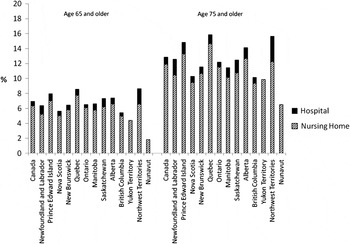
Figure 1 provides the results of analyses of 2006 Census data using Statistics Canada’s CANSIM portal. Provincial rates of institutionalization, as well as the national rates, are shown for persons aged 65 and over and those 75 and over. The figure illustrates institutionalization rates for two main types of facilities: nursing homes and hospitals. Forbes and colleagues had reported that the rate of institutionalization of those aged 65 and over in 1981 was 6.7 per cent for nursing homes alone or 7.5 per cent when combined with hospital settings. In comparison, the rates for 2006 were modestly lower at 6.3 per cent and 6.9 per cent for nursing homes alone and combined with hospitals, respectively. Figure 1 also shows pronounced regional differences in the rates of institutionalization of older persons.
Rates of institutionalization of the elderly in Canada by province, based on 2006 Census

Considering only the provinces, we found that the highest rates for both groups were evident in Quebec and Prince Edward Island, and the lowest rates were found in Nova Scotia and British Columbia. In the territories, the rates were lowest in Nunavut and highest in the Northwest Territories. Hospitals accounted for the minority of institutionalization cases, but in almost all jurisdictions, hospital settings accounted for about 10–15 per cent of older persons in facility-based care settings. For the remaining analyses, we included only provinces and territories gathering RAI 2.0 data in the reported results.
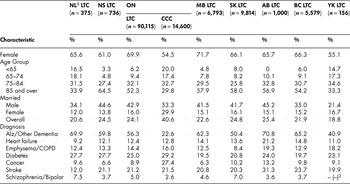
Table 1 provides a profile of the demographic characteristics and selected diagnoses for persons in continuing care settings in Canada by province or territory. As previously reported by Forbes and colleagues (Reference Forbes, Jackson and Krause1987), the clear majority of nursing home residents were female, comprising about two thirds of the LTC populations. The two exceptions were Yukon homes and Ontario CCC hospitals or units in which there was a more balanced sex ratio. These care settings generally support an older population, but we found some notable regional differences in age structures. For example, about 15 per cent of the populations in the Newfoundland and Yukon homes and the Ontario CCC hospitals/units were under age 65 compared with about eight per cent or less in other regions. Conversely, the majority of residents in nursing homes in Nova Scotia, Ontario, Manitoba, Saskatchewan, Alberta, and British Columbia were 85 years and older. We also found clear gender differences in marital status in all settings. Males were typically twice as likely to be married as females, and only in Ontario CCC hospitals and units did the proportion of married women approach 30 per cent (double their corresponding rates in nursing homes).
Percent of residents with selected socio-demographic and diagnostic characteristics in continuing care facilities in Canada, 2009–2010

1 In this and subsequent tables, Newfoundland rates are for early-adopter homes only, Manitoba rates are based on the Winnipeg Regional Health Authority, and Alberta rates are based on the Alberta Continuing Care Epidemiological Studies (ACCES) using the interRAI Long Term Care Facility (LTCF) system rather than the RAI 2.0
2 Dashes are used to indicate cells with values suppressed by the Canadian Institute for Health Information (CIHI) due to small numbers (< 5 cases)
As Forbes and colleagues (Reference Forbes, Jackson and Krause1987) predicted, dementia affected the majority of persons in nursing home settings; however, only 23 per cent and 41 per cent of those in Ontario CCC hospitals and units and Yukon homes had Alzheimer’s or other dementias. Stroke was also an important problem affecting 12–31 per cent of residents. The rates of heart failure ranged from about 9 to 21 per cent in all settings. Diabetes was more common in Ontario, Alberta, and the Atlantic provinces (rates of about 25 to 30 per cent), but lower in Manitoba, Saskatchewan, and British Columbia (rates of about 20 per cent). Cancer affected fewer residents in nursing homes in all regions (about 6 to 13 per cent), but the diagnosis was present in about one quarter of CCC hospital patients. Emphysema or COPD ranged from a low of 8.4 per cent in Saskatchewan to a high of 19.3 per cent in Alberta. Less than 10 per cent of persons in all settings had a schizophrenia or bipolar disorder diagnosis.
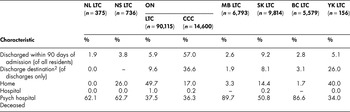
Table 2 shows the discharge destinations for all residents in FY 2009 and 90-day discharge rates for these care settings. The table shows marked differences between the nursing home settings, where usually less than six per cent were discharged in 90 days compared with over 57.0 per cent of CCC hospital patients. The highest discharge rate for nursing home residents was found in Saskatchewan at nine per cent. Of the CCC hospital discharges, about one third returned home and about another third died. About 17 per cent were discharged to other hospital settings (typically to acute care). Death was the cause of over 60 per cent of discharges in Newfoundland and Nova Scotia nursing homes, and about 90 per cent of Manitoba and British Columbia nursing homes. In contrast, about half the discharges in Saskatchewan homes were deaths. Ontario and Yukon homes reported the fewest deaths at discharge, but in each region between 40 to 50 per cent of discharges were to acute hospitals. Discharges to psychiatric hospitals were very rare (one per cent or lower) in all regions.
Percent of residents in continuing care by discharge destination in Canada,Footnote 1 2009–2010

1 Discharge data are not available for the Alberta Continuing Care Epidemiological Studies (ACCES) study
2 Discharge destinations may not sum to 100% because not all possible destinations are listed
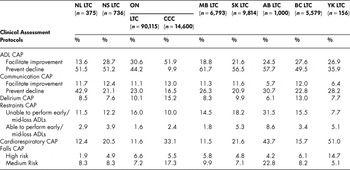
Table 3 provides results for selected Clinical Assessment Protocols (CAPs) that may be used to trigger care plan development and to identify needs at the person and population levels. Two CAPs (Delirium and Cardiorespiratory function) are binary (yes/no), but the other CAPs have at least two trigger levels. The ADL CAP has two triggers – one to initiate care plans with the aim of ADL improvement and the other to prevent decline in ADLs. The triggering rates for ADL improvement ranged from 14 per cent in Newfoundland nursing homes to a high of 52 per cent of Ontario CCC hospital patients. On the other hand, from 35 to 62 per cent of persons in all settings triggered the CAP to prevent decline in ADLs.
Percent of residents triggering Clinical Assessment Protocols in continuing care facilities in Canada, 2009–2010

ADL: Activities of Daily Living
The Communication CAP follows similar clinical logic, and it generally had a triggering rate for facilitating improvement in Communication of about 12 per cent except in the Yukon and in Alberta where it was about six per cent. On the other hand, the rates for preventing decline in communication were more variable, ranging from about 17 per cent in Ontario CCC hospitals to a high of 43 per cent in Newfoundland.
Delirium is a reversible condition causing acute confusion that is often remediable with good medical care. The highest rates of delirium were evident in the Ontario CCC hospitals and units which had more than double the prevalence reported in Alberta nursing homes (15.2% compared with 6.1% respectively).
Forbes and colleagues (Reference Forbes, Jackson and Krause1987) highlighted restraint use as an important risk factor for adverse outcomes including falls, but they were unable to report on the prevalence of their use. The Restraint CAP differentiates restraint use by the person’s level of ADL function. In our study, restraint use was higher among those with late-loss ADLs with rates between about eight per cent in the Yukon and 18 per cent in Saskatchewan, except for Alberta where the rate was about 32 per cent. For persons with early to mid-loss ADLs, restraint use rates were lower, typically below five per cent; however, the Alberta rate was about nine per cent.
The Falls CAP differentiates persons based on the severity of risk of future falls by the occurrence of single (medium risk) or multiple (high risk) falls in the 90 days prior to the assessment. Substantial differences in the Fall CAP trigger rates occurred between regions, with the Yukon having the highest proportion of high-risk fallers and Alberta nursing homes with the highest proportion of medium-risk fallers. When the two levels were combined, elevated risks of falls were present for about 10 per cent (Newfoundland) to about 27 per cent (Alberta) of residents.
Perhaps the most extreme differences are evident in the Cardiorespiratory CAP (triggered by cardiovascular or respiratory symptoms) in which the Yukon’s rate of over 50 per cent was almost five times higher than the rates in Ontario and Manitoba nursing homes.
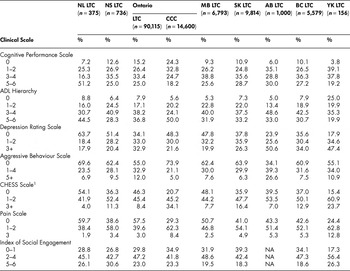
Table 4 shows the clinical characteristics of persons in continuing care using some of the summary scales that are embedded in the RAI 2.0 instrument. The Cognitive Performance Scale (CPS) ranges from 0 (cognitively intact) to 6 (very severe impairment). Although several regions had about one quarter of their residents in the two highest categories of cognitive impairment, more than half of Newfoundland residents were in these upper two categories. On the other hand, about one quarter of Ontario CCC hospital patients were rated as cognitively intact (CPS = 0) compared to all other settings (6–15%).
The ADL Hierarchy Scale ranges from 0 to 6 with higher scores indicating more severe impairment in late-loss ADLs. In contrast to the CPS scores, Ontario CCC hospitals had the highest proportion of persons in the two highest ADL hierarchy categories. It is also notable that only in the Yukon were there more than 10 per cent of residents in the independent category for ADLs (ADL Hierarchy = 0).
The Depression Rating Scale (DRS) is a summary measure of depressive symptoms with scores of 3 or more used as a conventional cut-off for potential depression. Using that threshold, we found depressive symptoms to be lowest in Newfoundland, Manitoba, Nova Scotia, and Ontario CCC (between 18 and 22% with DRS = 3+). On the other hand, about one third of Ontario nursing home residents and about one half of Alberta and Yukon residents had DRS scores of 3 or more.
The Aggressive Behaviour Scale is a summary scale that includes four types of aggression with scores ranging from 0 to 12. Scores of 5 or more are used as a conventional cut-off for severe aggressive behaviour disturbance. Using this threshold, rates range from a low of five per cent in Ontario CCC hospitals and units to about 27 per cent of Alberta nursing home residents. That noted, in all regions but Alberta the majority of residents did not show any signs of aggressive behavior.
The CHESS scale is a measure of medical complexity and health instability that is strongly associated with mortality. There are substantial differences between regions and settings, with Ontario CCC hospitals and units serving the most medically unstable population (about one third had a CHESS score of 3 or more) whereas less than five per cent of Newfoundland residents had similarly high CHESS scores.
Forbes and colleagues (Reference Forbes, Jackson and Krause1987) stressed the importance of quality of life in continuing care settings. To this end, we examined three aspects of quality of life: pain, social participation, and involvement in meaningful activities. It is evident in Table 4 that pain affected the majority of persons in most continuing care settings. The Index of Social Engagement is a measure of involvement in the social life of the facility with higher scores indicating greater levels of engagement. Considering the two lowest scores for engagement that indicate almost no participation in social activities, more than one quarter of residents in all settings but the Yukon fell into these categories. In Saskatchewan homes, the rates approached 40 per cent.
Percent of residents obtaining clinical scale scores in continuing care facilities in Canada, 2009–2010

1 The interRAI Long Term Care Facility (LTCF) form used in the Alberta Continuing Care Epidemiological Studies (ACCES) study excludes one item used in the calculation of the Changes in Health, End-stage disease, Signs and Symptoms (CHESS) scale
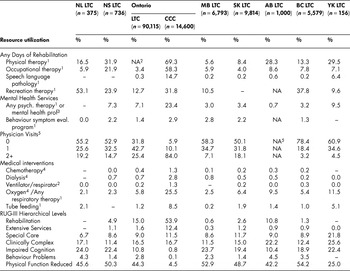
Another need identified by Forbes and colleagues (Reference Forbes, Jackson and Krause1987) was the need for empirically sound approaches to make decisions about resource allocation within the context of economic constraints. There are at least two types of evidence available from RAI 2.0 data regarding resource utilization. A number of direct process measures provide information about utilization of a range of medical services and treatments. For example, Table 5 shows that there were numerous regional differences in access to different types of rehabilitation therapies. Ontario CCC patients were substantially more likely to receive physical therapy, occupational therapy, and speech language pathology services than their counterparts in any other setting.
Percent of residents using selected resources in continuing care facilities in Canada, 2009–2010

1 In 7 days prior to assessment
2 Not reported due to definitional problems in the 2009 Ontario LTC data cut
3 In 90 days prior to assessment
4 In 14 days prior to assessment
5 The Alberta Continuing Care Epidemiological Studies (ACCES) used a preliminary version of the interRAI Long Term Care Facility (LTCF) instrument, which sometimes employs different time frames or excludes variables used in the RAI 2.0. In those cases, results are not reported for the LTCF.
On the other hand, when we consider only nursing homes, substantial regional differences remain. Only Nova Scotia provided occupational therapy to a sizeable portion of residents and, along with Alberta and the Yukon, Nova Scotia provided more physical therapy services than reported elsewhere. Similarly, although recreation therapy was available to the majority of Newfoundland residents, only about 10 per cent of residents in Manitoba and the Yukon received recreation therapy in the seven days before their assessment.
Despite the high levels of cognitive impairment, depression, and behaviour disturbance reported in Tables 3 and 4, mental health and behavioural services were rarely made available in all regions and settings. Ontario CCC hospitals and units provided about one quarter of their patients with these services, which was substantially more than in the nursing home settings. There are also important differences in the receipt of medical care. When considering the rate of two or more physician visits in the past 14 days, less than five per cent of British Columbia and Yukon residents had this level of contact compared with almost 85 per cent of Ontario CCC hospital patients. Among the medical procedures employed in continuing care, chemotherapy, dialysis, and ventilator/respirator care were very rare in all settings. However, oxygen or respiratory therapy was somewhat more common, and tube feeding was evident mainly in Ontario CCC hospitals and units or in the Yukon.
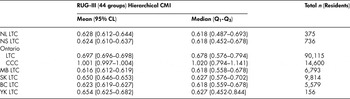
An alternative approach to describing resource intensity is the Resource Utilization Groups (RUG-III) case mix system, which uses over 100 clinical variables to group persons into 44 groups within seven hierarchical levels according to their patterns of resource use. The RUG-III system has been validated against staff time measures in 14 countries, including Canada. Each RUG-III group has a numerical value known as a case mix index (CMI), which provides a measure of resource use relative to an average resident in derivation samples from the original RUG studies.
Table 5 shows the seven hierarchical RUG-III levels in continuing care, and Table 6 shows the distribution and characteristics of the CMIs. For the most part, the Newfoundland, Nova Scotia, Ontario, Manitoba, Saskatchewan, Alberta, and British Columbia nursing homes had strikingly similar patterns across the RUG-III hierarchical levels. Similarly, when considering either the mean or the median CMI values, these homes appeared to be serving populations with similar resource intensity levels, even if their specific clinical characteristics varied. On the other hand, Ontario CCC hospitals and units served a substantially more resource intensive population, and they served very few of the persons at the bottom three levels of the RUG-III hierarchy.
RUG-III (44 groups) Hierarchical Case MixFootnote * Index metrics among residential care facility residents in Canada, 2009–2010

* Based on CIHI standard SMIs, which are adapted from US values and adjusted according to Canadian wage rates
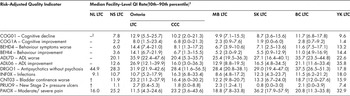
Table 7 illustrates selected Quality Indicators (QIs) that are available from the RAI 2.0. The indicators are risk-adjusted using a combination of individual level covariate adjustment and direct standardization to control for major population differences. The interRAI QIs for continuing care settings include measures that consider both improvement in status and worsening or decline in status. These two directions of change are considered because interventions that result in improvement of symptoms are not necessarily the same as those that prevent the worsening of performance in the same domain.
Facility-level rates of new risk-adjusted quality indicators among continuing care facilities in Canada, 2009–2010

1 10th–90th percentile values are not reported for NL, NS, and YK due to the small number of facilities
2 Quality indicators (QIs) could not be reported because participating facilities had too few cases for QI calculation
There are 22 QIs included in CIHI’s national specifications for the CCRS. Table 7 shows the median, 10th percentile, and 90th percentile facility-level rates of 11 risk-adjusted QIs. At least two points are of interest: (a) variations in QI rates between provinces that may reflect policy differences across the nation; and (b) variations in these rates within provinces (comparing the 10th to 90th percentile ranges) that illustrate practice pattern differences occurring within a common regulatory framework.
Different QIs occurred at different rates in our study: ADL decline, antipsychotic use without psychosis, and moderate or severe pain were all relatively common in continuing care. On the other hand, new stage two or higher pressure ulcers were quite rare with the highest rate being 7.4 per cent. When regional differences are examined, it is noteworthy that no single region or care setting had the worst performance (or the best performance) on all QIs. Quality was not uniformly high (or low) in all dimensions of care. In addition, we found often as much variance in facility-level performance within provinces as between provinces.
The range of performance on QIs also demonstrates what is possible in continuing care. For example, although Ontario nursing homes had a median rate of 36 per cent of residents declining in ADL function, some Ontario homes had rates as low as 22 per cent, and some CCC hospitals and units had rates of about five per cent, adjusting for population differences. Conversely, while the median rate of improvement in behaviour symptoms in Nova Scotia homes was only about four per cent, some homes in Ontario reported behaviour improvement rates of 22 per cent.
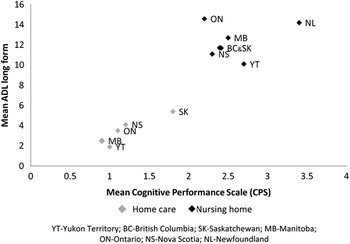
Finally, Forbes and colleagues (Reference Forbes, Jackson and Krause1987) raised the issue of inappropriate placement and the need for home and community care to play a role in caring for the frail elderly. Figure 2 shows the relationship between two measures of disability – the mean CPS score for cognitive impairment and the mean ADL Long Form for physical disability – by province and health care sector. There is a clear linear relationship between severity of impairment in the two domains. Organizations serving persons with more cognitive impairment must also deal with more severe functional loss. However, it is also clear that the home care and nursing home sectors serve distinct clinical populations, with home care serving persons with lower levels of impairment in both domains. On the other hand, when it comes to either sector, there is notable inter-jurisdictional variability in the severity of impairment of persons served in those sectors. Hence, these results point to the need for person-level data to allow for comparisons between provinces.
Cognitive impairment and functional status by sector and province

Discussion
About a quarter century ago, fundamental questions about the quality of care in institutional settings, inappropriate nursing home placement, and a lack of access to necessary medical, psychosocial, and therapeutic services were raised in Institutionalization of the Elderly in Canada (Butterworths, 1987). There was a virtual absence of usable evidence about the most basic clinical characteristics, patterns of resource use, and outcomes of care. This paucity of evidence made it exceedingly difficult to navigate a course towards improving the lives of older Canadians in continuing care facilities.
Much has been done in the past 25 years to reform LTC. Although it would be unreasonable to equate today’s nursing homes with “more comfortable iron lungs”, further work is needed to define the role of these facilities in the continuum of care. Some initiatives have focused on restructuring the models of service provision. For example, the Health Services Restructuring Commission in Ontario (Hirdes, Sinclair, King, McKinley, & Tuttle, 2003) undertook a major redesign of the health care system, including directives for Complex Continuing Care hospitals and units to reduce services to frail older persons with stable medical conditions so that they would instead be cared for in nursing home settings.
There have been initiatives to introduce assisted living and supportive housing as alternatives to nursing homes in Alberta (Alberta Health & Wellness, 2007, 2008; Canadian Centre for Elder Law, 2010), Manitoba (Mitchell, Blandford, Menec, & Nowicki, Reference Mitchell, Blandford, Menec and Nowicki2007), and British Columbia. Others have introduced new standards of care and facility-design parameters. For example, Nova Scotia’s Continuing Care Strategy (Nova Scotia Health, 2008) led to the introduction of a competitive bidding process for nursing home construction and identified new program standards and specifications for construction. Quality has continued to be a pervasive concern (Keays, Wister, & Gutman, Reference Keays, Wister and Gutman2009; McGregor et al., Reference McGregor, Tate, McGrail, Ronald, Broemeling and Cohen2006), and several initiatives have sought to introduce quality improvement initiatives to the sector. One example is the Patient First Review Commission in Saskatchewan, which identified accessibility and quality of assisted living and LTC among its main priorities for improvement of that province’s health care system (Dagnone, Reference Dagnone2009).
More recent discussions have focused on redefining the role of nursing homes in relation to the hospital sector. Of particular concern have been Alternate-Level-of-Care (ALC) patients with prolonged stays in acute care hospitals beyond the acute phase of their illness (Costa & Hirdes, Reference Costa and Hirdes2010; Dagnone, Reference Dagnone2009). In 2010, the Auditor General of Ontario noted that 17 per cent of acute care beds were occupied by persons who did not require acute care, but who could not be discharged to the community because adequate services and informal supports were not available. Increases in wait times for admission into LTC has been viewed as a problem contributing to the growth of ALC days in the acute care sector (Ontario Health Quality Council, 2011). Increasing the speed of admission to LTC has therefore been promoted by some as a solution to reduce hospital lengths of stay and emergency department wait times.
With their adoption by the majority of Canadian provinces and territories, the interRAI instruments have become the de facto national standard for assessment in home and continuing care. As these jurisdictions complete their transitions through the initial implementation stages, an emerging evidence-base is beginning to illuminate areas for apprehension and optimism in these sectors.
Let us first deal with the reasons for concern. The persons residing in continuing care settings of the twenty-first century have complex needs requiring a sophisticated, multidisciplinary approach to care. The initial evidence based on the QIs and service use results reported here suggests that there is considerable room for improvement in slowing the trajectory of decline, restoring function, and enhancing quality of life for those receiving facility-based continuing care in Canada. The introduction of interRAI assessment instruments and their associated outputs allows us to shed light on quality issues; however, resolution of quality problems also requires the allocation of resources and policy commitment to act. Access to rehabilitative therapies, mental health services, clinical interventions, or medical care does not occur at a rate consistent with the level of need suggested by the evidence. Depression, pain, disability, isolation, and mental health problems are common threats to the well-being of this vulnerable population.
It is clear from the evidence shown in Table 2 that Canadian LTC homes remain, in large part, “terminal destinations”. Although respite beds or short stay programs (e.g., convalescent care in Ontario LTC) are available to provide temporary residential services to persons living in the community, the bulk of new admissions to nursing homes in Canada do not have the prospect of returning back to the community or moving to less restrictive care settings. In the United States, new “Money-Follows-the-Persons” programs have been launched with the aim of moving nursing home residents back to community settings (Reinhard, Reference Reinhard2010). However, these programs do not always return nursing home residents to private homes. There has been substantial growth of assisted living facilities in both the United States and in some Canadian provinces, but questions have been raised about the adequacy of services provided by those facilities to meet the needs of their residents (Hawes & Phillips, Reference Hawes and Phillips2007).
Given that the overwhelming majority of nursing home residents do not return to the community, the primary reasons for discharge are death or a transfer to acute care. They point to an urgent need for palliative care services for this population. This need will become more pronounced as the clinical complexity of nursing home residents increases with the move to more rapid discharges from hospital settings to LTC homes.
Signs of hope do exist, however. Although there are challenges for some organizations on each of the quality domains we have considered here, all parts of the country have homes whose practice patterns demonstrate that better outcomes are possible. There are homes that have prevented declines that some would have considered inevitable outcomes of aging. Other continuing care facilities have restored function and alleviated behaviour disturbance when some would have treated those losses as irreversible. Still other facilities have been able to prevent adverse events like falls without resorting to restraint use. With the adoption of the interRAI instruments, it is now possible to identify industry leaders in order that their innovations may be shared with and adopted by others. The information enables an evidence-informed conversation that can redefine our expectations of what the health care system can do for older persons.
The results of this national comparison point both to the commonalities and differences of the Canadian experience in LTC. It is often said that we are one nation with more than a dozen health care systems (Chan & Kenny, Reference Chan and Kenny2001; Fernandes & Spencer, Reference Fernandes and Spencer2010), and the exclusion of continuing care from the Canada Health Act increases the likelihood of diverse approaches to this type of care in Canada. There are indeed notable differences in the needs of persons in continuing care and practice patterns across the country. However, there are also some striking consistencies. Despite differences in the details of admission criteria and eligibility guidelines, we found that the provinces in this study served populations with remarkably similar levels of resource intensity based on the RUG-III system. Only the CCC hospitals and units in Ontario stood out from the others in a consistent manner. This reflects the results of a policy directive from the province’s Health Services Restructuring Commission that specified distinctive roles for these hospitals vis-à-vis nursing homes. The Yukon also had some novel attributes, presumably because of the need to serve a more heterogeneous population given the limited supply of non-acute beds in that sparsely populated region. Other commonalities included the importance of dementia, cognitive impairment, and physical disability in this population.
The predominance of females, advanced age of nursing home residents, and gender differences in marital status all point, at least indirectly, to the importance of spouses as a source of informal support preventing institutionalization (Hebert, Dubois, Chambers, & Cohen, Reference Hebert, Dubois, Chambers and Cohen2001). Complexity is also a consistent hallmark of LTC across the nation. The persons residing in these settings have needs in multiple domains at severity levels that are generally well above those seen in community settings.
Forbes and colleagues (Reference Forbes, Jackson and Krause1987) argued that “it is tempting to plead for additional funding [to improve the quality of care] … [and] with the present economic climate this is perhaps unrealistic …”, yet “the task is to re-examine priorities in the social and health-care services and, on the basis of such studies, to reallocate funds more appropriately” (pp. 98–99).
Of course, fiscal constraints will be present in virtually every historical period (boom or bust), so the rational allocation of resources based on need should always be a basis for economic decision making. What the interRAI instruments offer are several new tools to inform that process, including care planning algorithms to identify needs, case mix systems to support equitable need-based payment systems, and quality measures to monitor the effectiveness of the services supported through the allocated resources. Decisions about resource allocation will certainly not be exclusively driven by evidence, but they may now be informed by evidence that was unanticipated when the argument just quoted was made.
As we look to the future for nursing homes in Canada, the path ahead appears to lead to a more clinically complex population with substantially greater needs for care. Therefore, there is a great need for increased expertise and training in geriatrics for both physicians and nursing staff (Hogan, Reference Hogan2007). Efforts to provide care to more frail older individuals in the community should mean that only those in greatest need for nursing home admission enter those settings.
However, the complexion of the nursing home population can be altered by changes in other sectors. For example, concerns about ALC patients may accelerate discharges of those medically complex patients to LTC to free up acute care beds and reduce emergency department wait times. Re-examinations of the roles of CCC hospitals in Ontario (and their counterparts elsewhere) have pointed to possible further reductions of those beds and an expanded mandate for nursing homes in caring for at least some CCC subpopulations. Finally, the growing emphasis on assisted living will mean that persons with lighter care needs may have more appropriate and attractive alternatives to LTC. On the other hand, these facilities may not have the adequate resources or staff expertise to deal with persons having complex needs that were previously dealt with in nursing homes. Altogether, these drivers will almost certainly yield a substantially different nursing home population than the one we see today.
The question then is: How should we prepare for the next 25 years? The answer depends on what we ultimately want for vulnerable older persons in Canada. To transcend the “iron lungs” analogy and properly serve the nursing home population of the future, those homes (and suggested alternatives like assisted living or supportive housing settings) must have resources, expertise, and commitment to a new approach driven by a quality improvement agenda. The eradication of age-related health problems is unlikely in our foreseeable future. However, several exemplary Canadian LTC homes have already demonstrated that even with scarce resources it is possible to greatly improve an individual’s health, well-being, and quality of life.
The introduction of the interRAI instruments as a new clinical information system to inform LTC decision making has been one of the more important strides forward in the past two decades. Data from these instruments are becoming widely available to inform discussions about a variety of issues pertinent to LTC including, for example, the needs of special subpopulations in institutional settings (CIHI, 2007a), patient safety issues (CIHI, 2007b), and mental health (CIHI, 2008; CIHI, 2010a). Our next steps must involve using that new evidence to mobilize knowledge, take decisive action, and improve the quality of institutional care for older persons.