Introduction
In 2008, an estimated 36.9 million ducks were kept in Indonesia, with about 4.6 million ducks being raised in Central Java alone (Statistics on Livestock 2008, Directorate General of Livestock Services, Ministry of Agriculture, Republic of Indonesia). The management of ducks has often been suggested as a practice capable of spreading Highly Pathogenic Avian Influenza Virus (HPAI) to other waterfowl and chickens (Martin et al., Reference MARTIN, SIMS, LUBROTH, PFEIFFER, SLINGENBERGH and DOMENECH2006; Cardona et al., Reference CARDONA, XING, SANDROCK and DAVIS2009). Movements of ducks between rice paddies, inappropriate handling of sick and dead birds, inadequate husbandry procedures, and poor awareness of control strategies among poultry farmers have been suggested as possible risk factors (CIVAS, Reference CIVAS2006); although no analytical risk-factor study has yet been published for Indonesia. There are two extensive duck management systems used by smallholders in Indonesia: the home-based and the fully mobile herding systems (Ketaren, Reference KETAREN1998). In the former system, ducks are allowed to leave the farm and scavenge during the day, but are confined overnight on the farm or in the village vicinity: hence these duck flocks remain ‘stationary’ (Henning et al., Reference HENNING, HENNING, VU, YULIANTO and MEERS2009a). In contrast, under the mobile herding or ‘moving’ duck management system, ducks are transported throughout the country to scavenging areas and kept on or near the scavenging locations overnight, with the owners and their flocks often spending prolonged periods away from the village-farm (Henning et al., Reference HENNING, HENNING, VU, YULIANTO and MEERS2009a).
The HPAI infection status of stationary duck flocks has been described previously (Henning et al., Reference HENNING, WIBAWA, MORTON, USMAN, JUNAIDI and MEERS2010), but detailed information on potential management risk factors that might influence the observed viral prevalence in these flocks is still lacking. This study describes the management of smallholder stationary duck flocks in Central Java, Indonesia and highlights potential risk factors for the spread of HPAI.
Study area and data collection
A cross-sectional questionnaire survey was conducted on 96 smallholder stationary duck farms in four districts in central Java (Sleman, Magelang, Bantul, and Kulon Progo). These farms were monitored in a longitudinal study on HPAI to describe temporal patterns of H5 antibodies and H5 virus prevalence in unvaccinated scavenging ducks and chickens in contact with these ducks (Henning et al., Reference HENNING, WIBAWA, MORTON, USMAN, JUNAIDI and MEERS2010). Sample size was estimated as described previously (Henning et al., Reference HENNING, WIBAWA, MORTON, USMAN, JUNAIDI and MEERS2010). Districts for the study were selected because of their high number of duck farms and their closeness to the Disease Investigation Center (DIC) at Wates, where the field investigators were based and where the diagnostic work was conducted.
A sampling frame was prepared by agriculture extension officers listing all villages in the selected districts including the total number of duck-owning farms within each village. Probability proportional to size sampling was then applied to select four villages within each district, with villages with a larger proportion of duck-owning farms having a higher chance of being selected. Field veterinarians then prepared a second sampling frame containing the names of all stationary duck flock owners within the 16 villages selected as well as the number of ducks kept by each farmer. From this sampling frame, six duck-owning farms per village were selected using simple random sampling. Flocks with less than 10 ducks were excluded (because 10 ducks per flock had to be sampled in the prevalence study described in Henning et al., Reference HENNING, WIBAWA, MORTON, USMAN, JUNAIDI and MEERS2010) as well as flocks with more than 700 ducks (because these flocks were considered to be large commercial farms while the focus of the study was on smallholder farms). Random numbers for village and duck farm selection procedures were produced in STATA 10.0 (Stata Corporation, College Station, TX, USA).
Four veterinarians from the DIC Wates were trained in data collection tools and interviewing techniques. They used a questionnaire to record information on the flock management (all ducks being managed together in the same way were considered as a flock on the farm), feeding, housing, scavenging practices, the health status of ducks and mortalities due to HPAI and other diseases. The questionnaire was developed by one of the authors (JH), translated into Bahasa Indonesia and pilot-tested in six households. Some minor modifications of questions were made after the pilot testing. The questionnaire contained 64 questions, comprising multiple choice questions, yes/no questions and open-end questions. Interviews of duck owners (being the person who owned and managed the duck flocks), were conducted during field visits in March 2007. An interview lasted for about 45 minutes. Questionnaire data were entered into a Microsoft Access 2003 database (Microsoft Corporation) and analysed in SPSS PASW 18.0 (SPSS Inc.). Descriptive results were presented as proportions, percentages, means, standard deviations and minimum and maximums and ranges.
Characteristics of smallholder duck-owning households
The mean family size was five people, with a mean of two women, two men and one child (< 14 years of age) living in a stationary duck farm household. Only two of the 96 duck owners interviewed employed people to work with their ducks. Of the 96 duck owners, 88% (N=85) were men and 12% (N=11) were women. Of 92 duck owners who specified their age and education status: ages ranged from 22 to 80 years, with a mean age of 51 years; 8% (N=7) of duck owners had no education, 66% (N=61) had elementary school, 22% (N=20) senior high school and 4% (N=4) had a university education.
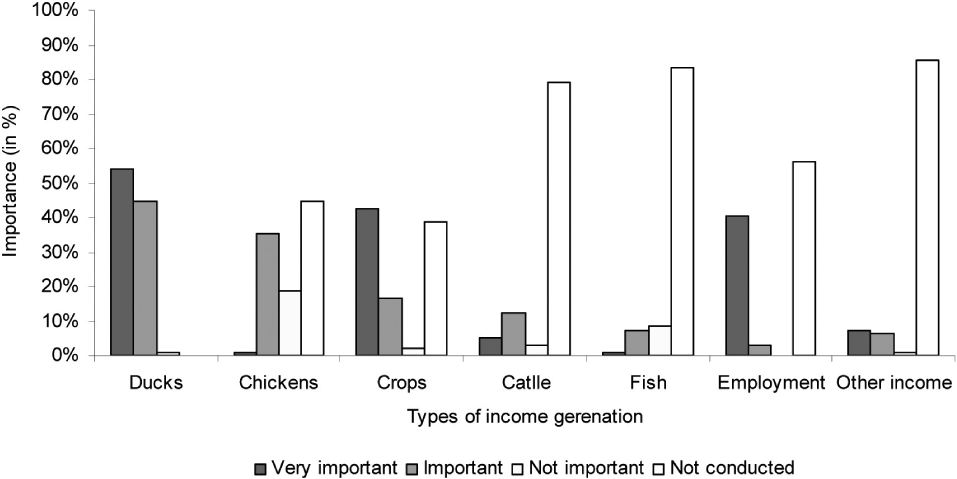
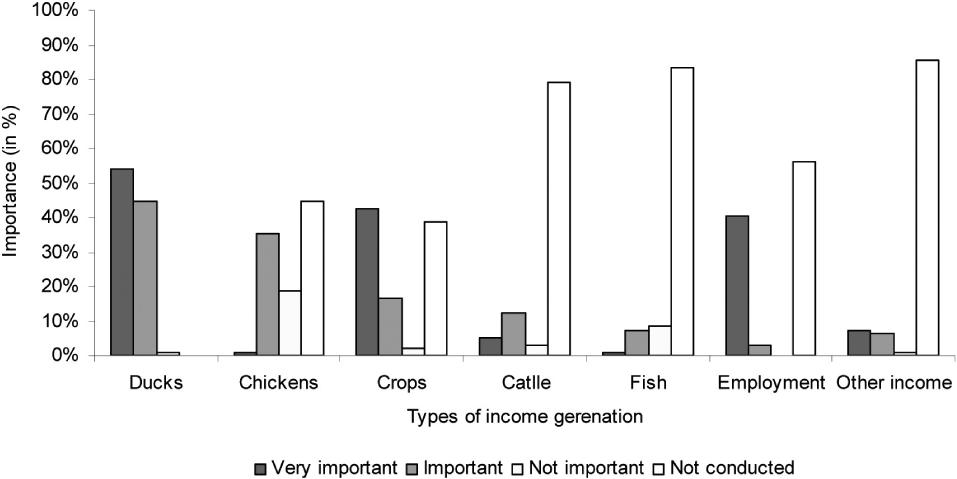
About 91% (N=87) of owners indicated that more than one activity was very important or important to provide income to the household (i.e. few owners relied on only one type of income). About 99% (N=95) of duck owners classified ducks as being very important/ important for their income generation, followed by crop production (59%, N=57) and employment outside the farm (44%, N=42) (Figure 1). Chicken production was very important/important for only about 37% (N=35) of duck owners.
Importance of different wealth earning activities among 96 stationary duck flock owners in Central Java, Indonesia.
A total of 95 duck owners specified their purpose for farming stationary duck flocks. Both the sale and the consumption of eggs were indicated by 94% (N=89) of owners as being very important/important, with the sale of eggs being considered a very important reason for 84% (N=80) of owners, but the consumption of eggs only very important for 18% (N=17) of owners (Figure 2). The production of meat ducks for sale or meat consumption was only very important/important for 41% (N=39) and 42% (N=40) owners, respectively. The use of droppings as fertilizer was very important/important for almost 58% of duck owners (N=55). Barter trade of ducks was more common and more important than barter trade of eggs. Only a small proportion of owners (N=3, 4%) used ducks for other purposes (e.g. traditional medicine).
Purpose of duck keeping among 96 stationary duck flock owners in Central Java, Indonesia.

A total of 88 of the 96 duck owners specified their farm size. The mean farm size combining living areas and areas used for agricultural activities (crops, fish ponds, grazing ducks etc.) was 1,237.8 square meters, ranging from 25.0 to 13,600.0 square meters.
About 64% (N=61) of duck owners produced crops, which were most commonly rice (84%, N=51), followed by beans or peas (16%, N=10), corn (8%, N=5), cassava (8%, N=5), cacao (7%, N=4) and chillies (5%, N=3). Only 1 to 2 owners had fruit trees, water melons, onions, sugar cane or cucumbers.
A total of 35 of the 96 stationary duck owners kept livestock other than poultry on their farms. The most common of these livestock species were goats, kept on 46% (N=16, mean herd size = 2.8) of the duck farms that kept other livestock, followed by cattle on 43% (N=15, mean herd size =1.4) and sheep on 11% (N=4, mean flock size =3.8) of duck farms.
With respect to other avian species, chickens were kept by 60% (N=58) of duck owners (mean flock size=14.1, range 1-100), pigeons were present on 29% (N=28, mean flock size=8.4, range 2-52), Muscovy ducks on 24% (N=23, mean flock size=6.0, range 1-27) and singing birds on 17% (N=16, mean flock size=2.7, range 1-6) of the stationary duck farms. Furthermore 2% (N=2) of duck owners kept geese and 1% (N=1) kept quail, turkeys or birds of prey respectively.
Management of smallholder stationary duck flocks
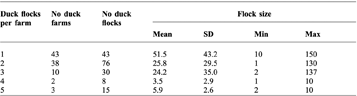
A total of 172 duck flocks were kept by the 96 stationary duck owners. Of the 96 owners, about 45% (N=43) kept a single duck flock on their farms, 40% (N=38) kept two flocks, 10% (N=10) kept three flocks, while 2% (N=2) and 3% (N=3) kept four or five flocks respectively.
The mean flock size on duck farms was 29.2 ducks (SD 35.5) ranging from 1 up to 150 birds. The details on flock sizes stratified by the number of flocks kept are specified in Table 1.
Flock sizes on 96 stationary duck farms with a total of 172 flocks in central Java, Indonesia.
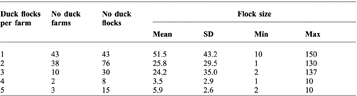
On duck farms with single flocks, the mean flock size was almost twice the size of flocks on farms where two or three flocks were kept. It was uncommon to have more than three flocks – in these five farms only a small number of birds were kept in each of the flocks. About 44% (N=80) were Turi, 39% (N=70) were Magelang, while 13% of flocks (N=22) were of other breeds. The flock size for Turi was 37.4 (SD 41.8) ducks, for Magelang 22.6 (SD 23.3) ducks and for the other breeds 19.1 (SD 37.3) ducks.
For 149 flocks, duck breeds were classified as being either layer or meat ducks. Layer production was conducted with 99% (N=70) of the 71 Turi flocks, 98% (N=62) of the 63 Magelang flocks and with 67% (n=10) of the 15 flocks of other breeds. Overall, only 4.7% (N=7) of flocks were kept for meat production, while 95.3% (N=142) of the 149 flocks for which information on the purpose of keeping was supplied, were kept as layer flocks.
There appeared to be two distinct age groups of ducks that were obtained for stationary duck farming (Figure 3): duck production was most commonly started with day-old ducklings (31%, N=52) or with birds around six months of age (14%, N=24).
Age of ducks when they were obtained for stationary duck flock farming in central Java, Indonesia (N=168).

Of the 169 flocks for which information was available, 40% (N=68) sourced the ducks from markets, 25% (N=42) from other owners or neighbours, 17% (N=28) were hatched on the farmer's own property, 10% (N=17) were collected from hatcheries, and 9% (N=14) of flocks obtained their ducks from traders.
About 1% (N=2) of duck owners intended to sell the ducks they currently owned (i.e. ducks they owned at the time of the interview) before these ducks reached one year of age, 21% (N=28) between >1 and 2 years of age, 54% (N=74) when ducks were >2 to 3 years of age, 17% (N=23) when ducks were >3 to 4 years and 7% (N=9 when they were older than four years.
The frequency of any direct contact between ducks and chickens (including chickens visiting the duck pen and/or sharing scavenging areas with ducks) as observed by the 96 duck owners is summarised in Table 2.
Frequency of contact (% (N)) between chickens and stationary ducks in central Java, Indonesia, estimated by (number) duck owners.

Half of the interviewed owners believed that their ducks had either frequent or occasional direct contact with their own chickens and with their neighbours’ chickens, while contact between their ducks and other chickens in the rest of the village only occurred in about 10% of cases (although there was considerable uncertainty among duck owners about this category).
Scavenging of smallholder stationary duck flocks
A total of 74 (77%) of the 96 stationary duck flock owners allowed their ducks to scavenge. However, not all flocks within a farm were allowed to scavenge – from a total of 134 flocks kept by the stationary duck owners on these 74 farms, only 73% (N=98) were allowed to scavenge. Of these 98 duck flocks that scavenged, the majority of flocks (75%, N=73) scavenged two times per day, in the morning between 5 to 7 am for a mean period of 159 minutes (SD 71 minutes), followed by a scavenging period from 12 to 3 pm for a mean period of 158 minutes (SD 57 minutes). A further 18% of flocks (N=18) scavenged once per day, but the scavenging period varied greatly (mean scavenging period 513 and SD 232 minutes, min 60 and max 780 minutes) and 7% of flocks (N=7) scavenged three times per day (with the mean of each scavenging period being 109 and SD 47 minutes) in a morning, mid-day and afternoon session.
The frequency of use of different scavenging locations is listed in Table 3.
Frequency of use of different scavenging locations (% (N)) by 74 stationary duck flock owners in central Java, Indonesia.

Rice fields and areas along waterways were the most important scavenging locations. Scavenging locations were predominately used throughout the year, although 18% of owners used rice paddies seasonally.
About 79% (N=58) of owners always supervised their ducks on the way to, during scavenging and on the way back from the scavenging areas, 20% (N=15) did not provide any supervision and 1% (N=1) supervised their ducks at some times.
In a multiple response question, duck owners were asked to specify the various means by which ducks were moved to and from the scavenging locations: about 58% (N=48) of duck owners walked their ducks tightly grouped together, but 33% (N=27) of owners conducted a dispersed walking of ducks to the scavenging locations, with ducks being allowed to walk within a loose group formation. Furthermore 6% (N=5) used motorbikes and 3% (N=3) used cars or trucks to transport their ducks to the scavenging locations.
A total of 88% (N=65) of owners indicated that scavenging locations were shared with ducks from other farms. Moreover 30% (N=22) of owners indicated a sharing of scavenging areas with chickens, while 77% (N=57) of owners also indicated that wild birds also used the same scavenging areas. About 80% (N=59) of owners indicated that people were present in the scavenging areas, 18% (N=13) of owners noticed civet cats or domestic cats and dogs in the scavenging locations, while 3% (N=2) of owners observed pigs scavenging together with their ducks.
Confinement of smallholder stationary duck flocks
Of the 172 flocks on the 96 duck farms, a total of 92% (N=158) of flocks were kept in night-time enclosures, while 88% (N=152) of flocks had day-time enclosures, of which 43% (N=66) used the same enclosure at night-time. A total of 63% (N=99) flocks shared their night-time enclosures and 65% (N=98) of flocks shared their day-time enclosures with other duck flocks that were kept on the same farm.
About 94% (N=90) of the 96 duck owners indicated that their night-time shelters were roofed, but only 55% (N=53) of duck owners had day-time shelters that were roofed.
In general, roof, wall and floor characteristics of night- and day-time shelters were very similar and therefore only the night-time shelter characteristics are listed in the following. The most common material used for roofs (specified by 41 owners) were plastic (46%, N=19), tiles (32%, N=13) and metal sheets (10%, N=4), while the remaining owners used bamboo, asbestos sheets or wood. Among the 96 duck owners, bamboo was most common (56%, N=54) as the material for walls, followed by bricks (26%, N=25) and wood (8%, N=7), while 3% (N=3) used nipah leaves and wire mesh respectively and a further 2% (N=2) used either fishing net or plastic bags. About 92% (N=88) of owners had only soil as a floor material, 5% (N=5) had bricks, 2% (N=2) had concrete and 1% (N=1) had wire mesh as floor material.
A total of 50% (N=46) of owners provided litter in the night-time shelters (in contrast litter was only provided in 29%, N=28 of day-time enclosures). Of these 46 famers, 94% (N=43) used dried rice straw as a litter, while the others used sand or a combination of straw and sand.
Forty-two owners indicated how they disposed of the litter from the night-time enclosures, with 79% of them (N=33) using the litter as fertilizer, 17% (N=7) threw it away, 2% (N=1) sold it, and 2% (N=1) burned the litter. The mean period before litter was replaced was about three months (mean=87.3 days, SD 93.1, Min 3, Max 365 days).
Disinfectant was used in the night-time shelters by 26% (N=25) of owners.
Feeding of smallholder stationary duck flocks
Details on the feeding of ducks were provided for 169 of the 172 flocks. The most common duck feed was rice bran (37%, N=63), followed by dried cooked rice (34%, N=58), feed concentrate (23%, N=41), fresh harvested rice (17%, N=28) and corn (11%, N=19). A total of 8% (N=13) of duck flocks were provided with snails by their owners. Other feeds provided to ducks were green coconut, snails, leafy vegetables, papaya leaves, rice crust, soy bean scraps, or other food scraps. Only a total of 28% (N=27) owners indicated that they purchased duck feed within the last 12 months, the remaining 69 owners most likely used only feed that was produced on their own farm or household waste. The most commonly duck feed purchases were concentrate (52%, N=14), followed by dried cooked rice (30%, N=8), rice bran (22%, N=6), corn (19%, N=5), fresh harvested rice (15%, N=4), minerals (4%, N=1) and snails (4%, N=1). The majority of these 39 individual feed purchases were conducted in shops (62%, N=24) or from markets (26%, N=10). A total of 24 owners specified their frequency of feed purchases - the mean period between feed purchases was 10.6 days (SD 8.2, Min 3, Max 30).
Layer production and trading practices
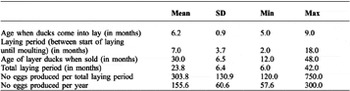
A total of 75 owners provided information on the production cycle of their layer ducks (Table 4).
The average age of ducks at start of lay was about six months; this was followed by an average laying period of 7 months, but this period varied greatly between farms.
Production parameters of layer ducks specified by 75 stationary duck flock owners in central Java, Indonesia.

The duck owners were asked in multiple response questions to indicate all the influences on their decisions to sell ducks and their locations of sale. Most owners indicated that low egg production was the reason for selling layer ducks (51%, N=64), followed by the age of ducks (38%, N=47), the need for cash from the sale of the birds (6%, N=7) or for other reasons (5%, N=6). Layer ducks were mainly sold to middle men (90%, N=72), whereas direct sale at markets (6%, N=5), to neighbours (3%, N=2) or to relatives (1%, N=1) was not so common. Sales directly to slaughter houses or to shops were never conducted.
A total of 55 owners indicated the frequency of sales in the previous year. The majority of stationary duck flock owners sold ducks only once per year (71%, N=39). About 20% of owners (N=11) sold ducks twice per year, about 5% (N=3) sold ducks 3-4 times per year and 4% (N=2) sold ducks 10-12 times per year.
Only 12% (N=11) of owners sold drakes (>90 days of age), 48% (N=46) sold layer ducks (>90 days) and 6% (N=6) sold rearers (20-90 days) over the past 12 months. Of those owners who sold birds in each group, on average 6.6 (SD 11.7) drakes, 52.9 (SD 48.5) layer ducks and 69.3 (SD 72.4) rearers were sold. The average prices received were 18,000 Rupiahs (SD 6738) for drakes, 20,071 Rupiahs (SD 6371) for layer ducks and 20,667 Rupiahs (SD 10,053) for rearers.
Owners were also asked to provide details on purchase prices of ducks in the previous year. About 13% (N=12) of owners purchased drakes, with an average of 2.5 (SD 0.98) drakes purchased per year for an average price of 21,100.0 (SD 3,209.8) Rupiahs. About 33% (N=32) of owners purchased layer ducks with an average of 39.0 (SD 6.4) birds purchased per year for an average price of 28,453.1 (SD 1342.1) Rupiahs. Furthermore, 29% (N=28) of owners bought rearers, with an average of 39.0 (SD 6.6) birds purchased per year for an average price of 22,714.3 (SD 1969.2) Rupiahs.
Specifying the means of transport in a multiple response question, motorbikes were most frequently used by duck owners to transport ducks to sale location (73%, N=50), but also bicycles (13%, N=9), walking (7%, N=5) and cars (7%, N=5) were used. A total of 23% (N=22) of duck farms were also visited by traders on motorbikes to purchase ducks directly from the farms. Only 2% (N=2) of owners indicated that unsold birds had been returned to the farm on any occasion in the past year.
In a multiple response question owners indicated that eggs were mainly sold to middle men (41%, N=61), followed by sale to neighbours (26%, N=39), at markets (14%, N=21), to relatives (12%, N=17) and to specialised egg shops (7%, N=11). A total of 77 owners provided details on the prices of eggs sold. The average sale price for a duck egg was 755.3 (SD 87.5) Rupiahs.
Duck mortalities and duck health
Of the 96 owners interviewed a total of 52% (N=50) reported mortalities among adult (>90 days) ducks, 2% (N=2) reported mortalities among rearers (20-90 days) and 10% (N=10) reported mortalities among ducklings (<20 days) within the last year (Table 5).
For the year preceding the interview, owners estimated the number of birds that had died in each age group and stated the suspected cause of death. The number of farms with deaths due to different causes and the mean number of deaths due to these causes are listed for each age group in Table 5. Most of the 96 owners (N=22, 23%) specified ‘other’ as the cause of deaths in adult ducks. Half of these 22 duck owners indicated that birds died from toxins, most likely pesticides used in the rice paddies. Predation and diseases were also considered major causes of mortality in adults, rearers and ducklings. Exposure to extreme weather conditions as a cause of deaths was largely considered not important.
When owners were ask to specify the main predators killing ducks on their farm in the past, 25% of the 96 owners (N=24) indicated Garangan or small Asian mongoose (Herpestes javanicus), 20% (N=19) specified feral cats, 4% (N=4) domestic cats and 3% (N=3) for both rats and dogs, respectively. The most important disease problems observed in adult ducks in the previous year were lameness and paralysis of ducks (43%, N=41), ectoparasites (42%, N=40), inappetence (33%, N=32) followed by swollen legs (22%, N=21), weight loss (20%, N=19) and coughing (15%, N=14). Avian influenza was not rated as a disease problem of high importance by stationary duck flock owners.
Of the 96 duck owners interviewed, about 64% (N=61) indicated that they occasionally observed poor egg shell quality in the previous year, 5% (N=5) had always poor egg shell quality and 31% (N=30) had never observed poor egg shell quality.
Avian Influenza outbreaks
Of the 96 owners interviewed, 35% (N=34) indicated that they experienced HPAI outbreaks on their farm or in their village in the past year, 46% (N=44) indicated that there were no outbreaks and 19% (N=18) were unsure.
A total of 29 owners could provide further details on the HPAI outbreaks, i.e. the years of the last HPAI outbreaks on their farms and the number of deaths occurring. About 28% (N=8) owners had their last outbreaks in the first three months of 2007 before this survey commenced, 45% (N=13) had their last outbreaks in 2006, 14% (N=4) in 2005, 7% (N=2) in 2004, 3% (N=1) in 2003 and in 2002, respectively. A total of 18 (62%) of the 29 owners specified that other farms in the village had also experienced HPAI outbreaks at the same time when outbreaks affected their own farms. Twenty owners with HPAI outbreaks could provide further details on the months of the last outbreaks on their own farms. The majority of these owners had outbreaks in January (30%, N=6), followed by July (20%, N=4), while some owners also indicated March (15%, N=3), December, February and October (10%, N=2 for each of the three months) and November (5%, N=1). Ducks died on only 3 of the 29 HPAI outbreak farms (mean number of deaths 1.1, SD 4.0). However, no ducks were culled during the outbreaks on any of these farms. In contrast on 89.7% (N=26) of outbreak farms, chickens had died (mean number of deaths 35.3, SD 49.4) and on 34.5% (N=10) of outbreak farms chickens were culled (mean number of culls 2.3, SD 5.0). One farmer had no duck or chicken deaths, but all his pigeons died during a suspected HPAI outbreak.
No vaccination of ducks or chickens against avian influenza had been conducted on any of the 96 duck farms.
Discussions
As of January 2007 Highly Pathogenic Avian Influenza H5N1 has been declared as endemic among poultry populations in Indonesia (http://www.oie.int/Eng/ressources/en.pdf). High duck numbers were considered as a major risk for HPAI outbreaks (Gilbert et al., Reference GILBERT, XIAO, PFEIFFER, EPPRECHT, BOLES, CZARNECKI, CHAITAWEESUB, KALPRAVIDH, MINH, OTTE, MARTIN and SLINGENBERGH2008) in Thailand, Vietnam and Indonesia, but an understanding of the mechanisms of the duck management and grazing is crucial to develop strategies to reduce this potential risk. We described here the management of ‘stationary’ smallholder duck flocks in Central Java, with the objective to highlight potential hazards associated with this production system.
Analytical studies require a good understanding of the actual conditions in the field. All published risk factor studies from countries where HPAI is widespread are based on outbreak occurrence (Biswas et al., Reference BISWAS, CHRISTENSEN, AHMED, BARUA, DAS, RAHMAN, GIASUDDIN, HANNAN, HABIB and DEBNATH2009a; Biswas et al., Reference BISWAS, CHRISTENSEN, AHMED, DAS, RAHMAN, BARUA, GIASUDDIN, HANNAN, HABIB and DEBNATH2009b; Henning et al., Reference HENNING, PFEIFFER and VU2009b; Henning et al., Reference HENNING, HENNING, MORTON, LONG, HA and MEERS2009c; Loth et al., Reference LOTH, GILBERT, OSMANI, KALAM and XIAO2010) rather than on incidence of infection, because the latter requires a more intense and costly monitoring of duck populations to determine their infection status. However, as not all HPAI infections of ducks result in noticeable disease outbreaks, the risk factors associated with virus infection might differ from those associated with outbreaks. Therefore potential hazards for HPAI infections of duck flocks need to be identified in order to become the focus of further analytical studies or possible preventive measures. In the following we emphasize the possible HPAI hazards and exposures associated with stationary duck flock management.
Duck owners do not solely rely on duck production as a source of income and various alternative sources of income have different importance for duck owners. Chickens, which were kept by a large proportion of duck owners, were not considered as important as ducks. They were often kept in small numbers by the duck owners and probably received less care than the farmed ducks in terms of bio-security. Chickens are highly susceptible to HPAI infection, have usually the highest case fatality rates from HPAI infection (Chen et al., Reference CHEN, DENG, LI, TIAN, LI, JIAO, ZHANG, LIU, WEBSTER and YU2004) and might represent in a viraemic state or as decomposing carcass an abundant source of HPAI virus. Henning et al. (Reference HENNING, WIBAWA, MORTON, USMAN, JUNAIDI and MEERS2010) reported that HPAI virus can be shed from apparently healthy ducks (and sometimes chickens) in the field, which results in a high incidence of HPAI outbreaks in chickens. We identified that intermingling between ducks and chickens was very common on duck farms and this could enhance interspecies HPAI virus transmission. Contact not only with the owners’ own chickens, but also contact with neighbours’ chickens was assessed by owners to be frequent, while contact with other chickens in the village was considered infrequent. However the neighbours’ poultry will have contact with their own neighbours’ poultry, hence HPAI virus could spread rapidly throughout the village via these contacts.
Only about one third of ducks was confined separately from the rest of the ducks on the farm. All other ducks, although they might be of different breeds and managed differently, were usually kept together during day and night-time. This highlights that duck flocks on the same farms frequently intermingle.
Almost one third of owners allowed their birds to disperse on the way to and in the scavenging locations. During this movement contact with other birds could easily be made, providing another potential risk factor for HPAI transmission.
During scavenging, frequent contact of ducks with other ducks, chickens, people, but also with wild birds seemed to occur. Wild birds have been described as a possible source for HPAI spread in domestic poultry (Lvov et al., Reference LVOV, SHCHELKANOV, PRILIPOV, VLASOV, FEDYAKINA, DERYABIN, ALKHOVSKY, GREBENNIKOVA, ZABEREZHNY and SUAREZ2010). The frequent keeping of singing birds (17%) that were most likely caught from forests, paddy fields, etc. or were bought from bird markets could be another risk factor for interspecies HPAI transmission.
It was surprising that the main predators for ducks were wild carnivores, in particular wildcats or feral cats and ferrets. These species have been described to be susceptible to HPAI infection (Cardona et al., Reference CARDONA, XING, SANDROCK and DAVIS2009) and might also play a role in the spread of the HPAI virus, considering the reported frequent visits of these predators to duck flock farms and scavenging areas.
Although the majority of duck owners used rice paddies for scavenging throughout the year, almost a quarter of owners used them seasonally. Frequent visits to the same paddies by various duck flocks are likely to increase the excreted HPAI virus concentration in the paddies or enhance the contact between duck flocks. This could result in a seasonal rise of HPAI outbreaks as reported previously (Henning et al., Reference HENNING, WIBAWA, MORTON, USMAN, JUNAIDI and MEERS2010).
The use of droppings as fertilizer was very important or important for almost 60% of duck owners, which highlights the integrated crop-harvest-duck production often practiced by small-scale duck farmers. This practice represents a hazard in terms of HPAI virus spread as the droppings used as crop fertilizer might still contain infectious HPAI virus excreted by infected ducks.
Litter was left in the enclosures for an average of almost three months. HPAI virus is inactivated within 30 min under direct sunlight at temperatures of 32-35oC (Songserm, 2006), but can survive in wet chicken faeces for up to 4 days (Shortridge et al., Reference SHORTRIDGE, ZHOU, GUAN, GAO, ITO, KAWAOKA, KODIHALLI, KRAUSS, MARKWELL, MURTI, NORWOOD, SENNE, SIMS, TAKADA and WEBSTER1998) and might survive longer in the dark and wet environment of the enclosures. As birds are housed tightly together in the duck enclosures, conditions for within-in flock transmission of HPAI virus seem almost ideal in these locations. The burning of litter and the use of disinfectant in enclosures was rather uncommon, although these practices would most likely reduce the risk of HPAI virus surviving.
It was interesting to note that although almost the same proportion of duck flocks was kept in night-time as in day-time enclosures, litter was more frequently provided in night-time enclosures, probably because ducks spent a longer time period in night-time enclosures while scavenging extensively during daytime.
Barter trade of ducks was practised by almost one quarter of duck owners. Here live ducks are exchanged against other items highlighting the social importance of this traditional trading approach, but also indicating another potential hazard for HPAI spread if sick birds or their infected carcasses are bartered.
Ducklings were primarily used to set-up new layer flocks. Surprisingly ducklings were largely obtained from markets or neighbours, with hatcheries and traders being of lesser importance. The bio-security measures practiced by different suppliers were difficult to judge, and further studies on the hatching management in home-based and commercial hatcheries would be valuable.
In contrast to duckling purchases, traders were the main receivers of layer ducks to be sold. Other possible receivers of ducks such as relatives or neighbours were less important, i.e. birds entered the market chain directly.
Returning with unsold poultry from markets has been highlighted as a potentially important HPAI risk factor (http://www.comminit.com/en/node/147376/306#sell; http://www.upc-online.org/poultry_diseases/birdflu.pdf ). However, in this study it was uncommon that unsold ducks returned to the farms. Owners seem to be aware of this potential high bio-security risk. The majority of duck owners delivered their birds to the traders, but almost a quarter of the duck farms were visited by traders in order to conduct duck purchases. As traders probably visit numerous poultry producers, duck farm visits by poultry traders can be another potential hazard for HPAI virus introduction.
Compared to the sale of ducks, the sale of eggs was generally conducted to various targets. Hence there might be a larger potential to spread or introduce HPAI virus to other locations via the egg trade.
The purchase of duck feed was not common. Most owners worked self-sustainably using the rice they produced or its by-products as duck feed, which suggests that the risk of HPAI introduction via contaminated duck feed might be low.
Duck mortality was highest among adult birds. These are the most valuable birds and as such, mortalities in this age group might be better remembered by the farmers. However, perhaps this age group might be the most severely affected by different causes of death due to predisposing laying stress. The use of pesticides in rice paddies is common and many duck owners associated deaths of their birds with the use of these pesticides. Duck owners were more concerned about this cause of mortality and problems that inhibit the ability of ducks to scavenge for feed or external parasites than about avian influenza. Hence vaccination of ducks against HPAI or preventive culling of infected ducks during outbreaks was not conducted.
About a third of owners indicated that disease outbreaks had occurred on their own farm or in their village. Considering that almost 20% of duck owners were unsure about the HPAI outbreak occurrence, the actual incidence of outbreaks might be higher. It appeared that HPAI outbreaks were not unusual for duck owners and they are almost ‘accepted’ as part of duck farming.
Most of the HPAI outbreaks occurred in the year of the survey or in the previous calendar year, but almost a third of owners had only experienced outbreaks 2-5 years before the survey, indicating that outbreaks might not occur annually. High H5 antibody flock-level levels throughout the year (Henning et al., Reference HENNING, WIBAWA, MORTON, USMAN, JUNAIDI and MEERS2010) are indicative that HPAI virus might be prevalent most months of the year, but it seems that a particular set of conditions have to be fulfilled to result in a pronounced HPAI outbreak.
The majority of disease outbreaks seemed to occur in January and July. Henning et al. (Reference HENNING, WIBAWA, MORTON, USMAN, JUNAIDI and MEERS2010) identified an outbreak peak in July, although in this study January was also mentioned as an important outbreak period. It is interesting that there is a six-month interval between the outbreak peaks. The reasons for this are still unknown, but management procedures, such as seasonal rice harvest might be of importance.
Overall, the survey enabled us to identify important hazards associated with duck management that could promote the risk for HPAI introduction and spread among duck flocks. The identification of risk factors associated with HPAI outbreak occurrence or infection was not the aim of this research, but with this descriptive survey we were able to provide scientifically valid data for HPAI risk assessments or other HPAI risk-based investigations.
Finally it needs to be recognised that the survey is based on only one type of duck production system found in Indonesia and in other countries in South East Asia; these are duck flocks that remain home-based (stationary) and which are not moved by their owners to scavenging locations in the wider region. Stationary flocks are probably the majority of duck flocks in Indonesia (Ketaren, Reference KETAREN1998), but similar studies of moving duck flocks are of critical importance in identifying potential hazards for HPAI spread associated with the management of such flocks.
Acknowledgements
We thank all farmers who were interviewed for their patience and time. We thank the DIC Wates staff who conducted the interviews and inputted the data. This project was funded through a grant provided by the Australian Centre for International Agricultural Research (project no. AH/2004/040).
Number of farms reporting deaths in ducks, the suspected causes of these deaths and the mean number of deaths from each cause on 96 duck farms in central Java, Indonesia, over a period of one year preceding a questionnaire interview. Ducks have been grouped into three different age groups.

* Adults = > 90 days; rearers = 20-90 days; ducklings = < 20 days of age