Introduction
The Fontan procedure, a cornerstone in the management of children with single-ventricle CHDs, has significantly extended the lifespan of this high-risk population. Reference d’Udekem1–Reference Khairy3 However, as survivors age, they face a growing burden of long-term complications, among which protein-losing enteropathy stands out as one of the most challenging and life threatening. Reference John4 Protein-losing enteropathy, a condition characterised by the abnormal loss of serum proteins into the intestinal lumen, occurs in 5 to 12% of individuals following Fontan palliation and poses a substantial threat to post-Fontan patients, contributing to significant morbidity and mortality. Reference John4–Reference Atz6
Despite its severity, protein-losing enteropathy remains underdiagnosed and often mismanaged, especially in resource-limited settings. Reference Rychik7 In particular, the lack of specialised diagnostic tools, such as alpha-1-antitrypsin clearance testing, exacerbates the difficulty in detecting the condition early. As a result, many cases go unnoticed until patients exhibit advanced symptoms, such as oedema, ascites, and pleural effusions. This delayed recognition not only compromises patient outcomes but also reflects a broader gap in global healthcare, where the true prevalence and impact of protein-losing enteropathy in the post-Fontan population remain poorly understood.
The urgency to address ’s silent yet significant burden calls for greater global collaboration and research. By sharing clinical experiences and pooling resources, healthcare systems in both developed and developing countries can work towards improving early detection, diagnosis, and management strategies. This article emphasises the need for enhanced clinical vigilance, the establishment of cost-effective screening protocols, and the development of targeted interventions to mitigate the risks associated with protein-losing enteropathy. Addressing these challenges will be crucial in improving long-term survival and quality of life for Fontan patients worldwide.
Protein-losing enteropathy in our experience: lessons from Vietnam
In our retrospective study conducted at the Cardiovascular Center of E Hospital (Hanoi, Vietnam), we analysed the outcomes of patients with single-ventricle CHDs who underwent the extracardiac Fontan procedure between 2012 and 2019. A total of 145 patients underwent their first Fontan operation during this period, with a mean age of 68.07 months (SD: 54.01) and an age range of 2 to 35 years. The anatomical diagnoses of the single-ventricle lesions in our cohort included double-outlet right ventricle (DORV) with transposition of the great arteries (TGA) in 43 patients (29.7%), tricuspid atresia with hypoplastic right ventricle in 24 patients (16.6%), double-inlet single ventricle in 21 patients (14.5%), and unbalanced atrioventricular septal defect in 22 patients (15.2%). Other diagnoses included mitral atresia/hypoplastic mitral valve in 10 patients (6.9%), congenitally corrected transposition of the great arteries in 10 patients (6.9%), atrioventricular septal defect with transposition of the great arteries in 8 patients (5.5%), Ebstein anomaly in 4 patients (2.8%), and pulmonary atresia with intact ventricular septum in 3 patients (2.1%). The most common single-ventricle lesions in our cohort were DORV with TGA, unbalanced atrioventricular septal defect, double-inlet single ventricle, and tricuspid atresia. These findings reflect the heterogeneity of single-ventricle physiology in our population, despite the common indication for Fontan palliation.
Among the 145 patients, 112 (77.24%) had early postoperative systemic venous pressure >12 mmHg, a known risk factor for the development of protein-losing enteropathy. Despite this, only four cases of protein-losing enteropathy were identified during follow-up, highlighting the complex interplay of haemodynamic and lymphatic factors in the pathogenesis of this condition.
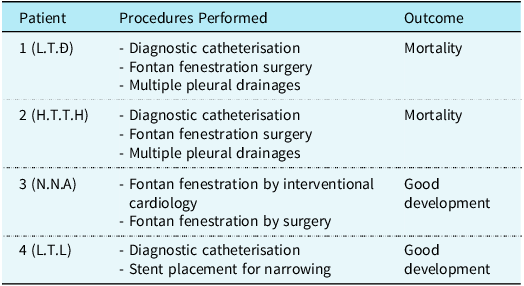
Among the 145 patients, 132 patients survived to hospital discharge, representing a postoperative survival rate of 91%. However, due to challenges posed by the COVID-19 pandemic and subsequent disruptions in healthcare access, follow-up data were only available for 95 of these 132 patients. Among the 95 patients with documented follow-up, we identified four cases of protein-losing enteropathy, corresponding to a prevalence of 4.2%. Notably, none of these patients experienced any documented viral infection prior to the onset of PLE, suggesting that the development of protein-losing enteropathy in our cohort was primarily driven by haemodynamic and lymphatic complications associated with Fontan physiology. Table 1 summarises the interventions and outcomes of these patients. The onset of protein-losing enteropathy in our cohort was associated with significant morbidity, requiring multiple invasive procedures, including cardiac catheterisation, surgical fenestration of the Fontan circuit, and repeated pleural drainage in two cases. Tragically, both of these patients succumbed to complications related to the disease despite aggressive medical and surgical interventions. In contrast, the two remaining patients, although diagnosed with protein-losing enteropathy, demonstrated more favourable outcomes following a combination of interventional and surgical fenestration management.
List of four patients with protein-losing enteropathy

In managing protein-losing enteropathy, medical therapy, including albumin infusion and diuretics, was routinely applied. Albumin infusion was administered according to the guidelines set by the Vietnamese Ministry of Health, specifically when serum albumin levels fell below 25 g/L, with the goal of maintaining levels above 30 mmol/L. Diuretics, particularly furosemide, were used to manage fluid overload, both in the intensive care unit (0.1–1 mg/kg/hour) and in the ward setting (0.2–1 mg/kg/day). Additional supportive measures included pulmonary vasodilators, such as sildenafil, and anticoagulation therapy with heparin and aspirin. Despite these efforts, the high cost of albumin and limited access to specialised diagnostic tools posed significant challenges to optimal management.
Challenges in diagnosis and hidden burden of protein-losing enteropathy
Diagnosing protein-losing enteropathy following the Fontan procedure presents significant challenges, particularly in resource-limited settings like Vietnam. Despite its life-threatening implications, the identification of protein-losing enteropathy remains elusive due to a combination of diagnostic complexity and limited availability of specialised tests.
In our centre, alpha-1-antitrypsin clearance, considered the gold standard for confirming intestinal protein loss, is not routinely available. Instead, diagnosis primarily relies on clinical criteria, including hallmark symptoms such as peripheral oedema, ascites, and pleural effusions, alongside laboratory evidence of hypoalbuminemia and hypoproteinaemia. This approach, though necessary, introduces a high risk of delayed diagnosis and potentially underestimates the true prevalence of protein-losing enteropathy within the postoperative Fontan population.
Of the four patients identified in our cohort, all exhibited generalised oedema, with three showing concurrent ascites and effusions. However, these overt manifestations often occur late in the disease course when the systemic effects of lymphatic dysfunction have already caused significant organ damage. In two cases, multiple invasive interventions, including repeated pleural drainage and Fontan circuit fenestration, were insufficient to prevent fatal outcomes. Retrospective analysis revealed that both patients had undergone pleural symphysis during prior Glenn procedures, potentially exacerbating lymphatic flow disruptions.
Emerging evidence suggests a spectrum of protein-losing enteropathy, ranging from subclinical states with biochemical abnormalities to full-blown disease. Randomised protein screening in asymptomatic patients post-Fontan has revealed hypoalbuminemia and protein dysregulation, raising concerns about an unrecognised “hidden burden” of protein-losing enteropathy. Many patients retrospectively reported intermittent oedema or mild gastrointestinal symptoms that were transient and dismissed as unrelated to their cardiac condition. These findings emphasise that the true incidence and clinical impact of protein-losing enteropathy are likely underappreciated, necessitating structured long-term surveillance even in asymptomatic individuals.
In Vietnam, where specialised cardiovascular and biochemical diagnostic resources remain limited, this diagnostic gap is even more pronounced. To date, only two case reports of protein-losing enteropathy following the Fontan procedure have been published nationally, Reference Anh, Tran, Cong, Dac and Ngoc8,Reference Hương, Hùng, Lý, Trang and Tùng9 reflecting both the rarity of published data and the need for heightened clinical vigilance. In the first report, a 13-year-old female patient experienced persistent ascites and protein loss soon after Fontan surgery but lacked access to comprehensive follow-up. Reference Hương, Hùng, Lý, Trang and Tùng9 Although intermittent albumin replacement improved her symptoms temporarily, the case underscores the ongoing risk of disease recurrence and progression in the absence of sustained management strategies. Reference Hương, Hùng, Lý, Trang and Tùng9 The second case involves a 14-year-old male patient who presented with significant post-Fontan complications, including generalised oedema, ascites, and pleural effusion, alongside protein-losing enteropathy. Reference Anh, Tran, Cong, Dac and Ngoc8 The patient had undergone a Glenn procedure a year prior and subsequently required the Fontan procedure with a Gore-Tex conduit. Reference Anh, Tran, Cong, Dac and Ngoc8 Despite intensive management, including mechanical ventilation, peritoneal dialysis, and albumin replacement, the patient developed protein-losing enteropathy, which was successfully managed with surgical fenestration of the Fontan circuit. Reference Anh, Tran, Cong, Dac and Ngoc8 Post-surgery, the patient showed significant improvement, with resolution of oedema and ascites, and a return to normal protein levels, highlighting the importance of early detection and surgical intervention in such cases. Reference Anh, Tran, Cong, Dac and Ngoc8
These diagnostic limitations highlight the pressing need for broader access to specialised testing and the implementation of cost-effective screening protocols. To address these challenges, improving the diagnosis of protein-losing enteropathy requires the implementation of cost-effective, practical alternatives to specialised tests like alpha-1-antitrypsin clearance. Routine monitoring of serum albumin levels and immunoglobulin concentrations, alongside clinical evaluation for common symptoms such as oedema, ascites, and pleural effusions, can help identify protein-losing enteropathy in its early stages. Additionally, trial interventions such as intravenous albumin infusion and subsequent clinical response can serve as a diagnostic tool. The development of low-cost, accessible tests, such as stool protein assays, could further enhance early detection. Moreover, utilising ultrasound technology to assess the lymphatic system or detect effusions provides an affordable diagnostic alternative. The incorporation of these solutions into clinical practice, particularly in settings with limited resources, would improve patient outcomes and reduce the underdiagnosis of protein-losing enteropathy. However, widespread access to these diagnostic tools requires a global collaborative effort to share resources and expertise, ensuring more equitable healthcare for post-Fontan patients worldwide. Collaborative, multicentre research in Vietnam and similar resource-constrained settings is essential to define the true burden of protein-losing enteropathy and develop tailored approaches to its diagnosis and management.
Comparative outcomes and literature review
Our experience with protein-losing enteropathy in post-Fontan patients highlights significant parallels with previous findings across developed countries but also underscores unique challenges faced in resource-constrained healthcare environments like Vietnam. In our cohort of 95 post-Fontan patients, the recorded protein-losing enteropathy incidence was 4.2%, with two of the four diagnosed cases resulting in mortality. This rate aligns with the mid-range of previously reported global protein-losing enteropathy incidences, which vary from 3.7% to 11.3% depending on the duration of follow-up and regional healthcare practices. Reference Mertens, Hagler, Sauer, Somerville and Gewillig5,Reference Powell10–Reference Feldt12 However, given the diagnostic flimitations at our centre, the true burden of protein-losing enteropathy in the Vietnamese population is likely underrecognised.
According to recent reviews, Reference Barracano, Merola, Fusco, Scognamiglio and Sarubbi13,Reference Alsaied14 protein-losing enteropathy is a condition with a diverse clinical presentation, ranging from mild and transient forms, often linked to correctable haemodynamic abnormalities or infections, to more persistent forms characterised by fluctuating episodes of relapse and remission. Subclinical protein-losing enteropathy, which involves minimal enteric protein loss without overt tissue oedema, may not be immediately apparent but can still affect growth in young patients, manifesting as failure to thrive. The onset of symptoms typically ranges from a few weeks to several years after the Fontan procedure. Common clinical signs include weight gain, peripheral oedema, ascites, pleural and pericardial effusion, all of which are associated with a substantial decrease in intravascular oncotic pressure, leading to fluid accumulation in the interstitial spaces. However, these symptoms are often secondary to the underlying effects of intestinal protein loss and nutrient malabsorption. Patients with protein-losing enteropathy frequently experience chronic or intermittent diarrhoea and steatorrhoea, accompanied by abdominal distension and discomfort. In the early stages, subtle signs such as periorbital and facial oedema may be observed, typically in the mornings when tissues are more sensitive to reduced oncotic pressure. While chronic diarrhoea occurs in only 11–20% of patients, its presence, along with other manifestations such as easy bruising, poor wound healing, and growth failure, can indicate significant nutritional deficiencies. Additionally, deficiencies in vitamin D and hypocalcaemia are often noted, potentially leading to osteoporosis. In severe cases, the loss of both pro- and anti-clotting factors through the gastrointestinal tract can lead to bleeding disorders or thrombosis, further complicating the clinical picture. Thus, the clinical implications of protein-losing enteropathy extend beyond fluid retention to encompass significant challenges related to malnutrition and coagulation abnormalities, underscoring the need for early detection and ongoing management. Reference Barracano, Merola, Fusco, Scognamiglio and Sarubbi13,Reference Alsaied14 Despite advances in understanding the pathophysiology, survival outcomes remain dismal, with a five-year mortality rate of 50% post-diagnosis. Reference Mertens, Hagler, Sauer, Somerville and Gewillig5,Reference Feldt12 However, more recent studies have shown improvements in survival rates, with one study reporting an 88% survival rate at five years following protein-losing enteropathy diagnosis, Reference John4 a notable improvement from earlier reports.
Our findings reflect many of these same trends, as all four protein-losing enteropathy cases exhibited oedema and three presented with both peritoneal and pleural effusions. However, the two patients who succumbed to complications underwent multiple diagnostic catheterisations, Fontan fenestrations, and repeated pleural drainage. Both had also undergone pleural symphysis during the Glenn stage, raising questions about the role of early lymphatic compromise in exacerbating Fontan-associated protein-losing enteropathy. This emphasises the need for better preventive strategies and individualised follow-up protocols.
In Vietnam, only two prior documented cases exist outside our cohort. Trương et al. described a 13-year-old girl with tricuspid atresia and right ventricular hypoplasia developing persistent ascites and protein loss soon after Fontan surgery. Reference Hương, Hùng, Lý, Trang and Tùng9 Although albumin and diuretic treatments provided temporary relief, the absence of alpha-1-antitrypsin clearance testing limited disease trajectory understanding. Reference Hương, Hùng, Lý, Trang and Tùng9 A second case involved a 14-year-old boy who, following Fontan surgery, experienced severe protein-losing enteropathy symptoms. Reference Anh, Tran, Cong, Dac and Ngoc8 Despite intensive interventions, including fenestration, the patient improved post-surgery, emphasising the importance of early detection and timely management. Reference Anh, Tran, Cong, Dac and Ngoc8
This limited documentation exposes a significant diagnostic and research gap in Vietnam. Many cases likely remain undiagnosed due to resource constraints and limited follow-up. Standardising regular serum protein and immunoglobulin monitoring and fostering collaborative research across Southeast Asia will be pivotal to addressing protein-losing enteropathys hidden burden and improving post-Fontan outcomes
Insights from Vietnam’s limited experience
The experience with protein-losing enteropathy in post-Fontan patients in Vietnam remains exceedingly limited, reflecting broader challenges faced by resource-constrained healthcare systems in recognising and managing this severe complication. Beyond our study, which represents the largest known cohort in the country, only two additional cases have been reported. Reference Kreutzer and Kreutzer15 This isolated report detailed a 13-year-old female patient with tricuspid atresia and right ventricular hypoplasia who developed chronic ascites, oedema, and hypoalbuminemia shortly after Fontan completion. Reference Hương, Hùng, Lý, Trang and Tùng9 Despite symptom management with albumin replacement and diuretics, the absence of comprehensive diagnostic tools such as alpha-1-antitrypsin clearance testing precluded a definitive understanding of her disease trajectory. Reference Hương, Hùng, Lý, Trang and Tùng9 The recurrent relapses and dependence on supportive care underscore the chronic, relapsing nature of protein-losing enteropathy and the limited therapeutic options available in low-resource settings. Reference Hương, Hùng, Lý, Trang and Tùng9 The second case involved a 14-year-old male patient who underwent Fontan surgery with a Gore-Tex graft. Reference Anh, Tran, Cong, Dac and Ngoc8 Post-operatively, he developed signs of protein-losing enteropathy, including severe oedema, ascites, and pleural effusions, along with significantly low albumin levels. Reference Anh, Tran, Cong, Dac and Ngoc8 Like the previous case, diagnostic limitations such as the unavailability of alpha-1-antitrypsin clearance testing delayed definitive diagnosis, with the patient requiring multiple interventions and prolonged intensive care. Reference Anh, Tran, Cong, Dac and Ngoc8 This second case highlights the ongoing challenges in diagnosing and managing protein-losing enteropathy in the post-Fontan cohort in Vietnam, further emphasising the critical need for heightened clinical vigilance and improved diagnostic infrastructure in resource-limited settings.
This sparse documentation of protein-losing enteropathy in Vietnam exposes a significant knowledge gap that likely extends beyond national borders to other developing countries. Given the increasing adoption of the Fontan procedure across Southeast Asia, the true burden of protein-losing enteropathy is almost certainly underreported, with many cases going unrecognised due to insufficient clinical follow-up, inadequate access to advanced diagnostics, and the often subtle early manifestations of the disease. In our experience, anecdotal accounts of transient lower extremity swelling, mild ascites, and vague gastrointestinal symptoms—potential harbingers of subclinical protein-losing enteropathy—are frequently dismissed or overlooked in routine post-operative care.
To address this silent epidemic, there is a pressing need for systematic, multicentre research efforts that can elucidate the epidemiology, risk factors, and long-term outcomes of protein-losing enteropathy in diverse healthcare contexts. Establishing cost-effective screening protocols, including periodic serum albumin and immunoglobulin measurements, can provide an early warning system even in settings where specialised tests are unavailable. Furthermore, tailored management guidelines that account for resource constraints must be developed to improve survival and quality of life for post-Fontan patients globally.
Vietnam’s nascent yet growing experience with protein-losing enteropathy presents a critical opportunity for regional and international collaboration. By pooling data, sharing clinical insights, and investing in scalable solutions, healthcare systems across Asia and other developing regions can transform this underrecognised burden into actionable knowledge. In doing so, we can hope to improve outcomes for patients navigating the long-term complexities of Fontan circulation while advancing the broader understanding of lymphatic and venous pathophysiology in CHD.
Conclusions
Protein-losing enteropathy represents a significant, often underrecognised complication in post-Fontan patients, with profound implications for long-term survival and quality of life. Our experience in Vietnam, alongside global data, highlights the urgent need for heightened clinical vigilance, particularly in resource-limited settings where diagnostic tools are scarce. The true prevalence of protein-losing enteropathy remains underestimated, and many cases go undiagnosed due to delayed recognition and limited access to specialised testing. To mitigate the burden of protein-losing enteropathy, we advocate for the implementation of cost-effective screening protocols, regular serum protein assessments, and collaborative research initiatives across both high- and low-resource regions. Early detection, tailored management strategies, and improved healthcare access are critical to improving outcomes for post-Fontan patients worldwide. Only through global collaboration and knowledge-sharing can we address this silent epidemic and advance the care of patients with CHD facing the long-term consequences of Fontan circulation.
Highlights
-
Limited access to specialised tests complicates early protein-losing enteropathy diagnosis, leading to delayed recognition
-
Protein-losing enteropathy contributes significantly to morbidity and mortality, with diverse clinical presentations and long-term consequences.
-
Calls for international collaboration to improve protein-losing enteropathy detection and management, especially in resource-limited settings.
-
Advocates for low-cost, accessible diagnostic tools to enhance early detection of protein-losing enteropathy in underserved regions.
-
Highlights Vietnam’s unique challenges and urges multicentre research to better understand and address protein-losing enteropathy in post-Fontan patients.
Financial support
The authors declare that no financial support was received for the research, authorship, and/or publication of this article.
Competing interests
The authors declare that the research was conducted in the absence of any commercial or financial relationships that could be construed as a potential conflict of interest.