Bullying presents a negative psychosocial and academic impact in school-aged children and adolescents, thus it is important to detect it early in schools (Salmivalli, Reference Salmivalli2010). However, while there are forms of bullying which can be simpler to recognize, such as face-to-face bullying involving visible physical aggression perpetrated over a long period of time, there are more subtle forms which can be quite challenging to detect, such as bullying behavior occurring in the online environment (Patchin & Hinduja, Reference Patchin and Hinduja2015). Also, it can be simpler to identify bullying in a more noticeable situation, such as repeated humiliating and public aggression in comparison with hurtful comments, which can be easily mistaken with playful and harmless behavior, particularly when it is out of context (Rosa et al., Reference Rosa, Pereira, Ribeiro, Ferreira, Carvalho, Oliveira, Coheur, Paulino, Veiga Simão and Trancoso2019). Since not all aggressive and harmful behavior is bullying, in this study we adopted the main criteria usually considered to distinguish it from other behavior: Repetition, intentionality to harm and power imbalance (Patchin & Hinduja, Reference Patchin and Hinduja2015).
In line with the growth of the use of technologies to communicate, bullying has evolved from the physical context to the virtual one. Although the criteria for its definition are widely accepted as identical to other forms of bullying, in cyberbullying they present nuances due to the specificities of the online context (Patchin & Hinduja, Reference Patchin and Hinduja2015; Rosa et al., Reference Rosa, Pereira, Ribeiro, Ferreira, Carvalho, Oliveira, Coheur, Paulino, Veiga Simão and Trancoso2019). This can make cyberbullying behavior more indirect and less visible, therefore, more difficult to detect. Cyberbullying can be defined as repeated, aggressive and intentional behavior through electronic devices (e.g., cell phones, computers) by a group or an individual against a person or people with less power (Patchin & Hinduja, Reference Patchin and Hinduja2015; Salmivalli, Reference Salmivalli2010; Smith et al., Reference Smith, Mahdavi, Carvalho, Fisher, Russell and Tippett2008). Among other behavior (e.g., using images to humiliate someone), cyberbullying prevalently includes different forms of verbal aggression: Threatening; harassing; making fun of someone; pretending to be someone; revealing or demonstrating to have information about someone’s private life; using someone’s personal information without permission; devaluating someone’s life; and insulting someone (Veiga Simão et al., Reference Veiga Simão, Ferreira, Francisco, Paulino and de Souza2018).
Bullying is often perpetrated to obtain social acceptance among peers, which is especially valued during adolescence, making it a frequent behavior in this developmental stage (Salmivalli, Reference Salmivalli2010). Being socially accepted is determining to adolescents’ identity and self-esteem, thus, cyberbullying can provoke more permanent psychological, emotional, and social damage since public humiliation can be more easily conducted due to the absence of time and space limits in the virtual context (e.g., most adolescents use cellphones day and night, which can spread harm content instantly and quickly) (Patchin & Hinduja, Reference Patchin and Hinduja2006). Accordingly, cyberbullying seems to have stronger detrimental effects in the victims than face-to-face bullying. For instance, cyberbullying victims tend to engage more often in risky behavior, such as addictive behavior and riskier sexual behavior than victims of face-to-face bullying (Nikolaou, Reference Nikolaou2022). Moreover, victims of cyberbullying reveal a higher risk of developing mental health disorders, including depression and social anxiety (Sourander et al., Reference Sourander, Brunstein Klomek, Ikonen, Lindroos, Luntamo, Koskelainen, Ristkari and Helenius2010).
With a view to effectively prevent and intervene in bullying and cyberbullying, school-based interventions have increased to adopt an whole-school approach, oriented to the entire school community, and many applying Social and Emotional Learning to promote a pro-social school climate (Downes & Cefai, Reference Downes and Cefai2016). Concerning the key components of bullying interventions, the promotion of moral engagement with respect to the phenomenon among the school community can contribute to less persistent bullying behavior (Finne et al., Reference Finne, Roland and Svartdal2018). Additionally, the results of a recent meta-analysis suggest that bullying programs which include a cyberbullying component can be more effective for both cyberbullying and face-to-face bullying (Polanin et al., Reference Polanin, Espelage, Grotpeter, Ingram, Michaelson, Spinney, Valido, Sheikh, Torgal and Robinson2022). Moreover, teacher training is considered as a major success factor for bullying interventions in schools (Myers & Cowie, Reference Myers and Cowie2019).
Although teachers play a crucial role in the prevention and intervention in cyberbullying, they often indicate they have insufficient knowledge about the phenomenon, and the intervention strategies they report seem to be inconsistent (Macaulay et al., Reference Macaulay, Betts, Stiller and Kellezi2018). In fact, when faced with a cyberbullying situation happening in their schools, teachers tend to stay out of it (Stauffer et al., Reference Stauffer, Heath, Coyne and Ferrin2012). Specifically, how teachers define cyberbullying, their understanding about effective strategies, and how they apply the knowledge they have to actual situations can impact how they intervene (Sawyer et al., Reference Sawyer, Mishna, Pepler and Wiener2011). Therefore, we intend to investigate how teachers define cyberbullying, the strategies they propose to intervene in these situations, and how they feel morally implicated with it.
Although little is still known about what can contribute to teachers not intervening in cyberbullying, a possible relation between moral disengagement and teachers’ passive behavior has been previously suggested (DeSmet et al., Reference DeSmet, Aelterman, Bastiaensens, van Cleemput, Poels, Vandebosch, Cardon and De Bourdeaudhuij2015). Therefore, we also propose to investigate how teachers’ awareness and knowledge of cyberbullying could be related to their moral (dis)engagement with the phenomenon. In addition, if teachers feel unable to successfully deal with cyberbullying, this can interfere with their decision to help. For instance, feeling helpless to intervene has been related to bystanders’ passive behavior in previous research (Allisson & Bussey, Reference Allison and Bussey2016). In accordance, if teachers experience lack of confidence about their capability to solve a given situation, this may interfere with how they deal with it, especially if they consider having scarce knowledge about cyberbullying, as reported by previous research (Macaulay et al., Reference Macaulay, Betts, Stiller and Kellezi2018). However, the relation between teachers’ knowledge about cyberbullying and their perceived performance to intervene remains unexplained. Therefore, we also propose to investigate the relationship between teachers’ awareness and knowledge with their perceived performance in terms of intervening in the situation.
Lastly, the degree of severity attributed to a given behavior can also influence teachers’ decision to help or not (Sawyer et al., Reference Sawyer, Mishna, Pepler and Wiener2011). Specifically, teachers seem to deal with cyberbullying according to the severity they attribute to a particular situation (Macaulay et al., Reference Macaulay, Betts, Stiller and Kellezi2021). Hence, if teachers minimize the severity of cyberbullying, for instance, due to erroneous beliefs they may have about the phenomenon (Bautista Alcaine & Vicente Sánchez, Reference Bautista Alcaine and Vicente Sánchez2020), this can lead them more easily not to intervene when necessary. In this regard, we also propose to investigate the relation between teachers’ awareness and knowledge about cyberbullying with their perceived severity of the phenomenon.
How Teachers Define and Deal with Cyberbullying and their Moral Involvement with the Phenomenon
Being able to define cyberbullying can constitute a difficult task given the complexity of determining some of its features, namely repetition, abusing power and intentionality, which are the same as other forms of bullying, but can be different to identify in cyberbullying (Patchin & Hinduja, Reference Patchin and Hinduja2015; Thomas et al., Reference Thomas, Connor and Scott2015). For instance, the repetition of behavior can be confusing to determine in online interactions considering that a single hurtful act can be in fact repeated behavior when widely shared with others, which can indicate cyberbullying, as the target may be to hurt each time that the content is viewed, liked or shared (Patchin & Hinduja, Reference Patchin and Hinduja2015). Also, power in face-to-face bullying may be physical (e.g., being stronger) or social (e.g., being popular), whereas power relative to a victim of cyberbullying may derive from technological proficiency or from the aggressors not revealing their identity (Patchin & Hinjuda, Reference Patchin and Hinduja2006), which cannot be easily noticed by a bystander.
When asked to define cyberbullying, teachers seem to recognize the intention to inflict harm feature, and also other unique elements of this phenomenon, namely the anonymity in communicating with others and the accessibility of a variety of forms to offend or humiliate someone (Macaulay et al., Reference Macaulay, Betts, Stiller and Kellezi2019). However, they tend to overlook other key defining features, such as repetition of behavior, as well as an imbalance in power between victim and aggressor (Compton et al., Reference Compton, Campbell and Mergler2014; Macaulay et al., Reference Macaulay, Betts, Stiller and Kellezi2019). Moreover, teachers seem to disregard specific cyberbullying behavior, such as social exclusion and harassment (Bautista Alcaine & Vicente Sánchez, Reference Bautista Alcaine and Vicente Sánchez2020). Furthermore, they also tend to show difficulty in differentiating cyberbullying from other types of behavior. In accordance, teachers seem to recognize more easily physical bullying than cyberbullying, possibly due to the nature of the school environment, which can contribute to teachers’ better awareness of more direct and visible forms of bullying taking place in school (Campbell et al., Reference Campbell, Whiteford and Hooijer2019). This may lead them to not being aware of cyberbullying situations occurring around them, and may ultimately have an impact on whether and how they intervene.
Knowing how to deal with cyberbullying has also been a focus of recent research, which has revealed imprecise results specifically concerning the type of strategies perceived by teachers as effective for students to deal with cyberbullying. It remains unclear which strategies they are more inclined to favor, such as more technical strategies (e.g., changing email and passwords) or strategies focusing on seeking help and/or reporting the incident (e.g., telling a family member) (Bautista Alcaine & Vicente Sánchez, Reference Bautista Alcaine and Vicente Sánchez2020; Ozansoy et al., Reference Ozansoy, Altınay and Altınay2018). Moreover, a systematic review about teachers’ perceptions and responses towards cyberbullying (Macaulay et al., Reference Macaulay, Betts, Stiller and Kellezi2018) concluded that, teachers generally considered cyberbullying as a school problem, but their knowledge about effective strategies was inconsistent, and they did not believe in their ability to identify and deal with the phenomenon.
In addition, previous studies have provided some clues which need further investigation, namely regarding how teachers may not feel morally implicated with cyberbullying situations among their students and therefore, decide to ignore and attribute responsibility for intervening to others (DeSmet et al., Reference DeSmet, Aelterman, Bastiaensens, van Cleemput, Poels, Vandebosch, Cardon and De Bourdeaudhuij2015; Stauffer et al., Reference Stauffer, Heath, Coyne and Ferrin2012). However, the current understanding of whether and how teachers morally implicate themselves in cyberbullying is still limited. Thereby, we propose to answer the following research questions in a first study:
1. How do teachers define cyberbullying?
2. What strategies do teachers consider to be effective to intervene in cyberbullying?
3. Do teachers feel morally implicated in cyberbullying situations?
Teachers’ Awareness and Perceived Severity of Cyberbullying, Moral Disengagement, Perceived Performance and Acquired Knowledge
Teachers tend to consider cyberbullying as less serious than physical bullying (Craig et al., Reference Craig, Bell and Leschied2011), which suggests that they can, in some situations, undervalue the seriousness of cyberbullying behavior. In line with this, previous research has revealed likewise a tendency for students to devalue the severity of cyberbullying, which was associated with the behavior of not intervening as a bystander, and also with the use of moral disengagement mechanisms (van Cleemput et al., Reference van Cleemput, Vandebosch and Pabian2014). Considering that teachers’ perceived severity of a given incident determines their probability to intervene (Sawyer et al., Reference Sawyer, Mishna, Pepler and Wiener2011), devaluing its gravity can contribute to teachers not intervening when required. Moreover, since teachers manage cyberbullying according to the perceived severity of each situation, this can, in turn, lead to inconsistencies in the intervention strategies that they use (Macaulay et al., Reference Macaulay, Betts, Stiller and Kellezi2021). Thereby, it is relevant for teachers to develop accurate knowledge about the severity and impact of cyberbullying behavior, which they can also share with their students. In accordance, erroneous beliefs about cyberbullying behavior could be attributed to the lack of knowledge about the phenomenon (Bautista Alcaine & Vicente Sánchez, Reference Bautista Alcaine and Vicente Sánchez2020).
Considering that cyberbullying events usually have many bystanders, passive bystander behavior can be explained by the bystander effect, which refers to the less likelihood to intervene when several individuals observe a potential harmful situation (Darley & Latané, Reference Darley and Latane1968). The moral disengagement mechanism of the diffusion of responsibility can enhance this effect, since the responsibility to intervene is shared with others, making no one personally responsible for helping, while they expect that someone else takes the initiative, or evaluate others’ reactions to decide about the seriousness of the situation to do something (Pacthin & Hinduja, Reference Patchin and Hinduja2015). Previous research (DeSmet et al., Reference DeSmet, Aelterman, Bastiaensens, van Cleemput, Poels, Vandebosch, Cardon and De Bourdeaudhuij2015) has also found that teachers who did not perceive cyberbullying as a problem and ignored cyberbullying situations, used different moral disengagement mechanisms to justify their actions (e.g., blaming the victim). In line with this, another study revealed that when teachers were aware of cyberbullying taking place in their schools, they tended to remove themselves from the situation and displace responsibility onto the school’s Director (Stauffer et al., Reference Stauffer, Heath, Coyne and Ferrin2012). This mechanism may be understood as displacement of responsibility, through which responsibility for intervening is attributed to other(s) (Bandura, Reference Bandura2016). According to the socio-cognitive perspective of moral agency, individuals can accept or justify immoral behavior by morally disengaging from it, through the selective detachment from moral self-sanctions (Bandura, Reference Bandura and Lopez2008). In line with this perspective, moral disengagement refers to the selective detachment from moral self-sanctions, allowing individuals to justify or accept immoral behavior, while withdrawing personal responsibility (Bandura, Reference Bandura2016). Therefore, moral disengagement can help explain why teachers do not intervene when they know about students’ involvement in cyberbullying. In fact, moral disengagement has been associated with passive bystanders’ behavior in cyberbullying. Specifically, previous research has linked bystander behavior, such as ignoring or staying out of the situation, with moral disengagement (van Cleemput et al., Reference van Cleemput, Vandebosch and Pabian2014), and a recent systematic review (Lo Cricchio et al., Reference Lo Cricchio, García-Poole, te Brinke, Bianchi and Menesini2021) has confirmed the positive association between moral disengagement and passive bystander behavior in cyberbullying. However, these findings involved students, and little is known about teachers’ moral disengagement when they are aware of cyberbullying. Therefore, it is imperative to also investigate teachers’ moral (dis)engagement with the phenomenon, as it may also affect how they intervene (or not) in a given situation.
Another important aspect which can help explain teachers’ moral involvement with cyberbullying refers to how they consider themselves capable of dealing with these events. According to the social-cognitive theory, the perceived beliefs about one’s own ability to deal with events in order to achieve anticipated goals refers to self-efficacy, which can influence the conclusion of diverse situations (Bandura, Reference Bandura and Lopez2008). Decisions concerning behavior are partially determined by self-efficacy, leading individuals to assume challenges they feel able to handle and avoid others in which they feel unable to thrive (Ferreira et al., Reference Ferreira, Veiga Simão, Paiva and Ferreira2019), which in turn can be affected, along with other factors, by teachers’ subjective experiences. For instance, how teachers handle situations of maltreatment between students can be influenced by their own past experiences of school victimization (van der Meulen et al., Reference van der Meulen, Soriano, Granizo, del Barrio, Korn and Schäfer2003). Considering that bystanders may not intervene in cyberbullying if they feel unable to help effectively (Allisson & Bussey, Reference Allison and Bussey2016), this can also explain why teachers decide to stay out of the situations and displace responsibility for intervening onto others (Stauffer et al., Reference Stauffer, Heath, Coyne and Ferrin2012). Hence, this can lead them to feelings of insecurity concerning how to deal with possible episodes involving their students (DeSmet et al., Reference DeSmet, Aelterman, Bastiaensens, van Cleemput, Poels, Vandebosch, Cardon and De Bourdeaudhuij2015; Green et al., Reference Green, Johnston, Mattioni, Prior, Harcourt and Lynch2016; Macaulay et al., Reference Macaulay, Betts, Stiller and Kellezi2018).
Considering that teachers’ knowledge about effective strategies to deal with cyberbullying has been shown to be inconsistent, and that teachers considered themselves as unable to identify and deal with situations they encountered (Macaulay et al., Reference Macaulay, Betts, Stiller and Kellezi2018), this may help clarify the extent to which they morally disengage in situations involving their students. Specifically, if teachers lack the necessary information about the phenomenon and how to intervene, this can lead them to stay out of a situation more easily. Hence, through the use of different moral disengagement mechanisms (e.g., distorting the consequences of the behavior, displacing and diffusing personal responsibility), teachers can remove themselves from the situation, and act in ways which oppose their personal moral standards (Bandura, Reference Bandura2016). In turn, if they perceive themselves as possessing knowledge about cyberbullying, this may lead to lower moral disengagement.
In view of the gaps in the literature regarding teachers’ awareness and perceived severity of cyberbullying incidents and how they potentially morally disengage from it and have low perceptions of their own performance to intervene, potentially due to their lack of knowledge, we propose to answer the following research questions with a second study:
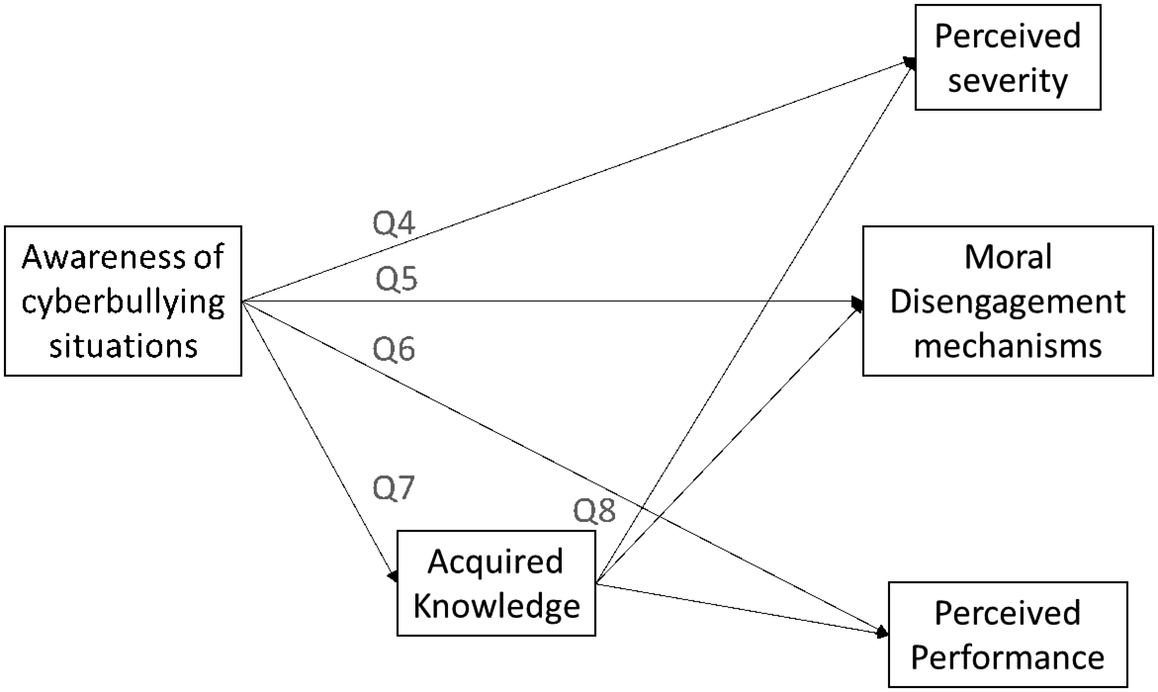
4. Is teachers’ awareness of cyberbullying incidents witnessed by their students connected to their perceived severity of these situations?
5. Is teachers’ awareness of cyberbullying incidents witnessed by their students associated with moral disengagement mechanisms?
6. Is teachers’ awareness of cyberbullying incidents witnessed by their students linked to their perceived performance to solve these situations?
7. Is teachers’ awareness of cyberbullying incidents witnessed by their students related to their acquired knowledge about cyberbullying?
8. What is the role of teachers’ acquired knowledge about cyberbullying in the relationship between being aware of these situations and being morally disengaged, perceiving different levels of severity, and perceiving one’s own performance?
In accordance with these research questions, Figure 1 presents the proposed conceptual model of the second study.
Conceptual Model from Study 2

Study 1
Method
Participants
A convenience sample of 20 teachers from a public school located in the South region of Portugal, aged from 25 to 65 years (M age = 42.9, 80% female) participated in a first qualitative study. From the total sample, 75% were 5th and 6th grade teachers, and the remaining taught 8th and 9th grades. The participants were Math, Sciences, Arts, Sports, Physics and Chemistry, Geography, ICT and History teachers; 78% of whom were effective in the school, reflecting a high professional stability. The teachers were distributed in six departments according to the Internal Regulation of the School District, which was composed of 254 teachers and 2,448 students. The school’s pedagogical project included the support of an educational psychologist, a social mediator, a social worker and a speech therapist.
Instruments
Semi-structured interviews were conducted with the aim to: (a) Understand how teachers define cyberbullying; (b) ascertain the intervention strategies considered by teachers as effective to solve cyberbullying situations; and (c) explore teachers’ usage of moral disengagement mechanisms regarding cyberbullying behavior and their role in intervening. The interviews were conducted using a script composed of open-ended questions and involved four parts. The first part referred to the presentation of the objectives of the interview and ethical procedures. In the second part, three fictional cyberbullying scenarios were presented, and initial questions concerning moral disengagement were asked to the participants (e.g., “Are there worse or more serious situations in your opinion? Please give an example.”). The third part concerned teachers’ perceptions about cyberbullying and intervention strategies (e.g., “What would be the most adequate way to intervene?”). Finally, in the last part, the participants could share additional information about the discussed topics and were informed about the possible access to the results of the study.
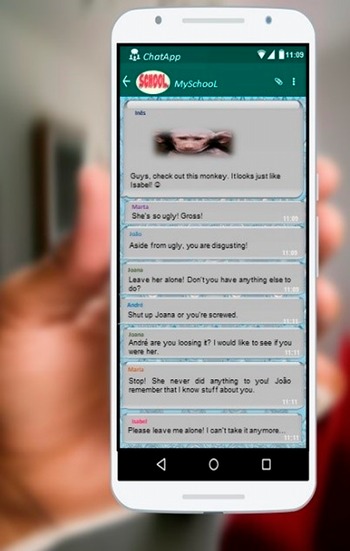
The three cyberbullying scenarios involved fictional adolescents interacting in digital platforms and playing different roles (i.e., victim, aggressor, and different bystanders which acted in diverse ways, such as helping the victim, supporting the aggressor, or doing nothing). Scenario 1 (cf. Figure 2) referred to a group chat where a fictional adolescent made fun of another, using an image that he shared in the group. Some bystanders defended the victim, while others supported the aggressor. The victim reacted, asking the aggressor to stop. Scenario 2 occurred on an internet channel, where a fictional female character posted a video dancing, followed by anonymous comments, which included sexual harassment and threats. In this scenario, the victim did not react. Scenario 3 took place on a social network where a private photo of a fictional adolescent was shared by another without consent. Some bystanders defended the victim, while others supported the aggressor. The victim reacted by threatening the aggressor. The questions posed during the presentation of the scenarios focused on how the interviewees perceived each cyberbullying situation and which strategies would they use to intervene in the given situation (cf. Supplementary Material). The scenarios were developed in a previous study centered on identifying aggressive language reported by adolescents as observed and/or used in cyberbullying situations (Veiga Simão et al., Reference Veiga Simão, Ferreira, Francisco, Paulino and de Souza2018). All scenarios were submitted to prior content and face validity with three adolescents.
Cyberbullying Scenario 1

Procedure
Study 1 was approved by the Ethics Committee of the institution from the research team. Authorization to conduct the research was obtained from the school’s Director. All teachers were informed of the objectives of the study, volunteered and consented to participate in the interviews, and were also informed that they could quit at any time. The interviews were conducted in person at the teachers’ schools, in isolated rooms to assure privacy, and lasted from 15 to 65 minutes. All interviews were audio-recorded after consent, and verbatim transcription was subsequently performed. Participants’ names were changed into codes and deleted, ensuring confidentiality of the data. All recordings were deleted after the interviews were transcribed.
Data Analysis
A thematic analysis was conducted to identify and describe patterns or themes within data (Bazeley, Reference Bazeley2013). Concerning the third research question (i.e., “Do teachers feel morally implicated in cyberbullying situations?”), a theory-driven thematic analysis was conducted, following the theory of Moral Agency (Bandura, Reference Bandura and Lopez2008). The coding scheme used to categorize the participants’ responses was created in NVivo 12 Pro, including initial categories and subcategories of analysis (cf. the Supplemental Material), guided by Study 1’s research questions and the interview script. Statements or natural meaning units of the transcripts were subsequently coded in the initial (sub)categories and in others which emerged from the data, by using both inductive and deductive approaches. To test for interrater reliability, 10% of the total meaning units were coded by an additional independent researcher, revealing 83% of agreement. Regular meetings were conducted to debrief and verify coding, interpretations, and definition of concepts. Frequency analyses were used to improve the meaning of the qualitative results by comparing frequencies within data.
Results
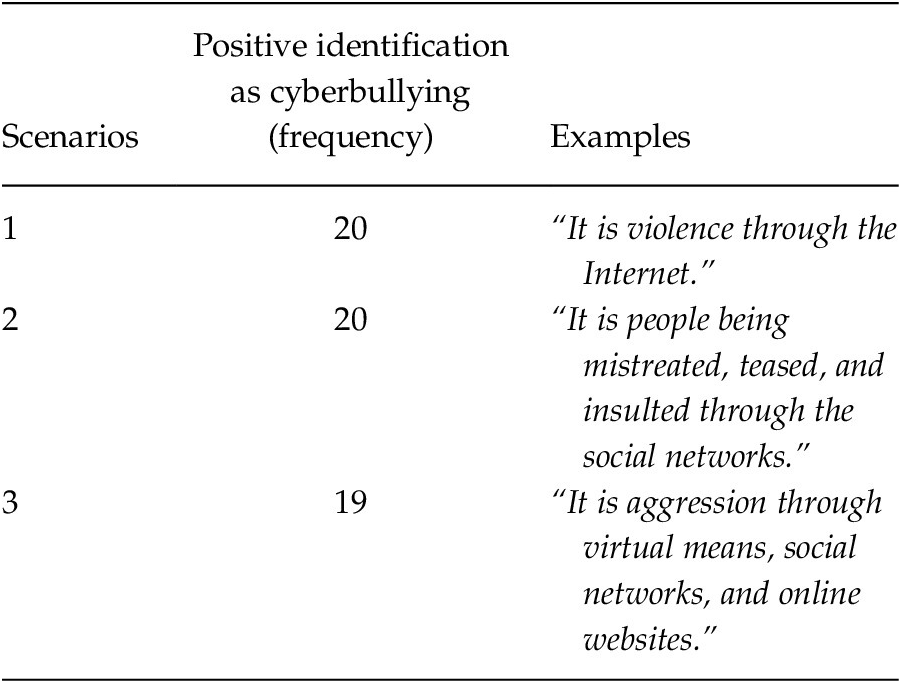
Most teachers considered that the scenarios corresponded to cyberbullying situations (except for one teacher concerning Scenario 3). However, although the interviewees reported the use of aggression and hostility as main elements of cyberbullying through their definitions of the phenomenon, they did not describe main key aspects of the definition, such as the repetition of behavior, intentionality to harm someone, occurrence among peers, and an imbalance in power. Table 1 illustrates the results concerning how teachers defined cyberbullying focusing mainly on the aspect of aggressiveness, which refers to research Question 1.
Teachers’ Definitions of Cyberbullying

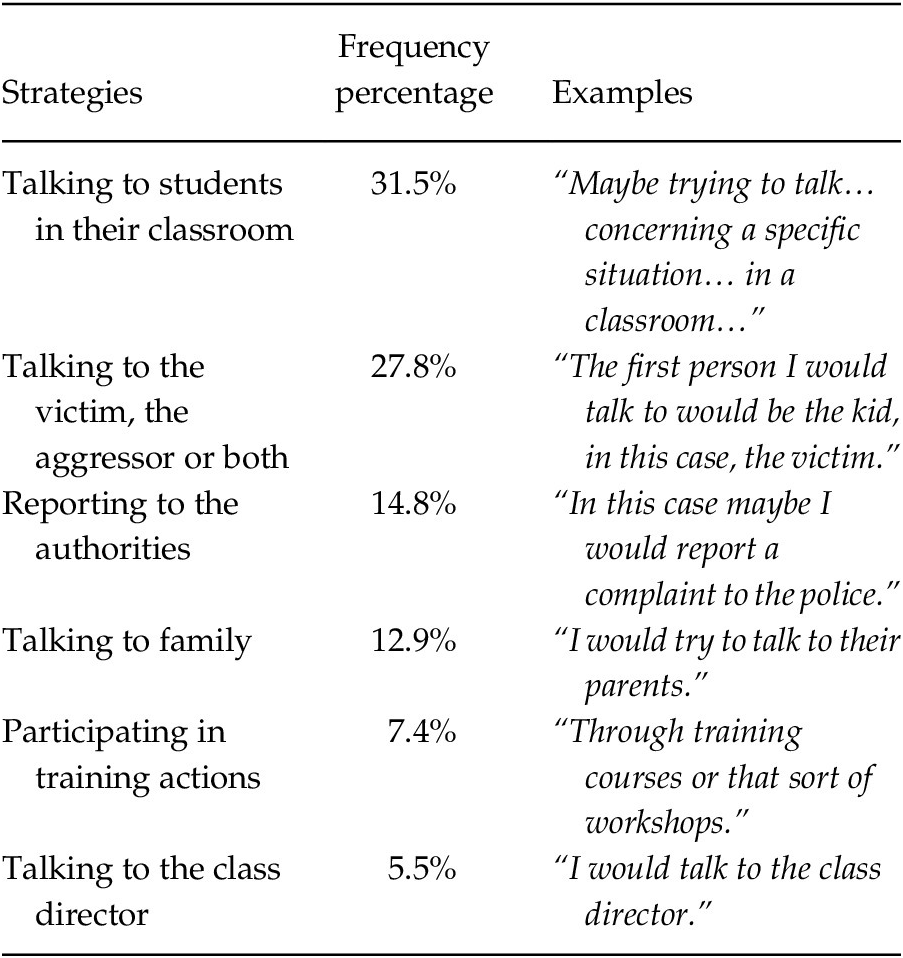
Moreover, the most prevalent intervention strategies mentioned by teachers included talking with the students in their classrooms, and talking individually to the victim, the aggressor or both. Table 2 presents the overall strategies which teachers were asked to consider as the most effective to solve a cyberbullying incident (i.e., “What would be the most adequate way to intervene?”), focusing mainly on communicating the incident to someone, which concerns research Question 2.
Intervention Strategies Reported by Teachers Concerning Cyberbullying

Results focusing on understanding whether teachers felt morally implicated in cyberbullying situations, revealed that teachers engaged in moral disengagement when talking about the different scenarios, as opposed to implicating themselves in finding a solution to such incidents, which refers to research Question 3. Specifically, they used mechanisms focusing on behavior (i.e., locus of behavior), such as advantageous comparison, which was used by 32.8% of the teachers to make immoral behavior excusable by contrasting it with other unacceptable behavior. The following excerpts exemplify the use of this mechanism:
“It’s bad… It’s bad… but there is much worse.”
“Concerning cellphones, there are worst situations.”
Teachers (32.8%) also used euphemistic labelling, through which immoral behavior seemed to become more acceptable by using language which diminished the negative perception of injurious behavior. To exemplify, the following excerpts were taken from Teachers 1 and 3.
“It is normal. Many teenagers make these videos, singing, dancing… they make many posts of this sort.”
“It is typical of teenagers to deal with image in that way and to make their classmates feel bad (…)”
Moreover, 30.3% of teachers attributed blame to the victims. The following excerpts exemplify the mechanism of attribution of blame, which is used to make immoral behavior seem more acceptable by blaming others:
“It is C’s [the victim] fault.”
“The person who posts, [victim]. In that case, C [victim] is going to trigger this and expose herself (…)”
Lastly, 4.2% of teachers displaced responsibility for intervening by focusing on parents and even social media providers. By using this mechanism, the responsibility for intervening is attributed to others, as may be observed in the following example:
“Supervision should be much more monitored by parents, by Facebook.”
Discussion
Findings from Study 1 revealed that teachers seemed to be generally aware of cyberbullying behavior, and that they indicated that the fictional and hypothetical situations which were presented to them were cyberbullying, when they were asked to label them. When they were asked specifically to define cyberbullying, teachers recognized the feature concerning its aggressive and hostile nature, however, they also overlooked main defining features of the phenomenon, which answered research Question 1. Specifically, they did not refer to repetition of behavior, power imbalance, the intentionality to harm, and the occurrence among peers. These findings contribute to prior studies, in which teachers did not refer to repetition and power inequality, but identified the other defining features of cyberbullying (Compton et al., Reference Compton, Campbell and Mergler2014; Macaulay et al., Reference Macaulay, Betts, Stiller and Kellezi2019). Specifically, the results from the present study suggested that teachers can struggle to recognize cyberbullying behavior when faced with actual incidents and situations involving their students, given the difficulties they revealed in defining the phenomenon. Thus, there is a doubt if the same teachers would recognize real cyberbullying situations. Accordingly, previous research has highlighted teachers’ difficulties in identifying cyberbullying, since they may ignore particular behavior, such as online social exclusion and online harassment (Bautista Alcaine & Vicente Sánchez, Reference Bautista Alcaine and Vicente Sánchez2020). Thereby, teachers seem to lack more precise knowledge, which can enable them to effectively identify cyberbullying behavior and to differentiate it from other aggressive conduct, such as physical bullying (Campbell et al., Reference Campbell, Whiteford and Hooijer2019).
Concerning how to intervene in cyberbullying, the results revealed that teachers knew several adjusted strategies, which mostly involved communicating or talking to someone about the incident, which adds to the findings from a recent study (Bautista Alcaine & Vicente Sánchez, Reference Bautista Alcaine and Vicente Sánchez2020), responding to research Question 2. However, the strategies mentioned by teachers were referred to without any particular order or priority, making it unclear as to how they would intend to act in a more concrete and articulated way. Results also revealed that some of the teachers reported attending training actions as an intervention strategy, which reflects this specific need in their professional practice (Macaulay et al., Reference Macaulay, Betts, Stiller and Kellezi2019).
Finally, findings regarding teachers’ moral implication in cyberbullying situations, revealed that teachers tended to morally disengage from a fictional cyberbullying situation which is presented to them, answering research Question 3. Specifically, results suggest that teachers were inclined towards normalizing and making cyberbullying behavior more excusable, mainly by comparing it with other immoral actions (i.e., advantageous comparison), using language which diminishes the aggressor’s behavior (i.e., euphemistic labelling), and blaming the victim for the behavior (i.e., attribution of blame). This observed tendency for teachers to morally disengage may interfere with their actions, since moral disengagement seems to relate with teachers’ passive behavior when faced with cyberbullying situations happening in their schools (DeSmet et al., Reference DeSmet, Aelterman, Bastiaensens, van Cleemput, Poels, Vandebosch, Cardon and De Bourdeaudhuij2015; Stauffer et al., Reference Stauffer, Heath, Coyne and Ferrin2012). Since moral disengagement implies removing the weight of moral self-sanctions to justify or accept injurious behavior (Bandura, Reference Bandura2016), this might lead them more easily to remove their personal responsibility from a cyberbullying situation they encounter. Moreover, although we found that teachers seemed to know what strategies could be used to solve a cyberbullying situation, morally disengaging from it could have lead them not to intervene, since moral disengagement has been related to bystanders’ passive behavior in previous research (Lo Cricchio et al., Reference Lo Cricchio, García-Poole, te Brinke, Bianchi and Menesini2021). In fact, these results contribute to the scarce knowledge concerning specifically teachers’ moral involvement with cyberbullying, since we found that teachers tend to minimize or normalize cyberbullying behavior.
From the results of Study 1, which was mainly exploratory regarding how teachers define cyberbullying and thus, are able to recognize it and differentiate it from other violent phenomena, consider certain intervention strategies appropriate and feel morally implicated in these situations, we proposed to present a deeper understanding of whether teachers are aware when these situations occur. We also propose to investigate how this awareness may be associated with their perceived severity of the event, how they can morally disengage from it, whether they perform appropriately in these incidents and how acquired knowledge about these occurrences may have an impact on these variables. Therefore, we present Study 2.
Study 2
Method
Participants
A convenience sample of 541 middle and high school teachers (i.e., 7th to 9th grades) from school districts located in different regions of Portugal participated in Study 2. Participants’ ages varied from 26 to 66 years (M age = 50, SD = 7), most were female (74%), and presented a medium length of 30 years of service. Most teachers considered themselves as being very experienced Internet users (56.6%), whereas 39.6% thought of themselves as somewhat experienced, and only 3.7% indicated they had little to no experience.
Instruments
In Study 2, the participants filled in four scales of the Inventory of Online Safety and Cyberbullying – Teachers’ version (Veiga Simão et al., Reference Veiga Simão, Ferreira, Freire, Caetano, Martins and Vieira2017).
Awareness of Cyberbullying Situations. This instrument is a 9-item one-dimensional questionnaire (α = .81) that asks teachers (through a dichotomist response of 1 = no and 2 = yes) to think about whether they know a student (or students) who observed cyberbullying behavior (“In the last 6 months, do you know any student who observed someone being threatened through text messages?”). This scale focused on situations involving students who were bystanders to achieve the highest number of events considering that bystanders could be students who only witnessed cyberbullying behavior but they could also be aggressor(s) or victim(s) (i.e., aggressors and victims also witness cyberbullying behavior, including those who perpetrate and those who are the target). A factor confirmatory analysis revealed a good fit according to the literature (Hooper et al., Reference Hooper, Coughlan and Mullen2008), namely, χ2(66) = 110.76, p < .05, χ 2/df = 1.67, CFI = .95, IFI = .95, RMSEA = .07, LO = .04, HI = .09, SRMR = .06, AIC = 188.76.
Perceived Knowledge and Intervention in Cyberbullying. This instrument is an 8-item two-dimensional questionnaire (Perceived Knowledge about Cyberbullying with 5 items, α = .84, and Perceived Performance to Solve Cyberbullying Situations with 3 items, α = .84), which evaluates teachers’ perceived knowledge about cyberbullying, and how to act in cyberbullying situations (e.g., “I know where to seek for help, if my student(s) is/are involved in a cyberbullying situation.”), in a five point type Likert scale, varying from 1 = totally disagree to 5 = totally agree. An exploratory factor analysis revealed a good fit according to the literature (Hooper et al., Reference Hooper, Coughlan and Mullen2008), namely, χ2(17) = 26.20, p < .05, χ 2/df = 1.54, CFI = .99, IFI = .99, RMSEA = .05, LO = .00, HI = .10, SRMR = .03, AIC = 64.20.
Teachers’ Moral Disengagement with Cyberbullying. This instrument is a 14-item four-dimensional questionnaire (Devaluing Cyberbullying Behavior with 4 items, α = .82, Displacement of Responsibility with 3 items, α = .66, Justification of the Intentions underlying Cyberbullying Behavior with 4 items, α = .77, Blaming the Victim and Devaluing the Consequences with 3 items, α = .72) that asks teachers about their moral engagement (in a five point type Likert scale, varying from 1 = totally disagree to 5 = totally agree) concerning different cyberbullying situations (e.g., “If I know that one of my students sexually harassed another person online, I believe that it is not as bad as if he/she stalked someone in person”). An exploratory factor analysis revealed a good fit according to the literature (Hooper et al., Reference Hooper, Coughlan and Mullen2008), namely, χ2(66) = 110.76, p < .05, χ 2/df = 1.67, CFI = .95, IFI = .95, RMSEA = .07, LO = .04, HI = .09, SRMR = .06, AIC = 188.76.
Perceived Severity of Cyberbullying Situations. This instrument is a 8-item unidimensional questionnaire (α = 0.87) that asks teachers (in a six point type Likert scale, varying from 1 = a joke to 6 = something serious) what they think about the severity of different cyberbullying behavior if it was witnessed by their students (e.g., “I think that young people witnessing someone being sexually harassed on the Internet can be…”). A confirmatory factor analysis revealed a good fit according to the literature (Hooper et al., Reference Hooper, Coughlan and Mullen2008), namely, χ2(15) = 28.96, p < .001, χ2/df = 1.93, CFI = .99, IFI = .99, RMSEA = .07, LO = .03, HI = .11, SRMR = .02, AIC = 86.97.
Procedure
Study 2 was approved by the Ethics Committee of the institution from the research team. All teachers consented to participate, and were previously informed of the objectives of the study, confidentiality of data, and about the possibility to quit if they wished to. All instruments were randomly and anonymously administered online, using Qualtrics.
Data Analysis
To answer research Questions 4 through 8, we performed structural equation modeling (path analysis) and Pearson correlations of the variables included in this this study. The significance of the regression coefficients was evaluated using AMOS (v. 23, SPSS Inc., Chicago, IL). The parameters were calculated through the maximum likelihood estimation. The normality of the variables was evaluated with the univariate and multivariate Skewness and Kurtosis. The bootstrapping method of 90% CI (2,000 samples), was used to test for mediation effects (Preacher & Hayes, Reference Preacher and Hayes2008). χ2 tests allowed to assess the significance of the total, direct and indirect effects (Marôco, Reference Marôco2010). Effects p < .05 were considered significant.
Results
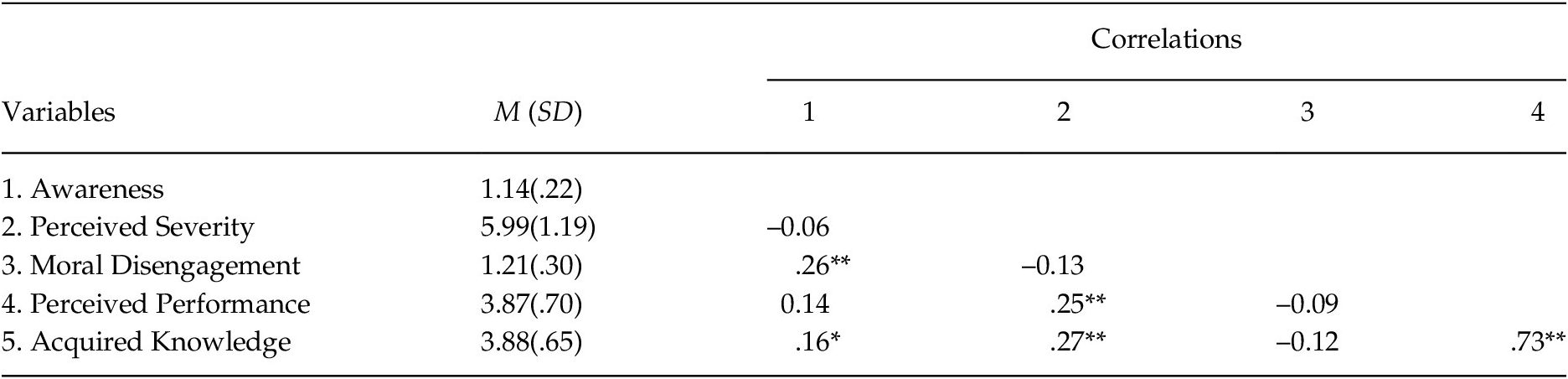
Table 3 shows the correlations between the variables we included in our research Questions 4 through 8. Thus, being aware of cyberbullying behavior was positively and significantly associated with moral disengagement and acquired knowledge about the phenomenon, but not with its perceived severity and positive perceptions of one’s own performance to solve these situations. Moreover, perceived severity was positively and significantly associated with positive perceptions of one’s own performance to solve these situations and acquired knowledge about the phenomenon, but not with moral disengagement. Moral disengagement was positively and significantly associated with being aware of cyberbullying behavior only. Lastly, positive perceptions of one’s own performance to solve cyberbullying situations were positively and significantly associated with acquired knowledge about the phenomenon.
Descriptive Statistics of the Variables

Note. * p < .05. ** p < .01.
The following path analysis results propose to answer research Questions 4 through 8. The adjusted model revealed an explanatory capacity of 7% of the perceived severity of cyberbullying situations, 12% of the observed variance for moral disengagement, and 54% of teachers’ perceived performance in solving cyberbullying situations, χ2(19) = 13.21, p > .05, χ2/df = .69, CFI = 1.00, IFI = 1.00, GFI = .97, RMSEA = .00, 90% CI [.00, .03], SRMR = .04, AIC = 47.20. The results indicate that being aware of a student who observed cyberbullying behavior had a positive and significant direct effect on the development of moral disengagement mechanisms in teachers, total effect = .29, 90% CI [.09, .44]; direct effect = .32, 90% CI [.13, .47], and acquired knowledge, total effect = .16, 90% CI [.04, .30]; direct effect = .16, 90% CI [.04, .30], but not on their perceived severity of the incident, nor positive perceptions of their own performance to solve these situations. In other words, and to answer research Questions 4 through 7, teachers who were aware that a student observed cyberbullying behavior, were more likely to develop moral disengagement mechanisms regarding the incident and have acquired knowledge of what the phenomenon is (which enabled to identify it), but did not perceive it as severe, and did not perceive their own performance to solve these situations positively.
However, there was a significant indirect effect of acquired knowledge between being aware of a student who observed cyberbullying behavior and perceiving the incident as severe, positive indirect effect = .04, 90% CI [.01, .09], moral disengagement mechanisms, negative indirect effect = –.03, 90% CI [–.07, –.01], and teachers’ perceptions of their own performance to solve the situation, positive indirect effect = .12, 90% CI [.02, .21]. In other words, and to answer research Question 8, having acquired greater knowledge of the phenomenon can explain how teachers may perceive cyberbullying as more severe, have a lower tendency to develop moral disengagement mechanisms and perceive their own performance to solve the situation more positively when they become aware that one of their students has observed a cyberbullying incident.
Discussion
Results indicated that being aware that students observed or were involved in cyberbullying incidents was not directly associated with teachers’ perceived severity of the phenomenon, which answered our research Question 4. Considering that teachers manage cyberbullying according to their perceived severity of this type of behavior (Macaulay et al., Reference Macaulay, Betts, Stiller and Kellezi2018; Macaulay et al., Reference Macaulay, Betts, Stiller and Kellezi2021), this can contribute specifically to teachers’ ignoring a given situation more easily and not intervening when necessary. In accordance, previous research involving students revealed that when they perceived cyberbullying behavior as less severe, they tended not to intervene as bystanders (van Cleemput et al., Reference van Cleemput, Vandebosch and Pabian2014). This may also be the case with teachers, when they know about a student involved in cyberbullying. Thereby, this finding contributes to previous findings by highlighting once again the importance of teachers’ acquiring the necessary information and knowledge, which can lead to change inaccurate beliefs they may have about cyberbullying, and to view the phenomenon as severe.
To answer research Question 5, the results presented suggested that teachers tended to morally disengage from cyberbullying situations which they knew their students were involved in. This complements previous research which revealed that teachers who knew about cyberbullying tended to blame the victim to justify their own behavior of ignoring the situation (DeSmet et al., Reference DeSmet, Aelterman, Bastiaensens, van Cleemput, Poels, Vandebosch, Cardon and De Bourdeaudhuij2015) and to displace the responsibility to intervene to the school’s Director (Stauffer et al., Reference Stauffer, Heath, Coyne and Ferrin2012). This result emphasizes the need to enhance teachers’ moral engagement with cyberbullying situations their students may have witnessed or been involved in, particularly because of their crucial role as intervention agents, who can contribute to alter the course of action of cyberbullying occurrences (Sawyer et al., Reference Sawyer, Mishna, Pepler and Wiener2011).
The findings presented also showed how there was no significant direct effect between being aware of a cyberbullying situation and teachers perceptions of their own performance to deal with the phenomenon, which answered research Question 6. This finding is relevant because, according to a social-cognitive perspective, personal beliefs about one’s own ability to overcome circumstances while achieving anticipated goals (i.e., self-efficacy beliefs) can impact the course and resolution of diverse situations (Bandura, Reference Bandura and Lopez2008). Accordingly, individuals tend to escape from situations in which they feel they will fail (Rosa et al., Reference Rosa, Pereira, Ribeiro, Ferreira, Carvalho, Oliveira, Coheur, Paulino, Veiga Simão and Trancoso2019). Therefore, if teachers feel unable to effectively intervene in cyberbullying, this can interfere in their decision to help their students.
Moreover, our research Question 7 was answered because results showed that being aware of cyberbullying situations was positively associated with having acquired knowledge of the phenomenon. This finding revealed how noticing cyberbullying situations is closely linked to knowing how to identify it and to distinguishing it from other phenomena. Since teachers tend to show difficulty in differentiating cyberbullying from other types of behavior (Campbell et al., Reference Campbell, Whiteford and Hooijer2019), this finding confirms that acquiring knowledge about what cyberbullying is may lead them to being aware of situations occurring around them, which may ultimately have an impact on whether and how they intervene. Accordingly, this finding also showed the crucial role that acquiring knowledge through training has on teachers’ effective identification of cyberbullying events.
The importance of acquired knowledge about cyberbullying was revealed in our answer to research Question 8, which specified how this type of knowledge had a mediating role between being aware of a cyberbullying situation and teachers’ perceived severity of it, whether they disengaged from it morally, and whether they perceived their own performance as effective to solve such situations. In fact, acquired knowledge is essential because erroneous beliefs about cyberbullying can lead teachers to minimize the severity of cyberbullying (Bautista Alcaine & Vicente Sánchez, Reference Bautista Alcaine and Vicente Sánchez2020).
Moreover, teachers’ knowledge about cyberbullying seems to play a determining role in explaining how teachers’ can be moral engaged with the phenomenon. Specifically, acquiring knowledge about cyberbullying can contribute to reduce the use of moral disengagement mechanisms by teachers, if they know that one of their students is implicated in a cyberbullying situation. Accordingly, previous research has revealed that teachers’ moral disengagement tends to be lower when their recognition of the phenomenon is increased (DeSmet et al., Reference DeSmet, Aelterman, Bastiaensens, van Cleemput, Poels, Vandebosch, Cardon and De Bourdeaudhuij2015). Thus, our finding highlights the importance of developing training for teachers which can contribute to improve their knowledge about cyberbullying, considering that most report a lack of information in this area (Macaulay et al., Reference Macaulay, Betts, Stiller and Kellezi2018).
Lastly, teachers’ knowledge about cyberbullying seemed to be associated with how they considered themselves as capable of solving cyberbullying situations involving their students. Specifically, teachers’ reports of greater acquired knowledge about cyberbullying seemed to explain their perceived performance as also high. Thereby, teachers’ perceived performance to solve cyberbullying seemed to depend on the knowledge they have about the phenomenon. This finding reinforces the idea that knowledge is decisive for a successful intervention by teachers, which contributes to prior research in this field (Eden et al., Reference Eden, Heiman and Olenik‐Shemesh2013; Macaulay et al., Reference Macaulay, Betts, Stiller and Kellezi2018).
Some limitations of this research originate from methodological restraints and choices. In the first study, the fact that the scenarios were fictional raises a doubt about the actual capacity of teachers to recognize real cyberbullying situations, since real-life events can present different nuances and can be extremely complex (Patchin & Hinduja, Reference Patchin and Hinduja2015). Hence, actual cyberbullying incidents can be more difficult to identify and differentiate from other events than fictional ones, and the level of involvement in both cases can be divergent. Therefore, future qualitative research could benefit from focusing on understanding teachers’ definition about cyberbullying situations they actually experienced involving their students, instead of fictional events. Another potential limitation refers to the exclusive presentation of cyberbullying scenarios during the interview. Alternatively, the fictional scenarios which were used could benefit from the inclusion of non-cyberbullying situations in order to compare teachers’ ability to differentiate cyberbullying from a non-cyberbullying event. Moreover, teachers were asked about their own definitions of cyberbullying. However, in previous research (e.g., Macaulay et al., Reference Macaulay, Betts, Stiller and Kellezi2019) the adopted approach was to confront teachers with presented features of cyberbullying. Hence, using different approaches to evaluate teachers’ definition of cyberbullying can contribute to contrasting results within research. It would be interesting for future studies to compare results in both cases. Also, the limited size of the sample in the first study implies that the findings should be carefully considered. In the second study, another important limitation is that teachers’ awareness of cyberbullying and the severity they attributed to it concerned specifically behaviors which were witnessed by their students. Therefore, their moral disengagement and the degree of seriousness conceived to cyberbullying might differ depending on how their students are involved in cyberbullying (i.e., as an observer, a victim or an aggressor), which was not considered in this study.
Accordingly, future research could help clarify teachers’ moral involvement with cyberbullying by considering the different roles which students can play in this type of events. Upcoming research could also focus on understanding how teachers’ knowledge about cyberbullying could interfere with their behavioral intention to intervene, focusing on different types of intentions, such as ignoring or helping the students. Likewise, it would be relevant to determine the mediator effect of moral disengagement in the former relationship. This could contribute to a better understanding of how this particular variable could influence teachers’ choices of intervening (or not) in cyberbullying situations that involve their students, considering that moral disengagement has been associated with bystanders’ passive behavior in cyberbullying (Allisson & Bussey, Reference Allison and Bussey2016).
This investigation provides new and specific insights on the determining role of acquired knowledge about cyberbullying in teachers’ perceived severity, moral (dis)engagement with the phenomenon, and how it can lead them to feel capable of solving situations involving their students. Consequently, the findings from both studies emphasize the need for training actions for teachers, which can contribute to looking at cyberbullying as a serious matter with negative repercussions, to increasing their moral engagement, as well as to feeling more confident to intervene in a given situation. Ultimately, this could contribute to teachers’ more effective intervention and prevention in cyberbullying. Additionally, teacher training could also help diminish passive behavior by teachers, such as ignoring cyberbullying events or attributing responsibility for intervening to other school professionals, as it has been found in previous research (De Smett et al., Reference DeSmet, Aelterman, Bastiaensens, van Cleemput, Poels, Vandebosch, Cardon and De Bourdeaudhuij2015; Stauffer et al., Reference Stauffer, Heath, Coyne and Ferrin2012).
In summary, the findings from this research contribute to reinforcing the pertinence of conveying knowledge and skills to teachers, given their tendency to morally disengage when faced with cyberbullying events and the influence which acquired knowledge about the phenomenon can have on weakening that propensity. In addition, since their reported knowledge about the phenomenon revealed to be imprecise, namely through the cyberbullying definitions they provided, this was another important finding which points to the aforementioned need of offering the necessary training to teachers.
Supplementary Materials
To view supplementary material for this article, please visit http://doi.org/10.1017/SJP.2022.27.