Introduction
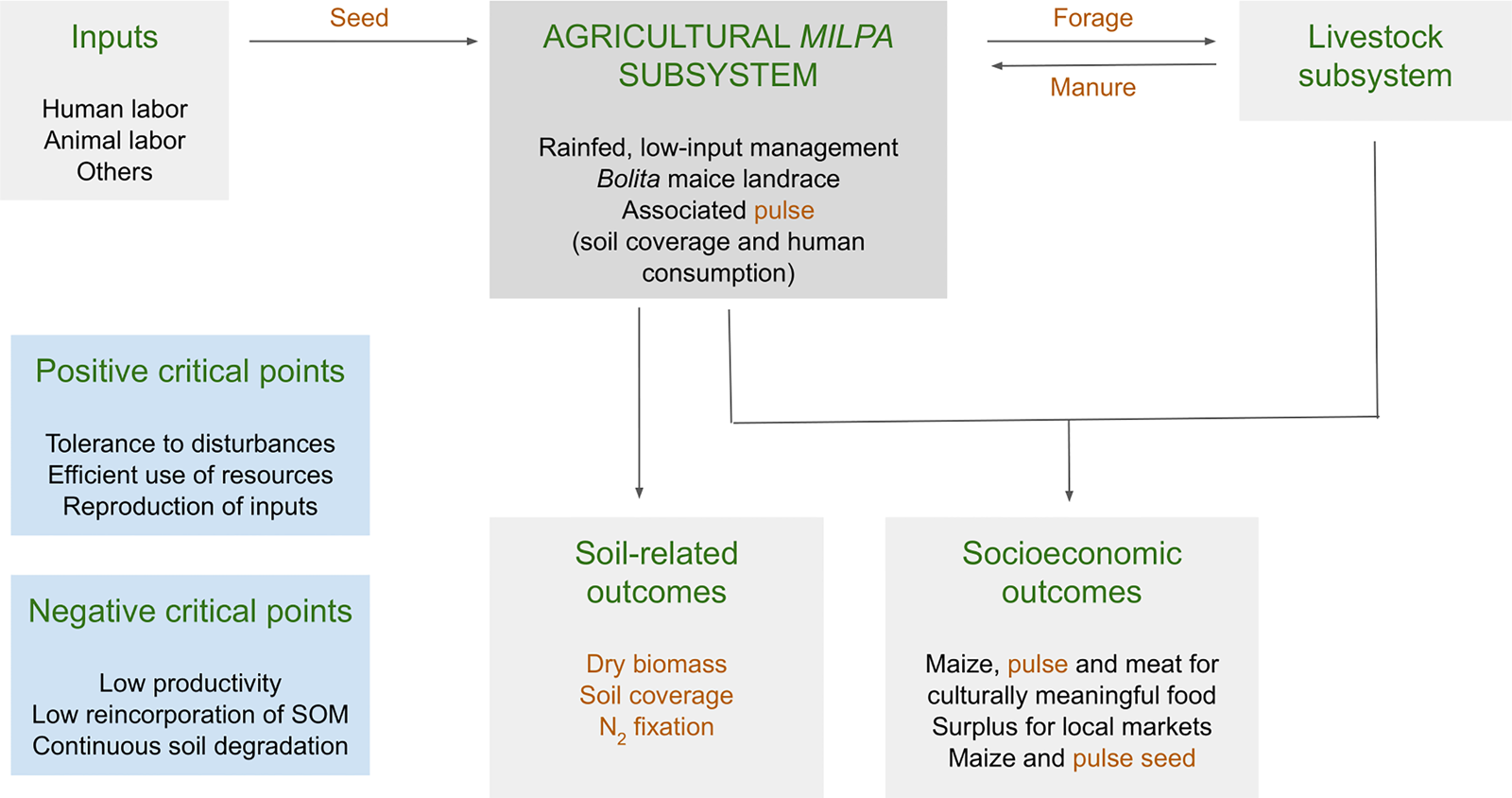
Maize is traditionally grown in Mexico and Mesoamerica in polyculture systems that have been recognized as invaluable repositories of biological and cultural diversity (Altieri, Reference Altieri1999, Reference Altieri and Sarandon2002; García-Barrios et al., Reference García-Barrios, Galván-Miyoshi, Valdivieso-Pérez, Masera, Bocco and Vandermeer2009). Particularly, in the Central Valleys of Oaxaca, Mexico, rainfed production of local maize landraces and associated crops (beans, squash and chili peppers, among others) supports peasant families, allows for animal husbandry and reproduces biocultural diversity (Blanckaert et al., Reference Blanckaert, Vancraeynest, Swennen, Espinosa-García, Piñero-Dalmau and Lira-Saade2007). Indeed, in this region pulse species traditionally associated with maize are a low-cost source of protein and are a fundamental part of the traditional local diet (FAO, 2016) (Fig. 1).
Characterization of the local rainfed milpa (maize-based polyculture) agroecosystem, its critical points and outcomes as potential indicators.

However, this region exhibits a trend towards growing maize in monoculture and the region's food security is currently at risk due to environmental, economic and social conditions generated after decades of neoliberal policies (Bautista-Martínez, Reference Bautista-Martínez1998; Gonzalez, Reference Gonzalez2004; CEMDA, 2016). Narrowly focused productivity-centered policies and programs have led to the prevalence of agricultural practices that favor soil loss, lower the percentage of soil organic matter and reduce overall soil quality in the long term (Ceccon, Reference Ceccon2008; SEMARNAT, 2008; FAO, 2015). In turn, this compromises the resilience of rainfed maize production in the face of increasingly long canicule periods (Ruiz-Vega and Silva Rivera, Reference Ruiz-Vega and Silva Rivera1999; Murray-Tortarolo et al., Reference Murray-Tortarolo, Jaramillo and Larsen2018).
Sustainable and agroecological strategies for maize production aim not only at high maize yields (Sakala, Reference Sakala2012), but also at: (i) long-term soil improvement (Ortiz and Sánchez de Prager, Reference Ortiz and Sánchez de Prager2016) (ii) agro- and biodiversity conservation, (iii) resilience in the face of drought or other stressors (Nicholls-Estrada et al., Reference Nicholls-Estrada, Ríos Osorio and Altieri2013) and (iv) the contribution to multifunctional strategies and local food security (García-Hernández et al., Reference García-Hernández, Murillo-Amador, Nieto-Garibay, Fortis-Hernández, Márquez-Hernández, Castellanos-Pérez, Quiñones- Vera and Avila-Serrano2010; Altieri et al., Reference Altieri, Nicholls and Montalba2017). The use of green manures may help attain all of these aims because they can improve soil fertility and reduce water evaporation and erosion by covering the soil and through the reincorporation of Nitrogen-rich organic matter. They can also provide food for livestock and human consumption (Sain and Buckles, Reference Sain and Buckles1998; Astier et al., Reference Astier, García-Barrios, Galván-Miyoshi, González-Esquivel and Masera2012), and increase biological and functional diversity within plots (Bunch, Reference Bunch2012; Nabel et al., Reference Nabel, Schrey, Temperton, Harrison and Jablonowski2018; Val et al., Reference Val, Rosset, Lomel, Giraldo and Rocheleau2019). However, the adoption and pertinence of green manures largely depends on space availability (especially within small plots), the intensity of interspecific competition, seed availability and cost, and the cultural use of green manures (Bunch, Reference Bunch2012).
In the Central Valleys of Oaxaca there are pulse landraces that have been traditionally grown in association with maize as part of the so-called milpa system (Ebel et al., Reference Ebel, Pozas-Cárdenas, Soria-Miranda and Cruz González2017; Gonzalez-Gonzalez et al., Reference Gonzalez-Gonzalez, García, Jardón-Barbolla and Benítez2020). These are the black bean (Phaseolus vulgaris), the climbing bean (Phaseolus vulgaris) and the ayocote bean (Phaseolus coccineus). Also, some exotic species have been sporadically used in the region, Dolicho lablab and Crotalaria junscens spp (Ruiz-Vega and Loaeza, Reference Ruiz-Vega and Loaeza2003). However, the pertinence and sustainability of each of these green manures has not been jointly assessed for maize polycultures in this area. In particular, it is necessary to evaluate how they perform in association with a widely used maize landrace, whether or not there is competition among maize and each type of pulse, to what extent they can contribute to soil improvement, and whether or not they contribute to multifunctional strategies and food security.
In order to address this question, we systematically tested five different types of green manure (three local and two exotic) in the municipality of Villa de Zaachila, in the Central Valleys of Oaxaca, in the seasons of 2017 and 2018. We assessed the performance of each green manure when associated with a local maize landrace and followed the MESMIS method to assess each type of green manure in terms of the overall contribution to sustainability.
Materials and methods
MESMIS method
We used the MESMIS (Spanish acronym for Indicator-based Sustainability Assessment Framework) method (Astier et al., Reference Astier, Masera and Galván-Miyoshi2008; Sarandón and Flores, Reference Sarandón and Flores2009; Astier et al., Reference Astier, García-Barrios, Galván-Miyoshi, González-Esquivel and Masera2012) in order to evaluate the sustainability of five types of green manure associated with native maize in rainfed agriculture in Oaxaca, Mexico. The method consists of six steps, which we describe below.
Steps 1–3. Diagnostic of the local rainfed system, identification of critical points and potential indicators
This study was conducted at Villa de Zaachila (Zaachila hereafter), in the Central Valleys of Oaxaca, Mexico. The most represented land use type in this municipality is agriculture (48% of its total area) (Urrutia et al., Reference Urrutia, Gonzalez-Gonzalez, Van Cauwelaert, Rosell, Barrios and Keinrad2020). According to official data, the municipality is composed of 1669 ha which are distributed among 1521 peasants, which is to say every peasant family has around 1 ha of land. This small-scale agricultural scheme combines with the fact that 90% of the plots are rainfed (INEGI, 2007). The history of landscape management of Zaachila begins with the Zapotec people, about 3500 years ago. Today, agricultural plots exhibit qualitatively different types of management, ranging from rainfed and low-input plots aimed mostly at family consumption, to irrigated and high-input agriculture aimed mainly at regional markets (Gonzalez-Gonzalez et al., Reference Gonzalez-Gonzalez, García, Jardón-Barbolla and Benítez2020). Historically, Zaachila has been an important point for regional commerce, as its traditional market has existed since the time of the Zapotecs and still it gathers farmers and peasants from all the surrounding villages every Thursday (Fuentes-Aguilar and López Huebe, Reference Fuentes-Aguilar and López Huebe1979; Mora-Van Cauwelaert, Reference Mora-Van Cauwelaert2017). The characterization of the local rainfed maize production and the identification of critical points and potential indicators were performed on the basis of: (1) recent studies characterizing the management of Zaachila rainfed maize plots (Gonzalez-Gonzalez et al., Reference Gonzalez-Gonzalez, García, Jardón-Barbolla and Benítez2020) and the motivations and family-level economy associated with maize production (Mora-Van Cauwelaert, Reference Mora-Van Cauwelaert2017) and (2) field observations and participatory observation, both in the Thursday market and around local plots (Fig. 1 and Table 1).
Experimental design

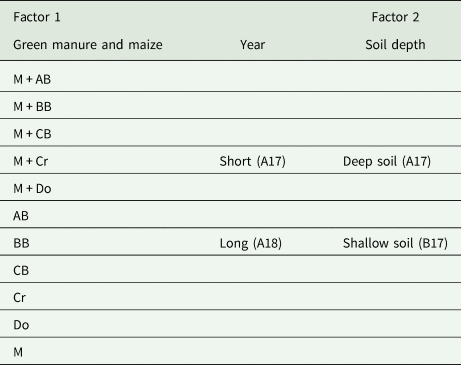
AB, ayocote bean; BB, black bean; CB, climbing bean; Cr, Crotalaria; Do, Dolicho.
Maize (M) + Green manure with its different treatments were used as factor 1. The year or the soil depth were used as Factor 2, with two levels each. A17, A18 and B17 stand for the different plots (see main text).
Step 4. Measurement of variables associated with indicators
Step 4.1 Study sites
Indicators were selected as described in Step 1 and quantified by means of a field experiment and literature reviews (Tables 1 and 2). We conducted an experiment aimed to assess the performance of five types of green manure in association with native maize. It took place in two experimental plots in two different years (2017 and 2018). One of the plots (Plot A) is located on a flat zone near a river and the other (Plot B) on a hill with signs of laminar erosion (Ruiz-Vega, Reference Ruiz-Vega1998). Both plots were initially characterized from soil samples at 0–15 cm and 15–30 cm. Plot A was a fluvisol with sandy loam texture, with slightly alkaline pH (0–15 cm, 7.17; 15–30 cm, 7.30), low content of organic matter (0–15 cm, 0.95; 15–30 cm, 0.97%), low total N (0–15 cm, 0.051; 15–30 cm, 0.053%), very low total P (0–15 cm, 4.96; 15–30 cm, 4.27 mg kg−1) and low total K (0–15 cm, 112.71; 15–30 cm, 101.01 mg kg−1). Plot B had a sandy clay texture with slightly acid pH (0–15 cm, 5.18; 15–30 cm, 5.06), low to very low content of organic matter (0–15 cm, 0.95%; 15–30 cm, 1.05%), low total N (0–15 cm, 0.053; 15–30 cm, 0.056%), moderately low total P (0–15 cm, 14.01; 15–30 cm, 19.62 mg kg−1) and a medium amount of total K (0–15 cm, 184.08; 15–30 cm, 193.05 mg kg−1).
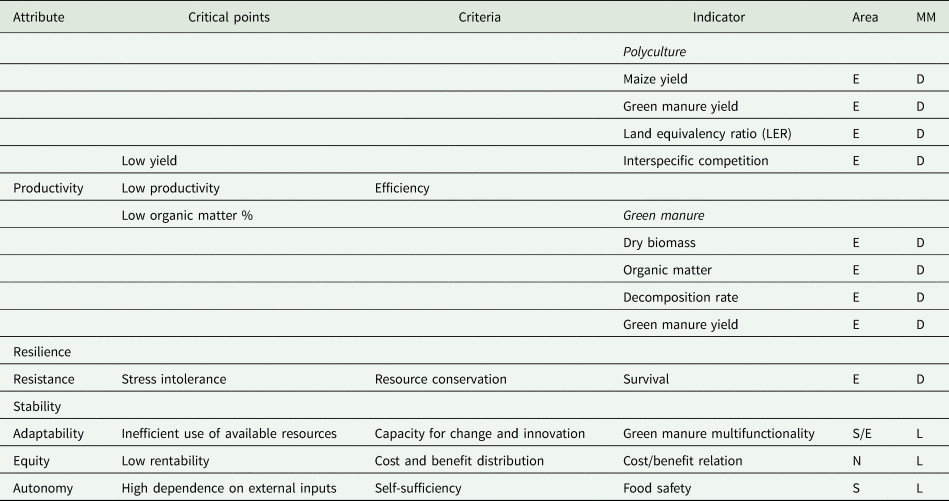
Main attributes for maize sustainability analysis (SIAV)

E, environmental; S, social; N, economic; D, experimental design; L, literature.
For each attribute, its critical points, criteria and indicators measured are shown. The area and method of measurement (MM) are indicated.
Source: Modified from (Astier et al., Reference Astier, Masera and Galván-Miyoshi2008).
Step 4.2 Biological material
Five types of pulse were chosen as green manure. Three of them were the local landraces black bean (BB, Phaseolus vulgaris), climbing bean (CB, Phaseolus vulgaris) and ayocote bean (AB, Phaseolus coccineus) and two of them were exotic species, Dolicho lablab (Do) and Crotalaria junscens spp (Cr). Green manures were grown in association with a local maize landrace (yellow bolita). Phaseolus vulgaris is the most common bean in Mexico, with an average yearly consumption of 9.9 kg per capita (SAGARPA, 2016). In Zaachila, BB is usually grown with irrigation during the dry season (SIAP, 2016). CB is grown next to the maize plants and it climbs on its cane. AB is also originally from and commonly consumed in Mexico (Vargas-Vásquez et al., Reference Vargas-Vásquez, Muruaga- Martínez, Martínez-Villareal, Ruiz Salazar, Hernandez- Delgado and Mayek- Pérez2011), and in Zaachila it is mainly grown in rainfed systems. On the other hand, Do is from Ethiopia and is commonly consumed in Asia and Africa as human food, forage and green manure (CIAT, 2006; Ruiz Espinoza et al., Reference Ruiz Espinoza, Marrero Labrador, Cruz La Paz, Beltrán Morales and Díaz Viruliche2007). It has been reported to have great potential as green manure due to its resistance to drought and its high N2 fixation capacity (Murphy and Colucci, Reference Murphy and Colucci1999; Ruiz-Vega et al., Reference Ruiz-Vega, Nuñez-Barrios and Ruiz2010). Lastly, Cr is from Pakistan and other parts of Asia and is widely used as forage and green manure due to its fast development (Li, Reference Li2012).
Step 4.3 Experimental design
A fully randomized complete block was established with experimental units of 3 × 25 m (75 m2) by plot, with a total area of 2475 m2 covering 11 treatments (Table 1). Treatments were 5 for maize in association with each type of green manure, 5 for each type of green manure in monoculture and 1 for maize in monoculture. Each of the 11 treatments were grown in two consecutive rainy seasons (2017–2018) in plots A and B, with three replicates in every case. Overall, we should have had 132 data points (11 combinations × 2 plots × 2 years × 3 replicates), but the treatments in plot B did not survive the long 2018 canicule, so data for plot B 2018 (B18) do not exist.
4.4 Plot management
The preparation of plots A and B was done mechanically, while the planting and weeding were done manually. The grooves had a 75 cm width, and there were 80 cm between the holes for maize seeds, with three seeds per hole. This rendered a maize density of approximately 37,000 plants ha−1. The density of green manures was: BB 40,000 plants ha−1, Cr 60,000 plants ha−1, Do 25,000 plants ha−1, CB y and AB 30,000 plants ha−1. In order to guarantee a high germination and survival rate, all seeds were inoculated one night before planting with Azotobacter and Mycorrhiza (1 kg ha−1) provided by the company NOCON (http://www.nocon.mx/empresa.php). No synthetic fertilizer or pesticides were used at any point.
4.5. Assessment of critical indicators
4.5.1. Maize and Green Manure yield (GY). (R) (t ha−1). We randomly chose 5 maize and green manure plants within each experimental unit and weighted their dry grains. The yield per ha was estimated considering the plant density.
4.5.2. Dry biomass (DB) (kg ha−1). We randomly chose five green manure plants within each experimental unit at the flowering time. The plants were weighed after they were dried in an oven for 8 h at 70°C.
4.5.3. Content of organic matter in soil (OM) (%). Green manures were incorporated into the soil after 2 months of growth. Two random samples of 50 g of the first 15 cm of soil were taken 2 months after the incorporation. These samples were analyzed following the dry combustion method proposed by Robinson (Reference Robinson1927).
4.5.4. Decomposition rate (DR). We incorporated the green manures to the soil after 2 months of planting. After 2 months of the incorporation, we took two random samples of 10 g from the first 15 cm of soil in each experimental unit. Then, we estimated the percentage of weight lost by each sample after 3–5 weeks (Ruiz-Vega and Loaeza, Reference Ruiz-Vega and Loaeza2003).
4.5.5 Land efficiency ratio (LER). We took a random sample of ten plants of maize and ten plants of green manure in each experimental unit. We estimated the grain yield in relation to the planting densities per ha with the following equation:

where YMp and YMm are maize yield in polyculture and monoculture, respectively, YGp and YGm are green manure yield in polyculture and monoculture, respectively. One of the assumed limitations of efficient intercropping is competition for light (or space). If decrease in yield is directly proportional to decrease in space due to the intercropping, then LER = 1.0 and it is concluded that monoculture or polyculture are equally productive. If LER < 1.0 then monoculture is preferable. If LER > 1.0 then polyculture is preferable (Cruz-Ruiz, Reference Cruz-Ruiz2009).
4.5.6 Interspecific competition. (Aggressivity coefficient—A). This was estimated with the grain yield data as in Ruiz-Vega et al. (Reference Ruiz-Vega, Nuñez-Barrios and Ruiz2010) following the next equation:

where λM and λG are the proportion or land area occupied at intercropping compared to sole crop for Maize and Green Manure, respectively (Anna John and Mini, Reference Anna John and Mini2005). In this study planting densities were similar in monoculture and polyculture, so λM and λG were set to 1.
For this indicator A = 0 means that the two crops are equally competitive, A > 0 means that there is dominance of maize over green manure, A < 0 means there is dominance of green manure over maize.
4.5.7. Multifunctionality. This trait was considered as an indicator of adaptability and it refers to current and potential uses of green manures within the whole system depicted in Figure 1. This was done by searching published information regarding the use of each type of green manure (Murphy and Colucci, Reference Murphy and Colucci1999; Ruiz-Vega et al., Reference Ruiz-Vega, Nuñez-Barrios and Ruiz2010; Vargas-Vásquez et al., Reference Vargas-Vásquez, Muruaga- Martínez, Martínez-Villareal, Ruiz Salazar, Hernandez- Delgado and Mayek- Pérez2011; Bunch, Reference Bunch2012; Li, Reference Li2012; Sircely and Naeem, Reference Sircely and Naeem2012; SAGARPA, 2016) and by participatory observation in the Thursday market and in the rainfed plots. The uses were classified in human food, forage and green manure.
4.5.8. Green manure survival (S). This trait was considered as an indicator of stability, resilience and resistance, especially because of the challenge that prolonged canicules and potential pests pose to local rainfed agriculture. In order to calculate the survival rate, we obtained for each experimental unit the percentage of green manure plants that survived the 2018 canicule, which was unusually long.
4.5.9. Benefit-cost ratio (B/C). This trait was considered as an indicator of equity because it is assumed to reflect if green manures may increase the utilities associated with the whole system depicted in Figure 1. It was estimated as the relation between the costs associated with local maize cultivation (INIFAP, 2015a, 2015b) and the price at which the produced maize grain, maize forage and green manure seed (per ha) can be sold in the local market (participatory observations at the Thursday market).
4.5.10. Role in food security. This trait was considered as an indicator of autonomy of the peasant families in Zaachila. We evaluated if the produced green manure grain could be consumed by the peasant families. From a literature review and participatory observation, we classified each type of green manure as not consumable, consumable but not used in local gastronomy or consumed in local gastronomy.
4.6. Steps 5 and 6. Data integration, discussion and conclusion
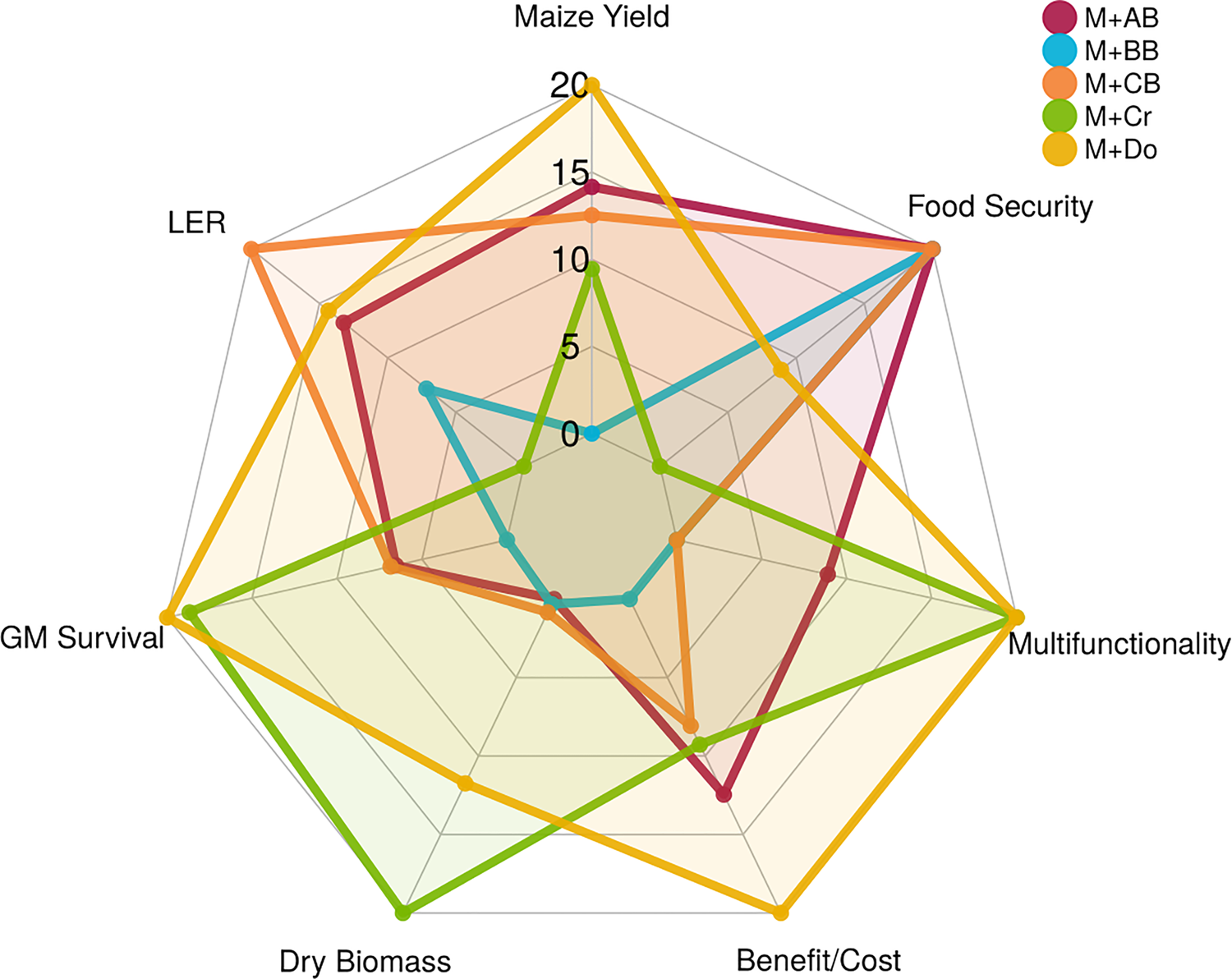
In order to integrate the indicators in a common framework, we used a spider plot considering indicators of productivity (LER, dry biomass), resilience (green manure survival), equity (benefit-cost ratio), autonomy (food security) and adaptability (multifunctionality). The values for all the indicators were normalized in a range of 0–20. The spider plot depicts how each type of green manure performs in the different axes of sustainability. This integrative visualization allowed us to discuss the potential sustainability of each type of green manure (and possible combinations) in the context of the whole system depicted in Figure 1. Data are further integrated and discussed in the Discussion section.
4.6. Statistical analysis
We performed two-way ANOVA tests for both the combined effects of each green manure association with the soil type, and the combined effects of each green manure association with the year in turn. We tested the following response variables: interspecific competition, LER, green manure yield, dry biomass and maize yield. Where we found significant differences (P < 0.05), we also performed post-hoc Tukey tests and formed significantly different groups. All data was analyzed with the R software version 3.5.1, and the ggplot2, plyr, scales, BBmisc, reshape2, fmsb, classInt and DescTools packages (R Core Team, 2014).
Results
Characterization of the agricultural system (steps 1–3)
The rainfed maize agricultural system in Zaachila, Oaxaca, is based on the use of familiar and sporadically paid workforce, and both mechanical and animal traction. It also uses some external inputs (mostly fertilizers and herbicides) and self-produced manure and native maize seeds of the white and yellow Bolita landrace (González-González, Reference González-González2018; participatory observation). This landrace is relatively resistant to drought and largely used for local gastronomy (INIFAP, 2015a; Mora-Van Cauwelaert, Reference Mora-Van Cauwelaert2017) and is often grown in association with pulse or squash (González-González, Reference González-González2018; participatory observation). According to INIFAP (2015a), the average yield for rainfed maize agriculture in the Central Valleys of Oaxaca is 800 kg ha−1. While some families keep their own animals, their number has diminished, partly due to the costs associated with their alimentation. Thus families lack sufficient animal manure to apply to their plots, which often exhibit soil degradation (SEMARNAT, 2008; participatory observation). The seemingly increasing length of the canicule is one of the factors currently challenging this agricultural system, especially because it is likely to overlap with the flowering time of the Bolita landrace (Vásquez and Nuño-Romero, Reference Vásquez and Nuño Romero1995; Ruiz-Vega, Reference Ruiz-Vega1998; Mora-Van Cauwelaert, Reference Mora-Van Cauwelaert2017; Ramírez Cordova et al., Reference Ramirez Cordova, Espinosa Paz, Espinosa Paz, Ariza Flores, Martinez Sanchez and Maldonado María2017).
The association of maize with green manure may increase functional and biological diversity in the system and help deal with some of the challenges faced by small agriculture in Zaachila, namely, low productivity and low content of soil organic matter, both partly caused by the substitution of biodiversity by external inputs (Critical points in Figure 1). Green manures may halter degradation and increase soil fertility by providing dry biomass, fixating N2 and preventing erosion and evaporation by covering the soil, which would eventually result in an increase in productivity. On the basis of the system characterization (Fig. 1), we defined a set of indicators that help assess the sustainability of different maize-green manure associations in an integral manner, this is, considering environmental, social and economic aspects (Table 2).
Indicator analysis (step 4)
(i) Productivity and competition indicators in polyculture scheme
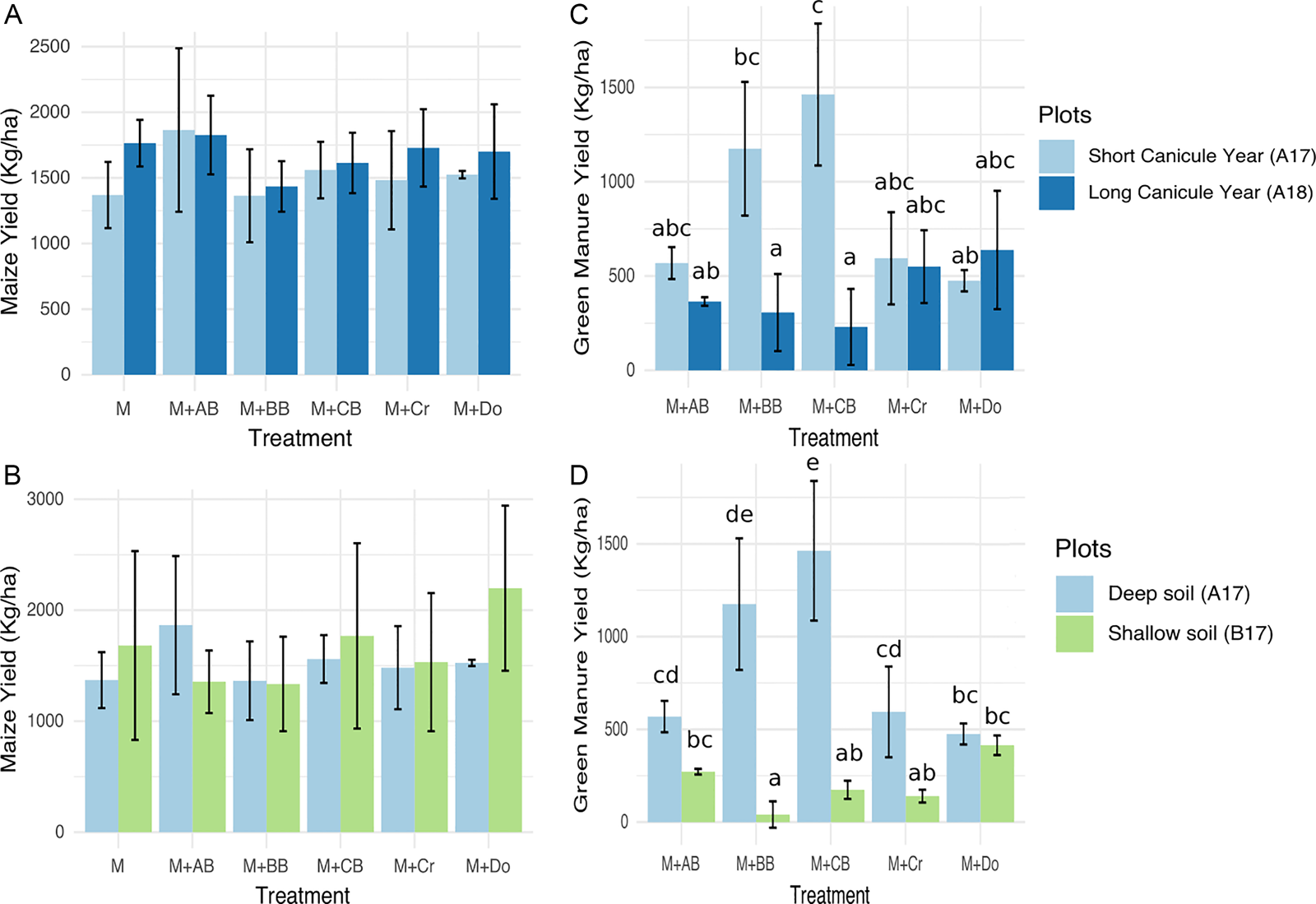
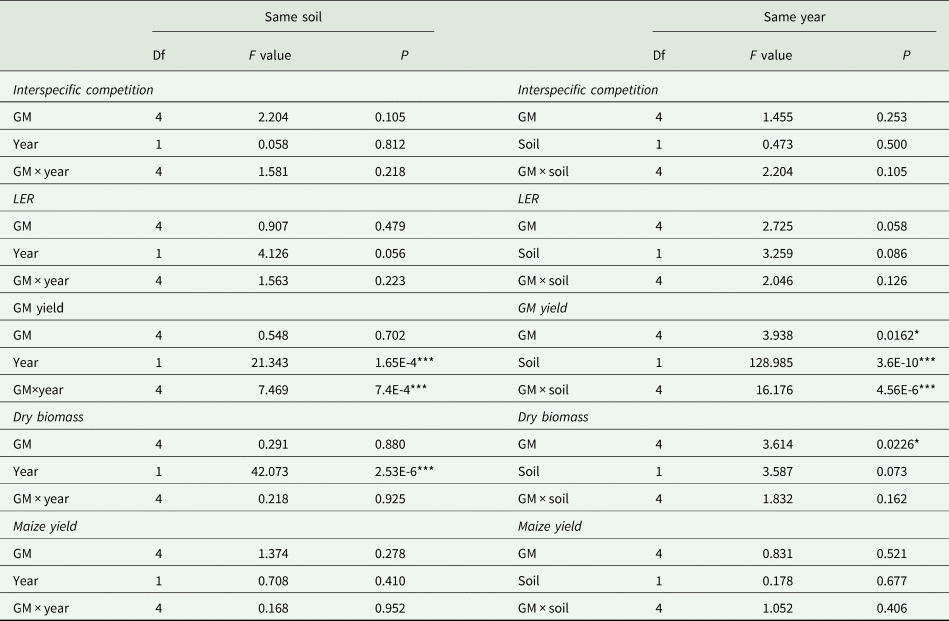
Maize and green manure yield: M + AB had the highest maize yield in the same soil (A) for both years (1864 kg ha−1 in 2017 and 1894 kg ha−1 in 2018). The highest average yield in the same year (2017) was for the M + Do association in shallow soil (2740 kg ha−1), followed by the M + AB association in deep soil (1650 kg ha−1) (Fig. 2). However, the two-way ANOVA test showed no significant differences among any treatments for these comparisons (Table 3). As for green manure yield in the same soil (A), the M + CB association had the highest green manure yield during the short canicule year (1462 kg ha−1)in 2017, followed by the M + BB association on the same year (1175 kg ha−1). During the long canicule year (2018), the M + Do and M + Cr associations had the highest yields (638 and 550 kg ha−1, respectively) (Fig. 2). The two-way ANOVA tests confirmed significant differences both in response to the year and in response to the interaction between year and green manure type (Table 3). The highest yields for green manure yield in the same year (2017) were once more in deep soil from the M + CB association (1462 kg ha−1), followed by the M + BB association (1175 kg ha−1). For shallow soil, M + Do and M + AB had the highest yields (414 and 272 kg ha−1, respectively) (Fig. 2). The two-way ANOVA tests confirmed significant differences in response to soil alone, green manure type alone, and in response to the interaction between soil and green manure type (Table 3). Full data for all indicators are presented in Supplementary Table 1.
Maize yield for both years (A) and both soil types (B). Green manure yield for both years (C) and both soil types (D). Bars show the average yield calculated from three repetitions, black lines correspond to standard deviation. In the two-way ANOVA tests, maize yield (A, B) showed no significant differences in response to treatments; while green manure yield in different years (C) showed differences in response both to year and the interaction between green manure type and year; and green manure yield in different soils (D) showed differences in response to green manure type, soil and the interaction between them (Table 3). Letters above bars represent significantly different groups as obtained from the Tukey post-hoc tests. M, maize; AB, ayocote bean; BB, black bean; CB, climbing bean; Cr, Crotalaria; Do, Dolicho.

Two-ways ANOVA results

Two independent two-ways ANOVA were performed for each variable (interspecific competition, LER, GM yield, dry biomass and maize yield). Factor 1 was the GM treatment and Factor 2 was either the year (same soil) or the soil depth (same year). Degrees of freedom (Df), F values and P values are shown. Significant P values are indicated with asterisks (*P < 0.05, ***P < 0.005).
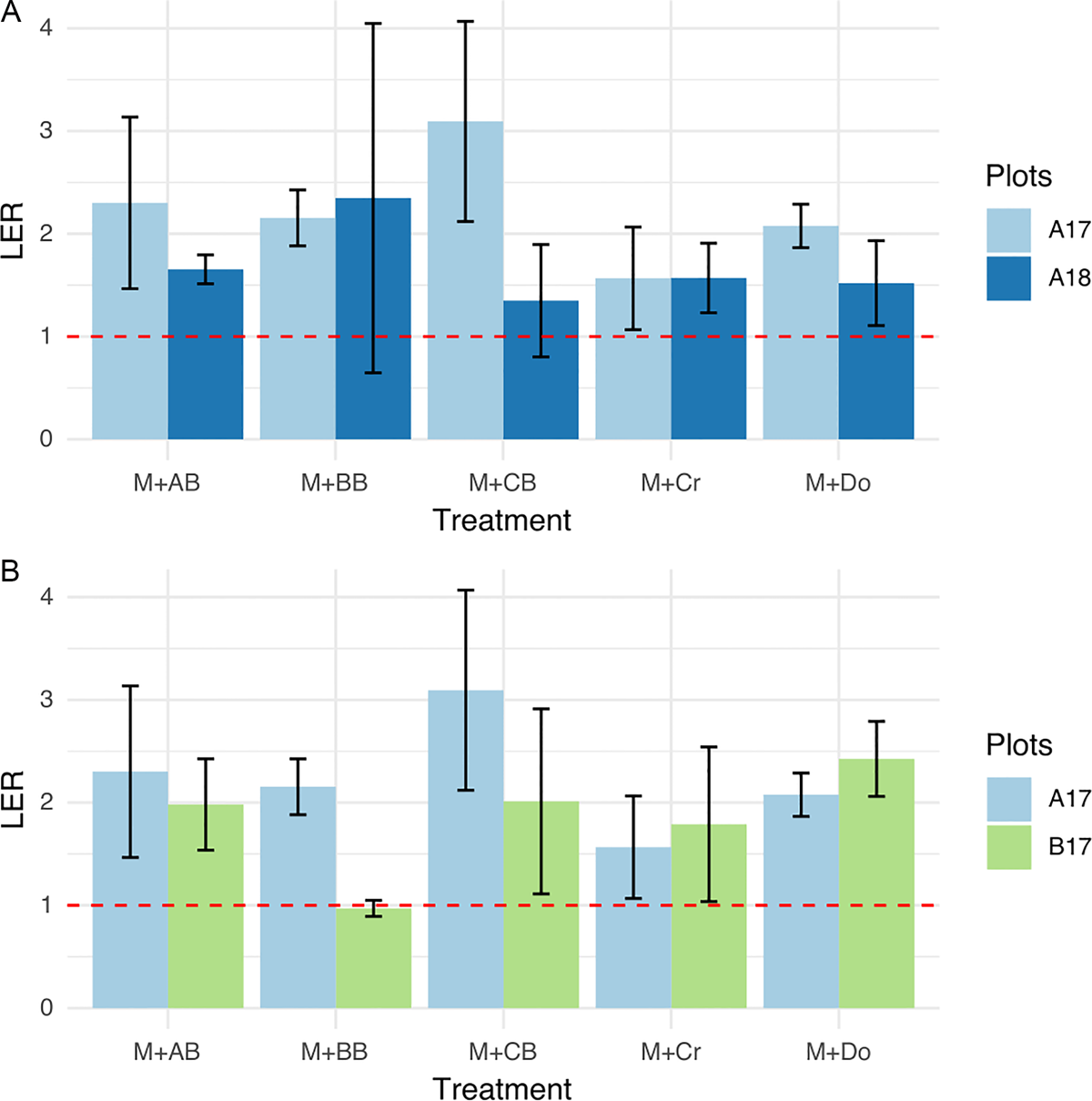
Land equivalent ratio (LER): In general, LER averages were all above 1, with the only exception being M + BB in shallow soil. Values above 1 mean that the maize-green manure association outperforms yields produced by each crop planted separately in the same area. Two-way ANOVA test showed no significant difference between green manure types, soils, years or interactions (Fig. 3, Table 3).
Land Eficiency Ratio (LER) for both years (A) and both soil types (B). Bars show the average LER calculated from three repetitions, black lines correspond to standard deviation. Red dotted line corresponds to LER = 1. No significant differences were found for any case. M, maize, AB, ayocote bean, BB, black bean, CB, climbing bean, Cr, Crotalaria, Do, Dolicho.

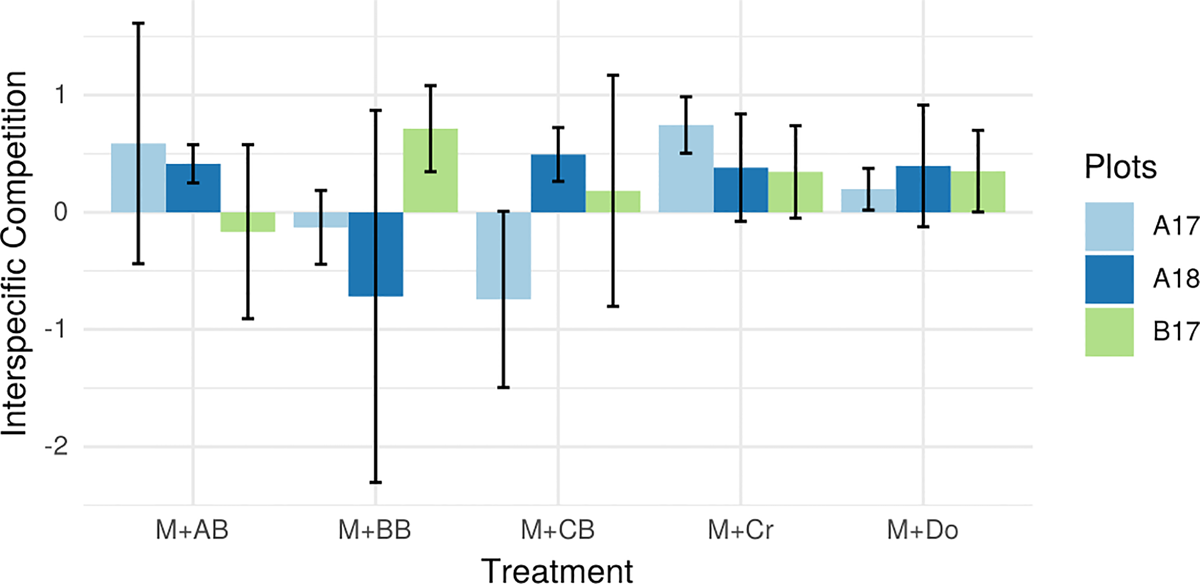
Interspecific competition: Almost all standard deviations intervals around the mean include the value A = 0, suggesting no competition between the crops, except for M + BB association in B17, M + Cr and M + Do in A17 where A is higher than 0. Nevertheless, two-way ANOVA tests found no significant differences between green manure types, years, soils or interactions (Table 3, Fig. 4).
Interspecific competition between maize and the different types of green manure. Bars show the average index calculated from three repetitions, black lines correspond to standard deviation. No significant differences were found for any case. M, maize; AB, ayocote bean; BB, black bean; CB, climbing bean; Cr, Crotalaria; Do, Dolicho.

(ii) Green manure efficiency indicators
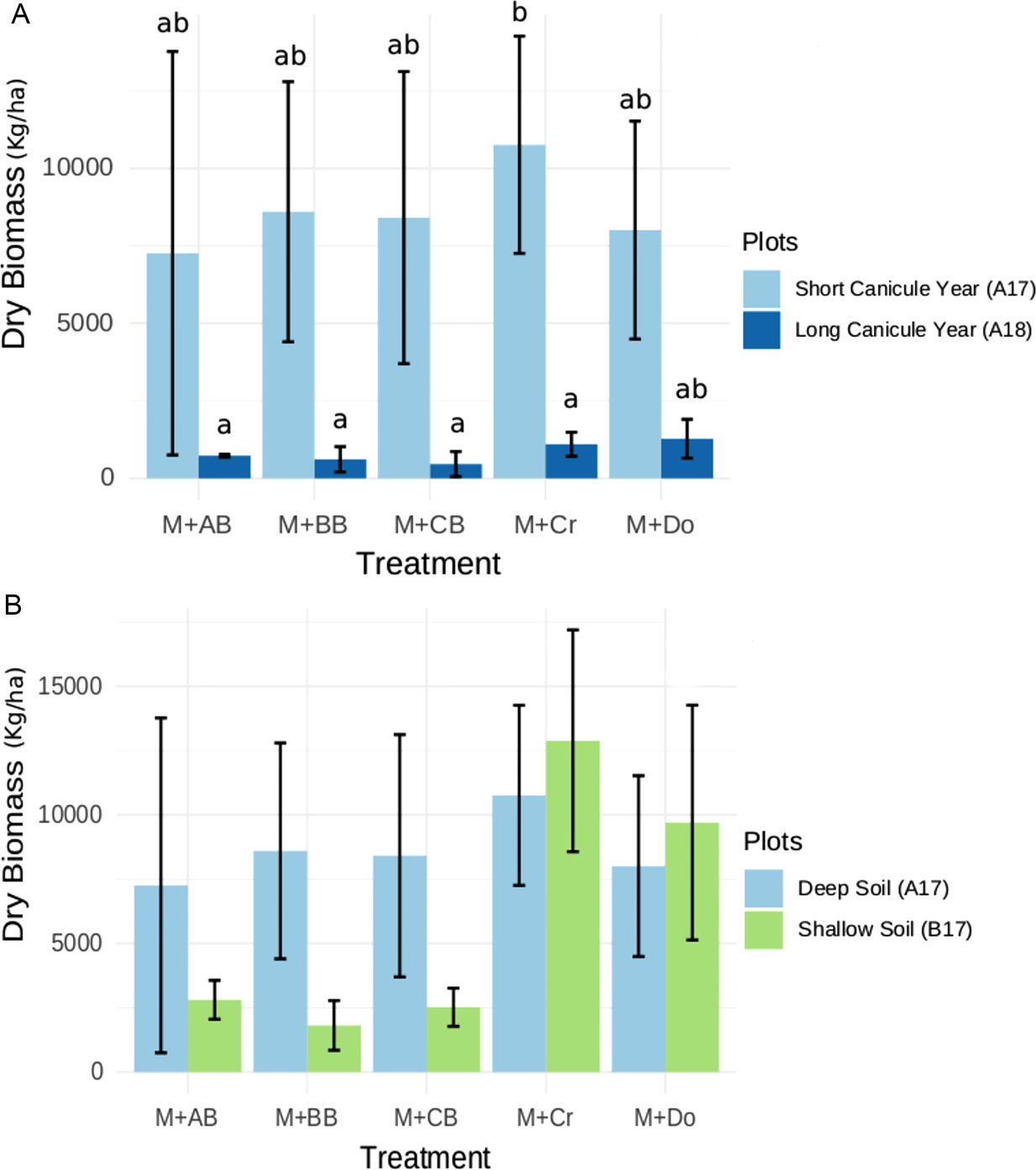
Dry biomass: All values were higher for the short canicule year (2017), and the M + Cr association had the highest mean score among them (10,760 kg ha−1). All associations had low mean values in the long canicule year, with M + Do being the highest one (1276 kg ha−1). The two-way ANOVA tests confirmed significant differences between both years, but no differences in response to green manure type or interaction between green manure and year. The M + Cr association showed the highest mean values in both soil types in 2017 (12,880 kg ha−1 in shallow soil and 10,760 kg ha−1 in deep soil), followed by M + Do in shallow soil (9700 kg ha−1). The ANOVA tests confirmed significant differences among green manure types but found no difference between soils or the interaction of soil and green manure type (Fig. 5, Table 3).
Dry green manure biomass for both years (A) and both soil types (B). Bars show the average dry biomass calculated from three repetitions, black lines correspond to standard deviation. In the two-way ANOVA tests, dry biomass in different years (A) showed significant differences in response to year, while dry biomass in different soil types (B) showed differences in response to green manure type (Table 3). Letters above bars represent significantly different groups as obtained from the Tukey post-hoc tests. M, maize; AB, ayocote bean; BB, black bean; CB, climbing bean; Cr, Crotalaria; Do, Dolicho.

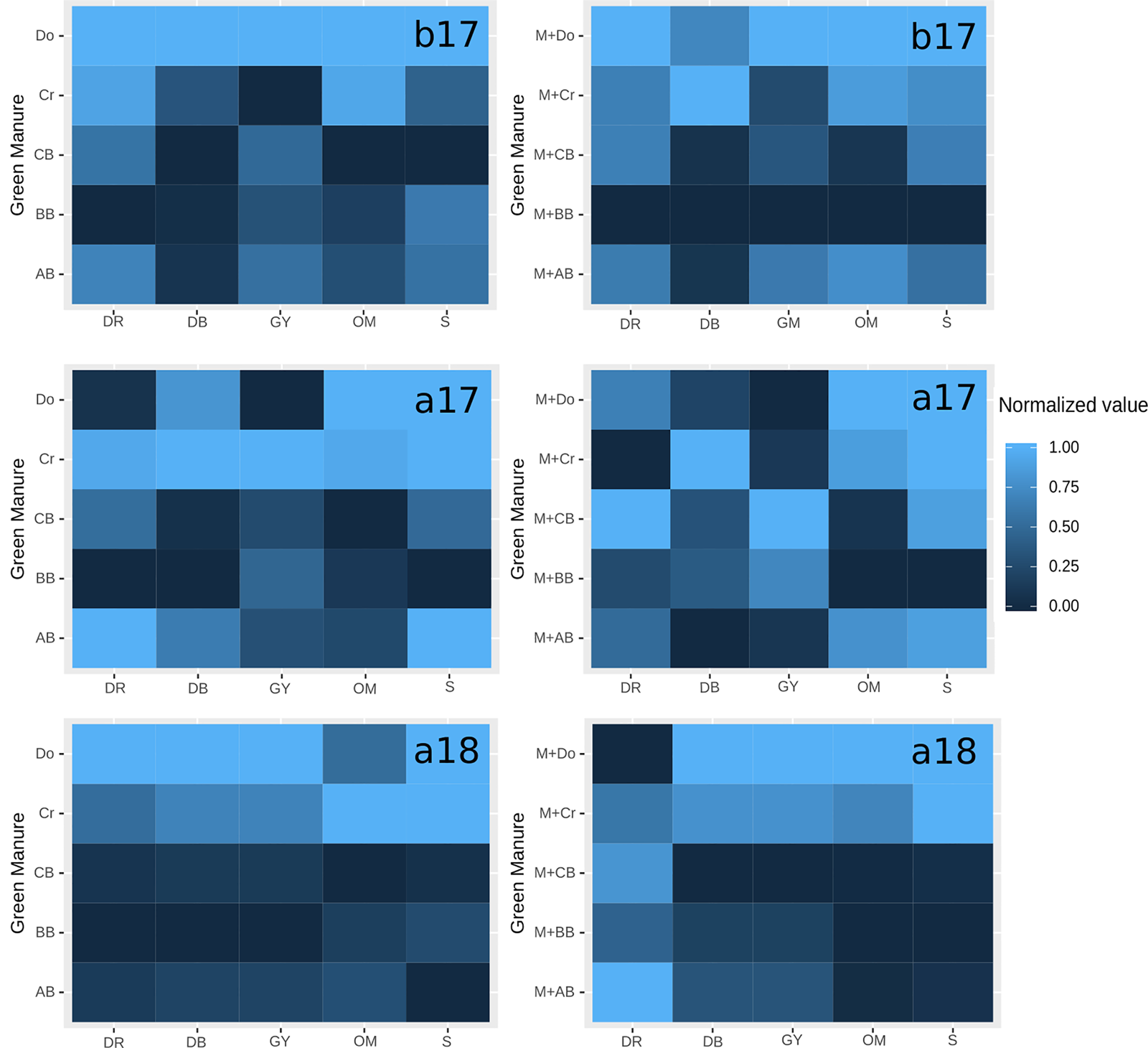
Organic matter content in soil and decomposition rate: Green manure types Dolicho and Crotalaria resulted in the highest organic matter contents, both in monoculture and polyculture schemes, across both years and soil types (Fig. 6). For decomposition rate Black Bean had a low decomposition rate in all scenarios, followed by Climbing Bean who only performed well in deep soil, short canicule and polyculture. Ayocote and Crotalaria showed medium to high values in all scenarios, mainly in polyculture scheme for the first and monoculture scheme for the second. Finally, Dolicho had the highest values of decomposition rate, except for some particular scenarios (Fig. 6).
Heatmap of normalized decomposition rate, dry biomasss, yield, organic matter percentage, and survival rate for each type of green manure. The left row corresponds to green manure in monoculture and the right row corresponds to green manure in polyculture with maize. Plot and year is indicated in the upper right corner of each heatmap. In the horizontal axis, DR, decomposition rate; DB, dry biomass; GY, green manure yield; OM, organic matter; and S, survival rate; M, maize; AB, ayocote bean; BB, black bean; CB, climbing bean; Cr, Crotalaria; Do, Dolicho.

(iii) Resilience and stability indicators
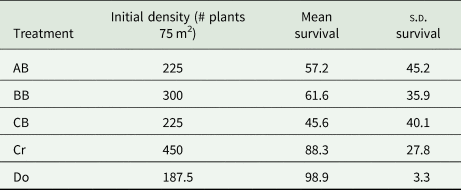
Green manure survival: Overall, the survival rate was higher for exotic than for native types of green manure (Table 4). In order to provide a comparative overview of green manure performance, we synthesized the results for green manure survival, dry biomass production, yield, organic matter contribution and decomposition rate, both in mono- and polyculture (Fig. 6). This comparison reveals that, overall, exotic green manures outperform native ones in terms of these indicators, although important differences are observed between specific types of green manure and between mono- and polyculture conditions.
Survival Index for each green manure for all plots

Initial density was derived from planting density (# plants 75 m2). The survival index was calculated for each plot (#final plants/ #initial plants) × 100. Mean and standard deviations (s.d.) are shown.
(iv) Indicator of adaptability
Multifunctionality: This indicator aims to assess the potential contribution of green manures to the adaptable response of the rainfed maize agriculture to diverse changes and stressors, be it as contributors to soil recovery or as a source of forage. Exotic pulses exhibited more multifunctionality than local ones (Table 5, Fig. 7).
Integrative comparison among local and exotic green manures in polyculture with maize. Scores for the different indicators of sustainability were normalized between 0 and 20 for each indicator. M, maize; AB, ayocote bean; BB, black bean; CB, climbing bean; Cr, Crotalaria; Do, Dolicho.

Multifunctionality of each green manure

For N fixation, Low stands for less than 60 kg ha−1, and High for more than or equal to 60 kg ha−1. The consumption of grain is categorized as local, foreign or non-consumption. For organic matter (OM) reincorporation, low is less than 5.8% and high is more than or equal to 5.8%. Cover crop and forage are categorized in Yes or No. Drought resistance was categorized as low when yield significantly decreased with long canicule and high when it did not (Fig. 6). Multifunctionality value was assigned according to the number of ‘High’, ‘Local’, or ‘Yes’ in the 6 categories, for each green manure, 1: less than the three, 5: three, 10: more than three.
(v) Indicator for equity
Benefit-cost ratio: A high benefit-cost ratio is important to access diverse services and it is a driver of successful agroecological transitions. It is important to notice that, since it is directly related to yield and yield was particularly affected by the 2018 canicule and low fertility in plot B, this relation is much higher in plot A in 2017 (Fig. 7).
(vi) Indicator for autonomy
Food security: Local green manures have a significant contribution to the diet of families in Zaachila (Guzmán-Sebastián et al., Reference Guzmán-Sebastián, Velasco-Velasco, Ruíz-Luna, Campos-Ángeles, Rodríguez-Ortiz and Enríquez del Valle2016; SIAP, 2017). Pulses are a great source of protein (FAO, 2016) and local pulses are a central ingredient in local gastronomy in Zaachila. Currently, exotic green manures do not contribute to the diet of families in Zaachila, but Dolicho is edible and is consumed in other societies. Their use as forage, especially for Crotalaria, could indirectly increase the availability of meat and animal derived products (Fig. 7).
Integration of indicators (step 5)
Representative indicators for the different areas in Table 2 were integrated in a joint visualization in Figure 7. This plot allows for a broad comparison among the local and exotic green manures and provides valuable qualitative information to design combined polyculture strategies that enhance sustainability in all its aspects. The proximity of each vertex of the polygons to the external perimeter is related to its performance in each indicator.
Discussion
In this paper we aimed to assess the pertinence and contribution to sustainable agriculture of five types of green manure in association with a local maize landrace in Zaachila, Oaxaca, Mexico. Following the MESMIS method, we identified critical points and problems that could be partially addressed with the use of different types of green manure (Fig. 1). Due to the pressure on land and food requirements, we were interested in the scenario in which green manures were grown as part of a maize-based polyculture.
Results for green maize yield, manure yield, LER and interspecific competition suggest that maize-green manure association is convenient, and are in good agreement with previous studies (Figs. 2–6; Ruiz-Vega and Loaeza, Reference Ruiz-Vega and Loaeza2003; Turgut et al., Reference Turgut, Bilgili, Duman and Acikgoz2005;Astier et al, Reference Astier, Maass, Etchevers-Barra, Pena and Leon Gonzalez2006; Yilmaz et al., Reference Yilmaz, Atak and Erayman2008; Cedric, Reference Cedric2014; Karyoti et al., Reference Karyoti, Bartzialis, Sakellariou-Makrantonaki and Danalatos2018). Only climbing bean and black bean exhibited a small degree of interspecific competition in plot A in 2017, but it did not affect maize yield significantly in any of the plots or years. Maize yield is actually not diminished by the association with green manure (Fig. 2), but since we studied only two cycles, the reported positive effects of green manure on maize yield were not observed (Turgut et al., Reference Turgut, Bilgili, Duman and Acikgoz2005; Massawe et al., Reference Massawe, Mtei, Munishi and Ndakidemi2016). We did not find significant maize yield differences due to soil or canicule, possibly due to the inoculation with azotobacter and mycorrhizae, which could also explain a relatively high maize yield (Ruiz-Vega and Loaeza, Reference Ruiz-Vega and Loaeza2003). Local green manure yields in our experiment agreed with previous reports from other sites and were superior to reports in the region (Ruiz-Vega and Loaeza, Reference Ruiz-Vega and Loaeza2003; Faure-Alvarez et al., Reference Faure-Alvarez, Benítez-Gonzalez, Rodríguez-Acosta, Grande-Morales, Torres-Martinez and Pérez-Rodríguez2014). In contrast to maize yield, there was a strong interaction effect between each type of green manure yield and the year, and green manure yield and the soil (Table 3 and Fig. 2). Dolicho and Crotalaria were the most resistant to adverse soil or drought conditions.
Some green manures exhibited an important potential for improving soil conditions (Fig. 6), in agreement with previous studies (Murphy and Colucci, Reference Murphy and Colucci1999; García-Hernández et al., Reference García-Hernández, Murillo- Amador, Nieto-Garibay, Fortis-Hernández, Márquez- Hernández, Castellanos-Pérez, García, Álvarez and Treto2002; Ruiz-Vega and Loaeza, Reference Ruiz-Vega and Loaeza2003; Adebisi and Bosch, Reference Adebisi, Bosch, Grubben and Denton2004). Dolicho and Crotalaria had generally high dry biomass production and their incorporation to the soil could significantly increase the amount of SOM after a few years. Dolicho and Crotalaria presented the highest SOM reincorporation values between the different green manures, even higher than in previous studies (Muruoka et al., Reference Muruoka, Ambrosano, Zapata, Bortoletto, Martins, Trivelin, Boaretto and Scivittaro2001; Ruiz Espinoza et al., Reference Ruiz Espinoza, Marrero Labrador, Cruz La Paz, Beltrán Morales and Díaz Viruliche2007). Regarding decomposition rate, exotic pulses also performed better in relation to native pulses except for Ayocote bean, which presented high values for some scenarios, in agreement with earlier studies (Ruiz-Vega et al., Reference Ruiz-Vega, Nuñez-Barrios and Ruiz2010). Overall, exotic pulses, and especially Dolicho bean, have important potential to restore and protect the soil and could be used both as cover crops and green manure. Future studies should measure decomposition rate as cover crop and effects for subsequent planting seasons. Ayocote bean is an important candidate too due to its resistance to drought and shallow soil, but it may require management modifications.
The management of every maize-green manure combination was identical to the rest, so that the data were comparable. However, such homogenization may under- or over-estimate the performance of some combinations. For example, black beans are traditionally grown in Zaachila after the canicule has passed, guaranteeing a larger survival rate. In turn, Dolicho may require pruning to prevent it from climbing on the maize plants and therefore makes the process more labor-consuming. The phenology of each type of green manure is different and it would be convenient to program its planting accordingly. Our results provide valuable basis to further design and program specific maize-green manure associations.
The local species of green manure significantly contribute to the families' food security at Villa de Zaachila. Indeed, 15% of the local production that is sold at the weekly local market is represented by beans like Black Bean, Climbing Bean and Ayocote Bean (Guzmán-Sebastián et al., Reference Guzmán-Sebastián, Velasco-Velasco, Ruíz-Luna, Campos-Ángeles, Rodríguez-Ortiz and Enríquez del Valle2016) and 135 ha are yearly dedicated to growing beans in this site (SIAP, 2017). Being a great source of proteins (FAO, 2016), local beans are an important part of Zaachila's gastronomy. Even though none of the native beans presented high multifunctionality values (except for Ayocote bean), their role in local food security and in maintaining biocultural diversity is an important argument to pursue studies with these legumes as green manures. Since traditional management involves the removal of most parts of the plant at harvesting, adapted managements that work both for providing food and improving the soil are to be explored. On the other hand, exotic green manures had high biomass production and survival rates, even in drought conditions, and are not used as a food source in the locality. So they can be managed best as green manures and forage, and not as crops in themselves. It is important to note that the benefit-to-cost relation of the green manures and maize grains is variable throughout the year and the season, since their value changes with their availability in the local market (Mora Van Cauwelaert, Reference Mora-Van Cauwelaert2017).
Conclusions
Green manures are shown to contribute in different degrees to the incorporation of SOM to the soil and may also contribute to water retention and N fixation. Moreover, green manures showed potential to contribute to the development or maintenance of multifunctional strategies that increase local resilience and adaptability. Then, maize-green manure associations tested here certainly increase the sustainability of maize rainfed agriculture in our study site. Local green manures (P. vulgaris and P. coccineus) are particularly important in terms of food security and the reproduction of biocultural diversity in Zaachila, but ayocote bean showed to be also promising as green manure. Exotic green manures (L. purpureous and C. junscens) exhibited a great potential to resist drought and provide large amounts of dry biomass. In particular, Dolicho (Lablab purpureous) could help establish a soil coverture throughout the whole year due to its semi-perennial or perennial nature and to the continuous deposition of dry leaves. Dolicho and crotalaria are also highly multifunctional due to its potential use as an abundant forage for equines and bovines, although their potential use as forage for small, local domestic species remains to be explored. It is worth mentioning that crotalaria was observed to be highly palatable to local ants and grasshoppers, and that both Dolicho and crotalaria may require pruning or other management practices not to interfere with maize.
While this study shows that the use of green manures increases the sustainability of rainfed agriculture and is overall convenient for small farmers in Zaachila, and possibly in many similar sites, it cannot conclude with the recommendation of a specific type of association. Instead, we provide detailed information regarding the advantages and performance of different types of green manure with respect to different indicators, so that local producers, technicians and organizations can design strategies that select or combine the use of diverse green manures according to the edaphic, climatic, economic and sociocultural conditions and requirements. We foresee a complementary management in which local and exotic green manures can be used primarily as food crops in polyculture and mainly as green manures. This would maximize the system's multifunctionality as it would take care of both food security and soil fertility concerns.
Acknowledgements
AB thanks Raymundo Aguilar for his dedication and help, the great campesino master who opened the doors to the heart of the Binniza people of Villa de Zaachila, and who lent him a piece of his land to experiment and dream. AB also thanks CBTA 78 at Villa de Zaachila for the opportunity to experiment in their land and for the mutual exchange regarding experiences in agroecology. This work was supported by CONACYT under Grant for PHD studies in the Instituto Politécnico Nacional in the state of Oaxaca, Mexico (grant number 624315). MB, EMBC and CGG acknowledge support from UNAM-DGAPA-PAPIIT (IN207819).