Introduction
The 2014 Boko Haram kidnapping of over 200 schoolgirls in Chibok, Nigeria Reference Omeni1 focused the world’s attention on the threat of terrorism in Sub-Saharan Africa (SSA) and raised significant concerns about both the physical health and psychological impacts of such events. Reference Adeboye2 Since that time, the overall global incidence of terrorist attacks has decreased. Reference Tin, Fares, Al Mulhim and Ciottone3 However, the region of SSA has seen a steady continuance, largely fueled by the actions of established terror organizations such as Boko Haram and Al-Shabab, along with the emergence of groups such as the Islamic State, Al Qaeda in the Islamic Maghreb, and their affiliates. Reference Lynne4 This growing presence of terrorism has placed additional burden on already strained medical systems, Reference Amaefule, Dahiru, Sule, Ejagwulu, Maitama and Ibrahim5 created a humanitarian crisis, and brought to light the immediate and long-term health implications of such events in SSA. Reference Omole, Welye and Abimbola6
According to the 2022 Global Terrorism Index (GTI), five of the top ten countries included in the overall terrorism index score are located in SSA, 7 with the region now making up 48% of all terror-related deaths in 2021. With a population of over 1.6 billion people, 8 over 1,000 languages, 9 and encompassing 49 countries throughout four regions, SSA is one of the largest, most populous, and diverse regions on the planet. Within this diversity, terrorist organizations have found fertile ground due to their ability to exploit unstable political environments, domestic and transnational insecurity, poor income growth, and religious extremism. Reference Atran10–Reference Marc12 Regions such as the Sahel and Central Africa have seen an increase in terrorist activity due to regional power vacuums, and mistrust in governments has fueled activity in places such as Tanzania and Mozambique. 13 In addition, many people in SSA live in remote rural areas or are nomadic and lack access to adequate baseline health care. Reference Geldsetzer, Reinmuth and Ouma14 This difficulty in access to care is compounded by violent conflicts, with vulnerable populations such as pregnant women and children suffering disproportionately. Reference Ojeleke, Groot, Bonuedi and Pavlova15,Reference Ekzayez, Alhaj Ahmad, Alhaleb and Checchi16
To address the growing burden of terrorism-related health implications, the field of Counter-Terrorism Medicine (CTM) seeks to study the triad of intent, violence, and health care impacts, and to implement medical and educational initiatives within the disaster cycle phases of mitigation, preparedness, response, and recovery. Reference Court, Edwards, Issa, Voskanyan and Ciottone17 Terrorism, by its very nature, often targets vulnerable infrastructure and soft targets, thus understanding the nature, prevalence, and impact of terrorism can better prepare health care entities to prevent and address the sequela of terrorist attacks. This study is a retrospective descriptive analysis of terror-related attacks, fatalities, and injuries recorded in the Global Terrorism Database (GTD) in SSA from 1970-2020.
Methods
Data collection was performed using a retrospective database search through the GTD. 18 This database is open-access with publicly available data collection methodology utilizing artificial intelligence that identifies events from news media around the world on a daily basis, and is confirmed by human evaluation of the events by the National Consortium for the Study of Terrorism and Responses to Terrorism (START; College Park, Maryland USA). The GTD defines terrorist attacks as: “The threatened or actual use of illegal force and violence by a non-state actor to attain a political, economic, religious, or social goal through fear, coercion, or intimidation.” The GTD database does not include acts of state terrorism. The GTD contains no personal identifiers for victims and links specific events to open-source news articles.
The GTD was searched using the internal database search functions for recorded events which occurred in SSA from January 1, 1970 - December 31, 2020. Years 2021 and 2022 were not yet available at the time of the study. Data from 1993 were lost before compilation by START. Recovered data from 1993 are incomplete and represent approximately 15% of total attacks, therefore data from 1993 were excluded from this study.
Countries classified under SSA by the GTD for the study period include: Angola, Benin, Botswana, Burkina Faso, Burundi, Cameroon, Central African Republic, Chad, Comoros, Democratic Republic of the Congo, Djibouti, Equatorial Guinea, Eritrea, Ethiopia, Gabon, Gambia, Ghana, Guinea, Guinea-Bissau, Ivory Coast, Kenya, Lesotho, Liberia, Madagascar, Malawi, Mali, Mauritania, Mozambique, Namibia, Niger, Nigeria, People’s Republic of the Congo, Republic of the Congo, Rhodesia, Rwanda, Senegal, Seychelles, Sierra Leone, Somalia, South Africa, South Sudan, Sudan, Swaziland, Tanzania, Togo, Uganda, Zaire, Zambia, and Zimbabwe.
Primary weapon type, primary target type, country where the incident occurred, and the number of total deaths and injured were collated. Results were exported into an Excel spreadsheet (Microsoft Corp.; Redmond, Washington USA) for analysis. Ambiguous events (this field is only systematically available with incidents occurring after 1997) were excluded when there was uncertainty as to whether the incident met any of the criteria for GTD inclusion as a terrorist incident. Attacks met inclusion criteria if they fulfilled the following three terrorism-related criteria, as set by the GTD.
These criteria are determined within the database and not by the authors:
-
- Criterion I: The act must be aimed at attaining a political, economic, religious, or social goal.
-
- Criterion II: There must be evidence of an intention to coerce, intimidate, or convey some other message to a larger audience (or audiences) than the immediate victims.
-
- Criterion III: The action must be outside the context of legitimate warfare activities (ie, the act must be outside the parameters permitted by international humanitarian law, particularly the admonition against deliberately targeting civilians or non-combatants).
Results
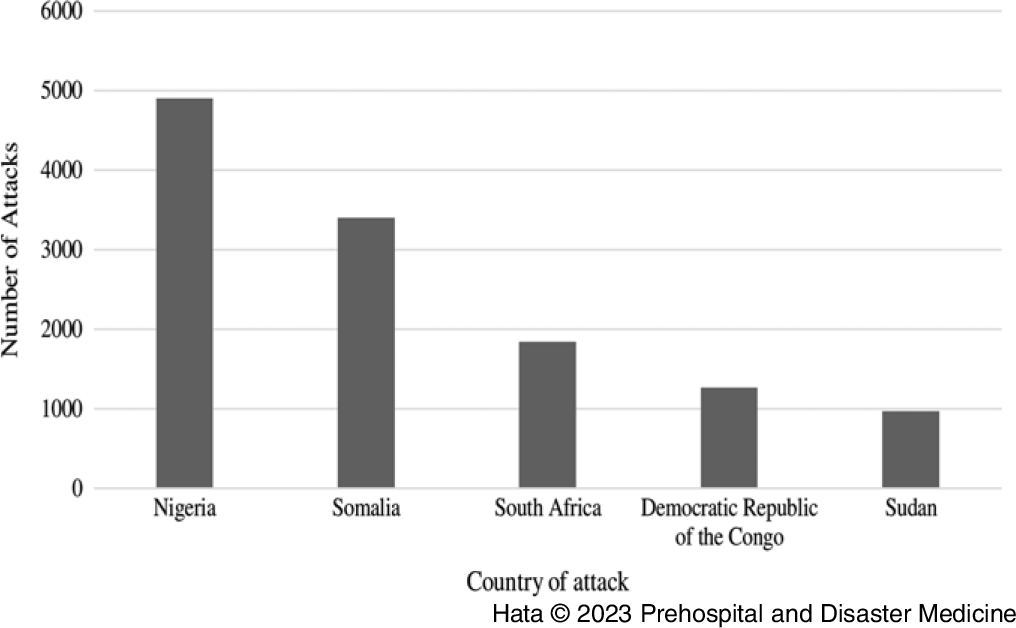
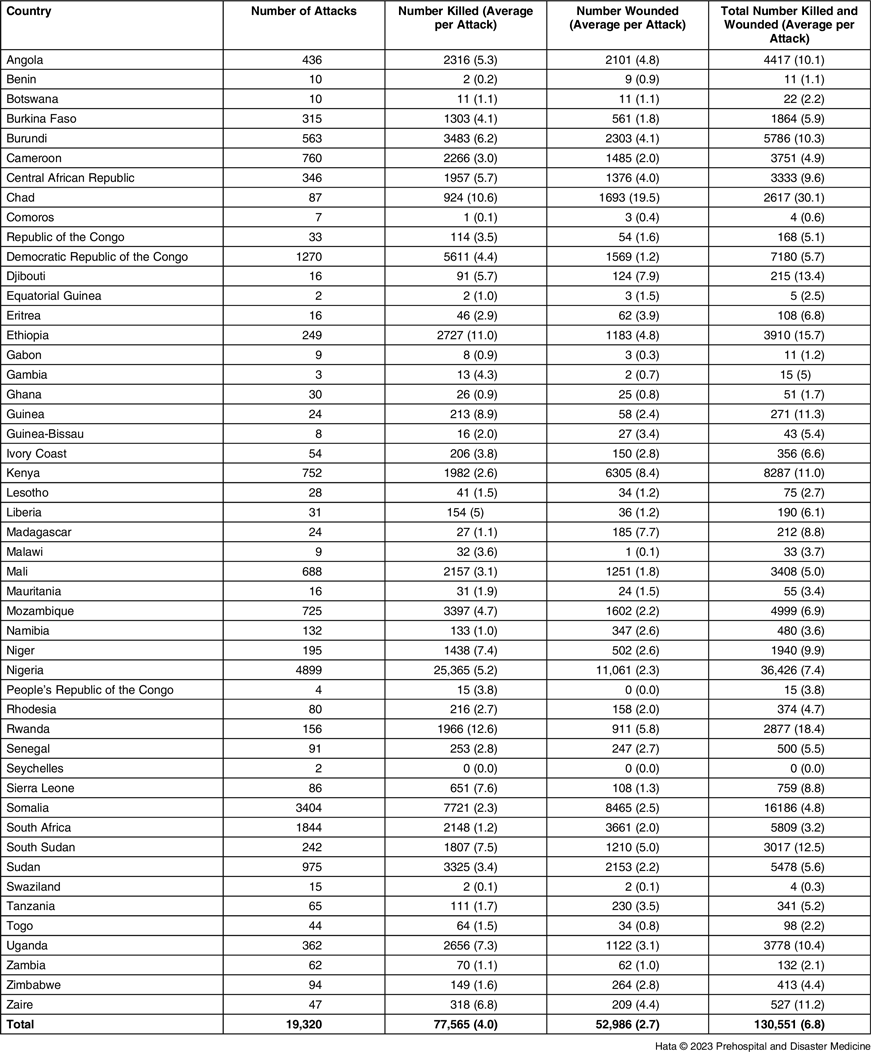
From 1970-2020, a total of 19,320 terrorist attacks occurring in SSA were identified. The total number of fatalities was 77,565 and the total number injured was 52,986. The top five countries with the most terrorist attacks were Nigeria (4,899); Somalia (3,404); South Africa (1,844); The Democratic Republic of the Congo (1,270); and Sudan (970); Figure 1. Nigeria had the highest number of fatalities (25,365) and injuries (11,061), Rwanda had the highest number of persons killed per attack (12.7), and Chad had the highest number wounded per attack (19.5) as well as the highest total killed and wounded per attack (30.1); Table 1.
Top Five Countries by Number of Attacks.

Total Number Killed and Wounded by Country

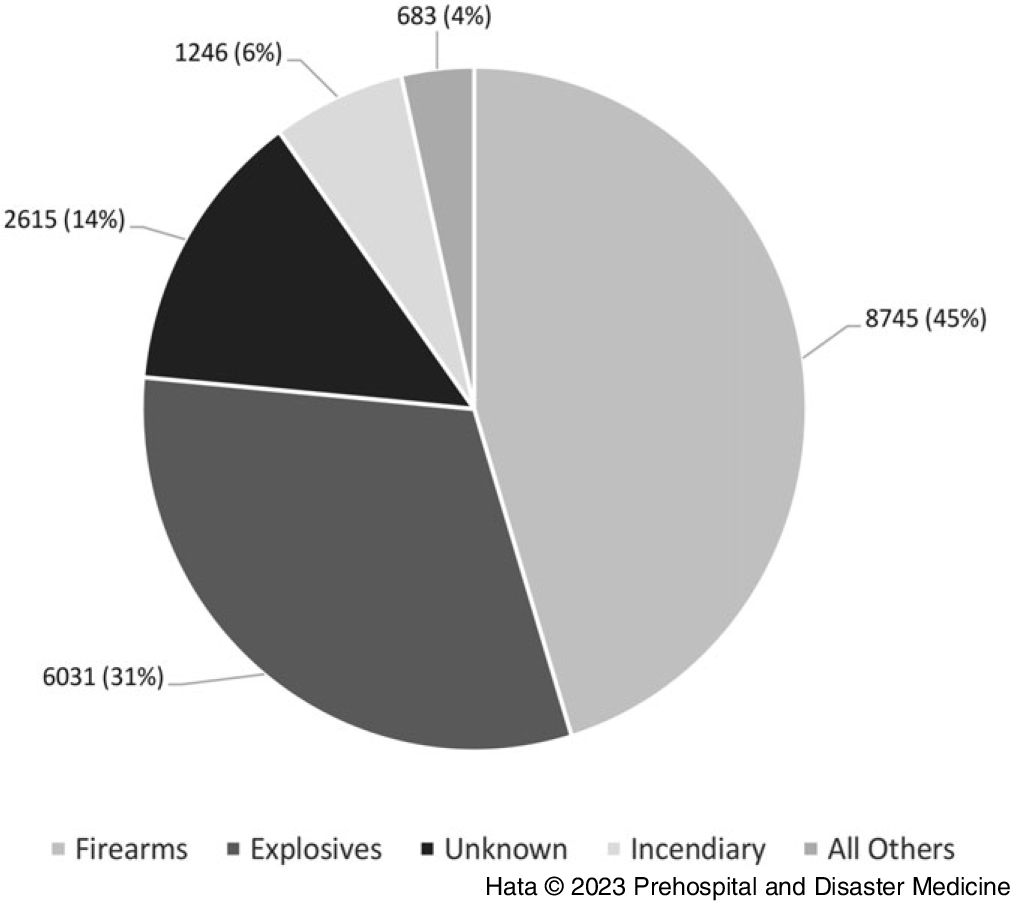
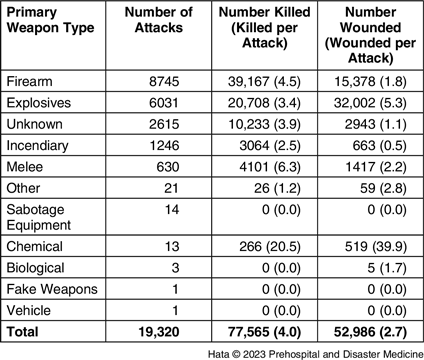
The most frequently used primary weapon types were firearms (8,745), followed by explosives (6,031), unknown (2,615), and incendiary devices (1,246). Biological weapons, chemical weapons, fake weapons, melee, vehicle, sabotage of equipment, and other weapons made up the remainder (683.) Chemical weapons were the deadliest per attack (20.5) and also caused the most injuries per attack (39.9); Figure 2 and Table 2.
Number of Attacks by Primary Weapon Type.

Number of Attacks, Number Killed, and Number Wounded by Primary Weapon Type

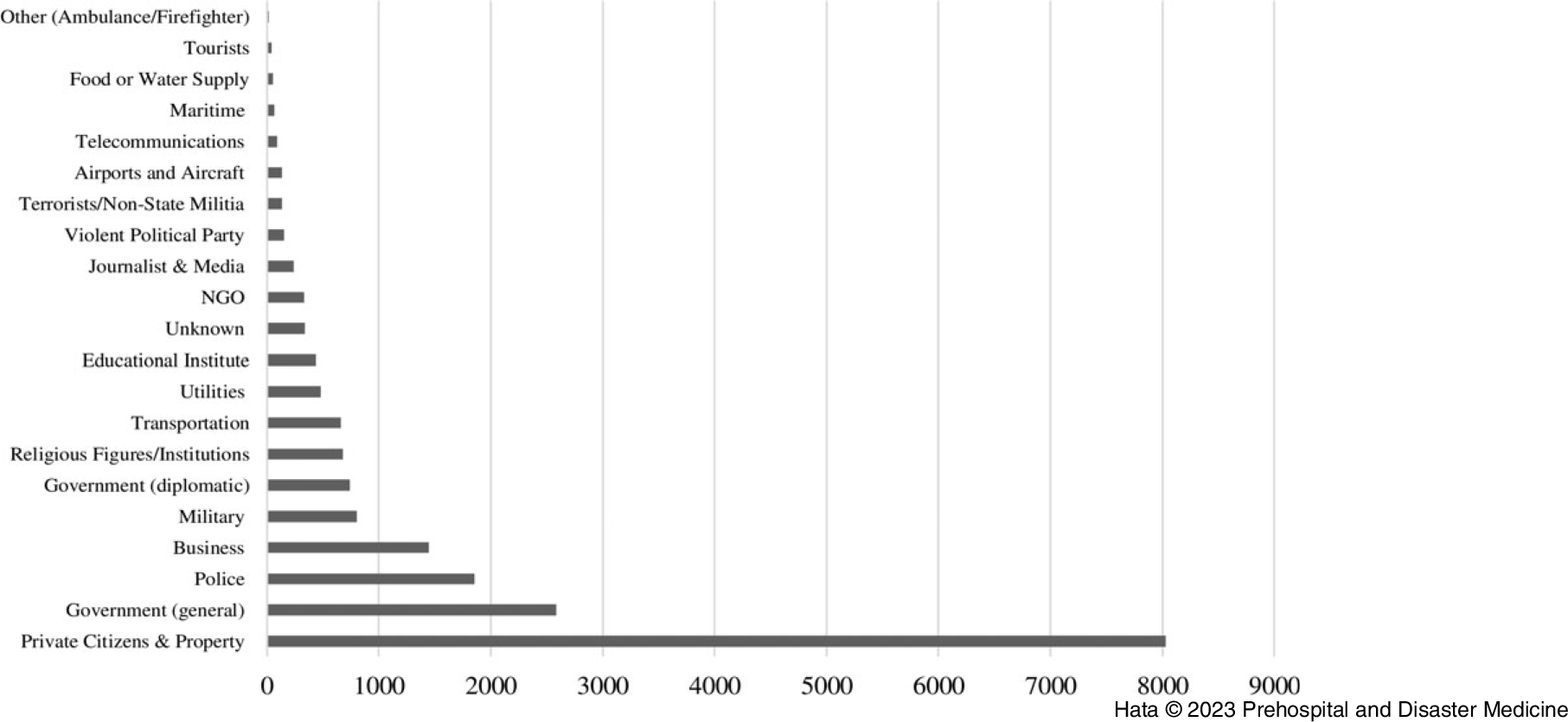
The primary target types were private citizens and property (8,031); general government facilities (2,582); police (1,854); business (1,446); military (805); diplomatic government facilities (741); and religious figures/institution (678), with all other targets making up the remainder (3,183); Figure 3.
Number of Attacks by Primary Target Type.
Abbreviation: NGO, nongovernmental organization.

Discussion
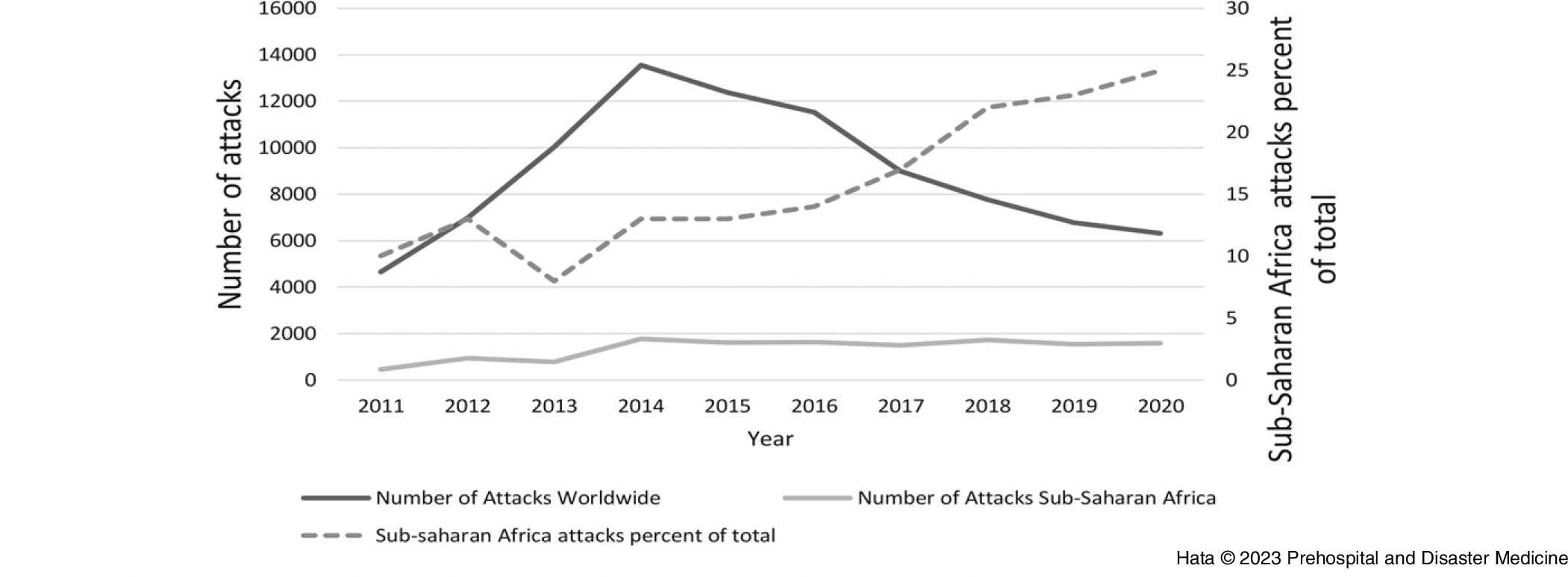
While terrorism is not new to the African continent, the overall concentration of global terror has significantly increased in SSA over the past 10 years (Figure 4). In response, there have been attempts to harmonize Africa’s preventative and reactionary responses to terrorism. Reference Ogbonnaya19,Reference Agbiboa20 The 2022 UN Security Council Counter-Terrorism Executive Directorate (CTED; New York USA) identified several areas of action for governments, relevant authorities, and international aid stakeholders to combat the threat and impacts of terrorism in Africa. 21 Within these recommendations, the field of CTM is uniquely positioned to address several key areas of the health care implications of intentional asymmetrical disasters. By focusing on aspects of care such as mass-casualty incidents (MCIs), psychological care, chemical/biological/radiological/nuclear/and explosive (CBRNE) injuries, and community prevention programs, CTM initiatives can assist governments, health care organizations, nongovernmental organizations (NGOs), and local communities in the prevention, mitigation, response, and recovery from such attacks. Reference Tin, Margus and Ciottone22–Reference Tin, Granholm, Hart and Ciottone24
Concentration of Global Terrorism in SSA: Number of Attacks in SSA, World-Wide, and Percent of Attacks in SSA by Year.
Abbreviation: SSA, Sub-Saharan Africa.

Terrorist attacks often result in significant trauma and may lead to MCIs. Long-term psychosocial impacts aside, attacks are often designed to injure or kill multiple people and produce devastating wounds, which explains the prevalence of attacks involving explosives, firearms, or incendiary devices. Reference Bieler, Franke and Kollig25,Reference Hussain, Okeke, Oyebanji, Akunne and Omoruyi26 The management of such injuries often requires complex surgical procedures followed by prolonged hospitalization and rehabilitation. Reference Malchow and Black27 This study shows that firearm attacks have incurred the highest number of total fatalities amongst terrorist attacks in SSA, with explosives causing the second highest number of fatalities and causing the largest number of total injuries. Chemical attacks, while rare, caused the most injuries and deaths per attack.
Optimal care of MCIs and complex trauma requires the resources of mature Emergency Medical Service systems, as well as fully operational and available trauma centers. Reference Celso, Tepas and Langland-Orban28,Reference Van, Song and Do29 Unfortunately, this type of care is often unorganized or unavailable in many regions of SSA. A recent study by Baranbas, et al showed that the largest geographical gaps in trauma and intensive care are in Central Africa, francophone West Africa, and the conflict-heavy areas in East Africa, Reference Alayande, Chu and Jumbam30 while South Africa has the most advanced trauma system. Reference Alfa-Wali, Sritharan, Mehes, Abdullah and Rasheed31 Three of the top five countries for number of attacks (Somalia, Democratic Republic of the Congo, and Sudan) were within these gap regions, with South Africa having the third highest number of attacks.
Private citizens, governments, police, business, and the military are the top five targets for terrorists in SSA. Training NGOs, military personnel, prehospital providers, and hospital staff in military battlefield Tactical Combat Casualty Care (TCCC), the civilian equivalent, Tactical Emergency Casualty Care (TECC), as well as the unique aspects of CBRNE care, may help to reduce military and civilian casualties. Reference Butler, Bennett and Wedmore32 All NGOs and other civilian or governmental humanitarian personnel should be trained in Hostile Environment Awareness Training (HEAT) to prepare for deployment into high-threat areas. Reference Seedat, Van Niekerk, Jewkes, Suffla and Ratele33,Reference Vincent-Lambert and Westwood34
Sub-Saharan Africa has both the highest incidence of maternal deaths (533 per 100,000) 35 and neonatal deaths (27 per 1,000) 36 in the world, with women and infants having further increased deaths if exposed to armed conflicts. Reference Østby, Urdal, Tollefsen, Kotsadam, Belbo and Ormhaug37,Reference Kotsadam and Østby38 Additionally, complications such as stillbirth, miscarriage, and prematurity are also increased in violence-prone regions. Reference Keasley, Blickwedel and Quenby39 In areas where care is already restricted due to physical or socioeconomic barriers, terrorist attacks further limit access to appropriate antenatal care. Reference Druetz, Browne, Bicaba, Mitchell and Bicaba40 This vulnerable population can see benefits in morbidity and mortality rates from the implementation of targeted strategies to improve maternal and perinatal care in hostile or terrorist-prone environments. Reference Lagrou, Zachariah and Bissell41
Along with pregnant women and infants, children are particularly susceptible to the effects of violence, with restricted growth and development from indirect effects such as disruption of food, family, and social services. Reference Dunn42 Kidnapping and forced recruitment by armed groups is common, and since 2005, nearly 50% of recruited children globally were in West and Central Africa. Girls are often victims of kidnappings, rape and sexual abuse, and other forms of gender-based violence. 43 Physical and sexual intimate partner violence may also increase in conflict areas, further adding to the detrimental effects of terrorism on children. Reference Eseosa Ekhator-Mobayode, Hanmer, Rubiano-Matulevich and Jimena Arango44 The longstanding physical and psychological impacts of these systematic violations will be felt for generations, and will require intensive and focused pediatric care if the cycle of violence is to be stopped.
While the future of SSA is one of potential growth and opportunity, 45 the coronavirus disease 2019/COVID-19 pandemic posed a complex problem to the region of SSA, with a slow vaccine roll-out and a high burden of disease. Reference Levin, Owusu-Boaitey and Pugh46,Reference Selassie and Habtamu47 In general, the people of SSA rate their health care lower than any other population in the world, Reference Deaton and Tortora48 and as the pandemic has progressed, terrorist organizations have sought to use the pandemic as a propaganda tool to advance their agenda and recruit new members. Reference Basit49 By working with community education groups, vaccine programs, social media outlets, governments, and health care organizations, CTM initiatives can assist in creating culturally sensitive awareness and education campaigns to combat misinformation and propaganda.
Limitations
The GTD is a comprehensive record of documented global terrorist events obtained through convenience sampling, thus sampling error and selection bias cannot be determined for the data used in this study. It is maintained by START and is the basis for other terrorism-related measures, such as the GTI. Due to the nature of the information and the collection methodology, accuracy cannot be reliably validated. However, database developers attempt to corroborate each piece of data among multiple independent open sources. Reliance wholly on the GTD is partially mitigated by confirmation with other lay sources and searches for other online information, but if there are incidents not reported in the GTD, this could limit the accuracy of the findings. Using pre-existing databases such as the GTD as a data source also inherently introduces potential challenges such as changing coding methodologies, miscoding errors, or data entry errors. Furthermore, the lack of a universally agreed-upon definition of the term “terrorism” can create inconsistencies between databases in the labeling of such events. Clear and detailed documentation of terrorist events is further hindered by restrictions on reporting, the lack of independent corroboration, and the lack of transparency within certain government sources. Infrastructure needed to report, detect, and investigate terrorism events is also lacking in many parts of the world, leading to potential under-reporting of events.
Conclusion
Sub-Sahara Africa continues to be a focal point for global terrorism. From 1970-2020, there were 19,320 attacks resulting in 77,565 fatalities and 52,986 injuries. The primary weapon types were firearms (45%), followed by explosives (31%), unknown (14%), incendiary devices (6%), and all others (4%). Nigeria has the largest burden of terrorism both in number of attacks (4,899) as well as in numbers killed (25,365) and wounded (11,061).
Understanding the nature of terrorism in SSA and its impact on health care will help to better inform CTM strategies to improve health and wellness outcomes in the region of SSA.
Conflicts of interest
The authors declare none.