Introduction
Opioids are a ubiquitous class of drugs which are routinely prescribed to alleviate moderate-to-severe pain (Volkow, McLellan, Cotto, Karithanom, & Weiss, Reference Volkow, McLellan, Cotto, Karithanom and Weiss2011). They are highly reinforcing, and liable for abuse, dependence, and addiction (Shippenberg & Elmer, Reference Shippenberg and Elmer1998). Opioid use, misuse, and overdose deaths are reaching epidemic proportions in the United States (National Academies of Sciences Engineering and Medicine, 2017). This contributes to the current anti-opioid climate. Historically, it represents an immense fall for opioids, given that the main active constituent of opium, morphine, draws its name from Morpheus, Greek god of dreams and son of Hypnos, Greek god of sleep, who were both associated with poppies and opiates (Schiff, Reference Schiff2002).
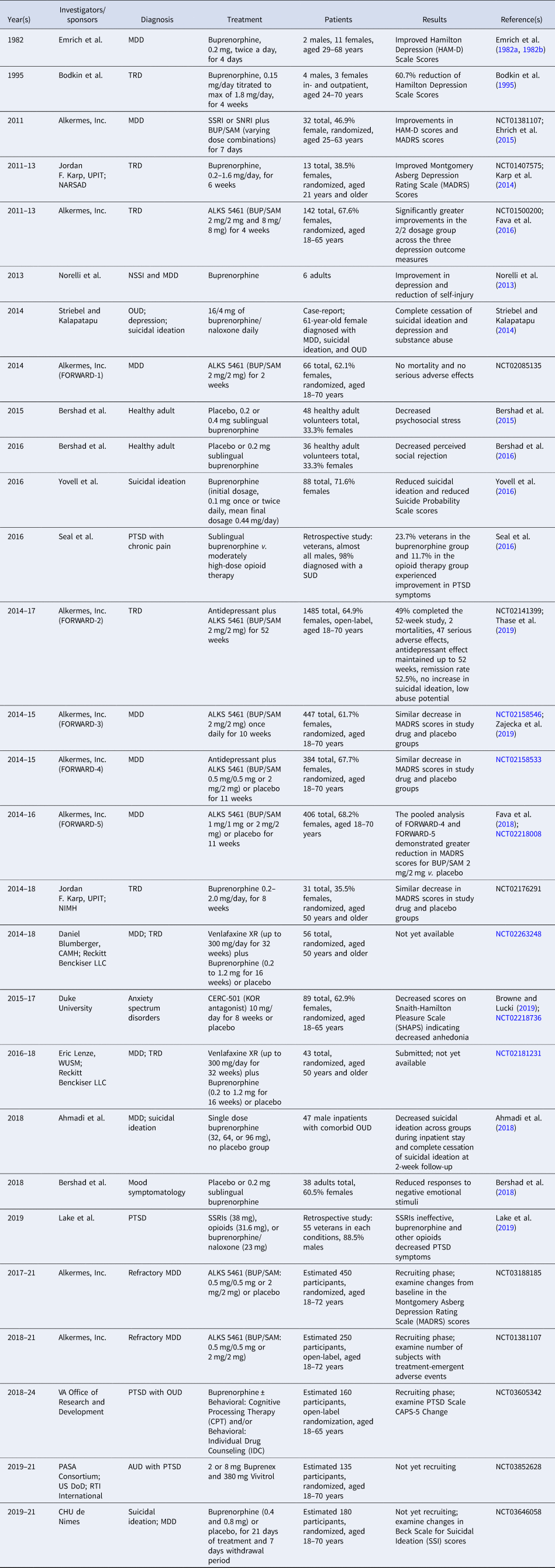
Opioids act upon three classical G-protein-coupled receptors, the μ, δ, and κ opioid receptors (MOR, DOR, and KOR, respectively), and a non-classical opioid receptor-like 1/nociceptin receptor (Henderson & McKnight, Reference Henderson and McKnight1997; Waldhoer, Bartlett, & Whistler, Reference Waldhoer, Bartlett and Whistler2004). Activation of each of these receptors is known to be associated with different outcomes (Emery & Eitan, Reference Emery and Eitan2019b; Smith, Lefkowitz, & Rajagopal, Reference Smith, Lefkowitz and Rajagopal2018; Stanczyk & Kandasamy, Reference Stanczyk and Kandasamy2018). Opioids' abusive potential and respiratory depression are largely mediated by MOR (Crist & Berrettini, Reference Crist and Berrettini2014; Dahan, Aarts, & Smith, Reference Dahan, Aarts and Smith2010; Kieffer & Gaveriaux-Ruff, Reference Kieffer and Gaveriaux-Ruff2002; Negus & Freeman, Reference Negus and Freeman2018; Pattinson, Reference Pattinson2008). KOR is involved in mediating analgesia, dysphoria, stress, and negative affect (Valentino & Volkow, Reference Valentino and Volkow2018). Thus, recent research examines the potential of using preferred KOR ligands to treat different medical conditions. Specifically, this review examines the potential of using buprenorphine, hypothesized to act via KOR, for treating major depressive disorder (MDD), treatment-resistant depression (TRD), and post-traumatic stress disorder (PTSD) (Table 1).
Human studies (preclinical, case studies, retrospective, and clinical studies) examining the effect of buprenorphine on mood, anxiety, and suicide ideation

UPIT, University of Pittsburgh; NARSAD, National Alliance for Research on Schizophrenia and Depression currently Brain & Behavior Research Foundation; NSSI, treatment-resistant non-suicidal self-injury; NIMH, National Institute of Mental Health; CAMH, The Centre for Addiction and Mental Health; WUSM, Washington University School of Medicine; PASA Consortium, Pharmacotherapies for Alcohol and Substance Abuse Consortium; US DoD, United States Department of Defense; AUD, Alcohol use disorders; CHU de Nimes, Centre Hospitalier Universitaire de Nīmes.
Buprenorphine
Buprenorphine is a derivative of the opioid alkaloid thebaine (National Center for Biotechnology Information, 2019). It is a complex opioid that is regarded to be a MOR partial agonist and a full antagonist at the KOR and DOR (Lutfy & Cowan, Reference Lutfy and Cowan2004). However, in a recent study on human receptors, buprenorphine was found to be a partial agonist at the MOR, KOR, and DOR (Bidlack et al., Reference Bidlack, Knapp, Deaver, Plotnikava, Arnelle, Wonsey and Namchuk2018). This contrast might represent species differences or may be explained by ligand bias (Galandrin, Oligny-Longpre, & Bouvier, Reference Galandrin, Oligny-Longpre and Bouvier2007; Pradhan et al., Reference Pradhan, Perroy, Walwyn, Smith, Vicente-Sanchez, Segura and Evans2016; Urban et al., Reference Urban, Clarke, von Zastrow, Nichols, Kobilka, Weinstein and Mailman2007). As a partial agonist buprenorphine's abusive potential is generally regarded as lower than full agonists (Walsh, Preston, Bigelow, & Stitzer, Reference Walsh, Preston, Bigelow and Stitzer1995; Yokell, Zaller, Green, & Rich, Reference Yokell, Zaller, Green and Rich2011). Indeed, the Food and Drug Administration (FDA) approved buprenorphine alone (Subutex) or in combination with naloxone (Suboxone) for the treatment of opioid use disorders (OUD) (FDA, 2018a), and for pain management (FDA, 2014–2017).
Risk of abuse
Risk to abuse buprenorphine is considered low for opioid-abusing individuals (Comer, Sullivan, Whittington, Vosburg, & Kowalczyk, Reference Comer, Sullivan, Whittington, Vosburg and Kowalczyk2008). However, buprenorphine produces euphoric effects in non-opioid dependent individuals (Jasinski, Pevnick, & Griffith, Reference Jasinski, Pevnick and Griffith1978; Pickworth, Johnson, Holicky, & Cone, Reference Pickworth, Johnson, Holicky and Cone1993) and has reinforcing and abusive properties (Comer & Collins, Reference Comer and Collins2002; Comer, Collins, & Fischman, Reference Comer, Collins and Fischman2002; Comer, Sullivan, & Walker, Reference Comer, Sullivan and Walker2005). Indeed, illicit use is documented in many countries. In Finland it's the most commonly abused opioid (Lofwall & Walsh, Reference Lofwall and Walsh2014; Uosukainen et al., Reference Uosukainen, Kauhanen, Voutilainen, Fohr, Paasolainen, Tiihonen and Bell2013; Yokell et al., Reference Yokell, Zaller, Green and Rich2011). It is also the second most commonly injected drug in India (Ghosh, Basu, & Avasthi, Reference Ghosh, Basu and Avasthi2018). Thus, concerns are still raised regarding the risks of misuse and diversion (Kenney, Anderson, Bailey, & Stein, Reference Kenney, Anderson, Bailey and Stein2017; Lin, Lofwall, Walsh, Gordon, & Knudsen, Reference Lin, Lofwall, Walsh, Gordon and Knudsen2018; Mund & Stith, Reference Mund and Stith2018). However, in many cases diversion is committed by opioid-dependent individuals to self-medicate in accordance with the legal purpose of buprenorphine (Bazazi, Yokell, Fu, Rich, & Zaller, Reference Bazazi, Yokell, Fu, Rich and Zaller2011; Johnson & Richert, Reference Johnson and Richert2019). Additionally, non-medical use of buprenorphine is safer than methadone (Lee, Klein-Schwartz, Welsh, & Doyon, Reference Lee, Klein-Schwartz, Welsh and Doyon2013). Overdose death and toxicity risks are very low, even in cases of accidental ingestion in the pediatric population (Gaulier, Charvier, Monceaux, Marquet, & Lachatre, Reference Gaulier, Charvier, Monceaux, Marquet and Lachatre2004; Hayes, Klein-Schwartz, & Doyon, Reference Hayes, Klein-Schwartz and Doyon2008; Walsh et al., Reference Walsh, Preston, Bigelow and Stitzer1995). Thus, other voices warn that excess fear of diversion can impede dispensing lifesaving treatment (Blum, Gold, Clark, Dushaj, & Badgaiyan, Reference Blum, Gold, Clark, Dushaj and Badgaiyan2016; Doernberg, Krawczyk, Agus, & Fingerhood, Reference Doernberg, Krawczyk, Agus and Fingerhood2019).
Buprenorphine with samidorphan (BUP/SAM)
To further reduce the addictive potential of buprenorphine, Alkermes, a company based in Ireland with US branches, formatted a new drug, ALKS 5461, a combination of buprenorphine with samidorphan (BUP/SAM). Samidorphan, is a MOR antagonist and a partial agonist at the KOR and DOR (Bidlack et al., Reference Bidlack, Knapp, Deaver, Plotnikava, Arnelle, Wonsey and Namchuk2018). It was demonstrated to decrease buprenorphine's activity at the MOR and DOR, with little effect on KOR (Bidlack et al., Reference Bidlack, Knapp, Deaver, Plotnikava, Arnelle, Wonsey and Namchuk2018).
Preclinical studies
Samidorphan attenuated buprenorphine-induced increase in extracellular levels of serotonin and dopamine in the medial prefrontal cortex and nucleus accumbens shell (Smith et al., Reference Smith, Cunningham, Eyerman, Dean, Deaver and Sanchez2019). Additionally, samidorphan blocked buprenorphine-induced hyperactivity, a behavioral response to increased striatal extracellular dopamine (Burke et al., Reference Burke, Ferdousi, Deaver, Finn, Roche and Kelly2019; Smith et al., Reference Smith, Cunningham, Eyerman, Dean, Deaver and Sanchez2019). Opioid-induced increase in extracellular dopamine makes them reinforcing, and renders them liable for abuse and addiction (Merrer, Becker, Befort, & Kieffer, Reference Merrer, Becker, Befort and Kieffer2009; Shippenberg & Elmer, Reference Shippenberg and Elmer1998).
Clinical studies
A safer profile was also observed in human studies using nondependent, recreational opioid users. Samidorphan was demonstrated to lack abusive potential up to 15 times the therapeutic dose and to have similar drug-liking effects to naltrexone (Pathak et al., Reference Pathak, Vince, Kelsh, Setnik, Nangia, DiPetrillo and Ehrich2019a). Additionally, samidorphan reduced the euphoric and drug-liking effects of buprenorphine, in doses up to four times the therapeutic dose (Ehrich et al., Reference Ehrich, Turncliff, Du, Leigh-Pemberton, Fernandez, Jones and Fava2015; Pathak et al., Reference Pathak, Vince, Kelsh, Shram, Setnik, Lu and Ehrich2019b). Finally, BUP/SAM was tolerated by most individuals better than buprenorphine alone, with very few adverse effects, no evidence of dependence or opiate withdrawal syndrome, and only minimal signs for abuse (Ehrich et al., Reference Ehrich, Turncliff, Du, Leigh-Pemberton, Fernandez, Jones and Fava2015; Fava et al., Reference Fava, Memisoglu, Thase, Bodkin, Trivedi, de Somer and Ehrich2016; Pathak et al., Reference Pathak, Vince, Kelsh, Setnik, Nangia, DiPetrillo and Ehrich2019a, Reference Pathak, Vince, Kelsh, Shram, Setnik, Lu and Ehrich2019b; Thase et al., Reference Thase, Stanford, Memisoglu, Martin, Claxton, Bodnik and Pathak2019).
Depression
Depression affects over 300 million people worldwide (World Health Organization, 2018), and it is a leading cause of disability and suicide (Ferrari et al., Reference Ferrari, Charlson, Norman, Patten, Freedman, Murray and Whiteford2013; Hawton, Casanas, Haw, & Saunders, Reference Hawton, Casanas, Haw and Saunders2013; O'Rourke & Siddiqui, Reference O'Rourke and Siddiqui2019). Suicide is the second leading cause of death for adolescents and young adults (National Institute of Mental Health, 2019). In 2017, 47 173 suicide deaths were reported in the United States (Drapeau & McIntosh, Reference Drapeau and McIntosh2018). Over 50% of suicide deaths are individuals who suffer from major depression (American Foundation for Suicide Prevention, 2019).
Current treatments
Selective serotonin reuptake inhibitors (SSRIs) are the most commonly prescribed class of drugs for MDD (Mandrioli, Mercolini, Saracino, & Raggi, Reference Mandrioli, Mercolini, Saracino and Raggi2012). Only one-third of patients are estimated to achieve remission after trying one antidepressant (Kautzky et al., Reference Kautzky, Dold, Bartova, Spies, Kranz, Souery and Kasper2019; McIntyre et al., Reference McIntyre, Filteau, Martin, Patry, Carvalho, Cha and Miguelez2014). Most patients have to try several medications or other treatment options, such as behavioral therapy, cognitive therapy, cognitive–behavioral therapy, interpersonal psychotherapy, mindfulness-based cognitive therapy, psychodynamic therapy, and supportive therapy (American Psychological Association, 2019; Eisendrath, Chartier, & McLane, Reference Eisendrath, Chartier and McLane2011; Li et al., Reference Li, Zhang, Su, Liu, Gong, Peng and Jiang2018; Wiles et al., Reference Wiles, Thomas, Abel, Barnes, Carroll, Ridgway and Lewis2014a, Reference Wiles, Thomas, Abel, Barnes, Carroll, Ridgway and Lewis2014b). These psychotherapies may be used with or without pharmaceuticals (reviewed in Gartlehner et al., Reference Gartlehner, Wagner, Matyas, Titscher, Greimel, Lux and Lohr2017; Ijaz et al., Reference Ijaz, Davies, Williams, Kessler, Lewis and Wiles2018; Otte et al., Reference Otte, Gold, Penninx, Pariante, Etkin, Fava and Schatzberg2016). However, some patients do not respond to any treatment at all (van Bronswijk, Moopen, Beijers, Ruhe, & Peeters, Reference van Bronswijk, Moopen, Beijers, Ruhe and Peeters2019). TRD refers to the failure of treatment to produce an adequate response or remission for patients after two treatment attempts of adequate dose and duration (McIntyre et al., Reference McIntyre, Filteau, Martin, Patry, Carvalho, Cha and Miguelez2014). However, there is no clear consensus on the definition criteria (Malhi, Parker, Crawford, Wilhelm, & Mitchell, Reference Malhi, Parker, Crawford, Wilhelm and Mitchell2005; Souery et al., Reference Souery, Amsterdam, de Montigny, Lecrubier, Montgomery, Lipp and Mendlewicz1999; Trevino, McClintock, McDonald Fischer, Vora, & Husain, Reference Trevino, McClintock, McDonald Fischer, Vora and Husain2014). Given this ambiguity, the prevalence of TRD is estimated to be as low as 15% or as high as 55%, depending on the study (Cepeda et al., Reference Cepeda, Reps, Fife, Blacketer, Stang and Ryan2018; Fife et al., Reference Fife, Reps, Soledad Cepeda, Stang, Blacketer and Singh2018; Mrazek, Hornberger, Altar, & Degtiar, Reference Mrazek, Hornberger, Altar and Degtiar2014; Wiles et al., Reference Wiles, Thomas, Abel, Barnes, Carroll, Ridgway and Lewis2014a, Reference Wiles, Thomas, Abel, Barnes, Carroll, Ridgway and Lewis2014b). TRD is associated with much higher disability and mortality than MDD (Kautzky et al., Reference Kautzky, Dold, Bartova, Spies, Kranz, Souery and Kasper2019; Mrazek et al., Reference Mrazek, Hornberger, Altar and Degtiar2014). About half of patients with TRD experience suicidal ideation (Papakostas et al., Reference Papakostas, Petersen, Pava, Masson, Worthington, Alpert and Nierenberg2003). Additionally, although reduction in depressive symptoms is associated with reduced suicide risk (Keilp et al., Reference Keilp, Ellis, Gorlyn, Burke, Oquendo, Mann and Grunebaum2018), the impact of SSRIs on suicidality is still a matter of debate. Specifically, SSRIs were suggested to increase the risk of suicidal ideation during treatment initiation and in certain subpopulations of depressed patients (Bielefeldt, Danborg, & Gotzsche, Reference Bielefeldt, Danborg and Gotzsche2016; Bjorkenstam et al., Reference Bjorkenstam, Moller, Ringback, Salmi, Hallqvist and Ljung2013; Forsman, Masterman, Ahlner, Isacsson, & Hedstrom, Reference Forsman, Masterman, Ahlner, Isacsson and Hedstrom2019; Hammad, Laughren, & Racoosin, Reference Hammad, Laughren and Racoosin2006; Keilp et al., Reference Keilp, Ellis, Gorlyn, Burke, Oquendo, Mann and Grunebaum2018; KoKoAung, Cavenett, McArthur, & Aromataris, Reference KoKoAung, Cavenett, McArthur and Aromataris2015; Moller, Reference Moller2006; Pompili et al., Reference Pompili, Baldessarini, Tondo, Innamorati, Tatarelli, Girardi and De Pisa2010; Rahikainen et al., Reference Rahikainen, Vauhkonen, Pett, Palo, Haukka, Ojanpera and Sajantila2019; Sharma, Guski, Freund, & Gotzsche, Reference Sharma, Guski, Freund and Gotzsche2016; Silverman, Reference Silverman2017). Thus, different treatment options for MDD and TRD are intensively studied (Bobo et al., Reference Bobo, Vande Voort, Croarkin, Leung, Tye and Frye2016; Chen et al., Reference Chen, Lin, Wu, Cheng, Li, Hong and Su2019; Thase et al., Reference Thase, Wright, Eells, Barrett, Wisniewski, Balasubramani and Brown2018; Zhou et al., Reference Zhou, Keitner, Qin, Ravindran, Bauer, Del Giovane and Xie2015).
Buprenorphine and BUP/SAM as antidepressants
Clinical studies
In open label clinical trials, buprenorphine was demonstrated to improve depression symptoms in TRD patients (Bodkin, Zornberg, Lukas, & Cole, Reference Bodkin, Zornberg, Lukas and Cole1995; Emrich, Vogt, & Herz, Reference Emrich, Vogt and Herz1982a; Emrich, Vogt, Herz, & Kissling, Reference Emrich, Vogt, Herz and Kissling1982b; Karp et al., Reference Karp, Butters, Begley, Miller, Lenze, Blumberger and Reynolds2014). Two recent clinical trials, supported by Reckitt Benckiser LLC (Parsippany-Troy Hills, NJ), were completed in 2018. However, the results on one study are still not reported (NCT02263248) and the results of the other study so far are unavailable (NCT02181231).
In the initial randomized controlled trial, BUP/SAM showed promise as an antidepressant in TRD patients (Ehrich et al., Reference Ehrich, Turncliff, Du, Leigh-Pemberton, Fernandez, Jones and Fava2015). However, the subsequent double-blind, placebo-controlled phase III clinical trials [FORWARD-3 (NCT02158546) and FORWARD-4 (NCT02158533)] were inconclusive, with no clear significant antidepressant effects (Zajecka, Stanford, Memisoglu, Martin, & Pathak, Reference Zajecka, Stanford, Memisoglu, Martin and Pathak2019). This was reported to be due to higher than usual placebo response (Fava, Evins, Dorer, & Schoenfeld, Reference Fava, Evins, Dorer and Schoenfeld2003). Re-analyzing the data of the original clinical studies, combined with their latest phase III clinical trial [FORWARD-5 (NCT02218008)], established that a 1:1 ratio of BUP/SAM combination in a low dose of 2 mg/2 mg improved depression measured on three different scales (Fava et al., Reference Fava, Memisoglu, Thase, Bodkin, Trivedi, de Somer and Ehrich2016; Reference Fava, Thase, Trivedi, Ehrich, Martin, Memisoglu and Pathak2018; Peckham, De La Cruz, & Dufresne, Reference Peckham, De La Cruz and Dufresne2018).
Potential mechanism
Buprenorphine alone, combined with the equal doses of naltrexone, or BUP/SAM were all demonstrated to reduce immobility score in the forced swim test (FST), an animal model of depressive-like behaviors (Almatroudi, Husbands, Bailey, & Bailey, Reference Almatroudi, Husbands, Bailey and Bailey2015; Burke et al., Reference Burke, Ferdousi, Deaver, Finn, Roche and Kelly2019; Falcon, Maier, Robinson, Hill-Smith, & Lucki, Reference Falcon, Maier, Robinson, Hill-Smith and Lucki2015; Smith et al., Reference Smith, Cunningham, Eyerman, Dean, Deaver and Sanchez2019). This antidepressant effect was suggested to be mediated by KOR (Falcon et al., Reference Falcon, Browne, Leon, Fleites, Sweeney, Kirby and Lucki2016; Peckham et al., Reference Peckham, De La Cruz and Dufresne2018). KOR, and its endogenous neurotransmitter Dynorphin, were suggested to be involved in stress responses and in stress-induced immobility in the FST (McLaughlin, Marton-Popovici, & Chavkin, Reference McLaughlin, Marton-Popovici and Chavkin2003; Reed et al., Reference Reed, Fang, Mayer-Blackwell, Chen, Yuferov, Zhou and Kreek2012). Moreover, the KOR antagonists, nor-binaltorphimine (nor-BNI) and JDTic, produce an antidepressant-like response in the FST (Beardsley, Howard, Shelton, & Carroll, Reference Beardsley, Howard, Shelton and Carroll2005; Carr et al., Reference Carr, Bangasser, Bethea, Young, Valentino and Lucki2010; Falcon et al., Reference Falcon, Maier, Robinson, Hill-Smith and Lucki2015; Reed et al., Reference Reed, Fang, Mayer-Blackwell, Chen, Yuferov, Zhou and Kreek2012). Additionally, a short-acting KOR antagonist was demonstrated to attenuate stress-induced anhedonia (Williams et al., Reference Williams, Laman-Maharg, Armstrong, Ramos-Maciel, Minie and Trainor2018). Anhedonia, a measure of reward-related functioning, refers to the reduced ability to experience pleasure (Ribot, Reference Ribot1896). It can be observed in different psychiatric disorders; nevertheless it is considered a core feature of MDD (American Psychiatric Association, 2013a). Indeed, in a recent proof of concept phase II clinical trial, CERC-501/LY2456302/JNJ-67953964 (NCT02218736; Browne & Lucki, Reference Browne and Lucki2019), a short-acting KOR antagonist was demonstrated to improve anhedonia in patients with anxiety spectrum disorders. Thus, drugs targeting specifically the KOR might represent a safer approach for treating MDD and TRD.
Buprenorphine and suicidal ideation
Clinical studies
Suicidal ideation is one of the more severe symptoms that can occur with MDD and TRD. Two studies (Ahmadi, Jahromi, & Ehsaei, Reference Ahmadi, Jahromi and Ehsaei2018; Striebel & Kalapatapu, Reference Striebel and Kalapatapu2014) reported that suicidal thoughts completely ceased and depression symptoms improved in two patients treated with buprenorphine. However, in one study the patient was opioid dependent and in the other the depression was substance-induced. Thus, the symptomology was associated with substance abuse. Moreover, buprenorphine improved depression and significantly reduced self-injury in five out of six patients diagnosed with treatment-resistant non-suicidal self-injury (Norelli, Smith, Sher, & Blackwood, Reference Norelli, Smith, Sher and Blackwood2013). Furthermore, an ultra-low dose of buprenorphine (average of 0.44 mg/day) given for 4 weeks was found in a randomized, double blind, placebo-controlled clinical trial conducted by Yovell et al. (Reference Yovell, Bar, Mashiah, Baruch, Briskman, Asherov and Panksepp2016) to significantly lower suicidal ideation. Improvement was seen in patients who were and were not treated with antidepressants. Given the low dose used in the study, patients did not report the symptoms of withdrawal following trial cessation, indicating a lack of dependency. Unfortunately, the study did not measure drug craving after discontinuation, limiting the ability to draw conclusions to the risk that this treatment poses regarding the development of substance abuse.
Potential mechanisms
Low levels of brain-derived neurotrophic factor (BDNF) have been found in the prefrontal cortex and hippocampus of suicide victims (Karege, Vaudan, Schwald, Perroud, & La Harpe, Reference Karege, Vaudan, Schwald, Perroud and La Harpe2005). Lower cerebrospinal fluid BDNF levels were also associated with suicide attempts (Kimata, Reference Kimata2005). Moreover, lower overflow of BDNF from the brain was observed in depressed patients with high suicide risk, as compared to low risk (Dawood et al., Reference Dawood, Anderson, Barton, Lambert, Esler, Hotchkin and Lambert2007). Thus, buprenorphine's antidepressant and suicidal ideation reducing effects might be related to its ability to increase BDNF via KOR antagonism. Both KOR antagonists and DOR agonists were demonstrated to have anti-depressant-like effects and increase BDNF in the hippocampus and frontal cortex of adult rats (Zhang, Shi, Woods, Watson, & Ko, Reference Zhang, Shi, Woods, Watson and Ko2007; Zhang et al., Reference Zhang, Torregrossa, Jutkiewicz, Shi, Rice, Woods and Ko2006). However, this effect might be age specific because in contrast to the antidepressant effect of buprenorphine in adults, prenatal exposure to buprenorphine increases depressive-like behaviors and reduces BDNF levels (Hung et al., Reference Hung, Wu, Chen, Chang, Kuan, Pan and Chen2013; Wu et al., Reference Wu, Hung, Shen, Chen, Chang, Pan and Chen2014, Reference Wu, Hung, Lin, Wang, Chang, Chen and Chen2017).
Buprenorphine and depression summary
Given the early ambiguity of the clinical trials' results, and the potential of abuse, the FDA so far has not approved the use of BUP/SAM to treat MDD, citing insufficient evidence of benefit over risk (FDA, 2018b). The results of new analyses were posted 27 March 2019 (NCT02218008). Though these new analyses might warrant reconsideration of buprenorphine as a potential antidepressant for MDD and TRD, some caution should be taken with certain populations, such as during pregnancy (Hung et al., Reference Hung, Wu, Chen, Chang, Kuan, Pan and Chen2013; Wu et al., Reference Wu, Hung, Shen, Chen, Chang, Pan and Chen2014, Reference Wu, Hung, Lin, Wang, Chang, Chen and Chen2017). Further research is required to determine the cellular mechanisms and the interrelationship between the opioid system, and especially KOR, BDNF, and depression. Additionally, using rodent models, both buprenorphine and BUP/SAM were demonstrated to have anxiolytic properties (Almatroudi et al., Reference Almatroudi, Husbands, Bailey and Bailey2015; Falcon et al., Reference Falcon, Maier, Robinson, Hill-Smith and Lucki2015; Smith et al., Reference Smith, Cunningham, Eyerman, Dean, Deaver and Sanchez2019). Given the high comorbidity between depression and anxiety disorders, this might be an added benefit for many patients. As a last note, TRD is also associated with high risk for substance use disorders (SUD), especially OUD (Brenner et al., Reference Brenner, Brandt, Li, DiBernardo, Boden and Reutfors2019). Thus, buprenorphine might be beneficial to treat comorbid disorders with one medication.
Post-traumatic stress disorder (PTSD)
PTSD is a complicated mental health disorder that occurs in some individuals after experiencing or witnessing a traumatic event (American Psychiatric Association, 2013b). Approximately 70% of population worldwide report being exposed to a traumatic event, and approximately 4% will develop lifetime PTSD (Benjet et al., Reference Benjet, Bromet, Karam, Kessler, McLaughlin, Ruscio and Koenen2016; Koenen et al., Reference Koenen, Ratanatharathorn, Ng, McLaughlin, Bromet, Stein and Kessler2017). These numbers are highly varied across countries (Breslau, Reference Breslau2009; Koenen et al., Reference Koenen, Ratanatharathorn, Ng, McLaughlin, Bromet, Stein and Kessler2017). In the United States, 12-month prevalence of PTSD is approximately 5%, and approximately 6–7% will develop lifetime PTSD (Koenen et al., Reference Koenen, Ratanatharathorn, Ng, McLaughlin, Bromet, Stein and Kessler2017; Roberts, Gilman, Breslau, Breslau, & Koenen, Reference Roberts, Gilman, Breslau, Breslau and Koenen2011). Prevalence is twice as high in females than males (Stein, Walker, Hazen, & Forde, Reference Stein, Walker, Hazen and Forde1997). Prevalence is also higher in populations with low educational and socioeconomic backgrounds (Pabayo, Fuller, Goldstein, Kawachi, & Gilman, Reference Pabayo, Fuller, Goldstein, Kawachi and Gilman2017; Polimanti et al., Reference Polimanti, Ratanatharathorn, Maihofer, Choi, Stein, Morey and Gelernter2019).
Comorbidities
PTSD is highly comorbid with many physical and mental illnesses. Comorbid physical illnesses include chronic pain (Asmundson, Coons, Taylor, & Katz, Reference Asmundson, Coons, Taylor and Katz2002; Sareen et al., Reference Sareen, Cox, Stein, Afifi, Fleet and Asmundson2007), chronic fatigue syndrome (Dansie et al., Reference Dansie, Heppner, Furberg, Goldberg, Buchwald and Afari2012), cardiovascular diseases (Burg & Soufer, Reference Burg and Soufer2016; Sagud et al., Reference Sagud, Jaksic, Vuksan-Cusa, Loncar, Loncar, Peles and Jakovljevic2017), gastrointestinal diseases (Gradus et al., Reference Gradus, Farkas, Svensson, Ehrenstein, Lash and Toft Sorensen2017; McLeay et al., Reference McLeay, Harvey, Romaniuk, Crawford, Colquhoun, Young and Lawford2017), and cancer (Cordova et al., Reference Cordova, Andrykowski, Kenady, McGrath, Sloan and Redd1995; Swartzman, Booth, Munro, & Sani, Reference Swartzman, Booth, Munro and Sani2017). Comorbid mental disorders include mood disorders, anxiety disorders, and SUD (Driessen et al., Reference Driessen, Schulte, Luedecke, Schaefer, Sutmann, Ohlmeier and Havemann-Reinecke2008; Pietrzak, Goldstein, Southwick, & Grant, Reference Pietrzak, Goldstein, Southwick and Grant2011; Price, Legrand, Brier, & Hebert-Dufresne, Reference Price, Legrand, Brier and Hebert-Dufresne2019; Richardson et al., Reference Richardson, Ketcheson, King, Shnaider, Marlborough, Thompson and Elhai2017; Spinhoven, Penninx, van Hemert, de Rooij, & Elzinga, Reference Spinhoven, Penninx, van Hemert, de Rooij and Elzinga2014). The high comorbidity of substance abuse was suggested to stem from the desire to self-medicate (Leeies, Pagura, Sareen, & Bolton, Reference Leeies, Pagura, Sareen and Bolton2010). Among all SUD, OUD has the highest rate of co-occurrence with PTSD (Mills, Teesson, Ross, & Peters, Reference Mills, Teesson, Ross and Peters2006), with approximately 40% of individuals seeking treatment for OUD experiencing lifetime PTSD (Mills, Teesson, Darke, & Ross, Reference Mills, Teesson, Darke and Ross2007). In an Australian treatment outcome study, 42% of individuals assessed had comorbid heroin dependence and lifetime PTSD, and 92% of them experienced traumatic events capable of triggering PTSD (Ross et al., Reference Ross, Teesson, Darke, Lynskey, Ali, Ritter and Cooke2005). Lower levels of PTSD comorbidity were reported for opioid non-injectors (Darke, Hetherington, Ross, Lynskey, & Teesson, Reference Darke, Hetherington, Ross, Lynskey and Teesson2004). Nonetheless, PTSD increases the risk of developing OUD after exposure to opioid painkillers (Ecker & Hundt, Reference Ecker and Hundt2018; Hassan, Foll, Imtiaz, & Rehm, Reference Hassan, Foll, Imtiaz and Rehm2017). Overall, PTSD is associated with low psychological well-being, high distress, reduction of activity, high mental and physical disabilities, as well as increased suicidal ideation and suicide attempts (Sareen, Houlahan, Cox, & Asmundson, Reference Sareen, Houlahan, Cox and Asmundson2005). Indeed, PTSD patients have higher use of the emergency and health system, as compared to individuals suffering from mood or anxiety disorders (Onoye et al., Reference Onoye, Helm, Koyanagi, Fukuda, Hishinuma, Takeshita and Ona2013).
Current treatments
The effectiveness of the psychological and pharmacological treatments available for PTSD is limited. The American Psychological Association recommends the use of the SSRIs sertraline, paroxetine, and fluoxetine as well as the selective serotonin-norepinephrine reuptake inhibitor (SNRI) venlafaxine for the treatment of PTSD (American Psychological Association, 2017). Currently only sertraline (Zoloft) (FDA, 2016) and paroxetine (Paxil) (FDA, 2014) are approved by the FDA for treating PTSD. Unfortunately, SSRIs and SNRIs have only moderate effects. Although 60–80% of the patients demonstrated some response and improvement in symptoms, only 20% to 40% achieve complete remission (Alexander, Reference Alexander2012; Davidson, Reference Davidson2006; Friedman, Marmar, Baker, Sikes, & Farfel, Reference Friedman, Marmar, Baker, Sikes and Farfel2007; Lee et al., Reference Lee, Schnitzlein, Wolf, Vythilingam, Rasmusson and Hoge2016). The American Psychological Association also recommends the use of cognitive and behavioral therapies (American Psychological Association, 2017). However, there is insufficient evidence for the comparative effectiveness of any psychological v. pharmacological treatment (Forman-Hoffman et al., Reference Forman-Hoffman, Middleton, Feltner, Gaynes, Weber, Bann and Green2018).
Veterans, PTSD, and opioids
The prevalence of PTSD among veterans, estimated to be about 23% among Operation Enduring Freedom/Operation Iraqi Freedom veterans, is higher than in civilian populations, and it is commonly comorbid with chronic pain and substance abuse (Fulton et al., Reference Fulton, Calhoun, Wagner, Schry, Hair, Feeling and Beckham2015). Veterans suffering from PTSD are more likely to receive opioid prescriptions and to be prescribed higher doses or multiple opioids for treating chronic pain (Seal et al., Reference Seal, Shi, Cohen, Cohen, Maguen, Krebs and Neylan2012). This might be due to a higher level of subjective pain experienced due to their emotional pain (Asmundson & Katz, Reference Asmundson and Katz2008; Dahlke, Sable, & Andrasik, Reference Dahlke, Sable and Andrasik2017; Melzack & Casey, Reference Melzack, Casey and Kenshalo1968). This prescription practice contributes to the high rate of past year prescription opioid misuse (46.2%) among veterans wounded in combat (Kelley et al., Reference Kelley, Bravo, Votaw, Stein, Redman and Witkiewitz2019), and the increasing comorbidity with opioid abuse (Shiner, Leonard Westgate, Bernardy, Schnurr, & Watts, Reference Shiner, Leonard Westgate, Bernardy, Schnurr and Watts2017). Veterans with PTSD are also more likely to receive a prescription for sedatives along with opioids, to treat their anxiety (Seal et al., Reference Seal, Shi, Cohen, Cohen, Maguen, Krebs and Neylan2012), which results in a greater risk of hospitalization (Lee et al., Reference Lee, Heesch, Allison, Binns, Straw-Wilson and Wendel2017).
Actually, the acute administration of opioids following trauma is protective and can decrease the likelihood of developing PTSD. Patients receiving lower doses of morphine in the initial 48 h after a traumatic injury develop PTSD more frequently than do patients receiving higher doses (Bryant, Creamer, O'Donnell, Silove, & McFarlane, Reference Bryant, Creamer, O'Donnell, Silove and McFarlane2009). This effect also manifests in children receiving morphine for burn injuries (Saxe et al., Reference Saxe, Stoddard, Courtney, Cunningham, Chawla, Sheridan and King2001). This could be related to pain's effect on PTSD outcomes. The perceived level of pain at the time of a traumatic injury is predictive of the development of PTSD (Norman, Stein, Dimsdale, & Hoyt, Reference Norman, Stein, Dimsdale and Hoyt2008). Another contributing factor could be morphine's effect on long-term memory. Fear conditioning was hindered in rats when morphine was administered 12 h after training (Porto, Milanesi, Rubin, & Mello, Reference Porto, Milanesi, Rubin and Mello2015). Unfortunately, in veterans who receive opioids for pain for longer duration, PTSD increases the risk for adverse clinical outcomes, including drug-related accidents and overdose (Seal et al., Reference Seal, Shi, Cohen, Cohen, Maguen, Krebs and Neylan2012).
Buprenorphine as potential treatment for PTSD
Clinical studies
Buprenorphine is currently not approved by the FDA for the treatment of PTSD. However, as mentioned earlier, buprenorphine is approved as medication-assisted treatment for OUD and for treating pain. Thus, the high comorbidity observed among veterans between PTSD, chronic pain, and OUD opened to door for examining the potential of buprenorphine as a new therapy for PTSD. A retrospective study of the U.S. Department of Veterans Affairs revealed that patients with comorbid PTSD and chronic pain, some of whom also had a SUD diagnosis, have a greater decrease in PTSD symptoms over time if they are treated with buprenorphine (Seal et al., Reference Seal, Maguen, Bertenthal, Batki, Striebel, Stein and Neylan2016). In this study, the researchers compared patients receiving buprenorphine, with or without naloxone, to patients receiving moderate doses of other opioids. It is worth noting that it was not a controlled experiment and almost all of the subjects were men. Moreover, 98% of the patients receiving buprenorphine were diagnosed with a SUD. There were no differences in the longitudinal course of pain ratings between patients receiving buprenorphine or other opioids. Nonetheless, twice as many veterans receiving buprenorphine experienced improvement in PTSD symptoms as compared to those receiving other opioids (23.7% v. 11.7%). Improvement was noted in both groups' symptoms at an 8-month follow-up visit, but those not prescribed buprenorphine had worsening symptoms of PTSD at a 24-month follow-up.
Another recent retrospective study confirmed the earlier results (Lake et al., Reference Lake, Mitchell, Shorter, Kosten, Domingo and Walder2019). In this study, the researchers compared veterans diagnosed with PTSD for approximately 2.5 years who were prescribed only SSRIs (38 mg citalopram equivalencies for 584 days), only opioids (31.6 mg morphine equivalencies for 422 days), or only buprenorphine/naloxone combination (23 mg for 860 days). Similar to the previous study, the majority of subjects were men. In this study, SSRIs were ineffective. PTSD symptom scores increased 1.16% in veterans prescribed only SSRIs. While both buprenorphine and other opioids decreased PTSD symptoms, buprenorphine was more effective at reducing PTSD symptoms. Veterans receiving buprenorphine/naloxone experienced a 24% decrease in symptoms, compared with a 16.2% decrease for those receiving other opioids.
Potential mechanisms
Anti-stress and anxiolytic effects
Buprenorphine was demonstrated to decrease psychosocial stress in healthy individuals (Bershad, Jaffe, Childs, & de Wit, Reference Bershad, Jaffe, Childs and de Wit2015), as well as decrease perceived social rejection, reduce attention to fearful expressions, and increase positivity ratings to images of social interaction in both healthy controls and anxious and depressed patients (Bershad, Ruiz, & de Wit, Reference Bershad, Ruiz and de Wit2018; Bershad, Seiden, & de Wit, Reference Bershad, Seiden and de Wit2016). Both buprenorphine and buprenorphine/naltrexone combination reduced the latency to drink milk in both home and novel cage environments in the novelty-induced hypophagia tests, a measure of anxiolytic effects in rodents (Almatroudi et al., Reference Almatroudi, Husbands, Bailey and Bailey2015; Falcon et al., Reference Falcon, Maier, Robinson, Hill-Smith and Lucki2015). However, they did not reduce anxiety-like behaviors in two other rodent models: the elevated plus maze and the light dark box (Almatroudi et al., Reference Almatroudi, Husbands, Bailey and Bailey2015). BUP/SAM combination decreased burying behavior, another measure of anxiolytic effect in rodents (Smith et al., Reference Smith, Cunningham, Eyerman, Dean, Deaver and Sanchez2019). These results suggest that buprenorphine might reduce some aspects of anxiety or only under certain conditions.
As mentioned previously, the anxiolytic effect of buprenorphine might be mediated by KOR, and KOR was implicated specifically in the mitigation of stress-induced responses. Selective KOR antagonists block stress-induced behaviors (Land et al., Reference Land, Bruchas, Lemos, Xu, Melief and Chavkin2008; McLaughlin et al., Reference McLaughlin, Marton-Popovici and Chavkin2003), and the effect of corticosterone-releasing factor (Van't Veer, Yano, Carroll, Cohen, & Carlezon, Reference Van't Veer, Yano, Carroll, Cohen and Carlezon2012). Selective KOR antagonists also have anxiolytic-like (Knoll, Meloni, Thomas, Carroll, & Carlezon, Reference Knoll, Meloni, Thomas, Carroll and Carlezon2007; Knoll et al., Reference Knoll, Muschamp, Sillivan, Ferguson, Dietz, Meloni and Carlezon2011) and antidepressant-like (Mague et al., Reference Mague, Pliakas, Todtenkopf, Tomasiewicz, Zhang, Stevens and Carlezon2003) effects. KOR antagonist nor-BNI reduces the latency to drink milk in the novelty-induced hypophagia tests (Almatroudi et al., Reference Almatroudi, Husbands, Bailey and Bailey2015). Additionally, a short-acting KOR antagonist was demonstrated to attenuate stress-induced anhedonia (Williams et al., Reference Williams, Laman-Maharg, Armstrong, Ramos-Maciel, Minie and Trainor2018). Moreover, KOR was demonstrated to be involved in body temperature regulation and oxygen consumption during stress (Cristina-Silva, Martins, Gargaglioni, & Bicego, Reference Cristina-Silva, Martins, Gargaglioni and Bicego2017). Thus, it was hypothesized that the effects of buprenorphine on reducing PTSD symptoms are due to its activity at KOR (Lake et al., Reference Lake, Mitchell, Shorter, Kosten, Domingo and Walder2019).
Effects in the chronic social defeat (CSD) test
In this rodent model, animals experience repeated trauma in the form of daily exposure to a trained aggressor conspecific (Hammamieh et al., Reference Hammamieh, Chakraborty, De Lima, Meyerhoff, Gautam, Muhie and Jett2012; Schoner, Heinz, Endres, Gertz, & Kronenberg, Reference Schoner, Heinz, Endres, Gertz and Kronenberg2017; Sial, Warren, Alcantara, Parise, & Bolanos-Guzman, Reference Sial, Warren, Alcantara, Parise and Bolanos-Guzman2016). CSD produces persistent PTSD-like behaviors such as social avoidance (an anxiety-like effect), anhedonia (a depressive-like effect), stress-induced analgesia (SIA), as well as changes in sleep and circadian rhythms. Buprenorphine and fluoxetine (SSRI) significantly reversed social interaction deficits (social avoidance) produced by CSD (Browne, Falcon, Robinson, Berton, & Lucki, Reference Browne, Falcon, Robinson, Berton and Lucki2018). However, social avoidance behavior was not altered by the KOR antagonists, CERC-501 and JDTic, or by ablation of KORs in dopamine (DA) transporter-expressing neurons (Browne et al., Reference Browne, Falcon, Robinson, Berton and Lucki2018; Donahue et al., Reference Donahue, Landino, Golden, Carroll, Russo and Carlezon2015). In contrast, development of anhedonia was delayed by ablation of KORs from DA transporter-expressing neurons, as measured in the intracranial self-stimulation test, but not by the administration of JDTic (Donahue et al., Reference Donahue, Landino, Golden, Carroll, Russo and Carlezon2015). However, nor-BNI significantly reduced CSD-induced depressive-like behaviors in the FST (McLaughlin, Li, Valdez, Chavkin, & Chavkin, Reference McLaughlin, Li, Valdez, Chavkin and Chavkin2006). The administration of JDTic reduced CSD effects on sleep and circadian rhythms (Wells et al., Reference Wells, Ridener, Bourbonais, Kim, Pantazopoulos, Carroll and Carlezon2017). Similarly, nor-BNI blocked CSD-induced SIA (McLaughlin et al., Reference McLaughlin, Li, Valdez, Chavkin and Chavkin2006). Additionally, CSD was demonstrated to reduce KOR expression in the amygdala and increase it in the frontal cortex (Browne et al., Reference Browne, Falcon, Robinson, Berton and Lucki2018). Similarly, PET imaging in an amygdala-anterior cingulate cortex-ventral striatal neural circuit demonstrated that distribution of [11C] LY2795050, a KOR radiotracer, was negatively associated with severity of trauma-related loss (Pietrzak et al., Reference Pietrzak, Naganawa, Huang, Corsi-Travali, Zheng, Stein and Neumeister2014). This suggests that KOR availability mediates the phenotypic expression of trauma-induced dysphoric and depressive symptoms.
Buprenorphine and PTSD summary
The findings provide support for the feasibility of treating PTSD in individuals who suffer from comorbid OUD and/or pain. The clinical studies did not specifically report which of the symptoms improved by buprenorphine. However, it is likely that buprenorphine had an effect on multiple domains, including mood and avoidance. Specifically, buprenorphine's activity at the KOR is likely related to buprenorphine's antidepressant effects and its effects on sleep. Additionally, buprenorphine was demonstrated to decrease perceived social rejection in humans and reduced avoidance in the CSD rodent model. Reduced avoidance might not be explained by activity at the KOR. More studies are needed to reveal the mechanisms by which opioids, and particularly buprenorphine, improve PTSD symptoms, as well as to substantiate the use of buprenorphine to treat PTSD in individuals who do not suffer from comorbid OUD or chronic pain.
Conclusions
Recent research highlights the ability of using buprenorphine to treat MDD, TRD, and PTSD. Pharmaceuticals' abilities to relieve, mitigate, and/or cure medical conditions directly relate to their ability to interact with and act upon the endogenous biological systems related to the conditions. Thus, these recent findings are likely a reflection of the central role that the endogenous opioid system has in these mental illnesses. This might sound like bleak news, given opioids' propensity to be abused. However, recent research provides promise and initial evidence that the benefits and risks associated with opioids can be parsed apart. Different opioids can vary greatly in their effects, such as their abilities to suppress pain (Emery & Eitan, Reference Emery and Eitan2019a), as well as in their differential risks for abuse, respiratory depression, and worsening/precipitating comorbidities with other psychological disorders (Emery & Eitan, Reference Emery and Eitan2019b). Buprenorphine is a partial agonist at MOR, and in some cases had greater beneficial effects than full agonists did. However, its activity at MOR might not contribute to the beneficial effects or may even tamper with them. Activation of MOR is historically linked to the risks associated with opioids. Thus, the beneficial effects of buprenorphine and other pharmaceuticals that preferentially act upon KOR might prove to be effective and safer. Although some of buprenorphine's beneficial effects might be contributed to its activity at KOR, it appears that the full spectrum of effects might be due to activity at other opioid receptors as well. However, research into mechanisms for these effects is still lacking. MDD, TRD, and PTSD are mental illnesses with high cost for human life and less than satisfactory medical solutions. Thus, further studies are warranted to study the involvement of the endogenous opioid system in these medical conditions and the ability to treat these conditions with opioids, while minimizing risks.
Conflict of interest
None.