There are over 55,000 paediatric deaths in the United States annually with the majority occurring in an ICU.Reference Basu1 The American Academy of Pediatrics refers to therapies that are “physiologically futile” as interventions with no chance of achieving the intended physiologic benefit. Several organisations have agreed with this definition, re-enforcing that “clinicians should not provide futile or proscribed interventions”Reference Kon, Shepard and Sederstrom2–Reference Weise, Okun and Carter4 and studies have used this definition to investigate issues around futility.Reference Vemuri and Playfor5 The prevalence of futile or inappropriate care in the paediatric ICU is estimated to be 5–20%.Reference Vemuri and Playfor5–Reference Huynh, Kleerup and Wiley7 Exacerbating the problem of futility is a lack of experience in discussing end-of-life issues with patients and families.Reference Basu1 Despite apparent futility, it is often difficult to discuss discontinuation of futile care with families, sometimes leading to public conflict.Reference Aviv8–Reference Truog10 Additionally, studies suggest that ethnic and cultural differences impact end-of-life decisions with withdrawal of life-sustaining treatment less common amongst Black families.Reference Lee, Tieves and Scanlon11
There is concern that continuation of futile care may lead to increased cost on the healthcare system, a maldistribution of scarce resources, and moral distress amongst the medical staff. Analyses of adult ICUs have shown futile care comprised 6.7% of all patient days in the ICU with a mean cost over $4000 per day, and comprised 3.5% of total hospital costs.Reference Huynh, Kleerup and Wiley7 In addition to the financial costs of futile care, maldistribution of resources may delay transfers to the ICU due to limited bed availability, harming other patients.Reference Huynh, Kleerup, Raj and Wenger12 In paediatrics, futile care is estimated to consume 3% of bed days and causes a significant burden of moral distress amongst paediatric nurses and physicians.Reference Goh and Mok6,Reference Mu, Tseng and Wang13
Currently, there are gaps in understanding the characteristics of families that decide to continue with futile medical care and the cost of futile care in the paediatric cardiac ICU. Our hypothesis is that patients receiving futile care are less common in families from a higher socio-economic status. The purpose of this study is to determine the demographic characteristics of families continuing futile medical care and families electing for withdrawal of life-sustaining treatment and to calculate the financial cost and resource utilisation of futile medical care in this unique patient population.
Materials and method
Study population
This study is a retrospective review performed at Children’s Healthcare of Atlanta, a large paediatric quaternary referral centre for congenital cardiac disease. This study was reviewed and approved by the institutional review board. The paediatric cardiac ICU is a 27-bed unit with over 1000 admissions and over 800 cardiac surgical procedures annually. Patients aged 0–21 years hospitalised and died in the paediatric cardiac ICU between June 1, 2015 and December 31, 2018 with a length of stay over 30 days were included in this study. Patients discharged to other facilities, hospice care, or discharged home were excluded.
Definition of futility
The Society of Critical Care Medicine consensus statement defines futility as the continuation of medical care with no expectation of physiological benefit to the patient.Reference Kon, Shepard and Sederstrom2 Previous paediatric studies have used a subjective approach utilising surveys to examine the prevalence of futile care,Reference Vemuri and Playfor5 while others attempted to categorise futility based on a high risk of death.Reference Goh and Mok6,Reference Sachdeva, Jefferson, Coss-Bu and Brody14 A retrospective review of adults identified patients receiving futile care after a review of the medical record by a panel of healthcare providers and consistency evaluated by inter-rater reliability analysis.Reference Carter, Winch and Barnett15 The purpose of this study was to include patients with the largest potential impact on resource utilisation and ICU utilisation. Therefore, this study was a retrospective review of deceased patients with a length of stay over 30 days to determine if the medical team caring for the patient felt they were delivering futile care. This approach would avoid the determination of futility based on risk scoring since patients facing a high risk of death may not also be considered to be receiving futile treatments. Additionally, patients undergoing hospice care were excluded as the goals of hospice care are focused on providing comfort and not medical management. From the time of documentation of futile care, death had to have occurred more than 48 hours after to be considered as continuing with futile care. This definition would exclude patients that had a long recovery but died after an abrupt event and allow for a reasonable amount of time for the family to make arrangements. Patients who received futile care were cases where medical care was continued due to family preference. In general, our pediatric cardiac ICU practice is for physicians, palliative care team members, and social work to document family meetings when discussing futility and withdrawal of life-sustaining treatment. Two physicians (authors M.P.F., Z.R.) independently reviewed physician, social work, and palliative care team notes which documented conversations regarding futility and withdrawal of life-sustaining treatment to determine if the medical team caring for the patient during the hospitalisation deemed that care was futile. Examples of wording include conditions were “irreversible”, “grim prognosis”, and the care team was “unanimous [that the patient] received maximal therapies” or had “no other options” despite best medical efforts, and that the patient would still “likely die”. This documentation was found in the physician’s progress notes as well as social work and palliative care team notes from discussions with the family. Inter-observer reliability analysis was performed, and reviewers met to resolve discrepancies while evaluating the medical record.
Data collection
Patient records were reviewed to identify patients who died during their hospitalisation while admitted to the paediatric cardiac ICU. Demographics, including insurance type, race, ethnicity, religion, and preferred language, were recorded. Race was based on self-identification by the family limited to the five racial groups as listed in the United States Census and recorded into the electronic medical record. Zone improvement plan codes were recorded, and socio-economic factors such as single mother household, education greater than high school, median household income, poverty level, and unemployment were recorded from the United States Census American Community Survey data and reported in the year of hospitalisation.Reference Sachdeva, Jefferson, Coss-Bu and Brody14 Patient variables included diagnosis, type of admission (surgical versus medical), surgical procedure, and cause of death. Resource utilisation was assessed by analysing pediatric cardiac ICU bed utilisation and charge data. Pediatric cardiac ICU bed utilisation was assessed by calculating the number and percentage of pediatric cardiac ICU patient days consumed by the provision of futile care relative to several other patient groups. Total hospital charges as well as sub-totals from several different cost centres (e.g., operating room and pharmacy) were adjusted for inflation to 2018 dollars. Total hospital and cost centre charges were then compared between patients who remained in the pediatric cardiac ICU for at least 30 days and received futile care before dying versus those who remained in the pediatric cardiac ICU for at least 30 days before dying yet did not receive futile care. Additionally, the proportion of charges for patients who received futile care was determined relative to those who did not receive futile care. Charges were reported and displayed in figures as proportions due to limitations on reporting administrative data.
Statistical analysis
Statistical analyses were performed using IBM SPSS Statistics Software, version 20 (IBM Corporation, Armonk, New York, United States of America). P-values less than 0.05 were considered significant. Descriptive statistics were presented with median values and interquartile ranges. Continuous variables were analysed with Mann–Whitney U-test for non-normal data. Categorical data were analysed with chi-square and Fisher’s exact test. Univariable and multivariable analysis were performed to determine characteristics of families electing to continue with futile treatment. Non-parametric inter-observer reliability for the determination of futility was analysed using Cohen κ (kappa) statistics to determine agreement.
Results
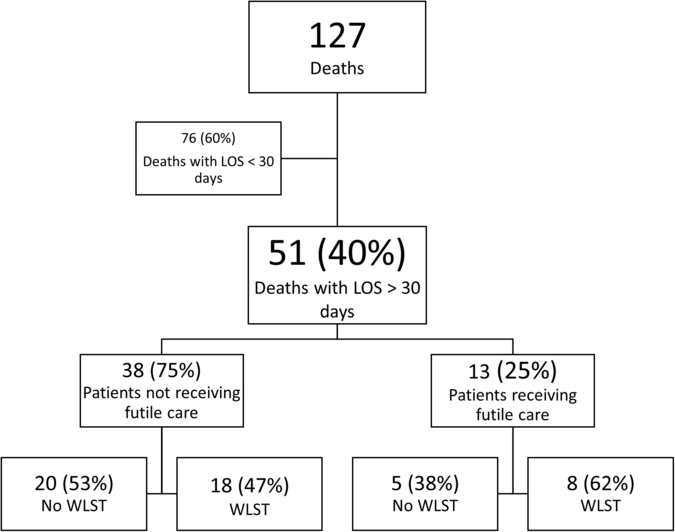
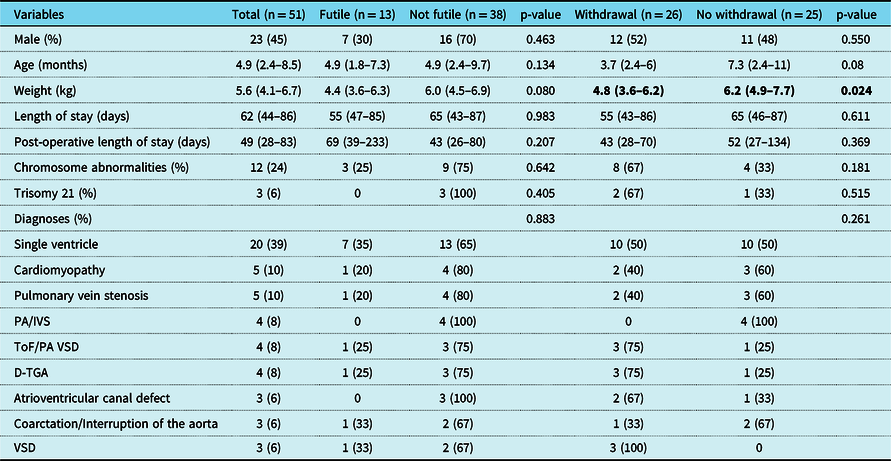
There were 127 deaths during the study period, 51 deaths (40%) with a length of stay over 30 days. There were 23 (45%) male patients. Of the 51 patients, 13 (25%) received futile care, of which 8 ultimately elected withdrawal of life-sustaining treatment at the time of death. There were 38 (75%) patients who did not receive futile care of which 18 elected withdrawal of life-sustaining treatment (Fig 1). There was no association between futility and withdrawal of life-sustaining treatment (p = 0.401). The median age of the 51 patients who died with a length of stay greater than 30 days was 4.9 months (2.4–8.5 months), median weight 5.6 kg (4.1–6.7 kg), and a median length of stay of 62 days (44–86 days; p = 0.983) with no difference amongst patients receiving futile and non-futile care. Patients who underwent withdrawal of life-sustaining treatment were smaller (4.8 kg versus 6.2 kg, p = 0.024). The median post-operative length of stay was 49 days (28–83 days) with no difference amongst patients receiving futile and non-futile care and no difference amongst patients who had withdrawal of life-sustaining treatment versus no withdrawal of life-sustaining treatment. There were 12 patients with chromosome abnormalities of which 3 had trisomy 21 with no association between patients receiving futile versus non-futile care or withdrawal of life-sustaining treatment versus no withdrawal of life-sustaining treatment. There was no association between diagnosis and futility or withdrawal of life-sustaining treatment (Table 1).
Death analysis. Percentages denoted in parentheses. LOS=length of stay; WLST=withdrawal of life-sustaining treatment.

Patient characteristics

Bold indicates statistical significance
Interquartile ranges reported
D-TGA=dextro-transposition of the great arteries; IVS=intact ventricular septum; Kg=kilogram; PA=pulmonary atresia; ToF=tetralogy of Fallot; VSD=ventricular septal defect
Inter-observer agreement analysis
After inclusion and exclusion criteria were applied, patient charts were independently reviewed in the electronic medical record (authors M.P.F. and Z.R.). Charts were reviewed to determine patient futility based on the previously described definition and recorded. Cohen’s kappa analysis to determine inter-observer agreement was performed with bootstrapping to determine 95% confidence intervals. Kappa was 0.849 (95% confidence intervals: 0.68–1) indicating excellent agreement between observers.
Patient procedures
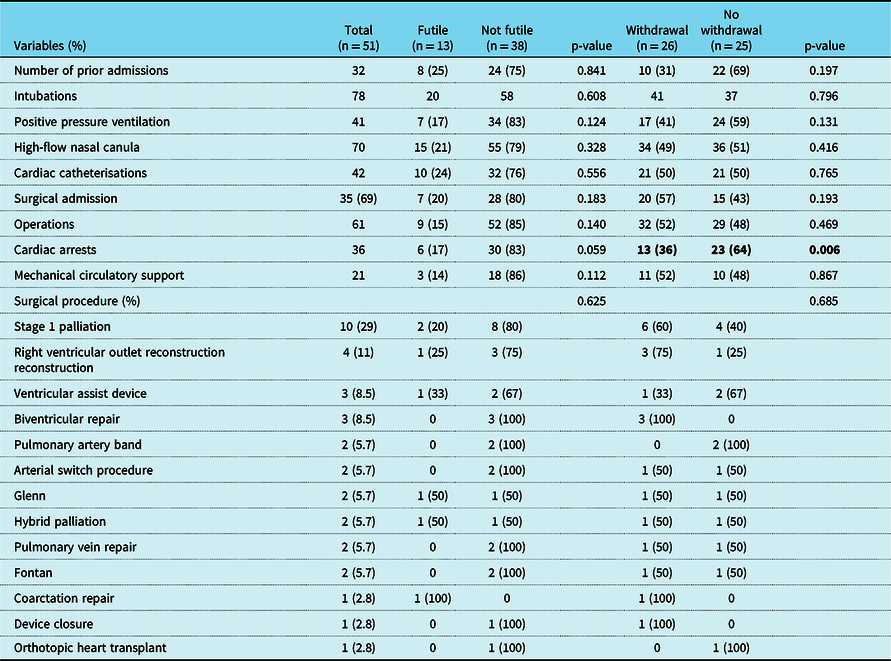
There was no association between surgical procedure and patients receiving futile care or withdrawal of life-sustaining treatment. There were 35 (69%) surgical admissions with no association between futility and diagnosis or surgical procedure. There was no difference in number of prior admissions, intubations, non-invasive respiratory support, number of cardiac catheterisations or operations, or mechanical circulatory support amongst patients receiving futile care and amongst patients who elected withdrawal of life-sustaining treatment. There were more attempted cardiopulmonary resuscitation events in patients who did not elect withdrawal of life-sustaining treatment (23 versus 13, p = 0.006) and no difference amongst patients receiving futile care (Table 2).
Patient diagnoses and procedures

Bold indicates statistical significance
Demographic analysis
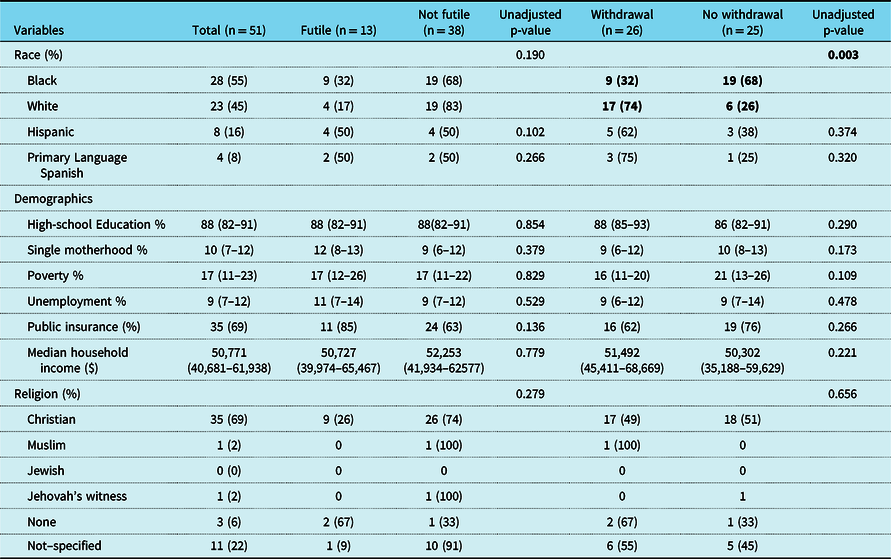
Of the 51 patients, 28 (55%) self-identified as Black and 23 (45%) self-identified as White. There were eight (16%) patients self-identifying as predominantly Hispanic, with two (25%) Black and six (75%) White. Socio-economic analysis based on zone improvement plan code data showed no difference in percentage with greater than a high-school education, single motherhood, percent in poverty, unemployment, public insurance, or median family income between futile care patients and no difference in patients who elected withdrawal of life-sustaining treatment (Table 3). In multivariable analysis, Hispanic families were more likely to continue with futile care (p = 0.044), and Black families were less likely to elect withdrawal of life-sustaining treatment (p = 0.011) (Table 4).
Family demographics

Bold indicates statistical significance. Demographics were based on the ZIP codes of patients. High-school education % reflects the median of high-school graduation rates by ZIP code for the cohort. Single motherhood % reflects the median of the rate of single motherhood by ZIP code for the cohort. Poverty % reflects the median of the percentage living below the national poverty rate by ZIP code for the cohort. Unemployment % reflects the median of unemployment rates by ZIP code for the cohort. Chi-squares and t-tests were used to calculate p-values in unadjusted analyses
ZIP=zone improvement plan
Multivariate logistic regression

Bold indicates statistical significance. Multivariate logistic regression models included the following variables: race, Hispanic, religion, poverty, insurance
CI = confidence interval; OR = odds ratio
Resource use analysis
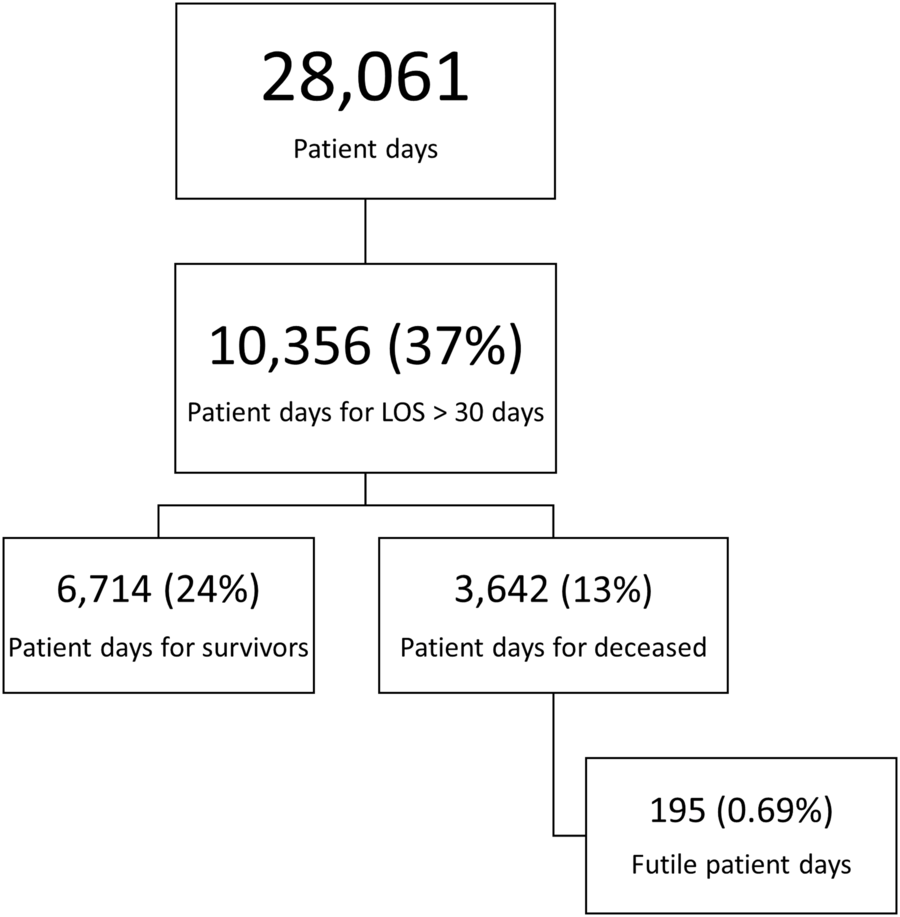
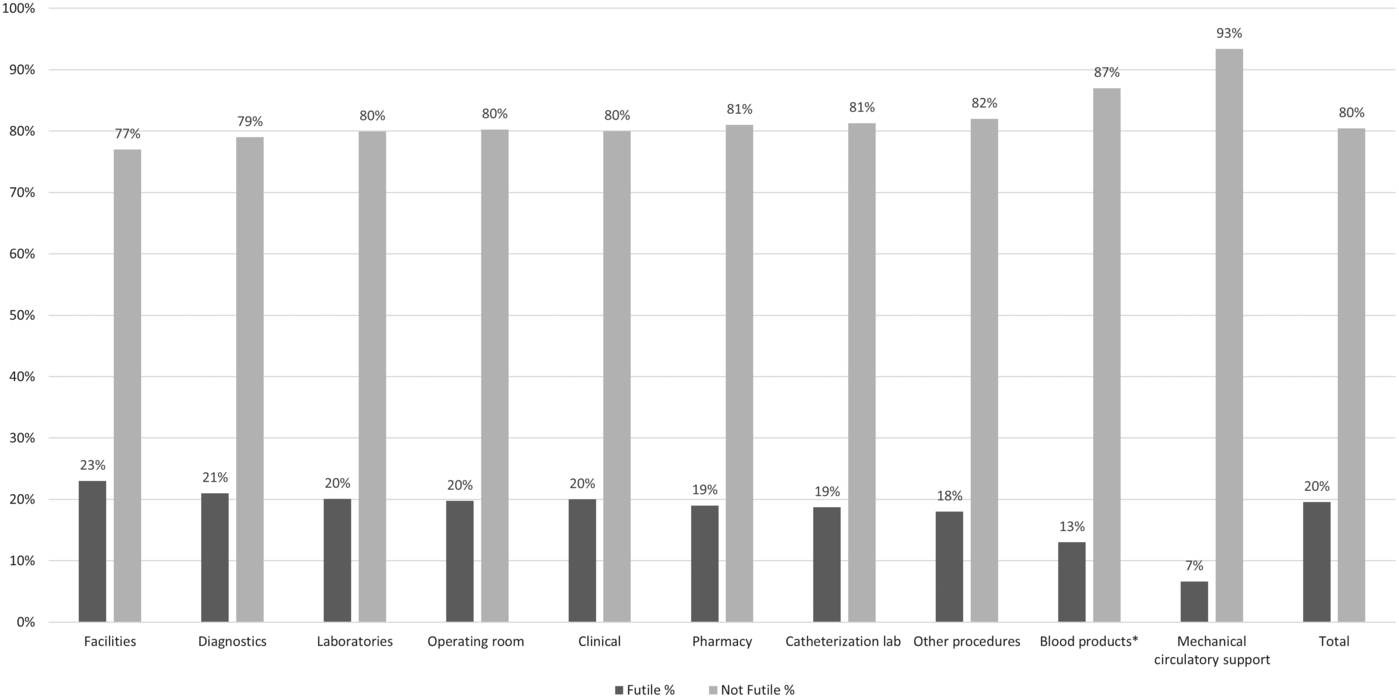
There were 28,061 paediatric cardiac ICU days utilised during the study period of which 10,356 days (37%) were consumed by patients with length of stay over 30 days and 3642 days (13%) consumed by patients who met inclusion criteria. Amongst the patients receiving futile care, total cumulative number of pediatric cardiac ICU days was 866 days (3% of total pediatric cardiac ICU days) of which 195 days (0.7% of total pediatric cardiac ICU days) were considered futile care. There was a median of 9 days of futile care (interquartile range 7–27 days) per patient in the cohort. Futile care days consumed 0.69% of all paediatric cardiac ICU patient days, and 1.9% of consumed days for patients with length of stay over 30 days (Fig 2). There was no difference in median total hospital charges between the 13 patients who received fetal care and the 38 patients who did not. When looking at cost centre charges, patients who received futile care incurred significantly fewer charges for blood products when compared to patients who did not receive futile care (p = 0.022). There were no significant differences in cost centre charges for facilities (p = 0.520), diagnostics (p = 0.234), laboratories (p = 0.190), operating room (p = 0.276), clinical (p = 0.721), pharmacy (p = 0.686), catheterisation lab (p = 0.294), other procedures (p = 0.595), and mechanical circulatory support (p = 0.999). The proportions of total hospital charges and cost centre charges for the 13 patients who received futile care relative to the 38 patients who did not are shown in Fig 3.
Occupancy analysis. Percentage of total patient days denoted in parentheses. LOS=length of stay.

Proportional charges by category between futile and not futile care. *Statistical significance. Adjusted for inflation to 2018.

Discussion
This is the first paper describing ethnic and racial variation surrounding medical futility in the paediatric cardiac ICU. We found that Hispanic families were more likely to continue with futile medical care than non-Hispanic families, and Black families were less likely to have withdrawal of life-sustaining treatment compared to White families. The differences in futility and withdrawal of life-sustaining treatment may be due to factors other than socio-economic. With futile care occurring in up to 10% of deaths in the paediatric cardiac ICU and 25% of deaths in patients with a length of stay over 30 days, futility is an issue with which clinicians will continue to struggle. Cost analysis has shown that patients receiving futile care consume less than 1% of patient bed days with charges in proportion to the study population, roughly 20%. Patients receiving futile care did not appear to consume more resources per day than other patients with a similar length of stay. Patients receiving futile care continued to receive as much diagnostic, therapeutic, procedural, and clinical care as patients not receiving futile care as captured by charges, except for blood product administration.
We addressed the complicated issue of defining futility by incorporating the views of the care team vis-a-vis notes in the electronic medical record. These notes were from physicians, providers, social work, chaplaincy, and family discussions and used to determine if the team felt that care was futile. These discussions described a lack of surgical or medical options, second and third opinions confirming lack of additional meaningful interventions, or documentation of family meetings where families refused withdrawal of life-sustaining treatment in the setting of declared futility. For the purpose of retrospectively collecting data, we began by examining patients who died in the pediatric cardiac ICU. We applied the consensus statement, defining futility as the continuation of medical care with no expectation of physiological benefit to the patient. In further defining futility for this study, we felt that the determination of futility had to last over 48 hours. We chose 48 hours after the declaration of futility for the family to decide to elect withdrawal of life-sustaining treatment to reasonably allow time for preparations and emotional support for impending death.
Our findings of cultural and racial differences in considering continuation of futile care and withdrawal of life-sustaining treatment add to the growing literature around end-of-life discussions in paediatrics. Our findings add to an existing body of evidence demonstrating the families of Black patients are less likely to elect for withdrawal of life-sustaining treatment. Studies have shown Do-Not-Resuscitate orders, and withdrawal of life-sustaining treatment are less accepted by Black and Hispanic patients in the paediatric ICU.Reference Lee, Tieves and Scanlon11,Reference Gupta, Rettiganti and Gossett17 These findings may be attributed to distrust of the medical system by non-White patients due to historic discrimination or cultural barriers. Do-Not-Resuscitate decisions also vary according to geographic region suggesting that cultural and regional differences influence end-of-life decisions.Reference Gupta, Rettiganti and Gossett17
The cost of futile care is small relative to the total charges in this patient population as well as resource utilisation. Patients receiving futile care consumed less than 1% of all patient bed days causing low burden to the system or bed occupancy. Additionally, the relatively few bed days occupied by patients receiving futile care indicates that any opportunity cost suffered by the healthcare system or delays in transfer of other patients is most likely due to other factors, such as patients with longer lengths of stay unable to transfer from the paediatric cardiac ICU. This, however, does not minimise the psychological burden on the staff of caring for these patients which was beyond the scope of this retrospective study but has been shown to be significant in other studies.Reference Mu, Tseng and Wang13 In evaluating charges, patients receiving futile care overall had lower charges than patients not receiving futile care. These findings are most likely due to the limiting of invasive procedures and treatments by the care team, believing that such interventions are unlikely to physiologically benefit the patient. This finding is further supported by the lower charges for blood products by patients receiving futile care. Clinicians may limit the use of scarce resources such as blood products in patients determined to be receiving futile care.
Our study did not find any association between the continuation of futile care and genetic syndromes or the withdrawal of life-sustaining treatment and genetic syndromes. However, studies have found that patients with pre-existing conditions such as neurologic dysfunction or respiratory insufficiency were more likely to have Do-Not-Resuscitate orders.Reference Gupta, Rettiganti and Gossett17 These findings suggest further research should be performed to better understand the needs of families with children with genetic syndromes.
Our study found the median duration of “futile” care was 9 days (interquartile range ~1–3 weeks) and families are likely to interact with multiple caregivers during this time. These caregivers bring their unique experience, identify and culture to the conversation but do not seem to alter their decision to continue with futile care. These findings may reflect a larger framework of personal, social, historical, political, and cultural influences that require a robust multidisciplinary approach with families. As a way forward, when discussing end-of-life matters with these families, the approach should include psychosocial support as well as consideration to cultural differences and norms.
Limitations
This study is a retrospective study and has the typical limitations of such studies. The difficulties of defining and capturing futility retrospectively was limitations of this study. This was dependent on documentation in the electronic medical record, and at times, interpretation of the perception of futility. We addressed this through independent chart review, and by applying the definition of futility as outlined by the Society of Critical Care Medicine ethics committee, and reviewing the methodology of other paediatric studies evaluating futile care in ICU environments.Reference Kon, Shepard and Sederstrom2,Reference Vemuri and Playfor5,Reference Goh and Mok6,Reference Sachdeva, Jefferson, Coss-Bu and Brody14 Additionally, patients with a length of stay less than 30 days could also have received futile care but were not included. Resource utilisation analysis was limited by its reliance on charges rather than cost. Charges, however, are a relative indicator of resource utilisation which allow for comparative analysis between groups. A comprehensive definition of patient demographic information was restricted to a broad and generalised self-identification of limited racial and ethnic groups, which does not capture the complexities of religious, linguistic, cultural nuances which may influence end-of-life decision-making. Socio-economic factors were limited by the reliance on census rather than data specific to the family. This may limit generalisability given the unique socio-economic and geographic make-up of the cohort. The difference in blood product charges between futile and non-futile is likely more nuanced. The decision to transfuse blood takes into account various components of optimised oxygen delivery such as heart rate and rhythm, preload, contractility, afterload, all of which were not reviewed in this study but may have be different between the cohorts. This may imply differences in treating physiology rather than practice variation.
Conclusions
In the paediatric cardiac ICU, families of Black patients are less likely to elect withdrawal of life-sustaining treatment compared to families of White patients, and Hispanic families were more likely to continue with futile care. These decisions were not related to other socio-economic factors such as income or education. Futile care occurred in up to 10% of patients who died in the paediatric cardiac ICU and 25% of deaths in patients with a length of stay over 30 days. Futile care, however, had little impact on bed and resource utilisation. Clinicians may attempt to restrict the use of scarce resources when caring for patients receiving futile care, lowering the economic and societal burden. Further studies should focus on addressing cultural gaps in discussing end-of-life care with the families of these patients.
Acknowledgements
None.
Financial support
This research received no specific grant from any funding agency, commercial or not-for-profit sectors.
Conflicts of interest
None.