Introduction
Given the rising prevalence of obesity globally (Reilly, El-Hamdouchi, Diouf, Monyeki, & Somda, Reference Reilly, El-Hamdouchi, Diouf, Monyeki and Somda2018), there is a need for novel and effective weight management interventions. Significant inter-participant variability in response to behavioural interventions has led to a growing interest in the idea of personalised approaches tailored to individuals’ needs (Stubbs et al., Reference Stubbs, Whybrow, Teixeira, Blundell, Lawton, Westenhoefer and Raats2011). Tailoring capitalises on people's desire to receive personalised advice and is perceived as more relevant than generic communications (Kreuter, Strecher, & Glassman, Reference Kreuter, Strecher and Glassman1999). Furthermore, research suggests that tailoring can enhance the impact of health-promoting messages (Eyles & Mhurchu, Reference Eyles and Mhurchu2009; Flores Mateo, Granado-Font, Ferré-Grau, & Montaña-Carreras, Reference Flores Mateo, Granado-Font, Ferré-Grau and Montaña-Carreras2015).
Personalised advice is the most used approach in weight management by nutrition professionals, and different studies to date have explored tailoring within the weight management setting, although effect sizes have been small as eHealth interventions (Ryan, Dockray, & Linehan, Reference Ryan, Dockray and Linehan2019). However, qualitative research suggests that personal tailoring of weight management information, alongside feedback regarding genetic risk of obesity, is viewed as beneficial among adults affected by overweight and obesity (Meisel, Walker, & Wardle, Reference Meisel, Walker and Wardle2012). Furthermore, one study, which tailored university students’ (aged 18–30) weight management advice according to their genetic risk of obesity, found this approach appeared to enhance motivation for weight management (Meisel, Beeken, van Jaarsveld, & Wardle, Reference Meisel, Beeken, van Jaarsveld and Wardle2015).
Alternative targets for personalised interventions, that avoid the cost associated with genetic testing, are appetitive traits. According to the ‘Behavioural Susceptibility Theory’ (BST) of obesity (Carnell & Wardle, Reference Carnell and Wardle2008; Llewellyn & Fildes, Reference Llewellyn and Fildes2017; Llewellyn & Wardle, Reference Llewellyn and Wardle2015), an individual's genetic risk of obesity influences weight via appetite. An individual's genetically driven appetitive traits are thought to interact with the current obesogenic environment to promote weight gain (Llewellyn & Wardle, Reference Llewellyn and Wardle2015). Psychometrically measured appetitive traits have been associated with child body weight in numerous studies using the ‘Child Eating Behaviour Questionnaire’ (CEBQ) (Kininmonth, Fildes, Smith, Carnell, & Llewellyn, Reference Kininmonth, Fildes, Smith, Carnell and Llewellyn2021). Recently, these associations have been similarly demonstrated in adults using the ‘Adult Eating Behaviour Questionnaire’ (AEBQ) (Hunot et al., Reference Hunot, Fildes, Croker, Llewellyn, Wardle and Beeken2016; Hunot-Alexander, Reference Hunot-Alexander, Arellano-Gómez, Smith, Kaufer-Horwitz, Vasquez-Garibay, Romero-Velarde and Beeken2021; Jacobs, Reference Jacob, Tremblay, Fildes, Llewellyn, Beeken, Panahi, Provencher and Drapeau2021). Based on these associations, someone who scores highly for one or more ‘food approach’ traits such as Food Responsiveness (measures interest in food and drive to eat) may be at an increased risk of weight gain and find it more difficult to manage their weight because of these traits. Similarly, low scores for ‘food avoidance’ traits, such as Satiety Responsiveness (measures an individual's sensitivity to feeling full), may also highlight behaviours that contribute to an individual's weight. Providing tailored advice and strategies targeted at managing an individual's personal appetitive trait profile could be an effective approach for weight management (Boutelle, Manzano, & Eichen, Reference Boutelle, Manzano and Eichen2020).
This study aimed to develop a brief ‘Appetitive Trait Tailored Intervention’ (ATTI) and carry out acceptability testing with a small group of target users. This study falls under the development phase of the Medical Research Council (MRC) framework for developing and evaluating complex interventions (Craig et al., Reference Craig, Dieppe, Macintyre, Michie, Nazareth and Petticrew2008). It explores the acceptability of the intervention and does not aim to demonstrate effectiveness.
Methods
The Appetitive Trait Tailored Intervention
The development of the ATTI was guided by the Six Steps for Quality Intervention Development (6SQuID; Wight, Wimbush, Jepson, & Doi, Reference Wight, Wimbush, Jepson and Doi2015). Four of the eight appetitive traits measured by the AEBQ were considered potentially modifiable through behavioural or cognitive changes: high Food Responsiveness or an increased tendency to overeat in the presence, sight, or smell of food; high Emotional Over-Eating or greater tendency to eat more during negative emotional states; low Satiety Responsiveness or a low person's fullness threshold; and ‘fast eating’ as the inverse of Slowness in Eating or a fast pace at which an individual consumes their food (i.e. low scores on Slowness in Eating). The presence of these four traits in the directions stated have previously been associated with increased weight (Hunot, Fildes, Croker, Johnson, & Beeken, Reference Hunot, Fildes, Croker, Johnson and Beeken2016; Hunot-Alexander et al., Reference Hunot-Alexander, Arellano-Gómez, Smith, Kaufer-Horwitz, Vasquez-Garibay, Romero-Velarde and Beeken2021; Mallan et al., Reference Mallan, Fildes, de la Piedad Garcia, Drzezdzon, Sampson and Llewellyn2017).
The intervention was designed to: (1) provide participants with their scores for these traits and (2) give participants tips to help manage these. Tips for managing adverse traits were based on established behaviour change techniques (Michie, Atkins, & West, Reference Michie, Atkins and West2014) and modified Cognitive Behavioural Therapy (Wardle et al., Reference Wardle, Liao, Rapoport, Hillsdon, Croker and Edwards2001). Relevant tips were contained in a leaflet that also included information on the importance of achieving and maintaining a healthy weight and how appetitive traits may play a role in weight gain. Advice on goal setting, self-monitoring, and social support was also provided, as these have previously been identified as techniques likely to be effective for changing dietary behaviours (Rigby, Mitchell, Hamilton & Williams, Reference Rigby, Mitchell, Hamilton and Williams2020 ). The ATTI leaflet is provided in Supplementary material 1.
Acceptability Testing
Participants and procedure
Participants were recruited from an online panel of individuals with first-hand experience of excess weight (Weight Concern, 2016). To be eligible to participate, individuals had to be ≥18 years of age and have a body mass index (BMI) of ≥25. All members of the panel were invited to take part via an e-mail advert for the study. Eligible participants provided informed consent via e-mail.
Consenting participants were e-mailed a tailored version of the ATTI leaflet which included their personalised appetitive trait profile and corresponding tips (Supplementary material 1). They were sent weekly e-mail reminders to continue following the tips for a period of 8 weeks. Ethical approval was obtained from the UCL Research Ethics Committee.
Measures
Demographic information was collected including gender, age, marital status, ethnicity, educational level, current employment status, and current living arrangement. Weight and height were self-reported at the start of the intervention and at the end of the 8-week period via e-mail. These measurements were used to calculate the BMI.
Participants completed the AEBQ at baseline, and responses were used to identify high Food Responsiveness, high Emotional Over-Eating, low Satiety Responsiveness, and low Slowness in Eating (fast eating). The AEBQ is a 35-item questionnaire, with five response options that range from ‘strongly disagree’ (1) to ‘strongly agree’ (5). Mean scores were calculated for each subscale: Food Responsiveness (4 items), Emotional Over-Eating (5 items), Satiety Responsiveness (4 items), and Slowness in Eating (4 items). Individuals were classified as having ‘high’ scores for the ‘food approach’ traits (Food Responsiveness and Emotional Over-Eating) if their mean score for each trait was greater than three (‘high’). They were classified as having a ‘low’ score for ‘food avoidance’ traits (Satiety Responsiveness and Slowness in Eating) if their mean score for each trait was less than three (‘low’). A score of three would not be classified as either high or low. Supplementary material 2 shows the number of tips given to each participant.
Participants were e-mailed a weekly follow-up questionnaire (WFQ) alongside their weekly reminders which asked if they were following the tips, as well as their perceived helpfulness and barriers to using the tips.
Analyses
Descriptive statistics were calculated for the demographic and anthropometric characteristics of participants. Responses to the WFQs were used to calculate the proportion of participants who followed the tips and/or set goals, the perceived helpfulness of the tips, and barriers to compliance. Where respondents returned more than one WFQ, their modal responses were used. For those participants who provided weight data at baseline and follow-up, the weight change was assessed using a paired samples t-test. Cross-tabulations with Fisher's exact test were used to explore participants’ weight loss categories by the number of WFQ responses they replied to, due to the small size of the sample (Field, Reference Field2013). All statistical analyses were performed using IBM SPSS Statistics, version 24.
Qualitative Interviews
Semi-structured interviews via phone were carried out to explore participants’ experiences of the ATTI, in greater depth, by C.H.A., a female PhD student at the time of the data collection with interview experience. No relationship between the interviewer and interviewee was established prior to the interview. C.H.A. presented herself as a researcher with an interest in the topic of weight management. Participants were selected by convenience sampling until saturation was reached and carried out at the interviewees home. No one but the interviewer and interviewee were present for the sake of anonymity. The interview topic guide was developed to include a series of open-ended questions and was piloted with two individuals. Interviews were recorded, transcribed, and analysed using thematic analysis (Braun & Clarke, Reference Braun and Clarke2006). All transcripts were imported into NVivo (Edwards-Jones, Reference Edwards-Jones2014), and a coding framework was developed using five interviews to provide examples of the generated codes. All transcripts were then coded by selecting the text which captured the intended context derived from the data by C.H.A., R.J.B., and A.F.; inter-rater reliability was deemed acceptable (κ > 0.7). Discrepancies were resolved by discussion between raters. Codes were grouped into themes that related to the experience of the intervention. Participants did not provide feedback on the findings. The ConsOlidated Criteria for REporting Qualitative Research (COREQ) checklist was followed throughout (Tong, Sainsbury, & Craig, Reference Tong, Sainsbury and Craig2007) (Supplementary material 3).
Results
Sociodemographic Characteristics of Participants
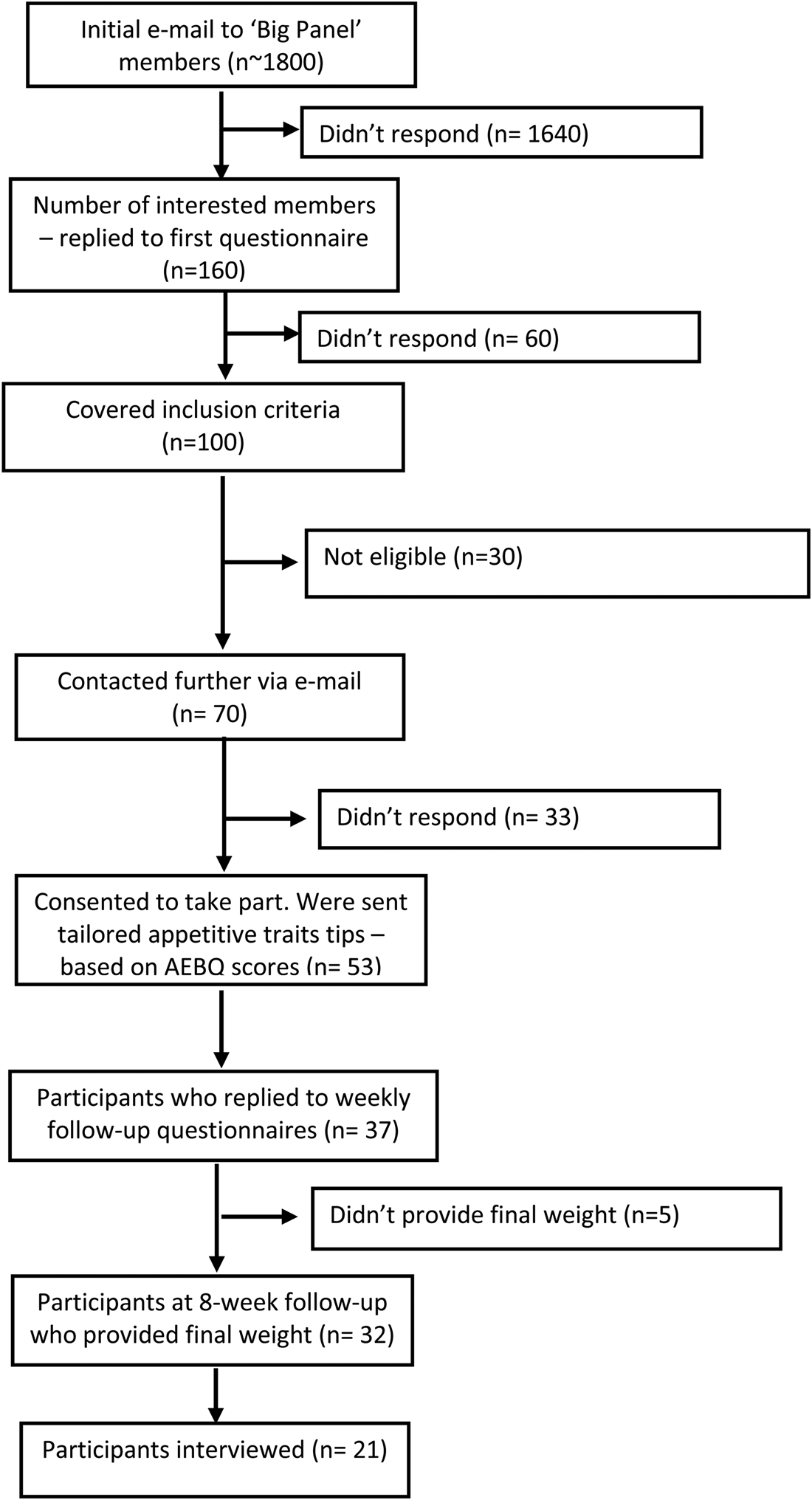
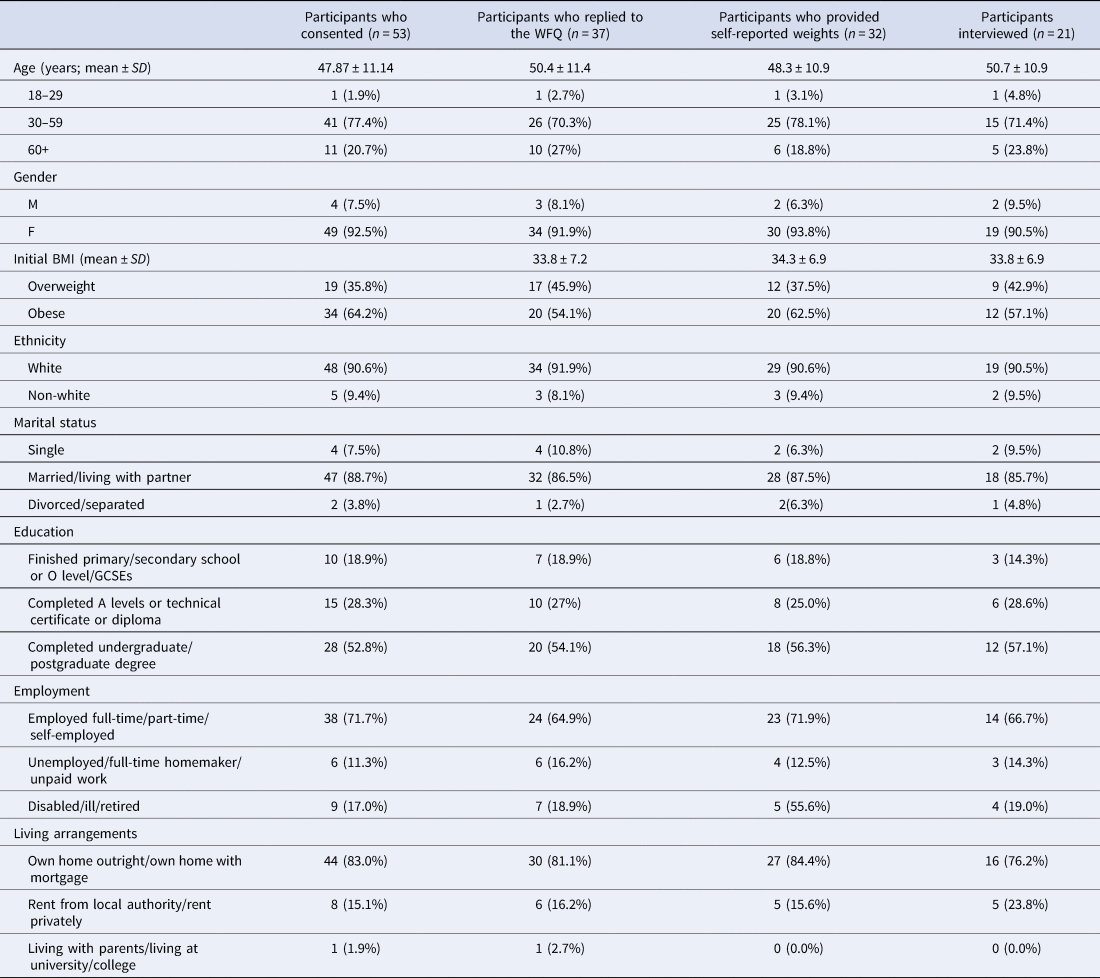
Initially, 53 participants were sent the tips and consented to take part in the study, and 37 participants completed follow-up questionnaires (Figure 1). The majority were women (34 [91.9%]) and of white ethnicity (34 [91.9%]). Participants were aged between 27 and 76 years old (mean ± SD: 50.4 ± 11.4) and had an initial BMI of 25.3–51.2 (mean ± SD: 33.8 ± 7.2). Thirty-two provided their self-reported weight at baseline and follow-up, and 21 agreed to take part in semi-structured telephone interviews (Table 1).
Flow chart of participants of the ATTI.

Sociodemographic Characteristics of Participants Who Took Part in the ATTI Study

Note: WFQ = weekly follow-up questionnaires.
Weekly Follow-up Questionnaires
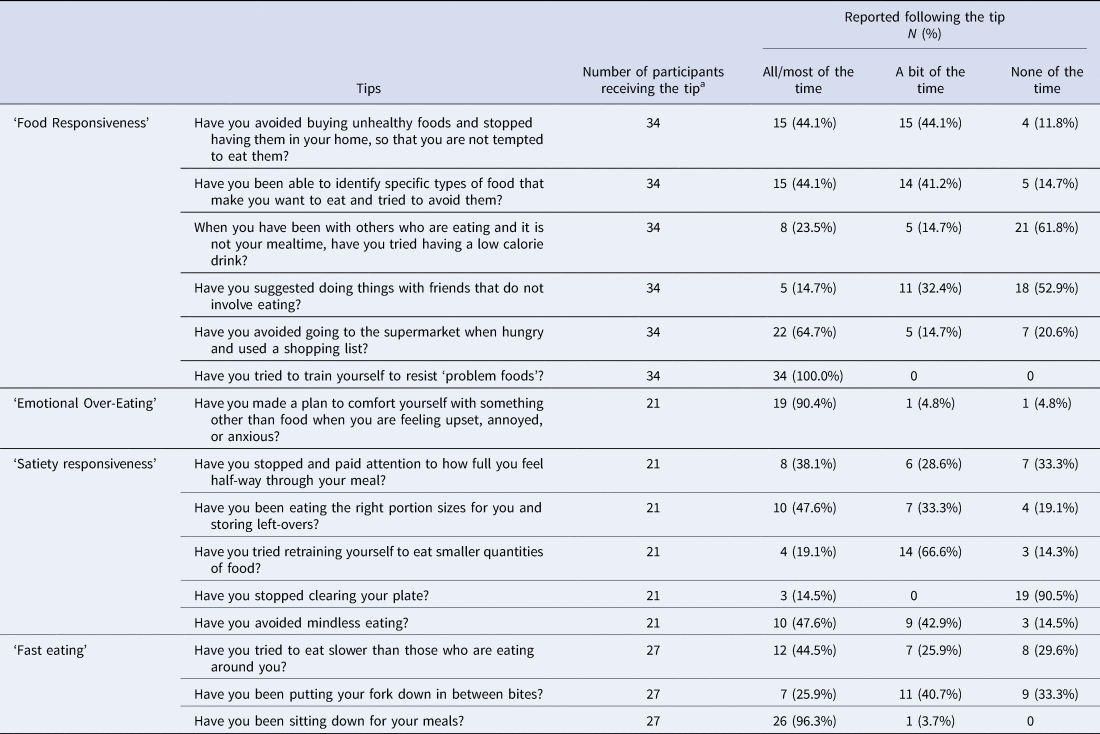
Modal responses to the WFQ are described in Table 2. Participants reported that they followed the Food Responsiveness tips all/most of the time. In particular, all participants reported trying to train themselves to resists ‘problem foods’, but others were not used at all by most participants. The Emotional Over-Eating, Satiety Responsiveness, and Fast Eating tips were followed all/most of the time by most participants that received them, with the exception of ‘putting your fork down in between bites’ which was followed a bit of the time.
Number of Participants That Reported Following Each Tip

a Out of a total N of 37.
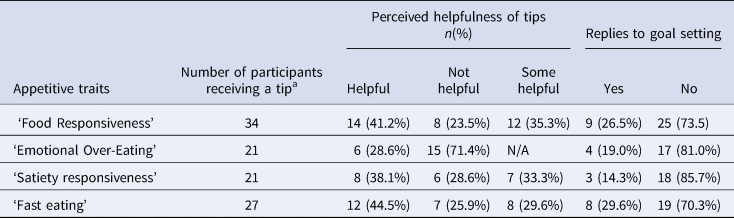
The majority of participants also reported that while most of the tips for each trait were helpful, the Emotional Over-Eating tip was not (Table 3). Most participants did not set themselves any goals.
Perceived Helpfulness of the Tips and Goal Setting

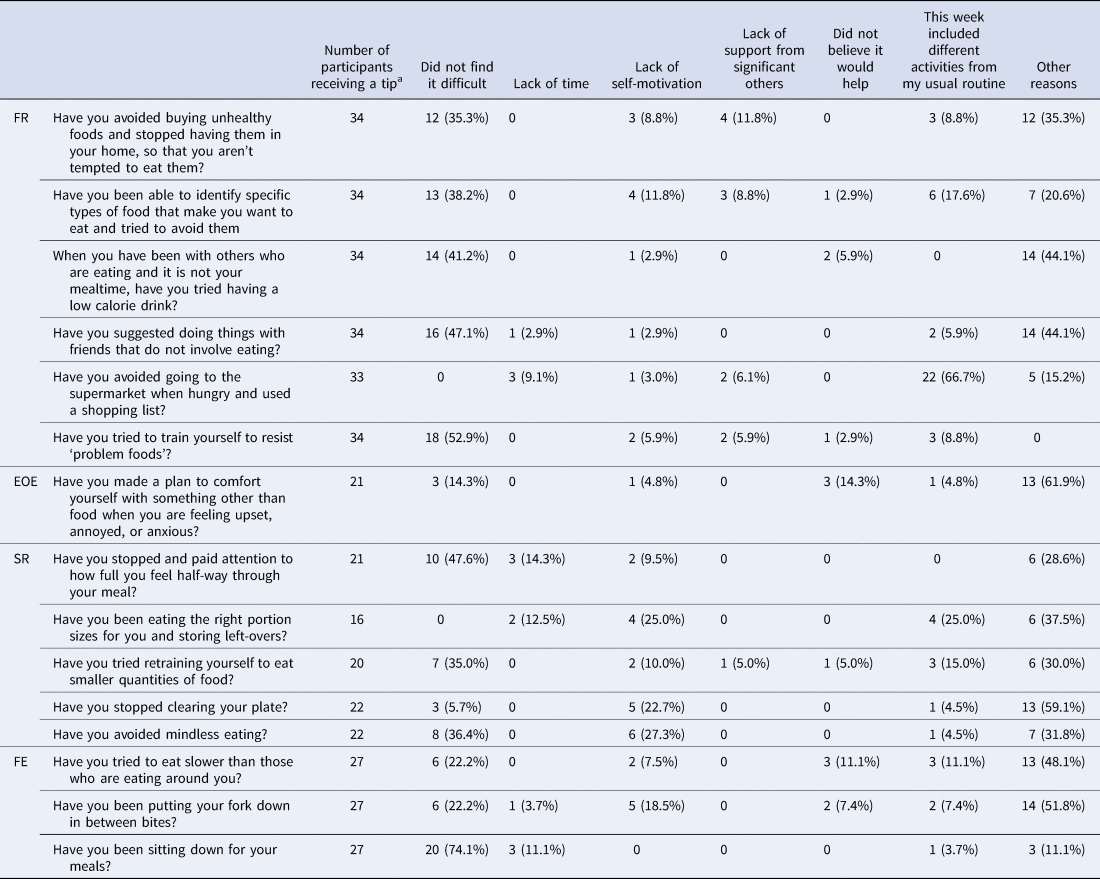
Participants reported a variety of barriers to following the tips (Table 4), including existing habits and forgetfulness.
Barriers to Following Appetitive Trait Tips

Note: FR = Food Responsiveness; EOE = Emotional Over-Eating; FE = Fast Eating; SR = Satiety Responsiveness.
Reported Weight Changes and Engagement
A total of 32 participants provided their final weight. Engagement was set as those participants who completed more than 5 weeks of the WFQ, even if they did not provide their final weight.
Participants reported weight reduced pre- to post-intervention with an overall mean weight loss of −1.2 kg (SD 0.44). Approximately two-thirds of the participants lost weight (20/32; 62.5%), six participants (18.8%) stayed the same weight, and six (18.8%) gained weight. Among those who lost weight, six (30.0%) lost between 5 and 10% and four (20.0%) lost more than 10% of their initial weight (Supplementary material 4).
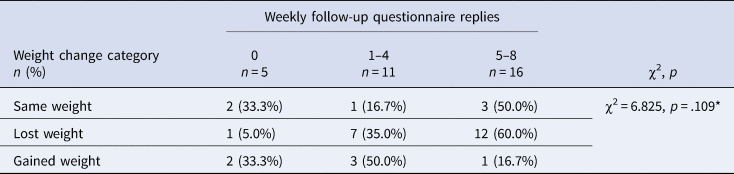
No significant changes were seen in the number of replies to the WFQ by weight change category (χ2 = 6.825, p = .109) (Table 5).
Number of Replies to Weekly Follow-up Questionnaires by Weight Change Category (n = 32)

* Fisher's exact test.
Qualitative Experiences of the ATTI
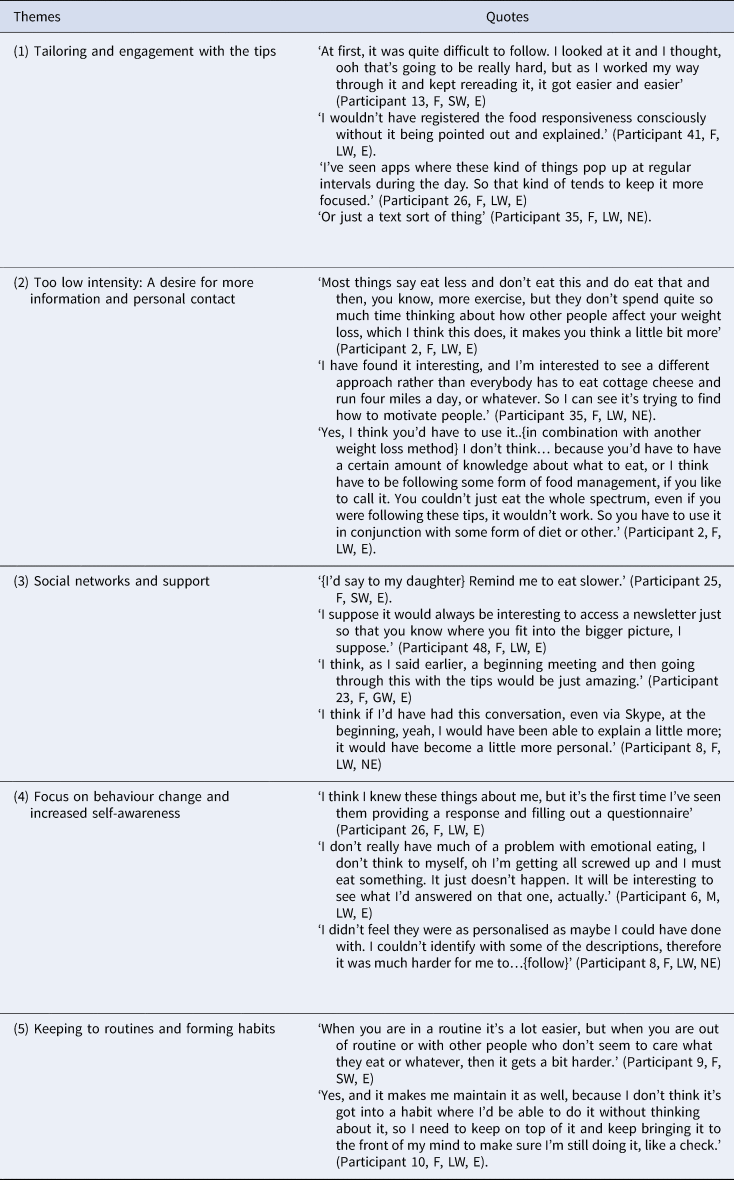
Of those interviewed (n = 21) until saturation was reached, two participants reported following the tips for a short period of time (approximately 2 weeks overall), but still liked the intervention, though they did not relate to the tips. Two participants did not like the intervention but followed it for 4 weeks. One participant did not follow the tips because she was ‘not ready’. These five participants were classified as ‘non-engaged’ participants, and their views are expressed in the results. The remaining participants reported liking and following the intervention between 5 and 8 weeks and were classified as ‘engaged’. Interviews lasted between 20 and 48 min. Data were consistent with the findings. Five main themes emerged from the qualitative data. Quotes for each theme are provided in Table 6 and are discussed below.
Themes and Quotes From Participant's Experiences of the ATTI

Note: F = female; M = male; LW = lost weight; SW = same weight; GW = gained weight; E = engaged; NE = non-engaged.
Tailoring and engagement with the tips
The fact that the tips were personalised was considered novel and one of the key strengths of the intervention. Personalisation motivated engaged participants to follow the tips. However, some did not identify with the traits, which led to disengagement.
Engaged participants found the tips clear, simple, and easy to understand, and reported that this helped adherence. Delivery of the tips via e-mail was seen as a facilitator to initial engagement because it required minimal time and fitted easily into their lives. However, receiving daily tips or reminders via text or within an app were suggested to promote engagement long term. Engaged participants relied on the weekly reminders and the WFQ to keep them motivated.
Low intensity: a desire for more information and personal contact
Some non-engaged participants described feeling bored with having to try another weight loss intervention. One participant felt that the tips were more for weight maintenance than weight loss, too low intensity and easy to forget. Some felt that the tips were not focused enough and that specific tips to follow each week would be better than trying to follow multiple tips simultaneously. One participant mentioned that it would be of greater use in combination with another weight loss method. Participants mentioned that personal contact could facilitate adherence, while counteracting feelings of loneliness and isolation experienced when trying to lose weight. Professional support and personal contact would have been particularly beneficial at the beginning of the intervention.
Social networks and support
Engaged participants mentioned a need for support from their family and friends to help them make changes. Advice about building a support network to encourage adherence could become part of the intervention. Access to a newsletter and support through online forums were proposed as means of creating a weight management community that could provide a space to discuss personal issues by both engaged and non-engaged participants.
Keeping to routines and forming habits
Keeping to routines helped engaged participants to follow the tips. Participants either adapted the tips or suggested how the tips could be improved to fit them into their routines and increase their chances of success. Unscheduled or unplanned events disrupted routine and became a barrier to success in engaged participants. Non-engaged participants mentioned going away on holiday or going out at the weekend as key barriers to engagement. Pre-existing ‘bad’ habits, for example stopping to buy sweets or chocolates at a local garage before work, were also a barrier to adherence.
Focus on behaviour change and increased self-awareness
Engaged participants described how the intervention motivated them to make changes to their dietary and physical activity behaviours. The tips helped them to become more aware of their own behaviours and traits, and this increased their self-efficacy for making changes. Those who engaged appreciated the focus on possible drivers of their eating behaviours, as opposed to simply being asked to change these behaviours. Participants who lost weight were motivated by this.
Specific tips emerged as being particularly difficult to follow, even for engaged participants. The Satiety Responsiveness tip on not clearing the plate or eating smaller quantities was difficult because some felt that they were already careful to eat very little or about the right amount. Perceptions about wasting food also contributed to difficulties in following this tip, although some did achieve changes related to this behaviour. One of the most difficult tips to follow in the Slowness in Eating category was the advice to put their fork down between bites. Participants complained that this behaviour led to their food getting cold. All participants felt that the Emotional Over-Eating tip did not contain enough information. Participants criticised the inclusion of a single tip related to Emotional Over-Eating and suggested having more tips to help with this trait. Most participants did not set goals, either because they had previously set goals which they were working towards or because they felt that these did not work. Some just set themselves an initial goal to keep following the tips without writing anything down.
Discussion
This study presents promising results from the acceptability testing of a novel, brief intervention that tailored weight loss tips to individuals’ appetitive trait scores. Most participants followed at least some of the tips for 8 weeks and found them to be helpful. Of those who provided their final weight, the majority lost weight, and just over a quarter lost more than 5% of their initial body weight, demonstrating the proof of concept. Participants also provided useful feedback on the experience of the intervention to inform refinements to both the tips and mode of delivery.
The ATTI is the first intervention to tailor weight management advice on appetitive traits based on scores from AEBQ responses. Participants were positive about the individualised tailoring of the ATTI. This is in line with results from other qualitative studies, which suggest that adapting weight loss interventions to participants’ differing characteristics is likely to improve outcomes (Stead et al., Reference Stead, Craigie, Macleod, McKell, Caswell, Steele and Anderson2015). Participants felt that this tailoring allowed them to focus on their own behaviours and increased their self-awareness. However, some participants felt that the intervention needed to be more intensive and could be more suitable as a follow-up intervention to usual care or personal contact intervention. Consistent with this was a desire for increased interaction with a health professional. Personal contact with a health professional is known to increase weight loss success, and previous qualitative studies have shown that having some form of personal contact can help individuals to make healthier choices (Jebb et al., Reference Jebb, Ahern, Olson, Aston, Holzapfel, Stoll and Caterson2011; Metzgar, Preston, Miller, & Nickols-Richardson, Reference Metzgar, Preston, Miller and Nickols-Richardson2014). Personal contact also provides a form of accountability which is known to increase motivation (Stead et al., Reference Stead, Craigie, Macleod, McKell, Caswell, Steele and Anderson2015). However, this would also increase the resources required for implementation and change the intervention's status as a self-help weight loss treatment. Participants reported social networks as both facilitators and barriers to adherence to the tips. Significant evidence exists for social support in the form of friends, family members, or co-workers as an essential element of weight loss and weight management programs (Rigby, Reference Rigby, Mitchell, Hamilton and Williams2020 ). Overall, people who are more susceptible to eating in the presence of others might experience this barrier more often. The development of an app, and a website with appetitive trait information, as well as an online forum, could improve the support received by participants and may create a sense of accountability without the need for health professional involvement.
Keeping to routines was an additional important facilitator of adherence to the intervention. When tips did not fit into their daily lives, engaged participants made adaptations to incorporate them. Encouraging participants to find ways to integrate the tips into existing routines fits with habit formation theory where repetition in a consistent context helps behaviours to become automatic (Gardner, Lally, & Wardle, Reference Gardner, Lally and Wardle2012). More explicit advice around habit formation within the ATTI could be included in future iterations.
In terms of the specific tips recommended to participants, two of the Food Responsiveness tips and the Emotional Eating tip were reported to be difficult to follow and need to be refined and improved. The intervention would also benefit from the inclusion of additional tips on Emotional Over-Eating, and the concept of changing emotions and negative thoughts around food could be incorporated (Wardle et al., Reference Wardle, Liao, Rapoport, Hillsdon, Croker, Edwards, Wardle, Chadwick, Chipperfield, Croker, Gokool, Liao and Blanckenberg2013). Participants reported not setting any goals for themselves, even though goal setting and self-monitoring are among the most commonly recommended strategies in self-help studies (Hartmann-Boyce, Jebb, Fletcher, & Aveyard, Reference Hartmann-Boyce, Jebb, Fletcher and Aveyard2015; Hartmann-Boyce, Aveyard, Koshiaris & Jebb, 2016; Rigby, Reference Rigby, Mitchell, Hamilton and Williams2020). The inclusion of an initial appointment or telephone call to take participants through the intervention could support participants with this aspect.
A number of limitations are present in this study. The small sample consisting of mainly white women obtained from the Big Panel suggests that caution should be applied when generalising these findings, and further work is needed with more diverse samples. Recruitment from primary care settings or the general population may result in a more representative sample, allowing better generalisation to the wider population, and potentially higher response rates. Participants were not asked if they were engaged in other concurrent weight loss programs. Therefore, this may have confounded any resultant weight loss and/or affected responses to the WFQ. Suggestions were made that the ATTI would be of greater use in combination with dietary advice. Most of the feedback on the ATTI was from engaged participants. Attempts to contact individuals who did not provide a follow-up weight, or reported not following the tips at all, were largely unsuccessful. Better insights might have been gained into barriers to adherence from those who did not complete the intervention.
Conclusions
Overall, this intervention development study suggests that the ATTI could be an acceptable approach to weight management that engages participants through providing them with tailored advice based on their appetitive traits. Further work is required to make definitive recommendations about the use of appetitive traits in weight management, including the refinement of the ATTI tips, reconsidering the mode of delivery, and formally testing the effectiveness of this approach in different settings. Future iterations of the ATTI could pave the way for a novel, personalised approach to weight management with the potential for broad reach.
Supplementary material
The supplementary material for this article can be found at https://doi.org/10.1017/bec.2021.22.
Authors’ contributions
H.C. and C.H.A. contacted the members of the panel, and C.H.A. conducted the intervention and final in-depth interviews. All authors contributed to the interpretation of the data as well as to the manuscript preparation. C.H.A., H.C., A.F., and R.J.B. contributed to the design of the study. R.J.B. supervised the coordination of the study. C.H.A. drafted the initial manuscript. All authors read and approved the final manuscript.
Acknowledgements
We would like to thank the charity Weight Concern for assisting with recruitment to the study via their established panel of people affected by overweight and obesity.
Funding
C.H.A. was funded by the Programa para el Desarrollo Profesional Docente (PRODEP) — Secretaría de Educación Pública (SEP) – Mexico. R.J.B. is supported by Yorkshire Cancer Research University Academic Funding.
Declaration of interest
The authors declare that they have no competing interests.
Ethics approval and consent to participate
Ethical approval (4378/003) was granted by the University College London Research Ethics Committee.
Consent was obtained from all participants.
Availability of data and material
The datasets used and/or analysed during the current study are available from the corresponding author upon reasonable request.