Introduction
Insulin-like growth factor 1 receptor (IGF1R) is a cell surface receptor, belonging to the tyrosine kinase receptor superfamily. It has been shown that the normal secretion of hormones such as mammalian insulin, IGF1 and IGF2 is essential to safeguard growth and development, whereas their counterpart IGF1R and other cell membrane surface receptors play key regulatory roles. Insulin-like growth factor (IGF) is essential for normal foetal and postnatal growth and development. Silencing of the mouse IGF1 gene results in embryonic development deficiency, manifested by dwarfism at birth, postnatal growth impairment and infertility (Baker et al., Reference Baker, Liu, Robertson and Efstratiadis1993; Liu et al., Reference Liu, Baker, Perkins, Robertson and Efstratiadis1993). Functional inactivation of the IGF2 gene also impairs embryonic growth but has relatively little effect on postnatal growth (DeChiara et al., Reference DeChiara, Efstratiadis and Robertsen1990). IGF1R binds IGF1 with high affinity and initiates physiological responses in vivo (LeRoith et al., Reference LeRoith, Werner, BeitnerJohnson and Roberts1995). In endocrinology, the signal transmitted by IGF1R can understand the effect on somatic cell growth (Isaksson et al., Reference Isaksson, Lindahl, Nilsson and Isgaard1987). Moreover, IGF1 was found to potently disarm cells such as neuronal cells, hematopoietic cells and fibroblasts from programmed cell death (Gluckman et al., Reference Gluckman, Klempt, Jian, Mallard and Nikolics1992; Rodriguez-Tarduchy et al., Reference Rodriguez-Tarduchy, Collins, García and LópezRivas1992; Harrington et al., Reference Harrington, Bennett, Fanidi and Evan1994). Silencing the expression of IGF1R under serum-rich conditions significantly impaired cell cycle progression of fibroblasts, preventing their entry into S phase under the presence of mitogenic growth factors. The establishment of IGF1R knockout mice into fibroblast lines is resistant to the transformational carcinogenic of a variety of viruses and cancer cells (Sell et al., Reference Sell, Dumenil, Deveaud, Miura, Coppola, Deangelis, Rubin, Efstratiadis and Baserga1994). These results reveal that the IGF1R axis has a role not only in normal cell development but also in malignant transformation (Valentinis, Reference Valentinis1997). At present, IGF1R has become a candidate therapeutic target for the treatment of human cancer.
With the emergence of sequencing technology, the third generation of genetic markers were found out, which usually have two alleles including single nucleotide polymorphism (SNP) and insertion/deletion (indel), also known as biallelic genetic markers (Sheng et al., Reference Sheng, Bao, Zhang, Li and Li2018). Indel refers to the insertion or deletion of a certain number of DNA sequences in the genome. Indel genetic marker is numerous and has the characteristics of STR and SNP genetic markers, the distribution density of which is second only to SNP. In addition, indel is more distributed in autosomes than sex chromosomes and characterized by uneven distribution (Sjödin et al., Reference Sjödin, Bataillon and Schierup2010). Indel markers have been widely used in molecular breeding and medicine due to their wide distribution and simple typing.
Indels are widespread in the genomes of various organisms, with large numbers of indels initially discovered in humans v. agricultural crops. It has begun to be applied in molecular breeding for livestock production in recent years. Studies have shown that indel mutations play important roles for animal economic traits. A 5-bp insertion mutation in goat MSTN gene is proven to be significantly associated with the body height, height at hip cross and chest width index in SBWC (P < 0.05), hinted that this insertion could be assigned to an effective molecular marker for growth trait in goat rearing (Bi et al., Reference Bi, Feng, Wang, Zhu, Qu, Lan, Pan and Song2020). A 31-bp indel in the 5′ UTR region of GNB1L is significantly associated with chicken body weight and carcass traits (Ren et al., Reference Ren, Yang, Lin, Li and Zhang2020).Two indels in the ACTL8 gene are identified to act as DNA markers for beef cattle breeding to select for increased body size (Cai et al., Reference Cai, Xu, Huang, Lan, Lei, Yang, Xie, Li and Chen2019).
Marker-assisted selection (MAS) has occupied an important position in molecular breeding in recent years. Therefore, in this study, Qinchuan cattle, Jinnan cattle, Xianan cattle and Nanyang cattle were used as the research objects to screen and analyse whether IGF1R gene insertion-deletion polymorphism affects the growth traits of cattle, in order to provide a new theoretical basis for the genetic improvement of cattle.
Materials and methods
Numbers and description of experimental animals
The current research selected the following four Chinese cattle breeds: Xianan cattle (XN) (Biyang, Zhumadian, Henan), Jinnan cattle (JN) (Yuncheng, Shanxi), Qinchuan cattle (QC) (Qinchuan beef improvement centre, Yangling, Shaanxi) and Nanyang cattle (NY) (Nanyang, Henan). Blood samples and ear tissue were collected from four breeds of Chinese cattle, a total of 537 female adult cattle (XN = 183, JN = 173, QC = 102, NY = 79). In order to demonstrate the relationship between polymorphisms and performance traits, more than 2000 growth traits were measured and calculated, including the body size data of XN (body height (BH), hip height (HH), body slanting length (BSL), heart girth (HG), cannon circumference (CC) and body weight (BW)), JN (body height (BH), hip height (HH), body slanting length (BSL), heart girth (HG) and body weight (BW)), QC (body height (BH), hip height (HH), heart girth (HG), rump length (RL), hip width (HW) and body weight (BW)) and NY (body height (BH), body weight (BW), body slanting length (BSL), heart girth (HG) and hucklebone width (HBW)).
Screening of IGF1R gene
The expression level of IGF1R gene in muscle was found through bovine muscle transcriptome sequencing in the early stage of the laboratory, and bioinformatics analysis was conducted on it by animal quantitative trait loci (QTL) Database and NCBI. The previous study found the mRNA of IGF1R was widely expressed in heart, liver, kidney, muscle, fat, stomach, spleen and lung (from female cattle) and testis (from male cattle) in adult cattle, with the highest level of expression in testis and the middle-level expression in muscle (Ma et al., Reference Ma, Wen, Cao, Cheng and Chen2019).
Primer design
The IGF1R gene region (AC_000178.1) was located according to the bovine reference genome, and the indel site (AC-000178.1: g.8086620-8086830) on the second intron was found. The specific primers were designed based on PrimerPremier5.0 software. The primer sequence is as follows. Forward primer: 5′-CGAAGTGGGACTTGAGGC-3′; Reverse primer: 5′-AGACAACTGGGAGAAGGGAC-3′.
DNA extraction and detection
DNA was isolated from whole blood or tissue by phenol chloroform method. The concentration and quality of DNA were detected by NanoDrop2000 spectrophotometer and agarose gel electrophoresis.
PCR amplification
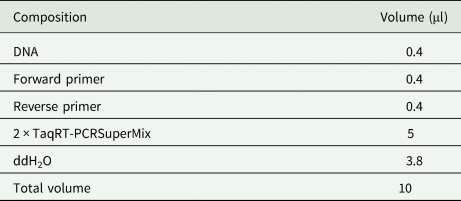
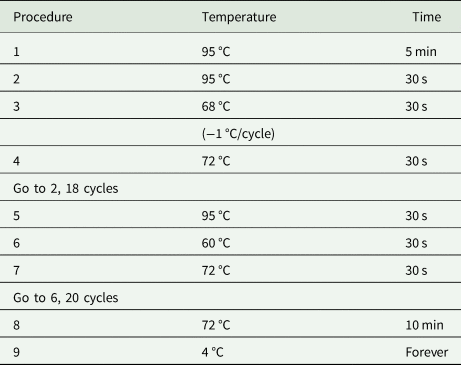
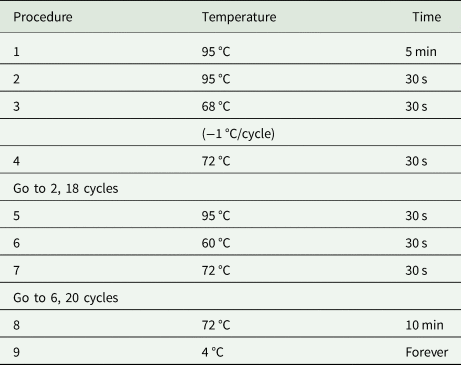
In this study, polymerase chain reaction (PCR) was used to detect indel genotyping. The reaction system and procedure are shown in Table 1 and Table 2.
Polymerase chain reaction (PCR) system

Polymerase chain reaction (PCR) amplification program
Agarose gel electrophoresis detection and Sanger sequencing of the target fragment
The PCR product was detected by 2% agarose gel. The indel typing was determined according to the image. The insertion and deletion products were sequenced to further verify the authenticity of the product.
Statistical analysis
The genotype and allele frequencies of IGF1R gene were calculated by Microsoft Excel 2013. Distribution differences for them were analysed according to the Hardy–Weinberg equilibrium using χ 2 test. The population genetic parameters were calculated by Nei's method, containing genetic homozygosity (Ho), heterozygosity (He), effective number of alleles (Ne) and polymorphism information content (PIC) (Nei and Roychoudhury, Reference Nei and Roychoudhury1974).


The general linear model was used to analyse the association between genotypes with body size data of cattle. Rounding was done according to practice. The full model is as follows: Y ijkl = μ + F i + B j + G k + e ijkl, in which Y ijkl is the record of individual phenotypes, μ is population mean, F i is field effect, B j is cultivar effect, G k is marker genotype effect and e ijkl is random error. The independent-samples t test and analysis of variance (ANOVA) available in SPSS 23.0 were used to explore the correlation between some factors such as variety, age, field and the indels of IGF1R with economic traits.
Results
Screening of IGF1R gene
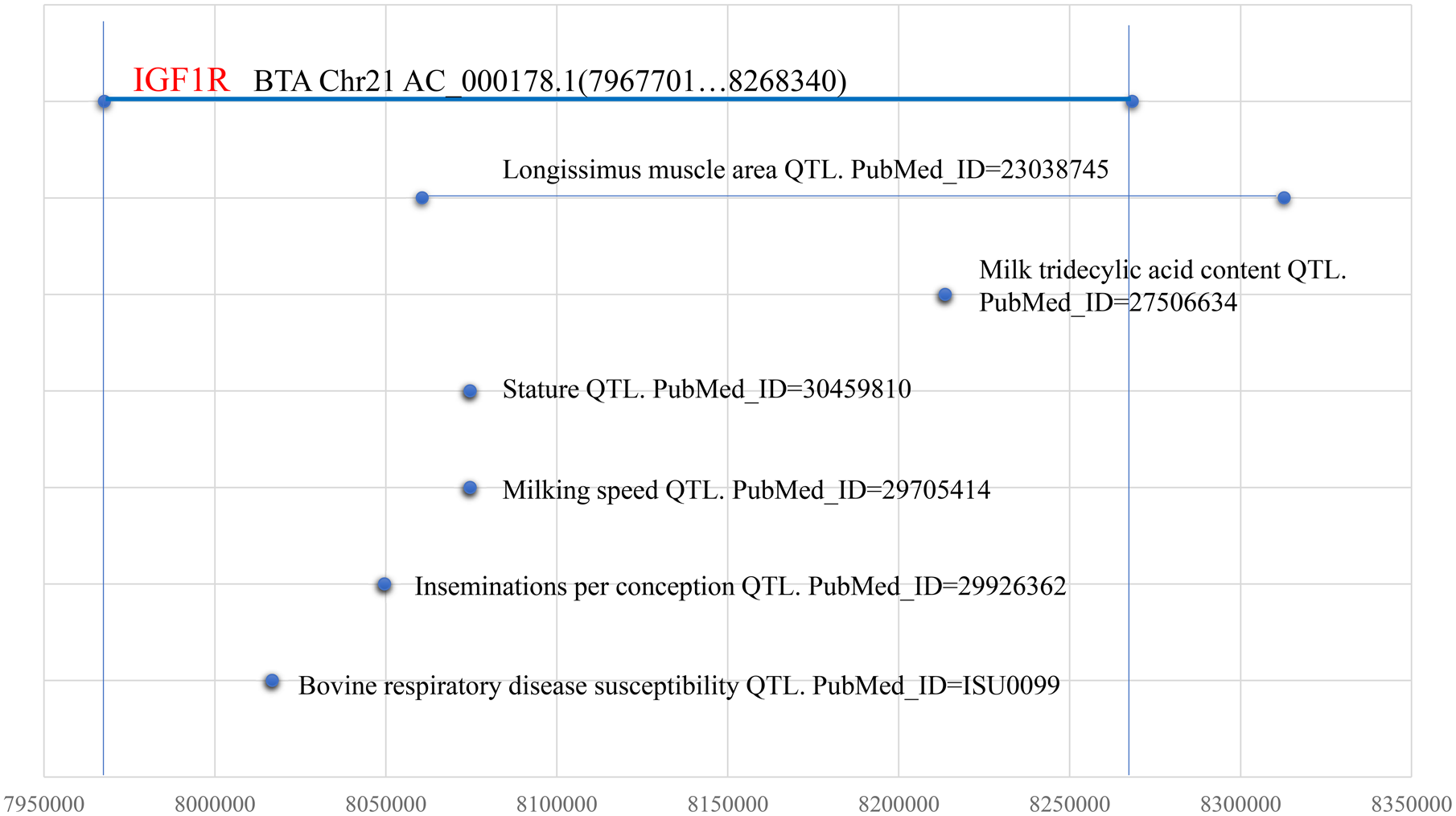
Bioinformatics analysis using animal QTL Database and NCBI found that there are many important QTLs in IGF1R (Fig. 1), and finally IGF1R gene was selected as a candidate gene for scalper MAS.
Colour online. Various QTLs associated with IGF1R.

Results of agarose gel electrophoresis
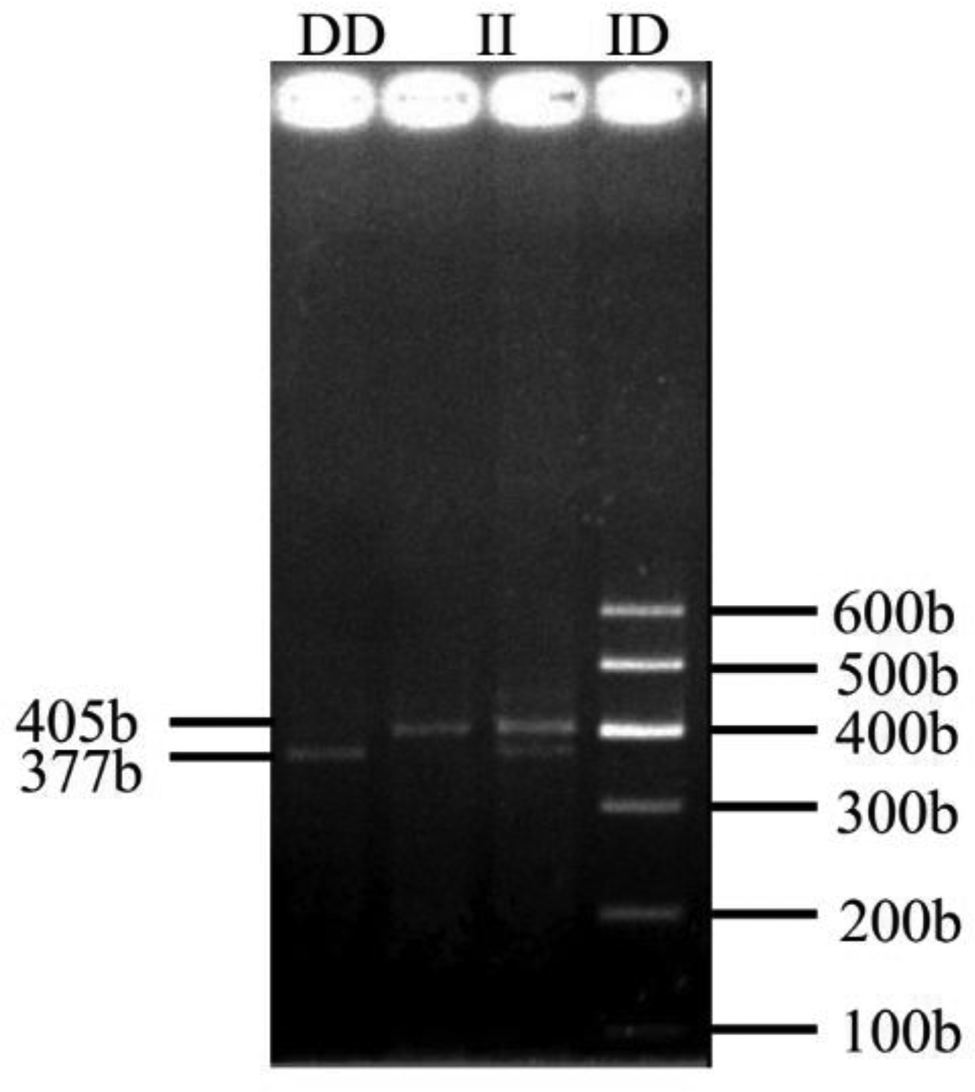
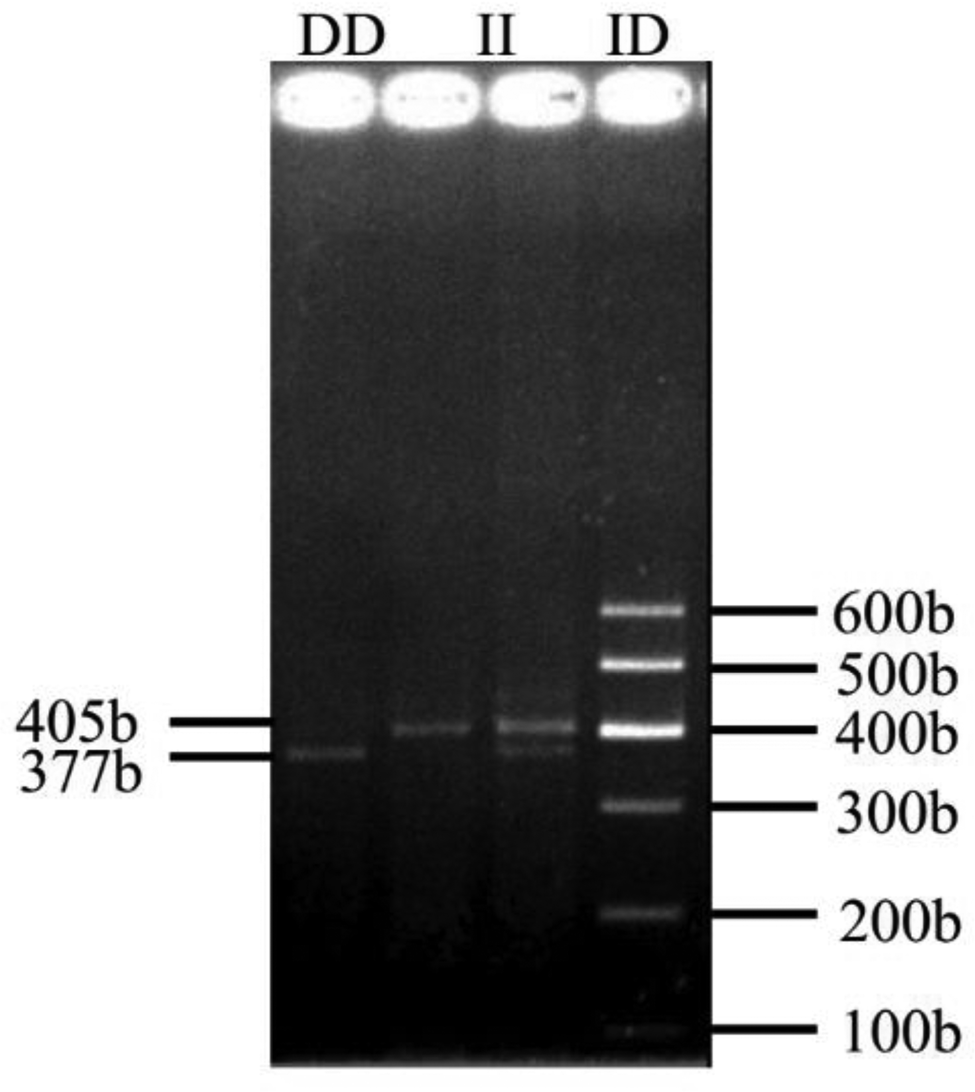
The results of electrophoresis showed that the specific products containing the indel site of IGF1R were amplified (Fig. 2), which were classified as type II (405 bp), type ID (405 bp, 377 bp) and type DD (377 bp).
Result of agarose gel electrophoresis.
Sanger sequencing results of the target band
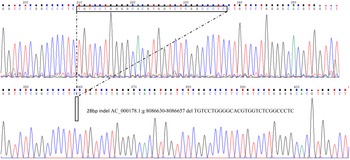
Sanger sequencing results compared with the reference genome sequence showed that there was a 28-bp difference between the insertion type and deletion type (Fig. 3), which confirmed that there was a 28-bp deletion in this region of IGF1R gene.
Colour online. Result of Sanger sequencing.

Frequency statistical analysis of indel locus in IGF1R gene
The gene frequency and genotype frequency analysis results of indel locus of four cattle breeds are shown in Table 3. It can be seen from Table 3 that all groups have three genotypes II, ID and DD, and the frequency of allele I is higher than that of allele D. Especially in Xianan cattle and Nanyang cattle, the frequency of gene I was 0.810 and 0.822, respectively, while in Jinnan cattle and Qinchuan cattle, gene I frequency was relatively low, 0.699 and 0.672, respectively.
Frequency statistics of indel locus in four Chinese cattle populations

XN, Xianan cattle; JN, Jinnan cattle; QC, Qinchuan cattle; NY, Nanyang cattle.
The results of genetic structure analysis of the four Chinese cattle breeds are shown in Table 4. It was found that this locus was in equilibrium in Jinnan and Nanyang cattle populations (P > 0.05), while the other two cattle populations were in an unbalanced state (P < 0.05), which might be attributed to the relatively small sample groups, the selection and the population history. Artificial selection pressure could lead to the reduction of genetic diversity and the occurrence of imbalance. According to the polymorphism information content of the gene locus, the locus is basically a moderate polymorphism.
Genetic analysis of indel locus in four Chinese cattle populations

XN, Xianan cattle; JN, Jinnan cattle; QC, Qinchuan cattle; NY, Nanyang cattle
Association analysis of indel site and growth traits in IGF1R gene of cattle
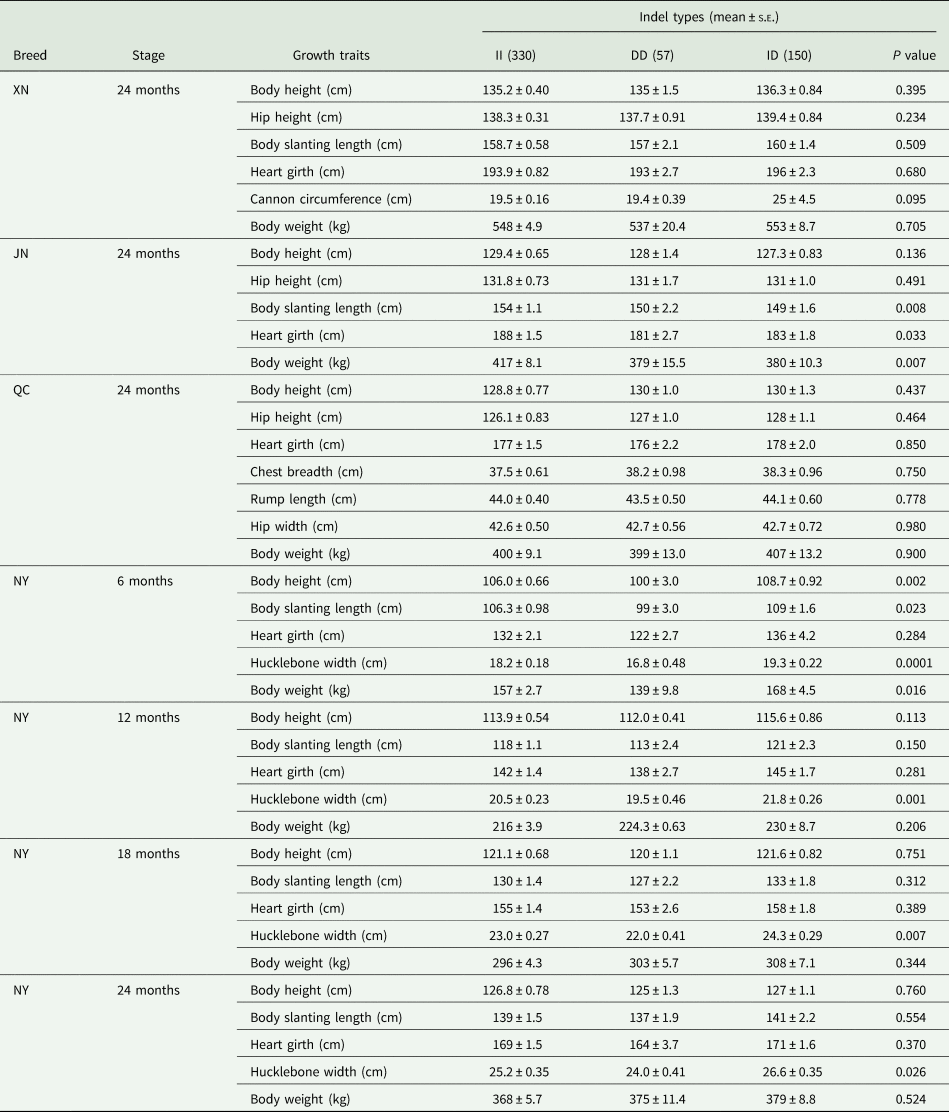
The results of association analysis of indel locus and growth traits in IGF1R gene of Xianan, Jinnan, Qinchuan and Nanyang cattle are shown in Table 5. The results showed that there was a significant correlation between the locus and the sciatic end width of Nanyang cattle in four periods (P < 0.05), in which it was highly correlated at 6, 12 and 18 months (P < 0.01). At the age of 6 months, it was significantly correlated with body height (P < 0.01), body weight and body length (P < 0.05). Among them, the ID genotype was the dominant genotype in all growth traits. Although there was no significant correlation between this locus and growth traits of Xianan cattle and Qinchuan cattle, type ID was better than type II and type DD in all growth traits, implying that it was the dominant genotype in all growth traits. Association analysis showed that the locus in Jinnan cattle was extremely significantly correlated with body slanting length and body weight (P < 0.01), and significantly correlated with chest circumference (P < 0.05). Among them, type II was the dominant genotype in all growth traits. This is not consistent with Xianan, Qinchuan or Nanyang cattle, indicating that the effect of the same indel is different in different cattle breeds. It is also possible that the linkage genes are different. Each breed has a specific genetic background which leads to various effects of different indel polymorphisms.
Association analysis of indel locus and growth traits in IGF1R gene of four Chinese cattle populations
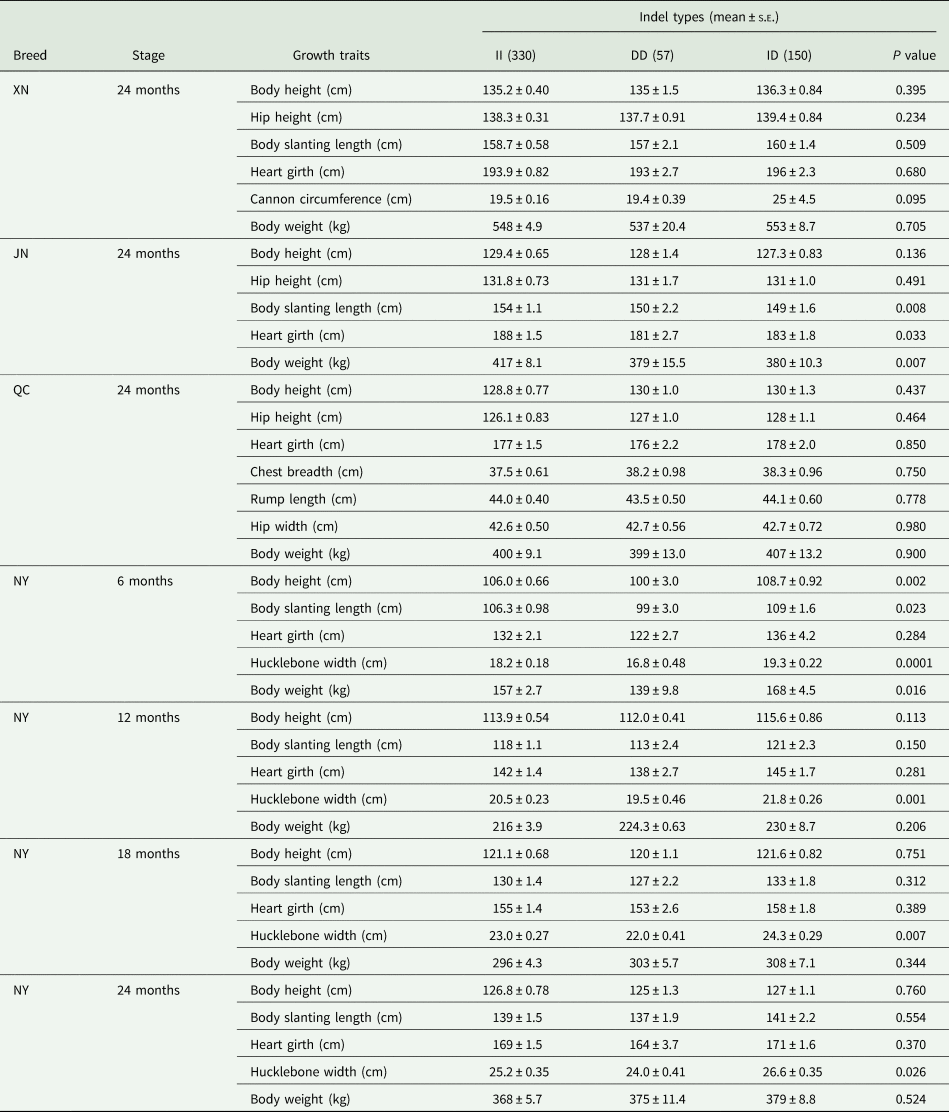
XN, Xianan cattle; JN, Jinnan cattle; QC, Qinchuan cattle; NY, Nanyang cattle.
Discussion
The IGF1R gene and its genetic polymorphism have been widely studied in the field of life science and livestock genetics and breeding. Overexpression of the human IGF1R promotes ligand-dependent neoplastic transformation (Fottner et al., Reference Fottner, Minnemann, Kalmbach and Weber2006). The deficiency of IGF1R negatively impacts brain cells homeostasis and survival by affecting mitochondria and redox homeostasis (Cardoso and Moreira, Reference Cardoso and Moreira2021). The above results show that IGF1R gene can affect the occurrence of individual diseases. Meanwhile, the study of IGF1R polymorphism is of great significance to improve the growth and economic traits of livestock and poultry. Six SNPs in the Xinghua and White Recessive Rock chickens were found possibly associated with growth traits (Lei et al., Reference Lei, Peng, Min, Luo and Zhang2008). Studies have shown four synonymous mutations of IGF1R extracellular domain encoded by affect gene transcription and translation, thereby further leading to differences in the downstream pathways and functional changes of osteoblasts (Wang et al., Reference Wang, Wang, Liu, Cheng and Hao2020). Several SNPs in cattle IGF1R gene were correlated with growth-related traits, mRNA levels of IGF1 and IGF1R in semitendinosus muscle as well as with the serum concentration level of IGF1 (Szewczuk et al., Reference Szewczuk, Zych, Wójcik and Czerniawska-Pitkowska2013; Elmagd et al., Reference Elmagd, Saleh, Nafeaa, Elkomy and Afifi2017).
Although deletions occur in introns that are not involved in the coding process, studies have shown that introns also affect gene expression (Sakurai et al., Reference Sakurai, Zhao, Deng, Kelly, Brown, Harley, Bae, Alarcon-Riqueime, Edberg, Kimberly, Ramsey-Goldman, Petri, Reveille, Vila, Alarcon, Kaufman, Vyse, Jacob, Gaffney, Sivils, James, Kamen, Gilkeson, Niewold, Merrill, Scofield, Criswell, Stevens, Boackle, Kim, Choi, Pons-Estel, Freedman, Anaya, Martin, Yu, Chang, Song, Langefeld, Chen, Grossman, Cantor, Hahn and Tsao2013). Introns, also known as insertion sequences, do not participate in the coding process. On the one hand, introns can improve gene expression efficiency in two ways: one is that it can protect primary transcripts and increase the number of mRNA; the other is that it can act as a homeostasis transcription factor to promote gene transcription process. On the other hand, a segment of intron may bind to nucleoprotein specifically, thus affecting gene expression process (intron and gene expression regulation). Mutations in introns may relieve the above inhibitory effects. In addition, several reports have shown that mutations in introns can have a significant impact on livestock and poultry production. Two indel mutations in the intronic region of the ovine PITX2 gene have been found to have significant effects on ovine growth traits (Zhao et al., Reference Zhao, Shuai, Wang, Zhu and Sun2017). A 15-bp indel on the intron of HIAT1 is detected to be relevant to the growth traits of goats and could be used for MAS as a molecular marker in goat populations (Gao et al., Reference Gao, Song, Wu, Tang and Zhang2020).
This experiment is based on PCR and agarose gel electrophoresis for typing. Type ID was the dominant genotype in the three breeds except Jinnan cattle, while type II was the dominant genotype in Jinnan cattle. The results showed that allele I was a growth dominant gene, indicating that the 28-bp deletion of IGF1R gene might affect the growth and development of cattle. A total of 537 individuals were detected in this experiment, of which 207 individuals were mutated, with a polymorphism rate of 38.5%. And the deletion of this fragment was found in all four tested breeds, indicating that the gene has abundant genetic polymorphisms in Chinese cattle, and can be used as a potential molecular marker to affect the growth of the four Chinese cattle breeds.
Conclusions
Overall, the research identified one 28-bp indel by PCR within IGF1R gene. The gene frequency and genotype frequency of the indel in the four Chinese cattle populations were found to have variety differences, as were their effects on growth traits. The detected indel in the IGF1R gene was significantly associated with growth traits in Jinnan cattle and Nanyang cattle, and could be used as a molecular marker for growth trait selection.
Financial support
This work was supported by the Program of National Beef Cattle and Yak Industrial Technology System (CARS-37). The Agricultural Improved Seed Project of Shandong Province (2020LZGC014-03). The funders had no role in study design, data collection and analysis, decision to publish, or preparation of the manuscript.
Conflict of interest
None.
Ethical standards
All experiments were approved by the Review Committee for the Use of Animal Subjects of Northwest A&F University.