The 2017 US hurricane season was one of the most active seasons on record; it featured the highest total accumulated cyclone energy (ACE) score (223.3) and the largest number of major hurricanes since 2005.1 On August 25, 2017, Hurricane Harvey made landfall in Rockport, Texas, and was the first major hurricane (ie, Category 3 or above) to strike the United States since Hurricane Wilma in 2005. This ended the record-length 4323-day span in which no tropical cyclones made landfall as major hurricanes.2 Harvey left a path of destruction in its wake with over 100 deaths, record rainfall (more than 50 inches in some areas) leading to extensive flooding, and damage to critical infrastructure such as transportation and health care.Reference Holmes3
During large scale disasters such as Harvey, public health surveillance is an important tool to track emerging illnesses and injuries, identify at-risk populations, and assess the effectiveness of response efforts.4 Often such disasters displace large numbers of the community who then seek refuge in shelters, many of which are managed by or in partnership with the American Red Cross (Red Cross). The Red Cross provides shelter; food, water, and other relief items; and health and mental health services to the affected communities. During Hurricane Harvey, the Red Cross deployed more than 2000 disaster workers and volunteers to address the needs of hurricane-affected populations. They served more than 4.5 million meals, provided over 400 000 overnight stays, and distributed over 1.6 million relief items such as diapers, cleaning supplies, coolers, and comfort kits.5 Since 1987, the Centers for Disease Control and Prevention (CDC) and Red Cross Disaster Health Services (DHS) collaborated to collect shelter morbidity surveillance data during disasters to monitor the health of the sheltered population and help guide response and recovery efforts.
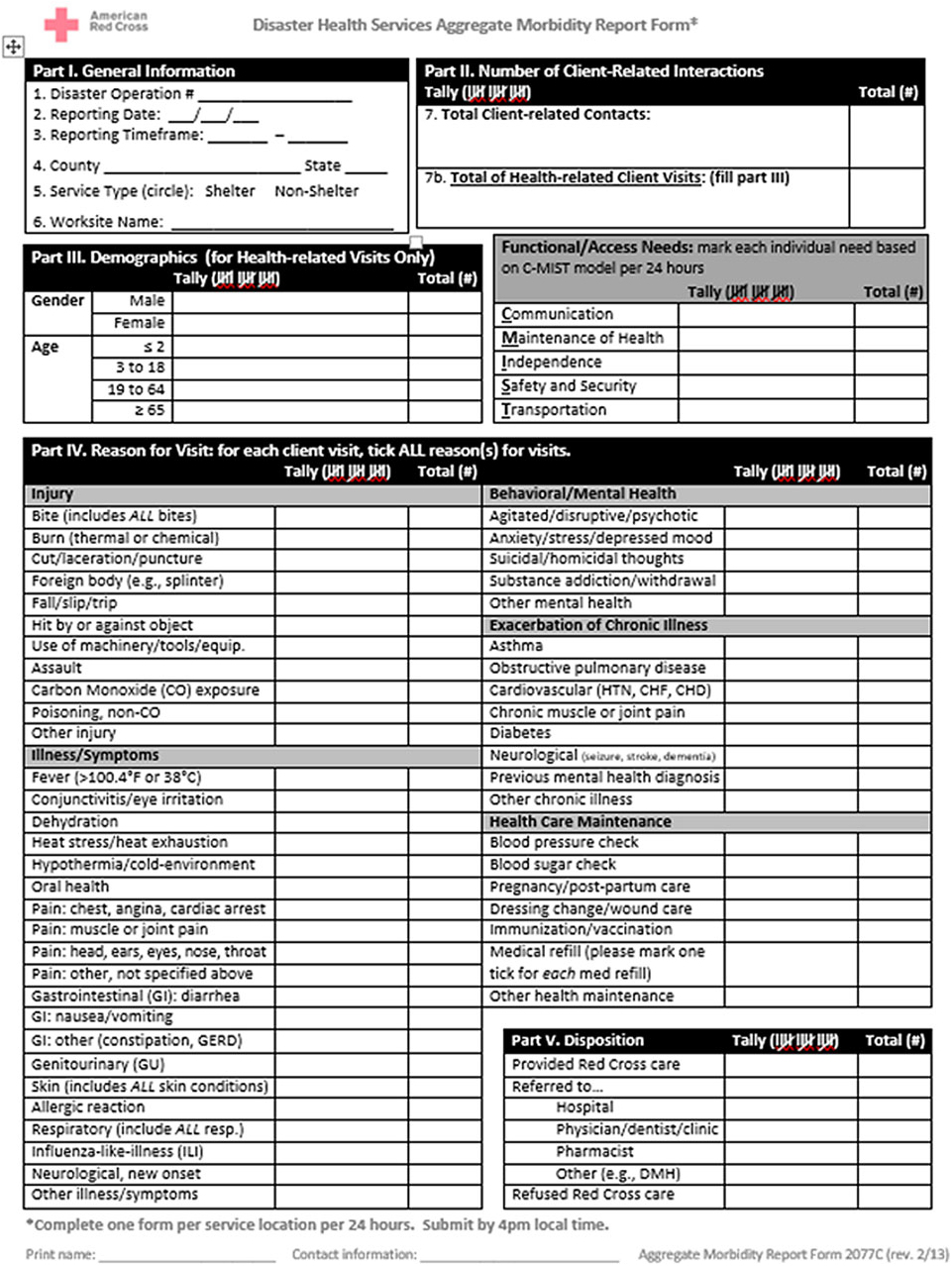
Timely morbidity surveillance of sheltered populations is crucial for identifying and addressing immediate needs and allows us to better prepare for future disasters. The Red Cross collects data on an Aggregate Morbidity Report (tally) Form that tallies daily client visits from an individual service location (eg, shelter) on a single form every 24 hours (Figure 1). Because disasters often create travel and communication challenges that complicate the collection and transmission of surveillance data, CDC and the Red Cross began a protocol during the 2012 Hurricane Sandy response to transmit surveillance data via cellular phone photographs for remote real-time reporting. This article characterizes the health data collected by Red Cross volunteers in Texas shelters in response to Hurricane Harvey compared with previous hurricanes: Hurricanes Ike and Gustav in 2008 and Hurricane Sandy in 2012. The CDC’s role in the hurricane response shelter surveillance was not considered human subjects research by the CDC’s National Center for Environmental Health (NCEH) Office of Science; therefore, it was exempt from the human subjects institutional review board review.
American Red Cross (Red Cross) Aggregate Morbidity (Tally) Form.

METHODS
We analyzed data collected from 24 Red Cross shelters across at least 10 counties in Texas for Hurricane Harvey between August 25, 2017, and September 14, 2017. Only shelter data were included. Other Red Cross service locations (eg, community door-to-door outreach, field aid stations), Texas state and local run shelters, and other states (eg, Louisiana) were not included. For comparison, we used data collected from 22 shelters in New Jersey during the Hurricane Sandy response (October 30, 2012, to November 21, 2012) and 68 shelters in Texas during the response to Hurricanes Ike and Gustav (August 28, 2008, to October 18, 2008). Red Cross DHS volunteers are primarily registered nurses assigned from the Red Cross Disaster Human Resources System, the official system of trained pre-registered volunteers. These volunteers documented all client visits for health care assistance, per protocol, on a single tally form for every 24-hour period ending at 4:00 pm local time and submitted to Red Cross DHS headquarters. The CDC received the daily tally forms from Red Cross, entered and analyzed the data in Microsoft Excel, and submitted a daily report back to Red Cross for distribution within Red Cross, the Texas State Operations Center, and the CDC Emergency Operations Center. The daily report contained information from the past 24 hours, as well as aggregate data to date. For this study, we used the final aggregate data for each hurricane response.
We collected demographic information on client visits and reasons for their visit(s) for the following 5 main categories: acute illness/symptoms, injuries, behavioral or mental health, exacerbation of chronic illness, and health care maintenance, as well as client visit disposition, including referrals. Reason(s) for visit refers to the complaint with which an individual presented (eg, gastrointestinal illness, pain, blood pressure check). Each client visit could list multiple reasons for visit and a client visit disposition could include both treatment at the shelter and referral to one or more locations. Because client information is anonymous, if an individual accessed care more than 1 time, each visit was counted individually and included in the total.
RESULTS
Client Visits and Demographics
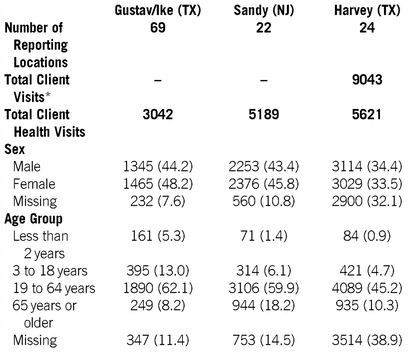
A total of 9043 client visits (5621 health-related visits) occurred in 24 shelters in Texas in response to Hurricane Harvey (Table 1). Volunteers recorded client visits that were not health-related as functional needs (CMIST – Communication, Maintaining Health, Independence, Services and Support, Transportation). Overall, client visits were roughly equal between males and females, although 32.1% of visits were missing gender information. Most were between the ages of 19 and 64 (45.2%) and few were less than 2 years old (0.9%). Roughly, 10% of client visits during Hurricane Harvey were older adults (65 years and older).
Total Client Visits and Demographics by Hurricane Response, American Red Cross Shelters

* Red Cross only captured health-related visits during Hurricanes Gustav, Ike, and Sandy.
Overall Reasons for Visit
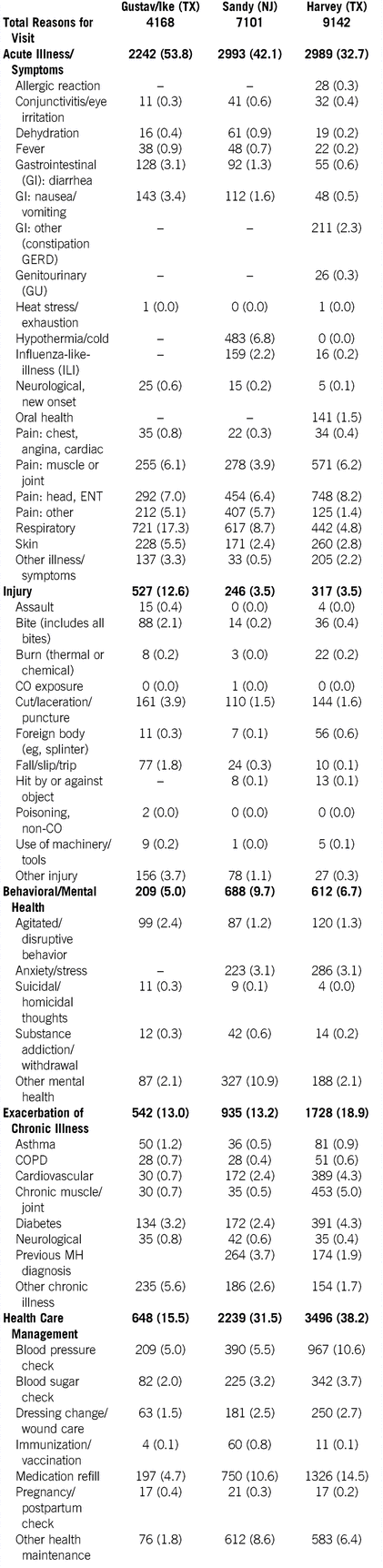
A total of 9142 reasons for visits were reported during Hurricane Harvey. Over a third of visits (38.2%) were for health care maintenance and follow-up care; 32.7% for acute illnesses and symptoms, which include respiratory conditions, gastrointestinal illness, and pain; 18.9% for exacerbation of chronic disease; 6.7% for mental health; and 3.5% for injury. Pregnancy or postpartum care accounted for few visits. See Table 2 for a summary of the reasons.
Reasons for Visit at American Red Cross Shelters by Hurricane Response

COPD = chronic obstructive pulmonary disease; ENT = ears, nose, throat; GERD = gastroesophageal reflux disease.
Acute Illness
Acute illnesses and symptoms accounted for approximately one-third of all reasons for visit. Pain was the most frequent reason for these visits with almost half (49.4%) of visits for acute illness including a report of pain. The second most common acute illness reason for visit was respiratory conditions (14.8% of acute visits); followed by gastrointestinal illnesses, including diarrhea, nausea or vomiting, and constipation (10.5% of acute visits); and skin-related symptoms (8.7% of acute visits).
Exacerbation of Chronic Disease
Exacerbation of chronic diseases accounted for 18.9% of visits during Hurricane Harvey. Of those visits, chronic muscle and joint pain (26.2%), diabetes (22.6%), cardiovascular illnesses (22.5%), and previous mental health diagnosis (10.1%) accounted for the majority of reasons for visits.
Injury
Injuries are typically an area of concern after hurricanes because of floodwaters, debris, and other dangerous conditions. However, visits related to injuries were not very common among Hurricane Harvey shelter residents, accounting for roughly 4% of all reasons for visits. About half (45.4%) of visits for injuries involved cuts, lacerations, and punctures. Bites (eg, insect, human, other animal) were also common during Hurricane Harvey (11.4% of injury visits), as well as thermal or chemical burns (6.9% of injury visits).
Behavioral and Mental Health
Acute behavioral or mental health accounted for fewer than 10% of all reasons for visits. Anxiety and stress were the most common behavioral or mental health symptoms captured on the form (46.7% of mental health visits). The second most common behavioral or mental health symptom was agitation or disruptive behavior (19.6%). Other mental health indicators captured included suicidal or homicidal thoughts and other mental health issues (eg, depression).
Disposition
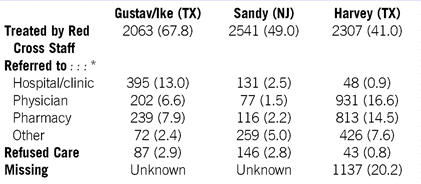
Red Cross volunteers treated most of the health-related visits with a known disposition within the shelter (Table 3). During Hurricane Harvey, Red Cross volunteers also made 1835 referrals; each visit could have more than 1 disposition (eg, treated at Red Cross and/or referred to 1 or more locations). Of the referrals, half (50.7%) were referred to a physician, 44.3% to a pharmacy, 2.6% to a hospital or clinic, and 23.2% to another source (eg, dentist).
Disposition at American Red Cross Shelters by Hurricane Response

* Client could be referred to more than 1 source.
DISCUSSION
During a 3-week period, Red Cross DHS volunteers at 24 reporting locations in Texas provided disaster relief services in response to Hurricane Harvey, attending to 9043 client visits. The majority of client visits were for adults, which is consistent with the data from Hurricanes Gustav and Ike, and Sandy. Similarly, among the hurricane events, there were roughly equal numbers of males and females seeking care. Across Hurricanes Gustav and Ike, Sandy, and Harvey, health care management, acute illness, having symptoms, and exacerbation of chronic illness were the most common reasons for a client visit. The CDC shared daily reports during the response with the Red Cross, Texas Department of State Health Services, and Health and Human Services Office of the Assistant Secretary for Preparedness and Response (ASPR) for situational awareness to help inform and guide the federal, state, and local response effort with near real-time data.
Health care management in shelters provides important services (eg, blood pressure checks, blood sugar checks, medication refills) for those displaced during disasters, especially for vulnerable populations such as the elderly and people with chronic illnesses.Reference Noe, Schnall and Wolkin6 Additionally, health care management visits provide important information to shelter volunteer staff, capturing the current and changing health status of the shelter population. A systematic review reported that a storm, such as a hurricane, is indirectly responsible for exacerbation and worsened management of chronic illnesses and non-communicable diseases.Reference Saulnier, Ribacke and von Schreeb7 Because disasters cause a disruption in health management and continuity of care, the burden of chronic illnesses and routine care may be placed on shelter workers. Data show that this was the case in these 24 Hurricane Harvey shelters because health care maintenance and exacerbation of chronic illness were in the top 3 reasons for client health visits. Documenting health care management visits provides important information to shelter staff, capturing the current and changing health status of the shelter population. Using data gathered from the tally form, Red Cross headquarters can allocate the necessary resources for health care maintenance. For example, if the data show increased client visits for blood pressure medication refills, Red Cross can ensure that shelters have sufficient supplies and only refer care to physicians and pharmacies if necessary, thus reducing burden on the health care system already overwhelmed in a disaster.
Client visits due to acute illness or symptoms remain an important aspect of Red Cross DHS volunteer work. The percentages are similar across Hurricanes Gustav and Ike, Sandy, and Harvey and represent the main reason for client visits. Although respiratory and gastrointestinal concerns were among the more frequent reasons for an acute illness-related client visit, these visits represent a small percentage overall. Importantly, this demonstrates that routine conditions are of more concern in shelters than sustained infectious disease outbreaks, which is supported by a systematic review that reported increases in some infectious disease cases post-storm event, but found no evidence of sustained infectious disease outbreaks.Reference Schnall, Wolkin and Noe8 Although data show that it is unlikely to have a large infectious disease outbreak in the United States after disasters, such as hurricanes, it remains important to conduct surveillance for incidences of infectious disease because of the large numbers of displaced individuals sheltering together.Reference Galea, Brewin and Gruber9 Shelter surveillance will help monitor the shelter population to ensure that no outbreaks occur and provide data to control rumors. For example, Hurricane Sandy occurred in the beginning of a flu season and, therefore, we monitored influenza-like-illness (ILI) closely on the tally form within each shelter. Overall, there were 159 (2.2%) visits for ILI, most of which occurred in a few shelters over a short period. Red Cross DHS volunteers were able to see this trend within their shelter, and those nearby, and implement immediate education to shelter population on hand washing and other preventive behaviors.
Behavioral health is an important aspect of shelter surveillance because displaced populations are at increased risk of experiencing mental health effects related to the disaster.Reference Schreiber, Yin and Omaish10, Reference Shultz and Galea11 Evidence from residents affected by Hurricane Katrina showed an increase in the 30-day prevalence of anxiety mood disorders.Reference Schreiber, Yin and Omaish10 Data also show that disaster trauma exposure is associated with increased risk of psychiatric disorders.Reference Shultz and Galea11 Therefore, identifying individuals with behavioral/mental health issues post-disaster and providing adequate care is imperative. Unfortunately, the tally form likely underrepresents behavioral and mental health events because it only captures those clients who seek out medical attention for physical symptoms. Hurricane Harvey, as well as Hurricanes Sandy, and Gustav and Ike, saw low percentages in visits for behavioral or mental health. This may be because individuals in shelters may be less likely to seek care from shelter nursing stations for mental health concerns because they perceive them as physical health stations. Additionally, disaster behavioral health teams are typically active in shelters. For example, during Hurricane Sandy, teams used PsySTART, a disaster mental health triage tool, while walking around the general shelter population.12 Hurricane Harvey also had disaster behavioral health teams in the Red Cross large consolidated shelter in Houston; however, no standardized reporting was conducted in either situation.Reference Shultz and Galea11, Reference Ridpath, Bregman and Jones13 This may have resulted in fewer clients seeking mental health services from the Red Cross DHS volunteers collecting data on the tally form. Additionally, shelter residents may need mental health services but may not seek them out due to perceived stigma, as seen in West Virginia after the 2016 flooding events.Reference Shumate14
While Red Cross volunteers treated the majority of clients on site, they made several referrals to higher levels of care. We saw higher percentages of referrals to physicians and pharmacies during Hurricane Harvey than were reported in Hurricanes Gustav and Ike, and Sandy. Conversely, Red Cross volunteers made a lower percentage of referrals to hospitals and clinics during Hurricane Harvey when compared with Hurricanes Gustav and Ike. There is a high percentage of missing data for disposition at Red Cross shelters for Hurricane Harvey, and these data are unknown for Hurricanes Gustav and Ike, and Sandy. Thus, we are unable to draw further conclusions regarding referrals because of the discrepancies in the data. We must improve this aspect of shelter surveillance during future disaster responses through continued training and education for Red Cross volunteers about the importance of completing the tally form and the value of shelter surveillance.
We identified several limitations in using the tally form during Hurricane Harvey. One challenge was data quality. Inconsistent completion, blurry photos, and missing data points led to problems in interpreting the tally forms. Despite this, the tally form reporting method used during Hurricane Harvey represents an overall successful use of remote reporting. Cellular phone use for timely delivery of data was first used and proved successful during Hurricane Sandy when other communications were limited.Reference Shumate14 In Hurricane Harvey, Red Cross DHS volunteers similarly used cellular phones to send photos of completed surveillance forms. Disasters often disrupt other communication channels, so the use of cellular phone reporting can minimize lag time between form completion and form delivery.Reference Shumate14 This results in a direct communication channel that provides near real-time daily data. Improvements on quality of photo imaging and completeness of data can be addressed through an enhanced training of volunteers. Timely data are necessary to ensure appropriate public health action in response to reported health concerns in a shelter population. This direct communication channel not only provides timely data, but also is useful for clarifying any data-related issues and dealing with data discrepancies arising from shelter staff turnover.
Other challenges include the time and effort spent acquiring complete surveillance data and the potential for competing priorities between organizations. We saw similar issues relating to resources and priorities during Hurricane Harvey as seen during Hurricanes Gustav and Ike, and Sandy.Reference Noe, Schnall and Wolkin6, Reference Shumate14 During Hurricane Sandy, a team provided a just-in-time verbal training about daily reporting, data collection tools, and the surveillance process.Reference Shumate14 New York City’s Department of Health and Mental Hygiene also trained epidemiology staff to visit open shelters daily to educate staff on the surveillance system in place and collect data.Reference Ridpath, Bregman and Jones13 However, daily visits from an epidemiology staff are not always possible during a disaster because of limited accessibility and staff constraints. Providing a similar training on the importance of shelter surveillance and the tools used via a short (2- to 3-minute) video viewed on a cell phone would reduce staff time and provide just-in-time training.
We were able to make general comparisons of Hurricane Harvey data to Hurricanes Gustav and Ike and Sandy data, because shelters used a similar tally form during these disasters. We determined that infectious disease concerns in the Red Cross shelter populations for Hurricane Harvey were minimal. Our data show the primary concerns are acute illnesses, health maintenance, and chronic care. This mirrors the primary concerns noted in Hurricanes Gustav and Ike and Sandy. Red Cross DHS volunteers help address acute health needs of the shelter residents, and, often, the care they provide reduces the burden on the health care system during a disaster. Both the Red Cross and public health emergency managers can appropriate resources based on the health needs reported. However, continued education on the importance of shelter surveillance is necessary to improve the consistency in reporting across shelters and disasters. The availability of a short, just-in-time, web training could help promote the importance of surveillance and increase the effectiveness of shelter surveillance during a disaster, leading to a more effective disaster response.
CONCLUSION
Surveillance is a vital component of disaster response, because it allows us to track illness and injury, and identify at-risk populations. Morbidity shelter surveillance allows public health responders to characterize the health needs of the shelter population and is vital for proper resource allocation by leaders and decision-makers. Receiving near real-time data on a daily basis enables us to determine the changing needs of the shelter population and allows the Red Cross to use the gathered information to ensure that shelters have sufficient resources and staff for both the current event and future situations.
Conflict of Interest Statement
The authors have no conflicts of interest to declare.