




1. Introduction
The growing development of computer-based design tools raises questions about their impact on designers’ creativity. While they are often praised for their ability to speed up the design process – notably by improving communication between multiple designers (Robertson & Radcliffe Reference Robertson and Radcliffe2009) and generating a very large number of alternatives quickly and cost-effectively (Bernal, Haymaker & Eastman Reference Bernal, Haymaker and Eastman2015; Hamad & Husein Reference Hamad and Husein2020) – they can also cause cognitive fixations within the design process, such as premature fixation, ideation limited to the tool’s capabilities, excessive focus on aesthetics or the neglect of constraints (Lawson Reference Lawson2002; Robertson & Radcliffe Reference Robertson and Radcliffe2009). The question of their design and use is therefore crucial if they are to enable designers to really think more creatively.
Among this new generation of tools available to designers, the digital twin stands out for its ability to integrate knowledge, particularly engineering knowledge, to enable more efficient design. Hence, it is particularly interesting because it might both support the hypothesis of fixation by existing knowledge and expertise and the hypothesis of powerful support for ideation (Hatchuel, Le Masson & Weil Reference Hatchuel, Le Masson, Weil, Darbellay, Moody and Lubart2017). However, the impacts produced by the use of the digital twin on creativity are poorly documented in the scientific literature.
It is worth noting that the notion of digital twin itself suffers from a lack of consensus in its definition – a point further developed in the literature review. Some companies, especially Dassault Systèmes, prefer to use the term virtual twin, which, beyond its digital nature, highlights the potentialities it enables – echoing the original meaning of “virtual” as “what has the power to become.” This notion may therefore seem more promising from the point of view of creativity. Nevertheless, this paper retains the term digital twin to remain aligned with the terminology most commonly used in academic literature.
This paper examines how digital twins can support creativity in design processes. Rather than focusing solely on their optimization capabilities, we investigate their ability to help designers generate insights that range from expected refinements to more surprising reframing of the problem. To do so, we mobilize C-K theory, which allows us to analyze how digital twins contribute to different levels of creative reasoning by producing new knowledge and expanding the space of conceivable solutions. A key aspect of our approach is to model not only the digital twin itself but also the designer’s action and intention in constructing it – an element often overlooked in the digital-twin literature, yet decisive in shaping what the tool makes visible and thinkable. We apply this framework to 16 digital twins developed by Dassault Systèmes to address airborne contamination issues in hospitals. The analysis shows how digital twins support various forms of creative exploration and highlights the conditions under which they can lead to more unexpected insights.
2. Literature review
2.1. The ambivalent impact of computer-based design tools on creative processes
Computer-based design tools are a diverse family of artifacts. Bernal et al. (Reference Bernal, Haymaker and Eastman2015) distinguish among four major categories: computational approaches for generating solutions – such as parametric modeling, expert systems, generative design algorithms and design languages; tools for evaluating solutions – like performance evaluation and rule-checking mechanisms; supports for decision making – including Choosing by Advantages and Collaborative Weight, Rate and Calculate approaches and tools for process integration – such as model-based systems engineering. These tools support the design process in various ways, notably by enhancing communication and coordination among multiple stakeholders (Jeantet Reference Jeantet1998; Robertson & Radcliffe Reference Robertson and Radcliffe2009). However, their specific impact on creativity remains contested.
On the one hand, computer-based tools are often credited with enhancing creative processes. For example, computer-aided design (CAD) systems help designers overcome traditional constraints such as limited drawing skills (Lawson Reference Lawson2002) or representational ability (Chang et al. Reference Chang, Chien, Lin, Chen and Hsieh2016). Beyond compensating for individual limitations, advanced tools like parametric modeling enable the rapid and cost-effective exploration of a wide range of novel solutions within a defined topology (Hamad & Husein Reference Hamad and Husein2020). Such tools also alleviate the cognitive demands of creative work by facilitating the integration of cross-disciplinary knowledge (Jeantet Reference Jeantet1998), or offering external representations to manipulate information and new knowledge. This representational flexibility may foster the kind of recombination processes and insights that are central to creativity (Hewett Reference Hewett2005).
On the other hand, the use of such tools can also introduce cognitive biases. Lawson (Reference Lawson2002) observes that they may create illusions of creativity – by neglecting critical constraints or homogenizing outputs due to overreliance on tool-specific functionalities. Conversely, their technical limitations can restrict designers’ thinking, and the cost of modifying a design may lead to premature fixation (Robertson & Radcliffe Reference Robertson and Radcliffe2009). Risks such as reification and a false sense of completeness have also been identified (Robertson & Radcliffe Reference Robertson and Radcliffe2009; Chang et al. Reference Chang, Chien, Lin, Chen and Hsieh2016).
Ultimately, the impact of digital tools on creativity is deeply intertwined with the way these tools are themselves conceived and developed. Far from being neutral aids, their prescriptive nature contributes to shaping the design process (Jeantet Reference Jeantet1998). Some authors have outlined guidelines for creating virtual environments that actively support creative cognition (Hewett Reference Hewett2005). Central to this effort is the need for contextualization: designers across different fields engage with distinct conceptual frameworks and employ specialized modes of reasoning (Lawson Reference Lawson2002). In the case of CAD, early generations of products tended to improve the robustness of solutions at the expense of their novelty, whereas more recent generations have managed to enhance both by integrating constraints differently within the software (Arrighi, Le Masson & Weil Reference Arrighi, Le Masson and Weil2015). The a priori nuanced effects of using computer design tools on creativity, along with the need to address this issue from the stage of their own design, call for deeper, more systematic approaches to understanding and supporting creative processes in design. A particularly salient example of this ambiguity is the digital twin, a concept that reflects the increasing sophistication of digital tools and the concentration of knowledge they embody.
2.2. Digital twins as potential computer-based design tools for creativity
2.2.1 The digital twin: an evolving concept
The notion of the digital twin has diversified widely since its inception, leading to a lack of consensus on its definition (Jones et al. Reference Jones, Snider, Nassehi, Yon and Hicks2020; Lim, Zheng & Chen Reference Lim, Zheng and Chen2020; Liu et al. Reference Liu, Fang, Dong and Xu2021; Semeraro et al. Reference Semeraro, Lezoche, Panetto and Dassisti2021; VanDerHorn & Mahadevan Reference VanDerHorn and Mahadevan2021). Significant efforts have nonetheless been made to harmonize the definitions, notably by the Industrial Digital Twin Association (focusing on industrial activities) and through the establishment of the ISO/IEC 30173:2023 standard, yet a fully consolidated view remains elusive. Generally speaking, a common core emerges: the presence of a physical entity, its virtual representation and a connection between the two, the nature of which is particularly debated (VanDerHorn & Mahadevan Reference VanDerHorn and Mahadevan2021; Wooley, Silva & Bitencourt Reference Wooley, Silva and Bitencourt2023). The most restrictive definitions – such as those requiring a bidirectional and synchronous connection – seem to be at odds with empirical uses. Indeed, none of the 120 so-called digital twin projects examined by Wooley et al. (Reference Wooley, Silva and Bitencourt2023) in their systematic literature review meet this criterion. If this lack of a consolidated view can be interpreted as a risk of concept dilution (Jones et al. Reference Jones, Snider, Nassehi, Yon and Hicks2020), it also reflects its evolving nature alongside an increasing number of use cases (VanDerHorn & Mahadevan Reference VanDerHorn and Mahadevan2021), suggesting the potential emergence of future forms of digital twins. For those reasons, we choose to use the definition used by VanDerHorn & Mahadevan (Reference VanDerHorn and Mahadevan2021), which strives for inclusiveness:
a virtual representation of a physical system (and its associated environment and processes) that is updated through the exchange of information between the physical and virtual systems.
The digital twin can be broken down into the following components (Stark, Kind & Neumeyer Reference Stark, Kind and Neumeyer2017; Fuhrländer-Völker et al. Reference Fuhrländer-Völker, Lindner, von Elling, Frieß, Karnapp and Weigold2025; Schulte et al. Reference Schulte, Grunenwald, Schulze, Breiten and Stark2025):
-
• The digital shadow contains the data of the digital twin, in particular instance-specific data and temporal data, which are measured and processed continuously (Schulte et al. Reference Schulte, Grunenwald, Schulze, Breiten and Stark2025). Dong et al. (Reference Dong, Tan, Zhang, Peng and Shao2021) also distinguish controllable and uncontrollable parameters, defining the levers that designers can act on during the design process. Other types of data may also be included, such as data from different generations (in the context of product redesign) or data from tests (Haw, Sing & Liu Reference Haw, Sing and Liu2022).
-
• The digital master and the digital prototype are derived from the model repository. The digital master represents the physical entity, while the digital prototype enables simulations and predictions. These virtual models are therefore rarely monolithic and aggregate a variety of sub-models (3D geometry, expected functionalities, dynamic behavior at different stages of the life cycle, manufacturing processes, physical simulations, etc.) (Böttjer et al. Reference Böttjer, Tola, Kakavandi, Wewer, Ramanujan, Gomes, Larsen and Iosifidis2023; Anwer et al. Reference Anwer, Stark, Tao and Erkoyuncu2025).
-
• The connection between the physical entity and the virtual entity – known as twinning – corresponds to the link between the digital shadow and the digital master/digital prototype. This connection can be established at various levels: from matching measured data with model parameters, to tracking the temporal evolution of those parameters through optimization based on the data, and even to the automatic modification of the physical entity’s parameters via multi-objective optimization performed within virtual models (Schulte et al. Reference Schulte, Grunenwald, Schulze, Breiten and Stark2025). Comparing synthetic data from simulations with data measured on the real system opens up a space for reflexivity on the knowledge available to the designer. Automatic adjustment of model parameters makes it possible to detect changes within this system (Schulte et al. Reference Schulte, Grunenwald, Schulze, Breiten and Stark2025).
-
• In addition, software services may be included, in particular for the purposes of optimization, monitoring, customization and visualization (Böttjer et al. Reference Böttjer, Tola, Kakavandi, Wewer, Ramanujan, Gomes, Larsen and Iosifidis2023; Fuhrländer-Völker et al. Reference Fuhrländer-Völker, Lindner, von Elling, Frieß, Karnapp and Weigold2025).
2.2.2. Variety of digital twins according to their application fields
Across sectors, digital twin applications remain firmly anchored in operational and analytical purposes and cluster around recurring functions: optimization, monitoring, predictive maintenance and decision support through simulation. In manufacturing, these apply to the production process itself, from plant design optimization to predictive maintenance, as well as the management of product variety resulting from customization (Kritzinger et al. Reference Kritzinger, Karner, Traar, Henjes and Sihn2018; Barricelli, Casiraghi & Fogli Reference Barricelli, Casiraghi and Fogli2019; Semeraro et al. Reference Semeraro, Lezoche, Panetto and Dassisti2021; Böttjer et al. Reference Böttjer, Tola, Kakavandi, Wewer, Ramanujan, Gomes, Larsen and Iosifidis2023). In aviation, aerospace and maritime industries, the focus shifts toward design optimization, including the integration of mission data; accelerated development within the supply chain; virtual certification and decision support that takes into account variables such as weather or performance (Barricelli et al. Reference Barricelli, Casiraghi and Fogli2019; Semeraro et al. Reference Semeraro, Lezoche, Panetto and Dassisti2021; Ferrari & Willcox Reference Ferrari and Willcox2024). In the built and urban environments, digital twins enable collaboration among stakeholders through their visualization capabilities, enable the monitoring of the building lifecycle and support public policies for planning and crisis management (Barricelli et al. Reference Barricelli, Casiraghi and Fogli2019; D’Hauwers, Walravens & Ballon Reference D’Hauwers, Walravens and Ballon2021; Abdelrahman et al. Reference Abdelrahman, Macatulad, Lei, Quintana, Miller and Biljecki2025). In healthcare, optimization and prediction extend to hospital management, medical devices, clinical decisions and surgical planning, while also enabling more individualized approaches through personalized medicine (Barricelli et al. Reference Barricelli, Casiraghi and Fogli2019; Semeraro et al. Reference Semeraro, Lezoche, Panetto and Dassisti2021; Sun, He & Li Reference Sun, He and Li2023).
In particular, hospitals are nowadays an emerging field of application for digital twins, notably those analyzed in this study. Table 1, which presents their main uses, clearly illustrates the diversity of optimization objectives in this sector.
Hospital digital twin types and applications

Table 1. Long description
The table consists of two columns: Digital twin type and Key applications.
* Care operations management: Focuses on optimizing department resource allocation, real-time schedule forecasting, and managing hospital-acquired infections.
* Technical infrastructure management: Involves optimizing facility design, reducing energy consumption, and planning maintenance.
* Staff management: Used for training on medical procedures, preparing for facility relocations, and monitoring staff activity and availability.
* Patient journey management: Enables real-time patient monitoring and optimization of care pathways.
* Strategic decision support: Provides data visualization for decision-makers, simulation of health crises, and real-time crisis management support.
* Technological support: Offers co-simulation platforms for mobile robots, foundations for machine learning, and smart hospital infrastructure.
It is worth noting that the type of application field has a significant influence on which characteristics and components of the twin are emphasized. For instance, in the building environment field, digital twins tend to be more oriented toward supporting long-term decisions than in manufacturing fields where many applications prioritize real-time performance (Abdelrahman et al. Reference Abdelrahman, Macatulad, Lei, Quintana, Miller and Biljecki2025). This is due in particular to the frequency of decisions and changes in the physical entity (Abdelrahman et al. Reference Abdelrahman, Macatulad, Lei, Quintana, Miller and Biljecki2025) but also to the availability of data and models and their cost of acquisition (Ferrari & Willcox Reference Ferrari and Willcox2024; Lyytinen et al. Reference Lyytinen, Weber, Becker and Pentland2024). The form taken by data acquisition can itself vary considerably across domains: in the field of digital twins for personalized medicine, the virtual model is built using patient data and updated with each new examination, without automation, enabling the development of treatments or procedures tailored to the patient’s specific characteristics (Sun et al. Reference Sun, He and Li2023). A further illustration of this contextual variation is provided by Destination Earth, a digital twin of the planet funded by the European Space Agency, where the actions of local users are not directly reflected in the twin, as a consequence of the structural “great distance” between earth observation specialists and service users (Hoffmann et al. Reference Hoffmann, Bauer, Sandu, Wedi, Geenen and Thiemert2023; Azoulay et al. Reference Azoulay, Terfous, Barbier, Blanc, Fichaux, Le Masson, Magliaro, Menard, Ranchin and Weil2024).
This observation is an opportunity to make explicit a structuring stance of this article. There exists in the literature a debate over the use of the term digital twin as opposed to simulation, particularly regarding the nature of the connection between virtual and physical entities, often promoting an ideal of automation (Kritzinger et al. Reference Kritzinger, Karner, Traar, Henjes and Sihn2018; Böttjer et al. Reference Böttjer, Tola, Kakavandi, Wewer, Ramanujan, Gomes, Larsen and Iosifidis2023; Wooley et al. Reference Wooley, Silva and Bitencourt2023). As we have shown, these criteria generally apply poorly to certain fields where the term is de facto widely used (Sun et al. Reference Sun, He and Li2023; Abdelrahman et al. Reference Abdelrahman, Macatulad, Lei, Quintana, Miller and Biljecki2025). While one cannot deny the existence of a hype effect that may lead to an overextension of the term, we argue that this notion of connection distinguishes the digital twin from simulation through the explicit loop between its use and action (VanDerHorn & Mahadevan Reference VanDerHorn and Mahadevan2021; Walton, Ciarallo & Champagne Reference Walton, Ciarallo and Champagne2024). It is precisely this aspect that we wish to examine in this article, and it is for this reason that we choose to adopt a broad interpretation of the concept. We will, however, return in the discussion to what this article contributes to digital twins that align with stricter definitions, particularly those exhibiting continuous and/or real-time connections.
2.2.3 Digital twins and creativity
To the best of the authors’ knowledge, the existing body of literature specifically addressing the impact of digital twins on creativity remains limited. While some publications include the term digital twin in their titles for contextual relevance, they often do not engage substantively with the concept itself (Verma et al. Reference Verma, Verma, Srivastava, Verma and Singh2025). In parallel, most studies focus on integrating digital twins with other technological or methodological approaches, emphasizing their role in evaluating and validating solutions generated creatively through these complementary systems (Dong et al. Reference Dong, Tan, Zhang, Peng and Shao2021; Haynes & Yang Reference Haynes and Yang2023; Pester et al. Reference Pester, Andres, Anantaram, Mason and Geroimenko2025). Some analyses regret that the use of digital twins is too often limited to diagnosis and optimization within a normative framework while highlighting their ability to drive the transformation of the physical entity (Korenhof, Blok & Kloppenburg Reference Korenhof, Blok and Kloppenburg2021; Borbach, Chun & Thielmann Reference Borbach, Chun and Thielmann2025). However, they have not yet proposed an analytical framework to describe this phenomenon and fully reveal its potential.
The literature regarding the use of digital twins for product design, including early-stage design, is significantly more substantial (Haynes & Yang Reference Haynes and Yang2023). First of all, it is worth noticing that the concept of digital twin (in particular the connection to a physical entity) may seem at odds with design applications. Some authors (Jones et al. Reference Jones, Snider, Nassehi, Yon and Hicks2020; Schulte et al. Reference Schulte, Grunenwald, Schulze, Breiten and Stark2025) resolve this apparent dilemma by allowing the virtual entity to be created before the physical entity, but then the digital twin concept overlaps more with simulation models at this stage of its lifecycle.
To incorporate the concept of a digital twin during the design phase, the key question is actually which physical entity will be used. Haynes & Yang (Reference Haynes and Yang2023) propose three types of digital twins for engineering design, depending on the nature of the physical entity used as a basis for the virtual entity. This reveals the nuances compared to classical simulation, in particular the maintenance of a physical entity that serves as a basis for data collection and can be modified to test the proposed concepts:
-
• Similar-product digital twin: historical and sensor data come from a similar product (usually as part of its redesign), and design concepts can be tested on it. The replacement of the components of the digital twin from the old generation to the new one is thus being phased in to ensure continuous support for the design process (Schulte et al. Reference Schulte, Grunenwald, Schulze, Breiten and Stark2025).
-
• Mock-up prototype digital twin: the physical entity serves as a simplified and updatable representation of the virtual entity to gather new data.
-
• Supersystem digital twin: data come from the overall system in which the product is integrated, and prototypes of new concepts can therefore be tested within the supersystem.
The (re)design of a product family (Lim et al. Reference Lim, Zheng, Chen and Huang2020; Dong et al. Reference Dong, Tan, Zhang, Peng and Shao2021; Stauss et al. Reference Stauss, Wolniak, Tergeist, Wurst and Lachmayer2025) is currently the dominant form of digital twins for engineering design (Haynes & Yang Reference Haynes and Yang2023). Although it mostly describes its benefits in terms of accelerating design cycles and design robustness (Lo, Chen & Zhong Reference Lo, Chen and Zhong2021; Stauss et al. Reference Stauss, Wolniak, Tergeist, Wurst and Lachmayer2025), it also points to emerging ways in which digital twins may contribute to creativity, particularly by integrating and contextualizing existing knowledge, supporting the exploration of alternatives and enriching or questioning established understanding. That is why we include in our literature review those situations that reflect a relatively broad approach of creativity.
2.2.3.1. Integration and contextualization of knowledge
By linking models and data relating to the physical entity, designers have access to a rich and contextualized knowledge base. Acting as a knowledge integrator, the digital twin facilitates conceptualization and supports the exploration of novel design directions (Cantamessa et al. Reference Cantamessa, Montagna, Altavilla and Casagrande-Seretti2020; Lo et al. Reference Lo, Chen and Zhong2021). In particular, it enhances the integration of diverse stakeholder perspectives throughout the design process (Van Beek, Nevile Karkaria & Chen Reference Van Beek, Nevile Karkaria and Chen2023). Furthermore, digital twins can consolidate knowledge accumulated across product life cycles, including aspects such as production feasibility (Haw et al. Reference Haw, Sing and Liu2022), geometric robustness and tolerancing (Martinsson Reference Martinsson2021), in-use performance (Yang, Langley & Andrade Reference Yang, Langley and Andrade2022; Van Beek et al. Reference Van Beek, Nevile Karkaria and Chen2023) and lifespan (Haw et al. Reference Haw, Sing and Liu2022). This supports both the refinement of technical or customer specifications (Haynes & Yang Reference Haynes and Yang2023; Guedes et al. Reference Guedes, Fettermann, Hribernik and Thoben2026) and the enhancement of the robustness and value of the solutions developed.
However, this same capacity to connect past and present knowledge can reinforce design fixation, particularly when designers are overly influenced by prior solutions or representations of existing products (Crilly Reference Crilly2015). The extent of this effect depends largely on how previous examples are presented, as representation formats can either encourage or mitigate fixation (Sarkar & Chakrabarti Reference Sarkar and Chakrabarti2008; Cardoso & Badke-Schaub Reference Cardoso and Badke-Schaub2011; Chan et al. Reference Chan, Fu, Schunn, Cagan, Wood and Kotovsky2011).
2.2.3.2. Exploration and evaluation of alternatives
The modeling and simulation capabilities of digital twins enable the rapid and cost-effective exploration of potential design solutions (Jones et al. Reference Jones, Snider, Kent and Hicks2019). Through advanced simulation, digital prototypes support the optimization of proposed solutions during detailed design phases (Lo et al. Reference Lo, Chen and Zhong2021). This can be further supported by the use of surrogate models to reduce the cost of simulations (Ferrari & Willcox Reference Ferrari and Willcox2024). The integration of generative artificial intelligence technologies also presents opportunities to facilitate the use of simulation, in particular to make it accessible to non-expert users, or to allow the simulation of rare scenarios (Huang et al. Reference Huang, Zhang, Chen, Lam and Chen2024).
These analyses provide a robust foundation for identifying and selecting the most promising alternatives, while additional explorations can assist designers in determining the most influential design parameters (Yang et al. Reference Yang, Langley and Andrade2022). Assessing the sensitivity of performance to uncertainties further helps in identifying robust design solutions and uncovering unexplored regions of the design space (Yang et al. Reference Yang, Langley and Andrade2022). The ability to generate, evaluate and visualize numerous alternatives also makes digital twins a tool for large-scale customization (Böttjer et al. Reference Böttjer, Tola, Kakavandi, Wewer, Ramanujan, Gomes, Larsen and Iosifidis2023; Haynes & Yang Reference Haynes and Yang2023; Anwer et al. Reference Anwer, Stark, Tao and Erkoyuncu2025).
Nevertheless, generating more alternatives through digital twins does not necessarily enhance creativity, particularly because of the effects of fixations discussed above. The complexity and fidelity of digital models can make modifications costly and time-consuming, discouraging radical exploration and reinforcing design fixation (Crilly Reference Crilly2015).
2.2.3.3. Enrichment and questioning of knowledge
The twinning mechanism can enrich and renew the designer’s knowledge by automatically detecting changes in the physical system (Schulte et al. Reference Schulte, Grunenwald, Schulze, Breiten and Stark2025), capturing emerging phenomena (Wagg et al. Reference Wagg, Burr, Shepherd, Xuereb Conti, Enzer and Niederer2025) and encouraging the designer to question existing models when discrepancies arise between measured data and the twin’s predictions (Yang et al. Reference Yang, Langley and Andrade2022). By expanding the designer’s knowledge – especially knowledge that cannot be derived from what is already known – it can foster greater creativity (Le Masson, Hatchuel & Weil Reference Le Masson, Hatchuel and Weil2016).
Thus, the use of digital twins in design makes it possible to bring out several avenues to understand their potential influence on creativity, even though they are primarily promoted for their ability to speed up production cycles and make designs more robust. Yet, these influences may be ambivalent, underscoring the need for a rigorous examination of their impact on solution space and design opportunities.
2.3 Analyzing the use of digital twins for creativity in light of design theory
2.3.1 C-K design theory to model and analyze creative process
Do digital twins merely help us explore this space more efficiently, or can they also expand it? Addressing this question requires a robust analytical framework capable of capturing the various ways digital twins affect the creative process. This is why we draw on design theory – particularly C-K theory – as it provides a conceptual structure for modeling and analyzing creative reasoning.
Research on creativity has historically focused on psychological dimensions and individual performance measures. Foundational studies emphasized criteria such as fluency, flexibility and originality (Guilford Reference Guilford1966), later complemented by considerations of usefulness or value (Simonton Reference Simonton2012). While these approaches have advanced the understanding of creative outcomes, they tend to overlook the central role of knowledge in the creative process (Hatchuel et al. Reference Hatchuel, Le Masson, Weil, Darbellay, Moody and Lubart2017). The very criteria of novelty, surprise or usefulness are inherently dependent on an individual’s or a group’s state of knowledge.
To take into account knowledge in creative processes, many researchers have chosen to rely on design theories that combine models of knowledge with models of creativity (Hatchuel et al. Reference Hatchuel, Le Masson, Reich and Subrahmanian2018). Among these, C-K theory has proven particularly effective in empirical research (Hatchuel et al. Reference Hatchuel, Le Masson, Weil, Agogué, Kazakçi, Hooge, Chakrabarti and Lindemann2016). While we cannot claim that C-K theory is the most appropriate framework for this purpose, its demonstrated relevance in prior studies on creativity supports its use here (Agogué et al. Reference Agogué, Kazakçi, Hatchuel, Le Masson, Weil, Poirel and Cassotti2014; Cassotti et al. Reference Cassotti, Besançon, Lubart and Camarda2026).
C-K theory models the design process as a dynamic interaction between two interdependent and expandable spaces: the concept space (C) where propositions about partially unknown objects are formulated and the knowledge space (K) corresponding to the knowledge mobilized during the creative process. The creative process unfolds through the joint expansion of these two spaces: exploration in C activates and transforms knowledge in K, while the enrichment of K enables the generation, refinement and validation of concepts. This perspective unifies within a single theoretical framework both creative ideation and learning, providing a formal foundation for understanding creative reasoning. For a more detailed discussion of the relationship between C-K theory and modeling of the creative process, we recommend the work of Hatchuel et al. (Reference Hatchuel, Le Masson, Weil, Darbellay, Moody and Lubart2017).
This theory has already been used in several areas of design and creativity research: to analyze design (Reich et al. Reference Reich, Hatchuel, Shai and Subrahmanian2012; Kroll, Le Masson & Weil Reference Kroll, Le Masson and Weil2014), to evaluate the generative regime of new technologies (Hatchuel et al. Reference Hatchuel, Le Masson, Thomas and Weil2021; Bordas et al. Reference Bordas, Le Masson, Thomas and Weil2024) and to model and measure cognitive fixations in the creative process (Agogué et al. Reference Agogué, Poirel, Pineau, Houdé and Cassotti2014).
C-K theory thus offers a comprehensive theoretical framework for articulating the various contributions to the creative process identified in the previous section. To build on this framework, we need to develop a model that captures the overall dynamics of the digital-twin-supported design process, including its underlying technical components.
2.3.2 Prerequisites for modeling creativity in the use of digital twins
For this study, the objective is not so much to analyze the creativity supposedly intrinsic to the digital twin as a technology, but rather the creativity of its use in the design process. This analysis is delicate because it strongly depends on the action scenario and the specific usage being made of it. To address this issue, we propose modeling an elementary action scenario of design with the digital twin, in which a designer conceives a
$ {C}_0 $
 (the initial concept) and uses a digital twin to solve a specific design problem. In larger action schemas, this elementary action would serve as a basic building block, which could be combined with other elementary actions to form more complex and enriched action patterns, allowing a deeper exploration of the creativity dynamics in various design contexts.
To rigorously analyze creativity, it is crucial to recognize that the digital twin does not passively reflect the physical system. Its modeling choices determine which dimensions of the physical entity are made visible, reflecting the orientations and values of the actors regarding what is considered relevant to measure, model or optimize (Korenhof et al. Reference Korenhof, Blok and Kloppenburg2021), while other aspects – those not quantifiable or considered secondary – are left out (Borbach et al. Reference Borbach, Chun and Thielmann2025). In this way, the digital twin offers a partial and biased interpretation that shapes how the problem is defined, the solutions considered and the production of knowledge about the system it represents (Wagg et al. Reference Wagg, Burr, Shepherd, Xuereb Conti, Enzer and Niederer2025). Consequently, the proposed framework must incorporate the designer and their intention.
2.3.3 Proposed C-K theoretical framework
In the K-space, the actors’ knowledge, values and representations of what it means to “increase the value” of the real system R (Van Beek et al. Reference Van Beek, Nevile Karkaria and Chen2023) provide the foundation for generating new design concepts. Based on this shared understanding, a concept is formulated in the C-space as an initial proposition aimed at improving R. This concept is then refined into a sub-concept that specifies how this value can be achieved by acting on a set of design levers L – the attributes of the system that can be intentionally modified a priori.
This sub-concept serves as the basis for developing the digital twin in the K-space, where these conceptual attributes are translated into quantitative parameters and relevant knowledge about the physical entity is formalized. This includes defining the data to be collected in the digital shadow and the models and simulation tools implemented in the digital master and prototype. During the initialization phase, the digital master is instantiated from pre-existing generic resources, including a model repository (Schulte et al. Reference Schulte, Grunenwald, Schulze, Breiten and Stark2025), while the digital shadow contains only time-invariant data. In the operational phase, both are progressively updated with time-dependent information from the real system. In the K space, we therefore distinguish knowledge gathered during the implementation of the digital twin (referred to as the “Initialization phase”), including time-invariant data and models, from knowledge accumulated during its use (referred to as the “Operate phase”), including time-dependent information and simulations.
The development of the digital twin also leads to a refinement of the performance language associated with the design task. As the models and data structures are defined, the actors’ potentially qualitative notions of value are translated into measurable quantities, objective or aggregate functions and reward functions that enable computational evaluation of design alternatives (Dong et al. Reference Dong, Tan, Zhang, Peng and Shao2021; Yang et al. Reference Yang, Langley and Andrade2022; Van Beek et al. Reference Van Beek, Nevile Karkaria and Chen2023; Schulte et al. Reference Schulte, Grunenwald, Schulze, Breiten and Stark2025).
Finally, the design levers L make it possible to distinguish between controllable and uncontrollable attributes (Dong et al. Reference Dong, Tan, Zhang, Peng and Shao2021) such as materials, manufacturing techniques, geometric properties or system architecture (Haw et al. Reference Haw, Sing and Liu2022; Van Beek et al. Reference Van Beek, Nevile Karkaria and Chen2023). The controllable attributes determine the scenarios explored in the digital prototype during operational phases, generating new synthetic data from simulations that can then be analyzed (Schulte et al. Reference Schulte, Grunenwald, Schulze, Breiten and Stark2025).
The proposed C-K representation of the design problem and the construction of the digital twin are shown in Figure 1.
C-K model of digital twin and design task initialization phase.

Figure 2. Long description
Concept expansions in depth correspond to the sub-concepts of “Improving R, using levers L,” while expansions in breadth correspond to the sub-concepts of C_0 “Improving R” that are not sub-concepts of “using levers L,” or correspond to concepts above the initial C_0.
Once the digital twin is in place, the design task can then begin, producing extensions in the C and K spaces.
Knowledge expansion: The data collection, simulation and representation capabilities of the digital twin contribute to the generation of new knowledge. This knowledge may reveal phenomena related to the current physical counterpart – with the digital twin acting as an observation instrument – and provide insight into potential system behaviors. We distinguish two main types of knowledge generated by the digital twin as design resources:
-
• δK refers to knowledge that extends the knowledge already embedded in the digital twin. This type of knowledge supports the designer in validating and selecting ideas (Dong et al. Reference Dong, Tan, Zhang, Peng and Shao2021), refining designs, identifying conditions for improved operational performance (Van Beek et al. Reference Van Beek, Nevile Karkaria and Chen2023) or determining the most influential design parameters (Yang et al. Reference Yang, Langley and Andrade2022).
-
• ∆K refers to knowledge that challenges the assumptions embedded in the digital twin such as surprises, anomalies, changes in the system (Schulte et al. Reference Schulte, Grunenwald, Schulze, Breiten and Stark2025) and emergent behaviors (Wagg et al. Reference Wagg, Burr, Shepherd, Xuereb Conti, Enzer and Niederer2025), prompting the designer to revise or extend their understanding (Van Beek et al. Reference Van Beek, Nevile Karkaria and Chen2023).
Concept expansion: Drawing on Kroll’s terminology (Kroll Reference Kroll2013), we distinguish, on the one hand, in- depth expansions, corresponding to the exploration and refinement of the initial sub-concept, as well as the identification of one or more situations that meet the expectations for improvement, from in- breadth expansions, which involve the discovery of new usable levers or the enrichment of performance criteria, leading to more distant concepts or even the restructuring of the concept tree. At first glance, in-depth expansions serve as proxies for fixation, whereas in-breadth expansions serve as proxies for defixation, understood as a reframing of the design problem.
The process of designing with digital twin generates different expansion types summarized in the C-K framework in Figure 2.
C-K model of designing with digital twin and associated potential expansions.
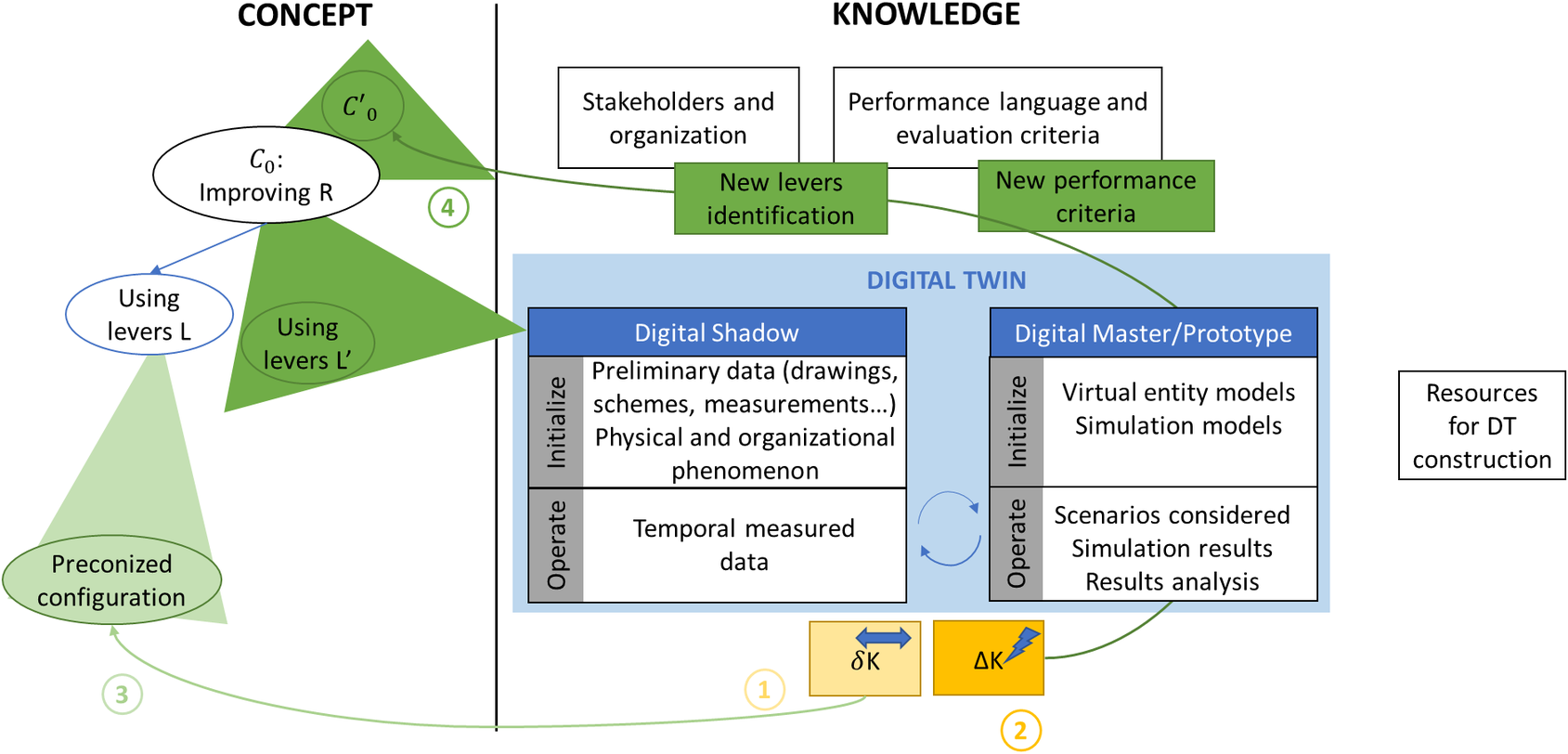
Figure 2. Long description
Concept expansions in depth correspond to the sub-concepts of “Improving R, using levers L,” while expansions in breadth correspond to the sub-concepts of C_0 “Improving R” that are not sub-concepts of “using levers L,” or correspond to concepts above the initial C_0.
Identifying the four types of expansion mentioned above offers a valuable understanding of the creative process across two complementary levels. At the level of creative performance, outcomes are traditionally characterized by novelty, usefulness and surprise (Simonton Reference Simonton2012). At the level of creative potential, Guilford (Reference Guilford1966) identifies fluency (the facility with which an individual retrieves available information and produces multiple related solutions) and flexibility (the ability to shift between categories of ideas and reinterpret the problem). The four expansion types speak to both levels:
-
• Novelty: By definition, the proposed solutions must not pre-exist in the knowledge space in order to be formulated in the C-space. Expansions in C therefore reflect the novelty of the creative outcome.
-
• Surprise (or non-obviousness): The structure of the C space, and in particular the distinction between in-depth and in-breadth expansions allows us to differentiate between predictable solutions developed within a predefined conceptual space, and more surprising solutions that extend beyond it. In parallel, δK-type expansions correspond to knowledge that can be derived from what is already embedded in the digital twin, while ∆K-type expansions reveal unexpected phenomena or behaviors that challenge existing assumptions. Both in-breadth and ∆K-type expansions thus capture the surprise dimension of creativity, introducing non-obvious insights that stimulate the design process (Agogué et al. Reference Agogué, Kazakçi, Hatchuel, Le Masson, Weil, Poirel and Cassotti2014; Le Masson et al. Reference Le Masson, Hatchuel and Weil2016).
-
• Usefulness (or value): The usefulness of a design outcome is assessed through the performance criteria defined in the design task. As the digital twin evolves, these criteria may themselves be refined or redefined, reflecting the designers’ evolving understanding of what counts as value and how it can be measured. This dynamic redefinition of evaluation criteria illustrates the ill-defined nature of creative problems (Simonton Reference Simonton2012), which are progressively clarified throughout the process.
-
• Fluency and flexibility: The δK-type expansions, by extending knowledge already embedded in the digital twin, directly support fluency: they provide designers with a richer information base from which multiple related solutions can be derived, as reflected in the in-depth expansions observed across cases. The ΔK-type expansions, by contrast, challenge existing assumptions and prompt reinterpretations of the design problem, thereby supporting flexibility and manifesting as in-breadth expansions.
3. Research questions
In the light of these elements, this research work aims to question the specific role that digital twins can play in engineering creative processes. Indeed, design in this field relies on an intense mobilization of knowledge, often expert and contextualized, which can both support and constrain creativity. This raises the following research questions:
RQ1: In what ways do digital twins function as knowledge-generating tools for designers?
RQ2: To what extent does this contribution of knowledge strengthen or discourage creativity?
RQ3: What characteristics should a digital twin designed specifically to support creativity in engineering possess?
4. Method
4.1. Relevance of the cases
This research is based on a multiple case study (Eisenhardt Reference Eisenhardt1989; Yin Reference Yin2009) on a series of 16 digital twin projects. These projects, conducted between 2020 and 2024 by teams from the software company Dassault Systèmes, were carried out in response to requests from various institutions, particularly French hospitals. Initially launched as pro bono exploratory efforts during the COVID-19 crisis, these projects later evolved into a formal commercial offering, with some hospitals commissioning multiple studies over time. The primary objective across all projects was to model and mitigate indoor air quality risks, especially airborne contamination risks in healthcare settings. Although these projects are uncommon, they are part of a broader trend toward disseminating digital twin technology within hospitals, which was discussed in Table 1 of the literature review.
Since the aim of the study was to test a theoretical framework against empirical data, the cases were selected for the specific characteristics they exhibited that appeared to facilitate the emergence of the phenomenon under study (Eisenhardt Reference Eisenhardt1989), that is creative uses of digital twins. This set of projects combines a substantial number of cases with strong internal coherence: all were initiated and executed by the same simulation team, using a shared technical infrastructure, and addressing similar classes of design problems, which made it a uniquely coherent and valuable dataset. Among this group, all projects for which documentation could be found were included, for a total of 16 digital twins. The context is atypical both in terms of the objects being modeled and the uses of digital twins, when compared to those typically described in the literature. Here, the digital twin served to make visible an otherwise imperceptible phenomenon for caregivers – aeraulic behavior – and enabled action upon a poorly understood risk at the time: the airborne transmission of COVID-19. This gave rise to a novel mode of intervention in hospital environments, focused on air quality issues. The combination of high initial unknown and the unconventional application of digital twins provided a unique opportunity to observe how such tools can support designers in their creative activities. In addition, it is important to note that studying digital twins in practice poses a particular access challenge: it is not sufficient to have access to the technical object itself. One must also be able to observe the action with it, including design decisions, back-and-forth between simulation and knowledge and interactions with stakeholders. The systematic documentation produced by Dassault Systèmes at the conclusion of each study, combined with the sustained involvement of the simulation expert across all projects, provided precisely this kind of access. In addition, the projects had the particularity of allowing the design of the digital twin to be observed in relation to an explicit design problem, consistent with the literature’s observations on the coupling between these two phenomena (Korenhof et al. Reference Korenhof, Blok and Kloppenburg2021; Borbach et al. Reference Borbach, Chun and Thielmann2025; Wagg et al. Reference Wagg, Burr, Shepherd, Xuereb Conti, Enzer and Niederer2025).
It should be noted that the twins under study are used in a punctual deployment mode, without real-time automated updating, as no investment was made in IoT sensors. This characteristic is inherent to the type of service studied (an external provider intervening at a specific moment in time) and represents a trade-off: it limits the depth of longitudinal use, but it is precisely what made systematic observation of the design action possible across 16 cases. Moreover, this study deliberately focuses on elementary design units and does not address repeatability or scalability. This configuration represents a conservative case: if meaningful creative expansions are observable under these conditions, one may reasonably expect them to be even more pronounced in more integrated, continuously updated digital twin deployments.
We can still argue that the cases are consistent with the definition of a digital twin proposed by VanDerHorn & Mahadevan (Reference VanDerHorn and Mahadevan2021), as they involve a virtual representation of a specific physical entity, supported by real-world data, albeit through sometimes manual processes. Table 2 applies to the cases the five defining characteristics that differentiate the digital twin from a conventional model or simulation defined by Korenhof et al. (Reference Korenhof, Blok and Kloppenburg2021).
Checking whether the cases under study meet the digital twin criteria presented in Korenhof et al. (Reference Korenhof, Blok and Kloppenburg2021)
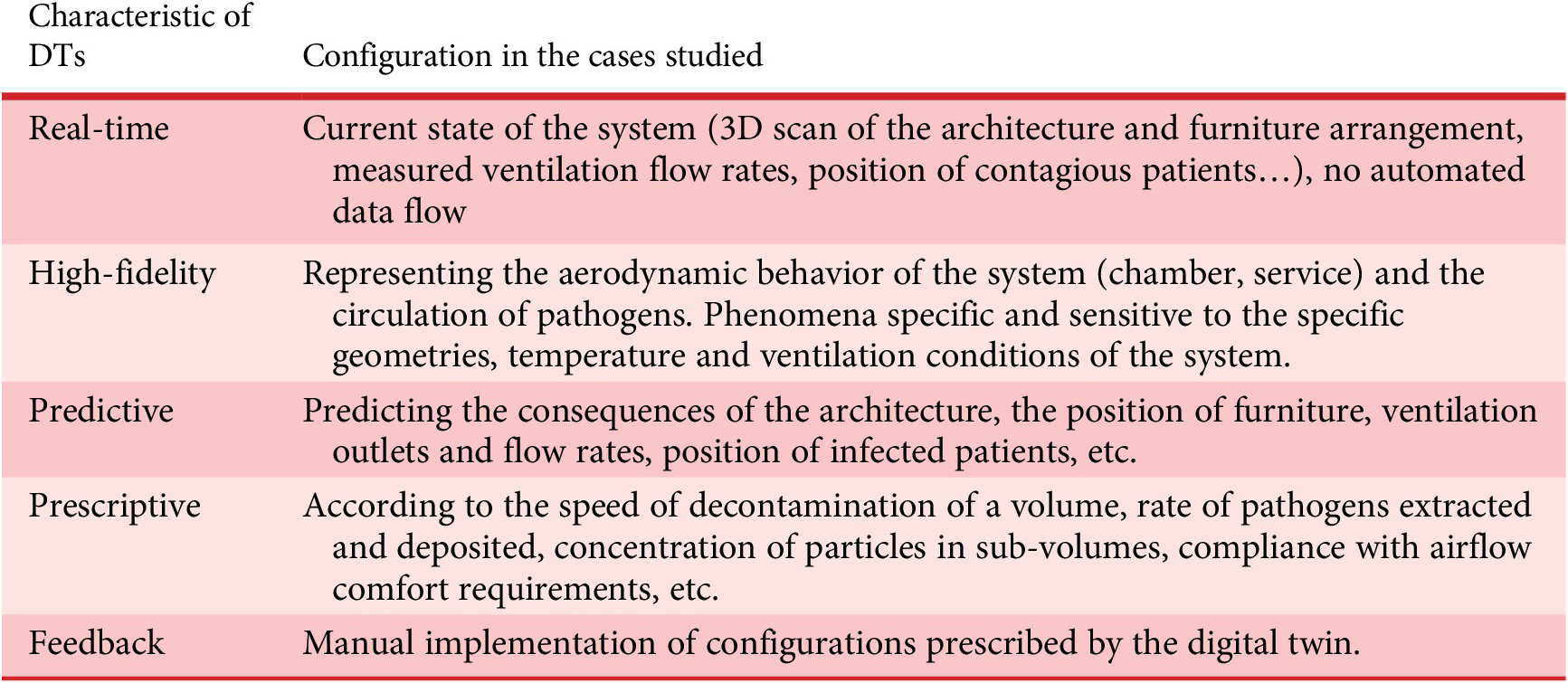
Table 2. Long description
The table consists of two columns: Characteristic of D T s and Configuration in the cases studied.
* Real-time: The configuration includes the current state of the system such as 3 D scans of architecture, furniture arrangement, measured ventilation flow rates, and positions of contagious patients, but notes there is no automated data flow.
* High-fidelity: Represents the aerodynamic behavior of the system and pathogen circulation. It covers phenomena specific and sensitive to geometries, temperature, and ventilation conditions.
* Predictive: Predicts consequences of architecture, furniture positioning, ventilation outlets, flow rates, and the position of infected patients.
* Prescriptive: Based on decontamination speed, rate of pathogens extracted or deposited, particle concentration in sub-volumes, and compliance with airflow comfort requirements.
* Feedback: Involves manual implementation of configurations prescribed by the digital twin.
4.2. Data collection
The empirical material was gathered in two phases, aimed first at understanding the overall context of all the projects, and then at conducting the detailed analysis itself.
The first phase consisted of semi-structured interviews conducted by the first author with the simulation expert who initiated and has overseen the entire digital twin program. These interviews pursued two objectives: obtaining a comprehensive view of the program’s history, key learnings and resources; and identifying relevant documentary sources. All interviews were recorded and fully transcribed. This initial phase led to the collection of 19 project reports in PowerPoint format. These reports were originally produced as presentation materials delivered by the simulation team to hospital stakeholders at the conclusion of each digital twin study. As such, they systematically documented each study’s objectives, modeling assumptions, simulated scenarios, simulation visualizations and conclusions, providing a structured and information-rich basis for analysis. While additional projects were carried out in this same design lineage, not all corresponding documentation could be retrieved. However, we were able to reconstruct most of the relevant corpus, corresponding to 16 distinct studies. Five digital twin projects have also resulted in scientific publications, which are included as secondary sources (Crawford et al. Reference Crawford, Vanoli, Decorde, Lancelot, Duprat, Josserand, Jilesen, Bouadma and Timsit2021; Tandjaoui-Lambiotte et al. Reference Tandjaoui-Lambiotte, Timsit, Alloui, Zahar and Vanoli2021; Beaussier et al. Reference Beaussier, Vanoli, Zadegan, Peray, Bezian, Jilesen, Gandveau and Gayraud2022; Buratti et al. Reference Buratti, Veillette, Bridier, Aubin, Lebrun, Ammaiyappan, Vanoli, Crawford, Duchaine and Jouvet2024; Mellon et al. Reference Mellon, Mahjoub, Metivier, Osinski, Gabassi, Delaugerre, Vanoli, Crawford and Le Goff2025).
On this basis, the first author constructed a first version of the C-K diagrams for each study. Since the documents do not allow for the systematic collection of all the elements of the C-K diagram, a second phase of data collection was therefore conducted by the first author through guided interviews with the simulation expert, structured around the specific missing elements identified in each C-K diagram. Throughout the analysis, the most complex modeling cases were brought to working sessions with the co-authors, who have expertise in C-K theory and contributed to resolving ambiguous categorizations. The identified expansions were also presented to the simulation expert for empirical validation, ensuring that the C-K representations accurately reflected the reality of each study. This validation process proved particularly generative: it systematically prompted the simulation expert to share information about post-restitution developments that were entirely absent from the documentary sources, drawing on his sustained contact with many of the hospitals through subsequent scientific collaborations, follow-up projects or informal exchanges. In several cases, this led to the identification of additional expansions implemented by hospitals after the restitution, and to revisions of the initial C-K models. This also provided an opportunity to examine the role of the digital twin in the conceptual expansions identified.
The empirical material therefore consists of 5-hour fully transcribed interviews as the primary data source, complemented by 19 PowerPoint reports and 5 scientific articles as secondary sources. While complementary interviews with hospital-side stakeholders would have further enriched the perspective and reduced the risk of interpretive bias, the simulation expert’s longitudinal knowledge of the program provided a sufficiently grounded and comprehensive account of each study’s trajectory. It should also be acknowledged that, as the initiator of the program, the simulation expert’s account may reflect a particular perspective on its development and outcomes, a limitation that the triangulation with documentary sources partially addresses. Finally, while the construction of C-K diagrams inevitably involves interpretive choices, the dual validation process, both theoretical through working sessions with the other authors, and empirical through presentation of the results to the simulation expert, was designed to mitigate these risks.
4.3. Data analysis
The collected materials were coded using the C-K design theory model described above to characterize the expansions generated during the projects. For each case, the initial concept, knowledge expansions (
$ \delta K $
 and
$ \Delta K $
 ) and concept expansions (in-depth and in-breadth) are summarized in a row of our results table. It may be noted that reasoning about concepts is generally rather non-linear, but as the study only seeks to highlight the occurrence of this phenomenon, the concepts generated are listed without structuring them. When the departition reveals implicit properties of the
$ {C}_0 $
 , it is indicated by its addition in square brackets in the results table. The interpretation with the C-K model was conducted by the first author, following the validation process described in the data collection section above. Studies are anonymized and numbered to preserve a certain chronology. The methodology used is illustrated in case 11 below, which presents all expansion types. The results of the C-K coding of the 16 studies are presented in full in the Appendix section.
4.4. Illustration: Case 11 analysis
In the context of a crisis caused by two COVID-19 clusters within the pneumology department of a French hospital, Dassault Systèmes’ teams were called upon. Environmental sampling had revealed the presence of the virus throughout the department, well beyond the rooms of infected patients. Faced with this particularly tense situation, healthcare staff, hospital hygiene teams and technical managers were uncertain about the appropriate measures to implement.
Based on architectural plans and theoretical airflow rates, Dassault Systèmes’ teams designed a digital twin of the entire pneumology department to run airflow simulations under various conditions, such as the location of the patient’s room within the ward and the opening or closing of doors. These analyses revealed insufficient ventilation efficiency in patient rooms, as well as significant air recirculation zones. As a result, virus-laden particles remained suspended in the air and were dispersed into the corridors when doors were opened. Based on these findings, specific recommendations were made regarding room layout to enhance air extraction performance.
Following these initial results, the hospital commissioned a specialized company to assess indoor air quality and perform in situ particle dispersion tests. These tests confirmed the general airflow patterns predicted by the simulations, particularly the location of recirculation zones. However, the measured airflow rates and extraction efficiencies were even lower than anticipated. Further investigations revealed that an extraction fan engine had failed, leaving half of the department without active ventilation. This malfunction, not prioritized by the outsourced maintenance provider, had remained unaddressed.
The digital twin was subsequently updated using the actual measured ventilation rates, clearly demonstrating the critical role of ventilation imbalance in the airborne spread of the virus within the department. The faulty engine was promptly repaired. This incident sparked a broader reflection on the maintenance practices of external contractors. The digital twin developed for the department will now serve as an educational tool to raise awareness about airborne risks, with the objective of improving maintenance protocols in light of the challenges of airborne propagation.
The following excerpts are taken from simulations conducted by the Dassault Systèmes team at the room level and full-service level (Figures 3 and 4).
Simulation results of the propagation of particles emitted by the patient, demonstrating recirculation loops in a chamber.

Figure 3. Long description
A multi-panel figure with four sequential frames showing a 3 D model of a hospital room containing a patient in a bed.
Panel 1 (Leftmost): The room is empty of particles. Three colored arrows indicate airflow directions: a red arrow points upward from the patient’s head, a green arrow points horizontally along the ceiling, and an orange curved arrow indicates a recirculation loop toward the foot of the bed.
Panel 2: A concentrated cluster of bright green particles begins to emerge and rise from the patient’s head area, following the path of the red arrow toward the ceiling.
Panel 3: The green particle cloud expands horizontally across the ceiling and begins to curve downward, following the recirculation path indicated in the first panel.
Panel 4 (Rightmost): The green particles have dispersed significantly, filling a large volume of the room’s air space and forming a clear recirculation loop that moves from the ceiling down toward the floor and back toward the patient.
Simulation results of particle trajectories emitted by an infected patient in the department, considering the broken engine.

Figure 4. Long description
A top-down architectural floor plan of a hospital department with multiple patient rooms. A color-coded scale at the bottom-left indicates Particle Age in seconds, ranging from 0 (dark blue) to 3600 (dark red).
* Source Zone: In the bottom-left quadrant, a high density of dark blue and light blue lines (0 to 1200 seconds) originates from a specific patient bed.
* Primary Flow: The particles form a thick blue and green stream that moves East along the main horizontal corridor.
* Dispersion: As the stream moves East, it branches North into a vertical corridor and South into several individual patient rooms.
* Age Gradient: Particles in the source room and immediate corridor are blue (younger). As they move further East and North, the lines transition to green and yellow (1800 to 2400 seconds).
* Stagnation and Reach: In the far-right rooms and the northernmost corridor, the trajectories become sparse and turn orange and red, indicating a particle age approaching 3600 seconds.
* Room Penetration: Several rooms on the South side of the main corridor show swirling green and yellow patterns, indicating that particles have entered and circulated within those spaces.
Based on these elements, the following C-K diagram is drawn up:
-
• Initial concept: In the C-space, the design problem is translated into the concept “Reduce the presence of pathogens outside infected patient rooms.” In K-space, the relevant actors are identified: hygiene teams, the pneumology department, nursing staff and hospital management.
-
• Digital twin initialization: The digital twin is constructed from available data on the real entity, including department plans, ventilation flow rates, environmental measurements and timelines from previous clusters. The representation includes an architectural model of the department, a human body model and a coughing model.
-
• First design approach: room-level intervention
-
○ This sub-concept is explored through room-level simulations. The results reveal air recirculation loops, generating δK – an expansion of knowledge already embedded in the digital twin.
-
○ Based on these insights, configuration adjustments (e.g., furniture placement) are proposed, leading to two new sub-concepts. Simulations generate additional δK regarding the potential aerodynamic behavior of reconfigured rooms. Solutions are evaluated using performance criteria associated with the theoretical particle extraction efficiency, allowing the identification of configurations that meet the initial design concept.
-
-
• Comparison with measured in situ data:
-
○ Measurements collected by the specialized provider reveal discrepancies with the initial simulations. This difference constitutes ∆K, prompting the design team to question the knowledge previously embedded in the digital twin.
-
○ The investigation also uncovers new information: a failed extraction fan and the inclusion of an additional stakeholder (the maintenance sub-contractor).
-
-
• Second design approach: ventilation system intervention
-
○ The new knowledge leads to a design approach focused on the overall ventilation system rather than on individual room configurations.
-
-
• Identification of an original design path: The inclusion of the maintenance actor opens a conceptual path that is indirectly related to the initial problem, representing an in-breadth expansion (Figure 5).
C-K coding of case 11, an enlarged version is included in the Appendix.

Figure 5. Long description
The diagram shows the C-K structure for Case 11, with a Concept space and a Knowledge space. In the Concept space, the initial concept C₀, “To reduce the presence of pathogens outside infected patient rooms,” is expanded in-depth into two strategies: acting at room level, leading to increasing extraction efficiency and modifying furniture layout; and acting on the ventilation system, leading to repairing the broken engine. The concept tree is also expanded in-breadth around a more general concept, “Preventing airborne risk in hospital departments,” linked to C₀ via “Integrating risk into spaces,” and extended toward “Integrating risk into ways of acting.” In the Knowledge space, the simulated aerodynamic behavior of the chamber constitutes δK expansion, while the inconsistency with actual measurements and the resulting discovery of the broken engine constitute expansion. The updated simulations feed back as further δK expansions.
Finally, the findings are summarized in the following line of the results table (Table 3).
Case 11 analysis summarized in results table
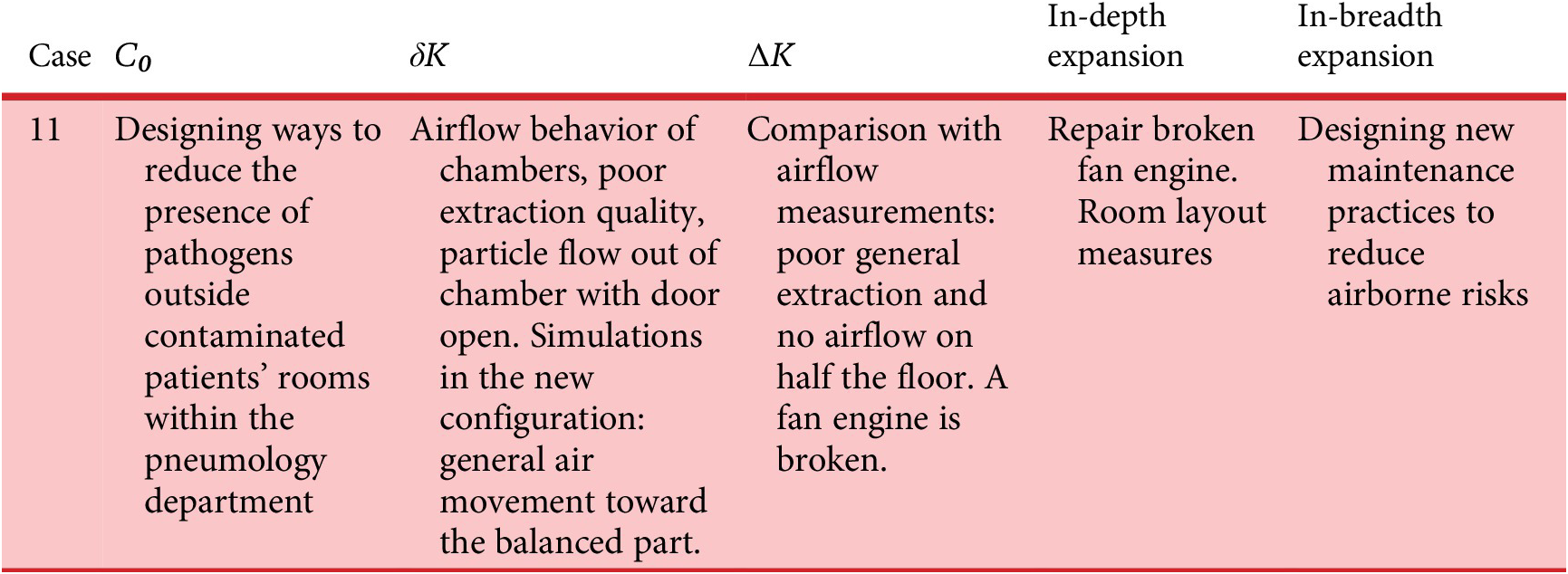
Table 3. Long description
The table consists of six columns.
Header Row:
1. Case
2. C sub 0
3. delta K
4. Delta K
5. In-depth expansion
6. In-breadth expansion
Data Row for Case 11:
- C sub 0: Designing ways to reduce the presence of pathogens outside contaminated patients rooms within the pneumology department.
- delta K: Airflow behavior of chambers, poor extraction quality, particle flow out of chamber with door open. Simulations in the new configuration: general air movement toward the balanced part.
- Delta K: Comparison with airflow measurements: poor general extraction and no airflow on half the floor. A fan engine is broken.
- In-depth expansion: Repair broken fan engine. Room layout measures.
- In-breadth expansion: Designing new maintenance practices to reduce airborne risks.
One may then verify the proposed correspondence between C-K theory analysis and classical creativity metrics:
-
• The novelty of the solutions is represented by the two types of expansions in C (new configurations of rooms, new maintenance practices).
-
• Surprise is represented, on the one hand, by ∆K-type expansion (ventilation is not as expected, and this has a major impact on virus propagation), and, on the other hand, by breadth expansions of concepts (maintenance practices must be redesigned to incorporate airborne risk).
-
• Usefulness is governed by performance criteria (circulation of pathogens outside the rooms of emitting patients, efficiency of the extraction system) and is reflected in knowledge expansions (in particular, the description of particle behavior within rooms and across the ward).
-
• At the level of creative potential, the δK expansions embody fluency: drawing on available information, they enable the generation of multiple related solutions (here, room layout configurations) and thus correspond to in-depth expansions. The ΔK expansion, triggered by the discrepancy between simulated and measured ventilation rates, illustrates flexibility, prompting a reinterpretation of both the problem and the range of relevant actors; it therefore corresponds to an in-breadth expansion.
Regarding the impact of the use of a digital twin on these expansions, the reader may reasonably observe that hospital teams could, in principle, have arrived at the results identified as the most surprising without resorting to the use of a digital twin. It was indeed possible to detect the malfunction without implementing the digital twin, just as it was conceivable to attempt to integrate airborne risk into maintenance practices once it had been recognized as critically important. It must be acknowledged, however, that this did not occur prior to the implementation of the digital twin, despite two clusters in the ward, several deaths and months of investigation. In the hospital context, transmission vectors are numerous, potential causes of failure are likewise manifold and actions can be difficult to prioritize. The implementation of the digital twin made it possible to examine parameters that cannot be continuously monitored and to assess the impact of some of them on the phenomenon to be prevented.
5. Results
5.1. Case-by-case analysis
The expansions generated by the explorations of each case are summarized in the following table. Please note that an empty box means that no expansion of this type has been observed in the case (Table 4).
By study analysis summary
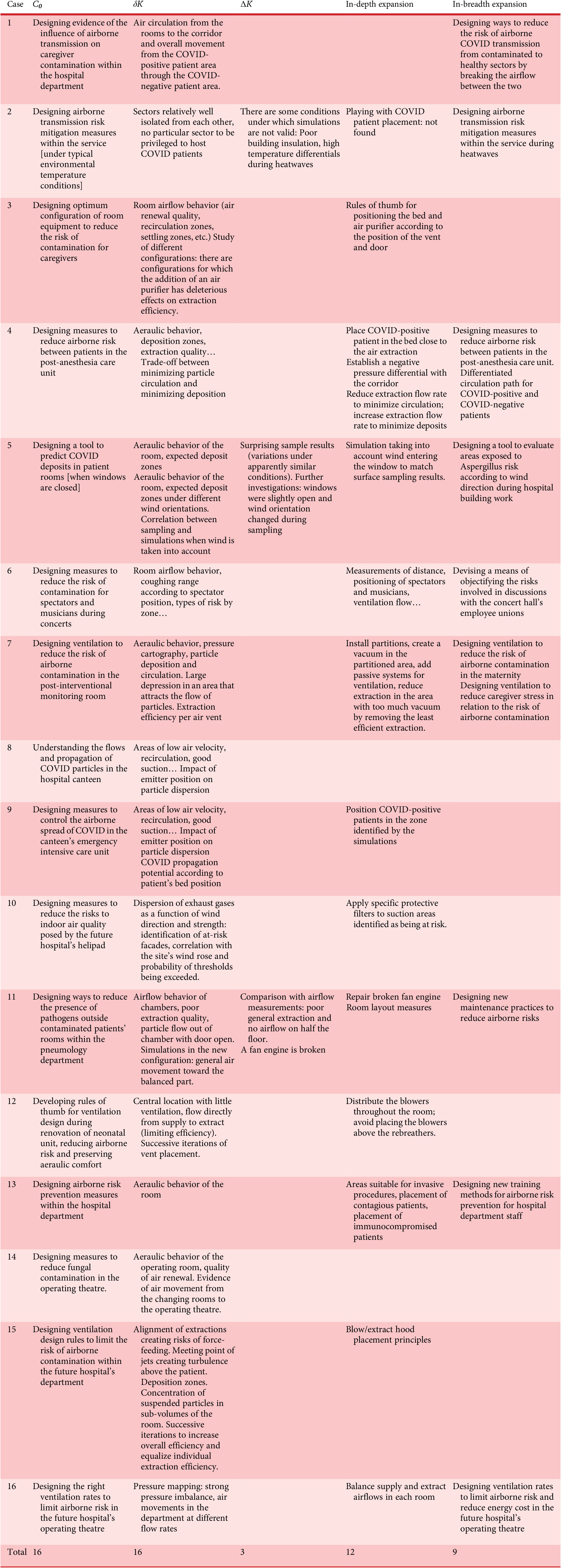
Table 4. Long description
The table is structured into six columns: Case, C sub 0, delta K, Delta K, In-depth expansion, and In-breadth expansion.
* Case 1: Focuses on airborne transmission influence on caregiver contamination. delta K identifies air circulation from rooms to corridors. In-breadth expansion suggests breaking airflow between contaminated and healthy sectors.
* Case 2: Mitigation measures under typical temperatures. Delta K notes simulations are invalid during heatwaves. In-breadth expansion addresses mitigation during heatwaves.
* Case 3: Room equipment configuration. delta K notes air purifiers can have deleterious effects. In-depth expansion provides rules for bed and purifier positioning.
* Case 4: Post-anesthesia care unit. delta K notes trade-offs between particle circulation and deposition. In-depth expansion suggests placing COVID-positive patients near air extraction.
* Case 5: Predicting deposits with closed windows. Delta K notes variations when windows are slightly open. In-breadth expansion applies this to Aspergillus risk during construction.
* Case 6: Concert hall risks. delta K analyzes coughing range by spectator position. In-depth expansion involves positioning and ventilation flow measurements.
* Case 7: Post-interventional monitoring room. delta K identifies a large depression area attracting particles. In-depth expansion suggests partitions and vacuum creation.
* Case 8: Hospital canteen flows. delta K identifies low air velocity and recirculation zones.
* Case 9: Canteen emergency intensive care. delta K notes propagation potential based on bed position. In-depth expansion suggests positioning patients based on simulations.
* Case 10: Future hospital helipad. delta K identifies at-risk facades from exhaust gases. In-depth expansion suggests protective filters for suction areas.
* Case 11: Pneumology department pathogens. delta K identifies poor extraction and broken fan engines. In-depth expansion involves repairing engines and room layout.
* Case 12: Neonatal unit renovation. delta K identifies central locations with little ventilation. In-depth expansion suggests distributing blowers and avoiding placement above rebreathers.
* Case 13: General hospital department prevention. delta K analyzes aeraulic behavior. In-depth expansion identifies areas for invasive procedures and patient placement.
* Case 14: Operating theatre fungal contamination. delta K shows air movement from changing rooms to the theatre.
* Case 15: Future hospital department design. delta K notes extraction alignment risks and turbulence above patients. In-depth expansion provides hood placement principles.
* Case 16: Future operating theatre ventilation rates. delta K identifies pressure imbalances. In-depth expansion suggests balancing supply and extract airflows.
The final row provides totals: 16 cases for C sub 0, 16 for delta K, 3 for Delta K, 12 for In-depth expansion, and 9 for In-breadth expansion.
5.2. Synthesis and interpretation
In order to provide an overview of the occurrence of different types of expansions, their occurrence in each case is represented by a cross in Table 5.
Summary of the types of expansion observed in each of the studies
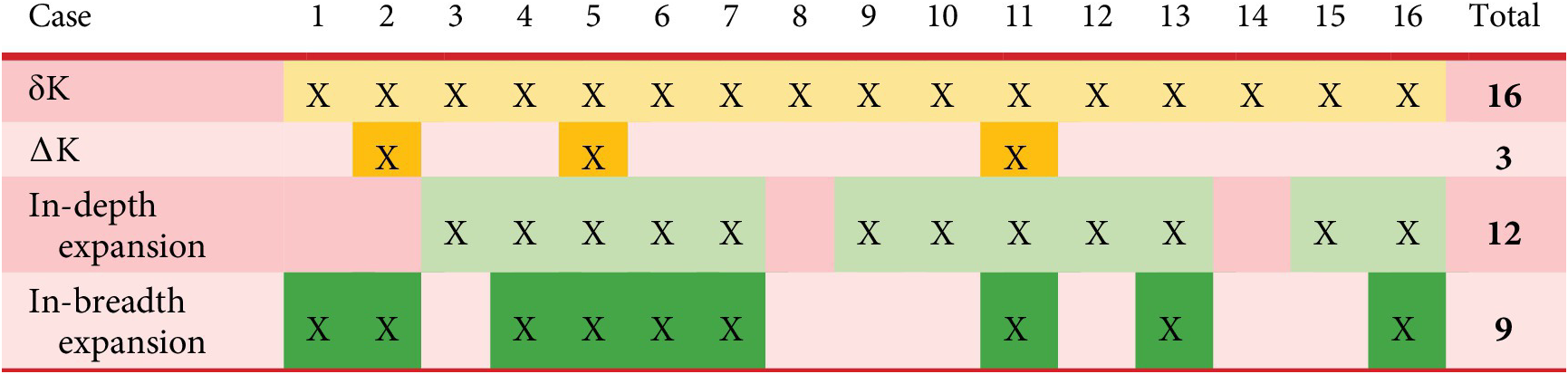
Table 5. Long description
The table consists of 18 columns (Case, 1 through 16, and Total) and 4 rows of expansion types.
* Row 1, delta C: Marked with an X for every case from 1 to 16. Total: 16.
* Row 2, Delta C: Marked with an X only for cases 2, 5, and 11. Total: 3.
* Row 3, In-depth expansion: Marked with an X for cases 3, 4, 5, 6, 7, 9, 10, 11, 12, 13, 15, and 16. Total: 12.
* Row 4, In-breadth expansion: Marked with an X for cases 1, 2, 4, 5, 6, 7, 11, 13, and 16. Total: 9.
Based on the analysis of the 16 digital twin projects, it is now possible to answer the research questions:
RQ4: In what ways do digital twins function as knowledge -generating tools for designers?
As demonstrated in Table 5, in all the cases studied, the implemented digital twin produces δK-type knowledge. The C-K codings allow the identification of two mechanisms linking the information contained in the digital twin to the δK expansions usable by the designer. First, the digital shadow grounds the digital master in the instance-specific data of the actual physical entity (in these cases, the real geometry, measured ventilation flow rates and spatial configuration of each hospital department). This specificity means that the knowledge produced by the digital master (for example, regarding phenomena that are difficult or impossible to measure) is directly actionable and interpretable on the physical entity under study, unlike on a generic approximation. Second, the digital prototype enables exploration of the physical entity’s potential future states, such as the aeraulic behavior of a rearranged room or a modified ventilation layout. Together, these two components allow the digital twin to reveal phenomena that are invisible or inaccessible to direct observation, thereby providing designers with a contextualized and explorable knowledge base that extends beyond what the physical entity currently makes visible.
∆K-type knowledge generation – that challenges the assumptions embedded in the digital twin – occurred only in three cases (2, 5 and 11). This limited occurrence reflects the difficulty of accessing reliable field data in hospital settings, particularly regarding aeraulic behavior. Yet precisely because it requires confronting simulation outputs with physical measurements, its emergence is structurally tied to the twinning mechanism. In a first direction, comparing observational data with the simulation results from the digital prototype helps identify inconsistencies in the model, thereby prompting the need for new insights. This is particularly salient in Case 5: the digital twin was used to predict COVID particle deposits in patient rooms, predictions that proved inconsistent with subsequently collected samples. This discrepancy prompted a re-examination of the modeling assumptions, revealing the previously undetected influence of external wind conditions on indoor particle trajectories – a finding sufficiently novel and robust to result in a scientific publication (Tandjaoui-Lambiotte et al. Reference Tandjaoui-Lambiotte, Timsit, Alloui, Zahar and Vanoli2021).
In a second direction, the digital prototype’s outputs orient the designers’ attention toward the physical entity in a new way, knowing what to look for, and where. Rather than revealing discrepancies directly, the virtual model restructures the observation of the physical system, making previously invisible phenomena detectable. In case 11, the simulation’s predictions about recirculation zones and extraction inefficiencies were precisely what prompted the hospital to commission in-situ dispersion tests in the first place – tests that then revealed the broken engine. Together, these two directions constitute a reflexive loop that is specific to the digital twin’s architecture: the physical entity generates knowledge that challenges the virtual model, while the virtual model transforms the way designers look at the physical entity. This loop, even when operated manually rather than automatically, is what enables the digital twin to function as a genuinely reflexive tool rather than a purely predictive one.
RQ2: To what extent does this contribution of knowledge strengthen or discourage creativity?
Our study identified 12 cases involving in-depth expansions of concepts and 9 cases involving in-breadth expansions, out of the 16 cases studied.
In seven of these 12 in-depth concept expansion cases, we coded more than one sub-concept related to the initial concept (see the C-K diagrams presented in the Appendix for more details). Here, the use of the twin allows users to simulate and evaluate configurations that closely resemble the digital master, either by mobilizing different design levers already identified and therefore easily modifiable in the digital prototype, or by exploring distinct performance criteria. Thus, δK-type expansions support fluency in the creative process by identifying distinct solutions to the design problem and assessing their usefulness.
Case 4 illustrates this phenomenon well: the analysis shows the incompatibility between the criteria of minimizing particle deposition and reducing the number of particles in suspension when the designer acts on the extraction flow rate parameter. In this context, the use of the digital prototype’s capacity to explore the system’s parameters contributes to a better definition of the design problem, its structuring on sub-problems based on the performance criteria to opt for, and thus to the generation of a greater number of solutions whose value is better characterized.
We also observe in-breadth concept expansions in nine of the sixteen cases, revealing the generation of unexpected solutions and, in some cases, significant redefinitions of the creative problem. In three of these cases, these expansions are associated with ∆K-type knowledge expansions, which play an explicit role in redefining the problem. By allowing for different formulations of the design problem, these expansions constitute a resource to enable flexibility (as opposed to fluency) in the creative process.
It is important to note that, in the other six cases, only δK-type expansions appear in the knowledge space. This suggests that this type of expansion does not necessarily hinder creative dynamics. In several cases, the in-breadth expansion is enabled by the digital twin’s capacity to make the specific physical system visible and discussable to actors beyond the initial design team. Because the simulation is grounded in the actual geometry, measured parameters and real spatial configuration of the system under study, it renders risks and trade-offs concrete enough to be appropriated by non-expert stakeholders, opening new value criteria and design territories that would not have emerged from a generic simulation. The ability to get stakeholders, who may be in conflict with one another, to work together once initial results have been achieved is a point highlighted by the expert interviewed. For example, in case 13, the visualization of airborne risk patterns in this specific department enables the design team to develop a training program for healthcare staff. In case 6, the simulation of contamination risks in this concert hall makes the risk mitigation measures concrete enough to be addressed during discussions with the unions. However, in this type of situation, the contribution of the digital twin is harder to quantify directly, and it is possible that some of these expansions may have occurred, at least in part, for contingent reasons.
It is also noteworthy that no in-depth exploration was observed in four cases. In case 14, which investigates potential causes of a high rate of fungal infections, the analysis does not result in concrete proposals for action. Similarly, in case 8, focused on the hospital canteen, the exploratory nature of the approach and the absence of clearly identified levers for intervention limit the depth of the investigation. In cases 1 and 2, however, the use of the digital twin contributes to reframing the design problem itself: in case 1, it reveals a previously unknown phenomenon, thereby opening new avenues for action; in case 2, the absence of an optimal solution prompts the hospital to reconsider the problem formulation, shifting the focus toward patient placement during heatwave episodes. These four cases suggest that the use of the digital twin is not in itself sufficient to guarantee creative exploration, or even exploration at all. For the knowledge produced to go beyond the purely descriptive, the design problem must be correctly formulated and associated with actionable levers on the physical entity. However, the digital twin can find renewed utility when the context evolves: this is illustrated both by case 2, where the digital twin makes it possible to identify ways to optimize patient placement during heatwaves rather than in winter, and by case 10, in which the digital twin developed for case 9 is reused and adapted to address a new question following the reconfiguration of the physical system.
RQ3: What characteristics should a digital twin designed specifically to support creativity in engineering possess?
Our observations open several avenues for considering digital twins as genuine resources for creativity, particularly regarding their capacity to generate unexpected solutions.
First, the generation of ∆K-type knowledge appears to be a powerful driver for producing such novel outcomes. Several conditions must be met to foster the emergence of this kind of knowledge. It is first necessary to compare the simulation results produced by the digital prototype with those obtained from the digital shadow. This implies that the twinning mechanism is not limited to data collection of the model’s input parameters, but also to measuring a set of parameters related to the simulation outputs. Once this is done, it becomes crucial to distinguish discrepancies arising from inherent measurement or modeling uncertainties from those that should prompt a reassessment of the designer’s existing knowledge – that is, to explicitly identify the occurrence of ∆K-type expansions.
We also observe that in several cases associated with breadth expansions of the concept space, new relevant actors were discovered and incorporated into the design process, leading to the introduction of new value criteria. For example, in case 6, the digital twin was used to design interaction scenarios with concert hall employees; in case 7, to reduce caregiver stress; and in case 16, to estimate ventilation costs while minimizing airborne transmission risks – a criterion more relevant to hospital administrators than to caregivers themselves. This finding extends Korenhof et al.’s (Reference Korenhof, Blok and Kloppenburg2021) call to explicitly recognize the initial intentions of digital twin designers and the normative frameworks these impose on the evolution of the associated physical entity. Beyond this recommendation, our results suggest that it is equally essential to allow the progressive integration of new actors and value criteria throughout the design process. This, in particular, suggests the need to consider adding different services, particularly in terms of representation and optimization.
Taken together, these findings urge digital twin designers to consider the temporal evolvability of their solutions if they are to effectively support creative processes. In light of the fixation risks linked to modification costs (Crilly Reference Crilly2015), it is necessary to enable users to easily incorporate the various types of knowledge acquired during the design process. This issue becomes even more critical in contexts characterized by limited engineering capacities, such as hospitals.
6. Discussion and further research
6.1. Main contribution
This study contributes to the growing body of research exploring the relationship between digital tools – particularly digital twins and simulation models – and design creativity. Beyond their established value for optimization and validation, our analysis of a lineage of 16 digital twins, examined through the lens of C-K theory, shows that they also generate knowledge that designers can mobilize for creative exploration.
Our results reveal that digital twins can support distinct regimes of knowledge production – from δK, the validation and refinement of expected performances within the model’s existing assumptions, to ΔK, the emergence of knowledge that challenges those assumptions. These two regimes, in turn, enable different modes of solution generation: in-depth expansions, which explore predefined design spaces, and in-breadth expansions, which produce unexpected solutions that may prompt a redefinition of the design problem itself. Central to these processes are the quality of the initial problem formulation, the existence of actionable levers on the physical entity and the ability to confront simulation outputs with field measurements. These observations are, however, bounded by the scope of the methodology employed, which cannot establish that these expansions would not have occurred in its absence. The claim advanced here is therefore not that the use of digital twins is a necessary or sufficient condition for creative expansion, but that it constitutes one identifiable pathway through which such expansions can be produced – provided designers actively engage with the knowledge generated, rather than relying solely on automated outputs.
In doing so, these findings nuance and enrich the current academic discourse on digital twins (X. Liu et al. Reference Liu, Jiang, Tao, Xiang, Jiang, Sun, Kong and Li2023; Van Beek et al. Reference Van Beek, Nevile Karkaria and Chen2023; Wooley et al. Reference Wooley, Silva and Bitencourt2023; Yang et al. Reference Yang, Langley and Andrade2022). They confirm the classical view of digital twin as a tool that supports solution generation within established design spaces, while also showing that – under certain conditions – they can contribute to more surprising shifts in the exploration process. This also offers renewed insight into the ongoing debate concerning the nature of the relationship between the physical and virtual entities of digital twins (Jones et al. Reference Jones, Snider, Nassehi, Yon and Hicks2020; Lim et al. Reference Lim, Zheng and Chen2020; Liu et al. Reference Liu, Fang, Dong and Xu2021; Semeraro et al. Reference Semeraro, Lezoche, Panetto and Dassisti2021; VanDerHorn & Mahadevan Reference VanDerHorn and Mahadevan2021). From a creative standpoint, the central challenge may lie less in the degree of automation than in the capacity of digital twins to enrich or critically engage the designer’s knowledge.
This perspective also enables the concerns raised by Korenhof et al. (Reference Korenhof, Blok and Kloppenburg2021) and Borbach et al. (Reference Borbach, Chun and Thielmann2025) regarding the very notion of digital twins to be engaged with: recognizing their inherently partial and biased character can transform these limitations into drivers of more creative uses.
Beyond these findings, our results also carry implications for the design of digital twins themselves, along both a design and a conceptual dimension.
From a design standpoint, two implications follow. First, for digital twin designers, this means creating conditions that allow models to evolve and integrate learning over time. This requirement raises important questions about the underlying technological architectures – advocating, for example, for more modular designs capable of incorporating new data or supporting the recombination of components (Werner et al. Reference Werner, Schuseil, Hämmerle, Schaper and Hölzle2025). Second, our results resonate with Wagg et al. (Reference Wagg, Burr, Shepherd, Xuereb Conti, Enzer and Niederer2025) regarding the tension between parsimony and exhaustiveness: while good modeling practices and economic constraints often favor parsimony, the ability of digital twins to reveal emerging phenomena or generate surprises supports a more comprehensive integration of available knowledge and data. The right balance between these two orientations remains an open question.
From a conceptual standpoint, two contributions can be highlighted. First, our findings highlight the relevance of the representation proposed by Stark et al. (Reference Stark, Kind and Neumeyer2017), which distinguishes between the digital master and the digital shadow, for understanding how different model elements may influence future creativity. Second, this study reinforces the value of C-K theory for analyzing creative design processes, providing a robust framework for interpreting the multiple roles digital twins can assume in design reasoning (Kroll et al. Reference Kroll, Le Masson and Weil2014; Hatchuel et al. Reference Hatchuel, Le Masson, Thomas and Weil2021; Bordas et al. Reference Bordas, Le Masson, Thomas and Weil2024). The methodological approach used in this study – particularly the distinction between the four types of expansion – offers a basis for understanding and comparing how other computer-based design tools may influence creativity.
6.2. Extending the cases to continuous and real-time twinning mechanisms
The cases studied present limitations relative to canonical definitions of the digital twin, particularly due to the absence of an automated connection between physical and virtual entities. Two factors explain this absence. First, installing IoT sensors to measure airflow rates at ventilation duct outlets was prohibitively costly. Second, automatically identifying beds occupied by contagious or vulnerable patients would have required access to confidential medical data. It should also be noted that a large number of phenomena (the opening of a window or a door, variations in outdoor temperature or radiator output…) can temporarily disturb airflows. Seeking a real-time representation of the system would therefore make little sense given the timescales associated with decision-making in hospital settings. A realistic implementation of a digital twin in this context must consequently identify which variables are worth monitoring from a technical, economic and managerial standpoint. In the cases presented, several such variables can nonetheless be updated, most notably the architecture and interior layout of spaces, by means of 3D scans captured with a smartphone.
The more structural limitation of the cases presented with respect to the notion of digital twin lies primarily in the mode of deployment, through the punctual intervention of an external provider. We therefore observe the effects of digital twin implementation over a short time horizon, but not its routine use.
An alternative reading would present the cases in this article not as digital twins but as the development of instance-specific models, potentially as an initial step toward digital twin implementation. This reading would not be misleading: a number of the surprising, assumption-challenging expansions observed (ΔK, as defined earlier) could accordingly be understood as learning generated during the calibration of the simulation model, and the findings of the article would apply under this reading. We nonetheless retain the framing of the digital twin, for a reason that goes beyond definitional debates across the sectors in which the concept is deployed. This framing allows us to interrogate the relationship to action in the interaction between the physical and virtual entities. Thus, where conventional conceptualizations tend to produce a tool for steering the physical entity according to a pre-established logic of action (Korenhof et al. Reference Korenhof, Blok and Kloppenburg2021), introducing the notion of creativity makes it possible to envision more reflexive uses of digital twins, and to view them as tools for exploring new questions and approaches to action.
What would a more automated and more persistent twinning process produce? In principle, the configurations described in this article can be regarded as a worst-case scenario relative to more integrated digital twin deployments. As such, they do not call our results into question, which aim not to describe standard uses of digital twins, but to highlight creative potential that goes beyond those typically documented in the literature. Two considerations point in opposite directions. On one hand, a more robust physical-virtual coupling, making the confrontation between digital shadow and digital master continuous, could increase the occurrence of ΔK. This would apply, for instance, when continuous monitoring reveals unexpected changes in the physical system, such as equipment degradation or evolving conditions of use, or when measured data collected after a modification of the physical system fails to match the model’s predictions, forcing a revision of the assumptions embedded in the digital twin. On the other hand, our results suggest a note of caution: it is precisely because the design of the digital twin and the action on the physical entity were coupled that creative uses of the system became observable. This capacity for reflexivity may be more difficult to trigger when the digital twin has been deployed on a continuous basis under a different design intention, whose rationale may moreover have been lost over time. This tension suggests that examining how real-time and continuous connection might affect the results presented in this article represents a promising avenue for future research.
6.3. Comparison with other application areas and transferability of results
The modeling approach developed in this study, and the associated analysis of C- and K-expansions, is not specific to the hospital domain and could be applied in more traditional engineering sectors such as automotive or aerospace.
However, the originality of the case – airborne propagation in hospital environments – also limits our ability to generalize the results. We do not claim to describe systematic phenomena in all uses of digital twins, but rather to highlight possible avenues for more creative uses that now require examination in other, more conventional settings. Whether similar knowledge- and solution-generation regimes would emerge in industries with different constraints remains an open question.
From a technical standpoint, significant differences may arise in contexts where the systems to be twinned are typically designed from the outset using computer-based modeling and simulation tools (Lyytinen et al. Reference Lyytinen, Weber, Becker and Pentland2024). As a result, extensive digital models are often already available, and the functioning of the underlying systems is generally well understood. This contrasts sharply with the hospital context studied here, where many components of the physical system remain partially unknown and few reliable models exist. These differences have several implications.
First, the presence of pre-existing models and large volumes of data may considerably increase the efficiency of digital-twin construction in traditional engineering industries (Michael et al. Reference Michael, Cleophas, Zschaler, Clark, Combemale, Godfrey, Khelladi, Kulkarni, Lehner, Rumpe, Wimmer, Wortmann, Ali, Barn, Barosan, Bencomo, Bordeleau, Grossmann and Karsai2025). However, these same resources may reinforce established assumptions and introduce risks of fixation that were not observable in our study.
Second, the fact that these systems are already well understood may reduce the opportunities for digital twins to generate genuinely surprising insights, as many relevant phenomena could be already documented and tightly controlled.
Third, data-rich contexts may encourage more opportunistic, data-driven approaches to digital-twin development (Parmar, Leiponen & Thomas Reference Parmar, Leiponen and Thomas2020). Such approaches can differ significantly from the perspective adopted in our study, which begins by clarifying the designers’ intentions to improve the physical entity and builds the digital twin as a means to support that intentional transformation.
Organizational conditions would also likely differ across sectors. The hospital context was characterized by limited engineering capabilities, which justified the direct involvement of specialist teams from Dassault Systèmes. Their participation enabled rapid iterations, the mobilization of multiple modeling tools and the formalization of interactions between domain experts and digital-twin designers. In contrast, engineering-intensive sectors usually possess established modeling practices and the capability to construct their own digital twins using software building blocks provided by vendors – while often having less freedom to add and recombine these components.
Overall, while the analytical framework and modeling logic appear transferable across application domains, the nature and intensity of the creative mechanisms observed here are likely to depend on domain characteristics, data availability, modeling maturity and the organizational configuration in which digital twins are deployed.
6.4. Fixation mechanisms and designer capabilities in digital-twin-supported design
Our study also contributes to the literature on design fixation by showing how several forms of fixation can emerge during the use of digital twins. First, fixation may arise when the initial design problem is incompletely or insufficiently formulated, leading the reasoning process to follow biased trajectories from the outset. Second, fixations can occur when the digital twin’s models are themselves limited or overly aligned with existing assumptions, reinforcing recursive forms of reasoning in which designers “see only what the model allows them to see.” These effects rest in particular on mechanisms of model reuse and inherited modeling structures, which may unintentionally restrict the range of explored possibilities. Third, fixation may result from designers not fully leveraging the learning generated by the digital twin.
These observations suggest that developing digital twins for creative design requires competencies that extend beyond technical modeling expertise. Designers of digital twins must not only possess the technical expertise required to develop them, but also lead the design reasoning process: helping teams clarify the initial problem, making underlying assumptions explicit, supporting the interpretation and integration of new knowledge and designing model architectures that remain open to reframing and emergence. Such roles call for a combination of pedagogical, organizational and architectural skills that have received limited attention in prior research on digital-twin development.
While these contributions shed light on knowledge-related fixation, our study does not address other forms of fixation that may arise in computer-based design environments. Technical limitations, modeling rigidities and the cost or difficulty of making iterative modifications have all been documented in the literature but fall outside the scope of our empirical material. In addition, the role of interfaces remains largely unexplored in the context of digital twins. Prior work has shown how designers may develop a “false sense of completeness” when interacting with digital representations (Robertson & Radcliffe Reference Robertson and Radcliffe2009), suggesting that interface features could influence how designers perceive the extent and structure of the design space. How such interface-related effects manifest in digital-twin–mediated design therefore constitutes an important avenue for further investigation, in particular to facilitate the involvement of a diverse range of stakeholders (de Wilde de Wilde et al. Reference de Wilde, van Geldere, Schäfer and Meijer2025).
6.5. Direction for future research
This study opens up several avenues for furthering our understanding of the role of digital twins in creative design processes and overcoming certain identified limitations. Three directions appear particularly promising.
First, it is necessary to examine the robustness and generalizability of the results in other design contexts. More traditional industries, such as automotive or aerospace, are characterized by a much greater availability of data and pre-existing models, as well as a more in-depth knowledge of physical systems. Studying these environments would make it possible to assess the extent to which the expansion and fixation regimes identified here are maintained when the level of technical expertise is higher. This includes analyzing the effect of model and data richness: does it promote faster exploration or generate new forms of fixation linked to model reuse or overconfidence in established representations? Another point of investigation concerns the strength of the real-virtual coupling. In some sectors, digital twins are strongly or almost continuously synchronized with the physical entity. Understanding the extent to which more real-time coupling facilitates, limits or transforms opportunities for expansion – for example, by reducing uncertainty, making certain phenomena more visible or conversely, reinforcing dependence on observed behaviors – would be an important addition to the present study.
Second, our analysis views twins as a one-off unit of action, whereas the concept of digital twin encourages us to view this tool as a long-term resource. Longitudinal studies would provide a better understanding of how digital twins influence creativity over extended periods of time, particularly by assessing the learning that occurs once the novelty effect following the implementation of the digital twin has worn off, as well as the effects of potential discrepancies between the twin’s initial objectives and the designer’s subsequent goals.
Third, an important perspective concerns the design of technologies and organizations that are more conducive to creative reasoning. The results particularly highlight the need to consider the evolvability of digital twins over time, which raises both the question of the most suitable architectures and that of the resources to be provided to non-expert users so that they can effectively integrate new learning or develop the model. Interfaces and representations also deserve specific attention, as they can contribute to certain forms of fixation or, conversely, facilitate exploration and reinterpretation. Finally, the study invites us to examine the most appropriate organization to support truly creative use of digital twins. In particular, our results suggest that existing work on “defixation-oriented leadership” (Ezzat Reference Ezzat2017), aimed at helping teams detect and overcome fixation mechanisms, could be extended and adapted to the specific case of digital twins.
Acknowledgment
Artificial intelligence (DeepL and ChatGPT 5.1, Sonnet 4.6) was used during the writing process to translate sections originally drafted in French, and to assist with the editing and stylistic refinement of sections drafted directly in English. All passages were carefully proofread by the authors, who bear full responsibility for the content of this article.
Financial support
Dassault Systèmes and partners of the Bauhaus for Transitions of Mines Paris-PSL.
Appendix: C-K codings of empirical cases
C-K coding of case 1.

Figure A1. Long description
C-K framework applied to the analysis of case 1. C₀: Designing evidence of the influence of airborne transmission on caregiver contamination within the hospital department δK: Air circulation from the rooms to the corridor and overall movement from the COVID-positive patient area through the COVID-negative patient area. ΔK: In depth expansion: In breadth expansion: Designing ways to reduce the risk of airborne covid transmission from contaminated to healthy sectors: by breaking the airflow between the two.
C-K coding of case 2.

C-K coding of case 3.

Figure A3: Long description
C-K framework applied to the analysis of case 3. C₀: Designing optimum configuration of room equipment to reduce the risk of contamination for caregivers δK: Room airflow behavior (air renewal quality, recirculation zones, settling zones, etc.) Study of different configurations: there are configurations for which the addition of an air purifier has deleterious effects on extraction efficienc ΔK: In depth expansion: Rules of thumb for positioning the bed and air purifier according to the position of the vent and door In breadth expansion:
C-K coding of case 4.

Figure A4. Long description
C-K framework applied to the analysis of case 4. C₀: Designing measures to reduce airborne risk between patients in the post anesthesia care unit δK: Aeraulic behavior, deposition zones, extraction quality… Trade-off between minimizing particle circulation and minimizing deposition ΔK: In depth expansion: Place COVID positive patient in the bed close to the air extraction Establish a negative pressure differential with the corridor Reduce extraction flow rate to minimize circulation, increase extraction flow rates to minimize deposits In breadth expansion: Designing measures to reduce airborne risk between patients in the post anesthesia care unit -> differentiated circulation path for COVID positive and negative patients
C-K coding of case 5.

Figure A5. Long description
C-K framework applied to the analysis of case 5. C₀: Designing a tool to predict COVID deposits in patient rooms [when windows are closed] δK: Aeraulic behavior of the room, expected deposit zones Aeraulic behavior of the room, expected deposit zones under different wind orientations. Correlation between sampling and simulations when wind taken into account ΔK: Surprising sample results (variations under apparently similar conditions). Further investigations: windows were slightly open and wind orientation changed during sampling Simulation taking into account wind entering the window to match surface sampling results. Designing a tool to evaluate areas exposed to aspergillus risk according to wind direction during hospital building In depth expansion: Simulation taking into account wind entering the window to match surface sampling results. In breadth expansion: Designing a tool to evaluate areas exposed to aspergillus risk according to wind direction during building work
C-K coding of case 6.

Figure A6. Long description
C-K framework applied to the analysis of case 6. C₀: Designing measures to reduce the risk of contamination for spectators and musicians during concerts δK: Room airflow behavior, coughing range according to spectator position, types of risk by zone… ΔK: In depth expansion: Measurements of distance, positioning of spectators and musicians, ventilation flow…In breadth expansion: Devising a means of objectifying the risks involved in discussions with the concert hall’s employee unions
C-K coding of case 7.

Figure A7. Long description
C-K framework applied to the analysis of case 7. C₀: Designing ventilation to reduce the risk of airborne contamination in the post interventional monitoring room δK: Aeraulic behavior, pressure cartography, particle deposition and circulation. Large depression in an area that attracts the flow of particles. Extraction efficiency per air vent ΔK: In depth expansion: Install partitions, create a vacuum in the partitioned area, add passive systems for ventilation, reduce extraction in the area with too much vacuum: by removing the least efficient extraction. In breadth expansion: - Designing ventilation to reduce the risk of airborne contamination in the maternity - Designing ventilation to reduce caregiver stress in relation to the risk of airborne contamination
C-K coding of case 8.

Figure A8. Long description
C-K framework applied to the analysis of case 8. C₀: Understanding the flows and propagation of COVID particles in the hospital canteen δK: Areas of low air velocity, recirculation, good suction… Impact of emitter position on particle dispersion ΔK: In depth expansion: In breadth expansion:
C-K coding of case 9.

Figure A9. Long description
C-K framework applied to the analysis of case 9. C₀: Designing measures to control the airborne spread of COVID in the canteen’s emergency intensive care unit δK: Areas of low air velocity, recirculation, good suction… Impact of emitter position on particle dispersion COVID propagation potential according to patient’s bed position ΔK: In depth expansion: Position COVID positive patients in the zone identified by the simulations In breadth expansion:
C-K coding of case 10.

Figure A10. Long description
C-K framework applied to the analysis of case 10. C₀: Designing measures to reduce the risks to indoor air quality posed by the future hospital’s helipad δK: Dispersion of exhaust gases as a function of wind direction and strength: identification of at risk facades, correlation with the site’s wind rose and probability of thresholds being exceeded. ΔK: In depth expansion: Apply specific protective filters to suction areas identified as being at risk. In breadth expansion:
C-K coding of case 11.

Figure A11. Long description
C-K framework applied to the analysis of case 11. C₀: Designing ways to reduce the presence of pathogens outside contaminated patients’ rooms within the pneumology department δK: Airflow behavior of chambers, poor extraction quality, particle flow out of chamber with door open. Simulations in the new configuration: general air movement towards the balanced part. ΔK: Comparison with airflow measurements: poor general extraction and no airflow on half the floor. A fan engine is broken In depth expansion: Repair broken fan engine Room layout measures In breadth expansion: Designing new maintenance practices to reduce airborne risks
C-K coding of case 12.

Figure A12. Long description
C-K framework applied to the analysis of case 12. C₀: Developing rules of thumb for ventilation design during renovation of neonatal unit, reducing airborne risk and preserving aeraulic comfort δK: Central location with little ventilation, flow directly from supply to extract (limiting efficiency). Successive iterations of vent placement. ΔK: In depth expansion: Distribute the blowers throughout the room, avoid placing the blowers above the rebreathers.In breadth expansion:
C-K coding of case 13.

Figure A13. Long description
C-K framework applied to the analysis of case 13. C₀: Designing airborne risk prevention measures within the hospital department δK: Aeraulic behavior of the room ΔK: In depth expansion: Areas suitable for invasive procedures, placement of contagious patients, placement of immunocompromised patients In breadth expansion: Designing new training methods for airborne risk prevention for hospital department’ staff
C-K coding of case 14.

Figure A14. Long description
C-K framework applied to the analysis of case 14. C₀: Designing measures to reduce fungal contamination in the operating theatre. δK: Aeraulic behavior of the operating room, quality of air renewal. Evidence of air movement from the changing rooms to the operating theatre. ΔK: In depth expansion: In breadth expansion:
C-K coding of case 15.

Figure A15. Long description
C-K framework applied to the analysis of case 15. C₀: Designing ventilation design rules to limit the risk of airborne contamination within the future hospital’s department δK: Alignment of extractions creating risks of force-feeding. Meeting point of jets creating turbulence above the patient. Deposition zones. Concentration of suspended particles in sub volumes of the room. Successive iterations to increase overall efficiency and equalize individual extraction efficiency. ΔK: In depth expansion: Blow/extract hood placement principles In breadth expansion:
C-K coding of case 16.

Figure A16. Long description
C-K framework applied to the analysis of case 16. C₀: Designing the right ventilation rates to limit airborne risk in the future hospital’s operating theatre δK: Pressure mapping: strong pressure imbalance, air movements in the department at different flow rates ΔK: In depth expansion: Balance supply and extract airflows in each room In breadth expansion: Designing ventilation rates to limit airborne risk and reduce energy cost in the future hospital’s operating theatre
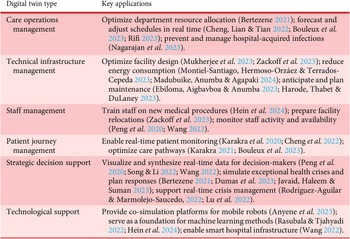

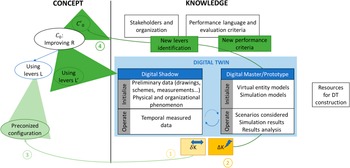
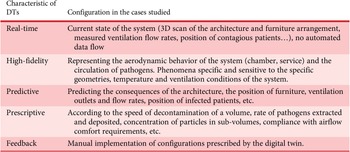

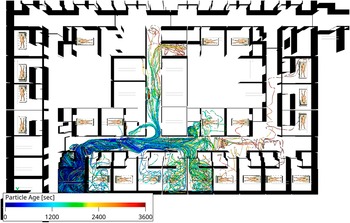
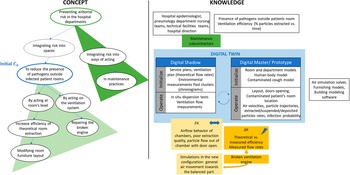
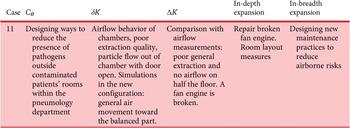
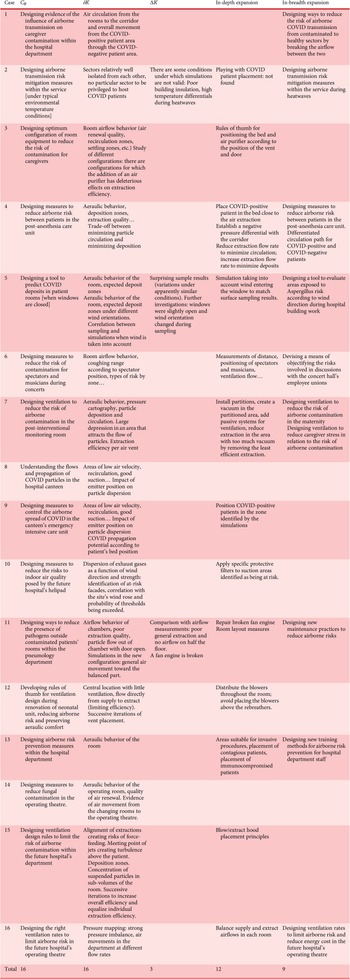
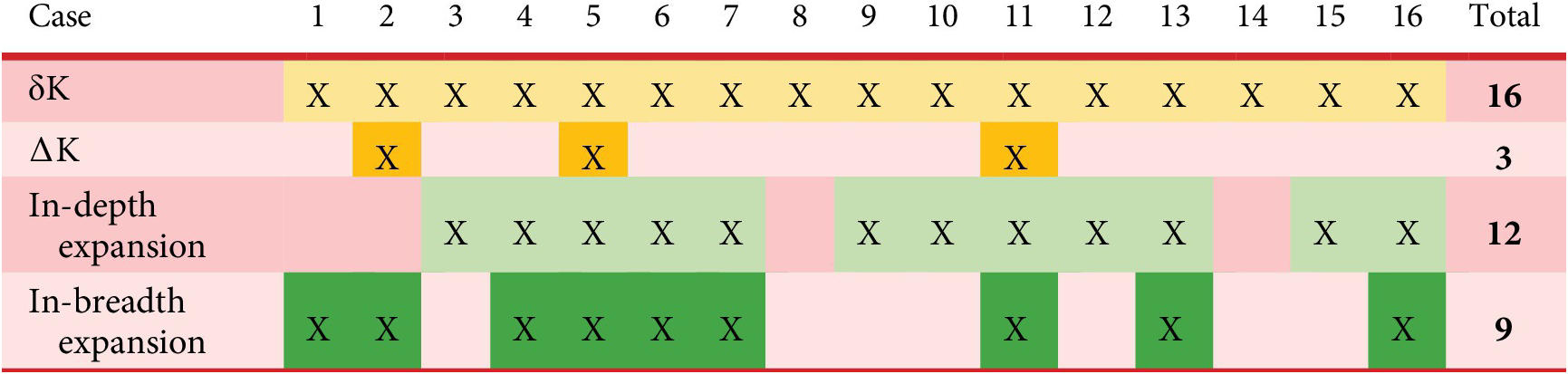


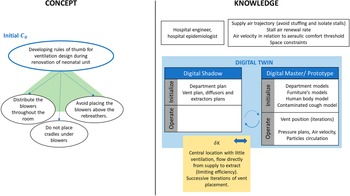

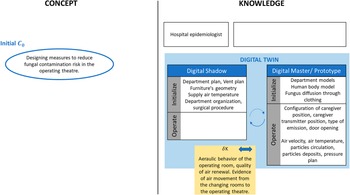


 Open access

