Introduction
It was not until the mid-to-late 1990s that the first lap-dancing venues opened in the UK (Grandy, Reference Grandy, Mills, Simmons and Helms Mills2005; Jones et al., Reference Jones, Shears and Hillier2003); since then the industry has rapidly expanded. There are now estimated to be between 100 and 350 lap-dancing clubs (Colosi, Reference Colosi2010b); these venues are part of a wider Adult Entertainment (AE) industry estimated to be worth around £300 million (Adult Entertainment Working Group, 2006). It is suggested that: ‘sex-related businesses are now widely regarded as integral to urban economies’ (Hubbard et al., Reference Hubbard, Matthews, Scouler and Agustıʹn2008: 396) and are increasingly seen as legitimate businesses (Attwood, Reference Attwood2006). As a result of this increased tolerance, along with the gentrification and commercialisation of night-time spaces (Chatterton and Hollands, Reference Chatterton and Hollands2003), lap-dancing, which is part of the sex industry, has become highly commercialised, with corporate investment leading to many lap-dancing clubs being represented by dominant chains such as For Your Eyes Only and Spearmint Rhino. As the commercialisation of the lap-dancing industry suggests, unlike other forms of sex-work, such as prostitution, it has to some extent been normalised, with attempts made by club operators to dissociate lap-dancing from the sex industry by rebranding it a ‘sexy’ leisure industry (Colosi, Reference Colosi2010b). Despite attempts to market lap-dancing clubs in this way, policy suggests otherwise, recognising these venues as part of the wider sex industry and not the leisure industry. In England and Wales, until recently, lap-dancing clubs were licensed in a similar way to other entertainment venues, under the Licensing Act 2003 (Great Britain, 2003). Recent changes, following persistent lobbying from local communities and various pressure groups, which have challenged the role of lap-dancing within the leisure industry, along with political resistance, have brought about amendments to Schedule 3 of the Local Government (Miscellaneous Provisions) Act 1982 (Great Britain, 1982b), introducing a new category of sexual entertainment venue (SEV) (also referred to as sex establishment (SE)). Under the new amendments, which were laid out in Section 27 of the Policing and Crime Act 2009 (Great Britain, 2009), lap-dancing clubs and other venues in which there is ‘any live display of nudity’ and where ‘there have not been more than eleven occasions on which relevant entertainment has been so provided which fall (wholly or partly) within the period of 12 months ending with that time’ (Section 27, schedule 2Ai, Policing and Crime Act 2009) are now included as SEs. Although this licensing is not mandatory for local authorities (LAs), there has so far been an indication that this is a popular regime. In light of such changes this article will consider the policy background of lap-dancing clubs in the UK, offering a general critique of the recent changes in licensing in England and Wales. In the first instance, attention will be drawn to existing research which explores wider sex-work policies. This broader discussion is necessary for two reasons: firstly, the literature exploring lap-dancing policies is limited, as until recently this industry was fairly invisible in policy terms; secondly, as is suggested in the sex-work policy literature, increasingly all sex-work is subjected to similar political treatment and is increasingly subjected to criminalisation. This broader focus will therefore not only highlight the apparent move toward criminalisation, but also the gradual homogenisation of sex-work in policy terms. Following an examination of this literature, the article will explore the policy background of lap-dancing club regulation, and look closely at why recent changes in legislation have occurred. This involves considering the role of various action groups, such as Object, who lead the campaign (‘Stripping the Illusion’) against the proliferation of lap-dancing clubs, which played a key role in bringing about Section 27 of the Policing and Crime Act 2009. The consideration of lap-dancing under the Policing and Crime Act will reflect how it shifts political focus away from workers’ rights and issues of worker exploitation (see Sanders and Hardy, Reference Sanders and Hardy2011), but also illustrates the process of criminalisation and homogenisation as outlined in the broader literature. Finally, this article will discuss some of the anticipated problems with Section 27 of the Policing and Crime Act 2009; for instance it will contend that the amendment to Schedule 3, as has been argued with other sex-workFootnote 1 legislation (see Phoenix, Reference Phoenix2009), is not sufficiently evidence-based. In critiquing new legislation it will be further highlighted how loopholes in Section 27 may lead to more informal erotic dance venues, such as strip-pubs, escaping regulation. Furthermore, the increased powers of LAs to contain the numbers of SEs, along with the additional licensing costs, may lead to the unemployment of lap-dancers as lap-dancing venues close down. In drawing attention to these problems, it will be argued that overall the worker, who should not be put in jeopardy by legislation, is in fact subjected to further risks and marginalisation as a result of Section 27. It is this which makes this not just a public policy issue, but inevitably a matter for social policy analysts, as their welfare is brought into question.
Problematising sex-work policies
Most of the research relating to lap-dancing has been produced within an American context (for key studies see Frank Reference Frank2002; Barton Reference Barton2006; Egan Reference Egan2006), with the exception of Colosi (Reference Colosi2010a, Reference Colosib, Reference Colosi, Hardy, Kingston and Sandersc) and Sanders and Hardy (Reference Sanders and Hardy2011). Both Colosi (Reference Colosi2010b) and Sanders and Hardy (Reference Sanders and Hardy2011) offer some analysis of Section 27 of the Policing and Crime Act 2009, suggesting it does not address the needs of the workers. The majority of the literature which discusses sex-work policy in the UK has focussed on prostitution, with lap-dancing remaining under explored. In the context of prostitution laws in the UK, there has been a notable academic resistance to the ways in which policies have developed throughout history. It has been argued that policies are unrealistic (Sagar and Croxall, Reference Sagar and Croxall2011) and problematic for the workers (Phoenix, Reference Phoenix2009). Furthermore, it is suggested that there is little acknowledgment of the sex-workers’ narratives in existing policies (O'Neill, Reference O'Neill2007). Rather, policies serve to further marginalise and stigmatise sex-workers (Brents and Sanders, Reference Brents and Sanders2010), which is part of a ‘process of creating binary distinctions between sex-workers and others (that is, “normal” women, children and so on)’ (Phoenix, Reference Phoenix2009: 13). The stigmatisation associated with sex-work is something sex-workers are cognisant of, as reflected in the narratives of, for example, lap-dancers (Colosi, Reference Colosi2010b; Scott, Reference Scott1996), prostitutes (Sanders, Reference Sanders2004), and even their clients (Sanders, Reference Sanders2008). The spaces in which prostitutes’ work is restricted (Sagar and Croxall, Reference Sagar and Croxall2011), with the visibility of street workers controlled by various laws; for instance, it is illegal to solicit or loiter in a public place. Such restrictions are not limited to the UK, and zones of tolerance and intolerance can be identified in other countries (Hubbard, Reference Hubbard2004). Furthermore, the marginalisation of sex-work is also evident in the physical location of sex-related businesses, which tend to be situated in marginal urban areas (Hubbard, Reference Hubbard2004). This sometimes includes lap-dancing clubs (Colosi, Reference Colosi2010b) and other SEs, such as peep shows, sex shops, saunas etc. (Hubbard, Reference Hubbard2004). Various states in the US have developed policies which contain and create geographical restrictions on such venues. For instance, there have been attempts to control the proliferation of sex-related businesses, which has been ‘based on command-and-control systems based on some form of licensing or land use zoning’ (Ryder, Reference Ryder2004: 1663). This approach has proved popular in a number of cities, including Chicago, Los Angeles, Washington, Detroit and Atlanta, to name a few (Ryder, Reference Ryder2004). Similarly, in Paris, France, SEs have various geographical restrictions. For example, peep shows cannot be situated within 100 meters of a school and are prohibited from displaying obscene materials in their windows (Hubbard, Reference Hubbard2004). In relation to legislation within the US, it is argued that such attempts have been futile, and instead have moved outlets elsewhere; furthermore, the ‘zero-tolerance’ approach to sex-related businesses in New York City has pushed the sex-industry underground (Eliot, Reference Eliot2002). Hubbard argues that similar restrictions in Paris have ‘allowed the development of well known spaces of commercial sexuality’ (2004: 1690). This concentration of ‘commercial sexuality’ is famously visible in Soho, London, and is evidence of ‘the state and law's desire to concentrate vice in areas of low owner-occupation and transient residence, with Soho becoming, in effect, London's “tolerance zone”’ (Hubbard, Reference Hubbard2004: 1693). The methods used to isolate sex-related businesses, twinned with moral objections to sex-work, are, however, part of a strange contradiction. For example, despite efforts through policy to contain and control sex-work, including, for example, areas of prostitution, lap-dancing, sex shops, etc., there has been a visible legitimisation and normalisation of sexual entertainment within the night-time economy (Attwood, Reference Attwood and Attwood2009; Bradley, Reference Bradley2008). This is particularly evident with the lap-dancing industry, which has perhaps been given legitimacy as a result of corporate investment (Bernstein, Reference Bernstein2001). The contradictory treatment of sex-work/ers is highlighted by researchers who draw attention to the strong association of this mode of work with deviancy and immorality (Sanders, Reference Sanders2004; Colosi, Reference Colosi2010b). It is argued that legislation regarding sex-work is morally motivated (Phoenix, Reference Phoenix2009; Sanders et al., Reference Sanders, O'Neill and Pitcher2009; Brents and Sanders, Reference Brents and Sanders2010; Colosi, Reference Colosi2010b; Carline, Reference Carline2011); despite the clear association between morality and law (see De Marneffe, Reference De Marneffe2010) in the context Report of sex-work, it has been argued that the two should remain distinct (see the Wolfenden Report, Reference Wolfenden1957). Prostitution, in particular, is constructed ‘as a crime against morality’ (Sanders et al., Reference Sanders, O'Neill and Pitcher2009: 111), opposed by the ‘moral majority’ (Sagar and Croxall, Reference Sagar and Croxall2011), which is further fuelled by media sensationalism (Hanna, Reference Hanna2005). Opposition from the ‘moral majority’ to sex-work is often publicised, with, for example, various religious and/or action groups protesting against sex-work and SEs (see Colosi, Reference Colosi2010b, for an example of protests against the opening of lap-dancing clubs). The moral discourse shaping related policies is evident in the language used by policy makers. For instance, both Carline (Reference Carline2011) and Petley (Reference Petley2009) draw attention to the vague and moralistic wording used in the ‘extreme’ pornography consultation paper which shaped Section 63 of the Criminal Justice and Immigration Act 2008 (Great Britain, 2008), with examples including those such as ‘degrading’ (ibid: 10) and ‘repugnant’ (ibid: 11). Petley points out that ‘subjective language such as this should have no place in legislation’ (2009: 423). As a result of deviant and immoral associations made with sex-work, related legislation is leading to it being criminalised (Phoenix, Reference Phoenix2009), with ‘crime’ and ‘vice’ often inappropriately connected with the sex industry (Hanna, Reference Hanna2005). This association, though particularly evident with prostitution, has also been made with lap-dancing (see Eden, Reference Eden2007). As will be discussed later, parallels have been drawn between sexual violence and the proliferation of lap-dancing clubs in the UK (Eden, Reference Eden2007). Making such associations with sex-work, which is already labelled as deviant and immoral, has helped make it increasingly a matter for criminal law (through the Policing and Crime Act 2009), in the guise of licensing.
Lap-dancing policy in the UK
Since New Labour came into power in the late 1990s, sex-work has been subject to a number of legislative changes. This is apparent in the area of prostitution following the Home Office's publication of Paying the Price (2004) and A Coordinated Prostitution Strategy (2006), in which there was an obvious shift towards an abolitionist approach to this form of sex-work (Phoenix, Reference Phoenix2009). Like lap-dancing, prostitution is included under the Policing and Crime Act 2009, with a notable change in policy relating to the client. Under Section 14, it has now been made an offence for a client to pay for sex with a prostitute who has been subjected to force − and the client does not have to know the circumstances of the prostitute to be prosecuted. As a result of the Policing and Crime Act 2009, lap-dancing clubs can now be licensed as ‘Sexual Entertainment Venues/Establishments’.Footnote 2 Prior to this, lap-dancing clubs were regulated in a similar way to other entertainment venues, such as pubs, bars, night-clubs and restaurants, under the Licensing Act 2003, but with a number of special conditions. These included: providing licensed door supervision; establishments adhering to a strict age-related admissions policy; the use of CCTV surveillance; and venues providing a clear statement regarding the nature of the entertainment, for example, whether partial or full nudity. Furthermore, the Licensing Act 2003 offered residents the right to oppose a license application on the grounds that the four obligations stated would not be fulfilled. This right was put into practice in 2007 when a lap-dancing club in Durham was refused a license as it was claimed it would be unable to fulfil the licensing criteria. This refusal was supported by Durham MP Roberta Blackman-Woods (Durham Times, 2007). Chain operated lap-dancing clubs attempt to remain strictly controlled and regulated, often by producing ‘house rules’, which are put in place to guide the conduct of customers and workers. In addition, as stipulated by the Licensing Act 2003, these clubs continue to have CCTV in operation as well as security operating the venue doors and main floors of the club where customers and dancers interact (Colosi, Reference Colosi2010b). This is in tune with the way in which many ‘mainstream’ spaces are now governed, with increased usage made of private policing from CCTV and security (Chatterton and Hollands, Reference Chatterton and Hollands2003; Hobbs et al., Reference Hobbs, Lister, Hadfield and Hall2000). As stipulated by many ‘house rules’, inside these clubs, customers are often strictly controlled, so that in some instances customers are expected to remain seated unless visiting the bar, washroom or engaging in a private dance (Colosi, Reference Colosi2010b).
The licensing of Scottish lap-dancing clubs is more complex than in England and Wales, with LAs having less power to control these premises. Lap-dancing clubs in Scotland are governed under a number of different provisions, including the Civic Government (Scotland) Act 1982 (Great Britain, 1982a); the Licensing (Scotland) Act 1976; (Great Britain, 1976); and the Licensing (Scotland) Act 2005 (Great Britain, 2005). In most cases, an Entertainment License will be granted; however, where there is no sale of alcohol, a licence in these venues is not necessary if the public entertainment is not clearly specified under Section 9 of the Civic Government (Scotland) Act 1982. Further to this, local authorities’ powers are inhibited by the Licensing (Scotland) Act 1976, as it only allows Licensing Boards to refuse an Entertainment License on the basis that the establishment in question is unsuitable for the sale of alcohol.
Prior to the recent change in the licensing of lap-dancing clubs in England and Wales, attention was drawn to the regulation of these venues by women's groups such as Object and the Fawcett Society. In 2008, these action groups led a campaign against lap-dancing, entitled ‘Stripping the Illusion’, which challenged the regulation of lap-dancing clubs under the Licensing Act 2003. The Fawcett Society (2009) argues that ‘Lap-dance clubs are a form of commercial sexual exploitation and promote the sexist view that women are sex objects’. Likewise Object (2009), working in partnership with the Fawcett Society, suggest that the lap-dancing industry encourages sexism and the objectification of women. Underpinning Object's campaign was a report written by Eden (Reference Eden2007) for Eaves Housing for Women, as part of the Lilith Project, which explored the licensing of adult venues (lap-dancing clubs) in London. The findings from this reportFootnote 3 claim there is a direct correlation between rates of rape and the proliferation of lap-dancing venues, despite limited evidence to make a causal link between the two, as is discussed later in this article. Object's campaign encouraged the Government to address the regulation of lap-dancing clubs by re-classifying them as ‘Sex Encounter Establishments’ (or venues).Footnote 4 As it was proposed, re-licensing lap-dancing clubs as ‘sex establishments’ or ‘sex venues’ under Schedule 3 of the Local Government (Miscellaneous Provisions) Act 1982 positions them with sex cinemas and sex shops, recognised as part of a commercial sex industry, and not as part of the leisure industry. A change in licensing found political support from the former Home Secretary, Jacqui Smith, who proposed these changes in the Policing and Crime Bill, which was successfully passed in November 2009. The Policing and Crime Act 2009 (Great Britain, 2009), which ‘contains measures to protect the public, increase police accountability and effectiveness, and tackle crime and disorder’, directly addresses the proliferation of lap-dancing clubs and the alleged problems this expansion has caused according to groups such as the Fawcett Society and Object; more specifically, under Section 27 of this Act. Local authorities must now consider licensing lap-dancing clubs as ‘sexual entertainment venues’ (also referred to as sex establishments). Local authorities, if they accept these conditions, may set a cap on the number of SEs they see as appropriate and can refuse a license application if ‘the number of sex establishments, or of sex establishments of a particular kind, in the relevant locality at the time the application is determined is equal to or exceeds the number which the authority consider is appropriate for that locality’ (Section 27, paragraph 12). Furthermore, in relation to locality, a license may be refused if the LA considers the location of the venue to be inappropriate for ‘sexual entertainment’. This is similar to the ‘zoning laws’ introduced in the US, which prevent sex-related businesses, such as lap-dancing clubs, operating in residential and family areas of various cities (Ryder, Reference Ryder2004). For example, Wakefield Council, which has adopted the SEV licensing regime, states in a draft policy report that they will not grant a license to any venue that would:
fall within an ‘inappropriate’ proximity to residential areas, schools, play areas or similar areas, places of worship, community facilities and public buildings, for example: swimming pools, leisure centres, parks, youth clubs and sheltered housing, tourist attractions and historic buildings, conservation areas, ‘gateways’ to identifiable localities. (2011: 4)
This limits the locality deemed appropriate, quite considerably. The use of vague language, such as ‘inappropriate proximity’, allows LAs to use their discretion, giving them more grounds to reject license applications. Similarly, other LAs which have recently adopted this policy have also kept the rules governing the locality of SEs deliberately vague. It is also stipulated under Section 27, Paragraph 12, of the Policing and Crime Act 2009, that local communities will be able to consult with LAs about the licensing of particular SEs. The public are able to object to each application made, which includes annual license renewals. Unlike the Licensing Act 2003, this new legislation offers LAs more power to impose wider conditions. The greater focus on public intervention and increased powers to LAs is fitting with the New LocalismFootnote 5 which both New Labour and the Coalition Government advocate (Sagar and Croxall, Reference Sagar and Croxall2011). Since April 2010, around 240Footnote 6 LAs have adopted (or are in the process of putting out to consultation) the new amendments to Schedule 3 of the Local Government (Miscellaneous Provisions) Act 1982. Where LAs fully adopt this policy, lap-dancing clubs will simultaneously continue to be licensed under the Licensing Act 2003 and have to obtain a public entertainment license.
Problems with existing policy
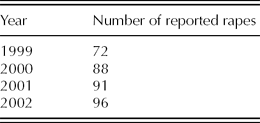
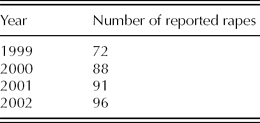
What is apparent from the recent changes in legislation, and the inclusion of lap-dancing and prostitution under the Policing and Crime Act 2009, which was introduced to reduce crime and disorder, is a move towards criminalising sex-work (Colosi, Reference Colosi2010b), subjecting it to further governance. Furthermore, the inclusion of laws regulating prostitution and lap-dancing, as outlined under ‘sexual offences and sexual establishments’ of the Policing and Crime Act 2009, suggests that in policy terms sex-work is gradually being homogenised. Moreover, in the eyes of the law, different forms of sex-work (and the people who use sexual services and/or entertainment) are not distinct from one another. This is, however, an inaccurate depiction of sex-work, as there are clear distinctions between the nature of this work and those who partake in it and consume it (Sanders, Reference Sanders2008). The criminalisation of sex-work is rooted in moralistic value-judgements about the ‘unacceptable’ nature of this work and the deviancy associated with the sex industry (Brents and Sanders, Reference Brents and Sanders2010). Although policy makers insist that legislation, and the move towards criminalising sex-work, is evidence based, this is not the case (Phoenix, Reference Phoenix2009). The ‘evidence’ used has been unreliable and carefully selected to support anti sex-work proposals. With regard to Section 27 of the Policing and Crime Act 2009, the report produced by Eden (Reference Eden2007), which underpinned Object's anti-lap-dancing campaign, made inaccurate claims about the connection between rates of rape and the proliferation of lap-dancing establishments. The statistics on which Eden (Reference Eden2007) bases her arguments are sourced from the Metropolitan Police (1998−2002). Based on these statistics, Table 1 highlights the reports of rape in the London Borough of Camden between 1999 and 2002.
reports of rape in the London Borough of Camden between 1999 and 2002
Source: Metropolitan Police (1998–2002).
Using these figures, Eden (Reference Eden2007) claims that there has been a 50 per cent increase in the reports of rape between 1999 and 2002; this, she argues, coincides with the lap-dancing club ‘boom’ which is suggested to have taken place over this period. However, the actual increase is 33.3 per centFootnote 7not 50 per cent (Bell, Reference Bell2008). Furthermore, Eden (Reference Eden2007) does not take into account other external factors which may have influenced the increase in reports of rape, such as local population increase. In addition, increased awareness and support for victims of sexual violence may encourage more victims to come forward and report incidence to the police. Regardless of this, the figures between 1999 and 2002 are still low, which means the increase is not statistically significant. Finally, a causal link cannot be inferred from statistical patterns such as these. In-depth research is needed to offer the detail necessary to provide possible explanations for statistically representative patterns established by quantitative research (Sayer, Reference Sayer1992). It is therefore difficult to accept Eden's (2007) argument: the connection between crime and erotic dance is weak (Hanna, Reference Hanna2005). Despite this, LAs who have adopted Section 27 of the Policing and Crime Act 2009, or are in the process of consultation, quite clearly make the same connection as Eden (Reference Eden2007) between sex-work (in this instance erotic dance) and crime (in relation to public safety). For instance, reference is frequently made to Section 17 of the Crime and Disorder Act 1998 (Great Britain, 1998) in relation to containing and controlling the proliferation of SEVs as a matter of public safety and reducing criminality.
A related example of weak evidence concerns the work of Bindel (Reference Bindel2004). In 2004, Glasgow City Council seconded Julie Bindel from the Child and Woman Abuse Studies Unit at London Metropolitan University to write a report about conduct within lap-dancing clubs in the city of Glasgow. Bindel produced a report which emphasised the exploitative nature of lap-dancing (2004). In relation to Bindel's (2004) work, her finding resulted in Glasgow City Council calling for stricter licensing policies to regulate lap-dancing venues, on the basis that existing legislation was inadequate, although this has not yet been acted upon in Scotland. Bindel (Reference Bindel2004) has been criticised for her study (see Colosi, Reference Colosi2010b) which is methodologically weak. For example, although she triangulated her findings by observations in a small number of lap-dancing clubs and by interviewing lap-dancers, customers, police and members of the public, she interviewed only a small number of dancers and customers, with the majority of interviews being conducted with members of the public. In spite of this she makes generalisations about the experiences of lap-dancers, drawing on very limited literature to support her findings; this brings some of her data into question. Furthermore, although the findings of this study have not yet resulted in any changes to legislation, the process undertaken by Glasgow City Council reflects the way in which legislators carefully select their advocates, as Bindel works from an anti-sex-work perspective. It has been argued that the use of radical feminists’ research by policy makers to support abolitionist sex-work legislation is common practice and an effective way of endorsing anti-sex-work policies (Carline, Reference Carline2011). It has also been suggested that the careful selection of sympathetic supporters during the policy consultation process is necessary to ensure the proposed legislative changes are made (Attwood and Smith, Reference Attwood and Smith2010). This further brings into question the reliability of evidence produced to support policy.
In addition to problems with the ‘evidence’ which is used to support policy proposals, the focus of lap-dancing policy in England and Wales also needs to be addressed. For instance, with such a focus on crime and disorder, important attention is taken away from the employment experiences of the workers (see Sanders and Hardy, Reference Sanders and Hardy2011). A recent study conducted by Sanders and Hardy (Reference Sanders and Hardy2011), which explored the experiences and working conditions of dancers in the UK, suggests that lap-dancers are subjected to work place exploitation. It has been argued that lap-dancers do not always receive support from managers and club owners (see Colosi, Reference Colosi2010b). This is echoed by researchers in the US, who recount problems of a similar nature (Barton, Reference Barton2006). In the UK it is not uncommon for lap-dancers to work in venues with informal contracts, with many of these workers unaware of their employment rights (Sanders and Hardy, Reference Sanders and Hardy2011) and employment status, that is if they are employed or self employed (Colosi, Reference Colosi2010b). Sanders and Hardy (Reference Sanders and Hardy2011) found that dancers are particularly prone to financial exploitation, as they are sometimes expected to pay unfixed fines and house fees (also see Colosi, Reference Colosi2010b), which appear to vary from club to club. It is suggested that ‘lap-dancing clubs and strip clubs are workplaces, but regulatory assessments, criteria and licensing process do not examine the industry from this perspective. As a result, dancers are open to financial exploitation, disciplinary measures and few employment rights’ (Sanders and Hardy, Reference Sanders and Hardy2011: 1). It is therefore important that this is addressed, with, for example, contracts between dancers and club management, along with club house rules, being regulated and standardised across the UK. The regulation of house rules through legislation would ensure that lap-dancers pay fixed fees and fines (if seen as appropriate), regardless of the club in which they are working. In addition, the use of formalised contracts would provide dancers with a better idea about their employment status and rights, but also make them aware of the club's obligations within the contractual relationship. It is therefore employment law, in addition to licensing laws, rather than criminal law (i.e. through the Policing and Crime Act 2009), which should regulate lap-dancing.
Another potential problem, as a result of fees imposed by the new Sexual Entertainment Venue license, relates to the future of the industry and the employment of women working in lap-dancing venues. Fees for SEV licenses are paid on an annual basis, the cost of which is decided by individual LAs; this is in addition to other licensing and administration costs. The expense of fees alone may prevent established club owners from being able to renew licenses for existing venues, leading to their closure, and this is likely to have an effect particularly on the independently owned clubs. Constraints are also placed on the industry by LAs which can limit the number of clubs opening. As this is dependent on each individual council, it may result in the number of clubs being unevenly spread across the UK (Sanders and Hardy, Reference Sanders and Hardy2011). Some LAs may adopt a ‘nil’ policy, whereby no SEV licenses are granted to lap-dancing clubs. Although it is contended that limiting SEVs will benefit gender equality by alleviating the objectification of women (Object, 2009), this view is far too simplistic. In the long term, the closure of lap-dancing clubs will result in the unemployment of women, particularly problematic in a time of recession, leading to issues of poverty where ex-dancers are unable to find employment. This also risks pushing the stripping industry underground, with more women opting to work in unregulated environments as erotic dancers, where the physical dangers can be considerable (see Colosi, Reference Colosi2010b).
Finally, although Section 27 of the Policing and Crime Act 2009 aims to re-licence regularFootnote 8 erotic entertainment establishments, this new legislation will not necessarily impact upon erotic dance entertainment performed in strip-pubs, night-clubs and social clubs where erotic dance is not necessarily the main form of entertainment. This is because as an SEV license is not applicable when ‘there have not been more than eleven occasions on which relevant entertainment has been so provided which fall (wholly or partly) within the period of 12 months ending with that time’ (Section 27, schedule 2Ai, Policing and Crime Act 2009). Even when regular erotic dance entertainment takes place in pubs and social clubs, a licensee may still be reluctant to declare this entertainment to their LA due to the extra annual cost of an SEV license. Furthermore, as these particular venues are not registered as erotic dance venues in the first instance (existing as informal venues), this erotic entertainment is likely to go unnoticed by LAs. The invisibility of this specific form of erotic entertainment (irregular and/or informal) in policy terms means that it is almost completely unregulated. This lack of regulation may significantly affect the safety of the women working in these specific work environments. For instance, some of the special conditions applicable to lap-dancing clubs and similar venues under the Licensing Act 2003 (which continue under the new licensing regime), including the use of CCTV and security staff, are inevitably not enforced in instances where erotic entertainment is not known to LAs. The use of CCTV and security, in particular, is known to play an important role in protecting erotic dancers from harm in the work place (Colosi, Reference Colosi2010b). Despite the claim that the introduction of Section 27 of the Policing and Crime Act 2009 will improve gender equality and help eliminate violence against women (Object, 2009), in the case of erotic dancers it appears likely to ultimately work against them, potentially subjecting them to further harms.
Conclusion
In the last decade New Labour made significant changes to policy which not only related to prostitution, but addressed broader areas of sex-work, such as pornography and lap-dancing. What is evident from the policies introduced by New Labour is a move towards criminalising sex-work, by legislating under criminal law, in an attempt to improve community safety and reduce crime and disorder. Furthermore, with the inclusion of Sections 14 and 27 of the Policing and Crime Act 2009, which address prostitution and lap-dancing venues respectively, there has been a clear political move to increasingly homogenise sex-work. Moreover, despite evidence that there are distinctions between different modes of sex-work/ers (see Sanders, Reference Sanders2008), the law determines otherwise, linking all sex-work with some form of criminality, despite flaws in the ‘evidence’ underpinning policies (Phoenix, Reference Phoenix2009). This treatment is a result of the moral discourse which has shaped public and political perceptions of sex-work as deviant, immoral (Colosi, Reference Colosi2010b) and criminal (Sanders et al., Reference Sanders, O'Neill and Pitcher2009). Sex-work policies in the UK pay little attention to the actual needs of the women (and men) who work in the sex industry (Phoenix, Reference Phoenix2009), but rather respect the views of a ‘moral majority’ (Sagar and Croxall, Reference Sagar and Croxall2011) and instead assist in a process of ‘othering’ sex-workers (Phoenix, Reference Phoenix2009). Section 27 of the Policing and Crime Act 2009, like other sex-work legislation, does not take into account the voice of the workers (Sanders and Hardy, Reference Sanders and Hardy2011) and potentially subjects them to further marginalisation. It is such approaches that place lap-dancing (and other modes of sex-work) on the social policy agenda. For example, Section 27 potentially threatens the employment of women working in lap-dancing clubs. In cases of long-term unemployment, these women will increasingly be subjected to poverty; this is perhaps more widely evident of the feminisation of poverty (Lister, Reference Lister2004). Furthermore, where work in lap-dancing clubs is limited, women may seek work in more unregulated, high-risk, erotic dance environments, which have escaped the relevant licensing. This potentially exposes these women to physical risks, as the threat of violence is more of a reality in unregulated erotic dance environments (Colosi, Reference Colosi2010b) than in lap-dancing clubs. Finally, despite evidence of lap-dancers being subjected to exploitation at the hands of managers and club owners (Colosi, Reference Colosi2010b; Sanders and Hardy, Reference Sanders and Hardy2011), this is not a political concern and has not been addressed in recent policy. Rather, legislation has shifted the focus further away from the employment rights of lap-dancers, putting more emphasis on the potential impacts lap-dancing clubs have on community safety, with regard to crime and disorder, despite limited evidence to support this focus. The licensing of lap-dancing clubs, as other businesses, whether sex-related or otherwise, is necessary as there is always a need for thoughtful regulation, taking into account all stakeholders. This can only be done effectively if the narratives of the workers, as well as other stakeholders, are carefully listened to. Furthermore, in relation to lap-dancing, along with other sex-work, it is important that this work is treated in a similar way to other ‘mainstream’ modes of work, rather than as a deviant or criminal activity.