

The need to build new infrastructure has contributed to the increased use of building materials due to rapid urban expansion, industrialization and development of countries (Idrees et al., Reference Idrees, Akbar, Saeed, Gull and Eldin2023). The manufacturing of construction materials, including cement, concrete, bricks and ceramic tiles, is a pivotal sector that is significant for national economies (Xin et al., Reference Xin, Robert, Mohajerani, Tran and Pramanik2023a). Over the last few decades, bricks have become one of the most popular building materials used throughout the world (Weishi et al., Reference Weishi, Guoyuan, Ya and Qifei2018). Generally, two main types of bricks are manufactured commercially: one based on cement and the other on clay (Ozturk et al., Reference Ozturk, Sutcu, Erdogmus and Gencel2019).
Clay masonry bricks are among the oldest and most widely used construction materials, with a rich historical background (Bai et al., Reference Bai, Xiao, Gao and Shen2023), as the first clay brick was used as early as 4500 BCE (Rashid et al., Reference Rashid, Haq, Kamran, Munir, Shahid and Hanif2019; Shi et al., Reference Shi, Chun, Mi, Feng, Liu and Liu2023). Bricks are among the most commonly utilized construction materials due to their utility, superior strength, reduced manufacturing costs, enhanced fire resistance, durability against chemical exposure, corrosion and exposure to freeze–thaw cycles, longevity and ease of production (Dabaieh et al., Reference Dabaieh, Heinonen, El-Mahdy and Hassan2020; Hafez et al., Reference Hafez, Tayeh and Abd-Al Ftah2022). The manufacturing process for clay bricks involves extracting, crushing and mixing the raw materials and moulding them by pressing or extrusion. Once the bricks have taken shape, they are dried and fired in a kiln at high temperatures (∼1200°C; Xin et al., Reference Xin, Robert, Mohajerani, Tran and Pramanik2023b). During firing, the combination of SiO2 and Al2O3 with other components of the clay contributes to the establishment of connections that give these bricks their distinctive strength and durability (Phonphuak et al., Reference Phonphuak, Kanyakam and Chindaprasirt2016). The manufacture of fired bricks is linked to considerable environmental consequences, including the exhaustion of raw materials and the release of greenhouse gases, environmental degradation and ecosystem disruption (Raut & Gomez, Reference Raut and Gomez2017; Rashid et al., Reference Rashid, Benhelal and Rafiq2020).
In this respect, several countries around the world have limited their use of raw materials such as clay (Sutcu et al., Reference Sutcu, Ozturk, Yalamac and Gencel2016). In this context, the construction sector has developed concepts regarding sustainability to minimize the depletion of raw materials (Božič et al., Reference Božič, Žibret, Kvočka, Pranjić, Gregorc and Ducman2023). Utilizing several waste materials in the manufacturing of fired bricks can effectively mitigate substantial quantities of waste generated by various industrial processes, partially or totally replacing clays (Dos Reis et al., Reference Dos Reis, Cazacliu, Cothenet, Poullain, Wilhelm and Sampaio2020; Slimanou et al., Reference Slimanou, Eliche-Quesada, Kherbache, Bouzidi and Tahakourt2020). Several synthesis studies have been conducted to examine the application of diverse waste materials in brick manufacture, including fly ash and bottom ash (Sutcu et al., Reference Sutcu, Erdogmus, Gencel, Gholampour, Atan and Ozbakkaloglu2019), dredging sediments (Slimanou et al., Reference Slimanou, Eliche-Quesada, Kherbache, Bouzidi and Tahakourt2020; Thomas et al., Reference Thomas, Isabelle, Frederic, Catherine and Marie-Anne2021), glass waste (Phonphuak et al., Reference Phonphuak, Kanyakam and Chindaprasirt2016), sewage sludge (Detho et al., Reference Detho, Kadir and Ahmad2024), diatomite from the vegetable oil refining and brewing industries (Galán-Arboledas et al., Reference Galán-Arboledas, Cotes-Palomino, Bueno and Martínez-García2017), agricultural biomass wastes (Maafa et al., Reference Maafa, Abutaleb, Zouli, Zeyad, Yousef and Ahmed2023), marble waste (Sutcu et al., Reference Sutcu, Alptekin, Erdogmus, Er and Gencel2015), iron ore residues (Li et al., Reference Li, Zhou, Li, Li and Huang2019; Vilela., Reference Vilela, Eugênio, de Oliveira, Mendes, Ribeiro, Brandão Vaz and Mendes2020; da Silva Ramos et al., Reference da Silva Ramos, de Azevedo, da Silva Bezerra, do Amaral and Oliveira2024) and phosphate sludge (Ettoumi et al., Reference Ettoumi, Jouini, Neculita, Bouhlel, Coudert, Taha and Benzaazoua2021).
Iron mining waste (IMW) refers to the solid byproducts produced during the mining or processing of iron ore (Thejas & Hossiney, Reference Thejas and Hossiney2022). The chemical composition of IMW mainly consists of SiO2, Al2O3, Fe2O3 and CaO, similar to that of natural clay, and IMW may serve as a raw material for the production of construction materials (Yang et al., Reference Yang, Cui, Qin and Cui2014; Weishi et al., Reference Weishi, Guoyuan, Ya and Qifei2018). The integration of IMW in brick manufacturing is considered to be non-hazardous and to pose no environmental risk. Its use has improved brick properties such as density, porosity, water absorption and mechanical strength and reduced brick linear shrinkage (Thejas & Hossiney, Reference Thejas and Hossiney2022).
In Algeria, mining of El Ouenza iron ore significantly contributes to the country’s economy, with this ore having an average iron content of 50 wt.%. El Ouenza Mine (Tebessa, Algeria) is the main supplier of iron ore to El Hadjar steel complex for the production of steel and other metals (Boutarfa et al., Reference Boutarfa, Idres, Mekti, Graine, Tiour and Dovbash2023). During iron ore beneficiation, El Ouenza Mine generates large quantities of waste, estimated at 11 Mt of mine rejects after 36 Mt of iron ore is extracted (Mine Documentation, 2024). Recent studies investigated the valorisation of the IMW produced by several separation techniques, aiming at elimination of hazardous elements and enrichment of iron. The separation techniques included magnetic separation (Bouzeriba et al., Reference Bouzeriba, Bouzidi, Idres, Laala and Zaoui2025), radiometric separation (Baala et al., Reference Baala, Idres, Bounouala and Benselhoub2018) and electrostatic separation (Idres et al., Reference Idres, Bouhedja, Bounouala and Benselhoub2016). As of today, recycling of these wastes (waste rocks, IMW, limestone and low-grade iron ore) has not been carried out in Algeria. These wastes are stored in piles or tailings near the mining site; this could lead to negative impacts on human health, environmental destruction, water pollution, social problems and air pollution (Zhang et al., Reference Zhang, Tang and Liu2021).
In this study, for the first time, the applicability of one of these wastes – IMW from iron ore mining operations at El Ouenza Mine – was investigated for the production of clay bricks. The aim of this study is to evaluate the physical, mechanical, structural, thermal and environmental properties of fired bricks incorporating IMW as the main additive. The bricks obtained by mixing clay and different amounts of IMW (0, 10, 20, 30, 40 and 50 wt.%) were dried and fired at 850°C and 950°C. The effects of physical properties, including density, porosity, water absorption and shrinkage, on mechanical strengths and thermal conductivity were also explored.
Materials and methods
Materials
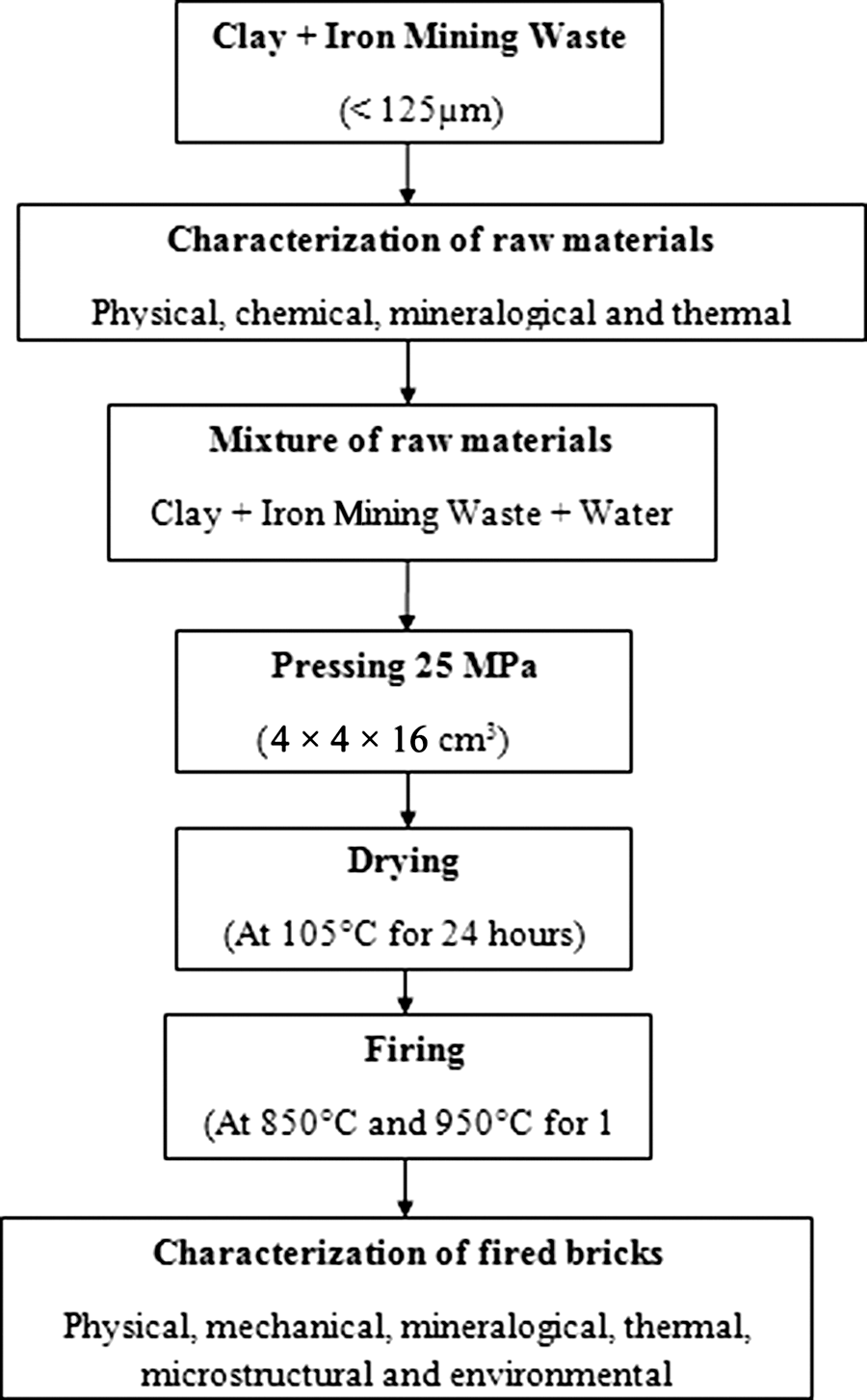
Approximately 20 kg of clay was collected from the Bouteldja region (19 km from El Taref province) in north-east Algeria for use in brick making. In addition, 25 kg of IMW from iron ore mining operations was taken from the stock of landfill sites on level 845 near the mining site. Before analysis, the raw materials were dried at 105°C for 24 h, homogenized, crushed, ground and sieved to 125 µm. The bricks made from the mixing of IMW and clay were produced using the laboratory’s pilot procedures and equipment. The mixtures were prepared by adding 10, 20, 30, 40 or 50 wt.% of IMW, and these were labelled MB10, MB20, MB30, MB40 and MB50, respectively. Clay bricks without IMW were produced as reference specimens (MB0; Fig. 1).
Simplified diagram illustrating the manufacture of bricks.

Methods
The plasticity index (PI) of the raw materials was assessed using the Atterberg limit test in accordance with the ASTM D4318-17e1 standard (Ravisankar et al., Reference Ravisankar, Kiruba, Eswaran, Senthilkumar and Chandrasekaran2010). Samples for liquid limit (LL) and plastic limit (PL) testing were sieved to 400 μm. The chemical compositions of the IMW and the clay were determined using X-ray fluorescence (XRF) spectroscopy with a S8 Tiger Bruker XRF spectrometer using the pressed pellet method. The mineralogical compositions of the raw materials and fired bricks were identified using X-ray diffraction (XRD) with a PANalytical advanced diffractometer (EMPYREAN) with a Cu anticathode (λ = 1.54186 Å) in the scanning range 8–55°2θ, with step size of 0.017°. The X’Pert High Score Plus software was used to identify the mineral species. The mineralogical compositions (wt.%) of the two raw materials were estimated according to the mass fraction of the identified phases using the reference intensity ratio values from the database selected for the qualitative identification. Thermogravimetric analysis (TGA)/differential scanning calorimetry (DSC) of the raw materials was carried out with a Perkin Elmer analyser (STA8000) operating under air flow and at a heating rate of 10°C min–1 from ambient temperature to 1100°C.
The mixtures were mechanically mixed in a planetary mixer for 5 min to obtain a homogeneous mixture. The samples were then mixed progressively with ∼15–20 wt.% water (Idrees et al., Reference Idrees, Akbar, Saeed, Gull and Eldin2023) to obtain adequate plasticity without defects such as cracks and to ensure complete homogenization. The semi-dry mixes were pressed in a 4 × 4 × 16 cm3 mould under a pressure of 20 MPa using a hydraulic press (Yang et al., Reference Yang, Cui, Qin and Cui2014). The test mould was sprayed with oil to prevent any impact of the inner mould wall on the sample (Ravisankar et al., Reference Ravisankar, Kiruba, Eswaran, Senthilkumar and Chandrasekaran2010). The formed samples remained at room temperature for 24 h after extraction from the moulds, followed by drying at 105°C for 24 h to yield dry bricks (Lamani et al., Reference Lamani, Mangalpady and Vardhan2017). The dried bricks were fired in an electric muffle kiln (Nabertherm) at a heating rate of 3°C min–1 to target temperatures of 850°C and 950°C and maintained for 1 h at the specified firing temperature to achieve greater strength. After firing, the bricks were cooled to ambient temperature through natural air convection within the kiln.
The physical and mechanical properties of the bricks were assessed in relation to ASTM construction standards for bricks. Total linear shrinkage was evaluated by directly measuring the sample pre- and post-curing length, employing a vernier calliper to ascertain the length of the samples before and after firing, in compliance with ASTM C531. The apparent density, porosity and water absorption of the fired bricks were assessed using ASTM C20 (Lang et al., Reference Lang, Chen and Pan2020). The compressive strength test was conducted on all brick samples following ASTM C67 (Ahmad et al., Reference Ahmad, Iqbal and Muhammad2017), utilizing a hydraulic compression machine (BeraTest) with a maximum load capacity of 2000 kN at a loading rate of 0.5 kN s–1. The load was applied constantly to the samples until failure occurred. The flexural strengths of the various fired bricks were assessed per ASTM C67 (Ahmad et al., Reference Ahmad, Iqbal and Muhammad2017) using a three-point bending method with a 10 mm span between the support knife edges. This was conducted using a BeraTest mechanical testing machine, which has a maximum capacity of 150 kN, at a loading rate of 0.5 kN s–1 until failure occurred. Fourier-transform infrared (FTIR) analysis was performed using the KBr pellet technique by thoroughly mixing 2 mg of the materials with 100 mg of KBr via grinding in an agate mortar and then placing the mixtures in a press to obtain discs under high pressure using an appropriate dye. The FTIR spectra for all materials were obtained within the range of 4000–400 cm–1 using a Thermo Scientific iS5 series FTIR spectrometer. Scanning electron microscopy (SEM) was employed to examine the microstructures of the fired bricks utilizing an FEI QUANTA 250 model scanning electron microscope operating at 25 kV, equipped with an energy-dispersive spectroscopy (EDS) analyser.
The thermal conductivities of the bricks were determined using a conductivity temperature (CT) meter according to the NF EN ISO 8894-1 2010 standard (Gueffaf et al., Reference Gueffaf, Rabehi and Boumchedda2020). The heating duration for each measurement was ∼300 s. Each result represent the mean of three measurements conducted on each sample.
Environmental assessment involved evaluating the mobility of contaminants using the toxicity characteristic leaching procedure (TCLP). The brick samples were pulverized and sieved through a 9.5 mm sieve to acquire a representative sample for testing. Subsequently, the extraction solution was defined by examining the pH of the sample at a 1:20 solid:liquid ratio. The extraction fluid for 1 L comprised 5.7 mL of acetic acid and water, with the pH having been previously established. The tested pH levels were 2.88 and 4.93. The samples were contained in sealed vials and agitated for 18 ± 2 h in a rotary shaker at a velocity of 30 rpm. The leachates were further filtered (0.45 µm), acidified and analysed by atomic absorption spectroscopy (AAS; PerkinElmer PinAAcle 900T; Gencel et al., Reference Gencel, Erdugmus, Sutcu and Oren2020).
Results and discussion
Characterization of the raw materials
Chemical and mineralogical composition of the raw materials
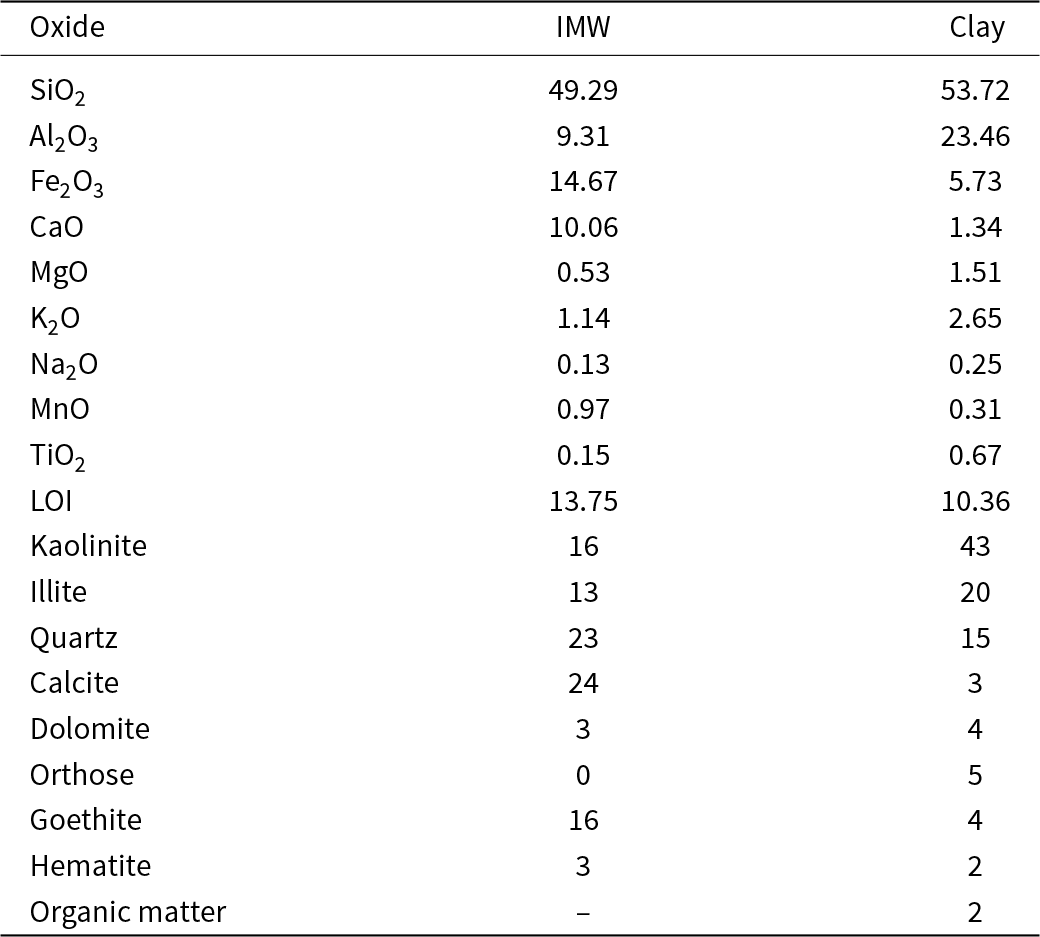
The clay is mainly composed of SiO2 (53.72%), Al2O3 (23.46%) and appreciable quantities of Fe2O3 (5.73%; Table 1). The SiO2 content varies generally between 45% and 60% for the clay bricks, being one of the main components of bricks (Semiz et al., Reference Semiz2017). The Fe2O3, CaO, K2O and Na2O act as effective fluxes, reducing the temperature required to form a vitreous material in the body of the bricks as well as lowering the melting point of the clay (Ravisankar et al., Reference Ravisankar, Kiruba, Eswaran, Senthilkumar and Chandrasekaran2010). The clay is considered to be non-calcareous with low refractory properties (Benahsina et al., Reference Benahsina, Taha, Bouachera, Elomari and Bennouna2021).
Chemical and mineralogical compositions (wt.%) of the IMW and clay materials.

The IMW has SiO2, Al2O3, Fe2O3 and CaO contents of 49.29, 9.31, 14.67 and 10.06 wt.%, respectively, being comparable to those of the clay (Table 1). The high Fe2O3 content is responsible for the dark colour of the IMW (Muñoz et al., Reference Muñoz, Morales, Letelier and Mendívil2016) before and after firing. MgO, TiO2 and Na2O are present in minor amounts. The most significant difference between clay and IMW is the loss on ignition (LOI): the LOI of IMW (13.75 wt.%) is higher than that of the clay (10.36 wt.%) due to the presence of abundant carbonates, iron oxy-hydroxides and organic matter. The inclusion of organic matter in a specific quantity is advantageous in terms of it improving the plasticity of the mixture (Achik et al., Reference Achik, Benmoussa, Oulmekki, Ijjaali, el Moudden and Touache2021).
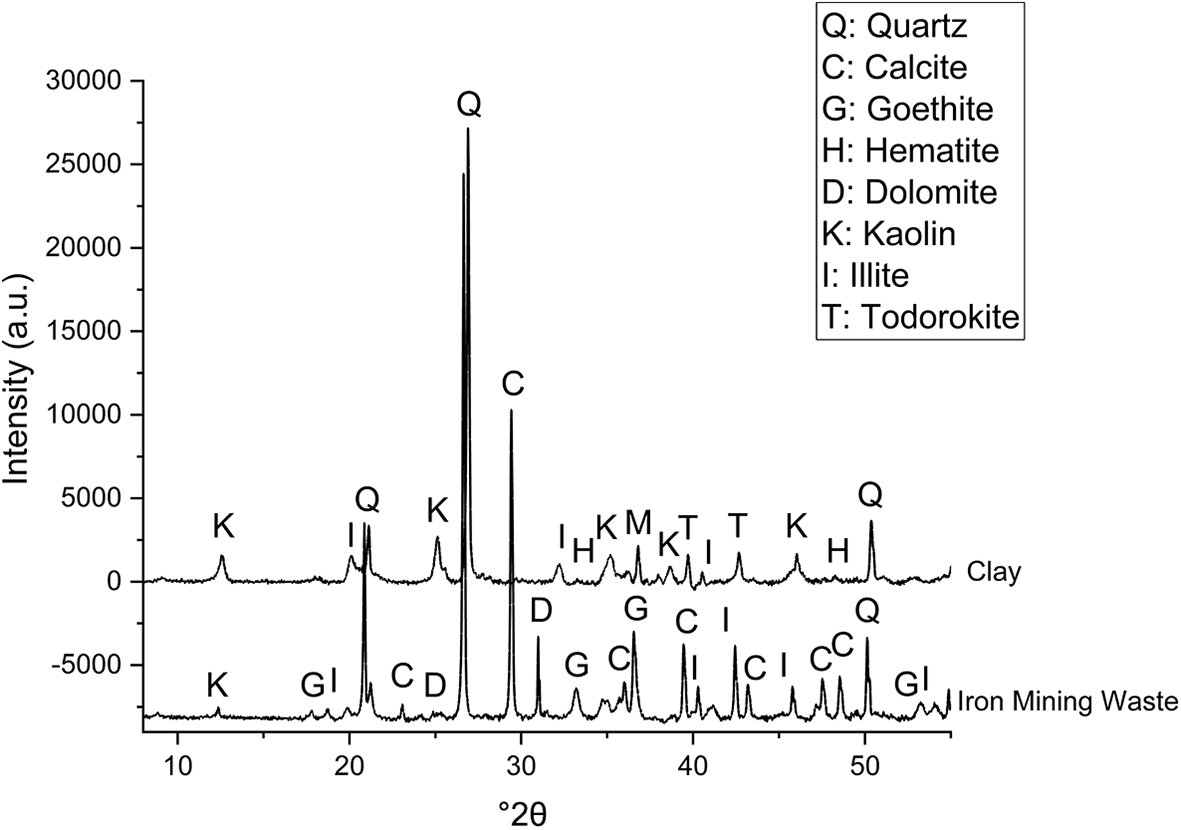
Mineralogical analysis of the two materials (Fig. 2 & Table 1) showed that the IMW contains mainly quartz (23 wt.%), kaolinite (16 wt.%), illite (13 wt.%), calcite (24 wt.%), goethite (16 wt.%), dolomite (3 wt.%) and hematite (3 wt.%). The clay is mainly composed of kaolinite (43 wt.%), illite (20 wt.%), quartz (15 wt.%), orthoclase (5 wt.%), calcite (3 wt.%), dolomite (4 wt.%) and goethite (4 wt.%).
XRD traces of the raw materials.

Atterberg’s limits of the raw materials
The PL is much higher for the IMW sample than for the clay sample (Table 2). This could be due to the fact that IMW is richer in fine particles (Gencel et al., Reference Gencel, Erdugmus, Sutcu and Oren2020; Gueffaf et al., Reference Gueffaf, Rabehi and Boumchedda2020). However, the clay sample exhibited a PI value higher than that of the IMW sample (Table 2); the latter is considered to be a medium plastic material that requires less water to become plastic. Compared to the standard index (ASTM D4318-17e1), IMW is characterized as of medium plasticity.
Atterberg’s limits of the raw materials.

Thermal behaviour of the raw materials (TGA/DSC)
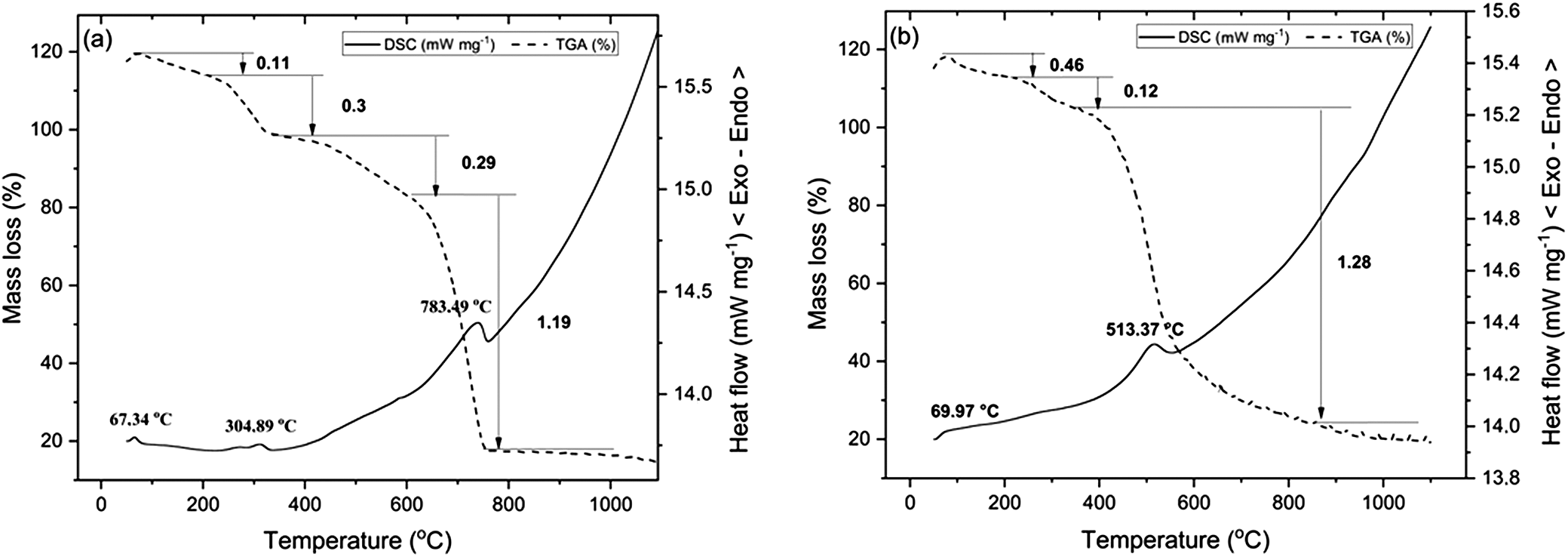
The thermal behaviour of the IMW sample (Fig. 3a) shows mass losses of 1.0 and 2.5 wt.% at 25–100°C and 250–300°C, respectively; these mass losses are attributed, respectively, to the loss of moisture and to the dehydration of the goethite phase (α-FeO(OH)), seen as an endothermic peak centred at 274°C (Rizov, Reference Rizov2012). Moreover, a mass loss of 1.2 wt.% was recorded at ∼490°C, seen as a weak endothermic peak ascribed to the dehydroxylation of kaolinite and illite. Finally, the mass loss of 9 wt.%, associated with an endothermic peak at 783°C, is attributed to the decomposition of carbonates.
TGA and DSC curves of the raw materials: (a) IMW and (b) clay.

The clay displays a mass loss of 1% at 25–100°C (Fig. 3b), with an endothermic peak centred at ∼70°C, attributed to the loss of moisture. Furthermore, a mass loss of 1.7 wt.% at ∼320°C can probably be attributed to the combustion of organic matter. The dehydroxylation of kaolinite and illite was recorded by an endothermic peak centred at 513°C, with a 7.5 wt.% mass loss (Mendes et al., Reference Mendes, Pedroti, Fontes, Ribeiro, Vieira, Pacheco and de Azevedo2019). Finally, a weak exothermic peak is observed at 900–910°C, attributed to structural reorganization of metakaolinite (Slimanou et al., Reference Slimanou, Eliche-Quesada, Kherbache, Bouzidi and Tahakourt2020). The total mass losses from 25°C to 1000°C are 13.7 and 10.2 wt.% for the IMW and the clay, respectively.
Physicochemical characterization of the bricks
Physical characteristics of the bricks
The bricks obtained with various IMW additions fired at 850°C and 950°C show no defects such as cracks, efflorescence or swelling. However, with increasing IMW content, the colour of the bricks becomes darker. For samples MB40 and MB50, the red to brown colour of the products fired at temperatures of 850°C and 950°C is due to the high iron oxide content, which is known to be red pigment, in addition to the oxidation of Fe2+ to Fe3+. Additionally, although the MnO content is low (∼1 wt.%) in the IMW (Table 2), it is sufficient to modify the colour of the brick, producing brown to black hues and improving the surface texture by reducing roughness (Bautista-Marín et al., Reference Bautista-Marín, Esguerra-Arce and Esguerra-Arce2021).
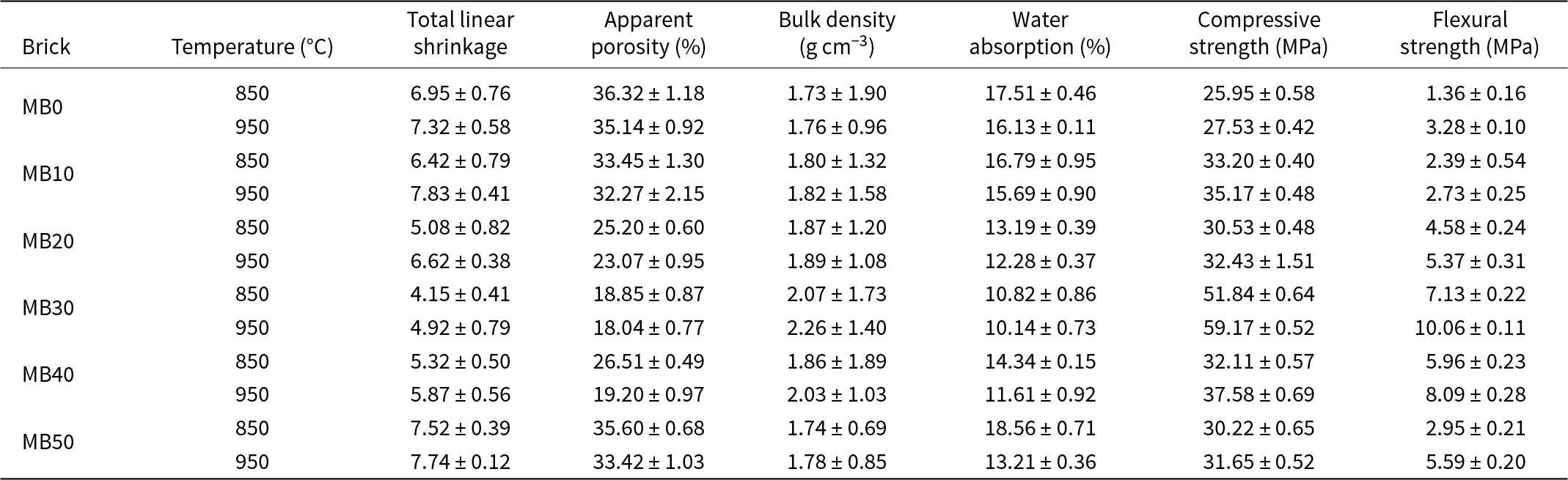
Total linear shrinkage reflects the contraction or expansion during the thermal treatment of the fired bricks. Contraction is primarily associated with the formation of the vitreous phase during firing, leading to densification through the filling of voids in the porous structure of the clay bricks. For standard clay bricks, linear shrinkage is below 8%, and when it is higher that this it leads to deformation of the fired bricks (Xin et al., Reference Xin, Kurmus, Mohajerani, Dallol, Lao and Robert2021; Pitak et al., Reference Pitak, Baltušnikas, Kalpokaitė-Dičkuvienė, Kriukiene and Denafas2022). Total linear shrinkage (Table 3) varies from 4.15% to 7.52% and from 4.92% to 7.74% for the bricks fired at 850°C and 950°C, respectively. Moreover, it varies from 6.95% to 7.32% for the reference bricks (MB0) fired at 850°C and 950°C, respectively. This is linked to the moisture and constitution water losses existing between the clay particles and in the microstructure of the clay (Phonphuak et al., Reference Phonphuak, Kanyakam and Chindaprasirt2016). However, total linear shrinkage decreased slightly with increasing amounts of IMW from 10 to 30 wt.%, to 4.15% and 4.92% at both firing temperatures (850°C and 950°C). This is due to the decrease in clay content and the increase in quartz present in the IMW. Quartz functioned as a degreasing agent in the mixture, mitigating potential contraction of the brick body. Moreover, the presence of quartz particles in the IMW decreased linear shrinkage due to the β-quartz to α-quartz transition for bricks containing less than 30 wt.% IMW.
Physical properties of the bricks fired at 850°C and 950 °C.

With increasing IMW content above 30 wt.%, linear shrinkage increased from 19.20% to 33.42% and from 26.51% to 35.6% for the bricks fired at 850°C and 950°C, respectively. This is probably due to the dehydroxylation of the clay fraction (kaolinite and illite), in addition to the dehydroxylation of goethite, the collapse of the carbonate structure (calcite and dolomite) and the dissipation of gases that create pores (Mekki et al., Reference Mekki, Anderson, Benzina and Ammar2008).
The apparent density of the bricks fired at 950°C was higher than that of those fired at 850°C and varied as a function of the IMW additions from 1.73 to 2.07 g cm–3 and from 1.76 to 2.26 g cm–3 for the bricks fired at 850°C and 950°C, respectively (Table 3). The apparent density of the reference bricks was lower than that of those with IMW addition at both firing temperatures. Thereafter, it increased as with increasing IMW additions (up to 30 wt.%), and then it decreased for samples MB40 and MB50.
However, the presence of excessive Fe2O3 in addition to K2O, Na2O and MnO decreased the viscosity of the liquid phase filling the pores and facilitating the development of a glassy phase that occupied the pores of the fired bricks, decreasing their open porosity (Phonphuak et al., Reference Phonphuak, Kanyakam and Chindaprasirt2016; Sutcu et al., Reference Sutcu, Ozturk, Yalamac and Gencel2016; Baziz et al., Reference Baziz, Bouzidi and Eliche-Quesada2021) and thereby increasing their density. Thereafter, as the IMW content increased beyond 30 wt.%, the apparent density decreased at both firing temperatures, demonstrating increased water absorption and total linear shrinkage. Moreover, dehydroxylation of kaolinite, illite and goethite and the release of gases after firing formed pores and decreased the density of the fired bricks. The addition of IMW created a less homogeneous structure in which iron particles formed aggregates that increased voids, leading to greater absorption and porosity (Kandymov et al., Reference Kandymov, Korpayev, Durdyev, Myratberdiyev and Gurbanmyradova2023).
Apparent porosity and water absorption followed similar trends for all of the bricks (Table 3). Both properties decreased with increasing temperature and IMW content up to 30 wt.%. However, there was a pronounced increase in both parameters when 40 and 50 wt.% of IMW were added to the mixtures, but these values nevertheless were lower than those of the reference bricks (MB0). The addition of 30 wt.% of IMW considerably decreased apparent porosity and water absorption to 18.04% and 10.14%, respectively, for the bricks fired at 950°C. This is due to the iron oxides (Fe2O3) and alkali oxides (K2O, Na2O), which facilitate the development of a glassy phase that occupies the pores of the fired bricks at 850°C and 950°C (Phonphuak et al., Reference Phonphuak, Kanyakam and Chindaprasirt2016).
Mineralogical analysis of the fired clay bricks
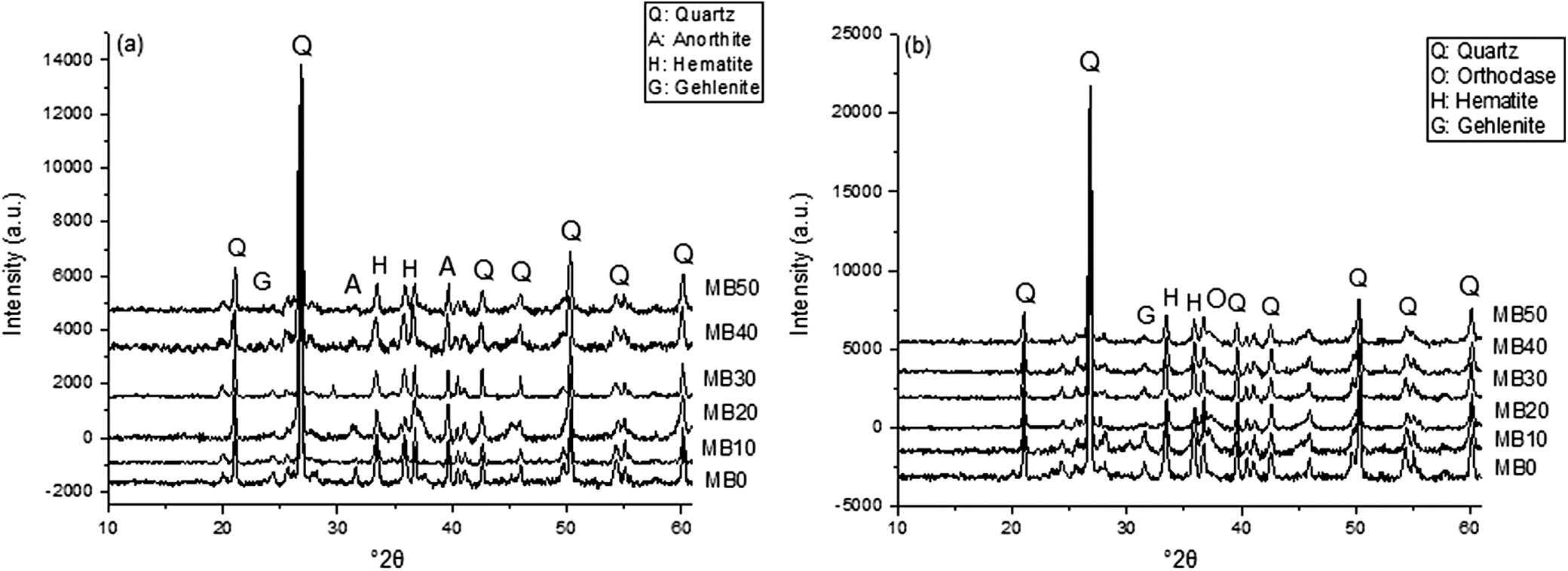
The main phases of bricks fired at 850°C are quartz, hematite, gehlenite (2CaO.Al2O3.SiO2) and anorthite (Fig. 4a); these phases increased as a function of increasing IMW addition. However, anorthite formed as a metastable solid solution from the phase transformation of calcite and aluminosilicates (CaO–Al2O3–SiO2 system) in sample MB30 (DeCeanne et al., Reference DeCeanne, Rodrigues, Wilkinson, Mauro and Zanotto2022). At 950°C, quartz, hematite, gehlenite and anorthite were the main mineralogical phases of the fired bricks, but the intensities of their peaks were slightly diminished compared to bricks fired at 850°C (Fig. 4b). Moreover, the intensity of the quartz peaks of sample MB30 were decreased, whereas the intensities of the peaks of hematite, gehlenite and anorthite were increased. This might be due to the formation of a glassy phase in sample MB30, facilitated by the presence of fluxing agents. Fe2O3 along with K2O and Na2O are fluxing agents, facilitating the formation of a glassy phase at lower temperatures (Klaarenbeek, Reference Klaarenbeek1961; Maniatis et al., Reference Maniatis, Simopoulos and Kostikas1981). When the addition of IMW exceeded 30 wt.%, the bricks fired at both temperatures (850°C and 950°C) acquired more porous structures due to the excessive clay, goethite and calcite contents, which increased water absorption, porosity and total shrinkage (Table 3). Moreover, as the amount of refractory oxides (Al2O3, MgO) increased, the firing temperatures used in this study became insufficient to decrease the viscosity of the liquid phase, which fills the pores and facilitates the formation of a glassy phase that further fills the pores of the fired bricks. The peaks of quartz and hematite slightly increased in intensity in samples MB40 and MB50 when the samples were fired at 950°C.
XRD traces of bricks fired at (a) 850°C and (b) 950°C.

FTIR characterization of the bricks
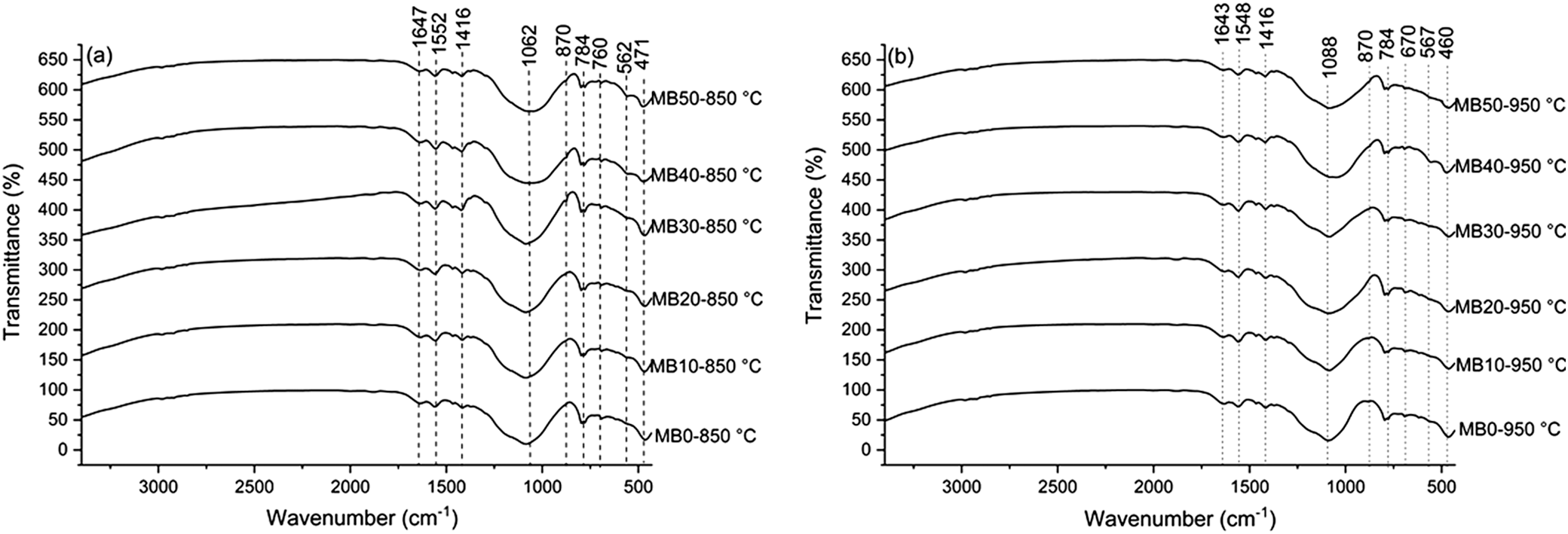
All of the samples show weak doublet bands at 1647 and 1552 cm–1 (Fig. 5a,b), attributed to bending and stretching vibrations due the presence of adsorbed water molecules (Ravisankar et al., Reference Ravisankar, Kiruba, Eswaran, Senthilkumar and Chandrasekaran2010). A weak band at ∼1416 cm–1, characteristic of carbonates, is present in all samples fired at 850°C and 950°C. The 1062–1088 cm–1 absorption bands represent asymmetric Si–O stretching of the main silicate tetrahedral vibrations (Bahçeli et al., Reference Bahçeli, Güleç, Erdoʇan and Söʇüt2016). The excessive broadening of absorption bands in the 1100–1000 cm–1 range are attributed to disorder within the tetrahedral sites, leading to the expansion of the Si–O stretching band (Ravisankar et al., Reference Ravisankar, Kiruba, Eswaran, Senthilkumar and Chandrasekaran2010). The weak shoulder absorption bands in the range of 916–922 cm–1 observed in the bricks fired at 850°C (MB30, MB40 and MB50) are due to Al–OH flexure vibrations of phyllosilicates (Terra et al., Reference Terra, Demattê and Viscarra Rossel2015). These vibrations were retained in samples MB40 and MB50 fired at 950°C. Additionally, the weak shoulder at 870 cm–1 is observed for the MB30, MB40 and MB50 samples fired at 850°C, which is attributed to FeAlOH vibrations present in the IMW (Eliche-Quesada et al., Reference Eliche-Quesada, Sandalio-Pérez, Martínez-Martínez, Pérez-Villarejo and Sánchez-Soto2018). However, this shoulder band is absent from samples MB0, MB10 and MB20. On the other hand, the weak band at 870 cm–1 is present in samples MB40 and MB50. The weak bands observed at 784 and 760 cm–1 observed in all of the samples are attributed to the Si–O symmetrical stretching vibrations of quartz (Barua et al., Reference Barua, Boruah, Bhattacharyya and Baruah2003; Namduri & Nasrazadani, Reference Namduri and Nasrazadani2008). However, the weak shoulder observed at 688 cm–1 in all of the samples is attributed to Si–O symmetrical bending vibrations due to Al for Si substitution. In the 550–570 cm–1 region, a medium-intensity band is observed in the FTIR spectra of all of the samples (except MB0 and MB10) fired at 850°C and 950°C (Fig. 5a,b). This band is ascribed to Fe–O deformation bond of hematite (Adazabra et al., Reference Adazabra, Viruthagiri and Shanmugam2017).
FTIR spectra of bricks fired at (a) 850°C and (b) 950°C.

Microstructure of the fired bricks
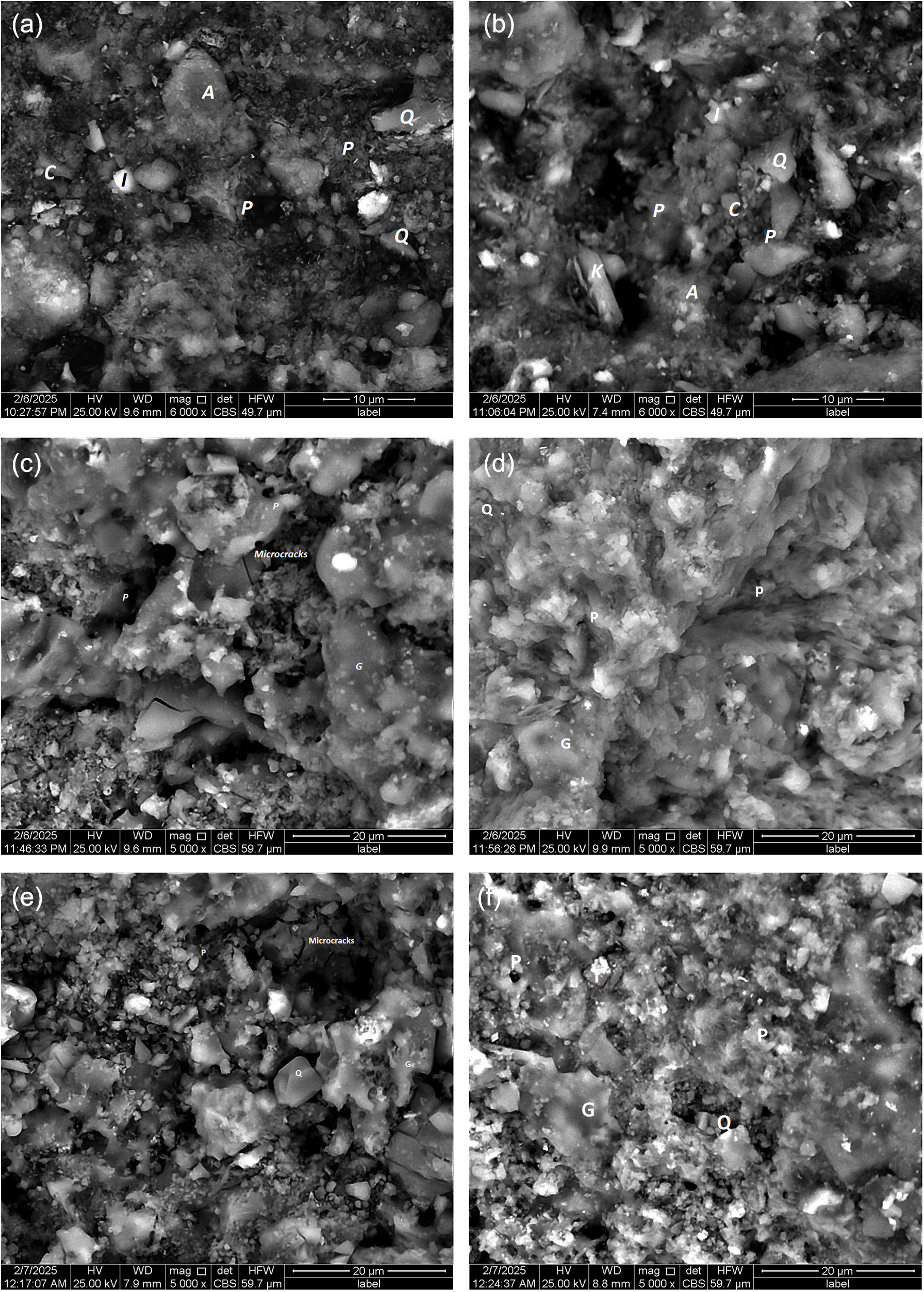
The textural characteristics and the evolution of the surface porosity with firing temperature (850°C and 950°C) were investigated using SEM. Figure 6 shows the SEM observations of the surfaces of the bricks with 0, 30 and 40 wt.% IMW fired at 850°C (MB0, MB30 and MB40, respectively). Sample MB0 exhibits high porosity (open and closed pores) and calcite and quartz particles that are not yet fused (Fig. 6a). Moreover, some agglomerates of fine particles of clay and iron particles are evidenced on the surfaces of all bricks that have not experienced dehydroxylation. As the amount of the IMW increased to 30 wt.%, the morphology of the bricks changed; their structure became denser and the pores are less abundant than the MB0-850 sample (Fig. 6b). Some kaolinite, quartz and calcite particles along with agglomerates still appear in the matrix of the bricks. The microstructure of the sample containing 40 wt.% IMW (Fig. 6c) presented excessive pores and some micro-cracks due to hydration of CaO during calcination (Cultrone et al., Reference Cultrone, Sebastián, Elert, de la Torre, Cazalla and Rodriguez-Navarro2004); this leads to increases in porosity and total linear shrinkage and a decrease in density (Table 3).
SEM images of the bricks fired at 850°C and 950°C: (a) MB0-850, (b) MB30-850, (c) MB40-850, (d) MB0-950, (e) MB30-950 and (f) MB40-950. A = agglomerates; C = calcite, G = glass, I = iron, K = kaolinite; P = pore, Q = quartz.

As the sintering temperature increased to 950°C, addition of IMW modified the microstructure of the specimens, leading to densification of the bricks and reduction of porosity with a heterogeneous phase distribution and visible closed porosity (Fig. 6d–f). This process involves decreases in total linear shrinkage and open porosity, as observed in sample MB30. In all of the bricks, the mineralogical transformations were not coupled with phase consolidation (i.e. particle rearrangement and diffusion by a solid state during firing, leading to the growth of contact points during the sintering process). Moreover, the formation of interconnected grains and a glassy phase surrounding the grain boundaries is evidenced in samples MB30 and MB40. Agglomerates of particles embedded in a glassy phase are shown in Fig. 6e,f. The high Fe2O3 content of the waste plays a role as a fluxing agent for the mixture (Baziz et al., Reference Baziz, Bouzidi and Eliche-Quesada2021). Overall, the incorporation of large amounts of IMW (40–50 wt.%) resulted in an interlinked pore architecture, as is indicated by the water absorption data (Slimanou et al., Reference Slimanou, Eliche-Quesada, Kherbache, Bouzidi and Tahakourt2020).
Mechanical and thermal properties of the fired bricks
Compressive strength
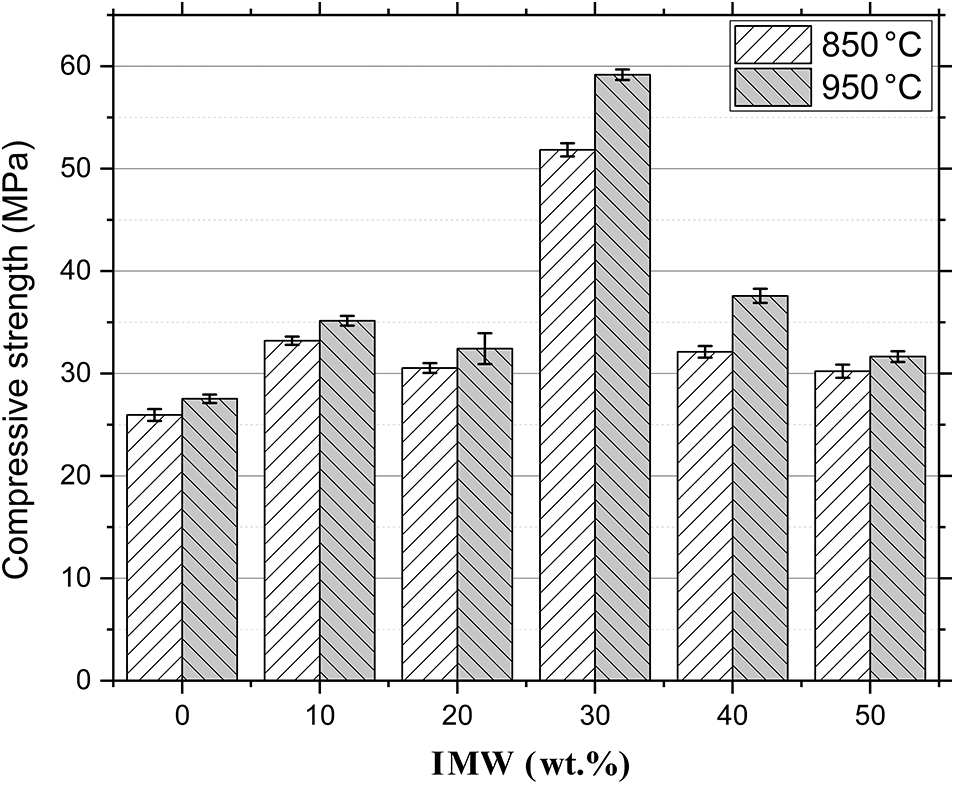
The compressive strengths of the reference bricks fired at 850°C and 950°C were 25.95 ± 0.58 and 27.53 ± 0.42 MPa, respectively (Fig. 7). These values exhibited an almost linear increase with the incorporation of 30 wt.% IMW for bricks fired at 850°C and 950°C, reaching peak values of 51.84 ± 0.64 and 59.17 ± 0.52 MPa at 850°C and 950°C, respectively. This increase is due to the reduction of porosity, leading to an increase in density. Moreover, hematite and alkali oxides lowered the fusion point of the bricks and hence promoted the liquid phase cementing the crystalline phase in the matrix (James et al., Reference James, Turnock and Fawcett1976; Sedmale et al., Reference Sedmale, Sperberga, Sedmalis and Valancius2006; Allegretta et al., Reference Allegretta, Pinto and Eramo2016).
Compressive strength of the bricks as a function of IMW addition.

With increasing IMW addition, the compressive strengths of the bricks decreased from 32.11 ± 0.57 to 30.22 ± 0.65 MPa and from 37.58 ± 0.69 to 31.65 ± 0.52 MPa for the bricks fired at 850°C and 950°C containing 40 and 50 wt.% IMW, respectively. This is due to the increases in water absorption (Table 3) and porosity of the bricks because of their excessive clay and quartz phase contents (Figs 4 & 5), which require higher firing temperature for sintering and consolidation (Coletti et al., Reference Coletti, Cultrone, Maritan and Mazzoli2016). However, the increases in quartz and hematite contents in the bricks could negatively affect compressive strength as they could produce more heterogeneity in the structures and induce micro-cracks (Monteiro & Vieira, Reference Monteiro and Vieira2004; Souza et al., Reference Souza, Vieira and Monteiro2008). Overall, the compressive strengths of all of the bricks fired at 850°C and 950°C were much higher than those of the conventional bricks, which have a minimum compressive strength of 10 MPa (Slimanou et al., Reference Slimanou, Eliche-Quesada, Kherbache, Bouzidi and Tahakourt2020).
Flexural strength
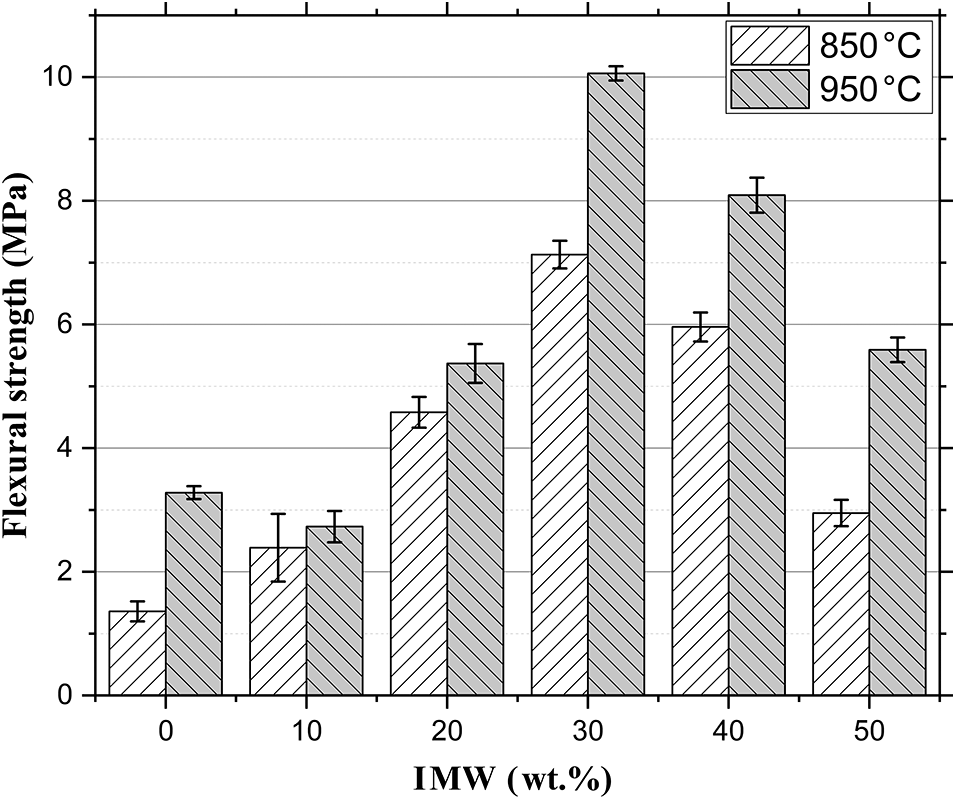
The construction industry considers the flexural strength of fired bricks to be the main quality factor for assessing their suitability (Semiz et al., Reference Semiz2017). ASTM C67 requires that the flexural strength of fired bricks exceeds 2.5 MPa (Dos Reis et al., Reference Dos Reis, Cazacliu, Cothenet, Poullain, Wilhelm and Sampaio2020). In the present study, flexural strength increased as a function of IMW addition up to 30 wt.% after firing at 850°C and 950°C (Fig. 8). The reference bricks exhibited values varying from 1.36 ± 0.16 to 3.28 ± 0.10 MPa at 850°C and 950°C, respectively. The flexural strengths of the fired bricks varied from 1.36 ± 0.16 to 7.13 ± 0.22 MPa and from 3.28 ± 0.10 to 10.06 ± 0.11 MPa at 850°C and 950°C, respectively. Increasing the firing temperature led to increased flexural strength.
Flexural strength of the bricks as a function of IMW addition.

The optimum flexural strength was attained when the bricks contained 30 wt.% IMW (7.13 ± 0.22 and 10.06 ± 0.11 MPa at 850°C and 950°C, respectively). This is due to the improvement of vitrification and/or consolidation when the firing temperature was increased. However, at above 30 wt.% addition of IMW, the flexural strength decreased to 2.95 ± 0.21 MPa. This decline in this mechanical characteristic is attributed to porosity and water absorption increasing after the addition of such large contents of IMW.
Thermal conductivity
Materials with low thermal conductivity are superior insulators and help reduce heat loss or gain in buildings. It was therefore crucial to acquire bricks with optimal mechanical and thermal properties. Indeed, standard red bricks have a thermal conductivity of 0.6 W m–1 K–1, whereas insulating bricks have a lower thermal conductivity of 0.15 W m–1 K–1 (Kreimeyer, Reference Kreimeyer1987).
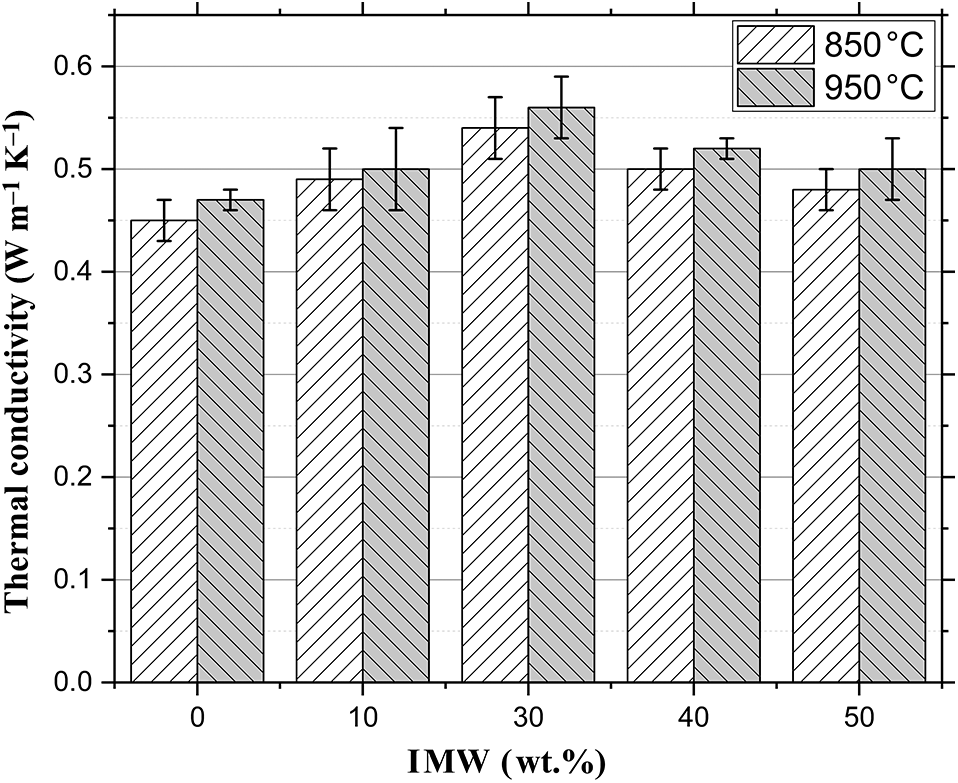
The thermal conductivity of the bricks fired at 850°C and 950°C increased as a function of IMW addition up to 30 wt.% (Fig. 9). The thermal conductivities of the reference bricks were 0.45 ± 0.02 and 0.47 ± 0.01 W m–1 K–1, and the bricks with 30 wt.% IMW had slightly higher thermal conductivities of 0.54 ± 0.03 and 0.56 ± 0.03 W m–1 K–1 at 850°C and 950°C, respectively. This is attributed to the lower porosity of these bricks, which influenced their thermal properties. Addition of IMW up to 30 wt.% increased the bulk density and thermal conductivity of the bricks at both firing temperatures. Further IMW addition (40–50 wt.%) to the brick specimens caused a slight decrease of thermal conductivity and density due to increased porosity. This is attributed to air being present in pore voids, which has a low thermal conductivity (0.024 W m–1 K–1), acting as thermal insulator (Kadir & Mohajerani, Reference Kadir and Mohajerani2015; Wang et al., Reference Wang, Wang, Li, Xu and Yang2024).
Thermal conductivity of the bricks as a function of IMW addition.

Environmental assessment
According to the results regarding the toxicity characteristics (i.e. TCLP) of the bricks with 0, 10, 20, 30 and 40 wt.% IMW (Table 4), the heavy metal concentrations of all of the bricks decreased with increasing firing temperature from 850°C to 950°C. The concentration of Zn and Ni is higher in the reference bricks than in the bricks with IMW, probably because the clay itself contains greater contents of Zn and Ni. However, the Pb and Fe concentrations are higher in the bricks with IMW than in the reference bricks. During firing, heavy metals are trapped and immobilized in the glassy phase composing the structure of the bricks at both firing temperatures. Overall, the results of these experiments showed heavy metal contents below the limits set by the US Environmental Protection Agency (EPA; Chen & Ma, Reference Chen and Ma1998).
Leachability of the heavy metals as a function of temperature (concentrations in mg L–1).

a US EPA (1996).
Summary
In this study, 30 wt.% IMW could be used as raw material to produce clay bricks; these bricks had compressive strengths of 51.84 ± 0.64 and 59.17 ± 0.52 MPa and thermal conductivities of 0.45 ± 0.01 and 0.50 ± 0.02 after firing at 850°C and 950°C, respectively. Addition of IMW reduces linear shrinkage and compressive strength during firing. Nevertheless, addition of 20 wt.% IMW is considered acceptable for maintaining quality in line with fired brick standards. Chen et al. (Reference Chen, Zhang, Chen, Zhao and Bao2011) showed that bricks obtained by mixing 84 wt.% IMW, 10 wt.% clay and 6 wt.% fly ash fired at 980–1030°C complied with the Chinese standard. In addition, water absorptions of 16.54–17.93% and compressive strengths of 20.03–22.92 MPa were observed, also satisfying the requirements of this standard. In conclusion, IMW offers a promising alternative in the manufacture of fired bricks, with satisfactory physical and mechanical properties and minimal environmental impact.
Conclusions
This study examined the use of as-received IMW for the production of fired clay bricks. Different proportions of IMW (10, 20, 30, 40 and 50 wt.%) were added to the bricks. Physical, mechanical and thermal properties, microstructure and environmental impact were evaluated. Based on the results of this study, the following conclusions can be drawn:
• The IMW has a high concentration of Fe2O3, SiO2 and silica and contains abundant kaolinite (16%), illite (13%), quartz (23%), goethite (16%) and calcite (24%) and minor hematite (3%) and dolomite (3%).
• Total shrinkage, water absorption and porosity are significantly reduced by increasing the amount of IMW up to 30 wt.% of brick composition at both firing temperatures (850°C and 950°C). This is due to the decrease in clay content and the increase in quartz with the addition of the IMW. Brick density increased with firing temperature (950°C) and IMW addition (up to 30 wt.%) due to the formation of a liquid phase, promoted by the Fe2O3 content, which filled the internal pores and reduced open porosity. However, when IMW exceeded 30 wt.%, the density decreased as the open porosity and water absorption increased because the sintering temperature (950°C) was not sufficient to form a glassy phase. The water absorption of all bricks was below 20 wt.%, meeting the ASTM standard for these bricks.
• The main phases of bricks at 850°C are quartz, hematite, gehlenite and anorthite, the abundance of which increased with the addition of IMW. However, anorthite appeared as a metastable solid solution resulting from the phase transformation of calcite and aluminosilicate phases in sample MB30. Additionally, the bricks fired at 950°C have the same phases, although these are less abundant compared to those of bricks fired at 850°C.
• All samples showed mechanical strength values in excess of the required standards, with compressive strengths of 25.95 and 27.53 MPa after firing at 850°C and 950°C, respectively. When the optimum (30 wt.%) quantity of IMW is added, the compressive and flexural strengths of the bricks increased from 51.84 to 59.17 MPa and from 7.13 to 10.06 MPa, respectively, for the bricks fired at 850°C and 950°C. This is due to densification and the elimination of open porosity. The presence of Fe2O3 as well as fluxing agents (Na2O, K2O and Mn2O) decreases the liquid temperature, which leads to the formation of a glassy phase, as shown by the SEM images of the samples. The decline in mechanical characteristics with the incorporation of 40 and 50 wt.% IMW is attributed mostly to the greater porosity and water absorption after the addition of such quantities of IMW.
• Thermal conductivity increased with the incorporation of IMW after firing at 850°C and 950°C. Brick samples with 30 wt.% IMW showed thermal conductivity values of 0.54 and 0.56 W m–1 K–1. The minimum thermal conductivities achieved were 0.45 and 0.47 W m–1 K–1 for the control bricks fired at 850°C and 950°C, respectively. The results of the TCLP showed that the heavy metals were trapped during firing and immobilized in the glassy phase that makes up the brick structure at both firing temperatures. The results for all samples were below US EPA limits.
• IMW can be successfully recycled and met all current standards for brick-making. In this case study, the optimum amount of IMW was 30 wt.%, giving maximum values of mechanical strength and acceptable values of thermal conductivity with less open porosity. Therefore, fired brick production in the temperature range of 850–950°C with the incorporation of IMW could represent a substantial step towards decreasing pollution and environmental impacts of this industry, which could contribute to sustainable development and circular economy principles.
Acknowledgements
The authors want to thank the Center for Scientific and Technical Research in Physico-Chemical Analysis of Bejaia, Algeria (CRAPC) for facilitating this research. We also thank El Ouenza Mine for providing us with the IMW samples.
Financial support
None.
Competing interests
The authors declare none.