


%20--%3e%3c!DOCTYPE%20svg%20PUBLIC%20'-//W3C//DTD%20SVG%201.0//EN'%20'http://www.w3.org/TR/2001/REC-SVG-20010904/DTD/svg10.dtd'%3e%3csvg%20version='1.0'%20id='Layer_1'%20xmlns='http://www.w3.org/2000/svg'%20xmlns:xlink='http://www.w3.org/1999/xlink'%20x='0px'%20y='0px'%20width='64px'%20height='64px'%20viewBox='5.5%20-3.5%2064%2064'%20enable-background='new%205.5%20-3.5%2064%2064'%20xml:space='preserve'%3e%3cg%3e%3ccircle%20fill='%23FFFFFF'%20fill-opacity='0'%20cx='37.785'%20cy='28.501'%20r='28.836'/%3e%3cpath%20fill='%23595959'%20d='M37.441-3.5c8.951,0,16.572,3.125,22.857,9.372c3.008,3.009,5.295,6.448,6.857,10.314%20c1.561,3.867,2.344,7.971,2.344,12.314c0,4.381-0.773,8.486-2.314,12.313c-1.543,3.828-3.82,7.21-6.828,10.143%20c-3.123,3.085-6.666,5.448-10.629,7.086c-3.961,1.638-8.057,2.457-12.285,2.457s-8.276-0.808-12.143-2.429%20c-3.866-1.618-7.333-3.961-10.4-7.027c-3.067-3.066-5.4-6.524-7-10.372S5.5,32.767,5.5,28.5c0-4.229,0.809-8.295,2.428-12.2%20c1.619-3.905,3.972-7.4,7.057-10.486C21.08-0.394,28.565-3.5,37.441-3.5z%20M37.557,2.272c-7.314,0-13.467,2.553-18.458,7.657%20c-2.515,2.553-4.448,5.419-5.8,8.6c-1.354,3.181-2.029,6.505-2.029,9.972c0,3.429,0.675,6.734,2.029,9.913%20c1.353,3.183,3.285,6.021,5.8,8.516c2.514,2.496,5.351,4.399,8.515,5.715c3.161,1.314,6.476,1.971,9.943,1.971%20c3.428,0,6.75-0.665,9.973-1.999c3.219-1.335,6.121-3.257,8.713-5.771c4.99-4.876,7.484-10.99,7.484-18.344%20c0-3.543-0.648-6.895-1.943-10.057c-1.293-3.162-3.18-5.98-5.654-8.458C50.984,4.844,44.795,2.272,37.557,2.272z%20M37.156,23.187%20l-4.287,2.229c-0.458-0.951-1.019-1.619-1.685-2c-0.667-0.38-1.286-0.571-1.858-0.571c-2.856,0-4.286,1.885-4.286,5.657%20c0,1.714,0.362,3.084,1.085,4.113c0.724,1.029,1.791,1.544,3.201,1.544c1.867,0,3.181-0.915,3.944-2.743l3.942,2%20c-0.838,1.563-2,2.791-3.486,3.686c-1.484,0.896-3.123,1.343-4.914,1.343c-2.857,0-5.163-0.875-6.915-2.629%20c-1.752-1.752-2.628-4.19-2.628-7.313c0-3.048,0.886-5.466,2.657-7.257c1.771-1.79,4.009-2.686,6.715-2.686%20C32.604,18.558,35.441,20.101,37.156,23.187z%20M55.613,23.187l-4.229,2.229c-0.457-0.951-1.02-1.619-1.686-2%20c-0.668-0.38-1.307-0.571-1.914-0.571c-2.857,0-4.287,1.885-4.287,5.657c0,1.714,0.363,3.084,1.086,4.113%20c0.723,1.029,1.789,1.544,3.201,1.544c1.865,0,3.18-0.915,3.941-2.743l4,2c-0.875,1.563-2.057,2.791-3.541,3.686%20c-1.486,0.896-3.105,1.343-4.857,1.343c-2.896,0-5.209-0.875-6.941-2.629c-1.736-1.752-2.602-4.19-2.602-7.313%20c0-3.048,0.885-5.466,2.658-7.257c1.77-1.79,4.008-2.686,6.713-2.686C51.117,18.558,53.938,20.101,55.613,23.187z'/%3e%3c/g%3e%3c/svg%3e)
%20--%3e%3c!DOCTYPE%20svg%20PUBLIC%20'-//W3C//DTD%20SVG%201.0//EN'%20'http://www.w3.org/TR/2001/REC-SVG-20010904/DTD/svg10.dtd'%3e%3csvg%20version='1.0'%20id='Layer_1'%20xmlns='http://www.w3.org/2000/svg'%20xmlns:xlink='http://www.w3.org/1999/xlink'%20x='0px'%20y='0px'%20width='64px'%20height='64px'%20viewBox='5.5%20-3.5%2064%2064'%20enable-background='new%205.5%20-3.5%2064%2064'%20xml:space='preserve'%3e%3cg%3e%3ccircle%20fill='%23FFFFFF'%20fill-opacity='0'%20cx='37.637'%20cy='28.806'%20r='28.276'/%3e%3cg%3e%3cpath%20fill='%23595959'%20d='M37.443-3.5c8.988,0,16.57,3.085,22.742,9.257C66.393,11.967,69.5,19.548,69.5,28.5c0,8.991-3.049,16.476-9.145,22.456%20C53.879,57.319,46.242,60.5,37.443,60.5c-8.649,0-16.153-3.144-22.514-9.43C8.644,44.784,5.5,37.262,5.5,28.5%20c0-8.761,3.144-16.342,9.429-22.742C21.101-0.415,28.604-3.5,37.443-3.5z%20M37.557,2.272c-7.276,0-13.428,2.553-18.457,7.657%20c-5.22,5.334-7.829,11.525-7.829,18.572c0,7.086,2.59,13.22,7.77,18.398c5.181,5.182,11.352,7.771,18.514,7.771%20c7.123,0,13.334-2.607,18.629-7.828c5.029-4.838,7.543-10.952,7.543-18.343c0-7.276-2.553-13.465-7.656-18.571%20C50.967,4.824,44.795,2.272,37.557,2.272z%20M46.129,20.557v13.085h-3.656v15.542h-9.944V33.643h-3.656V20.557%20c0-0.572,0.2-1.057,0.599-1.457c0.401-0.399,0.887-0.6,1.457-0.6h13.144c0.533,0,1.01,0.2,1.428,0.6%20C45.918,19.5,46.129,19.986,46.129,20.557z%20M33.042,12.329c0-3.008,1.485-4.514,4.458-4.514s4.457,1.504,4.457,4.514%20c0,2.971-1.486,4.457-4.457,4.457S33.042,15.3,33.042,12.329z'/%3e%3c/g%3e%3c/g%3e%3c/svg%3e)
Introduction
Enterobacterales bacteremia, a serious and common bloodstream infection caused by gram-negative bacteria including Escherichia coli, Klebsiella pneumoniae or oxytoca, and Proteus mirabilis, constitutes a significant proportion of bloodstream infections. Reference Holmes, Anderson, Mobley and Bachman1 Historically, patients with uncomplicated gram-negative bacteremia received 14 days of parenteral antimicrobial therapy which has been associated with several complications including catheter-related infections, extended hospital stays, and increased healthcare costs. Reference Yahav, Franceschini and Koppel2–Reference Lau, Pinto, Thiemann and Lehmann4 However, previous evidence has demonstrated that clinically stable patients can be safely transitioned from intravenous (IV) to oral antibiotic therapy, providing an opportunity to reduce the burden associated with catheter-related an opportunity to reduce the burden associated with prolonged IV treatment. Reference Tingsgård, Bastrup, Jørgensen, Østergaard and Benfield5–Reference Tamma, Conley and Cosgrove8 As evidence supporting oral step-down therapy has grown, recent studies have increasingly focused on determining how early this transition can safely occur. Engers and colleagues found that most patients with gram-negative bloodstream infections achieved clinical stability within 5 days of antibiotics, yet fewer than half transitioned to oral therapy within 7 days, suggesting an opportunity for earlier conversion. Reference Engers, Tamma and Fiawoo9 Alzaidi and colleagues evaluated oral transition within 4 days of effective IV therapy and found similar clinical effectiveness between trimethoprim-sulfamethoxazole and fluoroquinolones, while Mateu and colleagues reported no significant differences in mortality or relapse among selected patients transitioned to oral therapy by day 3 or earlier compared with those who received later transition or continued IV therapy. Reference Alzaidi, Veillette and May10,Reference Mateu, Martínez-Urrea and Gallego11 These findings are significant for antimicrobial stewardship and continued advocation for timely IV-to-oral conversions to potentially reduce therapy costs, experience fewer IV-related complications, and improve patient quality of life.
Despite increasing evidence supporting IV-to-oral conversion, the optimal timing of the transition remains uncertain, particularly whether earlier transition provides comparable clinical outcomes to later transition. This knowledge gap leaves clinicians without clear guidance or consensus on the optimal transition approach. Therefore, the purpose of this study is to evaluate the outcomes of early versus late oral antibiotic transition in patients with uncomplicated Enterobacterales bacteremia. We hypothesized that clinically stable patients transitioned earlier to oral antibiotics would have no difference in treatment failure compared to those transitioned later to oral antibiotics for the treatment of Enterobacterales bacteremia.
Methods
Study design and setting
This was a multicenter, retrospective cohort study of adult patients treated for uncomplicated Enterobacterales bacteremia at a large health system between September 1, 2021, and September 1, 2024. The health system included one tertiary care academic medical center, 3 community teaching hospitals, and 1 community hospital. The study protocol was approved by the Institutional Review Board with a waiver of informed consent.
Inclusion and exclusion criteria
Eligible participants were adults 18 years or older with uncomplicated Enterobacterales bacteremia (Figure 1) who had definitive source control, if applicable, and achieved clinical stability within 72 hours of appropriate IV antimicrobial initiation (Figure 2). Definition of clinical stability was developed utilizing The Consensus Statements for Best Practices for the Management of Uncomplicated Gram-Negative Bloodstream Infections criteria. Reference Heil, Bork and Abbo13 Therefore, we defined clinical stability as achievement of at least 3 of 4 criteria: Temperature ≤38°C, HR <90/min, RR <20/min, hemodynamic stability (SBP > 90 mmHg). Patients additionally had to be eligible for transition to oral antibiotics (Figure 2), have a final antibiotic susceptibility report available for the infecting organism, and be discharged alive without hospice or palliative care.
Definition of uncomplicated Enterobacterales bacteremia.
*Clinical stability defined as achievement of at least 3 of 4 criteria: Temperature ≤38°C, HR <90/min, RR <20/min, hemodynamic stability (SBP > 90 mmHg).

Definitions of eligibility criteria.

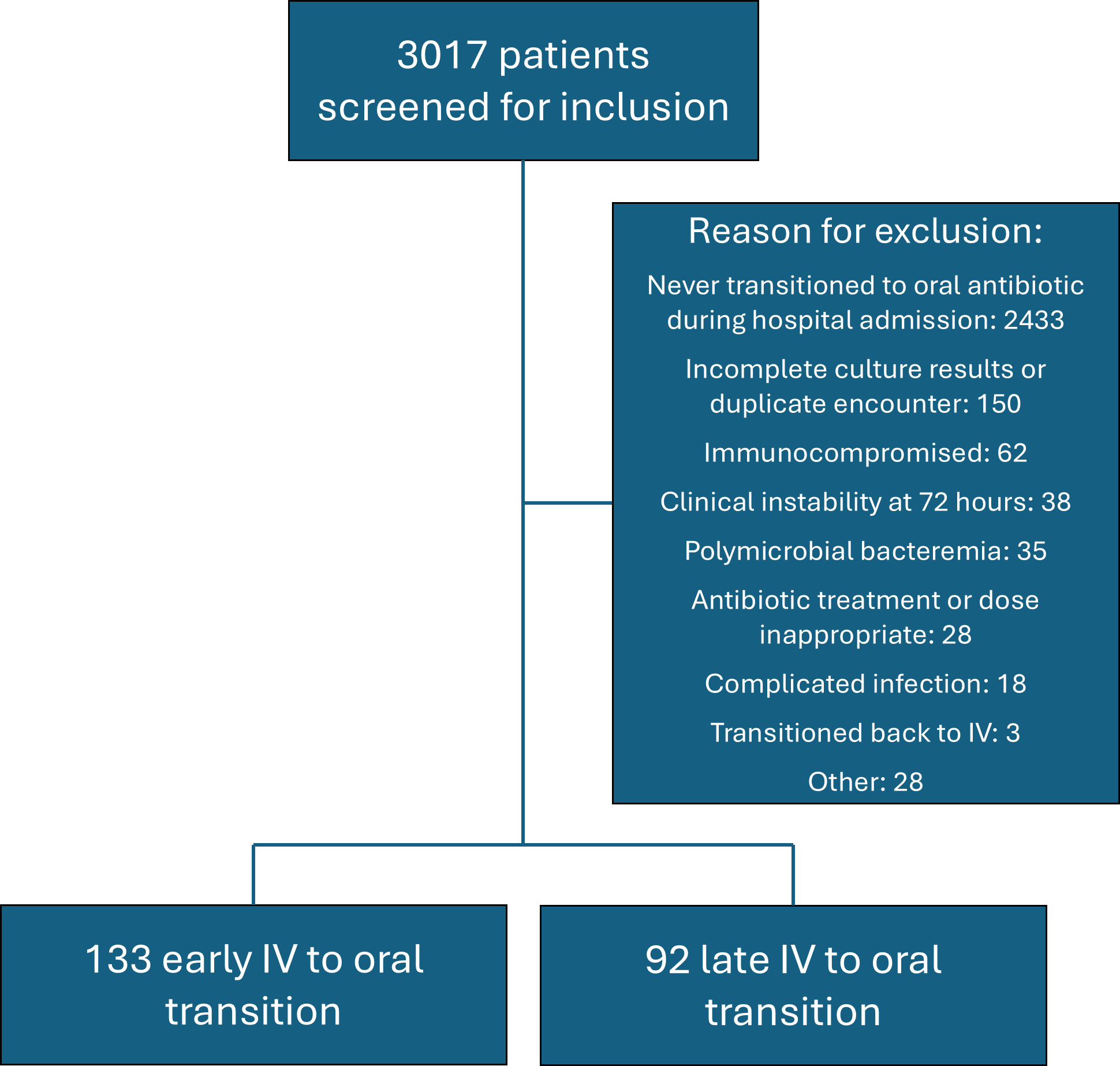
Patients were then excluded for the following reasons: never transitioned to oral therapy during inpatient admission, had polymicrobial infection with non-Enterobacterales organisms, received less than 7 days of appropriate antimicrobial therapy, transitioned back to IV antibiotics, received inappropriate antimicrobial therapy based on dosing chosen or susceptibilities, transferred from an institution outside of the health system, or were pregnant or incarcerated. Patients were also excluded if they were immunocompromised as defined by having received any solid organ transplant, expected prolonged neutropenia (ANC <500 cells/mL), CD4 cell count <200 cells/mL, or currently on chronic corticosteroids and/or immunomodulator therapy. Reference Heil, Bork and Abbo13 Exclusions are outlined in Figure 3.
Screening and enrollment.

Patients were separated into two groups based on the timing of their transition from IV-to-oral antibiotics: an early transition group, defined as patients transitioned on day 3 or 4 of antibiotic therapy, and a late transition group, defined as patients transitioned on day 5 or later of antibiotic therapy.
Data collection
Patients were identified from blood cultures positive with any of the three predefined isolates within the study time frame and digitally abstracted from the electronic health record (EHR) system, Epic. Data pertaining to patient demographics, clinical presentation, and outcomes were manually collected from the EHR. Laboratory results, microbiological findings, antibiotic treatment regimens, International Classifications of Disease (ICD) codes used to calculate the Charlson Comorbidity Index (CCI) were also extracted digitally from Epic and confirmed through manual patient chart review. Standardized data collection forms were utilized to ensure consistency and completeness of data abstraction, and a separate process was implemented to ensure the de-identification of all patient information to maintain confidentiality. All data was collected by the primary investigator, and sub-investigators audited 10% of charts throughout data collection to verify the accuracy of information digitally extracted and manually obtained from patients’ EHR.
Study outcomes
The primary outcome of the study was treatment failure within 30 days of completing the prescribed course of oral antibiotics. This was a composite end point defined as the occurrence of one or more of the following: the need for additional antimicrobial therapy, infection-related readmission to the hospital, microbiological relapse, or all-cause mortality. The need for additional antibiotic therapy was defined as a broadening in coverage of the patient’s current antimicrobial regimen or the initiation of a new antibiotic. Microbiological relapse was defined as recurrent bacteremia with the same organism. Secondary outcomes included the incidence of each component of the composite primary outcome, total hospital length of stay measured in days from admission to discharge, and the total duration of antibiotic therapy. Duration of antibiotic therapy was measured as the sum of IV and oral antibiotic days. Antimicrobial days were counted using the total number of calendar days in which a patient receives any amount of a specific antimicrobial agent as outlined by NHSN. 14
Statistical analysis
Using 80% power and an alpha of 0.05, it was estimated that 125 patients would be needed in each group to detect a 10% difference in treatment failure. A greater difference in treatment failure was assumed compared to what Rieger et al observed due to differences in timing of IV-to-oral antibiotic transition and treatment failure definition between studies. Reference Rieger, Bosso, MacVane, Temple, Wahlquist and Bohm6
Statistical analysis was performed using IBM SPSS Statistics 28.0.1. Categorical variables were analyzed using Pearson χ 2 or Fisher’s Exact tests, as appropriate. Continuous variables were analyzed using the Mann–Whitney test for non-parametric data. Statistical significance was set as a P value <.05. To address potential confounding variables, clinically relevant risk factors for treatment failure and risk factors that had a bivariate analysis P value <.2 were considered for multivariate logistic regression.
Results
Participants
A total of 3,017 patients 18 years or older with Enterobacterales bacteremia were screened for inclusion (Figure 3). After all exclusions, the final cohort consisted of 225 patients. Of these, 133 (59.1%) were categorized into the early IV-to-oral transition group and 92 (40.9%) in the late IV-to-oral transition group.
Study population
Baseline characteristics are shown in Table 1. Patients in the late IV-to-oral transition group presented with a higher burden of comorbidities, evidenced by a significantly higher median CCI (5 vs 6, P = .027). Furthermore, individuals in the late transition group were more likely to have an infectious diseases (ID) consult (57.1% vs 70.7%, P = .039) and to have been admitted to the intensive care unit (ICU) (21.1% vs 45.7%, P < .001). All other characteristics were similar between the groups. Patients were primarily Caucasian, over the age of 65, with genitourinary tract infections and Escherichia coli as the predominant infecting organism.
Baseline characteristics

Table 1. Long description
The table compares baseline characteristics of patients in early and late IV-to-oral transition groups. It has 18 rows and 5 columns. The columns are labeled ‘Characteristic’, ‘Early IV-to-oral transition (n = 133)’, ‘Late IV-to-oral transition (n = 92)’, and ‘P’. The characteristics include age, gender at birth, race, BMI, Charlson comorbidity index, comorbidities, antimicrobial allergies, infectious diseases consult, ICU admission, causative pathogen, and source of infection. Each row provides specific data for these characteristics. Notable trends include higher median Charlson comorbidity index, more infectious diseases consults, and higher ICU admission rates in the late IV-to-oral transition group.
BMI, body mass index TMP-SMX, trimethoprim-sulfamethoxazole FQ, fluoroquinolone.
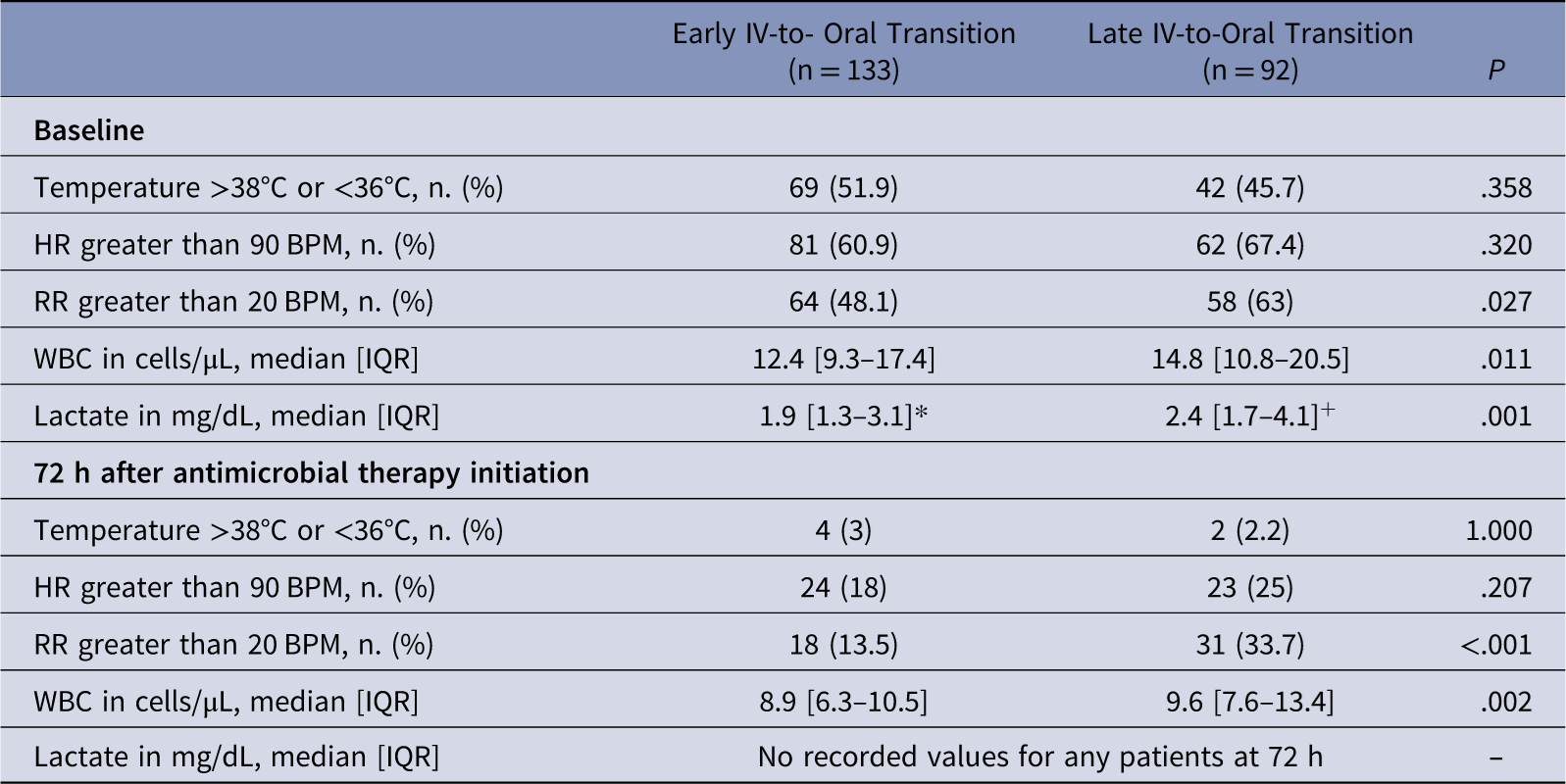
Vital signs at baseline and after 72 hours of IV antibiotics are shown in Table 2. At baseline, the late transition group had a higher proportion of patients with a respiratory rate greater than 20 breaths per minute (BPM), higher median white blood cell (WBC) count, and higher median lactate. At 72 hours, the late transition group continued to have a higher proportion of patients with a respiratory rate greater than 20 BPM and higher median WBC count.
Vitals and labs

Table 2. Long description
The table compares vital signs and lab values between early IV-to-oral transition (n = 133) and late IV-to-oral transition (n = 92) groups at baseline and 72 hours after antimicrobial therapy initiation. The table has 14 rows and 5 columns. The columns are labeled as Early IV-to-Oral Transition, Late IV-to-Oral Transition, and P. The rows are grouped into Baseline and 72 h after antimicrobial therapy initiation. Baseline measurements include Temperature >38°C or <36°C, HR greater than 90 BPM, RR greater than 20 BPM, WBC in cells/μL, and Lactate in mg/dL. 72 h after antimicrobial therapy initiation measurements include the same parameters. Row 1: Temperature >38°C or <36°C, n, (%), Early IV-to-Oral Transition: 69 (51.9), Late IV-to-Oral Transition: 42 (45.7), P: .358. Row 2: HR greater than 90 BPM, n, (%), Early IV-to-Oral Transition: 81 (60.9), Late IV-to-Oral Transition: 62 (67.4), P: .320. Row 3: RR greater than 20 BPM, n, (%), Early IV-to-Oral Transition: 64 (48.1), Late IV-to-Oral Transition: 58 (63), P: .027. Row 4: WBC in cells/μL, median [IQR], Early IV-to-Oral Transition: 12.4 [9.3–17.4], Late IV-to-Oral Transition: 14.8 [10.8–20.5], P: .011. Row 5: Lactate in mg/dL, median [IQR], Early IV-to-Oral Transition: 1.9 [1.3–3.1]*, Late IV-to-Oral Transition: 2.4 [1.7–4.1]*, P: .001. Row 6: Temperature >38°C or <36°C, n, (%), Early IV-to-Oral Transition: 4 (3), Late IV-to-Oral Transition: 2 (2.2), P: 1.000. Row 7: HR greater than 90 BPM, n, (%), Early IV-to-Oral Transition: 24 (18), Late IV-to-Oral Transition: 23 (25), P: .207. Row 8: RR greater than 20 BPM, n, (%), Early IV-to-Oral Transition: 18 (13.5), Late IV-to-Oral Transition: 31 (33.7), P: <.001. Row 9: WBC in cells/μL, median [IQR], Early IV-to-Oral Transition: 8.9 [6.3–10.5], Late IV-to-Oral Transition: 9.6 [7.6–13.4], P: .002. Row 10: Lactate in mg/dL, median [IQR], Early IV-to-Oral Transition: No recorded values for any patients at 72 h, Late IV-to-Oral Transition: No recorded values for any patients at 72 h.
BPM, beats or breaths per minute RR, respiratory rate HR, heart rate WBC, white blood count.
* 123 patients.
+ 87 patients.
Intravenous antibiotic regimens
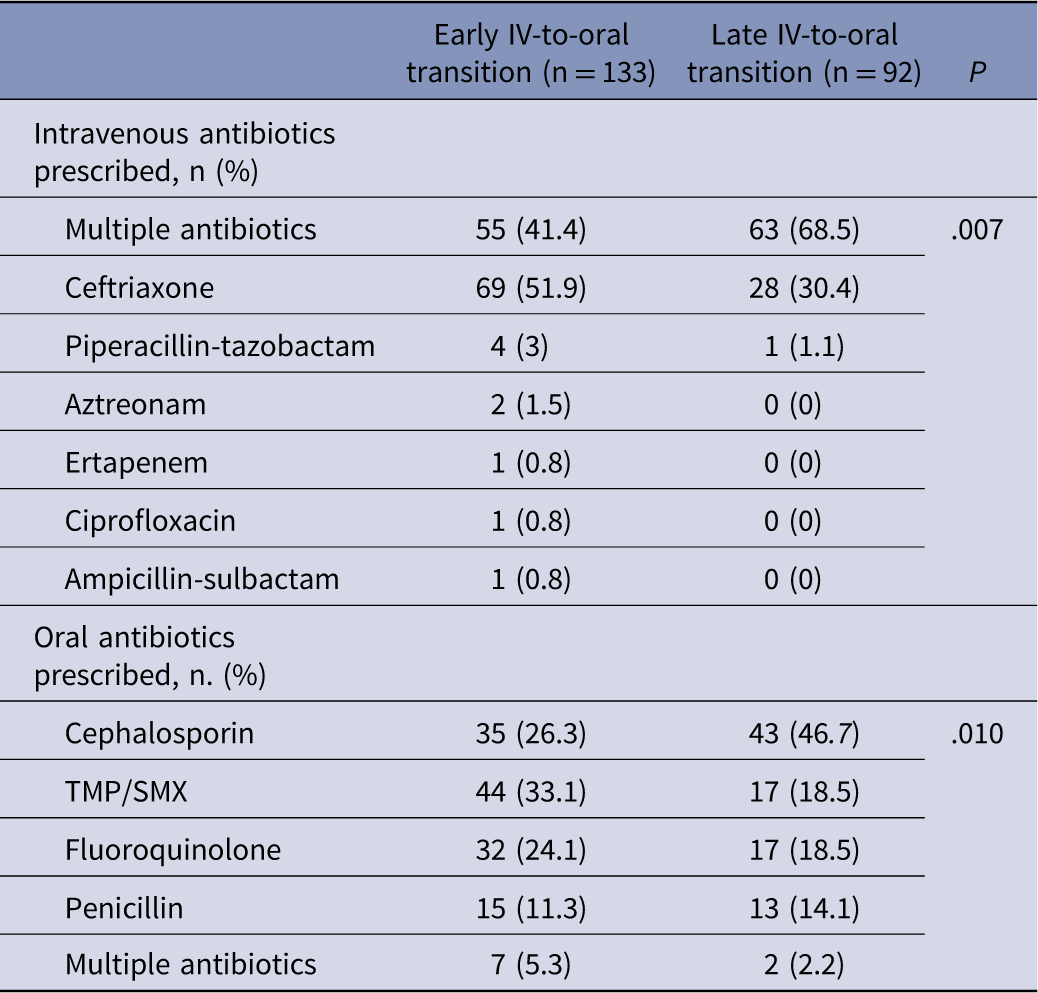
Table 3 outlines all antibiotic treatment regimens. Ceftriaxone was the most frequently used IV antibiotic in both groups. Additionally, within our sample, 118 of 225 (52.4%) patients were treated with multiple IV antibiotics. These patients experienced a change in therapy from one or multiple empiric broad-spectrum agents to a definitive agent. 110 of these 118 (93.2%) patients transitioned definitively to ceftriaxone, while 8 (6.8%) patients remained on broad-spectrum therapy. Of the patients transitioned to ceftriaxone, 83 (75.5%) transitioned from piperacillin-tazobactam or cefepime, 14 (12.7%) from carbapenem, 6 (5.5%) from aztreonam, and 7 (6.4%) from ciprofloxacin.
Treatment characteristics

Table 3. Long description
A table comparing antibiotic prescriptions between early and late IV-to-oral transition groups. The table has 13 rows and 5 columns. The columns are labeled ‘Early IV-to-oral transition (n = 133)’, ‘Late IV-to-oral transition (n = 92)’, and ‘P’. The rows are labeled with different antibiotics and their prescription counts. Row 1: Intravenous antibiotics prescribed, n (%). Row 2: Multiple antibiotics, 55 (41.4), 63 (68.5), .007. Row 3: Ceftriaxone, 69 (51.9), 28 (30.4). Row 4: Piperacillin-tazobactam, 4 (3), 1 (1.1). Row 5: Aztreonam, 2 (1.5), 0 (0). Row 6: Ertapenem, 1 (0.8), 0 (0). Row 7: Ciprofloxacin, 1 (0.8), 0 (0). Row 8: Ampicillin-sulbactam, 1 (0.8), 0 (0). Row 9: Oral antibiotics prescribed, n (%). Row 10: Cephalosporin, 35 (26.3), 43 (46.7), .010. Row 11: TMP/SMX, 44 (33.1), 17 (18.5). Row 12: Fluoroquinolone, 32 (24.1), 17 (18.5). Row 13: Penicillin, 15 (11.3), 13 (14.1). Row 14: Multiple antibiotics, 7 (5.3), 2 (2.2).
TMP/SMX, trimethoprim/sulfamethoxazole.
Oral antibiotic regimens
Table 3 outlines all antibiotic treatment regimens. Trimethoprim/sulfamethoxazole (TMP/SMX) was the most frequently prescribed oral agent in the early transition group, while cephalosporins and fluoroquinolones were more frequently used in the late transition group. Additionally, within our sample, 9 of 225 (4%) patients were treated with multiple oral antibiotics. 7 of 9 (77.8%) patients received TMP/SMX followed by either oral fluoroquinolone, cephalosporin, or penicillin.
Outcomes
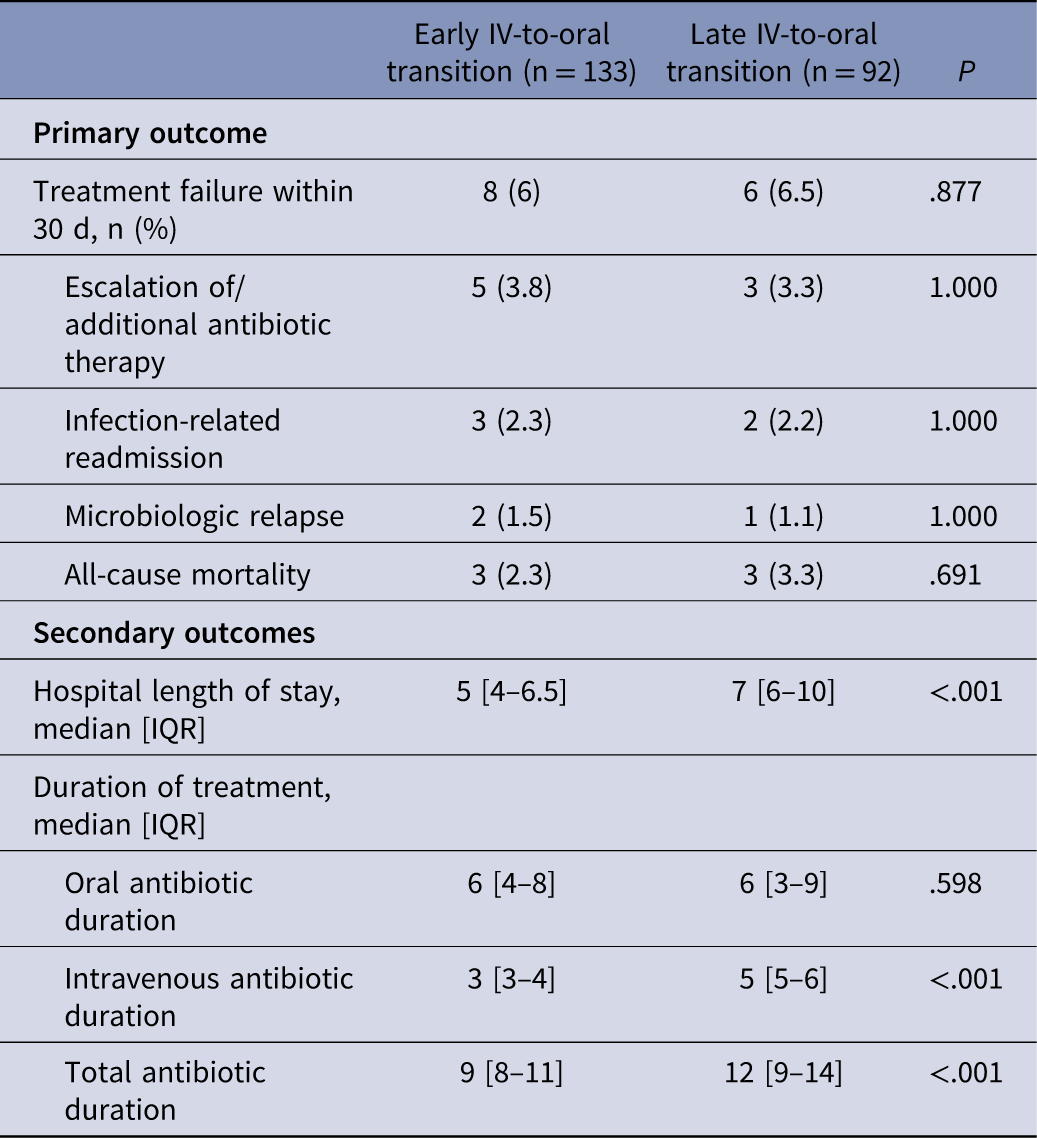
All primary and secondary outcomes are outlined in Table 4. There was not a statistically significant difference in treatment failure between the early and late transition groups (6.0% vs 6.5%, P = .877). No single component of the primary composite outcome contributed to treatment failure either above the rest. For secondary outcomes, the early transition group had a shorter median hospital length of stay (5 vs 7 d, P < .001) and a shorter median total antibiotic duration (9 vs 12 d, P < .001).
Primary and secondary outcomes

Table 4. Long description
A table comparing primary and secondary outcomes between early and late IV-to-oral transition groups. The table has 11 rows and 4 columns. Column headers are Early IV-to-oral transition (n = 133), Late IV-to-oral transition (n = 92), and P. Row labels include Primary outcome and Secondary outcomes. Primary outcome rows are Treatment failure within 30 d, n (%), Escalation of/additional antibiotic therapy, Infection-related readmission, Microbiologic relapse, and All-cause mortality. Secondary outcome rows are Hospital length of stay, median [IQR], Duration of treatment, median [IQR], Oral antibiotic duration, Intravenous antibiotic duration, and Total antibiotic duration. Values are provided for each row under the respective columns. Notable trends include shorter median hospital length of stay and total antibiotic duration in the early transition group.
Bivariate risk factor analysis
Results of the bivariate analysis assessing potential risk factors for treatment failure can be found in Table S1 within the supplementary index. Multivariate logistic regression was not indicated based on these results.
Discussion
Despite a higher baseline severity of illness in the late transition group based upon Charlson comorbidity scores and increased ICU admission, patients who were clinically stable at 72 hours experienced no difference in treatment failure if transitioned to oral antibiotics early versus late. These results align with previous studies suggesting that early oral transition can be safe and effective in select patients with gram-negative bacteremia. Tamma and colleagues included patients with monomicrobial Enterobacterales bacteremia caused by any infectious source. Their findings demonstrated that oral antibiotic therapy, when initiated by day 5 in clinically stable patients, did not affect 30-day mortality in comparison to IV-only treatment. Reference Tamma, Conley and Cosgrove8 Tingsgård and colleagues contributed further to this area of research. Patients with monomicrobial Enterobacterales bacteremia who were clinically stable and transitioned to oral antibiotics within 4 days of their initial blood culture had similar 90-day mortality rates compared to patients receiving prolonged IV therapy which was defined as at least 5 days of IV antibiotics. Reference Tingsgård, Bastrup, Jørgensen, Østergaard and Benfield5 Additionally, Rieger and colleagues compared outcomes for patients transitioned to oral antibiotic therapy versus patients on IV-only therapy. Patients in this study had Enterobacterales bacteremia originating only from urinary tract infections, and patients transitioned to oral antibiotics received a median of 4 days of IV antibiotics. No significant difference in 30-day treatment failure rates was observed, defined as escalation to IV from oral antibiotic, change in treatment due to worsening clinical status, or readmission for the same infection and pathogen. Reference Rieger, Bosso, MacVane, Temple, Wahlquist and Bohm6 More recently, Mateu and colleagues evaluated very early oral transition at day 3 or earlier compared to later oral transition or all IV antibiotic course. This study found very early transition was safe and effective for stable patients with Enterobacterales bacteremia, however, longer time to clinical stability impeded early oral transition. Reference Mateu, Martínez-Urrea and Gallego11 Our study differs because instead of comparing IV-to-oral transition to IV-only therapy, we expand upon current literature by assessing early oral transition versus later oral transition. None of the patients in our study received IV-only therapy. This distinction is critical, as there is a lack of consensus and data guiding the optimal timing for IV-to-oral conversion in this population.
Additionally, secondary outcomes demonstrated potential advantages for patients transitioned to oral antibiotics early, including a shorter hospital length of stay and a reduced total duration of antibiotic therapy. This could be driven by prescriber comfortability to discharge patients or utilize shorter durations of therapy if a patient has already been switched to oral therapy during their hospitalization. However, we cannot state this with certainty because prescriber comfortability is not a variable that can be directly collected upon retrospective chart review. Previous literature describes a shorter hospital length of stay by 2–3 days with IV-to-oral antibiotic transition compared to prolonged IV therapy or IV-only therapy. Reference Rieger, Bosso, MacVane, Temple, Wahlquist and Bohm6–Reference Tamma, Conley and Cosgrove8 Our study aligns with these findings and additionally highlights shorter antibiotic treatment courses when patients were transitioned early to oral therapy (median 9 vs 12 d). For the patients who received more than 7 days of antibiotics for uncomplicated Enterobacterales bacteremia, excess duration seemed to be driven by prolonged discharge prescription durations as our median hospital length of stay was 5 days (early IV-to-oral group) and 7 days (late IV-to-oral group).
As for our bivariate risk factor analysis assessing potential risk factors for treatment failure, there were no results compelling to proceed with multivariate logistic regression. None of the variables had a P value < .2 for model inclusion, and other variables of interest were either protective or had no effect. We anticipated the presence of an ID consult to be a major confounding variable for our primary outcome of treatment failure. We felt this was a clinically relevant variable to assess as there were a higher proportion of patients in the late transition group who received ID consults. However, our bivariate risk factor analysis suggested no impact on treatment failure (unadjusted OR 1.08; 95% CI 0.35–3.33). Another confounding variable of interest that did not have a P value < .2 was elderly age, but bivariate risk factor analysis suggested no impact on treatment failure (unadjusted OR 1.01; 95% CI 0.33–3.13). Lastly, the later transition group had a higher proportion of patients with ICU admission which was hypothesized to affect our primary outcome, but our risk factor analysis suggests that ICU admission would reduce treatment failure (unadjusted OR 0.35; 95% CI 0.08–1.61). Given the results of bivariate risk factor analysis, multivariate logistic regression was not performed.
Limitations
There are limitations of this study that need to be considered. First, as a retrospective study, we relied on accurate documentation in the EHR to obtain data. We had multiple people verify information digitally extracted and manually obtained from patients’ EHR. Second, our sample size was small causing our study to be underpowered and potentially reduced external validity. Based upon previous literature by Reiger et al, we needed 125 patients in each group to detect a 10% difference in treatment failure, which we did not achieve. Reference Rieger, Bosso, MacVane, Temple, Wahlquist and Bohm6 However, our multicenter approach encompasses real-world practice from five diverse sites within a health system, which may enhance its applicability to varied practice settings. Additionally, although we attempted to establish defined criteria for “clinical stability” and “uncomplicated” bacteremia, some degree of subjective interpretation by the reviewer could have influenced patient inclusion or exclusion based on these criteria. Furthermore, our study population predominantly involved uncomplicated urinary tract infections. Although this is consistent with previous research, it may restrict the direct applicability of our findings to more complex or severe infections. However, this approach minimized confounding from higher-risk patients or more severe infection sources. Lastly, we did not explore factors associated with early transition to oral antibiotics like previous works. Reference Engers, Tamma and Fiawoo9,Reference Mateu, Martínez-Urrea and Gallego11 Engers and colleagues described clinical characteristics associated with prolonged IV therapy to include the following: higher CCI, on immunosuppression, hypotension, or fevers by day 5, ICU admission, and kidney replacement therapy. Reference Engers, Tamma and Fiawoo9 Additional factors impeding early oral transition were identified by Mateu and colleagues including extended spectrum beta-lactamase enzyme producing isolates and lack of source control. Reference Mateu, Martínez-Urrea and Gallego11 Future studies with larger sample sizes would be warranted to better identify areas for targeted education and antimicrobial stewardship.
Overall, in clinically stable patients with uncomplicated Enterobacterales bacteremia, early transition on day 3 or 4 of antimicrobial therapy from IV-to-oral antibiotics was not associated with increased rates of treatment failure compared to transitioning later on day 5 or beyond of therapy. However, early transition could potentially reduce hospital length of stay and overall antibiotic duration. These findings support the safety and clinical benefits of early oral step-down, reinforcing it as a key strategy in antimicrobial stewardship. Further prospective research is warranted to validate these findings and aid in the establishment of clear guidelines for optimal patient selection and timing of IV-to-oral antibiotic transitions.
Supplementary material
The supplementary material for this article can be found at https://doi.org/10.1017/ash.2026.10886.
Acknowledgments
None reported.
Financial support
None reported.
Competing interests
All authors report no conflicts of interest relevant to this article.





 Open access

