
Introduction
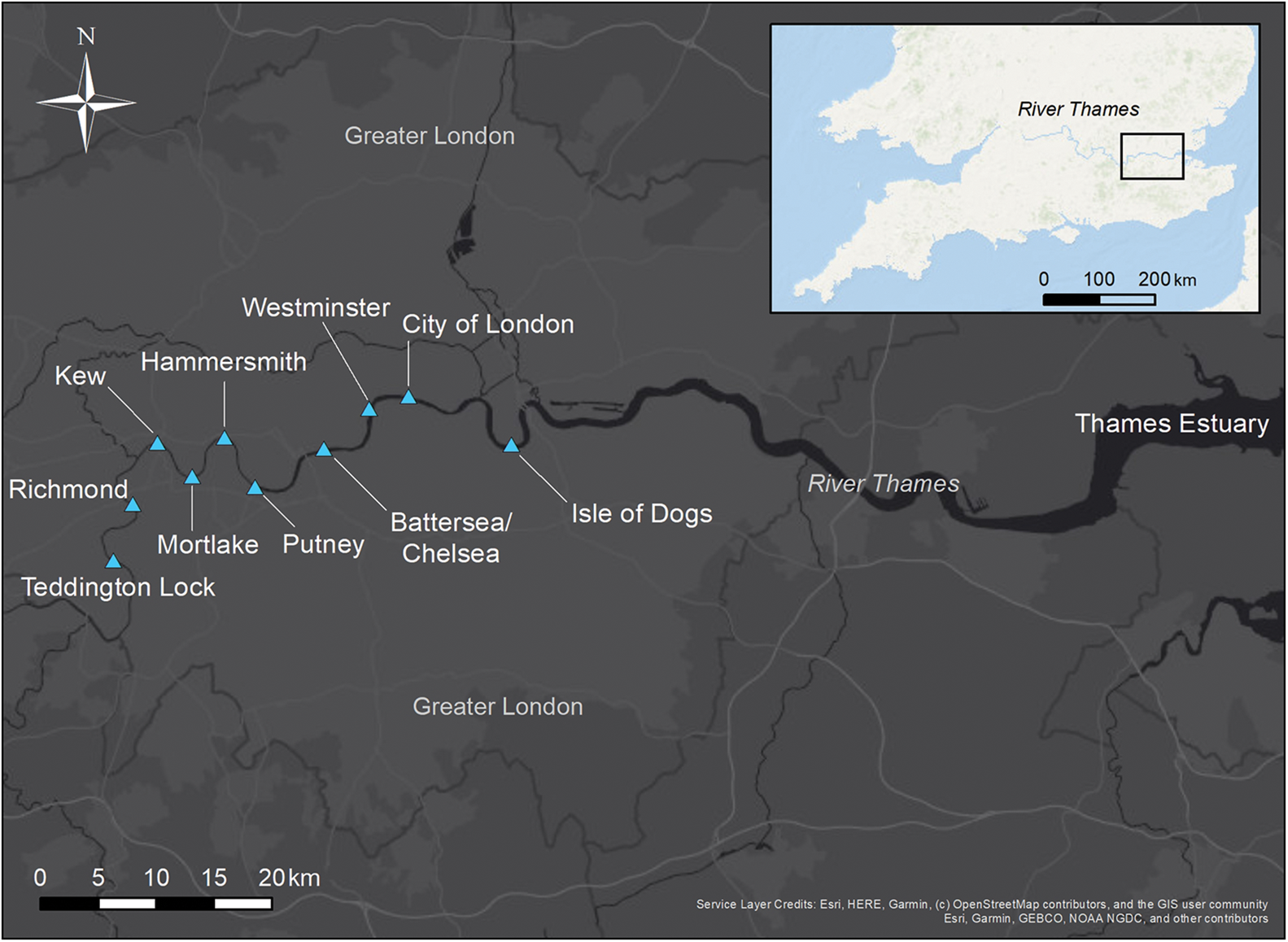
Hundreds of human skeletal elements have been recovered from the London reaches of the River Thames over the past two centuries (Figure 1). Many of these were recovered during late nineteenth- to early twentieth-century riverbed dredging and infrastructure works, which yielded various archaeological finds, including a corpus of Bronze and Iron Age metalwork (e.g. Needham & Burgess Reference Needham, Burgess, Barrett and Bradley1980; Fitzpatrick Reference Fitzpatrick, Cunliffe and Miles1984). Some of the artefacts and human bones were sold to antiquarian collectors or institutions and have ultimately passed into the museum collections of today.
The lower, London reaches of the River Thames, indicating some key locations mentioned in the text (figure by N. Arthur).

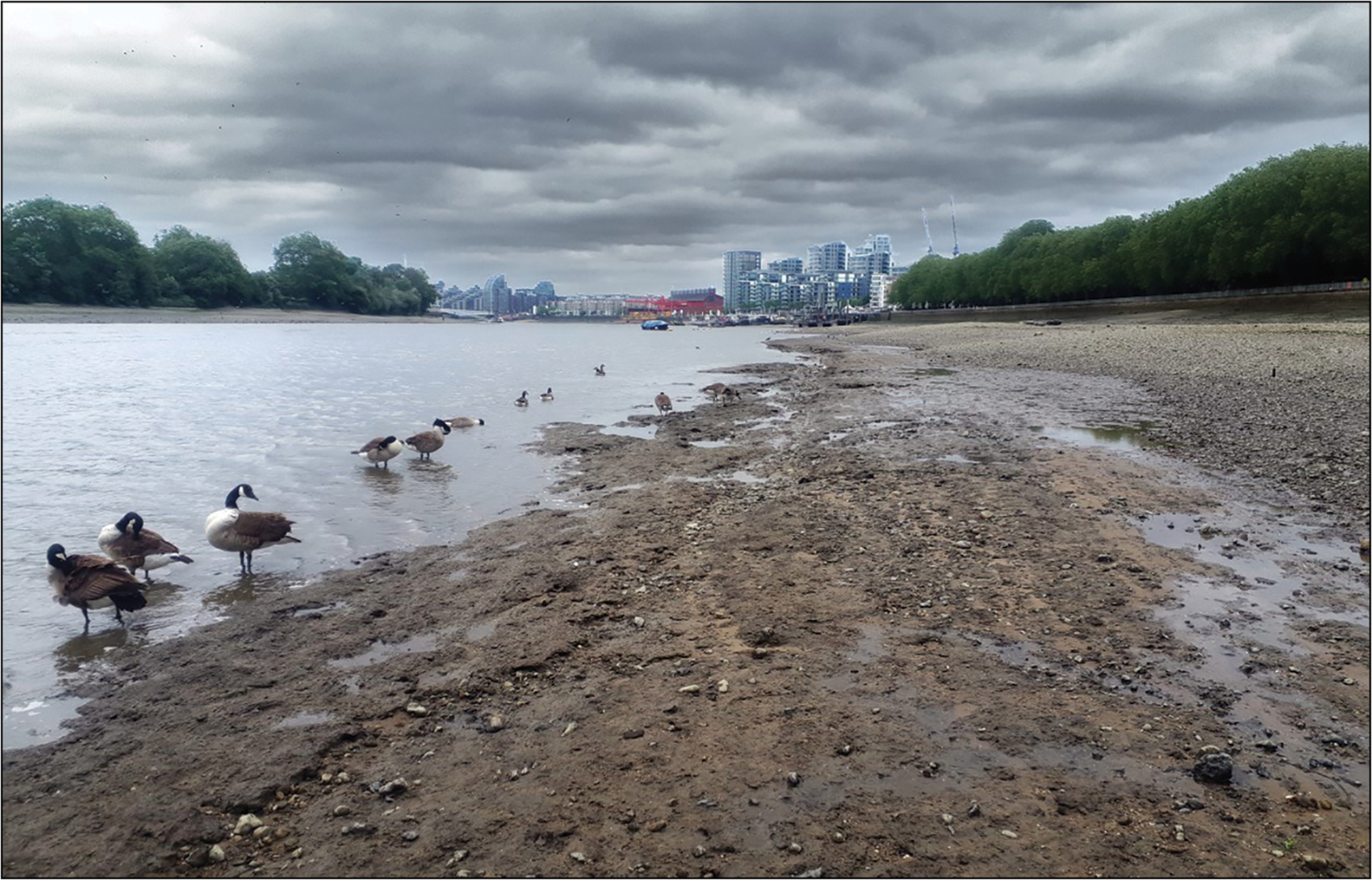
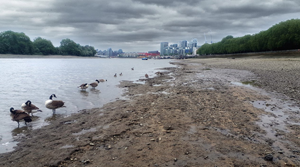
In 1929, G.F. Lawrence, the then Inspector of Excavations for the London Museum, declared that this “Golden Age” of Thames finds was over (Lawrence Reference Lawrence1929: 71), but human remains are still regularly encountered along the river during construction works, archaeological excavation and surveys (see Cohen Reference Cohen, Cohen and Wragg2017), and by mudlarks who search the foreshore for artefacts under licence from the Port of London Authority (Figure 2). In addition to these activities, high levels of foreshore erosion (e.g. Milne Reference Milne2015) will ensure this rate of recovery continues.
The Thames foreshore at Putney at low tide, looking downstream (photograph by N. Arthur).

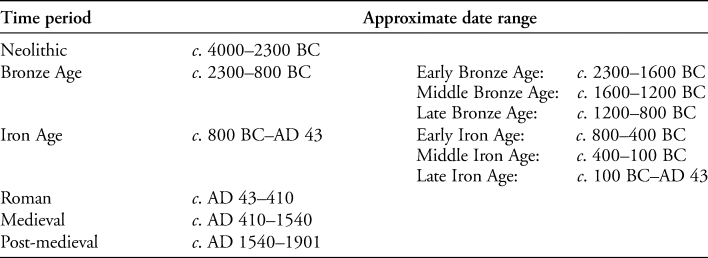
From the time of their nineteenth-century discovery, these human remains have attracted scholarly attention (e.g. Cuming Reference Cuming1857; Lawrence Reference Lawrence1891; Bradley & Gordon Reference Bradley and Gordon1988; Knüsel & Carr Reference Knüsel and Carr1995; Schulting & Bradley Reference Schulting and Bradley2013). However, the complexities involved in developing a robust chronological framework for this riverine assemblage have severely limited interpretations to date. This study addresses this shortcoming, providing a suite of new radiocarbon dates and combining these with other currently available dates, to compile an enhanced chronology for the human remains from the River Thames. Owing to the wide temporal range covered, a general reference framework for the relevant archaeological periods in England is adopted here (Table 1).
Overview of relevant archaeological periods in England. The Bronze and Iron Ages are subdivided into phases, as they are periods of focus.

The earliest accounts of the remains assumed that they were broadly prehistoric, at least partly because of the perceived stratigraphic and artefact associations of some (e.g. Cuming Reference Cuming1857; Lawrence Reference Lawrence1891). For example, in the mid-nineteenth century, Cuming (Reference Cuming1857: 237) ventured an interpretation of human remains encountered during the construction of Victoria Bridge between 1854 and 1855. Referring to the site as “Our Celtic Golgotha”, Cuming stated that the human remains were remnants of a past battle between the “Celtæ” and the “Romans”, primarily because they were “mingled with weapons of bronze and iron”. However, such relative dating approaches cannot truly be applied to finds from the Thames. In the first instance, most of the remains have no associated contextual information, having been recovered during dredging or simply due to poor historic recording. Even where such information does exist, it cannot be used to provide a relative date because of the continuous processes of erosion and redeposition that occur in riverine environments.
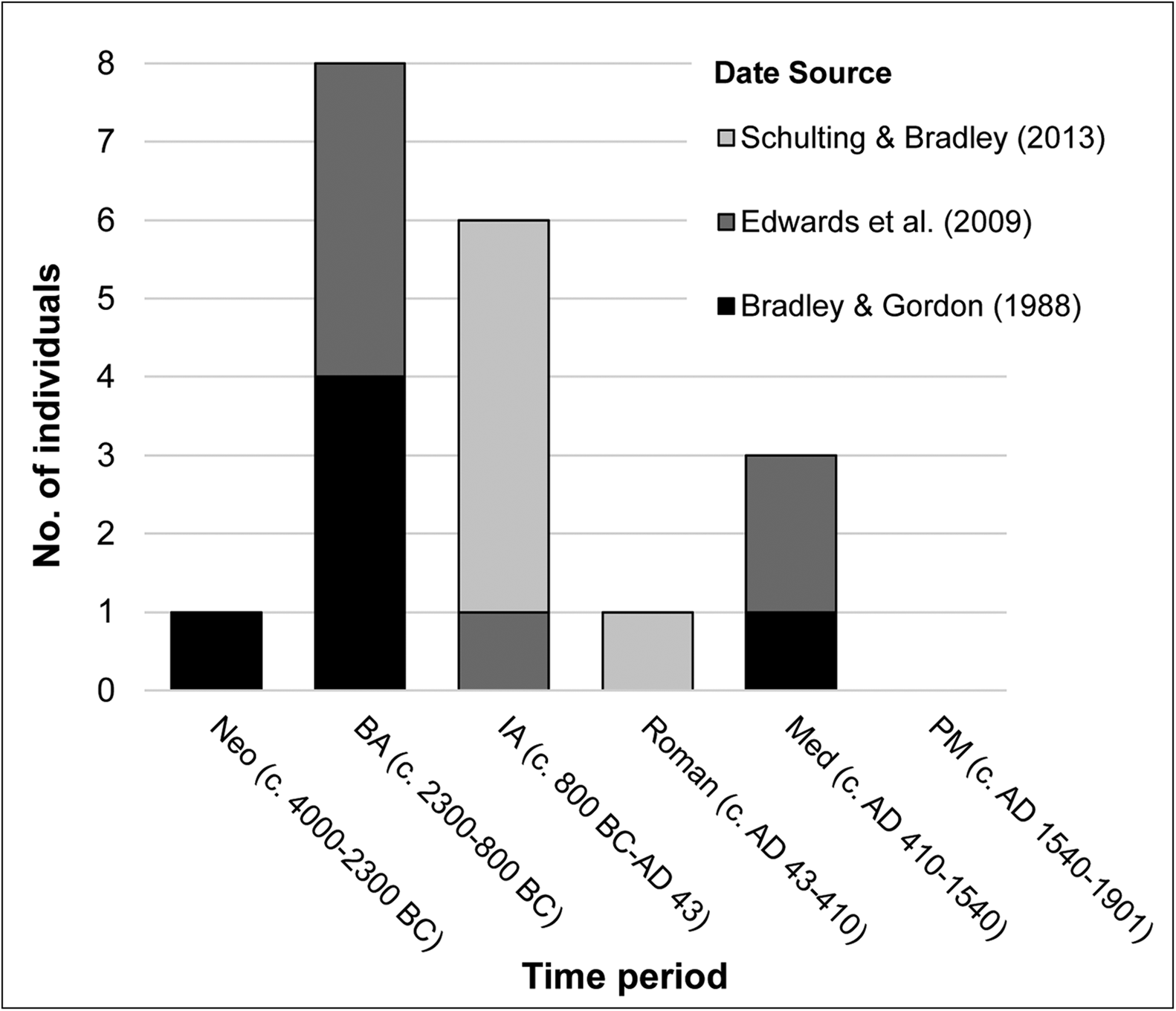
After this early interest, the human remains disappeared from academic discourse for nearly a century, overshadowed by the metalwork finds (e.g. Needham & Burgess Reference Needham, Burgess, Barrett and Bradley1980; Fitzpatrick Reference Fitzpatrick, Cunliffe and Miles1984). They were brought into the spotlight again in the late 1980s in a publication that sparked decades of debate over their depositional origins. In 1988, Bradley and Gordon argued that the human remains were likely deposited in later prehistoric funerary practices associated with the votive deposition of weaponry. They provided the first absolute dates for human remains from the Thames, radiocarbon dating six crania, four of which were found to be of Middle or Late Bronze Age date (Figure 3). This chronology was a focus of their interpretation, along with other observations—for example, that crania were over-represented in the assemblage.
Radiocarbon dates from previous research projects focusing on the human remains from the River Thames. Neo: Neolithic; BA: Bronze Age; IA: Iron Age; Med: medieval; PM: post-medieval (figure by N. Arthur).

Several years later, Knüsel and Carr (Reference Knüsel and Carr1995) took issue with this interpretation, concluding instead that the majority of the human remains likely originated from the erosion of riverside burials and from the bodies of drowning victims, which were fluvially sorted by the river to produce cranial accumulations over time. A key part of their argument was that the wide range of the six dates provided by Bradley and Gordon (Reference Bradley and Gordon1988) meant that the remaining undated individuals could belong to any period in the date range, rather than predominately the later prehistoric period.
Debate around the origins of the human remains then continued (Bradley Reference Bradley1995; Knüsel & Carr Reference Knüsel and Carr1996; West Reference West1996; Edwards et al. Reference Edwards, Weisskopf and Hamilton2009; Schulting & Bradley Reference Schulting and Bradley2013), with 13 further radiocarbon dates produced (Figure 3). Most recently, six dates were produced by Schulting and Bradley (Reference Schulting and Bradley2013), who selected crania with blunt force trauma. The individuals were mainly of Early Iron Age date, with this period becoming almost as well-represented as the Bronze Age. These findings led the authors to largely re-emphasise the original interpretations of Bradley and Gordon but extending the chronological focus to include the Early Iron Age.
The assumed chronological framework is clearly integral to interpretations of human remains from the Thames. At present, however, this framework is limited, with only 19 direct radiocarbon dates identified at the time of the last focused study (Figure 3; Schulting & Bradley Reference Schulting and Bradley2013). These dates were generated through three independent research projects (Figure 3), only one of which (Schulting & Bradley Reference Schulting and Bradley2013: 41) explicitly stated sample selection criteria.
As the largest assemblage of human remains from a watery context in Britain, interpretations of the Thames assemblage contribute to broader understandings of the sociocultural significance of watery places in the past, a topic that has long been a stimulus for archaeological discussion (e.g. Torbrügge Reference Torbrügge1971; Bradley Reference Bradley1990; Giles Reference Giles2020). For example, as a result of the work of Bradley, Gordon and Schulting, the human remains from the Thames have been invoked as unequivocal evidence of later prehistoric funerary practices involving water in north-west Europe (e.g. Bell et al. Reference Bell, Caseldine and Neumann2000: 72; Evans Reference Evans2013: 76).
This study aims to substantially develop the chronological framework for the human remains recovered from the lower reaches of the River Thames. Thirty new radiocarbon dates are provided and combined with other available dates (including a number published for the first time here) to form an overall temporal dataset. Patterns within this new temporal dataset are examined, primarily with a view to considering whether the previously reported predominance of Bronze and Iron Age dates is maintained.
Methods
The scope of this study includes human remains recovered from the lower reaches of the River Thames (i.e. the tidal stretch from Teddington Lock to the Thames Estuary, Figure 1) from either the main channel, the foreshore or the immediate riparian zone where there is strong evidence for association with the main channel (e.g. alluvial deposits). The new programme of radiocarbon dating is limited to human remains curated at the Natural History Museum, London (NHM). Remains were selected to: 1) allow meaningful examination of spatial patterning in temporal data, particularly as this could contribute to interpretations of the remaining undated assemblage; and 2) represent the taphonomic and osteological variation present in the larger assemblage (e.g. osteologically determined sex, skeletal trauma), allowing for more nuanced interpretations. In addition, two crania dated by Bradley and Gordon in 1988 prior to the introduction of ultrafiltration in sample processing (Brown et al. Reference Brown, Nelson, Vogel and Southon1988) were re-dated to check for consistency.
The examination and sampling of the remains were approved by the NHM in accordance with their Human Remains, Collections Access & Information and Collections Care & Development policies, which included an ethical review process. Samples were prepared at the Institute of Archaeology Stable Isotope Laboratory at University College London, following a modified Longin protocol (Longin Reference Longin1971). Five samples were identified as having potentially been treated with an unknown conservation agent and underwent additional processing (following Brock et al. Reference Brock, Higham, Ditchfield and Ramsey2010; see online supplementary material (OSM) Table S1). Radiocarbon measurement was conducted at the University of Groningen Centre for Isotope Research.
Dates generated outside of this new programme of radiocarbon dating were identified from the previous focused research projects (see Figure 3) and from ad hoc dating. Overwhelmingly, these ad hoc dates were produced from human remains which have been retrieved in more recent years, encountered either on the river foreshore by mudlarks/members of the public or during archaeological works on the foreshore or in the immediate riparian area. Ad hoc dates were identified through literature review and informal enquiry among the River Thames archaeological community (e.g. the Thames Discovery Programme, the Portable Antiquities Scheme Finds Liaison Officer for London, local archaeological societies), between spring 2017 and January 2020. The ad hoc dates are radiocarbon dates except for two relative dates for post-medieval individuals, provided by footwear (Chambers 1 and CC188; see Table S1).
To analyse spatial patterning in dates, the lower Thames study area was divided into zones of approximately 5km, labelled A (upstream) to H (downstream). Zones A and H encompass larger distances than the other zones (>5km), as they represent the extremes of the study area and have lower find densities. The studied human remains were assigned to a zone according to the recovery location information associated with them.
Results
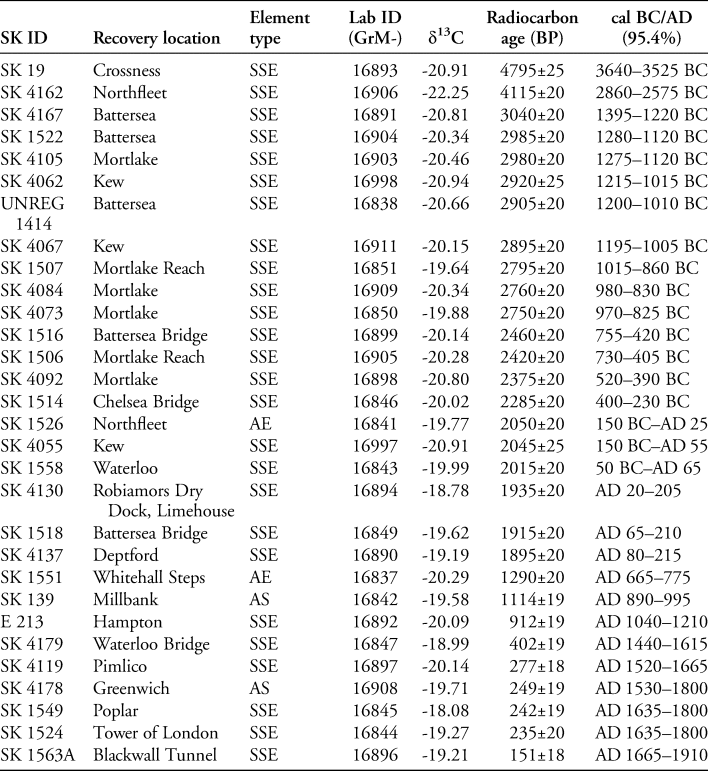
The 30 new radiocarbon dates are summarised in Table 2 and presented in full in Table S1. All samples have good collagen preservation as indicated by collagen yield, C:N ratios, %C and %N (DeNiro Reference DeNiro1985; Ambrose Reference Ambrose1990). The associated carbon (δ13C) and nitrogen (δ15N) isotope values indicate mainly terrestrial diets, with no need for marine or freshwater corrections. The new radiocarbon dates for the two individuals initially dated by Bradley and Gordon (Reference Bradley and Gordon1988) (SK 4062, SK 1507) are consistent with the initial dates (see Table S1). The new dates for these two individuals (GrM lab IDs) are carried forward.
New radiocarbon dates on human remains from the River Thames, calibrated using the IntCAL20 atmospheric calibration curve (Reimer et al. Reference Reimer2020) and OxCal v4.4.1 (Bronk Ramsey Reference Bronk Ramsey2009). Calibrated date ranges are quoted at the 95.4% confidence level, with the end points rounded outwards to five years (following Mook Reference Mook1986 and Bayliss et al. Reference Bayliss, Ramsey, Cook, Van der Plicht and McCormac2008). All dates were produced from bone samples. Radiocarbon data are presented in full in Table S1.

Key: SSE: single skeletal element; AE: articulated elements (defined as a maximum of two separate, refitting skeletal elements belonging to the same individual); AS: articulated skeleton (defined as more than two refitting skeletal elements belonging to the same individual).
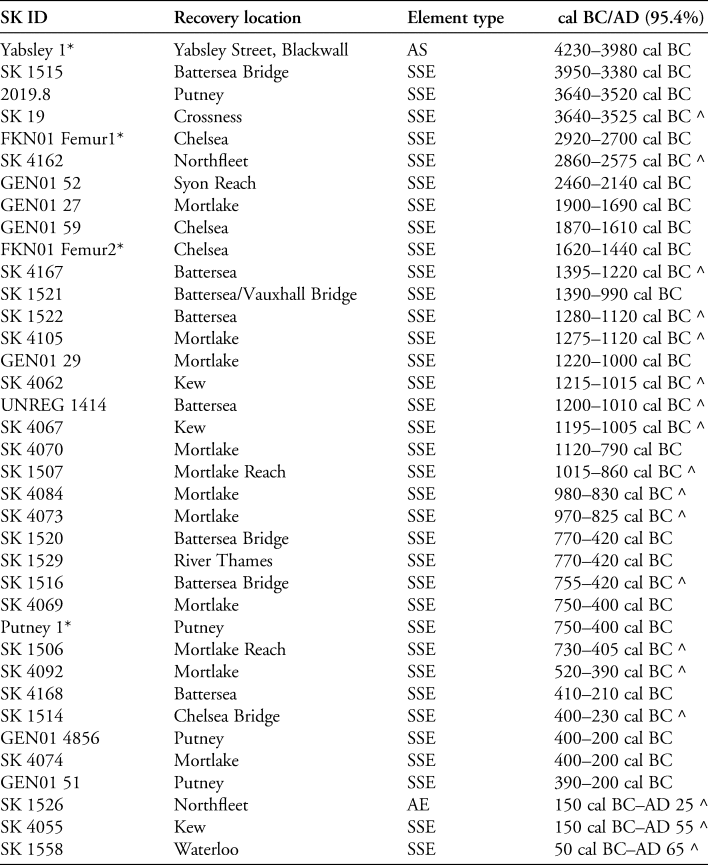
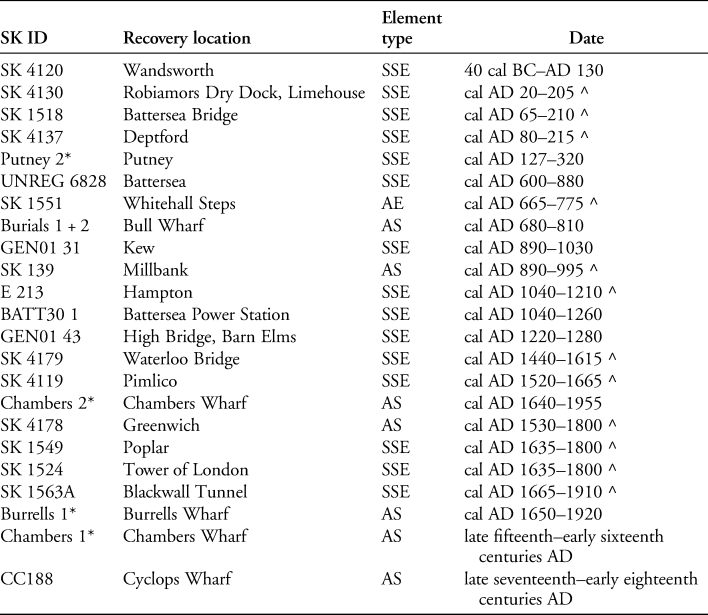
Inclusion of all other available dates provides an overall temporal dataset for the dated Thames assemblage of 61 individuals, more than three times the number of dates identified at the time of the last focused project in 2013 (Figure 3). This dataset is summarised in Table 3 (prehistoric dates) and Table 4 (historic dates) and presented in full in Table S1.
Summary of the prehistoric portion of the overall temporal dataset. Data are presented in full in Table S1.

Key: SSE: single skeletal element; AE: articulated elements (defined as a maximum of two separate, refitting skeletal elements belonging to the same individual); AS: articulated skeleton (defined as more than two refitting skeletal elements belonging to the same individual).
*Created for this project because an official curating repository identifier was not available; ^ New radiocarbon date produced for this project.
Summary of the historic portion of the overall temporal dataset. Data are presented in full in Table S1.

Key: SSE: single skeletal element; AE: articulated elements (defined as a maximum of two separate, refitting skeletal elements belonging to the same individual); AS: articulated skeleton (defined as more than two refitting skeletal elements belonging to the same individual).
*Created for this project because an official curating repository identifier was not available; ^ New radiocarbon date produced for this project.
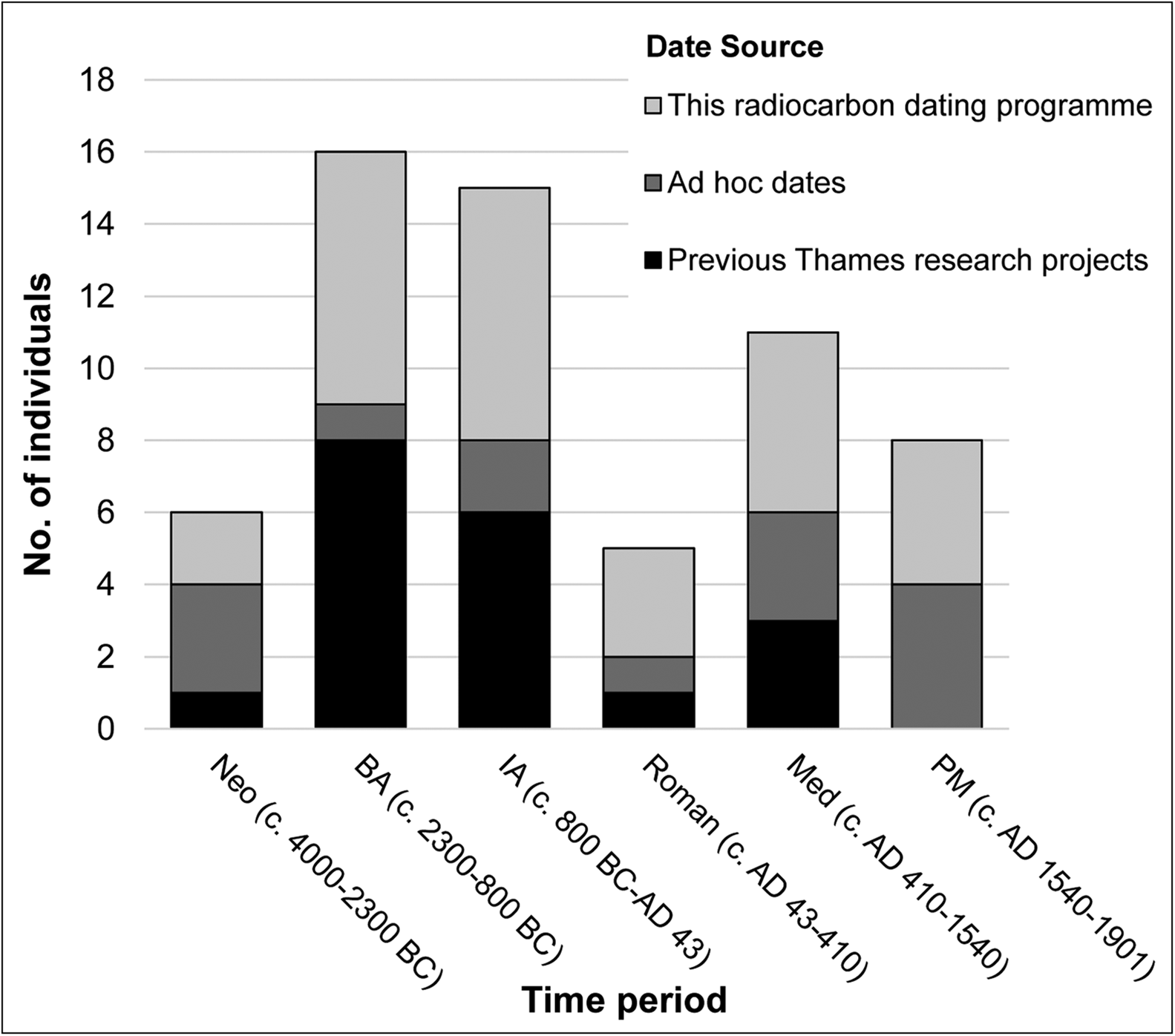
The temporal framework covers an almost continuous span of some 6000 years, between approximately 4000 cal BC and cal AD 1800, with a significant gap only in the early medieval period, between approximately cal AD 300 and 600. The distribution of dates across the key time periods is shown in Figure 4. Overall, the shape of the distribution remains broadly similar with the addition of the new radiocarbon and ad hoc dates, though some key differences may be identified. The Bronze Age and Iron Age remain the best-represented periods, now with 16 and 15 dated individuals respectively, followed by the medieval period with 11 individuals. The post-medieval period, which was not identified at all in the previous Thames research projects, is now the next best-represented period with eight individuals. Further, the Neolithic and Roman periods are now much better represented: whereas previously both were represented by only one individual, there are now six individuals dated to the Neolithic period and five individuals dated to the Roman period.
Temporal data for the River Thames assemblage, presented according to date source. Previous Thames research project dates are those produced by Bradley and Gordon (Reference Bradley and Gordon1988), Edwards et al. (Reference Edwards, Weisskopf and Hamilton2009) and Schulting and Bradley (Reference Schulting and Bradley2013). Neo: Neolithic; BA: Bronze Age; IA: Iron Age; Med: medieval; PM: post-medieval (figure by N. Arthur).

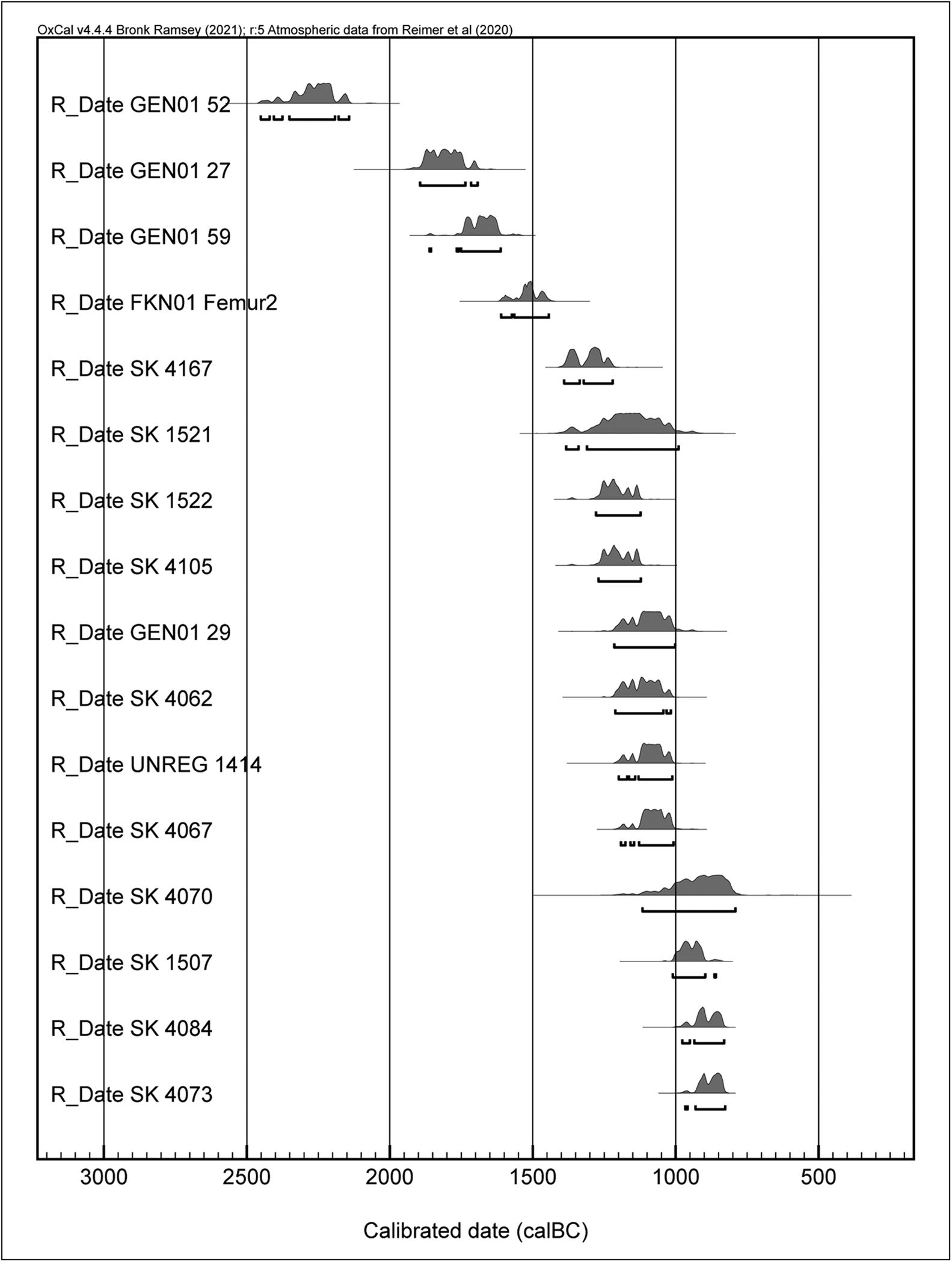
Only eight of the 16 Bronze Age individuals had been identified in the last focused research project in 2013 (see Figure 4). Seven of the newly identified dates have been generated in this radiocarbon dating programme and one is an ad hoc date. The majority of the Bronze Age individuals are of Late Bronze Age date, with 11 of the 16 falling between approximately 1200 and 800 cal BC (Figure 5).
Calibrated radiocarbon dates for all Bronze Age individuals from the River Thames assemblage (figure by N. Arthur).

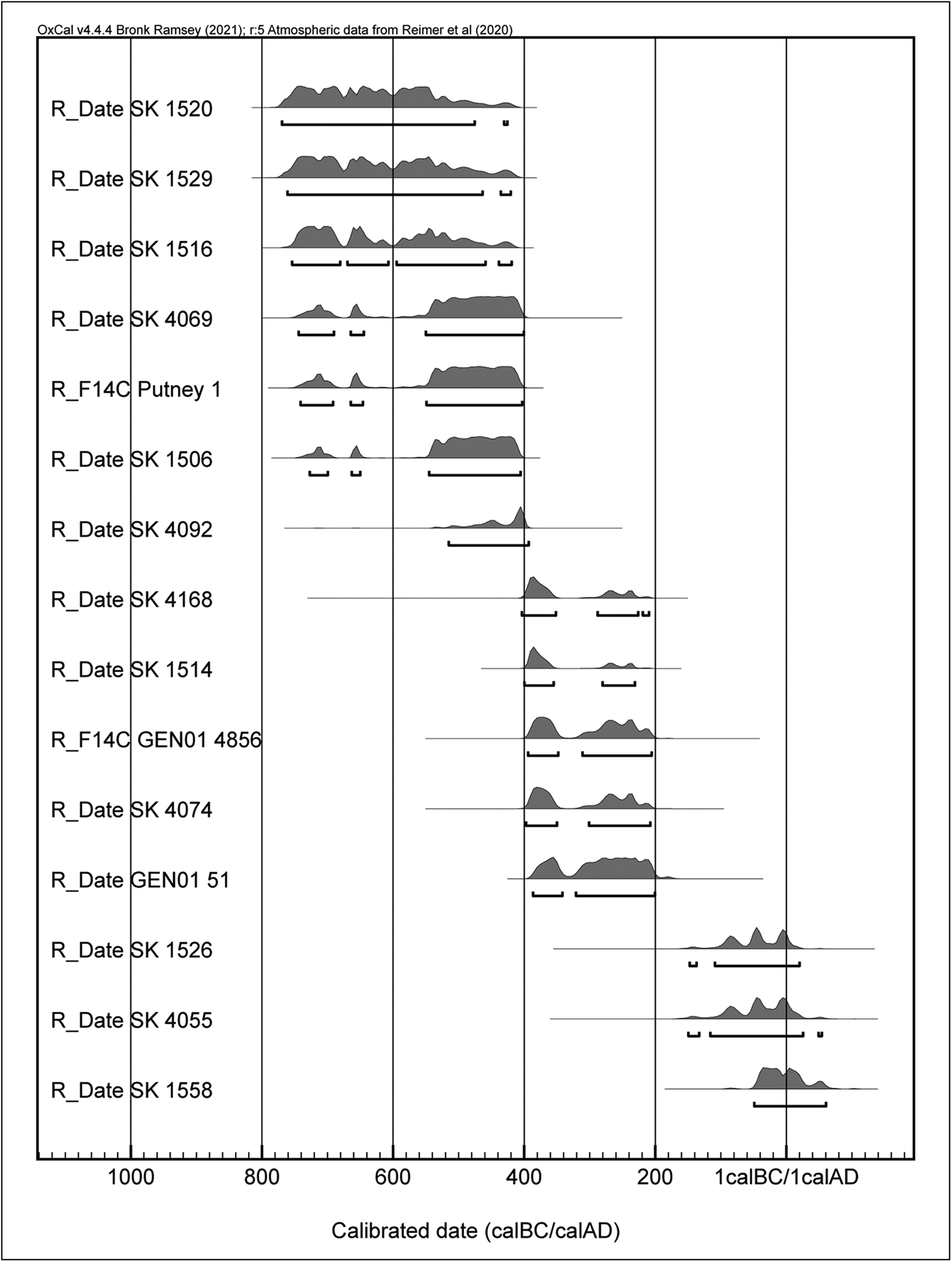
The 2013 project identified only six of the 15 Iron Age individuals (see Figure 4). Seven Iron Age dates were newly generated in this radiocarbon dating programme and two are ad hoc dates from remains found on the foreshore. The concentration of individuals decreases throughout the Iron Age; seven individuals belong to the Early Iron Age, five to the Middle Iron Age and three to the Late Iron Age (Figure 6).
Calibrated radiocarbon dates for all Iron Age individuals from the River Thames assemblage (figure by N. Arthur).

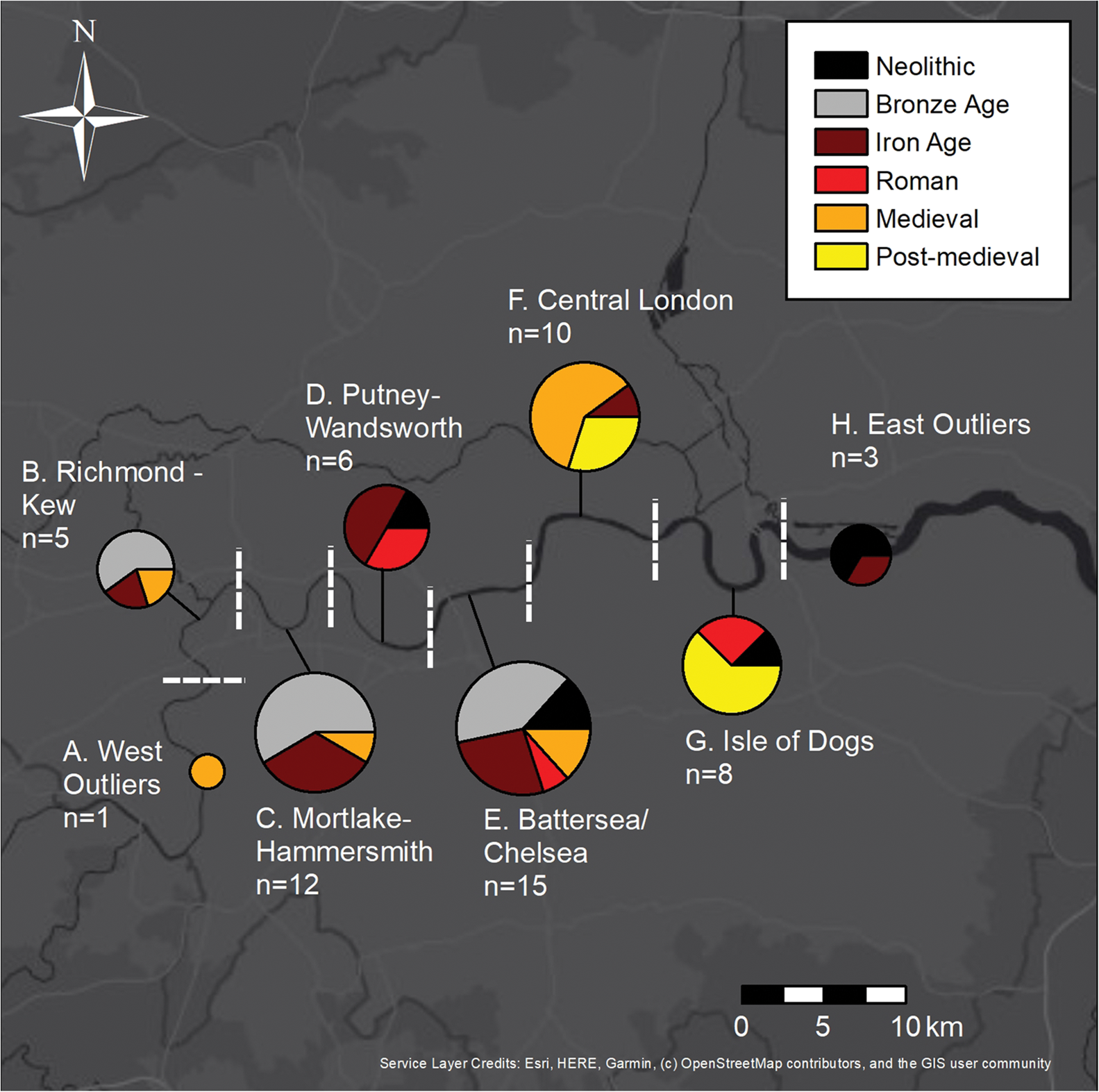
There are clear broad-scale spatial patterns in the temporal data (Figure 7). The Bronze and Iron Age individuals tend to be located in the upstream zones (A–E). For example, of the 16 Bronze Age individuals, none are located further downstream than Battersea; and of the 15 Iron Age individuals, only two are located further downstream than Battersea. The later, post-medieval individuals are located in the downstream zones; the findspots for post-medieval individuals are at present limited to central London (zone F) and the Isle of Dogs (zone G). The spatial patterning within the discrete locations from which multiple individuals are present (e.g. Mortlake, Kew) is not as distinct, but three Iron Age skeletal elements have been recovered from the Putney foreshore (Putney 1, GEN01 4856, GEN01 51) (see Table 3, Figure 2). Furthermore, all nine radiocarbon dated individuals with a Mortlake recovery location date between the Middle Bronze and Middle Iron Ages (see Table 3).
Spatial distribution of the dated individuals. One individual (SK 1529) is not represented here as the recovery location is indicated only as the London River Thames in associated documentation (the Tildesley (1932) Card Catalogue of the Human Osteology Collection, held in the NHM Anthropology Section) (figure by N. Arthur).

Discussion
The chronological framework outlined here covers the entire period of established permanent human settlement in the lower Thames area, starting in the Neolithic. The lack of dates between approximately cal AD 300 and 600 could reflect the decline in population of the London area between the end of the Roman period in the early fifth century AD and the establishment of the Saxon trading port of Lundenwic in the early seventh century AD (Cowie Reference Cowie, Clark, Cotton, Hall, Sherris and Swain2008).
A predominance of Bronze and Iron Age dates is a clear feature of the dataset, consistent with the combined results of the previous dating studies, but now with much increased numbers (at least double) for each of these periods (Figures 3 & 4). While a Bronze Age presence was known from Bradley and Gordon's initial 1988 work, Iron Age individuals were only first picked up in number in the 2013 work of Schulting and Bradley. The fact that the broad Bronze and Iron Age pattern persists despite the compilation of this large temporal dataset from various sources (i.e. different academic studies, ad hoc dates and the new radiocarbon dates reported here), indicates it is likely to be a real feature and not produced through selection biases. Within the Bronze Age, the Late Bronze Age is now particularly well represented, accounting for over half of the Bronze Age dates. Within the Iron Age, the Early Iron Age is best represented, with decreasing numbers of individuals through to the later part of the period.
There are just under 200 undated individuals in the wider lower Thames human remains assemblage. The vast majority of these are either known to have been, or are highly likely to have been, recovered from the upstream stretches of the study area (Arthur Reference Arthur2022: 154). Given that the dated sample has a strong representation of Bronze and Iron Age individuals in these upstream zones (Figure 7), a high proportion of the remaining undated individuals may well also be Bronze or Iron Age in date.
The concentration of dates falling within the Bronze and Iron Ages weakens the temporal dimension of the argument that the human remains represent the fluvial accumulation of crania in the river through time (Knüsel & Carr Reference Knüsel and Carr1995). The small dated sample of six individuals led Knüsel and Carr to argue that there was no evidence for Bronze Age temporal clustering and that the remaining undated individuals could have belonged to any period, but these contentions are not upheld by the new data.
Given the findings presented here, a focus on depositional scenarios specific to the human remains from the Bronze Age and the Iron Age is an appropriate avenue for future research, with particular emphasis on whether, and how, the remains may connect with wider watery deposition practices in the later prehistoric period of north-west Europe. Watery environments were a locus for the deposition of a range of objects during this period; among other qualities, water appears to have been considered a domain of deities or gods, making it a suitable space for propitiation (offerings or atonement; Brück Reference Brück and Insoll2011). Human bones recovered from watery contexts are often interpreted in relation to these practices; indeed, deposition in water has been proposed in answer to the question of the ‘missing dead’ of the Late Bronze and Iron Ages in Britain (e.g. Legge Reference Legge2022: 181–83). There are already strong indications that the human remains from the Thames may be connected with such activities. For example, the lack of archaeologically visible burial practices along the lower Thames during these time periods suggests that inclusion in the river simply through erosion of dryland contexts is unlikely (as noted by Schulting & Bradley Reference Schulting and Bradley2013) and the material culture record indicates that the Thames was likely a place of votive significance. Various qualities of the Bronze and Iron Age metalwork recovered from the Thames, particularly the weaponry, have been emphasised in relation to this idea, including the abundance of material, the presence of elaborate pieces and evidence for deliberate destruction (Needham & Burgess Reference Needham, Burgess, Barrett and Bradley1980; Fitzpatrick Reference Fitzpatrick, Cunliffe and Miles1984; York Reference York2002).
Though the importance of watery places appears to have been constant, specific depositional practices were highly variable through time and space (e.g. Bradley Reference Bradley1990; Giles Reference Giles2020: 154). Parallels with the Thames may be found at some continental European sites, particularly in terms of the large numbers of human remains and the presence of extensive artefact assemblages, rich in weaponry and other metalwork. Notable sites are Kessel on the River Meuse in the Netherlands (ter Schegget Reference ter Schegget, Theuws and Roymans1999) and La Tène on Lake Neuchâtel in Switzerland (Fitzpatrick Reference Fitzpatrick2018), which have been interpreted in terms of Iron Age ritual activity related to warfare. Within Britain, elsewhere in the immediate Thames Valley and eastern England, disarticulated and partially articulated human bone of Late Bronze and Iron Age date has been recovered from various watery contexts, including water holes and wells, fenlands and riverine contexts (e.g. Legge Reference Legge2022). Although these sites, and others in Britain, appear to involve much smaller numbers of human remains, some do resonate with the Thames assemblage. For instance, at Flag Fen in Cambridgeshire (Pryor Reference Pryor2001) and Fiskerton on the River Witham (Parker Pearson & Field Reference Parker Pearson and Field2003), large artefact assemblages were recovered, replete with Iron Age metalwork including weaponry. At Flag Fen many objects were deliberately damaged prior to deposition (Pryor Reference Pryor2001: 428), as is also reported for some of the Thames metalwork (York Reference York2002).
Discussion of water and votive offerings often focuses on the Bronze and Iron Ages, but sites across north-west Europe indicate the importance of watery places from the Mesolithic through to the medieval period. Indeed, the Thames artefact record has also been argued to reflect votive activity in other periods (e.g. Lamdin-Whymark Reference Lamdin-Whymark2008: 44–46; Raffield Reference Raffield2014: 647). But of course, not all human bone recovered from watery places will necessarily be associated with water-focused deposition practices; bodies may enter the water, for example, through erosion of burials, murder, accidental death and clandestine or practical disposal methods. These more prosaic explanations are often given for medieval and post-medieval human remains from watery contexts. Though arguably they could operate during any period, some of these scenarios may well be relevant to the Thames human remains of later date, many of which, particularly the post-medieval, are concentrated in the downstream reaches of the study area (e.g. central London, the Isle of Dogs; Figure 7). Though this study has not identified any individuals of Roman date near the City of London (Figure 7, zone F) it should be noted that the human remains recovered from the River Walbrook, a Thames tributary in the City of London, have recently been reinterpreted as the result of erosion from a Roman cemetery in the Upper Walbrook Valley (Harward et al. Reference Harward, Powers and Watson2015: 126–33).
Conclusion
The new chronological framework presented here can be used to investigate a wide range of themes around human lifeways and burial practices along the lower River Thames across a 6000-year time span. Compilation of 61 dates (including 30 new radiocarbon dates) for human remains recovered from the lower reaches of the River Thames indicates that approximately half derive from the Bronze and Iron Age. Considered in the broader archaeological context (e.g. the Thames as a place of votive importance), this result demonstrates the need to further explore the Thames human remains in relation to later prehistoric watery deposition practices. This dating study forms part of a wider programme that aims to analyse the taphonomy, demography, skeletal trauma and isotopic data (carbon, nitrogen and sulphur) of the human remains from the River Thames, and further publications are forthcoming. The improved chronological framework, combined with this multifaceted approach, will allow for robust investigations of depositional scenarios for these human remains—a question that has been the focus of archaeological debate for decades and is of international significance in terms of understanding the importance of watery places in later prehistoric north-west Europe.
Acknowledgements
With many thanks to Pamela Greenwood, Chelsea McKibbin, Rebecca Redfern, Eliott Wragg and Stuart Wyatt for providing unpublished radiocarbon dates. Rhiannon Stevens and Hazel Reade are thanked for their assistance with sample preparation work, undertaken by Nichola Arthur. We also gratefully acknowledge the two anonymous reviewers of the manuscript for their insightful comments.
Funding statement
Nichola Arthur was supported by Doctoral Training Partnership (Natural Environment Research Council) grant NE/L002485/1. Funding for the radiocarbon dates was sourced from a Charles Wolfson Charitable Trust London Human Remains digitisation grant to Heather Bonney.
Online supplementary material (OSM)
To view supplementary material for this article, please visit https://doi.org/10.15184/aqy.2024.233 and select the supplementary materials tab.