INTRODUCTION
In almost every legal context throughout the globe, there is a gap between written laws on the books and their implementation, that is, the laws in practice. When laws address issues of security, such as violence against women (VAW), this implementation gap can result in slow or ineffective police responses to domestic violence calls.Footnote 1 In more extreme cases, it can mean increased vulnerability to becoming a murder victim when the justice system systematically fails to safeguard victims or reprimand aggressors. For instance, in many countries in Latin America, impunity for male attackers in the courts remains common. Even where comprehensive laws exist, these are often not applied, misapplied, or even weakened.
Costa Rica does not have the high murder rates of its Central American neighbors or of other countries in Latin America. However, murders of women in Costa Rica are persistent and killing an intimate partner is still discussed by some as a “crime of passion,” indicating that a man’s emotional state is still viewed as a legitimate excuse or reason for murdering women (Alvarado Reference Alvarado2018a). Although feminicides are not new, they have garnered more national media attention in Costa Rica since March 2018, when then-President Luis Guillermo Solís expressed concern about a “wave of femicides” in the month in which three women died (“President Expresses Alarm” 2018).Footnote 2 In May 2018, the government of newly elected President Carlos Alvarado declared violence against women a national emergency (Alvarado Reference Alvarado2018b). Feminicides continue to capture media attention, including a high-profile case from March 8, 2019, in which a man in the San José suburb of Desamparados stabbed his wife, Gladys María García Pereira, multiple times in front of their children and was then beaten and killed by a mob of neighbors (Láscarez and Solano Reference Lascarez and C.2019). In the first four months of 2019, García Pereira and six other women were victims of feminicide (Observatorio de Género 2019).
Gruesome cases and high rates of murders of women have received international attention in countries like Mexico, Peru, Guatemala, and Honduras. Domestic violence that is often a precursor to women’s murders is widespread throughout Latin America (ECLAC 2018; Carey and Torres Reference Carey and Torres2010). At least 2,795 women were victims of femicide in twenty-three Latin American and Caribbean countries in 2017 (ECLAC 2018). This regional trend is illustrated by a high-profile case in Peru where Arlette Contreras, a lawyer, was choked and dragged through a hotel in front of witnesses and security cameras by her naked boyfriend Adriano Pozo after he attempted to rape her when she would not have sex with him (Rochabrún Reference Rochabrún2018). Pozo was acquitted by a panel of three judges who said his behavior did not demonstrate “hatred or rancor toward women,” which is stipulated in the law as constituting a crime against a woman. The judges made this ruling in a context of a fourfold increase in the number of men accused of murdering women since 2009 (ibid.). Other high-profile cases include the murder of environmental activist Berta Cáceres in Honduras and widespread killings and impunity in Guatemala, Honduras, and El Salvador.
However, while there has been significant scholarly attention to these extreme or “worst case scenario” cases, there has been relatively little attention to cases in which the state has responded comprehensively to the problem of violence in the lives of women and yet the violence against women continues. What explains the gap between violence against women laws and their implementation in less violent contexts where the justice system functions more effectively? In this article, we investigate Costa Rica, which has received less scholarly attention than its regional neighbors, and analyze the successes and limitations of applying its laws to protect women from violence.
In comparative perspective, Costa Rica is a “best case scenario,” with great potential for closing the gap between the law on the books and the law in practice. Within Central America, Costa Rica is distinctive for its relatively high levels of human development, long history of democratic rule, and the 1948 abolition of its military. The country also has high rankings across various global gender equality measures (e.g., World Economic Forum 2018) as it has created stronger institutions for combating violence in the lives of women than other Latin American countries. But this favorable context may have started to change. In a comparative study of state responses to the problem of VAW in thirty-six democratic countries, Weldon (Reference Weldon2002) found that, by 1994, Costa Rica was the fourth most responsive. Weldon measured responsiveness using the following seven indicators: legal reforms addressing wife battering and sexual assault; provision of emergency housing; presence of crisis centers; a central coordinating agency for national VAW policies; government training programs for service providers, police, and judges; and public education campaigns (ibid., 13). This placed Costa Rica directly behind the United States and ahead of France in responsiveness (ibid., 31). A more recent ranking, however, gave Costa Rica a relatively low score on violence against women laws, noting that they only protected women from some but not all forms of violence (OECD 2019).
Costa Rica has advanced the implementation of the domestic violence laws through a national police force with training in gender violence and by most accounts takes such violence seriously. The National Institute of Women operates a gender-based violence hotline and provides lawyers and psychologists who coordinate with the judiciary. Women are active in the state, with near parity between male and female judges. In 2018, the percentage of women in the legislature increased by ten points to 45.6 percent, compared with 31.2 percent for Latin America and the Caribbean (ECLAC 2018). Women are also active in civil society organizations advocating for strong implementation of protective laws and preventative programs in schools. Decades of social investment have led to a relatively robust education, health, and policing system.
As is the case with other countries around the world, state responsiveness does not always result in effectiveness in reducing violence and other intended policy outcomes (Weldon Reference Weldon2002; Montoya Reference Montoya2013). In Costa Rica, despite these institutional advances, 88 percent of cases of violence against women filed under the criminal code still are not prosecuted (Observatorio de Género 2016). Much existing scholarship analyzes contexts with various expressions of multisided violence and consequently tend to argue that the gap between laws and practice is best explained by the most egregious forms of multisided violence, such as widespread political violence. However, these more extreme cases tend to hide from view the larger legal context that contains adjacent laws that can undermine and block the implementation of VAW laws in significant ways. We focus on explaining this gap in Costa Rica, which remains and follows trends in other contexts, despite laws passed and institutional reforms implemented.
Ten years after the passage of the Law of Criminalization of Domestic Violence in 2007, and more than twenty years after the first laws addressing women’s rights were passed in 1990, a wave of feminicides began in 2018 that former President Luis Guillermo Solís publicly denounced (“President Expresses Alarm” 2018). These murders prompted the Supreme Court to strengthen its efforts to combat violence against women (Observatorio de Género 2018). Despite these institutional advances, laws have been and continue to be leveraged to discourage women from pursuing cases against their attackers before murders take place.
As with other countries around the globe, the legal context in Costa Rica includes violence against women laws, but also a host of other “adjacent laws,” which Menjívar and Walsh (Reference Menjívar and Walsh2016) argue are mobilized as obstacles to implementing laws meant to protect women from violence. For example, adjacent laws include marriage, property, divorce, family, labor, and alimony laws, which marginalize women and privilege men (Menjívar and Walsh Reference Menjívar and Walsh2017). These adjacent laws are applied concurrently with violence against women laws, but adjacent laws are often privileged and thus they undermine the cases of women victims who seek justice system redress, especially women in vulnerable social positions. For example, in many cases where women attempt to use VAW laws as a protective mechanism, justice system agents invoke immigration laws in ways that disadvantage or marginalize immigrant women. Additionally, these agents prioritize the application of property or labor laws that privilege men in ways that obstruct women’s effective use of the legal system.
We identify the mobilization of adjacent laws in this fashion as a form of legal violence, defined below. Our focus on Costa Rica reveals the vulnerabilities women face even in a relatively functional country, but one still hindered by increasing violence and discriminatory legal structures and practices that are often overlooked. Examining a case that is not “a worst case scenario” may reveal with special acuity processes that are present in contexts of high levels of gender-based violence against women but where a multiplicity of other conditions may obfuscate factors that we identify here, such as adjacent laws that undermine the effectiveness of VAW laws.
We argue that the degree and type of multisided violence context (MSV) in which the legal system contributes to explaining the gap between VAW laws and their implementation. A context of “multisided violence” comprises various forms of violence, such as structural, political, everyday, symbolic, and gender violence, as they exist in tandem in a constitutive fashion (Menjívar Reference Menjívar2011). In contexts where there is a wider range and various types of multisided violence present, accompanied by more extreme levels or expressions of these types of violence, we anticipate that there will be a wider implementation gap. Conversely, the implementation gap will be smaller (even though it will still exist) in places where there is a narrower range of multisided violence or less extreme levels or expressions of different types of violence.
Following the framework of multisided violence, various forms of violence coalesce in a particular context to create conditions that normalize gender violence and sustain persistent impunity.Footnote 3 We apply this conceptualization and build on it to explain the gap between VAW laws and their implementation. We add a focus on law that is conceptually separate from but intersects with the other components of the MSV framework and argue that the legal context is an understudied yet particularly important component of multisided violence. To focus attention on the system of laws that disadvantage and harm women, we make use of the concept of legal violence—the “normalized but cumulatively injurious effects of laws” working in combination with one another—as a less visible yet powerful element of multisided violence that also inhibits implementation (Menjívar and Abrego Reference Menjívar and Abrego2012, 1380).
When other more readily identifiable and visible forms of violence (such as political or physical violence) are eradicated or absent, subtler or less recognizable (but equally harmful) forms of violence (such as legal, structural, symbolic, and gender violence) remain, leaving women vulnerable to policies and norms that are embedded in sociolegal and economic systems. These forms of violence operate in subtle ways, yet they are ultimately life-threatening as they substantially sustain other, more overt forms of violence and intensify women’s vulnerability to injury and even death. Many would argue that Costa Rica does not have the various forms of violence that comingle in contexts of multisided violence that give rise to extreme forms of gender-based violence against women. However, even in Costa Rica, a multisided violence context adversely impacts institutional practices and certain groups, such as racial and ethnic minorities and the poor, and has a significant role in stunting the implementation of VAW laws. Unveiling obstacles to applying VAW laws and the place of adjacent laws in the implementation gap in Costa Rica sheds light on institutional practices that impede implementation in countries otherwise considered safe for women.
While existing scholarship does note the importance of adjacent laws, it does not delve deeply into how and why adjacent laws become an impediment to the reduction of VAW. We do not focus solely on how a particular article in land, labor, and immigration law conflicts with VAW laws (and many do of course) but on how those in charge of implementing VAW laws prioritize adjacent laws so that VAW laws are weakly implemented or, in the worst cases, not implemented at all. Thus, in contrast to earlier scholarship on adjacent laws, here we include “views from the front lines” as it were and show how those working in women’s organizations view the obstacles that these adjacent laws represent. We focus on how the legal terrain (e.g., legal obstacles to implementing VAW laws) undermines in particular the rights of certain groups of women—poor, those working in unprotected economic sectors, and undocumented immigrant—as they seek justice.
In the upcoming sections, we provide country background for Costa Rica, followed by a review of the scholarly literature on explanations of the gap between laws and practice. We place our examination in an international context to highlight our broader contributions and their relevance to other contexts and as a reminder that the gap on which we focus may be less rooted in “culture” and more entrenched in institutional practices, gender ideologies, and structural factors. We then present the research methods and data for our case study of Costa Rica. We subsequently discuss the general concepts and factors of multisided violence with examples of how these are manifested in Costa Rica, even in their relatively lesser manifestations. Then, we present the concept of legal violence that we are adding to the MSV framework followed by specific examples of how adjacent laws on land titles, immigration law, and labor law are mobilized to undermine the implementation of VAW laws.
COUNTRY BACKGROUND
Overall, crime has increased in Costa Rica, and the murder rate now surpasses what the World Health Organization stipulates as an endemic level of homicide threshold, that is, ten homicides per 100,000 (US Dept. of State 2017). According to the UN Office on Drugs and Crime (UNODC 2019) data on homicides, in Costa Rica in 2016 (the last year for which their data are available), Costa Rica’s rate was 11.90 per 100,000, higher than its neighbors, Nicaragua at 7.9, and Panama at 9.67, slightly lower than Mexico, at 19.26, and much lower than its northern Central American neighbors, El Salvador and Honduras (ibid.). In contrast, rates for the United States and Canada were 5.35 and 1.68, respectively.
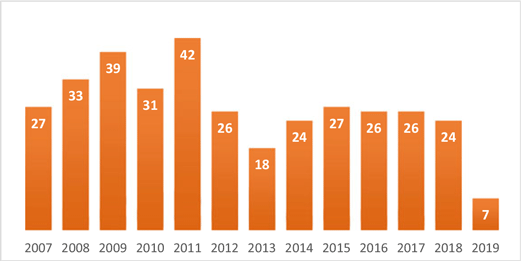
Homicide rates in Costa Rica reflect overall patterns of murder but do not reveal the types of violence that women face disproportionately, such as gender-based violence. The most extreme type of violence women face is feminicide. In 2018, there were twenty-four feminicides in Costa Rica and an additional twenty-five homicides against women whose reports are still pending (Observatorio de Género 2019). From January through May 6, 2019, seven feminicides were recorded, with victims from across the country ranging in age from 17 to 54 (ibid.). See Table 1.
Costa Rica 2007-2019 Reported Femicide Cases

Data Source: Observatorio de Violencia de Género contra las Mujeres y acceso a la Justicia (2019) Femicidios registrados en Costa Rica según tipo del 2007 al 06 de mayo del 2019. Accessed from https://observatoriodegenero.poder-judicial.go.cr/soy-especialista-y-busco/estadisticas/femicidio/
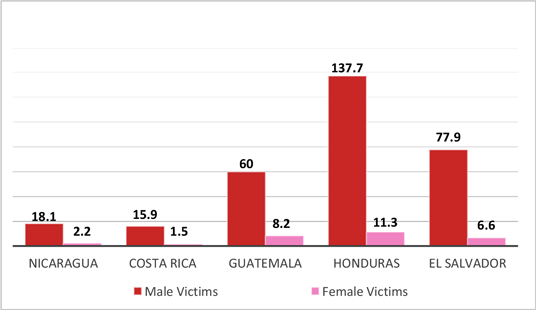
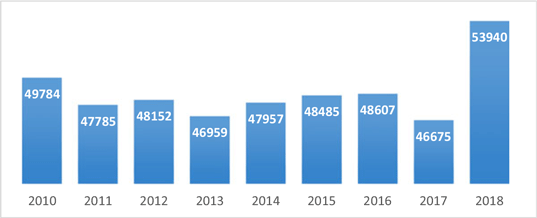
Like overall homicide patterns, the proportion of feminicides was smaller in neighboring Nicaragua and Panama, and significantly higher in Guatemala, Honduras, and El Salvador (Small Arms Survey 2016). See Table 2. Rates of female victims of intentional homicide per 100,000 in the population are proportionally smaller than rates of male victims of intentional homicide throughout Central America (as is the case worldwide). However, women tend to be subject to sexualized torture and other excessive and gender-specific forms of violence in their murders, or “overkill” (Torres Reference Torres, Menjívar and Rodríguez2005). Over the past eight years, reported cases of domestic violence in Costa Rica have ranged from 46,775–53,940 cases per year. See Table 3. While there was a sharp increase in reporting in 2018, rates remained relatively steady from 2010–2017. Domestic violence tends to be underreported, and different expressions of violence against women, where victims are unable to obtain appropriate protection from the state, are often a precursor for more egregious assaults that can result in the killings of women (Menjívar Reference Menjívar2011).
Central America: Intentional Homicide Rates, 2013 (per 100,000 Population)

Data Source: United Nations Office of Drugs and Crime (UNODC). “Intentional Homicide Victims, Counts and Rates per 100,000 Population.” Accessed August 13, 2019: https://dataunodc.un.org/sites/dataunodc.un.org/files/homicide_report_total_and_sex.xlsx
Costa Rica 2010-2018: Reported Cases of Domestic Violence

Data Source: Observatorio de Violencia de Género contra las Mujeres y acceso a la Justicia (2019) Vioelncia doméstica. Accessed from https://observatoriodegenero.poder-judicial.go.cr/soy-especialista-y-busco/estadisticas/violencia-domestica/
THE GAP BETWEEN LAW AND PRACTICE
The literature on the gap between laws on the books and in practice points to two explanations for the discrepancies between violence against women laws and their implementation on the ground, with a primary focus on the state: the structure of individual laws and lack of political will of state actors to enforce laws. In addition, institutional practices that disadvantage women can prevent women from seeking the help that VAW laws intend to provide.
Feminist scholars have contributed significantly to these explanations by applying a feminist institutionalist lens calling attention to the gender-blindness in much scholarship about political institutions, exploring how structure, agency, and power are gendered within institutions (Mackay, Kenny, and Chappell Reference Mackay, Kenny and Chappell2010). Feminist institutionalism draws from new institutionalism’s focus on how people bring or resist change within institutions and how institutions can shape people’s behavior (ibid.). While we recognize the key role of state institutions, laws designed to protect women from violence are necessary but not sufficient when those institutions charged with their implementation are unwilling or unable to support the law. We build on these insights to make a significant contribution to this scholarship by also focusing on the broader legal context in which laws are passed and are expected to be implemented. Additionally, we contribute to this literature a focus not just on individual VAW laws that are an obstacle to implementation but on multiple adjacent laws, which may be applied in tandem with VAW laws or prioritized in ways that result in discriminatory implementation that harms women.
One subset of literature on the gap between laws and practice argues that the structure of individual laws impedes implementation. For example, prior to the passage in 2015 of the Violence Against Persons Prohibition Bill (Ngozi et al. Reference Ngozi, Iyioha and Durojaye2017) in Nigeria, laws criminalizing violent acts against women, such as rape, had such high burdens of proof that victims were unlikely to win court cases (Eze-Anaba Reference Eze-Anaba2007).Footnote 4 Even after the newer comprehensive law was passed in Nigeria, its requirement that victims of rape produce four witnesses to testify in court (Ngozi et al. Reference Ngozi, Iyioha and Durojaye2017) ensures that the law itself impedes women’s efforts to seek justice. Furthermore, Shalhoub-Kevorkian finds that cultural ideas about women’s honor are built into the criminal justice system in Palestine, excusing men, but not women, from violence when they are defending family honor and allowing men to escape punishment for femicide (Reference Shalhoub-Kevorkian2002). Friedman (Reference Friedman2009) conducts a feminist institutionalist analysis of the impact of regional institutions on how Latin American countries issue and enforce VAW laws. She finds that regional institutions exerted some, although uneven, pressure on countries whose laws were initially written to protect family rights and encourage family reunification rather than women’s right to protection from domestic violence.
A second explanation for the implementation gap is that, even when laws as written are sufficient, state actors often lack the will to implement the law. This lack of will is reinforced by general societal apathy or discrimination. Jenness and Grattet (Reference Jenness and Grattet2005) call attention to the intermediary mechanisms through which “abstract law” (law on the books) about hate crimes is interpreted and implemented on the ground in California. They call these mechanisms, the “law in between,” that is, the behaviors and policies of law enforcement agencies themselves. In India, for instance, rates of domestic violence against wives and dowry killings continue rising despite passing multiple laws designed to protect women, including a 2005 comprehensive law (Ghosh and Choudhuri Reference Ghosh and Choudhuri2011, 319). Undermining the 2005 law is a police force uninterested in protecting women and influenced by corruption, reinforced by general social apathy toward the plight of women, especially the poor, victims of violence (ibid., 327–29).
Sometimes scarcity of resources is used as justification for not enforcing existing laws. For example, when officers think that scarce resources, such as the court’s time or the victim’s family’s income, might be wasted, officers sometimes opt to not enforce the law. In Liberia, the establishment of a special Women and Children Protection Section of the national police has somewhat improved police response to domestic violence because they recognize it as a crime (Medie Reference Medie2015, 487). Even so, some officers persist in withdrawing cases on behalf of women victims when they think women will not appear in court or when incarcerating the abuser would leave a poor woman and her family without financial support (ibid., 492–93).
Sagot Rodríguez (Reference Sagot Rodríguez2017) argues that feminicides enforce political structures of power that make some bodies vulnerable to abuse and death, resulting in a necropolitics, that is, “a lethal politics in which some bodies are vulnerable to marginalization, instrumentalization, and even, to death” (ibid., 66). Sagot Rodríguez argues that systems of stratification, especially neoliberal politics, create biopower based on the ability to define who matters and who is disposable (ibid.). This crafting of inequality is reinforced by a context where poverty, unemployment, patriarchal attitudes, and stereotyped social roles for women and men combine to create impunity for violence against women (Olivera Reference Olivera, Fregoso and Bejarano2010). A lack of will to implement protective laws has also been found in Honduras as the state has failed to protect women; instead of devoting resources to investigate and address violence against women, police officers divert resources to other “more serious crimes” such as drug trafficking (Menjívar and Walsh Reference Menjívar and Walsh2017).
A third factor minimizing the effectiveness of laws is that institutional practices can deter women from seeking legal help and force them to choose between seeking protection from abusers or receiving economic or social services. For example, the 1996 “welfare-to-work” reforms to the US social welfare regime required women to work in order to transition from receiving subsidies for basic living expenses. However, these policies could put women at risk for increased battering and/or leave them without any financial support (Brush Reference Brush2000). Brush found that participants in a welfare-to-work training program reported that current or former abusive partners injured them in ways that were visible at work, that the abuse got them fired when men would show up at their jobs and be abusive, and abusive men would damage their work performance by preventing them from preparing for exams or interviews. If they lost welfare benefits and their jobs, women would remain dependent on and vulnerable to their abusers.
In Peru, Christina Ewig (Reference Ewig2006) argues that neoliberal restructuring of state-issued health care had an overall negative effect on gender equity, even though some policies had unintended positive effects in some cases. Changes included fees for service and medicines and requirements that patients prove financial need. These disproportionately impacted women, who were unlikely to control family finances and thus unable to choose to spend money on their own health needs, such as birth control, and who were likely to be judged by clinic operators when asking for financial aid. Thus, despite formal representation of women in governments and institutional policies designed to protect women from violence, organizational practices insensitive to women’s issues may persist (Staudt Reference Staudt1998, 63). Even development agencies with goals of improving human rights and equity often depend on women’s unpaid or poorly paid labor in community development and poverty relief programs, assuming that women are naturally inclined to serve the community (Molyneux Reference Molyneux2002).
As outlined above, existing scholarship points to two major impediments to applying VAW laws: the structure of individual law and state actors unwilling to implement them. In addition, policies unrelated to VAW that deter and prevent women from seeking or receiving state assistance put them at increased risk of violent victimization. We contribute to this scholarship by adding conceptually the effects of a multisided violence context as well as a legal context comprised of adjacent laws as, together, these constitute the foundation upon which gap conditions rest. We argue that, when various components of multisided violence are present in a context, there will be a large discrepancy between laws on the books and laws in practice. In Costa Rica, multisided violence is qualitatively and quantitatively different relative to its neighbors (e.g., lower levels of poverty and relatively lower levels of inequality and exclusion, stronger state institutions, etc.) and the range is relatively narrow. However, even though the gap between laws and practice is relatively small in Costa Rica, it still exists. In the upcoming sections, we present evidence that this gap is due primarily to the component of legal violence that we propose to add to the MSV framework. We demonstrate various ways in which state agents fail to implement VAW laws and, then, how adjacent laws are mobilized to obstruct the implementation of VAW laws. Thus, this framework helps us examine how the legal context itself impedes implementation of VAW laws and exacerbates the effects of other forms of violence.
METHODS AND DATA
We examine Costa Rica as a heuristic case study (George and Bennett Reference George and Bennett2005, 74) to identify relevant mechanisms that impede the implementation of violence against women laws. This case study of Costa Rica draws from documentary data, interviews, and fieldwork spanning more than a decade, from 2006 to 2017, and encompasses different research projects of the authors. Triangulation of multiple sources of data from government, civil society, and international organizations reveals problems with implementation and discrepancies in legal system functioning that we argue help explain the gap in the implementation of gender violence laws.
First, we utilize documents and archival data, government funding data, reports collected by international bodies and Costa Rican civil society organizations, and the content of laws. In Costa Rica, data about funding for the National Institute for Women (INAMU) are available on the organization’s website. We examined ten years of annual budgets available online. In addition, the Gender Observatory of the Judicial Branch of the government publishes reports about women’s access to and discrimination they experience in the judiciary, and we accessed their 2016 report on the high rate of dismissals of cases of violence against women. We drew from the most recent documents available from international agencies because they address the current state of legal protections in the country. The Gender Observatory issued a special report in 2016 addressing the low rates of conviction for VAW cases. Third, as a signee of the Convention on the Elimination of All Forms of Discrimination against Women (CEDAW), Costa Rica submits reports to the United Nations on various aspects of the status of women. We draw from country reports and CEDAW committee findings from 2015 and 2017, as well as a 2017 alternative report on Costa Rica submitted by a civil society feminist coalition for the advancement of women’s rights. Finally, we examined the text of laws addressing violence against women and family rights, as well as the content of adjacent laws regarding land titling, labor rights, and immigration, available on government websites.
Second, we rely on empirical data drawn from a pool of over forty-nine interviews with Costa Rican civil society leaders, lawyers, judges, and other state bureaucrats. In the summer of 2006, spring of 2008, and summer of 2011, Walsh spent six months in Costa Rica. Walsh conducted interviews with at least twenty women’s advocates, eleven lawyers and judges, two police officers, and twelve female bureaucrats; conducted participant observation with women’s groups; and reviewed court case files in the capital city of San José and the Pacific beach town of Jacó. The aim of this work was to analyze advances in and obstacles to the implementation of VAW laws. In the summer of 2017, Adamson, who previously resided in Costa Rica, spent one week in San José and conducted interviews with two feminist civil society activists and two lawyers, one of whom worked for a supranational organization and the other in the state bureaucracy.
Most interviewees were identified as heads of well-known women’s organizations or bureaucrats working in state institutions that have worked for most of their career on some facet of violence against women. These were identified through snowball sampling, starting with researchers’ academic contacts, and then taking suggestions from interviewees for other people knowledgeable on the topic of applying violence against women laws. We coded interviews to highlight areas of agreement and overlap among interviewees on the particular ways that adjacent laws undermine VAW laws. In this way, we draw on quotes that reflect a more general trend and avoid reporting “outlier” comments or ones that merely reflect a personal opinion. We triangulate data not only between interviewee responses but also between those and our written documents in order to align our reporting with general trends.
A case study like this one allows for a detailed analysis (Flyvbjerg Reference Flyvbjerg, Norman and Yvonna2013) of the context of multisided violence, legal violence as a component of MSV, and the impact of adjacent laws on violence against women laws. As previously mentioned, we selected Costa Rica as our analytical case because relatively well-functioning states tend to be understudied, and investigating them reveals the advances as well as problems that exist and persist in such countries. Although relatively well-functioning institutionally, Costa Rica provides many examples of legal violence with legal codes that are applied in discriminatory ways and demonstrates how laws can be leveraged to undermine domestic violence laws. The derailment of VAW laws in more pathological cases is often attributed to the most extreme and problematic aspects of the social, political, and/or legal context that constitute a context of multisided violence (Menjívar and Walsh Reference Menjívar and Walsh2017). However, Costa Rica demonstrates implementation failures that are common to countries that have extreme socio-political-legal problems and countries that lack them. So, when analyzing any country, this case highlights that we should include legal violence as an important component of the multisided violence that makes implementation gaps more likely.
Context of Multisided Violence in Costa Rica
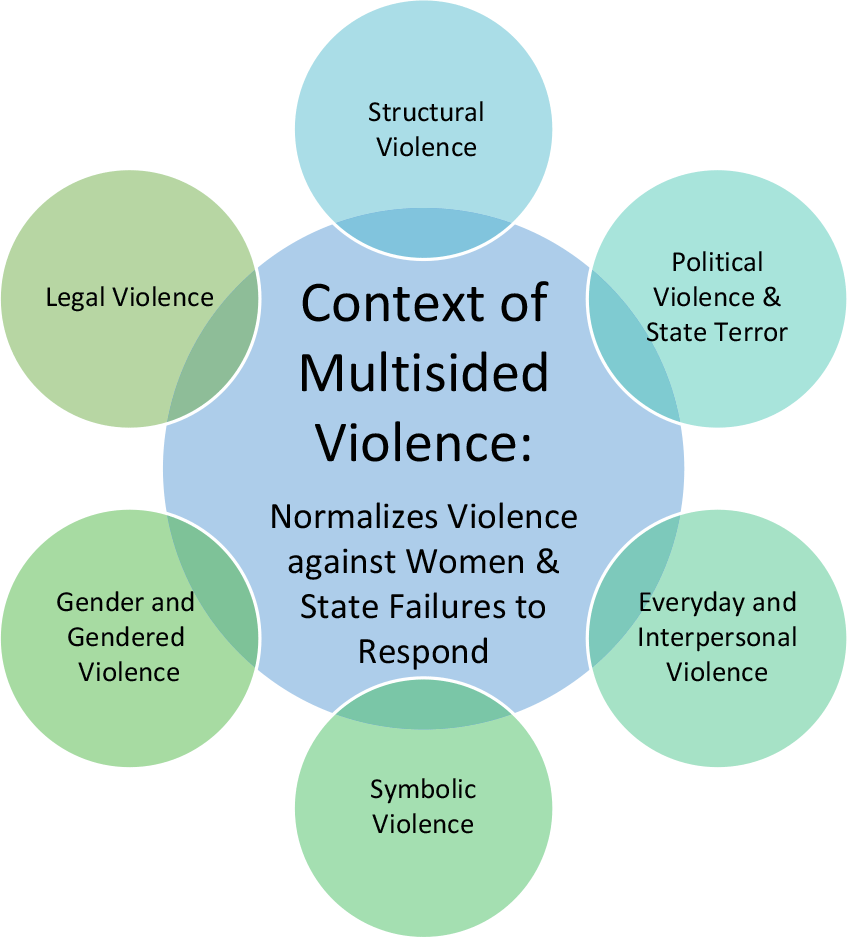
To understand patterns of impunity and deficiencies in responsiveness to violence in the lives of women, we use the theoretical framework of multisided violence, that is, the confluence of various forms of violence, including structural violence, symbolic violence, political violence and state terror, everyday and interpersonal violence, and gender and gendered violence (Menjívar Reference Menjívar2011). All of these forms of violence, when present simultaneously, create a context that not only normalizes different manifestations of violence against women but also normalizes state failures to respond (see Menjívar and Walsh Reference Menjívar and Walsh2017). The impacts of multisided violence are additive and constitutive of one another (Menjívar Reference Menjívar2011), such that the more forms of violence present, especially in more extreme manifestations, the more likely there will be state failures in responsiveness to violence against women. The figure below shows the various components of multisided violence: structural, political, everyday, symbolic, and gender violence. To this theoretical framework that has previously been applied to other cases (Menjívar and Walsh Reference Menjívar and Walsh2016; Reference Menjívar and Walsh2017; Walsh and Menjívar Reference Walsh and Menjívar2016a; Reference Walsh and Menjívar2016b) to explain implementation gaps, we add legal violence as a facet that is pervasive in Costa Rica and beyond (Figure 1).
Context of Multisided Violence.

We draw on the work of Menjívar and Walsh (Reference Menjívar and Walsh2016; Reference Menjívar and Walsh2017) and theorize that high levels of gender violence and persistent impunity will be found in countries where multiple forms of violence coalesce in the lives of women. This has been demonstrated in “worst scenario cases” such as those of El Salvador and Guatemala (Walsh and Menjívar Reference Walsh and Menjívar2016a, Reference Walsh and Menjívar2016b) and Honduras (Menjívar and Walsh Reference Menjívar and Walsh2017). Alternatively, we use the same theoretical lens to assess a case that is not “extreme,” and we theorize that countries with fewer manifestations of multisided violence present (or in less amplified fashion) will still exhibit some degree of impunity and deficiencies in responsiveness to violence against women, in the degree that some components of multisided violence exist. Therefore, countries such as Costa Rica, with comparatively fewer expressions of multisided violence, will have some instances of impunity and deficiencies in responsiveness to violence against women (because some multisided violence is present). Although these failures may not be as widespread or persistent in Costa Rica as in its neighboring countries, it is still troubling that responses to violence against women receive less attention than other social protections—even though Costa Rica has shown progress on several other areas of social protection, such as universal health care at little to no cost to citizens. In the upcoming sections, we define the various forms of multisided violence. We demonstrate how these exist in Costa Rica, albeit in less extreme expressions than in neighboring countries, and the effect these lesser manifestations may have. MSV amplifies the effects of other forms of violence and poses obstacles to the implementation of VAW laws as women are seeking justice for violence committed against them.
Structural ViolenceFootnote 5
Structural violence refers to the uncertainty and suffering people experience resulting from the systematic marginalization through exploitative work and low wages combined with limited access to state services (see Farmer et al. Reference Farmer, Bourgois, Scheper Hughes, Fassin, Green, Heggenhougen, Kirmayer, Wacquant and Farmer2004; Sassen Reference Sassen2014; Torres-Rivas Reference Torres-Rivas1998). An important aspect of structural violence is that it is not observable in specific events, but it is instead the result of larger processes (Galtung Reference Galtung1969; Kent Reference Kent2006). This type of violence is sometimes referred to simply as poverty, but it constitutes violence because it constrains opportunities and severely undermines life chances, as such, it can lead to a “slow death” (Galtung Reference Galtung1969). Costa Rica has one of the lowest poverty rates in Latin America. However, growth in GDP and GDP per capita has occurred while inequality has increased. Thus, income inequality is high in Costa Rica, even for Latin America (OECD 2016). Inequality has increased with the implementation of neoliberal reforms since the 1990s that disproportionately disadvantage women economically and socially, especially poor or marginalized women.
Symbolic Violence
Symbolic violence refers to the internalized humiliations and legitimations of inequality and hierarchy that include sexism, racism, and classism (Bourdieu Reference Bourdieu, Scheper-Hughes and Bourgois2004). Symbolic violence normalizes women’s subordination and violence against them in part through legitimizing expressions that frame the order of things (Bourdieu and Wacquant Reference Bourdieu, Wacquant, Scheper-Hughes and Bourgois2004, 272), such as women knowing “their place” or being “naturally” unequal to men (Menjívar Reference Menjívar2011). As such, it is violence enacted on a person through her complicity (Bourdieu and Wacquant Reference Bourdieu, Wacquant, Scheper-Hughes and Bourgois2004, 273).
The symbolic violence of assuming women’s best interests are served by maintaining their marriages or partnerships with men at all costs is evident in the practice of conciliation in Costa Rica, where rather than adjudicating a case, a judge brings together two or more people in conflict to find a mutually satisfactory solution to their dispute. One feminist leader observed that some judges in Costa Rica use conciliation between couples where violence has occurred as a method of speeding up their schedules (Interview, July 17, 2017). In an example of normalizing women’s subordination to men, a male judge explained to Walsh in Reference Walsh2008 that women who are economically dependent or with “low self-esteem” may prefer conciliation when they are in conditions of economic dependence so that men can provide financially (Interview, May 20, 2008).
Everyday Violence, Interpersonal Violence, and Crime
Everyday violence refers to the daily practices and expressions of violence on a micro-interactional level, such as domestic, interpersonal, and delinquent (Bourgois Reference Bourgois, Scheper-Hughes and Bourgois2004a: 428). This includes “common crime” such as muggings, robberies, drug dealing, and shootings, which are themselves linked to other forms of violence (such as structural and symbolic violence). Increasing rates of everyday violence creates a general “culture of terror” and a situation in which violence is normalized and people direct their brutality against each other rather than against the structures that oppress them (Bourgois Reference Bourgois, Scheper-Hughes and Bourgois2004a; Reference Bourgois2004b). In an earlier section we describe increasing crime trends in Costa Rica.
Gender Violence
Following Hammar’s conceptualization of gender violence (Reference Hammar1999, 91), “gender differences in a gender-imbalanced political economy that disadvantage women represent gender violence, whereas acts of violence, including physical, psychological, and linguistic violence, constitute gendered violence” (ibid.). Gender and gendered violence in Costa Rica occur in everyday life, and it is these everyday forms that contribute to their normalization in society (Menjívar Reference Menjívar2011). The power imbalance between men and women is perhaps the most crucial factor that undergirds gender and gendered violence.
Legal Violence
All the forms of violence discussed so far—structural, symbolic, everyday and interpersonal, and gender and gendered—have been discussed in previous scholarship explaining high levels of violence and impunity for crimes against women, particularly in contexts where various forms of violence coalesce in amplified fashion. While all of these forms of violence are present in Costa Rica, though perhaps to a more modest degree than in countries with higher rates of violence, we find that legal violence is an additional, conceptually separate factor of multisided violence that exerts itself as a seemingly subtle, but equally potent, obstacle to justice when women present legal claims of violence. The structure of legal and justice systems and the way laws are written, interpreted, and implemented can harm women, lead to suffering in their lives, and even to their deaths. As such, they constitute a form of violence, legal violence, underscoring the “normalized but cumulatively injurious effects of laws” (Menjívar and Abrego Reference Menjívar and Abrego2012, 1380).
In this section, we provide an overview of the laws that have been created to address violence against women. We highlight some of their limitations as well as the limitations within state institutions that are responsible for implementing them. We summarize individual laws first. Then, we provide examples of legal violence, that is, how the application of violence against women laws are undermined when adjacent laws are applied in tandem (and often in conflict) with them.
Earlier than its Central American neighbors, the Costa Rican legislature enacted a variety of laws designed to protect women from gender-based violence. Costa Rica ratified CEDAW in 1984. CEDAW obligates states to take action to eliminate discrimination against women by abolishing discriminatory laws and passing laws that stipulate equality between men and women, by establishing public institutions to ensure laws protect women, and to prevent discrimination against women in all social spaces (UN Women 2018). Signatory countries are legally bound to uphold the conditions of the convention and submit country reports. In 1990, the Costa Rican legislature passed the Law for Advancement of Social Equality for Women, which authorized courts to order an abusive man out of the home immediately and keep paying expenses. Before this, abused women would have to leave the house (Interview, May 5, 2008). Legislators also argued that the law put men at a disadvantage and penalized “normal” conflicts between women and men (Sagot Rodríguez Reference Sagot Rodríguez, Lebon and Maier2006, 283). This mobilization of adjacent laws, which affirm a man’s right to occupy property he owns, undermined violence against women laws and as such it is an example of legal violence.
In 1995, Costa Rica ratified the Inter-American Convention on the Prevention, Punishment, and Eradication of Violence against Women (Belém do Pará), which affirms that physical, sexual, and psychological violence violates women’s human rights. It also passed the Law Against Sexual Assault in Employment and School. This legislation enabled protective measures to be enforced without a criminal or civil proceeding and enforcement improved. Members of the judiciary have since been required to attend sensitivity training on the job and as part of law school curriculum (Villanueva Reference Villanueva, Morrison and Biehl1999, 156). Since that time, the legislature passed the Law Against Domestic Violence (1996) and the Law of Responsible Paternity (2001); these laws were designed to target inequalities women experience disproportionately, such as responsibility for feeding children or single parenthood. Yet despite increased legal protections instituted in the 1990s, Sagot Rodríguez and Carcedo Cabañas (Reference Sagot Rodríguez, Carcedo Cabañas, Fregoso and Bejarano2010) argue that the Unit of Judicial Investigation of the Supreme Court under-recorded feminicides throughout the 1990s. These scholars examined data from the Unit of Judicial Investigation Forensic Pathology Diagnostic list and its Statistical Yearbook, as well as newspaper accounts that described the circumstances of women’s deaths and suspected killers, and found that 14 percent of the total homicides of women from 1990 to 1999 did not appear in the Unit’s yearbooks (ibid., 142,146).
In response to criticisms that existing laws did not provide adequate protection to women, the legislature passed the Law of Criminalization of Violence against Women in 2007, which criminalizes gender-based violence against women by their partners and created and criminalized the legal concept of femicide. Article 21 identifies femicide as the first crime listed under the section on violent physical crimes and states that “a prison sentence of 20–35 years will be imposed on anyone who kills a woman with whom they maintain a relation of matrimony, in a relation formally declared or not” (Ley 8589). The Law of Criminalization also imposes prison terms for sexual abuse of a partner and establishes offenses not existing previously in the criminal code, such as restricting freedom of movement, emotional abuse, abusive sexual conduct, sexual exploitation of women, aggravated forms of sexual violence, economic exploitation of women, and defrauding women of community property.
Feminists had advocated for the above-mentioned criminal law. However, multiple problems have arisen in connection with its application. In 2008, an interviewee in one of our studies noted that, after the creation of the law, there was a lot of judicial discretion. At first, judges were looking for ways to avoid applying it. A lot depended on the judge and how aware they were of the problem of domestic violence, but the interviewee noted that things had improved with judicial training (Interview, May 5, 2008). In response to women’s fears about approaching the authorities, one legal educator for a women’s group advised that women should understand that when they go to public institutions, they are not asking for charity, but rather, exercising a right to ask for help (Interview, May 19, 2008). However, it was evident that many women in this group were hesitant to report violence because they felt justifiably fearful and intimidated by engaging legal institutions that might not help them (Interview, May 19, 2008). More recently, one activist working with a local NGO that advocated for the criminalization law called the law “a disaster” because it defines femicide as only occurring in a marital or domestic union (Interview, July 4, 2017). Thus, for instance, when women are killed by men such as neighbors or acquaintances with whom they are not in a relationship, the murder does not meet the legal definition of femicide (Interview, July 4, 2017).
Legal Violence in the Adjacent Laws
Despite these legal advances, Costa Rica is similar to other countries in the region in the failure of its judiciary to appropriately respond to cases of violence against women. Costa Rican women’s groups and the United Nations continue to draw attention to the low conviction rates of abusers compared with the high number of complaints (CEDAW 2017; Coalición feminista 2017). The Costa Rican federal court’s gender observatory reports that in 2015, 76 percent of cases filed under the Law of Criminalization were dismissed (Observatorio de Género 2016). The Gender Commission concluded that there were several important factors behind these dismissals: investigators continued seeing cases of violence against women as a private affair between couples; victims lacked legal representation; there was insufficient or no support for victims from other institutions; and there was high turnover of specialized personnel in the court system (Comisión de Género 2016). Like the “gap” literature we summarized earlier would suggest, the high rate of dismissals is therefore attributed to a lack of will on the part of some members of the judiciary and a lack of state financial or institutional provisions to support victims.
Responding to violence in the lives of women requires funding specialized agencies designed to protect women (Walsh Reference Walsh2008; Weldon Reference Weldon2002). One such institution is INAMU, established in 1997. INAMU’s funding is two percent of the annual income of the Fund for Social Development (FODESAF), which signals a lukewarm will on the part of state institutions. And while INAMU’s budget has grown, more than half of the budget goes to administration and relatively less money is allocated to on-the-ground-support for programs such as legal defense, counselling, and prevention, which are handled by the technical division.Footnote 6
Combating violence in the lives of Costa Rican women also requires funding a range of public services that impact women’s lives. For example, an INAMU lawyer noted that in rural areas, low funding for police may prevent them from assisting a woman trying to escape violence (Interview, July 3, 2017). This lawyer went on to say, “The service is more limited. I have had cases where, for example, there are police that yes they wanted to help get the woman out, for example, but they don’t have a car” and instead have only a motorcycle. “Such barriers to reaching women are especially relevant in Indigenous reserves,” she explained. The challenge of underfunded services in rural areas also has led to creative approaches to serving women at risk of feminicide. The lawyer also said that in emergencies where a woman is at high risk of death, INAMU works with an interinstitutional team, including NGOs combatting gender-based violence, local police, and the Unit of Judicial Investigation, that uses free WhatsApp accounts to coordinate rescues. The availability of cell phone service nationally means these groups can take advantage of this free app to communicate at any time.
When adjacent laws govern spheres of life where women are already disadvantaged (see Menjívar and Walsh Reference Menjívar and Walsh2017), such as property rights, employment, and citizenship, the legal system itself interferes with the application of laws meant to provide prevention, protection, and punishment in cases of violence against women. In this section, we examine these adjacent laws as forms of legal violence because of their harms to women. Although we focus on Costa Rica, these laws likely operate in other countries that also have passed laws that might otherwise appear to be responsive to women (see for instance, Menjívar and Walsh Reference Menjívar and Walsh2017). Judges, prosecutors, and officers may invoke these adjacent laws in discriminatory and harmful ways as they evaluate cases of violence in the lives of women, rather than simply applying the violence against women laws. Here we look at three such laws—land, labor, and immigration laws—that exemplify how adjacent laws operate to undermine the aims and goals of violence against women laws on the books—constituting legal violence.
Land Title
One set of adjacent laws that puts women at risk of violence by making them economically vulnerable are those that limit women’s access to land titles and ownership. The UN reports that Costa Rican rural women continue to face ownership barriers (CEDAW 2017). A woman who leaves an abusive partner but does not have legal title to the land she has shared with him may be advised by a judge that she cannot afford to leave her partner and should engage in a process of conciliation rather than taking her case to court, as a judge conveyed to Walsh in Reference Walsh2008. At that time, most women were not aware that they could stay in the family home and obtain a protection order, even though there were some legal education groups making women aware that the aggressor is the one who is supposed to be removed from the house (Interview, May 19, 2008).
Prior to 1990, land was only titled in the name of the male head of household and sometimes his legal wife but not in the name of a common-law wife. In 1990, the Law of Promotion of Women’s Social Equality changed this practice (Ley 7142). Article 7 of the law states that “all fixed property provided through programs of social development, should be titled in the name of both spouses, in cases of matrimony, and in the name of the woman, in cases of common-law partnership, and in the name of beneficiaries in any other case, be they man or woman” (ibid.). Common-law, or free union, partnership has increased in Costa Rica, with the 2011 census showing urban states with rates of 30 percent of unions as free union and rural states with rates of 50 to 65 percent of unions as free union (Fallas Reference Fallas2017).
However, one lawyer observed in 2017 that, “we have cases in which if they got the land before 1990, the land was titled to him and remains only in his name,” because the government did not retroactively add women’s names to land titles. Lack of title to family land impeded INAMU’s effort to assist women in these cases. “All the laws have this,” she said. “It’s necessary to interpret the law, but if one does not have a mentality of social justice, it’s difficult because the law intended equality” (Interview, July 3, 2017). This lawyer focused specifically on the land titling adjacent law as an example of an impediment to women trying to leave situations of violence. In Costa Rica, where common-law marriages are common, failure to retroactively add women’s names to land titles keeps rural (and a significant proportion of urban) women marginalized and living in situations of violence.
Failure to retroactively add women to land titles also exemplifies how structural violence intersects with these laws because lacking land titles strips women of their family wealth. When legally contested, lacking land titles can strip women of their residence and of their livelihood in a farming family. One activist interviewed mentioned that competition to respond to the Dominican Republic-Central America Free Trade Agreement (DR-CAFTA), with improved technologies to increase production for export, has pushed some small farmers off their land, which turns smallholder farmers into landless laborers who must find work in export industries, such as pineapple plantations (Interview, July 3, 2017). This activist finds that economic restructuring in rural areas deepens structural violence when she notes, “we are living in a society so patriarchal, so neoliberal, so capitalist, there are class relations and relations of power in the family, and these economic and political conditions affect women, indirectly or directly” (Interview, July 3, 2017). Lack of access to land because of legal titling procedures and economic restructuring makes life more precarious for women, especially in rural areas, and economic precarity places them at higher risk of violence. Land titling laws that privilege men also hinder the implementation of VAW laws if women face the possibility of losing their residence, job, or business upon pursuing justice.
Labor Law
Costa Rica’s labor code has only recently been reformed to make illegal several discriminatory practices against women workers, practices that can create conditions for various forms of violence to occur in the lives of the 45 percent of Costa Rican women who participate in the labor market (World Bank 2015). Women’s activists cite employment conditions as creating a context of multisided violence for women, and workplaces may be slow in responding to the legal changes. One interviewee working with the state described a wide range of issues that women face at work, including widespread harassment (Interview, July 11, 2006). Women who interfaced with the state through employment or through seeking services faced problems such as “sexual harassment, labor harassment, employment discrimination, discrimination in the field of health, … the abuse of police authority, … one can see various forms of the manifestation of discrimination, and obviously unequal treatment on the basis of being a woman” (Interview, July 11, 2006). Before the labor code reform, a woman who sought legal protection because she was experiencing sexual harassment at her job that made her fear for her safety could be told by the courts that her harasser was not breaking the law and was just engaging in the “normal” flirtations of men.
The 2016 Reform Law of Labor Process, implemented in 2017, made it illegal to engage in labor practices of firing pregnant workers without cause, paying women less than men for the same job, and failing to protect workers from discrimination based on age, gender, race, and religion (Ley 9343). These changes, the most extensive since 1943, stipulate that pregnant women fired without cause can ask a judge to reinstate them at work while a court decision is pending. The law also stipulates that the government should provide free legal counsel to employed pregnant women, underage workers, and people who claim to be the victim of discrimination.
While this law is an important step forward, the reform is limited in the degree to which it may offer relief for women in informal occupational sectors, such as agriculture and domestic service, which are poorly regulated by the state and where poor women find jobs. Labor data show that high levels of informal work are concentrated among low-income Costa Ricans, even more than in other Latin American countries (OECD 2016). One women’s activist mentioned, “We are countries that every day depend more on the third economy, the informal economy” and women are especially vulnerable in the informal economy (Interview, July 3, 2017). For example, she noted that trade agreements privileging large-scale agricultural production have led to more people seeking agricultural work on export-oriented farms. And while the labor reform requires paying women the same as men for the same job, research on women’s informal work in agricultural export processing shows that women are given slightly different tasks than men, tasks that are assigned a lower pay scale (Lee Reference Lee2010). The women’s activist noted, “the women—within structural violence—don’t earn equally to men.”
Another informal labor sector with high participation of women is domestic service. Some organizations in Costa Rica have been developed to confront these issues, such as the Domestic Worker’s Association (Astradomes), established in 1991, and the International Organization for Migration (OIM). One interviewee described that domestic workers are hired under conditions where “labor rights are not respected, so they are paid low salaries and there is no social security” (Interview, May 4, 2008). In 2015, a United Nations CEDAW report stated that to comply with the International Labour Organization Convention 189 (Law 9169 of 13 December 2013), Costa Rica should “adopt measures to ensure the promotion and effective protection of human rights of all female domestic workers” and “require effective mechanisms to be set up to investigate complaints and abuses committed against them” (CEDAW 2015). Of women wageworkers in 2005, 18 percent worked in domestic service (Martinez Franzoni, Mora, and Voorend Reference Martínez Franzoni, Mora and Voorend2010, 24). When labor laws are written in a way that limits the reach of law for the kinds of informal-sector jobs that so many women have, it continues to leave them vulnerable to abuses as workers and other forms of violence in the workplace. As such, labor laws create structural conditions that disadvantage women who then start out from a weakened position when they seek justice to address violence in their lives.
Immigration Law
Undocumented Nicaraguan migrant women in Costa Rica are particularly vulnerable to multiple forms of violence. They often live isolated in the home where they work, labor under informal arrangements and are paid poorly, and may be denied social services such as maternal health care. From January to May of 2019, of the seven feminicides recorded in the country, two were women of Nicaraguan nationality (Observatorio de Género 2019). Nicaraguans—both economic migrants and political refugees fleeing recent violence in Nicaragua—comprise 75 percent of the foreign-born population in Costa Rica (INEC 2011). Xenophobia against Nicaraguans is evident in social practices that include derogatory jokes, anti-immigrant protests (Stanley Reference Stanley2018), and everyday discrimination (Fouratt Reference Fouratt2014, Reference Fouratt2016). Sandoval, Brenes, and Paniagua (Reference Sandoval García, Montoya and Arguedas2012) find that gendered violence in relationships, poverty and unemployment, and discrimination in their day-to-day lives affect Nicaraguan women pervasively in Costa Rica.
Although by 2006 there were formal protections in Costa Rican law so that immigrant women could come forward with charges of domestic violence, circumstances and fear often made it difficult for them to do so (Interviews, July 12, 2006 and May 13, 2008). The interviewee notes that “Nicaraguan [women] are very afraid to go to legal services because they are illegal, they don’t have documents so they don’t want to show their problems there” (Interview, July 12, 2006).Footnote 7 At that time, organizations protecting undocumented women who seek to file domestic abuse charges would sometimes get into conflict with migration authorities. For example, an interviewee who had worked with the state describes one Nicaraguan woman being protected by an organization that had to argue with the migration authorities that protecting her life as a victim of domestic violence was more important than her being undocumented (Interview, July 12, 2006). Another interviewee working with a women’s organization revealed that immigration status was leveraged as a threat to immigrant women by abusers (Interview, May 19, 2008) (see also Salcido and Adelman Reference Salcido and Adelman2004).
Nicaraguan women without legal residency status thus hesitate to call police when faced with violence at the hands of a partner. The police may tell her that she should not make a report because it will draw attention to her legal status, which could risk deportation and separation from her Costa Rican-born children. Police may also tell her that she cannot make a report because she does not have valid identification.
Costa Rica’s 2010 Immigration Law provides a Nicaraguan woman with a path to legal permanent residence based on an immediate family relationship to a child born in Costa Rica or through marriage to a Costa Rican national (Ley 8764). However, the law also requires application fees, return to Nicaragua to obtain documentation, and fines for time spent in Costa Rica without documentation that can make legalization too expensive and, in general, risky for Nicaraguan women migrants (Fouratt Reference Fouratt2016). The United Nations CEDAW Commission on Costa Rica concluded in 2015 that:
[Migrant women are unable to] access their fundamental rights in mechanisms such as criminal proceedings, proceedings in respect of domestic violence and alimony, because of their migratory status or because of the impossibility of producing a valid document as a means of formal identification in Costa Rica, when attempting to take legal action or report an offence. (CEDAW 2015)
Thus, immigration laws contribute to keep immigrant women, especially poor immigrants, marginalized; they are compelled to endure, rather than report, violence against them in the public or private sphere. Immigration law, as an adjacent law, also works to undermine the application of violence against women laws, in part because immigration laws and their implementation privilege legal status. Additionally, in a context that penalizes undocumented status, immigration law also discourages the reporting that would be necessary to apply them.
DISCUSSION AND CONCLUSION
We have argued that a context of multisided violence creates a gap between the laws on the books and their application in Costa Rica. Furthermore, we contend that an important but previously understudied component of multisided violence is legal violence—a system of laws that disadvantage and harm women. Legal violence is conceptually distinct but interacts with other forms of multisided violence in the lives of women. The central expression of legal violence on which we focus is the application of adjacent laws, such as those addressing land tenure, labor rights, and immigration, in ways that undermine VAW laws. We examine these as examples of adjacent laws that can undermine the implementation of VAW laws even in relatively well functioning systems. Even though there are some aspects of multisided violence present in Costa Rica, Costa Rican women experience relatively fewer overt forms of violence, such as political or structural violence, compared with other Central American women. However, women in Costa Rica remain vulnerable to policies and norms that are embedded in sociolegal and economic systems. Our study reveals entrenched institutional practices that impede implementation in countries such as Costa Rica that are otherwise considered to take violence against women seriously.
Existing literature focuses on countries with widespread impunity in cases of violence against women and in contexts with high political and societal violence. Instead, we focus on Costa Rica, a Central American country that often has been hailed by feminist activists and scholars as exemplifying progress in combatting VAW with limited financial resources. The country has instituted laws designed to protect women from violence and initiated campaigns to educate actors in government institutions about gender-based violence and the social costs of VAW. The government has taken multiple steps to combat gender-based violence, passing laws to address violence against women and feminicide, training members of the judiciary, police force and other institutions about VAW laws, and funding a national women’s organization that provides psychological and legal counsel, shelters, and a national hotline. When in 2018 the government publicly called feminicides a national emergency, it publicized changes that can be implemented. Extant scholarship tends to focus on analyzing contexts with multiple manifestations of multisided violence. These studies consequently tend to argue that the most egregious forms of multisided violence (such as political or structural violence) explain the gap between laws and practice. However, this tends to hide from view the less egregious form of legal violence that also blocks implementation of VAW laws in significant ways.
Within the context of this infrastructure already in place, we make recommendations for making VAW laws more effective. The social context of Costa Rica includes multiple forms of violence that operate alongside and reinforce each other. Addressing other forms of violence in society that are seen as “normal” would help denaturalize forms of violence in general. For example, though labor laws exist, it is evident from our findings that women working in the informal sector are left unprotected. The government could take steps to address the structural violence of poverty and increasing economic inequality in the country that has been in part an outcome of neoliberal economic restructuring. Funding to rural police forces with a focus on community-based policing would increase access to justice for women that would otherwise have difficulty escaping violence. Funding directed to continue training police officers to protect the bodily integrity of immigrant women regardless of citizenship status would increase access to justice for Nicaraguan women, especially in locations where police interact with large populations of immigrants. While some of these initiatives are already taking place, coordination with international donors to create sustainable and permanent programs would increase their impact.
The creation of laws against VAW is an important piece of the struggle to eradicate violence in women’s lives, but it is not in itself sufficient. A final and central recommendation emanating from our research here would be a thorough reform of adjacent laws (those we included here but also others) to ensure that their content is changed in tandem with VAW laws and that everyday implementation procedures are closely watched. Because women’s organizations can monitor and provide training for state agents implementing the laws, they are crucial for changing not only formal institutions but informal practices. So, the continued and strengthened coordination and training between women’s organizations and state bureaucratic branches is critical. Once laws are put in place to protect women, more work is needed to eliminate other legal barriers to application of those laws as well as other forms of multisided violence that continue to make women vulnerable to violence.
Although empirically we base our examination on the Costa Rican case, we would like to note that this analysis can extend discussions of interlocking forms of violence against women more broadly. As such, our analysis is theoretically generative as it can shift the gaze from the conventional use of frameworks developed in the global north to examining cases in the Global South to using a framework developed in the south to analyze cases in the north. For instance, Dominguez and Menjívar (Reference Dominguez and Menjívar2014) extend an analysis of MSV in the lives of Guatemalan women to the lives of minority-status women in the United States to show the “violent effects of multiple forms of deprivation and devaluation of personhood” in a context where laws protect people, yet structural, interpersonal, symbolic, and gendered violence create extrapersonal forms of violence (ibid., 185). As we have shown, the Costa Rican government has enacted laws and policies that take seriously feminicide and gendered-based violence in the lives of women, yet despite these important steps, interlocking forms of MSV continue to negatively impact Costa Rican women. Thus, we call for an examination of how legal violence, often less visibly recognized as violence, impacts the lives of women in general, including in the Global North.