Hospital-acquired pneumonia (HAP) is a serious threat to patient safety with high mortality and morbidity rates in US hospitals and treatment costs of ∼$3 billion a year.1 The many adverse consequences of missed oral care include non–ventilator-associated hospital-acquired pneumonia (NV-HAP), which frequently results in sepsis, increased length of stay, and higher costs.1,2 Hospital-Acquired Pneumonia Prevention by Engaging Nurses (HAPPEN) is a nurse-led interdisciplinary initiative within the Department of Veterans’ Affairs (VA) designed to decrease the risk of NV-HAP. HAPPEN utilizes consistently delivered oral care to reduce oral bacteria, lowering the risk NV-HAP.1,3,4 HAPPEN pilot studies have demonstrated a reduction of NV-HAP that improved veteran health and met a critical patient safety need.4,5
In 2016, the HAPPEN team designed a VA oral-care tool kit, additional resources, step-by-step instructions and education for VA hospitals and long-term care facilities to begin national diffusion of HAPPEN. These materials were updated regularly and were available to any VA employee on the VA’s internal SharePoint. A partnership between HAPPEN, the Quality Enhancement Research Initiative (QUERI), and the VA Collaborative Evaluation Center (VACE) was established in 2019 to evaluate (1) the quality of HAPPEN implementation (the impact on veteran health outcomes, and (3) cost from 2019 to 2021. Operations partners included the VHA Innovation Ecosystem, the Office of Discovery, Education, and Affiliated Networks (Diffusion of Excellence), the VHA Office of Nursing Services, the VHA Office of Dentistry, and the VHA Office of Rural Health.
Gaps in staff knowledge of oral care in prevention of NV-HAP were identified during baseline assessments of the initial pilot studies (2016–2017). The HAPPEN team noted (1) the few studies targeting NV-HAP among the veteran population, (2) that few studies addressed nursing staff engagement in the prevention of NV-HAP, and (3) a need for evaluation of pilot sites in the Veterans’ Integrated Services Network 6 (VISN-6) to inform the dissemination of the practice on a larger scale. Learning more about gaps in knowledge, barriers, challenges, and facilitators was essential to improve the quality of care veterans receive and to inform program expansion.
Methods
Study design and sample
We used a concurrent mixed-methods approach utilizing semistructured qualitative interviews and surveys, that, when combined, can effectively inform the development of infection prevention interventions.6,7 We initially utilized a snowball sampling approach, beginning with the local HAPPEN champions, to identify and recruit providers (medical doctors and nurse practitioners), registered nurses, other staff (nurse managers and department chief), as well as veteran patients from each site. However, the coronavirus disease 2019 (COVID-19) pandemic and its impact on workload necessitated a change to a convenience sampling approach, including outreach to 2 additional VISNs (VISN-20 and VISN-10). Like VISN-6, all the same resources and efforts were provided for implementation of HAPPEN in VISN-20 and VISN-10. This addition provided a larger potential sample for the evaluation to adapt to the demands of staff related to the pandemic. We identified 4 providers, 4 nurses, 4 other staff, and 130 veterans for recruitment from 7 VISN-6 sites, 2 VISN-10 sites, and 1 VISN-20 site.
QUERI and the Diffusion of Excellence Initiative funded this program evaluation (VHA Program Guide, section 1200.21) conducted under the authority of the VHA Office of Nursing Services. This study was deemed quality improvement, voluntary, and not subject to research oversight. The outcome for this project was intended to inform VA operations and was thus exempt from institutional review board review in compliance with the VA Handbook, section 1058.05.
Setting and intervention
Seven VA medical centers (VAMCs) located in North Carolina and Virginia (VISN-6) volunteered to serve as pilot sites prior to the nationwide expansion of the HAPPEN initiative. A full-day, introductory, face-to-face kick-off meeting was held at the Salem VAMC to build supportive relationships between site HAPPEN champions (facilitators) and the HAPPEN team. Champions were given orientation regarding the implementation process, the tool kit, additional resources, team planning, goal setting, overcoming resistance to change, measuring outcomes, and reporting process measures. They watched demonstrations by dental professionals and discussed anticipated challenges with champions who had successfully launched and sustained the program. The HAPPEN leader then conducted a series of one-on-one and group calls to facilitate implementation and networking between teams. These calls evolved into larger community-of-practice calls during which sites could receive information, ask questions, and learn from the expertise and experiences of others in the group.
Data collection and analysis
Qualitative interviews
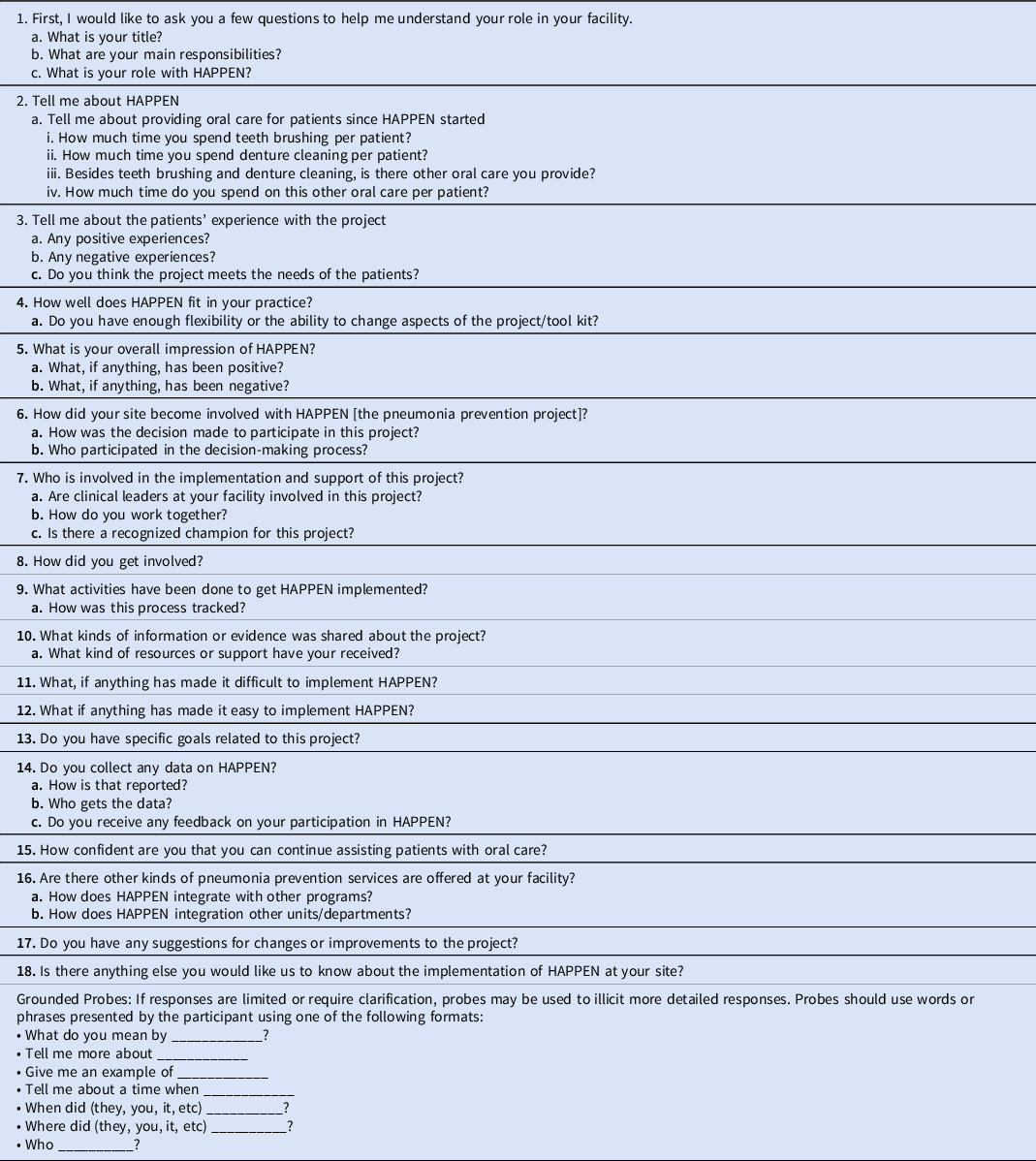
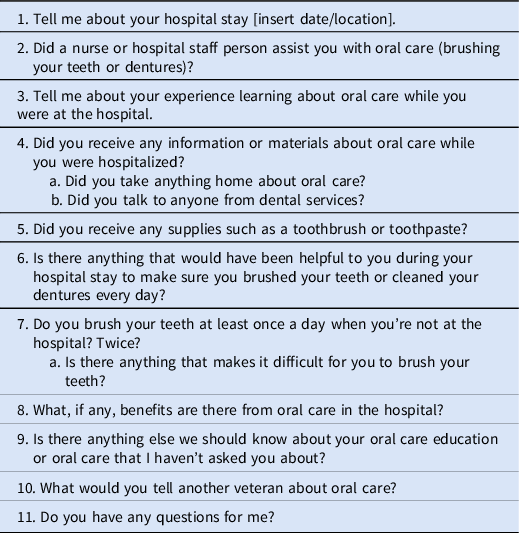
Semistructured interview guides were designed to elicit rich descriptions of participant perceptions and experiences of HAPPEN implementation including barriers, challenges, and facilitators to providing or receiving oral care. Staff interview guides were informed by the consolidated framework for implementation research (CFIR),8 including engagement, state of project adoption, accountability, collaboration, and how implementation of HAPPEN and tool kit usability may be improved. Interviews with both providers and veterans were conducted via telephone and were then audio recorded and transcribed verbatim. Transcripts were analyzed using matrix analysis9 with separate matrix templates for staff and veteran data. A priori categories included acceptability, barriers, and facilitators. Emergent domains were developed to capture data that did not fit a priori categories. This matrix template analysis approach facilitated rapid and detailed analysis.10
Survey
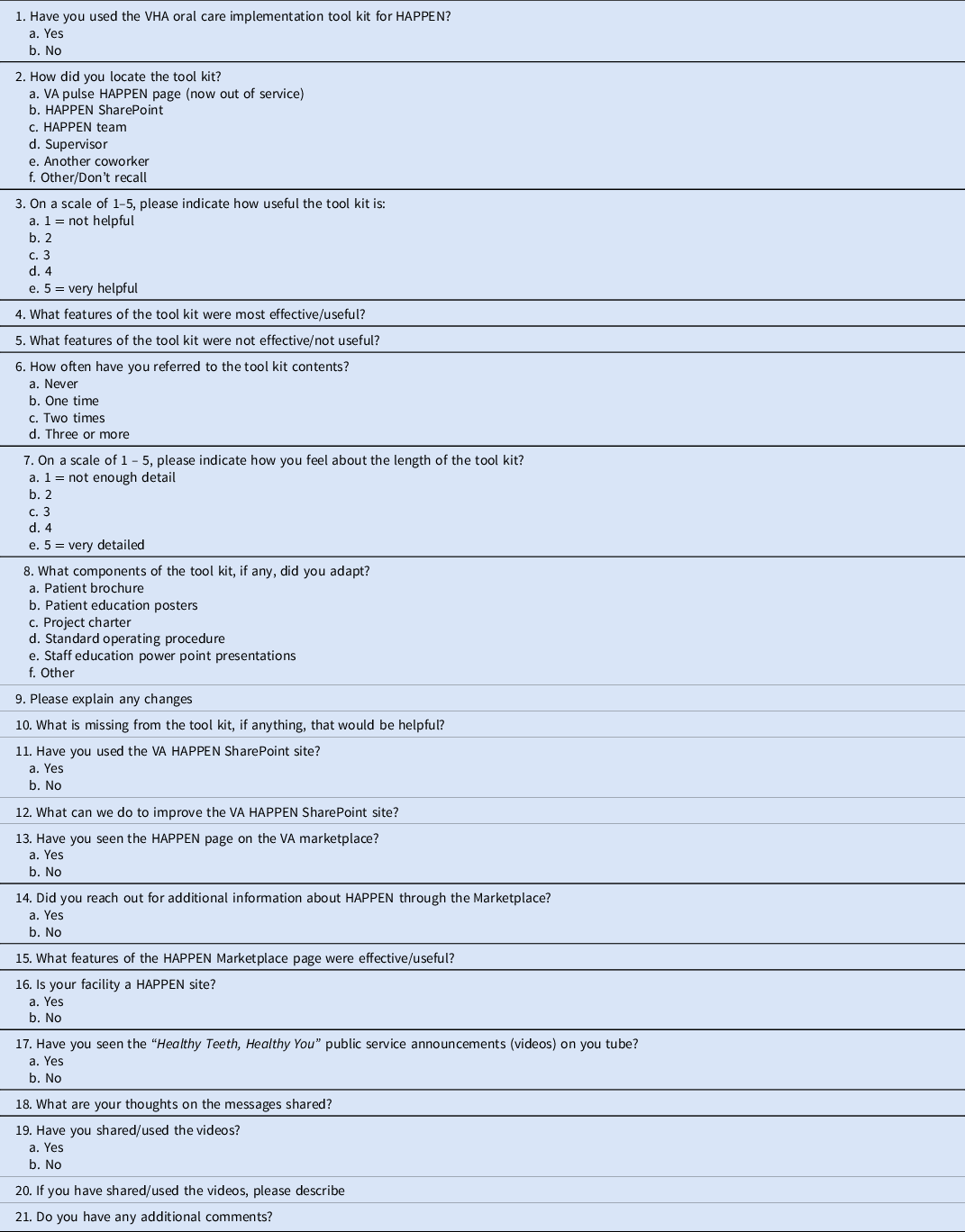
A REDCap survey was sent to 319 providers, including RNs and NPs, within the VHA who were engaged in implementation of HAPPEN at their site. The survey assessed the value and impact of the HAPPEN tool kit and other materials available on the SharePoint site.
Results
We completed 7 interviews with VA staff (2 providers, 2 nurses, 3 other staff) across 7 sites (5 VISN-6 sites and 2 VISN-10 sites) between January and July 2020. We completed 7 interviews with Veterans within 6 months of their hospitalization in a facility where the HAPPEN initiative was introduced between October 2020 and February 2021. Illustrative quotations for the interview findings are listed in Table 1.
Illustrative Quotes Identified from the Qualitative Interviews

Provider Semistructured Interview Guide

Patient Telephone Interview Guide

Online Healthcare Provider Survey

Provider surveys
In total, 91 participants responded to the online survey (response rate, 28.5%). Of those respondents, 72 (80%) used the tool kit provided for HAPPEN implementation. Among them, 31 participants (43.1%) accessed the tool kit through the national HAPPEN team, and 26 respondents (36.1%) accessed the tool kit through VA Pulse, which was replaced by the internal VA HAPPEN SharePoint (n = 26, 34.7%). Among those who used the tool kit, 56 (77.8%) found it very helpful for implementation. Also, 53 responding providers (74.6%) had used the tool kit 3 or more times. Respondents reported that the downloadable materials from the tool kit were valuable in supporting their efforts to implement the HAPPEN initiative at their site (Tables 2–4).
Provider interviews
Providers interviewed about the HAPPEN initiative reported that the program brought knowledge to the staff about the impact of oral care (eg, toothbrushing and denture cleaning) on reduction of NV-HAP cases and the health of their patients. Implementing the HAPPEN initiative was something that easily fit within the daily workflow and received little complaint or pushback from patients.
Fit to practice
Participant providers reported that staff had to “work out the kinks” of who was documenting oral-care assistance provided during 12-hour nursing shifts. Once documentation responsibility was sorted out, most providers felt that it was within their normal workflow. For some providers, the HAPPEN initiative fit well with other efforts they engage in for pneumonia prevention (eg, early and frequent ambulation).
Most providers reported that implementing the HAPPEN initiative and assisting with oral care tailored for their patients’ needs required 5–10 minutes per person each shift and was incorporated into the normal routine. Most veterans can complete oral care independently with only a reminder from staff.
Barriers to implementation
Participants at pilot sites reported that implementing the HAPPEN initiative posed some challenges. Documentation was a challenge for some sites as they navigated new EMR oral-care templates and designated responsibility for documentation. Subsequently, a national standardized oral-care template was developed to provide consistency across sites. Staff in the field had input into the design and testing of the templates; however, a few respondents wished these could be individualized for their site’s needs.
Providers reported that some veterans who wear dentures do not want to take them out in front of anyone, which can create a barrier to effective oral care. Under these circumstances, veterans were resistant to assistance from staff to complete oral care.
During the initial pilot studies, oral care supplies were provided by the expansion project. Once those supplies ran out, some sites reported difficulty acquiring replacements and engaging voluntary services to collect donations or using funds to purchase needed supplies. Identification of this need allowed HAPPEN to require local facilities to provide supplies for the national rollout.
COVID-19 challenges
One site delayed implementation of the HAPPEN initiative due to changes in units in response to the COVID-19 pandemic (spring of 2020). At other sites, the addition of personal protective equipment (eg, masks and face shields) made interaction and education about oral health more challenging but did not prevent them from continuing to engage veterans in the program. One provider emphasized that the HAPPEN initiative and oral care were even more important considering the COVID-19 pandemic.
Facilitators to implementation
Oral care supplies provided as part of the HAPPEN initiative were described as helpful, and staff reported reproducing and distributing the HAPPEN education materials. Engaging leadership and nursing staff in the implementation process (eg, utilizing staff feedback to streamline processes and template development, encouraging champions to share outcomes) allowed for trouble shooting and workflow fit. Access to the national program team for questions and support was also an implementation facilitator. The tool kit and implementation timeline were facilitators to implementation as well for sites.
Providers reported that monthly quality improvement data showing a difference in pneumonia rates was a motivator for implementation and sustainment. Online training helped orient staff, particularly new staff, to the goals of the HAPPEN initiative and how to complete oral care. One HAPPEN champion asked staff to “go a night without brushing” their teeth to see how they felt the next day, which helped many to understand the importance of assisting patients achieve daily oral care.
Veteran experience (provider perspective)
Providers interviewed reported no complaints from veterans and noted improvements in pneumonia cases. One provider reported reductions “from 7 infections down to 1–2 or none” per month on their unit. For veterans who were not engaging in oral care prior to their hospitalization, HAPPEN provided education and encouraged the habit of consistent oral care. Another provider reported a reduction of thrush in their veterans since implementing HAPPEN.
Sustainability
Most participants described the HAPPEN initiative as important and sustainable and stated that documentation became easier with the national template and practice. The tool kit aided in the implementation and sustainment of the HAPPEN initiative. The tool kit is accessible on the internal VA SharePoint and is routinely updated based on the needs of the field and provides uniformity across sites. Most providers indicated that they would continue to provide education, oral care supplies, and supervision of oral care on their wards.
Expansion suggestions
One provider suggested engaging infectious disease departments to assist in collecting data to monitor NV-HAP cases and the impact of oral care. Another site recommended simplifying the criteria needed to facilitate clinicians gathering data. HAPPEN sites used Centers for Disease Control and Prevention National Healthcare Safety Network (NHSN) criteria to confirm, cases and most facilities had already tapped into the expertise of their infection control and prevention practitioners and quality managers.
Some staff recommended making HAPPEN education part of new staff orientation to ensure that all staff are aware of the importance of oral care for patient health. Another suggestion was to highlight successes and reduction of pneumonia infections to support further expansion through increased staff buy-in, continued education, and support for oral care. Those recommendations were included in the tool kit materials.
Using the NHSN criteria, VA medical centers began voluntarily reporting chart confirmed NV-HAP data to the inpatient evaluation center (IPEC) in March 2021.5 The process and outcome measures are currently under review by national healthcare policy makers and insurers for future reporting. Materials developed by the initiative have been shared outside the VA healthcare system, and several civilian hospitals have adopted similar initiatives.
Veteran interviews
Veterans had a range of reactions to HAPPEN oral care assistance. Some veterans mentioned having concern about oral health prior to hospitalization. Other veterans reported no concerns about oral care and feeling like the education was not necessary because they were not eligible for outpatient dental care, or they believed that oral care was unrelated to the reason for their hospital stay.
Education in the hospital
Veterans described a wide range of experience with oral care education and supplies for NV-HAP prevention. One veteran participant felt that the pneumonia prevention messaging he received was very important, and he planned to share his newfound knowledge with other veterans. One veteran did not recall the education but stated it was due to the severity of their health during hospitalization and a focus on surviving. For another veteran, oral care was a high priority, so while this veteran did recall the materials, he reported not really paying attention because it was something he had heard before. One veteran wondered why staff would educate on oral care when routine dental services were not provided during inpatient admissions, indicating that he did not fully understand the purpose of the educational materials or the impact oral care might have on their physical health during their hospitalization.
Assistance with oral care
Much like providers reports, veterans who could engage in oral care did so on their own. Assistance provided during hospitalization ranged from inquiring whether they brushed their teeth to assistance with oral care. Some veterans reported having few or no teeth, or full dentures which they did not bring to their hospital stay, and they did not feel they needed assistance with oral care during their hospital stay.
Oral care supplies
The HAPPEN program provided oral care supplies to veterans to facilitate daily oral care, and some did recall receiving supplies. One veteran reported that he was able to and preferred to bring his own electric toothbrush for their stay. Another veteran reported that they normally would bring their own supplies, but his hospitalization was unexpected, so having access to the supplies made oral care possible during the hospital stay.
Oral care at home
Most of the veterans with their natural teeth reported brushing their teeth at home. Veterans with dentures reported cleaning them when they wore them, but that they did not wear their dentures every day. One veteran highlighted the impact that mental health had on the ability to engage in oral care activities at home, identifying that as a barrier to daily oral care. Oral care habits in the hospital seemed to mirror those reported at home. For those who did not engage regularly in oral care at home, their hospital stay represented an opportunity to receive education on the importance of regular oral care.
Suggestions for improvement
Veterans suggested that reminders to complete oral care while hospitalized are helpful. Engaging dental professionals to address acute issues during their admission was another suggestion. Outpatient VA dental care eligibility was mentioned as challenging for veterans. Resources on access to outpatient dental care services were useful to aid veterans in seeking routine care in addition to completing daily oral care at home following discharge. The positive experience of HAPPEN presented an excellent opportunity for addressing this gap.
Discussion
Oral care has historically been seen as an activity of daily living rather than an essential infection control intervention, and the HAPPEN initiative appears to have effectively raised staff awareness of the impact of oral care on pneumonia prevention and health. Staff attributed a reduction in pneumonia rates at their sites to the implementation of the HAPPEN initiative. Although nationally implemented programs can encounter resistance, the HAPPEN tasks easily fit within the daily workflow for staff and received little complaint or pushback from veterans. Consistent with previous studies, providing tools, support, and American Dental Association (ADA) recommended supplies are ways to facilitate the successful implementation of the HAPPEN initiative.11–13 Engaging leadership and providing support to team members is critical to infection prevention efforts14 and was an important element of the HAPPEN initiative and NV-HAP prevention, leading to better integration into the workflow and access to supplies. Systemwide educational efforts to change provider, staff, and patient and family perceptions, like the highly successful hand washing campaigns of the last decade, were successful in improving buy in and uptake of the HAPPEN intervention.5,15 Hospitalization appears to be an excellent opportunity to educate veterans on the importance of oral care for general health in the VA.
This study had several limitations. Although the initial sites included in this analysis were voluntarily included in the pilot study, the program has expanded. The HAPPEN initiative spread to the entire VA by July 2021: 146 VA hospitals with acute-care beds and 134 facilities with long-term care beds, for a total of 155 facilities. Moreover, 49,774 VA direct-care staff have received oral-care instruction to date, including the use of a Talent Management System (TMS) course, “Healthy Smiles for Veterans” developed by the VA Office of Dentistry.16 The onset of the COVID-19 pandemic affected the implementation of the nationwide rollout of HAPPEN. With the need to adjust or change units to respond to COVID-19, some facilities delayed or needed to relaunch the initiative. COVID-19 affected the collection of data. Some providers and staff were unable to participate in interviews due to COVID-19–related duties. Furthermore, this evaluation only reflects of the experience within the VA with veteran patients. However, the HAPPEN initiative may also benefit patients outside the VA for NV-HAP prevention, and it can be easily integrated into the normal workflow for nursing staff.
Lessons learned from pilot testing and this evaluation supported scaling up this nurse-led initiative nationally. HAPPEN was integrated into standard practice as essential infection control and has demonstrated a steady and significant reduction in NV-HAP among acute-care hospitalized veterans, prior to the onset of the COVID-19 pandemic.2 Nurse leaders and direct-care staff were engaged in implementation, and the majority reported feeling supported and well prepared. Veterans reported positive experiences and increased knowledge. Building a community of practice and sharing expertise led to the successful replication of HAPPEN nationwide improving patient safety and care quality and influencing health policy.
Acknowledgments
The findings and conclusions in this article are those of the authors and do not necessarily reflect those of the US government or any of its agencies. This material is the result of work supported with resources and the use of facilities at the Cleveland–Denver–Seattle VA Collaborative Evaluation Center and the Department of Veterans’ Affairs Medical Center in Salem, Virginia.
Financial support
The VA Quality Enhancement Research Initiative (QUERI) program of the Veterans’ Health Administration (VHA) Health Services Research and Development Service and the Diffusion of Excellence Initiative funded this approved nonresearch evaluation (VHA program guide 1200.21) through grant PEC-19-306 conducted under the authority of the VHA Office of Nursing Services.
Conflicts of interest
All authors report no conflicts of interest relevant to this article.