The telegraph and the telephone are the newest tools of civilization and make use of the latest science and technology. Therefore, if in such fields the Japanese are seen as disqualified and Japanese products are considered as inferior, then the Chinese people will come to think that the level of Japan's civilization is still far behind that of Europe and America.Footnote 1
Introduction
Following the overthrow of the Qing Dynasty in 1911, China seemed to have entered a new era. As the first republic to appear in East Asia, the new China held great promise for developing as a modern country in both the economic and social spheres. However, the 1910s are often seen by historians as largely a decade of lost opportunities, as optimism in the wake of the overthrow of the Manchu Dynasty gave away to an internecine power struggle among politicians, a ravaging civil war, as well as heightened foreign interference in China and further encroachment on Chinese sovereignty.
The development of modern infrastructure such as telecommuni-cations, seen as essential for the project of nation-building in modern China, seemed to experience a similar fate. Historians of telegraphy in modern China have largely concerned themselves with its formative years in the late nineteenth century where the new ‘lightening wires’ first appeared on the Chinese landscape.Footnote 2 In contrast, the few who actually paid any attention to the condition of the telegraph and the telephone in the early Republican eraFootnote 3 tended to see it as ‘the period of stagnation’ or ‘steady decline’.Footnote 4 Moreover, the history of telecommunications in modern China is usually seen through the lens of Sino-Western relations. This is understandable, given the fact that nearly all modern telecommunications technologies, starting with the telegraph, were first introduced to China by Europeans.
Departing from existing works, this paper examines the state of telecommunications in early Republican China through one Japanese prism—a Japanese named Nakayama Ryûji, who served as telecommunications adviser to the Chinese government from 1913 to 1928. This focus does not necessarily imply that Japan's role eclipsed that of other foreign countries. There is one advantage in understanding the state of telecommunications in China by refracting through a Japanese prism, however. During the early Republican period, Japan became one of the most aggressive entrants to the telecommunications field in China. By deploying Nakayama's writings, then, this paper aims to fill a gap largely overlooked in previous scholarship.
Just as all historical records that historians use to reconstruct the past are always selective and subjective, it goes without saying that this prism itself needs to be carefully scrutinized. Indeed, Nakayama gives us a fascinating glimpse because he offers two different perspectives: in the first years after taking up his post, he prepared dozens of detailed reports and recommendations concerning telecommunications development for the Chinese government; simultaneously he submitted numerous confidential reports to the Japanese government on a variety of issues concerning, above all, telecommunications in China. Critically examining both recommendations for the Chinese government and the confidential reports for the Japanese government written by the same individual allows us to gain a deeper understanding of his agenda as well as the milieu in which foreign advisers operated. By doing so, this paper offers a new look at the dynamics of telecommunications development in early Republican China, while demonstrating the Janus-faced nature of foreign influence on this key modern sector.
Japan and modern China's telecommunications
Despite their different national trajectories in modern times, both Japan and China owed their first telecommunications links to the world to the Danish firm, the Great Northern Telegraph Company. In the early 1870s, it built submarine telegraph cables to reach China from imperial Russia via Japan. A subsequent agreement in 1883 allowed the Company to enjoy virtual monopoly over Japan's international telegraphic communications for 30 years. After 1868 the new Meiji government embarked on ambitious programmes of modernization of both government and industry. Domestic communications, both postal and telegraphic, were taken firmly under the aegis of the central government for reasons of security and control. The telephone, introduced in 1880s, was temporarily in private hands but soon also became part of the national communications system for financial reasons.Footnote 5
Japan's victory over China in 1895 in the first modern war between the two neighbours gave Japan the Chinese province of Taiwan as its first colony and a large sum of indemnity; it also granted Japan status as one of the ‘treaty powers’ as well as new economic opportunities in China. As a result of its victory in the Russo-Japanese War a decade later, Japan acquired much of the former Russian sphere of influence and treaty rights in the northeastern provinces of China, commonly known as Manchuria. In addition to railways and other concessions in southern Manchuria, Japan took over telecommunications facilities along the railway zone. A series of treaties signed with China in 1908 and 1909 formally recognized the transfer of these rights. As a result Japan operated railway and telecommunications facilities inside China from the beginning of the twentieth century.Footnote 6
Despite Japan's expansion at the expense of Chinese sovereignty, some historians have characterized the final years of the Qing government as a ‘golden decade’ in Japanese-Chinese relations. As they pointed out, the decade saw increasing Japanese influence in China through a wide range of ‘new policy’ reforms.Footnote 7 This was certainly true in the field of telecommunications. In 1906, the Qing government set up the Ministry of Communications (youchuanbu) to consolidate its overall control over domestic communications in a single bureaucracy. This was after officials dispatched by the Qing Court to study government administrations overseas explicitly recommended adopting the Japanese model.Footnote 8 Similarly to its Japanese counterpart, the Chinese Ministry of Communications was put in charge of a broad range of areas, including the railway, navigation, and the postal and telecommunication service. It also placed the telegraph, the telephone as well as electric lighting under the same Electric Administration Section (dianzheng si). This arrangement continued after the 1911 Revolution that overthrew the Qing, except for China's telecommunications administration which moved from the commercial centre of Shanghai to the capital of Beijing.Footnote 9
The rising Japanese influence in China was in no small measure due to the large number of Chinese who studied in Japan. In fact, Japan became by far the most popular destination for Chinese students studying abroad, especially after the abolition of the tradition Civil Service Examination in China in 1906. Many of those educated in Japan secured jobs in government, education or private business after returning to China. Between 1908 and 1911, a total of 65 students were granted positions in the Ministry of Communications after studying at institutions of higher learning abroad and taking a special government examination; all but two had studied in Japan.Footnote 10 Through these students—as well as their translations of Japanese works—Japan became a major conduit of modern knowledge in many fields for modern China.
The Japanese influence in China also came in the form of teachers and advisers.Footnote 11 Following China's defeat in 1895, and especially after Japan's victory in the Russo-Japanese War, a large number of Japanese teachers and advisers were invited to China to work at both central and local government schools, offices, and the military. In 1909, for example, some 424 Japanese teachers and educational advisers were working in China, as were 125 advisers and technical experts in fields other than education.Footnote 12 As early as 1902, Yoshida Masahide, a former high-ranking official in the Japanese Ministry of Communications, was invited by the Chinese government to offer advice on telecommunications matters in China. Two years later, Tsujino Sakutarô, a Japanese engineer from the same Ministry joined him and worked in China as the chief engineer of the Beijing Telephone Office for the next three decades. Few Japanese technical advisers would match either his length of service or range of influence.
Born in rural Niigata in 1874, Nakayama left home for Tokyo at the age of ten after his father's family business went bankrupt. Working as a servant boy in the homes of American missionaries while attending night school, he acquired a good command of English. Later he entered the newly established Tokyo Postal and Telecommunications School and joined the Ministry of Communications as a junior technician after graduation in 1893.Footnote 13 By then, the Japanese domestic telegraph trunk network was almost complete and Japan was about to embark on expanding its telephone operation. To meet the rapidly rising demand for telephone services—a result of the economic boom in the wake of Japan's victory over China in 1895—the Japanese government proposed an ambitious five-year plan to expand the telephone network and increase subscriptions at home. After the Imperial Diet approved the budget, Nakayama was dispatched by the Ministry to the United States and Europe for a year to survey the telephone system and other matters. After his return, Nakayama became a chief architect in putting together the details of the First Telephone Expansion plan. Several years later, on the eve of Japan's war with Russia, Nakayama was sent on another study trip to Germany and England. His presence in Europe during Japan's great conflict made Nakayama acutely aware of the critical importance of news communications in a time of military conflict. Following its victory over Russia, Japan made Korea a protectorate. Nakayama was twice dispatched there to assist taking over the telecommunications facilities.
Well versed with international telecommunications developments and experienced in planning telephone expansion, Nakayama had a promising government career ahead of him when in early 1913 the Chinese government approached Japan for candidates to serve as an adviser on telecommunications matters.Footnote 14 In the event, the candidate put forward by the Japanese government who was favoured by China decided against accepting the post on grounds of poor health. Though he was the Japanese government's top choice, Nakayama was initially reluctant to accept a position that appeared to offer little excitement or career advancement. He changed his mind only after a prominent Japanese businessman with extensive experience in China convinced him that after the overthrow of its imperial dynasty, China offered great opportunities for a Japanese like him.Footnote 15
Foreign advisers were certainly not a new phenomenon in China.Footnote 16 Following China's repeated defeats at the hands of foreign powers in the nineteenth century, China signed ‘unequal treaties’ and had to accept foreign advisers, or even foreign heads, in important areas such as the Imperial Maritime Customs as well as the Postal Service. In its quest to modernize the country and to consolidate power, in its final decades the Qing government also employed many foreign advisers in different areas. The situation changed somewhat after the 1911 Revolution that overthrew the Qing government. Initially, the number of foreign advisers declined; the few who remained were often seen as political appointments used by the Chinese politicians like Yuan Shikai to cultivate foreign support.Footnote 17
Although foreign advisers often seemed to occupy well-paid positions with few formal duties, this was not the case with Nakayama. He arrived in Beijing in mid-1913 when the young republic was in the midst of a political crisis. One of the most popular opposition politicians, Song Jiaoren, had just been assassinated—but it seemed to have little effect on his appointment. Nakayama met with various Chinese officials, including President Yuan Shikai himself. Yuan, who had been a powerful figure in the Qing government and briefly held the portfolio of minister of communications, proudly claimed credit for the nationalization of the local telephone operation in Tianjin during his time as the viceroy of Zhili Province. Nakayama's meetings with the minister and deputy minister of communications as well as his immediate superior, the director general of telecommunications, clarified his responsibilities. His formal title incorporated three positions: a telecommunications adviser, telecommunications engineer, and an instructor at the Communications School (Jiaotong chuanxisuo, later renamed the Postal and Telecommunications School). His contract, initially for three years until 1916, contained strict stipulations: he was to report to his immediate superior and would not be allowed to ‘interfere in other matters in the name of the Telecommunications Adviser’ without the permission of the director, although he could submit his opinions on telecommunications matters; he was required to submit detailed reports when going on business or survey trips; he was to fully devote ‘his scholarship, mind, and ability’ to his official duties; and was not supposed to turn down requests for information or other duties from the director. When the Communications School started, he was to give instruction in English and Japanese for six hours per week. In addition, he was expected to be ‘cordial’ in all his dealings with the Chinese people. If there were disagreements with Chinese officials at work, the director would adjudicate. His monthly salary was set at 750 Chinese silver dollars, which would cover all his personal expenses.Footnote 18
Diagnosis and prescriptions
Aware of the inadequacy of telecommunications in China, the Chinese government was ready to put their new Japanese adviser to work. Nakayama was immediately asked to draft regulations for nearly all areas of telecommunications operations in China: accounting, administrative systems, telecommunications expansion, telecommunications construction, and telegraph maintenance. He drafted numerous detailed reports and recommendations for the Chinese government, either in response to the requests from his Chinese superiors in the Ministry or at his own initiative. Some introduced institutions and practices in telecommunications from abroad. While his very first two reports were on telegraph and telephone operations in Japan, his subsequent reports included detailed information concerning institutions, pricing, and equipment in Europe and the United States, and were apparently based on his extensive investigations, both in person during two long visits and via current publications in foreign languages. His reports on Chinese telecommunications seemed to be based on official, internal sources and occasional personal visits. Moreover, he offered recommendations on a wide range of issues. Nearly all of them were drafted in Japanese and translated into Chinese by officials in the Ministry who had studied in Japan. Several were initially composed in English because the Chinese director general at the time had been educated in the United States and found it easier to read the reports in English than in Chinese.
In January 1919, under the title Opinions on Chinese Telecommunications, Nakayama published Chinese translations of 24 recommendations and nine investigative reports that had previously been submitted to the Chinese government. The recommendations were further divided into ‘administration’ and ‘technology’: the former were concerned with the overall administration of the telegraph and telephone services as well as pricing policies; others dealt with various issues relating to the technical aspects of the telegraph or telephone service, including line maintenance, equipment, material as well as training of technical personnel. Although a few had been printed and circulated internally after they were first written, the vast majority was published for the first time.
Expansion and reorganization
In August 1913, barely two months after his arrival, Nakayama submitted his first two reports, which surveyed telegraph and telephone development in Japan, to the Chinese government. They not only drew on his personal knowledge but also relied on official statistics and other publications sent at his request from the Ministry in Tokyo. Both emphasized the progress made in that country within a short space of time. In his report on the telegraph, Nakayama offered the lesson that Japan always updated its technology. He also pointed out that combining the post and telegraph offices in Japan saved costs and made both services widely available throughout the country.Footnote 19 In his survey on telephone development in Japan, he concluded that an important lesson to learn from Japan was always to pay close attention to advances in the West and to emulate the strong points of different countries which, in its own way, Japan had done. China, Nakayama noted, was in a similar position to Japan and could learn from its experience.Footnote 20
In subsequent reports, Nakayama reaffirmed that for a country of China's size and population the telecommunications service was woefully inadequate. For instance, there was a total of some 700 telegraph offices in the whole of China. This figure compared unfavourably not only with advanced Western countries and Japan, as Nakayama noted, it even lagged far behind India, the British colony that was similar to China in size, population, and development. The latter had over 7,000 telegraph offices. The telephone service in China was even more limited. In late 1915, in a more comprehensive report about the telephone service in China, Nakayama noted that the entire country had just 20,000 telephone subscribers and that most of China's telephone service was limited to local areas such as a city or town—around 30 in all. Citing the history of telephone development in various countries, including Britain, Japan, and Sweden, he firmly rejected the view that telephones belonged to a privileged few or that expanding the telephone service could only work in countries with already well-developed infrastructure. In his view, China's telephone system needed to undergo a ten- or twenty-fold expansion.Footnote 21
Another reason for Nakayama's repeated call for massive expansion was the rising demand for a telecommunications service as a result of the growth of the economy and increase in trade. This trend became more obvious after the outbreak of war in Europe in 1914 as the cut off of imports from Europe and increased exports from China stimulated the growth of China's own industry and trade. Nakayama devoted a report submitted at the end of that year to discussing the future of communications in China from the vantage point of a rapidly growing economy. In it, he expressed ‘extreme optimism’ at the prospect of Chinese economic growth, citing figures showing the rapid increase in its foreign trade.Footnote 22
Thus Nakayama became a champion of expanding the telecommunications service and infrastructure in China. Regarding the telegraph service, Nakayama proposed first to increase the number of telegraph offices along existing lines instead of building new lines. This, he suggested, would increase the use of the available network and thus increase revenue. Another recommendation was to reduce telegram rates. Such measures, he assured officials, would increase overall revenues and profit without overburdening the government with new expense. In the meantime, technological improvements would increase efficiency.Footnote 23 Moreover, Nakayama strongly favoured simultaneous expansion of both the telegraph and telephone services, rejecting the opinion that, given its underdeveloped state, China should first develop its telegraph system before devoting resources to the telephone service.Footnote 24 In December 1913, he submitted a detailed report concerning telephone expansion in China. He considered the tendency to initially view the telephone as the toy for a few rich people while underestimating its potential for the masses to be universal. He then surveyed the different modes of operation in foreign countries, which ranged from complete private ownership (the United States) to a mixture of government, local, and private operations (Denmark), but he did not hide where his preference lay: like Japan, China should unify all its telephone operations. The way to do this, he recommended, was to ensure that all new telephone exchanges fell under the Ministry of Communications, and to gradually nationalize local and private telephone operations, beginning with those in important cities. He further recommended following the Japanese experience of telephone expansion with which he had been intimately involved, and that China should draw up multi-year plans. Besides expanding the service in the two dozen cities that already had telephone services, Nakayama recommended starting a telephone service in 80 other cities.Footnote 25
For a telecommunications system to function properly, administration plays a key role. In 1915, Nakayama submitted a proposal that dealt specifically with the administration of telecommunications in China. In the report, Nakayama analysed the system of telecommunication administrative bureaus (dianzheng guanli ju). In early 1913, China had established 13 regional bureaus throughout the country to supervise local telegraph offices and to serve as intermediary between the Ministry in Beijing and local telegraph bureaus. Nakayama noted the benefits of such a mid-layer of administration to oversee personnel, accounting, material procurement, and expansion, but also pointed out potential drawbacks such as increasing the overhead costs, poor quality of management if unsuitable persons were appointed, and increasing inefficiency. Laying out three options, including abolition, Nakayama favoured reorganizing the system in order to increase efficiency. He also cited Japan's successful experience of using large regional postal bureaus to supervise all postal and telecommunications offices in any given area, which saved on costs and utilized competent personnel already employed.Footnote 26
Later that year, Nakayama produced two comprehensive reports devoted to the Chinese telegraph and telephone administrations, respectively. They summarized his views on the future development of telecommunications in China. In his report on the telegraph, he began with a sweeping survey of telegraphic development in the world in the past half century. In the four decades after 1872, he noted, the number of telegraph offices had increased by 4,000 each year, reaching a total of about 190,000. Usage increased eight-fold during the four decades, from 76 million telegrams per year to 600 million in 1912. He discussed the pros and cons of nationalizing the telegraph service, as well as consolidating telegraph and post offices. As Chinese use of the telegraph would expand in coming years, Nakayama urged, combining telegraph and postal offices should be a priority.Footnote 27
In his comprehensive study of and recommendations concerning the telephone service in China, Nakayama touched upon its administration. Unlike the telegraph service, the telephone system in China was provided through a variety of operators—13 telephone exchanges were operated by the central government, and local authorities and private firms operated 12 and eight exchanges respectively. Nakayama proposed a gradual nationalization of the telephone service in China as well as its expansion. He justified the former on technological and operational grounds, arguing that whether run by the government or by private business, the telephone service should be placed under government supervision.Footnote 28 This followed the Japanese model, where the telephone service was run by the government as a monopoly after initial brief discussions about turning it over to private business.
Funding and technology
There was no doubt that a large-scale expansion of telecommunications in China would be a major undertaking. In Nakayama's view, it all came down to two key factors: finance and technology.
In his first year or so in his new job, Nakayama devoted much of his time to investigating the pricing and financing of telegraph and telephone services in China as well as pricing policies from overseas. Unlike Japan and other countries where a simple nationwide system of telegram pricing existed, China had three delivery rates: telegrams for the same city, telegrams within the province, and out-of-province telegrams. In his report on telegram pricing submitted in September 1913, Nakayama concluded that the Chinese were paying the highest telegram rates in the entire world—between four and eight times the rates in Europe and the United States. This had a detrimental effect of suppressing demand. If prices were reduced, he argued, telegram usage would increase and so would revenue.Footnote 29 Later, Nakayama also investigated wireless telegram pricing abroad and made a proposal to the Chinese government.Footnote 30 After looking into telephone pricing policies abroad,Footnote 31 Nakayama made similar recommendations for Chinese telephone rates. He included rates for public telephones, which were a novelty in China as there were only a few in use in Beijing. Referring to the Japanese experience, where public telephones had been introduced a decade earlier, Nakayama argued that their usage would not decrease even as numbers of telephone subscribers increased. After comparing the pricing of telephone, telegram, and postal services, he recommended cutting the costs of using public telephones in half.Footnote 32
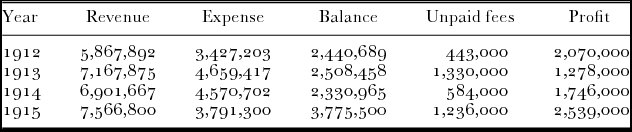
Despite the overall ‘backwardness’ of the system, Nakayama drew attention to the fact that some parts of the Chinese telecommunications sector seemed to generate handsome returns. He noted that the telegraph service produced large profits each year for the government. Even after deducting unpaid government telegram fees, the Chinese telegraph service registered around two million yuan profit per year (see Table 1).Footnote 33
Chinese telegraph finance, 1912–1915 (unit: Chinese dollar).
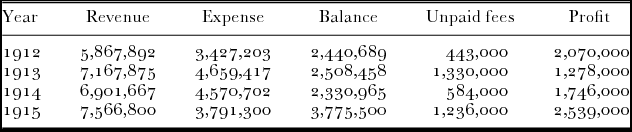
Note: 1) Only 11 months are taken into account in 1912 due to the change from the lunar to the Gregorian calendar.
2) Figures for 1915 were estimates as reporting was not completed.
Source: ‘Guanyi Zhongguo dianbao jinying fangzheng zhi yijian’, ZDY, pp. 24–25.
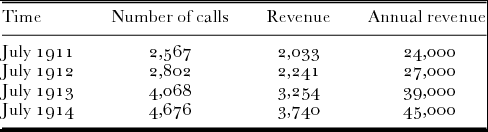
There were some parallels in telephone operations, although national figures were hard to come by. By the early 1910s, the only toll (long-distance) telephone service in China had already begun in the important corridor between the capital, Beijing, and the northern commercial centre, Tianjin. In a study of long-distance telephone management, submitted at the end of 1914, Nakayama again expressed his disagreement with the ‘telegraph first approach’ evident in government policies. Although the lack of government investment had left the long-distance telephone service similarly woefully underdeveloped in China, Nakayama showed that the Beijing-Tianjin inter-city telephone service was doing well financially. On that basis, he predicted that other routes—such as the soon-to-be started Nanjing-Shanghai long-distance telephone—would not become a drain on limited resources (see Table 2).Footnote 34
Traffic and revenue on the toll telephone in China (unit: Chinese dollar).
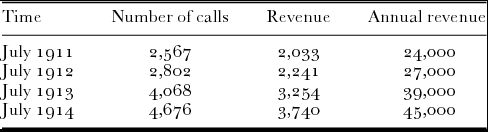
Source: ‘Changtu dianhua shiye jingying yijian’, November 1914, ZDY, p. 138.
To launch the massive telephone expansion that Nakayama proposed, large-scale, long-term investment needed to be made. For example, if China were to add 42,000 new telephone users in the six years starting from 1913, the total cost would reach 10,460,000 yuan. As to the source of the funding, Nakayama listed bonds and special accounts, as used by foreign countries, including Japan. More specifically, he recommended securing funding from banks without direct links to the telephone business and cautioned against obtaining loans from equipment suppliers since they were likely to impose conditions on the purchases which could lead to greater costs.Footnote 35
Technological improvement was the other theme in Nakayama's recommendations. In December 1913, the Ministry established a Telecommunications Technical Committee, to which Nakayama and three other foreign engineers were appointed as advisers. In the meantime, Nakayama taught technical subjects in the Ministry's Communications School. Although he occasionally touched upon technical aspects of telecommunications in his early reports and recommendations, in 1915 he submitted the first recommendation devoted to technical matters.
According to Nakayama, China lagged behind the latest telegraph technology by at least 30 years.Footnote 36 He was particularly concerned that whereas duplex and quadroplex telegraphy was in wide use overseas, China had not upgraded at all in the 30-plus years since telegraphy first started. In October 1915, he submitted a report which investigated the proposed installation of duplex telegraphic equipment in lines between Tianjin and Yingkou. Many of Nakayama's reports and recommendations on technical subjects dealt with specific telecommunications equipment such as the battery used in telecommunications exchanges, undulators (Morse recorder), and Wheatstone receivers. In each case, he expressed dissatisfaction with the current equipment used in China—adopted under the guidance of Western technical advisers—and recommended introducing newer technologies.Footnote 37 In his comprehensive report on the telegraph submitted in late 1915, Nakayama noted that technological improvement was necessary to reduce disruption and increase capacity on existing telegraph circuits.Footnote 38 In another report submitted later in 1918, Nakayama returned to the subject of improving transmission on telegraph circuits. This time he found that the Chinese use of the Morse connection was ‘backward’ as it needed more relays and lacked security and speed. He also compared the parallel connection method used only in China with the serial connection method used abroad, and found it ’shocking’ that the former was more costly and required more manpower.Footnote 39
In another 1915 report, entitled ‘Improving China's telecommunications technology’, Nakayama emphasized that technology was not just about nuts and bolts.Footnote 40 As an instructor in the Communications School, he was keenly aware of the human dimension in the successful functioning of telecommunications technology. According to an estimate from 1911, some 4,000 of the total of 9,500 Chinese employees in the telegraph service were dealing with technical matters.Footnote 41 From the beginning of the third year, he submitted several proposals for enhancing human skills in Chinese telecommunications. One of his very first technical reports was about setting up a course to train technicians to do maintenance work on wired circuits.Footnote 42 Later he emphasized the importance of training workers to measure electric currents on telegraph circuits. Even though the Ministry had ordered all Chinese telegraph bureaus to test circuits in February 1917 to overcome the problem of breakdowns and disruptions, only one bureau complied. As the lack of designated technicians in charge of line testing was the source of this problem, Nakayama recommended drawing up testing protocols for China and for him to be put in charge. Moreover, he recommended selecting individuals from among current employees or students to be assigned to telegraph stations.Footnote 43 Following well-established practice in Japan, Nakayama also recommended holding telegraphy contests in China to raise the skills levels of operators.Footnote 44
As seen above, Nakayama's reports and recommendations covered nearly every aspect of modern telecommunications. Nakayama offered several reasons for publishing these reports: first, they were concerned with the most important issues in Chinese telecommunications. Although he did his best in consulting best practice from overseas and tried to be fair and impartial in his analysis of conditions in China, Nakayama noted, since he did not fully understand China's ‘national circumstances’ (guoqing), he hoped that Chinese officials in charge of telecommunications would make use of his rich data and produce policies and regulations appropriate for China. Secondly, although many of his reports were incomplete, they raised important issues and served as the basis for further study. Thirdly, improvement or expansion in all communications enterprises not only needed to be firmly based in reality, they also needed to involve all employees at all levels. Hence, he believed that his references to the real experiences of the West and Japan would benefit everyone involved in telecommunications throughout China. Nakayama expressed his willingness to offer further assistance to anyone interested in learning more about telecommunications institutions, practice or statistical data in other countries. In short, Nakayama hoped that by translating and publishing these reports and recommendations in China, he would encourage further investigation by the Chinese involved and also influence the Chinese government at large.Footnote 45 Unmistakably, the tone of these reports was that of a loyal, dedicated adviser at the service of China.
Influence and constraint
Indeed, Nakayama's work earned much praise among the Chinese. Several Chinese officials wrote glowing introductions to his 1919 book. Noting the great war in Europe had just come to an end, Cao Rulin, the communications minister who had had close ties to Japan since his student days there, predicted that the twentieth century world was to be one of competition in the electrical industries, with telecommunications taking the leading role. Seconding Cao on the importance of telecommunications in war and economic activities, Lu Mengxiong, head of the Ministry's Communications School and also a former student in Japan, wondered why telecommunications in China had remained underdeveloped. Lu praised Nakayama's work teaching Chinese students at his school and conducting research at the same time. He urged fellow Chinese readers to learn from Nakayama's ‘seminal work’ in the field of electricity. Jiang Zhunwei, director general of telecommunications, noted that China had learned and borrowed much from Japan since it first opened to the outside world, and that he personally had seen advanced institutions and arts in Japan. Jiang compared Nakayama to the advisers who had served outside their own kingdoms in ancient China during the Spring and Autumn as well as the Warring States eras. Jiang emphasized that as an outsider Nakayama was particularly well placed to see things clearly and objectively.Footnote 46
This lavish praise aside, what impact did Nakayama's recommendations have on telecommunications in China? And in what other ways did Nakayama exert influence in China? By Nakayama's own 1915 account, quite a few of his suggestions regarding telecommunications had already been adopted by the Chinese government. They included methods of procurement, use of duplex telegraphy, as well as part of his advice concerning telephone expansion.Footnote 47 In 1916, the new Chinese minister of communications decided to set up a technical bureau, much along the lines suggested by Nakayama. Nakayama had proposed either keeping the existing 13 regional bureaus or setting up 17 new ones. In August 1916, the Ministry of Communications replaced the 13 telecommunications administration bureaus with 19 and concurrently appointed heads of large (first class) telegraph offices to oversee all telecommunications matters in these areas, which were mostly the equivalent size of a province.Footnote 48 Although the reorganization did not exactly follow every detail of Nakayama's recommendations, it reflected the general thrust of his proposals. In late 1917, the Ministry promulgated the regulations for the telegraph skills contest where telegraph operators who could send or receive telegrams above a certain speed on several types of equipment would be rewarded financially.Footnote 49
Limits of influence
Developments like these, however, might have resulted from just a few of Nakayama's recommendations. By the time they were published in China in early 1919, according to the Chinese director general of telecommunications, only 30 or 40 per cent of them had been adopted by the Chinese government. Acknowledging that the majority of his advice had not been acted upon, Nakayama cited a variety of reasons: some were due to financial constraints, others were the result of the incomplete nature of his studies. It may also be because his recommendations for improvement were too radical a departure from long-established practices in China.Footnote 50 The latter was certainly the case regarding his recommendation of combining postal and telegraph offices. Unlike Japan, China's postal administration was first set up under the Imperial Maritime Customs and run by a Briton. Even after its separation from the Maritime Customs, it was still headed by a European who was answerable to the Chinese Ministry of Communications. Although merging postal and telegraph offices made perfect sense for Japan, in China it turned out to be impossible to implement without assuming complete postal sovereignty.
The real obstacles to his efforts, as Nakayama revealed in his confidential reports to the Japanese government, were the persistence and even expansion of Western influence in China's telecommunications sector. As an adviser dispatched by the Japanese government, he was in constant communication with his superior at the Ministry of Communications in Tokyo via telegrams or letters. In 1916, 67 of his letters and reports, dating from mid-1913 to the end of 1915, were printed for internal use by the Japanese Ministry of Communications. As Tanaka Jirô, director general of telecommunications, wrote it in the Introduction, Nakayama was striving to facilitate cooperation between Japan and China in communication matters by acting as an intermediary between officials of both countries; he also seized the opportunity to promote Japan's national interest.Footnote 51 Compared with his reports and recommendations to the Chinese government, these confidential letters and reports often reveal a different perspective on China's telecommunications development as well as on how Japan ought to influence such development.
Nakayama was acutely aware of the fact that Japan was a latecomer in the area of China's telecommunications compared with Western countries. The Danes had been deeply involved in China's telegraphy since the Danish firm, the Great Northern Telegraph Company, brought submarine telegraphy to China in the early 1870s. The Danes were also instrumental in helping to start land-based telegraphy inside China, building telegraph lines and training most of China's telegraph operators and technicians. The Shanghai Telegraph School founded by Sheng Xuanhuai was largely run by the Danes, first under J.J. Bojesen and then F.N. Dresing, both of whom had worked for the Great Northern Telegraph Company. As Nakayama noted, the School's Chinese graduates went on to occupy many key mid-level positions in the Ministry of Communications and wielded considerable influence.
A theme running through Nakayama's confidential reports to Tokyo was the deep-seated influence of Westerners on telecommunications within the Chinese Ministry of Communications. The Danes occupied key advisory positions. Eleven of the 14 foreign telecommunications advisers in the Chinese government were Danes; they managed to keep the positions among themselves: when one of them retired, he was usually replaced by another Dane. Tellingly, as Nakayama found out later, even before his arrival, the Danish Minister to China had already inquired about him in a conversation with Japanese diplomats.Footnote 52 When Nakayama arrived in Beijing along with two other Japanese engineers, he found out they were far outnumbered by the Danes. There was one Dane in the Ministry and one at the Communications School, and nine others had been appointed as supervisors of local telegraph or telephone bureaus. At the end of July 1915, Nakayama was informed by Zhou Wanpeng, his superior, that a Danish engineer named Eriksen had proposed to place another Danish engineer, Julius V. Petersen, in charge of overall technical matters. In his confidential report to the Japanese government, Nakayama expressed indignation that the Danes managed to retain such influence on China's telecommunications as well as the trust of Chinese officials like Zhou, despite the fact that they had failed to bring new technologies such as duplex telegraphy to China.Footnote 53
This was not the first time Nakayama had expressed disappointment or frustration with the Western presence in Chinese telecommunications. For instance, during a stopover in Shanghai en route to his year-long study trip to Europe in 1904, Nakayama took note of the fact that the European-run telephone system in Shanghai was not all that advanced in terms of technology, equipment or operations. Although the equipment was imported from Sweden, he observed, it was not as good as that manufactured in Japan. What a pity, he reported to the Ministry, that such equipment was procured from a country tens of thousand miles away instead of nearby Japan.Footnote 54 Nakayama was convinced that although Western countries claimed to possess advanced technologies and facilities in telecommunications, in fact Japan had already caught up in many areas.
It was no coincidence that just as he complained to Tokyo about the Danish presence, Nakayama submitted a report to the Chinese government on how to improve technology in Chinese telecommunications. He listed examples where China's telecommunications had failed to catch up with new technologies (such as duplex telegraph and batteries) and bluntly blamed the foreign engineers previously employed by China. In the end, Nakayama concluded that instead of leaving all technical matters to Petersen, the Ministry should either hire a Japanese engineer who was knowledgeable about the latest telegraph technology for only 400 yuan per month or, if this would not work, Nakayama asked to be given the task himself. Nakayama took this bold step because he reasoned this would be the last opportunity to prevent the Danes from undermining his position.Footnote 55
If the Danes dominated land-based and submarine telegraphy in China, Nakayama discovered immediately after his arrival that the Germans were particularly aggressive in expanding their influence in the area of wireless telegraphy. He reported that the German company Telefunken had previously entertained a visiting ranking Qing official in Germany and presented him with several wireless sets as a gift. Telefunken then installed two wireless sets for the Chinese government in Beijing and Shanghai on a trial basis. When the New Army uprising broke out in Hankou, igniting the 1911 Revolution, Germany used these wireless stations to relay important information to the Manchu court in Beijing from its warship anchored in the Yangtze River near Hankou, which was also equipped with a wireless set. After the new Republican government was established, Telefunken lobbied China to build a wireless telegraphy network on the basis of five regional stations, all equipped with Telefunken technology.Footnote 56
Searching for influence
In addition to calling attention to Western competition in China, many of Nakayama's early confidential reports to Tokyo revealed how he sought to increase Japanese influence in the Chinese Ministry of Communications.Footnote 57 Among his superiors, Nakayama seemed to enjoy a close relationship with Long Jianzhang, the Chinese director general in charge of telecommunications. At the end of 1913, Long expressed a desire to send Ministry officials to Japan to study post and telecommunications. Nakayama saw this as a great opportunity and proposed to the Japanese government that they also invite Long. The Japanese minister in China, Yamaza Enjirô, expressed the hope that Nakayama would accompany Long on such a visit. Nakayama was very keen that such a visit should create a good impression of Japan's manufacturing technologies, especially pertaining to the telephone and telegraph. He also explained that Long seemed to be doing well in Chinese officialdom, having just become a member of the Political Council and Legislative Council. However, Beijing politics took a drastic turn and a new minister was appointed. Instead of visiting Japan with Nakayama, Long was transferred out of Beijing to become an official in the remote Guizhou Province.Footnote 58
Besides facilitating a number of Chinese students to study telecommunications engineering in Japan, Nakayama also kept a close eye on the status of those in the Ministry who had studied in Japan. One such official, Fu Runzhang, had been dispatched to investigate communications administration in Japan. Upon his return to China, Fu compiled a Handbook on Communications Administration and printed a thousand copies at his own expense. However, when the government did not purchase them as expected, Fu ended up distributing them among his own acquaintances, at a huge loss. His plan to publish a sequel devoted to postal and telecommunications regulations had to be abandoned.Footnote 59
Moreover, Lang Dunyan, the new minister of communications, had studied in the United States, as had the deputy minister. As a result, Nakayama gloomily predicted, those Japan-educated officials in the Ministry would have a hard time. Indeed, as the new appointments were announced, all but one of the six director generals had either studied in the United Kingdom or the United States or were well-versed in English. Zhou Wanpeng, the new director general in charge of telecommunications, was one of the first group of Chinese students to have been educated in the United States. However, the situation was not as dire as Nakayama had initially feared. Since Zhou had long been working in Shanghai and was not familiar with matters in the Ministry, he often asked Nakayama for advice. Still Nakayama described Zhou as having been influenced by old ideas about telegraphy as well as hostility towards Japan from Danish adviser, F.N. Dresing.Footnote 60
Ever sensitive to the presence of Western-trained Chinese officials and to the rising popular sentiment in China against Japan's diplomatic and military encroachment, Nakayama was careful to avoid the impression that he was only peddling Japanese influence. When his report submitted to the Chinese government concerning telephone expansion was printed and distributed in 1913, Nakayama refrained from explicitly referring to loans from Japanese banks and used a vague term ‘appropriate financial institutions’ in the text. It was only when he met the Chinese minister of communications in person that Nakayama specifically recommended Japan's Yokohama Specie Bank, a government bank established to handle foreign exchange matters.Footnote 61
Nakayama's caution was warranted. Caught off guard by the 1911 Revolution, Japan saw its influence in China suffer a temporary setback. Not only did it stand to lose some of the influence carefully nurtured in the Qing court, but Japan's ambivalence towards the new Republican government and its internal discord greatly complicated the bilateral relationship. It made some gains in extending Japanese-controlled telecommunications links to China, as in the Nagasaki-Shanghai submarine cable in 1915.Footnote 62 The Japanese military, on the other hand, sought to exploit the chaos after the fall of the Manchu Dynasty to push for greater influence inside China. Such actions, in turn, turned an awakened Chinese public against Japan.Footnote 63 For instance, after the Great War broke out in Europe and Japan declared war on Germany, it launched attacks on German possessions in the Shandong Peninsula and on German navy ships and took over German-owned submarine telegraph cables in Chinese waters. Japanese forces set up their own military communication lines and wireless facilities on Chinese soil without getting permission from the Chinese government, installed censors at Chinese telegraph offices in Shandong, and even shut some down. Despite protests from the Chinese government, Japan refused to back down, citing military necessity. These and other skirmishes between the two countries poisoned relations between Japan and China.Footnote 64
Moreover, as the Great War in Europe saw most Western powers preoccupied, the Japanese government saw an excellent opportunity to bolster its influence in China. The Okuma Shigenobu cabinet presented a set of demands to China's Yuan Shikai government in January 1915. The negotiations over these demands between the Japanese government (through its minister to China) and the Chinese government were carried out in secret in Beijing. The secrecy soon was revealed when the Chinese leaked the demands to the press in a desperate effort to win support and sympathy. The Twenty-One Demands, as they became known, were the most glaring example of Japan seeking to assume substantial control over the political and economic life of China, at the expense of other powers and Chinese sovereignty. One of the demands, in the most notorious Group Five, was that the presence of Japanese advisers in the Chinese government should be bolstered, especially in policy matters. On 7 May, the Japanese government presented the Chinese government with an ultimatum, threatening to use force if the latter refused to accept these demands, with Group Five removed.Footnote 65
As one of the top Japanese advisers in China, Nakayama was certainly not oblivious to the shifting atmosphere in relations between the two countries. He was in close contact with Japanese officials as well as businessmen and educators in China. His activities extended to charity work and education, as he served as the president of the Japanese Residents Association in Beijing. However, he seems to have weathered the turmoil in bilateral relations: his three-year contract was renewed four times, each renewal accompanied by a raise in salary. Between 1915 and 1922, he was decorated by the Chinese government five times.Footnote 66 As his efforts to extend Japan's influence in the Chinese telephone market demonstrate, however, his recommendations for improving Chinese telecommunications depended as much on political and economic conditions in China as they did on the policies and actions of Japan.
Telephone expansion and Japanese loans
From the start of his tenure in China, Nakayama identified the expansion of the telephone system as China's top priority. No doubt his familiarity with planning this in Japan played a part in this decision. More importantly, however, he argued that, given the influence of the Danes and the Germans on telegraphy in China, the telephone system offered Japan the best opportunity to expand its influence and compete against Western countries. This was also helped by the fact that three Japanese engineers had already been employed by the Chinese government, and currently two of the 14 foreign advisers employed at the Ministry were Japanese technicians working at the Beijing Central Telephone Office. By concentrating on modernizing the Chinese telephone system, Japan would demonstrate to the Chinese its technological capability and thus open further spheres of influence in the future.Footnote 67
The telephone system in Wuhan and beyond
Although Nakayama identified the telephone system in China as the most promising field for Japan to become involved in, he also made it clear that it was a highly fragmented and competitive market. In August 1913, Nakayama reported that the Chinese director general was interested in expanding the number of telephone subscribers in Beijing by 3,000, as proposed by the Japanese engineer, Tsujino. However, the change of cabinet derailed the plan and a more modest target of 1,200 was set. In addition, the decision was made that all equipment was to be imported from Germany via Siemens.Footnote 68 Nakayama lamented the loss for Japan and later reported the rumour that the new minister of communications had received a car from Siemens as a gift, and as a result they were given the contract for the new telephone exchange in Beijing.Footnote 69
In late 1913, Nakayama was asked by his Chinese superiors to investigate the expansion of the telephone system in the important commercial city of Wuhan. As in many other Chinese treaty port cities, the telephone service there started in the foreign settlement in Hankou—part of Wuhan—when German businessmen began installing telephone exchanges in 1901. In the following year the Chinese viceroy, Zhang Zhidong, set up two telephone exchanges and sold them to a Chinese businessman five years later.Footnote 70 In 1911, the New Army rebellion, which ignited the revolution that overthrew the Manchu Dynasty, led to fierce fighting and the telephone infrastructure suffered considerable damage. A Japanese telephone maker, the Oki Electric Company, had expressed interest in purchasing the local Chinese telephone company but negotiations did not go well. In the course of his investigations, Nakayama found out that the Chinese Ministry of Communications was ready to purchase the telephone company at 181,000 yuan. In telegrams and letters to Tokyo, Nakayama explained the importance of Wuhan as a major railway and shipping nexus in central China, and that if Japan was able to take over its telephone system, it would bring considerable benefits to Japan in the future. Supported by a few prominent Japanese in China, Nakayama argued that it was worth the risk for Japan to buy the Chinese telephone company.Footnote 71
Then, at the end of 1914, not long after the outbreak of the war in Europe, the Chinese director general of telecommunications put forward a proposal to take over the German-operated telephone system in Hankou. In March 1915, the Chinese Ministry of Communications announced plans to expand and upgrade the telephone facilities in Wuhan, of which Hankou was a part. It negotiated with Siemens and the authorities in the Foreign Settlement to buy out the German-operated telephones for 90,000 yuan. The move was welcomed by the British and French residents as the war in Europe had heightened their suspicions of the German-owned telephone company. Despite the antiquated facilities, Nakayama later complained, the Germans were able to take advantage of Chinese weakness and drove a hard bargain.Footnote 72
Soon afterwards, the Chinese government opened bidding to upgrade and expand Hankou's telephone facilities and connect the two parts of the city with toll telephone lines. Japanese companies—represented by a joint venture, the China-Japan Industrial Corporation and the giant trading firm Mitsui Bussan—entered the competition by bidding against three European and American companies, including the Western Electric Company and Ericsson, for a project that was estimated to be worth nearly a million yen. The Japanese companies won the bid. Japanese banks backed their bid with two loans, totalling over £185,000, to be repaid over 13 years. This was the first successful Japanese telecommunications loan to China. The work was completed within two years under the supervision of a former government engineer from Japan, and marked the first successful export of Japanese telecommunications products and skills to China.Footnote 73 Good timing and the advances in Japan's telecommunications industry, as well as behind-the-scenes efforts by Nakayama, enabled Japan to finally gain entry to the telecommunications market in China.
The developments in Wuhan coincided with Nakayama's tireless attempts to convince Beijing of the need to greatly expand the telephone system in China. In the months after he first found out about the plan for telephone expansion in Hankou in 1913, Nakayama drafted detailed recommendations for telephone expansion in China and submitted it to the Chinese government just as the budget was discussed in the Chinese parliament. To reduce competition from Western companies, Nakayama specifically advised the Chinese against securing a loan from a manufacturer, but without mentioning the German firm Siemens. Fearing that the Germans would find out about his recommendations, he even parcelled out the translations of his recommendations to several Chinese translators and had the translations done at his home in order to prevent leaks. Nevertheless, Siemens did hear about his plan and tried to approach the Japan-educated officials to find out more about them. Nakayama had 100 copies of his report made and distributed them to various government departments in Beijing.Footnote 74 Ultimately, his effort paid off—but only partially.
Telecommunications loans and their peril
The Hankou telephone deal demonstrated that in order to open the telephone market in China to Japan, it was essential to secure financial backing. Nakayama sent numerous telegrams and reports to the Japanese government concerning the telephone loans to China. He emphasized the importance of gaining access to the telephone market in China by offering Japanese government loans. First, he noted, as governments around the world realized the importance of the telephone to the state as well as its profitable nature, they began by buying out private companies, forcing the latter to look for new markets such as China and escalating the competition there. Second, although the loan currently under consideration was only for 10 million yuan, since Chinese telecommunications needed to undergo massive expansion, both the telephone and telegraph systems together would require loans of perhaps as much as 60 to 70 million yuan. Moreover, there were both direct and indirect benefits for Japan. Besides supplying telephone equipment, Japan could increase China's confidence in Japan, which would allow Japan to place Japanese in key communications positions in China.Footnote 75
Aware of the fact that Japan had been making loans to China to expand the railway, Nakayama added that telecommunications loans would cost much less than railway loans. Moreover, whereas the railway in China had fallen under separate spheres of influence by the foreign powers, the telephone network would be a national one. He noted, ‘as its impact is more widespread, [the] telephone is not inferior to [the] railway whether in terms of investment or in terms of acquiring rights in future. It is very appropriate for Japan.’ This reveals the hidden agenda behind Nakayama's call to the Chinese government for the national unification of the telephone system in China. He challenged the view held by some Japanese that this would create disadvantages for Japan, arguing that allowing local telephone systems to expand on their own would probably mean that they would seek loans from countries other than Japan and therefore hurt Japan's interests.Footnote 76
As he reiterated to Tokyo in a report in late 1914, telephone loans cost a lot less than railway loans, but tended to reap national benefits since the former generally enjoyed a national monopoly. According to him, the highly profitable telephone service was the best guarantee for telephone loans, and they could also be backed up by telegram revenue if necessary. He suggested that one of the conditions for the loan should be an insistence on using Japanese supervisors, but not necessarily on purchasing Japanese-made products. Underscoring the highly political nature of these loans, Nakayama noted that it was best to allow half the amount to be diverted for other purposes by the Chinese recipients.Footnote 77 Nakayama's proposal for further Japanese loans encountered initial resistance from inside the Japanese government. At one point the minister of finance, Takahashi Korekiyo, withheld permission on the grounds that it was a ‘political loan’ and thus too risky financially. Nakayama had to make a trip back to Japan to engage in personal lobbying in 1916, and ultimately he prevailed.Footnote 78
Although the Wuhan telephone deal was a modest success for Japan, political problems soon made similar deals difficult, if not impossible, to achieve. Just as Nakayama's approach seemed to be paying off, new obstacles appeared on the horizon. The changing political scene in Beijing as well as the shifting political mood in the country often made it difficult for Nakayama to pursue his goals. However, the greatest obstacles to Nakayama's efforts came, in fact, from Japan. The crisis caused by the Twenty-One Demands had a lasting impact on Chinese-Japanese relations. An indignant Chinese public designated 7 May 1915—the day on which Beijing accepted Japan's ultimatum—as a Day of National Humiliation. Alarmed by the worsening of relations, Nakayama submitted a confidential report to the Japanese Ministry of Communications in late 1916 setting out the precarious state of communications between Japan and China. He again blamed the situation on the dominant presence of Western countries in China, with their loans and the ‘clever means’ of the foreign telecommunications companies present in China. As a result, communication between Japan and China was under the control of a foreign influence, and Japan thus was ill-served in times of both war and peace. To remedy the situation, Nakayama again called for extending loans for telecommunications to the Chinese government.Footnote 79
Nakayama's repeated calls for Japanese loans to finance the expansion of telecommunications in China finally seemed to produce results. In late 1916 the China-Japan Industrial Corporation made several loans to China, totalling three million yen, secured against the property, revenue, and management of telephone bureaus in Beijing, Wuhan, and Tianjin. In return, the Corporation would enjoy preference over others in supplying telephone and telegraph equipment to China.Footnote 80 Nakayama's insistence on extending loans to China coincided with a shift in policy in the Japanese government due to the strong opposition—both at home and abroad—to the high-handed diplomacy exemplified by the Twenty-One Demands. Moreover, the economic boom in wartime Japan greatly enhanced Japan's financial standing, making it a creditor nation for the first time in modern history. As a result, the Terauchi Cabinet undertook ‘Yen loan’ diplomacy and extended to China's central and local governments several large loans, often with various strings attached. The loans—which became known collectively as the Nishihara Loans—were negotiated through a joint venture with the China Industrial Bank by a Japanese businessman, Nishihara Kamezô, who was a confidante of the prime minister, and Cao Rulin, a former deputy minister of communication who became China's finance minister.Footnote 81 One such loan was supposed to finance telegraph expansion in the northern and northwestern China border area as China prepared to join the Great War on the side of the Allies. Totalling 20 million yen and to be repaid by 1923, this loan was secured against a portion of Chinese government telecommunications revenue and properties. Japan was to enjoy priority in recommending advisers and engineers for the project.
In October 1918, the China-Japan Industrial Corporation signed another agreement with the Chinese government, providing the latter with 10 million yen for telephone expansion in China and to service old debts. At eight per cent interest, the loan was guaranteed by a combination of signing over the entire Chinese government's telephone operation rights and properties, wireless facilities in five locations, and their revenue as well as five million government treasury bonds. The agreement was for a seven-year term during which the Japanese companies—the Furukawa Trading Company and Sumitomo Electric Wires Company—would have the right to provide the telephone equipment.Footnote 82 If the expansion of the telephone system in China was to proceed smoothly, the Japanese expected a demand for between 30 to 40 million yen worth of equipment. The agreement stipulated that a Sino-Japanese joint venture would be established to manufacture cables and wire, and that it would receive preferential status and various guarantees from the Chinese government. The China Electric Company, capitalized at 1.5 million yen, was founded by the Chinese Ministry of Communications and the Japan-China Industrial Corporation in 1919.Footnote 83 In early 1920, the Chinese Ministry of Communication secured another loan for telegraph expansion, this time from Japan's East Asia Industrial Company, totalling 15 million yen, against the property and revenue of China's wired telegraph service. Once again, major Japanese telecommunications manufacturers like Sumitomo and Furukawa were included as suppliers.Footnote 84 Out of a total of 12 telecommunications loans obtained by the Chinese government between 1900 and 1921, five were made by Japan.Footnote 85
The concerns of Japan's Finance Minister Takahashi were not misplaced, however: by the late 1910s, the Chinese warlord government often diverted the money to military expenses or simply pocketed part of the loans, leading to the inevitable result of massive default.Footnote 86 Moreover, political instability and anti-Japanese boycotts took further tolls on Japanese investment. For instance, the joint venture with the China Electric Company in Shanghai was completed by the end of 1921, but production soon came to a halt.Footnote 87 Ultimately, these so-called telecommunications loans, like similarly arranged railway loans, brought little benefit to China's telecommunications service or railway expansion, but became a major problem in Japan-China relations in subsequent years. Totalling 2.2 billion yuan by 1925, the railway and telecommunications loans, borrowed both internally and from abroad by China's finance and communications ministries, became a huge burden on China's finances. A number of factors, chiefly the disruption of domestic economic activities due to the internecine civil wars as well as the refusal of local authorities to turn over revenue to Beijing, drastically reduced the government's revenue. By the early 1920s most of the loans were in default. When the Nationalist government was established in 1928, it initially refused to recognize the Nishihara Loans on the grounds that they were political in nature; eventually, however, it had to renegotiate the loans with Japan and other countries.Footnote 88
Nakayama played an important, albeit sometimes indirect or unintentional, part in creating this fiasco. By strongly championing the expansion of telecommunications in China to both Chinese and Japanese governments and demonstrating its great financial promise, Nakayama convinced sceptics, like Japan's Takahashi, about the viability of these loans. For Nakayama, expanding Japan's influence in Chinese telecommunications through economic and technological means was not only urgently needed, it was also desirable. Lastly, even though he was not always present at the negotiations, his presence inside the Chinese government and the connections he had cultivated over the years, no doubt facilitated the conclusion of these transactions. Ironically, after millions of yen poured into China, telecommunications in the country did not improve significantly, nor were Japanese interests advanced to any great extent.Footnote 89
Conclusion
This paper has sought to shed light on the development of telecommunications in early Republican China by focusing on foreign influence in that sector. The large forces of globalization, exemplified by the exchange of people, material, and knowledge, were influenced by political events such as war and revolution and often manifested in intensified international rivalry for market and influence in China. The Danes enjoyed well-established positions in submarine and land telegraphy, and sought to retain their influence in China through their close relationship with the Chinese telecommunications administration. Other countries, such as Britain, Germany, and the United States, sought to benefit from their technological and commercial strengths to enter the rapidly developing wireless and telephone market. These foreign actors saw that developing Chinese telecommunications and enhancing their own influence were not mutually exclusive. What was best for China was necessarily filtered through different prisms.
The Japanese prism—the focus of this paper—is particularly illuminating. Nakayama's extensive recommendations on the development of Chinese telecommunications were not completely impartial advice nor did they simply reflect the hidden agendas of Japanese expansion; they should be read as texts in which these two components were constantly negotiated and adjusted in response to perceived opportunities and challenges. Hence, Nakayama insisted that expanding the telephone service provided a most promising opportunity for both China and Japan. As Nakayama saw it, Japan's objectives were intertwined: to help China develop its modern infrastructure meant competing with Western countries for influence. This in turn rested on his dual conviction that such Western influence was harmful to Japan and that Japan was better prepared to help China modernize its communications infrastructure.
Ironically, as Nakayama candidly admitted, Japan's influence on the development of Chinese telecommunications was undermined by Japan's own actions. On the day following the Japanese government's presentation of the ultimatum to the Chinese government in mid-1915, Nakayama submitted a long memo to Tokyo entitled ‘Japan-China Relations and Advisers’. Since China and Japan belonged to the ‘same culture and same race,’ he noted, the Japanese were best suited to advise the Chinese. At the same time, ‘so long as Japan pursued continental expansion’ as its national policy, the interests of Japan and China were bound to come into conflict at some stage. Nakayama went so far as to admit that he could understand the Chinese preference for hiring advisers from a country that had few conflicts of interest with China. As a result, when his Chinese superior repeatedly complained to him about the aggressive actions by the Japanese military in the areas of telegraphy or the wireless, Nakayama had no better recourse than simply to change the subject.Footnote 90
To be sure, Nakayama's prism had limitations: what the Chinese wanted for telecommunications development was almost always explained as a function of foreign influence—either from the West and Japan—and, in case of the former, often through unsavoury means. Moreover, being at the political centre in the mid-1910s skewed Nakayama's perspectives to some extent. While his reports contained considerable information about politicking in Beijing, the fact of the increasing autonomy of local authorities outside the capital was largely missing from his reports.
The timing of the publication of Nakayama's recommendations and reports to the Chinese government in early 1919 was especially fortuitous: in May that year, widespread protests broke out in China over the transfer to Japan of German concessions in Shandong. Several top Chinese officials with strong Japanese ties, including Cao Rulin (who wrote an introduction to Nakayama's book), were condemned in China as traitors to the nation. With these patrons sidelined in Chinese politics, Nakayama's influence also started to wane, even though he stayed on in the job for almost another decade. Indeed, as Japan increasingly became seen as the leading threat to Chinese sovereignty,Footnote 91 the very idea that a Japanese adviser dispatched by his government could offer useful advice for the modernization of China's infrastructure became increasingly unimaginable.
Nevertheless, Nakayama's extensive reports and observations provide a useful prism through which to examine the development of China's telecommunications industry in general and foreign influence in early Republican China in particular. Nakayama highlighted some of the structural factors affecting China's telecommunications developments well into the late 1920s. An unstable central government, with constant personnel shuffling and deteriorating finances, intensified international rivalry, as well as a rising popular sentiment against Japan, all became dominant features in the 1910s and continued to influence the development of China's telecommunications well into the next decade. Ultimately Nakayama's prism confirms that the development of the information infrastructure in modern China was as much shaped by technological and economic forces as by political and diplomatic ones.