Introduction
As global sporting events, marathons are popular among both competitive and recreational runners, attracting tens of thousands of participants, with thousands more attending as spectators.Reference Chang, Shih and Chen1 An estimated 507,600 participants ran marathons across the United States in 2016, the largest of which attracted up to 40,000 participants and several times as many spectators, all concentrated together in the event location.2 Given participation numbers of this scale, marathon events qualify as “mass-participation events,” traditionally defined as an event of over 1,000 participants gathered at a specific location for a specific amount of time.Reference Locoh-Donou, Guofen, Welcher, Berry, O’Connor and Brady3 Mass-participation events have implications for the medical systems in the communities that host the events. Reference Tan, Tan, Kok, Lee and Lee4–Reference Chiampas and Jaworski6
Due to the concentration of people at these events, medical resources can become overwhelmed if a significant number of people are injured or become ill as a result of their participation, which can in turn delay public safety response to medical emergencies in the wider community.Reference Jena, Mann, Wedlund and Olenski7 An event’s over-reliance on local Emergency Medical Services (EMS) can result in a diminished capacity to serve the general public, thus depriving the host community of needed medical care. Reference Brunko8,Reference De Lorenzo9 As a result, medical planners for marathons and similar mass-participation events need to provide care that does not rely exclusively on local EMS and hospital systems for determining the degree of medical care needed for event participants.Reference Boyle, De Lorenzo and Garrison10
While the majority of injuries at mass-participation events are minor, underscoring the importance of aid stations and first aid personnel at these events, some mass-participation events also carry an increased risk for producing major traumatic injuries or illnesses. Reference Arbon, Bridgewater and Smith11–Reference Vukmir and Paris13 In the latter case, medical care should be provided in a two-tier system: emergency care to respond to serious injury and on-site care for the treatment of minor complaints. Reference De Lorenzo9,Reference Hnatow and Gordon14 Finally, it is necessary to recognize that disasters and mass-casualty incidents are also a possibility at mass-participation events. Therefore, on-site medical systems must also be prepared to enact acute response activities and implement disaster response plans. Reference Boyle, De Lorenzo and Garrison10,Reference McCarthy, Chiampas, Malik, Cole, Lindeman and Adams15 A medical system that can cope with these medical demands will reduce the overall burden to the local EMS and hospital system, improve the quality of care provided to event participants, and ensure that the general public is not adversely affected by the presence of a large-scale event in the community.
Within the world of mass-participation events, marathons present their own distinct challenges in providing on-site medical care to participants. Like other mass-participation events, marathon races exhibit an abundance of minor injuries with a far smaller amount of emergency cases.Reference Satterthwaite, Larmer, Gardiner and Norton16 However, marathon events exhibit their own distinct injury patterns. Musculoskeletal injuries and cases of heat exhaustion and hyperthermia are regular occurrences. Reference Chang, Shih and Chen1,Reference Tan, Tan, Kok, Lee and Lee4,Reference Roberts17–Reference Robertson, Nicholl, Williams and Rossi19 The large prevalence of musculoskeletal injuries necessitates easily-accessible orthopedic, podiatric, and trauma care, while the threat of heat exhaustion and hyperthermia require a unique set of on-site treatment protocols otherwise seen only at events in high-temperature climates. The unique medical care demands present during marathon events add to the challenge of providing appropriate medical care required of mass-participation events.
Given the unique care-giving challenges characteristic of marathon events, data collection and analysis provide an avenue for improving the quality of medical care. There is limited research in mass-event medicine that describes the use of data collection and analysis for determining the efficacy of provided health care. This study incorporates a multi-year effort of digital data collection of health care needs of runners and participants reflecting patient care demands and diagnosis patterns. Improved understanding of injury patterns and health care demands during the Bank of America Chicago Marathon (Chicago, Illinois USA) can help improve operational planning of health services, staff, and resources for future marathons with the ultimate aim to provide higher quality care in mass-participation contexts. With this in mind, this study aims to describe the prehospital care demands present in the Bank of America Chicago Marathon and the unique demands that this places on marathon operations. A multi-year analysis incorporating geographic, demographic, and time-series data was conducted with data provided by a novel digital data collection system designed to capture medical records for patient encounters. The findings discussed in this study contribute to the literature on marathon and event medicine by providing demographic and injury patterns of the Chicago Marathon and highlighting health operations metrics that play a crucial role in providing high-quality prehospital care to marathon runners and the public.
Background
The Bank of America Chicago Marathon
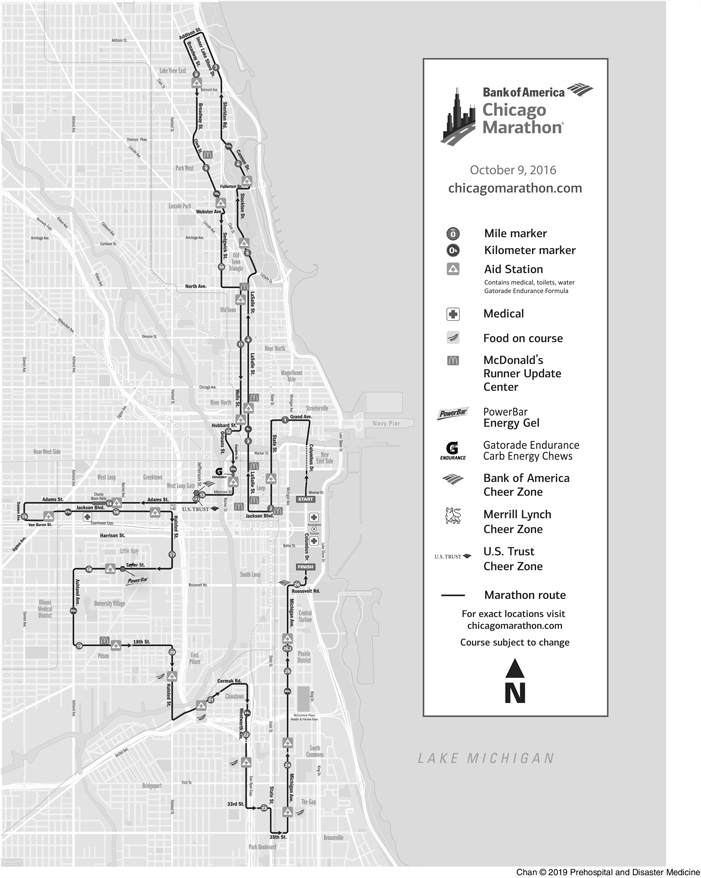
The Bank of America Chicago Marathon is a course that traverses 29 neighborhoods around the city. It hosts tens of thousands of participants each year and provides a race-day experience to public spectators estimated at over 1.7 million people.20 Overseeing the mass-participation sporting event is a team of event officials, EMS dispatchers, medical professionals, and security personnel working out of a centrally located facility known as Forward Command. Situated in a secured area between the start and finish lines, Forward Command is responsible for coordinating emergency services, on-site logistics, and medical services. Medical services, in turn, is comprised of 25 on-site health facilities; three central medical tents (Balbo Medical, Jackson Medical, and Podiatry); and 22 aid station medical facilities which are situated along the marathon course (Figure 1). The overall course distance of 26.2 miles has aid stations which are positioned at approximately every mile to two miles. Aid stations provide brief medical assessments, oral fluids, and low-acuity interventions for runners. These locations also provide a means of rapid transport to the main medical tents for participants in need of advanced-level care.
(color version available online as Supplementary Material). 2016 Bank of America Chicago Marathon Map.

The Chicago Model
In order to effectively manage the contingencies of the event described above, Bank of America Chicago Marathon officials created a comprehensive and multidisciplinary approach to mass-participation, on-site prehospital care that provides rapid medical care to injured participants. This process has come to be known as the Chicago Model. Reference McCarthy, Chiampas, Malik, Cole, Lindeman and Adams15,Reference Basdere, Ross, Chan, Mehrotra, Smilowitz and Chiampas21
The approach allows event officials to deliver prehospital medical care from podiatric care and emergency services coordination to event logistics and data analysis. Coordination of these resources and personnel are provided through Forward Command, a centralized facility housing representatives from a multitude of agencies, including Chicago Event Management (Chicago, Illinois USA), public and private EMS systems, local hospitals, the Chicago police and fire departments, a medical director, and university research teams responsible for visualization of runner timing and medical resource demand.
Medical data are recorded as patients are treated using a tool called the Medical Patient Tracking System (MPTS), a form of electronic medical record. Data are collected from patients as they are treated in event medical facilities and are aggregated and presented through a visualization program in Forward Command that displays information about course conditions, runner position, and medical resource demands. Post-marathon, retrospective analysis of these data aid in future marathon planning to improve logistics and medical care at subsequent marathons.
Prehospital Care
The system of medical care delivery in place at the Bank of America Chicago Marathon follows the two major types of care that are generally offered at mass-participation events: emergency care and treatment of minor complaints.Reference De Lorenzo9 Care is provided through a system of single and multi-tier care sites consisting of medical aid stations (single-tier care sites) and medical tents (multi-tier care sites). Multi-tier sites provide multiple levels of care (eg, podiatric, general, urgent, and intensive care unit [ICU]-level care) while also functioning as a triage center for patients that might require transfer to the local hospital system. In comparison, single-tier care sites are largely responsible for providing non-emergent treatment of minor injuries such as aches or skin abrasions. If medical staff at aid stations determine that a higher level of care is necessary, medical transport vehicles (ie, ambulances) transfer patients from aid stations to medical tents, or even directly to local hospitals for the most severe cases. This comprehensive, on-site prehospital care approach aims to reduce the overall burden to the local EMS and hospital systems.
Methods
Patient records from five Bank of America Chicago Marathon events spanning years 2012 through 2016 were collected from aid stations and medical tents and were retrospectively reviewed.
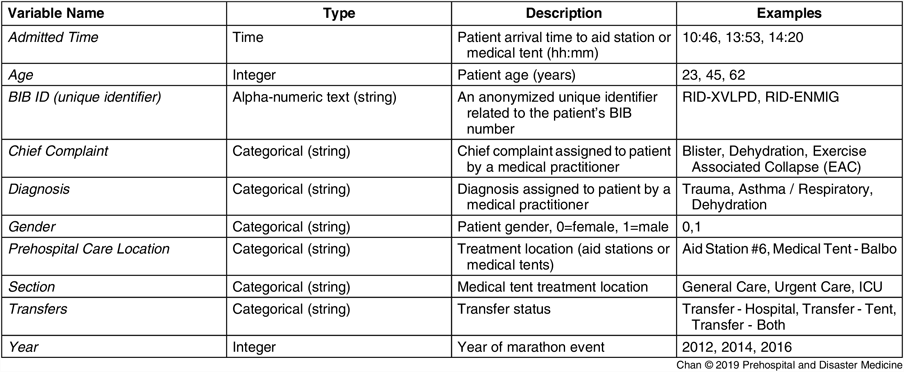
All patients seen by medical personnel at on-site prehospital care locations (aid stations or medical tents) were included in the analysis. All computerized records were included in the analysis and exported from the MPTS database for each year during the study period. Arrival, transfer, and injury profile information from patient encounters was digitally recorded using the MPTS. Demographic information, clinical information, arrival and departure times, care locations, and transport status were collected using mobile tablets with survey forms to directly enter patient information. Categories of chief complaint, diagnosis, and other variable were options on the survey forms, including one write-in option. Patient encounter information was entered into the MPTS by medical personnel or trained volunteers across all on-site prehospital care locations. Data recorded in the MPTS were entered upon patient discharge at the medical tents (Balbo, Jackson, and Podiatry), while medical records from other on-site prehospital care locations (eg, aid stations) were first recorded on paper forms and later transcribed into the MPTS following the closing of each location (Table 1).
Study Variables

Abbreviation: ICU, intensive care unit.
Study protocols were approved by the Northwestern University Institutional Review Board (Evanston, Illinois USA), with patient information de-identified prior to analysis. Multi-year data were prepared for analysis through a collaborative research team of Bank of America Chicago Marathon operations specialists, the event’s medical director, university researchers, and data analysts. Medical records provided by the MPTS were analyzed retrospectively using the statistical programming language R (The R Foundation; online software), with visualizations provided in the results section generated using the ggplot2 package.
The MPTS data collection quality improved yearly from 633 recorded visits in 2012 to 1,905 recorded visits in 2016. Demographic and injury profiles from all on-site prehospital patient encounters were reported. Overall patient demographics were reported, including age and gender, and patient transfers between on-site facilities and local hospitals were recorded. Chief complaint and diagnosis were recorded. High-acuity care, provided in the ICU section of medical tents, was also reported and analyzed. Patient presentation rates (PPRs), mean transfer rates (MTRs), and ambulance transfer rates (ATRs) were calculated based upon previously published definitions and formulas. Reference Roberts17,Reference Crouse and Beattie22,Reference Tang, Kraus, Brill, Shahan, Ness and Scheulen23
Results
Overview
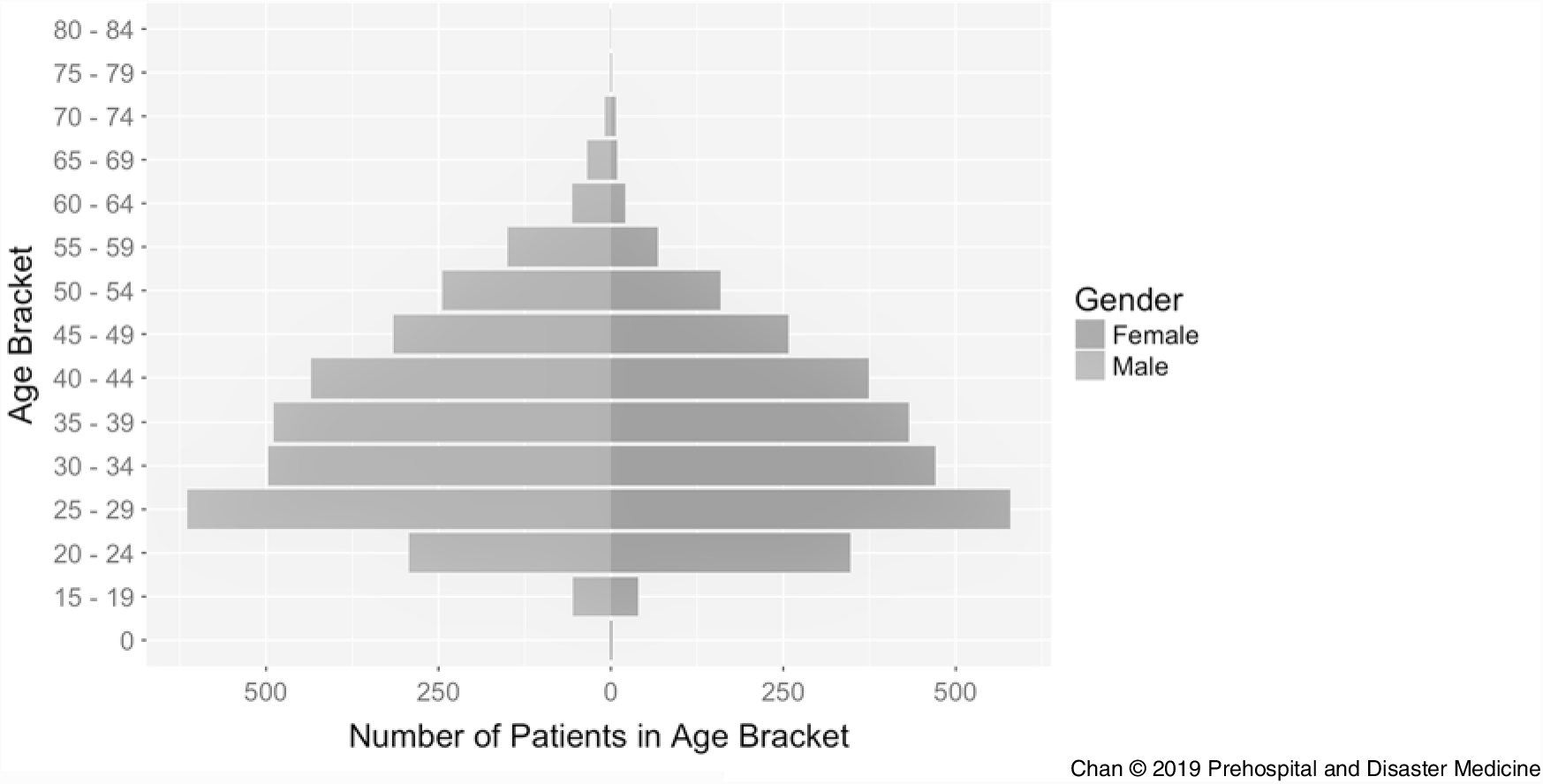
During the study period (2012-2016), a total of 6,009 records were available for patients seen in event medical facilities. For recorded medical encounters, 53.3% were male and 46.2% were female, with a mean age of 36.3 years (range = 12 to 80 years of age). The overwhelming majority of patient encounters were marathon participants (98.4%; n = 5,916). Only 93 individuals (1.5%) represented patient encounters from the general public. The PPR was 29.2 patients per 1,000 participants. Figure 2 illustrates that the majority of patient ages ranged from 20 to 54 years. Advanced age runners (ie, age > 65 years) were mostly male (n = 45).
Patient Population Pyramid, 2012-2016 (n = 6,009).

Patient Visits to Prehospital Care Locations
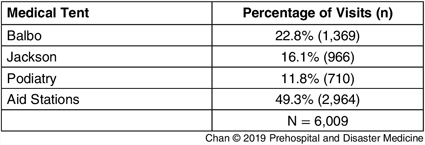
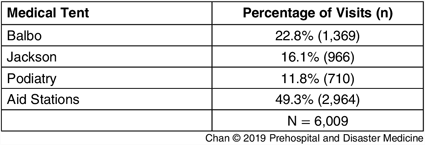
There was a total of 6,009 patient encounters to on-site prehospital medical locations from 2012 to 2016 reflecting a total of 5,195 unique individuals. In total, 814 individuals visited an on-site health facility more than once during the race. Three primary medical tents (Balbo, Jackson, and Podiatry) provided care for a total of 3,045 patients over the five-year study period, representing 50.7% of all patient encounters. Numbers and percentages of patients seen at each site over the study period are shown in Table 2. Twenty-one aid stations provided lower acuity care for 2,964 (49.3%) patient encounters over the study period. One hundred fifty-seven encounters occurred in the on-site ICU-level (located within medical tents), representing 2.6% of all patient encounters; 56.1% of those treated in the ICU were males while 43.9% were female, with a mean age of 39.2 years.
Percentage of Visits to On-Site Health Facilities (2012-2016)
Patient Transfers from On-Site Prehospital Locations to City Prehospital System—
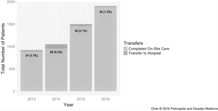
Patient transfers, defined as a transfer from an aid station to a medical tent, between medical tents, or from an on-site location to a local hospital, were analyzed from 2013 to 2016 (n = 5,376). The 2012 patient transfer data were unavailable for analysis. Two hundred forty-three (4.5%) patient encounters were transferred to a higher level of care, as defined by the variable “transfer status” in Table 1. In total, 48.6% of transfer patients were female while 51.4% were male, with a mean age of 37.1 years. The mean age of transfer was 0.74 years higher than the overall mean age of all patients. Two hundred and four patient encounters from 2013 to 2016 were transported from aid stations and medical tents to 12 different Chicago city hospitals, representing 3.4% of all 5,376 patient encounters (Figure 3), and a mean ATR of 1.12 (CI 0.64-1.6).
On-Site Care vs Hospital Transfers, 2013-2016 (n = 5,376).

On-Site Patient Care Demands—
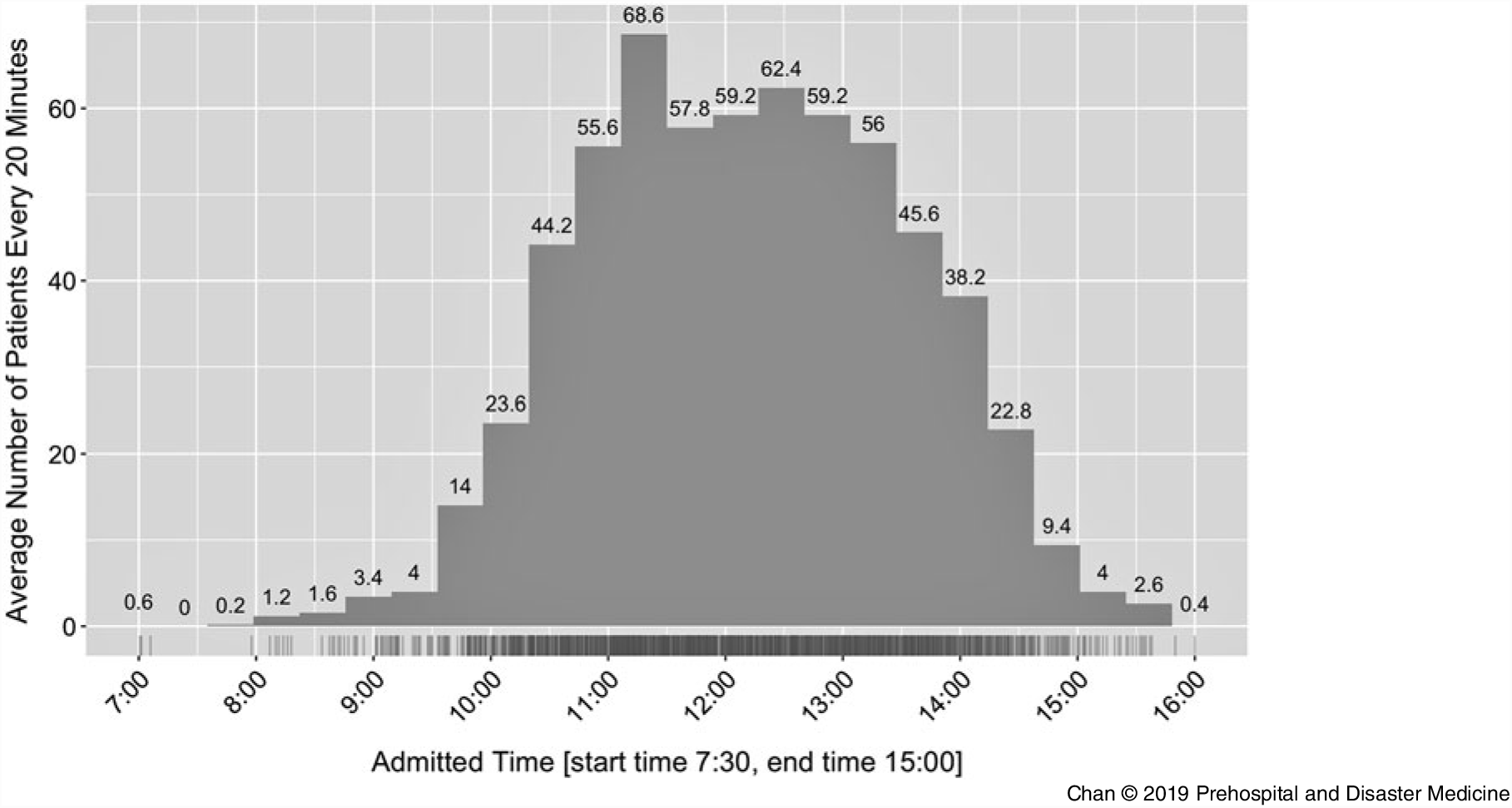
Patient care demand, measured as the mean number of patients seen every 20 minutes during race day, was analyzed for the three primary medical tents: Balbo, Jackson, and Podiatry. Increases in patient visits begin around at 8:30am, with peak patient demands observed from 11:00am to 12:30pm (Figure 4). Balbo medical tent received (n = 1,369) 45.0% of all patient visits to medical tents during the study period compared to (n = 966) 32.7% at the Jackson tent and (n = 710) 23.3% at the Podiatry tent. The proportion of patients presenting to medical tents each year is depicted in Supplement Figure 1 (available online only).
Average Number of Patients Seen in 20-Minute Intervals at Medical Tents (2012-2016). Note: All medical tents include the Balbo, Jackson, and Podiatry medical tents. Admitted time intervals = 20 min from 7:00 to 16:00.

Diagnosis Patterns—
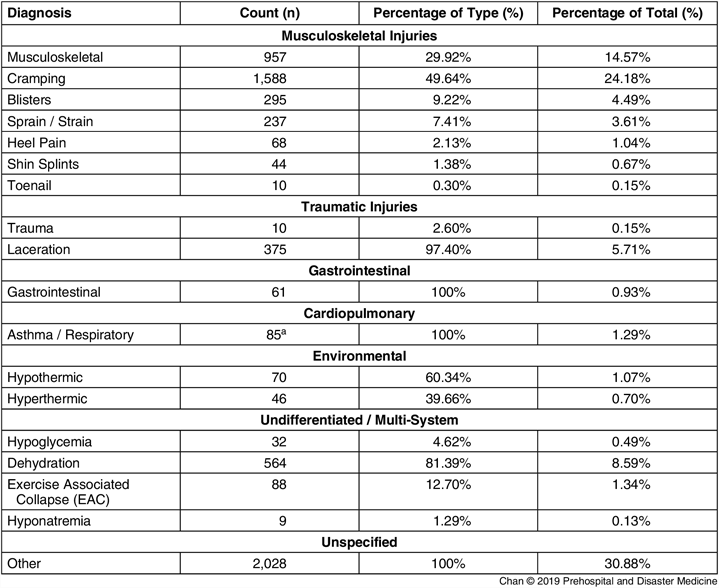
Injury and illness diagnosis types were documented by medical providers in MPTS from 2012 to 2016 and analyzed for all patient encounters at medical tents and aid stations; a single patient encounter could include multiple diagnoses. There were 6,567 total diagnoses from 2012 to 2016 organized into musculoskeletal, traumatic, gastrointestinal, cardiopulmonary, environmental, and undifferentiated/multi-system diagnosis (Table 3).
Patient Diagnoses
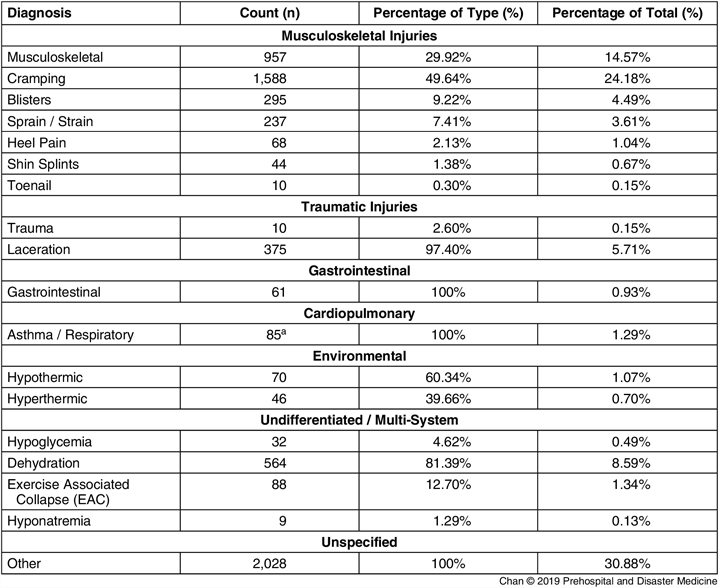
a Asthma / respiratory diagnosis data unavailable for 2015.
Musculoskeletal and Traumatic Injuries
A total of 3,199 (48.7%) patients were diagnosed with a generalized musculoskeletal injury, often further specified as “cramping” (n = 1,588; 24.2%); 957 (14.6%) diagnoses remained unspecified. Less common prehospital diagnosis (n = 359; 5.5%) included “strain,” “heel pain,” “shin splints,” and “toenail.” Lacerations were the most common among trauma diagnosis (n = 375; 5.7%) occurring frequently on the extremities and also reported on the face.
“Blister” diagnosis accounted for 295 (4.5%) patient encounters, but due to data collection errors in 2015, this finding is likely an under-estimation of the overall number of blister injuries during the five-year period.
Undifferentiated, Multi-System, and Environmental-Related Diagnosis
Six hundred thirty-three (10.6%) of all patient diagnoses were classified as undifferentiated or multi-system (eg, dehydration, electrolyte abnormalities, hypoglycemia, and exercise-associated collapse [EAC]). Dehydration was the most common diagnosis in this group (n = 564; 8.6%), followed by EAC (n = 88; 1.3%), hypoglycemia (n = 32; 0.5%), and hyponatremia (n = 9; 0.1%).
Environmentally related diagnosis (eg, hyperthermia or hypothermia) were diagnosed in 116 (1.8%) patients during the study period. Seventy (1.1%) patients were diagnosed with hypothermia and 46 (0.7%) patients were diagnosed with hyperthermia.
Discussion
This study is one of the largest recent retrospective descriptive studies of marathon medical care that describes patient demographic and injury patterns, transfer of care, and demands for patient care during race day. Previous studies have reported a prevalence of two percent to eight percent of participants who seek medical care, similar to this study. Reference Roberts17, Reference Tang, Kraus, Brill, Shahan, Ness and Scheulen23 In addition, the PPR of 28.17 (CI 25.6–30.8) is similar to PPR in other studies. Reference Turris, Lund, Mui, Wang, Lewis and Gutman24 The percentage of self-reported female runners was higher than previously reported studies, but is similar to Tang, et al. Reference Chang, Shih and Chen1,Reference Roberts17,Reference Tang, Kraus, Brill, Shahan, Ness and Scheulen23
Almost one-half of on-site health care was provided at aid stations along the course route. This study’s findings may represent an under-estimate of actual aid station encounters due to lower quality data collection methods in earlier years. This study indicates that placing staff and volunteers, resources, and transport systems along the route to provide medical care should be considered in addition to finish line medical tents. These findings support existing literature that recommend planning for and committing resources to meet patient demands along the marathon course. Reference Nguyen, Milsten and Cushman5,Reference Chiampas and Jaworski6 Future studies are necessary to determine the peak demand time of patient needs along the course among all 22 aid stations to assist marathon event planners in planning future marathon events.
Medical tent services were distributed among three locations at the co-located start and end line (Figure 1) with average peak demand times between 11:00am-12:30pm on race day. Analysis of the five-year retrospective data by tents indicates that all locations are utilized for patient care with some variation from year to year. Injury pattern analysis shows that the most common diagnosis among patients were musculoskeletal injuries. These findings are similar to prior published reports. Reference Roberts17,Reference Lopes, Hespanhol Junior, Yeung and Oliveira Pena Costa25
Specialized Clinical Services
Specialized services such as podiatry care and ICU care at the Chicago Marathon are meeting the unique health care needs of this mass-participation runner event. At the Chicago Marathon, a dedicated podiatry care tent with specialized clinicians can provide care of musculoskeletal injuries. Year over year, patients consistently utilize the Podiatry tent for services. Though many other patients with musculoskeletal injuries are cared for in the general care tents (eg, Balbo and Jackson), the cohort of care services appears to improve the efficient and quality of care for these types of patient injuries. Specialized prehospital ICU care was provided to 157 patients during the study period representing 2.6% of all patient encounters. Additional studies are necessary to determine the outcomes and impact of prehospital ICU-level care at marathons. Specialized care at medical tents with trained staff can help not only streamline clinical services, but also provide optimal patient care to minimize morbidity and mortality.
Transport Services
This is the first study to investigate a five-year period of on-site and external transport practices of a large-scale marathon. In total, 4.5% of all patients required transport from an aid station to medical tent, and only 3.4% of all patients were transported to a local hospital. The MTR of 1.38 for the study period was higher than previously reported studies, but lower than the MTR (1.55) reported by Tang, et al. Reference Roberts17, Reference Turris, Lund, Mui, Wang, Lewis and Gutman24 Comparisons of MTR and ATR rates have been reported in previous literature, but they lack standardized definitions, limiting broader conclusions on quality of care and outcomes.Reference Turris, Lund, Mui, Wang, Lewis and Gutman24 Potential contributing factors for higher MTRs/ATRs found in this five-year study may be attributed to the much larger runner population in this study compared to other studies. Other contributing factors may be due to a lack of current standards to measure transfers within a race location.Reference Turris, Lund, Mui, Wang, Lewis and Gutman24
Studies have shown that during marathon events, demand on local health care services can result in delayed transport times for Medicare patients with acute myocardial infarctions or cardiac arrest.Reference Jena, Mann, Wedlund and Olenski7 The Chicago Model of the Bank of America Chicago Marathon aims to provide high-quality, on-site health services with medical professionals, logisticians, and communication specialists at Forward Command. The centralized, high-quality coordination system provides an enjoyable runner and attendee experience while mitigating additional demands on the local public health system and city services during race day.
The Power of Digital Data Collection
The MPTS integrates into the Chicago Model and provides a flexible digital means of collecting and visualizing patient information during race day. The longitudinal collection of operational, demographic, and clinical care information through the MPTS system provides near real-time opportunities for improving marathon operations, medical care, and disaster preparedness efforts. These data also provide an opportunity to retrospectively analyze the trends, as shown in this study. For example, patterns of when runners will present for medical care sites are now available and can help medical volunteers anticipate increased workloads and race event staff prepare and respond to resources demands at care locations.
Limitations
This five-year retrospective analysis provides an overview of patient presentations, transport patterns, and operational peak times for care needs. Despite efforts to maintain high-quality data entry by volunteers and staff at the Chicago Marathon, data integrity issues likely influenced the study’s findings. For example, patient transport data were unavailable for analysis in 2012 due to the evolving digital data collection system, but subsequent years were included. Future studies from the Chicago Marathon will provide more robust knowledge on transport patterns. Database errors also occurred in 2015 resulting in the misclassification of certain categories of patient diagnoses, specifically the diagnosis of “blisters,” which subsequently have been re-assigned to the “other” category. As a result, there is likely an under-estimation of “blisters” diagnosis during the study period. The overall five-year findings of a predominance of musculoskeletal injuries are similar to the existing published literature.
The digital data collection process improved in quality and specificity over the years. Annual training, data variable revisions to improve accuracy, and increasing data literacy helped improve the integrity of data. In particular, reliance on paper-based entry, which may have resulted in missing records, has decreased over the years. Although the absence of these records likely does not significantly alter the overall demographic profile of patients or patterns of injury, the results reported will deviate slightly from their true values.
The study findings do not represent individuals who did not seek medical care at the marathon, but who may have presented to local hospitals. Therefore, generalizing the on-site diagnosis presented in this study to a more comprehensive epidemiologic picture of injury patterns cannot be achieved. Lastly, the results reported here are not generalizable to other marathon events or mass-participation religious or music events. The reported results are influenced by course profile, environmental conditions, event duration, participant demographics, and other factors unique to this event. Additional multi-site studies are necessary to compare marathon events and more in-depth studies are necessary to measure the relationship of weather conditions, altitudes, course design, and volunteer and medical staffing to patient care and outcomes.
Conclusion
The Bank of America Chicago Marathon is one of the largest marathon events in the world. This study’s five-year retrospective review of 6,009 patient encounters shows almost an equal proportion of care was provided along the marathon route at single-tier care sites (eg, aid stations) as in multi-tiered medical tent sites at the finish line. Patient presentations were predominantly musculoskeletal in nature, along with a smaller proportion of high-acuity clinical presentations (eg, EAC, hypothermia, and hyperthermia). A small percentage of patients were transferred to higher levels of care either on-site at the marathon or transferred to city hospitals. Peak demand times for patient care at the medical tents occurred between 11:00am-12:30pm on race day. Mass-participation marathon events, such as the Bank of America Chicago Marathon, can provide a safe and positive competitive and recreational runner experience with resources, planning, and coordination frameworks such as those provided through the Chicago Model. Analysis of patient care, transport, and demographic data can assist in strengthening the knowledge and evidence to improve marathon medical and operational activities.
Conflicts of interest
none
Acknowledgements
The authors gratefully acknowledge the support of Chicago Event Management (CEM; Chicago, Illinois USA) and Bank of America (Charlotte, North Carolina USA).
Supplementary Material
To view supplementary material for this article, please visit https://doi.org/10.1017/S1049023X19004345