Lakes, which are at the interface of the atmosphere, biosphere, and terrestrial hydrosphere, are good media for revealing regional and even global climate and environmental changes over time (Wang Reference Wang1991; Shen et al. Reference Shen, Zhang and Xia2001; Li et al. Reference Li, Wang and Xia2004; Zhang et al. Reference Zhang, Chen, Shang and Cao2004a, Reference Zhang, Zhao, Yang, Wang and Eglintonb; Chen et al. Reference Chen, Huang and Yang2006). In recent decades, an important method for studying changes in the palaeoclimatic environment has been to analyse the characteristics of inorganic and/or organic geochemical indicators in lake sediments and then reconstruct past regional climatic and environmental changes (Fu & Sheng Reference Fu and Sheng1992; Meters & Ishiwatari Reference Meters and Ishiwatari1993; Chen et al. Reference Chen, Wan, Chen and Huang1999; Li & Zhu Reference Li and Zhu2002; Meters Reference Meters2003; Zhang et al. Reference Zhang, Chen, Shang and Cao2004a, Reference Zhang, Zhao, Yang, Wang and Eglintonb; Ou et al. Reference Ou, Wang, Yang, Wang, Gao and Xu2012). In terms of organic geochemistry, there have been many reports on palaeoclimate/environmental reconstruction using biomarkers (Wang et al. Reference Grice, Schaeffer, Schwark and Maxwell2006, Reference Wang, Fang, Bai, Xi, Zhang and Wang2007). In terms of inorganic geochemistry, Mössbauer spectroscopy (MBS) is a recent significant method developed and utilised in the study of lake environments (Lacombe & Schurer Reference Lacombe and Schurer1990; Zheng et al. Reference Zheng, Takano, Kuno and Matsuo2001, Reference Zheng, Suzuki, Takahashi, Shimizu, Kuno and Matsuo2006; Kuno et al. Reference Kuno, Zheng, Matsuo, Takano, Shi and Wang2002; Qi et al. Reference Qi, Ensling and Guetlich2004a, Reference Qi, Ensling and Guetlichb; Dyar et al. Reference Dyar, Agresti, Schaefer, Grant and Sklute2006; Zheng Reference Zheng2008) and it has produced good results in reconstructions of sedimentary environments and the palaeoclimate. Iron (Fe) is a major constituent of the Earth's crust, being found in rocks, soils, and sediments, and exists in various chemical forms and oxidation states. Therefore, it may serve as an indicator for determining chemical changes that may have occurred in the environment and elucidating their mechanisms. MBS is a powerful nuclear technique for characterising the chemical states of elements, particularly Fe (Dyar et al. Reference Dyar, Agresti, Schaefer, Grant and Sklute2006); therefore, 57Fe MBS has frequently been applied to determine various Fe species and research the palaeoclimate and palaeoenvironment (Lacombe & Schurer Reference Lacombe and Schurer1990; Zheng et al. Reference Zheng, Takano, Kuno and Matsuo2001; Kuno et al. Reference Kuno, Zheng, Matsuo, Takano, Shi and Wang2002).
Multi-technology synthesis research is a developing trend in scientific research; however, few studies have combined biomarkers with MBS. Therefore, taking Luguhu Lake as an example, this study used MBS and gas chromatography–mass spectrometry (GC–MS) to study the relationship between Fe speciation and biomarkers, and discussed the palaeoenvironmental significance thereof, so as to provide a basis for the further development of Fe environmental indicators as a method of studying the palaeoclimate and palaeoenvironment.
1. Sample and experimental
1.1. Geological setting and samples
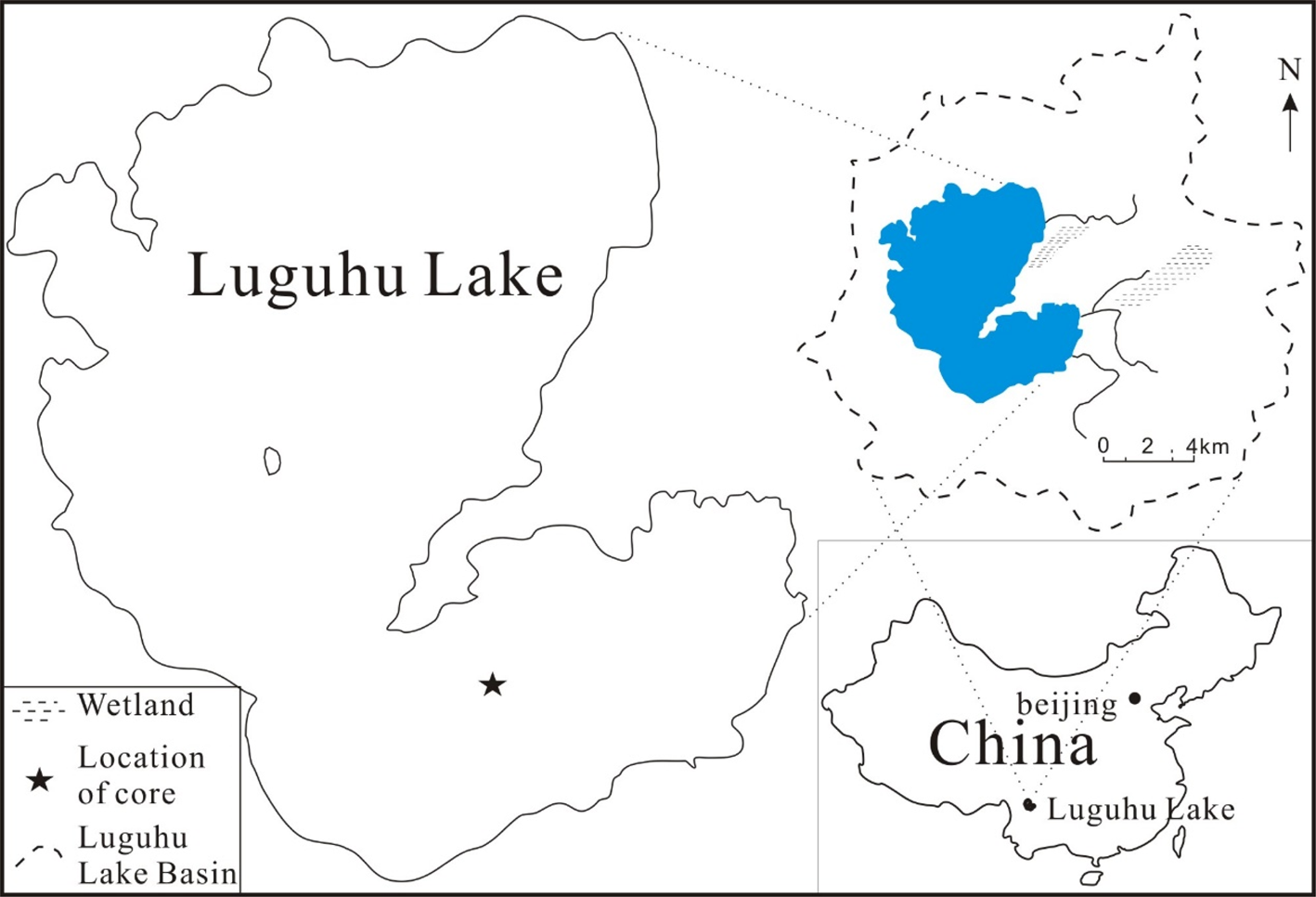
Luguhu Lake [27°40′–27°44′N, 100°46′–100°55′E] is located at the junction of Sichuan and Yunnan provinces in SW China. In terms of geological structure, Luguhu Lake is located at the southeastern margin of the Qinghai–Tibet Plateau. Influenced by the intersection of the SW monsoon in the Indian Ocean and SE monsoon in the Pacific Ocean, its formation and evolution are closely related to the environmental evolution of the southeastern margin of the Qinghai–Tibet Plateau (Li & Xu Reference Li and Xu1979; Zeng et al. Reference Zeng, Wang and Yang2012). Therefore, Luguhu Lake is an important site for palaeoenvironmental records on the Qinghai–Tibet Plateau.
The lake has an area of 50.5 km2 within a drainage area of 216 km2 and can be divided geographically into northern and southern parts (Zheng et al. Reference Zheng, Zhang, Ming, Chang, Meng, Zhang, Liu and Shen2014). The water surface of the lake is 2692.2 m; the maximum (average) water depth in the southern part is 105.3 (38.4 m) (Zheng et al. Reference Zheng, Zhang, Ming, Chang, Meng, Zhang, Liu and Shen2014). The measured multi-year average annual temperature is 12.9 °C, and multi-year average summer and winter temperatures are 18.9 °C and 5.4 °C, respectively (Zeng et al. Reference Zeng, Wang and Yang2012). One of its significant inflow sources is rainfall, and the average annual level in its region is 730–850 mm, with the greatest amount of rain falling between June and October (Zeng et al. Reference Zeng, Wang and Yang2012). Water flows out through a wetland located at the southeastern end of Luguhu Lake from June to December (Zheng et al. Reference Zheng, Zhang, Ming, Chang, Meng, Zhang, Liu and Shen2014). There is relatively little human activity in the vicinity of the lake.
The main core used in this study was taken from the southern part of the lake, at [27°40′49″N, 100°48′ E] where the water depth was 44.5 m (Fig. 1). At the same time, two parallel cores were drilled and split in the laboratory based on field records; changes in their physical characteristics, magnetisation, total organic carbon and calcium carbonate content, and an 880 cm continuous core were obtained. The core sample consisted of black silt rich in organic material, including complete leaves, and with no obvious change in its physical characteristics.
Location of Luguhu Lake in China, morphological characteristics, and coring site (solid pentagram).

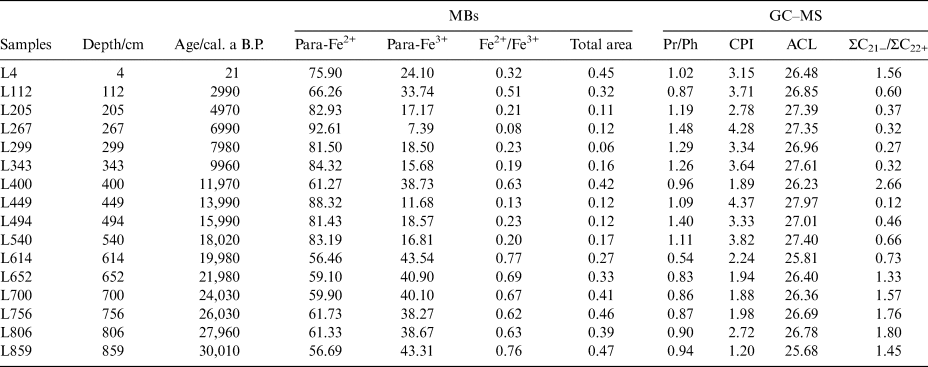
Sixteen core samples were collected. Each sample was accelerator mass spectrometry (AMS) 14C dated via linear interpolation (Table 1), based on the AMS 14C dating results of 16 leaf residues from different depths (Zheng et al. Reference Zheng, Zhang, Ming, Chang, Meng, Zhang, Liu and Shen2014).
The depth, age, and experimental results of Luguhu Lake samples. Abbreviations: CPI = carbon preference index, calculated as 1/2 × [(C25 + C27 + C29 + C31 + C33) / (C24 + C26 + C28 + C30 + C32) + (C25 + C27 + C29 + C31 + C33) / (C26 + C28 + C30 + C32 + C34)]; ACL = average chain length, calculated as (23 × C23 + 25 × C25 + 27 × C27 + 29 × C29 + 31 × C31 + 33 × C33) / (C23 + C25 + C27 + C29 + C31 + C33).

1.2. Experimental
The 16 samples were first freeze-dried and then crushed, without any chemical pretreatment, using an agate mortar and pestle. Then, each sample was divided into two and one sample each was for the 57Fe Mössbauer measurement and biomarker analysis.
For the 57Fe Mössbauer measurement, about 150 mg powdered samples of 80–100 mesh were gently pressed into polyethylene sample holders 16 mm in diameter and 1 mm thick. The sample discs thus prepared contained approximately 5 mg Fe cm−2, a sufficient quantity with which to utilise relative peak areas as a measure of the distribution of corresponding Fe-bearing compounds. The MBS was performed with a WissEl Bench-MB500 with a γ-ray source of 0.927 GBq 57Co/Rh. Samples were measured at room temperature (15 °C). Curve fitting of the resulting spectra was performed using WisseEl WinNormos software with the assumption that the spectra were composed of peaks with Lorentzian line shapes. The half-widths (HW) and peak areas within each quadrupole doublet were constrained to be equal. Isomer shifts (IS) were expressed with respect to the centroid of the spectrum of metallic Fe foil.
The powdered samples were extracted with chloroform for 72 h using a Soxhlet apparatus. The extracts of the samples were deasphalted by precipitation with n-hexane and then filtered. The deasphalted maltenes were fractionated by column chromatography on alumina over silica gel. Saturated hydrocarbons, aromatic hydrocarbons, and non-hydrocarbons were obtained by successive elution with n-hexane, toluene, and a chloroform:methanol (98:2) mixture, respectively. The saturated hydrocarbons were analysed with a 6890N GC–5973N mass spectrometer (used for GC–MS) equipped with an HP-5 capillary column (30 m × 0.32 mm i.d., 0.25 μm film). The GC oven temperature was programmed to increase from 80 to 300 °C at 4 °C min−1, and then maintained at 300 °C for 30 min. Helium was used as the carrier gas. The MS conditions were electronic ignition ionisation at 70 eV with an ion source temperature of 250 °C. The GC–MS system was operated in the full scan mode and scanned from 20–550 m z−1.
2. Results
2.1. Deposition rate
The depth and age of the sample shows that the sediment deposition rate in Luguhu Lake ranged from 0.19 to 0.47 mm a−1 over the past 30,000 years, and that the average deposition rate was 0.28 mm a−1 (Table 2). Wang et al. (Reference Wang, Yang, Anderson, Zhang and Li2014) suggested a stable sediment deposition rate of 0.27 mm a−1 for ~30,500–10,000 years in the northern basin of Luguhu Lake. In addition, Jiang et al. (Reference Jiang, Wang and Yang1998) and Zhang et al. (Reference Zhang, Chen, Shang and Cao2004a, Reference Zhang, Zhao, Yang, Wang and Eglintonb) calculated the deposition rate of the nearby Heqing Basin to be 0.27 mm a−1 and 0.23 mm a−1, respectively, and these values are similar to the deposition rate of Luguhu Lake obtained in this study.
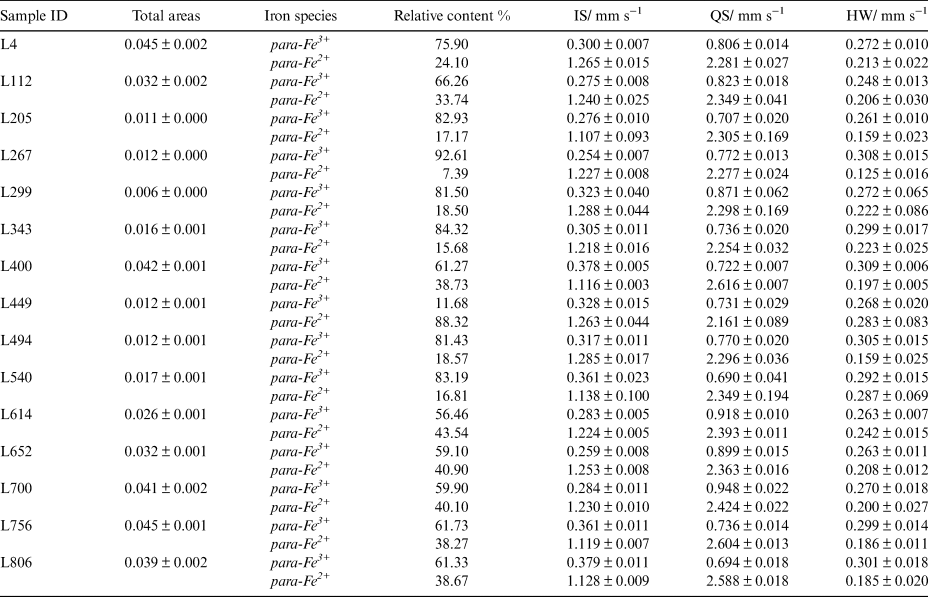
MBS results of Luguhu Lake samples. Abbreviations: para-Fe3+ = paramagnetic high-spin Fe3+; para-Fe2+ = paramagnetic high-spin Fe2+; Total area = total MBS peak areas; IS = isomer shift; QS = quadruple splitting; HW = half-width.

The depth–age model established shows that the average deposition rate of each section is similar, and the degree of variation in the rate of deposition in Luguhu Lake over the last 30,000 years is low, indicating that Luguhu Lake has a relatively stable the sediment source. The exogenous components of the sediment imported into the lake generally come from weathered products around the lake basin (Zheng et al. Reference Zheng, Zhang, Ming, Chang, Meng, Zhang, Liu and Shen2014).
2.2. Results of MBS
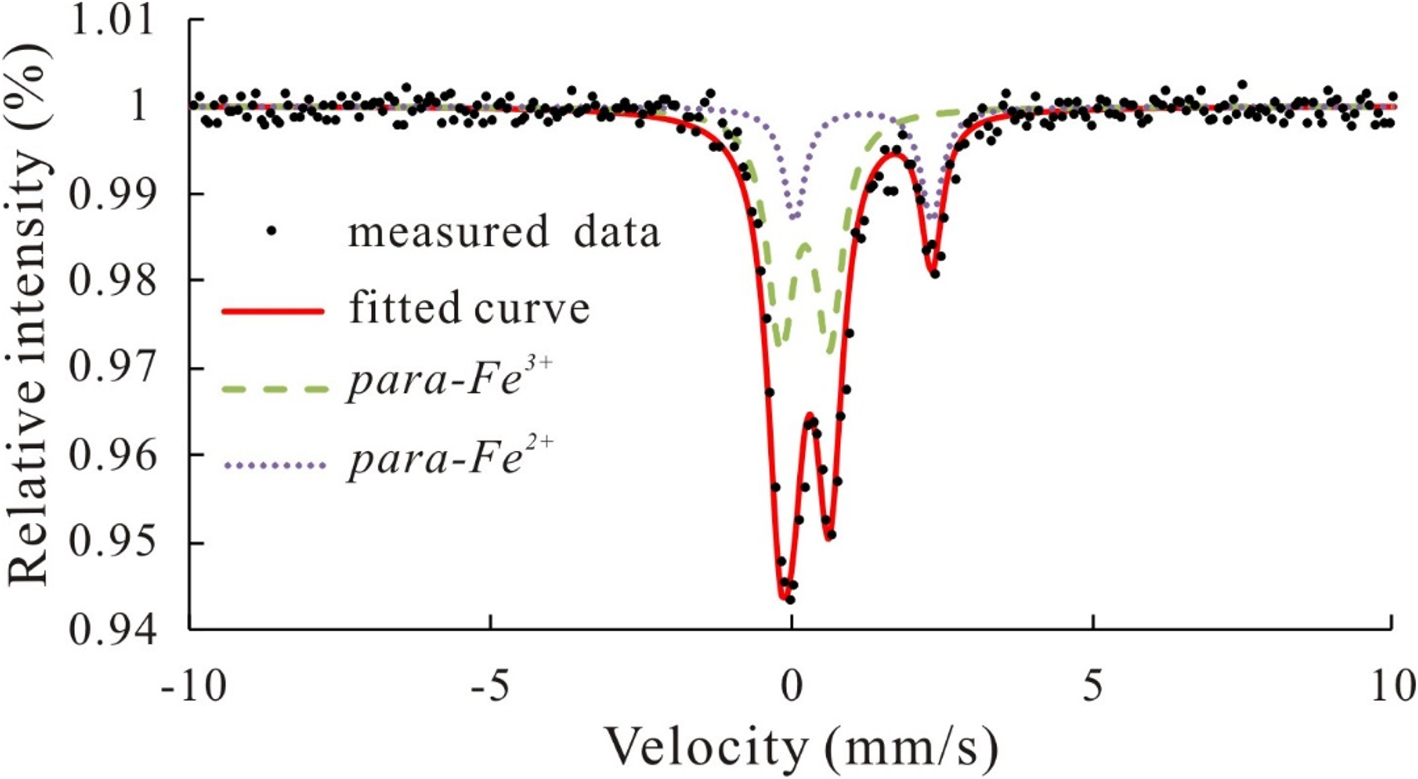
Fe has a special significance, geochemically, particularly in the process of supergene geochemistry in which it plays an irreplaceable role (Hilton et al. Reference Hilton, Long, Chapman and Lishman1986; Van der Claar et al. Reference Van der Claar, Slomp, Rancourt, Lang and Raaphorst2005). The Mössbauer technique is a powerful means to study Fe speciation. Different Fe species are represented by different groups of absorption peaks (Fig. 2). By identifying the position and relative area of a peaks, its chemical species and the relative ratio of each Fe species can be determined (Zheng et al. Reference Zheng, Takano, Kuno and Matsuo2001; Dyar et al. Reference Dyar, Agresti, Schaefer, Grant and Sklute2006; Zheng Reference Zheng2008).
The MBS of typical Luguhu Lake samples and their fitting results.

Two overlapping doublets are observed via MBS. Curve fitting with these two components is reliable because the Chi-square values are sufficiently low. MBS of different Fe species show different sets of sharp absorption peaks; therefore, each species can be identified and quantified by its peak position and corresponding peak area (Dyar et al. Reference Dyar, Agresti, Schaefer, Grant and Sklute2006). A doublet with a small quadrupole split (IS = 0.254–0.378; quadruple splitting (QS) = 0.690–0.948; half-width (HW) = 0.248–0.309) is ascribed to paramagnetic high-spin Fe3+ (para-Fe3+), presumably originating from clay minerals and/or hydrated Fe(III) oxides (Manning & Ash Reference Manning and Ash1979). A doublet with a large quadrupole split (IS = 1.107–1.288; QS = 2.161–2.616; HW = 0.125–0.283) is attributed to paramagnetic high-spin Fe2+ (para-Fe2+), mainly due to the contribution of divalent Fe in chlorite (Zheng et al. Reference Zheng, Takano, Kuno and Matsuo2001; Dyar et al. Reference Dyar, Agresti, Schaefer, Grant and Sklute2006). Table 2 shows the MBS test results for the sediment from Luguhu Lake.
2.2.1. Fe2+/Fe3+ ratio of the sampled sediments
The Fe2+–Fe3+ system often acts as an electron carrier; therefore, the relative abundance of Fe2+ and Fe3+ and the Fe2+/Fe3+ ratio in modern and ancient sediments should be a good indicator for estimating sedimentary redox conditions (Stumm & Sulzberger Reference Stumm and Sulzberger1992; Voegelin et al. Reference Voegelin, Senn, Kaegi, Hug and Mangold2013). The Fe2+/Fe3+ values are listed in Table 1. The relative abundance of Fe2+ and Fe3+ is 7.39–43.54% and 56.46–92.61%, respectively. Based on the oxidation states of Fe, the Fe2+/Fe3+ ratio of 0.08–0.76, being less than 1, suggests that the redox environment of Luguhu Lake is weakly oxidative.
2.2.2. Total area of the spectra obtained via MBS
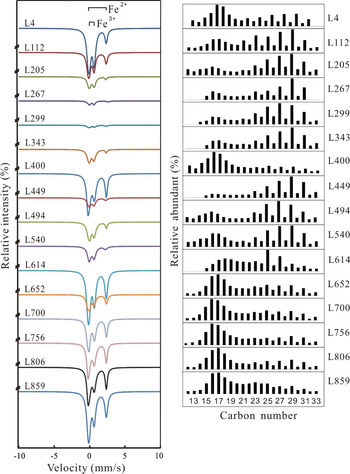
Noted that the total area normalised by sample weights is proportional to the total Fe concentrations of samples when ~5 mg Fe cm−2 is mounted on disk-holders. Zheng et al. (Reference Zheng, Takano, Kuno and Matsuo2001) suggest that the total areas have a correlation coefficient of 0.940 (R 2 = 0.883), with total Fe determined by inductively coupled plasma-atomic emission spectrometer so that under appropriate conditions, the total area can be used as a measure of the total Fe concentrations in the sediment (Zheng et al. Reference Zheng, Takano, Kuno and Matsuo2001). Table 2 lists the values of the total area. Each spectrum of the MBS in Figure 3 uses the same vertical scale to directly embody the value of the total area.
MBS (left) and n-alkanes distribution (right) of the vertical sections. The upper indicator bars show the peak positions of each Fe species.

2.3. n-Alkanes and isoprenoid alkanes
n-alkanes and isoprenoid alkanes were detected in abundance in sediment samples from Luguhu Lake. The distribution of the n-alkanes from these samples, based on their carbon number, is shown in Figure 3, with the relative abundance of the n-alkanes normalised to 100. The figure shows that the carbon numbers of the n-alkanes range from C12 to C33 and that the distribution is bimodal, with C16, C17, and C18 alkanes being the major compounds within the C11–C21 range, and C25, C27, and C29 alkanes are the major compounds within the C22–C33 range. In general, short-chain n-alkanes (C11–C20) originate mainly from algae and bacteria (Han & Calvin Reference Han and Calvin1969; Grice et al. Reference Grice, Schaeffer, Schwark and Maxwell1997), mid-chain n-alkanes such as C23 and C25 can be produced by submerged aquatic plants (Baas et al. Reference Baas, Pancost, Geel and Sinninghe Damsté2000; Ficken et al. Reference Ficken, Li, Swain and Eglinton2000), and long chain n-alkanes (C25–C35) are derived principally from the epicuticular wax of the leaves of higher vascular plants (Eglinton & Hamilton Reference Eglinton and Hamilton1967; Rielley et al. Reference Rielley, Collier, Jones and Eglinton1991). Therefore, the n-alkane distribution in the geological samples can serve as a record of the sources of organic matter (Han & Calvin Reference Han and Calvin1969) and palaeoenvironmental conditions (Wang et al. Reference Wang, Fang, Bai, Xi, Yang and Wang2006, Reference Wang, Fang, Bai, Xi, Zhang and Wang2007, Reference Wang, Fang, Zhang, Li, Wu, He, Gao, Meng and Wang2010, Reference Wang, Fang, Zhang, Li, Wu, He, Gao, Meng and Wang2012).
The carbon preference index (CPI) (Wang et al. Reference Wang, Fang, Bai, Xi, Zhang and Wang2007, Reference Wang, Fang, Zhang, Li, Wu, He, Gao, Meng and Wang2012), average chain length (ACL) (Poynter & Eglinton Reference Poynter and Eglinton1990; Heiri & Millet Reference Heiri and Millet2005; Zhang et al. Reference Zhang, Yang, Zhang, Lei, Chang, Yang and Fan2008), and ΣC21−/ΣC22+ (Wang et al. Reference Wang, Fang, Bai, Xi, Zhang and Wang2007, Reference Wang, Fang, Zhang, Li, Wu, He, Gao, Meng and Wang2010, Reference Wang, Fang, Zhang, Li, Wu, He, Gao, Meng and Wang2012) – which have been widely used to indicate the sources of organic matter and palaeoenvironmental conditions with strong reliability in studies of modern lake sediment – were used to distinguish the contributions of different n-alkane sources. The resulting CPI, ACL, and ΣC21−/ΣC22+ values (Table 1) are 1.20–4.37, 25.68–27.97, and 0.12–2.66, respectively. This indicates that the organic matter in the lake sediments were derived mainly from higher terrestrial plants and lower aquatic organisms.
Pristane (Pr) and phytane (Ph) were present in the studied samples. The Pr/Ph ratio is generally thought to be a guide to depositional conditions, where values less than 1 represent anoxic conditions and values greater than 1 reflect oxic conditions (Didyk et al. Reference Didyk, Simoneit, Brassell and Eglinton1978). The Pr/Ph of the samples studied varied from 0.54 to 1.48 (Table 1), with an average value of 1.04, suggesting a weak oxidation environment in Luguhu Lake. This is consistent with the results obtained via the MBS.
3. Discussion
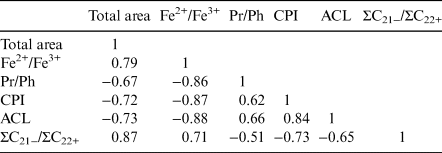
Organising the Fe2+/Fe3+, total area, CPI, ACL, ΣC21−/ΣC22+, and Pr/Ph in a correlation matrix offers an overview of the associations among these indexes and facilitates further discussion of their meaning (Table 3). All these parameters were divided into three classes as follows: (a) total area, (b) redox environmental indicators such as Fe2+/Fe3+ and Pr/Ph, and (c) original parameters of the parent materials, including those represented by the ACL.
Correlation coefficients between different parameters.

Strong correlations among all six indexes suggest that both Fe2+/Fe3+ and total area are potential indexes for palaeoenvironmental conditions.
3.1. Fe2+/Fe3+ vs Pr/Ph
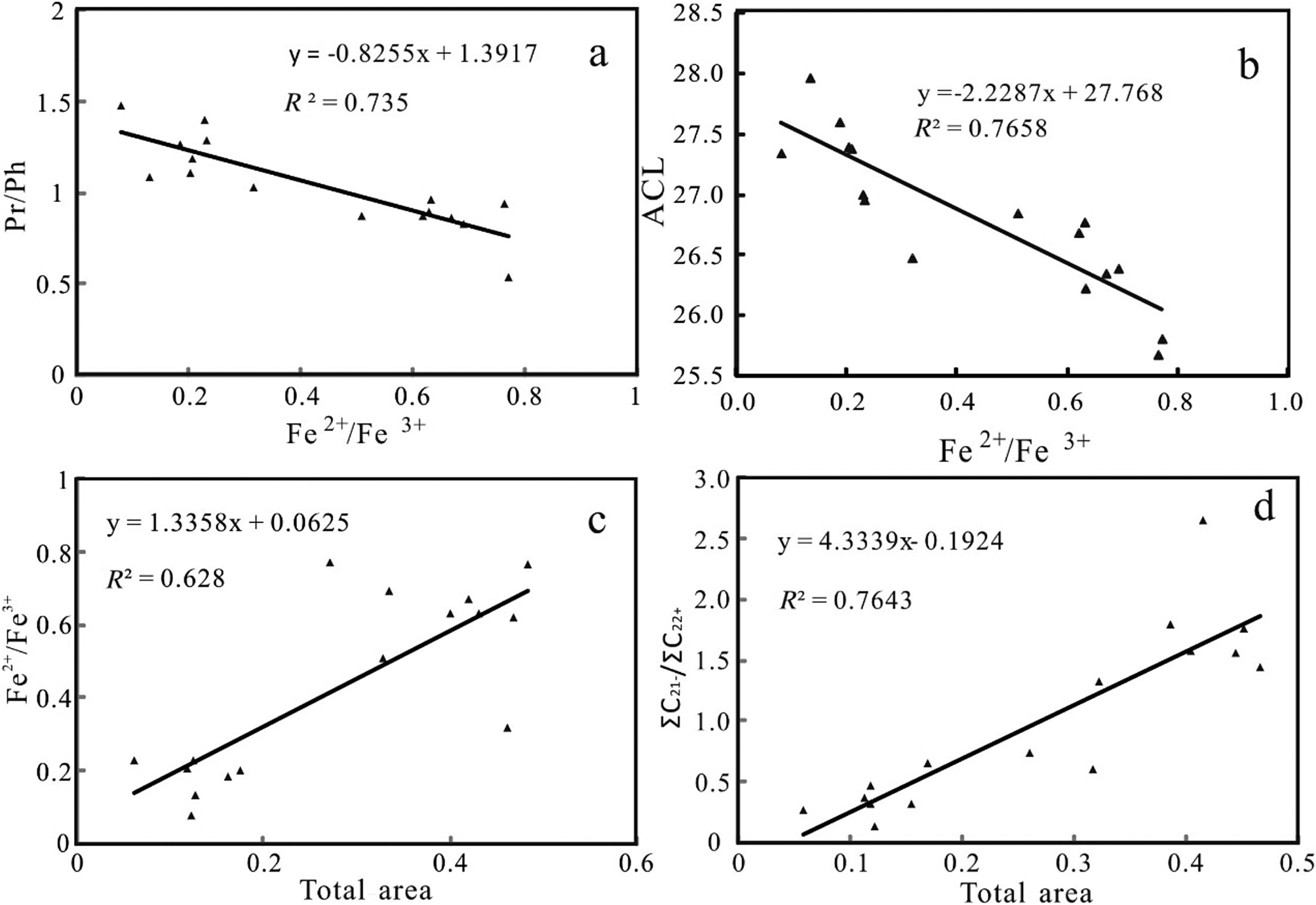
The Pr/Ph ratio is generally thought to be a guide to deposition conditions (Didyk et al. Reference Didyk, Simoneit, Brassell and Eglinton1978). However, the Pr/Ph ratio could also be affected by maturity, parent material, and methanogenic microbes. Methanogenic microbes can also generate Ph, and these microbes live in sediments that lack oxygen (and sulphates), which are common in most sub-bottom regions of the lake floor (Brassell et al. Reference Brassell, Wardroper, Thomson, Maxwell and Eglinton1981; Venkatesan & Kaplan Reference Venkatesan and Kaplan1987). A relevance analysis of Fe2+/Fe3+ and Pr/Ph shows a strong negative correlation between them (Fig. 4a). This indicates that the Pr/Ph ratio in Luguhu Lake has not been affected by methanogenic microbes and both the Fe2+/Fe3+ and Pr/Ph ratios effectively represent the inorganic and organic redox environments, respectively, of Luguhu Lake.
Correlation between different indicators.

3.2. Fe2+/Fe3+ vs ACL
Fe2+/Fe3+ and ACL are different types of environmental parameters with a strong negative correlation between them (Fig. 4b). When the lower aquatic organisms are dominant, the redox environment is weakly reductive; when higher terrestrial plants are dominant, the oxidability of the depositional environment increases. This suggests that the same intrinsic factor may be influencing these two parameters. Considering that palaeotemperature is an important factor controlling biological development, Poynter suggests that the n-alkane ACL index can also represent variations in temperature in a source area (Poynter & Eglinton Reference Poynter and Eglinton1990). This result has been supported by observations of n-alkanes in modern leaves, loess, and peat (Heiri & Millet Reference Heiri and Millet2005; Zhang et al. Reference Zhang, Yang, Zhang, Lei, Chang, Yang and Fan2008). Other previous studies also indicate that the Fe2+/Fe3+ ratio in lake sediments has an inverse relationship with palaeotemperature (He Reference He1989; Zhu Reference Zhu1994; Yu et al. Reference Yu, Zhu and Li1998). Lacombe & Schurer (Reference Lacombe and Schurer1990) suggest that the ratio of Fe2+/Fe3+ measured in sediments from Georgie Lake, measured using MBS, decreased significantly from the glacial to the post-glacial period. As the palaeotemperature increased, the coverage of higher terrestrial plants spread and there was a rise in free oxygen produced in the atmosphere and by higher plants in lakes, which caused an increasing amount of Fe2+ to be transformed into Fe3+. In contrast, as the palaeotemperature decreased, the coverage of higher terrestrial plants also decreased, leading to a reduced amount of free oxygen being released into the atmosphere and lakes, thereby causing Fe3+ to be transformed into Fe2+ (He Reference He1989; Zhu Reference Zhu1994). This shows that both these parameters are affected by palaeotemperature, and, therefore, the Fe2+/Fe3+ ratio may play a favourable role in studies on palaeotemperature.
3.3. Total area vs Fe2+/Fe3+ vs ACL
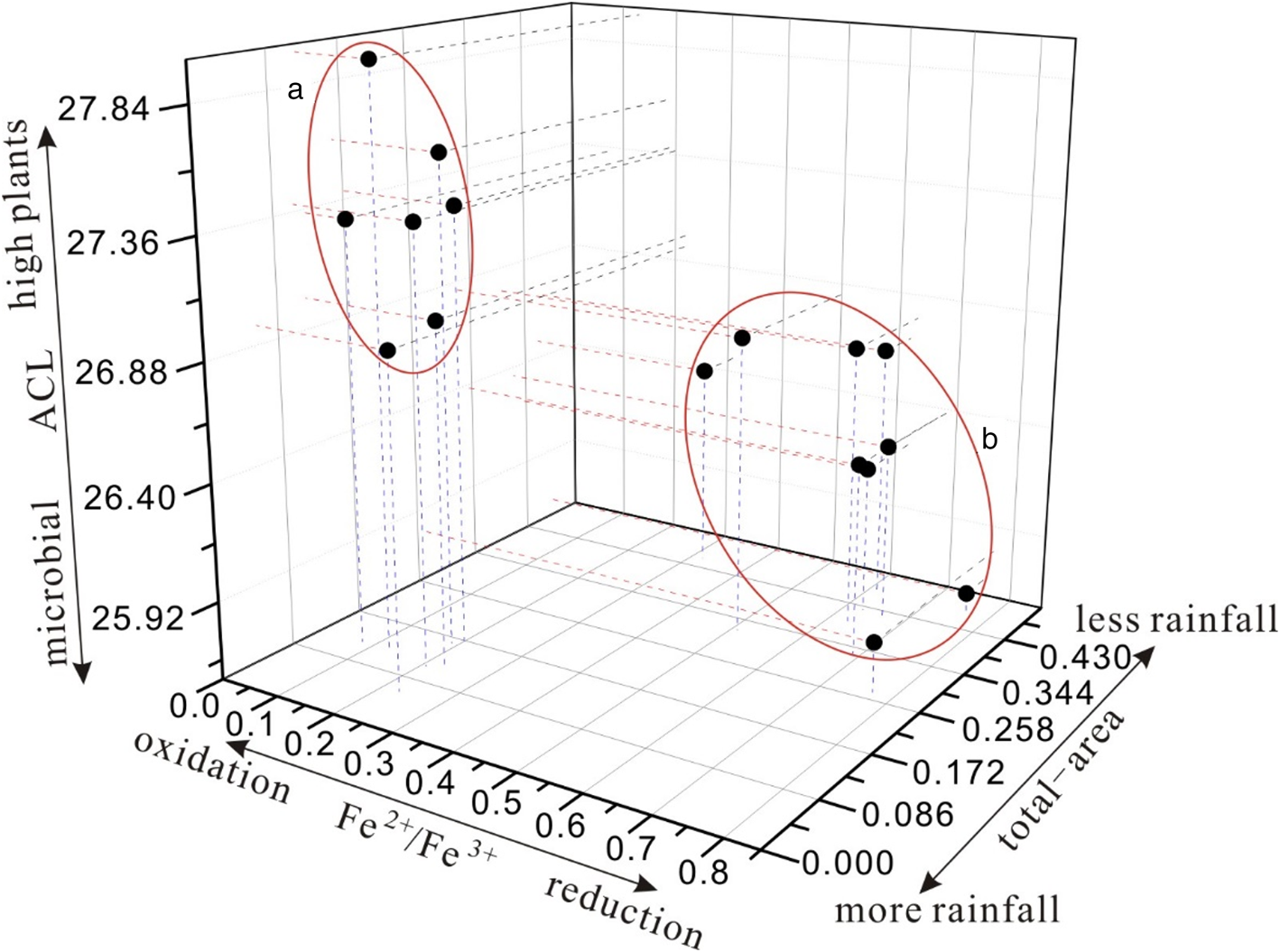
The Fe content in sediment is not generally related to the redox environment and/or sources of organic matter in a lake. However, Figure 4c and d show that the total area is positively correlated with both the Fe2+/Fe3+ ratio and the ACL. To investigate the environmental significance of the total area of the 57Fe MBS, the relationships between three parameters (total area, Fe2+/Fe3+, and ACL as a representative) were plotted on a three-dimensional scatter plot (Fig. 5). As shown in Figure 5, the samples could be divided into two groups with (a) high ACL and low total area and Fe2+/Fe3+ values and (b) low ACL and high total area and Fe2+/Fe3+ values. This strongly suggests that in addition to the Fe2+/Fe3+ ratio and organic materials in sediment, the relative abundance of Fe in Luguhu Lake is also affected by the palaeoclimate and the environment in which the palaeosediment was deposited. Generally, the relative abundance of Fe in sediment could also be affected by the source of the latter and the loss of Fe after deposition. The sediment in Luguhu Lake is mainly derived from weathered bedrock around the lake basin, and the supplement coefficient of Luguhu Lake is only 3.4 (Zheng et al. Reference Zheng, Zhang, Ming, Chang, Meng, Zhang, Liu and Shen2014). In addition, the sedimentation rate is quite slow and stable. These factors indicate that the sediment source does not have much impact on the relative abundance of Fe therein. Therefore, Fe loss could be the main cause of the relative abundance Fe species in the sediment.
Three-dimensional scatter plot of total area, Fe2+/Fe3+, and ACL of Luguhu Lake sediment samples. (a) high ACL and low total area and Fe2+/Fe3+ values and (b) low ACL and high total area and Fe2+/Fe3+ values.

The correlation between the parameters indicates that when the relative Fe content in the sediments is low, the Fe2+/Fe3+ and ΣC21−/ΣC22+ ratios are also low while the Pr/Ph ratio is relatively high. The corresponding palaeoclimatic environment is characterised by strong oxidation, relatively developed higher terrestrial plants, and a relatively high palaeotemperature. Such an environment is usually consistent with warm and moist climate (Weiss et al. Reference Weiss, Gutzler, Coonrod and Dahm2004); one previous study shows that the content of carbonate minerals in Luguhu Lake sediment is controlled mainly by the water level of the lake (Zheng et al. Reference Zheng, Zhang, Ming, Chang, Meng, Zhang, Liu and Shen2014). At approximately 14,000–4000 a, the carbonate mineral content in Luguhu Lake sediments was very low, even close to 0, indicating that the lake water level was high, and that the lake had become an external lake. The lake outflow caused the dissolved carbonates to be unable to precipitate out in a stable manner, leading to a low level or absence of carbonates in the lake sediment (Zheng et al. Reference Zheng, Zhang, Ming, Chang, Meng, Zhang, Liu and Shen2014). Notably, the Fe content in the lake sediment was also low during this period. Similarly, Fe may have been lost as the lake water level decreased, reducing the Fe levels in lake sediment. Therefore, it appears that the mechanism of change in the total area of the 57Fe MBS with the palaeoenvironment could be explained by the loss of Fe as the water drained out of the lake; further, the greater the rainfall level, the more Fe was lost from the sediment.
4. Conclusion
We combined Fe speciation and biomarkers, measured by MBS and GC–MS, respectively, to investigate their relationship and their palaeoenvironmental significance in Luguhu Lake. The results are as follows:
(a) There is a strong negative correlation between the Fe2+/Fe3+ and Pr/Ph ratios, suggesting that they effectively represent the inorganic and organic aspects, respectively, of the oxidation–deoxidation environment in Luguhu Lake.
(b) In addition to the redox conditions, palaeotemperature may also be factor affecting the Fe2+/Fe3+ ratio. Therefore, the Fe2+/Fe3+ ratio may be of importance in studies of palaeotemperature.
(c) A noticeable correlation among the total area, Fe2+/Fe3+ ratio, and other proxies of molecular organic matter have been observed, suggesting that the relative abundance of Fe in Luguhu Lake is also affected by palaeoclimatic and palaeosedimentary environments. The Fe changes in the palaeoenvironment were attributed to the loss of Fe when water drained out of the lake, as well as to the amount of rainfall; the greater the amount of rainfall, the greater the Fe loss recorded in the sediment.
5. Acknowledgements
We would like to thank Prof Hucai Zhang at Yunnan Normal University for providing the samples. We also thank Prof Guodong Zheng and Dr Xiangxian Ma at the Key Laboratory of Petroleum Resources Research, Institute of Geology and Geophysics, Chinese Academy of Sciences, for their helpful instructions and discussion. This study was funded by the National Natural Science Foundation of China (Key Program, No. 41831176), the National Science and Technology Major Project of the Ministry of Science and Technology of China (No. 2017ZX05049005), and the Open Foundation of Top Disciplines at the Yangtze University (No. 2019KFJJ0818020).