Background
Western Health, one of four regional health authorities in Newfoundland and Labrador, Canada, provides community-based programs, and acute and long-term institutional services, to a population of 79,460 residents. Historically, the care options available for individuals with mild to moderate stages of dementia within the region have been limited to institutional long-term care (LTC) or under certain circumstances, to personal-care homes. In many instances, institutional care is oriented towards a medical model of care, whereas a social model of care – one that is resident oriented and directed – may be more appropriate to support individuals with mild to moderate dementia (Hawes, Rose, & Phillips, Reference Hawes, Rose, Phillips and Mollica1999; Rader, Reference Rader and Tornquist1995). Often, individuals with early to moderate stages of dementia can function well with supervision and limited professional and medical supports; therefore, medically based institutional care options may not be appropriate for these individuals. Past reviews in the Western Region of Newfoundland and Labrador demonstrated the presence of a gap in the system for individuals with cognitive impairment who did not require professional nursing care. In that region, 15 per cent of residents in one LTC center had mild to moderate cognitive impairment as the only indicator present for permanent placement. These individuals were deemed to be suitable for an alternate care environment according to Parfrey and McDonald (Reference Parfrey and McDonald2005). In addition, 23 per cent of those waiting for nursing home placement in one location in the region were deemed to be more suitable for an enhanced assisted-living option (O’Reilly, Parfrey, Barrett, & McDonald, Reference O’Reilly, Parfrey, Barrett and McDonald1998).
In 2004, the Provincial Government of Newfoundland and Labrador dedicated funding for the redevelopment of LTC services within the regional health authority. At that time, LTC services consisted of 228 LTC beds with extremely long wait lists. The redevelopment involved two phases: the first was the construction of four bungalows to provide an enhanced assisted-living environment for individuals with mild to moderate dementia; the second was the construction of a new 236-bed nursing home in Corner Brook to replace existing outdated LTC facilities where some of these residents had resided. The construction design for the new bungalows, referred to as the Protective Community Residences (PCRs), was based on a model of assisted living developed for the dementia population in Alberta and British Columbia, Canada. Assisted living within this context is defined as a residential care option that is “more comfortable, more like home, and offers more choices, meaningful activity, and privacy than traditional settings” (Reimer, Slaughter, Donaldson, Currie, & Eliaszewicz, Reference Reimer, Slaughter, Donaldson, Currie and Eliaszewicz2004, p. 1085). The model promotes individualized care, support, privacy, dignity, and independent decision making for residents. The PCRs have been designed for residents with mild to moderate dementia while residents with more advanced stages of the disease reside in a specialized dementia care unit.
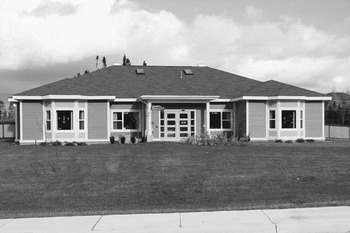
Western Health reviewed the evidence from other provinces and countries to determine best practices in assisted living for individuals with dementia. The review guided the development of a relocation plan and criteria for admission to the PCRs. The PCRs were opened in the summer of 2008 with a planned phased-in occupancy for a total of 40 residents. To date, three of the four PCRs (see Figure 1) have opened with 46 per cent of the admissions transferring from LTC or personal-care home environment, 34 per cent from the community, and 20 per cent of the admissions coming from an acute care environment.
Western Health Protective Care Residence, Corner Brook, Newfoundland and Labrador.

To be considered for admission to the PCRs, individuals must (a) be diagnosed with mild to moderate dementia, as measured by a score of 11 – 23 on the Folstein Mini Mental State Exam (Crum, Anthony, Bassett, & Folstein, Reference Crum, Anthony, Bassett and Folstein1993; Folstein, Robins, & Helzner, Reference Folstein, Robins and Helzner1983); (b) have a Global Deterioration Scale score of five to six (Auer & Reisberg, Reference Auer and Reisberg1997); (c) not demonstrate unpredictable, violent, sexually aggressive, or disruptive behaviors; (d) not be a danger to themselves or others; (e) have demonstrated need for protective supervision (e.g., wandering and/or exit-seeking behavior, etc.); (f) not require chemical or physical restraints; (h) be able to ambulate and transfer independently (e.g., assistive devices such as canes and walkers are acceptable); and (i) be medically stable with no co-morbidities that require frequent medical interventions.
The PCRs were constructed to provide a homelike environment, with common areas and private space to meet the needs of persons with dementia. Each PCR was designed as a duplex with each wing of the home containing five bedrooms, a bathroom, a dining room, and a living room. There is a large common kitchen located between both wings. The PCR’s physical design, including safety features, is based on best practices for dementia care. Equally important is the approach and skills of staff who are essential to promoting quality of life for the residents (Day, Carreon, & Stump, Reference Day, Carreon and Stump2000; Swagerty, Lee, Smith, & Taunton, Reference Swagerty, Lee, Smith and Taunton2005; Taft, Delaney, Seman, & Stansell, Reference Taft, Delaney, Seman and Stansell1993).
Staff ratios are important for operation of the program and level of dementia supported. In keeping with the experiences of other jurisdictions (Annerstedt, Reference Annerstedt1997; MacCourt, Reference MacCourt2008), the ratio of personal care attendants (PCAs) – unlicensed, multi-skilled workers – to residents is 2:10 during a 12-hour day shift, and 1:10 during a 12-hour night. The PCAs provide supervision and assistance with activities of daily living and personal care, and are responsible for day-to-day operations such as meal preparation, housekeeping, and laundering within the PCRs. Clinical leadership for staff in the PCRs is provided by the dementia care coordinator during the day and by a licensed practical nurse during the night. The staffing model also includes a full-time recreation worker, a care-taker, and part-time social worker. The cost of obtaining care in the PCRs is the responsibility of the resident. If a financial assessment indicates that a resident is entitled to a government subsidy, this is coordinated through the services of a financial-assistance worker. For purposes of our study, no information regarding payment of care was sought.
As part of the relocation process, and introduction of this new model of care, we developed an evaluation framework. One of the authors (KO) was responsible for LTC services within the region and held a position on the senior administration team. She elected to conduct the evaluation in partial fulfillment for the completion of an “Executive Training in Research Application” (EXTRA) fellowship with the Canadian Health Services Research Foundation. The author who developed the evaluation framework was not directly involved with data collection or analysis. The remaining authors, who were not directly affiliated with the PCRs in any way, carried out these functions.
Literature Review
Dementia is described as “an irreversible, progressive impairment in cognitive function, affecting memory, orientation, judgment, reasoning, attention, language, and problem solving” (Eliopoulos, Reference Eliopoulos2010, p. 413). In the mild to moderate stage of the disease process, individuals often are aware of the subtle changes in their memory and functional ability. Rader (Reference Rader and Tornquist1995) contended that institutional care is not suitable to meet the needs of this resident population. On the other hand, units or facilities specially designed, both physically and philosophically, to meet the needs of older adults with mild to moderate dementia provide an environment that has been shown to improve quality of life and care (Mace, Reference Mace1993).
From the available research, it is evident that relocation can result in adverse psychological, emotional, and physical health effects on the residents. Relocation of older adults to new living environments (e.g., nursing home, assisted living, congregate living, inter-facility, etc.) has been associated with an increased risk of mortality (Aneshensel, Pearlin, Levy-Storms, & Schuler, Reference Aneshensel, Pearlin, Levy-Storms and Schuler2000); fall rates (Hodgson, Freedman, Granger, & Erno, Reference Hodgson, Freedman, Granger and Erno2004); short-term stress (Freidman et al., Reference Freidman, Williamson, Lee, Ankrom, Ryan and Denman1995); anxiety (Jackson, Swanson, Hicks, Prokop, & Laughlin, Reference Jackson, Swanson, Hicks, Prokop and Laughlin2000; Thomasma, Yeaworth, & McCabe, Reference Thomasma, Yeaworth and McCabe1990); depression, insomnia, and gastrointestinal disturbances (Jackson et al., Reference Jackson, Swanson, Hicks, Prokop and Laughlin2000); and decreased physical role functioning and increased use of some medications (Gallagher & Walker, Reference Gallagher and Walker1990). Nay (Reference Nay1995) reported that relocation often resulted in a sense of loss from a materialistic perspective (e.g., loss of possessions, home, etc.), a loss of self, and a sense of having no future.
Despite this, older adults who relocated to new living arrangements often adapt, but adaptation frequently depends on several factors. For example, research suggests that relocation effects are influenced by the circumstances of the relocation. Negative effects of relocation can be buffered by the residents’ health status, and the preparation, support, and input residents receive prior to and during the relocation (Gallagher & Walker, Reference Gallagher and Walker1990; Jackson et al., Reference Jackson, Swanson, Hicks, Prokop and Laughlin2000; Nay, Reference Nay1995). Studies also suggest that health care professionals play a pivotal role in relocation experiences of residents (Armer, Reference Armer1996; Tracy & DeYoung, Reference Tracy and DeYoung2004) and of their relatives (Davies & Nolan, Reference Davies and Nolan2004).
Families often experience negative psychological effects when they decide to relocate a family member to an alternative living arrangement (Davis & Nolan, Reference Davies and Nolan2004; Kao, Travis, & Acton, Reference Kao, Travis and Acton2004; Kellet, Reference Kellett1999; Strang, Dupuis-Blanchard, Nordstorm, & Thompson, Reference Strang, Dupuis-Blanchard, Nordstorm and Thompson2006). The importance of careful planning, guidance, and support during transitions has been demonstrated (Kellett, Reference Kellett1999; Strang et al., Reference Strang, Dupuis-Blanchard, Nordstorm and Thompson2006; Swann, Reference Swann2006). Relocation experiences are perceived more negatively when families believe staff members lack compassion, concern, or empathy with their predicament (Kellett, Reference Kellett1999; Strang et al., Reference Strang, Dupuis-Blanchard, Nordstorm and Thompson2006). In contrast, relocation experiences are perceived more positively if family members feel that they are able to develop partnerships and positive interactions with staff (Davies & Nolan, Reference Davies and Nolan2004; Kellett, Reference Kellett1999), and when open communication exists between staff and families (Cheek et al., Reference Cheek, Ballantyne, Gillham, Mussared, Flett and Lewin2006).
Despite the evidence related to the relocation of older adults to a new environment, much of the preceding data was based on relocation from private homes, where other family members were the primary caregivers, to a health care facility, where care was provided by licensed nursing personnel. There is some differentiation in the literature between traditional dementia care within health care facilities or authorities and specialized dementia units or facilities. Specialized dementia units operate within a psychosocial model specific to dementia care. However, the lack of clear conceptual definitions causes confusion when one attempts to interpret the data. Gruneir, Lapane, Miller, and Mor (Reference Gruneir, Lapane, Miller and Mor2008) concluded from a review of the available evidence that there is insufficient data to support the benefits to residents in specialized dementia care units (SDCUs).
Researchers have examined family outcomes related to dementia care provided within the context of a social model versus a medical model of care (Gruneir et al., Reference Gruneir, Lapane, Miller and Mor2008; MacCourt, Reference MacCourt2008; Parker-Oliver, Aud, Bostick, Schwarz, & Tofle, Reference Parker-Oliver, Aud, Bostick, Schwarz and Tofle2005). However, none of the documented research focused on the effects of relocation of individuals with mild to moderate dementia from a skilled nursing facility to an assisted-living environment. MacCourt (Reference MacCourt2008) and Gruneir et al. (Reference Gruneir, Lapane, Miller and Mor2008) reported that family members were relatively satisfied with the care provided to residents in an SDCU. Parker-Oliver et al. compared SDCUs that utilized a social model of care with those who utilized a medical model of care. These authors reported that, with the exception of being more satisfied with the secure environment, there were no significant differences in family satisfaction with care between the specialized dementia facilities and traditional facilities. Data from these studies suggest that there are areas that can be enhanced to ensure that individuals with dementia are provided with individualized care. With respect to family involvement, family members have recommended more appropriate social activities for residents (Ejaz, Noelker, Schur, Whitlatch, & Looman, Reference Ejaz, Noelker, Schur, Whitlatch and Looman2002; Parker-Oliver et al., Reference Parker-Oliver, Aud, Bostick, Schwarz and Tofle2005), more individualized care, and more effective conflict resolution (Ejaz et al., Reference Ejaz, Noelker, Schur, Whitlatch and Looman2002).
The study we conducted, and describe in this article, provides insight into the experiences of family members with the relocation of residents with dementia from an institutional environment to an assisted-living environment (i.e., the PCRs). The findings will be useful as provinces and health authorities explore alternative models of care for individuals with mild to moderate dementia.
Method
We chose to use hermeneutic phenomenology in researching the experience of relocation from family members’ perspectives. Phenomenology is the study of the lived experience and is used to uncover, understand, and describe the meaning or essence of that lived experience (van Manen, Reference van Manen1997). Hermeneutics adds the interpretive component to the analysis and description of the participants’ experiences. The family members’ perceptions of the relocation experience was a subjective, complex phenomenon, based on their life experiences.
Sampling
A purposive sample of family members (N = 10) was obtained that included three males and seven females. The criteria for selection of participants were that participants (a) be listed as next of kin for relocating residents, (b) be able to articulate their lived experiences of the relocation process, (c) be able to recall and express feelings concerning the relocation process, (d) had an interest in communicating this experience, and (e) be able to provide verbal or written consent. Initial contact with family members was made by the social worker employed at the PCRs. A list of those family members who agreed to participate in the study was provided to us as researchers. A member of our research team then contacted each family member by telephone, provided detailed information on the study, and invited them to participate.
Ethical Considerations
The ethical guidelines outlined in the Tri-Council Policy Statement were followed (Canadian Institute of Health Research, 2005). This study was reviewed and approved by the Research Ethics Board of the regional health authority. We obtained written informed consent and advised participants that their participation was voluntary, they could withdraw at any time, and anonymity and confidentiality were ensured. All participants agreed to have the interview audiotaped. Because it was possible that the interview experience could evoke feelings of stress, anxiety, or emotional distress, a health care provider was available immediately after the interview for debriefing if needed. Audio tapes were retained in a secure, locked cabinet by the primary investigator. The transcriptionist signed a confidentiality agreement. All electronic data were password protected.
Interview Procedure
In an effort to obtain experiential descriptions (van Manen, Reference van Manen1997), in-depth, semi-structured interviews were conducted with family members. A total of eight interviews were completed with 10 participants; six interviews were conducted with individual family members, and two were conducted with two family members present. After completing eight interviews, data saturation had been reached as no new themes were emerging. Interviews were conducted at a time and place convenient for the participants. Participants were encouraged to freely express ideas as they emerged during the interviews. Clarifying questions were asked when necessary throughout the interviews. The researcher took precautions to avoid suggestive or leading questions. The duration of each interview was between 30 and 60 minutes.
All interviews were conducted by one member of the research team who had experience in qualitative methodology. A reflective journal was maintained by the researcher throughout the data collection period. Personal experiences, thoughts, feelings, and beliefs as well as notes on voice inflection and non-verbal aspects of the interviews were recorded in the reflective journal. Given that the researcher is the instrument in qualitative research, it was necessary to acknowledge the potential for researcher influence on the data collection and analysis process. In addition to the reflective journal, the researcher acknowledged personal thoughts, experiences, values, feelings, and beliefs in an effort to minimize this influence.
Data Analysis
The interviews were transcribed verbatim. All identifying information was removed to protect the identity of participants, people, and places. Data analysis was conducted using van Manen’s (Reference van Manen1997) approach to phenomenology. The initial data analysis was carried out by the researcher who conducted the interviews. The researcher listened repeatedly to the audio recordings of the interviews and read and reread the transcripts and reflective journal. Significant phrases that provided insights into the family member’s experience of the relocation were identified. The process of the researcher immersing herself in the data allowed for preliminary interpretation of the text which facilitated the initial coding. Following the initial coding, significant phrases were summarized to develop further insights into the relocation experience of the family members. This process resulted in the identification of significant statements or quotes that led to the emerging themes. Written interpretations of these themes and supporting excerpts from the text provided an understanding of the participants’ experience. The transcripts were reviewed by several members of the research team, and consensus was achieved on the emerging themes. In collecting data and analyzing it, this process that we used enhanced the credibility, dependability, and confirmability of the findings and thereby the rigor of the study (Golafshani, Reference Golafshani2003; Trochim & Donnelly, Reference Trochim and Donnelly2006).
Findings
The themes described represent the family members’ perceptions of relocation of residents with dementia from institutional care to the PCRs. Six themes emerged as being important to family members before, during, and after the relocation process: (a) ongoing communication, (b) relief and contentment, (c) meaningful activities, (d) enhanced environment, (e) improved functioning, and (f) engaged staff. We describe each of these themes in the following sections.
Ongoing Communication
Family members were very appreciative of communication received from management and staff regarding the relocation. Participants in this study described in detail the communication process from the initial contact to the relocation of the resident. According to the participants, consultation with the family continued throughout the relocation period. In fact, all participants commented positively on communication. The following quote reflects the experiences of all the participants in this study.
Well, I had a phone call telling me about it [PCRs]…They would not move her without me seeing the place and having a tour and discussing it with her… The day she was moving we were not going to be in town … so they gave me a phone number to contact the home…. We were pleased when we called that we were able to get someone right away and they were well aware of what she was doing … we were quite pleased with the openness and the way things went. And they did not do anything without our permission …
Relief and Contentment
Relief and contentment in the knowledge that the resident was being well cared for in the PCRs was frequently discussed. Many of the participants indicated that they felt much more contented since the relocation of their family members. The PCRs were perceived as promoting a home-like environment where families were welcome. Family members looked forward to visiting and expressed enjoyment with the visit when compared with visits they made to previous LTC environments. Several family members commented that the PCR facilitated more frequent visiting because their family members were similarly more content. Participants also acknowledged that their family members appeared happier and more contented since the relocation, which reaffirmed their decision to relocate the residents. This also enhanced their own feelings of contentment in knowing that their family members were happier in this new environment. Emotions were openly displayed when participants talked about their experiences. The following quote illustrates one participant’s comparison between the LTC facility and the new PCR.
Well, I would go up to [the unit] and cry because it was frustrating for everybody… But here [PCR], I may stay 5 minutes or I may stay an hour. Whenever I leave, she will say, “see you next time”. She is content. Whereas before on [the unit] she would say “take me with you?” and that would break your heart …
Meaningful Activities
Within the new PCRs, a recreation program has been developed and implemented to enhance the quality of life for the residents. Many of the participants discussed how the activities fostered a social, interactive environment for the residents. The family members perceived that these activities increased the residents’ sense of contribution and provided a creative means to enhance memory. The following two quotes illustrate the variety of activities and how these activities engaged the residents.
… there is recreational therapy and they do all kinds of things with her, scrapbooking, painting, and those kinds of things. They take her out ... they did have a program there [in the unit] that she was involved with, helping with doing meals, like setting the table ... she helps fold clothes and things like that.…She likes to feel useful…
She is doing her memories. Each page is a different memory – well, she is doing some family things. They took pictures of her and I together. So she is doing pictures of her and I and her and dad … of her friends that she met here…. So everything is documented through scrapbook[ing]. So she remembers.
Enhanced Environment
Various aspects of the facility’s environment were discussed by the participants. They commented on the many differences between the past and current living environment. Privacy, in that residents had single rooms, was reported to be a major enhancement of the environment in the PCRs. One participant stated, “I guess that is the best that you can hope for; the fact that it is a private room, as I said earlier, is so critical. Anything shouldn’t be considered other than a private at that stage. Even if they are tiny, the fact is that they are still critical.”
In comparison to the previous residence of their relative with dementia, family members were impressed with the security and safety of the building and comforted in the knowledge that, “the security here is better too. … Someone who works here would have to let you in and out. … I appreciate the fact that security is really tight…”. Numerous positive comments were made about the interior and exterior environment of the PCRs. As evidenced by the following quote, one participant was particularly impressed with the fact that her mother could now return to gardening, an activity she enjoyed prior to admission to LTC: “She always had flowers. Now if she is alive [over] the summer and those beds are all raised, I told her I would get her some plants and I said you can have your flowers again …”
Improved Functioning
Many of the participants discussed the positive impact of the relocation to a new facility on the residents’ functional level. From the family members’ perspectives, cognitive and physical functioning of the residents had improved, and violent behaviors had decreased following relocation to the PCRs. Family members commented that the residents were also more inclined to participate in household (e.g., baking, folding clothes, etc.) and social activities (e.g., scrapbooking, gardening, bingo, etc.) at the PCR. Some family members commented on the smooth transition and how quickly the residents adapted. The following quotes support the perceived improvement in the functioning of the residents.
… she is so content that it makes us feel marvelous that she is just happy here. Like I said, her memory has improved. She is not violent. She used to be violent. But since she has been here to this facility there is less of the walking, the pacing that she used to do, and less agitation …
She is just such a bubbly person, and she used to be bubbly … Because for years the mother I had was gone. The mother I knew had died and been replaced … My mother was always very bubbly and kind and outgoing and a social butterfly. Now she is beginning to come back to that.
Engaged Staff
All participants discussed the exceptional care provided by the staff at the PCRs. According to the family members, staff was “very caring”, “compassionate”, and “patient”. Staff contributed to the homelike, welcoming environment through their everyday interactions with the residents and family members. This was evident through the following comment: “It is such a cheerful place. And even the caregivers. Whenever we come here, they are always upbeat and smiling. It is cheerful.” The family members indicated that staff would have tea with the residents and engage them in everyday, routine activities including personal grooming and baking. Participants indicated that they were encouraged to drop in at any time and had been invited to stay for a meal. They commented on the multifaceted role of staff. One family member stated:
The staff seems to be really good because the other day I went over there and the girls [staff] had a couple of women down there and they were curling their hair for them. And giving them personal care, which she never had before. And they talk to them and I don’t know how they get the time because they clean and cook and do it all.
Although the family members were very happy with the performance of the staff, they expressed concern with the staff-to-resident ratio on the day shift. Some wondered whether there was enough staff, given the residents’ cognitive and behavioral functioning and the various roles of the staff.
Discussion
There is limited comparable evidence related to the model of dementia care described in this study. Retrieved studies relate primarily to relocation from personal home to LTC facility, and we found very few studies that explored the move from institutional care to assisted living. Therefore, we have made comparisons to evidence that best resembles the model of care described here or to evidence related to the relocation of older adults to alternate living arrangements.
The relocation experience was positive for the participants in this study. Many of the family members felt that the most traumatic transition had already occurred when the residents relocated from their personal homes to institutional care. Communication emerged as being crucial in the process of relocation. The final decision to relocate the residents from LTC to the PCRs was made by the next of kin, and was considered to be a positive aspect of the relocation process.
Providing choices or options during relocation of older adults to an LTC environment has been found to reduce stress among family members (Kao et al., Reference Kao, Travis and Acton2004). In our study, family members were provided with detailed information on the PCR concept, an overview of the assisted living model, and an opportunity to tour the facility. Similar to the findings in our study, Kao et al. (Reference Kao, Travis and Acton2004) suggested that involving and informing family members in the relocation process alleviates some of their concerns. Maas et al. (Reference Maas, Reed, Park, Specht, Schutte and Kelley2004) also found that communication and family involvement tend to have positive impacts on family members’ perceptions of care and relationships with staff.
In terms of relief and contentment, family members we spoke with commented not only on the well-being of residents but also on their own, personal well-being. The results of interviews we conducted indicate that they feel a sense of contentment and relief that the residents are being well cared for and are happy in this environment. During the interviews, participant discussion about the resident’s previous environment compared to the current living situation often evoked an emotional response from the family members. It was obvious that the relocation meant more than a new building; it meant a better life for both the residents and the family members. These findings are supported by earlier findings indicating that family members reported less caregiver burden when residents lived in specialized dementia care units (SDCUs) (Gruneir et al., Reference Gruneir, Lapane, Miller and Mor2008).
In our study, we note that family members are content with the client-centered care provided and report feeling comfortable in leaving the residents at the PCRs. This finding echoes that of MacCourt (Reference MacCourt2008), who has reported that families were satisfied following the relocation of their loved one to “licensed dementia housing” (p. 2). In addition, family members in several other studies have reported being satisfied with the care provided in SDCUs (Gruneir et al., Reference Gruneir, Lapane, Miller and Mor2008; Parker-Oliver et al., Reference Parker-Oliver, Aud, Bostick, Schwarz and Tofle2005). In the Parker-Oliver study, SDCUs based on the social model of care were compared to SDCUs utilizing a medical model. Family member satisfaction did not significantly differ between the two models; however, family members involved in the social model of care were significantly more satisfied with the secure environment.
In our study, family members spoke extensively about the variety and quality of activities that are provided in the PCRs. Their responses during interviews indicate that residents become reengaged in activities that were part of their everyday lives prior to admission into LTC. Activities such as baking, cooking, peeling vegetables, or reading the paper seem to enhance the quality of the residents’ lives. Inclusion of activities for residents has been identified by family members as a way to maintain functioning (Parker-Oliver et al., Reference Parker-Oliver, Aud, Bostick, Schwarz and Tofle2005). Activities that contribute to the resident’s quality of life are viewed as key components of a psychosocial model of care for dementia clients (Parker-Oliver et al., Reference Parker-Oliver, Aud, Bostick, Schwarz and Tofle2005). Moreover, evidence has suggested that activities tend to reduce agitation and sleep disturbances of residents with dementia (Volicer, Simard, Pupa, Medrek, & Riordan, Reference Volicer, Simard, Pupa, Medrek and Riordan2006). In our study, we found that planned programming of activities which are appropriate for dementia care may have contributed to the perceived improvement in overall functioning.
Another factor that families stressed in our interviews was the physical environment in the PCRs, which families find to enhance feelings of well-being for the participants. The fact that the surroundings are bright and cheerful, and each resident has a private room, makes the participants feel contented. A combination of aspects about the physical environment created a homelike feeling that made the facility more welcoming for the families. This motivated family members to visit more frequently and enjoy time with the residents. The design of the PCRs is based on the goal of maintaining functioning of the residents, cognitively, behaviorally, and physically. Werezak and Morgan (Reference Werezak and Morgan2003) concluded there is a body of evidence that supports the importance and adequacy of the physical environment in the care of clients with dementia. Similarly, Morgan, Stewart, D’Arcy, and Werezak (Reference Morgan, Stewart, D’Arcy and Werezak2004) reported that residents in SDCUs, which were designed based on best practices of a psychosocial model of dementia care, demonstrated positive effects on functioning. Similar to the findings in our study, Parker-Oliver et al. (Reference Parker-Oliver, Aud, Bostick, Schwarz and Tofle2005) reported that family members were satisfied with the physical environment of the SDCU.
Our study results indicate positive, short-term effects of relocating from LTC to the PCRs. Family members have reported observing improvements in the physical, behavioral, and cognitive functioning of the residents following relocation. They have described how forgetfulness, agitation, and aggression had decreased since the relocation. In fact, some family members have also described how residents appeared to be their former selves in terms of personality. Similar to our findings in this study, MacCourt (Reference MacCourt2008) reported that residents who were relocated to the licensed dementia care facility maintained higher degrees of functioning than their counterparts who had relocated to another care facility. MacCourt concluded that relocation may have provided an enhanced environment that acted as a barrier to further deterioration in functioning.
In contrast, there are data that suggest that relocation of older adults to more traditional LTC facilities has detrimental effects on the residents (Aneshensel et al., Reference Aneshensel, Pearlin, Levy-Storms and Schuler2000; Freidman et al., Reference Freidman, Williamson, Lee, Ankrom, Ryan and Denman1995; Gallagher & Walker, Reference Gallagher and Walker1990; Hodgson et al., Reference Hodgson, Freedman, Granger and Erno2004; Jackson et al., Reference Jackson, Swanson, Hicks, Prokop and Laughlin2000; Thomasma et al., Reference Thomasma, Yeaworth and McCabe1990). The improvement in functioning we have noted in our study may be related to the PCRs’ physical environment and activity programs designed specifically to maintain and enhance functioning of residents with dementia.
All participants in this study commented on the caring nature of the staff. The contribution of the staff to the homelike feeling in the PCR cannot be overstated. Participants were satisfied with the care provided in the PCR, with the staff-resident/staff-family interactions, and with the physical and social environment. However, participants expressed concern about the staffing model in terms of the staff-to-resident ratio. Some family members were concerned that the number of staff was insufficient given the fact they were responsible for all aspects of residents’ personal care as well as the operations of the PCRs (e.g., cooking, cleaning, etc.). Participants also felt that the type of care was demanding given the aggressive behaviors of some residents. The staffing model for the PCR is based on a psychosocial model of care and incorporates licensed professional staff and unregulated health care providers (patient care attendants), mostly the latter.
Werezak and Morgan (Reference Werezak and Morgan2003) have recommended an appropriate staffing model for a psychosocial model of care. They suggest staffing levels that permit the operationalization of the philosophy of care promoting the well-being of the residents. While reports from some family members with residents in SDCUs suggest that the inability to retain staff may impact the residents (Parker-Oliver et al., Reference Parker-Oliver, Aud, Bostick, Schwarz and Tofle2005), at this point it is too soon to comment on the effectiveness of the PCR staffing model or the attrition rate of staff.
In summary, family members in this study reported very little stress throughout the relocation process and, in fact, viewed relocation as a positive experience for both themselves and the residents. The positive experience is likely related to the degree of family involvement, the ongoing communication about the relocation among families, administration and staff, and the fact that the move was optional. Family members reported improvements in the residents’ physical, cognitive, and behavioral functioning. These improvements may have been a direct result of the physical environment, social integration through activities, and the level of contentment of both the resident and the family members.
Limitations
This study was conducted with a small number of family members who experienced the relocation of residents from institutional long-term care to the PCRs. The family members’ experiences with this type of relocation may be unique, and therefore, generalizations to the wider population may not be possible. In addition, the sample population resided in a small region within a province in Atlantic Canada, and the findings may not apply in a larger, urban center or in a smaller rural area. Residents were moved from an older facility to a newly built facility, with the majority of staff being newly graduated employees. Given these facts, the family members may have been more likely to perceive the relocation experience as more positive.
Implications
From the family members’ perspective, the process of relocation was positive. Western Health and PCR administration need to ensure continued family involvement that provides ongoing, open communication regarding the residents and the operation of the PCRs. Resources provided for social programs should be continued given that these activities were perceived by families as being crucial to the integration of the resident into the new environment. The continued support from management to maintain the current homelike, welcoming environment is essential.
The findings from this study have particular relevance for health care providers involved with the relocation of older adults diagnosed with mild to moderate dementia. Health care providers must be cognizant of the importance of maintaining open communication with family members. By understanding what is important to relatives, health care providers can influence care delivery within the PCRs and other, similar settings.
The opportunity exists to conduct future research with family members to determine whether the positive impacts of relocation continue or whether it was simply a novelty or “halo effect” of the new environment. Future research could identify whether the current staffing model is adequate to meet the many needs of residents. Currently, ongoing quantitative research is being conducted to explore staff’s perception of their abilities to provide individualized care, and of family members’ perceptions of their involvement in care. Consequently, we are now collecting and analyzing data to determine any change in residents’ physical, cognitive, and behavioral functioning following relocation. These studies will add to the existing body of knowledge related to the relocation of residents to assisted-living environments. In particular, this research is exploring new territory with respect to the provision of dementia care and the relocation from institutional-based care to an assisted-living environment, in this case the PCRs within the Western Region of Newfoundland and Labrador.
Conclusion
The findings from this study have relevance for future program planning for caring for residents with special needs. When a program of care and the physical environment are optimally designed, a more client-centered philosophy of care is fostered, resulting in positive outcomes for residents and family members. Because, as we have acknowledged, the benefits observed in this study may be related, in part, to a “halo effect”; future research will seek to identify the long-term implications of the PCRs.