Writing nearly 50 years ago, Abraham Blumberg characterized the criminal justice system as operating with “almost pathological distrust of ‘outsiders’ bordering on group paranoia” (Reference Blumberg1967, 21–22). In addition to the criminal law context, the centrality of repeated interactions has also been observed in many civil contexts, from divorce settlements (Sarat and Felstiner Reference Sarat1986; Mather, McEwin, and Maiman Reference Mather2001) to insurance disputes (Galanter Reference Galanter1974) to the appellate context (Kritzer Reference Kritzer2003). One factor related to trust and fruitful interactions among lawyers involves whether one is viewed as a member of the “in-group” or as an outsider. To illustrate, one online service for finding legal representation has this advice about the advantages and disadvantages of being represented by a local public defender: “Public defenders work with the same judges and prosecutors day in and day out, and get to know their personal quirks, peeves, and tolerances. They also see the same police officers testifying, and know who’s likely to be a bad (and good) witness. … A public defender is likely to be very efficient at sizing up your case and presenting an acceptable plea bargain deal to the prosecutor and judge.”Footnote 1
Implied within this general statement is that an attorney from outside the judicial district would not be cognizant of the “quirks” of local judges, prosecutors, and other legal actors. Indeed, one study of New England divorce lawyers concluded that a “local community of practice defines the home environment for lawyers, and as such, it appears comfortably familiar to them” (Mather et al. Reference Mather2001, 59). Thus, knowledge of legal practitioners’ habits, personalities, and routines may directly condition success or failure of pretrial negotiation.
In contrast to popular perceptions about the legal system, it has been well established that the majority of litigated disputes never reach trial and are resolved through pretrial settlement in civil cases (Miller and Sarat Reference Miller1980; Kritzer Reference Kritzer1991; Galanter Reference Galanter2004; Eisenberg and Lanvers Reference Eisenberg2009) or plea bargains in criminal cases (Miller and Sarat Reference Miller1980; Roberts Reference Roberts2003; Galanter Reference Galanter2004). Nearly all of these negotiations occur with minimal, if any, outside oversight, meaning that the outcomes of most cases are largely decided before the parties appear before the presiding judge. For this reason, the personal relationships between attorneys can be key in the resolution of cases. Yet pretrial negotiation procedures and attorney interactions have received relatively little scholarly attention, largely because these procedures are not recorded for easy data collection and are often required to be confidential.
To explore this limitation in the prior literature, this study investigates whether attorneys who are “outsiders” face a disadvantage relative to “insiders” when it comes to a critical ingredient of negotiating success: trust. We have two primary goals with respect to this question. First, we wish to ascertain whether a relationship exists between attorney interactions and trust for attorneys as a group, in order to draw broader conclusions about the impact of trust in the negotiation process. Secondarily, we are interested in how this relationship plays out for specific practice areas in the legal profession, given the increasing stratification and specialization of law firms (Heinz and Laumann Reference Heinz1982). Certain areas of law may be more influenced by insider favoritism than others, and negotiation with other attorneys figures more prominently in some practice areas than in others. This dual strategy allows us to identify evidence of commonalities in the profession (taken as a whole) but also to unpack what this argument tells us about attorneys’ working relationships across a range of diverse practice settings. To be clear, we are not able to assess whether perceptions of trust translate into successful outcomes for our respondents’ clients in this article; however, we contend that understanding attorney attitudes is a necessary first step in thinking about advantages in the legal process.
Below, we begin by outlining our conception of trust, the role it plays in negotiations, and how in-group and out-group dynamics affect the relative power of individuals. Next, we link this to research that specifically examines influences on attorney relationships and how these vary across different practice settings. We test our expectations using survey data collected from practicing attorneys in North Carolina and find support for the presumption that trust levels and negotiations are different between insiders and outsiders, though this effect varies somewhat across specialty and practice setting.Footnote 2
Trust and Cooperation among Insiders and Outsiders
Research from the fields of political science and social psychology acknowledges the importance of trust in facilitating interpersonal communication and cooperation. The concept of trust can be further broken down to distinguish between trust based on a person’s general disposition and trust that is based on personal experiences and information. For instance, Uslaner (Reference Uslaner2002, 15) defines moralistic trust as “demonstrated faith in others without expecting anything specific in return” and means that one trusts strangers, even those who are likely to be different from oneself, without regard to specific experiences with others. Groups that have experienced discrimination in society, such as minorities and women, tend to express lower levels of generalized or moralistic trust in surveys (Feingold Reference Feingold1994; Uslaner Reference Uslaner2002; but see Buchan, Croson, and Solnick Reference Buchan2008). In contrast, knowledge-based trust reflects personal experiences and information, such as prior working experience with an attorney or knowledge of a particular attorney’s professional reputation.
Uslaner’s work suggests that individuals’ interactions with insiders and outsiders are likely shaped by both generalized and knowledge-based trust. Social psychologists have documented a strong tendency of individuals to extend “trust, positive regard, cooperation, and empathy” to those in their in-group (Brewer Reference Brewer1999). By assimilating into and identifying with a group, individuals express a greater preference for and trust of those in their in-group (Hewstone, Rubin, and Hazel Reference Hewstone2002). In the legal profession, an attorney with high generalized trust should be more likely to trust all attorneys, regardless of whether they come from the same in-group or not. This positive orientation is not affected by specific interactions in which trust is violated, such as an opposing attorney breaking a promise or engaging in discovery abuse. In contrast, an attorney who relies heavily on knowledge-based trust would be more trusting of familiar individuals whom he views favorably and may be less trusting of outsiders on the basis of his lack of knowledge about that attorney. This type of information-based trust may stem from directly interacting repeatedly and positively with one’s in-group or, as Kritzer (Reference Kritzer2004) notes, from familiarity with attorneys’ reputations for being fair and reasonable. Working closely with their legal community allows attorneys to develop relationships and reputations that lead directly to cooperation and reciprocity.
Research on the legal settlement and negotiation process also supports the expectation that trust between lawyers is related to insider or outsider status and conditions the effectiveness of pretrial negotiations.Footnote 3 Gilson and Mnookin (Reference Gilson1994) use a game-theoretic framework to show that the relationship between opposing lawyers and their reputations affects the dispute resolution processes. Attorneys are better able to facilitate cooperation, settle cases, and reduce transaction costs when opposing lawyers know and trust each other. Information asymmetries can impede the settlement process and encourage disputes to go to trial (Bebchuck Reference Bebchuck1984). Additionally, some work suggests that clients who hire the same attorneys repeatedly also win more often in arbitration (Bingham Reference Bingham1997; Colvin Reference Colvin2011). Johnston and Waldfogel (Reference Johnston2002) find that cases that involve attorneys who frequently appear together in pairs are resolved more quickly and are more likely to settle, while cases that involve at least one nonlocal attorney are more likely to be tried and last longer.
Furthermore, both the repeat player and courtroom workgroup literature suggest that attorneys’ working relationships and familiarity with each other significantly shape the litigation process. Galanter (Reference Galanter1974) famously describes the advantages of repeat players in litigation, including experience, expertise, reputation, and informal relationships with the legal community. While Galanter’s work largely focused on repeat litigants before civil trial courts, scholarly research consistently notes that attorneys are key repeat players in all areas of the judiciary. A significant body of work concludes that attorney experience (McGuire Reference McGuire1995; McAtee and McGuire Reference McAtee2007; Szmer, Johnson, and Sarver Reference Szmer2007) and expertise and capability (Haire, Lindquist, and Hartley Reference Haire1999; Haynie and Sill Reference Haynie2007; Szmer and Ginn Reference Szmer2014) are critical factors. Empirical tests of Galanter’s thesis show that lawyers can use their positions as insiders to the advantage of their clients (Harris Reference Harris1999; Harris, Peeples, and Metzloff Reference Harris2013), and small, local firms appear to use familiarity with the local legal community to offset the resource imbalances they encounter when facing larger, out-of-town firms (Dumas, Haynie, and Daboval Reference Dumas2015). In medical malpractice litigation, both plaintiff and defense attorneys are repeat players and use their expertise to achieve higher success rates and garner larger awards for their clients (Daniels and Martin Reference Daniels2006). Other prior studies on the courtroom workgroup in criminal cases demonstrate that attorneys’ working relationships affect the length of sentences meted out (Eisenstein and Jacob Reference Eisenstein1977; Ulmer and Kramer Reference Ulmer1996; Ulmer and Johnson Reference Ulmer2004; Haynes, Ruback, and Cusick Reference Haynes2010).
Relatedly, legal scholars studying forum selection in diversity cases have found that attorneys’ choice of forum is influenced by concerns about bias against out-of-state attorneys, as well as bias against nonlocal clients and attorneys. Bumiller (Reference Bumiller1980–81) finds that attorneys are more worried about antilocal bias in rural areas than in urban or suburban areas. A more recent study identified similar trends, noting that concern about antilocal bias was more prevalent in southern states (Miller Reference Miller1991). However, Mather et al. (Reference Mather2001, 59–60) find ample evidence of antilocal bias in their interviews with New England attorneys, with lawyers from small or rural communities characterizing lawyers from urban areas as more confrontational and aggressive.
Prior scholarship and theory suggest that trusting relationships among lawyers stem from both past actions and the potential for future interactions. Past successful interactions between actors may develop a mutual reputation for honesty and a behavioral commitment to continued trustworthiness between the actors (Molm, Takahashi, and Peterson Reference Molm2000). Attorneys thus develop opinions about the other attorneys based on the reliability of information shared through repeated interactions. Certain attorneys may develop the reputation of being an “honest broker,” someone who is knowledgeable about the law and generally truthful in negotiations within a case. On the basis of past interactions and reputations for credibility, attorneys can make retrospective evaluations about their counterparts’ trustworthiness in current cases. For example, a defense attorney’s decision to plea a case that the district attorney says will be an easy win for the prosecution will depend largely on the defense attorney’s trust of the information presented by the district attorney.
The second aspect of these relationships between the attorneys involves forward-looking or prospective evaluations. Attorneys also realize that they will have many dealings in the future with their court workgroups and that their reputations will affect interactions with attorneys in their legal community. The need to develop and maintain positive, long-term working relationships may create a more “consensus-oriented” negotiating style for attorneys who have “frequent regularized contact” (Kritzer Reference Kritzer1991, 129). The likelihood of repeated actions, or the “shadow of the future” (Axelrod Reference Axelrod1984), creates a disincentive for the actors to be dishonest brokers as it may hinder the ability to negotiate in the future (Dal Bo Reference Dal Bo2005). Therefore, while a prosecutor or a defense attorney may “stretch” the truth or withhold information to gain a negotiating advantage for one particular case, these actions may diminish that attorney’s reputation for reliability in future cases. In this way, the long-term relationships between court actors become more important than the outcome of any particular case (Croyle Reference Croyle1983; Nardulli, Eisenstein, and Flemming Reference Nardulli1988; Dixon Reference Dixon1995; Ulmer Reference Ulmer1997). However, when strangers with no past dealings and little prospects of future contacts interact, an actor’s trust of the other side is diminished, potentially lowering the likelihood of effective cooperation (Macy and Skvoretz Reference Macy1998). But does this play out in the same way for all lawyers?
Explaining Insider and Outsider Dynamics among Attorneys
Drawing from the literature above, we posit that attorneys’ perceptions of trust will be influenced by insider/outsider dynamics, as well as relationships and reputations established and reaffirmed by repeat interactions. We contend that these influences will be evident in how attorneys evaluate the trustworthiness of attorneys from outside their geographic practice area and the effectiveness of negotiations with outsiders. Taken together, these indicators have implications for our understanding about how the negotiation process is likely to differ between insiders and outsiders and whether visiting or outsider attorneys are likely to face obstacles in obtaining favorable outcomes for their clients.Footnote 4
To gain a broad understanding of the legal profession at large, we first examine perceptions of trust and effective negotiations among all attorneys in our sample, controlling for a variety of alternative explanations. We then break out a series of subgroups to ascertain whether those same relationships hold in specific practice areas. If trust is indeed based on experiences, then in-group favoritism should produce higher levels of trust among attorneys whose practice requires them to interact with the same opposing attorneys frequently. These attorneys should also be more wary of negotiations with outsiders, since they have less accumulated experience with them.
We summarize these expectations in the following broad hypotheses:
Hypothesis 1. Attorneys with closer ties to the local workgroup will express lower levels of trust in outsiders.
Hypothesis 2. Attorneys with closer ties to the local workgroup will rate negotiations with outsiders as less effective than those with members of their own insider group.
Data and Measures
The data for this study are drawn from an original survey open to all licensed attorneys from North Carolina. We received contact information for all attorneys from the North Carolina State Bar, the government agency responsible for the regulating the practice of law in the state. All attorneys practicing in the state are required to maintain current contact information with the state bar as part of licensure (North Carolina State Bar, Rules and Regulations, 2014, chap. 1, subchap. A, sec. .0202). In recent years this information has included e-mail addresses for members and uses e-mail as a primary form of communication with attorneys.Footnote 5 After receiving the official contact information for all attorneys in the state, we invited all attorneys to participate in an online survey in the fall of 2014. Over a period of approximately 1 month and after several follow-up invitations sent to those who did not initially respond, we obtained over 2,000 usable responses.Footnote 6
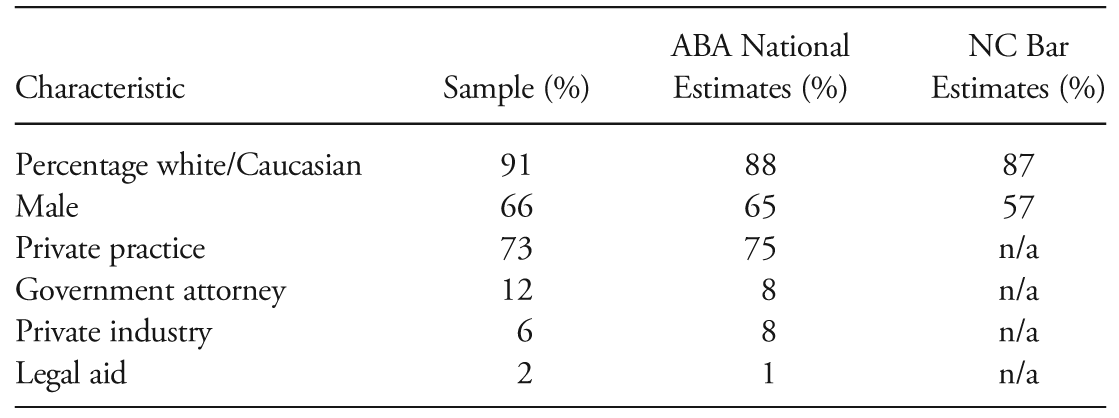
Comparing the demographics of our sample to the population of North Carolina attorneys, we see that our sample consists of 66% men and 34% women, compared to 57% men and 43% women for the state bar (North Carolina State Bar 2013). Our sample is quite similar to estimates of the percentage of female attorneys across the United States, as published by the American Bar Association (ABA), which estimates that 34% of attorneys are women (ABA 2014a). The state bar estimates the racial composition of the bar as 86% white, 9% African American, 2% Asian, and about 3% who identify as another race. In comparison, our sample is 92% white, 5% African American, 1% Asian, and 2% from other races. The racial composition of our sample is very close to national demographics, as estimates that suggest 88% of attorneys in the United States are white (ABA 2014b). We also note that while most (70%) respondents stated that they primarily work in state courts, 30% indicated that they work in federal courts. With respect to practice type and experience, our sample also shows numbers similar to national estimates from the ABA (2014a), as depicted in table 1.Footnote 7
Comparison of Sample Demographics to National and State Bar Estimates
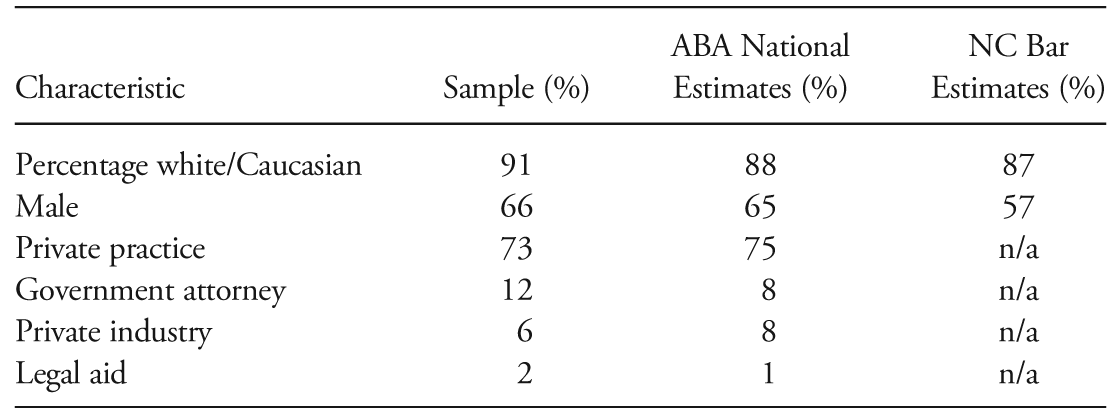
Note.—The North Carolina Bar Association does not provide detailed information on practice type for its members.
Dependent Variables
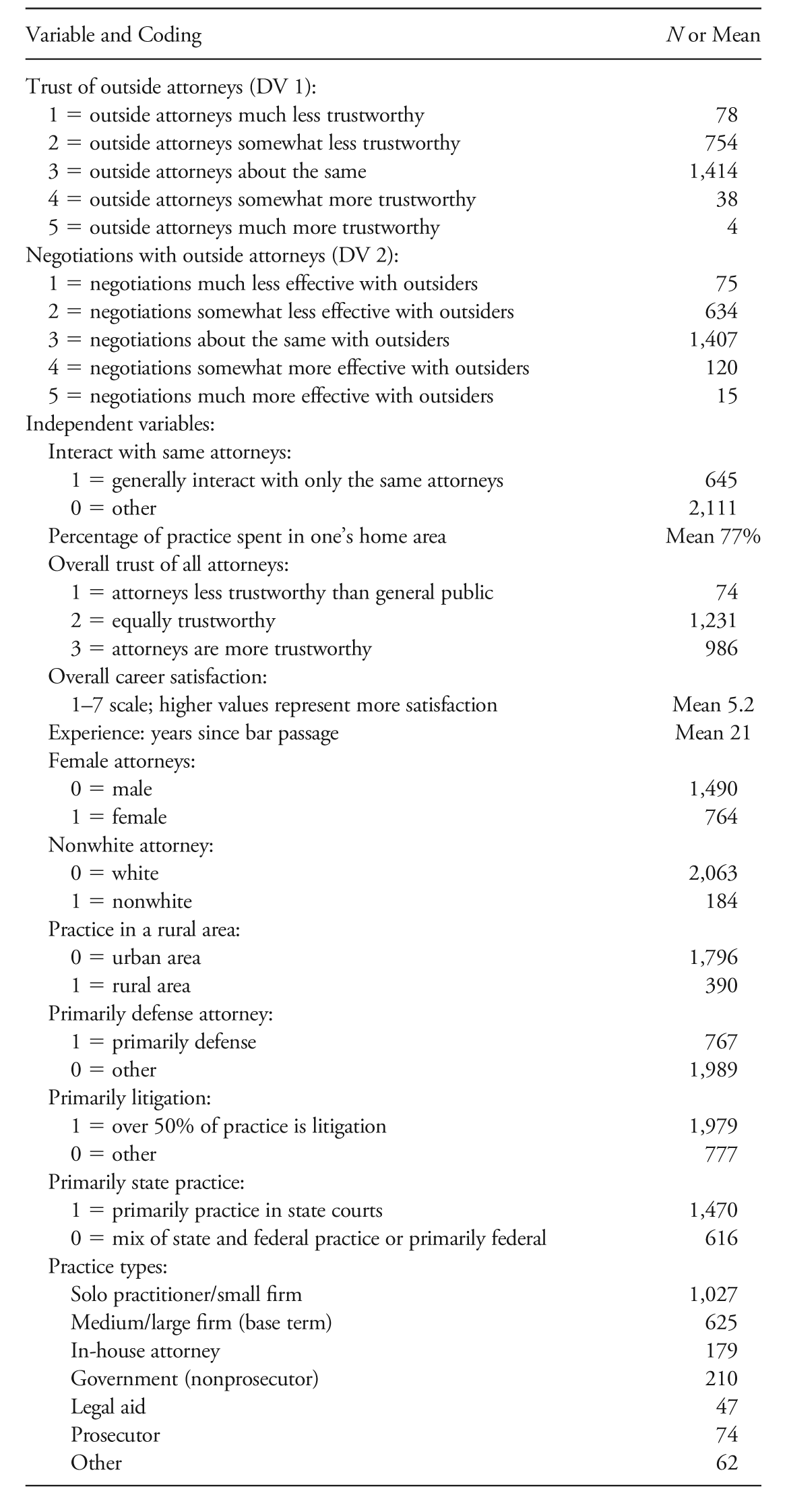
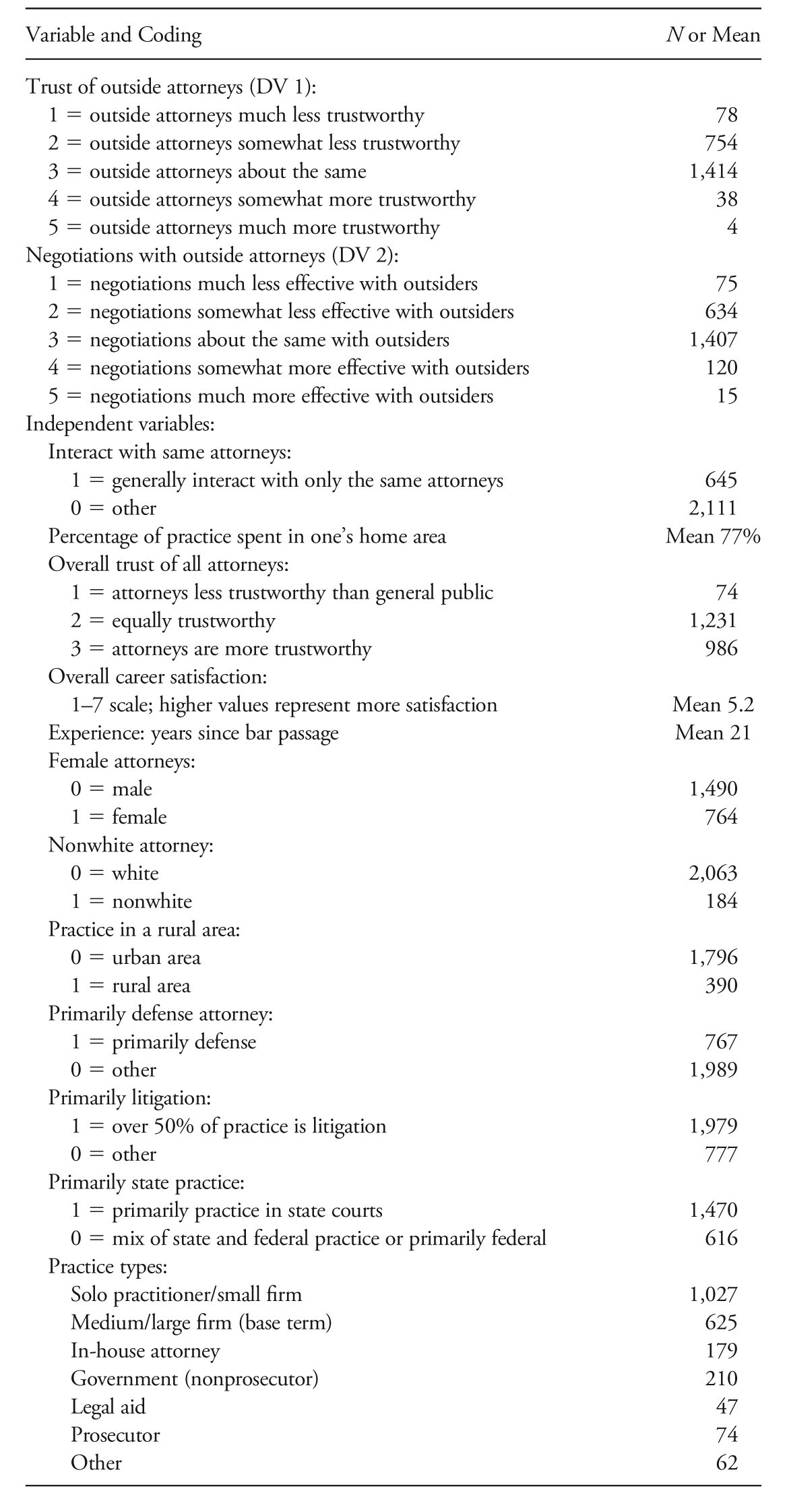
We focus on two dependent variables that relate to professional relationships and may directly affect case outcomes. First, we asked respondents their impression of the trustworthiness of attorneys outside of their home area in relation to insiders. This was a 5-point scale, with lower scores generally indicating that outsiders were less trustworthy than insiders, as indicated in table 1. Respondents were instructed that the term “home area” referred to the “county, district, circuit, courthouse, jurisdiction, or judicial precinct that you would consider your primary work location.” As our focus was on measuring attorney perceptions rather than defining a specific geographic area, we adopt this approach to allow us to assess the responses of those who generally work in the same place compared to those attorneys who often travel to new areas.Footnote 8
However, lower levels of trust may not necessarily lead to disparate interactions between insiders and outsiders. Noting the importance of pretrial negotiations and plea bargains, we also asked respondents about their perceptions of the effectiveness of negotiations with outsiders compared to negotiations with insiders. Here again, the values ranged from 1 to 5, with lower values indicating that negotiations with outsiders were less effective.
Main Independent Variables
Our analyses examine the survey respondent’s connection with her local workgroup. Two questions tap into the respondent’s “insider status.” First, to measure direct attorney relationships, we asked respondents if they generally interact with the same attorneys repeatedly, with a mix of the same attorneys they know and some they do not, or with unfamiliar attorneys.Footnote 9 Second, as a proxy for the geographic component of insider status, we also asked how much time the respondent spends practicing in her home area. Related to our hypotheses stated above, we expect that those attorneys who generally interact with only the same attorneys and who spend more time in their home areas will be less trusting of outside attorneys and find negotiations less effective with outside attorneys.Footnote 10
Other Independent Variables
Additionally, all the models include several other variables to use as controls and for further exploration of attorney relationships (see table 2). Respondents were asked about the trustworthiness of attorneys overall, as an indicator of generalized trust. Those who are largely more satisfied with the legal profession in general may also be more trusting of other lawyers, both insiders and outsiders. To control for this possibility and the potential of self-selection bias in our sample based on professional satisfaction, we included a question based on a 7-point Likert scale of career satisfaction. Career satisfaction is positively but weakly (r = .21) correlated with trust in attorneys overall. However, career satisfaction is not correlated at all with trust of outside attorneys (r = .04). This gives us some evidence of the “sunny disposition” that Uslaner (Reference Uslaner2002) links with generalized trust, but not knowledge-based trust. We also note that the two types of trust (trust of attorneys overall and trust of outside attorneys) are not correlated (r = .03) in our sample. Relatedly, attorneys at different points in their careers may have different outlooks on trust, so we include a variable for years of practice. Given that we have no a priori reason to expect a positive or negative relationship for years of practice, it is included in the models primarily as a control.
Coding of Included Variables
Although attorneys’ race and gender affect perceptions of unfair professional treatment (Collins, Dumas, and Moyer, Reference Collinsforthcoming), the literature is somewhat mixed as to how these attributes are linked with professional trust. Groups that have been discriminated against are less likely to believe “most people can be trusted,” although women score higher on scales of trust in personality inventories (Feingold Reference Feingold1994). Buchan et al. (Reference Buchan2008) find that in a trust game, trusting behavior by men reflects a more strategic orientation. We note that race could also have an influence, as Uslaner (Reference Uslaner2002) finds that African Americans are less likely to exhibit generalized trust. Consequently, we include both gender and race variables as controls.
Finally, the models contain several practice-level controls that may influence professional trust. Landon (Reference Landon1992) argues that the biggest difference in legal careers is the type of community in which an attorney resides and demonstrates that rural and urban practices differ in significant ways. To control for potential differences based on practice location, we include a geographic control for whether the respondent’s home area is rural or urban, as well as a control for those who practice primarily in state courts compared to all others.Footnote 11 In the models for all attorneys, we include indicators of whether the attorney works primarily in defense,Footnote 12 if they primarily work in litigation, and seven dummy variables for practice-type categories with medium/large firm attorneys as the excluded category.Footnote 13 We then run seven separate models for several subgroups of attorneys: all litigators, civil litigators, criminal defense, prosecutors, transactional lawyers, urban attorneys, and rural attorneys, as discussed below.
Results
All Attorneys Models
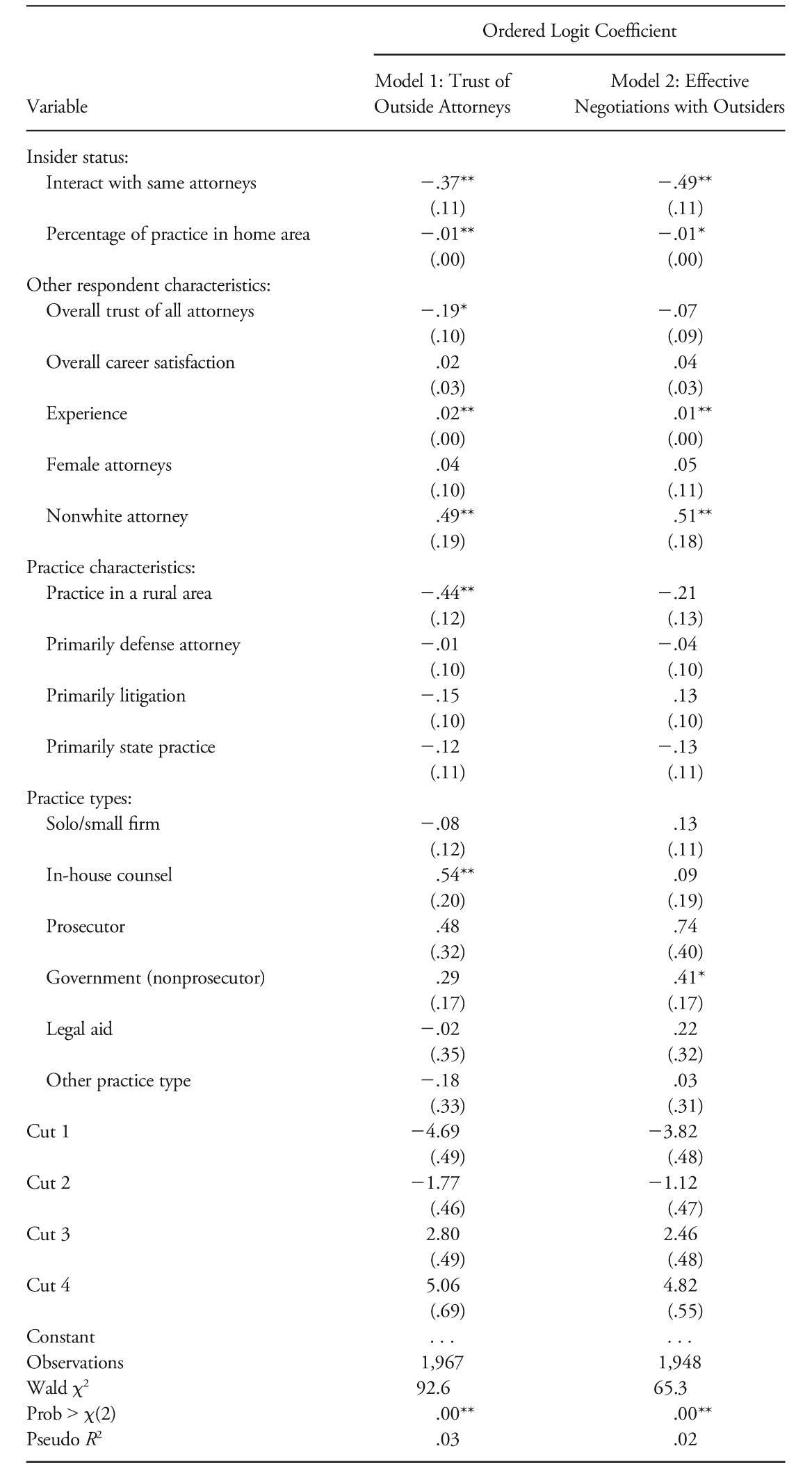
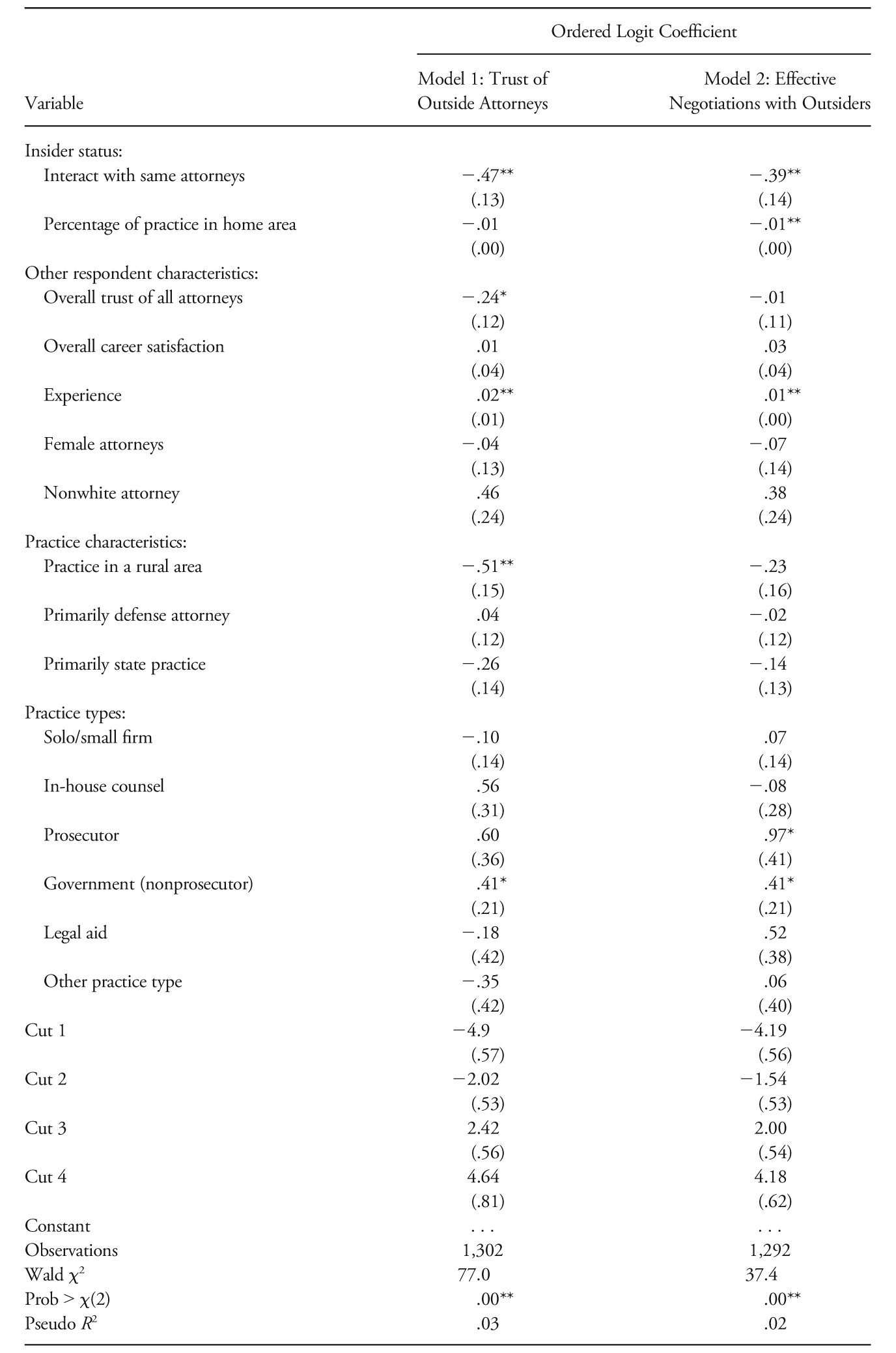
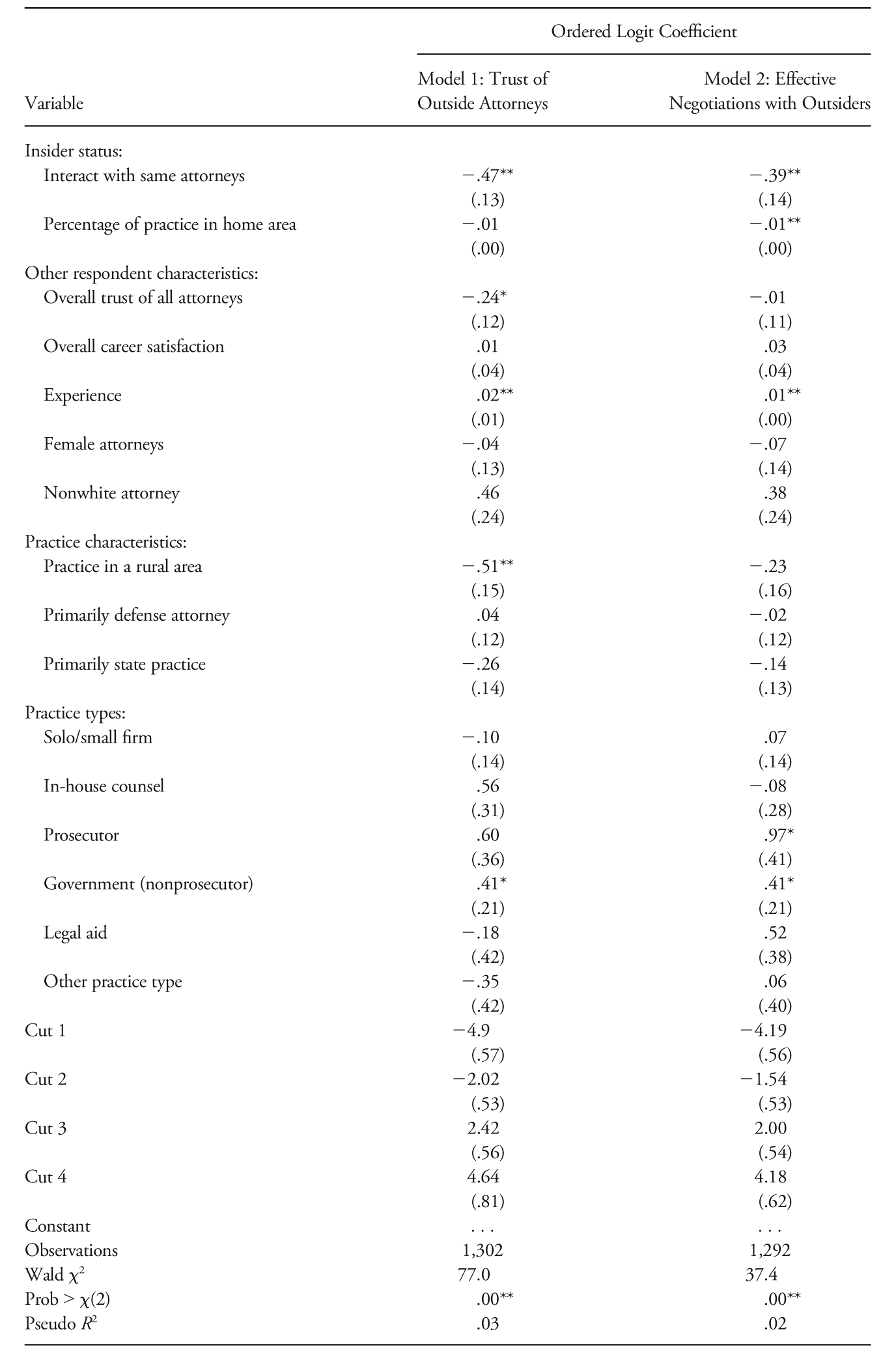
Beginning with our analyses of all attorneys, table 3 reports the results from two ordinal logit models in which higher values indicate, respectively, more trust toward outside attorneys and more effective negotiations with outside attorneys. All models are estimated using robust standard errors.Footnote 14
Relationships with Attorneys Outside the Workgroup
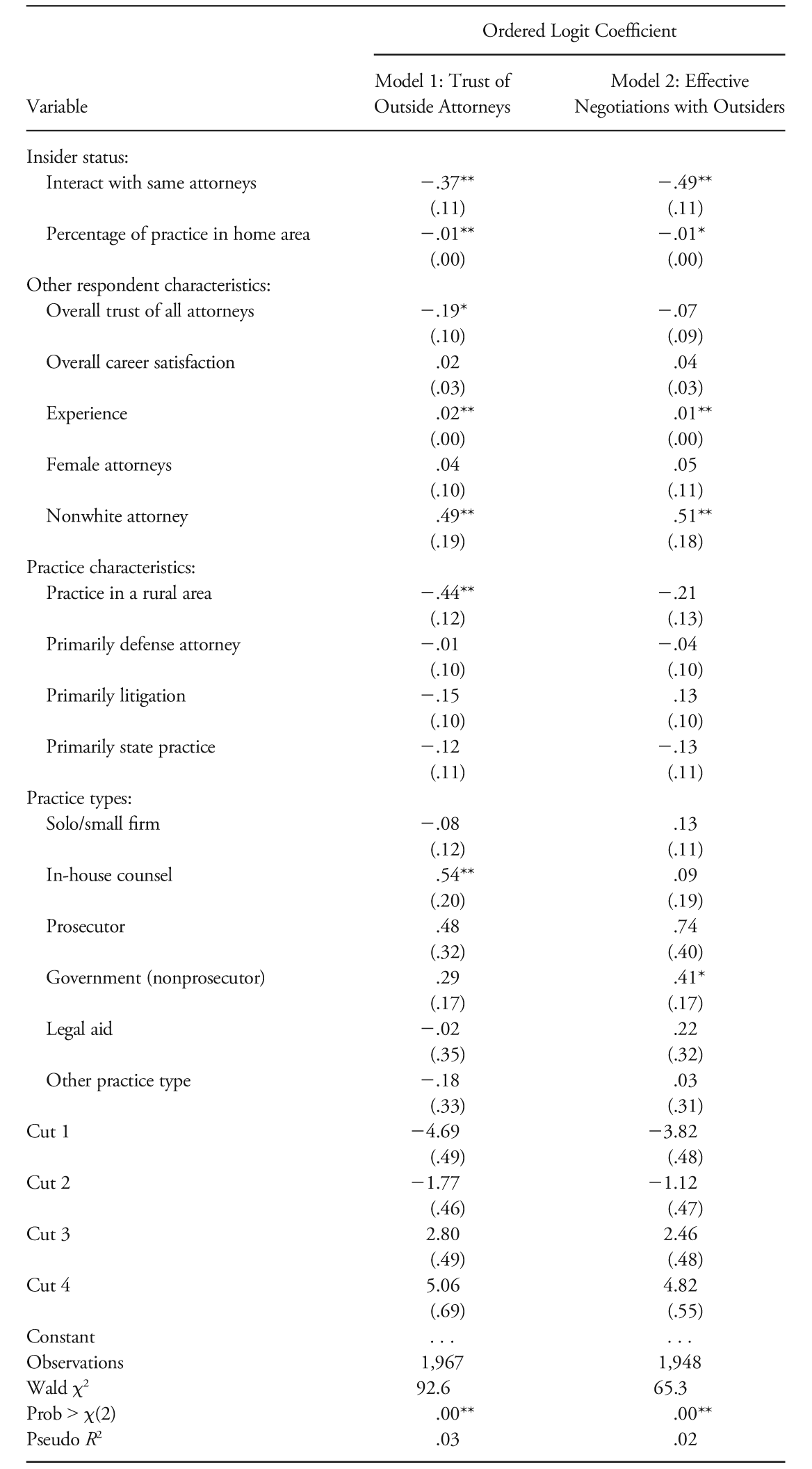
Note.—Base term (excluded category) for practice types is “medium/large firm.” Robust standard errors are in parentheses.
*. p < .05 (two-tailed).
**. p < .01 (two-tailed).
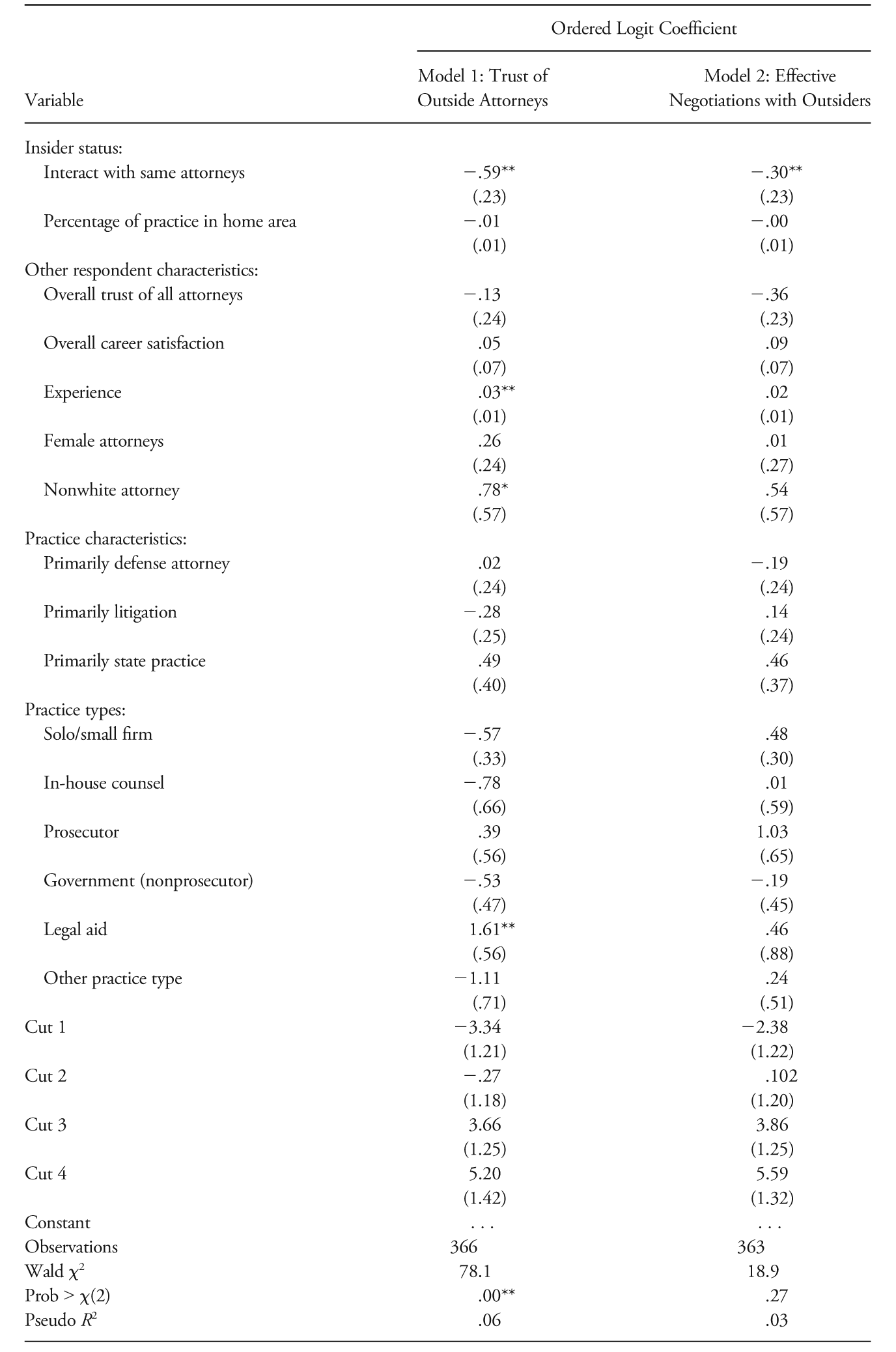
In table 3, we see that the main variables of interest concerning an attorney’s insider status perform largely as expected. As to trust of outside attorneys (model 1), attorneys who generally interact with the same attorneys repeatedly as well as those who spend a larger percentage of time in their home area are less trusting of outside attorneys. This is indicated by the negative and statistically significant coefficients for both insider status variables in model 1. This relationship exists even after controlling for other individual and practice variables, such as race, gender, overall trust of attorneys, and practice types.Footnote 15 We do find that those who have been practicing for longer periods are more trusting of outsiders and that nonwhite attorneys are more trusting of outsiders than are white attorneys. Respondents practicing in rural areas are also less trusting of outside attorneys, after controlling for other factors. The results for generalized trust are somewhat counterintuitive, as respondents who express higher overall trust of attorneys are less trusting of outsiders in particular.
In model 2, the stronger the ties that an attorney has with his or her home area, as indicated by both attorney contacts and time spent practicing within the same geographic area, the less effective an attorney views negotiations with outsider attorneys. This is indicated by the negative and statistically significant results in both the insider status variables in model 2. Our other variables also perform in a similar fashion across models 1 and 2, as minority attorneys and those with more years of experience find negotiations with outsider attorneys more effective. In contrast to model 1, we see that neither overall trust of attorneys nor working in a rural area appears to influence perceptions of negotiations with out-group lawyers.Footnote 16
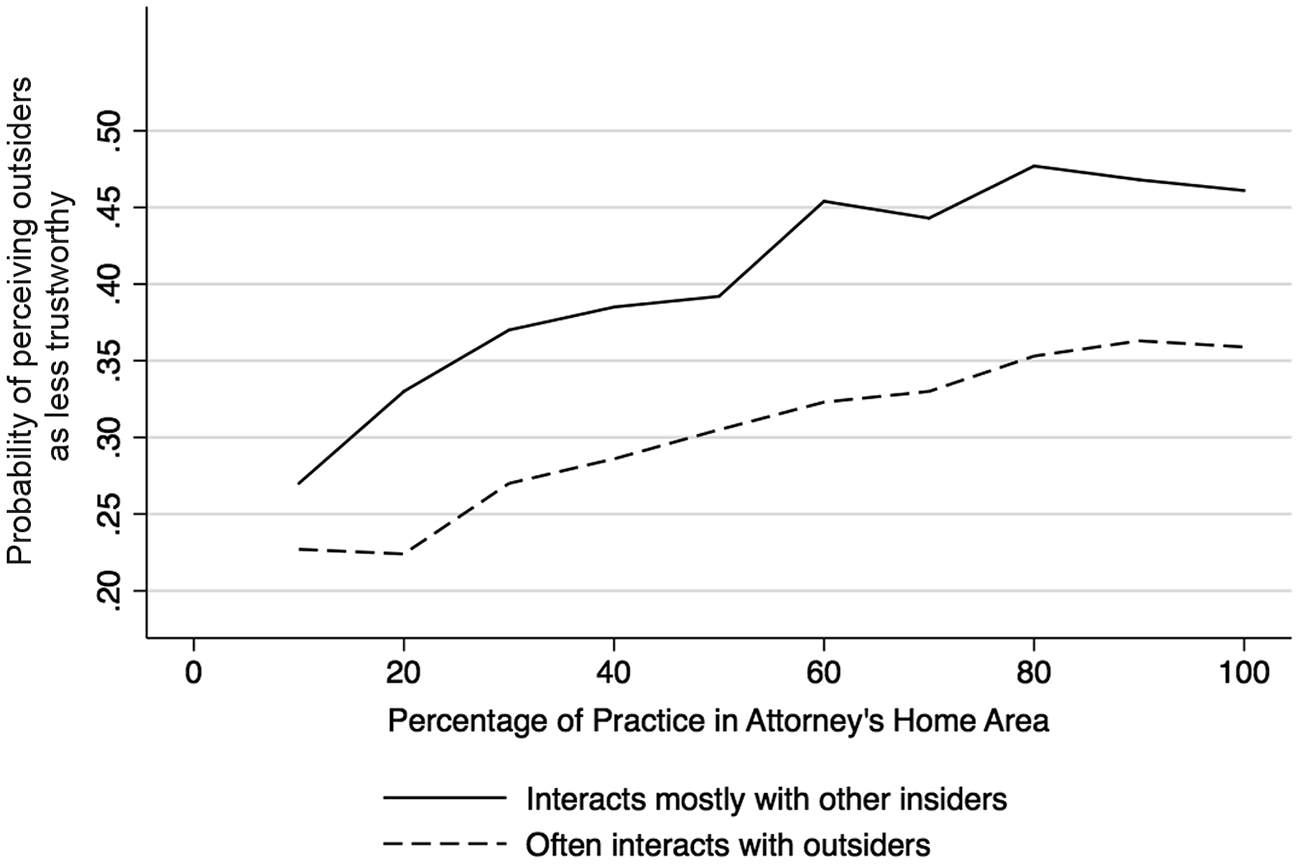
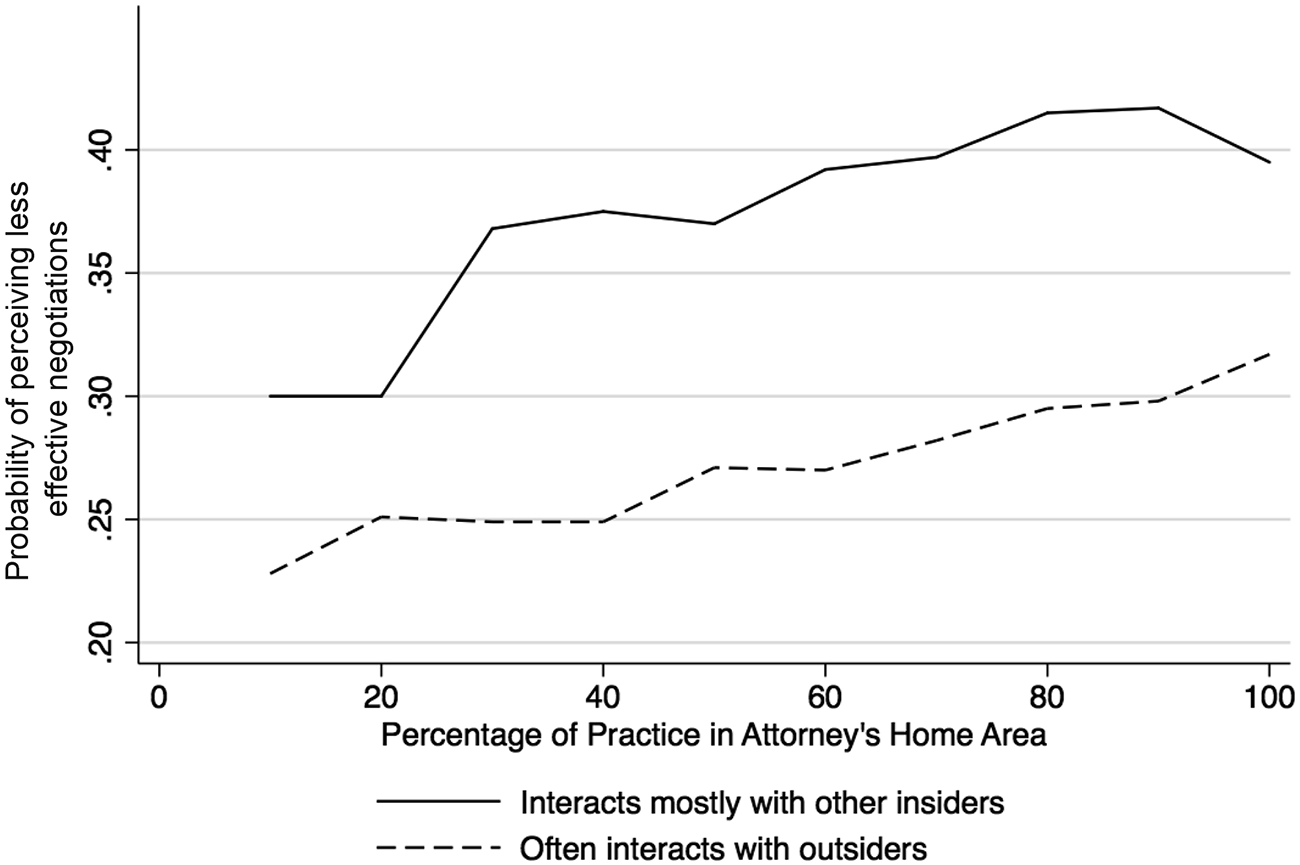
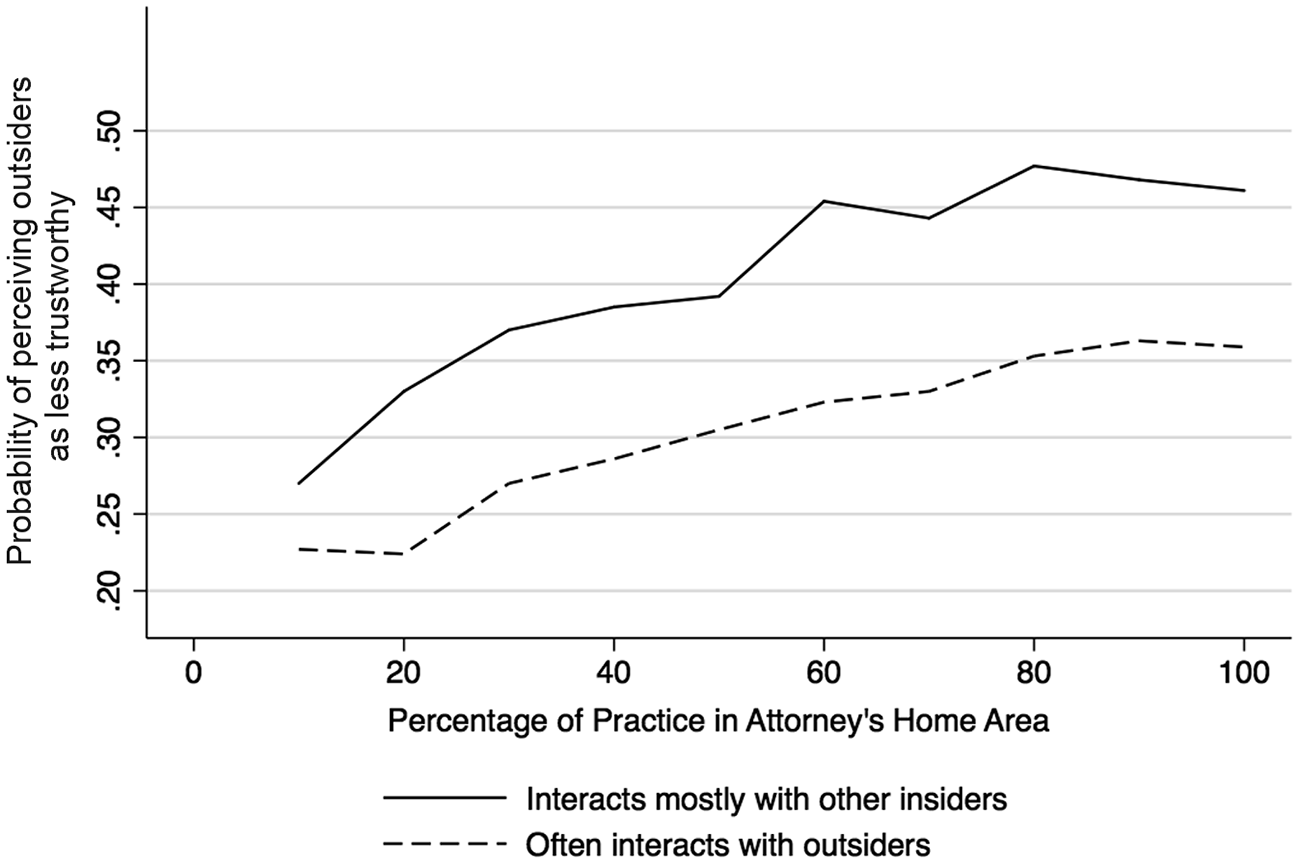
To explore the influence of outsider status further, figures 1 and 2 graph the predicted probabilities of reporting lower levels of trust (fig. 1) and less effective negotiations (fig. 2) based on the percentage of time lawyers spend in their home area, holding other factors constant. We include predictions for both those attorneys who interact mainly with the same attorneys repeatedly (insiders) as depicted by the solid line in each figure and those who interact with attorneys they do not know (outsiders) as shown by the dotted line in each graph. For figure 1, we see that distrust of outsiders rises significantly for those lawyers who spend a larger percentage of their time within their home areas. However, distrust is much higher for those attorneys who also interact mostly with other insiders. We see similar trends for negotiation effectiveness in figure 2. Here again, attorneys who spend more of their time in their home area are increasingly less likely to see fruitful negotiations with outsiders, but these trends are much more pronounced for those attorneys who primarily interact with other members outside of their immediate workgroup.
Distrust of outside attorneys
Effectiveness of negotiations with outsiders
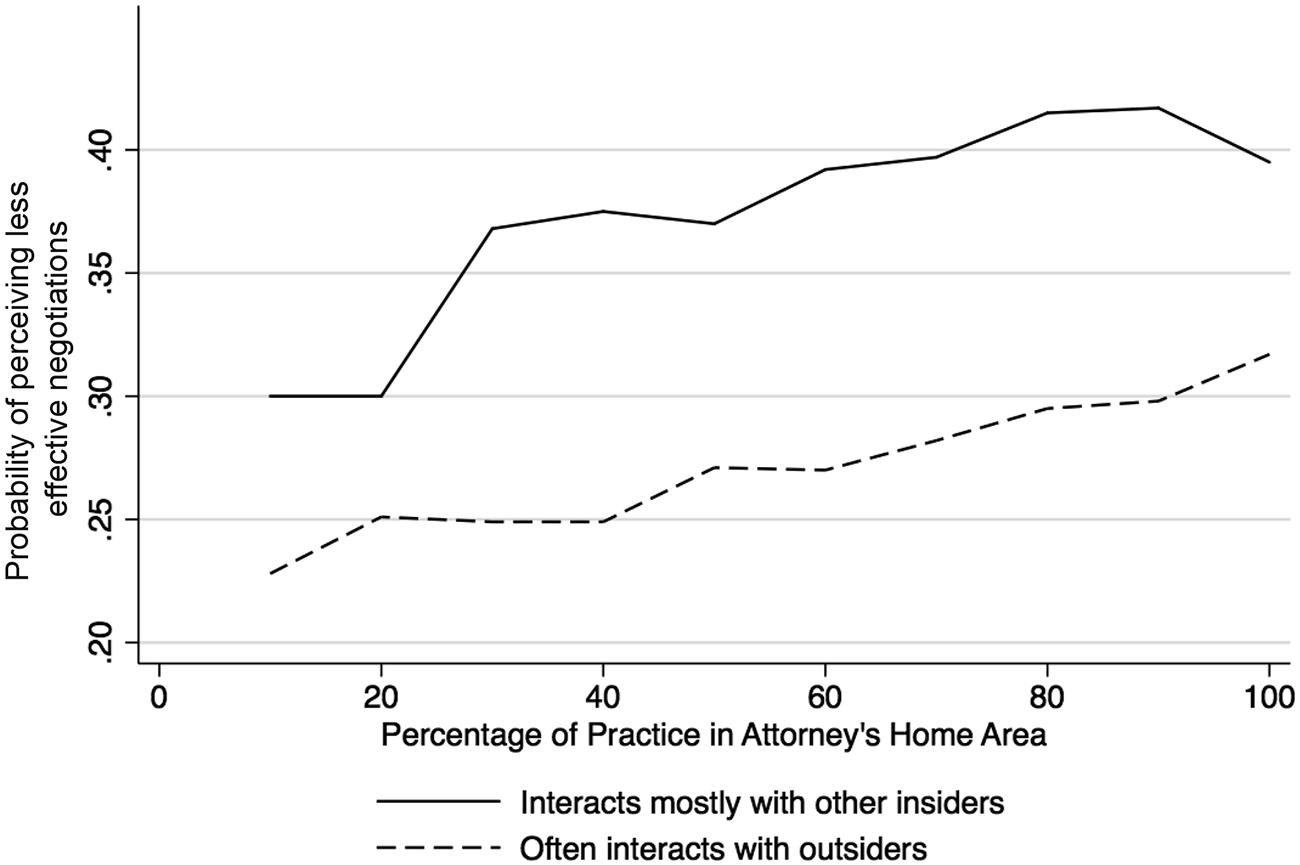
To illustrate, attorney A spends 80% of her practice time within her own area and routinely interacts with outsiders and attorneys she does not know. Attorney B is an attorney who spends the same amount of time in his home area (80%) but mainly interacts with other insiders he already knows. Attorney A has a .35 probability of reporting high distrust of those outside attorneys, while attorney B has a .48 probability of reporting distrust. Likewise, when examining effective negotiations with outsiders, attorney A finds negotiations with outsiders more fruitful, as she has a .30 probability of reporting less effective negotiations with outsiders. However, attorney B, who has fewer contacts with those outside his immediate workgroup, has a .42 probability of reporting less effective negotiations with outsiders.
Attorney Subgroup Models
Within the legal profession, wide variation exists in what it means to be an attorney across different practice settings, and this has implications for understanding insider and outsider status. For instance, a prosecutor will have very different working relationships with other attorneys than an attorney whose practice is more transactional in nature. A lawyer from a rural family law practice may approach divorce negotiations differently than an attorney from a large, urban firm (Mather et al. Reference Mather2001). Looking to the literature, research indicates that attorney interactions will vary by client type, firm size, geographic location, and legal specialty, among other factors.
Over time, the cohesion observed among legal professionals in early studies of the profession (Heinz and Laumann Reference Heinz1982) appears to have declined as a result of increased diversity, specialization, and the overall size of the profession (Heinz et al. Reference Heinz1998; Heinz et al. Reference Heinz2005). This has particular relevance for our inquiry, as specialization and diversity in the profession can create boundaries for forming professional relationships. In addition to firm size and client type, this scholarship indicates that attorneys’ interactions might also be diminished in the modern era, particularly in highly specialized subfields of law. On the other hand, Landon (Reference Landon1982, Reference Landon1992) maintains that rather than the types of clients represented, the characteristics of the community in which a lawyer practices actually account for the greatest difference in lawyers’ practice. In urban settings, lawyers who are primarily engaged in solo practice are at the bottom of the career pyramid, while in a rural setting, these may be the only jobs available. Furthermore, rural lawyers are more likely to come from the communities where they work, have stronger bonds to the community, and are more likely to hold leadership positions in the community. Landon’s research predicts that attorneys will have strong connections to their communities in rural settings.
Beyond the urban or rural setting, attorneys’ working relationships also differ depending on whether they work primarily in civil or criminal practice. As discussed above, criminal lawyers tend to work in “courtroom workgroups” in which attorneys and judges form long-term, close working relationships (Eisenstein and Jacob Reference Eisenstein1977; Ulmer and Kramer Reference Ulmer1996; Ulmer and Johnson Reference Ulmer2004; Haynes et al. Reference Haynes2010). In contrast, attorneys who work in civil practice may have less frequent interactions with opposing counsel and are more likely to have long-term relationships with their clients (Kritzer Reference Kritzer1990). Although attorneys engaged in civil practice do not have the same day-to-day working relationships with opposing counsel, negotiation and settlement are central features of civil practice (Kritzer Reference Kritzer1991, Reference Kritzer2004, Reference Kritzer2015). The need for speedy case processing, particularly for contingency fee practices (Kritzer Reference Kritzer1990), makes an attorney’s reputation for fairness and cooperation especially important in civil cases (Kritzer Reference Kritzer2004). The criminal and civil bars clearly structure attorney interactions in different ways, suggesting that attorneys’ perceptions of their working relationships might vary by practice type.
Despite these differences in practice areas, Kritzer’s work points to trust as a key factor in shaping attorneys’ working relationships across the board. Most legal conflicts, regardless of issue area, typically involve two sides that must work together to achieve a resolution. And while practice area does condition the type and frequency of attorney interactions, in general, lawyers prefer positive working relationships with adversaries and expect reciprocity in their working relationships with opposing counsel (Kritzer Reference Kritzer2015). For instance, the desire to expedite cases (for civil law practitioners) and to process greater volumes of cases (for practitioners in urban areas) also creates incentives for attorneys to engage in cooperative working relationships based on trust (Kritzer Reference Kritzer1990, Reference Kritzer2004, Reference Kritzer2015). Thus, dynamics related to the establishment of working relationships more generally may transcend differences in specialties and settings in the legal profession.
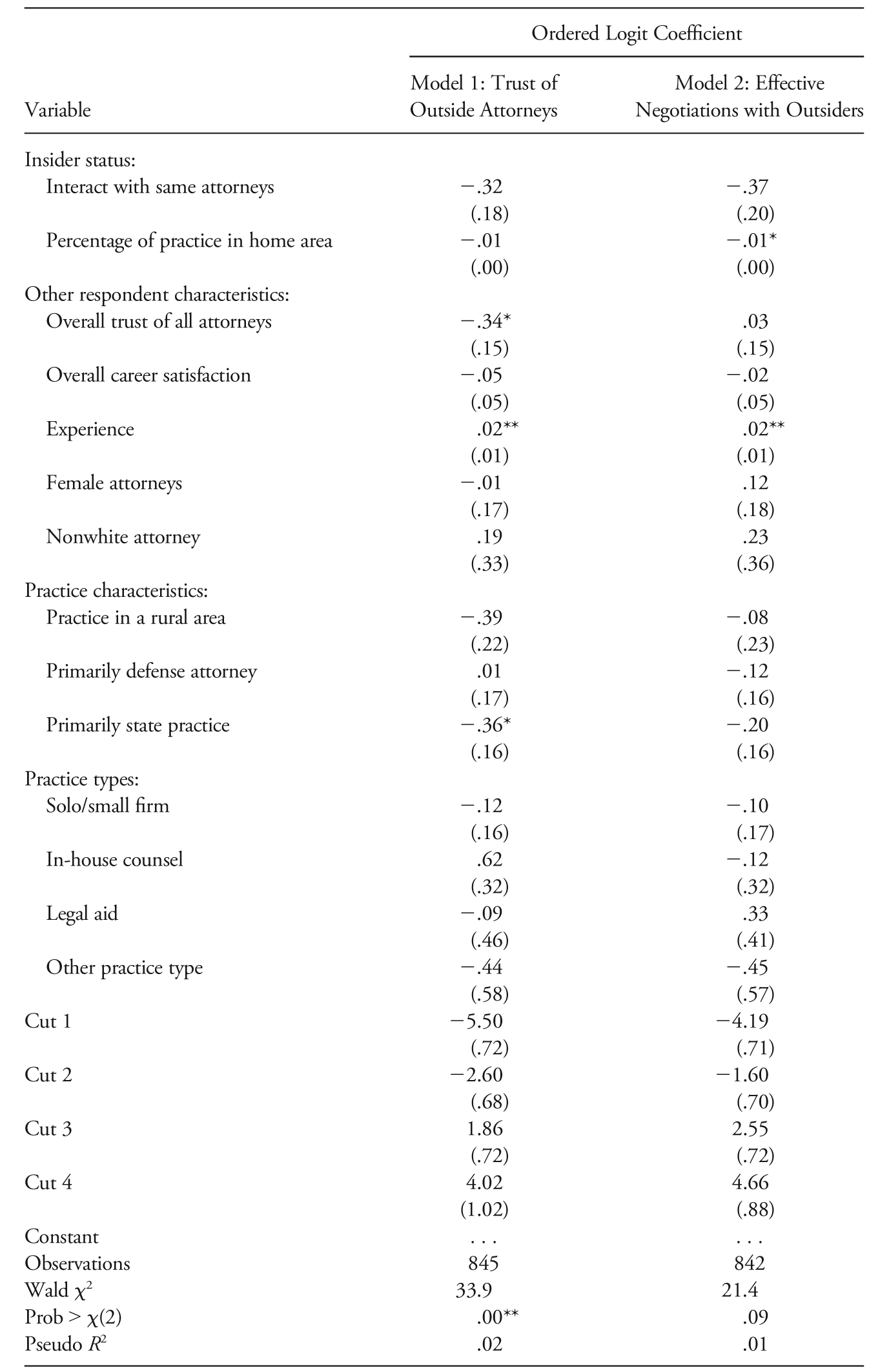
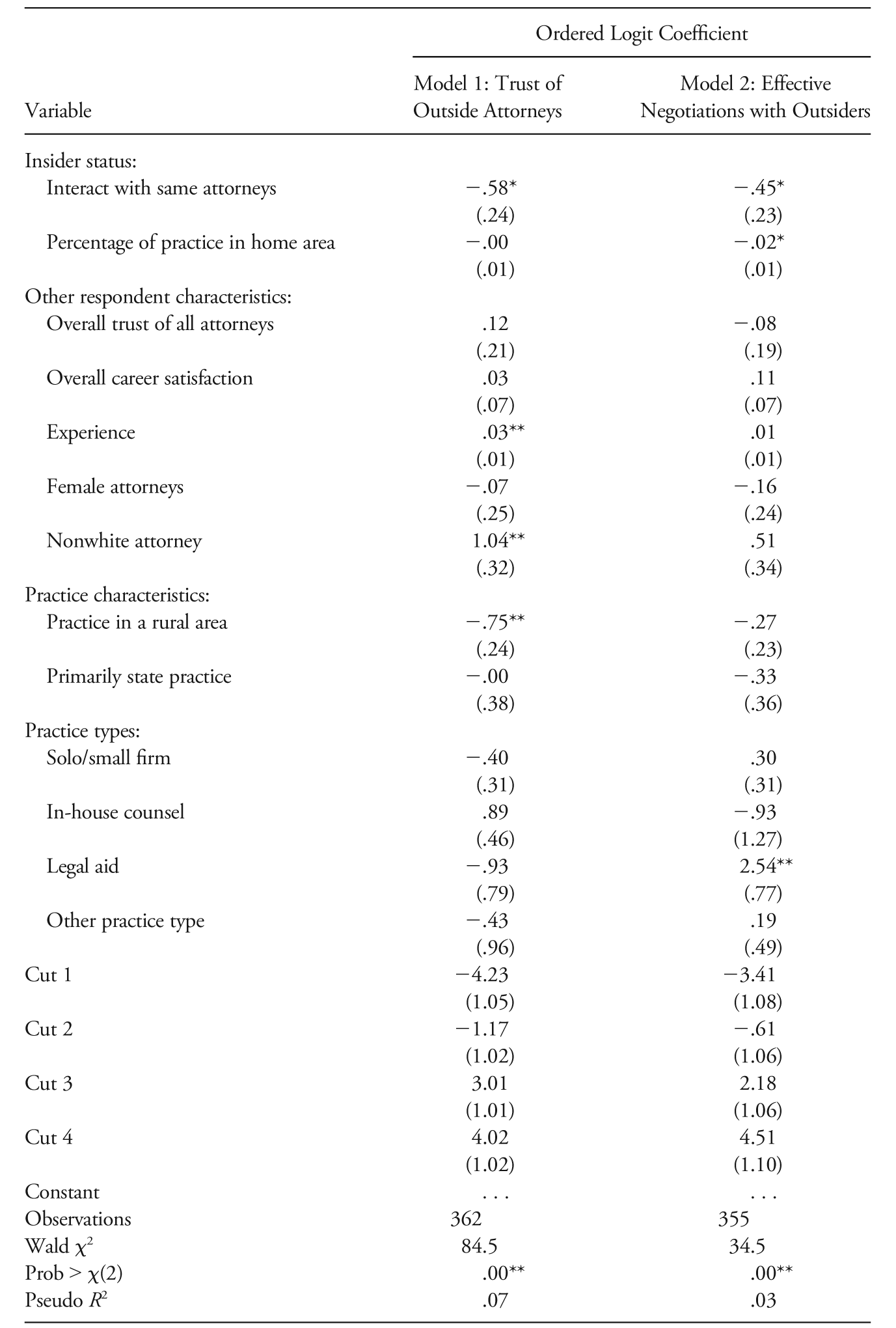
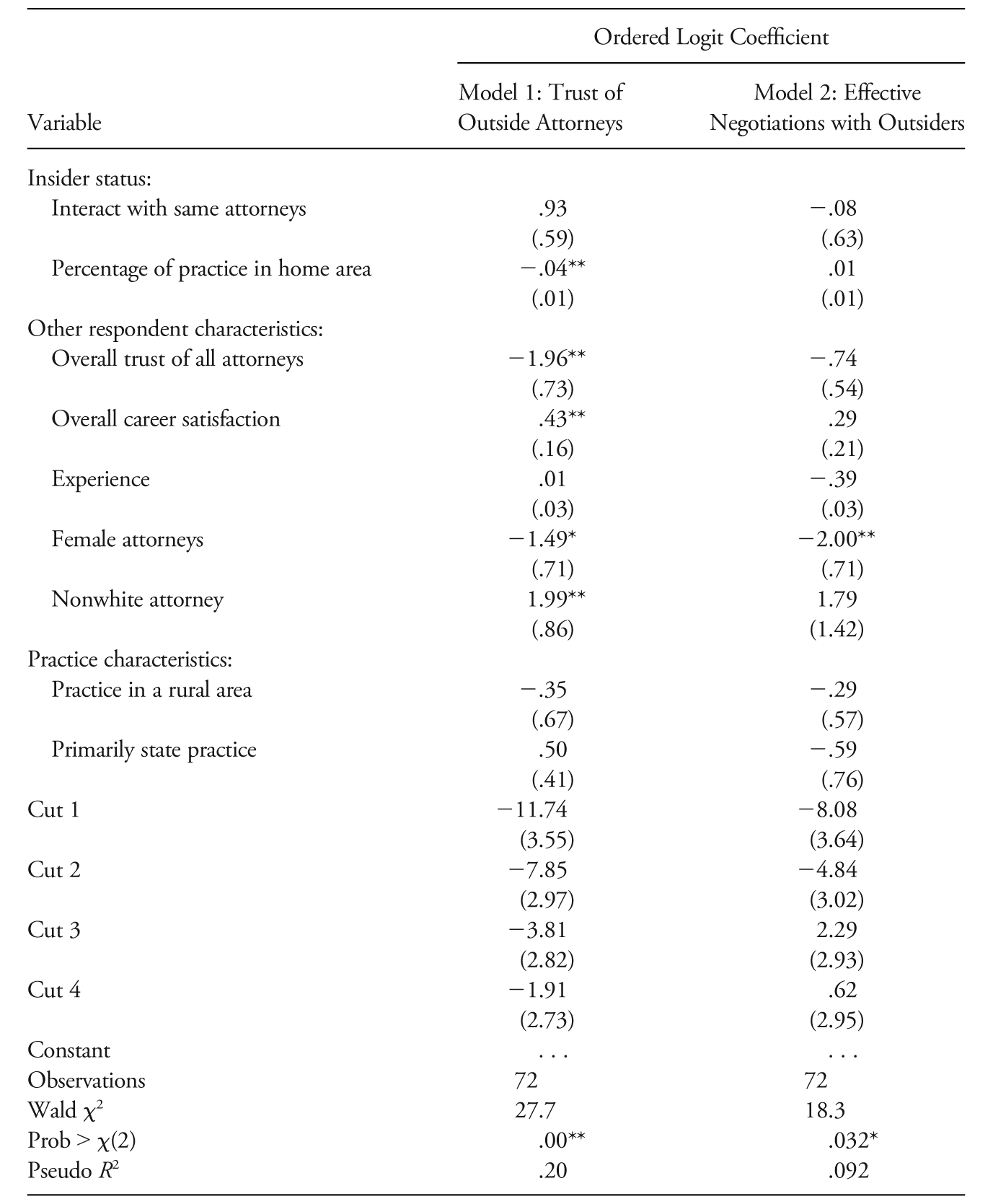
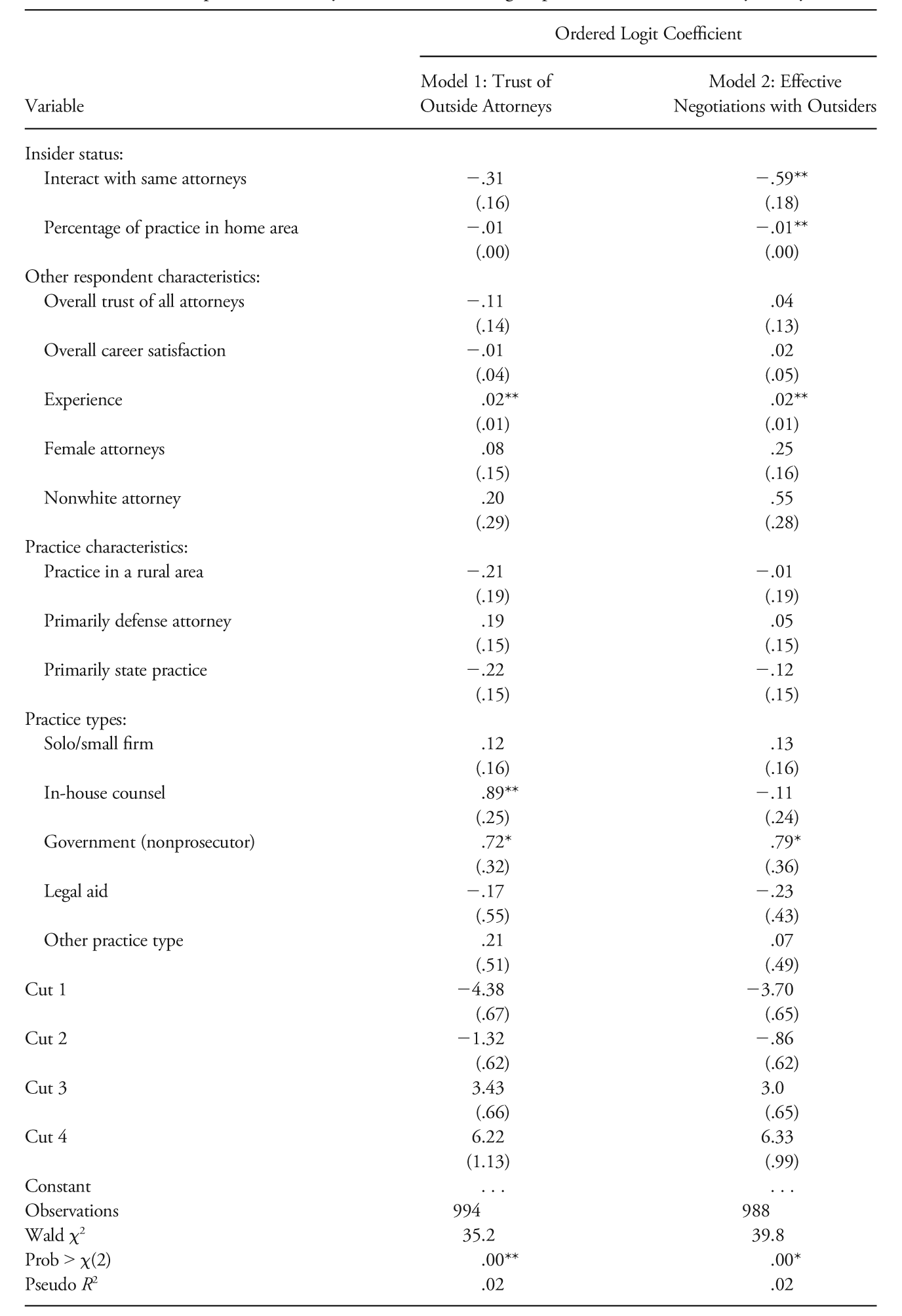
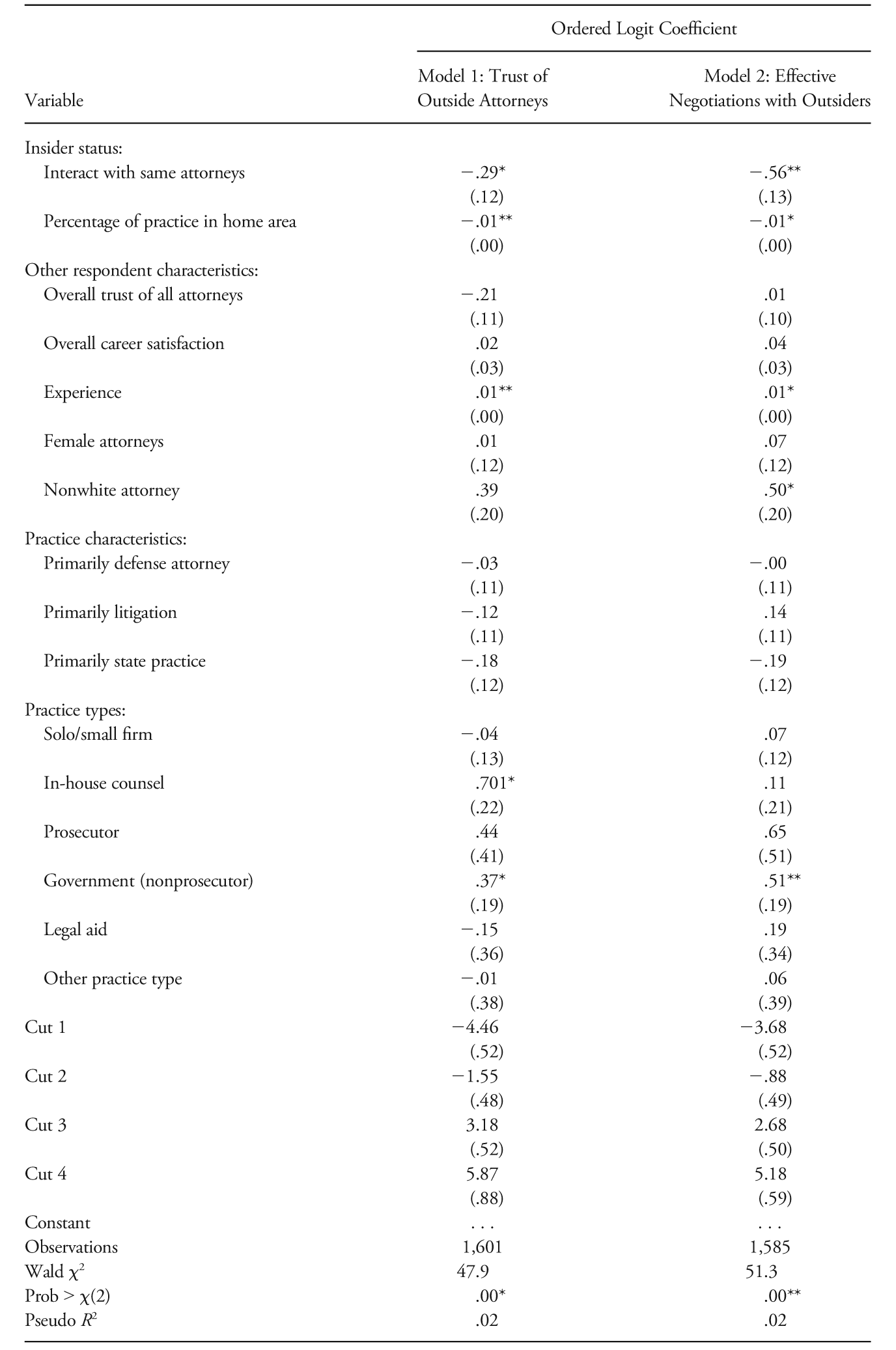
Building on our findings in table 3, we analyze insider status and working relationships of attorneys within specific practice areas and settings. While our general models do control for some practice characteristics, dividing the data into discrete groups based on practice type may allow us to better assess the perceptions of attorney trust and the effectiveness of negotiations as tied to the particular tasks performed by the lawyers. To uncover the effects within particular types of practices, we reran our models limiting the data to respondents of certain practice characteristics. Our seven specifications included all litigators (those who reported 50% or more of their practice was litigation), only civil litigators (those who reported 50% or more of their practice was litigation and did not practice criminal law), criminal defense attorneys, criminal prosecutors, transactional attorneys (defined as those who indicated working in the legal areas of contracts, bankruptcy, copyright, corporate, insurance, wills, real estate, and/or tax), all urban attorneys, and all rural attorneys.
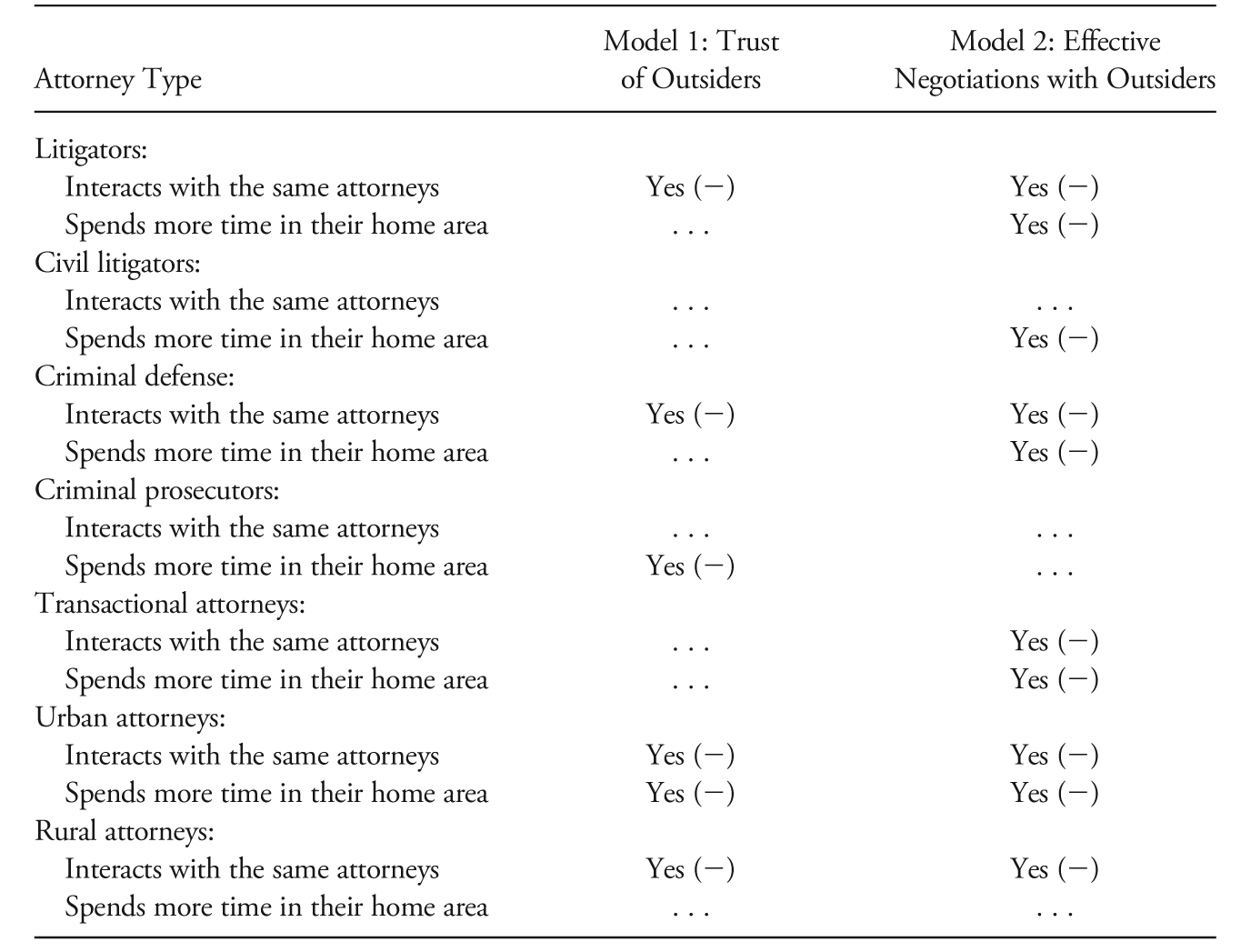
Table 4 summarizes the results of our insider status variables on both dependent variables (outsider trust and effective negotiations with outsiders) for each practice type. For ease of interpretation, we indicate whether there was a statistically significant effect and the direction (positive or negative) of the relationship for each significant variable pairing. Blank cells indicate that an insider status variable was not statistically significant in the model. (The full results of these analyses are available in app. B.)
Summary of Alternative Specifications
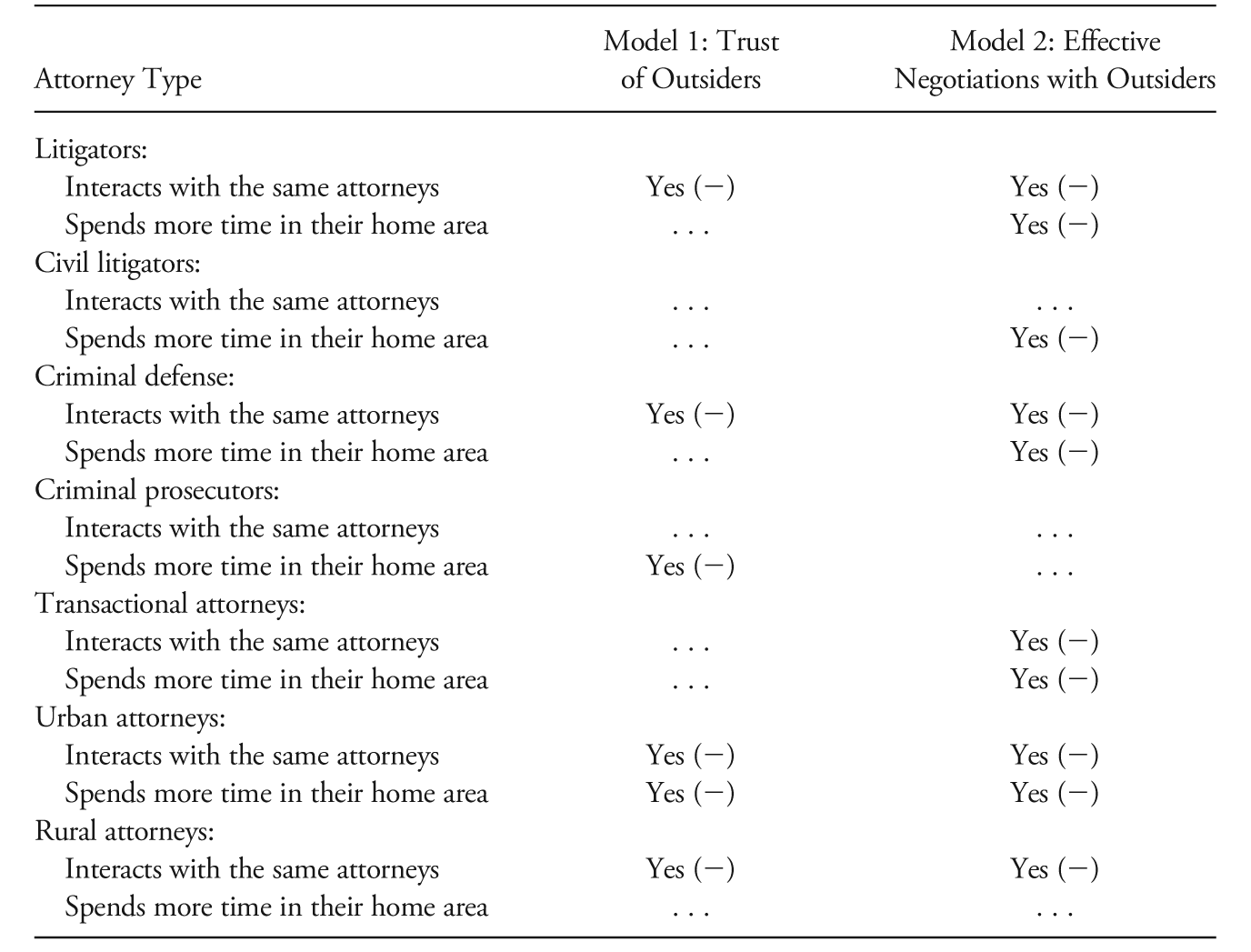
Note.—Entries in each cell indicate whether the relationship is statistically significant at p < .05 (two-tailed) and, if so, the direction of the effect in parentheses. Full model results are available in app. B.
In general, we see that our broad expectations about trust and insider status often hold up when examining specific practice areas, but not always. The insider status variables are statistically significant and in the predicted direction more often than not across the separate models. Overall we see that “interacting with the same attorneys” produces significant results more often than our “time spent in one’s home area” variable. This suggests that professional interactions (more so than geography) play a larger role in developing professional perceptions of attorney interactions.
With respect to particular practice characteristics, the results show that litigators who generally interact with the same attorneys repeatedly have lower trust of outsider attorneys and find negotiations less effective with outsiders. The more time they spend in their home area, the more likely litigators are to state that negotiations with outsiders are less effective. These findings are consistent with our expectations in hypotheses 1 and 2.
We observe noteworthy differences for other practice characteristics as well. Interestingly, while it would seem that insider status would affect litigators and criminal law attorneys but not transactional attorneys, the results show that transactional lawyers’ perceptions about negotiations are also influenced by their insider status. Transactional lawyers who interact with the same attorneys frequently and spend more time in their home areas were more likely to find negotiations with outsiders less effective. However, insider status did not affect responses on trust of outsiders for the transactional attorneys group.
The results also show differences within the field of criminal law. Criminal defense attorneys who identify closer ties to their workgroup report less trust and less effective negotiations with outsiders. For criminal prosecutors, however, repeated interactions were not significant factors in regard to trust or negotiations with outsiders, although time spent in the prosecutor’s home area does influence trust of outsider attorneys. Part of this could be related to the variation of the subset, as prosecutors overall were more likely to report a higher percentage of their practice in their home area and were more likely to indicate that they interacted with the same attorneys repeatedly.Footnote 17
Finally, when analyzing the data for urban and rural attorneys, urban attorneys’ behavior is consistent with our expectations in hypotheses 1 and 2, but rural attorneys are not as strongly affected by ties to the local legal community. Urban attorneys who interact more with the same lawyers are less trusting and view negotiations with outsiders negatively. For rural attorneys, interactions matter for both trust levels and negotiations, but spending more time within their home areas was not significant. This again could be due to less variation among rural attorneys, as they reported spending more time in their home area and were more likely to interact with the same attorneys than the sample overall.Footnote 18 In sum, while the findings of our subgroup analyses do not perfectly mirror the results from the all-attorneys models, they do generally comport with the assessment that attorneys with a greater connection to their local work area are more distrustful and pessimistic in their assessments of interactions with those from outside that area.
Discussion
Taken as a whole, our results clearly point to several larger themes. Attorneys’ interactions with other lawyers are colored by their status as insiders or outsiders. While all lawyers share many of the same experiences such as their legal education and professional socialization, we still see varying degrees of trust based on more specific in-group and out-group status. One conclusion that may be drawn from our results is that isolation from outsiders may breed distrust in nonlocal attorneys. We consistently find that those attorneys who spend less time outside of their home areas and interact only within their in-group are more distrusting of outsiders. This is true even of those who are generally more trusting of attorneys overall. Although it is unclear whether distrustful attorneys simply limit their interactions to their local community or whether working in a relatively isolated setting breeds distrust, both causal pathways suggest a potential cyclical effect in which fewer contacts with outside attorneys foster distrust, which creates a disincentive for attorneys to work with outside attorneys, which itself breeds even more distrust.
While our data do not examine case outcomes, being perceived as an insider by fellow attorneys may offer an initial advantage in pretrial negotiations. Indeed, part of being an insider includes knowing local norms about settlement and what a case is worth, as well as the cultivation of a reputation about the types of clients represented (Kritzer Reference Kritzer1991; Mather et al. Reference Mather2001). Because attorneys have the duty to act in the best interest of their clients, this suggests that consulting with an attorney from the local area or referring clients to local counsel may be the best course of action. While expertise in a particular area of law, resources, or better training may offset any “home court” advantages, our results support prior studies and anecdotal evidence that hiring an in-group attorney can alter the negotiations for each case.
Of course, as with any project, there are some limitations to our findings. First, while insider and outside status appear to affect legal practice broadly, the research also suggests that our focus on negotiations may be less useful for understanding legal specialties that rely less on interactions with other attorneys. Indeed, as the results of the subgroup analyses in table 4 demonstrate, insider status manifests itself differently across different practice settings. Given the broad nature of our survey instrument, we are unable to delve more deeply into the differences detected between groups such as criminal defense attorneys and prosecutors, but a more targeted approach (e.g., Kritzer Reference Kritzer1991) could identify the factors contributing to this variation. We also are unable to parse out whether differences in practice areas are a function of sorting, with more trusting individuals gravitating toward particular areas, although given the robustness of our results about distrust of outsiders, this seems unlikely.
Second, because our sampling pool includes attorneys licensed from only one state, the generalizability of our findings may appear more limited. As procedures and professional culture may change from state to state, it is possible that surveying a different state or set of states might result in different responses. However, our data also include attorneys who hail from outside North Carolina; one-tenth of our sample indicated that although they were licensed in North Carolina, their primary practice was in another state. We also recognize that, in spite of contacting all licensed attorneys in the state, there may be some selection bias involved in who opted to complete the survey, though we have no reason to suspect that a similar dynamic would not be at work in other states. Fortunately, the demographics of our sample reflect the composition of both the North Carolina State Bar and US attorney demographic estimates, and the distribution of practice types suggests that our sample is broadly representative of typical practice areas.
Building on our findings, researchers could use case studies to investigate how insider and outsider status conditions the settlement process. While attorney negotiations are normally outside the scope of official court records, future work could also examine general trends from plea bargains to investigate whether disparate treatment exists for criminal defendants represented by out-group attorneys when compared to defendants represented by in-group lawyers. Likewise, examining motions for sanctions following alleged discovery abuses may reveal differing trends when comparing filings against outsiders and those against insiders. Beyond the distinctions identified here, attorneys may be viewed as insiders or outsiders in other contexts, such as being associated with economically affluent (or depressed) areas. Litigants, too, may be categorized as insiders or outsiders, which may mediate the impact of a local or outsider attorney in negotiations and case outcomes. The influence of insider status (for litigants as well as attorneys) could also result in disparate treatment from other legal actors, such as judges or court staff. These and other routes of exploration may help us to better understand the dynamics of attorney relationships and the influence on case outcomes.
While much of the social science and legal scholarship about the courts focuses on judicial behavior, this project joins the growing line of research that examines our judicial system without focusing on someone wearing a black robe. Given that such a high percentage of disputes are resolved through negotiations between the parties, it is important to investigate attorney relationships, trust levels, and the impact that those relationships have on our legal system. However, much of these interactions go on (literally) behind closed doors, making it difficult for researchers to observe these phenomena and identify key trends. By moving beyond reliance on anecdotes, this study demonstrates how a systematic examination of attorneys’ working relationships can uncover important trends that have both practical and theoretical implications for the American legal system.
Appendix A Survey Instrument
-
1. For your particular practice, would you describe your “home” geographic area where you normally practice as
one specific city
one specific county
a judicial district, precinct, or circuit that includes multiple cities and/or counties
something else
-
2. Overall, would you say that …
attorneys are generally more trustworthy than the general public
attorneys are about as equally trustworthy as the general public
attorneys are less trustworthy than the general public
-
3. In general, when you are working with attorneys (outside of your agency/firm), do you find yourself interacting with the same attorneys repeatedly?
I generally interact with the same attorneys repeatedly
I interact with a mix of the same attorneys and attorneys I don’t know
I generally interact with attorneys I don’t know
I rarely interact with any other attorneys outside of my agency/firm
-
4. When you have a matter or case with an attorney from outside your “home” area, would you describe your level of trust with those “outside” attorneys as
much lower than attorneys in your home area
somewhat lower than attorneys in your home area
about the same as attorneys in your home area
somewhat higher than attorneys in your home area
much higher than attorneys in your home area
-
5. When you have a matter or case with an attorney from outside your home area, how would you generally describe any negotiations (including settlements and plea bargains) with opposing counsel?
Negotiations are much less effective than negotiations with lawyers from my area
Negotiations are somewhat less effective than negotiations with lawyers from my area
Negotiations are equally effective with attorneys from my area and with those outside my home area
Negotiations are somewhat more effective than negotiations with lawyers from my area
Negotiations are much more effective than negotiations with lawyers from my area
-
6. In general, when thinking about discovery abuses (such as an opposing attorney withholding, delaying, or manufacturing information that you believe you have a legal right to view), would you say abuses occur
more often by attorneys outside my home area than attorneys from my home area
about the same by attorneys from outside and from my home area
more often by attorneys from my home area than attorneys outside my home area
-
7. In what year did you pass the bar?
-
8. Do you practice primarily in North Carolina or another state?
North Carolina
Another state
-
9. In what year did you begin working at this primary geographic “home area”?
-
10. At what law school did you earn your JD?
-
11. What is your gender?
Male
Female
-
12. How would you describe your race/ethnicity?
White/Caucasian
Black or African American
American Indian or Alaska Native
Asian
Hispanic, Latino, or Spanish origin
Other
-
13. Which one below best describes your practice?
solo private practitioner
small private firm (2 to 5 attorneys)
medium private firm (6 to 19 attorneys)
large private firm (20 or more attorneys)
in-house counsel for a private business or corporation
in-house counsel for a non-profit organization
government attorney
legal aid attorney
other
-
14. Approximately how much of your work takes place in the “home area” or primary work location?
-
15. Do you consider your home area “urban” or “rural”?
Urban (a population of 50,000 or more)
Rural (a population under 50,000)
-
16. Do you practice primarily in state or federal court?
primarily at the state level
primarily at the federal level
about equal, state and federal
-
17. Approximately what percentage of your practice do you consider litigation, either civil or criminal?
-
18. Would you say you more often represent
defendants
plaintiffs/prosecution
about equal between plaintiffs and defendants
-
19. How satisfied would you say you are with your career as an attorney? (slide the marker to correspond to your answer)

Appendix B
Relationships with Attorneys Outside the Workgroup (Litigators Only)
Note.—Robust standard errors are in parentheses.
*. p < .05 (two tailed).
**. p < .01 (two tailed).
Relationships with Attorneys Outside the Workgroup (Civil Litigators Only)
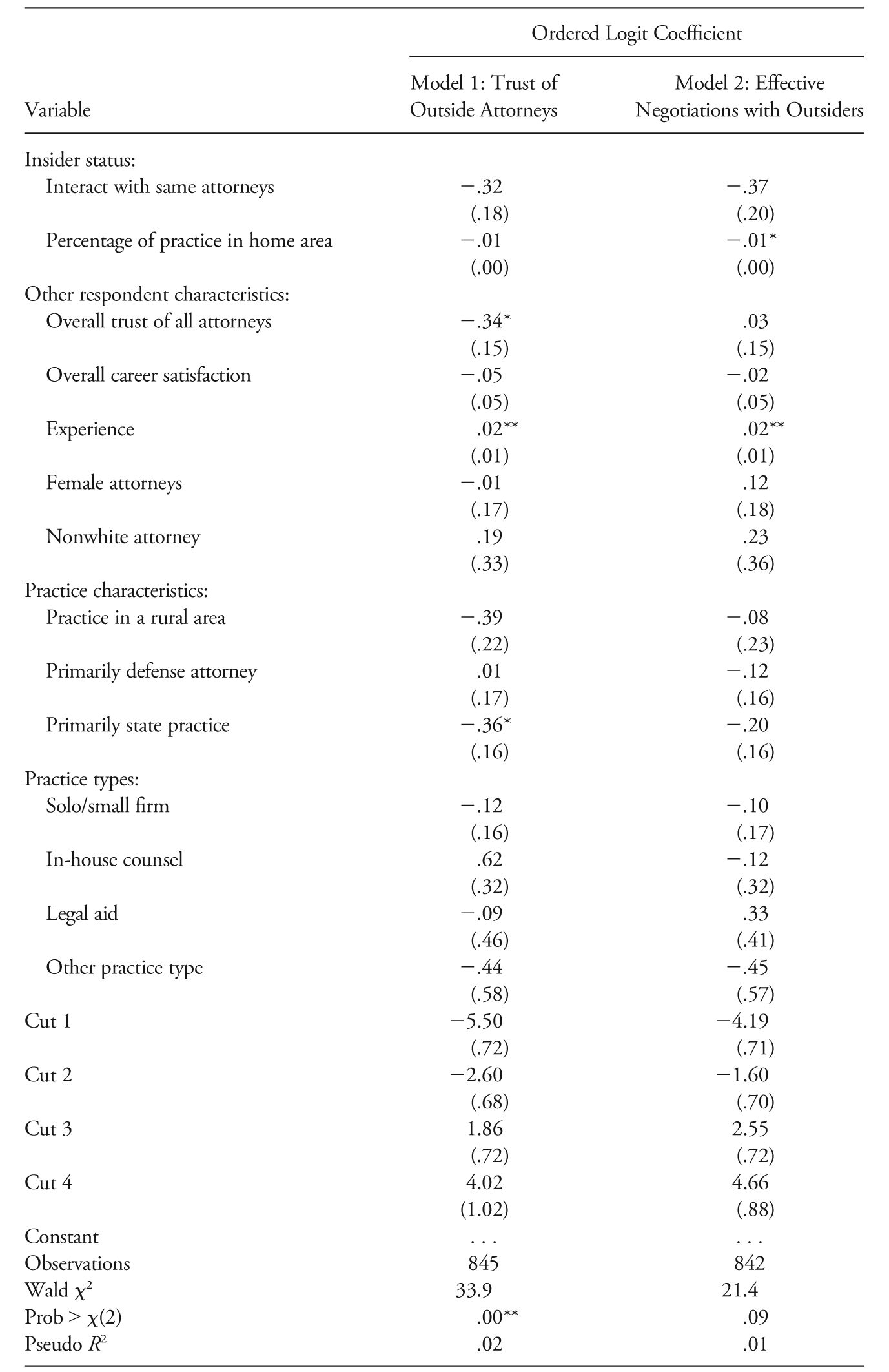
Note.—Robust standard errors are in parentheses.
*. p < .05 (two tailed).
**. p < .01 (two tailed).
Relationships with Attorneys Outside the Workgroup (Criminal Defense Attorneys Only)
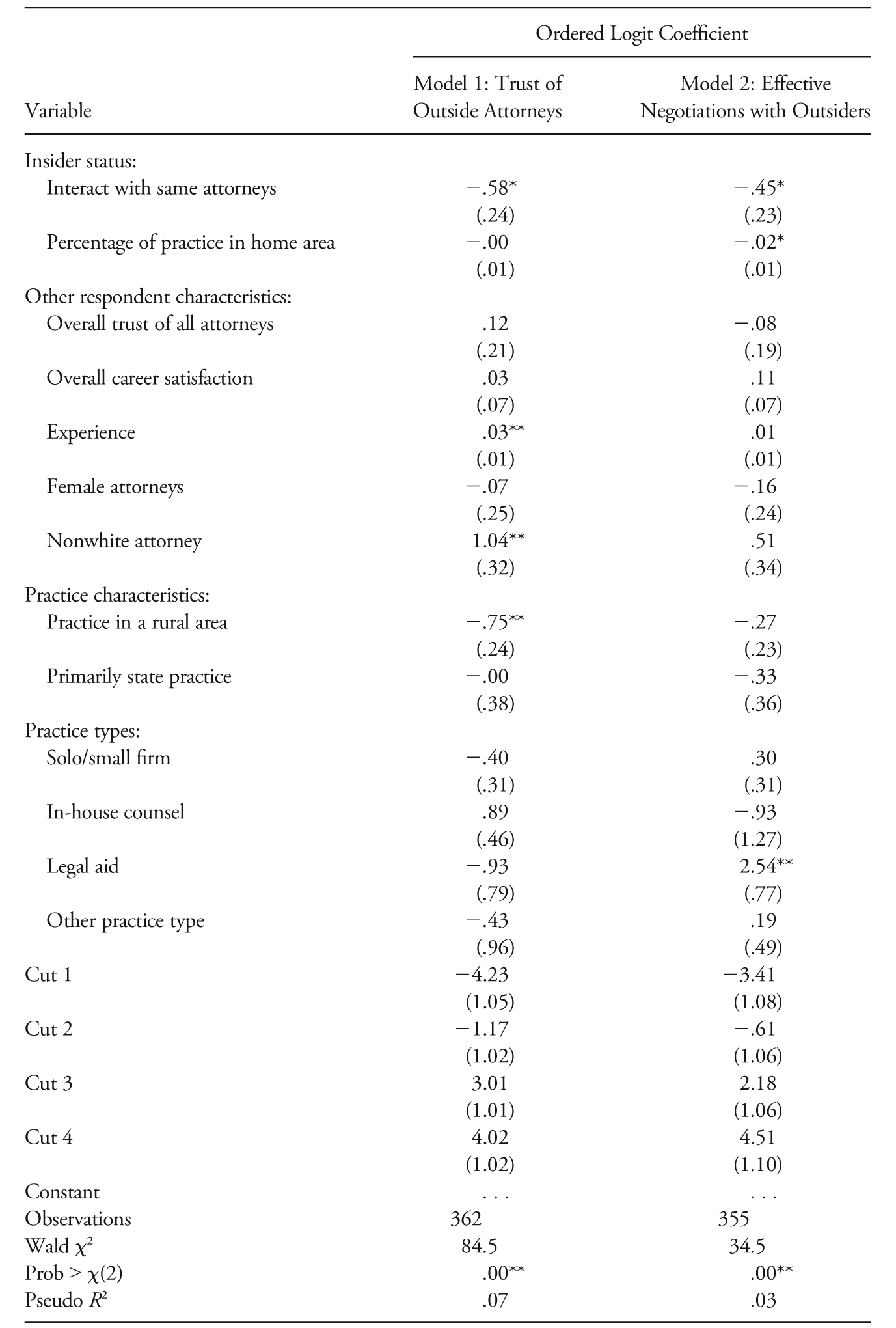
Note.—Robust standard errors are in parentheses.
*. p < .05 (two tailed).
**. p < .01 (two tailed).
Relationships with Attorneys Outside the Workgroup (Criminal Prosecutors Only)
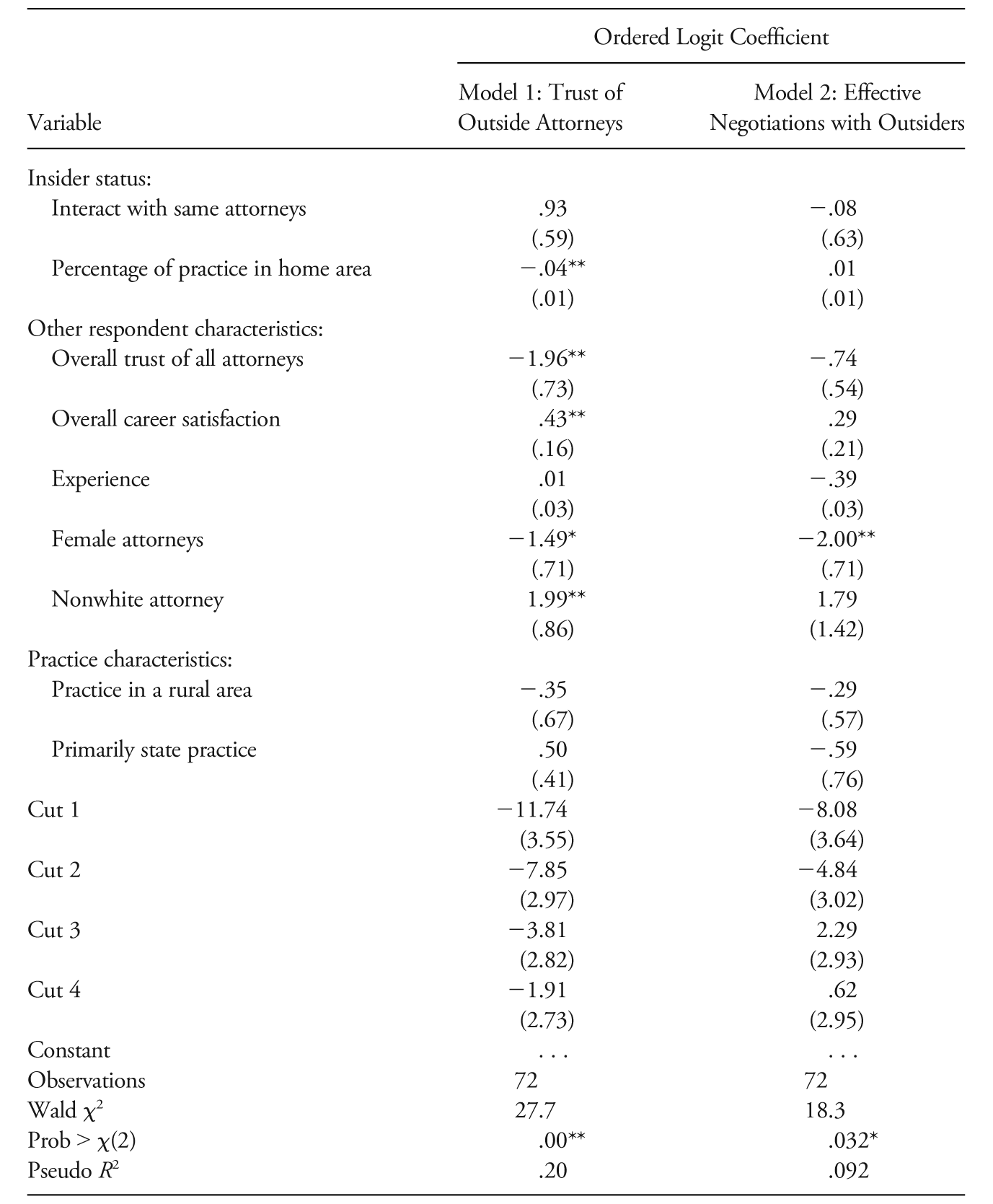
Note.—Robust standard errors are in parentheses.
*. p < .05 (two tailed).
**. p < .01 (two tailed).
Relationships with Attorneys Outside the Workgroup (Transactional Attorneys Only)
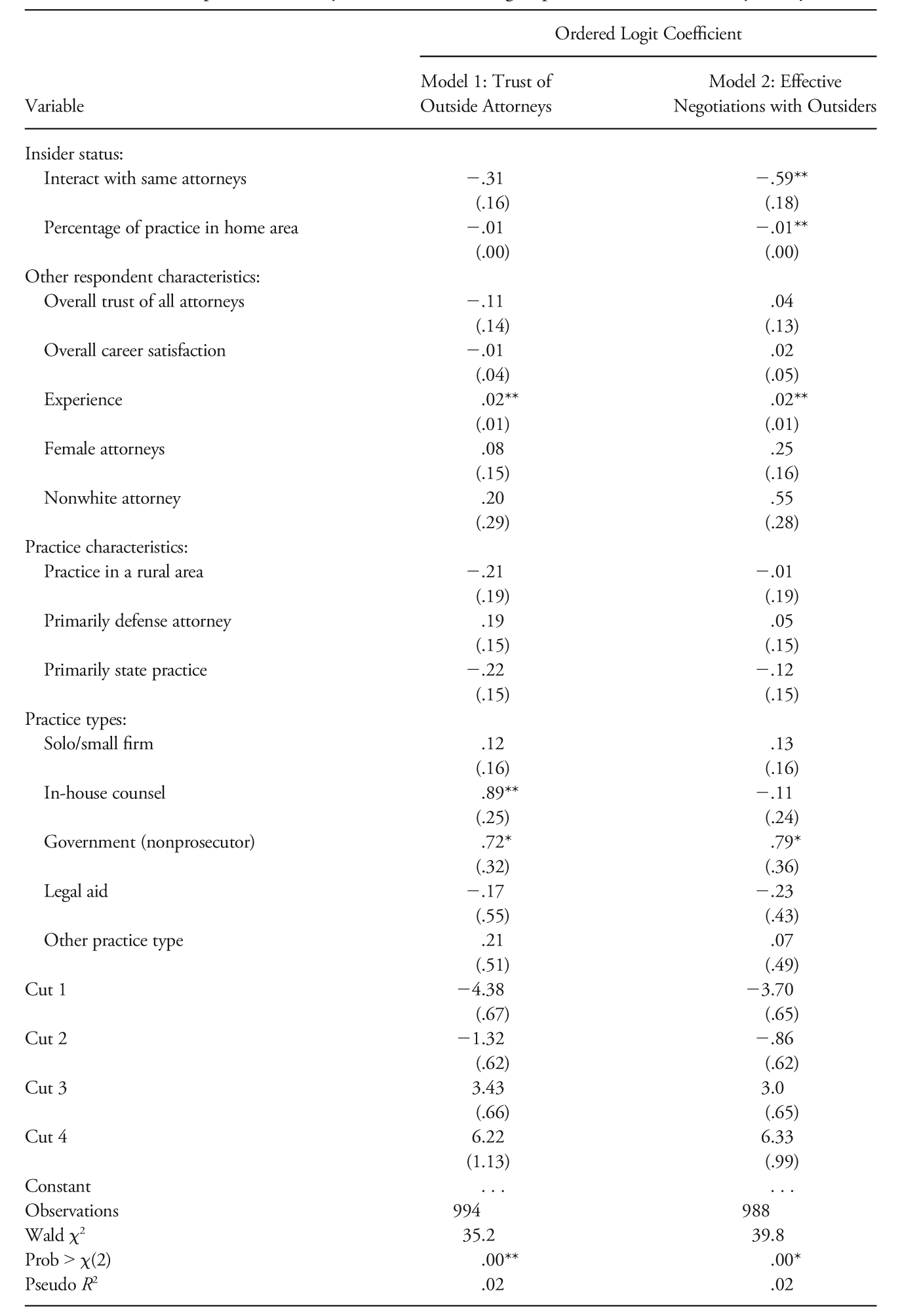
Note.—Robust standard errors are in parentheses.
*. p < .05 (two tailed).
**. p < .01 (two tailed).
Relationships with Attorneys Outside the Workgroup (Urban Attorneys Only)
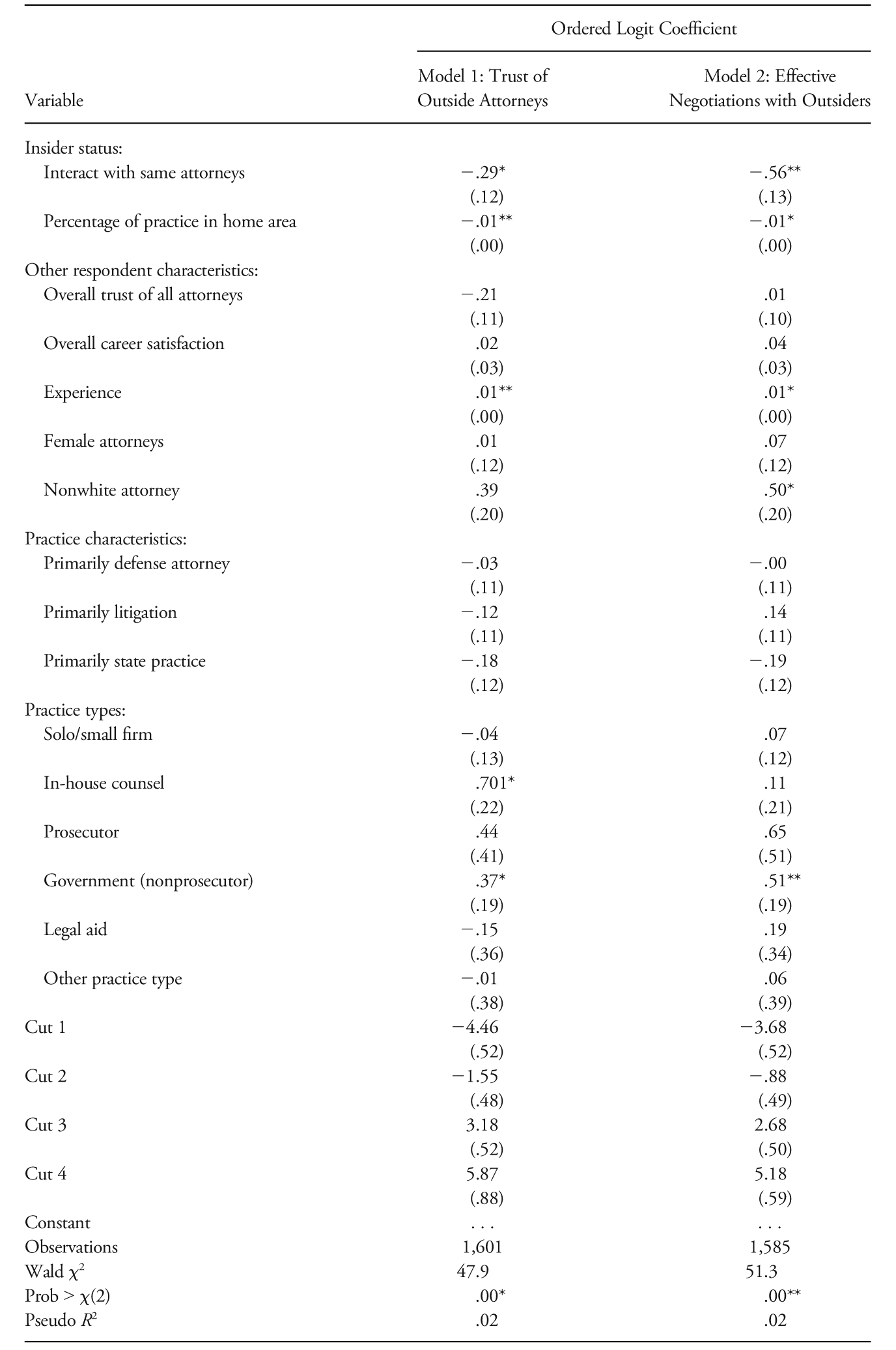
Note.—Robust standard errors are in parentheses.
*. p < .05 (two tailed).
**. p < .01 (two tailed).
Relationships with Attorneys Outside the Workgroup (Rural Attorneys Only)
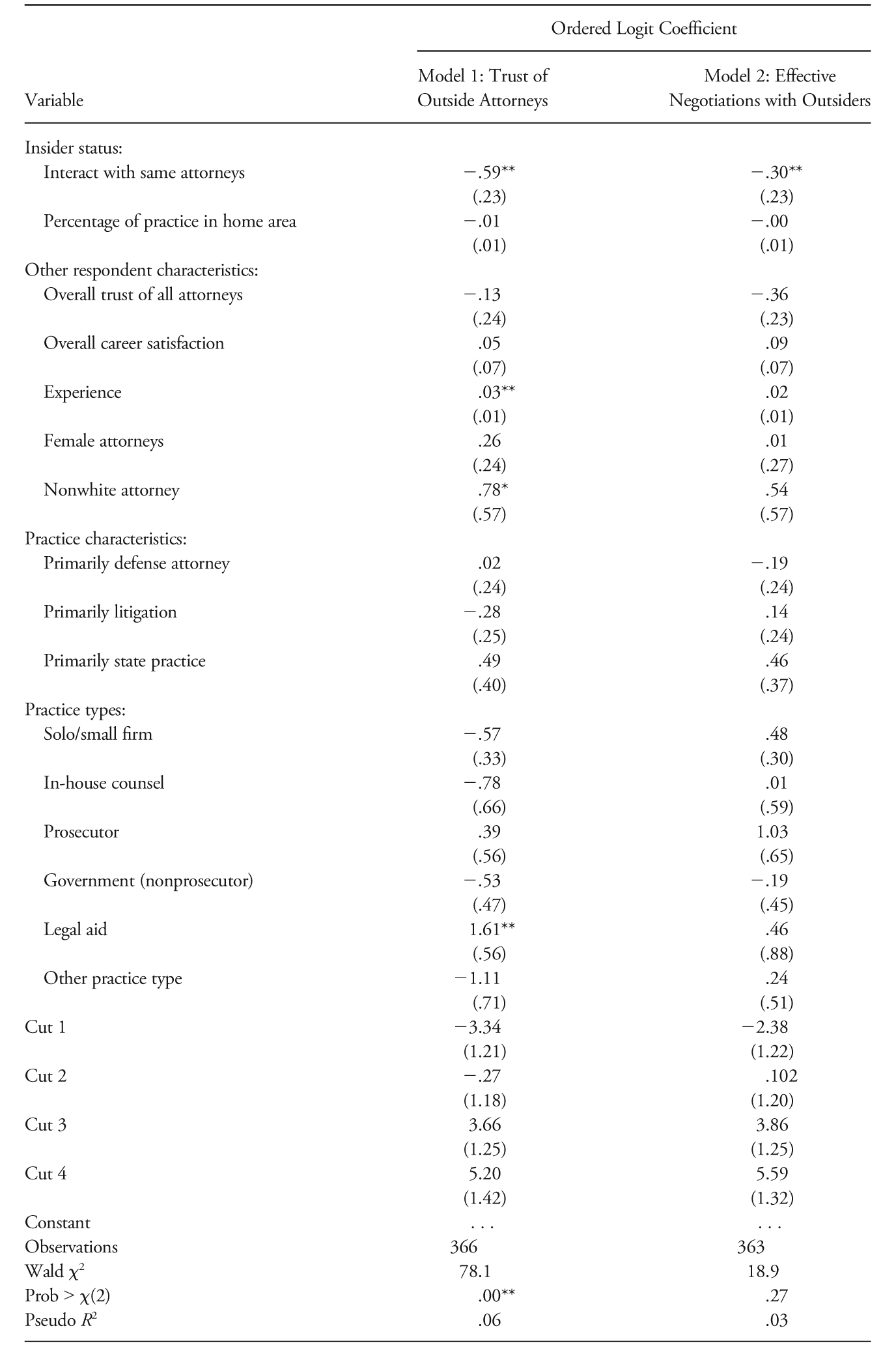
Note.—Robust standard errors are in parentheses.
*. p < .05 (two tailed).
**. p < .01 (two tailed).