Proteins are fundamental macronutrients required for the structure, function and regulation of tissues and organs in all living organisms. They are essential for maintaining life, playing crucial roles in cellular processes, enzymatic reactions, immune responses and metabolic pathways. Along with lipids and carbohydrates, proteins form the triad of macromolecules that sustain biological systems(Reference Damodaran, Damodaran and Paraf1).
Historically, the importance of dietary protein was recognised as early as 1816 when the French physiologist François Magendie demonstrated the necessity of nitrogen-containing compounds in sustaining life(Reference Griminger, Scanes and Sturkie2). The term ‘protein’, derived from the Greek word ‘proteios’ meaning ‘primary’, was later introduced in 1838 by Gerard J. Mulder with the guidance of Jöns J. Berzelius(Reference Nadathur, Wanasundara and Scanlin3). The discovery of amino acids in the 19th century further elucidated protein structure and function, leading to the recognition of their fundamental role in nutrition(Reference Vickery4).
Biochemically, proteins are composed of 20 naturally occurring amino acids, all sharing carboxyl (-COOH) and amino (-NH2) functional groups but differing in their side chains, which determine their biochemical properties. These amino acids are linked in various sequences to form peptides and proteins, creating highly diverse molecular structures. The significance of amino acid metabolism extends beyond protein synthesis. Surplus amino acids are deaminated, with their carbon skeletons utilised for energy production, gluconeogenesis, lipogenesis and nucleotide synthesis. This highlights the metabolic adaptability of amino acids in maintaining energy balance, especially during fasting or energy-demanding conditions. Importantly, the loss of body proteins equates to functional impairments, reinforcing the necessity of adequate dietary protein intake(Reference Carbone and Pasiakos5). In addition, amino acids serve as precursors for signalling molecules, including hormones, neurotransmitters and cytokines, essential for physiological regulation.
Dietary proteins serve as both structural and metabolic components in the human body. Upon ingestion, proteins undergo enzymatic hydrolysis by gastric and intestinal proteases, breaking down into absorbable dipeptides, tripeptides and free amino acids at the small intestine (primarily in the duodenum and jejunum). These smaller molecules are transported across the intestinal epithelium into the bloodstream via specific transporters, ensuring their availability for cellular function. The majority of dietary protein (over 90 %) is absorbed in the small intestine; however, a portion escapes digestion and reaches the colon. This undigested fraction becomes a substrate for microbial metabolism (fermentation), where it is utilised by the gut microbiota as a source of carbon, nitrogen and energy, producing metabolites such as short chain fatty acids (SCFA), branched-chain fatty acids (BCFA), ammonia and others(Reference Bartlett and Kleiner6).
Unlike lipids and carbohydrates, proteins are not stored in significant energy reserves. In this way, continuous dietary intake is necessary to prevent muscle breakdown and maintain physiological homeostasis(Reference Wu7). According to WHO/FAO/UNU recommendations, a daily protein intake of approximately 0·7 g/kg of body weight is necessary to maintain nitrogen balance in healthy adults, with specific requirements varying based on age, physiological status and gender(Reference Westerterp-Plantenga, Nieuwenhuizen and Tomé8). Protein should contribute 10–15 % of total daily energy intake, alongside 55–65 % from carbohydrates and 20–30 % from lipids, to ensure a balanced and nutritionally adequate diet(Reference Burd, McKenna and Salvador9). When considering normal and high-protein diets, both relative and absolute intake must be defined in relation to energy balance. Relatively high-protein diets typically provide 25–30 % of total energy from protein, while absolute protein intake remains within the range of 1·2–2 g/kg of body weight(Reference Westerterp-Plantenga, Lemmens and Westerterp10).
In metabolism, high-protein diets are often associated with increased energy expenditure, primarily due to elevations in sleeping metabolic rate (SMR), basal metabolic rate (BMR) and the thermic effect of food, also known as diet-induced energy expenditure (DEE). Studies on protein intake, DEE and SMR suggest that high-protein intake leads to an acute rise in diet-induced energy expenditure, and when sustained for at least three days, it also results in an increase in sleeping metabolic rate(Reference Hochstenbach-Waelen, Veldhorst and Nieuwenhuizen11,Reference Hochstenbach-Waelen, Westerterp-Plantenga and Veldhorst12) . The demand for the initial steps of protein metabolism and oxidation, including urea synthesis, likely explains the short-term protein-induced increase in diet-induced energy expenditure. In contrast, the long-term elevation of sleeping metabolic rate may be attributed to the stimulation of protein synthesis and turnover(Reference Mikkelsen, Toubro and Astrup13). Additionally, several studies indicate that a significant portion of the higher energy expenditure observed in individuals consuming high-protein diets is driven by increased hepatic gluconeogenesis(Reference Veldhorst, Westerterp-Plantenga and Westerterp14,Reference Camargo Neto, Morgan and Moro15) .
Although high-protein diets are associated with reduced visceral adiposity and the preservation of muscle mass, both key predictors of longevity, they have paradoxically been linked to accelerated aging in both humans and animal models(Reference Levine, Suarez and Brandhorst16,Reference Solon-Biet, McMahon and Ballard17) . This apparent contradiction may be explained by elevated insulin-like growth factor 1 (IGF-1) levels and the suppression of autophagy induced by excessive protein intake(Reference Levine, Suarez and Brandhorst16). However, a definitive causal relationship remains to be established, and the underlying mechanisms warrant further investigation. High-protein diets are also widely used in obesity management due to their efficacy in reducing fat mass while preserving lean body mass(Reference Magkos18). These effects are largely mediated by hormonal changes, including increased levels of anorexigenic hormones and reduced levels of orexigenic hormones, promoting satiety and lowering energy intake(Reference Moon and Koh19). Notably, recent evidence suggests that protein intake influences not only overall satiety but also nutrient-specific appetite. A recent study showed that dietary protein promotes the release of the gut-derived neuropeptide tachykinin, which signals through glucagon-like adipokinetic hormone in neurons and adipose tissue to enhance protein satiety and drive sugar appetite, while also modulating sleep and lifespan(Reference Ahrentløv, Kubrak and Lassen20).
With regard to the influence of normal protein intake on the gut microbiota, unfortunately, there are still limited data available in the literature, both in animals and in humans. Nevertheless, in an interesting study using gnotobiotic mice (germ-free mice introduced with a defined community of ten bacterial species to establish a controlled model system), the animals were fed diets in which each macronutrient was provided as a primary source at varying concentrations, including casein as the protein source, corn oil as fat, cornstarch as a polysaccharide and sucrose as a simple sugar. Dietary protein was shown to constrain the overall microbial biomass, although shifts in the abundance of individual species were not consistent across the community. Specifically, three of the ten bacterial members (Eubacterium rectale, Desulfovibrio piger and Marvinbryantia formatexigens) exhibited a reduction in their absolute abundance as dietary protein levels increased, whereas the remaining species displayed an opposite trend. The authors proposed that the decline observed in these taxa may be associated with competitive interactions for available resources within the microbial community. In addition, the overall reduction in microbial biomass in response to higher protein intake may be explained by the limited availability of nitrogen in the large intestine, which can act as a restricting factor for microbial growth(Reference Faith, McNulty and Rey21).
In summary, while protein is essential for metabolic health and is frequently included in weight management strategies, the long-term effects of high-protein diets, particularly on the gut microbiota, remain unclear. Considering these aspects, this study aims to evaluate the impact of protein consumption on the gut microbiota profile.
Gut Microbiota: an overview
In 1876, German physician Robert Koch demonstrated that a single microorganism could cause disease, laying the foundation for what became known as Koch’s postulates, a series of criteria used to establish a causal relationship between a microbe and a disease(Reference Falkow22). Although these postulates have been refined over time, they remain a fundamental framework for identifying pathogenic organisms. The concept of gut-resident microbes, however, was first introduced in 1885 by Theodor Escherich, who isolated what is now known as Escherichia coli (E. coli) from the intestines of healthy children. Escherich observed that while some E. coli strains were harmless commensals, others were pathogenic and associated with infant gastroenteritis. This pivotal discovery not only provided the first evidence of native gut microbiota but also introduced the idea of strain-specific variation in microbial function, an idea that continues to be central to microbiome research today(Reference Greenblum, Carr and Borenstein23,Reference Vatanen, Plichta and Somani24) .
The gut microbiota is a highly diverse and dynamic community of microorganisms residing in the human gastrointestinal tract. It comprises approximately 103 bacterial species, with dominant phyla including Firmicutes, Proteobacteria, Bacteroidetes, Actinobacteria, Fusobacteria and Verrucomicrobia (Reference Kumari, Yadav and Misra25). Notably, the gut microbiome, which encompasses the collective genetic material of these microbes, contains over 3·3 million genes, underscoring its profound impact on human health(Reference Qin, Li and Raes26). The primary method for characterising gut microbiota in human studies is stool sampling, as it is non-invasive and provides a representative profile of luminal gut microbes(Reference Yasuda, Oh and Ren27). The abundance of bacterial species varies significantly along the gastrointestinal tract, increasing from the stomach to the colon(Reference Meroni, Longo and Dongiovanni28). It is proposed that the Firmicutes-to-Bacteroidetes ratio plays a crucial role in maintaining intestinal homeostasis, as imbalances in this ratio have been associated with metabolic and inflammatory conditions(Reference Stojanov, Berlec and Štrukelj29). However, microbial composition is not static; it is influenced by various factors such as environmental toxin exposure, genetics, age, diet and medication use (especially the use of antibiotics), all of which contribute to microbiota diversity and plasticity throughout life(Reference Adak and Khan30–Reference Mueller, Saunier and Hanisch35) which a greater microbial diversity is generally linked to better health outcomes(Reference Gilbert, Blaser and Caporaso36,Reference Larsen and Claassen37) .
Diet plays a fundamental role in shaping gut microbiota composition, with cultural dietary patterns exerting a significant influence. Starch-rich diets, such as those predominant in Asia, are associated with a higher abundance of Bifidobacterium (Reference Mobeen, Sharma and Tulika38). Conversely, the Western diet, characterised by high saturated fat intake, is linked to an increased presence of anaerobic bacteria, including Bacteroides and Bilophila, which are strongly associated with pro-inflammatory responses(Reference Singh, Chang and Yan39). Moreover, food additives commonly found in Western diets may further alter microbial composition, contributing to a pro-inflammatory profile contributing to the disruption of intestinal barrier integrity(Reference Zinöcker and Lindseth40).
It is important to highlight that preserving the integrity of the intestinal barrier is essential to prevent the translocation of Gram-negative bacteria and their endotoxins into the bloodstream. Increased intestinal permeability, commonly referred to as a ‘leaky gut’, is strongly associated with systemic inflammation and a range of metabolic disorders(Reference Marcari, Paiva and Simon41). In this context, elevated levels of microbiota-derived lipopolysaccharide (LPS), a component of Gram-negative bacteria, play a key role in metabolic dysfunction. Increased circulating LPS in a leaky gut state is closely linked to impairments in insulin signalling and glucose homeostasis, contributing to dyslipidemia and obesity, which are hallmarks of metabolic syndrome(Reference Jiao, Baker and Nugent42–Reference Castaner, Goday and Park44). Mechanistically, LPS activates Toll-like receptor 4 (TLR4), triggering the Toll-like receptor 4–myeloid differentiation primary response 88 (TLR4–MyD88) signalling pathway. This activation leads to nuclear factor kappa B (NF-κB) signalling and increased production of pro-inflammatory cytokines, thereby promoting metabolic endotoxemia and insulin resistance(Reference Ciesielska, Matyjek and Kwiatkowska45–Reference Ghanim, Abuaysheh and Sia47). In contrast, certain beneficial gut microbes, such as Roseburia intestinalis, can exert protective effects. These bacteria enhance interleukin-22 production, which has been associated with improved insulin sensitivity and a reduced risk of type 2 diabetes mellitus (T2DM)(Reference Wang, Ota and Manzanillo48,Reference Zhu, Song and Shen49) .
While the effects of specific macronutrients on gut microbiota and metabolic health are well-documented, such as the link between high intakes of saturated fats, refined carbohydrate intake in Western diets and microbial dysbiosis, the impact of high-protein diets on the gut microbiota of healthy individuals, and its subsequent consequences on metabolic parameters and overall health, remains not well understood.
Protein-driven remodelling of the gut microbiota
The quantity of dietary protein is a key determinant of gut microbiota structure, although its effects vary depending on factors such as diet composition, exposure duration and host immune status. In a lifespan study in female C57BL/6J mice, varying protein levels in high-fat diets showed that while higher protein attenuated weight gain and adiposity, microbial composition was primarily shaped by fat content and age rather than protein alone(Reference Kiilerich, Myrmel and Fjære50). In contrast, chronic high-protein intake over 24 weeks induced significant gut remodelling in non-obese mice, including increased intestinal permeability, systemic inflammation and shifts in microbial function. Despite stable alpha diversity, beta diversity changed, with reduced microbial branched-chain amino acid synthesis and enhanced urea cycle activity, which could contribute to renal injury observed in these animals(Reference Snelson, Clarke and Nguyen51).
Time-dependent effects were further evident in a six-week high-protein intake study in rats, where progressive reductions in beneficial bacteria (Akkermansia, Bifidobacterium, Roseburia/E. rectale) were accompanied by diminished SCFA production and mucosal immunity, as reflected by lower colonic IgG levels(Reference Mu, Yang and Luo52). Similarly, a two-week high-protein/low-carbohydrate diet in Balb/c mice decreased microbial diversity and enriched pro-inflammatory taxa such as Bacteroides and Parabacteroides, while reducing Lachnospiraceae and Ruminococcaceae, microbial changes resembling those in colitis and colorectal cancer models(Reference Kim, Kim and Park53).
However, moderate changes in protein intake do not consistently induce significant microbial shifts. In Wistar rats fed slightly different protein levels from weaning to 10 months, gut microbial profiles remained stable, despite altered blood biomarkers (e.g. total protein, globulin and total bilirubin)(Reference Žymantienė, Oberauskas and Kantautaitė54). Likewise, amateur bodybuilders with higher protein intake showed no significant differences in key gut bacterial groups compared to sedentary controls, though they did have higher faecal pH, suggesting subtle gut environmental changes rather than overt dysbiosis(Reference Szurkowska, Wiącek and Laparidis55).
Immune status is also a modulating factor. In wild-type v. PD-1H knockout mice fed a pupae-based high-protein diet, microbial and metabolic changes were more pronounced in wild-type animals. It was described that the Bacteroidetes and Akkermansia correlated with weight loss, while Lachnospiraceae and Anaerobiospirillum were linked to glucose and energy regulation. These findings underscore how immune–microbiota interactions modulate responses to dietary protein(Reference Xie, Zhao and Han56).
In summary, high or prolonged protein intake can significantly affect gut microbial diversity and function, especially in specific dietary or immune contexts. Conversely, moderate variations in protein intake often influence host physiology more than microbiota composition.
Mechanistic insights into protein modulation of the gut microbiota
The impact of gut microbiota on human health is largely mediated through its metabolic activity.
SCFA (e.g. acetate, butyrate and propionate) are microbial metabolites produced from the fermentation of all amino acids. Particularly butyrate exerts beneficial metabolic and anti-inflammatory effects through multiple mechanisms, including activation of G protein–coupled receptors (e.g. G protein-coupled receptor 43 and G protein-coupled receptor 109A), activation of T-regulatory cells and enhancement of intestinal barrier integrity. These pathways promote incretin secretion, improve insulin signalling and suppress NF-κB–mediated pro-inflammatory responses(Reference Kimura, Ozawa and Inoue57).
A particular class of SCFA, known as BCFA, is generated exclusively through the microbial fermentation of the branched-chain amino acids leucine, isoleucine and valine. Elevated levels of BCFA (e.g. isobutyric and isovaleric acids) derived from microbial protein fermentation have been shown to increase glucose production and activate mechanistic target of rapamycin complex 1/S6K1 (mTORC1/S6K1) signalling in hepatocytes, thereby adversely affecting hepatic insulin sensitivity in mice fed a high-fat, high-sugar diet(Reference Choi, Daniel and Houde58). On the other hand, an in vitro study showed that the BCFA isovalerate can exert beneficial effects on intestinal epithelial cells, enhancing epithelial barrier function and promoting gut health(Reference Beaumont, Vicente and Plata-Calzado59). More studies are needed to better understand the effects of BCFA in different experimental models.
Additionally, it is relevant to mention that several protein fermentation by-products, including ammonia, phenol and imidazole propionate, have been associated with harmful effects on host health, especially at high levels. Ammonia and phenol can impair epithelial barrier function, while imidazole propionate has been linked to glucose intolerance and T2DM, as well as reduced microbial diversity(Reference Gilbert, Ijssennagger and Kies60,Reference Molinaro, Bel Lassen and Henricsson61) .
Besides, trimethylamine N-oxide (TMAO), a microbiota-derived metabolite generated from dietary choline and carnitine, has been associated with increased cardiovascular risk by impairing reverse cholesterol transport, promoting foam cell formation, inducing endothelial dysfunction and enhancing platelet reactivity(Reference Bordoni, Fedecostante and Galeazzi62). Beyond, gut microbiota also regulates bile acid metabolism, especially the secondary bile acids, through activation of the farnesoid X receptor, influencing fat absorption, appetite as well as being implicated in inflammation and obesity(Reference Parséus, Sommer and Sommer63,Reference Long, Gahan and Joyce64) .
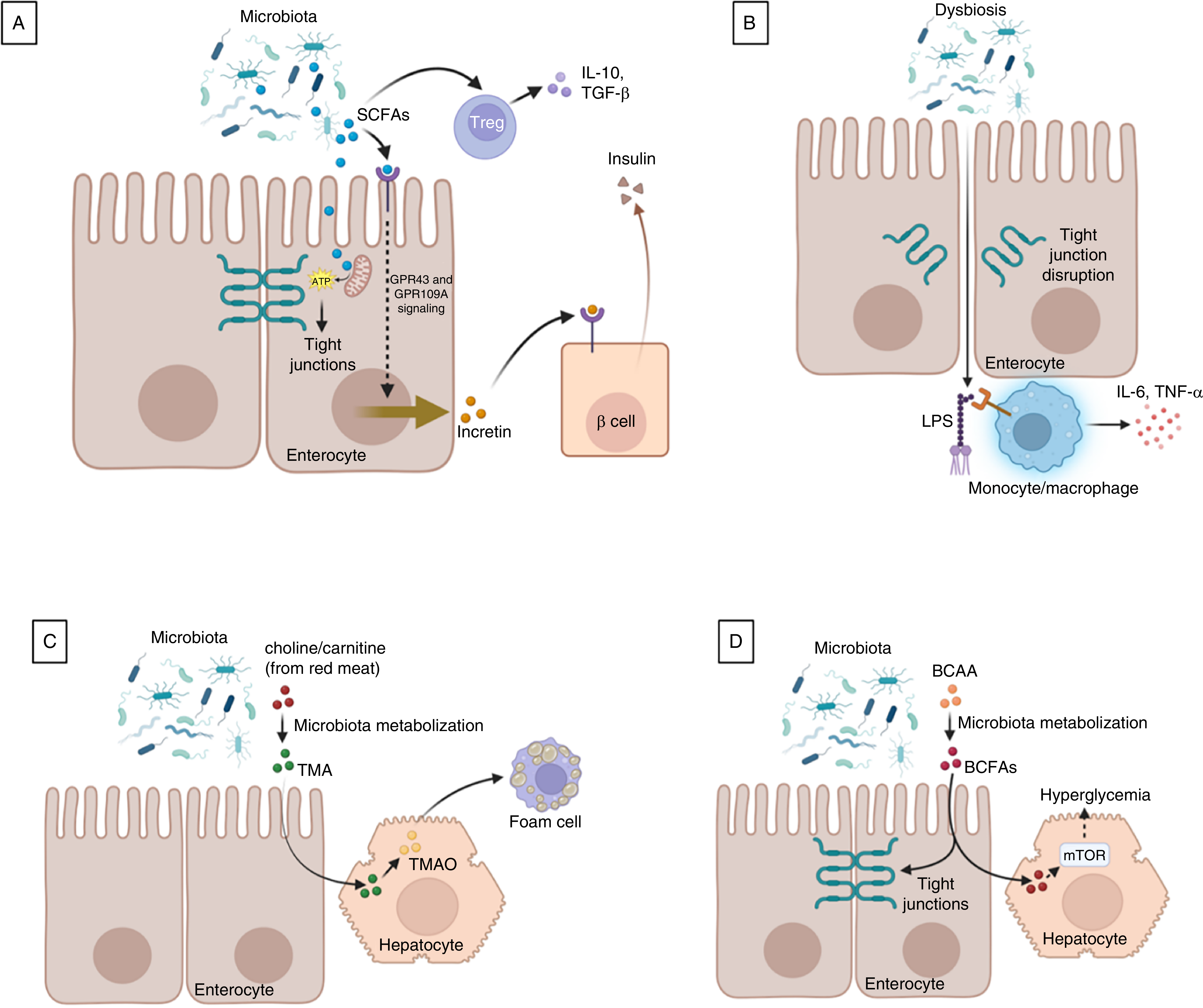
Collectively, these metabolites illustrate how gut microbiota can modulate host metabolic and cardiovascular health through distinct but interconnected molecular mechanisms (Figure 1).
Mechanistic pathways of microbiota-derived metabolites on host physiology. (a) SCFA: Microbial fermentation of dietary fibre produces SCFA (e.g. butyrate), which serve as the primary energy source for colonocytes, promoting tight junction proteins expression and intestinal barrier integrity. SCFA act via G protein-coupled receptors (GPR) to stimulate the secretion of incretins (such as GLP-1), enhancing glucose-stimulated insulin secretion and systemic metabolic homeostasis. Furthermore, SCFA exert potent anti-inflammatory effects by inducing the differentiation and activity of T-regulatory (Treg) cells. (b) Lipopolysaccharide (LPS) and Endotoxemia: Dysbiosis induced disruption of the intestinal barrier (‘leaky gut’) facilitates the translocation of LPS from Gram-negative bacteria into the systemic circulation. LPS activates the Toll-like receptor 4 pathway in circulating monocytes and tissue macrophages, triggering a pro-inflammatory cascade (including TNF-α and IL-6) that contributes to chronic low-grade inflammation. (c) Trimethylamine N-oxide (TMAO): Microbial processing of choline and L-carnitine, primarily found in red meat, generates trimethylamine (TMA). TMA undergoes passive absorption and hepatic conversion by Flavin-containing Monooxygenase-3 into TMAO. Elevated systemic TMAO levels impair reverse cholesterol transport and promote the transformation of macrophages into foam cells, accelerating atherosclerotic plaque formation. (d) Branched chain fatty acids (BCFA): Gut microbiota metabolise branched-chain amino acids (BCAA) into BCFA. Under physiological in vitro conditions, BCFA enhance epithelial tight junctions, promoting intestinal barrier integrity. Conversely, in the context of a Western diet (high-protein and high-fat), microbial-derived BCFA trigger hepatocyte mTORC1 signalling, driving insulin resistance and subsequent hyperglycaemia.

Figure 1. Long description
The diagram illustrates the effects of microbiota-derived metabolites on host physiology. Panel A shows how microbial fermentation of dietary fiber produces short-chain fatty acids (SCFA), which promote tight junction proteins and intestinal barrier integrity. SCFA act via G protein-coupled receptors to stimulate incretin secretion, enhancing insulin secretion and metabolic homeostasis. They also induce T-regulatory cell differentiation, exerting anti-inflammatory effects. Panel B depicts dysbiosis-induced disruption of the intestinal barrier, allowing lipopolysaccharides (LPS) from Gram-negative bacteria to enter the systemic circulation. LPS activates the Toll-like receptor 4 pathway in monocytes and macrophages, triggering a pro-inflammatory cascade. Panel C illustrates the microbial processing of choline and L-carnitine from red meat into trimethylamine (TMA), which is converted into trimethylamine N-oxide (TMAO) in the liver. Elevated TMAO levels impair reverse cholesterol transport and promote foam cell formation, accelerating atherosclerotic plaque formation. Panel D shows the metabolism of branched-chain amino acids (BCAA) into branched-chain fatty acids (BCFA) by gut microbiota. BCFA enhance epithelial tight junctions under physiological conditions but trigger hepatocyte mTORC1 signaling under a Western diet, driving insulin resistance and hyperglycemia.
Influence of protein source and quality on microbiota–host metabolic interactions
The source and quality of dietary protein are critical modulators of host metabolism, immune responses and gut microbiota composition. Several animal studies have demonstrated how these variables shape systemic physiology through microbiota-mediated mechanisms.
Substituting casein with a mixed protein source resembling the Western diet worsened obesity and insulin resistance in mice. These effects were linked to altered gut microbiota, as confirmed by faecal microbiota transplantation. The altered microbial community produced higher levels of BCFA, which directly stimulated hepatic glucose production and activate mTORC1/S6K1, contributing to hyperglycaemia(Reference Choi, Daniel and Houde58). Similarly, a soybean meal-based diet altered ileal gene expression related to the mTOR pathway, increased granulocyte colony-stimulating factor and elevated Bacteroidales S24–7 abundance. These changes may affect metabolic efficiency and immune regulation, with potential implications for gut inflammation and systemic disorders if sustained(Reference Kar, Jansman and Benis65).
Protein source also influences inflammatory susceptibility. A high-protein animal-based (aHPD) intake exacerbated both acute and chronic dextran sulphate sodium-induced colitis in mice, while a plant-based HPD (pHPD) did not. The pro-inflammatory effect of aHPD depended on the presence of gut microbiota, as germ-free mice receiving microbiota from aHPD-fed donors developed worsened colitis. This effect persisted in recombination activating gene2-deficient mice, indicating innate immune involvement. Depleting splenic macrophages blocked the increase in Ly-6Chigh pro-inflammatory monocytes and protected against colitis, suggesting that aHPD promotes inflammation via microbiota-driven monocyte activation(Reference Kostovcikova, Coufal and Galanova66).
Conversely, Whey protein isolate showed protective effects against high-fat diet-induced metabolic disturbances. It reduced energy intake, increased lean mass and tended to decrease fat mass compared to casein. Whey protein also lowered plasma leptin and hepatic triacylglycerol levels, coinciding with an increase in beneficial Lactobacillus and a reduction in potentially harmful Clostridium species, suggesting a gut microbiota profile conducive to metabolic health. Moreover, increasing the protein-to-carbohydrate ratio with Whey protein amplified these benefits, improving weight and metabolic outcomes(Reference McAllan, Skuse and Cotter67). Protein variability and processing further influence microbiota composition. An eight-month study in mice showed that different protein sources (e.g. casein, soy and processed meats) altered microbial communities. Bacteroidales S24–7 increased, while Akkermansia and other beneficial taxa declined(Reference Xie, Zhou and Wang68).
Dietary protein fluctuations also impact gut–liver communication. In a study simulating alternating low- and high-protein intake, hepatic lipid accumulation shifted rapidly in parallel with gut microbiota changes and microbial tryptophan metabolism. Specifically, increased levels of 3-hydroxykynurenine were observed during protein fluctuation, and this metabolite reduced hepatic lipid accumulation in vitro, implicating a microbiota–liver axis in protein-driven metabolic regulation(Reference Li, Shan and Li69).
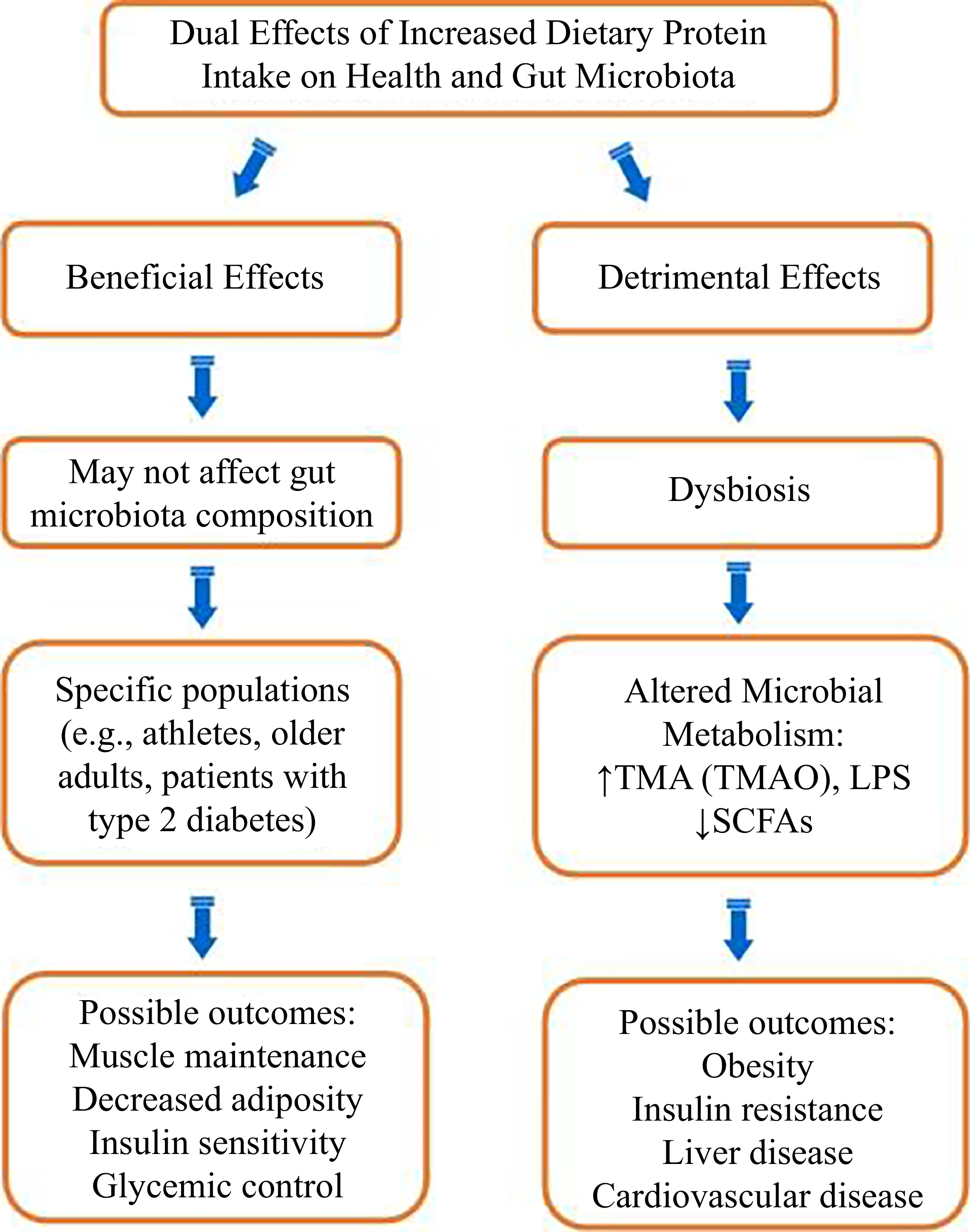
As expected, the impact of high-protein diets on gut microbiota, and consequently on host health, is largely mediated by microbiota-derived metabolites. Reduced production of SCFA, particularly butyrate, under high-protein dietary interventions may contribute to a pro-inflammatory state and impaired insulin sensitivity in the host(Reference Flint, Scott and Duncan70,Reference Tan, McKenzie and Potamitis71) . In parallel, the colitis and systemic inflammation observed in animals adapted to high-protein diets have been mechanistically linked to increased circulating levels of LPS, which trigger immune system hyperactivation and promote metabolic dysfunction(Reference Cani, Amar and Iglesias72,Reference Ghosh, Wang and Yannie73) . Additionally, increased production of TMAO, particularly from red meat–derived substrates, has been associated with vascular inflammation and elevated cardiovascular risk(Reference Koeth, Wang and Levison74–Reference Al-Obaide, Singh and Datta76) (Figure 2).
Schematic representation of the dual effects of increased dietary protein intake on overall health and the gut microbiota. It is important to note that the effects of protein intake depend on several factors, including individual metabolic status, health condition, protein source, and duration of dietary exposure and intervention. TMA: trimethylamine; TMAO: trimethylamine N-oxide; LPS: lipopolysaccharide.

Figure 2. Long description
The diagram illustrates the dual effects of increased dietary protein intake on health and gut microbiota. It is divided into two main sections: beneficial effects and detrimental effects. The beneficial effects section shows that increased protein intake may not affect gut microbiota composition and can have positive outcomes for specific populations such as athletes, older adults, and patients with type 2 diabetes. These outcomes include muscle maintenance, decreased adiposity, insulin sensitivity, and glycemic control. The detrimental effects section indicates that increased protein intake can lead to dysbiosis and altered microbial metabolism, resulting in higher levels of trimethylamine (TMA), trimethylamine N-oxide (TMAO), and lipopolysaccharide (LPS), and lower levels of short-chain fatty acids (SCFAs). Possible negative outcomes include obesity, insulin resistance, liver disease, and cardiovascular disease.
Protein intake, microbiota and intestinal barrier integrity
High-protein diets exert multifaceted effects on host physiology, many of which are mediated by gut microbiota-driven changes in metabolism, inflammation and intestinal barrier function.
In a human intervention study, high-protein supplementation combined with mild caloric restriction significantly reduced visceral fat mass. Although bacterial composition changed minimally, there was a marked enrichment of microbial amino acid synthesis pathways (90 % in the high-protein group v. 13 % in controls). This enrichment was particularly beneficial in individuals with low baseline microbial gene counts, where it correlated with reductions in weight, fat and visceral adiposity, linking microbial metabolic function to improved metabolic outcomes(Reference Bel Lassen, Belda and Prifti77). However, not all high-protein regimens yield positive effects. As described, replacing casein with a mixed protein blend of the Western diet worsened obesity and insulin resistance. These outcomes were tied to early gut microbiota alterations, particularly increased microbial production of BCFA, promoting hyperglycaemia and metabolic dysfunction(Reference Choi, Daniel and Houde58). These findings highlight the critical role of protein type in shaping microbiota-derived metabolic outputs.
Gut microbiota also influence weight regain after dietary restriction. Refeeding with a high-protein diet reduced intestinal lipid absorption and fat accumulation, in part by suppressing the expansion of Lactobacillus, a genus whose metabolites enhance lipid uptake. This suggests that high-protein refeeding may help mitigate post-dieting rebound obesity via microbial modulation(Reference Zhong, Wang and Yang78). Additionally, protein effects on lipid metabolism and microbiota may be sex-specific. While both basal and high-protein diets reduced perirenal fat in male mice, high-protein intake in females increased gut weight and length. Although total microbial species remained stable, composition shifted: Verrucomicrobia increased in males, while Patescibacteria decreased in females(Reference Wang, Peng and Yang79).
Beyond individual outcomes, a paternal high-protein diet before conception improved offspring body composition and insulin sensitivity. These outcomes were associated with enhanced gut microbial α diversity and elevated abundances of beneficial genera such as Bifidobacterium, Akkermansia, Bacteroides and Marvinbryantia in both fathers and offspring. These findings suggest that dietary protein can programme metabolic health across generations via microbiota transmission(Reference Chleilat, Schick and Deleemans80). Despite these beneficial effects, chronic high-protein intake may impair gut and kidney health. In mice, long-term consumption of a very high-protein diet (52 % of energy) induced albuminuria, renal injury markers, increased gut permeability and systemic inflammation. These changes were associated with reduced expression of tight junction protein occludin, elevated endotoxin and monocyte chemoattractant protein-1, and shifts in microbial function, specifically, reduced branched-chain amino acid synthesis and increased urea cycle activity(Reference Chleilat, Schick and Deleemans80). This supports a model where microbiota remodelling and altered nitrogen metabolism contribute to systemic damage under prolonged HPD exposure.
Short-term high-protein intake can also trigger epithelial adaptations. In mice, such diets suppressed genes related to cellular metabolism and NF-κB signalling, while upregulating those associated with cell proliferation and chemical barrier defences. Despite transcriptional shifts, there was no evidence of DNA damage or compromised barrier integrity, indicating an adaptive epithelial response to altered luminal protein fermentation(Reference Beaumont, Andriamihaja and Armand81).
In summary, dietary protein plays a critical role in shaping gut microbiota composition and function, thereby influencing host metabolism, immune responses and intestinal barrier integrity. These interactions can lead to a spectrum of outcomes, ranging from metabolic homeostasis to inflammation and impaired organ function. As described, the effects of protein intake are not uniform and depend on factors such as individual metabolic status, health condition and duration of dietary exposure. Importantly, although further studies are required, current evidence suggests that adequate protein intake may be sufficient to sustain a functionally diversified microbiota, characterised by the production of metabolites associated with positive health outcomes as compared to low-protein diets(Reference Masuoka, Shima and Tsukuda82) (Figure 2).
Translational insights from human studies on protein intake and gut microbiota
Although preclinical models dominate the literature on high-protein diets and microbial responses, human studies conducted under both experimental and free-living conditions have yielded heterogeneous results, largely modulated by factors such as age, metabolic profile, protein origin and intervention length.
Controlled dietary intervention studies in humans have yielded inconsistent findings regarding microbiota compositional changes in response to increased dietary protein intake. These discrepancies may arise from several factors, including interactions with other dietary components, variability in the sources of protein supplementation and substantial interindividual differences among participants(Reference Bartlett and Kleiner6).
Importantly, these inconsistencies are further influenced by differences in study design between animal and human models. Animal studies are typically conducted under highly controlled conditions, particularly with respect to protein sources (e.g. purified diets), allowing for a more precise evaluation of protein-specific effects. In contrast, in human studies, a high-protein diet is often achieved through increased consumption of whole foods, such as meat or plant-based sources, which are inherently consumed alongside other macronutrients, especially lipids and dietary fibres. This co-ingestion makes it difficult to isolate the specific effects of protein on the gut microbiota, thereby potentially confounding the observed outcomes. The considerations mentioned below regarding the effects of proteins on the human microbiota should be interpreted with caution; however, the available evidence may shed light on the potential implications of excessive consumption of this macronutrient(Reference Bartlett and Kleiner6).
In healthy elderly men, a 10-week intervention doubling the recommended dietary allowance of protein via whole foods had minimal impact on gut microbiota composition or faecal volatile organic compounds associated with protein fermentation. These findings suggest that, at least in older adults and over short durations, increased protein intake through whole foods may not substantially disrupt gut microbial ecology or metabolic outputs(Reference Mitchell, McKenzie and Mitchell83). However, large-scale observational data suggest that habitual protein intake, especially from animal sources, may have more meaningful long-term effects. In two extensive European cohorts, higher animal protein consumption, but not plant protein, was associated with increased prevalence of prediabetes and T2DM, independent of ethnicity. Although total protein intake showed no significant associations with gut microbiota alpha or beta diversity, specific microbial taxa differed based on protein intake, metabolic phenotype and ethnic background. These findings indicate that long-term dietary patterns may drive taxon-specific shifts in gut microbiota that influence metabolic health(Reference Bel Lassen, Attaye and Adriouch84).
Controlled clinical trials provide additional insight. In a 10-week resistance training study involving middle-aged adults, raising protein intake to ∼1·6 g/kg/d did not enhance strength or lean body mass gains beyond exercise alone. Clinical markers, including cardiovascular, renal and glycemic parameters, remained stable. Nonetheless, gut microbiota composition was associated with individual health metrics, suggesting that microbiota may modulate physiological responses even in the absence of overt changes(Reference McKenna, Salvador and Hughes85). In another 10-week pilot trial, endurance athletes receiving Whey and beef protein supplementation experienced significant shifts in microbiota composition. Despite stable faecal fermentation profiles and oxidative stress markers, supplementation increased Bacteroidetes and reduced beneficial taxa such as Roseburia, Blautia and Bifidobacterium longum. While not accompanied by immediate metabolic dysfunction, these microbial changes raise concerns about the potential long-term consequences of isolated protein supplementation outside a whole-food context(Reference Moreno-Pérez, Bressa and Bailén86).
In metabolically compromised individuals, even short-term high-protein diets may exert less favourable effects. A 12-week randomised controlled trial in type 2 diabetes mellitus patients treated with metformin found that a high-protein diet (30 % of energy) did not improve glycemic control or weight loss compared to a low-protein diet. However, the high-protein group showed increased microbial α-diversity and elevated levels of potentially harmful metabolites, alongside a slight decline in kidney function(Reference Attaye, Bel Lassen and Adriouch87). These results suggest that high-protein diets, particularly in vulnerable populations, can induce slight adjustment but potentially adverse microbiota-mediated metabolic changes.
Given the heterogeneous effects of high-protein diets on gut microbiota, particularly the potential to promote dysbiosis under certain conditions, such as long-term exposure, strategies to mitigate these adverse outcomes have gained attention. In this context, the combination of high-protein intake with prebiotics and probiotics (i.e. a synbiotic approach) has emerged as a promising intervention to preserve gut microbial balance. In a recent study, a high-protein supplement formulated with synbiotic components was designed to simultaneously support muscle recovery and maintain gut microbiota homeostasis in athletes. Using a faecal batch fermentation model, the authors reported improved probiotic survival (up to 69 %), increased abundance of SCFA-producing taxa, and suppression of potentially pathogenic microorganisms(Reference Keawyok and Jodnak88). These findings suggest that synbiotic supplementation may mitigate adverse microbiota changes induced by high-protein diets, potentially improving gut and metabolic health.
Overall, human studies show that high-protein diet effects on gut microbiota depend on duration, source, and delivery. While short-term intake may be neutral, prolonged or animal-based supplementation can alter microbial composition with potential health implications.
Microbiota-regulated pathways linking high-protein diets to inflammation and disease susceptibility
Emerging evidence indicates that a high-protein diet can significantly reshape gut microbiota in ways that influence immune function and increase disease susceptibility, particularly in the context of inflammatory bowel diseases (IBD) such as Crohn’s disease and ulcerative colitis.
A study integrating metagenomic analyses in mice with clinical data from Crohn’s disease patients showed that mice fed a high-protein diet developed microbial profiles resembling those found in human IBDs(Reference Zhao, Chen and Chen89). Specifically, Escherichia coli, a known pro-inflammatory pathobiont, was enriched in both mice and patients, while beneficial Lachnospiraceae were depleted. High-protein diets also increased microbial genes associated with Helicobacter-derived tryptophan metabolism and reduced Lachnospiraceae-contributed orthologs, suggesting a shift in microbial functional capacity with implications for mucosal immune regulation. Consistent with these findings, a gnotobiotic mouse model of ulcerative colitis revealed that an animal-based HPD (aHPD) worsened both acute and chronic colitis, while a plant-based HPD (pHPD) did not produce the same inflammatory outcomes(Reference Kostovcikova, Coufal and Galanova66). The pro-inflammatory effects of aHPD depended on the presence of gut microbiota: germ-free mice receiving microbiota from aHPD-fed donors exhibited more severe disease as previously described(Reference Kostovcikova, Coufal and Galanova66).
Beyond inflammatory pathways, long-term consumption of different protein sources may also impact gut–brain communication and systemic metabolic regulation. In mice fed various proteins, including casein, soy and processed meats, over eight months, distinct changes in gut microbiota were observed(Reference Xie, Zhou and Wang68). These microbial shifts were associated with changes in neuroendocrine and metabolic markers, including serotonin, peptide YY, leptin and insulin, suggesting that protein type can influence behaviour and energy regulation via microbiota-modulated signalling pathways(Reference Xie, Zhou and Wang68).
Together, these studies show that protein quantity and source significantly influence gut microbiota, impacting immunity, inflammation and gut–brain signalling. Further research is needed to clarify the microbial and host mechanisms involved, particularly with chronic animal-based protein intake.
Conclusions
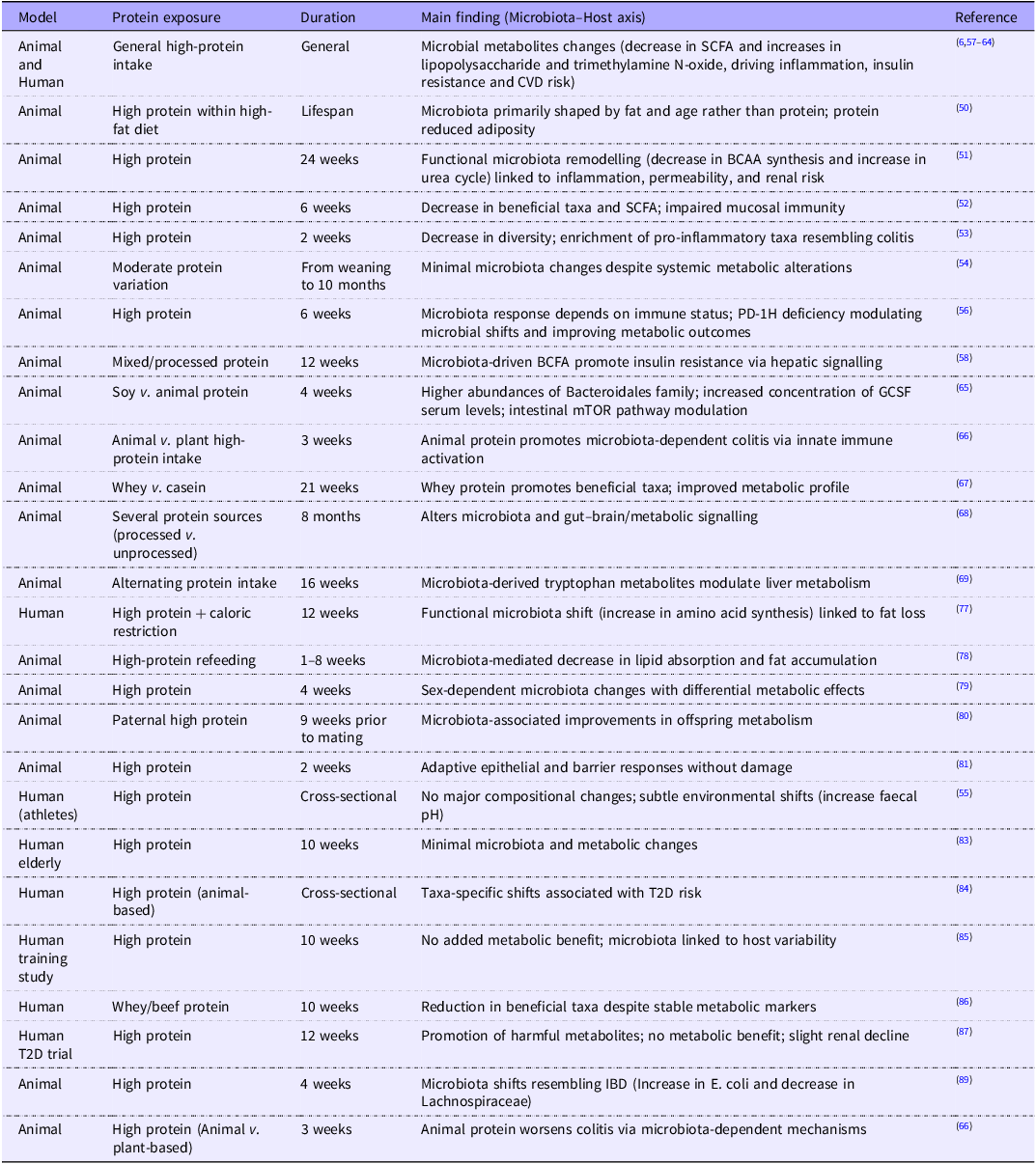
The effects of high-protein intake on the gut microbiota are influenced by factors such as the amount, quality, source and length of consumption, alongside individual host characteristics including immune function and metabolic health. While moderate protein intake may have minimal effects on microbial diversity, chronic or excessive intake, especially from animal sources, can significantly alter microbiota composition and function, promoting inflammation, metabolic dysregulation, and intestinal barrier disruption (Table 1).
General effects of high-protein intake on gut microbiota and host physiology

Table 1. Long description
A table with 21 rows and 4 columns detailing the effects of high-protein intake on gut microbiota and host physiology. The columns are labeled Model, Protein exposure, Duration, Main finding (Microbiota-Host axis), and Reference. The table compares various studies on animals and humans, examining different types of protein exposure, durations, and main findings related to microbiota and host health. Notable trends include changes in microbial metabolites, inflammation, insulin resistance, and cardiovascular disease risk. Specific studies highlight the impact of protein sources, such as animal versus plant-based proteins, and the duration of high-protein diets on gut microbiota composition and function.
T2D: Diabetes Mellitus type 2; IBD: Inflammatory bowel disease; GCSF: Granulocyte colony-stimulating factor; BCAA: Branched chain amino acids; BCFA: Branched chain fatty acids.
Co-ingested dietary components, such as fat content, processed meat–derived compounds and fibre intake, may confound the high-protein intake effects. Indeed, several studies discussed in this review are subject to these limitations. Although further research is needed to isolate the specific effects of dietary protein on gut microbiota and host metabolism, existing evidence suggests that prolonged and chronic high-protein intake, particularly animal-derived sources, may exert detrimental effects on gut microbial composition and, consequently, metabolic health.
Specific populations may benefit from the consumption of a high-protein diet. In athletes and older adults, increased protein intake supports muscle maintenance and recovery, with plant-based sources potentially offering additional benefits for gut microbiota due to their fibre content. While animal-based proteins are effective for anabolic purposes, excessive intake may adversely affect microbial composition. In type 2 diabetes, high-protein diets have shown promising effects on glycemic control. However, these outcomes are often confounded by reductions in fat intake and overall caloric load. In contrast, for individuals at risk of chronic kidney disease, high-protein intake is generally not recommended, as it may accelerate renal dysfunction, whereas low-protein diets have demonstrated protective effects. Together, these findings emphasise that the benefits and risks of high-protein diets are context-dependent and influenced by both protein source and individual health status. Overall, the gut microbiota acts as a key mediator of protein-driven health effects, underscoring the need for balanced and personalised dietary strategies.
Acknowledgements
This work received no financial support.
Conceptualisation: J. B. C. N. and M. E. S. M. S.; Methodology: J. B. C. N. and M. E. S. M. S.; Formal Analysis: J. B. C. N.; Investigation: J. B. C. N.; Writing – Original Draft: J. B. C. N. and M. E. S. M. S.; Writing – Review & Editing: J. B. C. N.; M. E. S. M. S.; Supervision: M. E. S. M. S.
All the authors read and approved the final manuscript.
The authors declare no conflicts of interest.