Introduction
One of the most fundamental and phylogenetically constant characters in Ascomycota is the nature of the ascospore-producing fruiting bodies, which in most cases are either discocarpous (apothecioid) or pyrenocarpous (perithecioid). Apothecioid ascomata are typical of Pezizomycetes, Leotiomycetes, and subclass Lecanoromycetidae (Lecanoromycetes), whereas perithecioid ascomata are found throughout Sordariomycetes, Eurotiomycetes, and Dothideomycetes (Lumbsch & Huhndorf Reference Lumbsch and Huhndorf2007; Schoch et al. Reference Schoch, Sung, Lopez-Giraldez, Townsend, Miądlikowska, Hofstetter, Robbertse, Matheny, Kauff and Wang2009). Eurotiomycetes also includes lineages with completely closed ascomata (cleistothecia) (Geiser et al. Reference Geiser, Gueidan, Miądlikowska, Lutzoni, Kauff, Hofstetter, Fraker, Schoch, Tibell and Untereiner2006). For centuries, ascoma-types were the main division in the phylum Ascomycota, characterizing the Discomycetes (and Discolichenes) and the Pyrenomycetes (and Pyrenolichenes), respectively (Eschweiler Reference Eschweiler1824; Zahlbruckner Reference Zahlbruckner, Engler and Prantl1907; see Lumbsch Reference Lumbsch2000), before it was replaced by a classification based on ascoma ontogeny and ascus type, distinguishing ascohymenial from ascolocular forms (Nannfeldt Reference Nannfeldt1932; Luttrell Reference Luttrell1951; Santesson Reference Santesson1952; Henssen & Jahns Reference Henssen and Jahns1974). Yet the subgroups within this classification still relied heavily on whether the ascomata were apothecioid or perithecioid. The only group that was accepted rather early as having variable fruiting body morphology is the Arthoniomycetes (Arthoniales), ranging from typical apothecioid to lirelliform and stromatoid-perithecioid ascomata (Grube Reference Grube1998; Ertz et al. Reference Ertz, Miądlikowska, Lutzoni, Dessein, Raspe, Vigneron, Hofstetter and Diederich2009). This group was also considered intermediate between ascohymenial and ascolocular groups (Henssen & Thor Reference Henssen, Thor and Hawksworth1994).
While perithecioid forms are occasionally nested within apothecioid lineages in other classes, such as Pezizomycetes (O'Donnell et al. Reference O'Donnell, Cigelnik, Weber and Trappe1997; Hansen & Pfister Reference Hansen and Pfister2006; Lücking et al. Reference Lücking, Huhndorf, Pfister, Plata and Lumbsch2009), phylogenetic studies have established Ostropomycetidae, and particularly Ostropales, as a prime example of repeated switches between apothecioid and perithecioid fruiting body types (Lumbsch et al. Reference Lumbsch, Schmitt and Messuti2001, Reference Lumbsch, Schmitt, Barker and Pagel2006, Reference Lumbsch, Schmitt, Lücking, Wiklund and Wedin2007; Kauff & Lutzoni Reference Kauff and Lutzoni2002; Grube et al. Reference Grube, Baloch and Lumbsch2004; Schmitt et al. Reference Schmitt, Mueller and Lumbsch2005, Reference Schmitt, Yamamoto and Lumbsch2006, Reference Schmitt, del Prado, Grube and Lumbsch2009; Grube & Hawksworth Reference Grube and Hawksworth2007; Hawksworth & LaGreca Reference Hawksworth and LaGreca2007; Baloch et al. Reference Baloch, Lücking, Lumbsch and Wedin2010; Rivas Plata et al. Reference Rivas Plata, Lücking and Lumbsch2012, Reference Rivas Plata, Parnmen, Staiger, Mangold, Frisch, Weerakoon, Hernández, Cáceres, Kalb and Sipman2013). Currently, more than ten transitions from apothecioid to perithecioid forms are known in this subclass, including Protothelenellaceae and Thelenellaceae, several lineages within Pertusariales (Coccotrema, Pertusaria s. lat.), and a large number of lineages within Ostropales: Ostropa and Robergea in Stictidaceae, all taxa in Porinaceae, species of the former genus Belonia nested within Gyalecta, and in Graphidaceae species in the genera Graphis (G. mexicana), Leucodecton (L. compunctum, L. compunctellum), Pseudoramonia, Ocellularia, and Thelotrema (T. porinoides). In a number of cases, these species were originally described in, or temporarily referred to, typically perithecioid taxa, such as Arthopyrenia, Porina, and Verrucaria.
The genus Geisleria was described in the 19th century by Nitschke (Rabenhorst Reference Rabenhorst1861) with a single species, G. sychnogonioides Nitschke, from northern Germany. It is usually characterized by immersed, seemingly perithecioid, non-carbonized ascomata, unitunicate asci, and hyaline 3-septate ascospores. The species was considered a typical pyrenocarpous fungus, lichenized with chlorococcoid algae, occurring on a rather unusual substratum for lichens, unstable loamy soils (Ernst Reference Ernst1993); it was once even recorded growing on a discarded army shirt covered with soil (Roux & Sérusiaux Reference Roux and Sérusiaux2004). Such habitats are infrequently visited on lichen forays, and the species is relatively rarely reported. It is a pioneer species and often vanishes within a year or two from most of its known localities. It occurs in nature reserves, but more frequently along artificial ditches, in loam quarries or even in industrial areas. Geisleria sychnogonioides has so far been reported from Europe (France, Belgium, the Netherlands, Germany, Switzerland, Czech Republic) and North America (Roux & Sérusiaux Reference Roux and Sérusiaux2004).
Four additional species have since been described in Geisleria, viz. Geisleria alpina Servít, which is a Polyblastia with a parasite (Swinscow Reference Swinscow1967), G. jamesii Swinscow, which is now accepted as Strigula jamesii (Swinscow) R. C. Harris, and G. sbarbaronis Servít and G. xylophila Vězda, both known only from their types and not recently studied. Geisleria sychnogonioides was classified in the Verrucariaceae and even placed in Verrucaria (Stizenberger Reference Stizenberger1882), although it differs from the majority of the genera in this family by the persistent hamathecial filaments. More recently, the genus was synonymized with Strigula and the species recombined as S. sychnogonioides (Nitschke) R. C. Harris (Egan Reference Egan1987), although the same author later stated that this generic placement is probably not correct (Harris Reference Harris1995). Placement in Strigula was accepted by some authors (e.g. Roux & Sérusiaux Reference Roux and Sérusiaux2004), but disputed by de Bruyn et al. (Reference de Bruyn, Aptroot, Homm and Sipman2008), who pointed out that the conidia lack the unique synapomorphy of Strigulaceae, the gelatinous appendices, a fact already noticed by Harris (Reference Harris1995). Thus, the systematic position of Geisleria sychnogonioides was considered uncertain, as it apparently showed no distinct synapomorphies with any known group of Ascomycota. Among pyrenocarpous lineages, lichenization with chlorococcoid green algae is only known from Verrucariaceae, Protothelenellaceae and Thelenellaceae. Confusion is possible with the name Thelenella sychnogonioides (Zahlbr.) R. C. Harris, based on Microglaena sychnogonioides Zahlbr., which is a different pyrenocarpous lichen but also with chlorococcoid algae, in Thelenellaceae. The identical epithet in both taxa is independently based on a supposed similarity with the genus Sychnogonia Körb. [non Sychnogonia Trevis.], currently regarded as a synonym of Muellerella Hepp ex Müll. Arg. in the Verrucariaceae.
During recent years, the first author collected specimens of Geisleria sychnogonioides on various occasions, and attempts were made to sequence it, but without success. At the 6th EGBL (Encontro do Grupo Brasileiro de Liquenólogos) congress in Botucatu (São Paulo State, Brazil), the first author's attention was drawn to a degraded reddish laterite landscape covered by pale, roughly circular patches of several centimeters to decimeters in diameter. While it was unlikely that this unstable, urban substratum would support lichen growth, all patches examined contained pale, immersed perithecioid ascomata of minute size. Morphologically, these were indistinguishable from European material of G. sychnogonioides, and microscopical examination also failed to yield differentiating characters. We herewith report the species new to the Southern Hemisphere. Given its abundance at this locality, and the fact that this particular habitat is very common (and regrettably increasingly so) all over the tropics, we surmise that the species is thus cosmopolitan and common, but usually overlooked. DNA of the fresh material of the Brazilian specimen was successfully extracted and sequenced by the second author. After these results were obtained, the first author made collections of fresh material in the type region (northern Germany), and these were also successfully sequenced by the second author, confirming the identity of the Brazilian material and the phylogenetic position of the genus Geisleria.
Here we report on the phylogenetic placement of the genus Geisleria in the family Stictidaceae (Ostropales), a lineage to which it had never before been related and thus a highly unexpected result.
Materials and Methods
Material
The following material was used for the molecular phylogenetic study:
Geisleria sychnogonioides Nitschke: Brazil: São Paulo: Botucatu, near Pousada Mandala on SP-254, 850 m, 22°52′45″S, 48°29′16″W, on soil in cerrado area, 2012, M. E. S. Cáceres & A. Aptroot 13560 (ABL, F, SP): Geisleria sychnogonoides3 in Table 1.—Germany: Niedersachsen: Moorbek N of Wildeshausen, W of Amelshausen, 52°94′73·35″N, 8°31′14·14″E, on soil of nature compensation area, 2013, A. Aptroot 70626: Geisleria sychnogonoides1 in Table 1; Moorbek N of Wildeshausen, S of Glane, 52°91′62·88″N, 8°35′54·62″E, on sand in sand pit, A. Aptroot 70627: Geisleria sychnogonoides2 in Table 1.
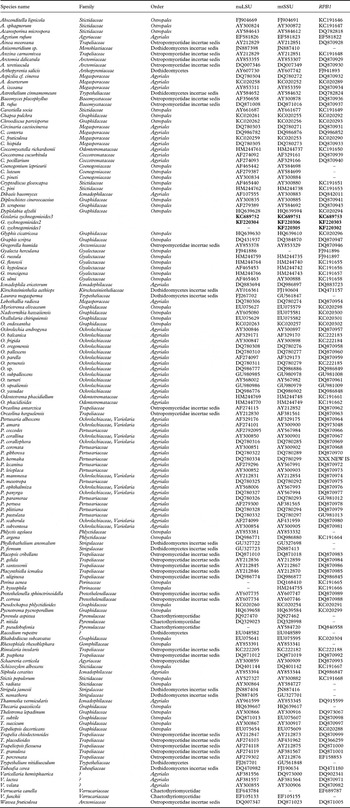
Specimens and GenBank accession numbers used in this study. Newly obtained sequences in bold.

Taxa included in the analyses, along with GenBank accession numbers and collection information for newly sequenced samples, are listed in Table 1.
DNA extraction, amplification and sequencing
The Sigma-Aldrich REDExtract-N-Amp Plant PCR Kit (St. Louis, Missouri, USA) was used to isolate DNA, following the manufacturer's instructions, except only 10–30 µl of extraction buffer and 10–30 µl dilution buffer were used; a 20×DNA dilution was then used in subsequent PCR reactions. We assembled a three-locus data set consisting of mtSSU rDNA, nuLSU rDNA, and the protein-coding genes RPB1. Primers used to amplify fungal DNA are: 1) AL2R (Mangold et al. Reference Mangold, Martin, Lücking and Lumbsch2008) and LR6 (Vilgalys & Hester Reference Vilgalys and Hester1990); 2) mt SSU rDNA – mrSSU1, mrSSU3R (Zoller et al. Reference Zoller, Scheidegger and Sperisen1999); 3) RPB1: gRPB1-A (Stiller & Hall Reference Stiller and Hall1997) and fRPB1-C rev (Matheny et al. Reference Matheny, Liu, Ammirati and Hall2002). PCR amplifications and cycle sequencing conditions were as described previously (Schmitt et al. Reference Schmitt, Fankhauser, Sweeney, Spribille, Kalb and Lumbsch2010; Rivas Plata et al. Reference Rivas Plata, Parnmen, Staiger, Mangold, Frisch, Weerakoon, Hernández, Cáceres, Kalb and Sipman2013).
Phylogenetic analyses
Sequence alignments were carried out separately for each data set using Geneious Pro 5.4.3 (Drummond et al. Reference Drummond, Ashton, Buxton, Cheung, Cooper, Duran, Field, Heled, Kearse and Markowitz2011). The jModelTest Version 0.1.1 (Posada Reference Posada2008) selected the following models as best fits for our data: GTR+G+I for nuLSU, RPB1, and GTR+G for mtSSU. The B/MCMC analysis was conducted on the concatenated data set using MrBayes 3.1.2 (Huelsenbeck & Ronquist Reference Huelsenbeck and Ronquist2001). A run with 20 000 000 generations, starting with a random tree and employing 4 simultaneous chains, was executed. Every 100th tree was saved into a file. The first 500 000 generations (i.e. the first 5000 trees) were deleted as the ‘burn in’ of the chain. We used AWTY (Nylander et al. Reference Nylander, Wilgenbusch, Warren and Swofford2007) to compare splits frequencies in the different runs and to plot cumulative split frequencies to ensure that equilibrium was reached. Of the remaining 390 000 trees (195 000 from each of the parallel runs) a majority-rule consensus tree with average branch lengths was calculated using the sumt option of MrBayes. Posterior probabilities were obtained for each clade. Only clades that received bootstrap support equal or above 70% under ML and posterior probabilities ≥0·95 were considered as strongly supported. Phylogenetic trees were visualized using the program Treeview (Page Reference Page1996).
A maximum likelihood (ML) analysis was performed for each locus and the combined data set in RAxML 7.2.6 (Stamatakis Reference Stamatakis2006), using the GTRGAMMA model with 25 rate parameter categories. Support was then estimated by performing 1000 bootstrap pseudoreplicates (Felsenstein Reference Felsenstein1985). Only clades with bootstrap support equal or above 70% under ML and posterior probabilities ≥0·95 in the Bayesian analysis were considered as strongly supported.
Results and Discussion
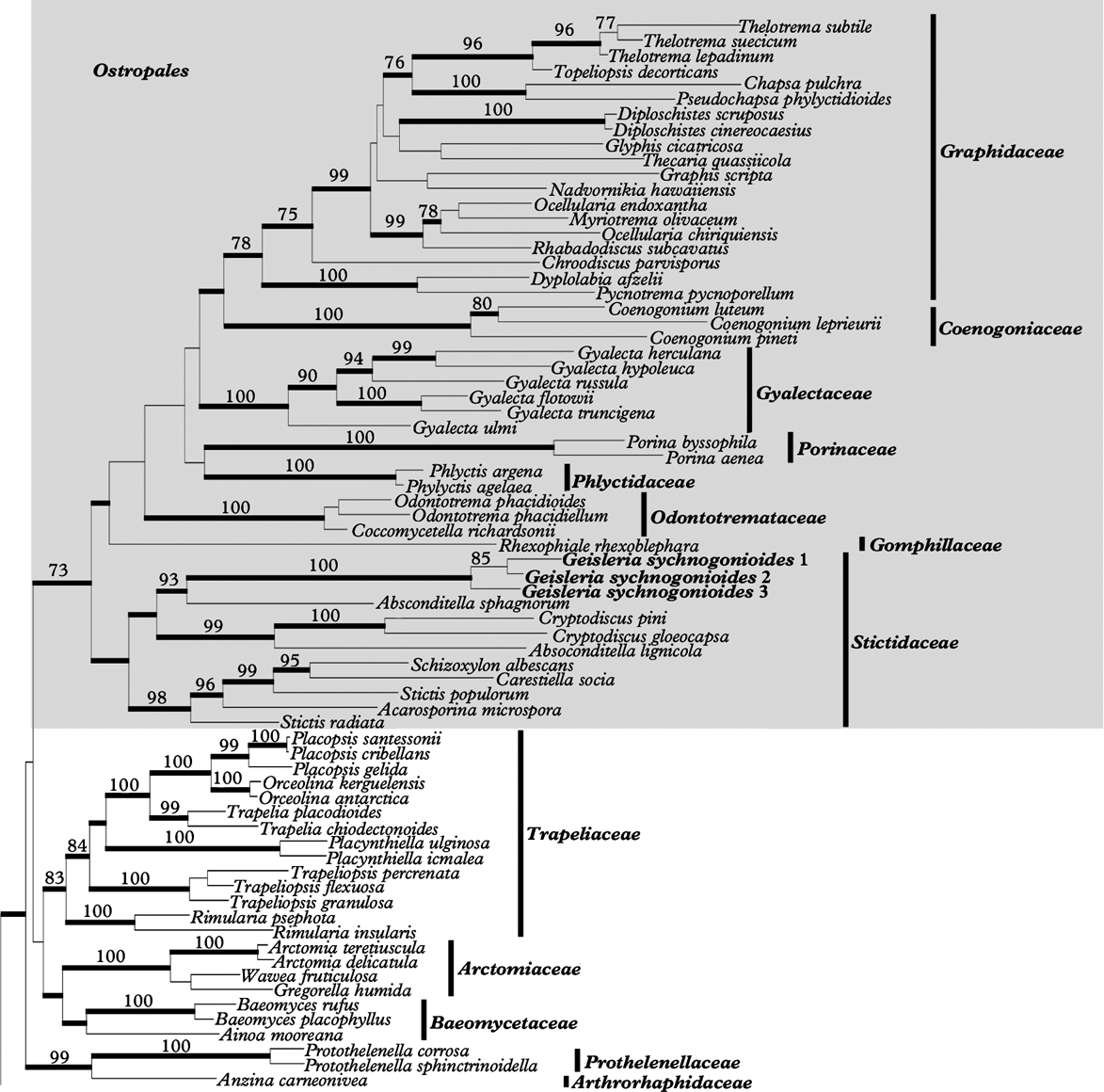
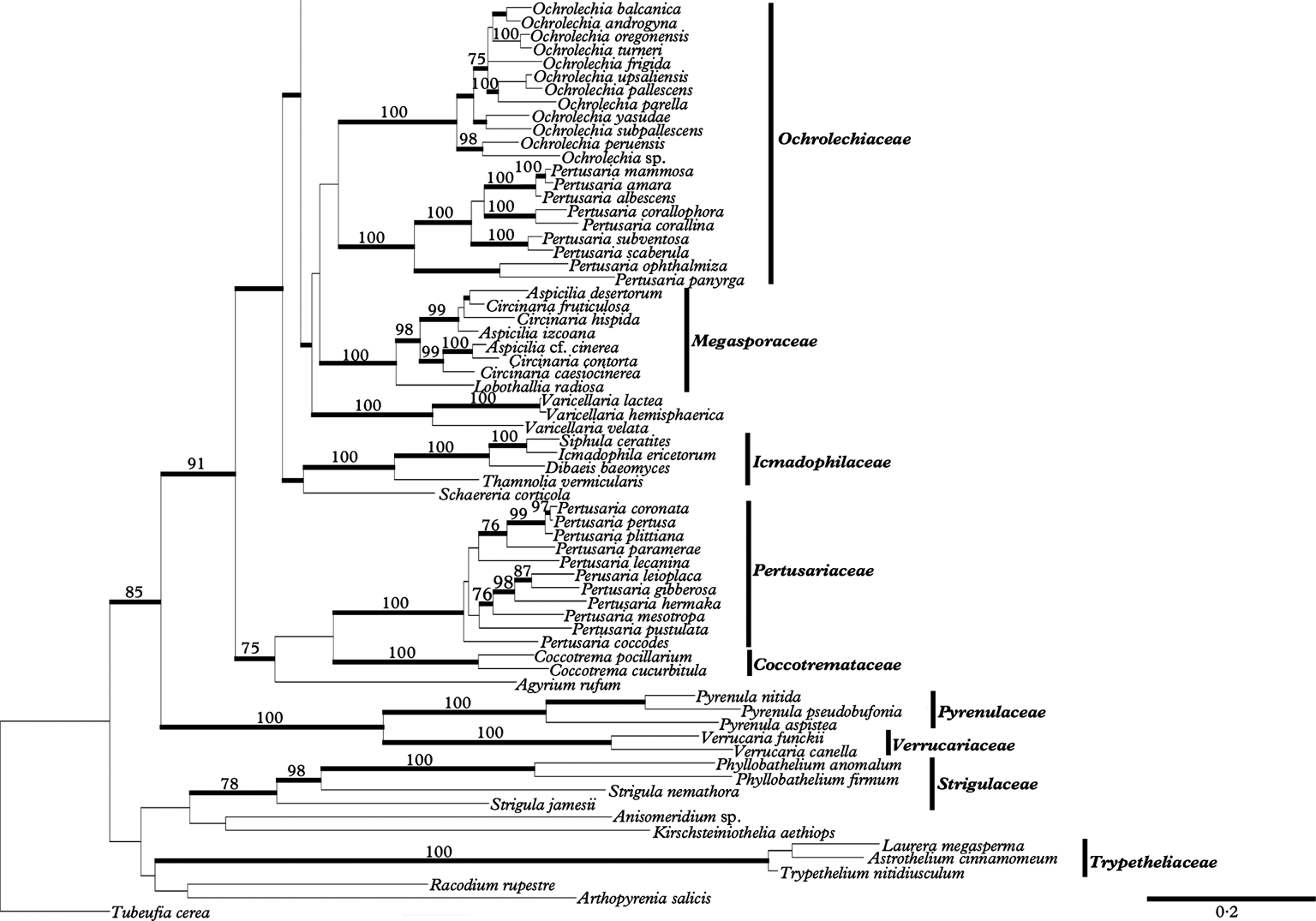
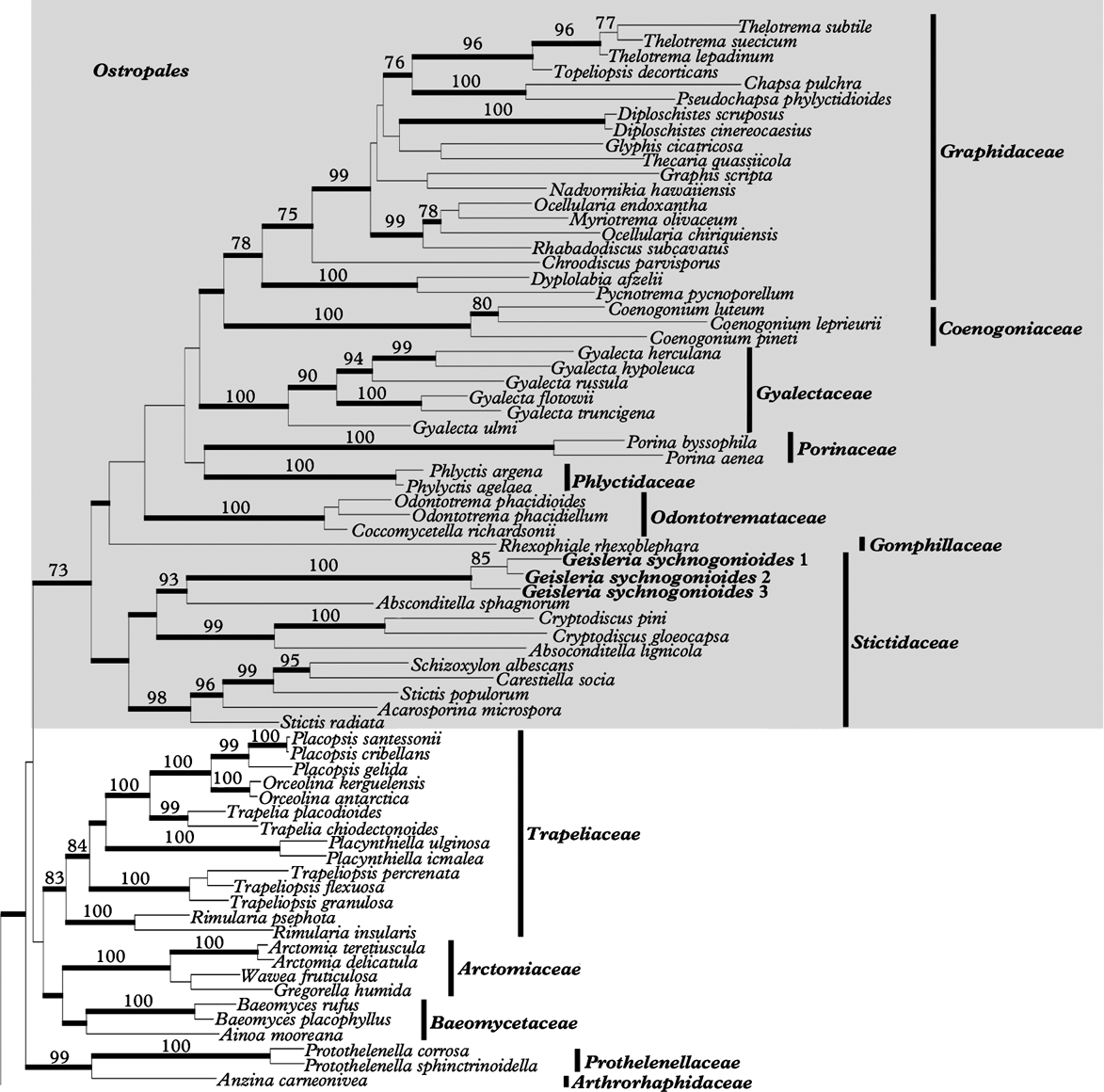
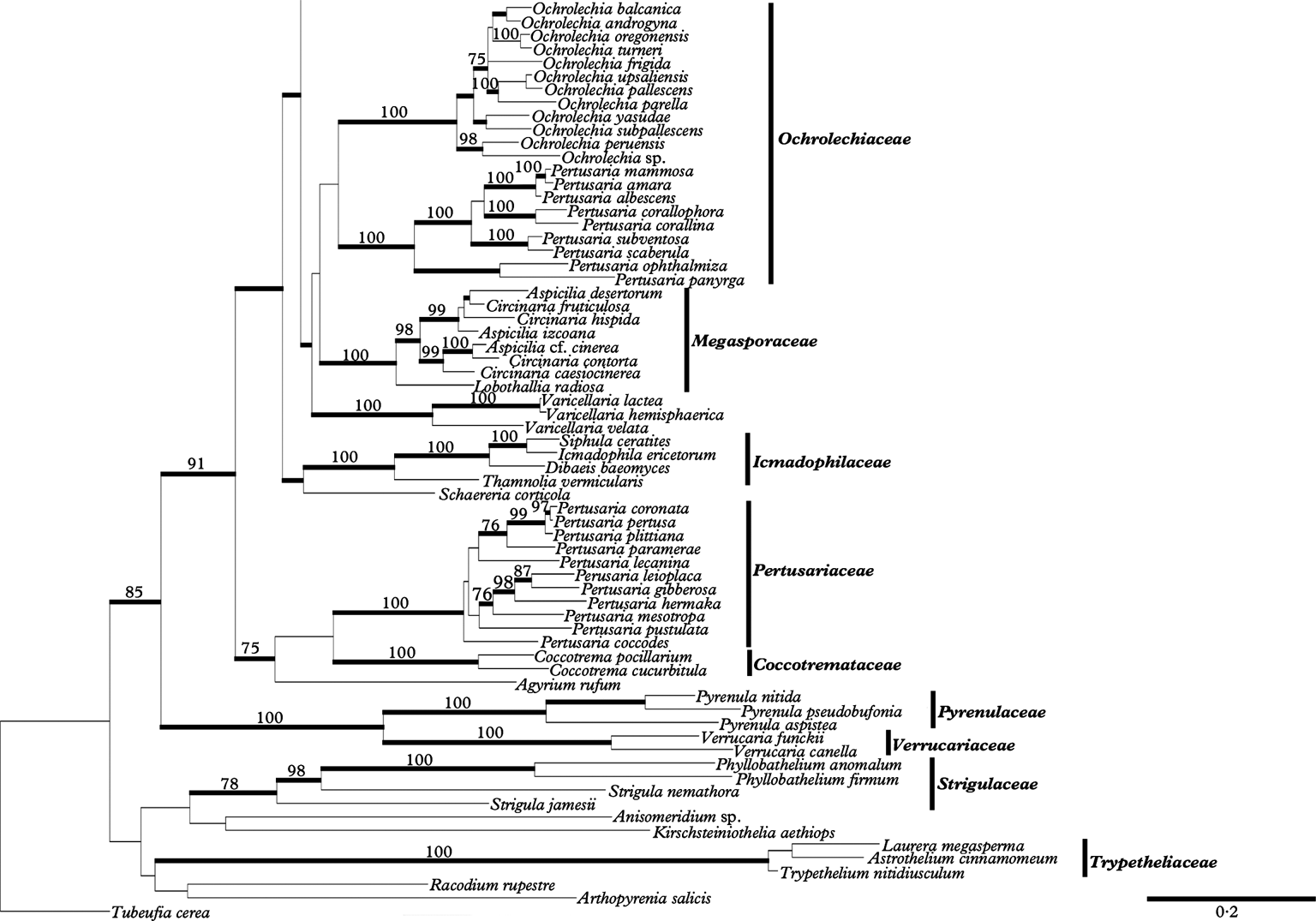
Geisleria sychnogonioides clustered with high support within Stictidaceae in Ostropales (Fig. 1), close to Cryptodiscus Corda (Baloch et al. Reference Baloch, Gilenstam and Wedin2009) and Absconditella Vězda (Fig. 2A), with the type species of the latter sister to Geisleria sychnogonioides. Within Stictidaceae, this is the third apparently perithecioid lineage, besides Ostropa and Robergea, and the first outside the Stictidaceae core group (Lücking et al. Reference Lücking, Rivas Plata, Mangold, Sipman, Aptroot, González, Kalb, Chaves, Ventura and Esquivel2011). This suggests yet another transition from apothecial to perithecioid ascomata within Ostropales. The relationship of Geisleria and Absconditella is comparable to what has been found for Belonia and Gyalecta, with the former producing perithecioid ascomata but being nested within the latter with apothecioid fruiting bodies. In the latter case, Belonia has been formally synonymized with Gyalecta (Baloch et al. Reference Baloch, Lücking, Lumbsch and Wedin2013). Here we do not propose that Absconditella be synonymized with Geisleria, nor do we combine the two genera and propose to conserve the name Absconditella. The reasoning behind this is that the two (out of 11) species of Absconditella sequenced so far do not cluster together, rendering the genus paraphyletic, and that a larger sampling seems advisable (just as discussed by Baloch et al. Reference Baloch, Gilenstam and Wedin2009) before a decision can be made about the monophyletic groups in the clade now consisting of the genera Absconditella, Cryptodiscus (including Bryophagus) and Geisleria. Figure 1 also shows the phylogenetic position of the families in which Geisleria was previously classified, viz. Verrucariaceae (Eurotiomycetes) and Strigulaceae (Dothideomycetes), as well as representative groups from the Ostropomycetidae and some other groups with a phylogenetic position in between, in order to show how distant Geisleria is after all from the groups in which it was previously classified.
Phylogenetic reconstruction of the placement of Geisleria sychnogonioides as sister to Absconditella sphagnorum. This is a maximum likelihood tree inferred from a concatenated alignment of mtSSU, nuLSU rDNA and RPB1 sequences. Branches with bootstrap support ≥70% and posterior probabilities ≥0·95 are indicated in bold. ML-bootstrap values indicated at branches.
Continued
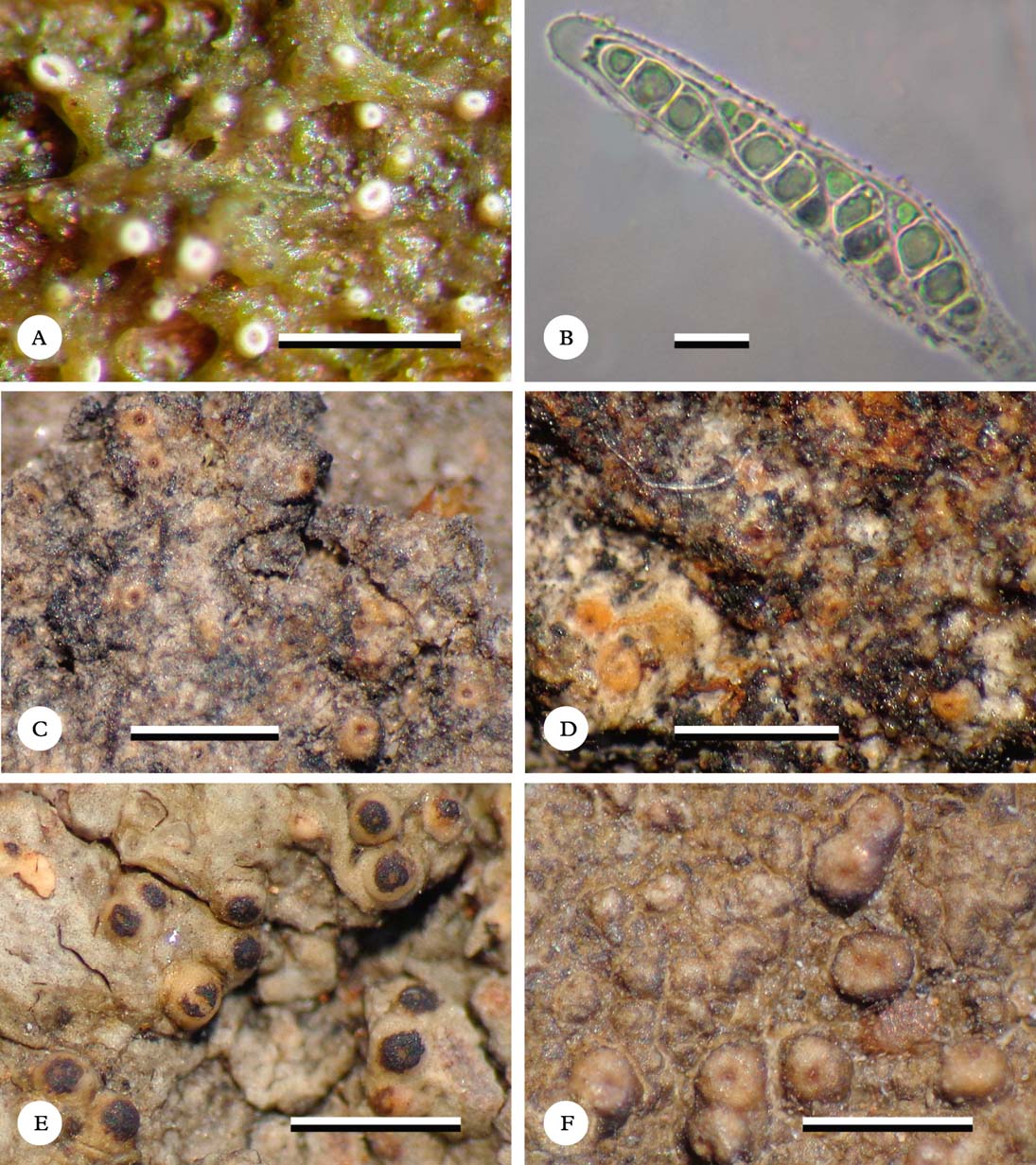
A, Absconditella delutula, thallus and apothecia (Netherlands, Aptroot 70517, ABL); B, Geisleria sychnogonioides, ascus (Brazil, Cáceres & A. Aptroot 13560, F); C & D, Belonia incarnata, thallus and (closed) apothecia (D a specimen identified as G. sychnogonioides in W); E, Belonia herculana (W), thallus and perithecioid ascomata; F, B. russula (W), thallus and perithecioid ascomata. Scales: A, C–F=1 mm; B=10 µm. In colour online.
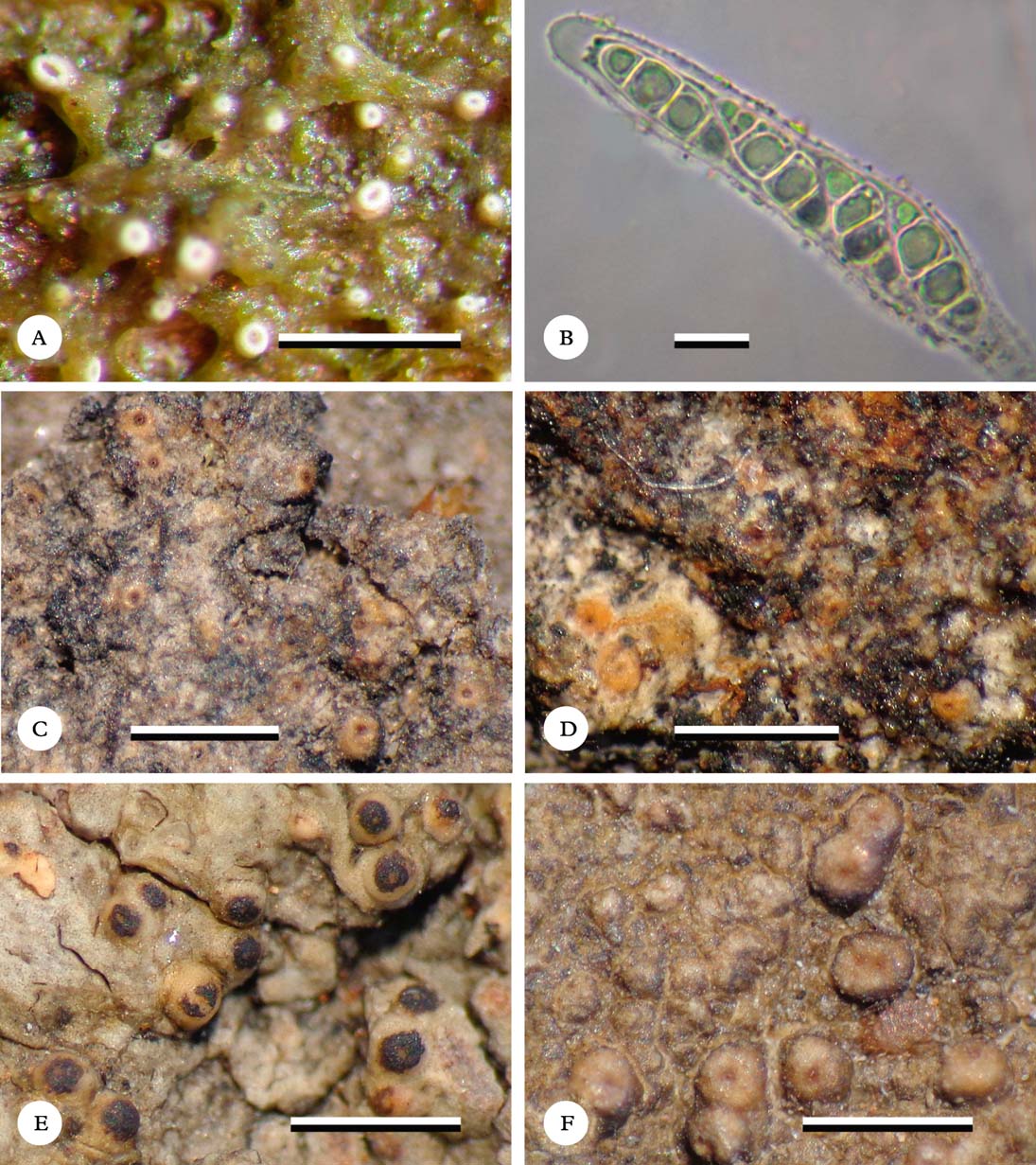
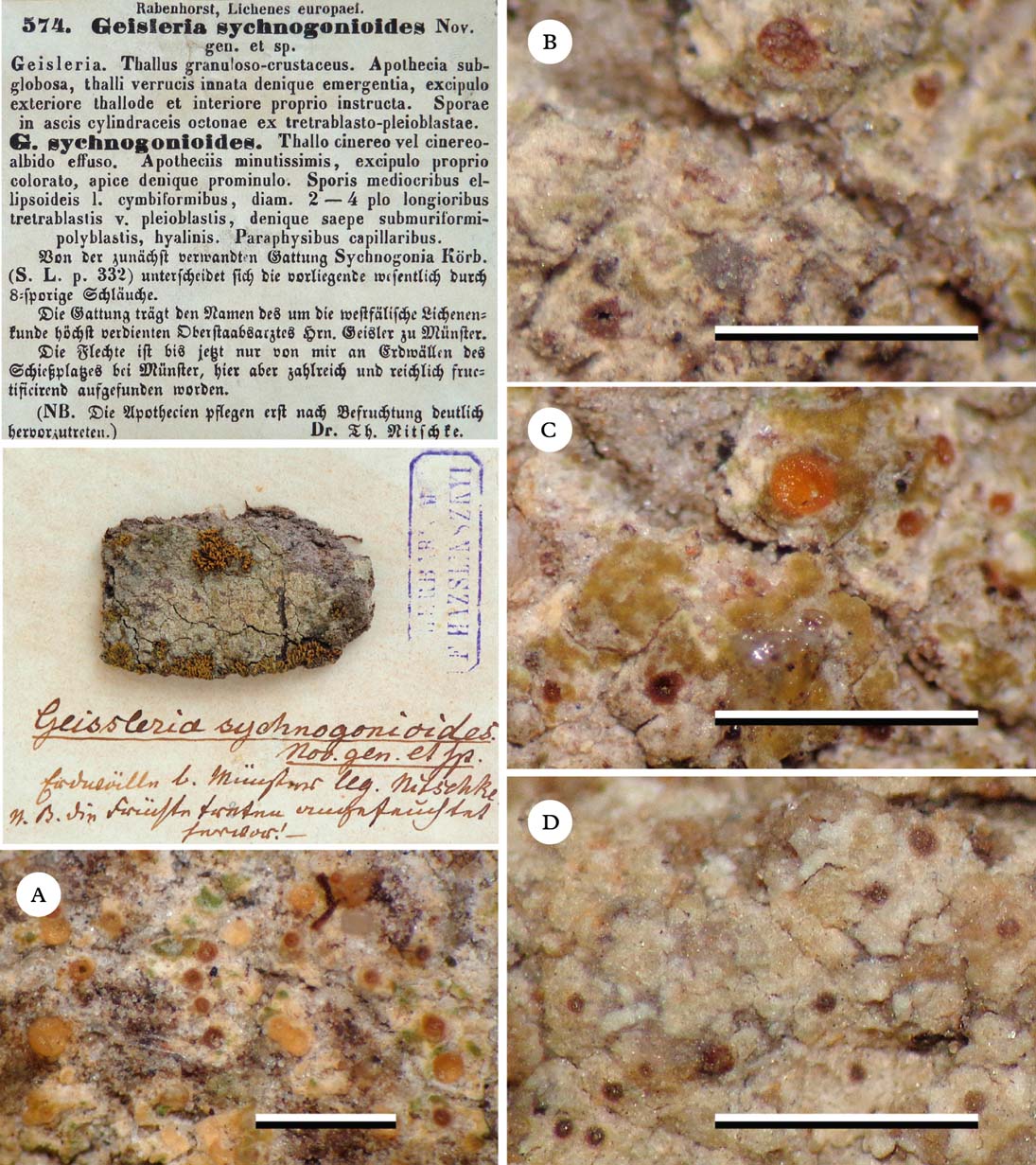
The phylogenetic position of Geisleria at first is entirely unexpected, given its previous classification as a pyrenocarpous lichenized fungus. However, anatomical study of the sequenced material revealed that its ascus type is ostropalean, with a ring-shaped structure projecting from the tholus down into the lumen (Fig. 2B). The same applies to the hamathecium and ascospores. In addition, the photobiont is morphologically similar to the one found in Absconditella. A subsequent study of the isotypes of Geisleria sychnogonioides in W, and additional material of the species collected in various parts of Europe, revealed that the species actually produces typical gyalectoid apothecia, identical to those of Absconditella (Fig. 3A & C), and its anatomical features support placement within that lineage. In the original exsiccate (Rabenhorst, Lichenes Europaei 574; Fig. 3: upper left), Nitschke described the ascomata as subglobose apothecia and noted that fully grown apothecia only appear after a while, according to his interpretation after fertilization (“nach der Befruchtung”). There are potentially three reasons why subsequent authors classified this taxon as having perithecia: 1) in dry conditions, the apothecia shrink and resemble young, more or less closed apothecia with narrow pores (Fig. 3B); 2) even young, closed apothecia (Fig. 3D) produce mature ascospores, a fact we interpret as an adaptation of the species growing on unstable soil, ensuring successful reproduction and propagation in early developmental stages; 3) several specimens in material identified as Geisleria sychnogonioides actually belong to Belonia incarnata Th. Fr. & Graewe ex Th. Fr. (Fig. 2C & D), a perithecioid species nested within Gyalecta (Baloch et al. Reference Baloch, Lücking, Lumbsch and Wedin2010, Reference Baloch, Lücking, Lumbsch and Wedin2013). It appears that these two species have been confused repeatedly. However, they can be readily separated by their substratum (debris instead of soil in the latter), thallus morphology (cartilaginous in the latter), and ascoma ontogeny (remaining closed in the latter), as well as other features.
Geisleria sychnogonioides (isotypes in W). Upper left, original label of Rabenhorst's exsiccata no. 574. Middle left, isotype specimen distributed separately from exsiccata. A, non-exsiccate isotype, thallus and closed and fully open apothecia (hydrated); B & C, exsiccate isotype, in dried and hydrated condition showing difference in size and appearance of mature apothecia; D, non-type specimen with young, closed apothecia only (producing mature ascospores). Scales: A–D=1 mm. In colour online.
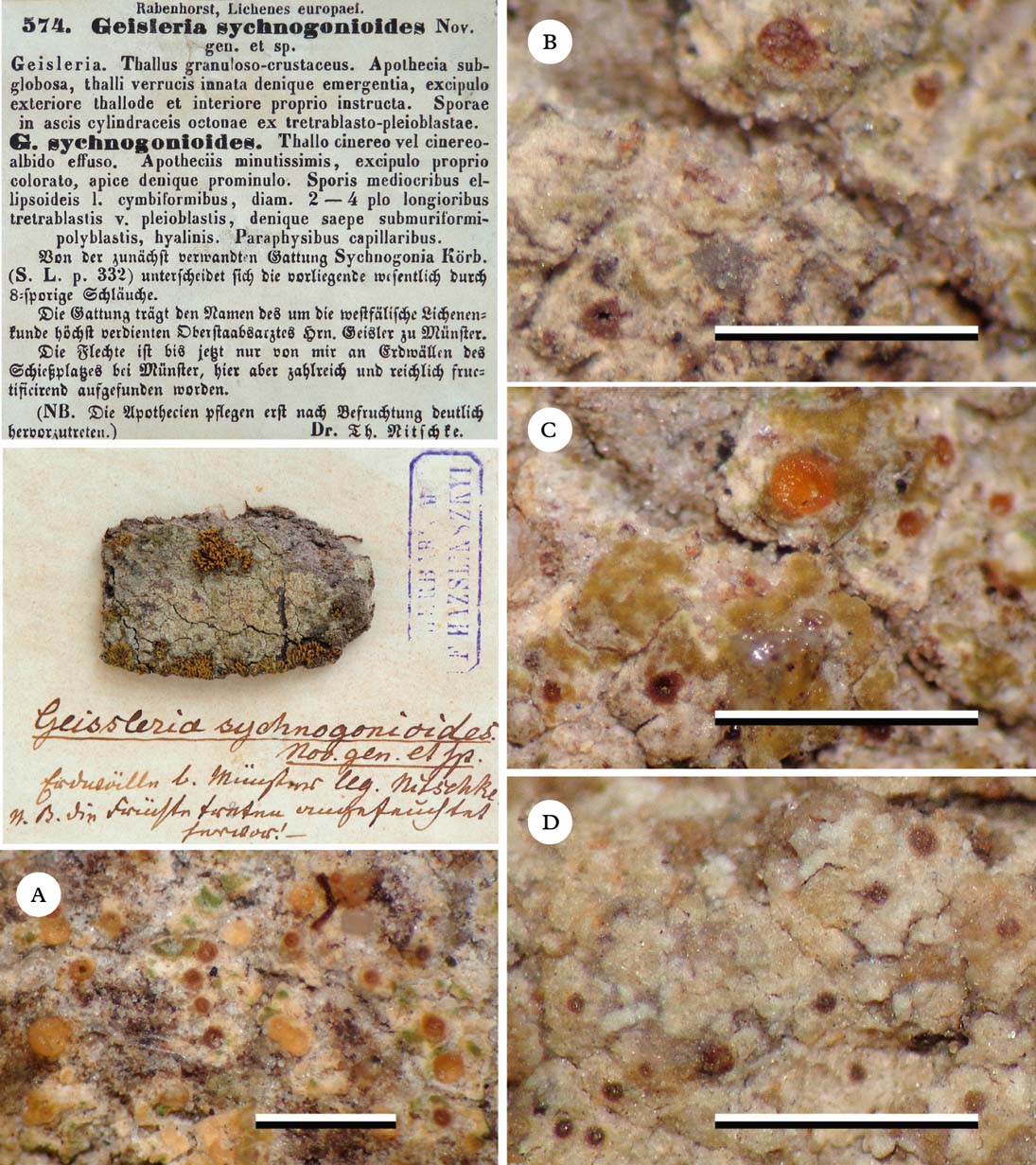
Geisleria sychnogonioides could thus be interpreted as Absconditella, with its fruiting bodies already producing mature ascospores in young, still closed stages, whereas open apothecia, which the species is capable of developing, are only seen in specimens of a certain age, including the rather well-developed type material. This situation is thus slightly different from the distantly related, perithecioid forms of Gyalecta previously classified in Belonia (Baloch et al. Reference Baloch, Lücking, Lumbsch and Wedin2010, Reference Baloch, Lücking, Lumbsch and Wedin2013), in which even mature ascomata remain closed (Fig. 2E & F), and it could be interpreted as an intermediate evolutionary step between hemiangiocarpy (apothecia closed when young and mature ascospores only seen in open apothecia) and angiocarpy (apothecia remaining closed throughout their development).
We are grateful to CAPES for providing funding to PJ to enable AA, RL and MESC to attend the EGBL6 meeting in Botucatu where the material was collected. Funding provided by the National Science Foundation (NSF), DEB-1025861 to The Field Museum (PI HTL, CoPI RL, “ATM – Assembling a taxonomic monograph: the lichen family Graphidaceae”) covered the laboratory costs. The sequences of Geisleria were generated in the Pritzker Laboratory for Molecular Systematics at The Field Museum (Chicago); the authors thank I. Schmitt for allowing them to use these unpublished sequences. EB thanks the Swedish Research Council (grants VR 621-2006-3760 and VR 621-2009-537, PI: Mats Wedin). AA thanks the Stichting Hugo de Vries-Fonds for a travel fund.