

This paper presents the results and interpretation of a petrographic study of hunter-gatherer pottery production in Eastern Siberia. It centres around two traditions of ceramic production from this little-studied area of eastern Russia, each associated with distinctively different assemblages of material culture. The first of these is the increasingly well-known Ust’-Karenga culture,Footnote 1 with its precocious tradition of pottery production dating back to the final throes of the Pleistocene. The second is the lesser-known Ust’-Yumurchen culture, which appears in the region at the end of the Mid-Holocene Climatic Maximum in association with a number of important changes in lithic technology, raw material preference, and site structure.
The analytical focus rests on the social and behavioural context of early pottery production and pioneers the use of interpretive ceramic analysis in this region. Comparing the ceramic analysis with the results of a field survey of potential raw materials, this paper considers the significance of both synchronic variation and diachronic change in the context of wider theoretical debates about hunter-gatherer societies and the origins of pottery. Its aims are to contribute to our understanding of the lifestyles of the communities that created these vessels, to investigate their relationship with the surrounding landscape, and to highlight how a deeper understanding of ‘choice’ can help us to test assumed relationships between pottery production, sedentarisation, and the rise of social complexity.
RESEARCH CONTEXT
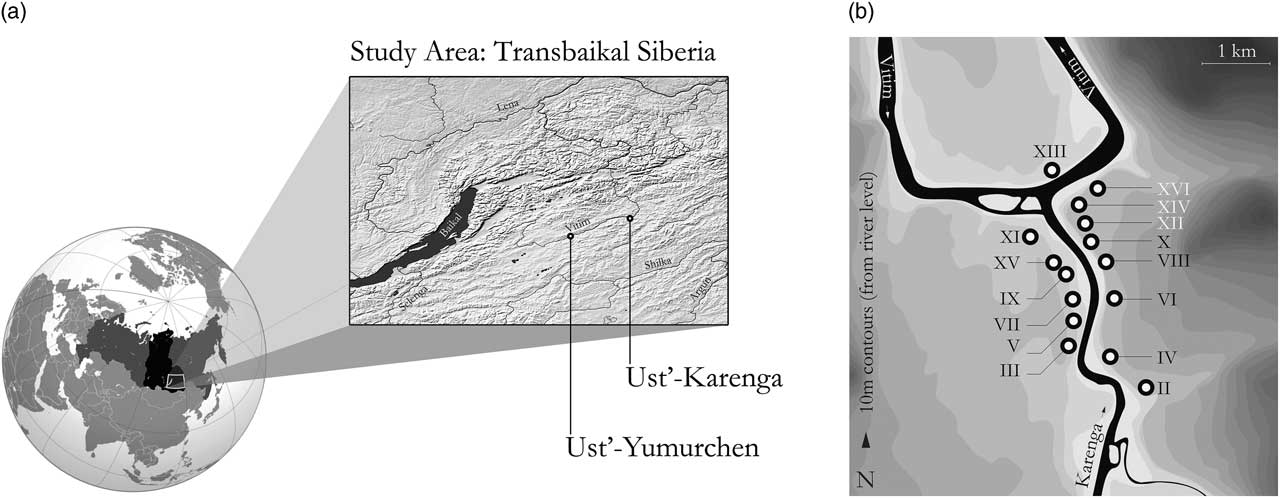
The Upper Vitim Basin in western Transbaikal Siberia (Fig. 1a) has been a focus of growing archaeological interest since the mid-1970s, when teams of researchers from universities in Irkutsk began small-scale archaeological excavation and survey along the Vitim River and its tributaries (Aksenov et al. Reference Aksenov, Vetrov and Shmygun1975; Vetrov Reference Vetrov2000). The focus of this archaeological investigation has been to define and refine our understanding of a binary sequence of archaeological cultures identified in the early phases of research in this region. Together, these two cultures span a vast period from the Upper Palaeolithic to the beginning of the Early Metal Age. They take their names from the most extensively investigated sites in the region: Ust’-Karenga (54.46°N, 116.52°E) and Ust’-Yumurchen (53.64°N, 113.97°E) – italicised, here and henceforth, to distinguish them from the cultures of the same name.
a) Location of the study area and the site complexes of Ust’-Karenga and Ust’-Yumurchen in global and regional context; b) location of the main sub-sites of the Ust’-Karenga complex (sites with early ceramics labelled in white)

Although both of these cultures are routinely described as ‘Neolithic’ in the literature, it is important to stress that none of the material discussed in this paper has any association with either agriculture or pastoralism. Instead, the designation ‘Neolithic’ stems solely from traditional Russian archaeological nomenclature, which takes the presence of pottery alone as the defining feature of the Neolithic Age.
Material associated with one or other of these two cultural groups has now been identified at more than 60 sites and findspots across the region, however, the principal focus of archaeological research has always been the site complex of Ust’-Karenga itself. Excavations at a small group of more or less contiguous sub-sites on the right-hand bank of the Karenga River, within the sediments of a 20–25 m terrace at its confluence with the Vitim (Ust’-Karenga XII, XIV, & XVI; Fig. 1b), have not only provided early evidence of human activity on the plateau, but also the basis on which the cultural sequence has been further refined (Vetrov Reference Vetrov1992; Kuzmin & Vetrov Reference Kuzmin and Vetrov2007).
UST’-KARENGA & UST’-YUMURCHEN: CHRONOLOGY & CHARACTER
Ust’-Karenga ceramics
Like many Late Pleistocene and early postglacial ‘cultures’, the dating of the Ust’-Karenga culture is broad, extending from the first evidence of occupation in the region (c. 14,200 cal bc) to the Holocene Climatic Maximum (c. 5500 cal bc). The initial phases of the Ust’-Karenga culture occupation (layers 8a, 8, & 7a at Ust’-Karenga XII), though interesting, present few material differences from other Upper Palaeolithic assemblages in Eastern Siberia (eg, Vetrov Reference Vetrov1995; Moroz Reference Moroz2008; Ineshin & Teten’kin Reference Ineshin and Teten’kin2017). The lithic assemblage from the subsequent layer 7 correlates well with the final warm phase(s) of the Pleistocene (dated between c. 12,200 and 10,500 bc) and is virtually indistinguishable from that of the earlier layers. However, its direct association with numerous ceramic vessel sherds is of global significance – the dates for layer 7 place the emergence of pottery in this region firmly within the context of a hunter-gatherer society. At the time of writing, Ust’-Karenga is the largest and earliest assemblage of early pottery west of the Pacific watershed, and is part of an initial phase in the dispersal of this remarkable social technology.
Unsurprisingly, this early date for ceramic vessel production has been hotly contested since its initial presentation in the mid-1990s. Opponents have argued vehemently for a systematic offset or ‘anomaly’ in Late Pleistocene radiocarbon results from sites in the Transbaikal, suggesting that the ‘true’ age of these ceramics is no more than 5000bc (Konstantinov Reference Konstantinov2009; Vetrov Reference Vetrov2010; Medvedyev pers. comm). However, without supporting evidence, this idea seems increasingly untenable. This is especially evident when preliminary, ‘radiocarbon independent’, single-aliquot OSL dates on pottery from Ust’-Karenga layer 7 overlap in the region of the existing radiocarbon results, as shown in a recent chronological study (Hommel et al. Reference Hommel, Schwenniger, Ineshin and Vetrov2017). Designed to resolve the issue, this study indirectly supports the consistent results obtained from the re-dating of other sites in the southern Transbaikal, where similar ceramic vessels have also been recovered in Late Pleistocene layers (Razgildeeva et al. Reference Razgildeeva, Kunikita and Yanshina2013).
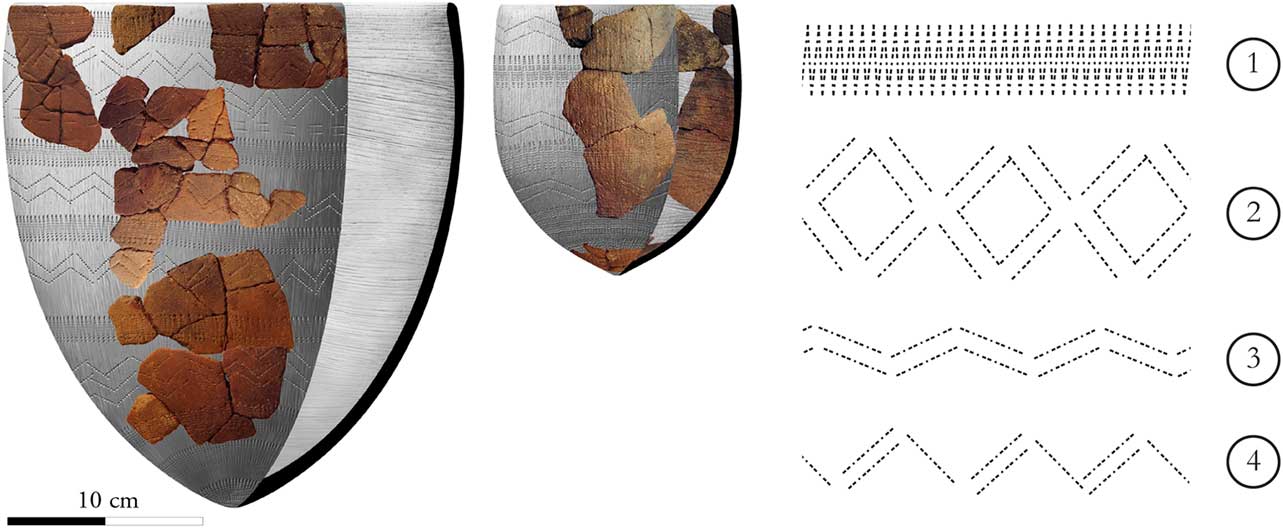
From a technical perspective, the ceramics of the Ust’-Karenga culture can be described as predominantly coil- or band-built vessels, parabolic in profile with a pointed base and straight or slightly incurving rim. Across the assemblage, they occur in two broad size categories, both of which have the same basic form (Fig. 2a; Kuzmin & Vetrov Reference Kuzmin and Vetrov2007). They are typically thin-walled (4–7 mm) and characterised by a distinctive secondary forming technique or ‘technical décor’, which left striations from wet-wiping/scraping across the vessel surfaces – vertical on the exterior, horizontal on the interior. Almost all of the vessels from this cultural phase were decorated with comb impressed geometric motifs (Fig. 2b).
Left) Representative Ust’-Karenga culture vessels in the two broad size categories; right) common geometric motifs: (1) stepping comb, (2) double impressed zig-zag, (3) double impressed diamond, (4) asymmetric (double-single) zig-zag
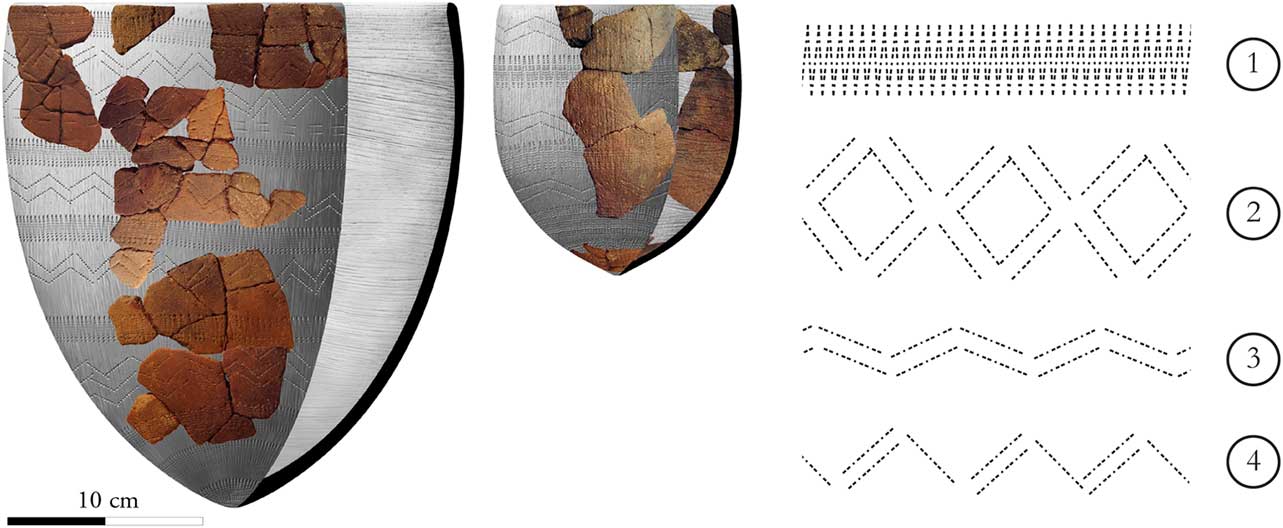
The fabric of the vessels is often, but erroneously, described as organic-tempered (see below), but in fact, they are characterised by abundant aplastic rock/mineral inclusions, described as ‘crushed quartzite’ or ‘granitic grus’ in earlier Russian publications (Ineshin Reference Ineshin1979, 12; Vetrov Reference Vetrov1985a, 124).
At Ust’-Karenga, the ceramics are found together with the lithic finds in more or less well-defined accumulations, focused around charcoal-rich areas interpreted as hearths. This kind of distribution not only characterises the archaeology of the Ust’-Karenga culture, but also that of other contemporary aceramic cultures in surrounding regions of Siberia (eg, Mochanov Reference Mochanov1969; Ineshin & Teten’kin Reference Ineshin and Teten’kin2017). Here, as elsewhere, these accumulations have been interpreted as the remains of light surface dwellings or tents (Vetrov Reference Vetrov1985a). Typically, the partial remains of several vessels were found within these accumulations and many showed signs of repair.
Wider interpretations that consider the functional significance of the site are rare and apparently conflicting. An excellent, but unpublished, dissertation on the subject considers the remains at Ust’-Karenga to be typical of a short-term riverbank campsite, which was occupied at times when river levels were low and relatively stable (Ineshin Reference Ineshin1979, 21). Three decades later, perhaps influenced by new interest in the study of ceramics in hunter-gatherer society and its assumed relationship with ‘complexity’ (eg, Hayden Reference Hayden1995), this initial interpretation was transformed. Ust’-Karenga was repainted as a long-term basecamp at which pottery was used for storage (Ineshin Reference Ineshin2006, 202). Rather conveniently, these alternatives provide us with opposing, but testable, hypotheses about the character of settlement (ie, temporary campsite or long-term basecamp), with obvious significance for our interpretations of the ceramic vessels and their place in contemporaneous society.
Ust’-Yumurchen ceramics
There are few published discussions of the Ust’-Yumurchen culture, which appears in the upper layers of sites across the Vitim plateau, including the eponymous type site (Fig. 1a). In general, this later ‘Neolithic’ cultural group has been far less intensively studied than its predecessor (see Vetrov Reference Vetrov2000; Reference Vetrov2010; Reference Vetrov2011). At Ust’-Karenga XII, cultural material associated with the Ust’-Yumurchen culture is found primarily in layers 3–1, dated in the region of 4300–1400 cal bc. Although substantial quantities of Ust’-Yumurchen cultural material was also found in the preceding layer 4 (a buried soil associated with the Mid-Holocene Climatic Maximum), this is interpreted as a result of interstratal mixing (as a result of deflation and bioturbation) in these near-surface subaerial deposits.
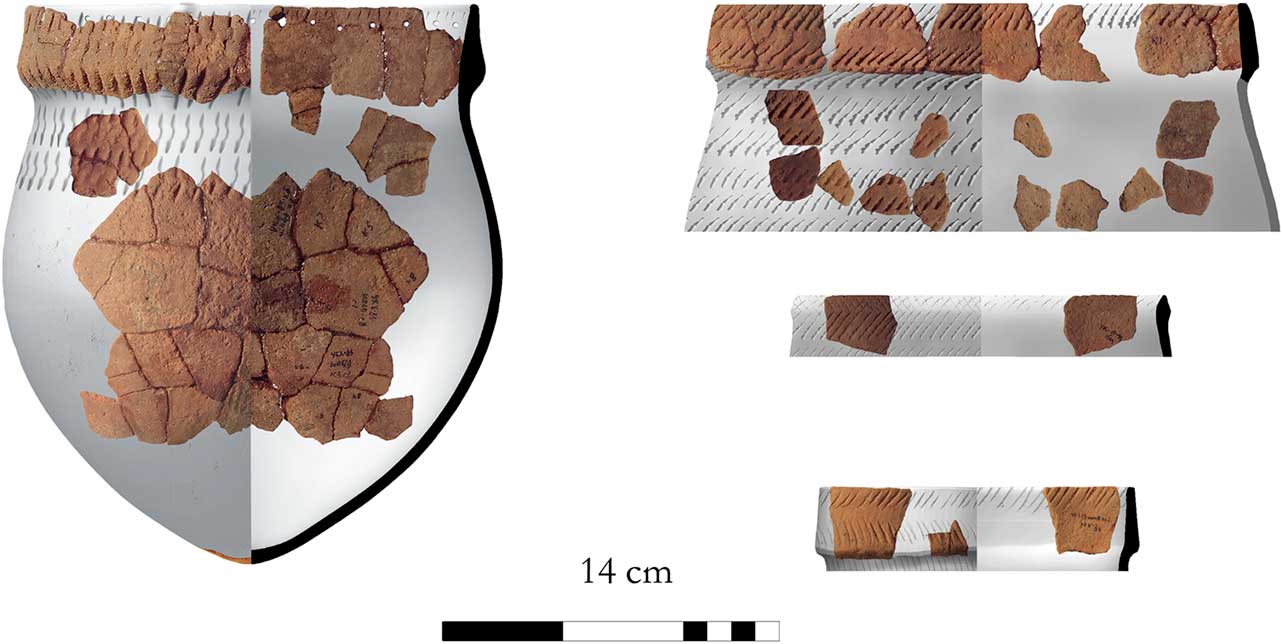
The pottery associated with the Ust’-Yumurchen culture (Fig. 3) is quite different from traditions of the Ust’-Karenga phase. It is characterised by the use of a grooved paddle and pebble anvil in secondary forming, and by the presence of a characteristically thickened rim – triangular or rhombic in section. Associated vessels are decorated with rows of close- or single-spaced impressions, produced with a variety of plain tools in a regular press-and-retreat motion (often referred to as stab-and-drag technique). Decoration is usually restricted to the upper quarter of the vessel. Though not discussed in publication, several of the excavation reports note that Ust’-Yumurchen culture sherds appear comparatively fine in texture (eg, Vetrov Reference Vetrov1985b).
Representative Ust’-Yumurchen culture vessels recovered at the site of Ust’-Karenga
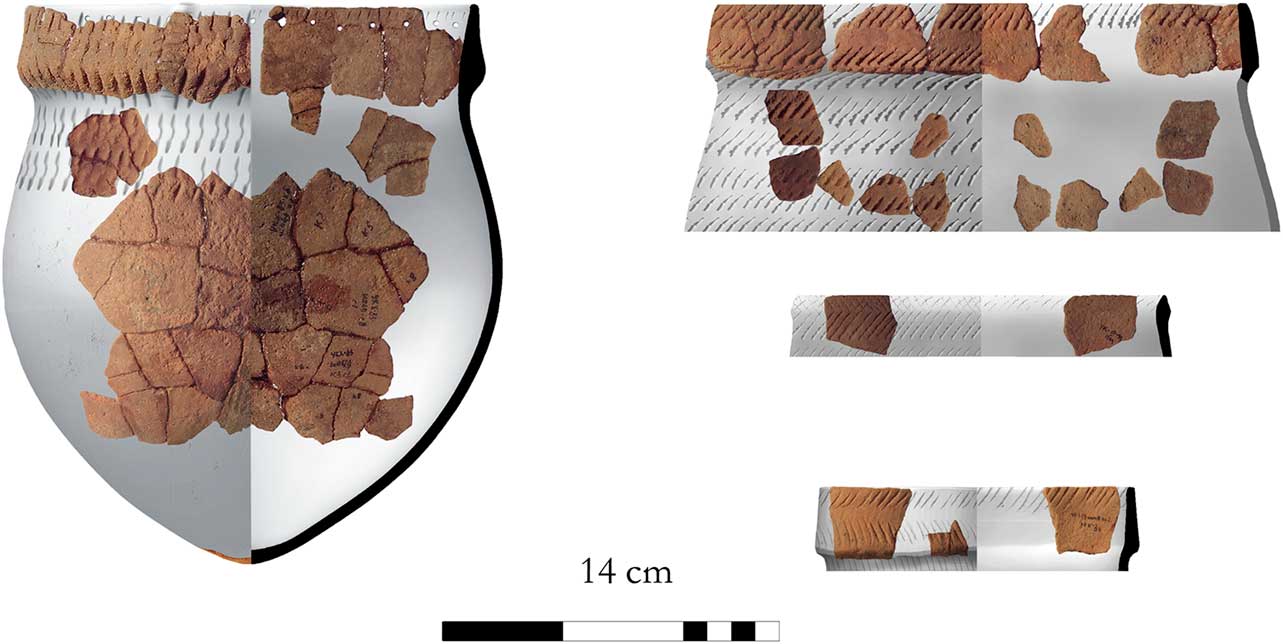
The distribution of finds in layers associated with the Ust’-Yumurchen culture have not been reported in detail, though they are described as ‘evenly spread’ in the primary reports. Together with regular references to pits and other cut features, this contrast in the character of the archaeology further differentiates the Ust’-Yumurchen material from the tightly clustered remains of the Ust’-Karenga culture. The most striking difference between these cultures, however, is seen in lithic assemblages across the plateau, which suggest a major shift from the exploitation of heterogeneous riverside cobble deposits during the Ust’-Karenga phase to a clear preference for particular types of high-quality toolstone, especially carnelian and chalcedony, in contexts associated with the Ust’-Yumurchen culture. Evidence for long distance exchange or acquisition of certain exotic raw materials, noted only in the final phase of the Ust’-Karenga culture (Layer 4), also becomes more widespread within the later Ust’-Yumurchen cultural assemblage, linking the site into networks of circulation in the Middle or even the Lower Vitim Basin (Vetrov et al. Reference Vetrov, Insehin, Revenko and Sekerin2000). No definitive interpretation of this major cultural transformation has yet been presented, though incoming population is assumed to be part of the answer (Vetrov Reference Vetrov2011).
Although the archaeological material from the Upper Vitim Basin has been described in a long series of papers, mostly in Russian (see Vetrov & Hommel in press), the place of pottery in society is rarely explicitly discussed, and the significance of change over the course of the long ‘Neolithic’ phase has not been explored. These issues were the starting point for this project.
ANALYTICAL-INTERPRETIVE METHODOLOGY & SAMPLE SELECTION
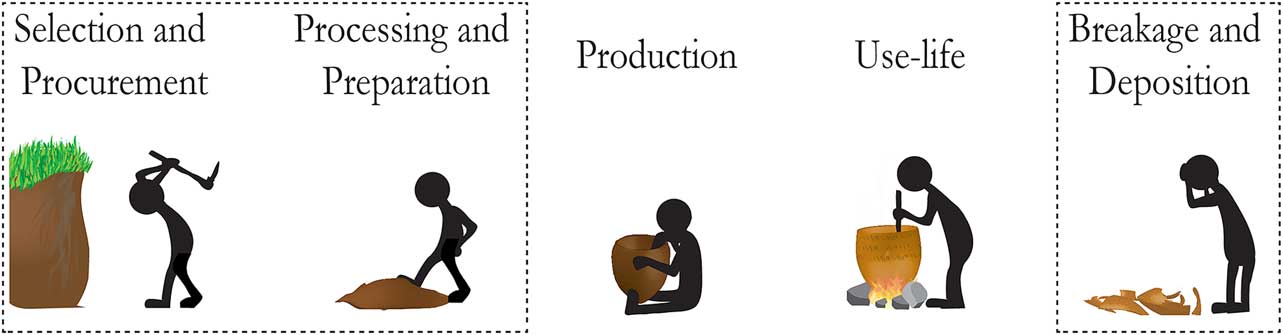
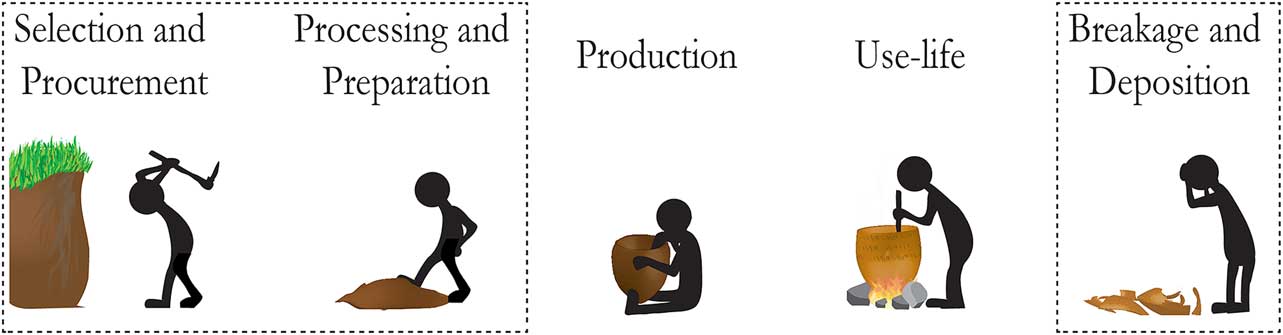
Although the framework for this study represents a new development in regional archaeological practice (though see Ineshin & Teten’kin Reference Ineshin and Teten’kin2017), it was based around a broadly familiar chaîne-operatoire approach to the study of technology and the related concept of artefact biography. It set out to define patterns of homogeneity, variability, choice, and change at various stages in the active life histories of these vessels (Fig. 4), and to place pottery production and use in a wider socio-economic and behavioural context. In this paper, we are concerned primarily with the first and last stages of vessel ‘life’: the acquisition and processing of raw materials and the context of deposition. Given the small scale of the assemblage analysed in this study, its unusual character, and unfamiliar context, it is important to describe the practical methodology employed in some detail.
Key stages in the active life history of a ceramic vessel. Dotted lines indicate the phases most relevant in this paper (redrawn, modified, and extended after Hodges Reference Hodges1964)
Sample selection & primary analysis
The primary analysis of ceramic material and sample selection for this project was carried out at the Laboratory of Archaeology and Ethnography of the State Pedagogical University in Irkutsk in 2006–2008. This institution remains the primary repository for material recovered during excavation and survey in the Upper Vitim Basin over the last 40 years. Other excavated material, held in the Irkutsk State Historical Museum, was also examined during this period but, for various logistical reasons, these finds could not be sampled for analysis.
The character of the archaeology and the scale of archaeological research in this remote taiga region meant that the total ceramic assemblage associated with the so-called ‘Neolithic’ cultures of the Upper Vitim Basin was extremely small. It was, therefore, considered appropriate to operate at the scale of individual vessels and to work with as complete a cross-section of the assemblage as possible.
Initially, the material was macroscopically sorted into putative ‘vessels’: sherds sharing relatively close context, similar fabric (defined macroscopically without invasive cleaning or clipping), and decorative features (reflecting the use of common tools in production). Nearly half of these groups clustered around previously defined and partially refitted vessels; the remainder represented more or less distinctive outlier groups which could not be refitted. Many of the latter had not been previously identified. These ‘vessels’ were individually described to explore variation in form and fabric, to assess variability in the techniques of production, and to record potentially distinctive use-wear, surface residues, vessel repair, modification, or re-use. More detailed technological descriptions of these ceramic traditions and their depositional context are presented elsewhere (Vetrov & Hommel in press).
In order to gain maximum possible information from the analysis, the fragments selected were all large enough to estimate vertical orientation and position within the profile, and characteristic of the vessel group as a whole, especially in terms of surface treatment. In most cases, a single (primary) sample was taken from each macroscopically defined vessel group. Additional (secondary and tertiary) samples, taken to assess intra-vessel variation or to test suspected outliers, were excluded from the subsequent analysis and are not reported here. The only exceptions to this rule were ‘outliers’ which proved to be compositionally distinct from other vessel groups in the same context. Samples were selected from as many of the groups as possible (within given curatorial constraints) and officially exported for further analysis in the UK.
All samples were processed and prepared as thin-sections at the Department of Archaeology, University of Sheffield, according to preparation procedures adapted to cope with the porous, low-fired character of the ceramics, and to minimise destruction of material. The petrographic analysis was undertaken using a Leica-Wild (M420) polarising stereozoom microscope (low magnification and initial comparison) and a Leitz Labolux 12 polarising microscope (high-magnification, grouping, description, and photography). Reference photographs were taken using a Nikon Coolpix 6000 12MP digital camera with a modified UR-21 adapter, stepped down to 28 mm to take a Leica ×10 Periplan eyepiece.
Stubs remaining after the production of thin-sections were polished and mounted for SEM analysis, intended to resolve any questions arising from the petrographic study. All SEM analyses were undertaken at the National Centre of Scientific Research (NCSR) ‘Demokritos’ in Athens, Greece.
THE ANALYTICAL SAMPLE
Samples representing 130 vessels from 14 sites across the Upper Vitim Basin were used as the basis of our analysis (Appx S.1). The bulk of this material came from the eponymous type sites of the two cultural groups: Ust’-Karenga and Ust’-Yumurchen.
Ceramic samples: Neolithic (Ust’-Karenga and Ust’-Yumurchen cultures)
In the final analysis, samples were taken from 46 Ust’-Karenga culture vessel groups and 46 Ust’-Yumurchen culture vessels (including 12 vessel groups related to the Ust’-Yumurchen culture by their forming technology, but represented only as lower body fragments).
The proportion of the various assemblages sampled, in terms of macroscopically defined ‘vessels’, for each of the sampled sites and layers was between 66% and 80% for the Ust’-Karenga culture, and 90–100% for the Ust’-Yumurchen culture. Though small, this sample provided a solid basis from which to begin to explore patterns of compositional variability within the material.
Ceramic samples: ‘Post-Neolithic’ comparative sample
In addition to the main analytical sample, 38 samples from smaller sites and findspots dispersed across the Vitim Plateau were also selected. These vessels belonged either to the Early Metal Age or lacked clear cultural attribution. For the purposes of this analysis, these were designated simply as ‘later’ material. These samples were selected randomly from fragments which had been coarsely grouped by site, context/layer, and surface modification technique. These samples not only enabled us to better contextualise diachronic change within the ‘Neolithic’, but also served as a window, albeit a rather cloudy one, onto the likely scope of local geological variability in sediments along the valley of the Vitim and its larger tributaries.
Raw materials survey
Originally, this geological variability was to be targeted as part of a parallel ‘raw materials survey’, which set out to characterise the range of raw materials that were available within the modern landscape and potentially exploitable in the past. However, in response to changes in river levels at the time of the expedition, it was necessary to alter the planned route of the expedition unexpectedly. As a result, the raw materials sampling was focused along the less geologically-varied course of the Karenga River. Like all other aspects of research in this remote and challenging region, analytical strategies necessarily conform to the constraints of the environment.
Ultimately, 111 rock and sediment samples were collected and examined (macroscopically and in thin-section) from 49 locations between Tungokochen and Ust’-Karenga, including 19 in the immediate vicinity of Ust’-Karenga itself (for details, see Hommel Reference Hommel2012). These samples were exported to the UK and analysed alongside the archaeological material as described above. Though far from comprehensive, the results of this study nonetheless proved very useful to the interpretation of the archaeological material. In order to understand the results of the ceramic analysis, it is necessary to begin with the results of this study.
ANALYTICAL RESULTS: RAW MATERIALS SURVEY
Clay samples collected along the Karenga and in the region of Ust’-Karenga split into two general groups: primary/residual clays, formed more or less directly from the weathering of underlying bedrock, and secondary/alluvial clays, formed by the redeposition of eroded sediments. Both sediment types were found widely as near-surface deposits, though the latter was principally encountered along the margins of the major river channels, particularly in their lower reaches.
Characteristics of the ‘Primary/Residual’ clays
Strictly speaking, the use of the term ‘primary’ in describing the near-surface clay deposits sampled in the raw materials study is not entirely accurate, since many of the deposits sampled were locally redeposited by colluvial action. Nevertheless, it was considered justified in view of the close mineralogical connection with the underlying bedrock. These resources were identified around the margins of rocky riverside outcrops and on the flanks of the surrounding hills. In our survey, they were usually sampled from tree throws where these clayey subsoils were immediately exposed. With minimal processing, removing only the largest rock fragments and organic materials, they could be easily worked into a gritty but surprisingly usable paste.
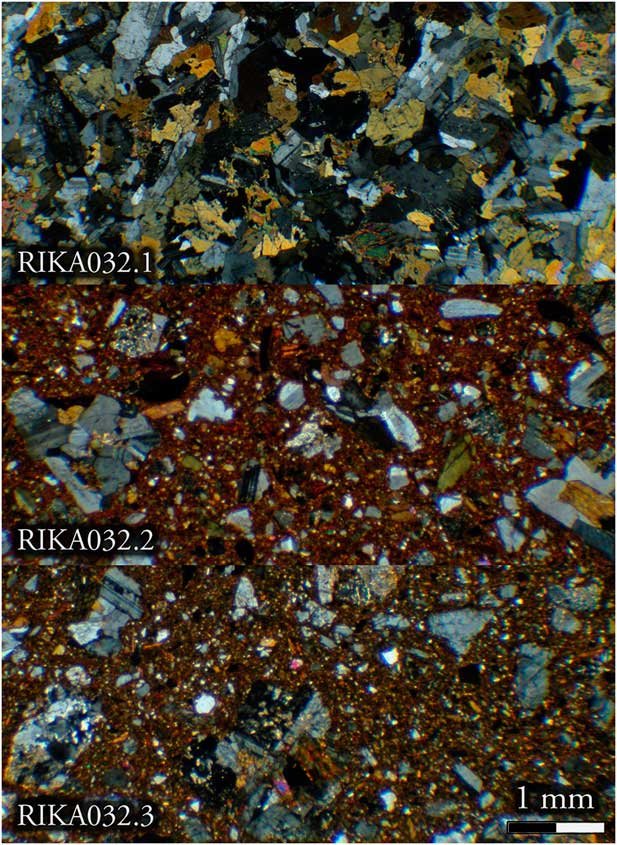
Under the microscope they were consistently described as poorly-sorted with a broad unimodal distribution of very angular to sub-rounded rock/mineral fragments. The overwhelming majority of these grains were consistent with immediately underlying geology. To further explore the spatial character of this connection, we sampled deposits around a small quartz-diorite outcrop on the right bank of the Bereya creek, which was surrounded and overshadowed by the ubiquitous granites of the region. Directly on top of this outcrop, more than 90% of its sand-gravel-sized grains were immediately identifiable as quartz-diorite rock fragments, while a few fragments of microcline granite were obviously connected with the surrounding rock types. Quartz- and microcline-rich silt- and sand-sized inclusions were attributed to slope wash (Fig. 5a–b). A second sample was collected 200 m down slope, where a deposit of clayey colluvium had collected on a shoulder of the hill above the level of the mid-Quaternary (QII–III) terraces. This sample was similar to the first in granulometry, albeit with a higher proportion of fine silt and sand, but its mineralogical composition was more compatible with a granitic origin (Fig. 5c). It also included one or two large, heavily sercitised grains, similar to those found as coarse sand and gravel in the channel of a brook a few hundred metres to the north-west. Clearly, in areas with varied geology, even local colluvial transport and redeposition could create ‘mixed’ deposits within what, for all practical purposes, would be the same ‘source’.
‘Section’ of a distinctive Primary/Residual deposit, top to bottom: a) parent material, b) immediately associated sediment, c) locally redeposited colluvium [colour image available online]

Taken together, the grain size distribution for these samples was around 30–40% sand and gravel, 10–30% silt, 35–45% clay, and about 5% visible organic material, as estimated in thin section. The character of the organic material was heterogeneous, dominated by rootlets, wood, charcoal, and leaf litter.
Characteristics of the ‘Secondary/Alluvial’ clays
Around Ust’-Karenga itself, the most abundant and easily exploitable clay resources were found in floodplain sediments, both modern and ancient. Accessible deposits underlie several parts of the modern village of Ust’-Karenga, in similar hypsometric levels to the deposits which contain the oldest ceramics at Ust’-Karenga. Today, they are exploited by the local population at the edge of an old airfield for the construction and repair of household ovens. More extensive deposits on the left bank of the Vitim, some of which were more recently deposited, are used in situ for game monitoring and regularly visited by the larger fauna to obtain essential salts. Today, this fact is often exploited by hunters, and the close relationship between salt, clay, and hunting is worthy of further attention in studies of early ceramic manufacture (Hommel Reference Hommel2014).
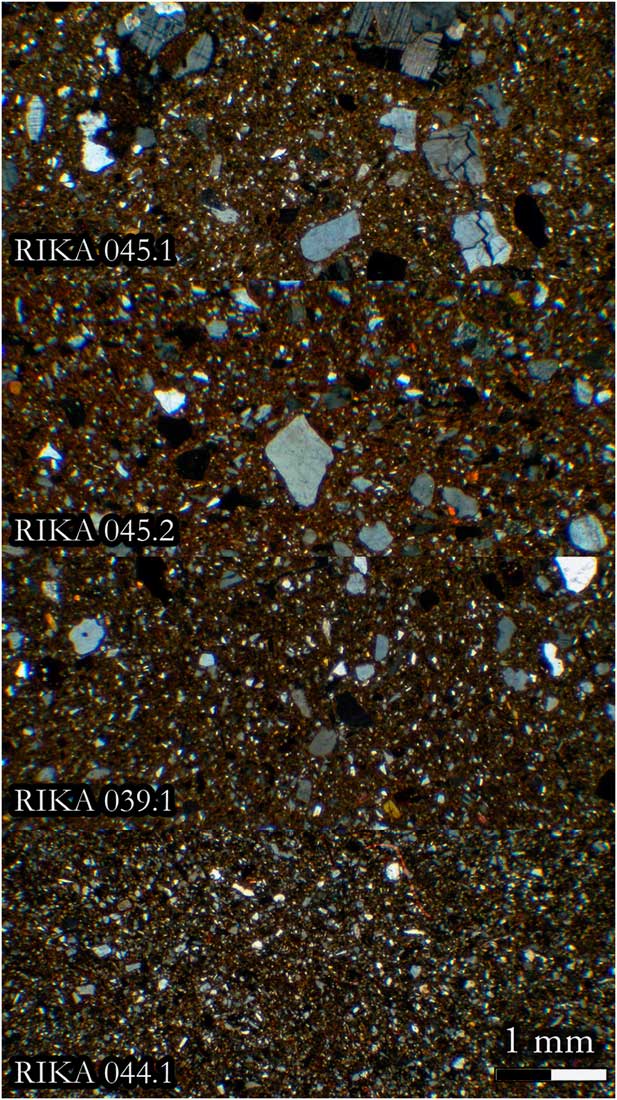
The clays sampled in these and other similar locations within the valleys of the Karenga and Vitim Rivers were fine-textured and silty, composed of around 50–70% clay (including various organic materials such as roots, wood, grass stems, and leaves, which made up 3–8% of these samples), 25–40% silt, and 5–10% sand, as estimated in thin-section. The fine fraction of the sampled sediments was characteristically well-sorted and well-packed. Though larger inclusions, more or less well-sorted in size, sometimes gave the appearance of bimodality, this was clearly attributable to ‘vertical’ variation within these layered sediments and was a result of the sampling technique, noted at the time. These larger grains were usually rounded or well-rounded in appearance, though large angular fragments were sometimes encountered. The mineralogical range in the silt fraction was essentially identical in all samples: primarily monominerallic sub-angular to sub-rounded quartz, feldspar (various varieties and states of weathering), mica (predominantly weathered biotite, though also muscovite/sericite and chlorite), rock fragments (various textures and compositions), hornblende, clinopyroxene, orthopyroxene, sphene, epidote, clinozoisite, and monazite in approximately that order of abundance (on an exponentially diminishing scale). Predictably, clay samples from different secondary deposits along the Karenga showed variation in granulometry as a result of their specific depositional environment. Variations in granulometry were also seen in the samples taken around Ust’-Karenga itself (Fig. 6), including significant intra-source variability and natural bimodality – where laminated sand/gravel and silty clay strata were unavoidably mixed. The lithology of the sand and gravel fractions was also variable, though to a much lesser extent: larger, angular fragments were commonly consistent with the surrounding local geology, while plausibly non-local components were almost always rounded and often more extensively weathered.
Selected clay samples, showing the variation encountered in the Secondary/Alluvial raw material samples [colour image available online]

Implications for the ceramic study
Though limited in scope, this study of raw materials demonstrated that various deposits of clay suitable for pottery production were available within a few kilometres of Ust’-Karenga. The wider survey along the Karenga showed that this pattern was repeated elsewhere. As a result, it is plausible to suggest that these resources were broadly representative of widely distributed raw material types with distinctive mineralogical and granulometric characteristics. This conclusion not only provided a logical framework for the interpretation of variability in the ceramics, but also a robust rationale for initial grouping (Appx S.1).
ANALYTICAL RESULTS: EXPLORING THE CERAMIC ASSEMBLAGE
Comparing the ceramics with minimally processed fired samples of clay from these two broad raw material groups allowed us to dismantle several assumptions about the processes of production and to make sense of otherwise bewildering compositional variety.
To begin with, it was clear that most of the granulometric variability seen in fabric textures across the assemblage could be matched in widely available natural clay deposits from different parts of the landscape. In all cases the exploitation of these materials would have entailed very little active modification. The addition of mineral temper could not be identified certainly in any of the samples analysed, and only in three cases was it seriously considered: P-USKA021 and 031, which contained an unusually even distribution of moderately well-sorted iron hydroxide grains, perhaps reflecting the addition of crushed ochre to the paste; and P-VITM025, which contained rounded, well-sorted sand inclusions within an otherwise almost inclusion-free matrix. The bimodal character of some of the other finer fabrics, which might have been interpreted as intentional sand tempering, was explained with reference to the processed raw materials samples (see above).
Some of the later vessels contained a significant admixture of organic material, occasionally with internally consistent character, suggesting intentional tempering, but this practice was far from ubiquitous. The addition of organics to earlier ceramics, though widely discussed as ‘distinctive’ in the literature (eg, Kuzmin & Vetrov Reference Kuzmin and Vetrov2007, 12; MacKenzie Reference MacKenzie2009), was only indicated in one sample from Ust’-Yumurchen (P-USYU002), and even this was far from conclusive. The organic inclusions/voids within the remainder of the Ust’-Karenga ceramic samples were internally heterogeneous and rarely exceeded the baseline abundance seen in modern clay samples.
The recognition that distinctive types of natural clays were used, essentially unaltered, in the production of most of the ceramics found in the Upper Vitim Basin allowed us to divide the sampled assemblage into two ‘super-fabrics’ based on their use of materials: Primary/Residual and Secondary/Alluvial. Most of the variation in granulometry in the former could be attributed to local colluvial transport and corresponded with the presence of rare grains or rock fragments belonging to other rock types. Only in a small number of cases did these ‘colluvial’ variants approach the granulometry of the Secondary/Alluvial clays and even then, their more coherent mineral composition helped to justify their separation.
As with granulometry, the degree of internal mineralogical variability within individual samples was consistent with that encountered in the raw materials study, providing further justification for our broad initial grouping procedure. For the Secondary/Alluvial fabrics, the correlation between modern raw materials and archaeological ceramics often seemed very close indeed. Nevertheless, it was clear that any claims for direct provenance made solely on this basis could be potentially problematic. The coarser ceramic samples usually presented a single internally-consistent ‘lithology’ across the size range of inclusions, suggesting the exploitation of primary clay sources which had seen only limited secondary transport. This provided a relatively strong justification for connecting the significant variation seen in lithology between vessels directly with particular geological formations.
Within the broad super-fabrics, samples with distinctive or related mineralogy were grouped together, producing seven subgroups (referred to as Fabric Groups [FG]) and 28 individual fabrics (given as subnumbers). Seven of these fabrics were identified as more significantly redeposited ‘colluvial’ variants on the basis of a more silty texture and better-sorted grain size. Brief mineralogical descriptions of these groups are provided as supplementary material associated with this paper (Appx S.2).
Although these subdivisions will be introduced in general, the discussion will focus primarily on the interpretation of variety encountered in the ceramics found at Ust’-Karenga. The vast majority of the discernable variation was found within the coarse Primary/Residual group.
Coarse of habit: Primary/Residual Groups
Unsurprisingly, given the geological context of the Vitim Basin within the vast Baikal-Angara batholith, the lithology of the assemblage was dominated by fabrics derived from the decomposition of felsic granites and granodiorites. Within the Primary/Residual superfabric, these were designated ‘Fabric Group 1’ (FG-1). More than half of the material analysed fell into this broad group, which included 13 individual fabrics (1.1–1.13) that are likely to represent the exploitation of resources formed from the weathering of compositionally different granitic plutons. Few of the samples matched closely with the immediate geology at Ust’-Karenga, and it was difficult to identify even these fabrics as local, since felsic formations with essentially the same composition as those which underlie Ust’-Karenga could also be found widely across the plateau, a fact clearly demonstrated by the results of sampling along the Karenga valley.
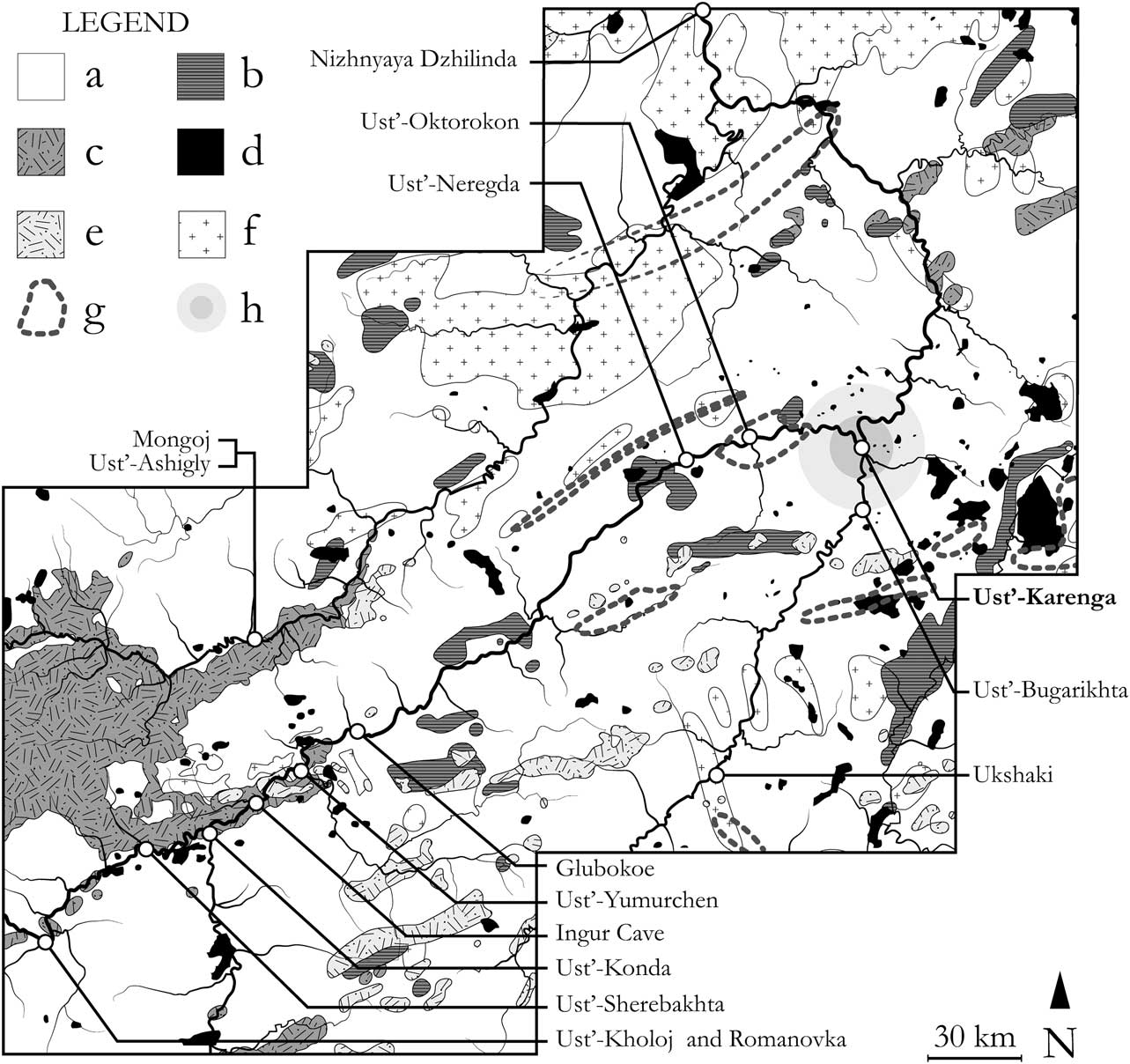
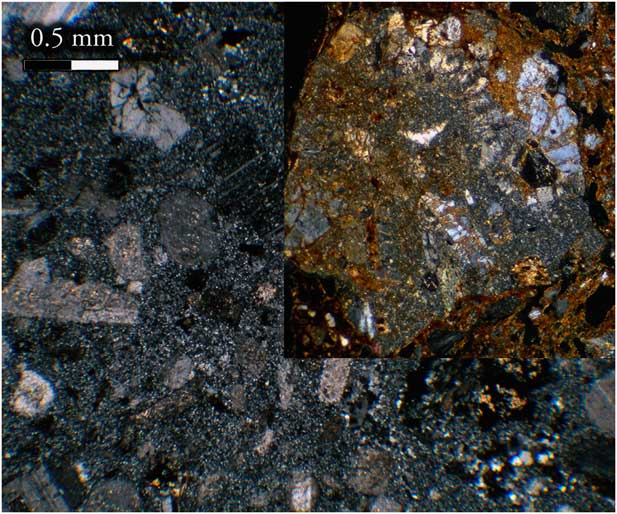
The other Primary/Residual groups were produced from material derived from the decomposition of various, more distinctive rock types, including diorites and gabbro (FG-2), felsic volcanic rocks (FG-3), metamorphic rocks, tectonites, and perhaps also some sedimentary or metasedimentary formations (FG-4 & 5). The distribution of these rock types is far more spatially restricted and gives the plateau a distinctive ‘micro-regional’ geological character in spite of its general granitic background (Fig. 7; Kalininoj & Malykh Reference Kalininoj and Malykh1958; Smelovskim et al. Reference Smelovskim, Balabaeva, Skryuchenkova, Tomasova, Fedorenko and Shenfilya1962; Malyshev Reference Malyshev1964; Atlas Zabaikal’ya Reference Atlas Zabaikal’ya1967; Goloshchukov et al. Reference Goloshchukov, Zharkov and Popeko1971; Pobedash & Pavlova Reference Pobedash and Pavlova1972). The appearance of resources associated with these rock types in the early ceramics from Ust’-Karenga was of particular importance to our interpretations, for it was immediately apparent that very few of the areas where these rock types occur fall within plausible foraging radii around the site (Fig. 7). In some cases (eg, P-USKA027), geological sampling further up the Karenga valley provided a very close match to some of the more distinctive rock types represented in the ceramics at Ust’-Karenga itself (Fig. 8).
Simplified geological map of the Vitim plateau (adapted from Kalininoj & Malykh Reference Kalininoj and Malykh1958; Smelovskim et al. Reference Smelovskim, Balabaeva, Skryuchenkova, Tomasova, Fedorenko and Shenfilya1962; Malyshev Reference Malyshev1964; Golushkov et al. Reference Goloshchukov, Zharkov and Popeko1971; Pobedash & Pavlova Reference Pobedash and Pavlova1972): a) various felsic granitoids (syenite to granodiorite); b) various mafic granitoids (quartz-diorite to gabbro); c) felsic effusive rocks (rhyolite to dacite); d) basalt and related volcanic formations; e) sedimentary and meta-sedimentary formations (including pelites, slates, and shales); f) various metamorphic core-complexes, schist, and gneiss; g) mylonites and cataclasites; h) foraging radii (at r=10 km & r=20 km)

Rock sample RIKA014 with P-USKA026 (inset), showing the similarity in the texture of the felsic volcanic rock and the rock fragments within the ceramic [colour image available online]

Fine and sandy: Secondary/Alluvial Groups
The Secondary/Alluvial groups (FG-6–7) were broadly similar in base composition, and the main group (6.1) was almost directly comparable with the raw materials samples collected along the lower Karenga. The individual fabrics were differentiated either according to variation in the relative abundance of minor inclusions (6.1a–d); the abundance of organic material (6.2); the presence of a significant and distinctive, locally specific component, such as volcanic sand (6.3 & 6.4); or the potential technological differences in clay processing (7).
Relationships between composition and cultural attribution
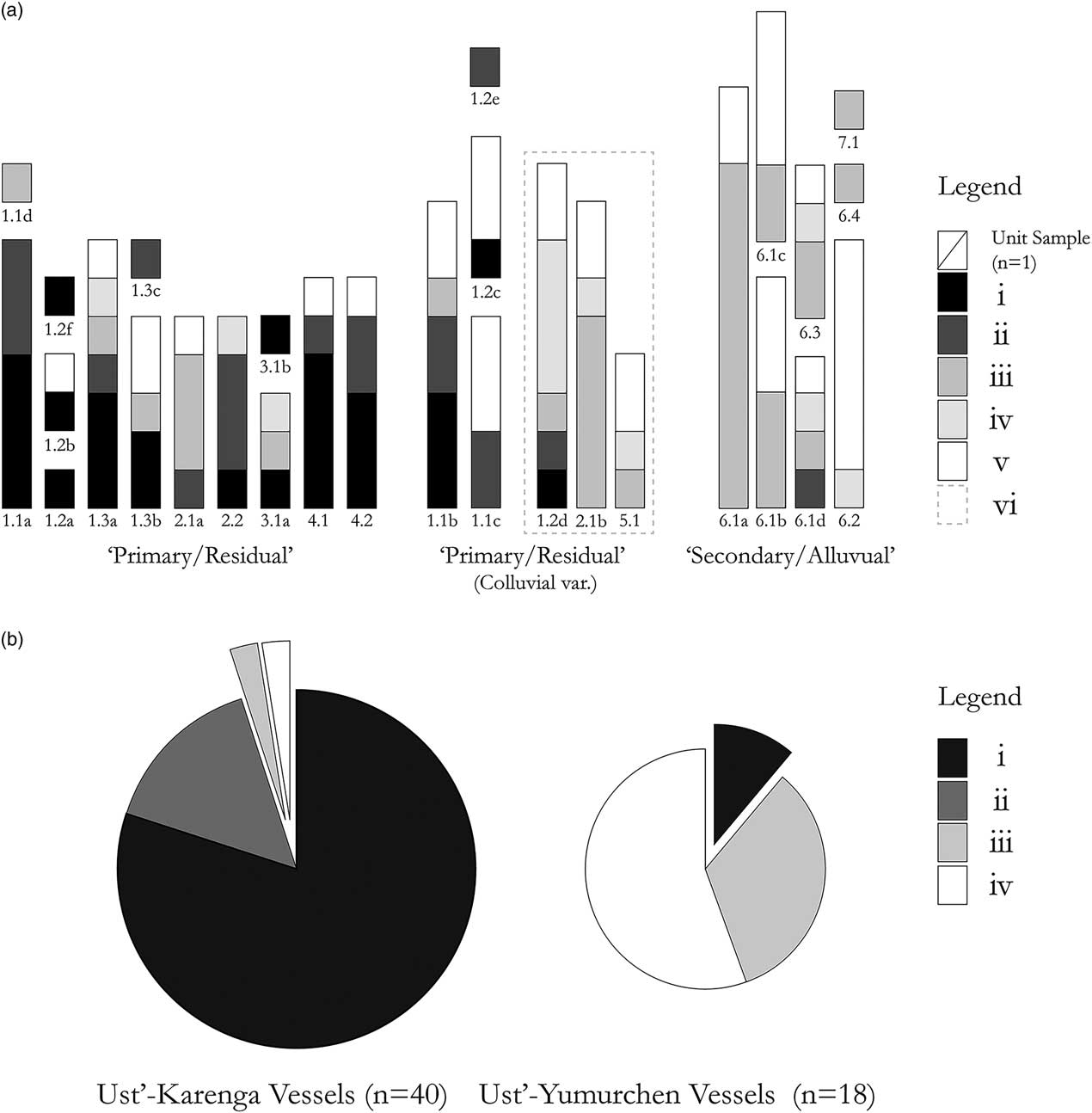
In correlating the results of the initial analysis with vessel type and context, a very significant divide in the use of materials between the two major cultural groups became clear (Fig. 9a–b). Whereas the production of Ust’-Karenga culture vessels was overwhelmingly dominated by the exploitation of Primary/Residual clays (c. 98% of the total assemblage), a significant proportion (c. 48% of the total assemblage) of the Ust’-Yumurchen culture ceramics were produced from Secondary/Alluvial clays. It is also worth noting that the shift from primary to secondary resources seen between the Ust’-Karenga and Ust’-Yumurchen cultures appears to be maintained in later post-Neolithic periods, as seen in the comparative sample of unstratified Early Metal Age ceramics.
a) Overall cultural distribution of vessels associated with the defined fabric and ‘superfabric’ groups: (i) Early Ust’-Karenga culture (Layer 7); (ii) Later Ust’-Karenga culture; (iii) Ust’-Yumurchen culture (defined vessels); (iv) Ust’-Yumurchen culture (?)Ridged-paddle sherds; (v) ‘Later’ sherd groups–Early Metal Ages; (vi) Primary/Residual Fabric groups with demonstrable links to alluvial environments. b) The distribution of ‘superfabric’ groups within the Ust’-Karenga and Ust’-Yumurchen ‘defined vessel’ samples recovered from the Ust’-Karenga site complex: (i) Primary/Residual Fabrics; (ii) Primary/Residual Fabrics (colluvial variants); (iii) Primary/Residual Fabrics (colluvial variants) with demonstrable links to alluvial environments; (iv) Secondary/Alluvial Fabrics

The difference between these two cultural traditions is further emphasised if we look more closely at the characteristics of the coarser Ust’-Yumurchen culture vessels found at Ust’-Karenga. Although grouped within Primary/Residual fabrics, these also retained a close association with river valley raw materials: Fabric 2.1b was the most difficult to separate from the Secondary/Alluvial group; Fabric 5.1 appeared to show clay mixing between the main resource types (Residual and Alluvial); and even Fabric 1.2d, which was otherwise typical of the Primary/Residual group, was distinctive for the numerous rounded sand inclusions it contained. More direct evidence for a close connection between some of the Ust’-Yumurchen pottery from Ust’-Karenga and the immediate environment came in the form of direct mineralogical correlation between FG-2.1b and the composition of a misshapen lump of fired clay from the upper layers at Ust’-Karenga X – one of a small group of fired clay lumps which represent the only direct evidence of clay exploitation and production activity at the site. Although a more comprehensive regional study is needed to confirm this, the close association between Ust’-Yumurchen culture ceramic fabrics and the geological context of the sites where they were found appears to be repeated elsewhere. For example, at both Mongoj and Ust’-Ashigly, in the neighbouring Bolshoy Amalat river basin, Ust’-Yumurchen culture vessels made from distinctive fabrics derived from volcanic or gabbroic rocks were found just a few kilometres from potential parent materials.
Before moving on to consider how these results might help us to explore the context of ceramic use in the ‘Neolithic’ of the Vitim Basin, it is worth briefly summarising the main outcomes of the analysis, which revealed two distinctive patterns of raw material use, and which corresponded well with a cultural transformation between the Ust’-Karenga and Ust’-Yumurchen cultural assemblages. The Ust’-Karenga material was characterised by the use of various coarse Primary/Residual clay resources, many of which were inconsistent with the local geology. Conversely, Ust’-Yumurchen vessels typically had finer fabrics consistent with local Secondary/Alluvial clay deposits found widely across the valley floor. As both Primary/Residual and Secondary/Alluvial resource types were eminently suitable for ceramic production, it was necessary to find reasonable explanations for the changes in clay resource preference and, particularly, the apparent avoidance of Secondary/Alluvial deposits throughout the Ust’-Karenga phase.
DISCUSSION
There are various ways to approach the interpretation of these results. Perhaps the most obvious explanation is availability; that the secondary resources, so dominant in the local environment today, were absent or inaccessible in the past. This is certainly possible, and should be further explored. However, as significant deposits of alluvial clay were found in sedimentary sequences of comparable or earlier date to the initial occupation layers at Ust’-Karenga (ie, >10,500 cal bc), it does not seem to be a particularly satisfactory explanation. Nor does it account for the wide mineralogical variability seen across the assemblage.
If we accept that the characteristics of the Primary/Residual groups reflect the exploitation of clay resources in close proximity to their parent geology, then we are forced to conclude that, in the case of the early pottery at Ust’-Karenga, few if any of the fabrics can be demonstrably characterised as ‘local production’, and many of the fabrics made use of clays derived from parent material located beyond even a generous estimate of site catchment. This conclusion sits uncomfortably with the idea of a long-term settlement and with the use of ceramics for on-site storage, since we might logically expect this to result in a strongly local signal in ceramic fabrics.
At this point we could follow traditional logic in ceramic studies, built on expectations derived from the study of largely sedentary agricultural societies, and conclude that much of the material associated with the Ust’-Karenga site was the result of widespread interaction or exchange, or that it was brought together by disparate communities as part of some special event. Until further sites of this period are identified, it will be difficult to rule out this idea entirely, but we would argue that by taking a different perspective on ‘availability’, a simpler explanation for this pattern presents itself, which better fits both the socio-economic and archaeological contexts of the finds. We offer that the ‘preference’ for Primary/Residual clays seen in the material of the Ust’-Karenga culture was simply an outcome of production away from the main river channels, where primary clays would constitute the main, and perhaps the only, available resource. It is perhaps no coincidence that it is in these kinds of hilly, mid-altitude locations that we find some of the most significant variation in geology and areas where several of relevant rock types occur in comparatively close proximity (Malyshev Reference Malyshev1964; Goloshchukov et al. Reference Goloshchukov, Zharkov and Popeko1971; Pobedash & Pavlova Reference Pobedash and Pavlova1972).
Upland occupation in late-spring/summer season, when pottery production would be most viable, is a strategy more closely associated with mobile hunters than with sedentary/semi-sedentary fisherfolk of the kind which occupy the rich aquatic environments so often cited as the primary locus for the invention and spread of early pottery (see Jordan & Zvelebil Reference Jordan and Zvelebil2009a, 58–61 for a discussion of this ‘estuarine model’ and references therein for case studies where this model appears to fit with the available evidence). This conclusion creates an interesting overlap with studies of contemporary late Pleistocene societies in the wider Vitim region, which have also identified significant mobility and the exploitation of large herd animals as a major subsistence focus at this time (Ineshin Reference Ineshin2006; Ineshin & Teten’kin Reference Ineshin and Teten’kin2017).
A model of dispersed mid–high altitude summer settlement, as the context for small-scale, opportunistic pottery production, followed by winter settlement in the valley floor, where pottery that failed during occupation was finally abandoned, not only fits with patterns of homogeneity and variability seen in the fabric of the ceramics but also with a number of other patterns seen in the material at Ust’-Karenga (eg, vessel repair).
The apparent superimposition of hearths and the tightly clustered remains at the site suggest that individual ‘dwellings’, with an internal focus of activity, were left in place, either partly or completely, and returned to year on year. The archaeological distributions therefore represent a palimpsest of repeated, temporary occupations by a community who were attached to this place and occupied it repeatedly over a number of seasons as part of their wider strategy of landscape use (see Grøn & Kuznetsov Reference Grøn and Kuznetsov2003 for a discussion of this kind of behaviour). The idea of high mobility could also help to explain not only why so few vessel fragments are found at these sites, but also why, within individual clusters, the vessels show both considerable homogeneity in style and technology and striking variation in composition. Looking at the ethnographic literature, it is interesting to note that this kind of high, but tethered, mobility is widely reported among mid–high latitude hunter-gatherer societies (eg, Binford Reference Binford1990; Kelly Reference Kelly1995). What is quite clear is that the pattern does not fit with the idea of a long-term basecamp, or with the idea that pottery was produced primarily for on-site storage (contra Ineshin Reference Ineshin2006).
If we turn our attention to the material of the Ust’-Yumurchen culture (c. 4300–1400 cal bc), we find this interpretation almost completely inverted. The sudden shift towards the exploitation of alluvial clay resources, which must represent production activities along the valley floor, is again presumably associated with summer settlement. Although the shift towards secondary clay resources was not complete, at Ust’-Karenga it was possible to show that a large part of the Primary/Residual fabrics were also related closely to the valley floor, and perhaps even the site itself. This pattern of geological correlation between fabrics and findspots seems to be repeated in a number of other sites across the basin and contrasts sharply with the geological range reflected in the Ust’-Karenga culture pottery.
The even distribution of finds in layers associated with the Ust’-Yumurchen culture at Ust’-Karenga, also suggest a very different pattern of settlement from the tightly clustered remains seen in earlier phases of occupation. This difference is further highlighted by the presence of pits and other cut features across these sites. Together, these features suggest that the character of occupation was far more permanent at these sites, which may have served as base-camps for logistical foraging, where at least part of the community could remain for a significant part of the year.
The association of this apparent increase in settlement permanence with the routine exploitation of exotic or distinctive lithic raw materials within the assemblage – some of which were certainly obtained at a significant distance from the site – requires further study. However, it seems to correlate well with the expectations of popular models which see more sedentary life as the essential setting for social stratification and growing ‘complexity’ (Hayden Reference Hayden2009; Jordan & Zvelebil Reference Jordan and Zvelebil2009a). Also consistent with these models are indications of greater reliance on aquatic resources, suggested by the location of settlements and supported by finds of birch bark net floats in one of the pits at Ust’-Karenga III (Vetrov Reference Vetrov1992, 52). Though far from closely associated with the origins of ceramic production in the region, it is possible to see this cluster of traits as evidence of ‘complexity’ in the context of later pottery use among hunter-gatherers in this region.
Of course, it would be disingenuous to suggest that there was no other interpretation of the material, but if we do not assume that pottery is necessarily related to extended settlement, it becomes difficult to fit the evidence from the Vitim Basin into existing models. The emergence of pottery does not seem to be associated with other significant shifts in material culture or with major changes in modes of mobility and subsistence. This is not to suggest that adoption of pottery was insignificant, but rather to question whether it is necessary to assume that it corresponds to economic transformations, increased specialisation, mass feasting, or the individualistic quest for prestige. On the basis of the evidence presented in this study, it seems equally possible to argue that it emerged as a way of coping with environmental change and economic or social stress, perhaps even helping to maintain continuity by creating a material focus for the sharing of gathered food within the dwelling.
CONCLUDING REMARKS
This project set out to show that it is possible to explore the contexts in which pottery was adopted into society through a detailed analysis of the ceramic material itself. The results of this study show that by adopting an interpretive approach, which acknowledges the possibility of movement, it is possible to explore the specific lifestyles of hunting and gathering communities through the ceramics they made and used.
If we consider the life histories of individual vessels in the context of their assemblage and overlay these entangled strands onto broad patterns of raw material distribution and later landscape use, we can begin to generate better models of mobility as a framework for future research in the field. As the region is further explored, new data will certainly emerge to refine and reshape our conclusions towards a clearer understanding of the relationship between the pottery and the people who made it. The broader application of this kind of bottom-up approach has the potential to reshape our assumptions about the origins and spread of pottery.
Acknowledgements: This research was undertaken as part of a University of Sheffield Project Studentship with additional supportive funding from the University of Sheffield Excellence Exchange Scheme, the Baikal Archaeology Project, the CGGS Bennett Trust, and the BOREAS project. The team is also grateful for the assistance offered by NCSR ‘Demokritos’ in Athens, the administration of the Irkutsk State Pedagogical University, and the villagers of Ust’-Karenga, past and present. Finally, the authors would like to acknowledge the contributions made to the field of early pottery studies by our co-author Dr V.M. Vetrov, whose death in November 2015 came just a few months after the first draft of this paper was completed. For more than 40 years, he remained the primary archaeological chronicler of prehistory on the Vitim Plateau. Without him, none of this work would have been possible.
SUPPLEMENTARY MATERIAL
To view the supplementary material for this paper please visit https://doi.org/10.1017/ppr.2017.12